


Introduction
Work is an important part of human life and significantly influences well-being (or flourishing) [Reference Blustein1, Reference Clifton and Harter2]. The capability approach (CA), pioneered by Amartya Sen and further refined by philosophers such as Martha Nussbaum, provides a comprehensive framework for understanding how work contributes to human flourishing. Rather than focusing solely on resources or utilities, the CA emphasises individuals’ substantive freedoms, meaning what people can actually do and be. It also highlights capabilities, which are the real opportunities individuals have to lead lives they value, reflecting their freedom to achieve desired functionings [Reference Robeyns3, Reference Sen4]. This chapter explores the integration of the CA with four well-established theoretical models: the International Classification of Functioning, Disability, and Health (ICF), the job demands-resources (JD-R) model, self-determination theory (SDT), and the integrative model of behavioural prediction (IMBP).
These frameworks were selected for their strong empirical foundations, widespread use in work and health (psychology) research, and complementary coverage of critical elements related to flourishing at work. Specifically, they each address key components of the CA’s conversion chain: contextual conditions (ICF), job demands and resources (JD-R), motivational processes (SDT), and behavioural determinants (IMBP). Together, they provide mature, evidence-based models that enable a deeper analysis of the factors that shape individual opportunities and outcomes across diverse settings. In this chapter, we demonstrate how integrating these theories with the CA can create a more comprehensive framework: the CA broadens their normative scope by emphasising individual capabilities and the real freedoms necessary for human flourishing, whereas these theories complement the CA by providing explanatory mechanisms that link contextual factors, motivation, and behaviour. Taken together, these perspectives offer a richer understanding of how to foster environments that support individuals – whether they are in work, seeking employment, or striving to return to work – by expanding freedoms and promoting sustainable well-being.
Overview of the CA
The CA initiated a paradigm shift in understanding human development and social justice [Reference Robeyns3]. This conceptual framework (see Chapter 1 for a more detailed description of it) differs from traditional utilitarian and resource-based approaches by emphasising individuals’ substantive freedoms to lead lives they value. According to this framework, the assessment of well-being should focus on people’s actual opportunities to undertake actions and activities they wish to engage in and be who they want to be [Reference Sen4, Reference Sen5].
Central to the CA is the concept of value-neutral functionings and capabilities. Indeed, the notion of ‘value-neutral’ is nuanced: while the framework itself is analytically value-neutral (meaning it does not prescribe which specific capabilities or functionings are inherently valuable), it allows individuals or societies to determine what they have reason to value within their contexts. A functioning is defined as any state of being or doing that a person can attain [Reference Sen5], such as being well nourished, employed, or engaging in community activities [Reference Robeyns3]. Capabilities, on the other hand, represent those valuable functionings that a person has the freedom to access effectively – that is, “what people have the opportunity to be and do” [Reference Sen5, p. 38]. This distinction highlights (opportunity for) freedom and choice within the CA framework and is central to understanding and comparing interpersonal advantages [Reference Robeyns3, Reference Robeyns6, Reference Van der Klink, Bültmann, Burdorf, Schaufeli, Zijlstra and Abma7]. For instance, in the work context, securing meaningful employment encompasses being employed and choosing among job opportunities that align with one’s skills, values, and aspirations.
The CA’s emphasis on human diversity and factors affecting well-being makes it particularly useful when dealing with complex work-related issues. Individuals differ in their ability to convert resources into functioning due to personal, social, and environmental influences [Reference Robeyns3, Reference Robeyns6, Reference Sen8], which means that employees or job seekers may require different types and levels of support to attain similar outcomes [Reference Alkire9]. For example, a worker with a disability may require specific accommodations (e.g., an ergonomic workspace), whereas another worker may need flexible working hours to balance both work and family responsibilities to perform their job effectively (see Chapter 3).
The CA is distinguished from purely descriptive or explanatory theories by its normative and practice-oriented (‘Nyaya’) [Reference Sen5] and ideographic (see Chapters 1 and 2) foundation, which emphasises the intrinsic values that each individual holds. According to this stance, social arrangements should be evaluated according to how free people are in pursuing and attaining functions they consider valuable, reflecting the importance of valuing each person as an end in themselves [Reference Nussbaum10]. This normative perspective has significant ramifications for organisational policies and practices: it suggests that workplaces not only offer fair compensation and safe working conditions for their employees but also cultivate environments that expand employees’ capabilities to pursue diverse goals (as ultimate ends) [Reference Robeyns3, Reference Robeyns11]. By cultivating environments that allow for a plurality of values [Reference Sen12], organisations enable individuals to pursue their unique aspirations. Thus, the CA encourages workplaces to create environments where employees not only have the resources they need but also the freedom to achieve meaningful outcomes in their lives (see Chapter 3 for an argument that contributive justice can serve this goal in connection with the CA), emphasising the evaluative properties of capabilities and functionings [Reference Robeyns3].
The CA’s focus on human diversity, individual capabilities, and the contextual factors influencing well-being provides a foundation for comparing the CA with other theoretical models. By exploring similarities and differences, we are able to understand how the CA’s multifaceted perspective aligns with existing approaches to work-related well-being. As Robeyns noted, the CA is particularly well suited to encompass other theoretical concepts, provided that they meet certain criteria (e.g., compatibility with the CA’s emphasis on individual agency, diversity, and valued functionings) [Reference Robeyns3, Reference Robeyns6]. Building on this, we offer insights into how the CA and these other approaches can connect and enrich each other.
Comparative Analysis of the CA with Other Theoretical Models
The following sections present the comparative analyses in the following order: 1) ICF; 2) the JD-R model; 3) SDT; and 4) the IMBP.
International Classification of Functioning, Disability, and Health
Summary of the ICF
The International Classification of Functioning, Disability, and Health (commonly referred to as the ICF) is a comprehensive framework and classification developed by the World Health Organization for describing the complex consequences of health conditions. The ICF is recognised worldwide for offering a multifaceted system to describe the full range of functioning, which is defined as the dynamic interaction between an individual’s health condition and contextual factors [13].
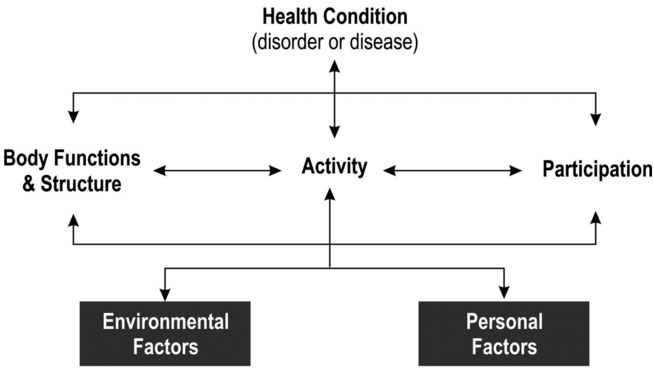
Principal components in the ICF include body functions, body structures, activities, and participation along with contextual factors (see Figure 6.1). Body functions refer to the physiological functions of body systems (e.g., the ability to see). Body structures refer to anatomical parts of the body (e.g., the structure of the eye). Activities are the execution of a task or action (e.g., performing tasks required of an apprenticeship), whereas participation is considered involvement in a life situation, such as maintaining a specific job. Contextual factors include personal factors, such as age, which may affect an individual’s ability to work (e.g., the minimum age required to work), and environmental factors, including the availability of jobs in a geographical location and appropriate conditions in the workplace.
There are several important points to note about the ICF system. First, activities and participation are grouped together in domains covering a full range of life areas. Qualifiers are used to differentiate them, namely, the capacity to describe an individual’s ability to complete the task or action and performance to describe what an individual does in their current environment. Second, capacity and performance can be measured with and without assistive technology or personal assistance (environmental factors).
ICF framework.

Comparing the ICF and the CA
The ICF framework has often been compared with the CA framework to better understand disability and functioning. For details, see the works of scholars, including Bickenbach [Reference Bickenbach14], Mitra [Reference Mitra15], Mitra and Shakespeare [Reference Mitra and Shakespeare16], and Welch Saleeby [Reference Welch Saleeby17, Reference Welch Saleeby18]. This section summarises the salient points of these published comparisons.
Theoretical basis. Both frameworks are multidimensional and useful for understanding well-being. The CA is normative in nature, emphasising individual freedoms and potential opportunities as a mechanism for evaluating individual well-being. As Sen indicated, what an individual values in terms of their capability to achieve functionings provides the general approach to determining social arrangements [Reference Sen8]. In contrast, the ICF is not an evaluative instrument, although assessment tools based on the ICF are available. Instead, the ICF is a robust descriptive framework with an in-depth corresponding classification focused only on the individual’s actual lived experience, summarised by relevant ICF components.
Terminology. Differences in terminology can be confusing. In the CA, functionings are broadly defined as realised doings and beings, whereas in the ICF, functioning is a broader, all-encompassing umbrella term for its key components. A lack of consensus among ICF scholars on how to remedy such differences in terminology is evident. However, if we consider that capabilities represent potential and their actual materialisation is defined as functionings, the focus shifts to examining the significance of what individuals are actually doing in their everyday lives, including aspects related to work.
Conversion and contextual factors. In the CA, conversion factors – personal, social, and environmental – shape how resources translate into real opportunities and outcomes [Reference Robeyns6, Reference Ribeiro, Huisman and Tight19]. These factors are conceptually similar to the contextual factors in the ICF that can influence an individual’s activities and participation. Indeed, the value of both frameworks lies in describing interpersonal variations that enable a greater understanding of individual circumstances independently. In essence, the conversion factors in the CA account for human diversity and contextual specificity [Reference Ribeiro, Huisman and Tight19], and the contextual factors in the ICF are the same [Reference Welch Saleeby18]. Personal conversion factors, for example, include intelligence or gender; social conversion factors may be workplace norms or employment policies; and environmental conversion factors may be related to the physical or built climate, such as the accessibility of a work site.
Using the CA with the ICF
Some scholars [Reference Nussbaum10] have critiqued Sen’s CA for lacking a defined list of capabilities (for a comprehensive discussion of the debate between Sen and Nussbaum, see Robeyns [Reference Robeyns6]), arguing that this approach leaves no clear standard for evaluating well-being or social justice. While this openness was intentional, others – most notably Nussbaum – have proposed lists to fill the gap. With respect to work capabilities, Nussbaum briefly mentions “control over one’s environment” as one of the basic capabilities and includes “having the right to seek employment” and “in work, being able to work as a human being” [Reference Nussbaum10]. Although Nussbaum’s list is intended to bridge the gap in the CA, the practicality of using it to fully capture the complexity of work is not feasible. More recently, Van der Klink et al. [Reference Van der Klink, Bültmann, Burdorf, Schaufeli, Zijlstra and Abma7] proposed a set of seven work-related capabilities aimed specifically at operationalising sustainable employability. This adaptation offers a more targeted approach, although practical challenges remain (see almost all other chapters of this book for elaboration and specification of this remark).
In contrast, the ICF classification provides a systematic way to operationalise the CA by its ability to organise a wide range of information around what individuals are actually doing and the context in which they are doing it. The ICF has already been used to support the CA in social care [Reference Welch Saleeby18] and healthcare [Reference Van der Veen, Evans, Huisman, Welch Saleeby and Widdershoven20] settings. Bringing the CA and the ICF together to examine work capability enhances both frameworks. For example, the ICF can help identify barriers to performing a specific job (e.g., lack of accessible tools), guiding interventions such as assistive technology. This improves actual functioning in a role and expands a person’s capability set – their options for valued work outcomes – by increasing both the number and quality of achievable job functionings.
Job Demands-Resources Model
A Brief Summary of the JD-R Model
The job demands-resources (JD-R) model is a widely recognised framework in occupational health psychology that explains how job characteristics impact employee well-being, motivation, and performance [Reference Galanakis and Tsitouri21, Reference Crawford, LePine and Rich22]. Introduced in the early 2000s [Reference Demerouti, Bakker, Nachreiner and Schaufeli23] and refined in later years [Reference Bakker, Demerouti and Sanz-Vergel24], the model centres on two key aspects: job demands and job resources [Reference Demerouti, Bakker, Nachreiner and Schaufeli23, Reference Bakker, Demerouti and Sanz-Vergel24].
Job demands refer to the physical, psychological, social, or organisational aspects of a job that require sustained effort. These include high work pressure, emotionally demanding interactions, complex tasks, or tight deadlines. While not inherently harmful, excessive or prolonged demands can lead to stress, burnout, and absenteeism as well as reduced job satisfaction and performance [Reference Schaufeli, Taris, Bauer and Hämmig25]. In contrast, job resources are the physical, psychological, social, or organisational factors that help employees meet their job demands, achieve work goals, and stimulate personal growth. These resources can include supportive management, opportunities for development, autonomy, and feedback. These resources buffer the impact of job demands and are linked to engagement, motivation, and well-being [Reference Mazzetti, Robledo, Vignoli, Topa, Guglielmi and Schaufeli26].
The JD-R model outlines two processes: the health impairment process, where high demands lead to strain and health issues, and the motivational process, where resources increase engagement and performance [Reference Demerouti and Bakker27]. For organisations, the JD-R model offers a practical tool for promoting well-being and performance by addressing job demands and enhancing resources. It also guides interventions aimed at preventing burnout and fostering employee engagement [Reference Nielsen, Nielsen, Ogbonnaya, Känsälä, Saari and Isaksson28].
Similarities and Differences
Table 6.1 concisely compares the JD-R model and the CA, highlighting their similarities and differences across various aspects.
| Aspect | CA | JD-R model | Similarities |
|---|---|---|---|
| Theoretical origin | Economics and philosophy. | Occupational health psychology. | Both focus on improving well-being and personal outcomes. |
| Normative vs empirical approach (for ideographic vs nomothetic, refer to Chapter 1 or Chapter 2) | Normative, providing a framework for evaluating social justice and well-being. | Empirical, focused on diagnosing and improving workplace conditions. | Both provide frameworks for understanding and improving well-being, although from different angles. |
| Scope | Broad, applicable across all areas of life, including education, health, and social justice. | Focused specifically on the workplace and organisational settings. | Both are adaptable and can be applied in various contexts. |
| Focus on well-being | Emphasises capabilities (freedoms) and the ability to achieve valued functionings (states of being). | Focuses on balancing job demands and resources to impact well-being, engagement, and burnout. | Both prioritise well-being and positive individual outcomes. |
| Role of resources | Resources are important as means to expand capabilities, but the focus is on the freedoms they enable. | Job resources are key in buffering demands and enhancing motivation and engagement. | Both recognise the importance of resources in achieving positive outcomes. |
| Individual agency | Strong emphasis on individual freedoms and choices, empowering people to pursue the lives they value. | Highlights the role of job resources in empowering employees to manage demands effectively. | Both frameworks emphasise individual agency and empowerment. |
| Context sensitivity | Takes into account individual and environmental factors that affect capability development. | Recognises the influence of job context and individual differences on the impact of demands and resources. | Both are sensitive to the context in which individuals operate. |
| Aspect | CA | JD-R model | Similarities |
|---|---|---|---|
| Focus on individual vs organisational factors | Primarily individual-centric, focusing on personal freedoms and capabilities. | Combines individual and organisational perspectives, focusing on how job factors influence employee outcomes. | Both consider individual experiences but differ in their primary focus. |
| Outcome measurement | Evaluates well-being based on the expansion of capabilities and freedoms. | Measures specific outcomes like burnout and engagement. | Both are concerned with well-being, although they measure it differently. |
| Operationalisation | Abstract and challenging to measure; focuses on seven work capabilities. | More concrete, with measurable job demands, resources, and work-related well-being. | Both require context-specific adaptation for practical use. |
| Application | Used in policymaking, social justice, and development studies. | Applied in organisational settings to improve employee well-being and productivity. | Both frameworks can inform interventions to improve well-being. |
The JD-R model and the CA focus on well-being but differ in scope and emphasis. The JD-R model centres on balancing job demands and resources to manage stress and enhance engagement in work settings [Reference Schaufeli, Taris, Bauer and Hämmig25, Reference Mazzetti, Robledo, Vignoli, Topa, Guglielmi and Schaufeli26], thereby focusing on work-related well-being. In contrast, the CA emphasises broader individual freedoms and opportunities [Reference Robeyns3, Reference Sen4], considering many aspects of life beyond work.
The primary distinction lies in their orientation: the JD-R model is descriptive, focusing on the current or actual state of job demands and resources and their effects on well-being (‘ist’ situation – the situation that is). In contrast, the CA is normative, focusing on the desired or targeted state (‘soll’ situation – the situation as it should be). This implies that values play an explicit and fundamental role in the CA by shaping what individuals consider important in their lives and, consequently, influencing their choices. According to the CA, values help individuals identify which functionings are important to them [Reference Robeyns3, Reference Sen4]. For example, one person may place high value on workplace autonomy, but another may place high value on bonding with colleagues. The CA respects these individual differences, emphasising that well-being is subjective and should be based on personal values [Reference Robeyns3, Reference Sen4]. In contrast, in the JD-R model, values implicitly shape how employees perceive and respond to job demands and resources. For example, an employee who values achievement and career growth may see challenging tasks (a job demand) as opportunities for development. In contrast, someone who values work‒life balance might perceive the same tasks as burdensome.
Integrating the JD-R Model and the CA
Integrating the JD-R model and the CA involves combining the strengths of both frameworks to create a more comprehensive understanding of well-being in the workplace. There are eight ways to achieve this.
Expanding the definition of resources. In the CA, resources are means to expand capabilities – the freedoms to achieve various functionings [Reference Robeyns3, Reference Sen4, Reference Robeyns6]. The job resources of the JD-R (such as autonomy, social support, and feedback) can be integrated into the CA by viewing these resources as essential elements that enable workers to develop and exercise their capabilities at work. For example, job resources can be considered crucial for expanding capabilities such as being productive, maintaining work‒life balance, and achieving personal and professional growth.
Linking job demands to capability constraints. Job demands (e.g., work overload, emotional demands, and role conflict) can be interpreted in the CA as constraints on an individual’s capabilities. High job demands can limit an individual’s ability to achieve desired functionings, such as maintaining good health or participating in family life. By framing job demands as potential barriers to capability expansion, organisations can focus on reducing these barriers to enhance employees’ overall well-being.
Enhancing individual agency in the workplace. The CA strongly emphasises individual agency – the freedom to make choices and act upon them [Reference Robeyns3, Reference Sen4, Reference Robeyns6]. Integrating the JD-R model can strengthen this focus by ensuring that job resources are aligned with enhancing employees’ agency at work. For example, providing autonomy and opportunities for skill development (job resources) can empower employees to make decisions that align with their personal and professional goals, thus enhancing their capabilities and overall well-being.
a. Development of a holistic well-being framework. Combining the CA and the JD-R model allows for the development of a holistic framework that considers both the work-specific aspects of well-being (from the JD-R model) and broader life capabilities (from the CA). This integrated framework can be used to assess how work environments contribute to or detract from an individual’s overall capabilities, including those related to health, education, social participation, and personal fulfilment.
b. Designing interventions that promote capabilities. By integrating the JD-R model into the CA, interventions can be designed not only to address job demands and resources but also to promote capabilities. For example, an intervention aimed at reducing burnout might include increasing job resources such as social support and training (JD-R model) while ensuring that these resources contribute to expanding capabilities such as lifelong learning, maintaining health, and achieving work‒life balance (CA).
c. Contextualising job demands and resources. The CA’s sensitivity to context can enhance the JD-R model by ensuring that job demands and resources are evaluated within the broader life context of the individual. This means considering how factors outside of work, such as family responsibilities or social networks, interact with job demands and resources to affect an individual’s capabilities. For example, flexible working arrangements could be seen as a job resource that not only reduces job demands but also expands the capability to care for family members.
d. Focusing on social and organisational justice. Integrating the JD-R model into the CA can help address social and organisational justice issues. The CA’s emphasis on fairness and equity [Reference Sen5] can guide the design of job resources and the management of job demands to ensure that all employees have equal opportunities to develop and exercise their capabilities. This might involve policies that warrant access to training, fair workload distribution, and inclusive decision-making processes.
e. Evaluating work-related outcomes through the lens of capabilities. Outcomes traditionally measured by the JD-R model, such as engagement, burnout, and job satisfaction, can be reinterpreted through the capability lens. For instance, engagement can be seen as a functioning that reflects the successful exercise of capabilities related to meaningful work. Moreover, burnout might indicate a failure to maintain essential capabilities such as mental health or work‒life balance.
Integrating the JD-R model into the CA provides a more comprehensive framework for understanding and improving well-being in the workplace. It allows organisations not only to manage job demands and enhance resources but also to focus on expanding the capabilities and freedoms of employees. This integration supports a more holistic approach to employee well-being, aligning workplace practices with broader human development and social justice goals.
Self-Determination Theory
A Brief Summary of SDT
SDT is a comprehensive theory of human motivation that asserts that individuals possess inherent tendencies for psychological growth, integration, and well-being [Reference Ryan and Deci29, Reference Vansteenkiste, Ryan and Soenens30]. At its core, SDT theorises about three essential psychological needs – autonomy, competence, and relatedness – and their role in fuelling these tendencies. These basic psychological needs are considered innate and universal across individuals. Autonomy refers to the need for individuals to experience volition and choose freely among various actions they undertake. Competence refers to feeling effective and capable of dealing with challenges. Relatedness involves feeling connected to and cared for by others [Reference Vansteenkiste, Ryan and Soenens30]. SDT employs a broad and multifaceted approach, encompassing several mini-theories. Each targets different aspects of motivation and psychological functioning [Reference Ryan and Deci29]. This chapter will focus on one of the widely implemented theories of SDT: basic psychological needs theory. SDT examines the psychological processes that foster or hinder motivation and well-being by analysing how social-contextual factors (e.g., leadership, job design, and organisational culture) affect motivation through these basic psychological needs [Reference Gagné and Deci31, Reference Deci, Olafsen and Ryan32]. In other words, when these needs are supported, individuals are more likely to internalise motivation, experience well-being, and engage meaningfully in their work. Conversely, when these needs are thwarted, motivation tends to become controlled or even absent (amotivation), often resulting in disengagement or strain [Reference Gagné and Deci31, Reference Ryan, DeHaan and Ryan33].
Understanding Human Flourishing: A Comparison of SDT and CA
The CA and SDT offer solid frameworks for understanding human flourishing, but each emphasises different aspects of the process. SDT posits that these three basic psychological needs are the keys to personal growth and optimal functioning. These needs are shaped by immediate social environments (e.g., leadership or collegial interactions), directly affecting motivation and/or well-being [Reference Gagné and Deci31, Reference Deci, Olafsen and Ryan32]. In contrast, the CA offers a broader, normative framework, focusing on what should be done to improve well-being and social justice. The CA emphasises capabilities and shifts the focus from internal motivational processes to external societal, political, economic, and institutional elements that determine whether individuals have opportunities to convert resources (e.g., organisational support) into meaningful functionings, such as being healthy or employed [Reference Robeyns3, Reference Sen4].
Similarities
Despite emphasising different aspects, SDT and the CA share several core principles. Both theories emphasise the importance of autonomy (or agency) in shaping individual well-being. In SDT, autonomy refers to the need to make self-determined choices, a fundamental element of motivation [Reference Ryan and Deci29, Reference Vansteenkiste, Ryan and Soenens30]. Similarly, the CA’s concept of agency highlights the importance of individuals being active agents in shaping their lives. The CA goes a step further by considering the broader societal structures that enable or hinder an individual’s ability to exercise autonomy [Reference Robeyns3], including in the workplace. Furthermore, the need for competence, as outlined in SDT, refers to the feeling of being effective and capable of mastering one’s environment [Reference Ryan and Deci29, Reference Vansteenkiste, Ryan and Soenens30]. This need aligns with the CA’s emphasis on social structures, such as educational systems and workplace training programmes, that support the development and application of individuals’ capabilities [Reference Robeyns3, Reference Ryan, DeHaan and Ryan33]. Both theories recognise that feeling competent is essential for individual well-being. Finally, both SDT and the CA underscore the importance of social connections. SDT’s focus on relatedness [Reference Ryan and Deci29, Reference Vansteenkiste, Ryan and Soenens30] resembles the CA’s focus on the social structures [Reference Robeyns3] that facilitate or hinder these connections. Both frameworks highlight the role of socio-contextual support in fostering relationships, which are vital for well-being.
Differences
While both SDT and the CA are concerned with human well-being, they differ significantly in their scope and approach. These differences in scope and approach are highlighted in Table 6.2.

Table 6.2 Long description
The table includes three columns labeled Dimension, S D T, and C A.
Scope. S D T is primarily a descriptive framework explaining how the satisfaction of psychological needs influences motivation and well-being. It focuses mainly on individual-level processes and the immediate social environments, such as work settings, that directly affect need fulfilment, whereas, C A is a normative framework that goes beyond individual processes to address the broader social, political, and economic structures that shape an individual’s opportunities. It looks at how these structures create or restrict capabilities, enabling people to achieve valuable functioning in their lives.
Opportunities versus psychological needs. S D T focuses on the satisfaction of psychological needs within specific contexts, examining how environmental factors like leadership or colleague communication influence an individual’s motivation and functioning, whereas, C A emphasizes capabilities, the real freedoms and opportunities people have to pursue the functioning they value. It addresses how societal institutions and policies either support or limit individuals’ ability to achieve meaningful goals, such as being healthy or successful.
Normative versus descriptive (Idiographic versus nomothetic, refer to Chapters 1 or 2). S D T is more descriptive and explanatory, providing insights into the psychological conditions that foster or hinder motivation and growth, whereas C A is explicitly normative, focusing on what should be done to ensure that individuals have the freedoms and opportunities to achieve well-being. It concerns the structural conditions that enable or inhibit an individual’s ability to convert resources into meaningful functioning.
Integration of SDT and the CA: A Holistic View of Human Flourishing
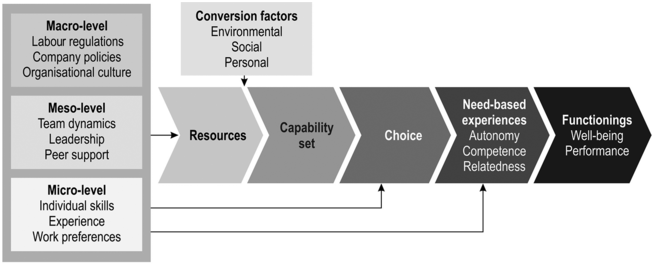
Integrating the CA with SDT provides a more holistic understanding of human motivation and well-being by addressing internal psychological needs and external structural opportunities. SDT provides a detailed understanding of how need satisfaction leads to motivation and well-being. Moreover, the CA adds a broader framework for understanding the external conditions necessary for individuals to exercise autonomy, develop competence, and foster relatedness. This integration is visually depicted in Figure 6.2.
Integrated framework of the SDT and the CA for enhancing well-being and performance.
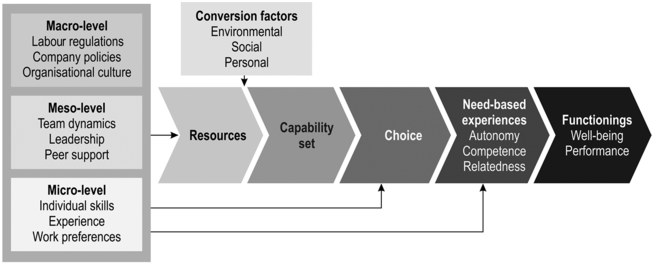
The figure shows how macro-level (e.g., national labour policies and organisational culture), meso-level (e.g., team dynamics, leadership styles), and micro-level (e.g., individual skills and experiences) factors [Reference Van der Klink, Bültmann, Burdorf, Schaufeli, Zijlstra and Abma7, Reference Ryan, DeHaan and Ryan33, Reference Meerman, Van Casteren, Brouwers, Van Dam, Van der Klink and Wiśniewska34] influence the availability of resources, which shapes the capabilities – or real freedoms – individuals can use to achieve valuable functionings. Furthermore, conversion factors (social, environmental, and personal) determine how effectively resources are transformed into capabilities [Reference Robeyns3, Reference Van der Klink, Bültmann, Burdorf, Schaufeli, Zijlstra and Abma7, Reference DeHaan, Hirai and Ryan35]. From this capability set, individuals make choices that affect their need-based experiences, particularly in relation to autonomy, competence, and relatedness. The satisfaction of these needs influences functionings [Reference DeHaan, Hirai and Ryan35], such as well-being and job performance.
For example, labour market policies that promote flexible working arrangements or offer training programmes enable individuals to exercise their autonomy and competence in a work context. These policies expand employees’ capabilities, allowing them to pursue meaningful goals and engage with work in ways that enhance their well-being. Social norms that support work‒life balance or inclusive workplace cultures also ensure that individuals can meet their psychological need for relatedness, enabling them to connect with others and build meaningful relationships at work.
Despite the clear synergies, several challenges exist in integrating the CA and SDT. One key difficulty is their differing levels of analysis. SDT centres on psychological processes and immediate social contexts influencing need-based experiences and motivation. In contrast, the CA operates at a broader level, addressing socio-economic structures and institutional factors that affect capabilities. Bridging these factors requires considering how macro-level factors (e.g., national policies or social norms) translate into micro-level experiences of need satisfaction and well-being. Therefore, one promising avenue is to focus more on how specific labour policies or organisational structures and practices influence employees’ capability to make autonomous choices, develop competence, and foster meaningful relationships. Another challenge is measuring capabilities (see Chapter 4). SDT benefits from well-established measures for psychological need satisfaction and motivation, whereas the CA’s multidimensional and context-specific capabilities are harder to measure consistently across different contexts. The complexity of assessing capabilities, particularly in ever-changing work environments, poses methodological challenges for empirical research. Nevertheless, Van der Klink et al.’s capability set for work, which outlines seven core work-related capabilities, offers promising ways to make the CA more empirically accessible [Reference Van der Klink, Bültmann, Burdorf, Schaufeli, Zijlstra and Abma7].
In conclusion, the integration of the CA and SDT allows for a more comprehensive framework for enhancing well-being at work and beyond. SDT sheds light on the psychological needs that drive motivation and growth, whereas the CA emphasises the societal structures that shape individuals’ real opportunities. Together, they inform practices and policies that support both the need for satisfaction and the freedom to pursue valued lives. This integration urges organisations and policymakers to address both psychological and structural barriers, promoting strategies that are both normatively grounded and psychologically sound to foster human flourishing across contexts.
The Integrative Model of Behavioural Prediction as Illustrated through the Guidance of Unemployed Individuals
A Brief Overview of the IMBP and Its Development
In addition to the other theories discussed in this chapter (e.g., ICF, JD-R, and SDT), the IMBP is a key framework for understanding and influencing human behaviour in contexts such as health, sustainable employability, and long-term unemployment. The IMBP and its predecessors have guided interventions across domains, from preventive health behaviour to job seeking [Reference Van Hooft, Born, Taris and Van der Flier36, Reference Van Hooft, Born, Taris, Flier and Blonk37, Reference Boermans, Van de Logt and Blonk38]. In our research, we use this model to support unemployed and sicklisted individuals in returning to work. While our examples are drawn from these areas, the IMBP applies to any behaviour.
The IMBP is the latest development in what is known as the reasoned action approach (RAA) [Reference Fishbein and Ajzen39]. The RAA, which started more than half a century ago, encompasses several theories that have developed over time, such as expectancy-value theories (EVT), the theory of reasoned action (TRA), the theory of planned behaviour (TPB), and, more recently, the IMBP. Our goal is not to provide a comprehensive overview of the five to six decades of research that led to the development of the IMBP. For those interested in deeper exploration, we recommend Ajzen’s essay on the legacy of Martin Fishbein’s work and other supporting literature [Reference Fishbein and Ajzen39, Reference Ajzen, Van Lange, Kruglanski, Tory Higgins and Ajzen40].
Among the precursors of the IMBP, both the TRA and the EVT emphasise the importance of attitudinal beliefs (values). The theories differ in the outcomes of these beliefs. In EVT, beliefs are related to the importance of a specific goal for an individual (e.g., the value of having a job) and personal beliefs about the likelihood of successfully pursuing that goal. In TRA, the beliefs (e.g., functional, useful, pleasant, fun) focus on performing a specific behaviour (e.g., job search) rather than the goal that the behaviour aims to achieve. While this difference seems minor, it helps us better understand the varying effectiveness of interventions and what drives unemployment: is it a matter of belief (motivational), behavioural issues, goal setting, or a mix of these and perhaps other factors not yet included in the model? As such, extending the TRA to include beliefs about perceived control is a small but significant step.
This extension draws on the social cognitive theory [Reference Bandura41]. To some extent, self-efficacy resembles the expectancy concept in the EVT, ultimately transforming the TRA into the TPB, which Ajzen describes as the premier reasoned action approach [Reference Ajzen, Van Lange, Kruglanski, Tory Higgins and Ajzen40]. Beliefs about perceived control refer to resources and obstacles that may foster or hinder a specific behaviour. Perceived behavioural control, or self-efficacy, encompasses beliefs about effectively conducting a required behaviour. This includes knowing what to do, having and managing resources, and dealing with obstacles. Applied to the job search process, these beliefs involve being confident in one’s ability to engage in effective job search behaviours, such as asking for help when needed and dealing with inevitable setbacks.
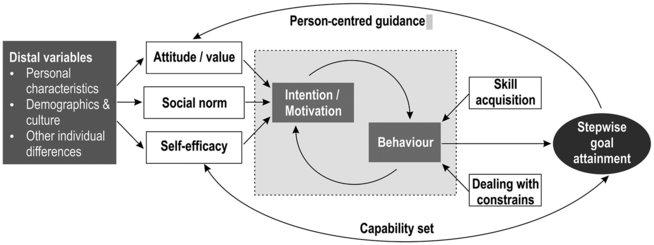
Until now, these models have focused primarily on factors that facilitate or hinder the intention or motivation to perform a specific behaviour. However, intentions are not enough; one also needs the skills and knowledge to perform the necessary behaviours (e.g., job search) to attain the goal (e.g., acquiring a job) and the opportunity to do so (e.g., job vacancies, inclusive labour employer behaviour). Fishbein and Ajzen extended the TPB into the IMBP by adding actual skills and environmental constraints as predictors to the model. By integrating these additional components, the RAA moved from centralising the intention and motivation in the TRA and TPB to centralising both motivation and behaviour in the IMBP. As such, the resulting IMBP framework provides a comprehensive approach to understand and predict behaviour and to develop effective interventions (see Figure 6.3).
A dynamic model combining the IMBP with the CA.
From: Predicting and changing behavior: The reasoned action approach by M. Fishbein and I. Ajzen, figure 1.1, page 22. Copyright (2010) by Psychology Press. Reproduced by permission of Taylor & Francis Group.

Figure 6.3 Long description
Distal variables like Personal characteristics, Demographics and culture, and other individual differences feed into three respective core cognitive pillars, Attitude slash value, Social norm, and Self-efficacy driving a reciprocal relationship between Intention slash Motivation and behaviour. The reciprocal relationship is supported by two external factors like Skill acquisition and Dealing with constraints leading to a step-wise goal attainment. The step-wise goal attainment features two major feedback loops, Person-centered guidance and Capability set.
This integrated framework coincides with the results of a meta-analysis on the effects of job search interventions conducted by Liu et al. [Reference Liu, Huang and Wang42]. Based on forty-seven studies that met the quality criteria of at least a quasi-experimental design, Liu and colleagues showed that job search interventions increased the likelihood of finding a job by a factor of 2.67 compared with no-treatment control groups. Liu et al. then conducted an in-depth analysis of the content of these job search interventions, revealing two main components: interventions aimed at enhancing motivation (e.g., improving job search self-efficacy) and those focused on developing specific skills needed to apply for a job (e.g., self-presentation). Their subsequent analysis revealed that interventions were only effective when they addressed both skill development and motivation enhancement [Reference Liu, Huang and Wang42]. This finding supports the notion that interventions based on models such as the IMBP should centralise motivation and behaviour in predicting outcomes.
The IMBP has proven flexible in incorporating additional insights. For example, the IMBP connects seamlessly with the SDT, and many of the factors in the ICF are reflected within the subconcepts of the IMBP. As the IMBP becomes more detailed and expands, researchers may debate its subconcepts’ specific content, relationships, and relative order. However, in our experience, complexity is reduced when this technique is applied as a diagnostic tool and as a foundation for designing interventions.
Combining the IMBP with the CA
Given its history and development, it is not surprising that the IMBP is open to the CA. The connection between these two approaches can be understood or established on four levels. First, the CA focuses on values – specifically, the aspects (beings and doings) that people have reason to value. This is also the case in the IMBP, which, with its roots in EVT, highlights the importance of the values people assign to their goals as key aspects of motivation and perseverance.
Second, the concept of agency is important in Sen’s work, which resonates with the notion of self-efficacy (akin to SDT’s notion of competence). Even though Sen has a much broader and deeper notion of agency, the development of an individual’s sense of self-efficacy can be understood as a process of the social construction of meaning in which relationships with case managers, as well as collective systems such as social services or team dynamics, play an important role in shaping an individual’s sense of self-efficacy. For example, the most influential source of self-efficacy beliefs is an individual’s interpretation of one’s performance or mastery experience. As such, recognising and affirming experiences or providing support when confronted with setbacks may work to encourage and empower individuals in their job search, while downplaying can work to defeat and weaken self-efficacy beliefs.
Third, the IMBP describes the role of environmental and individual constraints or hindrances that may impede behaviour and goal attainment. These constraints can include not only physical or mental disabilities but also factors such as stigma, discrimination, and reduced access to resources. When applied to guiding the unemployed (back) to work, the IMBP does not differ from the CA in these aspects. However, unlike the CA, the IMBP is not a normative model. It merely describes the factors related to the model’s central aspects, thus contributing to its predictive quality.
In line with the ICF, JD-R, and SDT, this normative nature also extends the IMBP on a different level that encompasses all aspects of the model. This extension arises from the CA’s focus on the quality of the goals being pursued and the personal agency to pursue them. For example, in the context of guiding unemployed individuals, the CA emphasises that work should be something people have reason to value. In some cases, especially when social benefits are at stake, the focus of employment guidance may shift from helping the job seeker find meaningful work to minimising costs for society. While this shift does not always lead to lower-quality outcomes, it increases the risk of steering individuals into jobs that might negatively impact their health or other long-term outcomes.
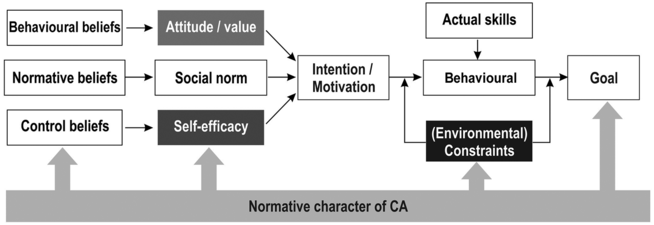
Therefore, the fourth point is that combining the CA with the IMBP would advocate for person-centred employment guidance, with a focus on sustainable outcomes (see Chapter 2, Appendix 2.1 for a start on this). Where the IMBP explains a person’s behaviour in pursuing a job, CA can help translate insights into effective strategies for behaviour change based on the IMBP into normative principles for employment guidance or the development of labour market policies. For example, strategies that encourage the pursuit of personal career ambitions (attitude/value), boost self-efficacy to achieve these ambitions, and reduce environmental constraints (see Figure 6.4). Such an approach would use the IMBP but view and apply its aspects through the lens of CA, ensuring that the guidance process is aligned with meaningful, long-term benefits for the individual.
Foci of combining the IMBP and the CA.

Figure 6.4 Long description
Behavioural beliefs influencing an individual's attitude or value, Normative beliefs influencing the social norm, and Control beliefs determining an individual's level of Self-efficacy converge to form an individual's Intention or Motivation moderated by Actual skills and Environmental Constraints thereby leading to behavioural action and Goal attainment.
Discussion
This chapter explored how integrating the CA with other prominent models enhances our understanding of flourishing and sustainable employment. By examining these synergies, we sought to demonstrate how each model complements the CA, and vice versa, to offer a more holistic view of well-being in work and social contexts.
A key takeaway of these integrations creates a more comprehensive foundation for promoting well-being. The ICF [13] helps operationalise the CA by illustrating how contextual factors shape functioning. The JD-R model adds insight into job demands and resources [Reference Demerouti, Bakker, Nachreiner and Schaufeli23, Reference Bakker, Demerouti and Sanz-Vergel24], which, when integrated with the CA, extends the focus to capability expansion and workplace agency. SDT, with its focus on innate psychological needs, provides a detailed understanding of the connection between need-supportive environments and well-being [Reference Ryan and Deci29], which the CA enhances by considering broader or more distal external opportunities and conditions for need support. Finally, the IMBP complements the CA by providing insights into how behavioural intentions and determinants translate into realised functionings, addressing a gap in the CA’s explanation of how opportunities are converted into actions. Together, these integrations enrich the CA’s practical and explanatory relevance. While the CA is normative rather than explanatory [Reference Robeyns3, Reference Sen5], integrating it with empirical theories strengthens the link between determinants and outcomes such as behaviour and well-being [Reference O’Brien and Cooper44].
Another important lesson is the CA’s distinctive normative orientation. Unlike fixed models, the CA avoids assigning universal meanings to concepts such as ‘health’ or ‘employment’. Instead, their significance is defined by individuals’ values and circumstances, enabling more tailored assessments of well-being and personalised interventions, as shown in Chapters 2 and 10.
These insights point to promising directions for future research. Studies could evaluate health-promoting interventions that blend CA and JD-R model elements and examine how CA–SDT integration facilitates both behavioural internalisation and the high-level external conditions necessary for this beyond organisational settings. Further work could also investigate how macro-level policies and micro-level practices interact to shape individual capabilities, need-based experiences, and motivation, bridging the gap between broader societal structures and individual well-being. Advancing measurement tools, such as those developed by Van der Klink et al. [Reference Van der Klink, Bültmann, Burdorf, Schaufeli, Zijlstra and Abma7] and Abma et al. [Reference Abma, Brouwer, De Vries, Arends, Robroek and Cuijpers45], can also enhance the operationalisation of capabilities in dynamic work contexts. Additionally, aligning (re)employment strategies with individuals’ values and capabilities could ensure that work meaningfully contributes to long-term flourishing.
Finally, we call on theorists and practitioners to embrace the CA’s empowerment-focused perspective. While many traditional models provide descriptive insights into human behaviour, the CA offers a unique perspective by emphasising what individuals should be able to achieve based on what they have reason to value. This normative focus encourages a shift from merely addressing current states to actively expanding opportunities for valued functionings [Reference Robeyns3, Reference Sen4]. By integrating normative evaluation with explanatory mechanisms, theorists and practitioners can move beyond understanding behaviour and well-being to foster environments that prioritise human flourishing across diverse settings.
Conclusion
In conclusion, this chapter highlights the value of integrating the CA with four other established theoretical models to provide a more holistic understanding of well-being. The combined frameworks offer valuable insights for improving individual and organisational outcomes by emphasising both internal psychological processes and external enabling factors. Future research should continue to explore these integrations, focusing on practical applications that align with the normative, improvement-focused nature of the CA, ultimately contributing to more inclusive and supportive workplaces for all.


 Open access