

Introduction
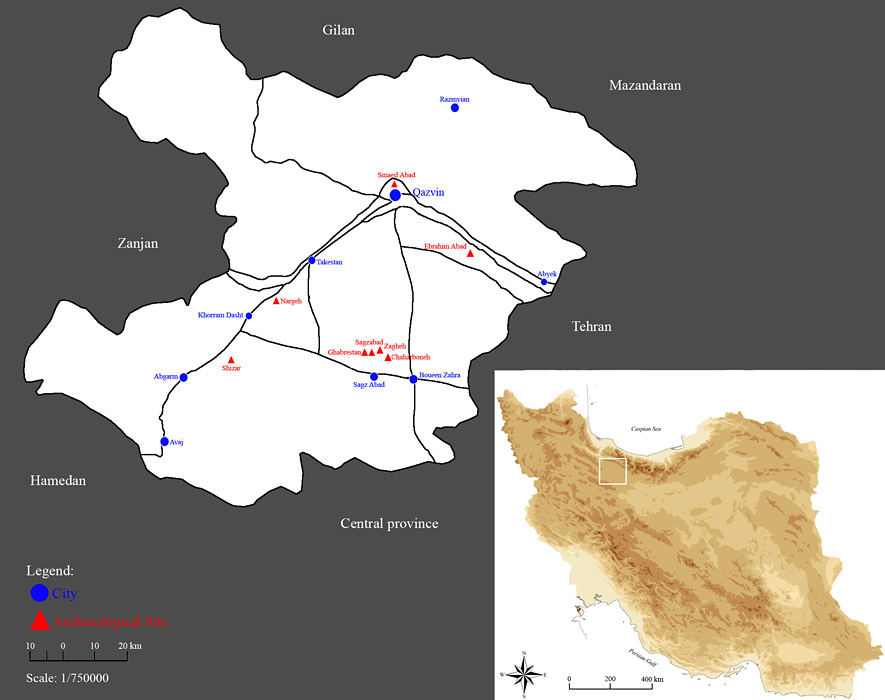
Map of Iran and location of Qazvin Province.

Over 50 years ago, Oppenheim (1959: 121) argued that variously-shaped small clay 'tokens' from Mesopotamia were used as counting objects. Reference AmietAmiet (1966) elaborated their function as a recording and accounting systemone which led ultimately to writing and its associated cognitive skills toother economic, social and conceptual changes (Reference Schmandt-BesseratSchmandt-Besserat 1992: 68). This token system was the earliest system of signs (code) used for transmitting information from community to community. Each token represented one symbolic concept: the cone and sphere represented measures of grain, the cylinder or lenticular discs showed a unit of animals and so on (Reference Schmandt-BesseratSchmandt-Besserat 1992: 162). The need for counting, and accounting, was related to agriculture and the associated demographic and socio-political changes. The tokens served for budgeting, managing and planning resources to enhance productivityand, to the archaeologist, they disclose the resources of past communities (Reference Schmandt-BesseratSchmandt-Besserat 1992: 197). Tokens from 80004400 BC are plain with geometric and naturalistic shapes for keeping track of the products of farming and the numbers of animals; tokens from 44003200 BC have greater diversity of shapes and markings and were used, additionally, for tracking the products manufactured in workshops.
Tepe Zagheh
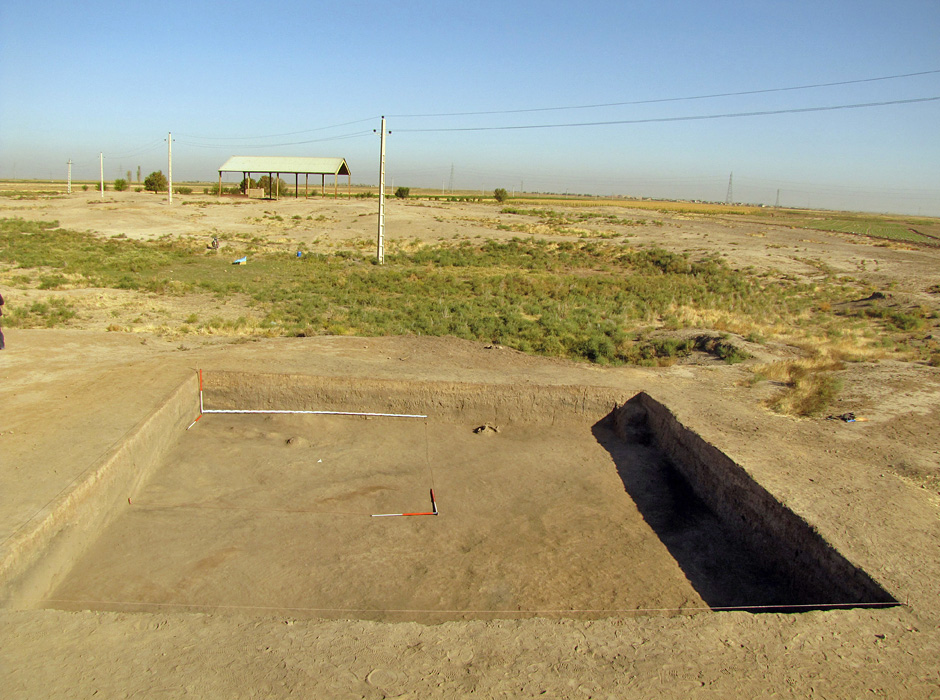
Tepe Zagheh is located c. 60km south of Qazvin city and 140km west of Tehran in Qazvin plain on the Central Plateau of Iran (Figure 1). The site covers 210m x 145m (c. 4ha), with nearly 6m of occupation deposits (Figure 2). The chronology of the site is debated. Malek Shahmirzadi (1977) has argued that the lower phase of Zagheh corresponds to the Archaic Plateau period (Pottery Neolithic), earlier than 6000 BC, while the upper phase is attributed to the Early Plateau (transitional Chalcolithic) (Malek Shahmirzadi 1977). New radiocarbon dates derived from the re-excavation of Zagheh in 2001, however, indicate that the site had only a single period (Transitional Chalcolithic); it was settled c. 53705070 BC and abandoned c.44604240 BC (Fazeli Nashli et al. 2005: 73, tab. 24).
General view of Zagheh and location of Trench N30 in southern part of siteview from the south.

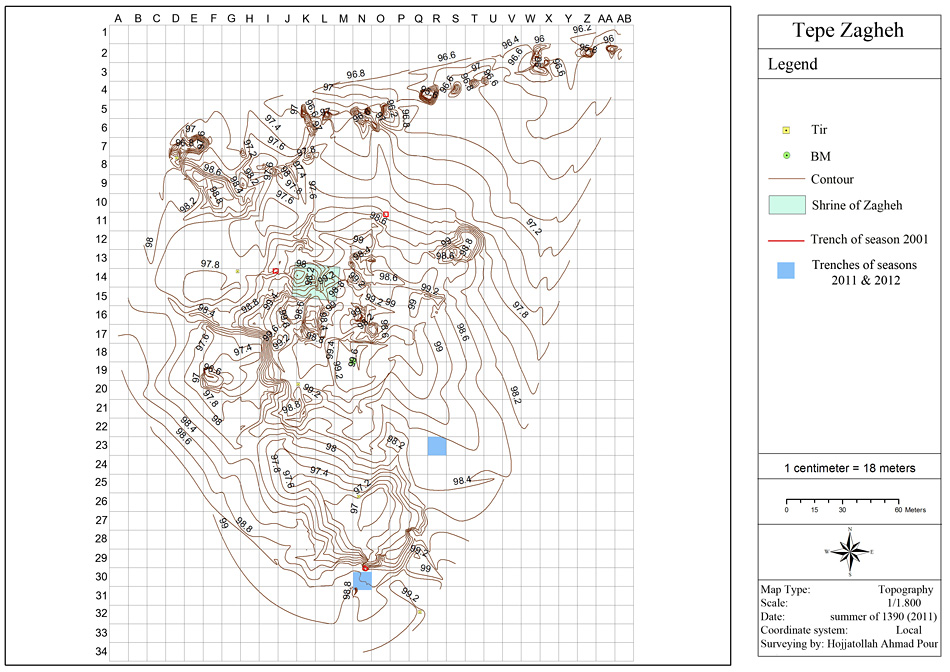
Topographical map of Zagheh with location of trenches.

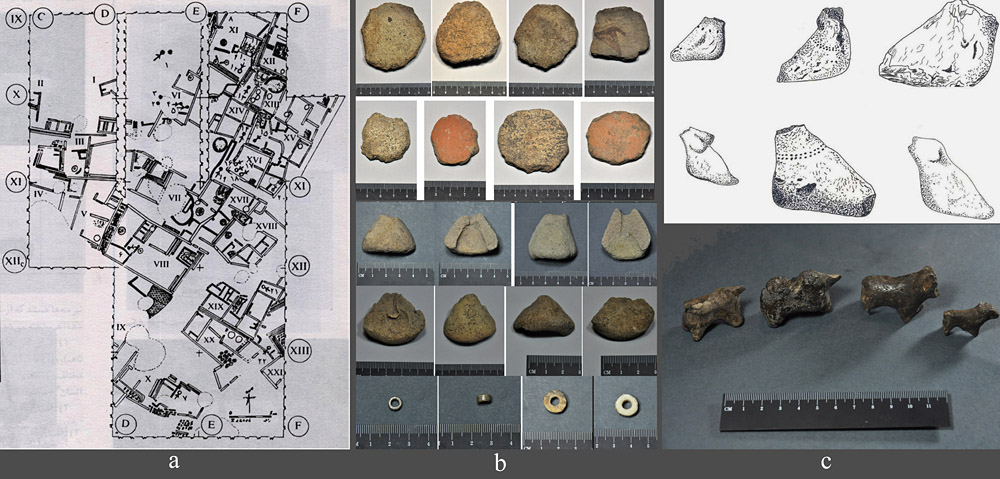
In order to better understand the organisation and mode of production, in 2011 a large 10 x 10m trench (N30) was opened on the south of site by the Department of Archaeology of the University of Tehran (for the 2012 season it was limited to 5 x 5m; Reference Fazeli NashliFazeli Nashli 2011, 2012) (Figures 2 & 3). In spite of excavation to a depth of 2.2m, no structures or features were identified; instead, we discovered ashy deposits and burnt clay layers containing prepared clay, ceramic tools, slags, broken figurines, potsherds, animal bones, stone tools, spindle whorls and tokens (Figure 4b & c). These materials suggest that Trench N30 is situated in a non-residential part of the site, a place for depositing household debris and craft activity waste.
(a) Plan of residential context of site (after MalekShahmirzadi 1979); (b) pottery objects (tools), spindle whorls and stone beads; (c) stylised human and animal clay figurines.

Counting objects (tokens) of Zagheh
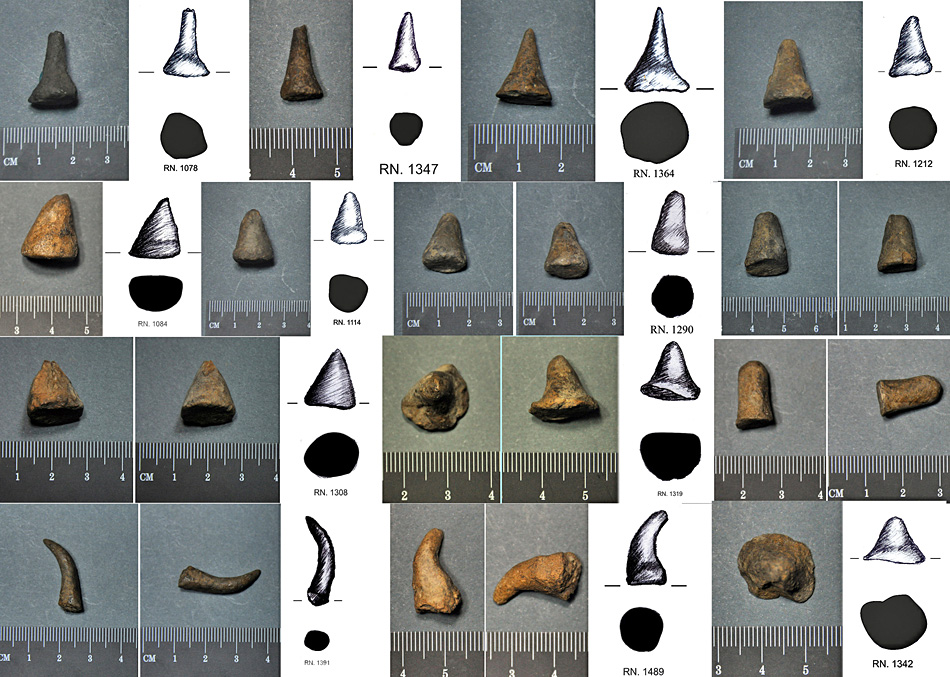
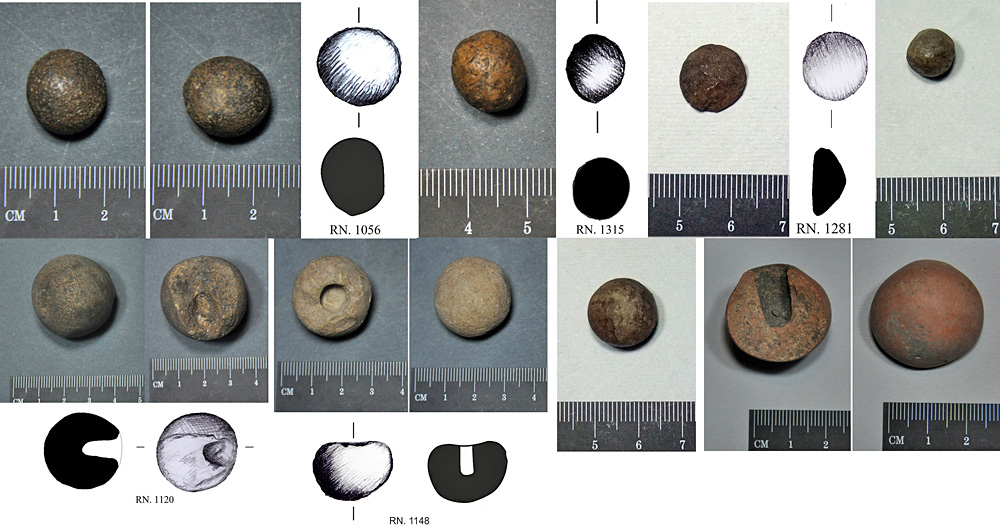
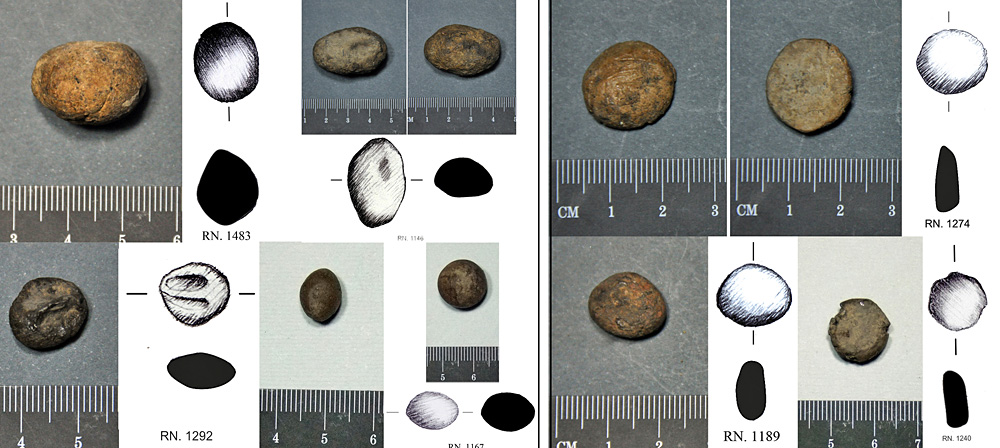
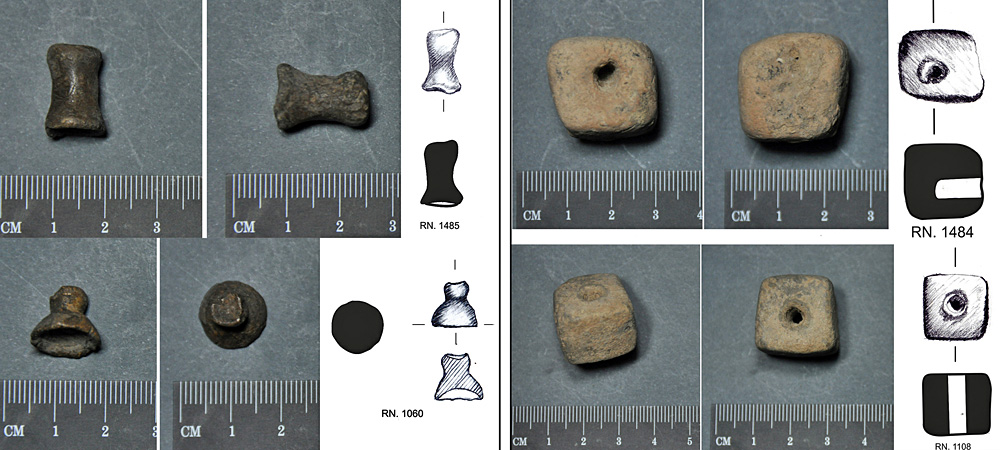
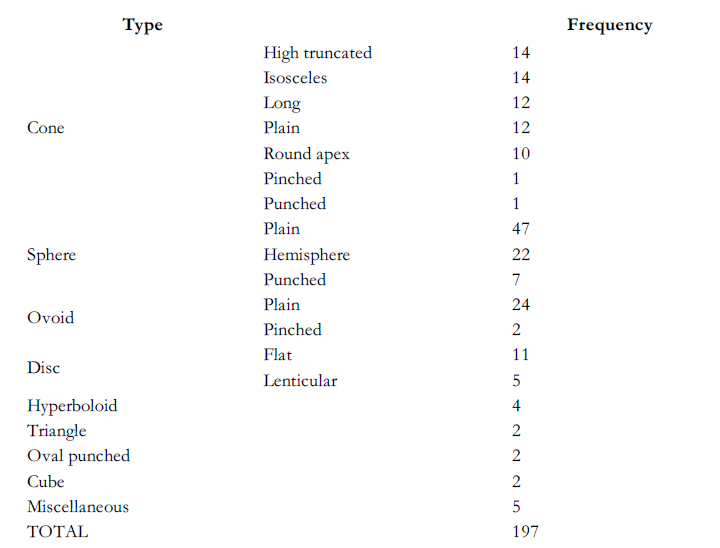
Schmandt-Besserat's Before writing (1992: figs. 25.1 & 25.2) includes description and analysis of 29 tokens from Zagheh, deriving from the pre-Iranian Islamic Revolution excavations (Reference Negahban and KiyaniNegahban 1976, 1977; Malek Shahmirzadi 1977). Since then, no significant study of these Zagheh tokens has been conducted (though note some references by Malek Shahmirzadi 1977 and Reference SalehiSalehi 1997). The two recent excavations at Zagheh have produced 197 further tokens including plain examples in the following geometric shapes: cones (Figure 5), spheres (Figure 6), ovoids (Figure 7), discs (Figure 7), hyperboloids (Figure 8), cubes (Figure 8), triangles, ovals and miscellaneous others (Table 1). All the tokens were made of baked clay, with the exception of two spherical stone tokens. Their core and surface are usually black and grey due to incomplete firing.
Sample of cone tokens.

Sample of sphere tokens.

(left) Sample of ovoid tokens; (right) sample of disc tokens.

(left) Hyperboloid tokens; (right) cube tokens.


In the current study, Schmandt-Besserat's typology was used for sorting the data. She assigns the Zagheh tokens to 65005500 BC alongside other Neolithic sites in Iran (Reference Schmandt-BesseratSchmandt-Besserat 1992: 42). Zagheh, however, includes transitional Chalcolithic occupation (c. 53004300 BC). Also, the newly recovered tokens were retrieved from garbage deposits, that is, a different context from those retrieved from residential contexts and studied by Schmandt-Besserat. Wright et al. (1980: 277) argue that tokens in rubbish pits indicate that they were discarded after the harvest, during the traditional season for feasts.
Discussion and conclusion
Tepe Zagheh was a farming community which their subsistence economy was based on exploited domesticated animals and plants, hunting and gathering (Mashkour et al. 1999; Fazeli Nashli et al. 2009), and has yielded critical indicators of ranked societies including settlement size, shrines (or painted buildings) (Reference NegahbanNegahban 1979), density of residential buildings (Figure 4a), burial ranking, standardised pottery production, and the initial level of separation of residential and ceramic production areas. The most important aspect of these social changes consists of the creation of an elite overseeing a redistributive economy (Reference Schmandt-BesseratSchmandt-Besserat 1996: 101).
Tepe Zagheh includes transitional Chalcolithic period (fifth millennium BC) occupation, also known as the Cheshmeh-Ali or Sialk II culture in central plateau of Iran; there is an analogous culture in Qazvin, Kashan, and the Tehran plains of the north Central Plateau in this period. During the preceding Pottery Neolithic period, however, the cultures were local and distinct. This suggests that, in the transition to the Chalcolithic period, intra- and inter-regional interactions evolved on the north Central Plateau which coincided with the rise of common social structures and the development of accounting systems. In the subsequent pre-urban period, complex tokens and pictograph tablets replaced the simple tokens under discussion hereand subsequently continued to develop, evolving into writing.
Use of tokens had significance for the evolution of social structure, communication, bureaucracy, economy and cognitive skills; it also marks the beginning of a technology that became paramount for the evolution of civilisation (Reference Schmandt-BesseratSchmandt-Besserat 1992: 19698).
Acknowledgements
We are grateful to the archaeological expedition for two seasons of excavation at Zagheh: Messrs Davoudi, Hoseinzadeh, Darabi, Azizi and the students of the Department of Archaeology at University of Tehran (UT) in 2008 & 2009. We also wish to thank Dr Niknami, former Director of the Department of Archaeology of UT, Dr Laleh, former director of Archaeological Institute of UT, and Dr Mir Skandari, former director of ICAR, for their contribution. We wish to special thank Professor Denise Schmandt-Besserat for her guidance and helps.