

In the opening scenes of Spike Lee’s 1989 film Do the Right Thing, character after character lets the audience know how hot it is. Da Mayor awakes in a sweat and curses “Damn! Ughh ... it is HOT!” Soon enough, we hear the local DJ speaking through Da Mayor’s bedside radio, telling his listeners that the forecast for the day is “HOT!” And, the DJ, Mister Senor Love Daddy, adds, “the color for today is black. That’s right, black, so you can absorb some of those rays and save that heat for winter.” The first words out of Sal, whose pizzeria air conditioner is broken, are: “It’s hot.” And Mother-Sister explains from her perch in an open window that, in the coming hours, “it’s going to be HOT as the devil.”Footnote 1 The day awaiting them in the Bedford-Stuyvesant section of Brooklyn, on Saturday, August 5, 1989, will indeed be hot. Children on the street will open up the fire hydrant for relief, a man will caress his lover’s body with ice, and the already existing racial, ethnic, workplace, and familial tensions will become intensified to the boiling point. Tempers will flare.
The weather, importantly, does not operate merely as a visual metaphor, an atmospheric symbol of social feeling. The film is certainly a response to incidents of police and white mob violence against black men and women in 1980s New York City, but it is at the same time an inquiry into the lived and racialized experience of what scholars now call the “urban heat island effect.” Along with the details of a 1986 case of a black Bedford-Stuyvesant youth, Michael Griffith, who suffered from a racially motivated beating outside a pizza parlor in Queens that led to his death, we need also to consider the fact that 1988 was a year of “record-breaking heat and drought in North America,” resulting in the creation of the Intergovernmental Panel on Climate Change.Footnote 2 Lee’s working title for the film was “Heatwave” and, to the typical establishing details (time and place) at the top of his script, Lee added the category “WEATHER,” describing it as “Hot as shit!”Footnote 3 Moreover, Lee got the idea for his film from a 1956 “Alfred Hitchcock Presents” episode, written by Ray Bradbury, about a retired insurance agent who is so agitated by the statistically significant correlation between “infernal heat” and violent deaths that he hunts the streets for cases of this “killing weather.”Footnote 4 Lee borrows from Hitchcock and Bradbury’s story the thought that weather and temperature do not just provide a setting for characters, but enter and effect their bodies – their nerves, and organs, and cognitive processes. Lee adds to their story a consideration of how urban black and Latino/a people “absorb” this material and social heat.
Indeed, a few scenes into the film, we realize that Lee is not only considering the customary variability of weather and how the built and social environment of this Brooklyn neighborhood in August intensifies its occasional dangers, but that he is also thinking about global temperature averages over time, how they are altering, and how this one day of devilish weather may augur forth a future scenario. In short, we realize that Lee is thinking about race in a time of climate change. It is in the talk of the “Corner Men” that weather turns into climate (Figure 4.1).
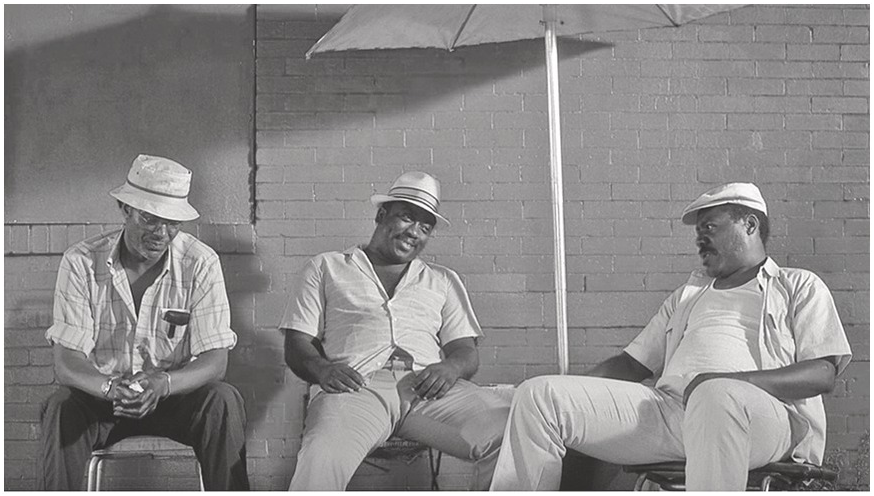
Figure 4.1 Spike Lee, Do the Right Thing (1989).
These three men, ML, Sweet Dick Willie, and Coconut Sid, as the script indicates, offer “talk, talk, and mo’ talk.” As they get “philosophical,” Lee adds more reverently, they become “the great thinkers of the world, with solutions to all its ills.”Footnote 5 ML tells the other two: “Well gentlemen, the way I see it, if this hot weather continues, it’s going to melt the polar caps and the whole wide world and all those parts that aren’t water already will surely be flooded.” Coconut Sid is a climate change skeptic: “You a dumb-ass simple motherfucker. Now where you read that shit, eh? The polar caps, sheeh.” ML is adamant: “When it happens, and I’m in my boat, and your black asses are drowning, don’t call for me to throw you no rope, no lifesaver, or no nothing.” Sweet Dick Willie has been chuckling and now chimes in: “You fool. You’re 30 cents away from having a quarter! Where the fuck you gon’ get a boat?” After a minute though, he begins to open his mind: “So when is all this goddamn ice supposed to melt?”
Note the immediate environment of the Corner Men’s conversation: a concrete sidewalk below them, an asphalt street full of cars in front of them, and a bare brick wall behind them, painted red per Lee’s instructions to convey its heat-trapping properties. An umbrella is above them, but set too high to provide shade. Asphalt, brick, and concrete are all “man-made impervious surfaces,” which efficiently absorb and store thermal energy throughout the day and then release it very slowly, making urban summer evenings especially hot.Footnote 6 The passing cars emit waste heat. And no trees are there to cool the temperatures.
As environmental scientists have shown, urban warming in large cities has had impacts “as great, or greater than, the impact of global climate change on local temperature trends”; indeed, many cities are warming at a rate more than double that of the planet as a whole.Footnote 7 Moreover, in US cities like Atlanta, Philadelphia, Chicago, and Phoenix, there is a “spatial association between income and [the] imperviousness” of the heat-trapping manmade surfaces used in building and infrastructure, one that is “even more pronounced with respect to disparities in race.”Footnote 8 While multiple factors are at play in determining a person’s vulnerability to heat-related illness and death – level of age, education, income and housing values, proximity to the urban core, settlement density, lack of vegetation and open space, availability of central air conditioning, and social or linguistic isolation – it is non-whiteness that, for historically produced reasons, correlates with most of these other risk-increasing factors.Footnote 9 Neighborhoods of color, as one study drily put it, “tended to host mortality cases more disproportionately.”Footnote 10 The “riskscape” for heat deaths, in other words, is also a racescape.Footnote 11 Finally, as scholars of public health, environment, and urban geography point out, these conditions will only intensify in years to come with climate change.
I am suggesting, then, that seventeen years before Spike Lee would edit news footage of New Orleans families coping with heat stress and death in the Superdome, on asphalt roofs and overpasses, and in the upper stories of old houses during the 2005 levee disaster (aka “Katrina”) for his documentary When the Levees Broke (2006), he was already mindful of the connections between weather events, infrastructure and race, and specifically between climate change vulnerability and blackness. Ahead of the trend in critical race studies, Lee was going beyond that scholarship’s tendency to focus on social structures; instead, he was already “interrogating socio-ecological relations.”Footnote 12 Given that temperatures have risen faster in urban heat islands than elsewhere in the United States, offering a preview of anthropogenic climate change everywhere else, I would argue that the “Heatwave” Lee is building a story around is an anticipatory investigation of the race and climate change overlap. While scholars have drawn our attention to the “climate gap” in communication, in which climate experts attending to large-scale abstractions fail to take into account the everyday experiences and worries of those most vulnerable to its effects, one could argue that – contrary to this “gap” in scientific thinking – the Corner Man, ML, uses his immediate sidewalk experience as evidence with which to scale up toward a global prophecy of future conditions. Sweet Dick Willie brings his friend back to future tactics, though, when he asks him where he’s going to get this boat, this Noah’s ark, when he doesn’t and won’t have any money to buy it with. Just because you’re a prophet, Willie suggests, doesn’t mean you’ll have the material means to save yourself when the flood arrives. Without resources, knowledge is not power.
I have begun my chapter on “Climate and Race” with this scene from Do the Right Thing considered in the context of scholarship on urban heat islands so as to make evident a crucial mode in which climate and racial grouping intersect now and will continue to intersect going forward. (Other overlaps, nationally and globally, will be climate change-intensified storms, droughts, and food insecurity issues that will disproportionately affect people of color.) I want now to jump backward in time, to the early modern period, and work gradually forward, to understand the long history of how people in Europe and America theorized the intersection of climatic and human variety. In distinction from what contemporary geneticists contend about the ways that racial categories fail to correlate with miniscule genetic variations between human groups, and in distinction from ancient and early modern theorists who believed that bodies were so porous as to be composed differently by different environments and liable to change as they relocate, the most consequential modern race theorists gained traction by attending to bodily surfaces, and defining them as indexes of invisible and immutable features underneath.
I want to spend the rest of the essay tracing – through a set of influential commentators – the ways in which this modern concept developed and how climate featured as an aspect of, and sometimes as a counterpoint to, this history of thinking. I will return at the end to our own moment. Basically, the historical mystery Lee’s film asks us to solve and that this essay will address is: how were races invented and imposed in the Atlantic world (especially in the United States) and how has relative environmental safety or vulnerability been a key aspect of racialization? How did bodies drawn from different continents, without any actual deep distinctions between them, become, in a public health sense, actually more or less vulnerable to climates and climate change? How did a phantom invention come to have these particular physical consequences, which makes race real as a social effect?
Benjamin Isaac defines racism as an “attitude towards individuals and groups of people which posits a direct and linear connection between physical and mental qualities. It therefore attributes to those individuals and groups of peoples collective traits, physical, mental, and moral, which are constant and unalterable by human will, because they are caused by hereditary factors or external influences, such as climate or geography.”Footnote 13 Though I agree with Isaac’s point about how racism attempts to set the meaning of the invisible by the seeming proof of the visible, it is important to understand how unstable a relation there has been, since the early modern period, between race and “climate or geography.” In particular, climate was not always associated with durable, movable human traits. In other words, people believed that people’s bodies could quickly change as they moved from one climate to another.
As Jorge Canizares-Esguerra has put it, “the early-modern body was not a well-enclosed space designed to remain stable over generations.”Footnote 14 Gail Kern Paster characterizes this body as a “porous envelope.”Footnote 15 Because of popular theories of environmental humoralism, revived from classical texts, the body was understood to be, in Helkiah Crooke’s words from 1615, “Transpirable and Trans-fluxible, that is, so open to the ayre as that it may passe and repasse through them.”Footnote 16 The Spaniard Juan Huarte, whose Examen de Ingenios was translated into English in 1616, held that “the manners of the Soule follow the temperature of the bodie, in which it keepes residence, and that by reason of the heat, the coldnesse, the moisture, and the drouth of the territorie where men inhabit, of the meats which they feed on, of the waters which they drink, and of the aire which they breath.”Footnote 17 The soul is permeable by its body, which in turn is permeable by its territory. How different then, Huarte continued, are “Greekes from Tartarians, Frenchmen from Spaniards, Indians from Dutch, and Aethiopians from English.”Footnote 18 For all these geographically based varieties, no one population was stable in its difference, for, Huarte concludes, remarking both on the body’s tendency to be in a constant state of change, but also on the responsiveness of the body to self-management: “The matter whereof man is compounded, proveth a thing … so subject to corruption, that at the instant where he beginneth to be shaped, he likewise beginneth to be untwined, and to altar.”Footnote 19
English commentators in this period set out to positively redefine their own climate as they combatted stigmas of northerliness handed down from classical, Mediterranean sources.Footnote 20 While they were busy redefining their latitude as physically and culturally ideal, they had to encounter a new problem, or an opportunity cost, brought on by their desired colonization of the Americas, especially its tropical (and most profitable) reaches in and around the Caribbean Sea. If the English body could become an equatorial body once it lived in that latitude, or climatic band of the earth, then how could the English nation’s nascent sense of its unique character be preserved during colonial expansion? Promoters of colonization like George Best attempted to make identity more stable, hereditary, and invulnerable to travel by rooting it in biblical narrative and divine decree. Writing in 1578, even before the earliest English settlement in North America, Best reminded his readers of Noah and his three sons and how God had “caused one of them [Cham] to transgress and disobey his father’s commandment, that after him all his posterity should be accursed.” Therefore, Best reasoned, “the cause of the Ethiopians’ blackness is the curse and natural infection of blood, and not the distemperature of the Climate. We may therefore very well be assured, that under the Equinox [Equator] is the most pleasant and delectable place of the world to dwell in.”Footnote 21 In other words, you will keep your English body even under a scorching sun.Footnote 22
English colonists born in or long residing in the Americas felt much less certainty that their bodies – including their minds, morals, and hence cultural inheritances – were remaining stable in the western hemisphere. Puritan divine Cotton Mather averred in 1696 “That many sorts of Inferiour Creatures, when Transplanted from Europe into America, do Degenerate by the Transplantation; But if this Remark must be made upon the People too, what can we do, but spend our Tears upon such a sad Remark?” It is as if, he continued to worry, “the climate had taught us to Indianize.” Mather and others called this phenomenon “criolian degeneracy.”Footnote 23 As against a divine call for radical Protestants in America to be a world vanguard of Reformation, such creolization indicated that the climate could, in a sense, materially override spiritual exceptionalism. Satirists would revel in such “sad” scenarios. In 1708, for example, Ebenezer Cooke made fun of the tobacco planters of Maryland: here were “Figures so strange, no God design’d, / To be a part of Humane Kind: / But wanton Nature, void of Rest, /Moulded the brittle Clay in Jest.”Footnote 24 Once again, wanton American nature undid divine English bodies.
Meanwhile, in the middle of the seventeenth century, the laboring population of the plantation South and Caribbean was transforming from a mix of workers of British, West African, and Native American ancestry, operating under varying terms of unfreedom, to a predominantly African-born or descended labor force whose permanent slavery would be passed down inter-generationally. Laws began to be passed in the 1660s that in a variety of ways set “Christian white servant[s]” above enslaved and free “negroes or mulattos.”Footnote 25 Debates are ongoing about how much anti-African bigotry predated – and hence inclined English people toward – the foundation of “race”-based slave societies, how much the precedent of African-sourced slavery had been structurally set in Ibero-America, or whether much of the ideological armature of racism was developed as a post-hoc measure to justify a transformation in labor force brought on by impersonal factors like comparative disease resistances, shortages of English labor supply, the direction of Atlantic Ocean currents, or distinct notions of property in England and Sub-Saharan West Africa.Footnote 26 As we can see from Best’s invocation of a biblical curse on Africans, or the English trying to valorize their own climatic inheritance over and against tropical people, the ideational means were present for imagining English “superiority” from the beginning of westward colonization and even before England’s active involvement in seizing and trading people from West Africa.Footnote 27 The relatively interrogatory theorizations about why people in different climates looked different and whether people’s bodies could be remade by transplantation nevertheless continued for much of the eighteenth century in British America. Concurrent with nationhood, though, the “science” of racial difference became more inflexible.
With his Notes on the State of Virginia, written during the Revolutionary War when the would-be nation needed to promote itself to European allies, Thomas Jefferson refuted two centuries of representations of European degeneration in America. Specifically, he set out to counter the French naturalist Georges-Louis Leclerc Comte du Buffon’s charge that, because of America’s wet and cold climate, all biology diminished and degraded in scale and quality there. Jefferson published a positive thesis about American nature and the bodies it made. The indigenous man for example is “brave,” “his sensibility is keen,” and “his activity of mind is equal to ours”; it is only the “circumstance” of his nomadism and not his “nature” that negatively alters certain traits.Footnote 28 It was so important for Jefferson to establish that the humans long fashioned by the North American climate had biological, moral, and mental worth because such a fact laid the ground for the Euro-American inheritance of this portfolio of good, environmentally rooted traits. While the “race of whites, transplanted from Europe,” he argued, had absorbed the vitality and bounties the American climate produced, somehow those transplants of African descent, no matter if they had resided in the western hemisphere longer than Euro-Americans, were fated to remain, biologically and mentally, aliens.Footnote 29 Their “difference is fixed in nature,” Jefferson declared.Footnote 30 All Africa-descended people, and people sharing African and European ancestry, paradoxically, were somehow not open to the positive influences of their proximate American environment. In short, Jefferson needed to have his climate-race theory two ways: the American climate had fashioned the Indian and the Euro-American “on the same module” while some more abstract, partisan, and, in effect, racist “nature” had permanently “fixed” black “difference.”Footnote 31
Thus we see, at the inauguration of US nationhood, the publication of a highly influential – while wholly inconsistent – theory of how American climate (defined at the hemispheric level) makes certain bodies in its goodly image while refusing to nativize other bodies. We see a way around the problematic thought that climate might assimilate all of its bodies to each other by Jefferson’s scaling up to a more abstract, less climatical, “nature.” While Best appealed to biblical writ and blood lineage, Jefferson appealed to a “nature” that had been gradually enshrined over the course of the Enlightenment as a key arbiter of socially produced meanings. It was “Nature and Nature’s God,” for example, that for Jefferson authorized colonial revolt against Britain in the “Declaration.” So stark was the late eighteenth-century Anglo-American investment in natural difference between “white” and “black,” then, that a son could be born to Jefferson, share the surrounding climate, half of the same lineage, the same Protestant religion, and the same language, but, because of nature’s arbitrary power to “fix” “difference,” would not have been considered to be of the same “race” as his closest of kin.
From the 1830s onward, American scientists of European birth or ancestry like Samuel Morton, Louis Agassiz, George Gliddon, and others deepened the concept of natural racial difference. For some, geologists’ argument for a terrestrial timespan longer than measured by biblical writ allowed them to imagine that climates had shaped, but also eternally fixed, racial differences in a prehistoric era. Climate was thus mainly present in Euro-American race theory of this period as an ancient actor. Additionally, these theorists sought to locate race not only on the surface of but more importantly and durably under the skin. As debates on the morality and tenability of race-based slavery and Indian displacement intensified in the United States, this scholarship offered sub-dermal justifications for “race” as a basis for slavery or conquest.
In the 1830s, Samuel Morton weighed and measured skulls of far-flung peoples whom he believed were distinct species created by God for separate regions and who primevally adapted to “varied circumstances of climate and locality” around the globe; this diversity was long-enduring and basically unalterable once it was established. He calculated that Caucasians had the largest cranial capacity and hence the “highest intellectual endowments.”Footnote 32 Morton’s ideas had a particularly strong uptake in the slave-holding South. Josiah Nott and Samuel Cartwright, doctors practicing in Alabama and Louisiana, helped to disseminate and manipulate Morton’s data into a definitively pro-slavery argument. In his 1851 “Report on the Diseases and Physical Peculiarities of the Negro Race,” Cartwright decreed that skin is only the most superficial indicator of “other differences more deep, durable and indelible, in [African Americans’] anatomy and physiology.”Footnote 33 He covers his bases by reminding readers of the Biblical curse of servitude cast on Noah’s Africa-bound son, and then adds that the “revelations of anatomy [and] physiology” are a “mere re-writing of what Moses wrote.”Footnote 34 Finally, he enlists climate as a third prong in his pro-southern slavery argument, stating that “cold air is inimical to the lungs of healthy negroes” because they were a tropical race.Footnote 35 Southerly black servitude, then, was necessitated by laws of anatomy, physiology, the Old Testament, and climate. In this mid–nineteenth-century school of thought, the threat that climates posed to human bodily stability in the sixteenth century had been quelled; climates were now imagined to have done their work of making and fixing race pre-historically and to have finished that work long ago. By aligning the depth of the body with deep time, these writers countered ideas of potential speedy surface alterations.
Frederick Douglass combatted both racist science and the institution of slavery on multiple fronts, one of which was climate theory. By returning climate’s effects to a quicker pace, visible in the span of a human’s life, he could take the eternal fixity out of race, racial hierarchy, and the political-economic structures built thereon. In his 1854 essay, “The Effect of Circumstances upon the Physical Man,” Douglass pointed out, in reference to white New Englanders, that “If you go into Southern Indiana, you will see what climate and habit can do, even in one generation.”Footnote 36 He continued, linking darker skin color with environment: “Need we look higher than a vertical sun, or lower than the damp, black soil of the Niger, the Gambia, the Senegal, with their heavy and enervating miasma, rising ever from the rank growing and decaying vegetation, for an explanation of the negro’s color?”Footnote 37 Jewish people, he adds, “are white in Europe, brown in Asia, and black in Africa,” suggesting that “color itself is at the control of the world’s climate . … It is the sun that paints the peach—and may it not be, that he paints the man as well?” He theorizes that God made humankind with an inbuilt power of variation, with “organizations capable of countless variations in form, feature and color.”Footnote 38
The first decades of the twentieth century, in the United States, represented another intense episode of race and climate hypothesizing. A number of factors contributed to this intensity: In the North, new populations of immigrants from southern and eastern Europe and migrants from the southern United States of African descent raised anxieties for those believing in the superiority of their northwestern European lineage. Second, US imperial claims to tropical nations like the Philippines and Puerto Rico piqued – as it had for the English circa 1600 – concerns that white Americans would lose their special vigor in tropical climates. Third, northern commentators wrung their hands publicly about how to bring the economic and intellectual contributions of the US South to what these commentators saw as the high national standard set by the North, thus raising questions about the etiology of degraded white embodiment, intelligence, and energy in a hotter region of the nation. Finally, some race-climate theorists, writing during the mass carnage of World War I, were concerned about the resulting decline in white northern European populations.
A more accepting, if still condescending, response to these population movements into the northern United States was to see its climate as quickly ameliorative to the migrant, not only at the level of skin but at the deeper level of bone. The German-American anthropologist Franz Boas did extensive anthropometric studies on human adaptability in new environments, providing important evidence in 1912 against the idea of prehistoric and permanent racial difference. As it had in the mid-nineteenth century, the weight and measurements of the human skull were still taken by Boas as markers of intellectual capacity. Boas, though, unlike his predecessors mentioned earlier, believed in the plasticity – rather than the durability – of cranial dimensions, and the skull’s ready responsiveness to climatic conditions. Although Boas did not argue that the cephalic index was infinitely plastic, his findings of modest variability in human form depending on environment was significant as an argument against essential and permanent racial difference and as an implicit argument for the political and social success of a pluralistic nation drawing from multiple continents of origin.Footnote 39 Climate was back on the proverbial table as a perpetual agent of human alteration.
Responding differently to these new findings of cranial change were Americans like Ellsworth Huntington and Madison Grant who published their theories about the links between high civilization, racial supremacy, and optimal climate in the few years following Boas’s study. Like Boas, Huntington produced data showing that human capability, within a given racial or ethnic population, could vary with climate in the timespan of a person’s life, but, unlike Boas, he maintained that differences between races were immutable and ancient. In Civilization and Climate, he claims that both historically and “[t]oday a certain peculiar type of [mild] climate prevails wherever civilization is high.”Footnote 40 The problem with this assertion is that his own nation contained within itself climate extremities of cold and heat; moreover, “the world’s richest and most inviting fields of future development” for an imperial United States lay in tropical climates. Indeed, he admits that whites in the hot regions of the United States tend to “fall far below the level of their race,” so low as to almost defect from whiteness.Footnote 41 Unlike the sixteenth-century English contemplating tropical trade and colonization from the vantage of a northerly island, twentieth-century American white supremacy theorists like Huntington had to come to terms with the tropicality within their own recently expanded national borders and what it may have done to people of English descent.
Madison Grant, in his 1916 Passing of the Great Race, or The Racial Basis of European History, takes a more panicked stance in regard to whiteness, or as he terms it, Nordicism. Alarmed more about immigration into the United States than colonization by the United States in hot regions, he predicts that the “hordes of newcomers,” “drained from the lowest races of eastern Europe and western Asia,” will replace the first colonizers of America.Footnote 42 Grant denounces Boas’s “fatuous belief in the power of environment … to alter heredity.”Footnote 43 “The great lesson of the science of race,” he counters, “is the immutability of somatological or bodily characters, with which is closely associated the immutability of psychical predispositions and impulses.”Footnote 44 Despite setting up environment, on the one hand, and heredity/race on the other, as unconnected, Grant does go on to theorize that Nordic peoples were formed by their environment, albeit eons ago: “The climatic conditions must have been such as to impose a rigid elimination of defectives through the agency of hard winters and the necessity of industry and foresight” to cope with these conditions. This effectively eugenicist cold climate “produce[d] a strong, virile, and self-contained race.”Footnote 45 In 1916, however, “Nordic blood is on the wane.”Footnote 46 Because the Nordic, Grant argues, was a warrior aristocratic race, centuries of conflict, combined with the rise of democracies, threatened his extinction. Of the United States in particular, he warns, the nation’s sentimentalism (toward the enslaved) and its altruism (vis-à-vis recent immigrants) are sweeping the nation toward a “racial abyss.”Footnote 47 For Grant, climate had the ability thousands of years ago to form its distinct human types, after which point it ceased to mold and amend races. Race – that set of tightly linked external and internal, physical and characterological features, established prehistorically as global climates molded humans to their natures – was immutable.
* * *
Most geneticists and bio-anthropologists today agree that human races do not exist in a biological sense: There is too much genetic variety within so-called races and there are no genetic traits exclusive to one race (as humans have historically defined them).Footnote 48 While there have been small biophysical human variations that allow for the reproduction over time of adaptations, these only exist at the scale of the ecological niche (i.e. dwellers in mountains, or dwellers in deserts).Footnote 49 Audrey Smedley, echoing the position of many other recent commentators, defines race as having “originated as the imposition of an arbitrary value system on the facts of biological (phenotypic) variations in the human species.”Footnote 50 Humans doing this historical work of invention and imposition, moreover, did not or could not see the contingency of their own process, but instead attributed “a permanence and heritability to differences [they] fashioned out of cultural meanings.”Footnote 51 Because of the ways in which these cultural fabulations of bodily difference were used to justify and enforce power differentials, race moved from being ideational to being material – or, perhaps better put, to having material consequences. In particular, because of the material histories of “race”-based slavery, indigenous conquest, and displacement, and the siting of predominantly black and brown towns, urban neighborhoods, and reservations in compromised locations, the long European and Euro-American invention of race has come to have biological consequences for people of African, American Indian, and Latino/a descent statistically considered: increased likelihood of suffering from a host of ills connected with reproductive health and toxic exposures, and especially relevant to our topic, climate change-intensified heat and flooding.
Returning to where we began, to Do the Right Thing, we see Spike Lee imagining the social stratification and conflict produced out of the early modern history of European conquest and transatlantic African slavery, layered with the early twentieth-century histories of southern European, Asian, southern US black, and Puerto Rican migration to New York City, in which only the first group thoroughly assimilated into the “white” “race.” We see the more recent differentiation between those Asian and Italian Americans who are a merchant presence or Irish Americans who are a police presence in poor urban neighborhoods and, on the other hand, black and brown citizens permanently dwelling there and hence more thoroughly absorbing its climatic consequences. Thus we see Spike Lee considering not only socio-economic but “socio-ecological relations.”
Lee positions climate not as an intentional, partisan, and transcendent shaper of different “races” of humans hierarchically arranged – as Jefferson, Cartwright, or Grant did – but as a humanly-intensified, global feature of contemporary and future life. And Lee, closely following a small set of characters in one neighborhood throughout one, long, hot day, asks his viewers to feel how, boxed in by heat-absorbing and -storing surfaces, these human bodies and temperaments process this anthropogenic “heatwave.” In When the Levees Broke, made seventeen years later, Lee will set lay people’s environmental expertise alongside that of climatologists and engineers. As early as 1989, Lee was already invested in exploring the climate knowledge of economically under-resourced black people. ML, for one, as he sits unsheltered and surrounded by concrete, brick, and asphalt on a hot August day on a warming planet, feels climate change ahead of members of other “races” and classes less statistically likely to be in his vulnerable position. His “situated knowledge” allows him to make predictions based on this early experience of planetary change.Footnote 52 He becomes, as Lee says, one of “the great thinkers of the world,” projecting sea-level rise and the need for evacuation planning. DJ Love Daddy, by contrast, offers a more livable – if fantastical – scenario for his listeners when he announces that “the color for today is black. That’s right, black, so you can absorb some of those rays and save that heat for winter.” On this day, for Love Daddy, those that are black in his neighborhood bear not only a liability for absorbing more heat but also possess a special ability to store that heat for a later, winter-time retrieval. In other words, in his futuristic imagining, black people in an urban heat island each operate like a solar panel equipped with a power-storing battery that evens out seasonal extremities. Given that both contemporary race and climate are mutually informing anthropogenic products, Love Daddy seems to ask, why not produce new visions that make climate a partisan for blackness?
