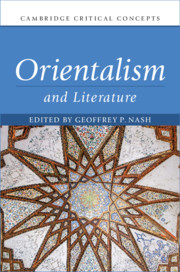

Orientalism and Literature discusses a key critical concept in literary studies and how it assists our reading of literature. It reviews the concept's evolution: how it has been explored, imagined and narrated in literature. Part I considers Orientalism's origins and its geographical and multidisciplinary scope, then considers the major genres and trends Orientalism inspired in the literary-critical field such as the eighteenth-century Oriental tale, reading the Bible, and Victorian Oriental fiction. Part II recaptures specific aspects of Edward Said's Orientalism: the multidisciplinary contexts and scholarly discussions it has inspired (such as colonial discourse, race, resistance, feminism and travel writing). Part III deliberates upon recent and possible future applications of Orientalism, probing its currency and effectiveness in the twenty-first century, the role it has played and continues to play in the operation of power, and how in new forms, neo-Orientalism and Islamophobia, it feeds into various genres, from migrant writing to journalism.
‘The organization is excellent, and the essays are brief and get right to the point. Literary scholars will find this collection an excellent complement to Said's Orientalism.’
K. M. Kapanga Source: Choice
Loading metrics...
* Views captured on Cambridge Core between #date#. This data will be updated every 24 hours.
Usage data cannot currently be displayed.
This section outlines the accessibility features of this content - including support for screen readers, full keyboard navigation and high-contrast display options. This may not be relevant for you.
Accessibility compliance for the PDF of this book is currently unknown and may be updated in the future.
