


Introduction
When Luce Irigaray considers the differences between women’s and men’s discourses, she draws attention to the historicality of social communication practices: ‘Language is a product of the sedimentations of languages of former eras. Every era has its specific needs, creates its own ideals, and imposes them as such. Some are more historically durable than others: sexual ideals are a good example here. These ideals have gradually imposed their norms on our language’ (Irigaray, Reference Irigaray1993: 30).
Examining ‘cultural injustices’ and ‘generalized sexism’ manifested in language, she notes that positive valuation of the masculine and negative appraisal of the feminine has been a linguistic condition lasting for centuries (Irigaray, Reference Irigaray1993: 68). It is only natural, then, that feminist interrogations of language as a tool of discrimination will look both into the present and into the past, encroaching on the territory traditionally ascribed to sociolinguistics and historical linguistics, bringing new insights and a fresh perspective on linguistic data.
Sociolinguistics has analysed the relation between gender and language from two research perspectives. On the one hand, numerous studies have focused on the analysis of the way in which women and men differ in their use of language (including, e.g., Lakoff, Reference Lakoff1975; Spender, Reference Spender1980; Fishman, Reference Fishman, Thorne, Kramarae and Henley1983). On the other hand, many other scholars have investigated the way in which men and women are represented in language, which led to the coinage of the term linguistic sexism (Pauwels, Reference Pauwels, Holmes and Meyerhoff2005). Despite its patent advantages, the former perspective cannot be applied to a great number of historical texts, since female authors are practically absent from medieval records of any European language, including English. As a result, scholars quite unanimously admit that ‘there might not be much material to throw light on matters such as social gender differences in Old English’ (Nevalainen & Raumolin-Brunberg, 2014: 18), since:
[t]he texts we do have are all the result of a tiny literate proportion of society – we can have no idea of how the average farm worker or travelling merchant spoke. Such persons remain, forever, a hidden majority. The literate community, furthermore, were, for the most part, members of religious communities, and this necessarily further limits the type of language which was written down. Those who wrote down our texts, although not necessarily those who composed the thoughts that were written down, were from a highly restricted stratum of the society. They were also likely to be from only a restricted age group, and virtually none of them were female.
Therefore, even though Anglo-Saxon textual records are relatively rich, the impact of social variables such as gender, age, education or social class on the English language may be analysed only from the early modern period onwards (Nevalainen & Raumolin-Brunberg, 2014), because in the sixteenth century a growing number of English-speaking women became literate and started to produce private correspondence.Footnote 1 Nevertheless, even for earlier stages of English it is technically possible to analyse the way in which women and men are represented in historical texts. So far, there have been no comprehensive corpus-based diachronic studies of this topic in the context of English, which means that it is still not clear how the linguistic image of men and women has evolved over the centuries. The aim of this Element is to fill in this gap and take a closer look at gender representation in the earliest records of English by means of advanced corpus methods, interpreting the results in a larger framework of feminist theory.
Considering the historical origins of the disadvantaged socio-cultural position of women, Cixous (Reference Cixous1976: 876) argues that they were ‘led into self-disdain by the great arm of parental-conjugal phallocentrism’ which was ‘self-admiring, self-stimulating [and] self-congratulatory’ (879), and manifested also in the power of discourse. If, as feminist linguists claim, gender-based oppression is and has been orchestrated through language, it seems particularly rewarding to trace this oppression back to early medieval times, to the stereotypical representations of gender differences which this Element attempts to demonstrate in the context of the English language. These representations contributed to the formulation of linguistic identity of women and men, informing English-speaking culture for subsequent centuries and legitimising its gender bias. Irigaray (Reference Irigaray1993: 31) identifies gender bias in language as an effect of an intentional strategy: ‘Man seems to have wanted, directly or indirectly, to give the universe his own gender as he has wanted to give his own name to his children, his wife, his possessions.’
1 Old English Written Records and Linguistic Insights into Anglo-Saxon Culture
Old English (OE) is a very well-attested early medieval language: the total length of all surviving texts written by Anglo-Saxons in their vernacular amounts to the impressive figure of 3 million words. This calculation includes poetry, interlinear glosses from Latin and prose texts, many of which have been preserved in multiple copies. The York–Toronto–Helsinki Parsed Corpus of Old English Prose (YCOE, Taylor et al., Reference Taylor, Warner, Pintzuk and Beths2003) includes texts which cover 1.5 million words, omitting textual overlaps and word-for-word glosses of questionable value for syntactic investigations. The number might not be impressive from a contemporary corpus perspective, but for a historical language it is a considerable amount of data, allowing for the formulation of reliable conclusions based on recurrent patterns. Therefore, OE is a very good choice for a historical linguist wishing to study the earliest stage of development of an Indo-European language, and it provides a unique opportunity to analyse the relations between culture and language in the early medieval European context.
Naturally, our knowledge of Anglo-Saxon literary culture is mostly based on the well-known Germanic poetry records, including, for example, Beowulf, The Wanderer, The Seafarer and The Dream of the Rood. These works, however, famous as they are, constitute a really small portion of OE textual records. The York–Helsinki Parsed Corpus of Old English Poetry (Pintzuk & Plug, Reference Pintzuk and Plug2001) includes only 71,490 words in total, which is a significantly lower number than the 1.5 million words of the YCOE. What is more, the texts included in the prose corpus, even though most of them are fully focused on the Catholic faith, are quite varied in character. The most frequent genres are homilies (390,925 words altogether), lives of saints (298,316 words), chronicles (236,165 words), biblical translations (136,948 words), religious treatises (129,993 words) and medical remedies (68,315 words), while some minor text types include law collections, prefaces, travelogues, charters and wills. Thus the analysis of OE prose records may provide much more insight into the linguistic reality of Anglo-Saxon England than the study of poetic records, not only because of the sheer quantity of the data, but also because prose works, which are predominantly non-literary texts, may reflect a more conventionalised linguistic image of women in Anglo-Saxon society. Since literary language, which aspires to produce an aesthetic effect rather than conveying straightforward information, avoids patterns and regularities, the analysis of non-literary prose records might yield linguistic evidence with more reality value.
It is only predictable that written historical sources from the Anglo-Saxon period – chronicles, ecclesiastical documents, legal codes or wills – focus chiefly on the male part of society, making women significantly absent. Moreover, the civilisation reflected in Anglo-Saxon poetry was co-ordinated by tribal warfare and naturally centred on men, who formed the warrior class, while women could only assume ‘the non-roles of … peaceweaver and mourner for the dead’ or become symbolic treasure facilitating political goals (Bennett, Reference Bennett, Harwood and Overing1994: 43–45). Many marriages of the epoch were arranged, particularly but not solely in aristocratic circles; Anglo-Saxon women were ‘linked to male kin-groups’ and matrimony meant exchanging the custody of one man for ‘a new role of submission to another’ (Leyser, Reference Leyser1995: 47). The gendered division of population demanded that female activity concentrate on the family and local community matters, not public spheres. The division of labour in the peasant class also depended on sex: heavy agricultural work and craftsmanship was the males’ responsibility, while women engaged in ‘a wide variety of smaller tasks centered on the household’ (Bennett, Reference Bennett, Erler and Kowaleski1988: 18). Fell (Reference Fell1986: 40) notes that early Anglo-Saxon culture ‘distinguished male and female roles as those of the warrior or hunter and of the cloth-maker’. Indeed, archaeological evidence reveals that women were often buried with thread boxes, needles, spindle whorls, table linen or other pieces of cloth (Fell, Reference Fell1986: 40–44; Leyser, Reference Leyser1995: 3–15); their burial places also indicate involvement in other domestic activities, such as the preparation and the serving of food and drink (Fell, Reference Fell1986: 47–49) or medical assistance (Leyser, Reference Leyser1995: 15).
Examining the position of women in Anglo-Saxon society is especially problematic because the scholarly tradition that dominated the field until the 1990s continuously concealed the female presence from the study of historical reality, leaving ‘no place for a woman scholar who wanted to read as a woman’ (Bennett, Reference Bennett, Harwood and Overing1994: 43). Norris et al. (Reference Norris, Stephenson, Trilling, Norris, Stephenson and Trilling2023: 10) explain these discriminating patriarchal academic paradigms with the fact that the field of early medieval English studies was established ‘at the height of British imperialism’, and it developed in a political environment which ‘supported claims to White, male, European superiority’. Lees (Reference Lees and O-Keeffe1997: 148) also claims that ‘the institutional structures of the discipline’ have persistently marginalised ‘the role of women in the formation of [Anglo-Saxon] culture’. Desmond in turn notes that standard literary history studies (such as Greenfield’s Reference Greenfield1965 A Critical History of Old English Literature), rooted in masculine ideology and purporting neutral objectivity, fail to notice the ‘tremendous importance of women in Anglo-Saxon culture, as authors, characters, or voices’ (Desmond, Reference Desmond1990: 575).
As in other fields of cultural and literary studies, feminist criticism attempts to redefine the framework of scholarly approaches to OE texts: it challenges masculinist biased presuppositions, reconsiders the omissions of patriarchal paradigms of historical inquiry, retrieves silenced women’s voices and reclaims suppressed women’s perspectives. Early feminist studies of Anglo-Saxon literature, by such authors as Anne Klinck and Elaine Tuttle Hansen, already in the late 1970s examined OE poetry with the view of situating female anguish, confinement and submission in the context of early medieval English culture as well as moral implications of its poetic representation (Overing, Reference Overing1990: 76–77). Yet a wave of a more determined feminist response rose in the mid 1980s with the publications of Christine E. Fell, Jane Chance and Helen Damico, who strived to recognise women’s position in Anglo-Saxon society by means of presenting notable female individuals – queens, aristocrats, saints, abbesses – ‘to advance the argument that Anglo-Saxon society was relatively … egalitarian’ and to establish the ‘so-called “golden age” for Anglo-Saxon women’ (Lees, Reference Lees and O-Keeffe1997: 148–149). In her monumental 1984 work Women in Anglo-Saxon England, Fell, a historian, inspects multiple records of the epoch – vernacular literature, hagiography, legal documents, letters, inventories, archaeological evidence – to demonstrate the position and agency of women in early medieval English culture. In her study published two years later, Woman as Hero in Old English Literature, Chance (Reference Chance1986: 111) contradicts Fell’s confident view of female significance, pointing out that ‘Anglo-Saxon society demanded passivity, rather than leadership and initiative, from most of its women.’ The scholar finds ‘exceptions’ (111) of strong female individuals but notes that they were ‘permitted an active political role in kingdoms as chaste rulers or strong abbesses, and some became saints who were even allowed to adopt heroic behavior … once their chastity and sanctity had been attested’ (xv): that is to say, ‘the escape from passivity may only be accomplished by … an obliteration of femininity … women may be not-weak as long as they are not-women’ (Overing, Reference Overing1990: 78). Damico (Reference Damico1984) in turn seeks to subvert the pattern of female passivity in early medieval England by re-examining one of the most eminent examples of Old English poetic discourse, Beowulf, to interpret Queen Wealhtheow as ‘an autonomously powerful military figure, with the additional mythic and distinctively menacing qualities of the valkyrie’ (Bennett et al., Reference Bennett, Lees and Overing1990: 17).
Since the 1990s, feminist studies of Anglo-Saxon culture have continued with a rising awareness that gender actively interrelates to other aspects of human identity and cannot be reviewed in isolation. Recent feminist approaches to the field show an interesting dichotomy. On the one hand, a number of scholars endeavour to evidence substantial marginalisation and objectification of women in early medieval England. Overing (Reference Overing1990: 69–70), for instance, finds Beowulf ‘an overwhelmingly masculine poem’ which does not provide any place for women ‘in [its] masculine economy’: she believes that the Anglo-Saxon ‘system of masculine alliance allows women to signify [only] in a system of apparent exchange’, but not ‘in their own right’ (74), leaving them ‘profoundly silent’ (70) and ‘excluded figures’ (75). Similarly, Fee (Reference Fee1996: 290) discerns in Beowulf’s parallel between the rituals of ring-giving and peace-weaving the analogy which ‘exists between objects of material treasure and objectified women in the culture of the poem’: according to the transactional nature of Anglo-Saxon marriage, women ‘serve as commodities which are exchanged in order to safeguard a particular social or political agenda’ (285). On the other hand, there are concurrent approaches which intend to reclaim female agency in early medieval England and demonstrate that in the texts of this period ‘women are often depicted in roles which … are invested with more importance and capability’ than later (Harris, Reference Harris2014). This agency could be visible in their discourse, like Wealhtheow’s speeches, which, for Damico (Reference Damico2015: 206), prove her authority as ‘a female sovereign central to the administrative power of the court’. Alternatively, it could be part of other activities: for instance, Lee (Reference Lee, Norris, Stephenson and Trilling2023: 53) discerns it in their production of embroidery, ‘artifacts that provide a unique window to the participation … in the political, socio-economic, and intellectual life of the period’.
The relatively privileged status of women in Anglo-Saxon society was postulated and amply illustrated by Fell. The historian refers to numerous legal documents which testify to measures meant to protect women’s standing. Among them, there is morgengifu, ‘morning-gift’, the money that the prospective husband had to pay to effectuate marriage; importantly, it was ‘paid not to the father or kin, but to the woman herself’, and she could fully control it, for example, spend it, give it away, or bequeath it (Fell, Reference Fell1986: 56), because finances in marriage were ‘held to be the property of husband and wife, not of husband only’ (57). Fell also points to legal provisions regarding the economic status of widows or the protection of women against seduction and rape. She evokes instances of wills written by women or those in which men left property to their wives, mothers or daughters. Archaeological evidence or place names originated in this period also attest to women’s financial independence. Fell’s findings, as well as other related publications, indicate that even though women were not equal to men in terms of their legal and economic status, they ‘enjoyed a significant degree of autonomy’ (Desmond Reference Desmond1990: 585).
Yet Fell (Reference Fell1986: 14) discerns a ‘complete shift of pattern … within a single century after 1066’: the status of women in medieval England became aggravated after the Norman Conquest. This observation follows the postulate of Doris Stenton from her long-recognised work The English Woman in History: ‘[W]omen [in Anglo-Saxon England] were … more nearly the equal companions of their husbands and brothers than at any other period before the modern age. In the higher ranges of society this rough and ready partnership was ended by the Norman Conquest, which introduced into England a military society relegating women to a position honourable but essentially unimportant’ (Stenton, Reference Stenton1957: 348). This decline of female position could be seen, for instance, in economical rights: Anglo-Norman women could no longer hold land and make wills independently (Fell, Reference Fell1986: 154; Leyser, Reference Leyser1995: 74). Many historians interpret this as a result of changes in the inheritance system, which became based on male primogeniture (Fell, Reference Fell1986: 149; Leyser, Reference Leyser1995: 83). It was also, however, related to a modified approach to the feudal system: if in post-Conquest England ‘all land belonged to the king, … its use was conditional on the performance of military service’ and therefore ‘only men could hold land’ (Leyser, Reference Leyser1995: 86).
This conventional argument about the post-Conquest radical shift in the situation of women in England has been an object of criticism. Anne L. Klinck (Reference Klinck1982: 109), for instance, argues that ‘there is a much closer resemblance between the situation obtaining in late Anglo-Saxon England and post-Conquest England than there is between the early and late Anglo-Saxon period’ and, therefore, ‘to describe Anglo-Saxon England as a time when women enjoyed an independence which they lost as a result of changes introduced by the Norman Conquest is misleading’. Many feminist scholars claim that what really brought the change was the growing socio-cultural influence of Christianity and, especially, the institutional dimension of the church. Fell herself notes that ‘Christianity as interpreted by the fathers of the church developed a full set of theories on the inferiority of women’, but she puts into doubt ‘the extent of their actual application within society’ (Fell, Reference Fell1986: 13): even though she admits that we can easily find ‘traces of anti-female propaganda in letters or homilies from the pens of clergy and in the penitentials’, she authoritatively deems them ‘ineffectual in practice’ (13–14). For Chance (Reference Chance1986: xvii), however, the significance of the church should not be underestimated: she notes that the ‘two archetypes of women that ordered the Anglo-Saxon social world’ – Eve and the Virgin Mary – were of obvious religious roots, ‘drawn from the Bible’. In her later work, Chance openly asserts that women in medieval England, just like in any other European country of the era, ‘were always propelled by the misogyny of the church, and a masculine church at that’ (Chance, Reference Chance2007: 7). Perhaps the most persuasive work demonstrating the impact of the church on the degradation of the female position in late Anglo-Saxon society is Stephanie Hollis’ Anglo-Saxon Women and the Church. The scholar postulates that the deterioration of the standing of women, especially monastic women, dates ‘from at least as early as the 8th century’ (Hollis, Reference Hollis1992: 7), and that from Alfred’s reign ‘the literature reveals an increase in the prestige and authority of male ecclesiastics and a reduction in the status of women [which] parallels the overall tendency of canon law’ (1). Hollis strongly opposes Fell’s downplaying of ‘the social actualization of the church’s heritage of doctrines inimical to women’ (7) and points out it is impossible to deny ‘the social dominance of an institution whose most committed members were responsible for the composition and preservation of the only written evidence available to us’ (6). She sees this actualisation in numerous Anglo-Saxon texts, for instance in Bede’s hagiography, which propagates the opinion that ‘women constitute a separate and inferior class’ (8), or in Theodore’s penitential canons, which represent numerous ‘repressive conceptions of women … harboured by at least some churchmen, which fairly certainly included the most influential of them’ (8). The critic sees the conversion of England as a long process of cultural negotiation in which ‘[p]atristic-derived conceptions of women, … through mapping on to indigenous prejudices and inequalities, established themselves only slowly in Anglo-Saxon England’ (10) and contends that, at the end of the day, ‘what the assimilation of Roman-Christianity achieved was the alterization of women’ (10). This process must have been reflected in language and therefore, given the historical context, it seems both logical and necessary to take a look at the OE prose records, which are dominated by religious texts, in order to investigate the influence of Roman Christianity on the linguistic image of Anglo-Saxon women.
2 Language and Gender
Feminists have always considered language an important territory of their emancipatory struggle. Yet the onset of substantial and systematic research in feminist linguistics started only in the 1970s and 1980s. One of the landmark publications was Robin Lakoff’s Language and Woman’s Place (Reference Lakoff1975), which, by means of depicting ‘a culture-wide ideology that scorns and trivializes both women and women’s ways of speaking’ (Bucholtz, Reference Bucholtz, Ehrlich, Meyerhoff and Holmes2014: 26), revealed the political capacity of language to devalue and disempower women. An even more radical approach is pursued by Dale Spender in Man Made Language (Reference Spender1980). A wholehearted proponent of the Sapir–Whorf hypothesis, Spender notes that ‘it is language which determines the limits of our world [and] constructs our reality’ (Spender, Reference Spender1980: 139), so that this reality is determined by its linguistic representation. Naturally, then, those who control language are especially privileged, as they also control our notion of reality; Spender claims that men are the superior class which ‘has controlled language in its own interest, constructing sexist categories and meanings through which all speakers of the language view the world’ (Hendricks & Oliver, Reference Hendricks, Oliver, Oliver and Hendricks1999). In her very comprehensive study of the intersections between feminism and linguistics, Feminism and Linguistic Theory (Reference Cameron1992), Deborah Cameron points out that in the view of radical feminist theorists ‘male language is a species of Orwellian thought-control’ (Cameron, Reference Cameron1992: 129); if, as they believe, ‘words embody sexism because their meaning and usage is fixed by men from an antifeminist perspective’, then language can be considered ‘a cause of oppression, and not just a symptom of it’ (104).Footnote 2 Cameron emphasises the indebtedness of many feminist linguists to the theory of Jacques Lacan, who postulates that human subjectivity is formed through being introduced to the symbolic order of language. In this way, the roots of our identity reach the past generations because ‘language, with its structure, exists prior to each subject’s entry into it at a certain moment in [their] mental development’ (Lacan, Reference Lacan2006: 413). The French psychoanalyst also notes the patriarchal nature of the symbolic order, claiming that ‘[i]t is in the name of the father that we must recognize the basis of the symbolic function which, since the dawn of historical time, has identified his person with the figure of the law’ (230). This has obvious political consequences which feminist linguists have pointed out: ‘inserting oneself into culture means submitting to patriarchy’ (Cameron, Reference Cameron1992: 169).
Whether or not feminist linguists advocate the Sapir–Whorf theory and Lacan’s position, they mostly agree that language is a gendered phenomenon and that its ideologies inform our socio-political reality. They also concur that linguistic representations of men and women can function as
part of a society’s apparatus for maintaining gender distinctions and hierarchies. At the most basic level, they help to naturalize the notion of the sexes as ‘opposite’, with differing natures and social roles or responsibilities. Often, too, they naturalize the social inequalities which are associated with gender difference. [Some] feminine qualities are readily invoked to explain and justify the exclusion or marginalization of women in powerful or public roles, while at the same time reinforcing the idea of their natural suitability for other, more menial, tasks. … Ideological representations do not in and of themselves accomplish the subordination of women. Their contribution is rather to justify inequality, making the relationship of women and men in a particular society appear natural and legitimate rather than arbitrary and unfair.
Sexist bias is a very complex mechanism manifested on many different levels of language organisation. Feminist linguists indicate that ‘the lexicon and grammatical system of English contains features that exclude, insult and trivialise women’ (Cameron, Reference Cameron1992: 101).Footnote 3 As Weatherall (Reference Weatherall2002: 13) notes, linguistic manifestations of sexism may roughly be divided into three categories: ‘language that ignores women; language that defines women narrowly; and language that depreciates women’.
One of the most conspicuous issues raised by feminists, clearly related to Weatherall’s (Reference Weatherall2002) ‘ignoring’ type, is ‘the practice of considering the man/the male as the prototype for human representation’ (Pauwels, Reference Pauwels, Holmes and Meyerhoff2005: 553). This is related to the use of he and other masculine generics such as ‘chairman’, ‘mankind’, ‘guys’ or ‘fireman’ (Weatherall, Reference Weatherall2002: 14), the fact that the terms for human and male are often the same (cf. English man, whose sense 1 in the Oxford English Dictionary is defined as ‘a human being (irrespective of sex or age)’) or the frequently derivative nature of female terms (e.g. according to Etymoline the English term woman is an alternation of the compound wifmann, composed of wif ‘woman, wife’ and man ‘man, human being’). What is more, the occupational titles for women are rarely morphologically marked (with actress as a rare exception), and in English it is much more common to mark gender overtly for women (female doctor) than for men (male secretary) (Marco, Reference Marco1997), though English is now adopting a corrective strategy of making terms neutral or unmarked for gender, unlike, for example, French or Polish, where the terms are overtly marked as gender specific (Weatherall, Reference Weatherall2002: 17), for instance, French la ministre or Polish ministra as the overtly female equivalent of minister.
Another aspect of this problem, fitting Weatherall’s (Reference Weatherall2002) ‘narrowing’ type, is that women are often (or at least more often than men) discussed in terms of their physical appearance and family relationships, while in the case of men the focus is rather on their profession (Key, Reference Key1975). A related issue is the European practice of taking the husband’s name after getting married, the fact that female titles, unlike male ones, used to reveal the woman’s marital status (Miss and Mrs vs. the more recent, neutral Ms), and the tendency for female nicknames to be based on appearance and often (though not always) show connotations of beauty (e.g. Blondie, Sweetie, Midget), while male nicknames are rather based on activity and show connotations of power and hardness (e.g. Chaser, Mad Dog) (Phillips, Reference Phillips1990; Weatherall, Reference Weatherall2002: 23). Finally, within the ‘depreciating’ type of language sexism, there is a tendency of masculine terms to have more positive connotations than their feminine equivalents (cf. bachelor vs. spinster or mister vs. mistress), which results from the fact that with time female terms tend to undergo semantic derogation (Schultz, Reference Schulz1975), changing from once neutral to abusive, ‘ending as a sexual slur’ (Pauwels, Reference Pauwels, Holmes and Meyerhoff2005: 554).
Obviously, all of these linguistic aspects of the problem are a logical and clear result of the long-lasting patriarchal structure of European societies, with women’s roles limited to those of mothers, wives and lovers, fully dependent on men and often selected and judged on the basis of their physical appearance. The picture is changing right now, and the growing awareness of gender bias in English-language communities is a fact (Pauwels, Reference Pauwels, Holmes and Meyerhoff2005: 561). The aim of this Element is to take a step back, get to the roots of the issue and investigate the problem of gender representation in the earliest records of English in order to determine how gender bias operated in the Anglo-Saxon reality.
Our initial hypothesis was that at least some of the tendencies which feminist linguists observed in the English language in the 1970s and 1980s should already be visible in the OE data, and many of them should also be identifiable on the basis of recurrent collocations – that is, the fixed combinations of two lexemes that this Element is about to analyse. Therefore, the Element examines to what extent the most frequent collocations centred around a number of gendered nouns reflect the position of women in the Anglo-Saxon society. Our investigation seeks the ways in which OE phraseology suggests a marked difference in the social roles of Anglo-Saxon men and women. Drawing from other sources, we assumed at the outset that linguistic data should show connotations of power, hardness and activity for men, as opposed to beauty, physicality and sexuality for women. We expected that the collocations based on female terms would be more often associated with family relationships and physical appearance, while the equivalent male terms would rather collocate with lexemes focusing on profession or signalling domination. We also believe that establishing which of Weatherall’s types of linguistic manifestations of sexism (ignoring, narrowing and depreciating) may be revealed by a corpus-based analysis of collocations should become useful in the operationalisation of linguistic sexism for various language studies.
For the purpose of the Element, in order to analyse the linguistic image of women in OE, it was necessary to preselect a number of women terms and their male equivalents. The procedure was as follows: first, A Thesaurus of Old English (Roberts et al., Reference Roberts, Kay and Grundy2000) was browsed in search of all female-gendered nouns attested in this language. Next, the frequency of these words was checked in the VARIOE morphological dictionary for YCOE (Cichosz et al., 2022), and the words were arranged according to their frequency (cf. Table 1).
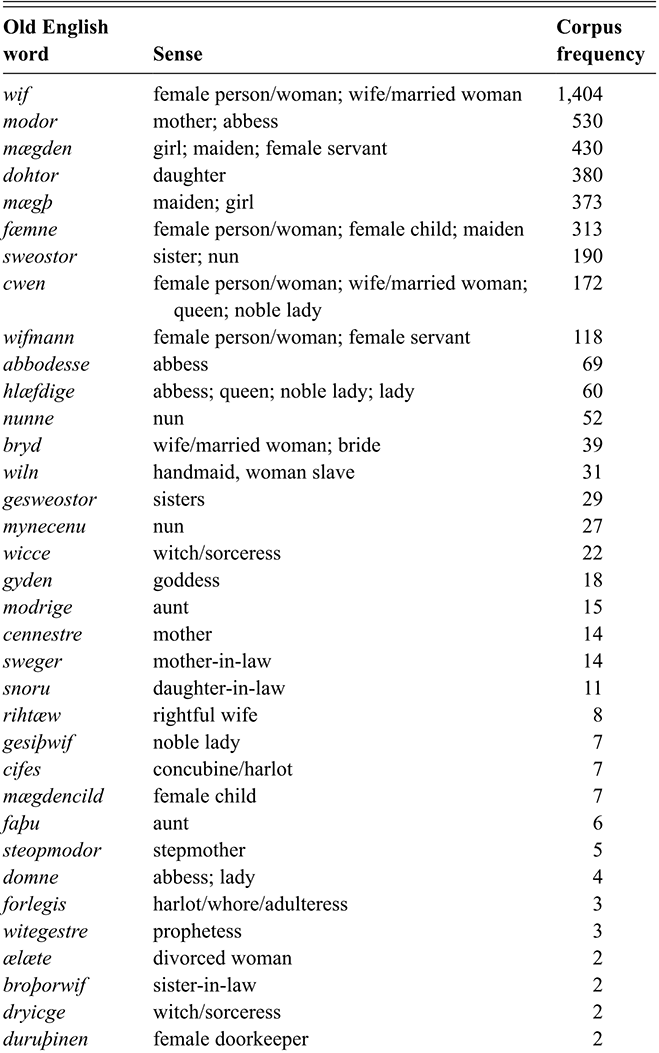
Table 1a Long description
The table consists of three columns: 1. Old English words, 2. their Modern English equivalents, 3. their frequency in the corpus, from the most frequent one wif (female person/woman; wife/married woman) - 1404 attestations, to duruþinen (female doorkeeper) - 2 attestations.

Table 1b Long description
Continuation of Table 1a. It lists women terms from fostermodor (foster-mother) - 2 attestations, to wifcild (female child) - 1 attestation.
The list of women terms which we checked was much longer, but it turned out that many of the words included in the thesaurus are limited to poetry records or texts not included in YCOE since they are not attested in the corpus. Table 2 presents these items.
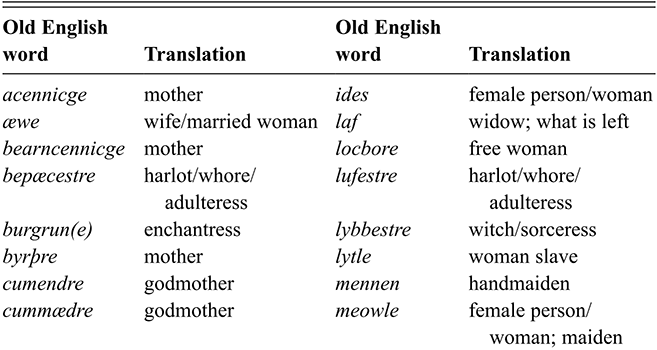
Table 2a Long description
The table has 2 columns: Old English word and Translation. It reads as follows. Acennicge: mother. Æwe: wife or married woman. Bearncennicge: mother. BepÆcestre: harlot, whore, or adulteress. burgrun(e): enchantress. Byrþre: mother. Cumendre: godmother. CummÆdre: godmother. Ides: female person or woman. Laf: widow; what is left. Locbore: free woman. Lufestre: harlot, whore, or adulteress. Lybbestre: witch or sorceress. Lytle: woman slave. Mennen: handmaiden. Meowle: female person or woman; maiden.
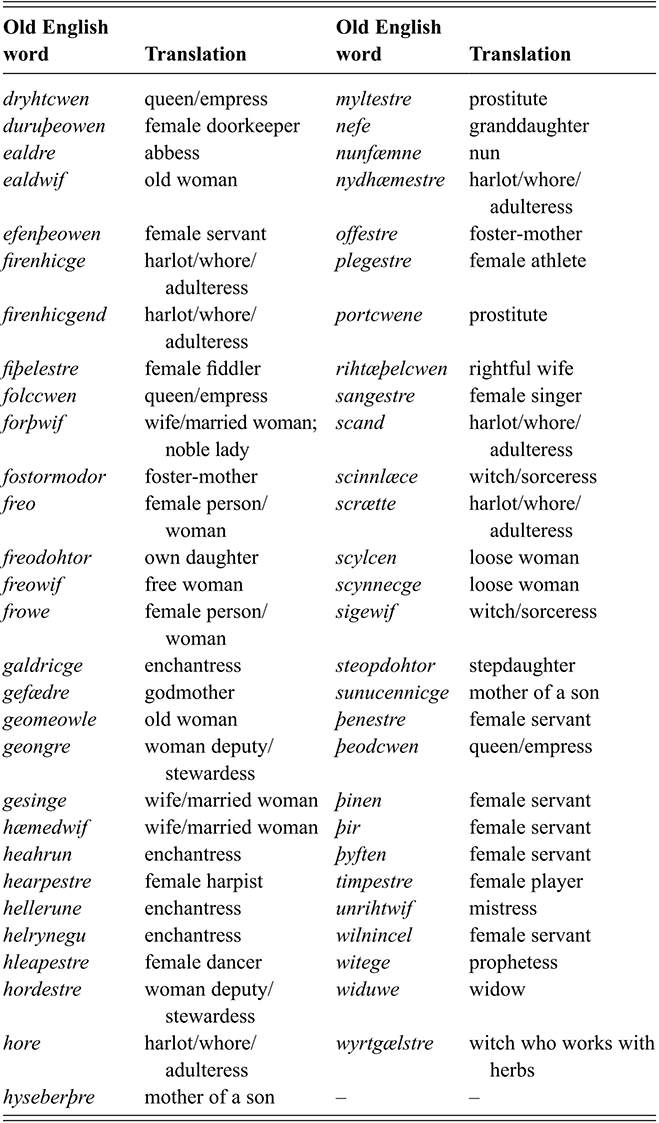
Table 2b Long description
The table has 2 columns: Old English word and Translation. It reads as follows. Dryhtcwen: queen or empress. Duruþeowen: female doorkeeper. Ealdre: abbess. Ealdwif: old woman. Efenþeowen: female servant. Firenhicge: harlot, whore, or adulteress. Firenhicgend: harlot, whore, or adulteress. Fiþelestre: female fiddler. Folccwen: queen or empress. Forþwif: wife or married woman; noble lady. Fostormodor: foster-mother. Freo: female person or woman. Freodohtor: own daughter. Freowif: free woman. Frowe: female person or woman. Galdricge: enchantress. GefÆdre: godmother. Geomeowle: old woman. Geongre: woman deputy or stewardess. Gesinge: wife or married woman. HÆmedwif: wife or married woman. Heahrun: enchantress. Hearpestre: female harpist: hellerune: enchantress. Helrynegu: enchantress. Hleapestre: female dancer. Hordestre: woman deputy or stewardess. Hore: harlot, whore, or adulteress. Hyseberþre: mother of a son.
Myltestre: prostitute. Nefe: granddaughter. NunfÆmne: nun. NydhÆmestre: harlot, whore, or adulteress. Offestre: foster-mother. Plegestre: female athlete. Portcwene: prostitute. RihtÆþelewen: rightful wife: Sangestre: female singer. Scand: harlot, whore, or adulteress. ScinnlÆce: witch or sorceress. ScrÆtte: harlot, whore, or adulteress. Scylcen: loose woman. Scynnecge: loose woman. Sigewif: witch or sorceress. Steopdohtor: stepdaughter. Sunucennicge: mother of a son. þenestre: female servant. þeodcwen: queen or empress. þinen: female servant. þir: female servant. þyften: female servant. Timpestre: female player. Unrihtwif: mistress. Wilnincel: female servant. Witege: prophetess. Widuwe: widow. WyrtgÆlstre: witch who works with herbs.
The only women terms from Table 2 which are potentially present in YCOE for which it is impossible to check it automatically because of their morphological overlap with the equivalent men terms are witege ‘prophetess’ (overlapping with witega ‘prophet’) and widuwe ‘widow’ (overlapping with widuwa ‘widower’). What is more, the primary sense of the word laf is ‘what is left’, and only the secondary meaning is ‘widow (f)’. Since it would be impossible to tell the difference without manual inspection in context, the word was discarded. Finally, despite its high frequency, the word mægþ had to be eliminated from the dataset since its secondary sense – that is, ‘family’ – turned out to be dominant in the data and the lexeme failed to appear in collocations reflecting its primary sense ‘maiden, girl’.
Table 3 presents the final selection of female-gendered nouns with the male-gendered terms chosen on the basis of their semantic equivalence.Footnote 4 The numbers in brackets represent corpus frequencies of the terms. We decided to set the frequency threshold at fifty (which makes nunne ‘nun’ with the frequency of fifty-two the least frequent item in the dataset) since less frequent terms failed to render a substantial number of recurrent collocations in VARIOE.
| Word group | Female-gendered terms | Equivalent male-gendered terms |
|---|---|---|
| general terms | wif ‘woman’ (1,404), fæmne ‘woman, girl, maiden’ (313) wifmann ‘woman, female servant’ (118) | wer ‘man’ (1,732) |
| parent | modor ‘mother’ (530) | fæder ‘father’ (2,162) |
| child | mægden ‘girl, maiden’ (430), dohtor ‘daughter’ (380) | sunu ‘son’ (1,889), cnapa ‘boy, servant’ (152) |
| sibling | sweostor ‘sister, nun’ (190) | broþor ‘brother, monk’ (1,281) |
| person with a higher social position | cwen ‘queen, noblewoman’ (172), hlæfdige ‘lady, noblewoman’ (60), abbodesse ‘abbess’ (69), nunne ‘nun’ (52) | cyning ‘king’ (4,599), hlaford ‘lord’ (754), abbod ‘abbot’ (575), munuc ‘monk’ (442) |
As shown in Table 3, the terms were grouped into five main categories (some of which are represented by single nouns): general terms, parents, children/young adults, siblings and people of higher social status. The last group is most varied but we wanted to see how social position interacts with gender in the Anglo-Saxon context, and the results (cf. Sections 3.1.5, 3.3.5, 4.1.5 and 4.2.5) show that this particular category is really interesting.
The recently released VARIOE dictionary of OE collocations (Pęzik & Cichosz, Reference Pęzik and Cichosz2021), which was the primary tool used for the research presented in this Element, is based on lemmatised YCOE data – that is, every word form in the corpus was aligned to its base form, which for nouns means the singular nominative form with the dominant spelling. This is a prerequisite of any phraseological study since OE, as an inflected language, uses a great variety of morphological forms for nouns, adjectives, pronouns and verbs. Moreover, without a spelling standard, the lexemes may appear in many different spelling forms, which increases the variation and makes lemmatisation even more important because without it, it would be impossible to perform any kind of automated searches of recurrent collocations.Footnote 5 In addition, OE inflections allowed for a relatively flexible sentence structure and a collocation does not necessarily follow a fixed word order – for example, an adjective could both precede and follow a noun, an object could be placed both before and after a lexical verb, etcetera. VARIOE takes this flexibility into consideration, searching for a given part of speech in close proximity to another one, allowing for intervening phrases and changes in relative order.Footnote 6 The collocation patterns offered by VARIOE that we have decided to use are:
ADJ + N: an adjective preceding or following a noun (irrespective of case, with some intervening elements possible), for example, (se) halga gast ‘(the) holy ghost’
GEN + N: a genitive noun in close proximity to a head noun (irrespective of case, with intervening elements possible), for example, Godes gast ‘God’s spirit’
N + CONJ + N: two nouns linked by a conjunction (irrespective of case, with some intervening elements possible), for example, dæg and niht ‘day and night’
V + N: a verb form (finite or non-finite) in close proximity to a noun in the dative, accusative or genitive case (with some intervening elements possible), for example, lufian God ‘to love God’
N + V: a noun in the nominative case in close proximity to a verb form (finite or non-finite) (with some intervening elements possible), for example, God cwæð ‘God said’.
Since recurrent patterns returned by VARIOE are based on linear co-occurrence, some of the results are linguistic noise that needs to be filtered out. Thus each collocation had to be inspected in context, and on the basis of the analysis of examples we decided whether a given pair of words may indeed be treated as a collocational pattern.Footnote 7 All the data shown in Sections 3 and 4 underwent this clean-up operation and the results can reliably be treated as fully-fledged collocations of the gendered OE nouns analysed in this Element. In the analysis we focus on recurrent patterns – that is, for a collocation to qualify for further processing, it needed to appear at least twice in the YCOE corpus.
The analysis is illustrated with numbered YCOE corpus examples. Following the Leipzig glossing rules, the first line of each example is the original OE text, the second line provides a word-by-word gloss, while the third line is an idiomatic present-day English translation. Every example contains a YCOE identifier, which shows the text file name, for example, cobede for Bede’s Ecclesiastical History, and the numbers indicating the precise location of the fragment in the OE manuscript.
During the analysis, all of the identified collocations were subjected to a simple semantic analysis in order to identify the main tendencies in the data. In the case of adjectives, the lexemes were divided into positive (indicating an objectively positive trait of a person in the early medieval Christian context, such as good, pious or law-abiding), negative (indicating an objectively negative trace of character, such as cruel, evil or dishonest), physical (related to physicality and general appearance, such as beautiful, old or pregnant) and neutral (including quantifier-like adjectives such as other, same or next, indicating other features such as ethnicity, religious denomination, social position, financial situation, e.g. Hebrew or poor, as well as any adjective nor fitting the other categories, e.g. eternal).
The genitival modifiers were also divided into a few semantic groups based around family (indicating all sorts of family relations, e.g. someone’s wife, brother or child), faith (centred around God or the Catholic Church, e.g. God’s woman, abbess of the monastery), body (parts of the body or inner organs, e.g. someone’s eyes, heart or blood) and power (describing someone’s authority in the form of orders, possession, servants or office), with ‘other’ as the category covering all the remaining semantic fields.
In the case of verb-based collocations, both with subjects and objects, the classification relies on the verb and includes some basic categories such as being (to be, to become), saying (to speak, to answer), possession (both as a stable state, e.g. to have, to own, and the process of transfer, e.g. to give), state (both stable, e.g. to live, and the process of change, e.g. to grow, to die), motion (to go, to leave, to sit down), cognition (to think, to understand), perception (to see, to hear), emotion (to love, to hate) or commitment (to promise, to swear), as well as verbs in the passive voice and modal verbs.
All the tables provide frequency (total number of attestations in the corpus), though for reasons of clarity, in most tables only the data above a certain frequency threshold are presented, which is clearly indicated in the table captions. However, the analysis takes all the recurrent collocations into account, and all the figures presented in Sections 3 and 4 are based on the complete dataset.
3 Collocations on the Level of the Noun Phrase
3.1 Adjectival Modifiers (A + N and N + A)
3.1.1 General Nouns
The first category of collocations that we extracted from the YCOE corpus are recurrent adjective + noun combinations. In the case of the basic woman terms – that is, wif, fæmne and wifmann – there are 52 recurrent collocations of this type, amounting to 317 tokens in total (see table 4), which we classified as neutral, positive, negative or physical, according to the methodology presented in Section 2.
| Number | LemmaFootnote 9 | Translation | Category | Σ |
|---|---|---|---|---|
| 1 | halig+fæmne | holy woman | positive | 53 |
| 2 | oþer+wif | other woman | neutral | 32 |
| 3 | eadig+fæmne | blessed woman | positive | 24 |
| 4 | clæne+fæmne | immaculate woman | physical | 20 |
| 5 | earm+wif | poor woman | neutral | 13 |
| 6 | yfel+wif | evil woman | negative | 12 |
| 7 | halig+wif | holy woman | positive | 11 |
| 8 | agen+wif | own woman | neutral | 10 |
| 9 | æþele+fæmne | noble woman | positive | 9 |
| 10 | æwfæst+wif | religious woman | positive | 6 |
| 11 | cristen+wif | Christian woman | neutral | 6 |
| 12 | eald+wif | old woman | physical | 6 |
| 13 | chanaeisc+wif | Canaanite woman | neutral | 5 |
| 14 | samaritanisc+ wif | Samaritan woman | neutral | 5 |
| – | other | – | – | 105 |
| – | total recurrent | – | – | 317 |
It is interesting to note that among the most frequent collocations there is one extremely negative (yfel ‘evil’) and one extremely positive (halig ‘holy’), as illustrated by (1) and (2).
(1)
Eornostlice nis nan wyrmcynn. ne wildeora cyn. truly not-is no snake-kind nor wild-animal kind on yfelnysse gelic yfelum wife on evilness similar evil woman ‘Truly, there is no kind of snake or wild animal similar in their evilness to an evil woman.’ (cocathom1,+ACHom_I,_32:457.186.6500)
(2)
Ðæt on Berccingum þam mynstre mid heofonlice leohte that on Berching the monastery with heavenly light getacnod wæs, hwær gesette beon sceoldon þa lichaman shown was where placed be should the bodies haligra fæmnena. holy.GEN women.GEN ‘How heavenly light showed the place where the bodies of holy women should be buried in the Berching monastery.’ (cobede,BedeHead:4.18.15.90)
Next, it should be indicated that there is a relatively high proportion of adjectives describing physicality, many of which are related to a woman’s ability or inability to bear children: clæne ‘clean, pure, immaculate’, eald ‘old’, blind ‘blind’,Footnote 10 bearneaca ‘pregnant, big with child’, dead ‘dead’, bearneacnigende ‘pregnant, child-carrying’, unwæstmbære ‘sterile’, untimende ‘barren’, fæger ‘fair, beautiful’, as illustrated in (3). It is noteworthy that the concern with female physicality focuses on nothing else but women’s reproductive potential.
(3)
and æfter þam Boclican regole, ne sceolde nan man and after the biblical rule not should no man bearneacnigendum wife genealæcan, Ne monoðseocum, ne þam pregnant woman approach nor month-sick nor this ðe for ylde untymende byð. that for age barren is ‘And according to the Bible, no man should have sexual intercourse with a pregnant woman or a menstruating one, or the one who is barren because of old age.’ (coaelhom,+AHom_20:111.2991)
Moreover, a few adjectives apart from yfel ‘evil’ are clearly negative – that is, synfull ‘sinful,’ deofolseoc ‘devil-sick’, ungeleafull ‘unbelieving’, see (4) – while the positive ones are related to a woman’s obedience to the rules and the regulations of the Christian faith: halig ‘holy’, arwurþ ‘honourable’, æwfæst ‘pious’, geleafful ‘righteous’, god ‘good’, æw ‘lawful’, æþele ‘noble’. The negative adjectives, then, relate mostly to a woman’s deviation from faith and her consequent iniquities, while the positive ones are very broad in meaning and they do not reveal much about the qualities of the woman’s character or about her skills, as in (5).
(4)
Ac wite þu man Þæt ic eom synful wif but know you man that I am sinful woman ‘But you should know, man, that I am a sinful woman.’ (comary,LS_23_[MaryofEgypt]:284.191)
(5)
Þa wiston hi, þæt þær neah wunode sum eawfæst Then knew they that there near lived some pious wif. woman ‘Then they learned that a pious woman lived nearby.’ (cogregdH,GD_2_[H]:12.126.25.1205)
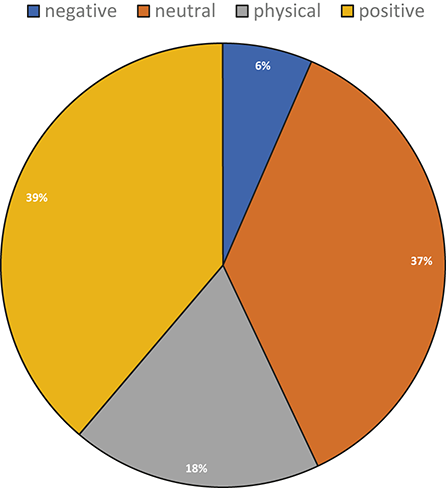
All in all, the majority of adjectives used to describe wif ‘woman’ are positive or neutral in meaning (39 per cent and 37 per cent respectively), 6 per cent are negative, while as many as 18 per cent are related to the woman’s physicality (cf. Figure 1). By contrast, the collocations of wer ‘man’ are predominantly positive, as shown in Table 5 and illustrated with (6).
(6)
Mine gebroðra. we rædað nu æt Godes ðenungum my brothers we read now at God’s service be ðan eadigan were IOB. about the blessed man Job ‘My brothers, during the God’s service we will read about the blessed man Job.’ (cocathom2,+ACHom_II,_35:260.1.5801)
Semantic categories of recurrent adjectival collocates of wif, fæmne and wifmann ‘woman’ in YCOE.
| Number | Lemma | Translation | Category | Σ |
|---|---|---|---|---|
| 1 | halig+wer | holy man | positive | 453 |
| 2 | arwurþ+wer | honourable man | positive | 144 |
| 3 | eadig+wer | blessed man | positive | 54 |
| 4 | ilca+wer | same man | neutral | 39 |
| 5 | æþele+wer | noble man | positive | 28 |
| 6 | god+wer | good man | positive | 26 |
| 7 | æwfæst+wer | pious man | positive | 21 |
| 8 | oþer+wer | other man | neutral | 17 |
| 9 | mære+wer | great man | positive | 15 |
| 10 | æfæst+wer | pious man | positive | 11 |
| 11 | geleafful+wer | faithful man | positive | 10 |
| 12 | hæþen+wer | heathen man | neutral | 8 |
| 13 | swilc+wer | such man | neutral | 7 |
| 14 | rihtwis+wer | righteous man | positive | 7 |
| 15 | agen+wer | (sb’s) own man | neutral | 5 |
| 16 | beorht+wer | glorious man | positive | 5 |
| 17 | apostolic+wer | apostolic man | neutral | 5 |
| 18 | geþyldig+wer | patient man | positive | 5 |
| – | other | – | – | 60 |
| – | all recurrent | – | – | 920 |
Apart from the dominance of adjectives with clearly positive connotations, the list notably lacks any lexemes describing a man’s physicality. The only two exceptions are strang ‘strong’ and eald ‘old’, both extremely rare considering the generally high frequency of wer in the corpus, and neither of them referring to a man’s sexuality, unlike the adjectives collocating with the women terms. Moreover, negatively connotating adjectives are also practically absent from the study sample, with blodig ‘cruel’ and unrihtwis ‘unrighteous’ representing this rare pattern. Interestingly, two out of these four infrequent collocations – that is, strang ‘strong’ and blodig ‘cruel’ – have connotations befitting the stipulated warrior’s position and signalling power and hardness, cf. (7) and (8). Such instances are not attested with women terms.
(7)
Ða synd blodige weras ðe wyrcað manslihtas, and ða these are cruel men who do man-slaughters and these ðe manna sawla beswicað to forwyrde. that men’s souls lead to destruction ‘These are cruel men who commit murder and these who lead people’s souls to destruction.’
(coaelive,+ALS[Pr_Moses]:305.3038)
(8)
Þæt wæron strange weras ond sigefæste on woroldgefeohtum that were strong men and victorious in world-fights ‘These were strong men, victorious in worldly fights.’ (comart3,Mart_5_[Kotzor]:Ma9,A.3.326)
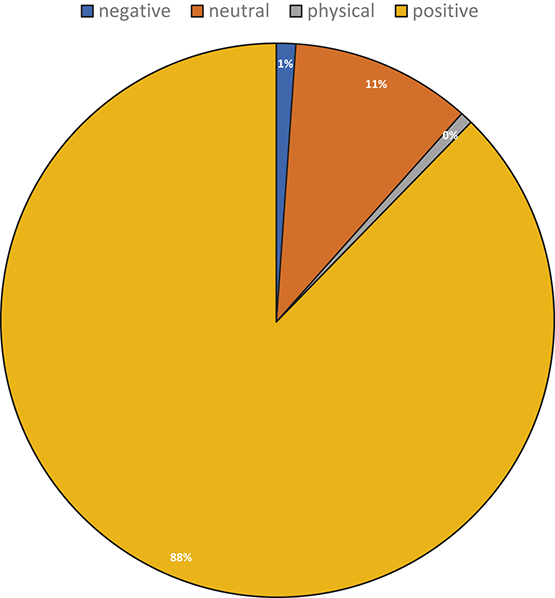
All in all, as shown in Figure 2, the adjectival collocates of wer are predominantly positive, and the difference between the analysed terms is really striking. As can been seen, then, the comparison of adjectival collocates of general OE terms describing women and men shows a significant difference in the linguistic image of both sexes. Men are mostly described in unreservedly positive terms, and even if not, the focus remains on their warrior qualities. Women, in contrast, are frequently valued in (morally) negative terms. An interesting group of collocates consists of adjectives related to the body, which in the Christian tradition is perceived as an imperfect part of a human being and a source of corruption; the particular sphere of interest is the reproductive capability, which signals the instrumental quality of the woman.
Semantic categories of recurrent adjectival collocates of wer ‘man’ in YCOE.
3.1.2 Parent Terms
The next gendered noun pair in the analysis is modor ‘mother’ and fæder ‘father’. Table 6 reveals that in the case of the former, adjectival collocations are not very numerous. What is more, many instances of modor are in fact references to Mary, the mother of Christ, which includes all the occurrences of halig ‘holy’ and eadig ‘blessed’, as in (9).
(9)
Seo halige moder Maria þa afedde þæt cyld mid micelre the holy mother Mary then fed the child with great arwyrðnysse. reverence ‘The holy mother Mary then fed the child with great reverence.’ (cocathom1,+ACHom_I,_1:187.246.258)
What is more, the spiritual mother (gastlice modor), which is the second most frequent adjectival collocation in Table 6, is actually a metaphor denoting the Catholic Church (cf. (10)).
(10)
Ealle we habbað ænne heofonlicne fæder and ane gastlice oh we have one heavenly father and one spiritual modor, seo is ecclesia genamod, þæt is mother that is ecclesia called that is Godes cirice, and þa we sculon æfre lufian and wurðian. God’s church and these we should always love and honour ‘Indeed we have a heavenly father and a spiritual mother called ecclesia, which means God’s church, and we should always love and honour them.’ (coinspolD,WPol_2.1.2_[Jost]:99.140)
The most frequent reference to physicality is the adjective eald ‘old’, though in two cases the referent is Eve, the mother of all people, as in (11).
(11)
Ure ealde moder Eua us beleac heofenan rices our old mother Eve us locked heaven kingdom geat. gate ‘Our old (original) mother Eve locked the door to the kingdom of heaven for us.’ (cocathom2,+ACHom_II,_1:11.295.244)
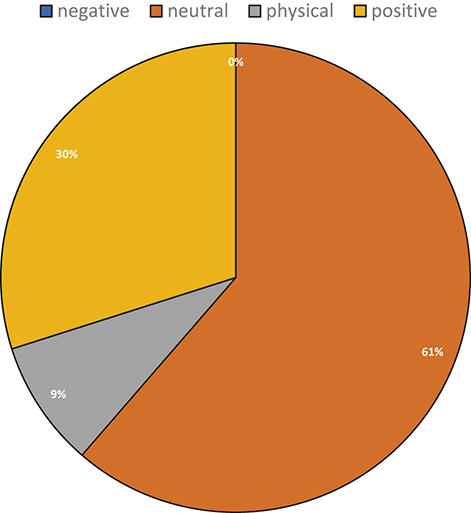
Figure 3 shows that the distribution of collocation types for modor is drastically different from the one obserwed in wer (Figure 2) since the proportion of positive collocations is almost three times lower (30 per cent vs. 88 per cent). Compared to the general women terms shown in Figure 1, there is a visibly lower proportion of physical collocations, which is clearly the result of the strong presence of St. Mary in this category. Naturally, the linguistic image of the mother of Christ does not concentrate on her body. (However, as later analysis will show, the corpus contains references to her womb.)
| Number | Adjective | Translation | Category | Σ |
|---|---|---|---|---|
| 1 | halig+modor | holy mother | positive | 11 |
| 2 | gastlic+modor | spiritual mother | neutral | 10 |
| 3 | agen+modor | own mother | neutral | 10 |
| 4 | eald+modor | old mother | physical | 5 |
| 5 | ilca+modor | same mother | neutral | 4 |
| 6 | eadig+modor | blessed mother | positive | 3 |
| 7 | leof+modor | beloved mother | positive | 3 |
| 8 | cristen+modor | Christian mother | neutral | 3 |
| 9 | lichamlic+modor | physical mother | neutral | 2 |
| 10 | dreorig+modor | sorrowful mother | neutral | 2 |
| 11 | eorþlic+modor | earthly mother | neutral | 2 |
| 12 | ærest+modor | first mother | neutral | 2 |
| – | total recurrent | – | – | 57 |
Semantic categories of recurrent adjectival collocates of modor ‘mother’ in YCOE.
As far as fæder ‘father’ is concerned, the most striking observation is the high frequency of the analysed pattern compared to modor (457 vs. 57 recurrent collocations).
Table 7 shows quite clearly that many of these are references to God, the father of all people, described as holy, almighty and eternal (cf. (12))
(12)
Crist is ancenned Sunu of þam ælmihtigan Fæder; Christ is only begotten son of the almighty father ‘Christ is the only begotten son of the almighty Father.’ (coaelhom,+AHom_1:386.199)
Interestingly, the phrase leof fæder (‘dear father’) is often a vocative phrase directed at God, as in (13).
(13)
leof fæder, we geanbidodon, þæt þu come, swa swa þu dear father we waited that you come so as you behete … promised ‘Dear Father, we waited for you to come as you promised … ’ (cogregdH,GD_2_[H]:22.148.24.1463)
In (14) eald ‘old’ refers to (numerous) male ancestors: this marks a difference to the collocation eald modor ‘old mother’, which usually refers to Eve, as in (11). Apparently, collectively understood familial ancestry is conceptualised only in paternal terms.
(14)
Hwæt hit is gesæd ðæt ure ealdan fæderas wæron what it is said that our old fathers were ceapes hierdas. cattle keepers ‘What! It is said that our old fathers (ancestors) were cowherds.’ (cocura,CP:17.109.4.716)
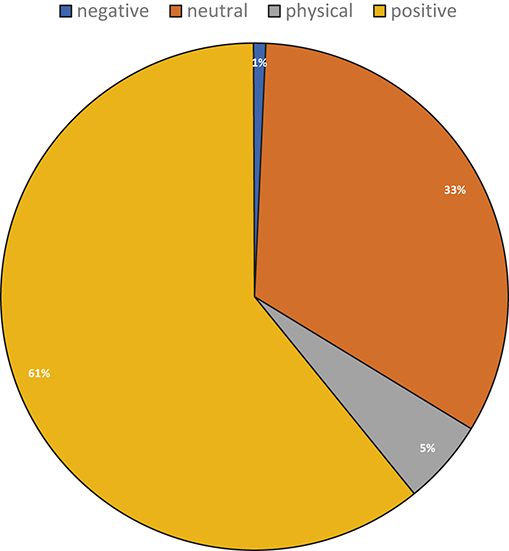
Figure 4 shows that, again, the proportion of positive adjectives is much higher for the male term (61 per cent for fæder and only 30 per cent for modor), and adjectives related to physicality are marginally used in the case of men (only 5 per cent).
| Number | Lemma | Translation | Category | Σ |
|---|---|---|---|---|
| 1 | heofonlic+fæder | heavenly father | neutral | 87 |
| 2 | halig+fæder | holy father | positive | 84 |
| 3 | eallmihtig+fæder | almighty father | positive | 69 |
| 4 | arwurþ+fæder | noble father | positive | 51 |
| 5 | ilca+fæder | same father | neutral | 25 |
| 6 | eald+fæder | old father | physical | 22 |
| 7 | leof+fæder | dear father | positive | 21 |
| 8 | god+fæder | good father | positive | 14 |
| 9 | agen+fæder | own father | neutral | 10 |
| 10 | ece+fæder | eternal father | neutral | 8 |
| 11 | wis+fæder | wise father | positive | 8 |
| 12 | mildheort+fæder | merciful father | positive | 6 |
| 13 | arfæst+fæder | honourable father | positive | 5 |
| 14 | soþ+fæder | true father | positive | 5 |
| – | other | – | – | 42 |
| – | total recurrent | – | – | 457 |
Semantic categories of recurrent adjectival collocates of fæder ‘father’ in YCOE.
The collocation analysis of the two parental terms yields results similar to the examination of general female and male terms. It has to be noted, nonetheless, that these findings are of more limited relevance: because of their use in religious contexts, both modor and fæder have referents which do not relate to the linguistic image of women and men in Old English. An interesting observation concerns the historical lineage of Anglo-Saxon society: given that ancestors are denoted as ‘old fathers’ and not ‘old mothers’, it can be assumed that the socio-cultural legacy of Anglo-Saxons was found in paternality, which certainly agrees with a tendency generally observed in other cultures and languages.
3.1.3 Terms Denoting Children and Young Adults
In the ‘child and young adult’ category illustrated in Table 8, the two female nouns, mægden ‘maiden’ and dohtor ‘daughter’, are regularly presented in the context of their sexual purity (clæne ‘clean, immaculate’ and ungewemmed ‘untouched, immaculate’). The holy and immaculate maiden is of course the Virgin Mary who became Christ’s mother, so once again the data are dominated by a single female referent.
(15)
Se ylca Godes sunu geceas him to meder þæt halige the same God’s son chose him to mother the holy mæden, Marian gehaten maiden Mary called ‘God’s son also chose the holy maiden called Mary to be his mother.’ (colwstan1,+ALet_2_[Wulfstan_1]:13.29)
(16)
ac Crist næs na geteald to þissere but Christ not-was not included to this wiðmetenysse, se þe acenned wæs of ðam comparison this that born was of the clænan mædene. clean maiden ‘But Christ was not included in this comparison, he who was born of the clean maiden.’ (colsigewZ,+ALet_4_[SigeweardZ]:855.343)
Sometimes, though, it is a young female, as in the biblical story about wise and foolish virgins, or in the case of Apollonius of Tyre, where the king’s daughter is one of the characters in the story, and leof ‘dear’ is again used in a vocative phrase.
(17)
Þa stuntan mædenu cwædon to ðam snoterum; the stupid maidens said to the wise ‘The foolish maidens said to the wise ones’ (cocathom2,+ACHom_II,_44:327.14.7348)
(18)
and cwæð: leofe dohtor, þu gesingodest; and said dear daughter you sinned ‘And said: Dear daughter, you have sinned’ (coapollo,ApT:16.2.303)
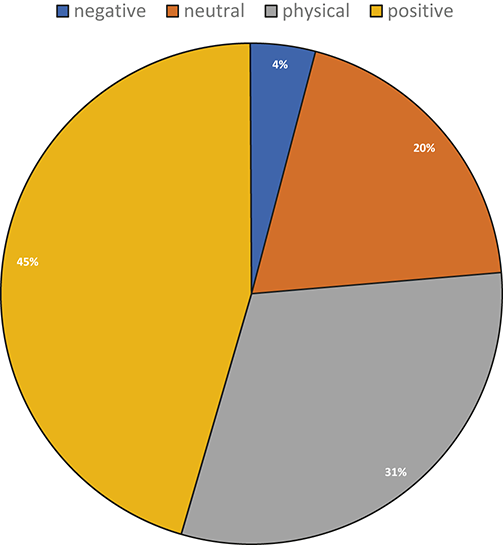
All in all, positive adjectives are the dominant category (cf. Figure 5). This stems mostly from the fact that the texts in the corpus often accentuate the virginity of maidens and daughters, a characteristic strongly valued by the Christian religion and consequently associated with positive features of character. Again, as with previously examined female nouns, the proportion of adjectives describing physicality is high, amounting here to 31 per cent.
| Number | Lemma | Translation | Category | Σ |
|---|---|---|---|---|
| 1 | halig+mægden | holy maiden | positive | 32 |
| 2 | clæne+mægden | immaculate maiden | physical | 28 |
| 3 | æþele+mægden | noble maiden | positive | 8 |
| 4 | leof+dohtor | dear daughter | positive | 8 |
| 5 | oþer+mægden | other maiden | neutral | 7 |
| 6 | stunt+mægden | foolish maiden | negative | 6 |
| 7 | ungewemmed+mægden | immaculate maiden | physical | 5 |
| 8 | snotor+mægden | wise maiden | positive | 5 |
| 9 | agen+dohtor | own daughter | neutral | 5 |
| – | other | – | – | 53 |
| – | total recurrent | – | – | 152 |
Semantic categories of recurrent adjectival collocates of mægden ‘maiden’ and dohtor ‘daughter’ in YCOE.
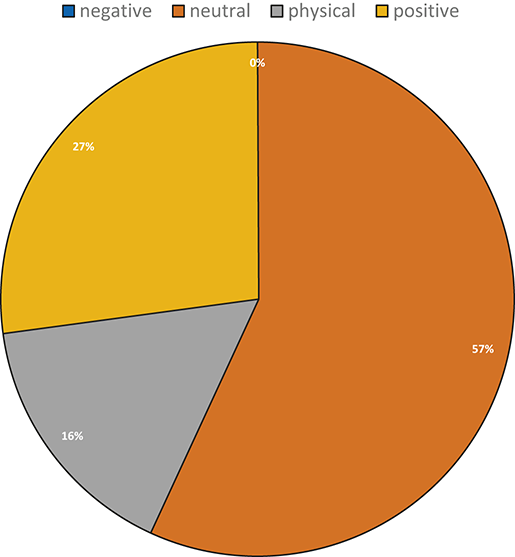
In the case of young males, the most frequent adjectives used to describe them can be classified as neutral (cf. Table 9). It is interesting to note, however, that a significant number of them describe the relation of a son to other (usually male) children (ancenned ‘only begotten’, frumcenned ‘firstborn’, oþer ‘other, second’, etc.). This emphasis on the distinction between firstborn and other sons might be linked with the development of a socio-cultural process which will later, in Norman times, lead to introducing primogeniture as a basis of land inheritance. Primogeniture, whose roots might be traced in the Bible, was not universally observed in early medieval Europe: the inheritance laws followed the pattern of Roman law, which did not distinguish between older and younger or between male and female heirs. Yet, the development of the medieval feudal system stipulated that the socio-political power of a lord depended on keeping the land estate large, so its division between family members was not favourable. Therefore, the Norman laws provided that the lord’s oldest son, not daughter, inherited the entire estate.
| Number | Lemma | Translation | Category | Σ |
|---|---|---|---|---|
| 1 | ancenned+sunu | only begotten son | neutral | 46 |
| 2 | agen+sunu | own son | neutral | 31 |
| 3 | oþer+sunu | other/second son | neutral | 23 |
| 4 | leof+sunu | dear son | positive | 23 |
| 5 | eald+sunu | old son | physical | 13 |
| 6 | frumcenned+sunu | firstborn son | neutral | 11 |
| 7 | ilca+sunu | same son | neutral | 9 |
| 8 | dead+sunu | dead son | physical | 8 |
| 9 | geong+sunu | young son | physical | 7 |
| 10 | soþ+sunu | true son | positive | 5 |
| – | other | – | – | 36 |
| – | total recurrent | – | – | 212 |
The importance of male over female offspring is visible in the higher frequency of the word sunu ‘son’ (1,889) compared to dohtor ‘daughter’ (380). This does not necessarily result from religious referents: while many uses of sunu are references to Jesus, the son of God, most of the collocations listed in Table 9 pertain to other, human sons.
(19)
Æfter þæm Lisimachus ofslog his agenne sunu Agothoclen & after that Lisimachus killed his own son Agothoclen and Antipater his aþum. Antipater his son-in-law ‘Afterwards Lisimachus killed his own son Agothoclen and his son-in-law Antipater.’ (coorosiu,Or_3:11.82.13.1645)
Naturally, Jesus Christ is attested in the data, for example, in (20), but this referent does not dominate in the same way as Mary, the virgin and the mother, dominates the collocation sets for modor ‘mother’ and mæden ‘maiden’.
(20)
& cwæþ, her ys min leofa sunu on þam me and said here is my dear son on whom me wel gelicaþ; well pleases ‘And said: Here is my dear son, in whom I am well pleased.’ (cowsgosp,Mt_[WSCp]:17.5.1128)
All the recurrent adjectival collocations combined prove to be mostly neutral in meaning (cf. Figure 6). For male terms, 16 per cent is quite a high result for collocates related to physicality, but almost all of them are related to the sons’ age or their death; not a single one describes their appearance. Frequently, neutral and physical collocates associate with family seniority, which can have a connection with primogeniture, as indicated previously.
Semantic categories of recurrent adjectival collocates of sunu ‘son’ and cnapa ‘boy’ in YCOE.
3.1.4 Sibling Terms
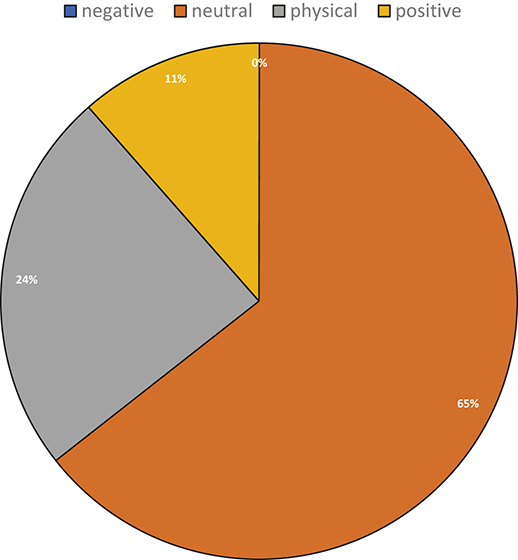
The next set of terms from the semantic field ‘sibling’ prove extremely unevenly represented. In the case of sweostor ‘sister’ there are only three recurrent adjectival collocations amounting to only twelve occurrences in total, all of them completely neutral in meaning, as illustrated by Table 10. The complete asymmetry between sweostor and broþor is quite clearly indicated by Table 11, with 166 tokens representing the latter.
| Number | Lemma | Translation | Category | Σ |
|---|---|---|---|---|
| 1 | agen+sweostor | own sister | neutral | 7 |
| 2 | ilca+sweostor | same sister | neutral | 3 |
| 3 | oþer+sweostor | other sister | neutral | 2 |
| – | total recurrent | – | – | 12 |
| Number | Lemma | Translation | Category | Σ |
|---|---|---|---|---|
| 1 | oþer+broþor | other brother | neutral | 62 |
| 2 | geong+broþor | young brother | physical | 18 |
| 3 | agen+broþor | own brother | neutral | 16 |
| 4 | ilca+broþor | same brother | neutral | 14 |
| 5 | leof+broþor | dear brother | positive | 14 |
| 6 | eald+broþor | old brother | physical | 12 |
| 7 | dead+broþor | dead brother | physical | 10 |
| – | other | – | – | 20 |
| – | total recurrent | – | – | 166 |
It is worth noting that most of the brothers referred to in the collocations are monks, disciples and generally ‘spiritual brothers’ as in (21), more often than actual siblings as in (22), which quite clearly shows the stronger association of females with family life and males with public service.
(21)
Þa cwæþ Iohannes, Bletsiað, Broþor þa leofestan, then said John bless brothers the dearest urne God our God ‘Then John said: Dear brothers, bless our God.’ (coblick,LS_20_[AssumptMor[BlHom_13])
(22)
Ic and Ionathas, min gingra broðor, Farað to I and Jonathan my younger brother go to Galaað to afligenne þa hæðenan. Galatia to drive away the heathens ‘I and Jonathan, my younger brother, (will) go to Galatia to drive away the heathens.’ (coaelive,+ALS_[Maccabees]:401.5101)
Since many of the OE texts discuss death of monks and their age, the proportion of physical collocates shown in Figure 7 is quite high, but the only lexemes attested in this group are geong ‘young’, eald ‘old’ and dead ‘dead’.
Semantic categories of recurrent adjectival collocates of broþor ‘brother’ in YCOE.
Generally, it has to be noted that the analysis of the female and male terms in the sibling category does not yield any noteworthy results, mostly due to an insufficient amount of data.
3.1.5 Terms Denoting Women and Men of High Social Status
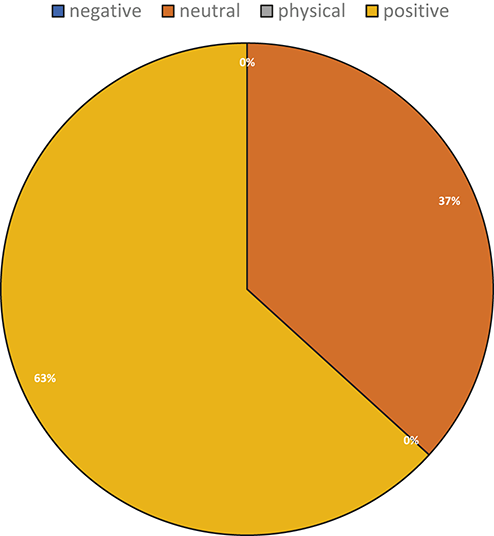
The last group of gendered nouns represents a different cultural perspective, since it shows a combination of two sociolinguistic features: gender and social position. The category embraces female and male nouns designating people of high social status. The analysis clearly shows that queens, ladies, nuns and abbesses, who were definitely the highest-ranking females in Anglo-Saxon society, do not pattern with other women terms. Table 12 shows that the collocations, infrequent as they are, in most cases are positive and not a single one of them refers to the woman’s physicality. It is important to note that the queen or lady referred to in the data is often Mary, the mother of Jesus, as in (23), but the proportions are quite balanced and (24) is a representative example.
(23)
ala þu wuldorfæste hlæfdige þe þone soðan God oh you glorious lady who the true God æfter flæsces gebyrde acendest … after flesh.GEN origin bore ‘Oh, you glorious lady, who gave birth to the true God in flesh.’ (comary,LS_23_[MaryofEgypt]:431.281)
(24)
He wæs se forma casere þe on Crist gelyfde, he was the first emperor who on Christ believed Sancte Elenan sunu, þære eadigan cwene Saint Elena son the blessed queen ‘He was the first emperor who believed in Christ, the son of Saint Elena, the blessed queen.’ (colwstan1,+ALet_2_[Wulfstan_1]:47.87)
When we look at proportions, shown in Figure 8, the graph resembles a typical one for male-gendered nouns, with positive adjectives completely dominating and physical ones absent from the dataset.
| Number | Lemma | Translation | Category | Σ |
|---|---|---|---|---|
| 1 | heofonlic+cwen | heavenly queen | neutral | 6 |
| 2 | eadig+cwen | blessed queen | positive | 5 |
| 3 | ilca+cwen | same queen | neutral | 4 |
| 4 | halig+cwen | holy queen | positive | 4 |
| 5 | halig+nunne | holy nun | positive | 3 |
| 6 | ilca+abbodesse | same abbess | neutral | 2 |
| 7 | halig+abbodesse | holy abbess | positive | 2 |
| 8 | arwurþ+abbodesse | honourable abbess | positive | 2 |
| 9 | æþele+abbodesse | noble abbess | positive | 2 |
| 10 | æþele+cwen | noble queen | positive | 2 |
| 11 | god+cwen | good queen | positive | 2 |
| 12 | gastlic+cwen | spiritual queen | neutral | 2 |
| 13 | wuldorfæst+hlæfdige | glorious lady | positive | 2 |
| – | total recurrent | – | – | 38 |
Semantic categories of recurrent adjectival collocates of cwen ‘queen’, abbodesse ‘abbess’, hlæfdige ‘lady’ and nunne ‘nun’ in YCOE.
In the case of high-ranking males, there is a real abundance of data, with 630 tokens attested and the most frequent ones listed in Table 13. While the heavenly king in (25) is a clear reference to Jesus Christ, and many instances of the lexeme hlaford ‘lord’ as in (26) are references to God, real kings are definitely present in the data (cf. (27) and (28)), and some of them are not positive characters.
(25)
& he, se heofonlica cyning, þæt eall swiðe and he the heavenly king that all very geðyldelice abær for mancynnes lufan & hælo. patiently bore for mankind’s love and salvation ‘And he, the heavenly king, who suffered everything with great patience for the love and salvation of mankind.’ (coverhomE,HomS_24.1_[Scragg]:259.232)
(26)
We biddað þe, leof hlaford, þæt ðu gehyran we bid you dear lord that you hear wylle ure word. will our words ‘We bid you, dear Lord, that you hear our words.’ (cosevensl,LS_34_[SevenSleepers]:273.210)
(27)
and þæt word sprang Geond eal þæt land þæt and the word sprang throughout all the land that Apollonius, se mæra cyngc, Hæfde funden his wif, Apollonius the great king had found his wife ‘And it became known throughout the land that the great king Apollonius had found a wife.’ (coapollo,ApT:49.9.521)
(28)
Ac on þære nihte þe se arleasa cyning hine on but on the night that the honourless king him on merigen acwellan wolde com Godes engel morning kill wanted came God’s angel scinende of heofenum shining of heaven ‘But the night before the morning when the honourless king wanted to kill him, God’s angel came shining from heaven.’ (cocathom1,+ACHom_I,_37:505.240.7503)
Figure 9 shows that while the most frequent adjective category is neutral collocations, the proportion of positive ones is relatively high and, unsurprisingly, modifiers describing physicality are the least numerous group.
| Number | Lemma | Translation | Category | Σ |
|---|---|---|---|---|
| 1 | oþer+cyning | other king | neutral | 37 |
| 2 | heofonlic+cyning | heavenly king | neutral | 33 |
| 3 | ilca+cyning | same king | neutral | 26 |
| 4 | hæþen+cyning | pagan king | neutral | 19 |
| 5 | mære+cyning | great king | positive | 17 |
| 6 | reþe+cyning | just king | positive | 16 |
| 7 | eorþlic+cyning | earthly king | neutral | 16 |
| 8 | cristen+cyning | Christian king | neutral | 16 |
| 9 | soþ+cyning | true king | positive | 15 |
| 10 | god+cyning | good king | positive | 15 |
| 11 | arleas+cyning | honourless king | negative | 13 |
| 12 | leof+hlaford | dear lord | positive | 13 |
| 13 | æþele+cyning | noble king | positive | 11 |
| 14 | oþer+munuc | other monk | neutral | 11 |
| 15 | unrihtwis+cyning | unjust king | negative | 10 |
| 16 | iudeisc+cyning | Jewish king | neutral | 10 |
| 17 | geong+cyning | young king | physical | 10 |
| 18 | halig+abbod | holy abbot | positive | 10 |
| – | other | – | – | 332 |
| – | total recurrent | – | – | 630 |
Semantic categories of recurrent adjectival collocates of cyning ‘king’, hlaford ‘lord’, abbod ‘abbot’ and munuc ‘monk’ in YCOE.
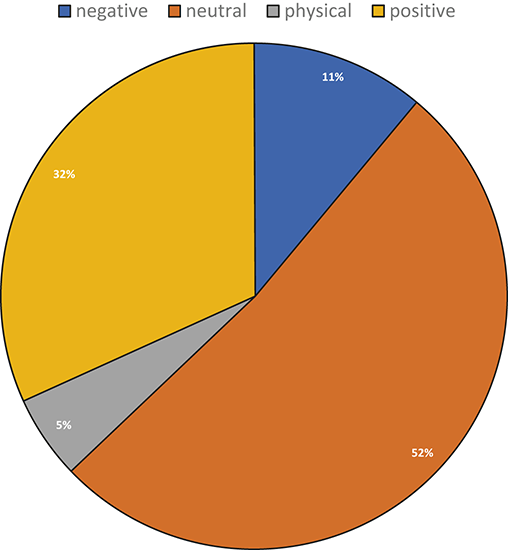
The analysis of this category yields particularly interesting results if we examine them against the data from the previous noun groups. It might at first seem paradoxical that high-ranking women have no negative collocates, nor those related to the body. However, since all the referents of female terms examined here are women of an esteemed social status, the results cannot be used to make assumptions about the general position and regard of women in Anglo-Saxon society. A queen or a lady is not supposed to be described in negative terms, either because she is the mother of Christ or because she is a higher-ranking person than the author of the text. An abbess or a nun, in turn, is part of the religious community of the church, which also guarantees her positive social recognition. Furthermore, the fact that Anglo-Saxon society was stratified means that only average (i.e. low-ranking) women were perceived in terms of their physical qualities.
3.2 Binominals (N + CONJ + N)
Studies show that when two nouns are joined by a conjunction, their order is not random and the factors which play a role in the variation are power or importance (the supreme item comes first), length (the shorter item comes first) and frequency (the more frequent item comes first) (Goldberg & Lee, Reference Goldberg and Lee2021). Therefore, for instance, when we compare the order of the two most general gendered nouns, wif and wer, bearing in mind that they are both one-syllable, three-sound words and that the frequency of their designates is comparable, a visible preference of one over the other in the initial position may only be interpreted as difference in power and importance. Table 14 shows very clearly that in the patterns involving two grown-up people of different gender, the male term virtually always comes first, as in (29) and (30).
(29)
Wæron his fæder & his modor buta hæðen. were his father and his mother both heathen ‘His father and his mother were both heathen.’ (coverhom,LS_17.2_[MartinVerc_18]:9.2230)
(30)
And hi ðær genamon inne ealle þa gehadodan and they there took in all the ordained men and weras and wif people and men and women ‘And they took in all the ordained people, both men and women.’ (cochronC,ChronC_[Rositzke]:1011.21.1522)
| Number | Lemma | Translation | Order | Σ |
|---|---|---|---|---|
| 1 | fæder+and+modor | father and mother | male > female | 68 |
| 2 | wif+and+cild | woman and child | female > child | 35 |
| 3 | sunu+and+dohtor | son and daughter | male > female | 21 |
| 4 | wer+and+wif | man and woman | male > female | 21 |
| 5 | fæder+oþþe+modor | father or mother | male > female | 16 |
| 6 | modor+and+gebroþor | mother and brother | female > male | 13 |
| 7 | ge+wer+ge+wifFootnote 12 | man and woman | male > female | 11 |
| 8 | broþor+and+sweostor | brother and sister | male > female | 7 |
| 9 | ealdormann+and+sweostor | nobleman and sister | male > female | 7 |
| 10 | modor+and+broþor | mother and brother | female > male | 6 |
| 11 | sunu+oþþe+dohtor | son or daughter | male > female | 6 |
| 12 | wif+and+dohtor | woman and daughter | female > child | 6 |
| 13 | cild+and+modor | child and mother | child > female | 5 |
| 14 | ge+wæpenmann+ge+wifmann | men and women | male > female | 5 |
| 15 | wif+and+bearn | woman and son | female > child | 5 |
| 16 | wif+oþþe+bearn | woman or son | female > child | 5 |
| – | other | – | – | 104 |
| – | all recurrent | – | – | 341 |
Figure 10 proves that the difference is quite overwhelming. When a pair consists of a female and a male, the order prioritising the male is ten times more frequent (58 per cent vs. 6 per cent). The discrepancy becomes much more striking when we consider that the order privileging women occurs only in the pairs modor+and+gebroþor and modor+and+broþor – that is, mother and brother – in which the female is favoured not because of the gender but due to her age and family position. This is analogous to wif+and+cild, where a woman is phrase-initial when occurring with the gender-neutral child. However, when a child is male, both orders are attested (cf. (31) and (32)).
(31)
& ðu gæst in to ðam arce, & ðine suna, and you go in to the ark and your sons & ðin wif & ðinra suna wif mid ðe. and your woman and your sons’ women with you ‘And you shall go into the ark, and your sons and your wife and your sons’ wives with you.’ (cootest,Gen:6.18.294)
(32)
& Hæstenes wif & his suna twegen mon brohte And Hasten’s woman and his sons two one brought to þæm cyninge to the king ‘And Hasten’s wife and his two sons were brought to the king.’ (cochronA-2a,ChronA_[Plummer]:894.52.1057)
Recurrent binominals with female nouns in YCOE.
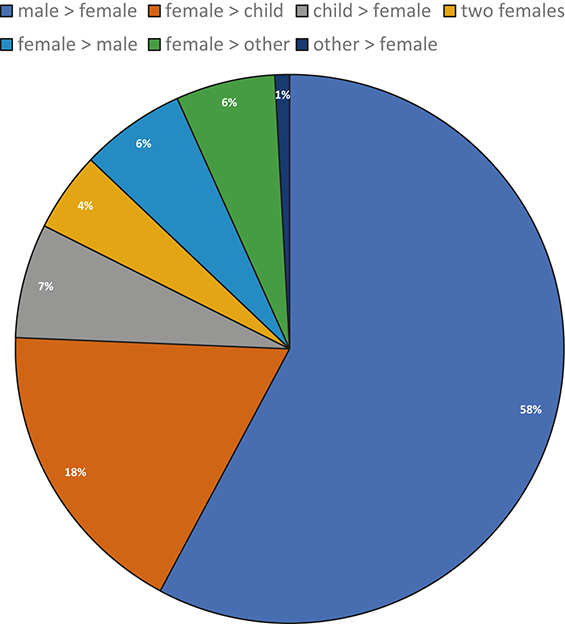
Figure 10 Long description
The chart shows the following proportions: 58% “male > female”, 18% “female > child”, 7% “child > female”, 6% “female > male”, 6% “female > other”, 4% “two females”, and 1% “other > female”. The largest category is “male > female”, with the rest making up smaller portions.
In the case of male-gendered nouns (Table 15 and Figure 11), it is not only the male > female order which is visible in the data. Another phenomenon which surfaces is the frequent pairing of two male terms (e.g. fæder and sunu ‘father and son’). Importantly, at the same time, such binominals are infrequent in the case of women terms: while there are as many as 213 male + male binominals in the YCOE corpus, the equivalent figure for women is only 16. This could suggest that the units consisting of two people are in most cases culturally relevant only as long as at least one of the persons in the pair is male. Finally, it is interesting to note the absence of any binominals involving a grown-up man and a child, which is in sharp contrast to the high co-ocurrence of women with children and explicitly testifies to a strong socio-cultural connection of women with household and family and, likewise, to men’s separation from this sphere of life experience.
| Number | Lemma | Pattern | Order | Σ |
|---|---|---|---|---|
| 1 | fæder+and+modor | father and mother | male > female | 68 |
| 2 | fæder+and+sunu | father and son | two males | 63 |
| 3 | wer+and+wif | man and woman | male > female | 21 |
| 4 | sunu+and+dohtor | son and daughter | male > female | 21 |
| 5 | cyning+and+wita | king and wise man | two males | 18 |
| 6 | sunu+and+gast | son and (holy) ghost | male > other | 17 |
| 7 | fæder+oþþe+modor | father or mother | male > female | 16 |
| 8 | cyning+and+ealdormann | king and nobleman | two males | 16 |
| 9 | cyning+and+eorl | king and earl | two males | 15 |
| 10 | ge+wer+ge+wif | man and woman | male > female | 11 |
| 11 | god+and+fæder | God and father | God > male | 10 |
| – | other | – | – | 192 |
| – | total recurrent | – | – | 468 |
Recurrent binominals with male nouns in YCOE.
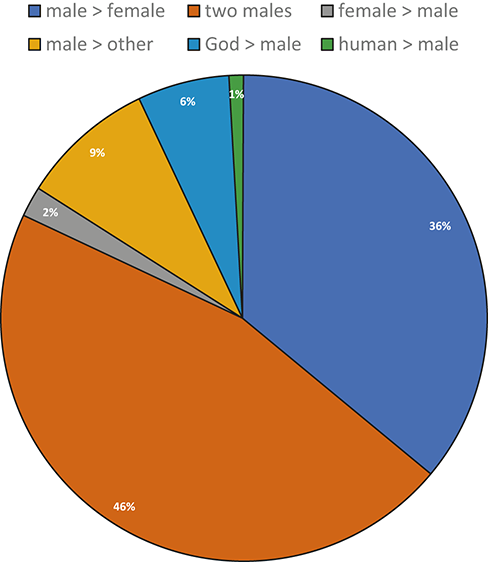
Figure 11 Long description
The chart shows the following proportions: 46% “two males”, 36% “male > female”, 9% “male > other”, 6% “God > male”, 2% “female > male”, and 1% “human > male”. The largest category is “two males”, followed by “male > female”, with the remaining categories making up smaller portions.
3.3 Genitives (GEN + N)
3.3.1 General Terms
In the case of genitival modification, a gendered noun may be both the head noun (e.g., woman in mannes wif ‘man’s woman’) and the modifier (e.g., woman in wifes meolc ‘woman’s milk’). Table 16 shows that for the neutral female terms which are heads of the investigated phrases the modifiers are all human (or divine) and male, for example, God ‘god’, man ‘man’, broþor ‘brother’, cyning ‘king’, fæder ‘father’, sunu ‘son’ and cempa ‘warrior’ (cf. (33)), and in many of these the word wif should rather be understood as ‘wife’ (cf. (34)). When the female term is a modifier, the emerging pattern comprises mostly collocations with body parts and fluids, most of which are somehow related to reproduction and sexuality – that is, meolc ‘milk’, flewsa ‘flow, period’, breost ‘breast’ or innoþ ‘womb’. The collocation wifes meolc appears only in OE medical texts, where human milk is a part of some medical remedies, as in (35), while other collocations, such as (36), have a more balanced corpus distribution.
(33)
ond locade to þære Godes fæmnan hwæþer heo and looked to the God’s woman whether she sceolde hine cucene þe deadne. would him alive or dead ‘And (he) turned to the woman of God to check whether she wanted him alive or dead.’ (comart3,Mart_5_[Kotzor]:De31,A.1.4)
(34)
and sume mid oðres mannes wife gehæmdon; and some with other man’s woman had intercourse ‘And some had sexual relations with another man’s woman.’ (comargaC,LS_14_[MargaretCCCC_303]:15.14.248)
(35)
gemeng þæt dust wiþ wifes meoluc þe mix the powder with woman’s milk who wæpned fede male child fed ‘Mix the powder with milk of a woman who fed a male child.’ (colaece,Lch_II_[3]:47.1.2.3975)
(36)
Ne gesceop se ælmihtiga God. men for galnysse. not made the almighty God people for lust ac þæt hi gestrynon. mid gesceade heora team. but that they beget with discretion their offspring and eft on heora ylde. mid ealle þæt forlæton. and again on their age with all that leave ðonne ðæs wifes innoð. unwæstmbære bið gehæfd when the woman’s womb unfruitful is considered ‘The almighty God did not create people for lust, but so that they beget their offspring with discretion and again in old age completely refrain from it when the woman’s womb is considered sterile.’ (cocathom2,+ACHom_II,_21:185.172.4092)
| Number | Lemma | Translation | Group | Σ |
|---|---|---|---|---|
| 1 | Godes fæmne | God’s woman | faith | 34 |
| 2 | mannes wif | man’s woman | family | 12 |
| 3 | fæmnan mynster | woman’s monastery | faith | 10 |
| 4 | wifes meolc | woman’s milk | body | 9 |
| 5 | wifes bearn | woman’s son | family | 8 |
| 6 | fæmnan tid | woman’s day (saint) | faith | 8 |
| 7 | broþor wif | brother’s woman | family | 7 |
| 8 | wifes gemana | woman’s company | body | 7 |
| 9 | wifes flewsa | woman’s flux (period) | body | 6 |
| 10 | wifes hus | woman’s house | other | 5 |
| 11 | wifes hæmeþþing | woman’s intercourse | body | 5 |
| 12 | wifes gebæru | woman’s state | other | 5 |
| 13 | cyninges wif | king’s woman | family | 5 |
| 14 | fæmnan lichama | woman’s body | body | 5 |
| – | other | – | – | 93 |
| – | total recurrent | – | – | 210 |
Among the recurrent collocations are also terms directly related to sexual intercourse: wifes hæmeþþing ‘woman’s intercourse’, wifes gemana ‘woman’s company’ and wifes gemengness ‘woman’s intercourse’, illustrated in (37).
(37)
Se ælmihtiga fæder gestrynde ænne sunu of him the almighty father begot one son of him sylfum, butan wifes gemanan self without woman’s company ‘The almighty father begot a son by himself, without a woman’s company.’
(coaelhom,+AHom_22:12.3295)
Figure 12 shows that 56 out of 210 (26 per cent) recurrent collocations of this type represent the pattern which might suggest possession or subordination, ‘someone’s (male) woman’: these examples express family relations, but they clearly show that the position of the woman was inferior (with the exception of her relation to children), which agrees with the pattern revealed in the analysis of binominals. In the examples where wif is the modifier, the head noun never designates an adult male person. An impressive 29 per cent of collocations are related to woman’s physicality, or, to be more specific, her reproductive capabilities. This, along with references to the position in the family, situates the linguistic image of the Anglo-Saxon woman in the household realm. The fact that none of the collocates in this group describes the woman’s power over any aspect of her life further corroborates this observation.
Genitival modification of and with wif, fæmne and wifmann ‘woman’ in YCOE.
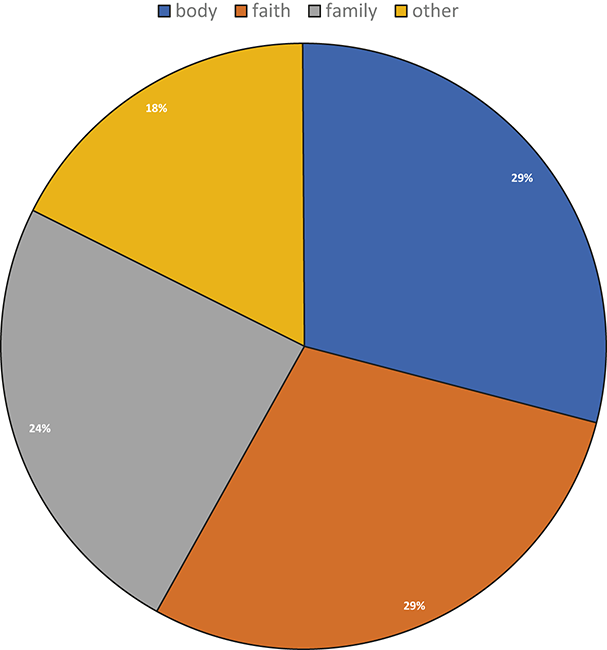
In the case of wer ‘man’, the situation is drastically different, as shown in Table 17. Even though the pattern ‘someone’s man’ is extremely well represented in the data (77 per cent of all recurrent genitival collocations), all 468 instances of such use are covered by two collocations – Godes wer ‘God’s man’ and Dryhtnes wer ‘Lord’s man’ – which shows that a man could only be subordinated to God, as in (38). This remarkably contrasts with genitives involving the women terms: God was merely one of the potential agents controlling a woman (namely, when she was a saint or a nun), but in other cases women were perceived as inferior to, or at least secondary to, human males.
(38)
Ac þa to willan ðæs Godes weres heo eardiendlic wæs but then to will the God’s man she inhabitable was geworden; become ‘But then, according to the will of God’s man, it [the land] became inhabitable.’ (cobede,Bede_4:29.366.10.3661)
| Number | Lemma | Translation | Group | Σ |
|---|---|---|---|---|
| 1 | Godes wer | God’s man | faith | 402 |
| 2 | Dryhtnes wer | Lord’s man | faith | 66 |
| 3 | lifes wer | man of (good) life | other | 25 |
| 4 | weres gemana | man’s company | body | 12 |
| 5 | weres wif | man’s woman | family | 9 |
| 6 | weres tid | man’s time | other | 7 |
| 7 | weres wundor | man’s miracle | faith | 6 |
| 8 | weres mynster | man’s monastery | faith | 6 |
| 9 | weres gemynd | man’s memory | other | 5 |
| – | other | – | – | 70 |
| – | total recurrent | – | – | 608 |
The review of genitival modification of wer also shows two interesting patterns absent from the collocations of the women terms. The first concerns wer in the position of the modifier of words such as ‘time’ or ‘memory’ – that is, nouns which generally relate to human experience. The second case concerns phrases denoting ‘a man of something’, where the genitival modifier of wer is an inanimate abstract noun such as work, holiness or life; see (39).
(39)
He sæde me, þæt in ðære ylcan byrig Tudertina he said me that in the same city Tudertine wære sum swyþe godes weorces wer, þam wæs nama was some very good work’s man whom was name Marcellinus. Marcellinus ‘He told me that in the same city of Tudertine there was a man of very good work whose name was Marcellinus.’ (cogregdC,GD_1_[C]:10.83.24.951)
Evidently, this collocation pattern is dominated by God’s/Lord’s man. This can indicate men’s connection to the domain of profession and public life, since all the men of God were either future saints (and serving God was their basic activity) or members of the clergy. With only 5 per cent of collocations related to body and 1 per cent to family (cf. Figure 13), wer stands in stark contrast to the basic women terms, where both ‘body’ and ‘family’ cover a substantial portion of the data. Moreover, even if a man’s physicality is mentioned, it is rarely related to sexuality. The only exception is weres gemana ‘man’s company’, which is used in the sexual context, but all twelve cases refer to the lack of any man’s physical involvement during Mary’s immaculate conception as in (40).
(40)
And we gelyfað þæt hine clæne mæden gebære, Sancta and we believe that him clean maiden bore Saint Maria, þe næfre nahte weres gemanan Mary who never not-had man’s company ‘And we believe that an immaculate maiden bore him, Saint Mary, who had never been in the company of a man.’(cowulf,WHom_7a:24.528)
Genitival modification of and with wer ‘man’ in YCOE.
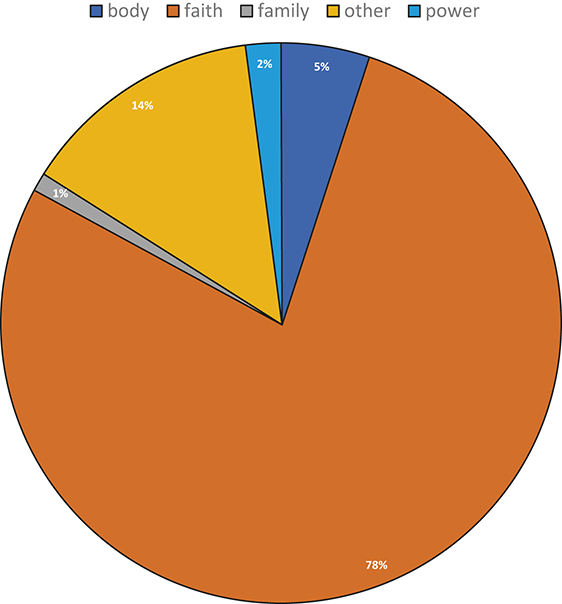
The only body parts mentioned in the male context are feet and hands (cf. (41)). This markedly contrasts with the women terms, dominated in this area by breost ‘breast’ and innoþ ‘womb.’ This again stresses that bearing children was considered to be women’s basic social duty, while men had a larger array of tasks to perform.
(41)
of ðæs weres handa & his broðor handa ic of the man’s hand and his brother’s hand I ofgange ðæs mannes lif. require the man’s life ‘I will require the life of man at the hand of every man and his brother.’
(cootest,Gen:9.5.378)
Given the higher uniformity and narrower semantic scope of the analysed women terms, we can hypothesise that the linguistic image of the Anglo-Saxon man allows a more varied existence than that which is granted to the woman. Also, the category of power, though infrequent, is represented by some of the collocations. On the other hand, the linguistic patterns do not situate the Anglo-Saxon man within the domain of the family society: collocations related to family relations are rare in this group (see Figure 13).
3.3.2 Parent Terms
In the next group of terms, covering the ‘parent’ sense, the womb (innoþ) and the bosom (bosm) once again prove to be the most important attributes of a woman, confirming the observations related to the basic OE women terms, with (42) as a representative example.
(42)
Saga me hwilc sunu wræce ærest his fæder on hys tell me which son avenges first his father on his moder innoðe. mother’s womb ‘Tell me which son avenges his father already in his mother’s womb.’
(coadrian,Ad:12.1.31)
Table 18 shows quite clearly that similarly to the adjectival collocations, many of the patterns extracted from the corpus refer to one particular mother – that is, Mary, the mother of Jesus Christ, as in (43).
(43)
Ða cwæð þæs hælendes modor to Þam þenum, then said the Saviour’s mother to the servants doð swa hwæt swa he eow secge. do whatever he you say ‘Then the Saviour’s mother said to the servants: Do whatever he tells you.’
(cowsgosp,Jn_[WSCp]:2.5.5845)
| Number | Lemma | Translation | Group | Σ |
|---|---|---|---|---|
| 1 | hælend+modor | Saviour’s mother | faith | 28 |
| 2 | modor+innoþ | mother’s womb | body | 24 |
| 3 | god+modor | God’s mother | faith | 22 |
| 4 | crist+modor | Christ’s mother | faith | 17 |
| 5 | cyning+modor | king’s mother | family | 11 |
| 6 | man+modor | man’s mother | family | 6 |
| 7 | modor+bosm | mother’s bosom | body | 4 |
| – | other | – | – | 23 |
| – | total recurrent | – | – | 135 |
Therefore, the high proportion of ‘faith’, apparently at the expense of ‘family’, shown in Figure 14, is not surpising.
Genitival modification of and with modor ‘mother’ in YCOE.
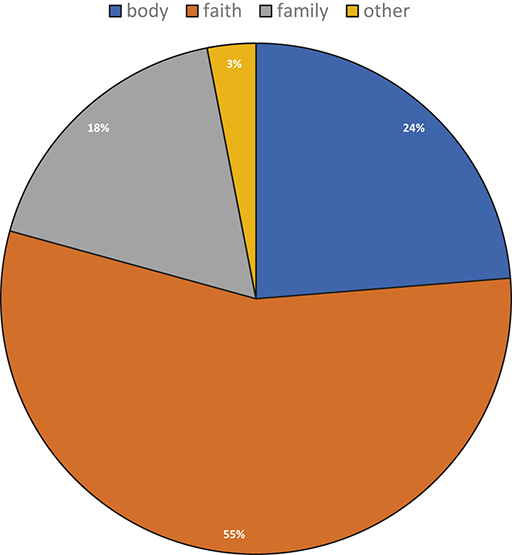
In the case of fæder, the data present a completely different picture. Table 19 shows that while faith remains an important category, father is mostly a modifier and often an actual or metaphorical owner of a number of objects (e.g. hus ‘house’, æht ‘property’, see (44)) and attributes (e.g. wille ‘will, wisdom ‘wisdom’, see (45)). Example (46) shows that a father could even metaphorically ‘own’ his god, which is without precedence in the analysed data (a mother or a woman in general absolutely could not).
(44)
God cwæð þa to Abrame: Far of þinum lande God said then to Abram go of your land & of ðinre mægðe & of ðines fæder huse and of your family and of your father’s house ‘Then God said to Abraham: Leave your land and your family and your father’s house.’ (cootest,Gen:12.1.452)
(45)
ac se ðe wyrcð mines fæder willan þe on heofonum but this who works my father’s will who on heaven is. se færð into heofenan rice; is this goes into heaven kingdom ‘But the one who follows the will of my father, who is in heaven, goes to the kingdom of heaven.’ (cocathom2,+ACHom_II,_30:235.11.5232)
(46)
Ic eom þines fæder God & Iacobes God; I am your father’s god and Jacob’s god ‘I am the god of your father and the god of Jacob.’ (cootest,Exod:3.6.2350)
Figure 15 shows that the data are very varied. ‘Faith’ is no longer a dominant category, ‘power’ proves to be very well represented, and while ‘family’ is quite important, it is clearly a minority type. Interestingly, the category ‘body’ proves rather frequent for a male term (12 per cent), but the body parts attested among the recurrent collocations are: stefn ‘voice’, hand ‘hand’, eage ‘eye’, bosm ‘bosom’, lic ‘(dead) body’, bearm ‘bosom’, fot ‘foot’, sarness ‘pain’, heorte ‘heart’, ansyn ‘face’ and bæc ‘back’, so they are quite varied and rather different in character from the ones visible in women terms.
| Number | Lemma | Translation | Group | Σ |
|---|---|---|---|---|
| 1 | fæder+god | father’s God | faith | 35 |
| 2 | fæder+hus | father’s house | family | 19 |
| 3 | fæder+nama | father’s name | other | 18 |
| 4 | fæder+wille | father’s will | power | 15 |
| 5 | fæder+rice | father’s kingdom | faith | 13 |
| 6 | fæder+wisdom | father’s wisdom | other | 10 |
| 7 | mynster+fæder | father of the monastery | faith | 10 |
| 8 | fæder+sunu | father’s son | family | 9 |
| 9 | fæder+bysen | father’s example | other | 8 |
| 10 | þeod+fæder | people’s father | other | 7 |
| 11 | fæder+stefn | father’s voice | body | 7 |
| 12 | hælend+fæder | Jesus’ father | faith | 6 |
| 13 | fæder+æht | father’s property | power | 6 |
| 14 | fæder+weorc | father’s work | other | 5 |
| 15 | fæder+hiwræden | father’s family | family | 5 |
| 16 | fæder+hand | father’s hand | body | 5 |
| – | other | – | – | 123 |
| – | total recurrent | – | – | 301 |
Genitival modification of and with fæder ‘father’ in YCOE.
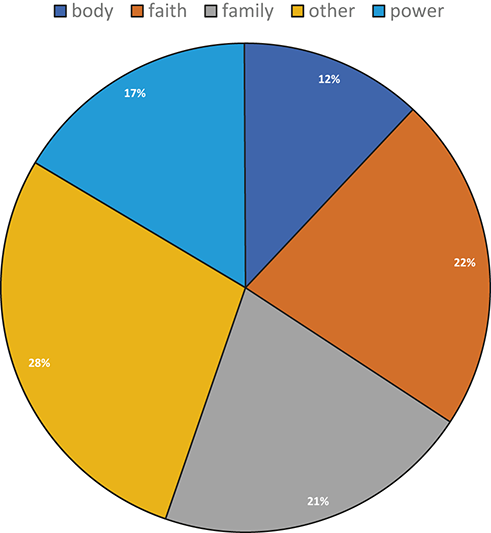
3.3.3 Terms Denoting Children and Young Adults
In the category of children and young adults, ‘family’ surfaces as the dominant category in the case of females. Table 20 shows how the daughters and maidens would usually belong to someone (sixty-two out of seventy-four recurrent collocations, which is 84 per cent of the data), with innoþ ‘womb’ and nama ‘name’ as the most numerous exceptions. Examples (47) and (48) illustrate the main tendencies.
(47)
Mid þi ðe se cyning þas word gecwæð, ða with this that the king these words said then færinga þar eode in ðæs cynges iunge dohtor suddenly there went in the king’s young daughter ‘When the king said these words, suddenly his young daughter came in.’
(coapollo,ApT:15.1.283)
(48)
Se ðe mid deadlicum lichaman. Wearð acenned this who with mortal body became born of beclysedum innoðe þæs mædenes. of closed womb the maiden.GEN ‘He who was born with a mortal body from the closed womb of a maiden.’
(cocathom1,+ACHom_I,_16:308.31.2948)
As can be seen, then, ‘family’ proves to be the strongest category among genitival collocations (see Figure 16). For the male terms, concurrently, it is ‘faith’ which completely dominates the data (cf. Figure 17). The difference is driven by the fact that in many cases the referent is Jesus, Godes sunu ‘God’s son’ (as shown in (49)), and this single collocation represents 61 per cent of the data in Table 21. Moreover, the second most frequent collocation, mannes sunu ‘man’s son, the son of man’, is also a reference to Jesus. Nonetheless, in other cases human sons are referents, and since 95 per cent of the collocations represent the pattern ‘someone’s son’, it suggests a subordinate position of children, which is only natural for a medieval society. The most frequent collocation in which sunu is the modifier is suna lic ‘son’s (dead) body’ shown in (50).
(49)
& he hyre gecydde þæt heo scolde geberan and he her told that she should bear Godes sunu. God’s son ‘And he told her that she should give birth to God’s son.’ (cowulf,WHom_7:38.409)
(50)
An geleafful yrðling bær his deadan suna lic to one religious farmer bore his dead son’s body to Benedictes mynstre. Benedict’s monastery ‘A religious farmer brought the body of his dead son to a Benedictine monastery.’ (cocathom2,+ACHom_II,_11:105.470.2272)
Although it has to be noted that the relatively low frequency of the collocations in this category limits their statistical relevance, they still confirm the results yielded in other categories of nouns, thus confirming a general tendency.
| Number | Lemma | Translation | Group | Σ |
|---|---|---|---|---|
| 1 | cyning+dohtor | king’s daughter | family | 19 |
| 2 | god+mægden | God’s maiden | faith | 16 |
| 3 | ealdormann+dohtor | nobleman’s daughter | family | 8 |
| 4 | eorl+dohtor | earl’s daughter | family | 4 |
| 5 | broþor+dohtor | brother’s daughter | family | 4 |
| 6 | mægden+nama | maiden’s name | other | 3 |
| 7 | mægden+innoþ | maiden’s womb | body | 3 |
| 8 | man+dohtor | man’s daughter | family | 3 |
| – | other | – | – | 14 |
| – | total recurrent | – | – | 74 |
Genitival modification of and with mægden ‘maiden’ and dohtor ‘daughter’ in YCOE.
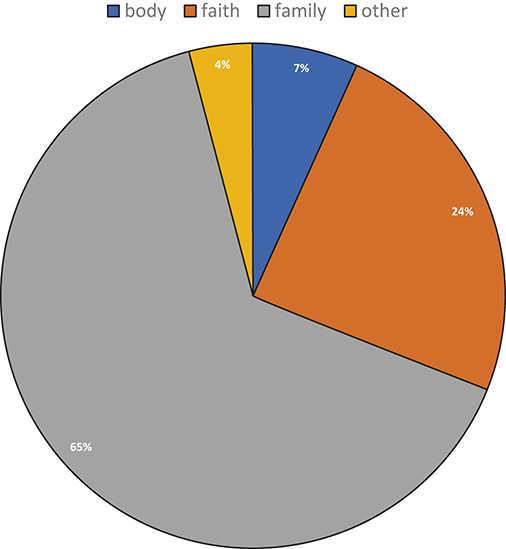
Genitival modification of and with sunu ‘son’ and cnapa ‘boy’ in YCOE.
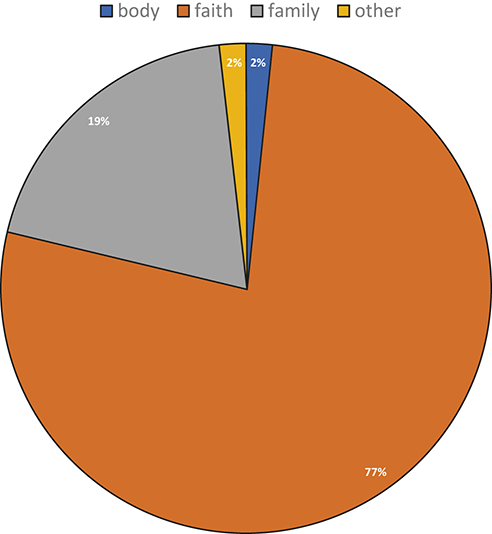
| Number | Lemma | Translation | Group | Σ |
|---|---|---|---|---|
| 1 | god+sunu | God’s son | faith | 434 |
| 2 | man+sunu | man’s son | faith | 111 |
| 3 | cyning+sunu | king’s son | family | 42 |
| 4 | broþor+sunu | brother’s son | family | 14 |
| 5 | ealdormann+sunu | nobleman’s son | family | 10 |
| 6 | modrige+sunu | aunt’s son | family | 9 |
| 7 | eorl+sunu | earl’s son | family | 9 |
| 8 | sweostor+sunu | sister’s son | family | 8 |
| 9 | wiln+sunu | maid’s son | family | 6 |
| 10 | sunu+lic | son’s body | body | 5 |
| 11 | sunu+sunu | son’s son | family | 5 |
| 12 | widuwa+sunu | widow’s son | family | 5 |
| 13 | fæder+sunu | father’s son | family | 5 |
| – | other | – | – | 52 |
| – | total recurrent | – | – | 715 |
3.3.4 Sibling Terms
In the category ‘sibling’, sweostor ‘sister’ proves quite unvaried in its phraseological patterns (see Table 22). Only four recurrent genitival collocations were identified, three of which represent the semantic group of ‘family’, as shown in (51). The only attribute of a sister in the data is her soul, as in (52).
(51)
And Æðelswið cwen, seo wæs Ælfredes sweostor And Aethelswith queen who was Alfred’s sister cinges, forðferde king’s died ‘And Aethelswith, the sister of King Alfred, died.’ (cochronC,ChronC_[Rositzke]:889.1.839)
(52)
Hu he geseah his swustor sawle, hu heo how he saw his sister’s soul how she utferde of lichaman. out-went of body ‘How he saw his sister’s soul and how it left her body.’ (cogregdH,GDHead_2_[H]:94.2.960)
Figure 18 thus diverges from the patterns attested for the previous groups of female terms, but this can be explained by the low number of collocations and their limited diversity. Consequently, this is a category of minimal relevance for our study.
| Number | Lemma | Translation | Group | Σ |
|---|---|---|---|---|
| 1 | cyning+sweostor | king’s sister | family | 9 |
| 2 | sweostor+sunu | sister’s son | family | 8 |
| 3 | sweostor+sawel | sister’s soul | faith | 5 |
| 4 | cild+sweostor | child’s sister | family | 2 |
| – | total recurrent | – | – | 24 |
Genitival modification of and with sweostor ‘sister’ in YCOE.
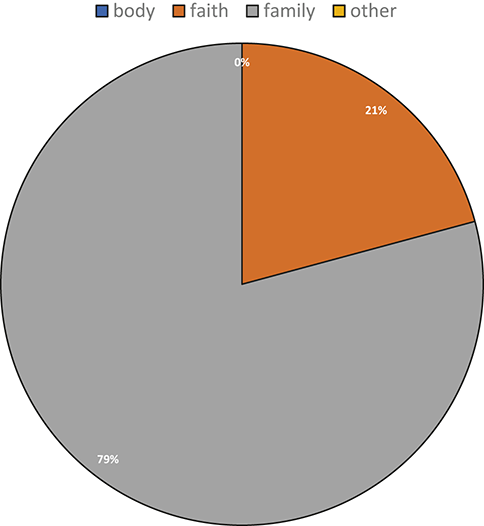
In the case of broþor ‘brother’, there is both more data and more variation, as shown in Table 23. While ‘family’, exemplified by (53), proves to be a strong category (which is confirmed by Figure 19), it is rather unexpected that ‘body’ is well attested as well. This result, however, is inflated by the the high frequency of eage ‘eye’, which in turn results from numerous references of Anglo-Saxon homilies to the parable from the Gospel of Matthew: ‘And why beholdest thou the mote that is in thy brother’s eye, but considerest not the beam that is in thine own eye?’ (cf. (54)). (The word ‘brother’ in this parable does not denote a family relation, but a fellow human.) The only other collocation from this category is broþor blod ‘brother’s blood’, also a biblical reference, as shown in (55).
(53)
Wæs he Cenredes broþor þæs cyninges, se ær was he Cenred’s brother the king’s who before him rice hæfde. him power had ‘He was a brother of King Cenred who ruled before him.’ (cobede,Bede_5:21.476.25.4785)
(54)
To hwi gesihst þu þæt mot on þines broþor to why see you the dust on your brother’s egan eye ‘Why do you see the mote in your brother’s eye?’ (cowsgosp,Mt_[WSCp]:7.3.355)
(55)
þines broðor blod clypað up to me of eorðan. your brother’s blood calls up to me of earth ‘Your brother’s blood is calling me from the earth.’ (cootest,Gen:4.10.189)
(56)
& heo lustlice from þam broðrum þæs mynstres and they gladly from the brothers the monastery.GEN onfongne wæron. received were ‘And they were gladly received by the brothers of the monastery.’ (cobede,Bede_3:17.234.2.2390)
| Number | Lemma | Translation | Group | Σ |
|---|---|---|---|---|
| 1 | cyning+broþor | king’s brother | family | 21 |
| 2 | broþor+eage | brother’s eye | body | 14 |
| 3 | broþor+sunu | brother’s son | family | 14 |
| 4 | broþor+wif | brother’s woman | family | 7 |
| 5 | mynster+broþor | brother of (the) monastery | faith | 7 |
| 6 | broþor+sawel | brother’s soul | faith | 6 |
| 7 | eorl+broþor | earl’s brother | family | 5 |
| 8 | broþor+dohtor | brother’s daughter | family | 4 |
| 9 | broþor+gereord | brother’s speech | other | 4 |
| 10 | broþor+þing | brother’s thing | other | 4 |
| 11 | broþor+blod | brother’s blood | body | 4 |
| – | other | – | – | 50 |
| – | total recurrent | – | – | 140 |
Genitival modification of and with broþor ‘brother’ in YCOE.
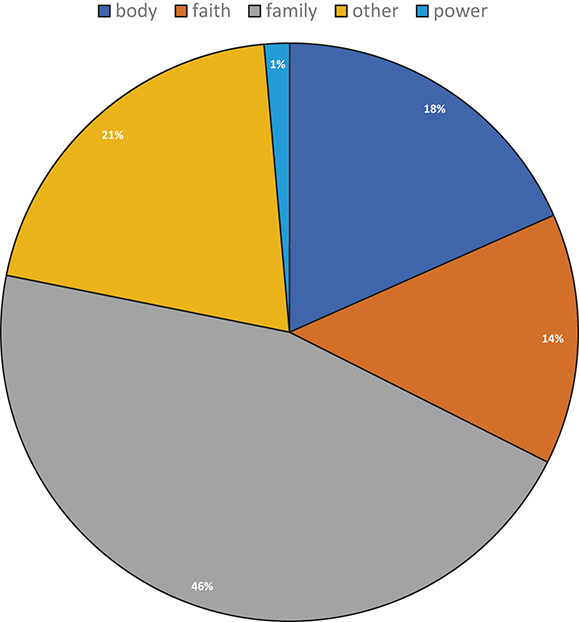
Finally, it should be noted that many ‘brothers’ in the dataset are in fact monks, as in (56).
Analogous to the nouns describing children and young adults, the results yielded by the sibling category are not very significant statistically; however, the analysis of the collocations from this group does not deviate from a pattern visible elsewhere.
3.3.5 Terms Denoting Women and Men of High Social Status
The last group of gendered nouns, including women of higher social position, proves very interesting in its collocational choices. As in the analysis of adjectival collocations, female terms for women of an esteemed status display a strong contrast with other female nouns. Table 24 and Figure 20 convincingly show that Anglo-Saxon women of higher social standing were mostly attested in collocations related to their power and authority, for example, abbudissan mynstre ‘abbess’ monastery’ in (57). However, even in the case of the woman who seems to have most power, the abbess, the data show a major limitation: while she can ‘own’ her monastery and her congregation, she fails to ‘own’ any people, unlike the men in power discussed later in this Element.
| Number | Lemma | Translation | Group | Σ |
|---|---|---|---|---|
| 1 | abbodesse+mynster | abbess’ monastery | power | 5 |
| 2 | cyning+cwen | king’s queen | family | 4 |
| 3 | mynster+abbodesse | abbess of (the) monastery | power | 3 |
| 4 | abbodesse+þegnung | abbess’ service | power | 3 |
| 5 | middaneard+cwen | queen of the world | power | 3 |
| 6 | abbodesse+forþfor | abbess’ death | other | 2 |
| 7 | gesamnung+abbodesse | abbess’ congregation | power | 2 |
| 8 | god+nunne | God’s nun | faith | 2 |
| 9 | suþdæl+cwen | queen of the south | power | 2 |
| 10 | yfel+cwen | queen of evil | other | 2 |
| 11 | þegen+cwen | servant’s queen | power | 2 |
| 12 | god+cwen | God’s queen | faith | 2 |
| 13 | hlæfdige+forþfor | lady’s death | other | 2 |
| – | total recurrent | – | – | 34 |
Genitival modification of and with cwen ‘queen’, abbodesse ‘abbess’, hlæfdige ‘lady’ and nunne ‘nun’ in YCOE.
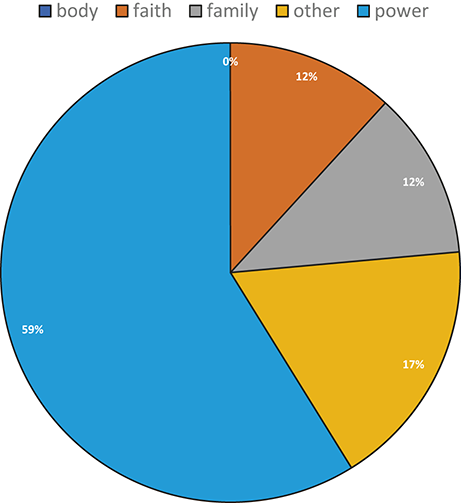
‘The queen’ and ‘the lady’ are sometimes references to Mary, the mother of Jesus, as in (58), but the queen is also often a metaphor, as in (59). This example is particularly interesting, as it provides an insight into the imagery of Christian theology. The phrase describing the hierarchic nature of cardinal sins, ‘pride is the queen of all sins’, is not in itself biblical. It originated in St Gregory the Great’s Moralia (written in the late sixth century in Latin) and was later used by the Christian doctrine, for example, by Thomas Aquinas. The feminine personification of evil relies on a presupposition, convenient for male Christian philosophers, that all human sin is a consequence of the original sin, for which, ultimately, Eve is responsible.
(57)
In ðeosse abbudissan mynstre wæs sum broðor syndriglice in this abbess’ monastery was some brother particularly mid godcundre gife gemæred & geweorðad. with divine grace glorified and honoured ‘In this abbess’ monastery there was a brother particularly glorified and honoured with God’s grace.’ (cobede,Bede_4:25.342.3.3426)
(58)
Ne cwæð heo na ic eom Godes moder. oððe ic eom not said she not I am God’s mother or I am cwenn ealles middaneardes. queen all world ‘She did not say: I am God’s mother, or: I am the queen of all the world.’
(cocathom1,+ACHom_I,_13:286.144.2480)
(59)
Se forma heafodleahtor ys ofermodignes, Seo ys gecweden the first cardinal sin is pride which is said cwen eallra yfela. queen all.GEN evils.GEN ‘The first cardinal sin is pride, which is said to be the queen of all evils.’
(coverhom,HomS_38_[ScraggVerc_20]:61.A.2581)
Metaphorical uses aside, Figure 20 presents a really exceptional picture, with ‘power’ dominant at 59 per cent, and the equivalent result for the male-gendered nouns being extremely close at 62 per cent (cf. Figure 21). Table 25 reveals, however, that while the quantitative result is virtually the same, the king’s power is often expressed by the possession of servants (e.g. cyninges þegen ‘king’s servant’ shown in (60) or cyninges gerefa king’s steward’).
(60)
And þa on ðæs wifes gebærum onfundon Þæs and then on the woman’s manners found the cinges þegnas ða unstilnesse king’s servants the restlessness ‘And the king’s servants found restlessness in the woman’s behaviour.’ (cochronC,ChronC_[Rositzke]:755.14.367)
Genitival modification of and with cyning ‘king’, hlaford ‘lord’, abbod ‘abbot’ and munuc ‘monk’ in YCOE.
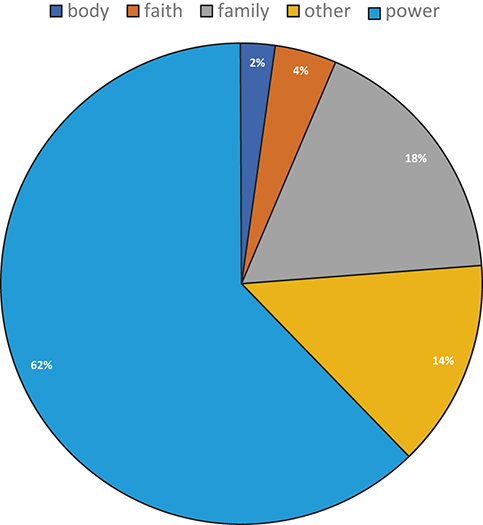
| Number | Lemma | Translation | Group | Σ |
|---|---|---|---|---|
| 1 | cyning+þegen | king’s servant | power | 75 |
| 2 | cyning+sunu | king’s son | family | 42 |
| 3 | cyning+dæg | king’s day(s) | power | 27 |
| 4 | cyning+broþor | king’s brother | family | 21 |
| 5 | cyning+dohtor | king’s daughter | family | 19 |
| 6 | cyning+rice | king’s kingdom | power | 17 |
| 7 | mynster+abbod | abbot of the monastery | power | 17 |
| 8 | cyning+gerefa | king’s steward | power | 16 |
| 9 | abbod+hæs | abbot’s order | power | 15 |
| 10 | wuldor+cyning | king of glory | other | 12 |
| 11 | þeod+cyning | people’s king | power | 11 |
| 12 | cyning+cyning | king of (all) kings | other | 11 |
| 13 | cyning+hired | king’s family | family | 10 |
| – | other | – | – | 541 |
| – | total recurrent | – | – | 834 |
It may not seem obvious why the collocation cyninges dæg ‘king’s day’ was classified in the ‘power’ category, but, as (61) shows, it refers to the times of a king’s reign, which was a way of measuring time.
(61)
Hu on Achaie wearþ micel flod on Ambictiones how on Achaia became great flood in Ambiction’s dagum þæs cyninges days the king ‘How a great flood took place in Achaia in the days of King Ambiction.’ (coorosiu,OrHead:1.6.7)
Generally, ‘power’ is the dominant category, and (62) is another representative example.
(62)
ne do he nan ðing butan þæs abbodes hæse nor do he no thing without the abbot’s order ‘Nor shall he do anything without the abbot’s order.’ (cobenrul,BenR:27.7.6.96)
The similarities between Figures 20 and 21 are quite striking and they show, as in the analysis of adjectival collocations, that the only women whose linguistic image was comparable to men’s were those of a privileged social status. A higher-ranking woman was described with more positive adjectives, never associated with physicality, and the patterns of genitival modification also show that she in fact could possess some power, just like a man.
3.4 Quantitative Summary
This section is based on the analysis of a large number of recurrent collocations. In the case of adjectival modification, we took into account 576 phraseological units with female-gendered nouns and 2,385 equivalent units with male-gendered nouns, and the proportions between the particular adjective types are illustrated by Figure 22. All in all, in turns out that while the proportions of negative and neutral adjectives for all the analysed lexemes combined are rather similar between the female and the male group, the difference in the use of adjectives related to physicality and positive features is really striking (19 per cent vs. 6 per cent and 40 per cent vs. 56 per cent respectively) and it proves statistically significant (X2 (3, N = 2961) = 121.3653, p < 0.00001). The fact that physicality is the main factor discriminating the two groups confirms the hypothesis that female terms would rather collocate with adjectives describing physical appearance.
Adjectival modifiers of all the gendered nouns: Summary.
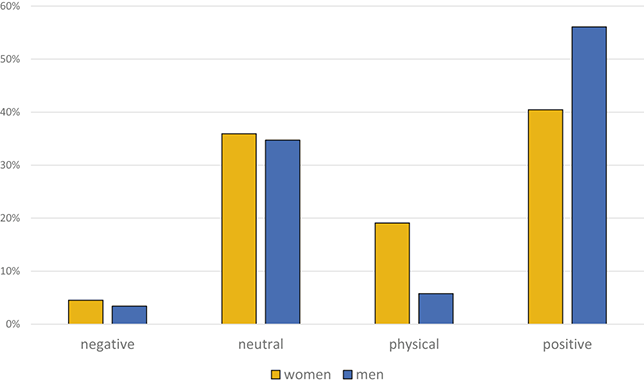
Figure 22 Long description
The horizontal axis represents four categories. The vertical axis represents the percentages, ranging from 0% to 60% in increments of 10. The bar chart depicts the following data. For women, the largest category is “positive” (40%), followed by “neutral” (36%), “physical” (19%), and “negative” (5%). For men, the largest category is “positive” (56%), followed by “neutral” (35%), “physical” (6%), and “negative” (3%).
As far as binominals are concerned, the analysis was based on 341 units with female-gendered nouns and 468 phrases with their male equivalents. Figure 23 illustrates a few important differences that the study revealed. First of all, two female terms rarely collocate with each other (5 per cent), while binominals with two male terms are the dominant category in this group (46 per cent). Next, it is rather striking that male terms precede female terms in the majority of binominals including women (58 per cent), while only 2 per cent of the data show a reverse situation for men. The final discrepancy lies in the ability of women terms to collocate with children terms (25 per cent), and the complete lack thereof in the male dataset. The difference is confirmed by statistics: (X2 (4, N = 809) = 556.2729, p < 0.00001) and it shows a big difference in the social position of men and women and the clear superiority of the former. At the same time, it confirms women’s close relation to family and children, reflecting their main social role.
Binominals with all the gendered nouns: Summary.
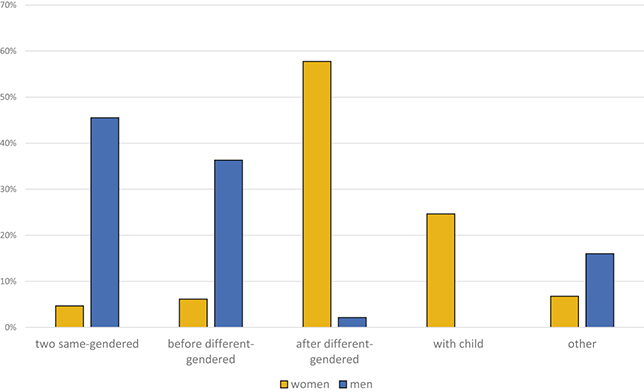
Figure 23 Long description
The horizontal axis represents five categories. The vertical axis represents the percentages, ranging from 0% to 70% in increments of 10. The bar chart depicts the following data. For women, the largest category is “after different-gendered” (58%), followed by “with child” (25%), “other” (7%), “before different-gendered” (6%), and “two same-gendered” (5%). For men, the largest category is “two same-gendered” (46%), followed by “before different-gendered” (36%), “other” (16%), “after different-gendered” (2%), and “with child” (0%).
In the case of genitival modification, the analysis covered 477 phraseological units built around women terms and 2,598 equivalent units with men terms. Figure 24 illustrates the general difference between the groups, proving that all the categories differ considerably. The most striking discrepancy is visible in collocations describing power (4 per cent for women vs. 20 per cent for men) and body (21 per cent vs. 5 per cent respectively), which are almost complete reversals of each other. The remaining differences concerning family (31 per cent for women vs. 16 per cent for men) and faith (35 per cent vs. 45 per cent respectively) complete the picture, demonstrating how Anglo-Saxon women are usually shown in term of their family relations and physicality, while men are rather portrayed against the background of their profession, which in early medieval times translates into power relations (i.e. social class and position in society) and faith (i.e. respect in the eyes of the Catholic Church). As expected, this huge difference proves statistically significant (X2 (4, N = 3075) = 260.0851, p < 0.00001).
Genitival modification for all the gendered nouns: Summary.
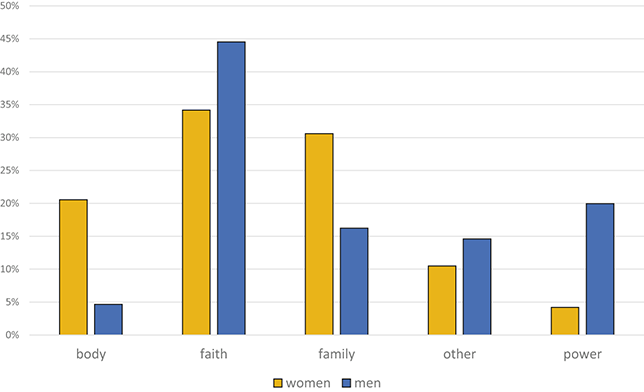
Figure 24 Long description
The horizontal axis represents five categories. The vertical axis represents the percentages, ranging from 0% to 50% in increments of 5. The bar chart depicts the following data. For women, the largest category is “faith” (34%), followed by “family” (31%), “body” (21%), “other” (10%), and “power” (4%). For men, the largest category is “faith” (45%), followed by “power” (20%), “family” (16%), “other” (15%), and “body” (5%).
4 Collocations on the Level of the Verb Phrase
4.1 Subjects and Their Verbs (N + V)
4.1.1 General Terms
The next part of the analysis shows the most frequent verbs co-occurring with the analysed nouns in the syntactic role of subject. The verbs were divided into a few elementary semantic and/or syntactic categories (being, possession, activity, cognition, motion, saying, state, modal, passive), following the procedure described in Section 2, in order to show the main tendencies in the data and facilitate further analysis.
As can be seen in Table 26, in the case of general women terms, verbs of being are the most frequently represented category, which is not particularly consequential, since such verbs are generally frequent and associated with all types of subjects. Nonetheless, what does appear as rather striking is the relatively high frequency of passive structures associated with the basic women terms – that is, even though a woman is a syntactic subject, she is the patient and not the agent of the action, as in (63). In this context, it is also important to note the relatively high frequency of modal verbs, which in most cases, as illustrated by (64), refer to rules and obligations.
(63)
& þæt wif wæs gehæled on þære tide. and the woman was healed on this time ‘And at that time the woman was healed.’ (cowsgosp,Mt_[WSCp]:9.22.553)
(64)
Se halga wer þa cwæð, wif ne sceal na faran the holy man then said woman not shall not go to wera fyrdwicum, ac wunian æt ham to men’s camp but stay at home ‘Then the holy man said: A woman should not go to men’s camp but stay at home.’ (coaelive,+ALS_[Martin]:1095.6683)
| Number | Lemma | Translation | Category | Σ |
|---|---|---|---|---|
| 1 | wif+wesan | to be | being | 46 |
| 2 | wif+cweþan | to say | saying | 12 |
| 3 | wif+beon | to be | being | 9 |
| 4 | wif+sculan | shall | modal | 8 |
| 5 | wif+weorþan | to become | being | 8 |
| 6 | fæmne+wesan | to be | being | 7 |
| 7 | wif+cennan | to bear (a child) | activity | 6 |
| 8 | wif+habban | to have | possession | 6 |
| 9 | wif+hatan | to be called | passive | 5 |
| 10 | wif+acennan | to bear (a child) | activity | 5 |
| 11 | wif+gelifan | to believe | cognition | 5 |
| 12 | wif+secgan | to say | saying | 5 |
| 13 | wif+ceorlian | to marry | activity | 5 |
| – | other | – | – | 73 |
| – | total recurrent | – | – | 200 |
Verbs of saying are well represented in the corpus, but this does not point to high agentivity of the analysed terms but should rather be seen as a by-product of narrative structure since numerous OE prose texts made frequent use of dialogues. However, what is important (though perhaps rather predictable at this point) is that the most frequent activity verbs collocating with wif are cennan ‘to bear (a child)’, acennan ‘to bear (a child)’ and ceorlian ‘to marry’, illustrated by (65), which points to a very narrow semantic range of the verbs where the woman is a true agent of the action. This is another example of limiting the Anglo-Saxon woman’s activity to the family realm, ascribing to her the role of a mother and wife.
(65)
To þan þæt wif cenne wæpnedcild, haran hrif gedryged to that that woman bears male child hare’s womb dried & gesceafen oððe gegniden on drinc drincen and scraped or rubbed on drink drink butu. both ‘For a woman to bear a male child, let both [man and woman] drink dried hare’s womb, scraped or rubbed into a drink.’ (coquadru,Med_1.1_[de_Vriend]:5.12.200)
By contrast, the verbal collocates of wer are much more diverse. One of the most easily discernible differences between the male and the female terms, as shown in Table 27, is the high frequency of habban ‘to have’, which clearly indicates that possession and ownership in Anglo-Saxon society should be associated with the male gender. What is more, the activity verbs co-occurring with wer are, unlike for the women terms, semantically broad: various examples include hatan ‘call/order’, don ‘to do’, locian ‘to look’, niman ‘to take’, etcetera, as in (66). Some of these verbs, like hatan, signal not only activity but also agency and power, which certainly resides with men.
(66)
ac se halga wer sona het hi ætstandan, but the holy man soon ordered them stand still ‘But the holy man soon ordered them to stand still.’ (coaelive,+ALS_[Martin]:1043.6646)
If we compare the proportions (see Figure 25), the differences between the female- and male-gendered nouns become well visible and rather substantial. In the case of wer, activity verbs are not only more varied but also more frequent (18 per cent vs. 14 per cent), and so are motion verbs (14 per cent vs. 8 per cent), which also indirectly relate to activity, as well as verbs of possession (7 per cent vs. 5 per cent). The verb types used more frequently with women terms are passive (9 per cent vs. 2 per cent); other verbs have comparable frequencies. All in all, this aspect of the linguistic image of Anglo-Saxons presents women as more passive, confined to family and motherhood, whereas men are characterised as more independent participants of varied spheres of life.
| Number | Lemma | Translation | Category | Σ |
|---|---|---|---|---|
| 1 | wer+wesan | to be | being | 65 |
| 2 | wer+habban | to have | possession | 16 |
| 3 | wer+cweþan | to say | saying | 12 |
| 4 | wer+geseon | to see | perception | 10 |
| 5 | wer+cuman | to come | motion | 8 |
| 6 | wer+wunian | to stay | motion | 7 |
| 7 | wer+beon | to be | being | 7 |
| 8 | wer+feran | to go | motion | 6 |
| 9 | wer+andswarian | to answer | saying | 6 |
| 10 | wer+weorþan | to become | being | 6 |
| 11 | wer+gehyran | to hear | perception | 6 |
| 12 | wer+secgan | to say | saying | 5 |
| – | other | – | – | 118 |
| – | total recurrent | – | – | 272 |
Verbal collocates of wif, fæmne and wifmann ‘woman’ vs. wer ‘man’ as subjects in YCOE.
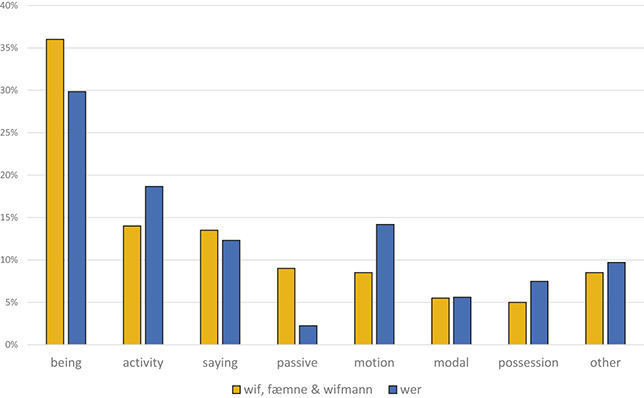
Figure 25 Long description
The horizontal axis represents eight categories. The vertical axis represents the percentages, ranging from 0% to 40% in increments of 5. The bar chart depicts the following data. For “wif, fæmne & wifmann”, the largest category is “being” (36%), followed by “activity” (14%), “saying” (14%), “passive” (9%), “motion” (9%), “other” (9%), “modal” (6%), and “possession” (5%). For “wer”, the largest category is “being” (30%), followed by “activity” (19%), “motion” (14%), “saying” (12%), “other” (10%), “possession” (7%), “modal” (6%), and “passive” (2%).
4.1.2 Parent Terms
In the case of modor ‘mother’ (see Table 28), similarly to the previous group, the collocations are rarely activity verbs, and if they are, once again they are verbs related to the semantic field of childbearing, as in (67). Moreover, there is a verb related to emotions, as in (68), but these emotions are only negative (fear).
(67)
geþenc þæt þe þin modor nacodne gebær. think that you your mother naked bore ‘Consider that when your mother gave birth to you, you were naked.’ (codicts,Prov_1_[Cox]:1.14.24)
(68)
Min modor ne ondræd þu ðe my mother not fear you REFL ‘Mother, do not be afraid.’ (cocathom2,+ACHom_II,_42:316.188.7149)
With fæder ‘father’, the most frequent verb of emotion is clearly positive: lufian ‘to love’ as in (69).
(69)
Se fæder lufað þone sunu the father loves the son ‘The father loves the son.’ (cocathom1,+ACHom_I,_16:308.47.2963)
Table 29 also lists a number of collocations pertaining to (transfer of) possession, as in (70), and many activity verbs which are not limited in the same way as the women terms, which shows that men can enjoy the privilege of ownership as well as the power of agency (cf. (71)).
(70)
Þa þæt mæden wæs XV gear, þa wolde se fæder when the maiden was fifteen years then would the father hi sellan sumum æþelon men to bryde. her give some noble man to bride ‘When the maiden was fifteen years old, her father wanted to give her as a bride to a nobleman.’ (comart1,Mart_1_[Herzfeld-Kotzor]:De25,C.7.40)
(71)
and se hæþene cing his fæder hit het ut and the heathen king his father it ordered out aweorpan throw ‘And his father, the heathen king, ordered to throw it out.’
(comargaC,LS_14_[MargaretCCCC_303]:3.2.12)
Figure 26 summarises these tendencies, making it evident that the collocations of fæder show a higher proportion of (varied) activity verbs (30 per cent vs. 16 per cent) and possession (13 per cent vs. 4 per cent), while modor scores higher only for semantically light categories like verbs of being and saying. In this way, the results indicate similar differences in social status as those shown by the wif/wer category.
| Number | Lemma | Translation | Category | Σ |
|---|---|---|---|---|
| 1 | modor+wesan | to be | being | 18 |
| 2 | modor+cweþan | to say | saying | 4 |
| 3 | modor+weorþan | to become | being | 4 |
| 4 | modor+beon | to be | being | 3 |
| 5 | modor+don | to do | activity | 2 |
| 6 | modor+secgan | to say | saying | 2 |
| 7 | modor+sittan | to sit down | motion | 2 |
| 8 | modor+gewitan | to understand | cognition | 2 |
| 9 | modor+gewunian | to stay | state | 2 |
| 10 | modor+gebæran | to bear (a child) | activity | 2 |
| 11 | modor+onbryrdan | to be inspired | passive | 2 |
| 12 | modor+cuman | to come | motion | 2 |
| 13 | modor+agan | to own | possession | 2 |
| 14 | modor+ondrædan | to fear | emotion | 2 |
| – | total recurrent | – | – | 49 |
| Number | Lemma | Translation | Category | Σ |
|---|---|---|---|---|
| 1 | fæder+wesan | to be | being | 102 |
| 2 | fæder+lufian | to love | emotion | 16 |
| 3 | fæder+sellan | to give | possession | 12 |
| 4 | fæder+forgyfan | to give | possession | 11 |
| 5 | fæder+habban | to have | possession | 10 |
| 6 | fæder+hatan | to call/order | activity | 10 |
| 7 | fæder+sendan | to send | activity | 8 |
| 8 | fæder+asendan | to send | activity | 7 |
| 9 | fæder+witan | to know | cognition | 6 |
| 10 | fæder+gescippan | to make/create | activity | 6 |
| 11 | fæder+ne+wesan | to not be | being | 5 |
| 12 | fæder+don | to do | activity | 5 |
| 13 | fæder+beon | to be | being | 5 |
| – | other | – | – | 126 |
| – | total recurrent | – | – | 329 |
Verbal collocates of modor ‘mother’ vs. fæder ‘father’ as subjects in YCOE.
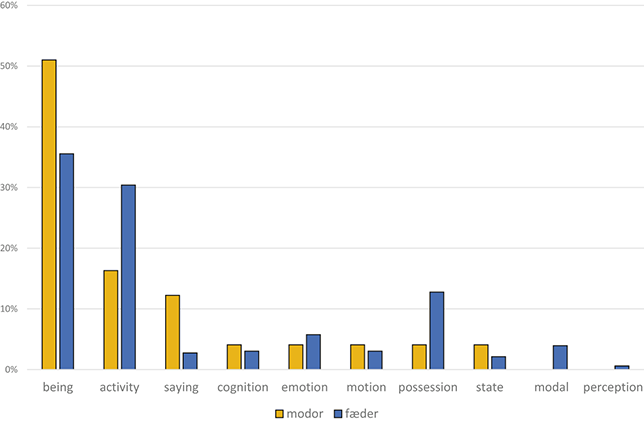
Figure 26 Long description
The horizontal axis represents ten categories. The vertical axis represents the percentages, ranging from 0% to 60% in increments of 10. The bar chart depicts the following data. For “modor”, the largest category is “being” (51%), followed by “activity” (16%), “saying” (12%), “possession”, “motion”, “cognition”, “emotion”, and “state” (each 4%), and “modal” (0%). For “fæder”, the largest category is “being” (36%), followed by “activity” (30%), “possession” (13%), “emotion” (6%), “modal” (4%), “saying”, “cognition”, and “motion” (each 3%), and “state” (2%).
4.1.3 Terms Denoting Children and Young Adults
Table 30 goes to show that in the case of mægden ‘maiden’ and dohtor ‘daughter’, semantically light verbs are also dominant, and the single most frequent activity verb is, unsurprisingly at this point, geeacnian ‘to conceive’, illustrated by (72), the reference being to the Virgin Mary’s immaculate conception.
(72)
Efne sceal mæden geeacnian on hyre innoðe. indeed shall maiden conceive on her womb & acennan sunu. and bear son ‘Indeed, a maiden shall conceive in her womb and give birth to a son.’ (cocathom1,+ACHom_I,_13:282.25.2365)
Sunu ‘son’ and cnapa ‘boy’, on the other hand, show a high frequency of verbs of possession – that is, fon ‘to take’ and habban ‘to have’ shown in (73) – while the activity verbs listed in Table 31 are quite varied and include gemiltsian ‘to take pity’ and settan ‘to set’.
(73)
ond Erconberht his sunu feng to his rice and Eorcenberht his son took to his power ‘And his son Eorcenberht took the throne.’ (cobede,Bede_3:6.172.3.1684)
Interestingly, there are also some passive uses of sellan ‘to sell’, but a closer inspection reveals that all of the instances come from the biblical story of Judas, who betrayed Jesus.
(74)
Wa Þam menn þurh þone þe mannes sunu geseald woe the man through whom the man’s son sold bið is ‘Woe to the man by whom man’s son is sold.’ (cowsgosp,Mt_[WSCp]:26.24.1862)
Figure 27 summarises these tendencies, showing that the main difference between the female and the male terms is in the use of verbs of possession (5 per cent vs. 18 per cent) and activity (9 per cent vs. 21 per cent), with the former scoring higher only for verbs of being (48 per cent vs. 39 per cent) and verbs of saying (18 per cent vs. 3 per cent).
| Number | Lemma | Translation | Category | Σ |
|---|---|---|---|---|
| 1 | dohtor+wesan | to be | being | 21 |
| 2 | mægden+wesan | to be | being | 14 |
| 3 | mægden+cweþan | to say | saying | 9 |
| 4 | mægden+sculan | should | modal | 5 |
| 5 | mægden+geeacnian | to conceive | activity | 4 |
| 6 | mægden+arisan | to rise | motion | 3 |
| 7 | mægden+andwyrdan | to answer | saying | 3 |
| 8 | dohtor+weorþan | to become | being | 3 |
| – | other | – | – | 26 |
| – | total recurrent | – | – | 88 |
| Number | Lemma | Translation | Pattern | Σ |
|---|---|---|---|---|
| 1 | sunu+wesan | to be | being | 97 |
| 2 | sunu+fon | to take | possession | 44 |
| 3 | sunu+cuman | to come | motion | 20 |
| 4 | sunu+beon | to be | being | 18 |
| 5 | sunu+lifian | to live | state | 10 |
| 6 | sunu+gesellan | to be sold | passive | 9 |
| 7 | sunu+cweþan | to say | saying | 6 |
| 8 | sunu+habban | to have | possession | 6 |
| 9 | sunu+gemiltsian | to pity | activity | 5 |
| 10 | sunu+sculan | shall | modal | 5 |
| 11 | sunu+weorþan | to become | being | 5 |
| 12 | sunu+settan | to set | activity | 5 |
| 13 | sunu+hatan | to call | activity | 5 |
| 14 | sunu+sittan | to sit down | motion | 5 |
| 15 | sunu+don | to do | activity | 5 |
| – | other | – | – | 86 |
| – | total recurrent | – | – | 331 |
Verbal collocates of mægden ‘maiden’ and dohtor ‘daughter’ vs. sunu ‘son’ and cnapa ‘boy’ as subjects in YCOE.
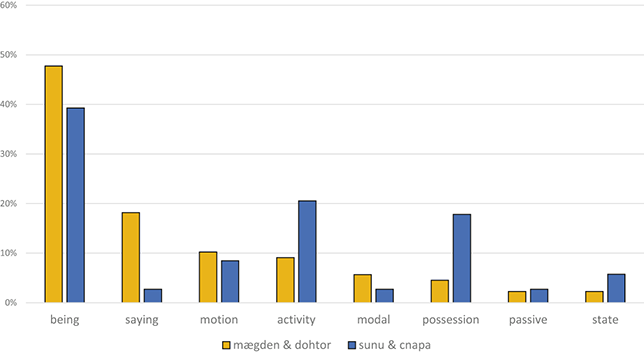
Figure 27 Long description
The horizontal axis represents ten categories. The vertical axis represents the percentages, ranging from 0% to 60% in increments of 10. The bar chart depicts the following data. For “mægden & dohtor”, the largest category is “being” (48%), followed by “saying” (18%), “motion” (10%), “activity” (8%), “modal” (6%), “possession” (5%), passive (2%), and “state” (2%). For “sunu & cnapa”, the largest category is “being” (39%), followed by “activity” (21%), “possession” (18%), “motion” (8%), “state” (6%), and “modal”, “passive”, and “saying” (each 3%).
4.1.4 Sibling Terms
In the group representing siblings, sweostor ‘sister’ proves rather poorly represented, as shown in Table 32. The only instance of an activity verb is lætan ‘to cause, to allow’ exemplified by (75); this refers to one female causing another one to do something, so it seems that the agentivity of the female referent is quite limited in this respect. As could be predicted from other patterns of agency in Anglo-Saxon society, there are no examples showing that a woman is empowered to cause a man to do something.
(75)
& cwæþ, Drihten, nis þe nan caru þæt min and said Lord not-is you no care that my swustur let me ænlipie þenian sister caused me alone serve ‘And said: Lord, don’t you care that my sister made me serve on my own.’ (cowsgosp,Lk_[WSCp]:10.40.4533)
Table 33 shows how broþor ‘brother’ diverges from this picture, mostly by its frequent co-ocurrence with verbs of possession – that is, fon ‘to take’ and habban ‘to have’, illustrated in (76).
(76)
Hu Domitianus, Tituses broðor, feng to Romano how Domitian Titus’ brother took to Roman anwalde. power ‘How Domitian, the brother of Titus, took the Roman throne’ (coorosiu,OrHead:6.9.70)
The most frequent activity verb is the semantically broad but clearly agentive don ‘to do’, illustrated in (77).
(77)
Eala ðu man þu sceawast hwæt þin broðer alas you man you show what your brother ðe dyde. you did ‘Alas, man, you have shown what your brother has done to you.’ (cocathom1,+ACHom_I,_3:204.169.605)
Figure 28 suggests an enourmous discrepancy between sweostor ‘sister’ and broþor ‘brother’, but this stems mostly from a quantity difference which translates directly into small diversity of the former. Consequently, this category does not yield very useful results.
| Number | Lemma | Translation | Pattern | Σ |
|---|---|---|---|---|
| 1 | sweostor+wesan | to be | being | 9 |
| 2 | sweostor+lætan | to cause/allow | activity | 3 |
| 3 | sweostor+gan | to go | motion | 2 |
| – | total recurrent | – | – | 14 |
| Number | Lemma | Translation | Pattern | Σ |
|---|---|---|---|---|
| 1 | broþor+wesan | to be | being | 39 |
| 2 | broþor+fon | to take | possession | 18 |
| 3 | broþor+beon | to be | being | 11 |
| 4 | broþor+cuman | to come | motion | 10 |
| 5 | broþor+habban | to have | possession | 8 |
| 6 | broþor+don | to do | activity | 7 |
| 7 | broþor+forþferan | to die | state | 6 |
| 8 | broþor+faran | to go | motion | 6 |
| 9 | broþor+cweþan | to say | saying | 5 |
| – | other | – | – | 62 |
| – | total recurrent | – | – | 172 |
Verbal collocates of sweostor ‘sister’ vs. broþor ‘brother’ as subjects in YCOE.
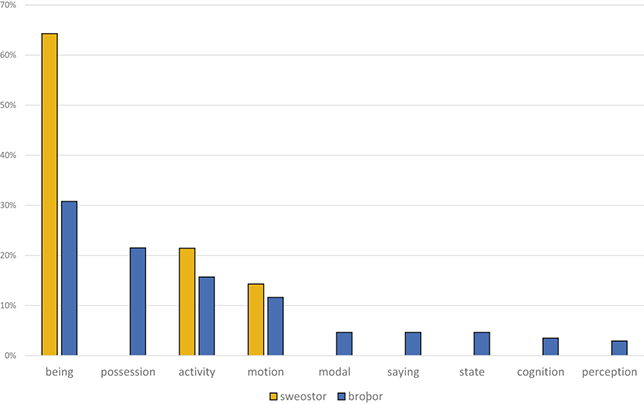
Figure 28 Long description
The horizontal axis represents ten categories. The vertical axis represents the percentages, ranging from 0% to 70% in increments of 10. The bar chart depicts the following data. For “sweostor”, the largest category is “being” (64%), followed by “activity” (21%), “motion” (14%), with no representation for “possession”, “modal”, “saying”, “state”, “cognition” and “perception”. For “bropror”, the largest category is “being” (31%), followed by “possession” (22%), “activity” (16%), “motion” (12%), “state”, “saying”, and “modal” (each 5%), “cognition” and “perception” (each 3%).
4.1.5 Terms Denoting Women and Men of High Social Status
Finally, in the category of higher social status, for the first time in this section, we see frequent recurrent uses of verbs of possession with women terms – that is, habban ‘to have’ and fon ‘to take’ (see Table 34) – though a closer inspection of examples such as (78) reveals that the objects owned or taken by the women were not necessarily tangible, unlike with men. However, example (79) is one of the rare occasions that describes a woman taking control over a kingdom, unusual as the story must have sounded to an Anglo-Saxon reader.
(78)
Seo cwen hæfde getacnunge þære halgan gelaðunge the queen had warning signals the holy congregation ealles cristenes folces all Christian folk ‘The queen had some warning signs about the holy congregation of all Christians.’ (cocathom2,+ACHom_II,_45:340.172.7642)
(79)
& æfter his deaðe Sameramis his cwen fengc ægþer and after his death Semeramis his queen took either ge to þæm gewinne ge to þæm rice. and to the war and to the kigdom ‘And after his death, Semeramis replaced him as the head of the army and the ruler of the kingdom.’ (coorosiu,Or_1:2.22.8.437)
Moreover, even though faran ‘to go’, a verb signalling active movement, features as one of the most frequent collocations, it turns out that in all of the examples the women do not travel on their own, but rather accompanied by men as in (80).
(80)
Her Forðhere bisceop and Friþogyð cwen ferdon here Forthhere bishop and Frithogith queen went to Rome. to Rome ‘Then Bishop Forthhere and Queen Frithogith went to Rome.’ (cochronC,ChronC_[Rositzke]:737.1.326)
For the equivalent male terms, a great number and variation of collocations was identified in the corpus, as evidenced by Table 35. While the abundance of activity verbs such as hatan ‘to call, to order’ shown in (81) and verbs of possession patterns with our previous observations regarding male-gendered nouns, it should be noted that in this group there is also a high number of (change of) state verbs such as forþferan ‘to die’ shown in (82) and passive constructions, with numerous chronicle entries reporting the death of a king, such as (83).
(81)
In þære ceastre eac swylce Æðelberht cyning heht cirican in this town also Aethelberht king ordered church getimbran & þa gehalgian Sancte Andreæ þæm build and this consecrate St. Andrew the apostoli. apostle ‘Moreover, in the same town King Aethelberht ordered a church to be built and consecrated to St. Andrew the apostle.’ (cobede,Bede_2:3.104.21.983)
(82)
Her Cuþred Westseaxna cyning forðferde here Cuthred West Saxon king died ‘Then Cuthred, the king of Wessex, died.’ (cochronD,ChronD_[Classen-Harm]:754.1.200)
(83)
Her Anna cining werð ofslagen. here Anna king became killed ‘Then King Anna was killed.’ (cochronE,ChronE_[Plummer]:653.1.365)
Figure 29 shows that despite the lower number of collocations attested for women terms, it is possible to observe that in this group of nouns, verbs of possession fail to drive the difference between the male and the female (both featuring c. 14 per cent of these verbs), and the main discrepancy lies in the complete lack of activity verbs with women terms (and 27 per cent of them for the men terms).
| Number | Lemma | Translation | Pattern | Σ |
|---|---|---|---|---|
| 1 | cwen+wesan | to be | being | 4 |
| 2 | cwen+feran | to travel | motion | 4 |
| 3 | cwen+weorþan | to become | being | 3 |
| 4 | cwen+habban | to have | possession | 2 |
| 5 | cwen+fon | to take | possession | 2 |
| 6 | cwen+arisan | to rise | motion | 2 |
| 7 | abbodesse+wesan | to be | being | 5 |
| 8 | nunne+wesan | to be | being | 2 |
| 9 | nunne+libban | to live | state | 2 |
| 10 | nunne+weorþan | to become | being | 2 |
| – | total recurrent | – | – | 28 |
| Number | Lemma | Translation | Pattern | Σ |
|---|---|---|---|---|
| 1 | cyning+wesan | to be | being | 129 |
| 2 | cyning+forþferan | to die | state | 103 |
| 3 | cyning+ofslean | to be killed | passive | 61 |
| 4 | cyning+cuman | to come | motion | 36 |
| 5 | cyning+habban | to have | possession | 32 |
| 6 | cyning+hatan | to order/call | activity | 31 |
| 7 | cyning+sendan | to send | activity | 29 |
| 8 | cyning+gyfan | to give | possession | 24 |
| 9 | cyning+faran | to go | motion | 20 |
| 10 | cyning+gefeohtan | to fight | activity | 20 |
| 11 | munuc+wesan | to be | being | 19 |
| 12 | hlaford+wesan | to be | being | 17 |
| 13 | cyning+sellan | to give | possession | 16 |
| 14 | cyning+weorþan | to become | being | 16 |
| 15 | cyning+onfon | to take | possession | 16 |
| 16 | cyning+fon | to take | possession | 15 |
| 17 | cyning+oferhergian | to ravage | activity | 14 |
| 18 | abbod+forþferan | to die | state | 14 |
| 19 | cyning+willan | to want | modal | 13 |
| 20 | cyning+lætan | to let | activity | 12 |
| 21 | cyning+niman | to take | possession | 12 |
| 22 | cyning+cweþan | to say | saying | 12 |
| 23 | cyning+beon | to be | being | 11 |
| 24 | cyning+gewendan | to turn | motion | 10 |
| 25 | cyning+feran | to go | motion | 10 |
| 26 | cyning+sculan | shall | modal | 10 |
| 27 | cyning+gan | to go | motion | 10 |
| – | other | – | – | 489 |
| – | total recurrent | – | – | 1,201 |
Verbal collocates of cwen ‘queen’, abbodesse ‘abbess’, hlæfdige ‘lady’ and nunne ‘nun’ vs. verbal collocates of cyning ‘king’, hlaford ‘lord’, abbod ‘abbot’ and munuc ‘monk’ as subjects in YCOE.
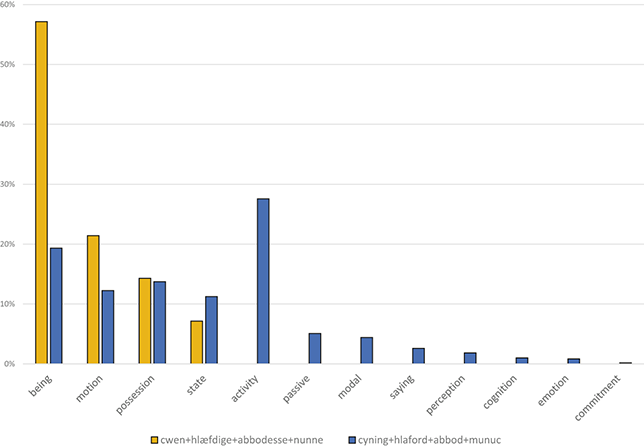
Figure 29 Long description
The horizontal axis represents twelve categories. The vertical axis represents the percentages, ranging from 0% to 60% in increments of 10. The bar chart depicts the following data. For “cwen, hlæfdige, abbodesse, nunne”, the largest category is “being” (57%), followed by “motion” (21%), “possession” (14%), and “state” (7%), with no representation for other categories. For “cyning, hlaford, abbod, munuc”, the largest category is “activity” (28%) followed by “being” (19%), “possession” (14%), “motion” (12%), “state” (11%), “passive” (5%), “modal”, (4%), “saying” (3%), “perception” (2%), cognition (1%), “emotion” (1%), and “commitment” (0%).
4.2 Objects and Their Verbs (V + N)
4.2.1 General Terms
The last collocation pattern involves the use of gendered nouns as objects. Table 36 shows quite evidently that in the case of the basic OE women terms, the predominant semantic category is possession, which clearly agrees with the masculinist perception of a woman as a material object that can be owned and transferred.
(84)
Moyses us wrat gif hwæs broðor byð dead & wif Moses us wrote if whose brother is dead and woman hæbbe, & se byð butan bearnum þæt his broðor has and this is without children that his brother nime his wif & hys broþor sæd awecce. take his wife and his brother’s seed awake ‘Moses wrote: if someone’s brother is dead and he has a woman and no children, his brother should take his wife and awaken his brother’s seed.’ (cowsgosp,Mk_[WSCp]:12.19.3144)
As far as wer is concerned, the most interesting fact about the verb–object collocations is that they are hardly attested (see Table 37). The most common one is geceosan ‘to choose’ shown in (85).
(85)
Þu hafast gecoren þone wer Þe me wel licað. you have chosen the man that me well likes ‘You have chosen a man whom I like.’ (coapollo,ApT:22.13.473)
| Number | Lemma | Translation | Category | Σ |
|---|---|---|---|---|
| 1 | habban+wif | to have a woman | possession | 46 |
| 2 | niman+wif | to take a woman | possession | 21 |
| 3 | forlætan+wif | to leave a woman | motion | 16 |
| 4 | geniman+wif | to take a woman | possession | 16 |
| 5 | brucan+wif | to use a woman | activity | 7 |
| 6 | sellan+wif | to give a woman | possession | 7 |
| 7 | geniman+fæmne | to take a woman | possession | 6 |
| 8 | befæstan+wif | to secure a woman | possession | 5 |
| 9 | onfon+wif | to take (to) wife | possession | 5 |
| 10 | geseon+wif | to see a woman | perception | 4 |
| 11 | gelædan+wif | to lead a woman | activity | 4 |
| 12 | cweþan+wif | to say to a woman | saying | 4 |
| 13 | forgyfan+wif | to give a wife | possession | 4 |
| 14 | lædan+wif | to lead a woman | activity | 4 |
| 15 | feccan+wif | to fetch a woman | possession | 3 |
| 16 | beweddian+wif | to wed a woman | activity | 3 |
| 17 | gehælan+wif | to heal a woman | activity | 3 |
| – | other | – | – | 40 |
| – | total recurrent | – | – | 198 |
| Number | Lemma | Translation | Category | Σ |
|---|---|---|---|---|
| 1 | geceosan+wer | to choose a man | activity | 10 |
| 2 | habban+wer | to have a man | possession | 7 |
| 3 | onfon+wer | to take a man | possession | 5 |
| 4 | brucan+wer | to defile a man | activity | 5 |
| 5 | gyldan+wer | to pay a man | advantage | 5 |
| 6 | ofslean+wer | to kill a man | activity | 5 |
| 7 | sellan+wer | to give to a man | advantage | 4 |
| 8 | forlætan+wer | to leave a man | motion | 3 |
| 9 | gehyran+wer | to hear a man | perception | 3 |
| 10 | abidan+wer | to await a man | activity | 3 |
| – | other | – | – | 16 |
| – | total recurrent | – | – | 66 |
Another example, habban wer ‘to have a man’, shown in (86), is attested but much less frequent than habban wife ‘to have a woman’. Interestingly, among the most frequent collocates there is brucan weres ‘to enjoy a man’, which appears in a clearly sexual context, which is also as a reference to a biblical story (cf. (87)).
(86)
And gif hwylc geleafful wif hæfð ungeleaffulne wer, and and if some faithful woman has unfaithful man and he wylle wunian mid hyre, ne forlæte heo hine; he will stay with her not leave she him ‘And if a faithful wife has an unfaithful husband and he wants to stay with her, she should not leave him.’ (coaelhom,+AHom_20:97.2982)
(87)
Ða andwyrde Maria þam engle. Hu mæg þis gewurðan: then answered Mary the angel how may this become for ðan þe Ic ne bruce nanes weres? because I not enjoyed no man ‘Then Mary answered the angel: How can this be since I have not known any man?’ (cocathom1,+ACHom_I,_13:283.55.2402)
Figure 30 illustrates the difference between female and male gendered nouns in this respect. When we compare these results to the ones shown in the preceding section, it turns out that wer appears in recurrent collocations as subject in 15.7 per cent out of its 1,732 uses in YCOE and as object in only 3.8 per cent of its uses. The respective results for the most frequent woman term, wif, are 12.5 per cent as subject and 13.2 per cent as object, which is a huge discrepancy pointing to the conceptual and consequently linguistic objectification of wif (and women in general) in the OE prose records. The prototypical semantic role of a syntactic subject is agent: an animate and volitional doer of the action, while for a syntactic object it is patient: an entity (not necessarily animate) undergoing the action. Since the fact that male-gendered phrases are more likely to be syntactic subjects is generally treated as an example of gender bias in many languages, including English (e.g. Kotek et al. Reference Kotek, Dockum, Babinski and Geissler2020), it is plausible to assume that the discrepancy in the proportions of subjects and objects between wif and wer in OE may be a linguistic marker of the social objectification of women in Anglo-Saxon society.
Verbal collocates of wif, fæmne and wifmann ‘woman’ vs. verbal collocates of wer ‘man’ as objects in YCOE.
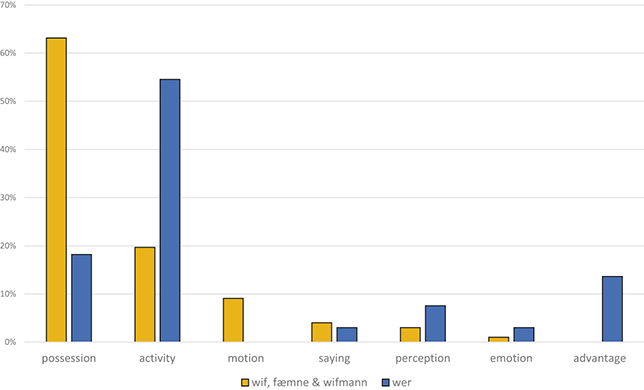
Figure 30 Long description
The horizontal axis represents seven categories. The vertical axis represents the percentages, ranging from 0% to 70% in increments of 10. The bar chart depicts the following data. For “wif, fæmne & wifmann”, the largest category is “possession” (63%), followed by “activity” (20%), “motion” (9%), “saying” (4%), “perception” (3%), “emotion” (1%), with “advantage” at 0%. For “wer”, the largest category is “activity” (55%), followed by “possession” (18%), “advantage” (14%), “perception” (8%), “saying” (3%), “emotion” (3%), with “motion” at 0%.
4.2.2 Parent Terms
In the case of modor, because of its lower frequency, the collocations are not particularly varied (see Table 38). Example (88) illustrates one of the most frequent ones.
(88)
Eall þis tacnode þæt seo clæne fæmne cende sunu, all this meant that the clean woman bore son swa hire næfre wer ne gehran, ac se ðe as her never man not touched but this who hæfde fæder on heofnum butan meder and hæfde þa had father on heavens without mother and had the modur on eorðan butan fæder. mother on earth without father ‘All this meant that the immaculate woman gave birth to a son, even though no man had ever touched her, and he had a father in heaven without a mother, and a mother on earth without a father.’ (comart1,Mart_1_[Herzfeld-Kotzor]:De25,A.28.20)
Interestingly, the YCOE data suggest that one can actually choose a mother, though a closer analysis of the examples revealed that this activity was limited to Christ (cf. (89)).
(89)
Ure Hælend Crist cydde, þæt he lufode þa clænnysse our saviour Christ said that he loved the cleanliness on his þeowum swutelice, þa þa he mædenmann on his servants clearly then when he maiden him to meder geceas. him to mother chose ‘Our Saviour Christ clearly showed that he loved cleanliness in his servants when he chose a maiden for his mother.’ (colsigef,+ALet_5_[Sigefyrth]:13.7)
The collocations featuring fæder ‘father’ as an object are, in contrast, quite varied (see Table 39). Apart from the fact than one can simply ‘have’ a father, there are also two verbs of commitment here: swerian ‘to swear, to promise’ shown in (90) and behatan ‘to promise’, which can be interpreted as a sign of the higher authority of the father. Moreover, there is also arwurþian ‘to honour’ illustrated in (91), or gebletsian ‘to bless’; no verbs of this type appear for modor ‘mother’, which is rather surprising, especially because this category includes the mother of Jesus.
(90)
ne he ne forgyt his wedd, on ðam he swor nor he not forgot his wed on that he swore eowrum fæderum. you.DAT fathers.DAT ‘Nor did he forget his wed that he swore to your fathers,’ (cootest,Deut:4.30.4561)
(91)
Ac ic arwurðie minne fæder. but I honour my father ‘But I honour my father’ (cocathom2,+ACHom_II,_13:128.21.2786)
Figure 31 suggests a very strong difference between modor ‘mother’ and fæder ‘father’ in their use as objects, but it is necessary to remember that the low frequency of collocations with the former term makes this graph rather difficult to interpret.
| Number | Lemma | Translation | Category | Σ |
|---|---|---|---|---|
| 1 | habban+modor | to have a mother | possession | 3 |
| 2 | betæcan+modor | to entrust a mother | activity | 3 |
| 3 | gelædan+modor | to lead a mother | motion | 2 |
| 4 | geceosan+modor | to choose (for) a mother | activity | 2 |
| – | total recurrent | – | – | 10 |
| Number | Lemma | Translation | Category | Σ |
|---|---|---|---|---|
| 1 | habban+fæder | to have a father | possession | 14 |
| 2 | swerian+fæder | to promise a father | commitment | 12 |
| 3 | gehyran+fæder | to hear a father | perception | 10 |
| 4 | arwurþian+fæder | to honour a father | activity | 7 |
| 5 | lufian+fæder | to love a father | emotion | 7 |
| 6 | biddan+fæder | to ask a father | saying | 7 |
| 7 | bebyrgan+fæder | to bury a father | activity | 6 |
| 8 | forlætan+fæder | to leave a father | motion | 5 |
| 9 | secgan+fæder | to tell a father | saying | 5 |
| 10 | gebletsian+fæder | to bless a father | activity | 5 |
| 11 | behatan+fæder | to promise a father | commitment | 5 |
| 12 | weorþian+fæder | to honour a father | activity | 5 |
| – | other | – | – | 81 |
| – | total recurrent | – | – | 169 |
Verbal collocates of modor ‘mother’ vs. fæder ‘father’ as objects in YCOE.
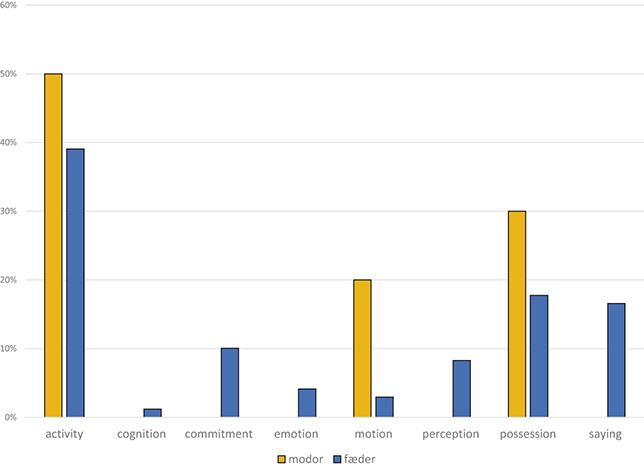
Figure 31 Long description
The horizontal axis represents eight categories. The vertical axis represents the percentages, ranging from 0% to 60% in increments of 10. The bar chart depicts the following data. For “modor”, the largest category is “activity” (50%), followed by “possession” (30%), and “motion” (20%), with no representation for other categories. For “fæder”, the largest category is “activity” (39%), followed by “possession” (18%), “saying” (17%), “commitment” (10%), “perception” (8%), “emotion” (4%), “motion” (3%), and “cognition” (1%).
4.2.3 Terms Denoting Children and Young Adults
In the category of children and young adults (see Table 40), mægden ‘maiden’ and dohtor’ daughter’ seem dominated by verbs of possession such as habban ‘to have’, sellan ‘to give, to sell’, as shown in (92) and onfon ‘take’, illustrated by (93).
(92)
Laban hæfde twa dohtra; Laban had two daughters ‘Laban had two daughters.’ (cootest,Gen:29.16.1196)
(93)
Arues wende þæt he his rice gemiclian sceolde Arues thought that he his kingdom enlarge should þa he his dohtor Philippuse sealde. when he his daughter Phillippus.DAT gave ‘Arues thought that it would enlarge his kingdom if he gave his daughter to Philippus.’ (coorosiu,Or_3:7.62.2.1186)
Interestingly, Table 41 shows that verbs of possession are also quite frequent for sunu ‘son’ and cnapa ‘boy’ – that is, habban ‘to have’ shown in (94) and sellan ‘to give, to sell’ in (95) – but there is also a number of activity verbs, mostly from the semantic field of conception and childbearing such as gestrynan ‘to beget’ shown in (96), acennan ‘to bear’ and cennan ‘to bear’.
(94)
Abraham, ðe heahfæder, hæfde twægen sunu, Abraham the high-father had two sons Ismael & Isaac, Ismeal and Isaac ‘Abraham the patriarch has two sons, Ismael and Isaac.’ (colsigewB,+ALet_4_[SigeweardB]:247.57)
(95)
Drihten me sealde ðisne sunu for Abel, ðe Cain Lord me gave this son for Abel whom Cain ofsloh. killed ‘Lord gave me this son for Abel, who was killed by Cain.’ (cootest,Gen:4.25.219)
(96)
Eft Adam gestrynde sunu ðone he nemde Seth, again Adam begot son whom he named Seth ‘Again Adam begot a son, whom he named Seth.’ (cootest,Gen:4.25.217)
Nevertheless, when proportions are counted (cf. Figure 32), verbs of possession turn out to be much more frequent for the female terms (67 per cent vs. 27 per cent). A noticeable frequency of those verbs in the male part of this category can be certainly explained by the lower status of younger males in comparison with adult Anglo-Saxon men represented by the male-gendered general term wer.
| Number | Lemma | Translation | Category | Σ |
|---|---|---|---|---|
| 1 | habban+dohtor | to have a daughter | possession | 15 |
| 2 | sellan+dohtor | to give a daughter | possession | 4 |
| 3 | onfon+mægden | to take a maiden | possession | 3 |
| 4 | geseon+mægden | to see a maiden | perception | 3 |
| 5 | aræran+mægden | to raise a maiden | activity | 2 |
| 6 | gehelan+mægden | to heal a maiden | activity | 2 |
| 7 | underfon+dohtor | to take a daughter | possession | 2 |
| 8 | biddan+dohtor | to ask a daughter | saying | 2 |
| 9 | onfon+dohtor | to take a daughter | possession | 2 |
| 10 | lætan+dohtor | to let a daughter | activity | 2 |
| 11 | forgyfan+dohtor | to give a daughter | possession | 2 |
| 12 | gestrynan+dohtor | to beget a daughter | activity | 2 |
| 13 | befæstan+dohtor | to secure a daughter | activity | 2 |
| 14 | gyfan+dohtor | to give a daughter | possession | 2 |
| – | total recurrent | – | – | 45 |
| Number | Lemma | Translation | Pattern | Σ |
|---|---|---|---|---|
| 1 | habban+sunu | to have a son | possession | 33 |
| 2 | gestrynan+sunu | to beget a son | activity | 29 |
| 3 | acennan+sunu | to bear a son | activity | 20 |
| 4 | cennan+sunu | to bear a son | activity | 8 |
| 5 | sellan+sunu | to give a son | possession | 7 |
| 6 | geseon+sunu | to see a son | perception | 7 |
| 7 | underfon+cnapa | to take a boy | possession | 7 |
| 8 | asendan+sunu | to send a son | activity | 6 |
| 9 | gehealan+cnapa | to heal a boy | activity | 5 |
| 10 | ofslean+sunu | to kill a son | activity | 4 |
| 11 | brengan+sunu | to bring a son | activity | 4 |
| 12 | sendan+sunu | to send a son | activity | 4 |
| 13 | lufian+sunu | to love a son | activity | 4 |
| 14 | aræran+sunu | to raise a son | activity | 4 |
| 15 | forlætan+sunu | to leave a son | motion | 4 |
| – | other | – | – | 49 |
| – | total recurrent | – | – | 195 |
Verbal collocates of mægden ‘maiden’ and dohtor’ daughter’ vs. sunu ‘son’ and cnapa ‘boy’ as objects in YCOE.
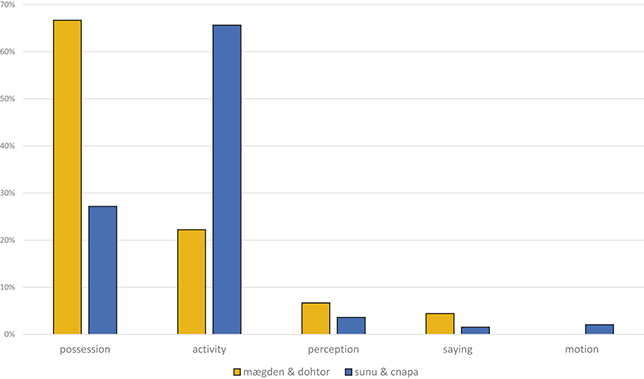
Figure 32 Long description
The horizontal axis represents five categories. The vertical axis represents the percentages, ranging from 0% to 70% in increments of 10. The bar chart depicts the following data. For “mæġden & dohtor”, the largest category is “possession” (67%), followed by “activity” (22%), “perception” (7%), “saying” (4%), with “motion” at 0%. For “sunu & cnapa”, the largest category is “activity” (66%), followed by “possession” (27%), “perception” (4%), “saying” (2%), and “motion” (2%).
4.2.4 Sibling Terms
In the next group of nouns, collocations with the female term sweostor ‘sister’ prove quite infrequent (see Table 42), though the recurrent ones follow the already identified patterns: possession, as in (97) and activity centred around marriage, as in (98).
(97)
And he geaf his sweostor ofer sæ Ealdseaxna and he gave his sister over sea Old Saxon cynges suna. king’s son ‘And he gave his sister away over the see to the king of the Old Saxons.’ (cochronD,ChronD_[Classen-Harm]:924.5.1052)
(98)
& se Iouis wearð swa swyðe gal þæt he on and the Jovis became so very wicked that he on his agenre swyster gewifode, seo wæs genamod his own sister married who was named Iuno, Juno ‘And Jovis became so wicked that he married his own sister, whose name was Juno.’ (cowulf,WHom_12:47.1182)
For broþor ‘brother’ the activity verbs listed in Table 43 are much more varied, with ofslean ‘to kill’ in (99) as the most frequent one.
(99)
and wiþ Bachidem feaht, þe his broþor ofsloh, and with Bachid fought who his brother killed ‘And he fought against Bachid, who killed his brother.’ (coaelive,+ALS_[Maccabees]:715.5301)
There is also a verb of emotion lufian ‘to love’ shown in (100), but all examples are about the situation when you actually do not love your brother (and what happens next).
(100)
Se ðe ne lufað his broðer þone þe he gesihð: this who not loves his brother whom that he sees hu mæg he lufian God. þone ðe he ne gesihð how may he love God whom that he not sees lichamlice. physically ‘If someone does not love his brother, whom he can see, how can he love God, whom he cannot see physically?’ (cocathom1,+ACHom_I,_16:309.64.2977)
Figure 33 confirms the patten established in the previous groups: verbs of possession are much more strongly associated with the female terms (60 per cent vs. 27 per cent), though one needs to be cautious when interpreting the graph because of the low number of collocations with sweostor ‘sister’.
| Number | Lemma | Translation | Pattern | Σ |
|---|---|---|---|---|
| 1 | habban+sweostor | to have a sister | possession | 4 |
| 2 | anforlætan+sweostor | to leave a sister | motion | 2 |
| 3 | gewifian+on+sweostor | to marry a sister | activity | 2 |
| 4 | gyfan+sweostor | to give a sister | possession | 2 |
| – | total recurrent | – | – | 10 |
| Number | Lemma | Translation | Pattern | Σ |
|---|---|---|---|---|
| 1 | secgan+broþor | to tell a brother | saying | 11 |
| 2 | ofslean+broþor | to kill a brother | activity | 8 |
| 3 | habban+broþor | to have a brother | possession | 8 |
| 4 | cyþan+broþor | to tell a brother | saying | 5 |
| 5 | sendan+broþor | to send a brother | activity | 5 |
| 6 | sellan+broþor | to give a brother | possession | 4 |
| 7 | biddan+broþor | to ask a brother | saying | 4 |
| 8 | gecigan+broþor | to call a brother | activity | 4 |
| 9 | niman+broþor | to take a brother | possession | 4 |
| 10 | healdan+broþor | to hold a brother | possession | 3 |
| 11 | adrifan+broþor | to drive away a brother | motion | 3 |
| 12 | reccan+broþor | to give a brother | possession | 3 |
| 13 | acwellan+broþor | to kill a brother | activity | 3 |
| 14 | lufian+broþor | to love a brother | emotion | 3 |
| 15 | asendan+broþor | to send a brother | activity | 3 |
| – | other | – | – | 30 |
| – | total recurrent | – | – | 101 |
Verbal collocates of sweostor ‘sister’ vs. broþor ‘brother’ as objects in YCOE.
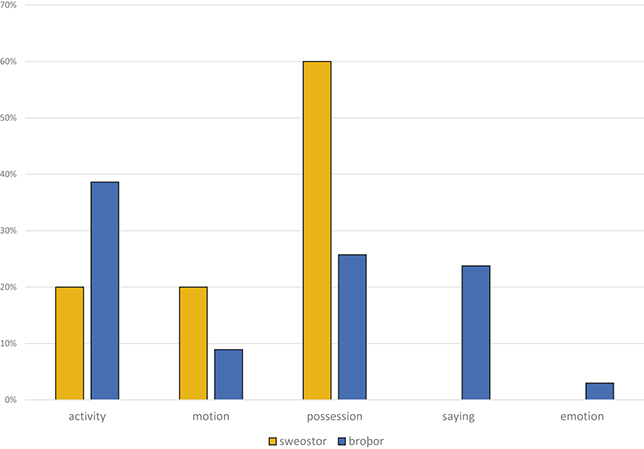
Figure 33 Long description
The horizontal axis represents five categories. The vertical axis represents the percentages, ranging from 0% to 70% in increments of 10. The bar chart depicts the following data. For “sweostor”, the largest category is “possession” (60%), followed by “motion” and “activity” (both 20%), with no representation for “emotion” and “saying”. For “broþor”, the largest category is “activity” (39%), followed by “possession” (26%), “saying” (24%), “motion” (9%), and “emotion” (3%).
4.2.5 Terms Denoting Women and Men of High Social Status
In the final group, it is impossible to come up with a graph at all since the only recurrent collocation of a woman of higher social status used as a syntactic object is (to) nunnan gehalgian ‘consecrate a nun’, found five times in YCOE and shown in (101).
(101)
Þa berad mann þæt wif þæt he hæfde ær genumen then seized man the woman that he had before taken butan þæs cinges leafe and ofer þara bisceopa without the king’s permission and over the bishops’ gebodu, forðon heo wæs ær to nunnan gehalgod. command because she was before to nun consecrated ‘Then they seized the woman who had been taken without the king’s permission and against the will of the bishops, because she had been a consecrated nun.’ (cochronC,ChronC_[Rositzke]:901.13.1020)
The pattern is also in use for other official positions one may be ordained to, for example, a bishop or a king as in (102).
(102)
and he wæs on þam ylcan geare to cinge gehalgod. and he was on the same year to king consecreated ‘And the same year he was consecrated king.’ (cochronC,ChronC_[Rositzke]:978.1.1174)
Because of higher frequencies, the male-gendered nouns for men of higher social standing are better attested, though not particularly frequent (which shows that the higher your position, the less likely you are to appear as a syntactic object, which is only logical). Table 44 lists the attested patterns. It turns out that the most frequent collocation is cyning ofslean ‘to kill a king’ shown in (103).
(103)
& þone cyning ofslogan and the king killed ‘And (they) killed the king.’ (coorosiu,Or_5:4.118.17.2486)
Unlike in the previous categories, the terms denoting women of higher social status are extremely rarely used as grammatical objects. On the one hand, this indicates their more limited involvement in social activities, but, on the other, it might also suggest that such women were not objectified as often as women of lower social status.
| Number | Lemma | Translation | Pattern | Σ |
|---|---|---|---|---|
| 1 | ofslean+cyning | to kill a king | activity | 39 |
| 2 | gehalgian+to+cyning | to consecrate (as) king | activity | 18 |
| 3 | habban+cyning | to have a king | possession | 15 |
| 4 | gecyþan+cyning | to inform a king | saying | 11 |
| 5 | geceosan+cyning | to choose a king | activity | 10 |
| 6 | secgan+cyning | to tell a king | saying | 9 |
| 7 | secgan+hlaford | to tell a lord | saying | 8 |
| 8 | slean+cyning | to kill a king | activity | 7 |
| 9 | onfon+cyning | to take a king | possession | 7 |
| 10 | gesecan+cyning | to seek a king | activity | 7 |
| 11 | foresprecan+cyning | to promise to a king | commitment | 7 |
| 12 | sendan+cyning | to send a king | activity | 6 |
| 13 | brengan+cyning | to bring to a king | possession | 6 |
| 14 | underfon+cyning | to take a king | possession | 6 |
| 15 | habban+hlaford | to have a lord | possession | 6 |
| 16 | þeowian+hlaford | to serve a lord | activity | 6 |
| – | other | – | – | 162 |
| – | total recurrent | – | – | 330 |
4.3 Quantitative Summary
The analysis of verbs collocating with gendered nouns in the role of syntactic subjects was based on 379 phraseological units with female terms and 2,299 units with equivalent male terms. Figure 34 shows the main areas of discrepancy. As can be seen, collocates of male-gendered nouns are much more varied and less dominated by verbs of being (43 per cent for women and (only) 27 per cent for men) and saying (13 per cent vs. 4 per cent respectively), both of which are semantically neutral and not signifying any involvement in social life. The most important difference is visible in the use of activity verbs, which are not only less frequent in the case of female-gendered subjects (12 per cent vs. 25 per cent), but also much less diverse and centred around marriage and childbearing, as shown in Section 4.1. Another important difference concerns verbs of possession, which co-occur with female subjects in only 5 per cent of the dataset, with the equvalent result for males at 14 per cent. The differences are statistically significant (X2 (4, N = 2678) = 128.4473, p < 0.00001).Footnote 14 The results confirm a much less diverse array of activities available for women in the early Middle Ages and the primary role of women as mothers and housewives.
Verbal collocates of all the gendered nouns as subjects: Summary.
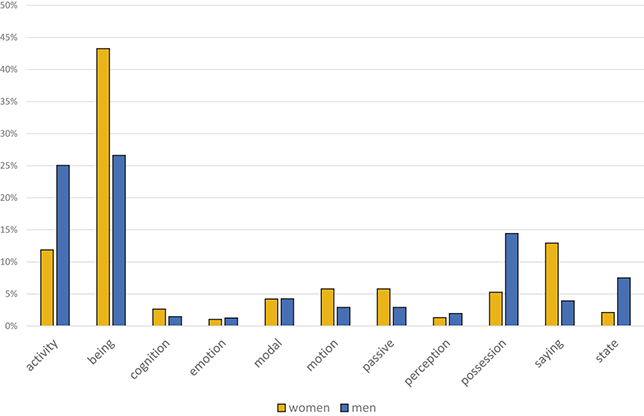
Figure 34 Long description
The horizontal axis represents eleven categories. The vertical axis represents the percentages, ranging from 0% to 50% in increments of 5. The bar chart depicts the following data. For women, the largest category is “being” (43%), followed by “saying” (13%), “activity” (12%), “motion” and “passive” (both 6%), “possession” (5%), “modal” (4%), “cognition” (3%), “state” (2%), “emotion” and “perception” (both 1%). For men, the largest categories are “being” (27%) and “activity” (25%), followed by “possession” (14%), “state” (8%), “saying” and “modal” (both 4%), “motion” and “passive” (both 3%), “perception” (2%), with “cognition” and “emotion” at 1% each.
As far as collocations with gendered nouns as objects are concerned, the analysis takes into account 264 units with female terms and 840 units with male terms. Figure 35 presents the data for all of the analysed nouns combined, and it is quite clear that verbs of possession are the main point of divergence here, with as much as 62 per cent of the dataset for female-gendered nouns covered by this category and with only 23 per cent of the male-gendered nouns as the equivalent result (most of which are collocations of sunu ‘son’, relating to a younger and therefore less socially prestigious male). A less conspicuous but equally interesting difference which only comes to light when all of the collocations are inspected together is visible for verbs of saying: as can be seen, men are relatively often the indirect objects of reporting structures (13 per cent), while women are passive interlocutors much less often (4 per cent).
Verbal collocates of all the gendered nouns as objects: Summary.
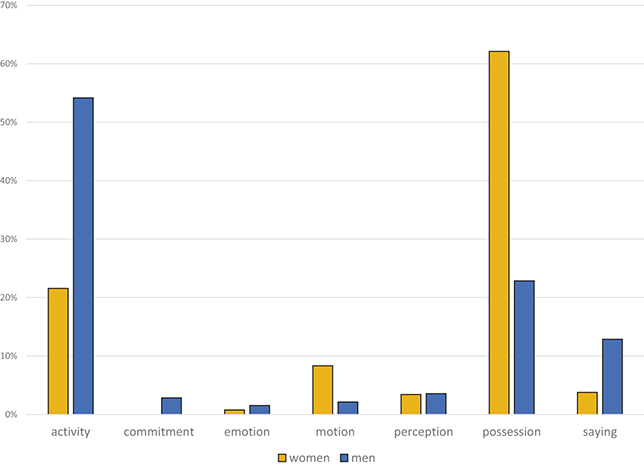
Figure 35 Long description
The horizontal axis represents seven categories. The vertical axis represents the percentages, ranging from 0% to 70% in increments of 10. The bar chart depicts the following data. For women, the largest category is “possession” (62%), followed by “activity” (22%), “motion” (8%), “saying” (4%), “perception” (3%), “emotion” (1%), with “commitment” at 0%. For men, the largest category is “activity” (54%), followed by “possession” (23%), “saying” (13%), “perception” (4%), “commitment” (3%), with “motion” and “emotion” at 2% each.
Obviously, activity verbs are again a huge area of difference, with 54 per cent of the male dataset classified as such (let us recall that a big part of these examples are verbs of killing), and only 22 per cent of female-gendered nouns appearing in this category. Statistics confirms the significance of this difference (X2 (3, N = 1104) = 158.5192, p < 0.00001).Footnote 15 The results provide a clear linguistic confirmation of the dominance of men in Anglo-Saxon society and the secondary position of women who were ‘owned’ by their fathers and husbands.
Conclusions
The linguistic data analysed in this study clearly indicate a disparity between the representations of women and men in late Old English society. They are invariably disproportionate in favour of the male gender: texts forming the corpus describe men as superior owners, engaged in productive activities in the public domain, while women are portrayed mostly in terms of property and as passive vessels. Given the interconnection between language and the reality it depicts, such a polarisation must be seen as a reflection of the actual divide between the female and the male in late Anglo-Saxon England. Although this state of play is not particularly surprising, as it corresponds to the data documented in historical sources, it incontrovertibly demonstrates that gender-based favouritism was plainly visible on the level of Old English public discourse.
The results presented in Sections 3 and 4 repeatedly and consistently substantiate that the ways in which women and men are seen through the language of Old English prose are drastically different. In the analysed collocations, Anglo-Saxon women are commonly depicted in the context of their physicality: inasmuch as their bodies are often directly mentioned, they are perceived through such factors as age, sexual attractiveness and ability to bear children. They are not shown as important agents of social life: the women terms rarely collocate with activity verbs, and even if they do, it is usually in connection with marriage and childbearing. Their relation to men is clearly subordinate: the woman is usually presented not as the owner of property, but as property itself, and she may be owned and transferred between men (usually from a father to a husband). The unprivileged position of the female gender is also implied through the discursive position of women and men: although the representatives of both genders are described as speaking equally often, women are rarely spoken to, as if they did not deserve the same interlocutor status as men.
The linguistic image of Anglo-Saxon men, in contrast, is that of agents involved in social life: they perform a wide range of various activities, which are notably not related to household and family. Men are not perceived in terms of their physicality; instead, the male terms often collocate with words signifying the position of power (in all groups with the exception of male children, which only reinforces the proposition that once a man achieves maturity, he attains a dominant social status). Unlike women, men in Anglo-Saxon England are linguistically depicted as property owners, and they are as a rule not objectified. They are much more frequently described with positive terms, often relating to the religious sphere.
The juxtaposition of members of different genders also confirms male domination in Anglo-Saxon society. Whenever a female term is conjoined with a noun referring to a male, the latter always comes first, which emphasises the superiority of men: a man is prioritised over a woman, a father over a mother, a son over a daughter. While the corpus abounds in examples of pairs of two male terms, it does not noticeably feature pairs of two women, which suggests that the image of all-female social units was not particularly promoted by Old English texts. Additionally, the very frequency of some collocations is meaningful: the fact that some word groups are so disproportionately represented (e.g. the paucity of data concerning collocations featuring female equivalents of ‘brother’ or ‘son’) clearly indicates the privileged position of the male gender. Finally, it is interesting that the female terms from the category comprising women of higher social status can form collocations similar to the patterns displayed in all male term categories. This demonstrates that in late Anglo-Saxon society it was necessary for a woman to maintain a position of a queen, an aristocrat or an abbess to enjoy a linguistic image of a standing which corresponded to that of a man.
Certainly, an important caveat of this Element is that the texts gathered in the corpus analysed are all highly biased. The literate Anglo-Saxon elite responsible for the production of Old English written records consisted solely of middle-aged, well-educated males, mostly members of the clergy. Thus the linguistic image of women in Old English texts is filtered through the minds of a small (though highly influential) portion of Anglo-Saxon society. Because of this textual limitation, we have no access to the way in which all speakers of Old English used collocations based on gendered nouns and we can only draw conclusions from the material at our disposal. It is also crucial to remember that the linguistic representations created by the texts from the corpus are not only the images of Anglo-Saxon women (and men) that the authors themselves experienced, but also the images that they would like to experience. Language is not only a tool for describing reality, but also an instrument of power, and, consequently, we must consider the linguistic representations of women (and men) established in this study as not only descriptive, but also prescriptive.
Furthermore, neither the sources of the linguistic representation of women in Anglo-Saxon society nor its long-term effects can be properly assessed without considering the context of the Christian religion. As we have mentioned before, the majority of texts analysed in this study are of ecclesiastical origins, being mostly sermons and lives of saints. Such texts were significant elements of male power discourse designed and maintained by the church: a clear objective of both these genres was to provide society with moral parameters and patterns of desirable behaviour. In this context it becomes of crucial importance that the textual evidence provided by our analysis agrees with Hollis’s (Reference Hollis1992) hypothesis about the downgrading influence of Roman Christianity on the position of women in Anglo-Saxon society. For instance, frequent references to women in terms of their corporality align with Hollis’s claim that ‘the distinctively “other” identity the church postulated for women … chiefly consisted in the carnal frailty they inherited from Eve’ (Hollis, Reference Hollis1992: 11). Such a masculinist or even misogynistic outlook has already been noted by the feminist critique of the Christian religious and ideological doctrine: for instance, Kristeva (Reference Kristeva1986) sees the roots of female deprecation and discrimination in the biblical story of Eve and the serpent: the myth establishes the woman as a source of corruption (often equated with the body), and the resultant socio-political system requires that women ‘are excluded from knowledge and power’ (Kristeva, Reference Kristeva1986: 143). As Irigaray (Reference Irigaray1993) emphatically puts it: ‘The positive connotation of the masculine … derives from the time of the establishment of patriarchal and phallocratic power, notably by men’s appropriation of the divine. … [M]an becomes God by giving himself an invisible father, a father language. Man becomes God as the Word, then as the Word made flesh’ (Irigaray, Reference Irigaray1993: 86).
The dichotomy between the linguistic representation of men and women determined in this Element clearly privileges one side over the other – active over passive, subject over object, culture over nature, spirit over body – following a Platonic Christian pattern. If we assume that language indeed determines, or at least strongly affects, one’s thinking and perception, then we must acknowledge that male-oriented language used in England between the ninth century and the eleventh century was one of the factors responsible for later alienation and discrimination of women, shaping the perception of gender roles in England in the following centuries. If we agree with Cameron that ‘representations of language and gender are part of the social apparatus which legitimizes and so helps to maintain gender distinctions and hierarchies’ (Cameron, Reference Cameron, Ehrlich, Meyerhoff and Holmes2014: 285), then we should claim that late Anglo-Saxon gender representations served their purpose really effectively.
Acknowledgments
This book was developed as part of the project entitled The linguistic image of woman in Old English Prose (IDUB B2311313000191.07) financed by the University of Lodz.
Helen Sauntson
York St John University
Helen Sauntson is Professor of English Language and Linguistics at York St John University, UK. Her research areas are language in education and language, gender and sexuality. She is co-editor of The Palgrave Studies in Language, Gender and Sexuality book series, and she sits on the editorial boards of the journals Gender and Language and the Journal of Language and Sexuality. Within her institution, Helen is Director of the Centre for Language and Social Justice Research.
Editorial Board
Lilian Lem Atanga, The University of Bamenda
Eva Nossem, Saarland University
Joshua M. Paiz, The George Washington University
M. Agnes Kang, University of Hong Kong
About the Series
Cambridge Elements in Language, Gender and Sexuality highlights the role of language in understanding issues, identities and relationships in relation to multiple genders and sexualities. The series provides a comprehensive home for key topics in the field which readers can consult for up-to-date coverage and the latest developments.
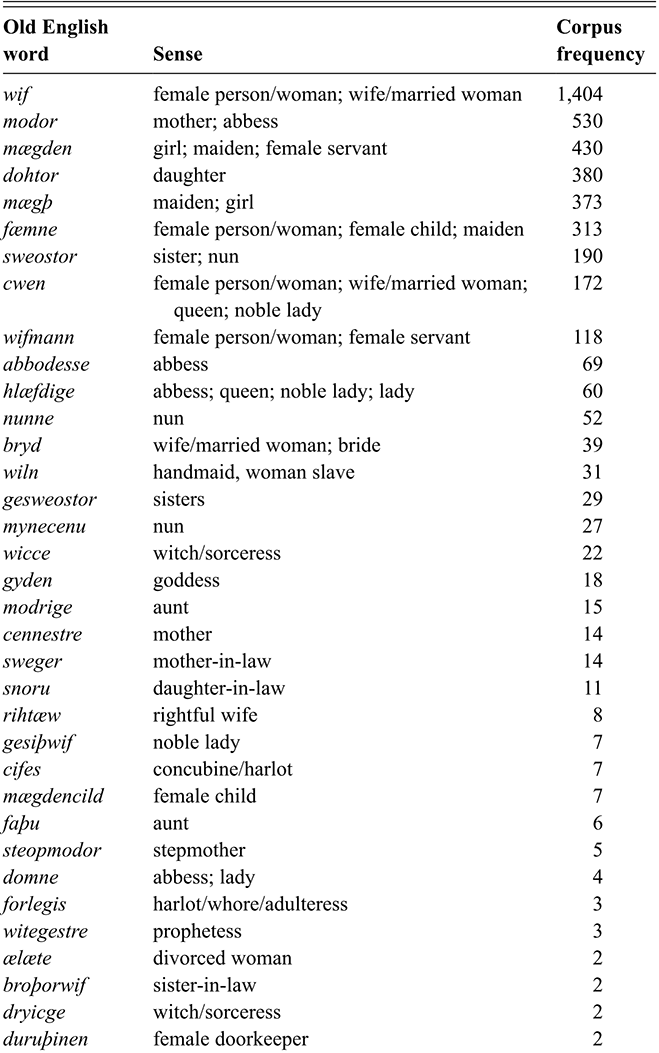
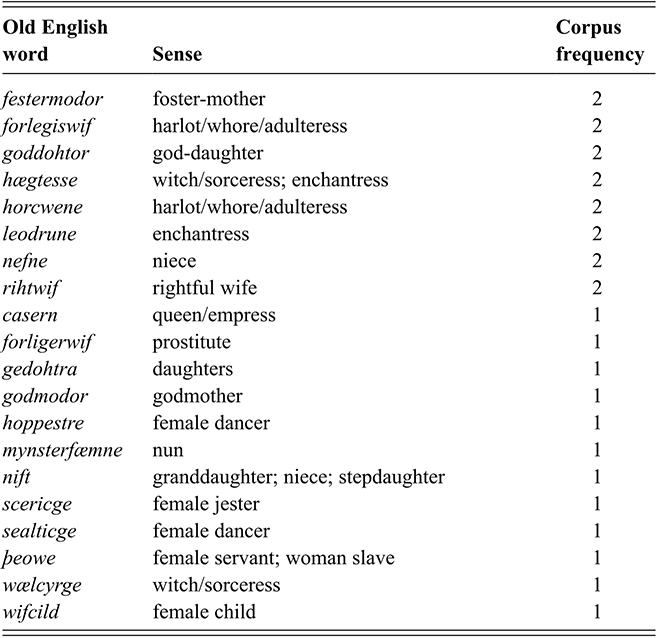
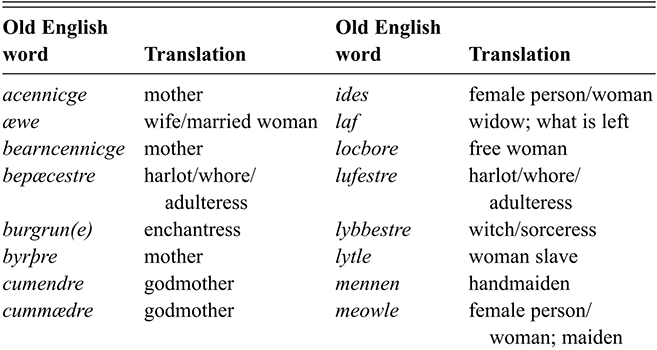
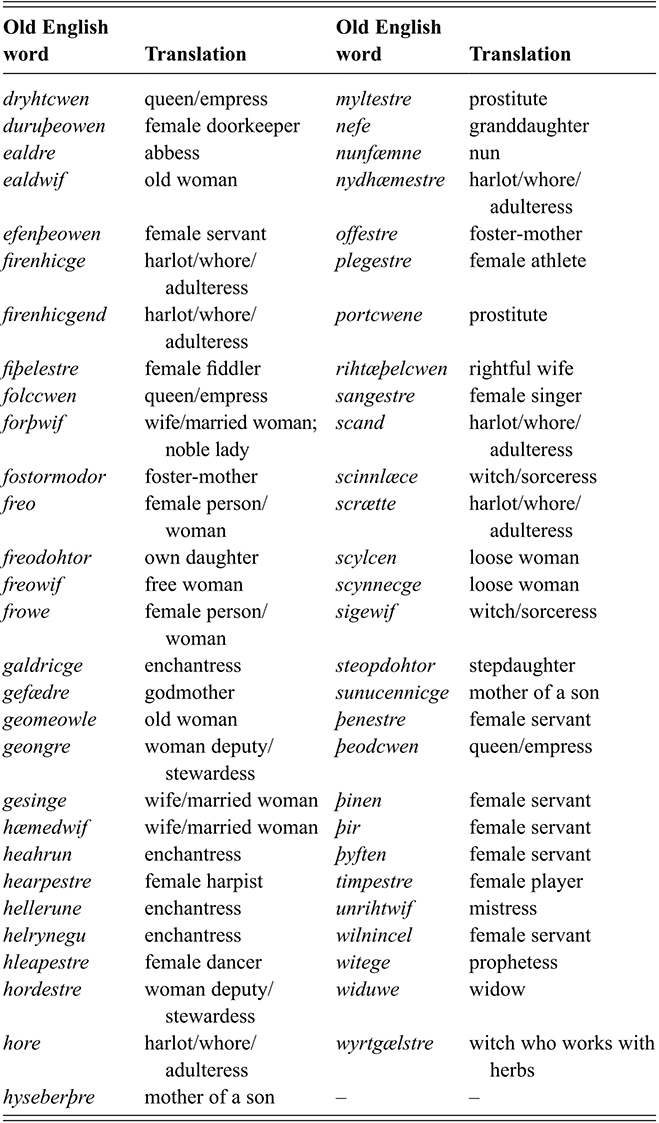
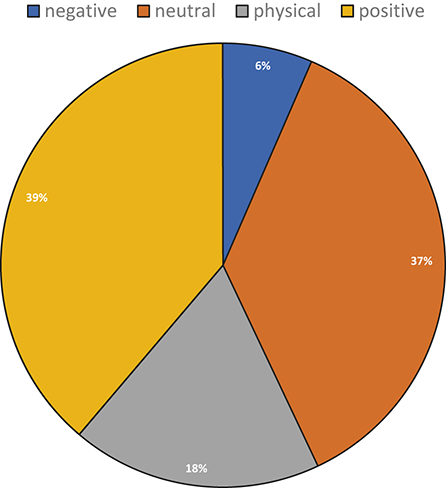
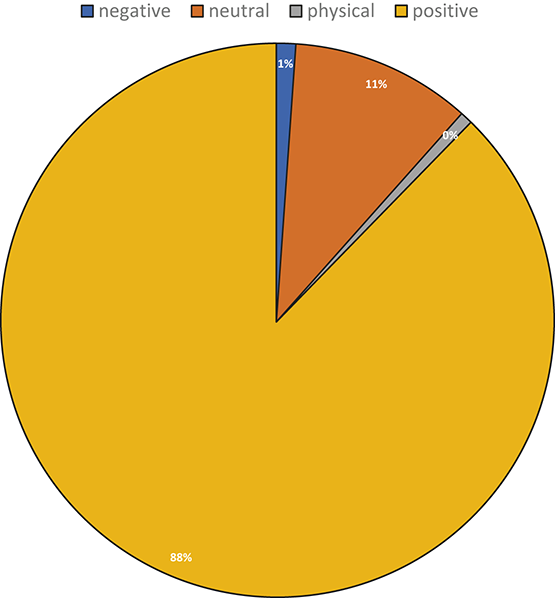
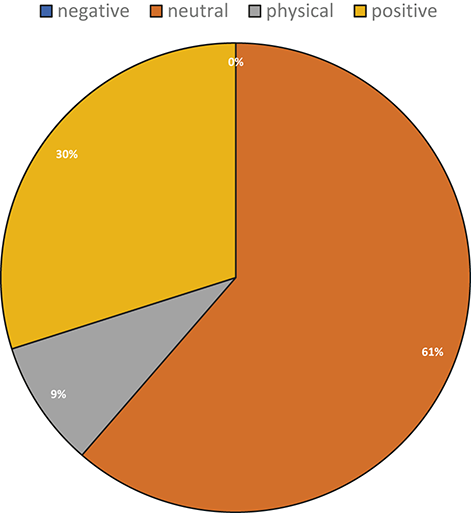
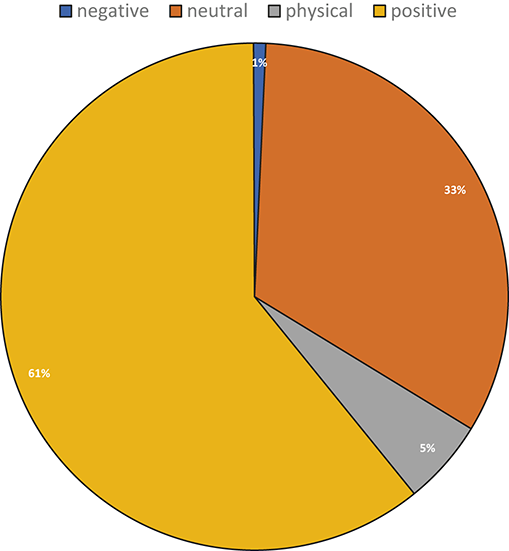
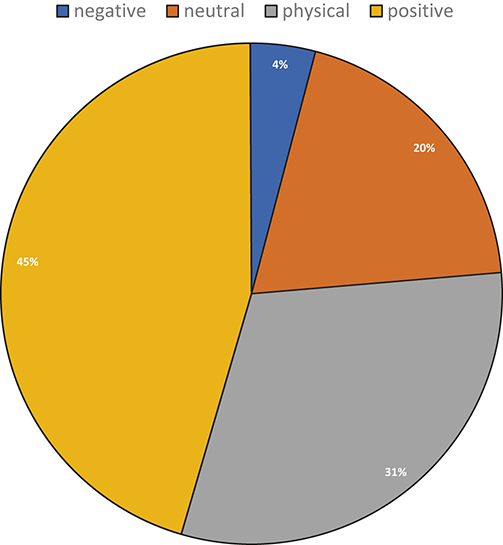
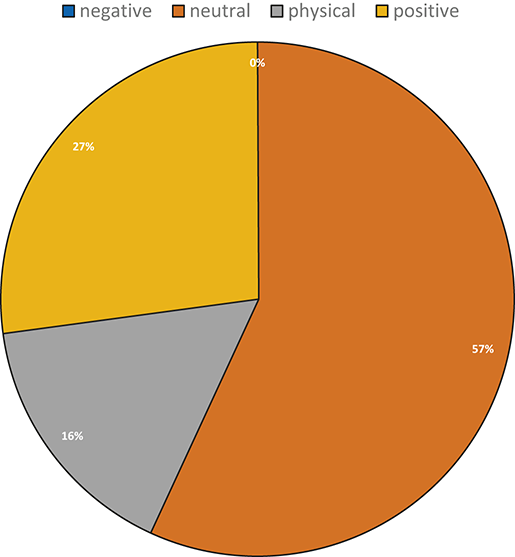
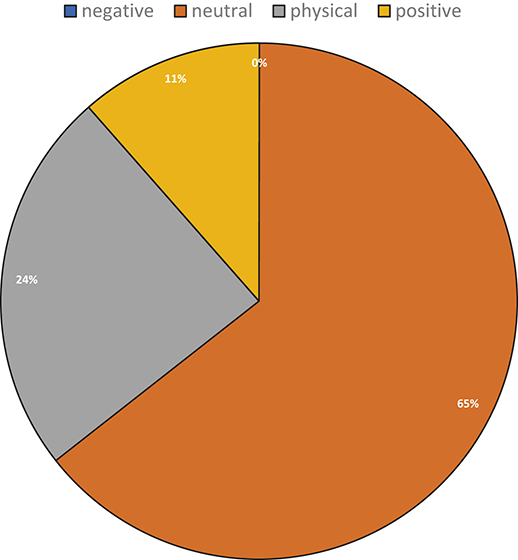
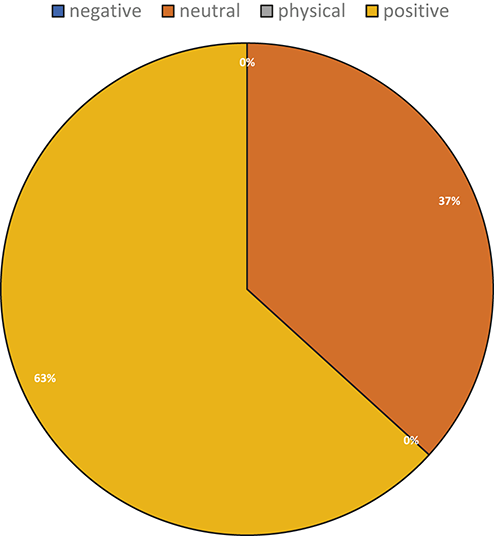
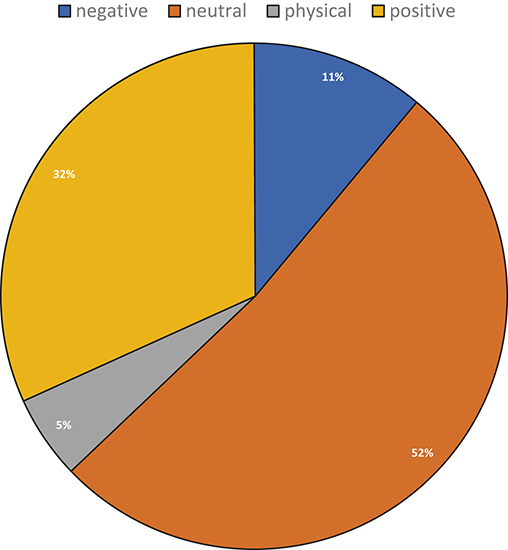
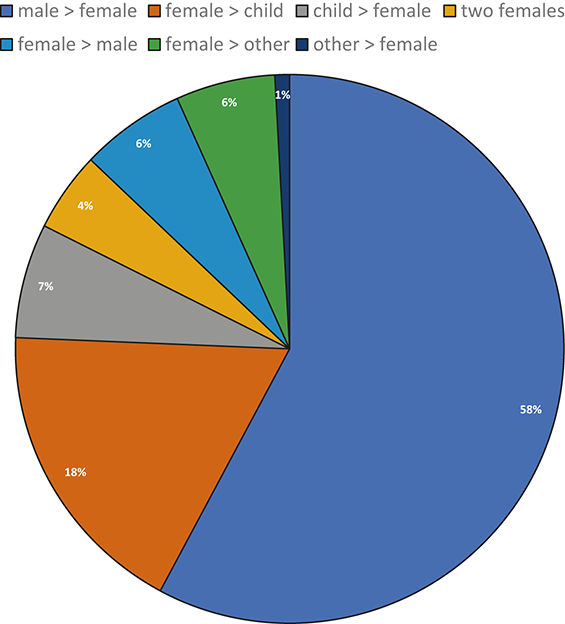
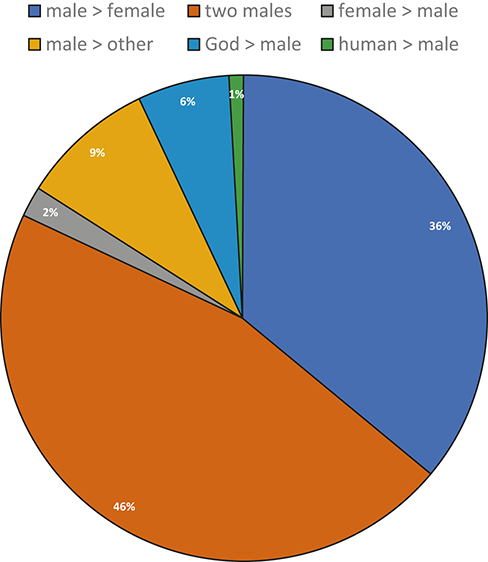
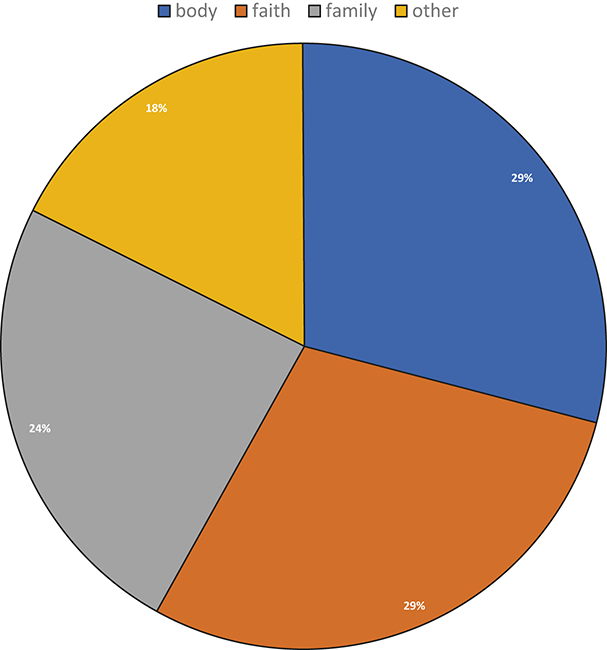
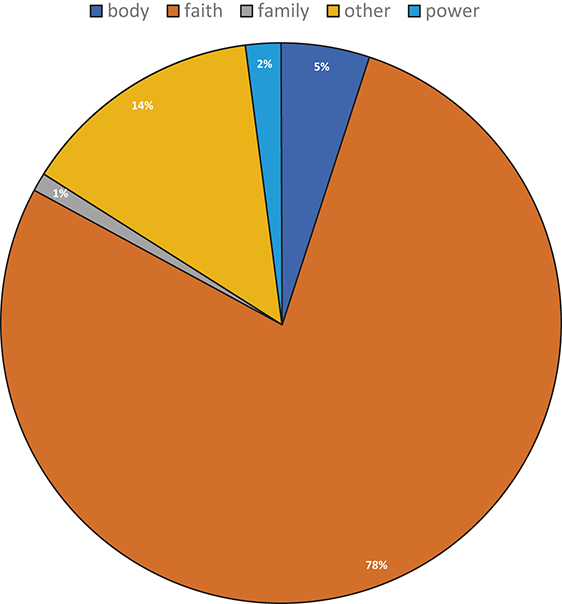
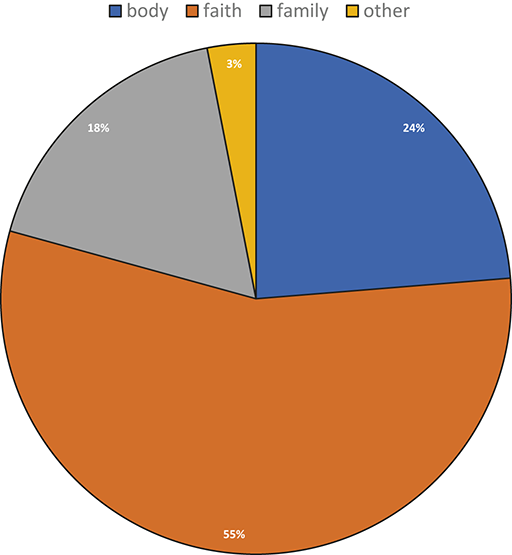
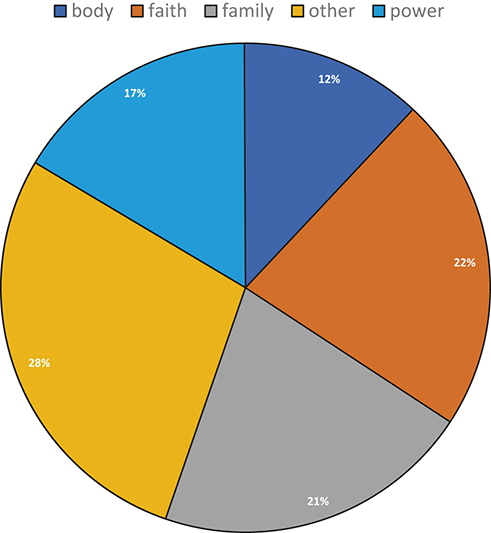
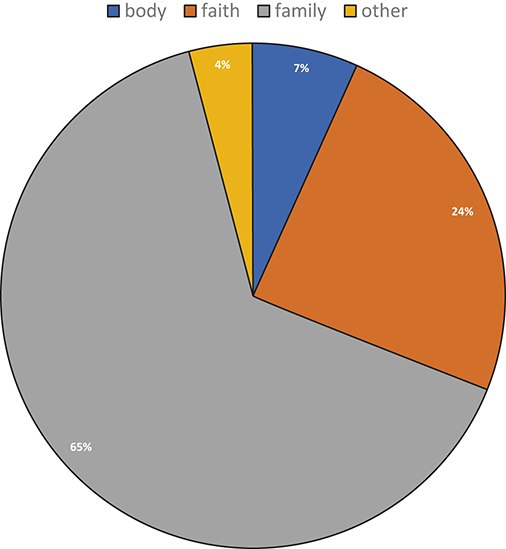
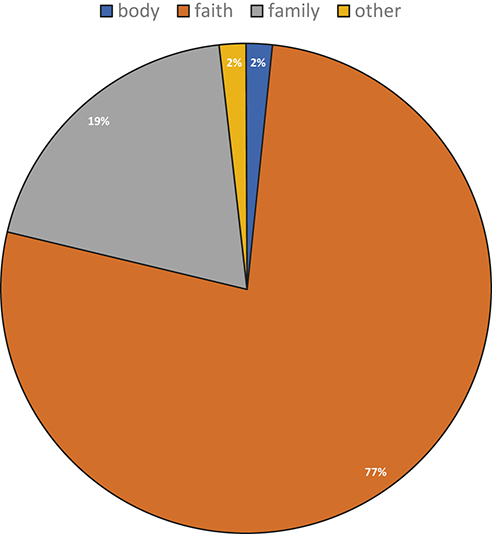
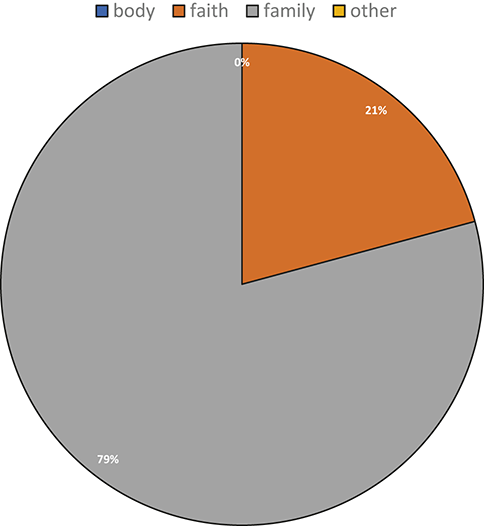
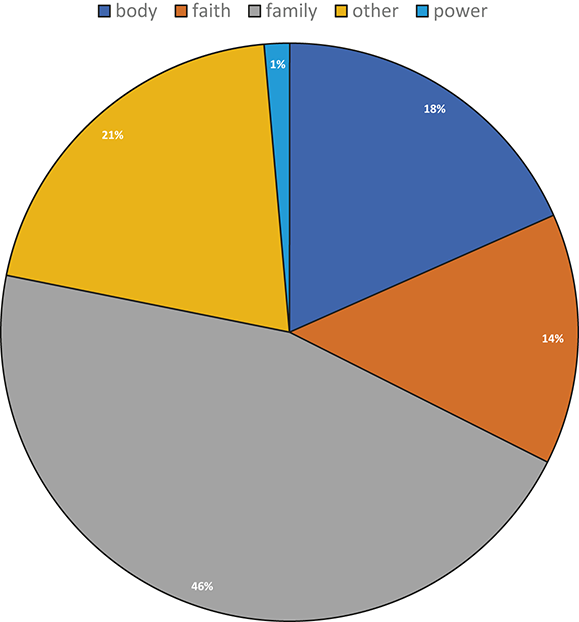
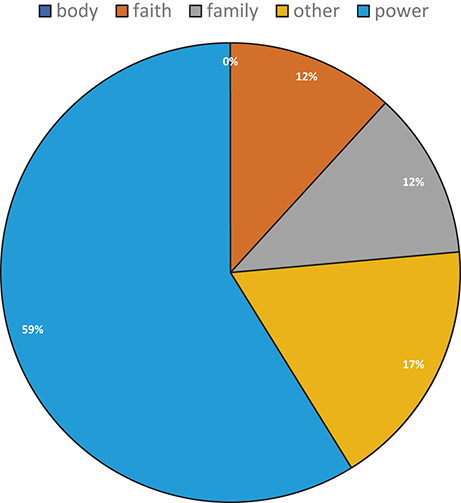
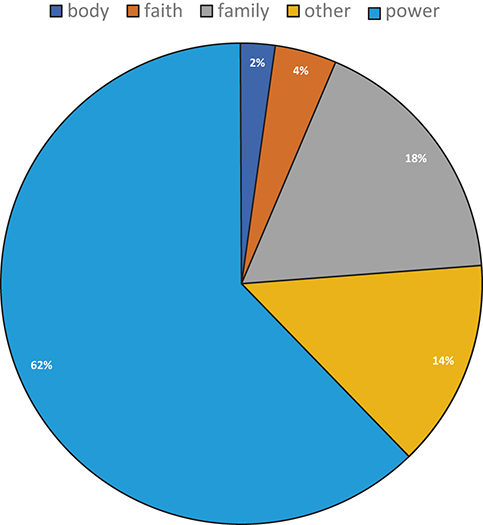
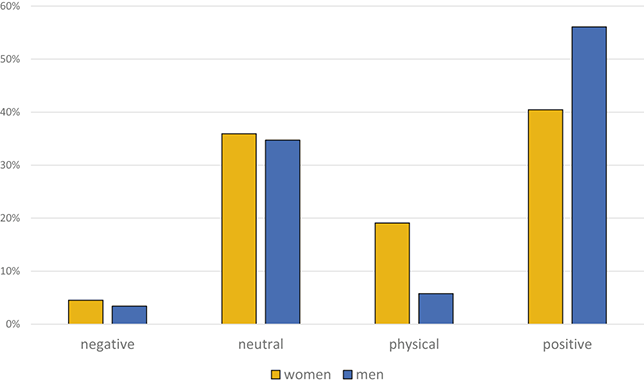
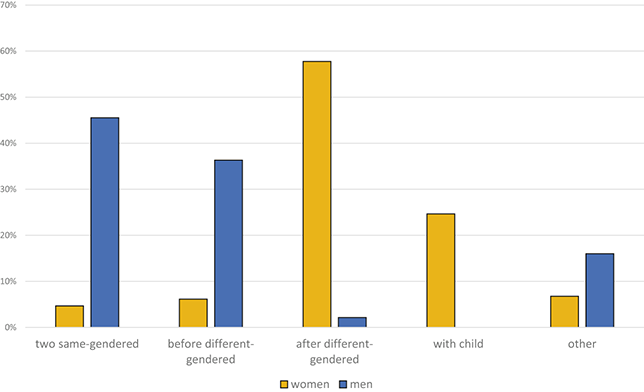
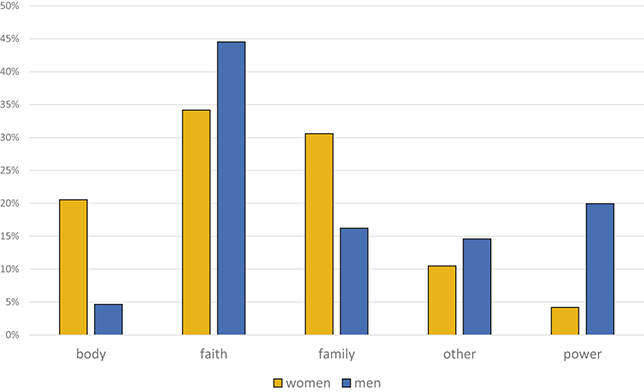
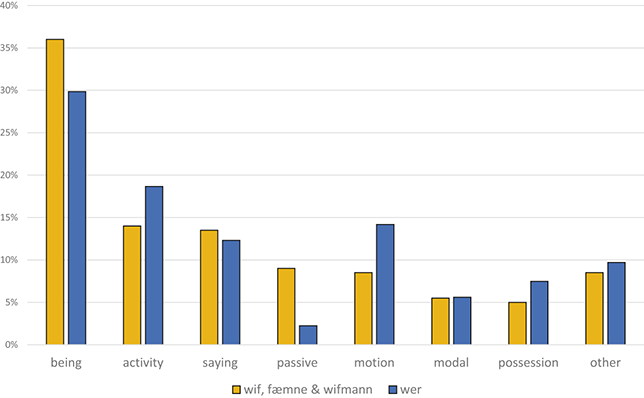
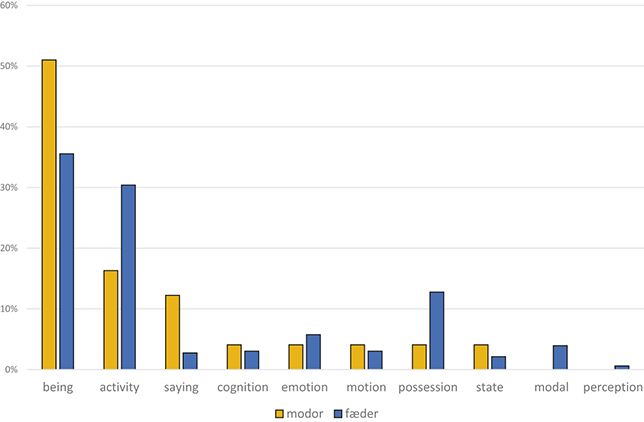
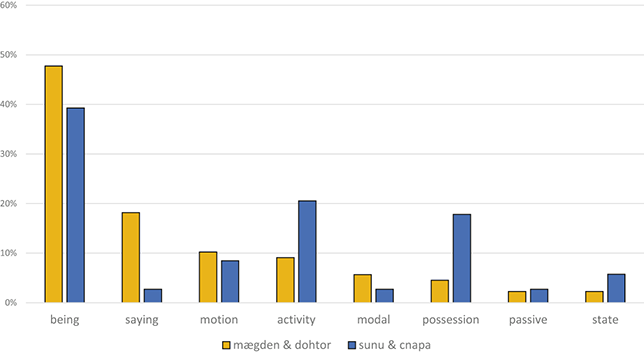
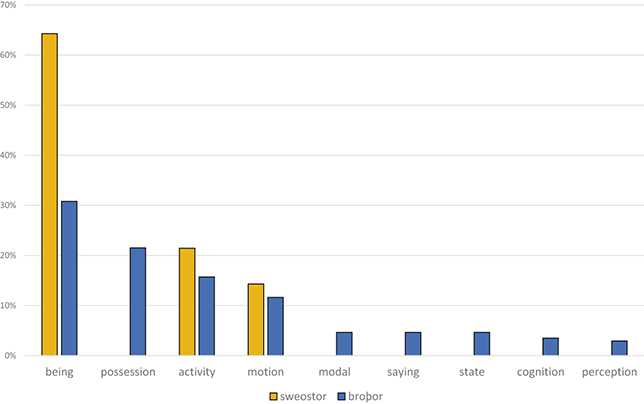
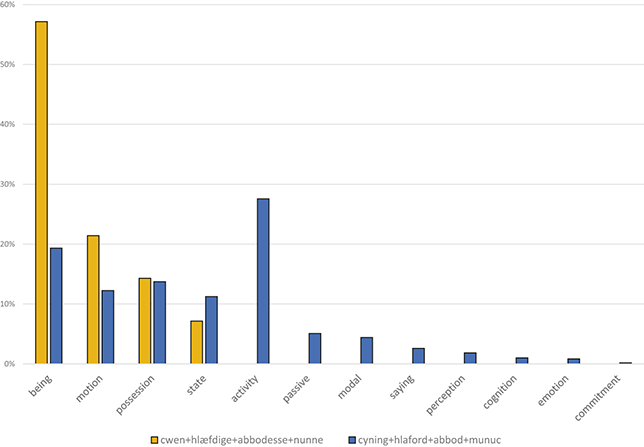
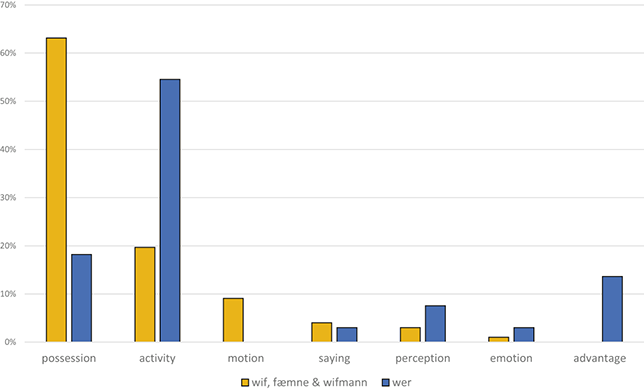
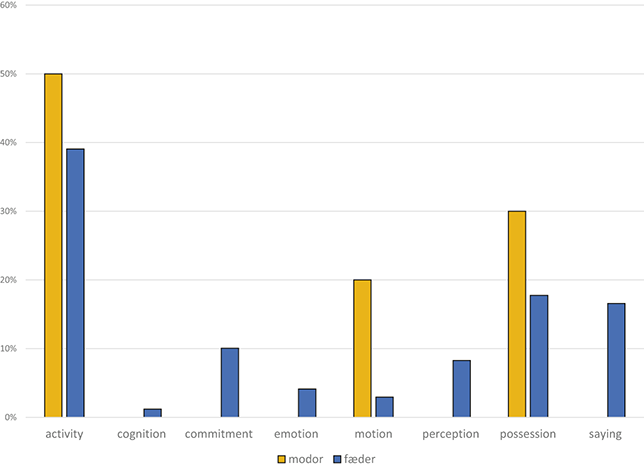
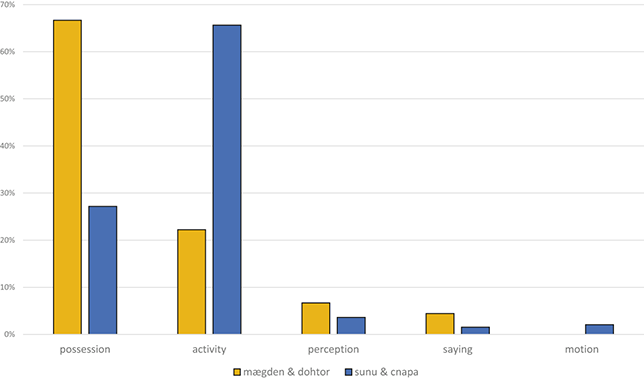
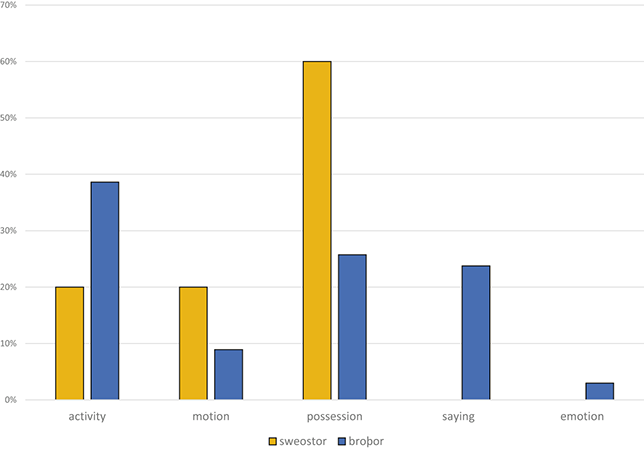
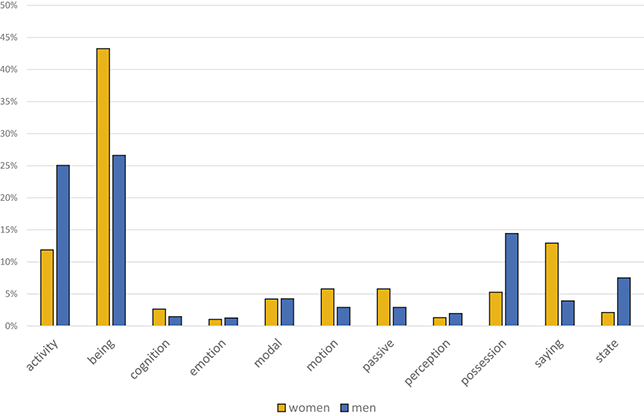
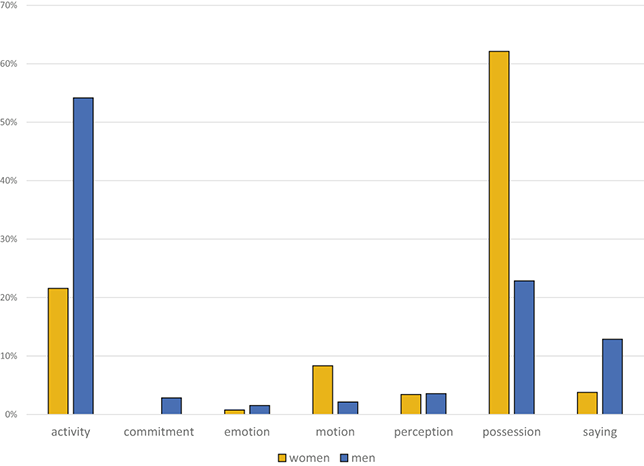

 Open access