

Human skeletal remains are routinely recovered from archaeological excavations and cultural resource management projects all over the world. However, few manuals are available that instruct how to prepare those remains for transport and long-term storage (Brothwell Reference Brothwell1981; Ubelaker Reference Ubelaker1978). These factors can lead to damage and deterioration after the remains are excavated. Conservation—the act of preserving, repairing, and preventing deterioration—is necessary to protect human remains.
Here, I present four case studies from China and Mongolia that involved unusual issues during excavation, transport, and storage. While few Western archaeologists have experience in these countries, the problems encountered are common worldwide. This paper presents some unexpected problems encountered in the field and lab, describes how the issues were addressed, and recommends conservation practices to ensure the long-term preservation and curation of human skeletal remains.
There is no official protocol on how to process human skeletal remains for transport and long-term storage after excavation. Often, students are instructed by word of mouth, are not adequately supervised, and are not provided with standardized methodologies. Packaging materials for human skeletal remains are seldom included in the original excavation budget, so leftover boxes or bags are used. These containers (usually cardboard boxes) are meant to be temporary but often remain as the primary receptacles many years later. Sometimes no bioarchaeologist is present when the skeletons are recovered, so a nonspecialist packages, transports, and stores the human skeletal remains.
Problems can still occur when a bioarchaeologist is present if the human remains have some physical characteristics that are uncommon in the region, such as preservation in challenging types of soil (such as in a desert, in water-logged soil, in permafrost, underwater, or inside caves). Unusual processing of the dead (such as cremations, sky burials, intentional mummification, secondary burials, and trophy skulls) or unique taphonomic processes (for example, volcanic eruptions, bog bodies, permafrost mummifications, desert mummifications, and cave deposits) can also cause some confusion as how to proceed.
Some countries have few trained bioarcheologists, which can make it difficult to confer with similarly specialized peers. Social media has alleviated this problem for some countries, with special topic groups on Facebook, Twitter, or Instagram, where individuals can post questions to the field, and colleagues can respond. However, there are countries where social media is banned (China) or internet access is expensive or intermittent (Mongolia), so it is difficult to communicate immediately when a problem occurs in the field or the lab.
Foreign participation at East Asian archaeological excavations is rare because of linguistic, cultural, and political obstacles. Excavation permits in China must be filed by a local Chinese archaeologist through the provincial archaeological institute. This proposal is then sent to the ministries of culture, military, national security, and public security for approval. After these approvals are secured, the proposal is sent to the State Administration of Cultural Heritage in Beijing. If that approval comes through, the proposal is sent to a special congress within the Chinese government. If the congress consents, the proposal is returned to the State Administration of Cultural Heritage and then to the provincial institute. This process takes, on average, a two-to-three-year turnaround.
The excavation process in Mongolia is similar. Permits must be filed through a Mongolian archaeologist and then sent to a committee of Mongolian archaeologists and historians in Ulaanbaatar for a vote. If approved, the permit is held by the local Mongolian archaeologist. This process takes about one year to complete.
The excavation and study of human remains is fairly recent to China and Mongolia. In the past, human skeletons were often discarded or only the skulls were recovered. Recently, thousands of burials have been recovered from salvage archaeology projects, as housing and transportation needs have increased. East Asia has few trained bioarcheologists, so most human skeletal remains are excavated by archaeologists or local workers. Previous research on human skeletal remains was conducted by medical doctors. This is slowly changing as more students pursue bioarchaeology degrees and participate in international conferences.
CASE STUDIES
Oasis Burials, Xinjiang Province, China
Xinjiang Province is located on the western frontier of modern-day China, bordering Mongolia, Russia, India, and Afghanistan. This area has traditionally been called the Western Regions and has been genetically, culturally, linguistically, and religiously distinct from the rest of East Asia for the past 3,000 years.
The oasis burials are from two archaeological sites associated with a city and military fortress (206 BC–AD 420). The sites are located along the southern Silk Road in the Turfan Basin on the eastern side of the desert. This region has large rivers with surrounding wetlands. Agricultural crops included wheat, melons, grapes, and medicinal plants. The main sources of meat were sheep and goat. The language spoken in this region was Indo-European, possibly related to early forms of Persian. The bodies naturally mummified in the dry desert soil (Li et al. Reference Li, Abuduresule, Hueber, Li, Hu, Li and Li2013; Sparavigna Reference Sparavigna2014).
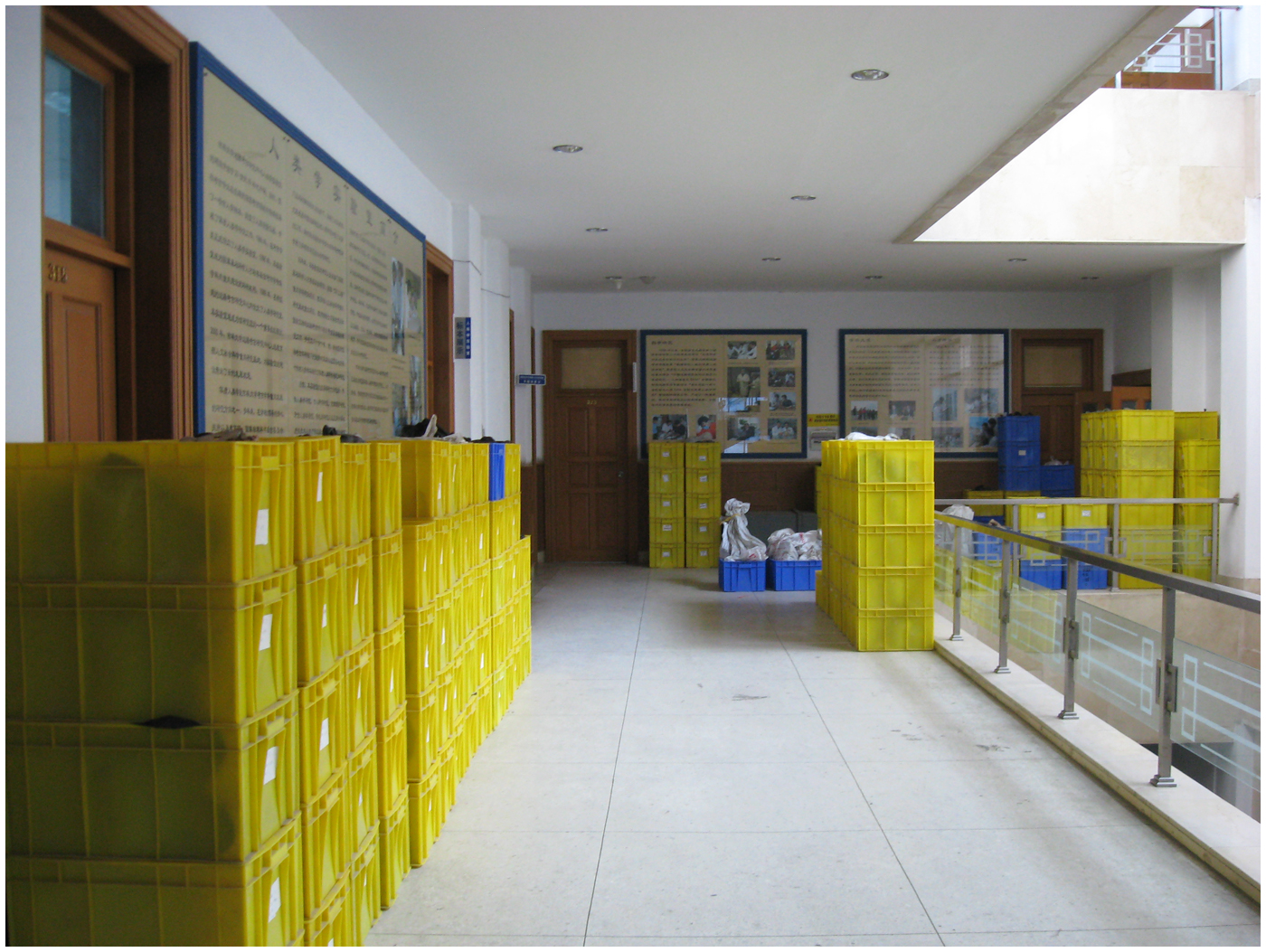
All the skeletons (115) were transported by freight train from Xinjiang Province to Jilin University in Changchun, Jilin Province. Changchun is located in northeastern China (Manchuria) near the border with North Korea, This is more than 4,000 km from the excavation sites. The skeletons went from a dry, hot desert environment with low humidity to a more humid, cold, Siberian climate. Winter temperatures average -20 to -30 degrees Celsius. The skeletons were kept in cardboard boxes and plastic bins in a storage room and a laboratory. The laboratory had no heat in the winter or air conditioning in the summer. The inside temperature of the room during the winter was close to 0 degrees. It was common for ice to form inside the windows of the laboratory. Fall, winter, and spring classes and research were conducted while wearing winter coats, hats, and gloves. Small portable heaters were set under the tables to heat the immediate space around each researcher (Figure 1).
Collections storage with skeletons in plastic bins at Jilin University, Changchun, China. Photo by Christine Lee.
One issue with the changes in temperature and humidity is that the mummified tissues began to decompose again. Hair and skin began to slough off the bones. During the summer months, a distinct rancid smell arose. There were issues with the acidity of the cardboard boxes, the hardness of the plastic containers, the condensation inside the sealed plastic bags, and the huge fluctuations in temperature.
The preservation of the individuals from the oasis burials was originally good. Many had preserved hair, eyebrows, beards, skin, ears, eyes, lips, and brain. One female still had the silk ribbons used to tie her blonde hair.
White crystals were noted on the outer table of several skulls (Figure 2). Samples were sent to the chemistry department to make sure they were not toxic. The report revealed that the crystals were salt (NaCl). It was later discovered that a graduate student had washed the organic material off several skulls to collect metric data. The student did not have permission to wash the skulls or remove the hair and skin. The skulls were submerged in water while the organic material was scrubbed off and thrown away. The skulls were not thoroughly dried before they were put back in cardboard boxes.
Salt crystals on the skull from the desert oasis in Xinjiang Province, China. Photo by Christine Lee.
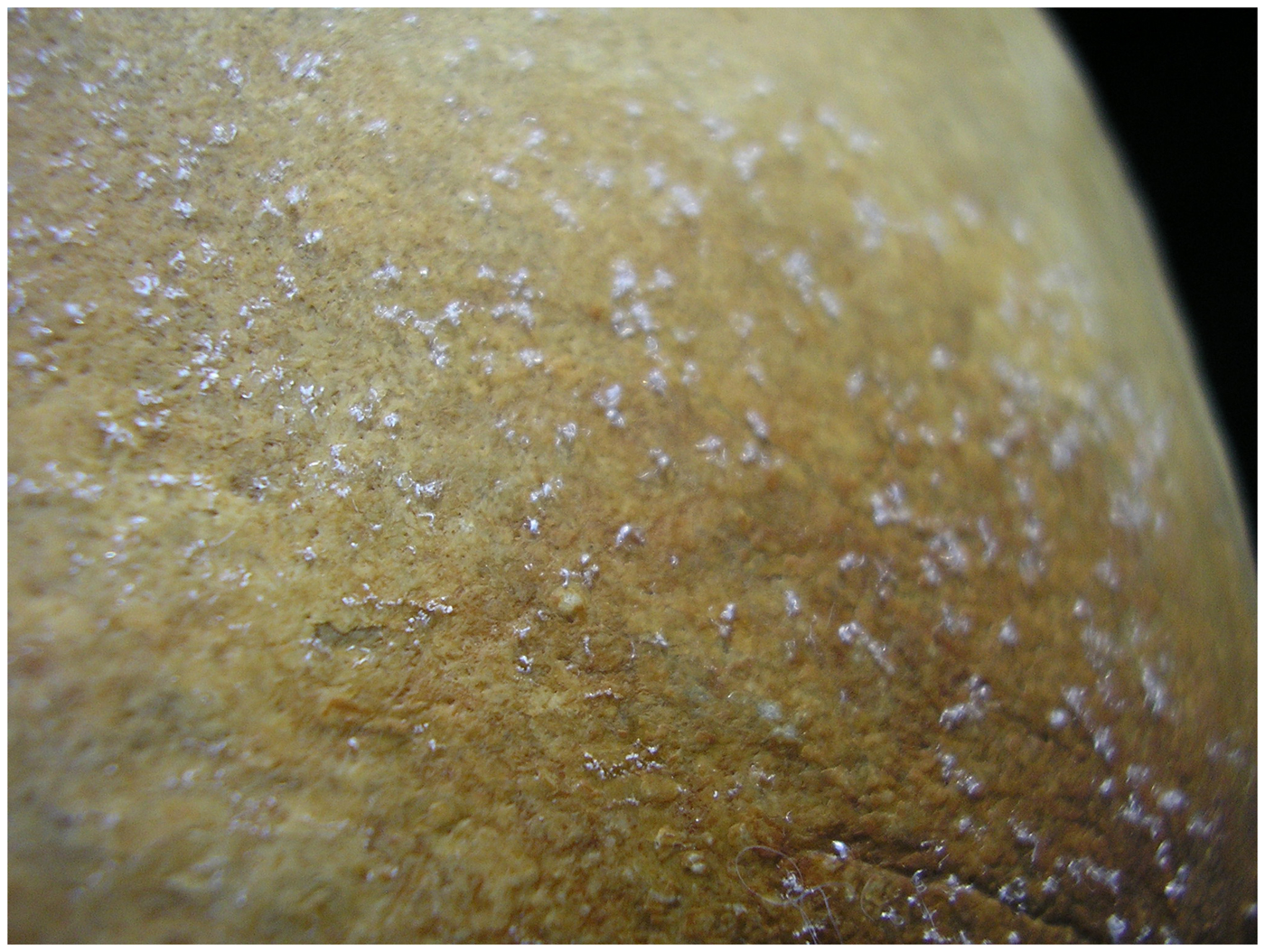
Ceramics, stone, bone, and ivory can absorb soluble salts from either seawater or groundwater. The main soluble salts in archaeological contexts are chlorides, nitrates, and sulfates. Once an object is removed from water or soil, the moisture inside the object begins to evaporate. As the water evaporates, the salt crystals move through the pores of the object. The salt crystallizes in a layer on the surface or just beneath the surface of the object. This crystallization can damage the structure or flake off the surface of the object. On the surface, the salt crystals look like a white, furry growth (Hamilton Reference Hamilton1999; National Park Service 1998; Paterakis and Steiger Reference Paterakis and Steiger2015).
The skulls were further conserved, after consultation with the chemistry department, by removing the surface crystals with a small brush. The skulls were then lightly rinsed with water to draw out any remaining salt. Afterwards, all the skulls were placed in indirect sunlight to dry for several days before being returned to their boxes. Since 2010, these human skeletal collections have been moved into a new building with regulated climate control.
Cave Burials, Gobi Desert, Mongolia
Cave burials are a deviant burial type sporadically found in Mongolia, Central Asia, and southern Siberia. Cave burials are more common to the south, in Tibet and Nepal (Alt et al. Reference Alt, Burger, Simons, Schön, Grupe, Hummel, Grosskopf, Vach, Tellez, Fischer, Moller-Wiering, Shrestha, Pichler and von den Driesch2003). Mongolian burials are traditionally single interments within large familial cemeteries. Over the past 100 years, more than 70 cave burials have been recovered from 60 sites in Mongolia. Most of these cave burials are located on the southwestern border of Mongolia. The rockshelters are at a higher elevation and are hidden from casual view. Herders looking for missing livestock located many of these burials and then notified local authorities.
Most cave burials are single interments with a few striking examples of mass burials. Cave burials have been dated from the sixth to the seventeenth centuries, and most date to the Medieval Mongol Period (AD 1100–1400). The bodies are buried with the same orientation, grave goods, and sometimes coffins as traditional Mongolian burials. A few cave sites were reused for up to 500 years. Isotopic studies have shown most of the individuals were local and had a diet high in meat and dairy common to a nomadic lifeway. Nothing was found to distinguish these individuals (diet, birthplace, ethnic identity) from other contemporaneous Mongolian burials (Ahrens et al. Reference Ahrens, Piezonka, Nomgunsuren and La2015; Erdenebat Reference Erdenebat, Fitzhugh, Rossabi and Honeychurch2009; Frolich et al. Reference Frolich, Amgalantugs, Hunt, Hinton, Batshatar, Fitzhugh, Rossabi and Honeychurch2009; Turner et al. Reference Turner, Zuckerman, Garofalo, Wilson, Kamenov, Hunt, Amgalantugs and Frohlich2012).
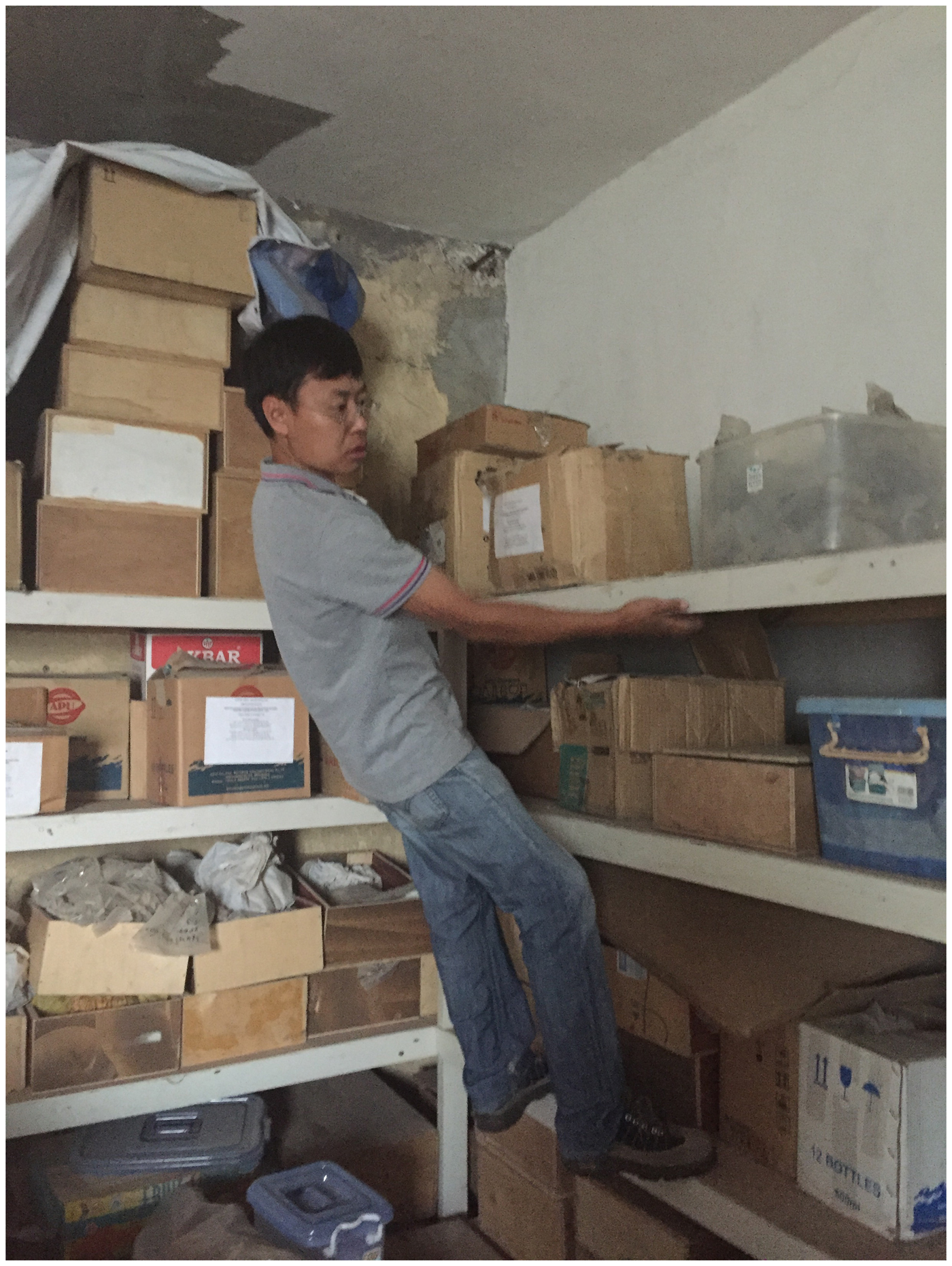
The National Museum of Mongolia in Ulaanbaatar houses remains from several cave burials excavated within the past few years. The storeroom for the human skeletons is in the attic of the museum where there is no air conditioning or heat. Temperatures in the wintertime can average -40 degrees Celsius (Figure 3).
Collections storage at the National Museum of Mongolia. Collections manager looking for a burial. Photo by Christine Lee.
One set of cave burials was analyzed in the summer of 2016. Two Mongolian archaeologists recovered the remains of one adult female and three children from a cave in Bayankhongor Aimag in southwest Mongolia. The archaeologists carried the skeletons in muslin sacks on their laps for the two-day public bus ride back to Ulaanbaatar. This was the fastest and most economical option to protect the burials from looting and to document the remains.
The condition of the bones was excellent due to the dry conditions within the cave. The skeletons were still wrapped in the muslin bags inside a cardboard box. The remains had a distinctive rancid smell, and organic matter was discovered crushed at the bottom of the bags. The three children were completely skeletonized. The adult female was partially mummified, with preserved skin and hair. The skull, mandible, and cervical vertebrae were attached by skin and tissue and needed to be separated for further bioarchaeological analysis.
I obtained permission from the Mongolian archaeologists to separate the bones. The methodology used was in consultation with another American professor who was present and has extensive expertise in Egyptian mummified remains. Using surgical instruments (scissors, scalpels, and tweezers), she carefully separated the mandible and cervical vertebrae. Great care was taken to only separate the bones with the least amount of disturbance to the surrounding tissues. Any loose organic fragments of skin, hair, brain, and so on, were collected and bagged for future analysis. The individuals were placed in archival plastic bags, and a silica packet was added to the cardboard box to help control excess moisture. The human skeletal remains were given museum accession numbers and were formally catalogued.
The National Museum of Mongolia recently received funding from UNESCO to improve their collections storage; therefore, in the future, these remains will be reboxed and rehoused in climate-controlled conditions.
Permafrost Burials, Orkhon Aimag, Mongolia
Most of the frozen burials in Mongolia have come from Pazyryk-culture kurgan burials in northwestern Mongolia (ninth through second centuries BC). Permafrost burials have also been recovered from Russia, China, and Kazakhstan. The burials are found at high elevations, 1,000–2,300 meters above sea level. This region has long, cold winters lasting from September to May. Overnight freezes and hail are common in summer. Pazyryk burials usually have wooden chambers enclosing the burials underneath earthen mounds. The burial chamber can be up to 5 m under the surface. The structure of the burial mound causes the temperature inside the chamber to be three to five degrees colder than the surrounding air. The chamber collects groundwater, which freezes and preserves the objects inside the burial (Bourgeois et al. Reference Bourgeois, De Wulf, Goossens and Gheyle2007; Epov et al. Reference Epov, Balkov, Chemyakina, Manshtein, Manshtein, Napreev and Kovbasov2012).
Many of these tombs have been preserved for more than 2,000 years. Because temperatures have risen in the past few decades, these burials have begun to thaw, destroying valuable organic artifacts. Previous excavations have recovered textiles, clothing, leather, food, basketry, wooden boxes, wooden bowls, and bows. Several human and horse mummies have been recovered with preserved skin, hair, internal organs, and tattoos. UNESCO has given funding to try to identify the tombs most affected by the warming trend. These tombs will be given priority to excavate before they completely thaw (Argent Reference Argent2010; Han Reference Han2006/2007; Molodin Reference Molodin and Han2008; Molodin and Polosmak Reference Molodin and Polosmak2016).
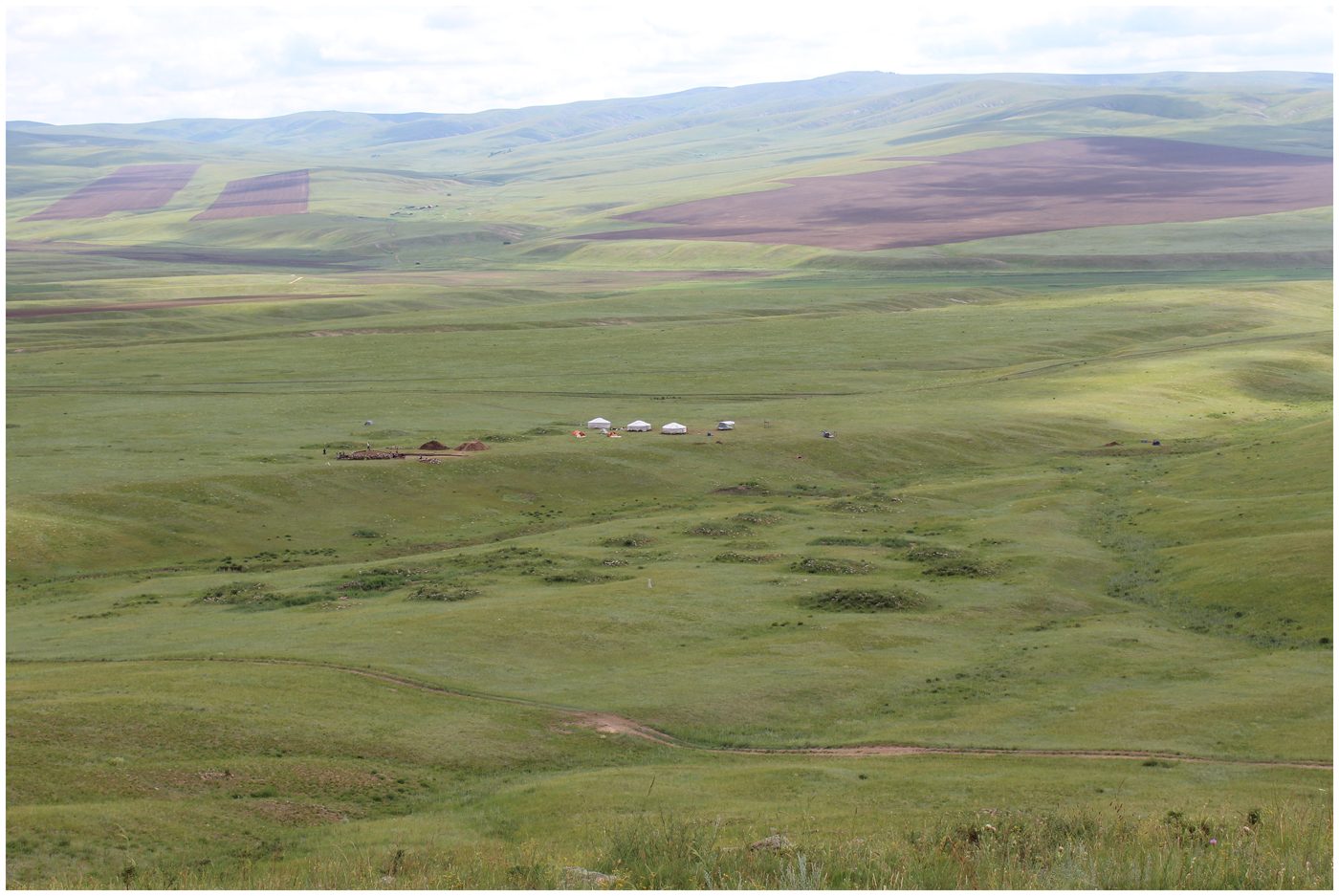
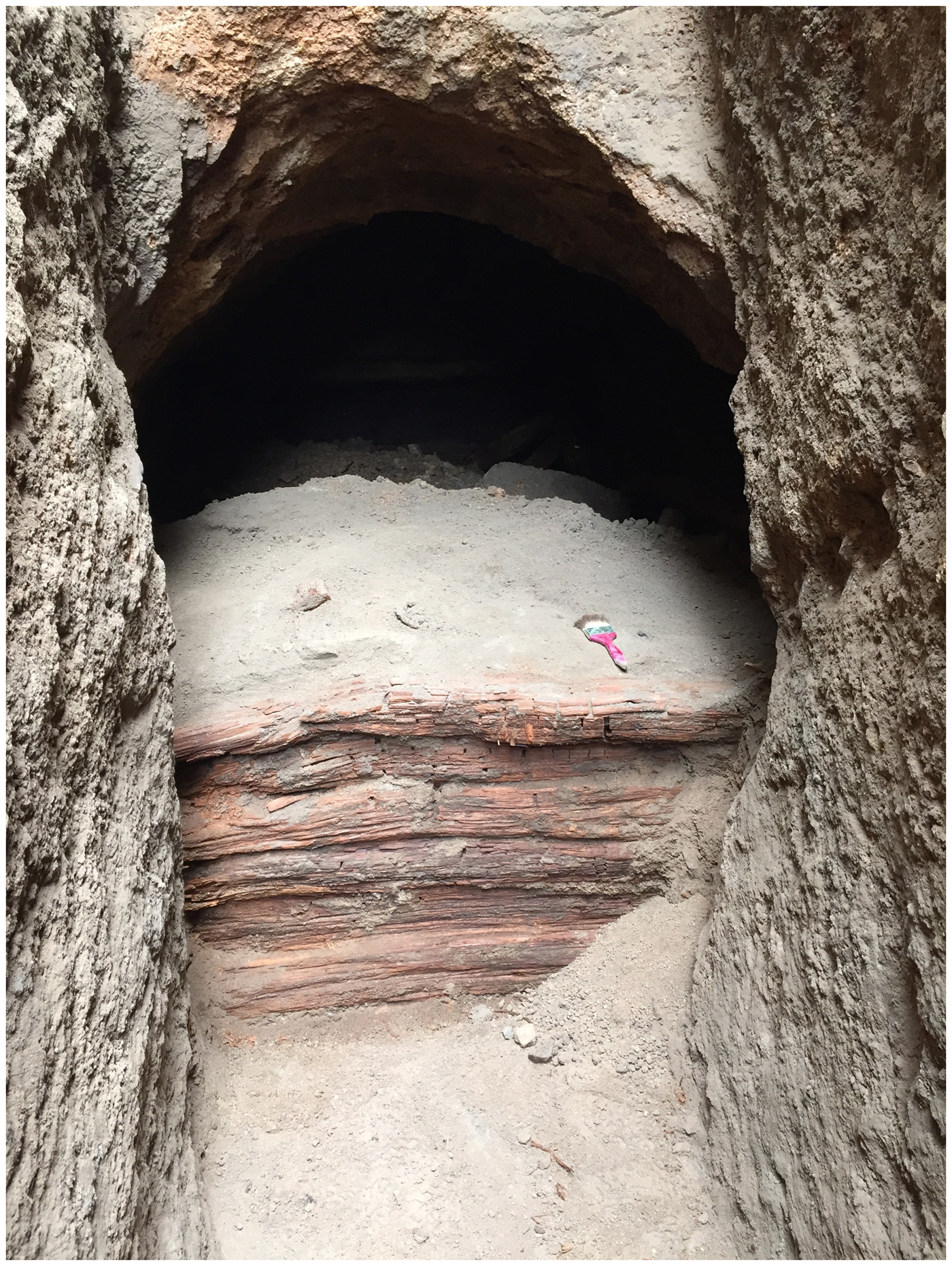
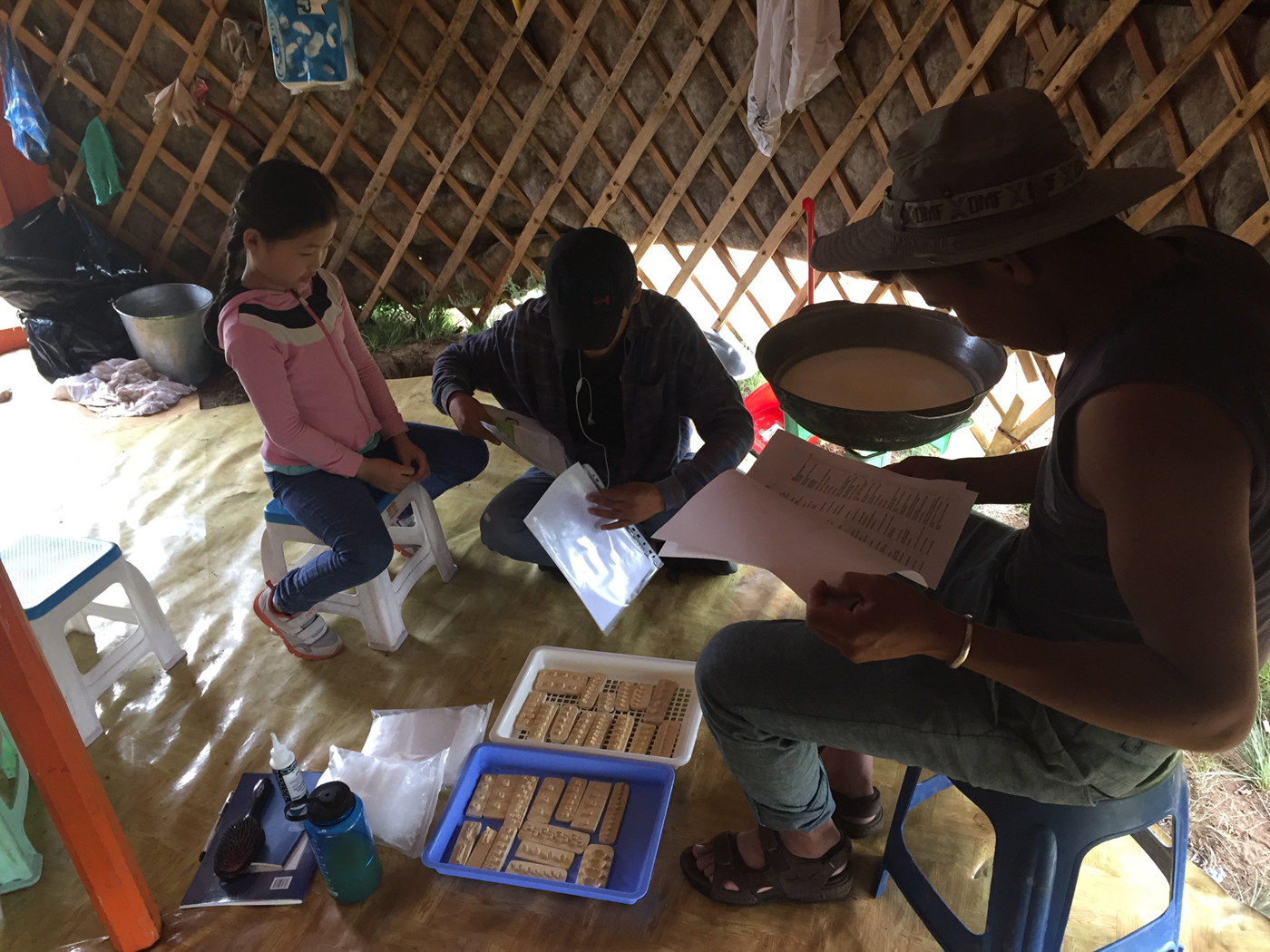
Recent excavations in northern Mongolia have recovered several burials in permafrost (Figure 4). The burials are human-made stone-and-dirt mounds covering underground chambers up to 5 m deep. Several of the deeper burials have yielded mummified human and horse remains. Once the tombs are open to the outside air, condensation forms inside (Figure 5). Preliminary analysis is done inside the traditional Mongolian nomadic dwelling, called a ger. The ger functions as the laboratory, storage area, sleeping area, and sometimes food preparation area (Figure 6). Skeletal material is often placed in plastic bags inside cardboard boxes for transportation and storage.
Tomb mounds in permafrost, Orkhon Aimag, Mongolia. Photo by Christine Lee.
Tomb entrance 5 m deep. The inside temperature is much cooler than the outside air. Once the tomb is opened, condensation forms inside. Photo by Christine Lee.
Laboratory inside a traditional Mongolian nomadic ger. Notice the yoghurt beside the students studying dental anthropology. Photo by Christine Lee.
Since the skeletons go from a frozen state into storage, there has been a consistent problem with mold growth. One skeleton was treated at the National Museum of Mongolia. The skeleton was excavated late in the 2014 season, sealed in a plastic bag, put into a cardboard box, and then shipped to Ulaanbaatar. When the cardboard box was opened in 2015, there was a distinct mold smell. White mold covered almost every bone. A soft toothbrush was used to remove the mold in a well-ventilated area. Then the bones were set in indirect sunlight to fully dry. The bones were then repackaged in the plastic bags. This skeleton was observed again in 2017 with no reoccurrence of mold growth.
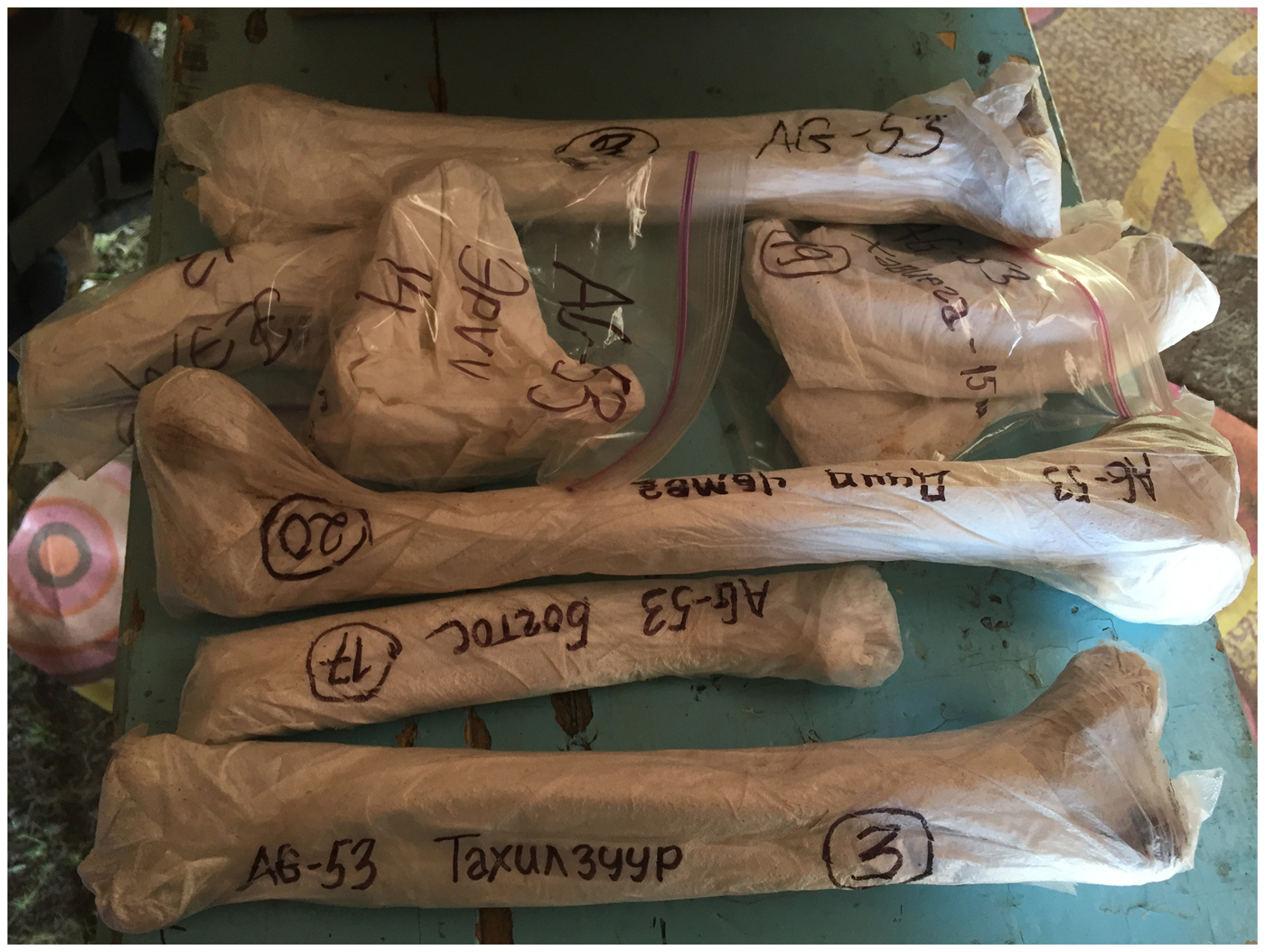
In 2017 one skeleton was excavated and packaged for storage by a history graduate student. The student was not supervised and did not ask how to excavate or store the human remains. When the cardboard box was opened two weeks later, every single bone had been wrapped in plastic and then wrapped again in parchment paper (Figure 7). When the bones were unwrapped, they were found to be covered in white mold (Figure 8). All the bones were unwrapped and set in indirect sunlight for several days to dry. When asked why the bones were wrapped in plastic, which sealed in moisture, the student responded that it was a technique learned in conservation class to preserve wood. The student thought sealing in moisture would strengthen and support the bones. However, the bones had been in an excellent state of preservation before the mold growth.
Human bones wrapped in plastic and again in parchment paper. Moisture was trapped inside each package for two weeks before discovery. Photo by Christine Lee.
After the bones were unwrapped, white mold was evident on several skeletal elements. Photo by Christine Lee.
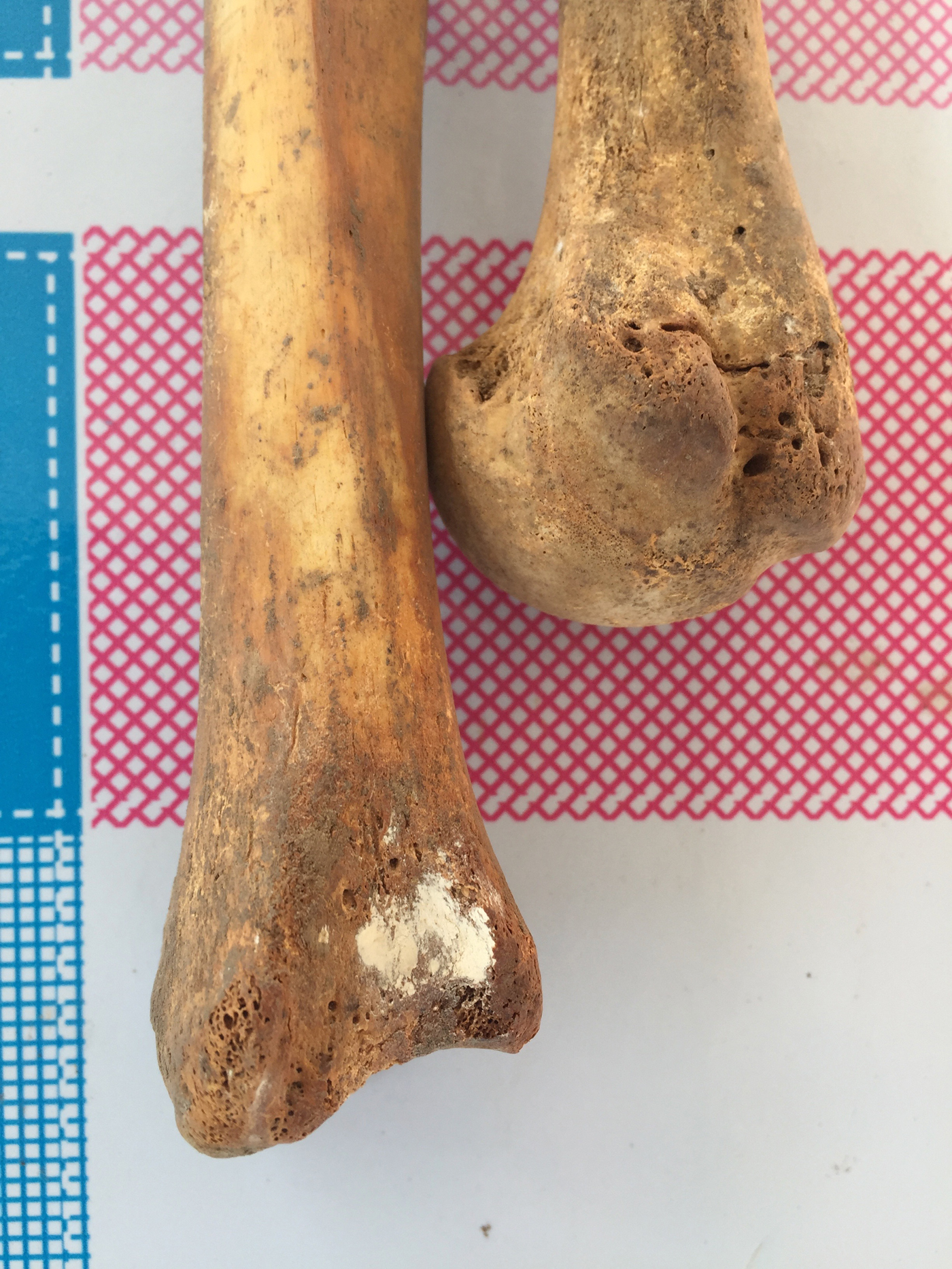
Several pieces of metalwork were also found wrapped by this student. They were unwrapped and set out to dry. This was a case of an overzealous student using a conservation methodology specific to one type of material that caused damage to objects with different chemical and physical properties.
RECOMMENDATIONS
All these examples show less than ideal situations mainly due to a lack of funding and availability of trained individuals, and there is room for discussion and improvement. Several foreign and local governmental institutions in the region are beginning to see human remains as part of the area's cultural heritage. Funding has recently been secured for archival storage boxes and more climate-controlled, long-term storage in all these institutions.
These bioarchaeological cases help to illustrate some common problems and errors that can happen anywhere. This study hopes to help better prepare colleagues by giving preliminary suggestions for the transport and storage of human skeletal remains. The following protocol lists practices and concerns researchers can address before they begin. By giving some forethought to the handling of human skeletal remains, researchers can avoid most of the problems documented here. These suggestions are based on bone-care guidelines provided by conservators from museums and university laboratories (Antoine and Taylor Reference Antoine, Taylor, Fletcher, Antoine and Hill2014; Cassman and Odegaard Reference Cassman and Odegaard2004; Johnson Reference Johnson1994; McGowan and LaRoche Reference McGowan and LaRoche1996; Wills et al. Reference Wills, Ward, Gomez, Fletcher, Antoine and Hill2014)
Ethical Standards Agreement
There needs to be an agreed-on ethics on handling human remains among archaeologists and bioarchaeologists. What are the cultural, religious, and personal thoughts and actions necessary to respectfully handle the remains? Who is authorized to handle the remains? Why do they need to handle the remains? Undergraduate and graduate students need to have the appropriate training and supervision to respectfully conduct excavation, inventory, and analysis. Many of the issues encountered in the aforementioned cases stemmed from mistakes students made while working unsupervised.
Documentation and Collection
The context of the human remains should be recorded as thoroughly as possible. This is one reason it is important to have a bioarchaeologist in the field during retrieval. This ensures that as much of the individual can be recovered as possible, as taphonomic processes may have moved bones to other parts of the burial. Hair, soft tissue, clothing, adornments, and other cultural objects should be looked for, documented, and collected. During excavation, special attention should be made to look for and separately bag the teeth, hands, and feet. Hands and feet should be separated and identified as left or right side. Special care should be made to look for infant bones that could be inside the abdominal cavity, between the legs, or next to a female burial. Archaeologists have occasionally accidentally recovered these bones, losing the original context.
Cleaning
If possible, researchers should wash their hands before handling bones. If no water is available, a package of wet wipes or antibacterial wash can be used. Whenever possible, plastic, not metal, measuring instruments should be used to prevent scratching the bones.
Dirt should be cleaned from the bones using paint brushes, toothbrushes, or bamboo skewers. Loose soil should be removed from inside the skull as soon as possible. As the soil dries, it can pull apart the bones. Solid blocks of soil within the skull can also damage the bones if transported over long distances. Changes in temperature and humidity over time (while in storage) can shift the soil and cause bone breakage.
If the soil cannot be removed, the skull should be well packed and buffered from vibrations, knocks, and changes in temperature and humidity. If the skull has a lot of rootlets or is fragmentary, it may be better to leave the soil intact. In this instance, wait until the skull is in the laboratory to slowly extricate the bone and conserve it. If the bones are damp, allow them to fully dry before removing the soil.
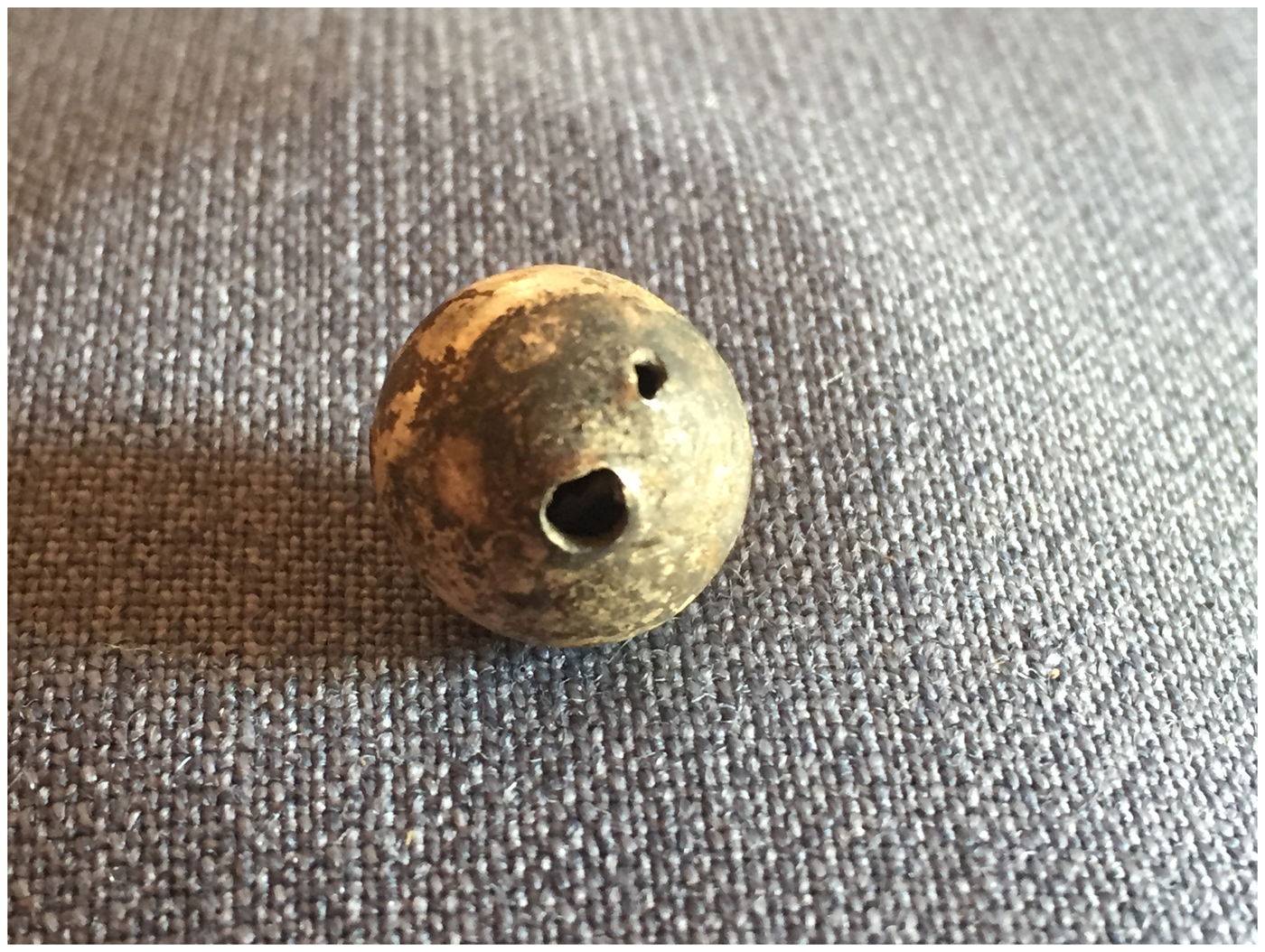
If time does not permit the removal of the soil in the field, then carefully pack the bones to protect them from the vibrations in transport and do not seal the bags to avoid trapping moisture. While excavating soil from the skull, collect and label any brain tissue present. Finally, when removing soil from the skull and neck, be careful, as loose teeth, jewelry, textiles, and beads may be embedded in the soil (Figure 9).
Silver bead recovered from the dirt excavated around the right zygomatic bone, Orkhon Aimag, Mongolia. Photo by Christine Lee.
If water is used to clean the bones, try not to immerse them. Use a spray bottle if the soil needs to be softened for removal. If the bones contain soluble salts, gently rinse the bones several times to draw out the salts. A laboratory wash bottle with a long spout works for this type of rinsing. Make sure all the bones are completely dry before placing them in storage. Silica gel packets can be added to the outside box—not inside the plastic bags—to help control moisture (Hamilton Reference Hamilton1999; National Park Service 1998).
Packaging
When packaging human skeletal remains, it is ideal to have one whole individual in one box. However, if the preservation is good and recovery is a complete adult, the remains may not fit in one box. If the entire skeleton is present, the skull and teeth should be packaged together in one box, and the postcranial bones in a second box. All the boxes for one individual should be clearly labeled and itemized (“#1 of 2 boxes,” “#2 of 2 boxes,” etc.). While packing skeletal elements, heavier elements (long bones, pelvis) should go on the bottom, and lighter, more fragile elements (vertebrae, scapula, ribs) should go on top. Foam can be used between layers. The skull and mandible should not be in articulation during transport, as the vibrations can chip the teeth. It is better to have a sheet of foam under the maxillary teeth, and the mandible should be wrapped separately in the same box. If any element is especially fragile, foam or acid-free tissue should be used to cradle it. During transport, as little space as possible should exist between the bones and the sides of the box. This minimizes movement and breakage if the journey is bumpy or there are fluctuations in temperature or humidity (Antoine and Taylor Reference Antoine, Taylor, Fletcher, Antoine and Hill2014; Wills et al. Reference Wills, Ward, Gomez, Fletcher, Antoine and Hill2014).
Storage
Whenever possible, remains should be stored in boxes that are inert and do not off-gas. Cardboard boxes are not ideal for long-term storage because they are acidic and attract pests. Individual types of bones can be bagged in inert plastic ziplock bags (polyethylene, polystyrene, polypropylene, and polyester). Ordinary plastic bags degrade over time and can break into small pieces or adhere to the bone. If possible, the teeth, each hand, each foot, each side of the rib cage, the cervical vertebrae, the thoracic vertebrae, and the lumbar vertebrae should be packaged separately in bags and labeled accordingly. The boxes should be labeled on the outside with the site name, accession numbers, and burial information and clearly indicate that the contents are human remains. The bags should be labeled with the burial information and skeletal element. A separate tag should be placed within each box with the site name, accession number, and burial information in case the label on the box is damaged or fades over time. No paper bags, aluminum foil, cardboard, cellophane, tape, staples, or paper clips should be used in long-term storage, as these materials deteriorate or react chemically over time (Antoine and Taylor Reference Antoine, Taylor, Fletcher, Antoine and Hill2014; Brothwell Reference Brothwell1981; Ubelaker Reference Ubelaker1978; Wills et al. Reference Wills, Ward, Gomez, Fletcher, Antoine and Hill2014).
Finally, for long-term storage, a facility with temperature and humidity controls is ideal. Normal bone is stable at temperatures below 21 degrees Celsius and 40–50% humidity. Mold will grow on bone at above 55% humidity. Mummified remains need to be kept at 20% to 30% humidity. As mentioned above, silica gel packets can be included in boxes if humidity is a problem (Wills et al. Reference Wills, Ward, Gomez, Fletcher, Antoine and Hill2014).
Reconstruction
If any skeletal elements need to be reconstructed, chemical stability and reversibility are important considerations. Most institutions use polyvinyl acetate (PVA) and Acryloid B-72 to consolidate bone. These adhesives may soften if the bones are stored at very high temperatures. Jeweler's wax can be used to safely mend bones and teeth temporarily for photography. Be careful not to use chemicals on bones needed for radiocarbon dating, DNA, or isotope testing (Cassman and Odegaard Reference Cassman and Odegaard2004; Hamilton Reference Hamilton1999; Johnson Reference Johnson1994; Koob Reference Koob1986; Ubelaker Reference Ubelaker1978; Wills et al. Reference Wills, Ward, Gomez, Fletcher, Antoine and Hill2014).
Practical Considerations
While these are best-practice suggestions, conditions in remote field sites and underfunded institutions are less than ideal. Cardboard boxes, plastic shopping bags, plastic food bags or containers, paper bags, and packing tape are often the default materials available on excavations. Human skeletal remains are a low priority in this region. However, as more archaeologists and museum specialists become aware of the information available from human skeletal analysis, this perception is slowly changing.
I bring my own archival materials while on excavation, including PVA glue and plastic bags. I am hopeful that in the future, funding will be provided for archival boxes and permanent storage space. Archival materials for East Asia are available from Japan. Many institutions have begun negotiations with Japanese colleagues to bring archival materials to their excavations.
Until then, use plastic file folder cases or plastic food boxes (with lids) instead of cardboard boxes. Tissue paper, muslin or cotton cloth, or pillowcases should be used to line the boxes. Plastic food bags can be used to separate the skeletal elements; however, they should not be sealed. This can keep the skeletal elements protected and stable enough for a few years. Hopefully by then, a permanent solution will have been found for long-term curation and storage.
Data Availability Statement
No original data were presented in this paper.
Acknowledgments
This research was funded by a Wenner-Gren Dissertation Fieldwork Grant (#7263); California State University, Los Angeles, Professional Development Funds; and a Wenner-Gren Hunt Fellowship. The following individuals were instrumental in the completion of this research: Odbaatar Tserendorj (National Museum of Mongolia), Uugaanbayar Batjargal (National Museum of Mongolia), Tumen Dashtseveg (National University of Mongolia), Bayanmunkh Tumenbayarin (National University of Mongolia), Enkhtuya Chinbat (Orkhon Museum), Zhu Hong (Jilin University), Wei Dong (Jilin University), Zhang Linhu, (Renmin University), Lana Williams (University of Central Florida) and Amaretta Azevedo (University of California, Riverside). No permits were required for this research.



