




Over the past few decades, there has been a notable decline in the mortality rate of children under the age of 5 across the globe in both developed and developing countries (Wang et al., Reference Wang, Liddell, Coates, Mooney, Levitz, Schumacher, Apfel, Iannarone, Phillips, Lofgren, Sandar, Dorrington, Rakovac, Jacobs, Liang, Zhou, Zhu, Yang, Wang and Murray2014). Nevertheless, the rate of decline has been observed to vary across different regions (Jamison et al., Reference Jamison, Murphy and Sandbu2016). Global collective efforts have set ambitious global objectives to reduce under-5 mortality (U5M): Millenium Goals 4 (MD 4) and Sustainable Development 3 (SDG 3) target 3.2. Conversely, notable financial and political commitments, particularly in developing countries, have resulted in a rapid decline in U5M (Wang et al., Reference Wang, Liddell, Coates, Mooney, Levitz, Schumacher, Apfel, Iannarone, Phillips, Lofgren, Sandar, Dorrington, Rakovac, Jacobs, Liang, Zhou, Zhu, Yang, Wang and Murray2014). Despite these endeavours, a considerable number of children continue to die before reaching their fifth birthday. The latest estimates indicate that the global total number of deaths among children under the age of 5 has decreased by over 50% from 9.9 million in 2000 to 4.9 million in 2022 (UNICEF, 2024). Nevertheless, the reduction in neonatal mortality has been more gradual than that observed in infant and child mortality, accounting for 2.3 million deaths. In comparison, those between 1 and 59 months old accounted for 2.6 million deaths (UNICEF, 2024). The highest number of deaths remains in sub-Saharan Africa and southern Asia, where more than 82% of global under-5 deaths and 80% of global neonatal deaths occur (UNICEF, 2024).
Although U5M has been the subject of considerable research, there has been a lack of studies examining the contribution of twin deaths in U5M. This is despite an increased risk of adverse outcomes among twins compared to singletons. In recent decades there has been an increase in the rate of twin births globally. This is attributed to the introduction and accessibility of assisted reproductive technologies (ART; European IVF-Monitoring Consortium [EIM] for the European Society of Human Reproduction and Embryology [ESHRE] et al., Reference Wyns, Bergh, Calhaz-Jorge, De Geyter, Kupka, Motrenko, Rugescu, Smeenk, Tandler-Schneider, Vidakovic and Goossens2020) and an increase in the average maternal age (Pison et al., Reference Pison, Monden and Smits2015; Smith et al., Reference Smith, Manktelow, Draper, Boyle, Johnson and Field2014). Globally, there are 12 twin births in every 1000 deliveries (Monden et al., Reference Monden, Pison and Smits2021). Sub-Saharan Africa has the highest natural twinning rates globally (18 or more per 1000 deliveries). This is predominantly observed in Western Africa (Benin, Togo and Nigeria) and in select countries in Central (Cameroon, Congo and Gabon) and Eastern (Malawi) Africa (Monden et al., Reference Monden, Pison and Smits2021; Ouedraogo, Reference Ouedraogo2020, Reference Ouedraogo2023). The twin birth rate in Europe and North America is 8−16‰, while in East Asia and Latin America, it is 6−9‰ (Monden et al., Reference Monden, Pison and Smits2021; Pison et al., Reference Pison, Monden and Smits2015). In developing countries, complications related to twin pregnancy and delivery, as well as the inherent biological risks and a lack of access to antenatal and obstetric care, result in a high risk of neonatal mortality (Vogel et al., Reference Vogel, Torloni, Seuc, Betrán, Widmer, Souza and Merialdi2013).
Several factors have been identified as potentially contributing to excess mortality among twins. Twin pregnancies are predominantly linked to an elevated risk of premature birth (Tucker & McGuire, Reference Tucker and McGuire2004), defined as any delivery occurring before 37 weeks of gestation. The mean gestational age and birth weight of twins are lower than those of singletons. The relative risk of adverse outcomes for twins compared to singletons varies according to gestational age (Cheung et al., Reference Cheung, Yip and Karlberg2000). A delivery before 37 weeks has been linked to an elevated risk of neonatal mortality, attributed to the onset of neonatal respiratory distress syndrome (Bakr & Karkour, Reference Bakr and Karkour2006; Murray et al., Reference Murray, MacKay, Stock, Pell and Norman2020). The mortality rates by gestational age demonstrate that before 37 weeks of gestation, the mortality rate for twins is significantly higher than that for singletons (Cheung et al., Reference Cheung, Yip and Karlberg2000). Furthermore, prematurity is linked to low birth weight and neonatal mortality, with lower birth weight being more prevalent among twins compared to singletons (Bellizzi et al., Reference Bellizzi, Sobel, Betran and Temmerman2018). A birth weight of less than 2500 gm is associated with an increased risk of early neonatal death in twins (Bellizzi et al., Reference Bellizzi, Sobel, Betran and Temmerman2018). However, it should be noted that this study did not include the duration of pregnancy due to the lack of data on this variable.
In addition to the predominant biological factors explaining the excess mortality of twins, medical and nutritional factors should also be considered, such as the use of pre- and postnatal care and the practice of breastfeeding. Twin pregnancies are high-risk pregnancies, requiring medical monitoring and delivery. However, it would be relevant to study how this care during and after pregnancy influences mortality throughout the under-5 age group. We assume that the greater fragility of twin babies compared to singletons would benefit from enhanced care, particularly during the neonatal period when their fragility is most acutely experienced. Research has also demonstrated that breastfeeding is associated with an increased likelihood of newborn survival, particularly in the case of twins. This practice provides infants with essential antibodies (van der Pol, Reference van der Pol1989), particularly for twins who are often premature and of low birth weight. However, twin births are frequently associated with health complications for the mother and/or child, making breastfeeding difficult or impossible, and mothers of twins may have difficulties producing enough breast milk to feed two children simultaneously (Ouedraogo, Reference Ouedraogo2023). We hypothesized that the impact of breastfeeding on excess twin mortality is most significant during the neonatal period when breastfeeding difficulties are apparent.
Whether in terms of healthcare or nutrition, twins from families with limited resources are the most exposed to disadvantages due to their socio-economic situation. Twins from families with low incomes are particularly vulnerable to disadvantages due to their socio-economic situation. The economic standard of living of households may have a significant influence on excess twin mortality, manifesting itself not only in an increase in neonatal mortality but also in high rates of postneonatal and child mortality.
In contexts characterized by elevated mortality rates among children and high twin birth rates (as is the case in Haiti), a significant excess of mortality among twin children contributes to an overall high level of mortality among children. For instance, in the African context, under-5 deaths among twins account for 10% of all deaths under the age of 5, despite twins representing less than 3% of the total under-5 child population (Monden & Smits, Reference Monden and Smits2017). Consequently, reducing excess mortality among twins can help reduce the overall child mortality level. The decline in U5M, especially neonatal mortality, is facilitated by improved neonatal care for children at the highest risk, such as preterm and low birth-weight infants, which are common in twin pregnancies. Therefore, we assume that it is likely that twins will benefit the most from the declining trends in neonatal mortality.
Most studies examining the mortality of twins compared to singletons tend to focus on the overall rate of U5M (Ouedraogo, Reference Ouedraogo2020). Nevertheless, only a limited number of studies have examined the excess mortality of twins by disaggregating the U5M period into its three components (age groups): neonatal (under 28 days old), postneonatal (28−364 days old) and child (1−4 years). The analysis of these age groups separately allows for a more detailed examination of the dynamics of excess mortality among twins within the under-5 period while accounting for the effect of age-related fragility differentials.
Despite Haiti’s high rate of twin births (17‰; Ouédraogo & Jean Simon, Reference Ouédraogo and Jean Simon2021), there is a paucity of data regarding mortality among twins under the age of 5. This article aims to contribute to the existing literature on the excess mortality of twins in Haiti by providing a detailed analysis of the under-5 age period, which is divided into three groups (neonatal, postneonatal, and child). Furthermore, the study compares Haiti with its neighbouring country, the Dominican Republic, which has the second-highest rate of twin births in the Latin American and Caribbean region (11.2‰; Smits & Monden, Reference Smits and Monden2011), where country scale inequalities in access to maternal and child healthcare are considerable.
The Dominican Republic and Haiti are situated on the island of Hispaniola (Alscher, Reference Alscher2010). Haiti occupies the western third of the island of Hispaniola, with a total land area of 27,750 km2, while the Dominican Republic is situated on the eastern two-thirds, with a total land area of 48,670 km². The estimated population of Haiti is approximately 12 million, with 58% living in urban areas (United Nations Population Fund [UNFPA], n.d.-b; World Bank, 2022). The population of the Dominican Republic is 11.3 million, with over 80% living in urban areas (UNFPA, n.d.-a; World Bank, 2022). Haiti is the least developed country in the Western Hemisphere, with a GDP per capita of 1748 (in current US dollars), which is six times lower than the Dominican Republic (World Bank, n.d.). The life expectancy at birth is 68 years for women and 62 years for men, compared to 78 and 71 respectively in the Dominican Republic. Furthermore, Haiti is particularly susceptible to challenges in accessing healthcare, and the health system is deficient. The country’s healthcare infrastructure is significantly underdeveloped, with an average of only 7 hospital beds, 2.3 doctors, and 4 nurses and midwives per 10,000 inhabitants, compared to 15.6, 14.5, and 13.3 respectively in the neighbouring Dominican Republic. Additionally, the maternal mortality ratio in Haiti was 350 deaths per 100,000 live births in 2020, which is 3.3 times higher than the ratio in the Dominican Republic (UNFPA, n.d.-a). This comparative analysis of excess mortality among twins in the two countries will contribute to the existing documentation on the contrasts between the two neighboring countries in achieving the objectives of reducing mortality among children.
Materials and Methods
Data Source and Study Population
Data for this study were extracted from the five Haitian Demographic and Health Surveys (HDHS: 1994, 2000, 2005/06, 2012, and 2016/17) and four Dominican Demographic and Health Surveys (DDHS: 1996, 2002, 2007, 2013). DHSs are comparable, nationally representative surveys undertaken regularly in over 90 countries, enhancing global understanding of developing countries’ health and demographic trends (Croft et al., Reference Croft, Marshall, Allen, Arnold, Assaf and Balian2018; Rutstein & Rojas, Reference Rutstein and Rojas2006). With technical assistance from the International Classification of Functioning, Disability and Health (ICF), each DHS collected data on household population and characteristics, marriage, sexual and reproductive behavior, nutrition, malaria, STDs, maternal and child health, adult and childhood mortality, women’s empowerment, domestic violence, and other health-related issues (Centro de Estudios Sociales y Demográficos [CESDEM] & ICF 2014; Institut Haïtien de l’Enfance (IHE) & ICF, 2018).
A two-stage stratified sampling design was employed, whereby the sampling clusters created in the initial stage were randomly selected and households within each cluster were randomly selected with equal probabilities in a systematic approach in the subsequent stage. Four questionnaires were employed to collate data from the respondents (women and men): the Household Questionnaire, the Women’s Questionnaire, the Men’s Questionnaire and the Biomarker Questionnaire. For further details regarding the DHS sampling and data collection procedures, please refer to Croft et al. (Reference Croft, Marshall, Allen, Arnold, Assaf and Balian2018). Moreover, the DHS data was divided into several sub-datasets, including Household (HR), Women (IR), Men (MR), Children (KR), Births (BR) and Couples (CR). The BR file contains information about the survival status of all children born to women surveyed, the circumstances of their delivery, and the socio-economic and cultural characteristics of their mothers. A variable was created to ensure the accuracy of data on twin births. This variable matched the ID and date of birth of the women and their children: two children from the same household with the same maternal ID and born on the same date (or date in close proximity) were classified as twins (Ouedraogo, Reference Ouedraogo2020).
This study pooled data on birth history from all standard DHSs conducted in Haiti from 1994 to 2016–2017 and the Dominican Republic from 1996 and from 2002 to 2013.
Following the methodology established by Measure DHS, the under-5 mortality rates (U5MRs) for the 5 years preceding each DHS are estimated using the cohorts of children born in the 5 years preceding the DHS and a proportion of children from the preceding 5-year cohort (Croft et al., Reference Croft, Allen and Zachary2023). Accordingly, the study population for the estimation of U5MRs in twins and singletons was constituted by 60,533 children in the Dominican Republic and 55,618 children in Haiti (Figure 1).
Flow diagram of data selection and use.
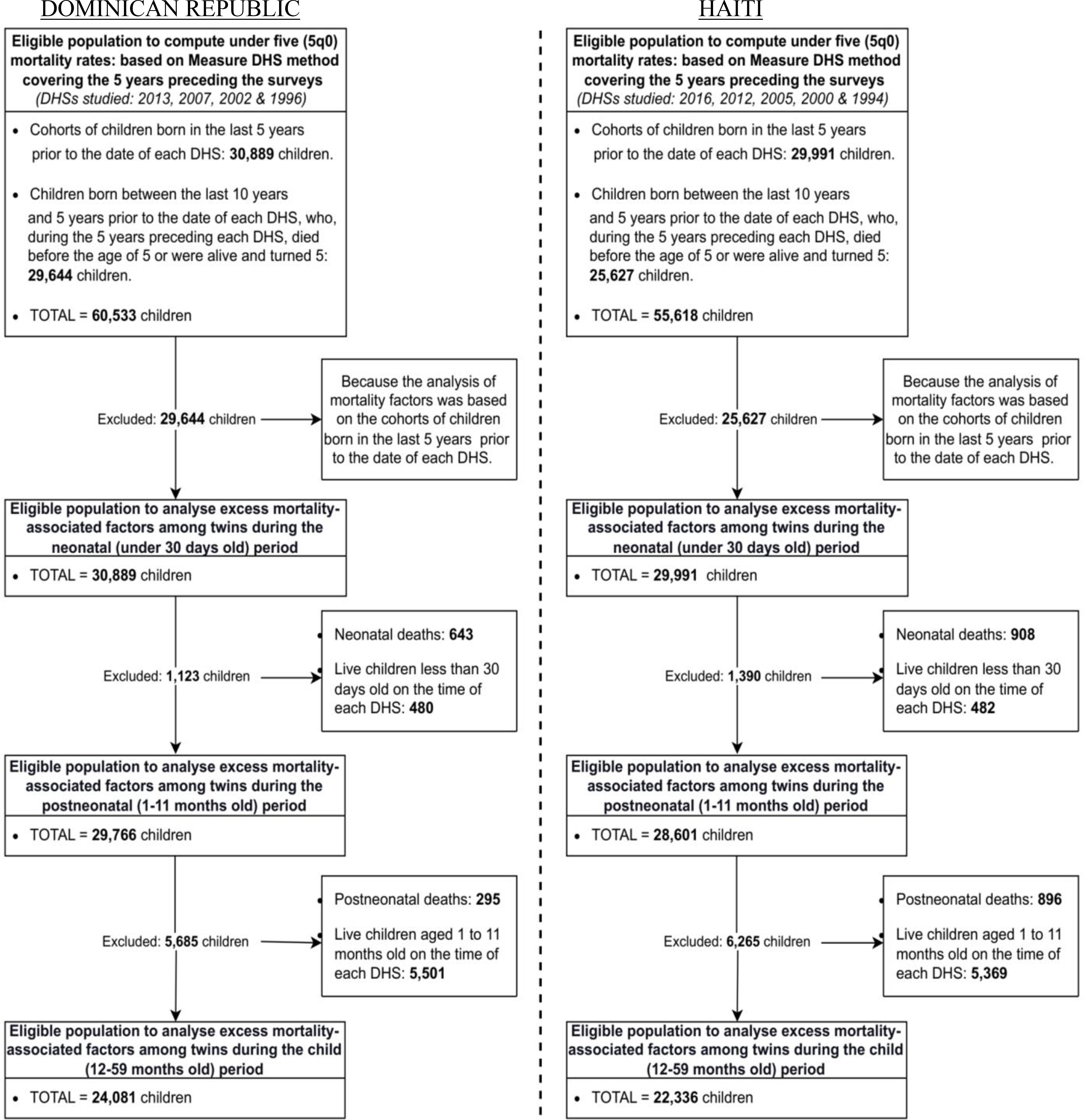
The cohorts of children under 5 years of age at the time of each DHS constituted the population under investigation concerning the factors associated with excess mortality among twins aged under 5. The data set comprised 30,889 children in the Dominican Republic and 29,991 in Haiti (Figure 1).
We acknowledge that the data utilized in this study do not encompass information on stillbirths. This is a contributing factor to the underestimation of the rate of twin births and excess mortality among twins. Indeed, the proportion of twins may be slightly higher among stillbirths than live births (Smits & Monden, Reference Smits and Monden2011). However, a study conducted in The Gambia by Jaffar et al. (Reference Jaffar, Jepson, Leach, Greenwood, Whittle and Greenwood1998) demonstrated that the impact of the bias associated with the exclusion of stillbirths is negligible.
Methods
The distinctive aspect of our methodology is that the analyses are conducted on components of the under-5 age group (Figure 1). The under-5 age group was not considered as a whole; instead, mortality was examined in the three constituent components: neonatal (less than 28 days old), post-neonatal (28−364 days old) and child (1−4 years old). Accordingly, trends and factors associated with excess mortality among twins were analyzed for each component of the U5M.
The dependent variable for the study was U5M, defined as the death of children before reaching the age of 5. This was recorded as either “0” (No) or “1” (Yes). It should be noted that the age of 5 was divided into neonatal (less than 28 days old), postneonatal (28−364 days old), and child (1−4 years old) categories for analysis.
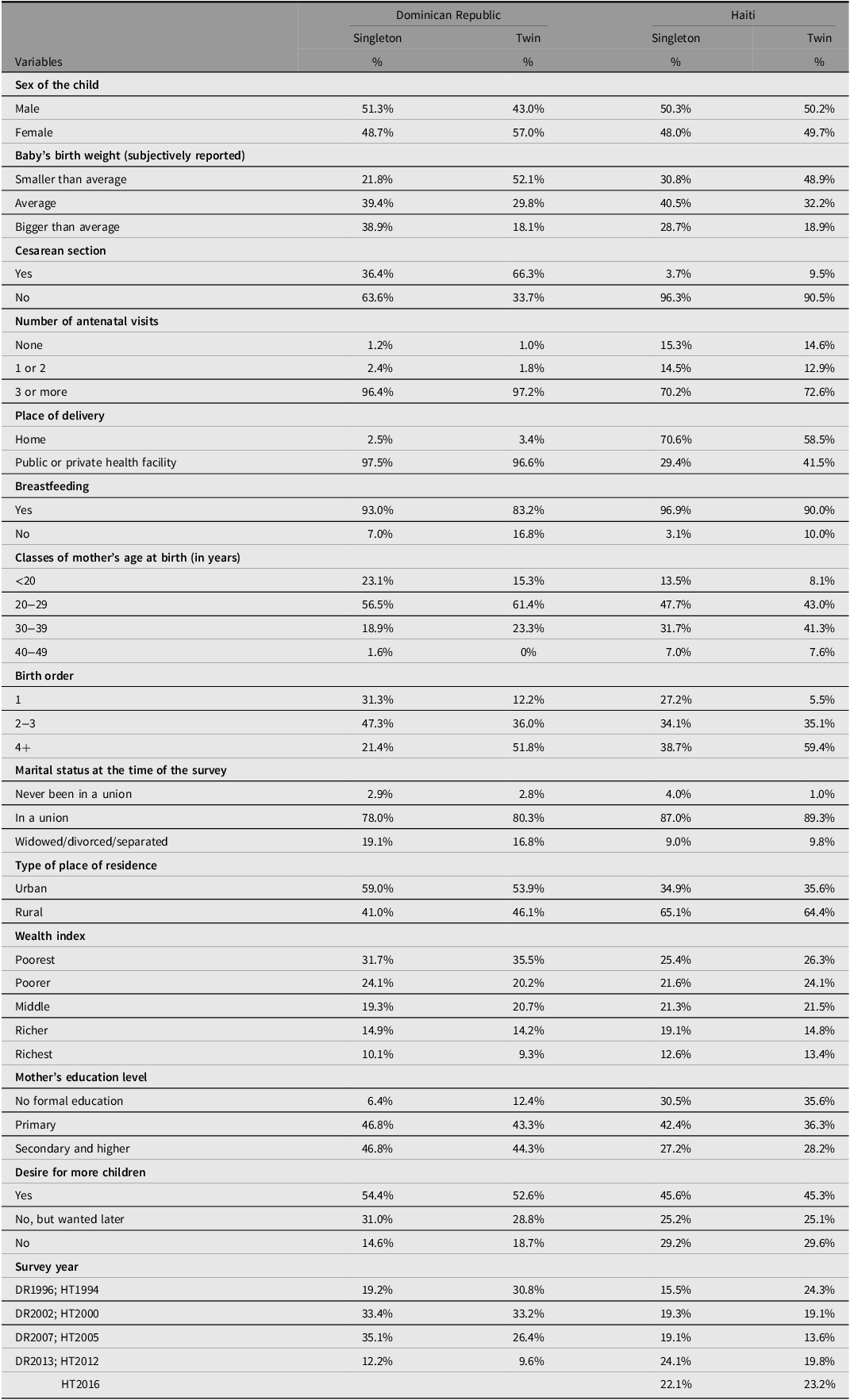
The independent variables include socio-demographic, maternal, perinatal, and children characteristics: twinning (“twin”, “singleton”), sex of the child (“male”, “female”), baby’s birth weight (“smaller than average”, “average”, and “bigger than average”), place of delivery (“public or private health facility”, “home”), cesarean section (“yes”, “no”), breastfeeding (“yes”, “no”), number of antenatal visits (“none”, “1–2”, “3 and above”), birth order (“1”, “2-3”, “4 and above”), mother’s age at birth (“under 20”, “20-29”, “30-39”, “40 and above”), mother’s education level (“no formal education”, “primary”, “secondary and higher”), marital status (“never been in a union”, “in a union”, “widowed/divorced/separated”), place of residence (“urban”, “rural”), wealth index (“poorest”, “poorer”, “middle”, “richer”, “richest”), desire for more children (“yes”, “no, but wanted later”, “no”), and time (the survey year as a numerical variable). Note that « twinning » is our explanatory variable of interest. Further, the household « wealth index » was a composite score measured by ownership of household items and facilities based on a DHS-generated quintile index. Detailed information about the wealth index construction can be found in the DHS guide (Rutstein, Reference Rutstein2015). Independent variables were chosen based on prior evidence (Bellizzi et al., Reference Bellizzi, Sobel, Betran and Temmerman2018; Monden & Smits, Reference Monden and Smits2017; Ouedraogo, Reference Ouedraogo2023; Ouedraogo & Jean Simon, Reference Ouedraogo and Jean Simon2022; Ouédraogo et al., Reference Ouédraogo, Pison, Abdramane, Le Cœur, Delaunay and Kassoum2021) and their availability in the birth data files (BR). The distribution of risk factors (independent variables) associated with U5M, stratified by twin/singleton status, is presented in Appendix A.
The data were analyzed according to two distinct steps. The initial stage of the analysis involved estimating and comparing U5MRs for twins and singletons, intending to identify any potential trends in excess mortality (twin excess mortality: here, the ratio between the mortality rate for twins and that for singletons is employed as a means of measuring excess mortality among twins). As a result, we employed a methodology developed by Rutstein (Reference Rutstein1984). As recommended by Measure DHS, this method assumes that the probability of death for any given age interval is the ratio of the number of deaths (among children who were exposed to death in that age interval) to the total number of children exposed (Rutstein, Reference Rutstein1984). The data were analysed using a SAS macro program (DHS_U5M), which calculates estimates of childhood mortality (neonatal, postneonatal, infant [1q0], child [4q1] and under-5 [5q0] mortality) and standard errors derived from birth histories (Atwood & Thomson, Reference Atwood and Thomson2012). The method is based on the assumption that the probability of death before the age of 5 years can be calculated by combining the probabilities of death for the following eight age intervals: less than 1 month, 1−2 months, 3−5 months, 6−11 months, 12−23 months, 24−35 months, 36−47 months and 48−59 months (Atwood & Thomson, Reference Atwood and Thomson2012). The formula can be depicted as follows:
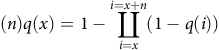 $$\left( n \right)q\left( x \right) = 1 - \mathop \coprod \limits_{i = x}^{i = x + n} \left( {1 - q\left( i \right)} \right)$$
(n)q(x): the mortality rate between age x and age x + n.
q(i): the probability of death in a subinterval.
The second stage of the study was an examination of the factors associated with under-5 excess mortality among twins. In this phase, we employed descriptive statistics (univariate analysis) to delineate the profile of the participants and bivariate analysis to investigate the unadjusted relationship between the response and each independent variable. Subsequently, multivariate regressions were employed to construct the final adjusted models. The multivariate analysis was conducted using Cox proportional-hazards regression to identify factors associated with U5M among all children (twins and singletons) and under-5 excess mortality in twins compared with singletons. In the Cox models, survival time was expressed in days when analyzing neonatal mortality and months when analyzing post-neonatal and child mortality. The fixed effects results were expressed as adjusted hazard ratios (aHR) with their corresponding 95% confidence intervals (CI). Log-likelihood and Akaike Information Criterion (AIC) assessed the model’s fitness. The model with the highest log-likelihood and the lowest AIC was deemed to be the optimal fit. The variance inflation factor (VIF) was employed to assess the presence of multicollinearity (Alin, Reference Alin2010). No multicollinearity was observed, with all VIF values remaining below 10. All analyses were weighted to ensure the generation of unbiased estimates. A p value of less than .05 was considered statistically significant. Given the negligible proportion of triplets and higher-order multiples, these were included in the analysis of factors associated with excess mortality in twins. In the case of each variable, any missing data were removed when they were insignificant (≤2%) and retained as a distinct class when they were significant (e.g., the number of antenatal visits). The distribution of deleted missing values was checked to ensure that they were random between twins and singletons.
Precisely, to ascertain the factors associated with excess mortality among twins using the Cox model, we undertook the following steps for each country and for each of the three under-5 age components: (1) a set of variables was selected with the objective of determining the most parsimonious model, using the Akaike Information Criterion (AIC); (2) a further model was constructed with death status as the dependent variable and twin/singleton status as the sole independent variable; (3) subsequently, the remaining independent variables (retained from the parsimonious model) were incorporated gradually and successively (stepwise addition) to assess the impact of each variable on the hazard ratio of death for twins relative to singletons. All analyses were conducted using SAS 9.4 statistical software.
Results
Trends in U5M Among Twins in the Dominican Republic and Haiti
Overall trends
The mortality rate among children declined for singletons and twins in both countries over the observed periods. As anticipated, the U5MR for twins was considerably higher than that for singletons (Figure 2).
Trends in U5MR among twins and singletons in the Dominican Republic (1996−2013) and Haiti (1994−2016).
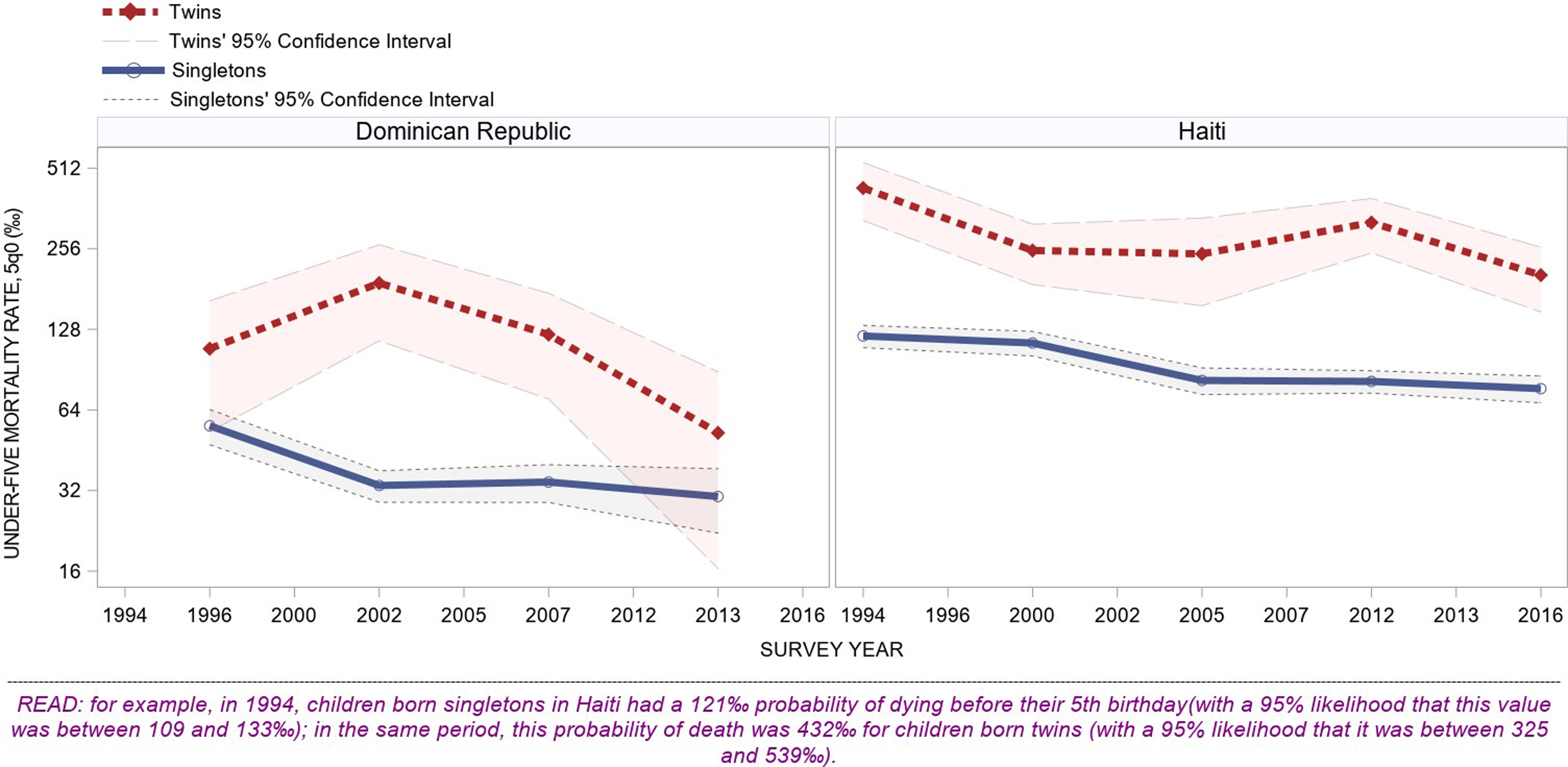
In the Dominican Republic, the U5MR for singletons exhibited a 46% decline between 1996 and 2013, from 56‰ (95% CI [47, 64]) to 30‰ (95% CI [22, 39]), while that for twins demonstrated a 52% reduction from 108‰ (95% CI [53, 164]) to 53‰ (95% CI [16, 89]). The U5MR ratio of twins to that of singletons, referred to as the under-5 excess mortality ratio among twins, in the Dominican Republic was 1.9 (95% CI [1.1, 2.6]) in 1996 and 1.7 (95% CI [0.7, 2.3]) in 2013. In 2002, the Dominican Republic witnessed a high in twin mortality, with the U5MR for twins reaching a peak of 5.7 times (95% CI [4, 7]) that of singletons. This peak may have resulted from the banking and economic crisis of 2002−03 (Looney, Reference Looney2021).
In Haiti, the U5MR of singletons exhibited a 36% decline between 1994 and 2016, from 121‰ (95% CI [109, 133]) to 77‰ (95% CI [68, 80]). The decline for twins was more pronounced, amounting to a 53% reduction, with their U5MR falling from 432‰ (95% CI [327, 538]) to 204‰ (95% CI [149, 260]). The under-5 excess mortality ratio for twins in Haiti declined between 1994 and 2017, with a ratio of 3.6 (95% CI [3.0, 4.1]) in 1994, dropping to 2.7 (95% CI [2.0, 3.0]) by 2017. Notably, there was a pronounced peak in 2012, with a ratio of 3.9 (95% CI [3.3, 4.4]), which can be linked to the health consequences of the 2010 earthquake (Ouedraogo & Jean Simon, Reference Ouedraogo and Jean Simon2022; Ouedraogo et al., Reference Ouedraogo, Jean Simon and Kiragu2022).
A comparative analysis of the U5MRs in the two countries indicates that the situation for children is considerably more favorable in the Dominican Republic than in Haiti. Despite a decline in U5MRs in both countries, Haiti continues to lag behind the Dominican Republic in terms of mortality rates for twins and singletons. In the 1990s, the U5MR of singletons in Haiti was 2.2 times (95% CI [2.1, 2.3]) that of the Dominican Republic. In the 2010s, this ratio was 2.5 times (95% CI [2.2, 3.1]). The ratio is higher for twins: 4 (95% CI [3.3, 6.1]) for the 1990s and 3.9 (95% CI, 2.9, 9.1]) for the 2010s.
Concerning the under-5 twin excess mortality ratio, the figures above also indicated that this was higher in Haiti than in the Dominican Republic during the 1990s (3.6 vs. 1.9) and the 2010s (2.7 vs. 1.7). The results in Figure 2 also suggest evident excess under-5 twin mortality in Haiti but minimal or even nonexistent excess U5M among twins in the Dominican Republic in the most recent survey.
Component trends
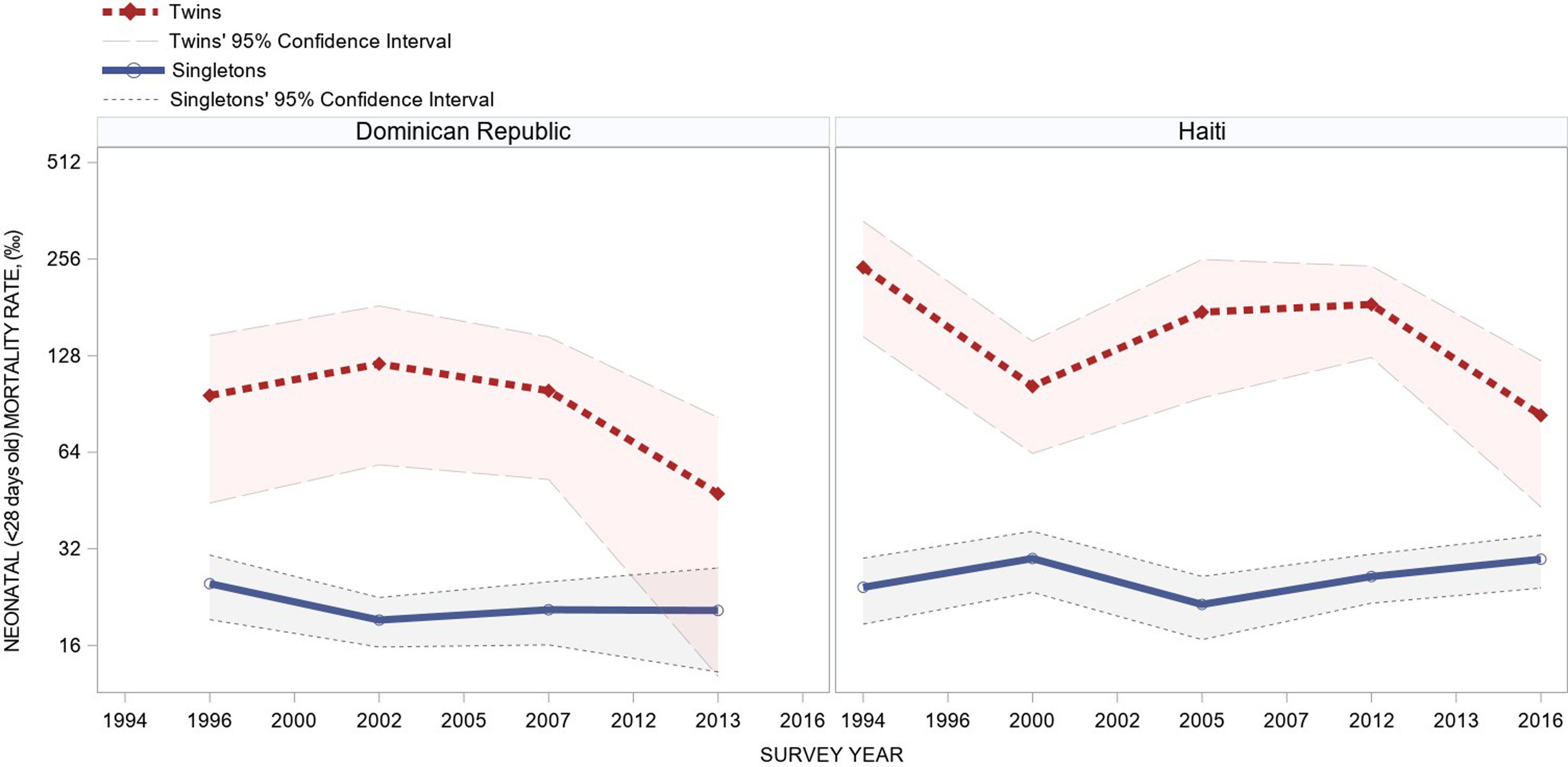
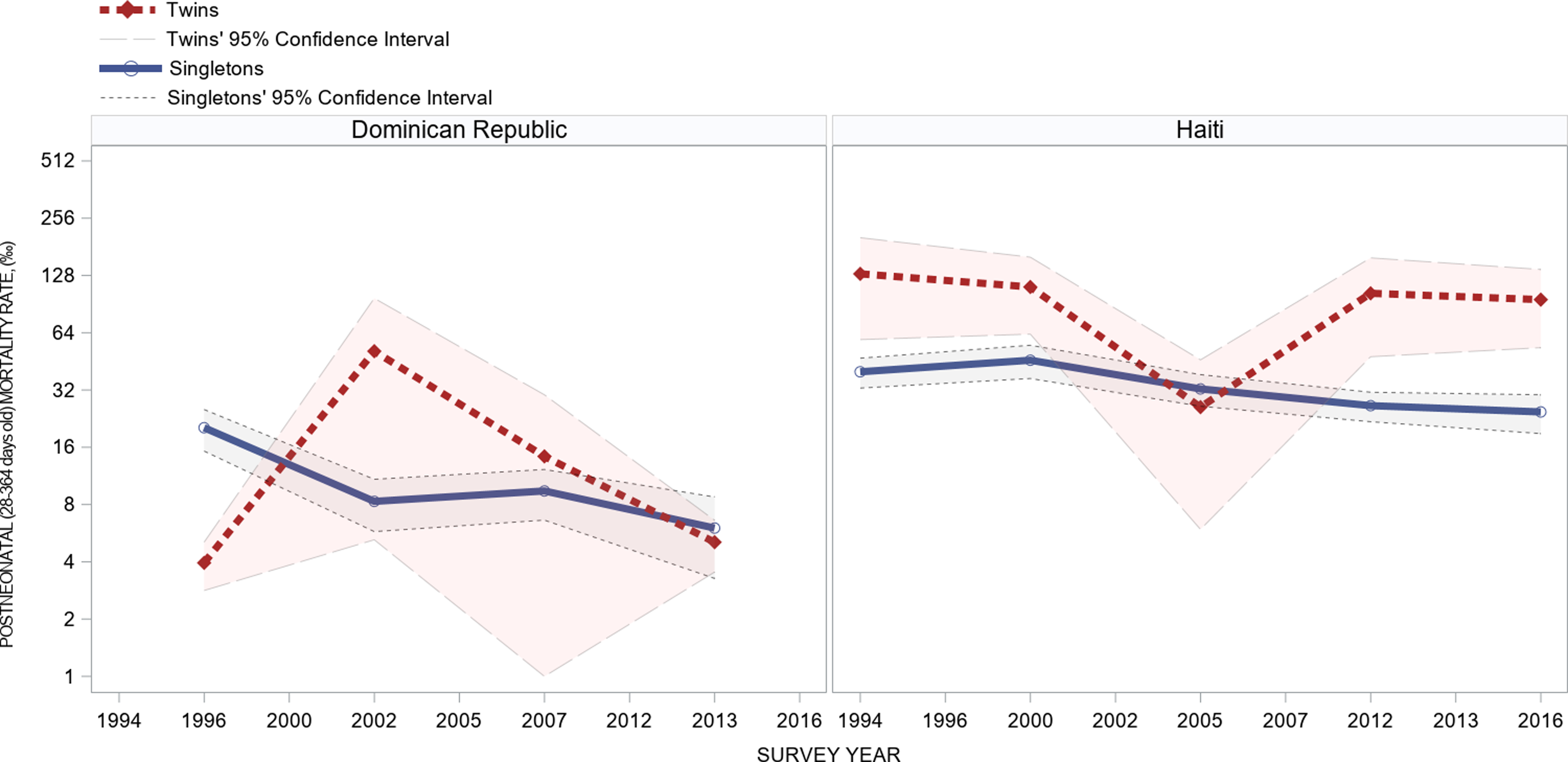
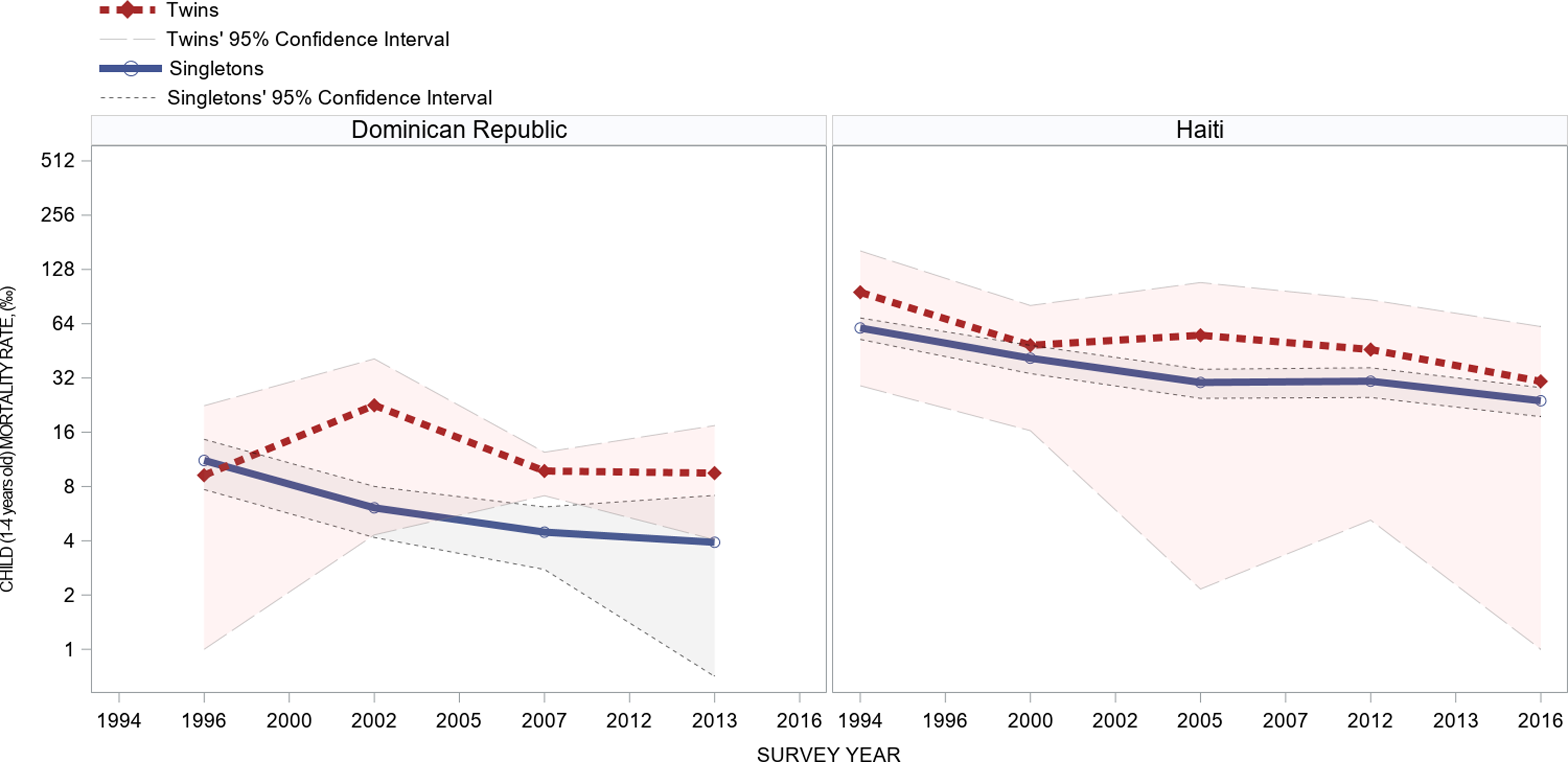
As illustrated in Figures 3, 4 and 5, the trends in U5MRs for twins and singletons demonstrate that mortality rates among children are not homogeneous within the under-5 age group. Several factors emerge when examining mortality rates in detail according to the various components (Figure 3, Figure 4 and Figure 5).
Trends in neonatal (<1 month old) mortality rates among twins and singletons in the Dominican Republic (1996−2013) and Haiti (1994−2016).
Trends in postneonatal (1−11 months old) mortality rates among twins and singletons in the Dominican Republic (1996−2013) and Haiti (1994−2016).
Trends in child (12−59 months old) mortality rates among twins and singletons in the Dominican Republic (1996−2013) and Haiti (1994−2016).
The most significant differences in mortality rates between twins and singletons are evident during the neonatal period in the Dominican Republic and Haiti (Figure 3). In the Dominican Republic, the neonatal mortality rate among twins was 3.9 times higher (95% CI [2.3, 4.8]) than among singletons in 1996. By 2013, this ratio had decreased to approximately 2.3 (95% CI [0.97, 3.0]), with a notable peak of 6.3 (95% CI [3.7, 8.1]) observed in 2002. Although the decline in the neonatal excess mortality ratio among twins in the Dominican Republic between 1996 and 2013 is not statistically verified, there was an 18% reduction in the neonatal mortality rate among singletons (from 25‰ to 21‰), compared to a 51% decline in the rate among twins (from 96‰ to 48‰).
In Haiti in 1994, the neonatal mortality rate for twins was 10 times (95% CI [7.9, 11.2]) that for singletons. Nevertheless, by 2016, this ratio had decreased considerably, reaching 2.8 (95% CI [1.8, 3.5]). The steep decline in the neonatal excess mortality ratio among twins in Haiti between 1994 and 2016 is attributable to a 65% reduction (from 241‰ to 83‰) in the neonatal mortality rate for twins and a 22% increase (from 24‰ to 30‰) in that for singletons.
During the postneonatal and childhood ages, the mortality rates are significantly higher in Haiti than in the Dominican Republic, with a more pronounced disparity for singletons (Figure 4 and Figure 5). In the postneonatal period, the excess mortality of twins compared with singletons in both countries appears to be very modest and even statistically absent in some years, especially in the Dominican Republic. In the Dominican Republic, twins had no significant excess postneonatal mortality in 2002, 2007 and 2013. Conversely, there was an under-mortality of twins in 1996, with a ratio of twin to singleton mortality of 0.19 (95% CI [0.18, 0.20]). It is also noteworthy that between the two time periods (1996 and 2013), the postneonatal mortality rate decreased by 70% for singletons (from 20‰ to 6‰) and by 95% for twins (from 96‰ to 5‰). In Haiti, however, there is significant excess postneonatal mortality among twins, with ratios of 3.3 (95% CI [1.8, 4.3]) in 1994, 2.4 in 2000 (95% CI [1.7, 2.9]), 3.9 in 2012 (95% CI [2.2, 5.1]), and 3.9 (95% CI [2.8, 4.6]) in 2016. In 2005, no significant excess postneonatal mortality was observed for twins in Haiti. In addition, postneonatal mortality rates in Haiti decreased between the first and last survey considered, but at a slower percentage than in the Dominican Republic. Indeed, the postneonatal mortality rate for singletons in Haiti fell by 37% (from 40‰ to 25‰), while the rate for twins fell by 27% (from 59‰ to 53‰).
In childhood, the Dominican Republic and Haiti clearly showed no significant differences in mortality rates between twins and singletons (Figure 5). Nevertheless, in both countries, there was a notable reduction in the child mortality rate among singletons (between the respective first and last surveys): the reduction was 65% (from 11‰ to 4‰) in the Dominican Republic and 61% (from 61‰ to 24‰) in Haiti.
Children’s Mortality Factors and Factors Contributing to Excess Mortality Among Twins in the Dominican Republic and Haiti: Descriptive and Bivariate Results
Descriptive characteristics of the samples
Table 1 summarises the fundamental attributes observed in the cohort of children under 5. The table presents the samples according to the three components of the under-5 age period (neonatal, postneonatal, child), with a distinction between the Dominican Republic and Haiti.
Descriptive characteristics of the samples
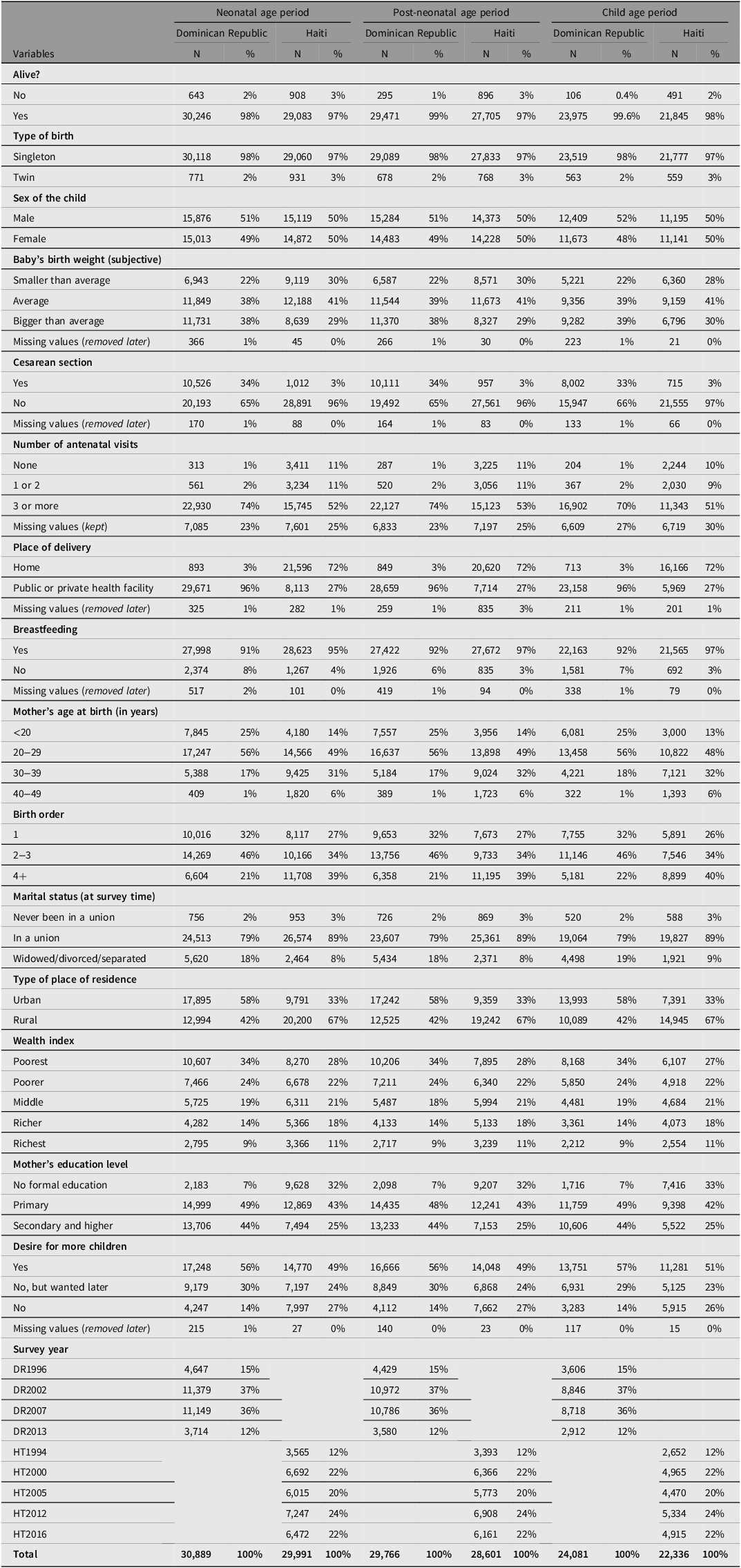
The sample used to analyze neonatal mortality factors and factors associated with neonatal excess mortality among twins in the Dominican Republic was composed of cohorts of children under 5 years old at the time of each DHS: 30,889 children (29,991 in Haiti); 2% (3% in Haiti) were dead before 30 days old; 2% (3% in Haiti) were twins; 51% (50% in Haiti) were males; 22% (30% in Haiti) weighed smaller than average, 38% (41% in Haiti) were average, and 38% (29% in Haiti) were bigger than average; 34% (3% in Haiti) were born by caesarean section; 1% (11% in Haiti), 2% (11% in Haiti), 74% (52% in Haiti) respectively had no antenatal visits, 1 or 2 visits, and 3 visits or more; 3% (72% in Haiti) were born at home; only 8% (4% in Haiti) were not breastfed; 81% (63% in Haiti) were born to mothers under 30 years of age; 32% (27% in Haiti) were first births, 46% (34% in Haiti) were of birth order 2–3, and 21% (39% in Haiti) were order 4 or more; 79% (89% in Haiti) were born to women in union; 42% (67% in Haiti) lived in rural areas; 34% (28% in Haiti) were in very poor households, 24% (22% in Haiti) in poor households, 19% (21% in Haiti) in middle-income households, 14% (18% in Haiti) in high-income households, and 9% (11% in Haiti) in very high-income households; 7% (32% in Haiti) were born to mothers with no education, 49% (43% in Haiti) to mothers with primary education, and 44% (25% in Haiti) to mothers with secondary education or more; 56% (49% in Haiti) were born to mothers who desire more children, 30% (24% in Haiti) to mothers who desire more children but later, and 14% (27% in Haiti) to mothers with no desire for more children; 12% were from the 2013 survey, 36% from the 2007 survey, 37% from the 2002 survey, and 15% from the 1996 survey (Haiti: 22% were from the 2016 survey, 24% from the 2012 survey, 20% from the 2005 survey, 22% from the 2000 survey, and 12% from the 1994 survey).
The samples for analysis of postneonatal mortality factors and factors associated with excess postneonatal mortality among twins were drawn from the neonatal mortality samples, excluding neonatal deaths and live infants less than 30 days old at the time of each survey (Figure 1, Table 1): 29,766 children in the Dominican Republic and 28,601 children in Haiti. In the Dominican Republic, 1% (3% in Haiti) of these children died before the age of 12 months, and 2% (3% in Haiti) were twins.
The samples for analysis of child mortality (1−4 years old) factors and factors associated with excess child mortality (1−4 years old) among twins were drawn from the postneonatal mortality samples, excluding postneonatal deaths and live infants aged 1 to 11 months old at the time of each survey (Figure 1, Table 1): 24,081 children in the Dominican Republic and 22,336 children in Haiti. In the Dominican Republic, 0.4% (2% in Haiti) of these children died before the age of 60 months, and 2% (3% in Haiti) were twins.
Proportions of deaths by selected socio-demographic variables
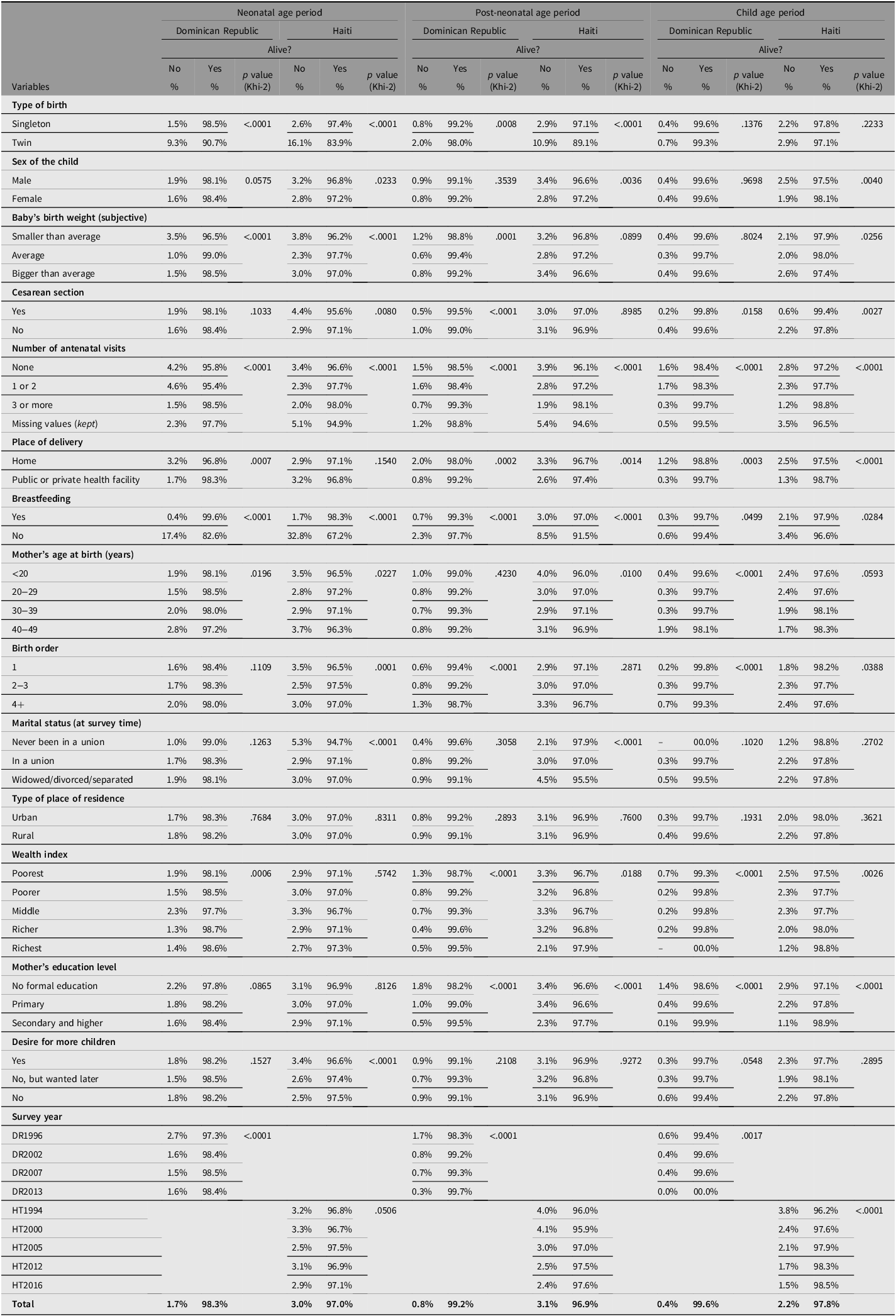
Appendix B presents a bivariate analysis of the percentage of deaths by selected socio-demographic variables. The overall proportion of neonatal deaths in the Dominican Republic was 1.7% compared with 0.8% for postneonatal deaths and 0.4% for child deaths. In Haiti, the corresponding figures were 3%, 3.1% and 2.2% respectively. The findings revealed that the share of deaths was significantly lower in the Dominican Republic than in Haiti across all age groups.
Moreover, during the neonatal period, the proportion of deaths among singletons was 1.5% in the Dominican Republic in comparison with 2.6% in Haiti. In contrast, the proportion of neonatal deaths among twins was 9.3% in the Dominican Republic in comparison to 16.1% in Haiti. A similar discrepancy was observed between twins and singletons in the postneonatal and child periods. However, the observed differences in the percentage of deaths between twins and singletons are not statistically significant for the child period.
Furthermore, the data indicated that the proportion of deaths was generally higher among male children, children with a lower average weight, nonbreastfed, from poor households, rural areas, those born by cesarean section, whose mothers had delivered at home, whose mothers were teenagers or aged 40 and above, whose mothers had no formal education, widowed/divorced/separated, and whose mothers had no antenatal visits. Ultimately, the data indicated that the share of deaths among children has declined across all countries and age groups. However, the decline has been more pronounced in the Dominican Republic than Haiti.
Child Mortality Factors and Factors Contributing to Excess Mortality Among Twins in the Dominican Republic and Haiti: Multivariate Results
Key determinants of mortality among children in the Dominican Republic and Haiti
Additionally, this study identified factors associated with the mortality of twins and singletons in the Dominican Republic and Haiti (Appendix C). Indeed, during the neonatal, postneonatal and child periods, we identified the following factors as being associated with an elevated risk of mortality in both countries: twinning; low birth weight; a low number of or no antenatal visits; birth at home; lack of breastfeeding; young maternal age; high birth order; birth to a single, divorced or widowed mother; and having a mother who desires to have more children.
Mortality risks for twins versus singletons through the components of age under five in the Dominican Republic and Haiti
In the Dominican Republic, the risk of mortality (aHR: adjusted hazard ratio) in the first month of life for twins is 1.4 times higher (95% CI [1.0, 1.9]) than for singletons, according to this study. The elevated risk of neonatal mortality among twins is markedly higher in Haiti than in the Dominican Republic, with an aHR of 4.3 (95% CI [3.5, 5.3]) times that of singletons.
In the postneonatal period, the disparity in mortality risk between twins and singletons persisted in the Dominican Republic, exhibiting an upward trajectory: the aHR for twins was 1.8 (95% CI [1.0, 3.1]) times that for singletons. However, this increase was not found to be statistically significant. In Haiti, the excess mortality risk for twins also persisted during the postneonatal period, albeit with a decreasing trend. The aHR for twins was 2.9 (95% CI [2.3, 3.8]) times that for singletons. Nevertheless, this increase was not statistically confirmed by the confidence intervals. Furthermore, during the postneonatal period, the difference in mortality risk between twins and singletons in Haiti is no longer significantly higher than in the Dominican Republic.
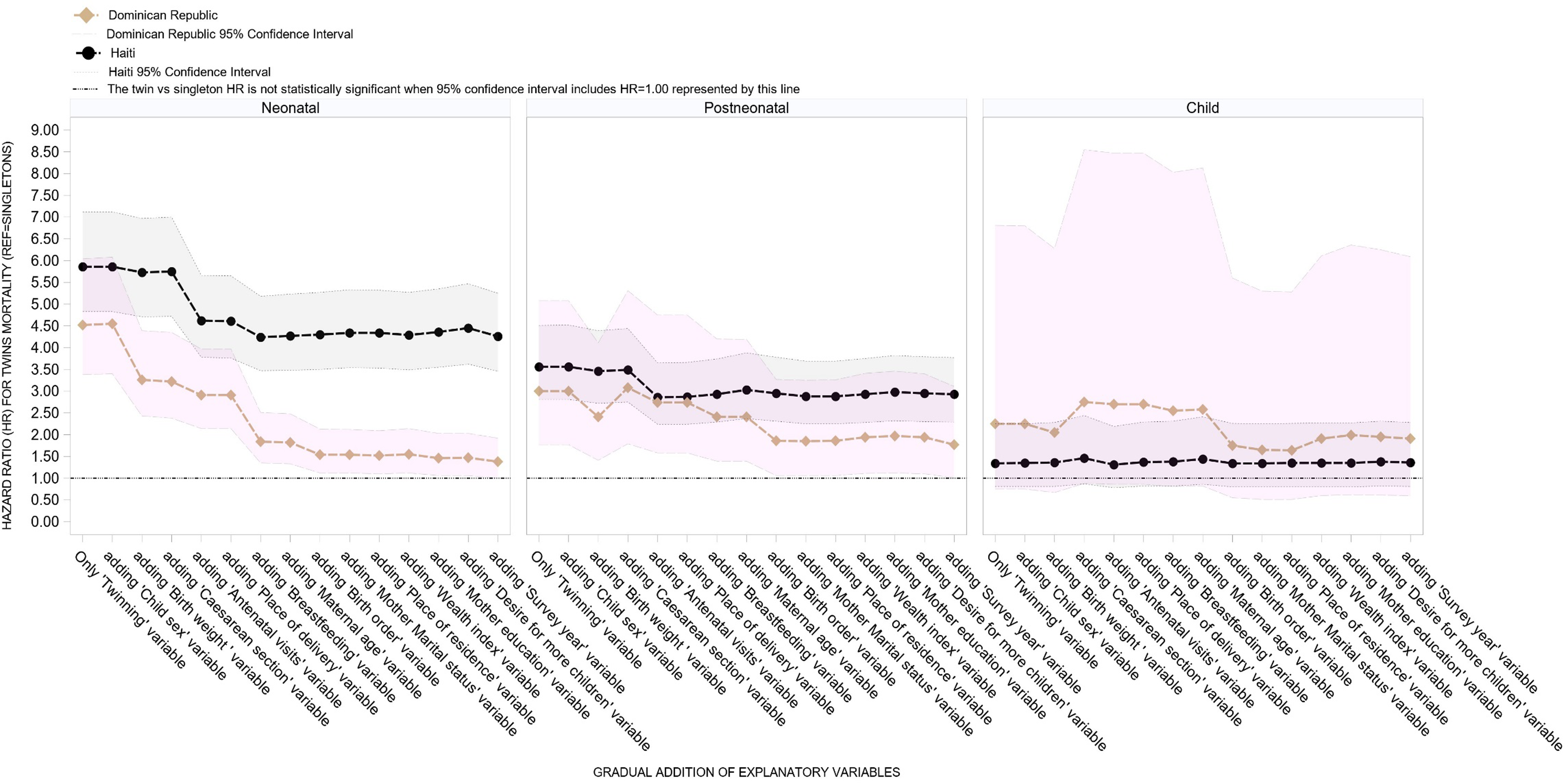
During the child age period (1−4 years old), the risk of death (aHR) for twins was no longer significantly different from that for singletons in both the Dominican Republic and Haiti (Appendix C and Figure 6).
Successive changes in the mortality hazard ratio for twins (vs. singletons) after the gradual addition of the other covariates in the model.
Key factors associated with excess mortality among twins through the components of the age under five years in the Dominican Republic and Haiti
Figure 6 illustrates the effects of the stepwise addition of the various explanatory variables on the adjusted hazard ratio (aHR) of death for twins compared to singletons. Two key observations can be made regarding the factors associated with excess mortality among twins.
The first observation is that the factors most strongly associated with neonatal excess mortality among twins in the Dominican Republic are low birth weight and lack of breastfeeding. In Haiti, the factors most strongly associated with neonatal excess mortality among twins are the absence of, or inadequate, antenatal care and the lack of breastfeeding.
The second observation is that in the postneonatal period, the factors most associated with excess mortality among twins in the Dominican Republic are low birth weight (once more), nondelivery by cesarean section and high birth order. In Haiti, the factor most associated with postneonatal excess mortality among twins was the absence of, or inadequate, antenatal care.
Discussion
The objective of this study was to analyze the phenomenon of under-5 excess mortality among twins in Haiti and the Dominican Republic by disaggregating the under-5 age into three distinct groups: neonatal, postneonatal and child. The findings demonstrate that both countries exhibited a decline in U5M over the observed periods, predominantly attributable to augmented public initiatives through allocating financial resources to social programs and the efficacious implementation of associated policies and strategies (Restrepo-Méndez et al., Reference Restrepo-Méndez, Barros, Requejo, Durán, Serpa, França, Wehrmeister and Victora2015). Nevertheless, the U5MR for twins remains higher than that of singletons throughout the entire series. This pattern was observed by Pongou and colleagues (Reference Pongou, Shapiro and Tenikue2019) and by Ouedraogo (Reference Ouedraogo2023) when studying the mortality of twins in sub-Saharan Africa. Their findings indicated that the survival of under-5 children has improved over the years for both twins and singletons, yet a persistent gap between the two groups persists. A review of the literature reveals that numerous studies comparing the U5MR between twins and singletons have concluded that twins are at a higher risk of dying before reaching 5 years of age than singletons in both developed and developing countries (Chen & Chauhan, Reference Chen and Chauhan2019; Guo & Grummer-Strawn, Reference Guo and Grummer-Strawn1993; Miyahara et al., Reference Miyahara, Jasseh, Mackenzie, Bottomley, Hossain, Greenwood, D’Alessandro and Roca2016; Monden & Smits, Reference Monden and Smits2017; Rydhstroem & Heraib, Reference Rydhstroem and Heraib2001; Uthman et al., Reference Uthman, Uthman and Yahaya2008). However, other studies have demonstrated that the risk of mortality in the 0−4 age group among late preterm infants was lower for twins when adjusting for neonatal and familial factors (Kim et al., Reference Kim, Kang, Choe, Sung, Lee and Choe2022; Ward & Caughey, Reference Ward and Caughey2022). Nevertheless, twins exhibited a heightened risk of neonatal morbidity in comparison to singletons (Kim et al., Reference Kim, Kang, Choe, Sung, Lee and Choe2022).
Furthermore, the study demonstrates that mortality rates vary according to the three components of the under-5 age group. The most notable divergence was observed during the neonatal period. After this period, in the postneonatal stage, the excess persists but becomes less pronounced. Subsequently, during childhood, notable discrepancies are absent. These findings are in accordance with those of other studies. In sub-Saharan Africa, significant differences between singletons and twins were observed during the first year of life, but these differences disappeared after age five (Ouedraogo, Reference Ouedraogo2020; Pongou et al., Reference Pongou, Shapiro and Tenikue2019). In particular, in The Gambia (Miyahara et al., Reference Miyahara, Jasseh, Mackenzie, Bottomley, Hossain, Greenwood, D’Alessandro and Roca2016), the mortality rate among neonate twins was, at a minimum, four times higher than that of singletons, and this difference was maintained until late infancy. In a study conducted in Korea, Kim and colleagues concluded that the mortality rate of twins is comparable to that of singletons once they have survived the infant period (Kim et al., Reference Kim, Kang, Choe, Sung, Lee and Choe2022). In addition, Pongou and colleagues (Reference Pongou, Shapiro and Tenikue2019) and Ouedraogo and colleagues (Reference Ouédraogo and Jean Simon2021) proposed that the disappearance of significant differences during childhood can be attributed to the selection effect (the majority of vulnerable children die before the age of 5) and the increased rate of immunization for certain infectious diseases, which reduces vulnerabilities. Some authors have proposed that the survival of these components may be associated with the duration of pregnancy. For instance, the risk of neonatal or infant mortality was found to be lower in twins than in singletons when they were delivered between 29 and 36 weeks (Chen & Chauhan, Reference Chen and Chauhan2019; Kim et al., Reference Kim, Kang, Choe, Sung, Lee and Choe2022). According to Chen and Chauhan (Reference Chen and Chauhan2019), this suggests that the three leading causes of neonatal and infant deaths varied by gestational age between singletons and twins.
The results of our study on the factors that contribute to excess twin mortality indicate that in both countries these factors exert the greatest influence during the neonatal period. The analyses yielded an intriguing result: while low birth weight does not contribute to excess twin mortality in Haiti, it is a significant factor in the Dominican Republic. Similarly, breastfeeding does not appear to be a significant factor in Haiti. Antenatal visits appear to be a significant factor in Haiti, but they do not play a prominent role in the Dominican Republic. The subsequent paragraphs will examine the impact of each of these factors on excess twin mortality without making comparisons between countries. It is necessary to consider the reasons for the differences between the two countries in terms of the factors contributing to excess neonatal twin mortality at this time. When breastfeeding is excluded from the equation, it appears that Haiti is distinguished by factors of excess neonatal mortality linked to access to and utilization of healthcare (antenatal visits). In contrast, the Dominican Republic is more advanced and experiences fewer issues with access to healthcare, but is distinguished by factors of excess neonatal mortality linked to biology (low birth weight).
The results for both countries combined indicate that the factors most strongly associated with excess mortality in twins are the absence of cesarean delivery, the lack of breastfeeding, low birth weight, the absence of, or inadequate, prenatal care and high birth order. Guo and Grummer-Strawn (Reference Guo and Grummer-Strawn1993) and Ouedraogo (Reference Ouedraogo2020) also found that factors such as medical assistance at delivery and breastfeeding, among others, have an immediate impact on the survival prospects of twins. Ouedraogo (Reference Ouedraogo2020) found that there was an increased risk of mortality associated with cesarean section in singletons, whereas the procedure was associated with an increased chance of survival in twins. The author posits that this result may be attributed to the fact that for nontwins, a cesarean delivery is typically undertaken in the context of complications during pregnancy. In contrast, for a twin pregnancy (at least those that have been medically monitored), the decision to opt for cesarean delivery is a planned and standard practice, intending to prevent any complications that could arise from a vaginal delivery (Ouedraogo, Reference Ouedraogo2020, Reference Ouedraogo2023). This is why Rydhstroem and Heraib (Reference Rydhstroem and Heraib2001) posited that the sole means of reducing fetal and infant mortality among twins in Sweden might be through the induction of labor and delivery. This underscores the vital role of healthcare professionals in ensuring the survival of twins during delivery.
It is well established that breastfeeding provides a substantial supply of antibodies and nutrients vital for preventing infections and alleviating nutritional deficiencies (van der Pol, Reference van der Pol1989). Ouedraogo (Reference Ouedraogo2020) posits that if the absence of breastfeeding is a significant contributing factor to the elevated mortality rate of twins in Africa, it is likely because twins, due to their heightened biological vulnerability at birth, require this intake more than singletons. However, the complications associated with childbirth (poor maternal and/or infant health) make breastfeeding challenging and necessitate the use of artificial feeding, which can act as a conduit for contamination and infectious diseases in contexts of inadequate hygiene. It is also worth noting that twin births often result in insufficient lactation to feed two infants simultaneously (Ouedraogo, Reference Ouedraogo2020).
Concerning low birth weight, Japan witnessed a swift decline in infant mortality rates and a reduction in low birth weight (Imaizumi, Reference Imaizumi2001). Furthermore, it is crucial to consider this factor when determining the optimal mode of delivery. Research has demonstrated that a cesarean section reduces the risk of a low 5-minute Apgar score by 58% among infants with a birth weight between 500 and 749 grams, thereby reducing neonatal and infant mortality. However, no relationship was observed between weight and mortality in twins weighing over 1000 grams (Zhang et al., Reference Zhang, Bowes, Grey and McMahon1996). Similarly, Hong (Reference Hong2006) demonstrated that in Bangladesh, children born to mothers who did not receive antenatal care were more likely to die.
A positive correlation has been identified between high birth order and twin births (Monden & Smits, Reference Monden and Smits2017). Similarly, other studies have identified a correlation between high parity and elevated mortality rates among twins. Imizumi (Reference Imaizumi2001) observed a significantly elevated mortality rate among second-born twins in Japan, and Alam and colleagues (Reference Alam, Van Ginneken and Bosch2007) identified a negative and linear relationship between live birth order and infant mortality in rural Bangladesh. In contrast, a U-shaped relationship between infant mortality rate and childbirth order was identified in Nigeria (Uthman et al., Reference Uthman, Uthman and Yahaya2008). Conversely, nulliparous women exhibited a markedly elevated perinatal mortality rate relative to women with one or multiple prior deliveries, as documented by Rydhstrom (Reference Rydhström1990).
Additionally, our findings indicate that the mortality rates in Haiti are higher than those observed in its neighboring country, the Dominican Republic. The mortality rate of children under the age of 5 continues to be significantly correlated with the socioeconomic circumstances of the population, particularly concerning access to healthcare services and poverty levels. This is particularly evident in one of the most inequitable regions of the world, Latin America and the Caribbean (Restrepo-Méndez et al., Reference Restrepo-Méndez, Barros, Requejo, Durán, Serpa, França, Wehrmeister and Victora2015). The socio-economic differences between these two countries provide valuable insight into the sustained gap observed in the rates. Additionally, multiple pregnancies and births are high-risk (Uthman et al., Reference Uthman, Uthman and Yahaya2008). Improved settings will have a greater impact on the survival chances of twins, as they are weakened by gestation (Guo & Grummer Strawn, Reference Guo and Grummer-Strawn1993) and have a disproportionately higher risk of morbidity (Chen & Chauhan, Reference Chen and Chauhan2019), rendering them more vulnerable to adverse situations (Guo & Grummer-Strawn, Reference Guo and Grummer-Strawn1993; Monden & Smits, Reference Monden and Smits2017). It is therefore anticipated that if twins already have a lower probability of survival compared to singletons, and socio-economic disadvantages are added to that, higher mortality rates will be observed (Uthman et al., Reference Uthman, Uthman and Yahaya2008). These discrepancies in developmental levels may be the reason why the absence of, or inadequate, antenatal care is one of the variables most closely associated with high neonatal mortality rates in Haiti, as it is linked to the weakness of the country’s health systems.
Conclusion
A notable decline in the risk of U5M was observed among twins and singletons in the Dominican Republic and Haiti between the mid 1990s and the mid 2010s. Nevertheless, the mortality rate for children under the age of 5 among twins remained higher in both countries under study. In the Dominican Republic, the gap was less significant due to the superior health conditions for children in that country compared to neighboring Haiti. The most significant discrepancies between twins and singletons were observed during the neonatal period, with regard to the three components of under-5 age. In the postneonatal period, the elevated mortality risk persists but becomes less pronounced. No significant differences in mortality risk were identified between twins and singletons during childhood.
The factors most strongly associated with excess mortality among twins in both countries are low birth weight, lack of breastfeeding, lack of or inadequate antenatal care, non-cesarean delivery, and high birth order. It is unrealistic to believe that all survival differences between under-five twins and singletons can be eliminated. However, it is feasible to reduce mortality among children in both countries further and narrow the gap between twins and singletons. This reduction must be based on the development of obstetric and paediatric services essential for managing complications associated with twin births (Ouédraogo et al., Reference Ouédraogo, Pison, Abdramane, Le Cœur, Delaunay and Kassoum2021).
Limitations
The principal limitation of this study is that it is based on somewhat outdated survey data. Consequently, it is recommended that the study be updated when more recent data are available to gain a more up-to-date understanding of the situation. A further limitation is the relatively small number of twins in the data, which did not permit testing of interaction effects in the explanatory models of excess twin mortality. The absence of the duration of pregnancy variable in the DHSs used is another limitation of the study, given the established role of prematurity as a key factor in excess mortality among twins. However, using birth weight has enabled partial overcoming of this limitation.
Added Value of This Study
The comparison between the Dominican Republic and Haiti (two countries with a thousand differences) regarding trends and factors in excess mortality among twins is a groundbreaking contribution to the field. The analysis of excess mortality among twins by the components of under-5 age (neonatal, less than 28 days old; postneonatal, 28−364 days old; child, 1−4 years old) is innovative in comparison to most studies of excess mortality among twins, which focus on the under-5 age as a whole. By analysing the under-5 age components separately, we made it possible to demonstrate the dynamics of excess mortality among twins within the under-5 period in greater detail and to consider the impact of age-related differences in vulnerability.
Acknowledgments
We acknowledge the DHS program (https://www.dhsprogram.com/) for free access to the surveys used in this study.
Competing interests
None.
Funding
None.
Appendices
Appendix A. Distribution of risk factors associated with under-5 mortality, stratified by twin/singleton status
Appendix B. Proportion of deaths by selected socio-demographic variables
Appendix C. Mortality factors among children in the Dominican Republic and Haiti through the components of age under 5 years
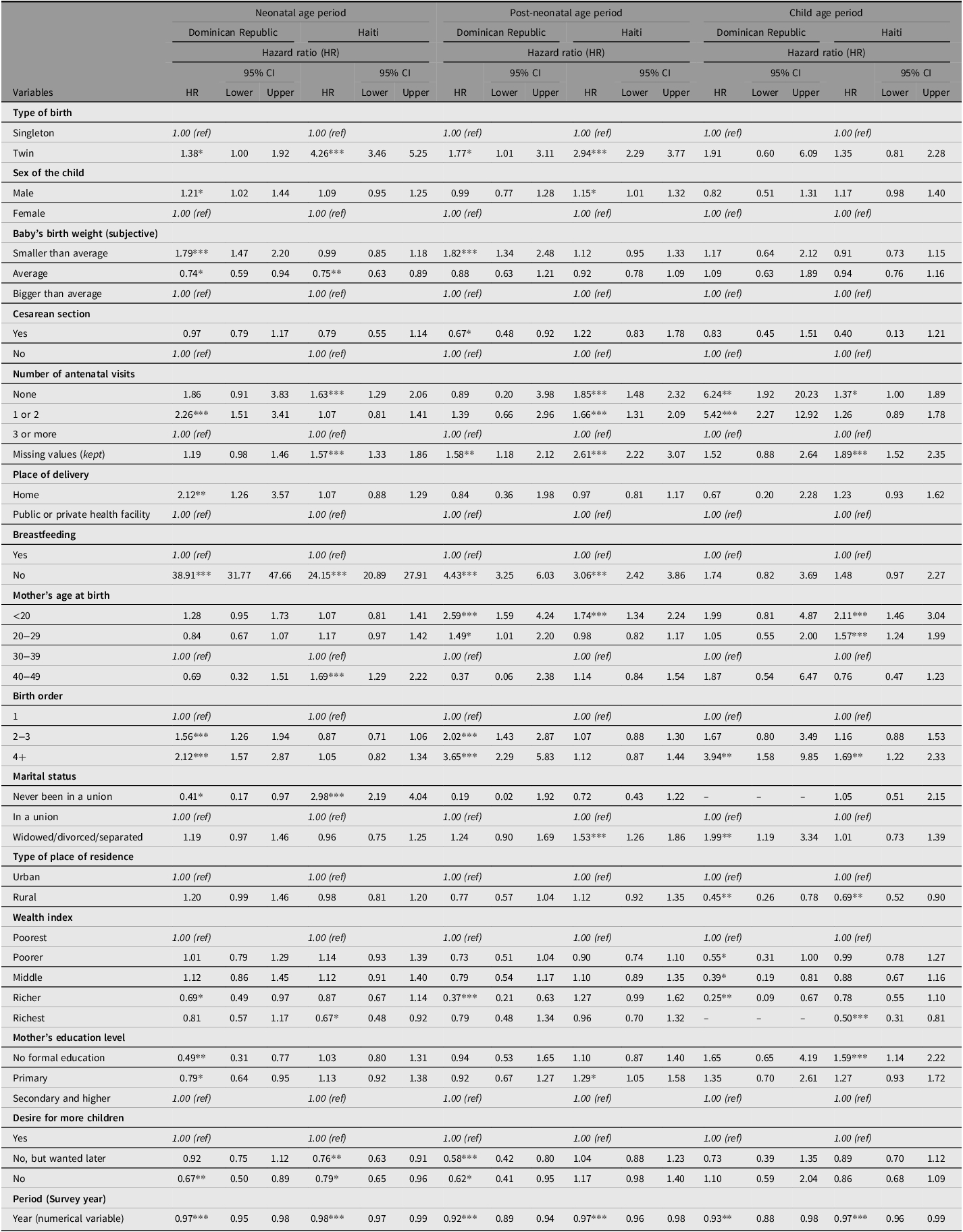
Note: CI, confidence interval; ref, reference. ***p value < 1%, **p value < 1%, *p value<5%;


 Open access

