


Introduction
Psychopathy is a severe form of personality disturbance, resulting in a detrimental impact on society, chiefly through the human and economic costs of violence perpetrated by those with psychopathy. 1 , 2 There is also a significant human cost of impaired mental wellbeing of those who suffer with psychopathy, and of people working or living with individuals with psychopathy or high levels of psychopathic traits.
Construct and conceptual issues in psychopathy and conduct disorder.
Defining psychopathy
Contemporary understanding of psychopathy emerged from psychiatrist Hervey Cleckley’s original description, which includes characteristics of short-lived emotions, lack of empathy and remorse, low responsibility, proneness to seek novelty and excitation, as well as antisocial and morally transgressing behavior.Reference Cooke and Michie 195 Several different but overlapping constructs of psychopathy have emerged, including a 3-factor (Arrogant and Deceitful Interpersonal Style, Deficient Affective Experience, and Impulsive and Irresponsible Behavioral Style) “Hierarchial” model,Reference Dadds, Fraser, Frost and Hawes 196 a 3-factor “triarchic” model,Reference Rowe, Maughan, Moran, Ford, Briskman and Goodman 218 identifying Boldness, Meanness, and Disinhibition as primary domains, a “primary” (low anxiety) and “secondary” (high anxiety) classification,Reference Lee, Salekin and Iselin 208 , Reference Lexcen, Vincent and Grisso 209 mapping of psychopathy onto the Five Factor (“OCEAN”) Model of personality,Reference Marsee, Silverthorn and Frick 213 and understanding of psychopathy based on traits on a spectrum in the general population using the Psychopathic Personality Inventory.Reference Blonigen, Hicks, Krueger, Patrick and Iacono 192
Psychopathy Checklist-Revised (PLC-R)
The most widely used assessment tool in clinical populations is the Psychopathy Checklist-Revised.Reference Hare 3 It is a clinician-administered tool with 20 items which cluster into two Factors: Factor 1 (including “Interpersonal” traits such as pathological lying and conning/manipulativeness, and “Affective” traits including lack of remorse/guilt and callousness/lack of empathy); and Factor 2 (including “Lifestyle” traits such as parasitic lifestyle and irresponsibility and “Antisocial” traits such as juvenile delinquency, and criminal versatility). The PCL-R has been extensively assessed and shows high reliability (e.g., average inter-rater reliability of 0.92 in studies in for male offenders and pooled internal consistency of 0.85 (Cronbach’s alpha) for male offenders) and validity (e.g., r = 0.5 correlation for Factor 2 with trait impulsiveness on the Karolinksa Scale of Personality; Factor 1 (r = −0.46) and Factor 2 (r = −0.52) correlate well with “empathic concern” on the Interpersonal Reactivity index (self-report empathy measures). Factor 2 items more strongly correlate to DSM criteria for antisocial personality disorder than do Factor 1.Reference Hare 3 In this paper, for consistency, we refer to psychopathy as that meeting PCL-R criteria.
Psychopathy vs psychopathic personality
Considerable research indicates that psychopathy exists on a spectrum, from low-level traits in the general population, to much higher levels, which are often found in violent recidivist offenders.Reference Edens, Skeem, Cruise and Cauffman 200 Much of the available evidence is accordingly based on dimensional approaches and many of these studies focus on offending groups who do not meet PCL-R threshold for psychopathy, but nonetheless have clinically significant levels of psychopathic traits, and are often offenders. We refer throughout to these women as having “psychopathic personality.” We do not consider healthy individuals with low-level psychopathic traits (e.g., in healthy non-offending samples such as those composed of university students) to have ‘psychopathic personality’.
Antisocial personality disorder and psychopathy, categories vs dimensions
There is a significant overlap between psychopathy and antisocial personality disorder (ASPD) as defined by DSM-5, 4 and considerable debate about the degree of this overlap. There is also contention about whether psychopathy is a categorical disorder (taxon) or a dimensional entity. These issues are discussed in the “Further Considerations” section.
The importance of callous-unemotional (CU) traits
CU traits have substantial heritabilityReference Viding, Blair, Moffitt and Plomin 91 , Reference Obradović, Pardini, Long and Loeber 215 and demonstrate stability in longitudinal samples of both otherwise healthy youthsReference Caputo, Frick and Brodsky 193 , Reference Dadds, Whiting and Hawes 197 , Reference Lynam, Charnigo, Moffitt, Raine, Loeber and Stouthamer-Loeber 211 , Reference Lynam and Miller 212 , Reference Pardini, Lochman and Powell 216 , Reference Waller, Trentacosta and Shaw 222 and youths with conduct disorder.Reference Lynam, Caspi, Moffitt, Loeber and Stouthamer-Loeber 10 , Reference Frick, Cornell, Barry, Bodin and Dane 203 , Reference Hawes and Dadds 205 , Reference Somech and Elizur 219 Some evidence for influence by factors such as parenting,Reference Patrick, Fowles and Krueger 217 , Reference Waller, Gardner, Hyde, Shaw, Dishion and Wilson 221 malleability with intervention,Reference Lawing, Frick and Cruise 206 , Reference Viding, Blair, Moffitt and Plomin 220and potential compoundingReference Fontaine, McCrory, Boivin, Moffitt and Viding 48 , Reference Fontaine, Rijsdijk, McCrory and Viding 56 and protective factorsReference Forsman, Lichtenstein, Andershed and Larsson 202 should be noted. CU traits predict a number of antisocial outcomes, including aggression,Reference Edens, Marcus, Lilienfeld and Poythress 199 , Reference Frick, Stickle, Dandreaux, Farrell and Kimonis 204 , Reference Moore, Carney and Moroney 214 delinquency,Reference Loney, Taylor, Butler and Iacono 210 , Reference Moore, Carney and Moroney 214 sex offending,Reference Cleckley 194 , Reference Lee and Salekin 207 and violent behavior.Reference Dolan and Rennie 198 , Reference Fanti, Colins, Andershed and Sikki 201
Psychopathy emerges from antisocial youths who meet criteria for conduct disorder aged 15 or younger.Reference Hare 3 However, only a minority of youths with conduct disorder go on to develop psychopathy in adulthood. 4 Substantial evidence suggests that a significant subgroup of youths with conduct disorder demonstrate callous-unemotional (CU) traitsReference Blair, Leibenluft and Pine 5 -Reference Kahn, Frick, Youngstrom, Findling and Youngstrom 7 (“limited prosocial emotions” in DSM-5): lack of remorse or guilt; callous-lack of empathy; unconcerned about performance; and shallow or deficient affect (see Box 1). It is thought that these youths—with conduct disorder with callous-unemotional traits (CD + CU)—are more likely to go on to develop psychopathy as adults,Reference Pardini, Stepp, Hipwell, Stouthamer-Loeber and Loeber 8 as has been demonstrated in a longitudinal sample.Reference Frick and White 9 Several conceptions of psychopathy exist, with the most widely used classification tool being the Psychopathy Checklist–revised (PCL-R),Reference Lynam, Caspi, Moffitt, Loeber and Stouthamer-Loeber 10 whereby psychopathy consists of a combination of interpersonal/affective and antisocial lifestyle factors (see Box 1).
Until recently, most research in psychopathy and psychopathic personality (see Box 1) has focused on male samples. This is for two main reasons. Firstly, the vast majority of violent crime in society is committed by a small group of men who meet DSM-5 criteria for antisocial personality disorder (Figure 1),Reference Falk, Wallinius, Lundström, Frisell, Anckarsäter and Kerekes 11 -Reference Moffitt and Caspi 13 about one-third of whom also meet criteria for psychopathyReference Coid and Ullrich 14 and who make a disproportionate contribution to violent crime.Reference Kosson, Lorenz and Newman 15 However, psychopathy and psychopathic personality in women also leads to a greater likelihood of committing both violent and nonviolent crimes,Reference Eisenbarth, Osterheider, Nedopil and Stadtland 16 -Reference Vitale, Smith, Brinkley and Newman 19 and similarly to men, women with psychopathy display high recidivism rates, with estimates as high as 75% of women for reoffending within 9 years of release.Reference Alper, Durose and Markman 20 Secondly, most of the research in this field occurs in samples of offenders and a smaller proportion of females are incarcerated compared to males. However, psychopathy and psychopathic personality in women are also associated with higher rates of incarcerations,Reference Louth, Hare and Linden 17 -Reference Vitale, Smith, Brinkley and Newman 19 thus very likely making a considerable contribution to the rapidly growing female prison population. This is one of the fastest growing segments of the criminal justice worldwideReference Javdani, Sadeh and Verona 21 , Reference Swavola, Riley and Subramanian 22: since 2000, the number of women and girls in prison has increased by more than 50%, while the male population has increased by around 20%.Reference Walmsley 23 - 25 For these reasons alone, the relative neglect of women in this literature is concerning.
Integration of suggested approaches to modernize research in female psychopathic personality and psychopathy.
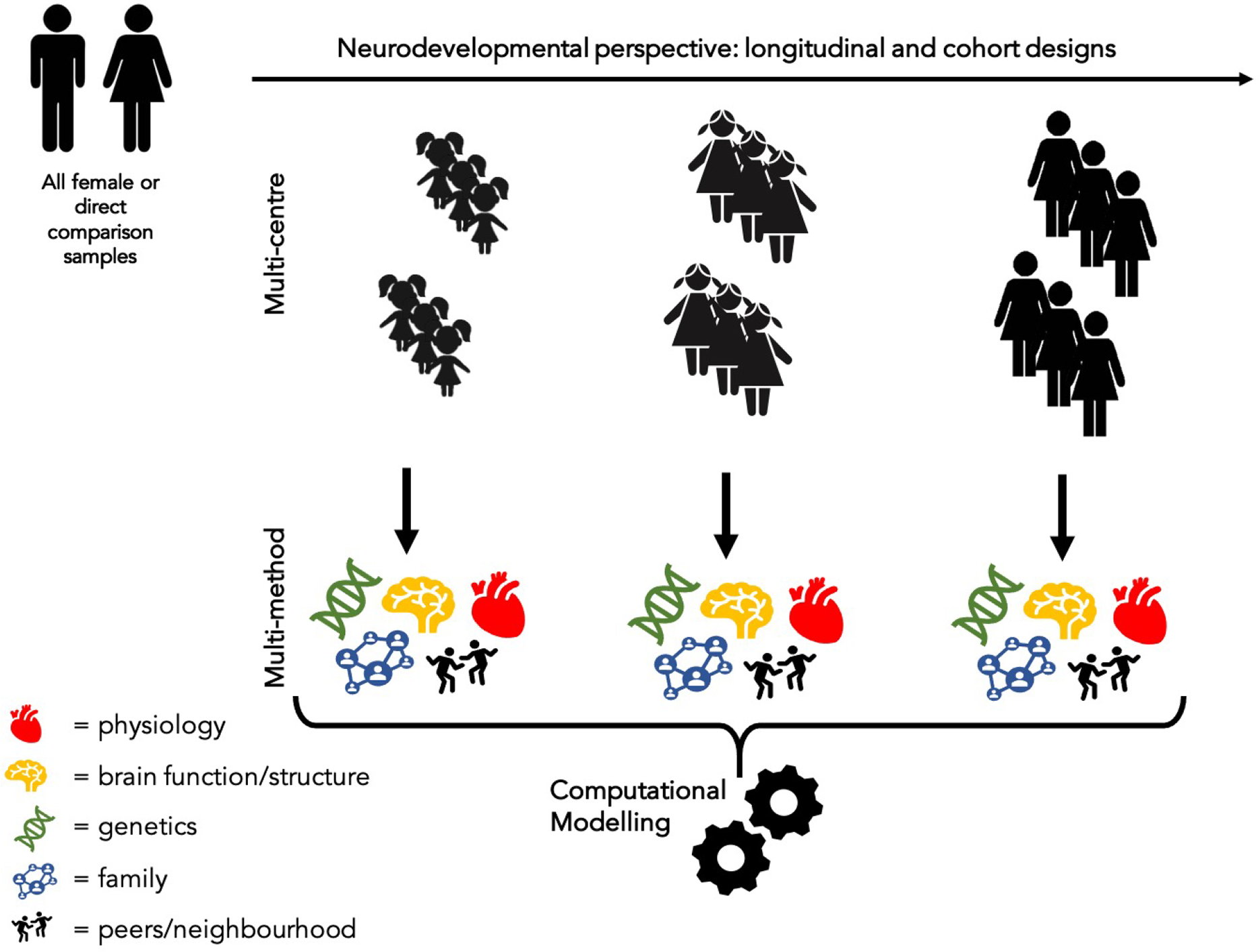
There is also an evidence base—albeit limited in size—suggesting that conduct disorder in young females and psychopathy and psychopathic personality in women also leads to considerable problems beyond violent or criminal behavior in affected individuals. For instance, in a large sample of adolescent girls from the Dunedin cohort, conduct disorder predicted more medical problems, poorer self-reported overall health, lower body mass index, alcohol and/or marijuana dependence, tobacco dependence, daily smoking, more lifetime sexual partners, sexually transmitted disease, and early pregnancy.Reference Bardone, Moffitt, Caspi, Dickson, Stanton and Silva 26 In a smaller sample of girls aged 15 to 17, compared to healthy girls, those with conduct disorder had worse overall health, more discomfort, higher rates of unhealthy habits, lower rates of healthy behaviors, and more pregnancies at earlier ages.Reference Pajer, Kazmi, Gardner and Wang 27 A meta-analysis of studies on conduct disorder demonstrated that compared to otherwise healthy girls, girls with conduct disorder were over three times more likely to experience pregnancy before 23 years of age.Reference Erskine, Norman and Ferrari 28 Further, women with psychopathy have been shown to experience a high level of neglect and emotional and physical abuse in childhood,Reference Verona, Hicks and Patrick 29 , Reference Moreira, Moreira and Oliveira 30 factors which lead to harsh and inconsistent parenting styles in later life.Reference Bert, Guner, Lanzi and Neglect 31 , Reference Van Wert, Anreiter, Fallon and Sokolowski 32 This in turn is associated with development of conduct disorder in their own children, independent of genetic factors.Reference Waller, Gardner and Hyde 33
Together, these factors suggest that psychopathy and psychopathic personality in women may contribute to reciprocal cause and effect in abnormal personality development across generations of women, leading to poor health and social outcomes throughout the lifespan. In adult female prisoners, PCL-R scores have been shown to be significantly associated with poor program retention, removal for serious noncompliance, violent and disruptive rule violations, avoidance of urinalysis testing, lower treatment module attendance, and poor therapist ratings.Reference Richards, Casey and Lucente 34
Despite the important implications of these findings, women with psychopathy and psychopathic personality have remained relatively neglected by subsequent research. Many studies have investigated psychopathic traits, but only in healthy, nonclinical samples. Studies in clinical samples which have included women have mostly had insufficient power to analyze the female sample in comparison to males. Common practice has been to extrapolate findings from studies in these male-only or mostly-male samples and apply them to women. Researchers have, however, highlighted the potential problems with this approach. For example, some authors have identified differential expressions of psychopathic behavior, differences in interpersonal characteristics, and different psychological motivations underpinning indicators of psychopathy between men and women with psychopathy.Reference Forouzan and Cooke 35
Others have highlighted that women with psychopathy have lower total psychopathy scores, different underlying factor structures, different neuropsychological manifestations, and likely different etiological pathways.Reference Gray and Snowden 36 Assessment tools for psychopathy, such as the PCL-R, were designed for use in male populations, and there are divergent findings pointing to just-right model fit,Reference Eisenbarth, Krammer, Edwards, Kiehl and Neumann 37 , Reference Neumann, Hare and Newman 38 leading to suggestions that alternative models for psychopathy would be more appropriate in females.Reference Dolan and Völlm 39 -Reference Warren, Burnette and South 42 Despite some progress in utilizing neurocognitive and imaging measures, research in this field in females lags well behind work in males and compares especially poorly to research of females in other important neuropsychiatric conditions with comparable prevalence, such as schizophrenia and autism spectrum disorders. Furthermore, although PCL-R-defined psychopathy has been shown to emerge from CD + CU in childhood, studies have neglected to account for this trajectory, e.g., by failing to develop neurobiologically informed, longitudinal approaches in females.
Below, we highlight what we believe are the two key limitations of existing research in women with women with psychopathy and psychopathic personality, with proposed solutions. We draw upon important recent developments in research in conduct disorder in females emerging from collaborative research projects, which may provide a template for future studies in adult women. Finally, we outline further suggestions for bringing research in this area in women in line with optimal contemporary approaches.
Problems and Solutions
Problem 1: Most research is in men, but psychopathy and psychopathic personality in females differs in important ways from early in life
Different patterns of conduct disorder—a precursor of psychopathy and psychopathic personality—are evident between males and females at a population level from early in life. A meta-analysis of epidemiological studies estimated that the worldwide prevalence of conduct disorder among children and adolescents aged 6 to 18 years is 3.2%,Reference Canino, Polanczyk, Bauermeister, Rohde and Frick 43 with little variance across samples (although most of these studies were from the United States and Europe). Other studies suggest that the prevalence of conduct disorder in Europe varies between boys and girls: 1% to 3% in girls and 2% to 5% in boys,Reference Maughan, Rowe, Messer, Goodman and Meltzer 44 with 13.8% of male adolescents but only 6.7% of female adolescents meeting DSM-5 criteria for conduct disorder at some stage.Reference Baker, Clanton, Rogers and De Brito 45 The degree of sex differences varies through development in children less than 5 years, sex differences are small or nonexistent,Reference Maughan, Rowe, Messer, Goodman and Meltzer 44 while in later childhood, conduct disorder is 2 to 3 times more common in boys than in girls,Reference Moffitt, Caspi, Rutter and Silva 46 a gap which then narrows to approximately 2:1 in adolescence.Reference Loeber, Burke, Lahey, Winters and Zera 47
Accumulating evidence suggests that while youths with conduct disorder without CU traits—or “limited prosocial emotions” as specified in DSM-5Reference Fontaine, McCrory, Boivin, Moffitt and Viding 48—may go on to develop psychopathic personality, youths with conduct disorder with CU traits (CD + CU) are more likely to develop more severe long-term behavioral problems Reference Pardini and Fite49, Reference Marsh, Finger and Mitchell 50 and deficits in neuropsychological processing of social stimuli,Reference Dadds, Jambrak, Pasalich, Hawes and Brennan 51 -Reference Bezdjian, Raine, Tuvblad and Baker 55 and are more likely to develop psychopathy as adults.Reference Lynam, Caspi, Moffitt, Loeber and Stouthamer-Loeber 10 It should be noted, however, that studies suggest a lower heritability of CU for femalesReference Fontaine, Rijsdijk, McCrory and Viding 56 -Reference Essau, Sasagawa and Frick 58 and the link between CU traits and severe relational and conduct problems may be weaker in girls.Reference Wynn, Høiseth and Pettersen 59
In adults, most estimates of prevalence of psychopathy and psychopathic personality are based on prison and offender samples. In keeping with rates of conduct disorder in adulthood, with few exceptions, studies show that psychopathy in adulthood is also more common in males than in females.Reference Verona and Vitale 60 The prevalence of PCL-R defined psychopathy is thought to be between 15% and 25% of male prisoners,Reference Hare 3 , Reference Coid and Ullrich 14 while estimates in female prisoners range from 6% to 17%Reference Beryl, Chou and Völlm 61 (9% to 31% in North American offender samplesReference Dolan and Völlm 39 , Reference Salekin, Rogers and Sewell 62). Female offenders also show lower mean PCL-R scores than male offenders,Reference Jackson, Rogers, Neumann and Lambert 40 , Reference Grann 63 , Reference Bolt, Hare, Vitale and Newman 64 which may reflect relatively lower levels of antisocial behavior in women with psychopathy, compared to men. This is supported by relatively lower scores on Factor 2 PCL-R traits—which incorporates antisocial and offending behavior—in women compared to men with psychopathyReference Douglas, Strand, Belfrage, Fransson and Levander 65 , Reference Hare, Black, Walsh, Archer and Wheeler 66). Women also typically score high on fewer of the individual PCL-R facets than men.Reference Hare, Black, Walsh, Archer and Wheeler 66 , Reference Jones, Cauffman, Miller and Mulvey 67
If the clinical expression of psychopathy and psychopathic personality was identical in both sexes, the clinical applications of divergent epidemiology would be limited—psychopathy could simply be seen as less common in women. Some studies suggest that the key behavioral features do not differ significantly between males and females, from early in life. For example, in adolescents with high psychopathy scores (as measured by the Psychopathy Checklist: Youth Version PCL:YV), deficits in empathy and affect regulation are associated with aggression in both girls and boys, suggesting that 3- and 4-factor models of psychopathy are invariant across biological sex.Reference Edwards, Carre and Kiehl 68 In adult prisoners (female = 228; mean PCL-R = 18.2) the relationship between psychopathic traits components of emotion processing was not moderated by biological sex.Reference Zoccolillo 69
Other studies, however, suggest significant clinical differences between males and females with conduct disorder in youths and psychopathy and psychopathic personality in adulthood. For example, at ages 11 and 15 years, females with conduct disorder are less likely than males to manifest criminal, particularly aggressive, behaviors, and are more likely than males to manifest conduct disorder symptoms alone or in conjunction with externalizing behaviors.Reference Moffitt, Jaffee and Arseneault 70 While male youths with conduct disorder are more likely to demonstrate overt behaviors, such as vandalism and aggressive stealing, females with conduct disorder are more likely to manifest covert behaviors, such as lying and sabotaging relationships.Reference Rutherford, Alterman and Cacciola 71 Further, rather than engaging in aggressive behaviors, young girls with conduct disorder may engage in minor norm-breaking behaviors and assume adult roles, perhaps by stealing or finding ways to obtain money, clothes, or drugs.Reference Fontaine, McCrory, Boivin, Moffitt and Viding 48 , Reference de Vogel and Lancel 72 In adults, one study investigated 197 female and 197 male patients admitted between 1984 and 2013 to one of four Dutch forensic psychiatric hospitals. This demonstrated that women with psychopathy compared to men with psychopathy committed more fraud, offended more often out of relational frustration, and showed less physical violence, but more manipulative and self-destructive behavior during treatment.Reference Poythress, Skeem and Lilienfeld 73
Furthermore, some studies suggest psychosocial risk factors for psychopathic personality traits also vary between men and women. While childhood physical and sexual abuse is linked to psychopathic traits (primarily Factor 2) in both maleReference Gunter, Chibnall, Antoniak, McCormick and Black 74 and femaleReference Verona, Hicks and Patrick 29 offenders, female offenders are more likely to have endured early trauma relative to male offendersReference Loper, Mahmoodzadegan and Warren 75 and those who do are more likely to develop psychopathic personality.Reference Schulz, Murphy and Verona 76 Finally, outcomes vary between males and females with psychopathy and psychopathic personality. While some studies suggest correlations between psychopathic personality (and specifically PCL-R Factor 2 traits) and antisocial/offendingReference Salekin, Rogers, Ustad and Sewell 77 and recidivism outcomesReference Eisenbarth, Osterheider, Nedopil and Stadtland 16 akin to male samples, other studies have shown only weak relationships in women and girls.Reference Grann 63 , Reference Raine 78
Taken together, research in both youths and adults suggest that expression of psychopathy and psychopathic personality in females may differ in important ways from expression in males early on in life. However, the evidence base remains limited, as women have been relatively neglected in this field of research, and little consideration has been given to the developmental trajectory of the condition.
Proposed solution: Consider psychopathy as a neurodevelopmental disorder, with a sexually dimorphic expression, like autism
Although it has not traditionally been defined as such, psychopathy meets the key defining characteristics of a neurodevelopmental disorder, as outlined in a recent review.Reference Baird, Simonoff and Pickles 79 Specifically, as outlined in the sections above, it has its origins in childhood; it is characterized by abnormalities in brain structure, function, and neurocognition; it has a genetic basis; it is relatively stable across the lifespan; and it results in poorer adult outcomes across multiple domains. Neurodevelopmental disorders are typically relatively unresponsive to treatment, and their base rates are relatively lowReference Baird, Simonoff and Pickles 79—both of which are also features of psychopathy. Neurodevelopmental disorders also tend to be more common in males, which is the case for psychopathy.
Considering psychopathy (and psychopathic personality) in this way potentially provides a basis for developing a better understanding of the condition through neurocognitive research. There is precedent for this in the case of another neurodevelopmental disorder with a sexually dimorphic expression—autism spectrum disorder (ASD). ASD is more common in males than females, with a sex ratio of approximately four to one across the whole autism spectrum.Reference Van Wijngaarden-Cremers, van Eeten, Groen, Van Deurzen, Oosterling and Van der Gaag 80 There are also important developmental and behavioral differences. For example, boys with ASD show more repetitive and stereotyped behavior from the age of 6 years, but not below the age of 6 years.Reference Lai, Lombardo and Pasco 81 In contrast, females with ASD experience more lifetime sensory symptoms, fewer current socio-communication difficulties,Reference Goddard, Dritschel and Howlin 82 and less impairment in autobiographical memory.Reference Zwaigenbaum, Bryson and Szatmari 83 Other studies have demonstrated sexually dimorphic profiles in cognitive and adaptive abnormalities.Reference Memari, Ziaee, Shayestehfar, Ghanouni, Mansournia and Moshayedi 84 , Reference Werling and Geschwind 85
Two major theories have emerged to explain sexual dimorphism in ASD, which may provide useful models for future studies in male and female psychopathy and psychopathic personality. Firstly, the “Female Protective Effect” theory proposes that a female-specific factor protects females from reaching the threshold for ASD diagnosis, meaning those females who are affected are likely carrying a greater etiological load (e.g., genetic variants or environmental influences) than affected males who lack this female-specific protective factor.Reference Iossifov, Ronemus and Levy 86 This theory is supported by evidence from several genetic studies supporting a “liability-threshold model” whereby females who meet diagnostic threshold for ASD will carry a higher mutational load than males.Reference Levy, Ronemus and Yamrom 87 -Reference Moore, Rappaport and Blair 90 In CD + CU, heritability estimates are approximately 50%,Reference Viding, Blair, Moffitt and Plomin 91 , Reference Fairchild, Hawes and Frick 92 although one twin study in adolescents has shown relatively less heritability for CU traits in females compared to males.Reference Essau, Sasagawa and Frick 58 To date, however, molecular genetic studies in CD + CU have provided limited insights, and have not identified clear mechanistic pathways.Reference Veroude, Zhang‐James, Fernàndez‐Castillo, Bakker, Cormand and Faraone 93 , Reference Viding and Price 94 This results in a “heritability gap” between molecular studies and behavioral genetics estimates.Reference Diaz, Overgaauw, Hawes and Dadds 95 Further, despite evidence showing sex differences in heritability of psychopathic traits in disruptive youthsReference Tuvblad, Wang, Patrick, Berntsen, Raine and Baker 96 and healthy adults,Reference Beaver, Rowland, Schwartz and Nedelec 97 , Reference Baron-Cohen, Knickmeyer and Belmonte 98 to the best of our knowledge, no genetic studies specific to CD + CU/psychopathy have attempted to perform separate analyses for males and females. Drawing on evidence in ASD, study designs allowing for separate analysis of data in males and females with CD + CU/psychopathy may help address the existing heritability gap, unlocking insights into sex-specific genetic vulnerabilities, and differential pathways into the disorder between males and females.
A further theory of sexual dimorphism in ASD is the “Extreme Male Brain” theory.Reference Baron-Cohen, Lombardo, Auyeung, Ashwin, Chakrabarti and Knickmeyer 99 , Reference Ferri, Abel and Brodkin 100 This theory proposes that there are morphological and functional differences between male and female brains, but that the autistic brain is a more extreme, or hyper-masculinized, version of the male brain, possibly due to elevated fetal testosterone. Testosterone in utero is critical for the development of many observed sex differences, and many of the genes associated with ASD encode proteins involved in synapse formation or maintenance, cell adhesion, and scaffolding. Hence, these molecules may be targeted in a sex-dependent fashion during the organizational period of development, resulting in the male preponderance observed in ASD.Reference Lombardo, Ashwin and Auyeung 101 Supporting this theory, one neuroimaging study showed a sex-dimorphic pattern of cortical development in relation to testosterone levels in individuals with ASD.Reference Yildirim and Derksen 102
Differential impacts of testosterone (and its interaction with other neurochemicals) on neural development in males and females may thus also be an important mechanism in sex-dimorphism in development of CD + CU youth psychopathy and psychopathic personality in adulthood. Support for this theory is mostly limited to studies of psychopathic traits in otherwise healthy samples. For instance, in childhood, high levels of fetal testosterone may have a small to moderate negative relationship on social sensitivity in infancy and dampened empathy in childhood.Reference Harris, Rushton, Hampson and Jackson 103 In adults, an inverse relationship between salivary testosterone and prosocial behavior/personality has been shownReference Blanchard and Centifanti 104 (i.e., suggesting higher testosterone may be associated with psychopathic traits). Two studies using using 2D:4D digit ratio as a proxy marker for prenatal testosterone exposure also suggest links between testosterone and development of psychopathic traits. In one, children with higher CU traits who were exposed to increased prenatal testosterone (i.e., lower 2D:4D ratios) exhibited more antisocial (“externalizing”) behaviorReference Blanchard, Lyons and Centifanti 105 (although sex differences were not analyzed). In the other, intriguingly, higher prenatal testosterone exposure was associated with psychopathic traits in women, but not in men.Reference Fink, Manning and Neave 106 The authors concluded that prenatal testosterone exposure may be more important in development of personality traits in females than in males—supported by previous workReference Hoskin and Meldrum 107—possibly as the female fetus is more responsive to fluctuations in in utero hormone levels. Counter to this finding, in young adults, lower 2D:4D ratio was associated with violent behavior among separate samples of both men and women, but associations were weaker in females.Reference Loomans, Tulen, de Rijke and van Marle 108
Functional interaction of testosterone with other neurochemical systems may also be important. Firstly, testosterone: cortisol ratio may impair the ability to process emotion and regulate aggression, hence predisposing toward proactive (i.e., premeditated) aggression and CU traits.Reference Glenn, Raine, Schug, Gao and Granger 109 Further support of the relationship between testosterone and psychopathy comes from association between psychopathy scores and an increased testosterone: cortisol ratio in response to a stressorReference O’Leary, Taylor and Eckel 110 and reduced cortisol,Reference Crespi 111 albeit also in community samples. High fetal testosterone exposure may contribute to dampened oxytocinergic, limbic, and orbitofrontal reactivity to empathy-inducing social stimuli.Reference Harris, Rushton, Hampson and Jackson 103 Opposite effects of oxytocin and testosterone are evident for a range of phenotypes of social behavior. For instance, testosterone administration reduces connectivity of the orbitofrontal cortex (OFC) with the amygdala, whereas oxytocin exhibits the opposite effect.Reference Hardan, Libove, Keshavan, Melhem and Minshew 112 Testosterone levels may also alter the sensitivity and innervation of oxytocin and its receptors.Reference Harris, Rushton, Hampson and Jackson 103 Together, these studies suggest that exploration of the genetics and neuromodulatory roles of testosterone and related neurochemicals in CD + CU and psychopathy and psychopathic personality may be fertile ground for elucidating differential neurodevelopmental routes to these conditions in males and females.
A final important inference from research in ASD is the importance of study of female psychopathy and psychopathic personality in a longitudinal manner. Over many years, studies have considered longitudinal changes within childhood in ASD, including brain development.Reference Schumann, Bloss and Barnes 113 -Reference Murphy, Beecham, Craig and Ecker 116 However, given that the major developmental changes in brain function and structure through childhood and adolescence and into adulthood in healthy populations may differ in ASD,Reference Magiati, Tay and Howlin 117 studies have also increasingly considered changes into adulthood. For example, studies have investigated changes in neurocognitive functionReference Gillespie-Lynch, Sepeta and Wang 118 , Reference Lange, Travers and Bigler 119 and brain structureReference Lorenz and Newman 120 over time, yielding insights into the developmental trajectory of the condition. Such an approach would be beneficial to research in psychopathy and psychopathic personality generally, and specifically in helping to determine potentially different developmental pathways in males and females. Finally, as noted by other authors, considering psychopathy as a neurodevelopmental disorder emerging from conduct disorder may encourage a less punitive and more treatment-focused approach in educational and criminal justice systems.Reference Veroude, Zhang‐James, Fernàndez‐Castillo, Bakker, Cormand and Faraone 93
Problem 2: Neurocognitive studies of female psychopathy and psychopathic personality show some differences compared to males, but methodologies are inconsistent, outcome measures too narrow, and samples often too small
Some studies suggest that fundamental neuropsychological deficits observed in adult males with psychopathy and psychopathic personality may generalize to adult females with psychopathy and psychopathic personality. A core deficit in men with psychopathy is emotion processing. For instance, compared to healthy men, men with psychopathy show a number of deficits in responding when responding to emotional words in a lexical decision taskReference Williamson, Harpur and Hare 121 , Reference Blair, Jones, Clark and Smith 122 and show less electrodermal activity in anticipation of aversive stimuliReference Blair, Morris, Frith, Perrett and Dolan 123 -Reference Eisenbarth, Alpers, Segrè, Calogero and Angrilli 126 than do men without psychopathy. Similarly, when compared to healthy females, female forensic inpatients with psychopathy have been shown to perform worse in categorizing emotions, particularly sadness.Reference Sutton, Vitale and Newman 127 In samples of female prisoners, those with psychopathy showed reduced startle potentiation to unpleasant images compared to those without psychopathy,Reference Verona, Bresin and Patrick 128 , Reference Vitale, Brinkley, Hiatt and Newman 129 and display reduced Stroop interference on picture-word tasks.Reference Vitale and Newman 130 However, other studies have failed to replicate neuropsychological deficits consistently found in male psychopathy samples. For instance, in samples of female prisoners, those with psychopathy did not demonstrate performance deficits on passive avoidance tasks,Reference Newman, Patterson and Kosson 131 or on a lexical decision taskReference Vitale, Maccoon and Newman 132 compared to those without psychopathy—deficits that have been previously shown in male samples.Reference Williamson, Harpur and Hare 121 , Reference Blair, Jones, Clark and Smith 122 , Reference Maurer, Steele, Edwards, Bernat, Calhoun and Kiehl 133
Electroencephalography (EEG) studies, which have been used in some studies as proxy markers of potential neurocognitive deficits in psychopathy and psychopathic personality, also show mixed findings in relation to male and female samples. In one study of 121 female prisoners using EEG during a Go/NoGo task,Reference Brazil, de Bruijn and Bulten 134 those with psychopathy exhibited reduced Pe amplitude (an index of post-error processing) but intact ERN/Ne ratio (and index of automatic error-detection and action-monitoring processes) compared to those without psychopathy—a finding consistent with previous studies in male psychopathy.Reference Munro, Dywan, Harris, McKee, Unsal and Segalowitz 135 -Reference Eisenbarth, Angrilli, Calogero, Harper, Olson and Bernat 137 Another study comparing adult female forensic inpatients (n = 33) with high and low PCL-R scores,Reference Flor, Birbaumer, Hermann, Ziegler and Patrick 138 showed a significant increase in N2 (an Event-related potential, indicating cognitive activation) for angry and fearful facial expressions in the high psychopathic group, though no group differences for other face processing components such as N170, P300, or LPP. This again matched previous findings in male patients with psychopathyReference Verona, Sprague and Sadeh 139 , Reference Baskin-Sommers, Curtin, Li and Newman 140 and underlined arousal-based deficits in emotion processing in psychopathy. In contrast, two studies using the P100 as an index of fear-potentiated startle in response to threat (an electric shock) showed different patterns in male and female offenders with high PCL-R scores. In men, lower P100 amplitudes to threat stimuli correlated with Factor 1 PCL-R,Reference Anton, Baskin-Sommers, Vitale, Curtin and Newman 141 while in females, another study showed a reversal of this pattern was found (those with higher Factor 2 scores exhibited a lower P100 to threatReference Carre, Hyde, Neumann, Viding and Hariri 142).
While neuroimaging studies have reported negative correlations between self-reported psychopathic traits and amygdala responses to fearful facial expressionsReference Harenski, Kim and Hamann 143 and unpleasant picturesReference Harenski, Edwards, Harenski and Kiehl 144 in healthy volunteers, only two studies to our knowledge have employed functional magnetic resonance imaging (MRI) in a sample of adult females with psychopathy and psychopathic personality.Reference Yoder, Harenski, Kiehl and Decety 145 , Reference Harenski, Harenski, Shane and Kiehl 146 One studyReference Yoder, Harenski, Kiehl and Decety 145 used an emotion processing paradigm (neutral vs unpleasant images) and a moral transgression paradigm—utilizing pictures indicating moral transgressions (e.g., a drunk driver), nonmoral transgressions (e.g., an angry driver), and neutral pictures (a normal driver). This study took a dimensional approach in a sample of 157 female prisoners and 46 nonincarcerated women. Findings revealed a negative correlation between PCL-R scores and activation in the right amygdala and rostral anterior cingulate on viewing pictures depicting moral or nonmoral scenarios (vs neutral pictures) and a negative correlation between PCL-R scores and activation in the right temporo-parietal junction (TPJ) in response to pictures depicting moral vs nonmoral scenarios. The reduced correlation between amygdala activation and PCL-R scores is in keeping with a previous study using the same task in men with psychopathy, however, the correlation between temporo-parietal junction was not elicitedReference Decety, Chen, Harenski and Kiehl 147 (men with psychopathy showed a positive correlation between right TPJ activation and severity of moral transgression ratings). In a recent study,Reference Harenski, Harenski, Shane and Kiehl 146 female inmates (n = 107) were asked to evaluate the likely emotional state of either the recipient or the initiator of harmful or helpful interactions. Findings demonstrated that psychopathy scores were significantly related to increased hemodynamic response in right dorsolateral prefrontal cortex when viewing harmful interactions and decreased functional connectivity from right amygdala to inferior parietal cortex and insula, and from temporal parietal junction to dorsomedial prefrontal cortex.Reference Harenski, Harenski, Shane and Kiehl 146 These findings were in keeping with a previous study using a similar paradigm in a male prison sample.Reference Freitag, Konrad and Stadler 148 This showed male prisoners with ASPD + P were shown to demonstrate an atypical pattern of neural activation and connectivity seeded in the anterior insula and amygdala with the OFC and ventromedial prefrontal cortex during perspective-taking of others in distress.Reference Freitag, Konrad and Stadler 148
Together, existing evidence from neurocognitive research in adult females suggests some shared, but some differential deficits between males and females with psychopathy and psychopathic personality. However, to date, progress has been limited by samples with varying selection criteria and outcome measures, and often by relatively small sample sizes. This has resulted in studies which have been unsuited and/or underpowered for testing for sex-by-group interactions. Importantly, studies directly comparing effects in males vs females are also lacking.
Proposed solution: Develop large-scale collaborative neurocognitive projects
Until recently, the issues limiting research quality in female psychopathy outlined above were also true of CD + CU in female children and adolescents—a precursor of psychopathy in adult women. However, recent large-scale collaborative projects have begun to change the landscape. One such study is FemNAT-CD, a multidisciplinary study that plans to recruit 1840 children and teenagers aged from 9 to 18 years from across Europe (including the UK, Germany, Ireland, Switzerland, the Netherlands, Spain, Greece, and Hungary). The project aims to study similarities and differences between male and female adolescents conduct disorder using a multilevel approach including phenotypic, environmental, neurocognitive, endocrinological, psychophysiological, neuroimaging, genetic, and epigenetic measures.Reference Kohls, Baumann and Gundlach 149 Importantly, as well as a large cross-sectional study comparing clinical presentations and neurocognitive functions related to emotion processing in 9- to 18-year-old females (N = 720) and males (N = 200), a longitudinal study will reassess a subsample of 300 subjects with CD aged 9 to 12 years after 18 months compared to 300 typically developing girls, in order to examine the effects of puberty on the phenomenology and neurocognitive characteristics of female conduct disorder. Given the neurodevelopmental nature of psychopathy as outlined above, studies from this consortium are of particular relevance to psychopathy and psychopathic personality in females.
Early output from the FemNat projectReference Konrad, Kohls and Baumann 150 has shown that relative to healthy youths, male and female youths with conduct disorder showed impaired emotion recognition, emotional learning (specifically from punishment), and emotion regulation, and that these deficits were similar in both males and females. This suggests that, at least in adolescence, deficits in these domains are shared between antisocial males and females (although potentially differential neural underpinnings of these deficits have not yet been explored by the project, e.g., with fMR). In contrast, a further study from this project demonstrated that, relative to boys, girls with CD showed significantly more lifetime psychiatric comorbidities (including alcohol use disorder), which were accompanied by more severe CD symptoms.Reference Rogers, Gonzalez-Madruga and Kohls 151 Further, work by the same group using diffusion tensor imaging (DTI) suggests differential deficits between males and females with conduct disorder at the neural level.
In a fractional ansiotropy (FA) analysis of 124 youths with conduct disorder (59 female) and 174 typically developing youths (103 female) aged 9 to 18 years, youths with conduct disorder exhibited higher axial diffusivity in the corpus callosum and lower radial diffusivity and mean diffusivity in the anterior thalamic radiation relative to typically developing youths. However, males and females exhibited opposite changes in the left hemisphere within the internal capsule, fornix, posterior thalamic radiation, and uncinate fasciculus.Reference González-Madruga, Rogers and Toschi 152 In a further analysis of 101 adolescents with conduct disorder (52 females) and 99 typically developing youths (50 females) using hindrance-modulated orientational anisotropy (HMOA) as well as FA, the conduct disorder group showed both lower FA and HMOA in the right retrosplenial cingulum tract relative to controls, but these effects were moderated by sex: males with conduct disorder significantly lower FA compared to male controls, whereas conduct disorder and control females did not differ.Reference Waller, Hawes and Byrd 153 These findings suggest that white matter microstructural alterations in temporo-frontal regions might be specific to males with conduct disorder, and that pathways to behavioral pathology in females with conduct disorder (and subsequently, psychopathic personality/psychopathy) may differ significantly.
The NIMH-funded ABCD study in the United States, a similar large-scale project, is also relevant to psychopathy and psychopathic personality. Throughout their research sites, the study has invited 11 878 children aged 9 to 10 and will follow them into early adulthood. The project will integrate structural and functional brain imaging with genetics, neuropsychological, behavioral, and other health assessments. The central focus is addiction behaviors, however, more general antisocial behavior will also be studied. In two recent studiesReference Hawes, Waller and Byrd 154 , Reference Thompson, Stein and Medland 155 using data from the first full baseline release of the youths were stratified into those with disruptive behavior disorders (DBD—i.e., conduct disorder or oppositional defiant disorder), with and without callous-unemotional traits (±CU), and typically developing youths. In one study,Reference Hawes, Waller and Byrd 154 gray matter volume (GMV) was measured using structural MRI, while in the other,Reference Thompson, Stein and Medland 155 reward processing was studied using fMRI. In the structural MRI study, youths in the DBD + CU group had lower right amygdala GMV and lower bilateral hippocampal GMV compared to typically developing youths, while youths in the DBD − CU group had lower bilateral amygdala GMV and lower left hippocampal GMV relative to TD youths. In the fMRI study, there were several processing differences between youths with DBD + CU and those with DBD − CU; e.g., during reward anticipation, the DBD − CU group exhibited reduced ventral and dorsal striatal activity compared with the DBD + CU and typically developing groups. There was no moderation of associations by sex in either of these two studies. However, the authors noted that the age of the sample (9-10 years old) could predate many of the sex-based differences in brain–behavior associations that are thought to emerge during adolescence following pubertal development. Follow-up of this cohort at different neurodevelopmental time points will provide further rich data on potentially differential trajectories between antisocial males and females.
The ENIGMA consortiumReference Gutman, van Erp and Alpert 156 is another collaborative network of researchers, combining efforts on a range of largescale studies that integrate data from 70 institutions worldwide. It has already provided some important new insights in other psychiatric disorders including schizophreniaReference Holleran, Kelly and Alloza 157 , Reference Hoogman, Van Rooij and Klein 158 and Autism and ADHD.Reference Boedhoe, Van Rooij and Hoogman 159 , Reference Poldrack, Baker and Durnez 160 Its antisocial behavior working group (http://enigma.ini.usc.edu/ongoing/enigma-antisocial-behavior/) aims to coordinate collaborative, large-scale meta- and mega-analyses of neuroimaging data collected across multiple centers to clarify the associations between Conduct Disorder/Problems, Psychopathy, or Antisocial Personality Disorder and alterations in brain structure and function.
Using such large-scale, multi-center approaches to investigate female psychopathy and psychopathic personality would be beneficial in three important ways. Firstly, given the particular difficulties in recruiting samples of these women, pooling of participants from different sites—alongside recruitment of typically developing controls from general population—would address the problem of underpowered studies, contributing to improved reproducibility and reducing the probability of both false positives and false negatives.Reference Widiger and Crego 161 Further, this increased power, alongside application of the same protocol as to that in male samples, would allow for direct comparison to male samples, helping elucidate key differences in neurocognitive profiles between men and women with the condition. Thirdly, collecting longitudinal data would allow for insights into how psychopathy emerges in this group over time. One approach would be to start with a group of female adolescents with CD + CU and following their progress through early adulthood and beyond. Specific neurobiological markers particularly associated with the development of psychopathy and psychopathic personality could be determined which may then be used to identify at an early stage those most at risk. This would have potential benefits for diversion of these individuals into appropriate treatment pathways. Other examples of collaborative multicenter projects in conduct disorder are discussed in the section below.
Further Considerations
Diagnostic overlap and symptom-based approaches
There is a significant overlap between psychopathy and antisocial personality disorder (ASPD) as defined by DSM-5, and considerable debate about the degree of overlap between the conditions.Reference Coid and Ullrich 14 , Reference Ogloff 162 -Reference Gregory, Blair, Simmons, Kumari, Hodgins and Blackwood 164 Studies in adult males have begun to distinguish between individuals with antisocial personality disorder who meet criteria for psychopathy (ASPD + P) and those who do not (ASPD − P).Reference Gregory, Ffytche and Simmons 165 -Reference Sprague, Javdani, Sadeh, Newman and Verona 167 A similar approach in females would help to avoid heterogeneity in samples of offenders and identify neurocognitive markers specific to psychopathic personality/psychopathy. Some authors have also pointed to overlap of symptoms between psychopathy and psychopathic personality and other personality disorders, in particular borderline personality disorder.Reference Miller, Dir, Gentile, Wilson, Pryor and Campbell 168 , Reference Khan, Brewer, Kim and Centifanti 169 For example, in female prisoners, Factor 2 (antisocial/lifestyle) scores (although not Factor 1 PCL-R (interpersonal/affective) scores) have been shown to be associated with a diagnosis of borderline personality disorder,Reference Miller, Dir, Gentile, Wilson, Pryor and Campbell 168 although notably, in female students, a unique relationship was identified between primary psychopathy traits—but not borderline personality traits—and use of nonviolent sexual coercive tactics.Reference Peterson 170
Due to the degree of overlap between these conditions, a categorical approach to participant recruitment may be of limited benefit. In contrast, transdiagnostic symptom-based initiatives such as Research Domain Criteria (RDoC), 171 may be more useful in identification of underlying neurocognitive mechanisms, by linking genetic, molecular, and cellular processes to behavioral phenotypes. In children, the Aggressotype (aggression subtyping for improved insight and treatment innovation in pediatric psychiatric disorders; www.aggressotype.eu) project employs coordinated analyses in humans and animal models, to investigate impulsive vs instrumental aggression, in a transdiagnostic manner. This project includes children with conduct disorder, ADHD, as well healthy children with subclinical traits. The key goals include development of predictive algorithms and identifying biomarkers. Likewise, in children with disruptive behavior disorders, including oppositional defiant disorder and conduct disorder, the focus of the collaborative multicenter Multidisciplinary Approaches to Translational Research In Conduct Syndromes (MATRICS; www.matrics-project.eu) project is to examine neural mechanisms underpinning aggression phenotypes, rather than focusing on specific diagnoses. Some authorsReference Tulay, Metin, Tarhan and Arıkan 172 point to a lack of clinical utility of such approaches, at least to date. However, future more refined iterations, incorporating G × E analyses may prove beneficial in resolving uncertainty about the precise neurocognitive architecture of psychopathy and psychopathic personality in women. The ENIGMA consortium, as discussed above, provides a further opportunity for large-scale investigation of components of psychopathy using a transdiagnostic approach.
Multimodal measurement techniques and computational modelling
A combination of investigative techniques allows for introduction of a broader systems approach to neurocognitive questions. One particular approach that may be of benefit is multimodal neuroimaging. This combines datasets obtained using two or more unimodal modalities to yield more informative, consistent, and reliable results than can be obtained using unimodal neuroimaging.Reference Liu, Cai and Liu 173 , Reference Kolla, Dunlop and Downar 174 There have been a small number of multimodal imaging studies relevant to psychopathy and psychopathic personality to date, albeit in male-only samples. In one study, using both fMRI and positron emission tomography (PET) in healthy individuals, impulsive-antisocial psychopathic traits selectively predicted nucleus accumbens dopamine release and reward anticipation-related neural activity in response to pharmacological and monetary reinforcersReference Buckholtz, Treadway and Cowan 175. In another study, in 19 men with antisocial personality disorder,Reference Korponay, Pujara and Deming 176 ventral striatal monoamine oxidase-A volume of distribution (an index of MAO-A density) measured by PET correlated with functional coupling of the ventral striatum with bilateral dorsomedial prefrontal cortex. This functional coupling was in turn negatively correlated with the Neuroticism Extraversion Openness Personality Inventory-Revised impulsivity, providing a potential mechanistic link between ventral striatal neurochemical dysfunction and pathological impulsivity. In a sample of male prisoners, a combined DTI/functional MRI study showed reduced white matter connectivity between amygdala and temporal lobes (i.e., in the uncinate fasiculus) and reduced functional connectivity between, in a sample of adult male prisoners, a combined sMRI/fMRI study showed enlarged striatal subnuclei and aberrant functional connectivity between the striatum and other brain regions.Reference Steele, Claus, Aharoni, Vincent, Calhoun and Kiehl 177 Another studyReference Montague, Dolan, Friston and Dayan 178 combined EEG and sMRI in male prisoners. This study used machine-learning model to predict re-arrest with 83% accuracy, showing that offenders with increased P3 amplitude and decreased ACC activation—suggesting abnormal error-processing—were at greatest risk of re-arrest.
These studies represent progress toward mechanistic insights into psychopathic traits. However, to date, multimodal studies have not been conducted in samples with clearly defined psychopathy and psychopathic personality. Moreover, female samples have been neglected. Repeating a PET-fMRI in a large sample of violent men and women with psychopathy and psychopathic personality would help to clarify if the deficits outlined above are (a) present in psychopathy and psychopathic personality, (b) more severe compared to other offenders, and (c) specific to males, or also evident in females. Combining machine-learning models to predict which individuals with psychopathy and psychopathic personality are at most risk of recidivism, or most likely to respond to specific treatment programs, may also be of benefit.
Computational modeling is the use of mathematics, physics, and computer science to study the behavior of complex systems. In psychiatry, computational modeling has emerged due to the need to bridge the large explanatory gap between a sound biological understanding of genetics, neural circuitry, and cellular activity on the one hand, and complex behaviors on the other. One promising area for computational approaches relevant to psychopathy is decision-making, especially reinforcement learning. There is increasing evidence that specific impairments in reinforcement learning may represent cognitive endophenotypes across diagnostic boundaries.Reference Robbins, Gillan, Smith, de Wit and Ersche 179 , Reference Montague, Dayan and Sejnowski 180 As phasic activity of dopamine neurons in the ventral tegmental area has been shown to signal reward prediction error (RPE),Reference Schultz, Dayan and Montague 181 , Reference Wang and Krystal 182 a computational approach to calculating RPE has emerged. Specifically, this is δt (RPE) = rt − Vt, where rt is the actual reward and Vt is the expected reward, at time t. Reference Smeijers, Bulten and Brazil 183 Put simply, the mismatch between the actual reward and the expected reward generates an “error signal” that informs learning. This provides a basis for bridging reward-related learning with a specific underlying brain circuit, in this case, the dopaminergic system.
Another recent study applied a computational model approach to the study of four types of hostility biases—a type of cognitive distortion linked to aggression.Reference Kendler, Jacobson, Myers and Eaves 184 The study used an approach known as hierarchical Gaussian filter, a generic hierarchical Bayesian model of learning under perceptual uncertainty and environmental changes using time-series data. This model is based on the idea that the brain continuously creates a generative (i.e., predictive) model of its sensory inputs and tries to optimize this model by reducing uncertainty (i.e., increasing the accuracy) about the beliefs of the world. Applying this approach to neuroscientific data from a systematic review, a clearly defined mathematical translation of how the corresponding cognitive computations take place and interact was provided.Reference Kendler, Jacobson, Myers and Eaves 184 Applying such an approach in a sample of violent offenders would allow for a clearer mechanistic understanding of shared and differential reinforcement-learning deficits and hostility bias in males and females with psychopathy.
Gene × environment (G × E) influence
Studies to date—predominantly in male only samples—suggest a complex interplay between genetic and environmental variables in the development of antisocial behavior throughout the lifespan. For example, studies in youths demonstrate that conduct disorder symptom levels influence peer deviance.Reference Salvatore and Dick 185 Studies of parenting environments show that permissive environments increase the genetic contribution to CD-related behaviors,Reference Henry, Dionne and Viding 186 whereas more supportive environments reduce the genetic contribution.Reference Byrd and Manuck 187 In adults, the most consistent G × E effect on adult outcomes emerges from the MAO-A phenotype. Across 20 male cohorts, early adversity presaged antisocial outcomes more strongly for low, relative to high, activity MAO-A genotype.Reference Ficks and Waldman 188 , Reference Prom-Wormley, Eaves and Foley 189 Most of these studies have included male-only or mostly-male samples. However, in an all-female sample (n = 721), a specific interaction of MAO-A-VNTR and childhood adversity on the risk for CD was identified.Reference Luningham, Hendriks and Krapohl 190
A meta-analysis of MAOA studiesReference Ficks and Waldman 188 demonstrated that across 11 female cohorts, MAO-A did not interact with combined early life adversities, whereas maltreatment alone predicted antisocial behaviors preferentially, but weakly, in female subjects of high-activity MAO-A genotype (P = .02). To date, however, studies examining G × E effects have not focused specifically on samples of psychopathic personality or psychopathy in males or females. Consideration of such potentially critical effects will be an important aspect of future work. Here, again, the FemNat consortium provides a potential model for future such studies, in establishing a standardized measurement battery for environmental risk factors such as pre-, peri-, postnatal risk factors, history of trauma, acute life events, parenting measures, socio-economic factors and peer influences alongside collection and extraction of DNA samples.Reference Kohls, Baumann and Gundlach 149 The ACTION consortium (Aggression in Children: Unravelling gene–environment interplay to inform Treatment and InterventiON strategies; http://www.action-euproject.eu/) also seeks to address G × E effects. This project will include both genome-wide association meta-analysis of longitudinal aggression and attention problems in twin and population cohorts and epigenetic genome-wide association meta-analysis of aggression in children and adults, and employ phenotype harmonization in related genotype–environment studies.Reference Benning, Patrick, Hicks, Blonigen and Krueger 191
Conclusions
Despite increasing awareness of the impact of female psychopathy and psychopathic personality on healthcare and criminal justice systems, research into the condition lags behind that of much of contemporary psychiatry and neuroscience. Particular problems are lack of consideration of the differences between males and females and of the neurodevelopmental nature of the condition, and studies in females with small samples and inconsistent methodologies. Consideration of psychopathy and psychopathic personality as a potential neurodevelopmental disorder with a dimorphic behavioral expression, and developing larger scale collaborative projects with multimodal approaches are key steps toward modernizing a research framework for this important and debilitating condition. Investigation of the impact of genes and environment will be a further important consideration.
Disclosures
The authors have no disclosures or conflicts of interest to declare.
Author Contributions
Conceptualization: J.T., and H.E.; Data curation: J.T., and A.F.; Visualization: H.E.; Writing – original draft: J.T., and A.F.; Writing – review & editing: J.T., N.K., M.F., and H.E.


 Open access

