



INTRODUCTION
A large outbreak of measles (>1000 notified cases) occurred in South Wales in 2012/2013, with the highest incidence in children and young people living in Swansea and Neath Port Talbot local authority areas [1]. The outbreak has been attributed to a decline in measles-mumps-rubella (MMR) immunization uptake in the early 2000s, following sustained adverse publicity surrounding the now discredited hypothesis of a link between MMR and autism proposed by Wakefield et al. in 1998 [Reference Wakefield2, Reference Godlee, Smith and Marcovitch3]. Across Wales, there was a general decline in MMR uptake. However, this decline was most marked in the Swansea area [Reference Thomas, Salmon and King4], with uptake for a first MMR dose in 2-year-olds living in Swansea declining to 68% in 2003 [5].
The MMR immunization programme was introduced in the UK in 1988 with the aim of eliminating measles, mumps, rubella, and congenital rubella syndrome. Currently, all children are offered MMR at age 12–15 months and a second dose at 3–5 years. For the MMR programme to succeed 95% compliance with the two-dose schedule must be achieved [Reference Anderson and May6]. After falling in the early 2000s, uptake of MMR in Wales has recovered in recent years and the programme now achieves 95% coverage of the first MMR dose in 2-year-olds [7]. Although uptake was good in young children receiving their routine scheduled MMR immunization, there remained a substantial pool of susceptible older children and young adults. Thus, at the start of the outbreak in November 2012, an estimated 6800 children aged 2–18 years living in the City and County of Swansea (16%) had not received two doses of MMR [1].
There have been many studies on the factors that predict immunization uptake, several of which have highlighted the role of social and service factors [Reference Baker, Bandaranayake and Schweiger8–Reference Brown16] and, more recently, behavioural factors in parental decisions [Reference Brown17]; however, few studies have specifically investigated the role of the media. One study conducted in South Wales [Reference Mason and Donnelly18] showed that uptake was significantly lower in the distribution area of a local newspaper which consistently carried negative reports on MMR. To understand better the factors that led to the recent South Wales measles outbreak, we present the findings from a study, carried out at the height of the Wakefield controversy, investigating attitudes and beliefs to MMR in the community subsequently affected by the outbreak, and consider the relevance of these findings to the epidemiology of the outbreak and the public health response.
METHODS
We conducted a case-control study to investigate the factors that influenced parents' decision not to have their child immunized with MMR. We used the Child Health System [19] to identify the parents or guardians of children resident in Swansea and Neath Port Talbot local authority areas of South Wales who reached their second birthday in the period July to September 2001. The study area was chosen as it was an area of Wales with particularly low MMR uptake, and an area within the circulation of a daily evening newspaper running predominantly negative stories about MMR [Reference Mason and Donnelly18] In order to investigate factors specific to MMR rather than factors affecting compliance with childhood immunization in general, cases were defined as parents or guardians whose child had received all routine immunizations except MMR by their second birthday. Controls were parents whose child was fully immunized, i.e. had received the full primary course for diphtheria, tetanus and pertussis; poliomyelitis; Haemophilus influenzae type b, and at least one dose of MMR and meningococcal C conjugate vaccine.
Of 1019 children identified, 180 were classified as cases and 781 as controls. Of the remainder, 38 had not completed their full course of immunizations, 19 had incomplete immunization details, and one did not have a postal address. A self-administered questionnaire, information letter and pre-paid envelope were sent on 1 March 2002 to 180 cases, and to 360 randomly selected unmatched controls. Three reminder letters and questionnaires were sent between March and May 2002. Children were thus aged between 2½ and 3 years at the time of the study.
Parents were asked about: the vaccination history of their children, their personal details (age, ethnicity, first language, marital status, educational status), their family structure, and any family history of autism or Crohn's disease. They were asked where they obtained information about MMR, the influence of this information, and their attitudes, knowledge and beliefs. All newspapers in general circulation within the area were listed on the questionnaire as were a range of television news and current affairs programmes selected a priori from those making enquiries about MMR to the Public Health Laboratory Service. They were also asked to respond to a series of value statements about MMR. These were based on the ‘MMR Myth buster pack’, an evidence-based information pack on MMR, circulated to health professionals by the Welsh Assembly Government [Reference Roberts20]. Last, the questionnaire asked: ‘What do you think was the single most important thing that influenced your decision whether to give your child the MMR vaccination?’ and included a space for comments. Questionnaire data were collated using Epi Info [21]. The distribution of age groups in cases and controls were compared by Mann–Whitney test, differences in case and control responses to value statements were compared using the χ 2 test, and odds ratios were calculated for factors affecting compliance by logistic regression using Stata v. 7 [22]. Factors were grouped into four categories: (1) personal characteristics of parents and family history, (2) sources of information on MMR, (3) influence of newspapers, and (4) influence of television. Univariate analysis was performed for each category then multivariate analysis was performed, adjusting for factors that were decided a priori to be possible confounders. Responses to the question ‘What do you think was the single most important thing that influenced your decision whether to give your child the MMR vaccination?’ were grouped into themes by S.W. and reviewed by D.R.T. This process was conducted separately for cases and controls.
RESULTS
Fifty-seven percent of those contacted returned completed questionnaires, providing 66 cases and 242 controls.
Parental and family characteristics
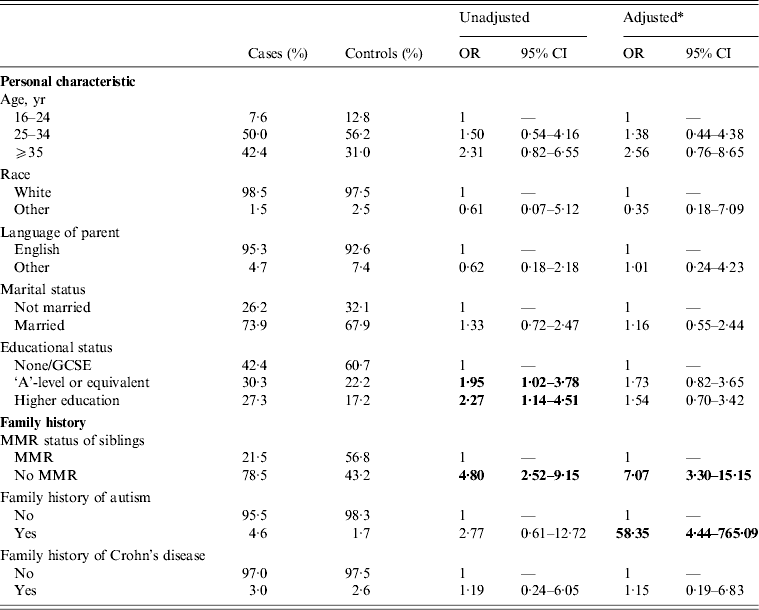
Cases were significantly more likely to have been educated to ‘A’-level [odds ratio (OR) 1·95, 95% confidence interval (CI) 1·02–3·78] or to have undergone higher education (OR 2·27, 95% CI 1·14–4·51) compared to having no qualifications or GCSE-level only (Table 1). Cases were also older, more likely to be white, speak English as their first language, and married, although these differences were not statistically significant (P > 0·05)
Associations between personal characteristics of the parent/guardian and decision not to accept MMR immunization
OR, Odds ratio; CI, confidence interval.
* Adjusted for other variables in the table.
Unimmunized children were much more likely to have a sibling who had not had MMR (78·5%) than children of controls (43·2%) (OR 4·80, 95% CI 2·52–9·15). Few (<5%) cases or controls reported a family history of autism or Crohn's disease and neither were statistically significant determinants by univariate analysis. However, when personal characteristics of the parent and family history were included in the same logistic regression model both family history of autism and MMR status of siblings had a significant and independent effect on the decision to immunize. Multivariate analysis indicated that the effect of increasing educational status could be partly accounted for by other factors such as family history.
Information sources
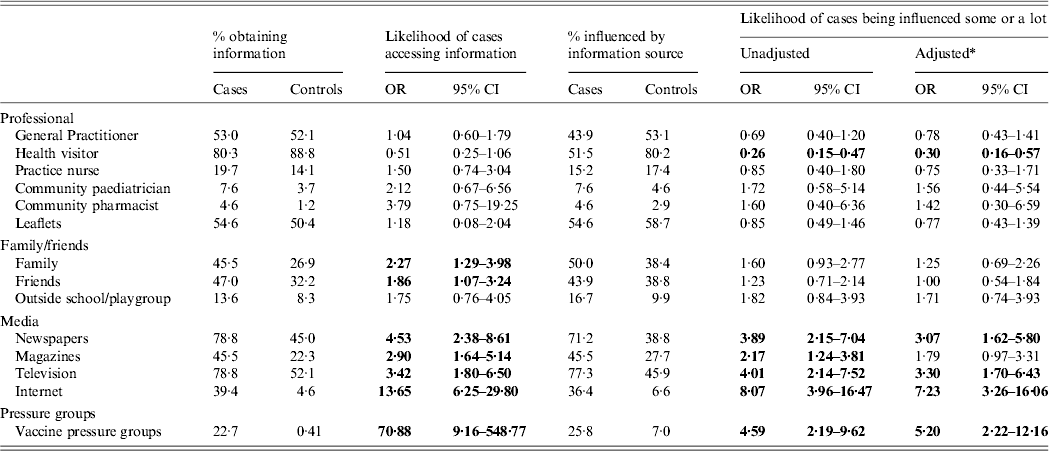
Parents who decided not to immunize their children were more likely to obtain information on MMR from the mass media including newspapers (OR 4·53, 95% CI 2·38–8·61), magazines (OR 2·90, 1·64–5·14), television (OR 3·42, 1·80–6·50) and the internet (OR 13·65, 95% CI 6·25–29·80). A similar trend was observed in the relative influence of information sources as self-reported by parents (Table 2), with cases more likely to report being influenced by the media and less likely to report being influenced by health professionals. When the influence of information sources was examined after adjusting for educational status of the parent, MMR status of the sibling and family history of autism, cases were still significantly more likely to report being influenced by newspapers [adjusted OR (aOR) 3·07, 95% CI 1·62–5·80], television (aOR 3·30, 95% CI 1·70–6·43), internet (aOR 7·23, 95% CI 3·26–16·06) and vaccine pressure groups (aOR 5·20, 95% CI 2·22–12·16), and significantly less likely to be influenced by a health visitor (aOR 0·30, 95% CI 0·16–0·57).
Sources of information on MMR and decision not to accept MMR immunization
OR, Odds ratio; CI, confidence interval.
* Adjusted for educational status, MMR status of siblings and family history of autism
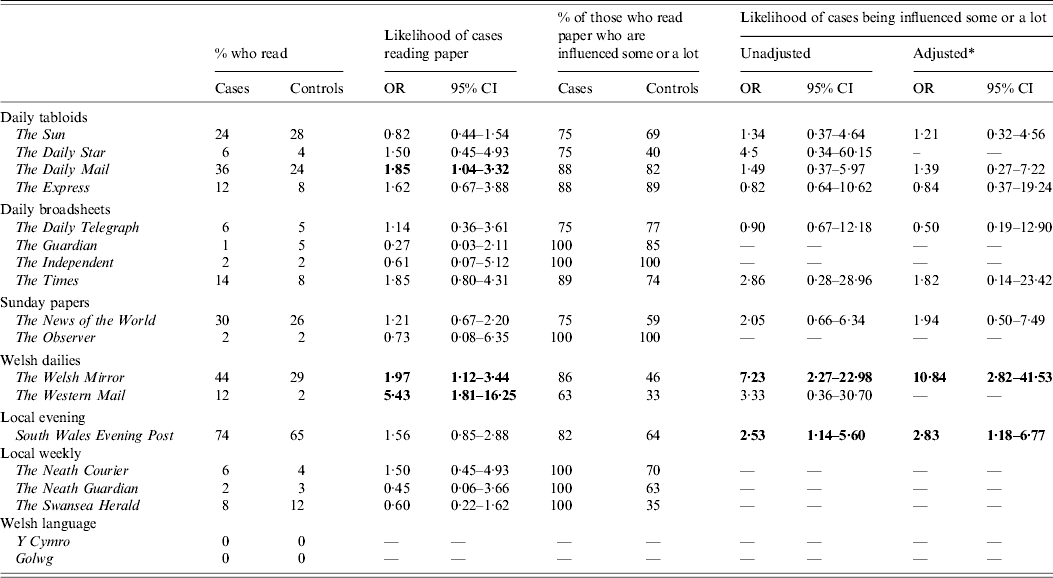
The newspapers most frequently read by both cases and controls were the South Wales Evening Post and the Welsh Mirror (Table 3). Cases were more likely to read the Daily Mail (OR 1·85, 95% CI 1·04–3·32), the Welsh Mirror (OR 1·97, 95% CI 1·12–3·44), and the Western Mail (OR 5·43, 95% CI 1·81–16·25). When the influence of newspapers was looked at in more detail, cases were more likely to be influenced by the Welsh Mirror (aOR 7·23, 95% CI 2·27–22·98) and the South Wales Evening Post (aOR 2·53, 95% CI 1·14–5·60). This finding remained after taking into account the educational status of the parent or guardian, MMR status of siblings, and any family history of autism.
The influence of newspapers and decision not to accept MMR immunization
OR, Odds ratio; CI, confidence interval.
* Adjusted for educational status, MMR status of siblings and family history of autism
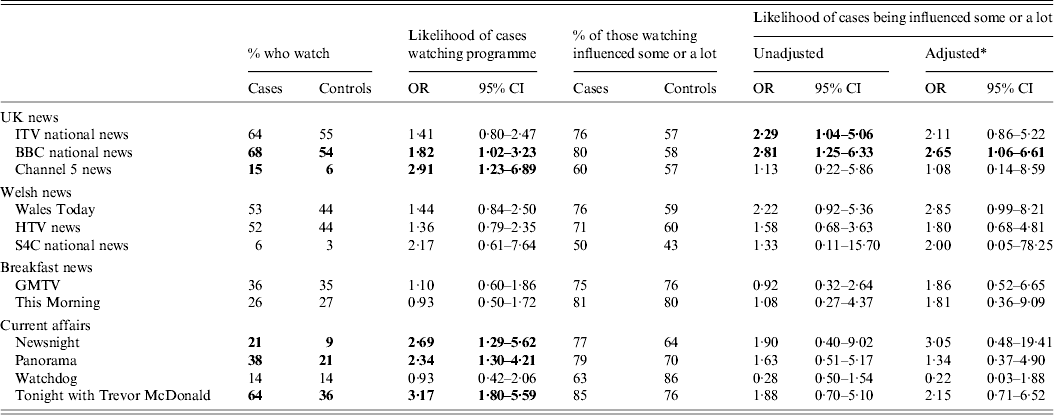
Cases were more likely to watch all news and current affairs programmes except for ‘This Morning’ and ‘Watchdog’ (Table 4). In particular, cases were significantly more likely to watch BBC and Channel 5 news, and the current affairs programmes ‘Newsnight’, ‘Panorama’ and ‘Tonight with Trevor MacDonald’. Of those who watched these programmes, a high proportion of both cases and controls reported being influenced by what they watched. Cases were more likely to be influenced by ITV (OR 2·29, 95% CI 1·04–5·06) and BBC (OR 2·81, 95% CI 1·25–6·33) national news. The greater influence of BBC news remained after adjusting for possible confounders.
The influence of television and decision not to accept MMR immunization
OR, Odds ratio; CI, confidence interval.
* Adjusted for educational status, MMR status of siblings and family history of autism.
Beliefs and values
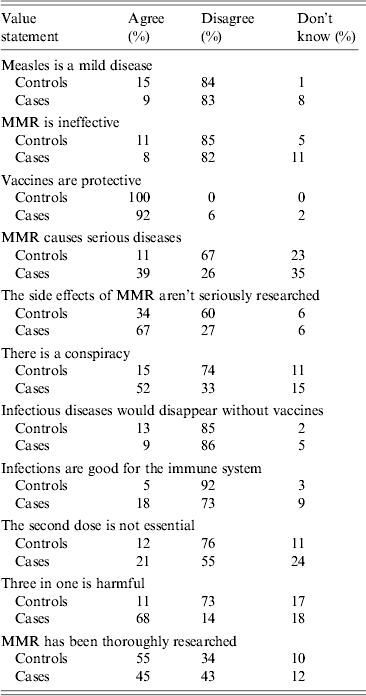
Cases and controls disagreed about the statements: ‘Vaccines are protective’ (92% of cases and 100% of controls agreed, P < 0·01), ‘MMR causes serious diseases’ (39% of cases and 11% of controls agreed, P < 0·01), ‘the side effects of MMR aren't seriously researched’ (67% of cases and 34% of controls agreed, P < 0·01), ‘there is a conspiracy’ (52% of cases agreed compared to 15% of controls, P < 0·01), ‘Infections are good for the immune system’ (18% of cases and 5% of controls agreed, P < 0·01), ‘The second dose is not essential’ (21% of cases and 12% of controls agreed, P < 0·05), ‘Three-in-one is harmful’ (68% of cases agreed compared to 11% of controls, P < 0·01) and ‘MMR has been thoroughly researched’ (45% of cases and 55% of controls agreed, P < 0·01) (Table 5).
Beliefs and values of parents/guardians accepting all childhood immunizations (except MMR; cases) and those accepting all childhood immunizations (including MMR; controls)
‘The single most important thing that influenced your decision whether to give your child the MMR vaccination’
Among cases (those who had accepted all vaccinations except MMR), the key themes identified in response to this question were: ‘Three-in-one is harmful’, ‘parents should be given the choice between three single vaccines and MMR’, ‘MMR leads to autism’, ‘there is a conspiracy to conceal its harm for the benefit of the government and medical profession’, ‘vaccinations are weakening the gene pool and natural immunity should be relied upon’ and ‘due to doubts over the vaccine parents are postponing vaccination’.
Among controls (those who had accepted all vaccinations), the key themes identified were: ‘There is no doubt over the safety of the vaccine’, ‘it is the only protection available against these serious diseases’, ‘there is doubt over safety but the benefits outweigh the risks’, ‘parents have a social responsibility to vaccinate their children’, ‘convinced that the vaccine is safe by health professionals’ and ‘convinced that the vaccine is safe by family members’.
One key theme to emerge among parents who rejected MMR was that ‘three-in-one is harmful’. Some parents wanted freedom to choose single antigen vaccines:
Due to my concerns regarding the MMR jab, my husband and I decided to give my son the jabs in single doses, which we have to pay for. We are angry that we have to go to such measures – we should have the choice on the NHS [case].
Others expressed fear of a government conspiracy:
Following the government assurances on CJD [Mad Cow Disease] no matter what evidence the Government gave to the contrary I would always trust the parents over the government and any medical body employed by them [case].
This view was reinforced by the considerable press attention given to the Prime Minister's decision not reveal the immunization status of his son:
If Tony Blair has had his youngest child vaccinated he should tell the population. By not telling us the belief is then that the child has not been vaccinated and if not, why not. Are the Blairs not prepared to take the risk? [control].
Family history appeared to be important in parents' decisions. One parent said:
I decided to give A the MMR vaccination basically because my son C who is a healthy normal child had the same treatment [control].
Parents with a family history of autism (but not Crohn's disease) were more likely to reject MMR. One parent commented:
My eldest son was diagnosed autistic after having the MMR although we do not fully believe this to be the cause. It has however influenced our decision not to vaccinate our youngest son until a positive link between the two is confirmed or proven otherwise [case].
Health visitors appeared to exert a positive influence, confirming the findings of Petrovic et al. [Reference Petrovic, Roberts and Ramsey23]. However, some parents drew attention to a potential conflict of interest for general practitioners (GPs) who are paid for achieving immunization targets:
If doctors get a percentage for every injection they give, how can they offer unbiased information about MMR? [case].
Parents who rejected MMR were more likely to obtain their information from lay sources and to report being influenced by them. While the mass media is not the only influence on parents' decision to reject MMR, our findings indicate that both the media and the internet play an important role. To the question: ‘What do you think was the single most important thing that influenced your decision whether to give you child the MMR vaccination?’ one parent responded:
Dimbleby [TV current affairs broadcaster]. It confirmed what I thought in the first place [case].
and others commented:
Since I saw the last television programme with Trevor McDonald I am unsure of the second injection as it has put doubt there [control].
Recent programmes about parents stating that their child's autism was linked to MMR are disturbing and hard to ignore [control].
Information from family members, friends, newspapers, magazines, television, internet and vaccine organizations is less likely to be based on scientific evidence, and more likely to be biased or presented in an emotive way. However, the influence of the media does appear to be complex. Even balanced reports may still have a negative effect by reinforcing entrenched views:
Much of what is portrayed in the media tries to give both positive and negative information, in which they try to play down the negative and reinforce the government line. No amount of information in the media will change the minds of people like us who distrust MMR [case].
By contrast, the media may also have a positive influence. One parent was influenced to accept MMR by news coverage of a measles epidemic:
On the news on television, also newspapers in 2001, there was an outbreak in Ireland of the measles, where several cases apparently were critical. Most of these cases were my daughter's age [control].
Parents who rejected MMR were more likely to use the internet to obtain information and to be influenced by the information they received. There are no barriers to publication on the internet and it is difficult for the lay browser to distinguish reputable information sources.
A parent's decision whether or not to immunize their child is not taken lightly. Although parents in the control group were mostly positive about vaccines including MMR, both cases and controls expressed worry and confusion:
Yes, we were nervous about the vaccine because of its coverage in the news, etc. but really there was no question in our minds – it was the right thing to do! [control].
I don't feel there is enough research to enable me to make an informed decision – I do not believe that the vaccination is safe nor unsafe – the worst factor is not knowing which decision to make [case].
DISCUSSION
This study provides an insight into beliefs about MMR in a community affected a decade later by a large measles outbreak. Given the prevalence of anti-MMR views in this community in the early 2000s and the persistent refusal of a sizable minority to accept MMR, an outbreak seems now to have been almost inevitable.
The 2012/2013 South Wales measles outbreak was the largest in the UK since the introduction of the MMR vaccination programme. The epidemiology of the outbreak reflected historic trends in MMR uptake. Incidence was highest in the age groups with previously declining MMR, with the highest number of cases notified in children aged 5–14 years [24]. The geographical distribution also reflected historic uptake. In November 2012, at the start of the outbreak, one in six children aged 11 years in the Swansea area were not protected against measles, compared to one in nine children in the rest of Wales.
We found that in 2001, at the height of the Wakefield scare, parents in South West Wales who rejected MMR immunization were more likely to be older, white, English speaking, married and well-educated. Many opportunities have been provided during the 2000s for these parents to accept MMR vaccination for their child, including a national catch-up campaign in October 2005 to May 2006, the setting up of specialist immunization clinics, and prompts to health visitors and GPs. However, in the absence of a perceived risk from measles these have had a limited effect [Reference Morgan and Evans25, Reference Mason and Donnelly26]. While anti-MMR views in this community appeared entrenched, parents had the potential to change their mind at any time. Indeed, we found that one in five parents who rejected MMR in 2001 had an older child who had received MMR and had thus presumably changed their perception of MMR risk once already. It appears that only when facing a major outbreak in their own locality did a significant number of parents of unvaccinated children reconsider their decision.
As part of the outbreak response, drop-in vaccination clinics were set up in four hospitals, dedicated vaccination sessions were set up in all comprehensive schools, special schools and colleges in the area, as well as local prisons, and unscheduled vaccination was offered in general practice under a Local Enhanced Service Agreement [24]. By August 2013, an estimated 78 000 catch-up MMR doses had been delivered in response to the outbreak, with over half of these being given in the outbreak area. However, while a proportion of unvaccinated children were reached during the outbreak, it is apparent there is a residual cohort of parents who will still not accept MMR immunization, some of whom now feel they are being ‘harassed’ for their anti-immunization stance (Julie Bishop, personal communication).
Our study demonstrates the potential negative impact of the media on public health.
However, the media is also important in conveying positive public health messages. This was recognized during the outbreak. In order to promote MMR vaccination during the outbreak, a coordinated communications response was led by Public Health Wales in collaboration with health boards, local authorities and the Welsh Government. During the outbreak 34 press releases were issued, over 100 broadcast interviews were given and Public Health Wales responded to over 460 local, national and international media enquiries. Wide access was given to the media at drop-in clinics, giving the outbreak a high profile locally and nationally, potentially encouraging further MMR take-up [24].
In our study, we focused on print media and television as an influence. However, even in 2001 the internet was seen as an important influence on attitudes and beliefs. The relative influence of digital media has no doubt increased considerably over the last decade, although a recent Australian study indicates that television is still an important influence on behaviour during health scares [Reference Faase27].
During the outbreak, the public health system invested considerably in ensuring good communication through digital media. The Public Health Wales website was updated regularly with news and data on the outbreak: The total number of views of pages related to the measles outbreak was 804 89 31% of all views in March to June 2013 [24]. The health board covering the outbreak area, Abertawe Bro Morgannwg University Health Board, created specific web pages for 41 schools and colleges containing tailored information and pro-MMR statements from the head teacher.
Other digital media used to promote MMR were: school texting systems, Facebook, and Twitter. A health board Facebook post was able to achieve 133 000 views and a total of 85 messages were tweeted. Online news websites were also targeted by the health board and news stories linked to MMR or measles were commented on. Public Health Wales also trialled a simple app allowing access to latest epidemiological data on measles from a smart phone.
While this study provides a unique insight into the historical context of the 2012/2013 South Wales measles outbreak, it has a number of limitations. First, while attitudes and beliefs are dynamic, this study measures these attributes at only one point in time. Second, although the response rate of 57% was reasonable, it differed between cases and controls. Response was higher in people not accepting MMR, and may also have been biased towards those actively rejecting MMR, rather than those not vaccinated for other reasons (disorganized, ill, etc). Cases and controls were parents/guardians of children recorded on the Child Health System as resident in Swansea or Neath Port Talbot local authority area and eligible for routine MMR immunization. As the sampling frame was of children rather than their parents it was not possible to compare responding parents with those who did not respond. Parents were asked to comment on value statements taken from the MMR Myth buster resource. This resource was derived in 1999 from the evidence base on parental attitudes at the time. The resource was rolled out to GPs across Wales and was well accepted. Statements in this resource were used as a source of value-based statements on MMR. These statements have been validated as a tool for measuring parental belief/attitude.
We suggest that more attention needs to be paid to characterizing the health beliefs of parents and the way in which these are formed. Health beliefs may range from anxiety over lack of information, through a desire for greater freedom of choice to outright suspicion of authority. Initiatives to promote MMR need to be timely, and to provide information that is both evidence-based and tailored to the specific concerns of parents. The proliferation of information on the internet means that communities are increasingly exposed to bad science and interest-driven scare stories. To counteract this, public health communication strategies need to be more sophisticated and monitoring trends in parental attitudes to immunization should be considered an important component of public health surveillance [Reference Crowcroft and McKenzie28–Reference Larson30]. Many of the children denied MMR immunization by their parents are now at an age to make an informed decision for themselves. It would be interesting to investigate whether the views of these young people differ from that of their parents. Further qualitative work could be carried out to investigate concordance between parents and their offspring, based on the MMR Myth buster value statements used in this study.
ACKNOWLEDGEMENTS
Child Health System data were supplied by Andrea Evans, Swansea NHS Trust. Iechyd Morgannwg Health Research Ethics Committee approved the study and suggested some modifications to the questionnaire. Dr Marko Petrovic, and Dr H. M. Pattison contributed to questionnaire design. Richard Lewis and Amanda Thomas assisted in mailing questionnaires and data entry. Simon Gregor provided a list of media enquiries to PHLS on MMR on which to base the questionnaire. The study was funded from the existing budgets of PHLS in Wales and University of Wales College of Medicine.
DECLARATION OF INTEREST
None.



