

Introduction
During the Green Revolution of the mid-20th century, increased use of land, irrigation and agrochemicals played a major role in the growth of agricultural production (FAO 2017). Over the past century, efforts have been focused on feeding a growing population and increasing agricultural production. However, modern agricultural systems have led to food insecurity and created challenges such as pollution, deforestation, and the displacement of indigenous and small-scale farming systems (Antonelli Reference Antonelli2023). At this point, traditional agricultural systems are widely recognized for their intrinsic value and are considered essential to preserve to overcome these challenges and achieve sustainable agriculture (FAO, 2011, 2018; Antonelli Reference Antonelli2023). Certain traditional agricultural systems are considered ‘Important Agricultural Heritage Systems (IAHS)’, which are key to achieving the 2030 Sustainable Development Goals (Arnés Arnés García et al. Reference Arnés García, Yagüe, de Nicolás and Diaz-Puente2020). IAHS are dynamic and sustainable systems that integrate living organisms such as plants, animals and fungi with traditional knowledge, adaptive technologies and agricultural cultures (Zhang et al. Reference Zhang, Li and Min2018). These systems have adapted to human needs and environmental changes for centuries. They have had to adapt and innovate to keep pace with shocks, disturbances and changes of all kinds – ecological, economic, political and cultural (Howard et al. Reference Howard, Puri, Smith and Altieri2008). It is therefore recommended that they be conserved through dynamic conservation strategies (Arnés García et al. Reference Arnés García, Yagüe, de Nicolás and Diaz-Puente2020).
Globally Important Agricultural Heritage Systems (GIAHS) are defined as ‘remarkable land use systems and landscapes which are rich in globally significant biological diversity evolving from the co-adaptation of a community with its environment and its needs and aspirations for sustainable development’ (FAO 2018). The objective of the GIAHS programme is not limited to the conservation of these systems, but the whole programme is based on the concept of dynamic conservation, because sustainable innovations are needed for the conservation of agricultural heritage systems and therefore for the future of rural areas and rural communities (Agnoletti and Santoro Reference Agnoletti and Santoro2022). In 2002, the Food and Agriculture Organization of the United Nations (FAO) launched the GIAHS initiative to promote and conserve these globally significant treasures (Howard et al. Reference Howard, Puri, Smith and Altieri2008; Nath et al. Reference Nath, Inoue, Ee Wey and Takahashi2024). The GIAHS programme is aiming to strike a balance between conservation, sustainable adaptation and socioeconomic development, and also helps to mitigate the threats faced by farmers while enhancing the benefits of farming systems. Using a multistakeholder approach, GIAHS provides technical assistance, promotes the value of traditional agricultural knowledge and stimulates markets for agricultural products, agrotourism and other market opportunities (https://www.fao.org/giahs/background/en).
Since its launch, the GIAHS programme has evolved significantly. It began with 5 pilot sites in 2005 and has now expanded to 104 designated systems across 29 countries, reflecting a growing global recognition of traditional agricultural systems world (Jiao et al. Reference Jiao, Yang and Min2022, https://www.fao.org/giahs/en accessed on 03 February 2026). Over the past two decades, research and policy interest in GIAHS has increased, focusing on topics such as agrobiodiversity conservation, sustainable tourism, local branding, and resilience to climate change (Agnoletti and Santoro Reference Agnoletti and Santoro2022; Nath et al. Reference Nath, Inoue, Ee Wey and Takahashi2024). Many studies from Asia, Europe and Latin America have emphasized how GIAHS sites serve as living laboratories for sustainable development, combining traditional knowledge with innovation (Su et al. Reference Su, Sun, Min and Jiao2018; García et al. Reference García, Blanco, de Nicolás and Díaz-Puente2020; Nagata and Yiu Reference Nagata and Yiu2021; Agnoletti et al. Reference Agnoletti, Santoro, Fiore, Piras, Romano, Bazzurro and Agnoletti2023; Nath et al. Reference Nath, Inoue, Ee Wey and Takahashi2024). Despite this global progress, in-depth studies at the regional level – especially in Türkiye – remain limited. Therefore, this study aims not only to evaluate the Karacadağ Rice Production System within the GIAHS framework but also to contribute to the broader understanding of GIAHS evolution and implementation through a locally grounded case study.
The first attempt to identify potential GIAHS sites in Türkiye was the project conducted by FAO, Ministry of Food Agriculture and Livestock of Türkiye and Ministry of Agriculture of Azerbaijan in 2014 (GCP/RER/028/TUR Identification, Assessment and Stewardship of GIAHS in Azerbaijan and Turkey). The project report identified six pilot sites in Türkiye for dynamic conservation of GIAHS, including natural dyeing and weaving systems, cheese production systems, Sultan Seyhmus fig production systems, ‘Kilis Karasi’ grape production systems and olive production systems as well as the Karacadağ Rice Production System. The second significant study related to GIAHS was conducted under the Conservation and Sustainable Management of Turkey’s Steppe Ecosystems Project, implemented in collaboration with FAO, the General Directorate of Nature Conservation and National Parks (GDNCNP), the General Directorate of Plant Production (GDPP) and the General Directorate of Forestry (GDF), with financial support from the Global Environment Facility (GEF). This study focused on the Karacadağ Rice Production System, which was previously proposed as one of six pilot examples.
The Karacadağ Rice Production System, which is in line with the five established GIAHS criteria – food security, agrobiodiversity, traditional knowledge systems, cultural values and landscape features – has a significant capacity to contribute to sustainable development and the preservation of cultural heritage. Therefore, a detailed analysis of these criteria can effectively highlight the unique contributions of the system and its value as a globally significant agricultural heritage.
This research was conducted within the framework of the Management Plan prepared for the Karacadağ Steppes, which is one of the pilot areas of the ‘Conservation and Sustainable Management of Steppe Ecosystems in Turkey’ project implemented between 2017 and 2021. The main objective of the study was to ensure the sustainable protection and management of the Karacadağ Rice Production System. In this context, the research focused on emphasizing the necessity of preserving traditional agricultural systems in the face of changing socio-economic and environmental challenges. To achieve this goal, the study focused on two specific objectives: to assess the Karacadağ Rice Production System using the GIAHS approach by evaluating it against five key GIAHS criteria and to identify the pressures and changing trends affecting the system, and to contribute to develop a management plan that supports its resilience and sustainability. By addressing these objectives, this study aimed to provide valuable insights for policy-makers, local communities and stakeholders, thereby fostering informed decisions for the conservation and sustainable management of this unique agricultural heritage system. Safeguarding the Karacadağ rice production system is crucial not only for maintaining traditional agricultural practices, but also for preserving the region’s biodiversity and cultural values.
Materials and methods
Study area and data collection
Karacadağ is a volcanic mountain formed as a result of volcanic activity that began in the Late Miocene and continued into the Quaternary (Haksal Reference Haksal1981; Şaroğlu and Emre Reference Şaroğlu and Emre1987; Ercan et al. Reference Ercan, Şaroğlu, Turhan, Matsuda, Ui, Fujitani, Notsu, Bağırsakçı, Aktimur, Can and Emre1991). In general, it has the character of a flat lava plateau with some hills ranging 1350–1957 meters. Looking at the historical and cultural assets of Karacadağ region, based on the ruins that have been identified so far, it is understood that the region has been inhabited since the Chalcolithic Age (5000 BC). There are many intangible cultural features in the Karacadağ region, that until 100 years ago, the people of the region were mostly nomadic rather than sedentary. The continental Mediterranean thermal regime is observed in the Karacadağ Steppes. In this regime, the temperature for at least four months is above 20 °C and summer temperatures rise above 30 °C. In the Karacadağ region, the average temperatures in July and August are above 30 °C and the average temperature in January falls below −2.8 °C. The region is not suitable for mechanized agriculture as it is heavily covered with volcanic rocks. There are many small streams that dry up in the summer. Karacadağ rice is grown on the volcanic foothills of Karacadağ between basalt rocks.
Field surveys targeting rice-producing villages were conducted in the Karacadağ basin in 2021 as part of the ‘Management Planning of Karacadağ Steppes’ carried out within the framework of the Conservation and Sustainable Management of Turkey’s Steppe Ecosystems Project (GCP/TUR/061/GFF, 2021–2022). The information on biodiversity were gathered from the project results (FAO-MAF 2022).
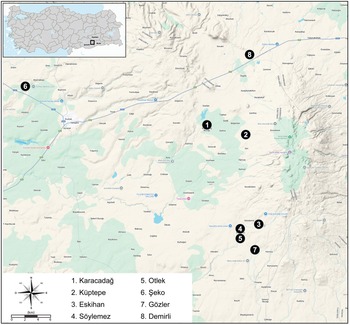
The surveys aimed to collect in-depth information on the cultivation practices, traditional knowledge and production challenges in order to analyse the relationships between traditional agricultural knowledge, local environmental conditions and varietal management strategies. Karacadağ rice is cultivated within the Karacadağ basin of south-eastern Anatolia, primarily in the provinces of Şanlıurfa and Diyarbakır and, to a lesser extent, in certain districts of Mardin. Field surveys were conducted in the main rice-producing settlements of this basin, including Eskihan, Karacadağ, Küptepe, Otlek, Söylemez and Şeko (Dulda) in Siverek; Gözler in Viranşehir; and Demirli in Ergani (Fig. 1). These locations were selected based on their active involvement in Karacadağ rice production and recommendations from local authorities, including village headmen. The surveys involved semi-structured interviews with older family members involved in rice production. Interviewees were selected based on their extensive experience and knowledge of traditional farming techniques. Snowball sampling was employed to identify the key individual in each area. This method uses a small pool of initial informants to invite other participants to contribute to a particular study through their social networks. The interviewees were predominantly male and aged between 37 and 71; most of those involved in farming were in the 40–50 age range. Interviews were conducted at the farmers’ households, and consequently, questions concerning rice cooking practices were addressed to the women. During the interviews, respondents were asked how many years and generations the variety had been cultivated for, who worked in the fields (family members or paid labourers) and who owned the cultivated land. Information was also collected on how the cultivation techniques had been learned, as well as the distinctive characteristics used by farmers to describe the variety. The scale and distribution of cultivation were also asked, including the size of the cultivated area (in acres), the approximate number of local producers cultivating the same variety in the neighbourhood, and the total estimated cultivation area within the region. The main purposes of cultivation, such as household consumption, local trade or commercial production, were asked. Participants were also asked about their seed sources, whether they had saved seeds from previous harvests or purchased them, and how much they had paid for them per kilogramme. Further questions focused on agronomic management practices. Information was collected on the time of planting (day/month), techniques used to prepare the soil prior to planting, and the tools or machinery used for soil cultivation, sowing seeds and irrigation. Methods of controlling weeds and pests were also asked about, including the use of chemical or traditional techniques. Data on harvesting-related practices was also collected, including the tools or machinery used, the harvesting method, and the harvest time (day/month). Respondents provided information on their average, minimum and maximum yields (kg/da) per year. Information on plant diseases was also requested. These data were used to analyse the relationships between traditional agricultural knowledge, local environmental conditions and varietal management strategies.
Location and pilot sites of the research.

Analysing compliance with GIAHS criteria
The Karacadağ Rice Production System was assessed against the five GIAHS criteria in order to evaluate its sustainability, resilience and heritage value. These criteria included: (1) Food and livelihood security, examining how the production system contributes to household food supply and the rural economy; (2) Agro-biodiversity, focusing on plant genetic resources and the biodiversity associated with rice cultivation; (3) Local and traditional knowledge systems, including farming practices, adaptive technologies and natural resource management, related to land water and biota; (4) Cultures, value systems and social organizations, encompassing production traditions, social organization, cultural practices and marketing arrangements; and (5) Landscape characteristics, analysing how the rice system has shaped and been shaped by long-term human–environment interactions. Based on this framework, a participatory threat analysis was conducted to identify the key pressures and trends affecting the sustainability of the Karacadağ rice system. This process involved representatives from the Ministry of Interior, Ministry of Agriculture and Forestry, the GDNCNP, the Ministry of Industry and Technology, the Council of Higher Education, the Union of Chambers and Commodity Exchanges of Turkey, Union of the Chambers of Turkish Engineers and Architects- the Chamber of Agricultural Engineers, Union of Chambers of Turkey, rice processors, and the Ministry of National Education Directorate.
Focus group discussions and stakeholder meetings were used jointly to identify, discuss and prioritise threats according to their potential impacts on the long-term viability of the production system. The results of this participatory process were analysed in relation to the GIAHS criteria in order to inform the development of management and policy recommendations aimed at strengthening system resilience.
Results
Food and livelihood security
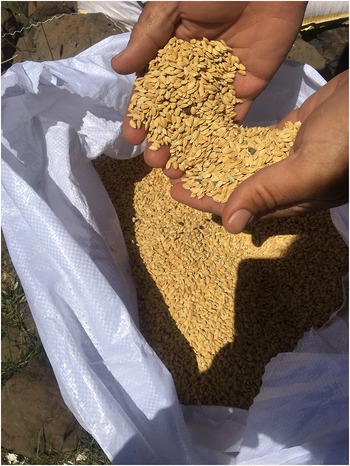
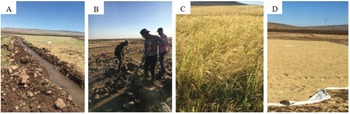
Karacadağ rice production is based on the traditional low-input farming system adapted to the stony volcanic landscape, where mechanized agriculture is largely impossible. According to semi-structured interviews with the local producers, a single rice landrace has been cultivated continuously for two to four generations using farmer-saved seed. Figure 2 shows a photograph of the harvested paddy in Küptepe village. All have learnt the growing techniques from their parents and grandparents. These manual practices involve minimal soil preparation, ensuring environmental preservation while optimizing the use of marginal lands. In this way, the rice stalks are left to decompose on their own. Rice is cultivated intermittently with plots left fallow for 5–7 years between planting cycles, allowing natural soil regeneration through crop residues and livestock grazing. This practice contributes to soil fertility and long-term land productivity, supporting the sustainability of production on marginal lands. The use of herbicides and pesticides is also not common, as the seeds are planted at long intervals. Because of the stony terrain, harvesting is conducted almost entirely by hand by using sickles. The harvested rice typically has a moisture content of 13–15% which is lower than that of rice produced in other regions of Türkiye, contributing to its storability and processing quality. The production system is labour-intensive and strongly embedded in household economies. Field surveys indicate that rice farming relies primarily on family labour supplemented by seasonal workers. Men typically manage tasks such as soil preparation and irrigation, while women contribute significantly during the harvest. Figure 3 shows the irrigation channels that were constructed to supply water to paddy fields in Eskihan village. These channels were formed by directing the snowmelt from the Karacadağ peaks manually. Seeds are then sown in and around the channels. After manual harvesting, the paddies are left to dry before the rice is processed.
Paddy seed (Karacadağ Rice) from Küptepe village.

Traditional knowledge systems in Karacadağ Rice from Eskihan village (Siverek): A. The constructed irrigation canal in paddy field B. Field arrangement and planting activity C. Paddy field before harvest D. Drying of paddies.

Karacadağ rice represents a significant source of both income and food. In 2021, it was cultivated on 11,167 decares, producing approximately 4,000 tons (FAO-MAF 2022). In 2024, production in Şanlıurfa and Diyarbakır covered 670 decares with total output of 455.44 tons (https://www.tarimorman.gov.tr/Konular/Bitkisel-Uretim/Organik-Tarim/Istatistikler).
Landowners often lease fields under profit-sharing agreements, enabling landless farmers to engage in rice cultivation. Seasonal labour provides additional household income, with entire families participating across different production stages. Due to the interviewees, the growing area per family varies between 50 and 800 acres depending on the family size. The average size of the planting area is 200 acres per family. Producers keep some of their harvested seeds for the next years plantation. Small landholders, typically retain part of the harvest for personal consumption, which serves as a critical winter food supply. Almost all of the families interviewed aim to grow the product to sell it. Sales are mostly made to the factory in Diyarbakır, to wholesalers or to relatives and nearby villages.
Culturally, Karacadağ rice has a central role in local diets and social life. Households consume on average 70–80 kg per year (FAO-MAF 2022). Its culinary qualities, especially its ability to maintain flavour and texture after reheating, make it particularly suitable for traditional dishes such as pilav.
Based on field surveys and stakeholder consultations, the main pressures affecting food and livelihood security in the Karacadağ rice system include
(i) the reduction of traditional rice-growing areas,
(ii) limitations in meeting quality standards,
(iii) low productivity in some fields,
(iv) weak value-added processing, and
(v) low market recognition and branding of Karacadağ rice.
Agro-biodiversity
The Karacadağ steppes are located in the Mesopotamian part of Southeast Anatolia within the Irano-Turanian phytogeographical region. Karacadağ region has a rich vascular flora (FAO-MAF 2022): A total of 332 plant taxa, including 15 endemic species. Wild relatives of important cereals also grow naturally in the region. The most significant crop wild relatives are Triticum dicoccoides (wild emmer wheat), Triticum baeoticum (wild einkorn), Aegilops speltoides var. ligustica (white wheatgrass), Pisum sativum subsp. sativum var. arvense (fodder pea), Lens culinaris subsp. orientalis (wild lentils) and the endemic Cicer echinospermum (wild chickpea) (FAO-MAF 2022). These species, which thrive in the stony steppes and forest clearings, possess genetic traits like pest resistance and drought tolerance, crucial for global crop improvement and food security. A total of 99 insect species have been recorded. Rare and endemic species, such as Paranothrotes opacus rectus and Bradyporus (Callimenus) karabagi, play an important role in ecological processes such as pollination and nutrient cycling. The region is also home to a variety of herpetofauna, including amphibians, reptiles, birds and mammals. For example, 84 bird species and several species of small and large mammals contribute to maintaining the region’s ecological balance (FAO-MAF 2022).
Karacadağ rice is a local mixed population. This mixed population structure provides high genetic diversity, enabling the variety to remain well adapted to local ecological conditions and to show resistance to major biotic and abiotic stresses, particularly pests, diseases and drought (Köten et al. Reference Köten, Ünsal and Kahraman2020). Having been cultivated in the same environment for centuries, Karacadağ rice represents an important reservoir of locally adapted genetic material for future breeding and conservation. Cultivated through traditional practices without chemical inputs, Karacadağ rice maintains a close ecological interaction with surrounding flora and fauna, allowing insects and associated field biodiversity to persist. Its distinctiveness lies in its adaptation to the region’s special soil structure and unique irrigation water, as outlined in the Turkish Patent and Trademark Office’s ‘Communique on Official Geographical Indication and Traditional Product Name’ (https://ci.turkpatent.gov.tr/cografi-isaretler/detay/38038). The red-brown volcanic soils of Karacadağ, which are shallow, stony and rich in organic matter, together with irrigation water supplied by cold snowmelt and springs, with a temperature of 5–10 °C, create highly specific growing conditions that distinguish Karacadağ rice from other varieties typically irrigated with warmer water (above 15 °C).
However, the lack of sufficient scientific information about Karacadağ rice hampers efforts to conserve and utilize its genetic resources effectively.
Local and traditional knowledge systems
Stakeholder meetings and farmer interviews have shown that farmers employ sustainable practices such as crop rotation and leaving fields fallow to naturally regenerate soil fertility. Irrigation relies on melted snow, distributed among community members through established sharing systems that ensure equitable and efficient water use (Figs. 3 and 4). Production processes are characterized by collective effort and family solidarity. Most families reserve part of their harvest for household consumption, while surplus rice is marketed locally in villages and towns like Diyarbakır and Siverek.
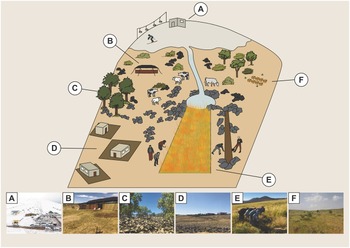
Karacadağ’s diverse landscape: A. Ski Resort B. Nomads C. Relic Oak Forest D. Settlement E. Rice Fields F. Honey Forest.

Women play a crucial role in preserving culinary traditions, particularly in preparing rice dishes. These culinary practices represent an important component of the transmission of traditional knowledge across generations and link food preparation directly to agricultural heritage.
Protein-based compounds constitute 8–12% of the grain by weight. This ratio is higher than that of many other rice varieties of Türkiye. The grains have a high-water absorption capacity during cooking and do not become mushy or sticky. Hulled rice is bright straw-yellow to light brown in colour. Karacadağ rice also has aromatic properties due to its volatile fatty acids. While commercially available improved varieties are either odourless or have a unique, straw-like aroma after cooking, Karacadağ rice has a pleasant, unique aroma reminiscent of a blend of mint and thyme. These physicochemical and sensory attributes reinforce the cultural and gastronomic value of the variety and contribute to its recognition within local food traditions.
Together, farming practices, water-sharing arrangements and culinary knowledge form an integrated traditional knowledge system that is environmentally compatible and socially embedded.
These intergenerationally transmitted systems strengthen community cohesion and support the continuity of Karacadağ rice cultivation.
However, insufficient awareness and recognition of Karacadağ rice within local and national contexts limit its role in promoting traditional knowledge and practices.
Cultural and social structures
The production and management of Karacadağ rice challenges of cultivation and marketing, no formal cooperatives or economic organizations exist. Instead, agricultural practices rely on informal structures rooted in kinship and communal traditions.
In villages, tasks such as planting, irrigation, and harvesting are often conducted collectively, distributing the workload and strengthening social ties. Costs for irrigation systems, including drilling and pipe installations, are shared among villagers, exemplifying the cooperative spirit of the region. These collective arrangements regulate access to labour, water and infrastructure and constitute the core of the social organization supporting rice production.
In Karacadağ Rice production areas, the natural landscape is continuously shaped through human–environment interaction, particularly in relation to water management (summarized in Fig. 4). The irrigation is carried out using snowmelt from the highlands of the Karacadağ Steppes. By directing this water through channels opened according to the slope of the land, a canal system is formed that converts steppe and pasture areas into rice fields. The areas outside the settlements in the Karacadağ region are used primarily for agriculture and pasture, which some locations such as ski area, relic oak forest, honey forest also hold tourism and conservation potential.
These informal systems, grounded in kinship and mutual reliance, ensure that communities can sustain production even without external support. This structure reflects the adaptability and resilience of local traditions, which continue to underpin agricultural sustainability in the region. However, the limited involvement of local non-governmental organizations (NGOs) in the production and distribution processes, constrains opportunities for broader community-based conservation and development.
Landscape features
Rice production in Karacadağ is supported by traditional irrigation systems that channel snowmelt from the highland to the stony foothills enabling the conversion of steppe and pasturelands into cultivated rice fields. These systems highlight the ingenuity of traditional agricultural practices, which adapt to the challenging topography.
Land use in Karacadağ is diverse, encompassing agricultural plains, steppes and pastures, as well as potential sites for tourism, such as relic oak forests and ski resorts (Fig. 4). The agricultural land covers 12.5% of the area, with 73% dominated by meadows and pastures. This balance between natural and cultivated environments underscores the integration of traditional practices with ecological sustainability (FAO-MAF 2022).
The inability to irrigate rice cultivation areas with sufficient water capacity threatens the long-term viability of traditional irrigation systems and agricultural productivity.
Discussion
The results of this study highlight the importance of ensuring the conservation and intergenerational transfer of the Karacadağ rice production system, along with its agricultural biodiversity, traditional knowledge, cultural heritage, value systems, social organizations and landscape features, while contributing to food security and livelihoods. The Karacadağ rice production system plays an important role in the conservation of agrobiodiversity, particularly through the cultivation of landraces and coexistence with the crop wild relatives. Conservation strategies should focus on maintaining the genetic diversity of Karacadağ rice and the surrounding ecosystem. The physicochemical, nutritional, and cooking properties of Karacadağ rice, including its high genetic adaptability to local conditions and significant nutritional value, have been studied by Köten et al. (Reference Köten, Ünsal and Kahraman2020). The local Karacadağ rice field was also studied by Alp et al. (Reference Alp, Kahraman, Atakul and Kilinc2018), focusing on its agronomic characteristics and emphasizing its use in organic farming. Similar to these studies, more detailed research on molecular characterization and agro-morphological studies would be beneficial for the conservation and use of Karacadağ rice. It will also require targeted efforts, such as establishing seed banks to preserve traditional rice varieties and developing biodiversity monitoring programmes to assess the health of local vegetation and fauna. Preserving the traditional knowledge associated with Karacadağ rice cultivation is essential to maintaining sustainable practices and cultural heritage. Education and training programmes should be established to document and transfer this knowledge to younger generations. Creating platforms for knowledge sharing, such as workshops and local festivals, can reinforce the importance of traditional agricultural practices. In addition, incorporating traditional knowledge into local educational curricula and supporting community-led conservation initiatives will ensure that these practices remain an integral part of the region’s identity and agricultural sustainability. The social and cultural structure of the Karacadağ rice production system is an integral part of its sustainability. Strengthening the informal social structures currently managing labour sharing and irrigation systems is critical. These structures should be supported by capacity-building programmes that enhance community cohesion and resilience. As highlighted in research on GIAHS conservation, adopting innovative models that optimize farming practices and improve economic benefits can ensure the sustainability of traditional agricultural systems while addressing challenges such as labour shortages and land use efficiency (Zhang et al. Reference Zhang, Min, Li, He, Zhang and Yang2017). Additionally, integrating cultural elements, such as the culinary traditions associated with Karacadağ rice, into marketing strategies can increase awareness and appreciation of its unique value. Promoting regional cultural events that celebrate traditional farming practices will further solidify Karacadağ rice’s role as a cultural symbol. Finally, the establishment and active participation of NGOs in the production and distribution process would significantly benefit the social and cultural structure of the Karacadağ rice production system.
The critical threat is inadequate water supply for rice cultivation since there is a decrease in the amount of rainfall in the region due to climate change. Sustainable and climate-smart management of irrigation systems is essential to mitigate this problem. Actions should include implementing and monitoring improved irrigation practices, regularly assessing groundwater levels in fields that use drainage systems, and planning cropping areas for each production season. The introduction of pilot projects for rainwater harvesting and the creation of water reserves, such as underground reservoirs, ponds and cisterns, will further ensure water availability and resilience to scarcity. Inefficient use of rice fields leads to sub-optimal yields, affecting the food security of local communities. This threat would benefit from agronomic research to increase production and efficiency. Another threat was the inability to obtain products with high added value from Karacadağ rice reduces economic opportunities. The low brand equity of Karacadağ rice also undermines its market potential and cultural identity. The lack of sufficient scientific information about Karacadağ rice hampers efforts to conserve and utilize its genetic resources effectively.
To meet quality standards in rice production and prevent issues such as reduced market competitiveness and economic viability, standards could be set for harvesting and post-harvest practices like ISO, HACCP etc. Practices could be developed to prevent storage problems and quality loss due to moisture after harvest.
The Barroso Agro-Silvo-Pastoral System in Portugal has been a GIAHS site since 2018 and benefits from a stronger institutional focus on preserving its landscape, including biodiversity monitoring and conservation programmes (FAO 2024). By contrast, Karacadağ could enhance its biodiversity conservation initiatives by establishing formal programmes and collaborating with scientific institutions to safeguard its genetic resources and bolster its resilience in the face of environmental and agricultural challenges. The Karacadağ Rice Production System highlights the enduring value of traditional agricultural practices in promoting ecological sustainability, preserving cultural heritage, and supporting rural development. This study demonstrates the system’s strong alignment with the FAO’s GIAHS initiative, laying the groundwork for its potential recognition. Nath et al. (Reference Nath, Inoue, Ee Wey and Takahashi2024) documented key characteristics of agricultural practices and GIAHS values using data from two GIAHS sites in Japan. Their findings show that GIAHS designation has encouraged farmers to preserve traditional practices, protect local crops, revive abandoned methods and adopt nature-based technologies. The study also concluded that the GIAHS programme helped strengthen community bonds, expand local festivals and foster relationships with various organizations. These findings align closely with our efforts to characterize the unique attributes of our GIAHS site and highlight the broader importance of such observations in the conservation of agricultural heritage systems. Similarly, Qiu et al. (Reference Qiu, Chen and Takemoto2014) highlight the importance of multi-stakeholder engagement in the conservation of Shiroyone Senmaida terraced rice fields in Japan. Their study highlights how a combination of government subsidies, volunteer contributions and urban-rural interactions successfully supported the conservation of traditional agricultural practices and cultural landscapes. This approach underscores the critical role of collaborative efforts in addressing challenges such as an aging farming population, financial constraints and land abandonment. Through a multi-stakeholder and participatory approach, key threats to the system’s sustainability were identified, and actionable recommendations were developed to enhance its resilience. While both systems utilize traditional methods to adapt to challenging landscapes, the Kunisaki Agricultural System, as described by the FAO (2024), illustrates the benefits of adopting additional land use strategies. This approach emphasizes the crucial role of collaboration in addressing issues such as an ageing farming population, financial constraints and land abandonment. The Barroso Agro-Silvo-Pastoral System in Portugal (FAO 2024) and GIAHS-designated sites in Japan (Nagata and Yiu Reference Nagata and Yiu2021) offer valuable insights into the role of traditional farming practices in sustaining agro-biodiversity and rural resilience.
The unique volcanic landscape feature of the Karacadağ region, which enables rice cultivation in basalt-rich soils, must be carefully managed to ensure its sustainability. The Kunisaki Peninsula and USA GIAHS site in Japan (FAO 2024) demonstrates a highly integrated land use system, blending traditional agriculture with sustainable tourism and ecological restoration (Nomura et al. Reference Nomura, Hong and Yabe2018). This multifunctional land use optimizes both economic and environmental benefits. Conversely, the Karacadağ Rice Production System remains focused primarily on rice cultivation for local consumption, with limited diversification in land use. Although both systems utilize traditional methods to adapt to challenging landscapes, Kunisaki highlights the potential for Karacadağ to adopt additional land use strategies. Sustainable land use practices should focus on preserving the delicate balance between agricultural production and ecological health. Measures such as soil conservation programmes, the restoration of degraded lands and the integration of agroforestry practices can enhance landscape resilience. Additionally, improving irrigation infrastructure to optimize water use while protecting natural water sources is essential for maintaining the productivity and ecological integrity of the landscape. Barroso integrates livestock grazing, forestry and crop production, fostering a complex ecosystem that supports diverse plant and animal species (Martins et al. Reference Martins, Gonçalves, Silva, Gonçalves and Branco2022). Likewise, Karacadağ is home to a unique landrace of rice adapted to its volcanic soils, along with wild relatives of major crops such as wheat and chickpeas.
Barroso benefits from biodiversity monitoring and conservation programmes, while in Japan, local stakeholders implement educational programmes, branding initiatives and eco-payment schemes to maintain traditional practices and promote biodiversity (Nagata and Yiu Reference Nagata and Yiu2021). Based on a decade of GIAHS experience in Japan, customized educational programmes – tailored to different educational stages such as elementary, junior high and high school – play a crucial role in transferring traditional knowledge to younger generations and fostering a sense of pride and responsibility. Lessons from these cases suggest that Karacadağ could further strengthen its biodiversity conservation efforts by establishing formal programmes and collaborating with scientific institutions to protect its genetic resources and ensure resilience to environmental and agricultural challenges. Such collaboration would enhance the understanding and preservation of the region’s unique genetic heritage, contributing to long-term agricultural sustainability.
Recommendations
To enhance the Karacadağ Rice Production System’s contribution to food and livelihood security, efforts should prioritize the protection of traditional rice production areas and the improvement of agricultural productivity. Addressing this challenge requires initiatives such as rainwater harvesting, improving conventional irrigation systems, identifying areas for sustainable cultivation based on settlement patterns. Financial incentives, policies to protect agricultural land from non-agricultural uses, and promotion of sustainable agricultural practices are essential to increase production through traditional methods, meet local food needs, and ensure the economic viability of farmers. Supporting these measures with cooperative structures and branding initiatives, such as the recognition of Karacadağ rice as a geographical indication product, can improve market access and strengthen rural livelihoods. Also, packaging and marketing conditions should be defined. To increase the economic opportunities the value chain of products with high added value should be established.
By aligning with the GIAHS criteria, the Karacadağ Rice Production System illustrates how traditional practices can support global sustainability goals. Addressing identified threats and implementing targeted recommendations will ensure the long-term environmental, cultural and economic viability of the system. Drawing inspiration from GIAHS-designated sites globally, where successful initiatives in ecotourism, land use optimization, rural development and product marketing have been implemented, similar strategies can be explored for Karacadağ (Bixia and Zhenmian Reference Bixia and Zhenmian2013; Nomura et al. Reference Nomura, Hong and Yabe2018; Su et al. Reference Su, Sun, Min and Jiao2018; Akira and Evonne Reference Akira and Evonne2021). This approach not only protects a significant agricultural heritage but also provides a model for sustainable rural development and resilience to modern challenges.
Ethical considerations
This study was conducted in accordance with the Regulation on Scientific Research and Publication Ethics of Higher Education Institutions (https://www.yok.gov.tr/Sayfalar/Kurumsal/mevzuat/blmsel-arastrma-ve-etk-yonetmelg.aspx) and the ethical standards and guidelines established by the Food and Agriculture Organization of the United Nations (FAO).
The work presented in this article, Implementing the Globally Important Agricultural Heritage System (GIAHS) Approach (Karacadağ Rice), is based on the ‘Management Planning of Karacadağ Steppes’ carried out in 2021–2022 within the Conservation and Sustainable Management of Turkey’s Steppe Ecosystems – GCP/TUR/061/GFF Project, financed by the GEF and implemented by FAO in close cooperation with the GDNCNP, the GDPP, and the General Directorate of Forestry of the Ministry of Agriculture and Forestry.
All data were collected in accordance with FAO guidelines, with full respect for local customs and traditional knowledge systems. Participants were informed in advance, and verbal voluntary consent was obtained. It was clearly stated that participation was entirely voluntary. Data were securely stored and used solely for the purposes of the Karacadağ Steppes Management Plan and the GIAHS (Karacadağ Rice) study. Findings were communicated back to the Ministry of Agriculture and Forestry, integrated into the FAO system, and shared with local stakeholders in line with FAO’s benefit-sharing principle.
At the time of the study, formal approval from a university ethics committee was not required due to the non-experimental, observational, and participatory nature of the research. Nevertheless, all procedures were conducted in full accordance with national and internationally recognized ethical standards throughout the entire research process. Although formal ethics committee approval was not required by the institution at the time of the study, both the national ethical principles applied by Turkish universities – particularly within Social and Human Sciences Ethics Committees – and internationally recognized ethical standards were fully adhered to throughout the research.
Supplementary material
The supplementary material for this article can be found at https://doi.org/10.1017/S1479262126100549.
Acknowledgements
The authors extend their sincere gratitude to the residents, community leaders, women, and youth of Eskihan, Karacadağ, Küptepe, Otlek, Söylemez, Şeko (Dulda); Gözler; and Demirli villages, who actively supported and participated in the data collection process. Appreciation is also expressed to the enterprises engaged in the sale and marketing of Karacadağ rice. The authors thank Sadık Serhat Arda for accompanying field missions and all project team members who provided technical insights on the region (Süha Berberoğlu, Zeki Aytaç, Bülent Gülçubuk, Bahattin Çelik, Emel Baylan, Sevgi Görmüş Cengiz, Ahmet Çilek, Murat Bayramoğlu, Serhat Cengiz, Meryem Bihter Bingül Bulut, Gülden Beşirbellioğlu, Ünal Satı Yılmaz, Zekiye Çetinkaya). The authors also express their gratitude to FAO, the project coordinator, and the central and field staff of the beneficiary institutions for their continued support and contributions during project implementation.
Funding statement
The study is based on the GIAHS (Karacadağ Rice) work, funded under the Conservation and Sustainable Management of Turkey’s Steppe Ecosystems – GCP/TUR/061/GFF Project. The project was financed by the GEF. The third author served as a full-time project staff member assigned within FAO under this project.
Competing interests
The authors declare no competing interests.


 Open access

