




Introduction
Physical activity (PA) can be defined as any voluntary bodily movement, produced by skeletal muscles, which results in energy expenditure (Caspersen et al. Reference Caspersen, Powell and Christenson1985). Based on the current evidence, adults should be encouraged to engage in regular PA (i.e., at least 150 minutes of moderate-intensity or 75 minutes of vigorous-intensity aerobic activity, with muscle strengthening on 2 or more days per week) (World Health Organization (WHO) 2020) and be advised to live as actively as possible, as any amount of activity is better than none at all. Recommendations also extend to people with advanced, progressive diseases. Studies show that PA is an important palliative rehabilitative strategy that can alleviate distressing symptoms (e.g., fatigue, shortness of breath) and improve quality of life (Kosmadakis et al. Reference Kosmadakis, John and Clapp2012; Vira et al. Reference Vira, Samuel and Amaravadi2021). However, few adults with advanced, progressive diseases in England are active (Elshahat et al. Reference Elshahat, Treanor and Donnelly2021). Barriers to engagement arise not only from personal factors (e.g., low motivation, poor mobility) but also the social (e.g., lack of support from family and friends) and physical environment (e.g., limited access to interventions) in which people with advanced progressive disease inhabit (Burke et al. Reference Burke, Utley and Belchamber2020). Finding solutions to support people who experience multiple complex barriers to PA engagement should be a key priority for palliative and hospice care services.
Hospices, which are a leading setting in which specialist palliative care is provided, can play a vital role in promoting PA. Evidence suggests that care settings (e.g., primary and secondary care) and health professionals (e.g., general practitioners, nurses, physiotherapists) who work within them have considerable influence on patients’ health behavior and are well-positioned to promote PA (Cunningham and O’Sullivan Reference Cunningham and O’Sullivan2021; Hassett et al. Reference Hassett, Jennings and Brad2022). However, promoting PA in the health sector is often varied and dependent on multiple key enablers such as funding and available expertise (Albert et al. Reference Albert, Crowe and Malau-Aduli2020). For the most part, care pathways have not formally embedded PA, with ad hoc and often limited provision within health service delivery (Bayly et al. Reference Bayly, Bradshaw and Fettes2022; Burke et al. Reference Burke, Utley and Belchamber2020). Despite the increasing recognition of PA as an important palliative rehabilitative strategy for people living with advanced diseases, there is a dearth of evidence on the provision of PA in hospices in England. We address this gap in the literature through this study, which sought to investigate the extent of and intervention features of PA in hospice care in England alongside barriers and facilitators to their delivery.
Methods
Research design
This study used an embedded approach (Creswell and Plano Reference Creswell and Plano2011; Green Reference Green2007), which can be defined as a mixed-methods design where one type of data (e.g., interview data) plays a supporting role in a study predominately based on the other data type (e.g., survey data). This approach included an online survey, to enable the collection of numerical data and free-text responses from a large group of respondents, alongside focus group discussions and individual interviews to provide a more nuanced exploration of perspectives on PA service delivery from a subgroup of survey respondents. The survey was the dominant method and was supported by the qualitative data. The quantitative and qualitative data were collected and analyzed simultaneously but separately (from July 2021 to January 2022), and then integrated to give insight into current PA service provision in hospice care in England. Mixed methods offer distinct yet complimentary data and provide a more comprehensive understanding than either data collection method alone can offer (Johnson et al. Reference Johnson, Onwuegbuzie and Turner2007). Ethical approval for this study was gained from the Faculty of Medicine and Health at the University of Leeds (MREC 20–052).
Quantitative methods
Survey content
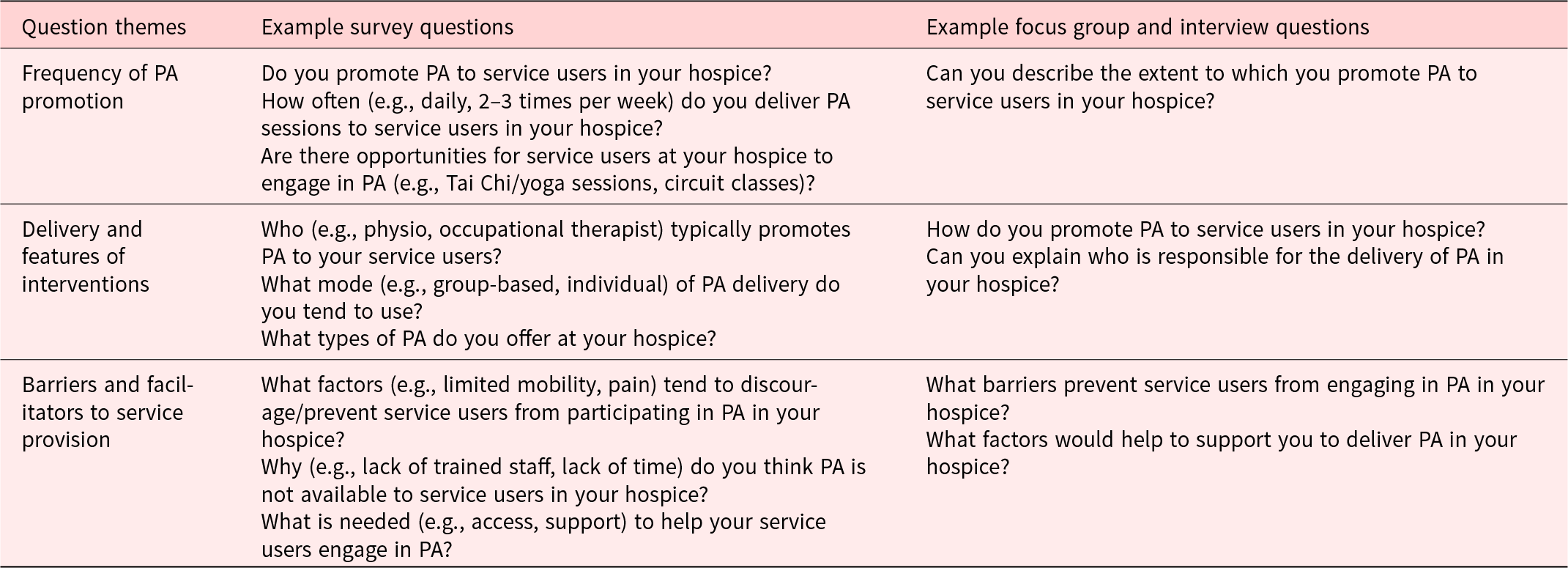
An anonymous online survey was developed by SB and BE specifically for this study using Online Surveys (formerly Bristol Online Surveys; BOS) platform (JISC 2020). The survey used adaptive questioning and contained 69 questions that were grouped into 3 main areas (see Table 1). The survey also included free-text responses asking participants to elaborate briefly on yes or no responses. The survey was piloted by 3 palliative care health providers (physiotherapists, based in 3 hospices) targeted by the survey, who reviewed items and provided minor suggestions on changes to questions to ensure they were easy to understand and could be completed in less than 15 minutes. At the end of the survey, all participants were asked to provide their email address if they were willing to take part in a follow-up focus group. Before responding to the survey items, participants viewed an information sheet and indicated their informed consent.
Survey and focus group and interview themes and example questions

Survey recruitment
An email was sent to the chief executive of adult hospices (n = 147) in England. The research team used a contact list of hospices held by the Academic Unit of Palliative Care, at the University of Leeds, which was developed through earlier national survey studies (Allsop et al. Reference Allsop, Ziegler and Mulvey2018; Birtwistle et al. Reference Birtwistle, Millares-Martin and Evans2022; Neoh et al. Reference Neoh, Stanworth and Bennett2019 ). The list was developed to yield an even geographical spread of responses. We sought to recruit sites that were not National Health Service (NHS) hospices as these can be in hospital settings, often starting as hospital palliative care wards or units. Instead, we recruited across sites that reflect the most common hospice model that are independent organizations typically receiving a proportion of government funding supplemented by charity fundraising. The email sent to hospices contained detailed study instructions and a hyperlink to the online survey. The chief executive of each hospice was asked to identify 1 staff member who had oversight of PA provision or rehabilitative care (if PA was not delivered as part of hospice care) and share the email and link to the online survey (which was voluntary to fill in). A reminder email followed 3 and 6 weeks later and was sent to hospices who had not already completed the survey. We aimed to collect 1 response per hospice.
Survey analysis
Data were downloaded from Onlinesurveys® into IBM SPSS software (version 26, IBM Corp, Armonk, New York) for analysis. Categorical responses were summarized using frequencies and percentages. Responses entered into text boxes were analyzed, using thematic analysis, to identify categories. All questionnaires were analyzed including those that were incomplete.
Qualitative methods
Focus group and individual interview content
The focus groups (n = 4) and interviews (n = 3) followed a semi-structured format and included questions (see Table 1) that were designed to elicit a nuanced exploration of participants’ perspectives (n = 19) on PA service provision in 18 hospices. The first author (SB) developed the interview guide based on the main areas targeted in the survey.
Focus group and individual interview recruitment
An email was sent to survey participants who had previously indicated their willingness to take part in an online (recorded using Zoom) focus group discussion or individual interview (i.e., convenience sampling). The email included detailed information (e.g., the purpose and duration of the focus groups and individual interviews). A time was scheduled with those participants who replied to the email and continued to express interest in taking part in the study. Three participants requested an individual interview and this was arranged. At the beginning of each focus group and interview, participants affirmed their consent to participate. A female PhD student (NH) conducted the focus groups and interviews alongside a senior member of the research team (SB or MA).
Focus group and interview analysis
The focus groups and interviews were transcribed by the first, second, and fifth authors and initially analyzed by 2 researchers (SB and NH), using Braun and Clarke’s deductive thematic framework approach (Braun and Clarke Reference Braun and Clarke2006). Analysis was guided by the main thematic areas targeted in the survey. After reading each transcript, descriptive codes were generated and any segment of text coded multiple times was grouped and identified as a potential subtheme. A framework was developed to provide structure to the data in the form of codes, subthemes, and themes. The data were then moved from the transcript and placed in the framework (i.e., charting). For example, a desire to embed a hospice culture of PA was commonly reported and participants offered examples of how they believed this could be achieved. Data from the transcripts related to this theme were organized into 2 main codes: (1) creating an enabling environment for PA to occur and (2) adopting a joined-up multidisciplinary approach to PA provision. Next, the transcripts were re-examined to be certain no data were missed. A collaborative process that involved working with critical friends occurred (Smith and McGannon Reference Smith and McGannon2018) whereby alternative explanations for findings that were generated were suggested and discussed with the research team. A thick description of each theme was developed with supporting quotations selected from the original transcripts to build a complex, holistic picture. The research team ensured that data were collected to the point when no new information was discovered in the analysis (Fusch and Ness Reference Fusch and Ness2015).
Integration of quantitative and qualitative data
Integration of quantitative and qualitative data occurred on multiple levels. First, integration occurred at the study design level by using an embedded approach. Second, it occurred at a methods level by (a) linking the 2 databases through sampling (i.e., focus group and interview participants were selected from the population of survey respondents); (b) collecting qualitative data using parallel questions to survey questions; and (c) merging data whereby analysis involved side-by-side comparisons so qualitative findings (i.e., themes, subthemes) were compared to the survey results. This explored the alignment of quantitatively assessed measures of participants’ PA practices with their perceptions by adding context to survey results. Third, a contiguous approach to integration was used whereby study findings were presented within a single manuscript, but the survey and focus group and interview findings are reported in different sections. Integration provides study rigor by significantly enhancing the value of mixed-methods research (Fetters et al. Reference Fetters, Curry and Creswell2013). Reporting is aligned with the CHERRIES checklist for survey reporting (Eysenbach Reference Eysenbach2004) and COREQ for the focus groups and interviews (Tong et al. Reference Tong, Sainsbury and Craig2007).
Results
Quantitative and qualitative results are presented separately. The qualitative themes support and provide context for the survey results.
Survey results
Participant and hospice characteristics
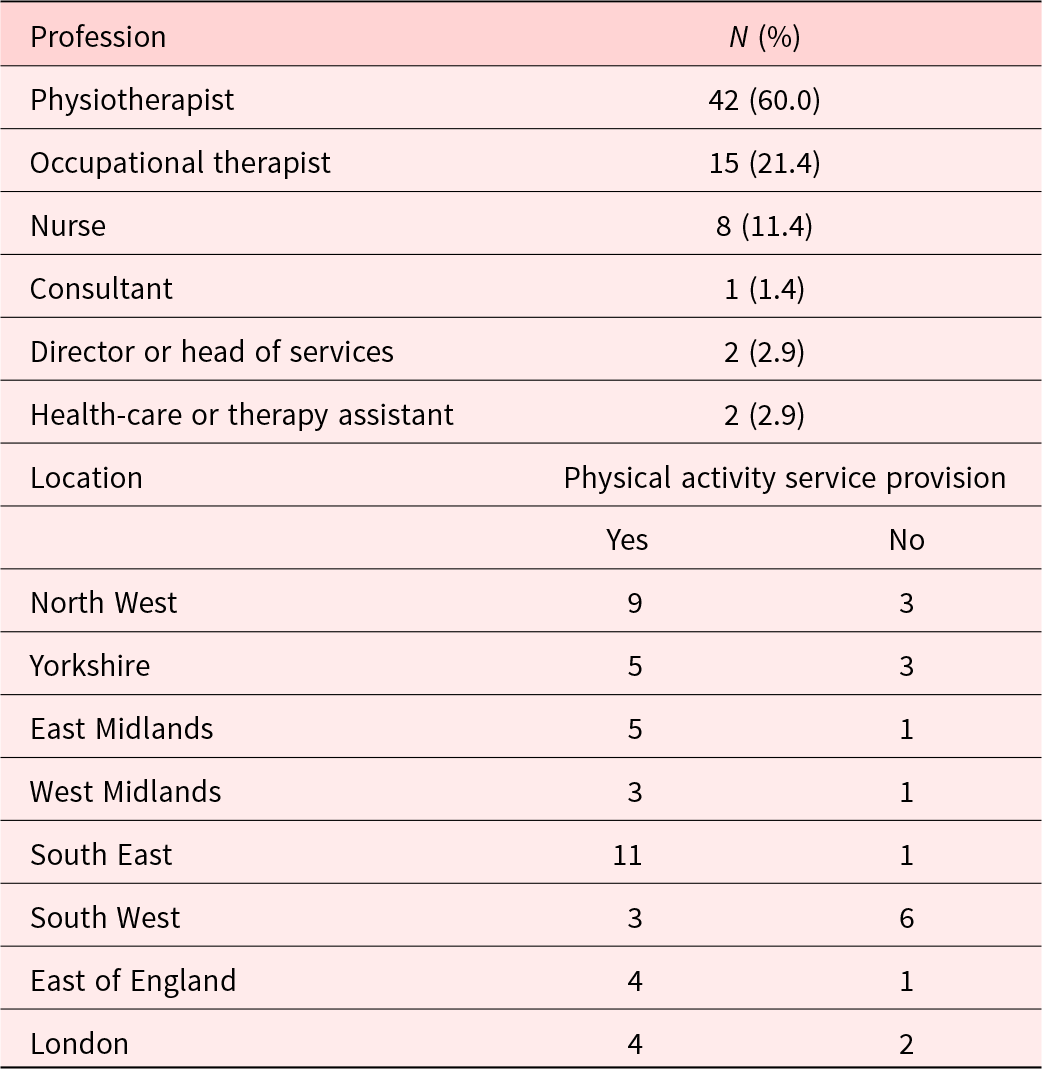
In total, 147 hospices in England were approached for this study. From this, 70 (47.62%) completed the online survey. Respondents included physiotherapists (n = 42/70; 60%), occupational therapists (n = 15/70; 21.4%), nurses (n = 8/70; 11.4%), directors or heads of hospices services (n = 2; 2.9%), health-care/therapy assistants (n = 2/70; 2.9%), and a consultant (n = 1/70; 1.4%). Participants were from 70 hospices representing all 9 regions of England (Table 2).
Demographics of respondents (n = 70)

Note: For location 2 missing responses (n = 68).
PA service provision
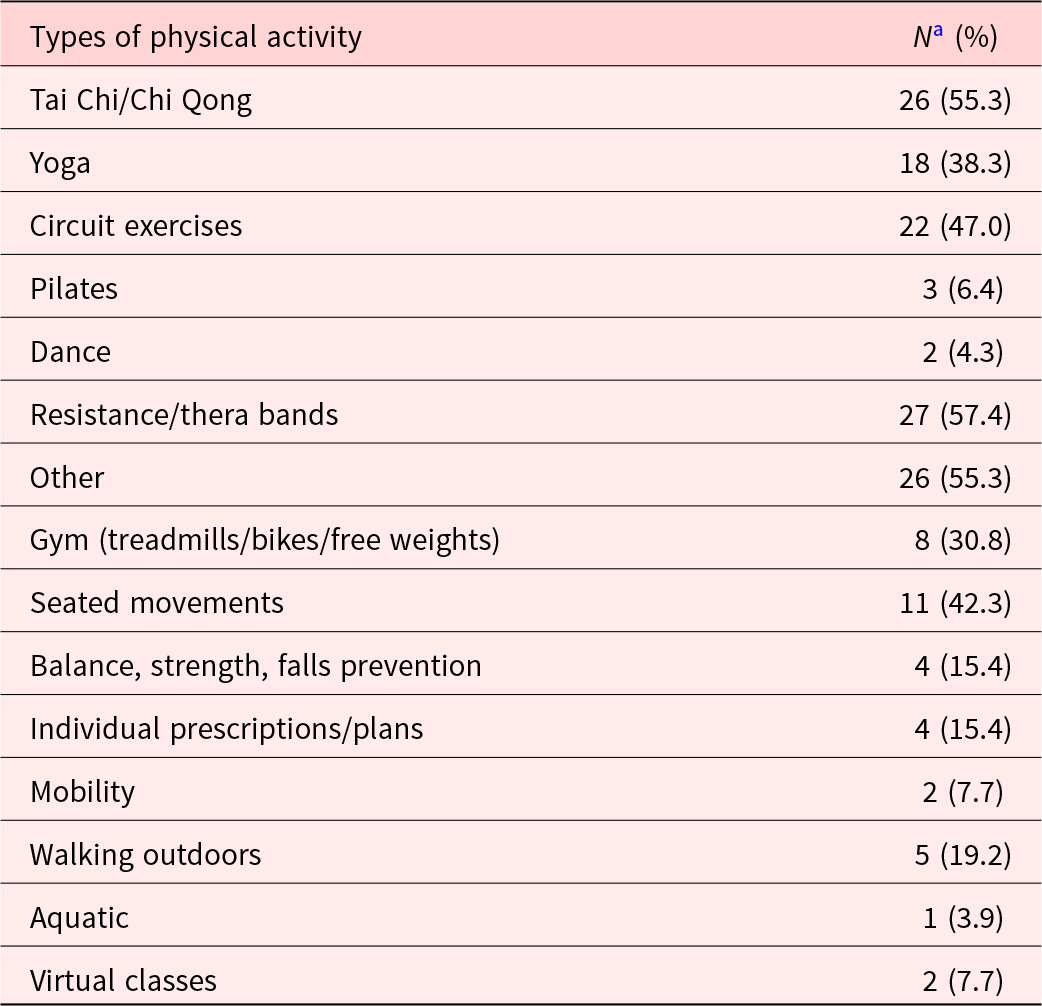
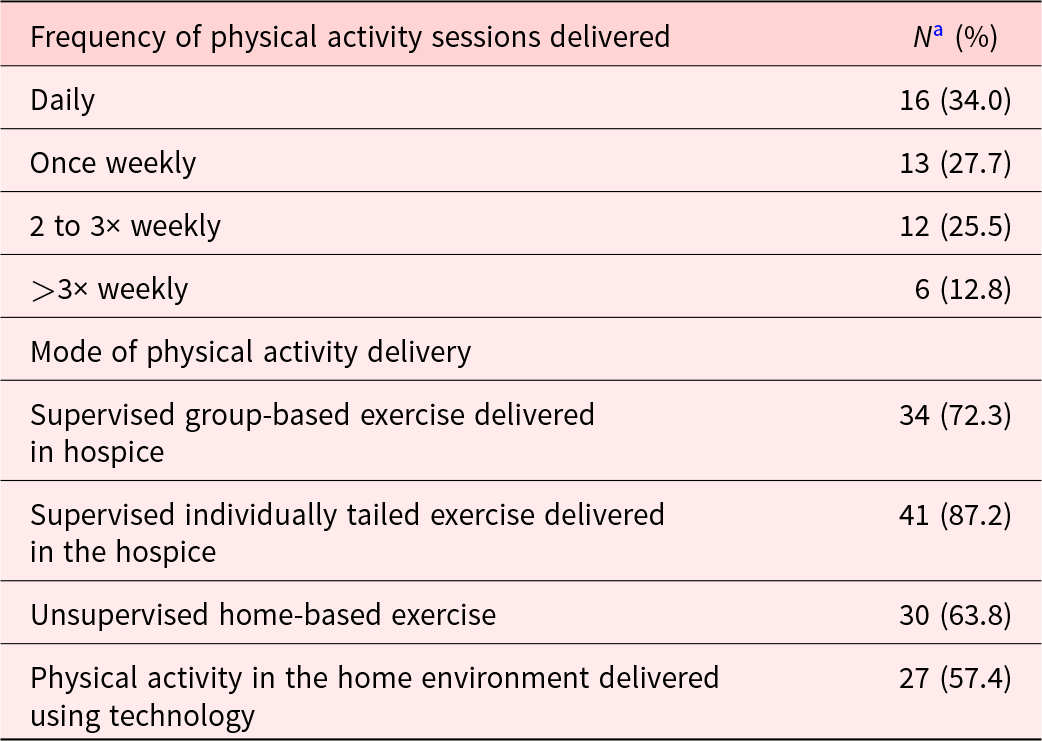
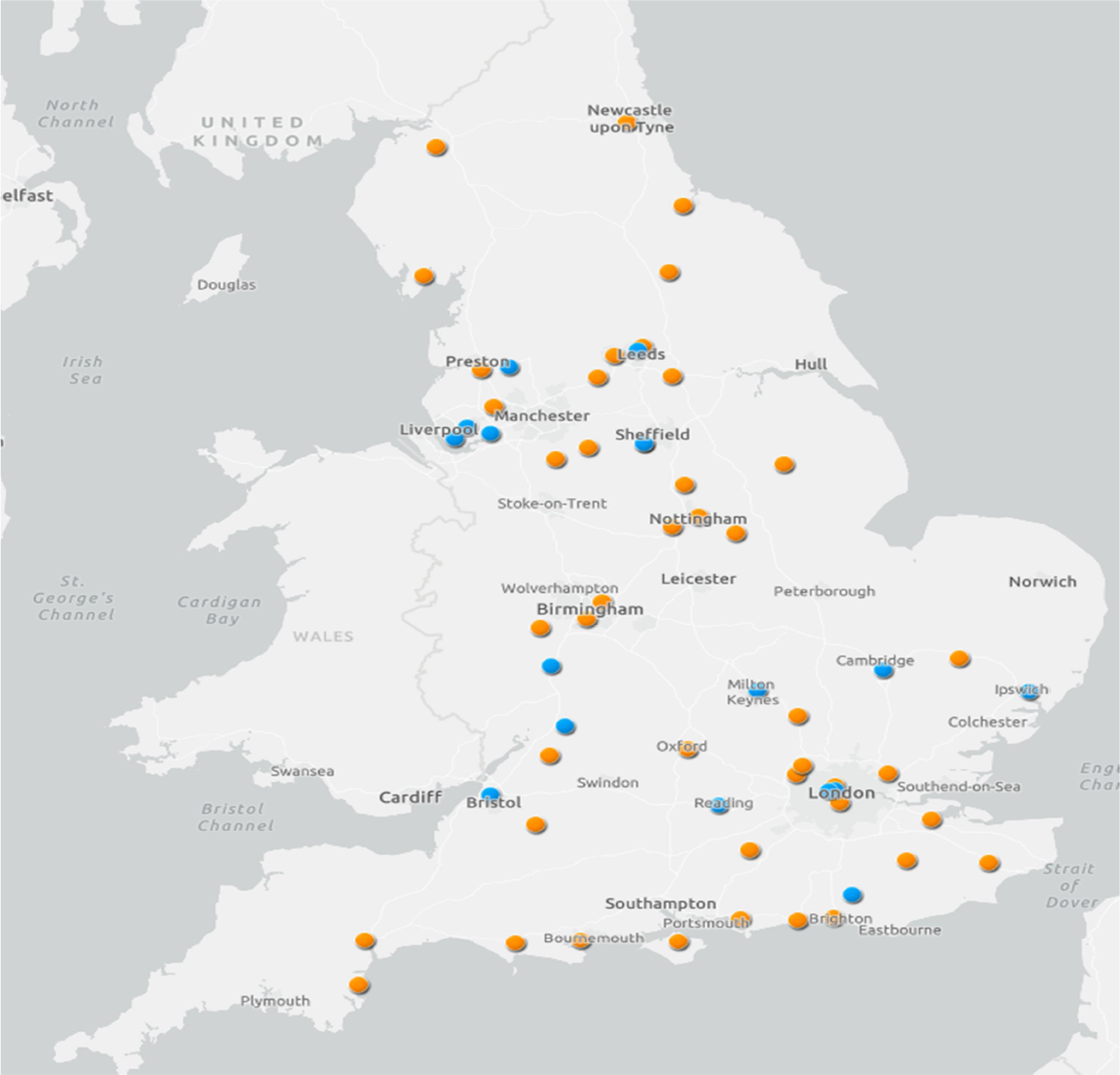
The majority of responding hospices (n = 47/70; 67%) promoted PA as part of routine care. Among these 47 hospices, PA was delivered to outpatients (n = 39/47; 83%), inpatients (n = 38/47; 80%), and community-based patients (n = 29/47; 62%) using a range of modalities including resistance/thera bands, Tai Chi/Chi Qong, circuit exercises, and yoga (Table 3). PA was typically delivered in a seated position (n = 43/47; 61%), or by standing (n = 26/47; 37%), with only a few hospices offering interventions while laying down (n = 7/47; 10%). Sessions were most often delivered by a physiotherapist (n = 40/47; 85%) and included individually tailored exercises delivered in the hospice (n = 41/47; 87%), supervised group-based exercises (n = 34/47; 72%), unsupervised home programs (n = 30/47; 64%), and home programs delivered using technology (n = 27/47; 57%; Table 4). Service provision varied by region (Fig. 1), with more hospices in the South East (n = 11/47; 16%) delivering PA as part of their care service.
Types of physical activity provision

Note: (aN = 47), other (n = 26).
Physical activity provision frequency and mode

Note:
a N = 47.
The delivery of physical activity in hospice care across England. Orange represents hospices that promote physical activity as part of their service provision. Blue represents hospices that do not promote physical activity as part of their service provision.

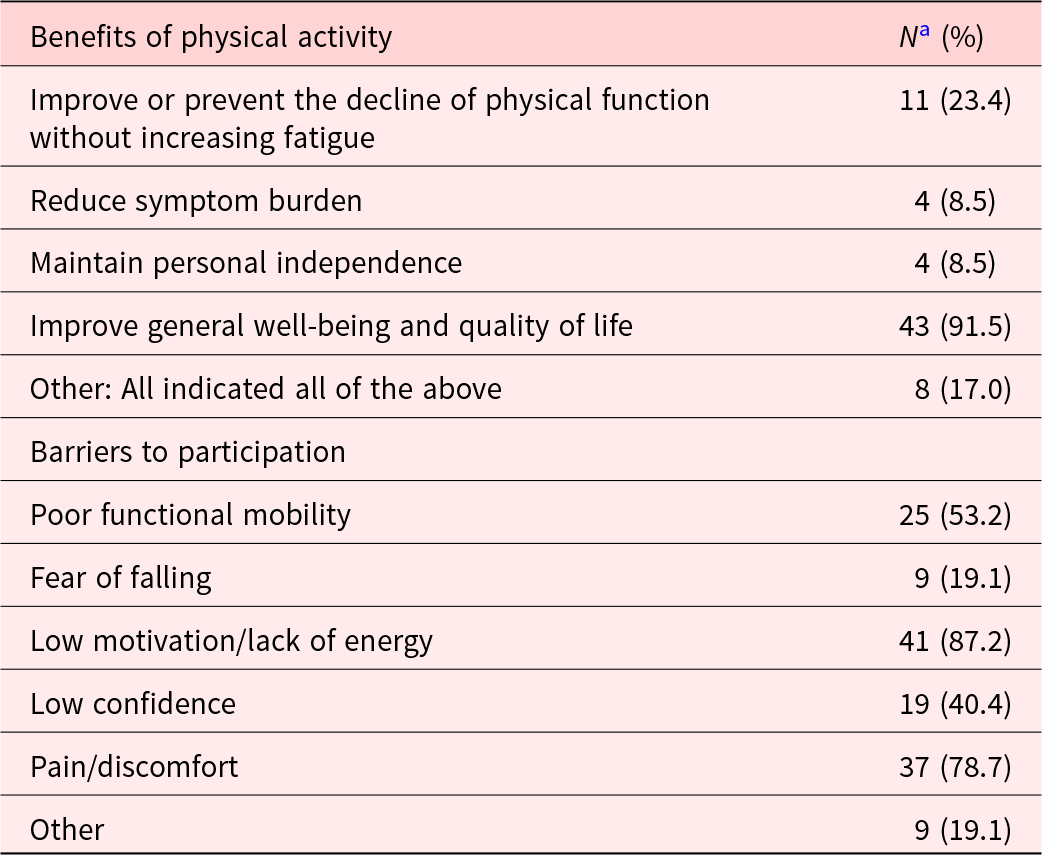
Among those hospices (n = 47) where PA is promoted as part of routine care, the main barriers that participants reported as discouraging or preventing service users from engaging in PA were low motivation (n = 41/47; 87%), pain/discomfort (n = 37/47; 79%), poor functional mobility (n = 25/47; 53%), low confidence (n = 19/47; 40%), and fear of falling (n = 9/47; 19%). The majority of respondents (n = 29/47; 61%) from these hospices indicated that the most important benefit for service users was an increase in general well-being and quality of life. Table 5 presents a summary of the perceived benefits and barriers to PA participation.
Benefits and barriers to physical activity service provision

Note: (aN = 47) Other included not wanting to be in a group, do not want to engage with the hospice, disease progression, difficulty accessing for outpatients, being put off by family or other professionals.
Most respondents (n = 45/47; 96%) who worked at hospices where PA was promoted as part of routine care indicated that their PA service provision changed because of COVID-19, with 2 (n = 2/47; 4%) indicating there was no change. The most frequently reported change to services was a switch of delivery from in-person hospice-based sessions to online sessions accessed by patients in their home environment (n = 35/47; 75%). Other changes included the promotion of self-initiated home-based (15/47, 32%) and suspension of all services (n = 9/47, 19%), with 1 hospice adding PA service delivery during the pandemic.
A lack of PA service provision
A third of participants (n = 23/70; 33%) indicated that there was no PA provision in their hospice. The majority of these participants (n = 15/23; 65%) reported 2 or more barriers to promoting PA including lack of trained staff (n = 14/23; 61%), lack of time (n = 10/23; 43%), lack of policy and/or guidelines (n = 10/23; 43%), concerns around the safety of service users (n = 6/23; 26%), lack of demand from service users (n = 4/23; 17%), and lack of funding and resources (n = 2/23; 9%). The majority of respondents (n = 20/23, 87%) believed that colleagues and staff within their hospice would benefit from access to resources on how to prescribe, monitor and design sessions, with 78% (n = 18) indicating that their staff would be interested in attending a training course.
Focus group and interview findings
Participant and hospice characteristics
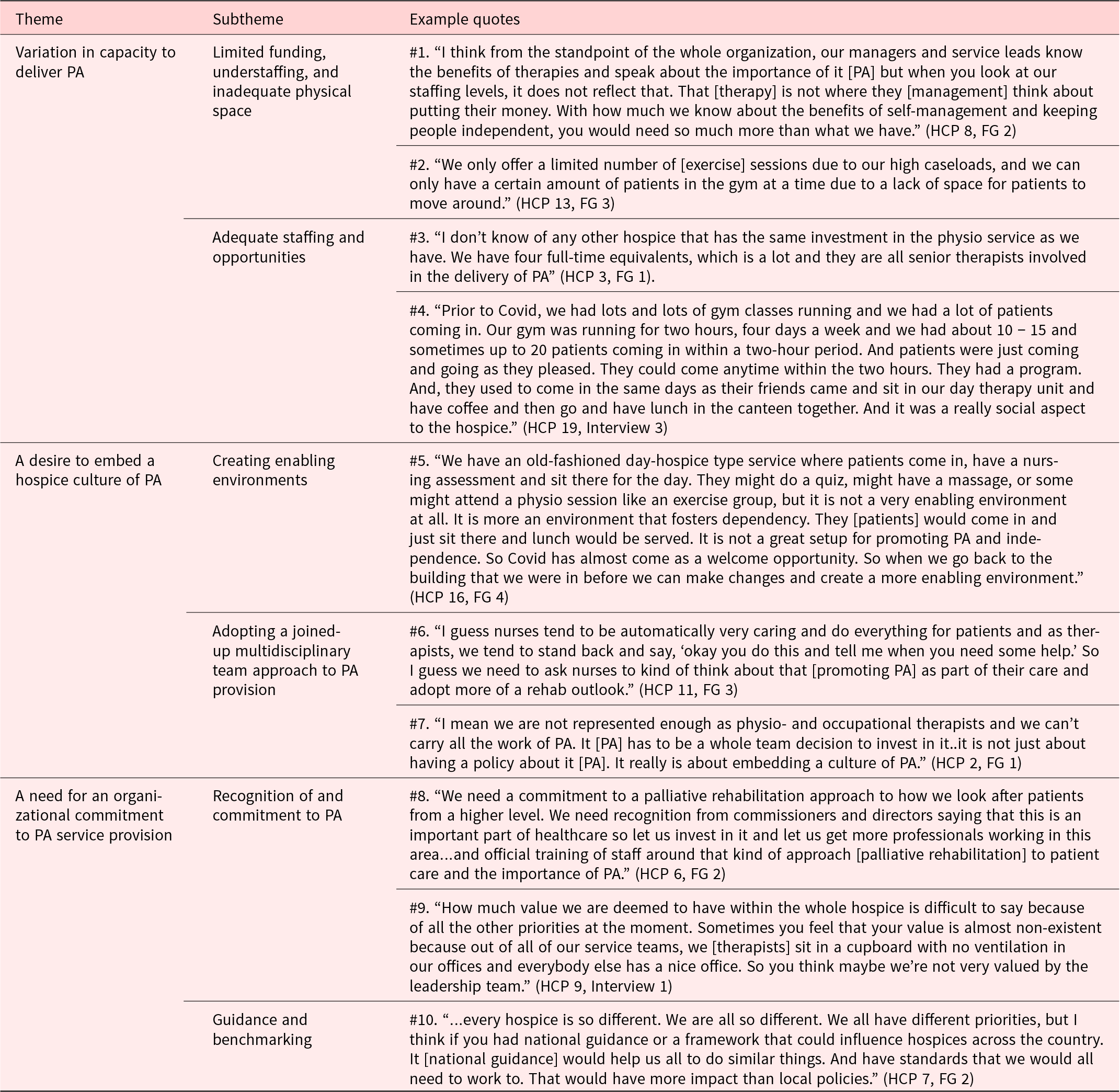
At the end of their survey, 30 participants expressed willingness to participate in an interview, and 19 responded to the invitation. All participants were currently involved in the delivery of PA at their hospice. Focus groups and interviews were on average 48 minutes, with a range of 38–65 minutes. Analysis of the data revealed 3 broad emergent themes: (i) variation in capacity to deliver PA, (ii) a desire to embed a hospice culture of PA, and (iii) a need for an organizational commitment to PA, each of which had 2 subthemes. Supporting quotes for each are provided in Table 2.
Variation in capacity to deliver PA
The capacity (i.e., funding, staffing, and resources) to deliver PA differed considerably among hospices. While some health professionals reported adequate staffing and ample opportunity for patients to consistently and safely engage in exercise, most health professionals reported limited funding, understaffing, and inadequate space to deliver high-quality PA provision.
Limited funding, understaffing, and inadequate physical space
Most participants spoke about underinvestment in the number of trained staff (i.e., therapists) needed to deliver PA in routine care. While most leadership and hospice management teams understood the importance of therapy services including PA provision, funding to staff these services adequately was not a priority (e.g., Table 6; quote 1). Underinvestment in staff to deliver therapy services was, seen by participants as, a barrier to making a positive impact on patient outcomes as well as the delivery of high-quality PA services. One participant noted that their hospice did not have a physiotherapist and therefore struggled to deliver PA. Others barriers to the delivery of PA in routine care included a lack of staff time due to high caseloads and inadequate space for patients to move freely (e.g., Table 6; quote 2).
Themes, subthemes, and example quotes reflecting participants’ perspectives on physical activity service delivery in hospice care

Adequate staffing and opportunities
Some participants reported sufficient numbers of suitably qualified and skilled therapists for PA provision. For example, 1 participant spoke about having 4 full-time equivalent senior therapists to deliver PA (e.g., Table 6; quote 3). Health professionals from hospices who had sufficient numbers of trained therapists to deliver PA, reported ample opportunities for their service users to engage in PA at their hospice (e.g., Table 6; quote 4).
A desire to embed a hospice culture of PA
Most participants talked about a desire to embed PA provision in the organizational culture or fabric of hospice care. It was important to participants that a PA ethos that permeated the day-to-day delivery of care was adopted by the wider palliative care team. In particular, they expressed a need for their hospice to create an enabling environment for PA to occur and adopt a joined-up multidisciplinary approach to PA provision.
Creating enabling environments
Participants talked about wanting to improve the physical environment in which they delivered care to better enable and support patients to be more physically active and independent. While some participants reported that their hospice was set up to promote healthy and active living, other participants were concerned that the setting in which patients were receiving care was contributing to sedentary behavior and dependency as patients were encouraged to be sedentary and reliant on staff (e.g., Table 6; quote 5).
Adopting a joined-up multidisciplinary team approach
Most participants reported a need for a joined-up multidisciplinary team (MDT) approach to PA provision. While most members (i.e., therapists) of the MDT took an active role in promoting PA, participants reported that nurses were more likely to adopt a caring approach (i.e., supporting patients to be comfortable and completing tasks for them such as getting dressed and undressed) rather than encouraging patients to move and undertake activities for themselves (e.g., Table 6; quote 6). It was important to participants that all staff who provided care to patients adopted a rehabilitation outlook and worked together to achieve common goals related to the delivery of PA (e.g., Table 6; quote 7). While most participants expressed a desire for nurses to take more of an active role in promoting patients to move more, 1 participant reported that their entire MDT including nurses promoted PA. The therapy team worked with their nurses encouraging them to complete a measure of performance in activities of daily living (i.e., a Barthel index) regularly to ensure that PA promotion was embedded in routine care.
A need for an organizational commitment to PA
Most participants talked about a need for the directors and senior management team at their hospice to demonstrate an organizational commitment to PA service provision. Participants wanted PA to be given equal priority as other services within their hospice. They also communicated a desired for guidance and benchmarking at the national level to support health professionals when delivering PA.
Recognition and commitment to PA
For most participants, their organization needed to demonstrate a stronger commitment to and investment in PA service provision (e.g., Table 6; quote 8). Participants discussed the need for more funding and training to support the delivery of PA. In particular, they wanted their hospice to invest in the number of trained staff needed to deliver PA. Some participants shared that they felt undervalued by their organization and wanted to be treated equally to other staff within their hospice (e.g., see Table 6; quote 9).
Guidance and benchmarking
For some participants, benchmarks were deemed to be important for providing the MDT with guidance and structure around PA provision as well as ensuring consistency in delivering PA to patients (e.g., Table 6; quote 10). Benchmarks at the national level were seen as important for consistency of PA service delivery across the nation.
Discussion
This mixed-methods study provides the first comprehensive description of PA service provision across hospices in England. While almost two-thirds of participating hospices in England promoted PA in routine practice, not all provided this service mainly due to a range of barriers at the organizational level (e.g., a lack of trained staff, lack of time). This finding aligns with other studies determining variation across the types of services (e.g., physiotherapy, occupational therapy, respite management, rapid response, bereavement care) provided to patients and families across hospices in the UK (Carlson Reference Carlson2007; Finucane et al. Reference Finucane, Swenson and MacArtney2021; Keeble et al. Reference Keeble, Scobie and Hutchings2022; Mitchell et al. Reference Mitchell, Volandes and Gutman2020). Drivers of disparity in PA service provision across England may be due to a lack of sustainable funding for the hospice care sector (Oliver Reference Oliver2019). PA promotion in health-care settings generally can be hindered by funding pressures, workforce shortages, and lack of training (Albert et al. Reference Albert, Crowe and Malau-Aduli2020) which may contribute to inequalities in the quality of care provided to patients (Hasson et al. Reference Hasson, Sallis and Coleman2022; Kates et al. Reference Kates, Gerolamo and Pogorzelska-Maziarz2021). A better understanding of the causes of variation in service delivery including their impact on patient and family outcomes and satisfaction with hospice care is an important area for future research.
Among those hospices that promoted PA, qualitative findings suggest that there is variation in capacity to consistently deliver interventions in hospice care. Given the significant psychosocial and physical benefits (e.g., reduced fatigue, improved mobility) of engagement in patients with advanced, incurable diseases (e.g., Bradshaw et al. Reference Bradshaw, Phoenix and Burke2020; Miller et al. Reference Miller, McCarthy and Hudson2018), it is important for hospices to address the barriers that prevent patients from being able to access continued support for PA engagement. Patients who receive hospice care face unique challenges to engagement (e.g., multi-morbidities, dyspnea, frailty, sarcopenia) and require professional support, personalized advice, and easy access to interventions (e.g., convenient locations) (Burke et al. Reference Burke, Utley and Belchamber2020). For these reasons, hospices are ideally placed to provide patients with the support they require to engage in PA. Hospices have the potential to reach a large proportion of the population living with advanced, incurable diseases and therefore should consider investing in interventions as a priority within routine care.
The most common types of PA delivered in hospice care included resistance/thera bands, Tai Chi/Chi Qong, circuit exercises, and yoga. These modalities are safe, acceptable, and effective for improving symptoms, functional capacities, and quality of life in people with advanced, incurable cancer (Toohey et al. Reference Toohey, Chapman and Rushby2022). However, safety considerations and measured precautions should be taken when prescribing PA to people with advanced, incurable diseases as they are a vulnerable population and improving their quality of life is of utmost importance. Health professionals should prescribe exercises based on the preference and motivation of the patient and adjust the intensity to the abilities of the person (Burke et al. Reference Burke, Utley and Belchamber2020). Moreover, certain activities may not be suitable for all patients (e.g., high-impact exercise may not be suitable for patients with comprised bone strength).
Survey results showed that 85% of physiotherapists delivered sessions to patients. This result is consistent with other studies which have found that physiotherapists, across diverse health-care settings (e.g., general practice, cancer care), have expertise and knowledge in PA promotion and typically integrated some form of discussion about activity with their patients (Albert et al. Reference Albert, Crowe and Malau-Aduli2020; Hassett et al. Reference Hassett, Jennings and Brad2022). Physiotherapists agree that PA promotion should be part of their clinical role (Aweto et al. Reference Aweto, Oligbo and Fapojuwo2013; Freene et al. Reference Freene, Cools and Bissett2017; Hassett et al. Reference Hassett, Jennings and Brad2022; Mouton et al. Reference Mouton, Mugnier and Demoulin2014; Shirley et al. Reference Shirley, van der Ploeg and Bauman2010). Our qualitative findings confirm those of previous research; yet, participants in our study felt that all members of the MDT should prioritize and take an active role in encouraging patients to move more. Participants believed that PA delivery should involve a collective team effort (whereby professionals from different disciplines work together to achieve common goals) and also be embedded within an organizational culture of “moving more” that supports everyone’s efforts to promote active lifestyles.
Participants in this study believed that health professionals could benefit from more guidance and support to deliver PA in hospice care. Many participants felt that benchmarks at the national level would not only help with ensuring that PA was delivered consistently across hospices but also act as a best practice tool to structure and guide assessment, prescription, and monitoring. Benchmarking (i.e., structured comparison of outcome indicators and the sharing of best practices across organizations) has been used as a tool to help identify strengths and weaknesses in the health-care system (Willmington et al. Reference Willmington, Belardi and Murante2022). Applying benchmarks to deliver PA in hospice care may be an important quality improvement tool (Ettorchi-Tardy et al. Reference Ettorchi-Tardy, Levif and Michel2012). At the organizational level, hospices may benefit from methods (i.e., benchmarking) to formalize how best practice is developed, compared, and shared. Moreover, benchmarking may provide a mechanism to identify differences in PA practices and outcomes between different geographical areas where hospice care services are provided in England (Willmington et al. Reference Willmington, Belardi and Murante2022) as well as promote the reduction of variation across sites.
Strengths and limitations
This mixed-methods study combined quantitative and qualitative data. The strength of this approach was that quantitative variables can be explained and contextualized alongside the qualitative data. This provides us with a comprehensive account of PA provision in hospice care in England and highlights the facilitators and barriers to this provision. In addition, the sample included hospices across all regions of England, which provides representation across geographical regions. There are limitations of this study that should be considered. While respondents were from across the regions of England, they represented around half of all hospices contacted which may have led to a response bias. However, among the responding hospices, there was substantial variation within the provision of PA. Additionally, NHS hospices were not included. The findings may therefore not be generalizable to NHS hospice care settings.
Conclusion
There is increasing evidence that shows the positive role that PA plays in the management of advanced incurable diseases. However, there is considerable variation in the current delivery of services across hospices in England. Policy action may be necessary for PA provision to be incorporated into the fabric of the hospice care delivery system sustainably and to break down the barriers that impede integration. Findings highlight the need for a PA care pathway that includes guidance and benchmarking at the national level as well as, resource allocation including funding, education, and knowledge transfer.
Data availability statement
The anonymized dataset is available from the corresponding author on reasonable request.
Acknowledgments
The authors are grateful to all the health professionals who completed the survey and participated in the focus groups and interviews.
Authors’ contributions
SB and BE developed the online survey questions. SB developed the focus group and interview guide. SB, NH, and MA conducted the focus groups and individual interviews and transcribed the data. NH and AD analyzed the online survey data. SB and NH analyzed the qualitative data. SB and MA supervised data analysis. SB drafted the paper. All authors read, revised, and approved the final manuscript.
Funding
The authors disclosed receipt of the following financial support for the research, authorship, and/or publication of this article: This study was funded by Research England.
Competing interests
The authors declared no potential conflicts of interest with respect to the research, authorship, and/or publication of this article.

 Open access

