

I have a little shadow that goes in and out with me,
And what can be the use of him is more than I can see.
He is very, very like me from the heels up to the head;
So far, I have reviewed the place of the double motif in antiquity, in fiction, and in cinema. I have shown how ubiquitous the double motif is across cultures and historical time. The variants include the physical duplication of persons, a metaphorical use of the double motif, and the implicit notion of the double as a means of dealing with the complexity of the human psyche. I have argued that the closer the description of the double is to the examples seen in psychiatric clinics, the more likely it is that the writer has personal experience of the pathological phenomena that are the models for the literary and cinematic uses of the double motif.
I want now to turn to the clinical phenomena that are likely to be the basis of the varied and intriguing literary and cinematic examples of the double motif. These include autoscopy and related phenomena, dissociative identity disorder (multiple personality disorder), and delusional misidentification syndromes. These clinical conditions are profound disturbances that affect the sense of psychological integrity, the unity of the self and body, and notions of personal identity and the identity of others. I will take each in turn.
Autoscopy and Related Phenomena
McConnell (Reference McConnell1965) described a case of autoscopy in 1965 in which a pregnant woman said,
I see myself just as I am, in clothes I’m wearing. It comes out of the blue when I least expect it and it would stagger you. It’s the front view as if in a mirror. It’s just a second or two. I turn away quickly whenever I see it and when I look back it’s gone. It’s just me and I don’t do a thing.
The double was said to be dressed exactly as the patient. The double was solid and not transparent and was a mirror image. The patient found the double to be pleasing, and over time the double diminished to merely a vision of the upper body and then of the face alone.
This is an example of autoscopy, which involves the pure visual experience of seeing one’s own body or its upper parts as if reflected in a mirror. It is significant that what the patient sees is often, but not always, a mirror image of the self. The vision is in natural colours and is usually motionless or may imitate the gestures, movements, or facial expressions of the patient.
Brugger et al. (Reference Brugger, Regard and Landis1997), the leading authorities on the subject, describe six main types of autoscopy. The main types include autoscopic hallucination, heautoscopy proper, feeling of presence, out-of-the-body experience, negative heautoscopy, and inner autoscopy.
Heautoscopy proper, like autoscopy, involves seeing the double, but, in addition, there may be other kinds of experiences including a feeling of detachment from the double, strange and anomalous sensations of the body such as feelings of lightness and occasionally the experience of vertigo. The double may appear transparent, grey, or ghost-like. The double may imitate the patient’s actions but may also act autonomously, not necessarily mirroring the patient’s actions or movements. The characteristics of the double may differ from the patients such that it might be smaller or bigger, younger or older, and the gender may not be congruent with that of the patient. And surprisingly the patient may feel that he can see the world through the eyes of the double.
Jean Lhermitte described it as follows:
Sometimes the hallucinatory image appears very thin, as if it were a projection on the screen; at other times, on the contrary, it would seem to be made of jelly-like or glass-like substance, so that the patient can see everywhere around him through this ghostly illusion, which would be impossible if the image were real. This is not a constant rule, and often the phantom seems to be made of an opaque substance, not transparent to the eye.
The term ‘feeling of presence’ describes a feeling of the physical presence of oneself or of another person who is not seen but appears to be just out of sight. The patient may, in addition, experience altered or anomalous sensations in their body. Lukianowicz described a case of a man in 1967 who said,
Sometimes I feel with the special feeling of a blind man approaching a wall, or with the extra sense of a man who feels his way in a pitch-dark room, my ‘other self’ moving about a foot in front of me or beside me. I have never seen him with my eyes, but I feel him around me and sometimes when I sit down I feel that I am resting on my own, or so to say, on my ‘double’s’ knees. After a while our two bodies merged into one again ….
Out-of-the-body experience involves seeing one’s body from an outside perspective. The core of this experience is the separation of the body from the experiencing self. Typically, the inert body is observed from a detached and an elevated spatial position. The body is usually motionless during the observation. The surrounding environment is also seen from an elevated perspective. There is an associated strong emotional accompaniment and significance to the experience, and the emotions are more often positive except in cases where the experience is a precursor to a seizure. Lunn described a case in 1970 of a soldier who, in 1944, had sustained a shell injury to the left side of his head. Shell splinters were removed from the right parietal region (Lunn, Reference Lunn1970). The patient described his experience as follows:
Suddenly, it was as if he saw himself in the bed in front of him. He felt as if he were at the other end of the room, as if he were floating in space below the ceiling in the corner facing the bed, from where he could observe his own body in the bed. The episode lasted for several minutes, ample time for the details to be impressed on his mind; he saw his own completely immobile body in the bed; the eyes closed. He noted the large [medical] dressing (which he had often seen in a mirror), the colour of the hair, the pale complexion. The experience seemed real; for the duration of the episode, he felt convinced that he was watching his own dead body. He failed to detect the respiration and was fully convinced that he had died. The vision terrified him, he was struck dumb with horror; consequently, he could not communicate with his roommates. Throughout the episode, he distinctly heard their voices coming from ‘below’, his own self being suspended in space. He felt positive that he had been fully conscious throughout. The vision had gone as abruptly as it had come. Afterwards, he had palpitations, and it was sometime before he realized that he was still alive.
Negative heautoscopy refers to the failure to perceive one’s own body in a mirror or when looked at directly. It is often accompanied by depersonalization and the loss of awareness of one’s own body, sometimes termed aschematia. Negative heautoscopy can be unilateral, affecting only the perception of one half of the body. The most quoted example is from Guy de Maupassant’s The Horla, which is, of course, a fictional account but given credence because Guy de Maupassant is reported to have experienced autoscopy:
So there I was, pretending to this presence which I knew was spying on me that I was reading. All of a sudden I felt it reading over my shoulder, brushing against my ear. Leaping to my feet, I turned round so quickly that I nearly fell over. Believe it or not, though the room was bright as day, there was no sign of me in the mirror. It was empty, clear and full of light. But my reflection was not in it, despite the fact that I was standing directly in front of it. I looked at the large glass, clear now from top to bottom. I looked at it in terror ….
However, there is a less graphic but nonetheless instructive case described by Villiers Lunn (Reference Lunn1970) in 1970. This was a young man who had sustained a traumatic head injury to the right parietal region with subsequent epilepsy, right-sided weakness, and loss of sensation. He described the following:
Suddenly, he felt as if he were standing with folded arms, leaning over the end of the bed. He could distinctly feel the pressure across his chest. He saw his own silent, motionless body in the bed: ‘I looked very pale and emaciated and I could not help thinking that I must be very ill if I look so bad’. He was extremely upset by the experience but, by a big effort of will, had managed to pull himself out of this ‘split personality’ state … Two days before, he experienced the following: he was driving in his car to visit some friends. Suddenly, it was as if his left arm had gone leaving in its place a ‘gap’, almost as if his arm had been cut off at the shoulder. The sensation had been very realistic and, horrified, he had felt with his right hand to discover what had happened. He had felt much relieved when he found that everything was all right. The sensation had lasted for two hours and was equally intense throughout.
Finally, inner/internal heautoscopy refers to the experience of visual hallucination of one’s own internal organs outside the body. Rao described a case in 1992 of an elderly man with a depressive episode who reported
that he could ‘see’ his brain as a lotus coloured pinkish mass of flesh with grooves and bulges. He further stated that it was covered by a layer of smoke. He expressed surprise over this phenomenon agreeing that it is impossible for a person to see his internal organ. He claimed he could recognize his brain, based on a vague recollection of an illustration of the brain in a textbook of Biology which he had seen as a student in seventh standard. However, he maintained that he had never seen a real brain either human or animal, either in museums, exhibitions or at a butcher’s shop ….
These conditions all point to severe disruption in the relationship between the self and the body. They can occur in a variety of medical conditions including the following: traumatic brain injury, epilepsy, schizophrenia, migraine, depression, and anxiety. The neural mechanisms underlying autoscopy are still not fully understood. However, research suggests that these phenomena might be related to alterations in the brain’s perception and self-awareness networks. Some studies have implicated brain regions such as the temporo-parietal junction, which is involved in spatial perception and body representation, as well as the medial prefrontal cortex, which is associated with self-referential processing. Functional neuroimaging studies have shown abnormal activation patterns in these regions during autoscopy experiences. To further clarify the role of the temporo-parietal junction, it is thought to be a transmodal centre that receives inputs from multiple sensory modalities such as vision, audition, and touch. It also has a role in various cognitive processes such as attention, perception, memory, and social cognition. The temporo-parietal junction helps us to combine information from various sensory modalities so that we can have a coherent and holistic experience of the world.
Additionally, disruptions in the balance between the brain’s internal models for self and external reality have been proposed as a potential mechanism. It’s important to note that our understanding of autoscopy is still evolving, and further research is needed to fully comprehend the neural basis of this intriguing phenomenon. I will return to these matters in the following chapter. For a fuller discussion, see Oyebode (Reference Oyebode2021).
These phenomena sit within an age-old dispute within the philosophy of mind and cognitive science, namely the distinction to be made between the dualist theories that derive from Descartes’ notions and the monistic theories that refute Cartesian duality. In other words, the question is whether autoscopy, heautoscopy proper, and out-of-the-body experience are clinical and concrete examples of the concept of Cartesian duality, thereby confirming the dual nature of the relationship between the self and the body. This issue points at the importance of autoscopy and related phenomena not only for illuminating the neural underpinning of the representation of the self but also our conceptualization of ourselves as human beings. These matters will be discussed in greater detail later. It is possible that there may be a multiplicity of neural representations of the body that are liable to fracture in given conditions and that the phenomena that are described in this chapter shed some light on these representations.
Dissociative Identity Disorder
Dissociative identity disorder, which was previously known as multiple personality disorder, is a complex psychological condition characterized by the presence of two or more distinct identity states or personalities within an individual. These distinct identities may have their own unique names, mannerisms, memories, and experiences. The person with this condition may experience gaps in memory and lose track of time, commonly referred to as dissociative amnesia. Mitchill (Reference Mitchill1816) is usually credited with the first description of dissociative identity disorder. The patient was Mary Reynolds, a young English woman, who had emigrated with her family to Pennsylvania. In her early twenties, she is reported to have
Unexpectedly and without any kind of forewarning, … [fallen] into a profound sleep, which continued several hours beyond the ordinary term. On waking she was discovered to have lost every trait of acquired knowledge. Her memory was tabula rasa; all vestiges of words and things were obliterated and gone. It was found necessary for her to learn everything again … after a few months another fit of somnolence invaded her. On rousing from it, she found herself restored to the state she was before the paroxysm; but was wholly ignorant of every event and occurrence that had befallen her afterwards … she is as unconscious of her double character as two distinct persons are of their respective natures … During, four years upwards, she has undergone periodical transitions from one of these states to the other.
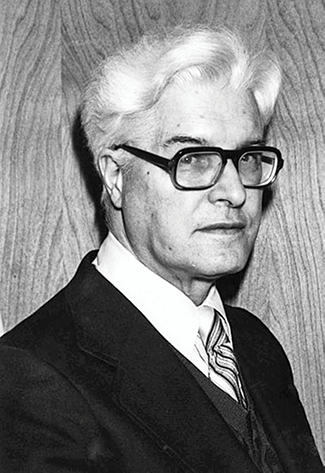
We know that variants of what is now thought of as dissociative personality had been recognized as part of the phenomenon of possession before the nineteenth century. In that period, the experiences attracted a religious overtone, in which two distinct souls were in conflict over control of the subject, and the subject of the experience was aware of the competing forces. In another form of possession, the so-called somnambulistic possession, the subject loses consciousness of his own self while a mysterious intruder appears to take possession of his body and acts and speaks with an individuality of which the subject knows nothing when he returns to awareness. Ellenberger (Figure 7.1), in his magisterial text, The Discovery of the Unconscious, explores the evolution of psychological theories and practices related to the concept of the unconscious over time. Ellenberger covers the contributions of Sigmund Freud, Carl Gustav Jung, and, importantly, Pierre Janet whose work in the field of dissociation and the unconscious is important for an understanding of dissociative identity disorder.
Henri Ellenberger 1905–1993. Division des archives et de la gestion de l’information (DAGI) de l’Université de Montréal
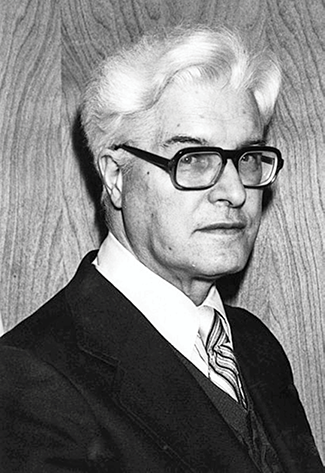
Ellenberger makes the point that there are parallels between these two forms of possession and dissociative identity disorder – both can be latent, either occurring under the influence of hypnosis or developing spontaneously (Ellenberger, Reference Ellenberger1970).
Ellenberger quotes Eberhardt Gmelin’s case, published in 1791 as one of the older cases:
In 1789, at the beginning of the French Revolution, aristocratic refugees arrived in Stuttgart. Impressed by their sight, a twenty-year-old German young woman suddenly ‘exchanged’ her own personality for the manners and ways of a French-born lady, imitating her and speaking French perfectly and German as would a French woman. These ‘French’ states repeated themselves. In her French personality, the subject had complete memory of all that she had said and done during her previous French states. As a German, she knew nothing of her French personality. With a motion of his hand, Gmelin was easily able to make her shift from one personality to the other.
The best-known case and one that laid the groundwork for the format of much of the modern cases, providing the model for the structure of the experience, is that by Morton Prince (Reference Prince1906), The Dissociation of a Personality: A Biographical Study in Abnormal Psychology, which was published in 1906. Morton wrote:
Miss Christine L. Beauchamp, the subject of this study, is a person in whom several personalities have become developed; that is to say, she may change personality from time to time, often from hour to hour, and with each change her character becomes transformed and her memories altered. In addition to the real, original or normal self, the self that was born and which she intended by nature to be, she may be any of the three persons. I say three different, because, although making use of the same body, each nevertheless, has distinctly different character: a difference manifested by different trains of thought, by different views, and temperament, and by different acquisitive tastes, habits, experiences, and memories.
Morton Prince’s account has become the classic text on dissociative identity disorder. He described multiple personalities/identities embodied in the one person. Morton’s account assumed that the body of Miss Beauchamp was incidental to the activities of these personalities, since it was the psychology that determined identity not the readily identifiable and unchanging body.
What we have here is the possibility that multiple or indeed plural identities with their own names, memories, attitudes, and dispositions can inhabit a single body. This possibility challenges any notion of a unified and integrated sense of self over time. The proposition is not merely that there are different aspects, different traits to the one unified individual, but that significant and discrete distinctions of identity can cohabit in the same body.
In the next section, I discuss the delusional misidentification syndrome, conditions that are underpinned by an implicit belief in the possibility, if not the probability, of doubles. The delusions, the false convictions, are organized around the principle that doubles exist and that these doubles can act as impostors either by resembling another person or by masquerading as unknown people.
Delusional Misidentification Syndromes
The term ‘delusional misidentification syndromes’ refers to a group of relatively rare psychiatric disorders characterized by delusions involving the misidentification or alteration of the identity of oneself or others. There are several types of delusional misidentification syndromes, each with its own distinct characteristics. Some of the notable delusional misidentification syndromes include Capgras syndrome, Frégoli syndrome, delusion of intermetamorphosis, and the delusion of subjective doubles. These conditions are of great and continuing interest to psychiatrists, neuropsychologists, neuroscientists, and philosophers alike because of their intriguing clinical presentations and the fact of the possibility of linking discrete beliefs to neural and neuropsychological underpinnings.
The Capgras syndrome is perhaps one of the best known and most discussed examples of the delusional misidentification syndromes. It is characterized by the firmly held but false belief that an impostor has replaced a familiar person (Capgras, Reference Capgras1923; Silva & Leong, Reference Silva and Leong1992; Ellis et al., Reference Ellis, Luauté and Retterstøl1994; Christodoulou et al., Reference Christodoulou, Margariti, Kontaxakis and Christodoulou2009; Abbate et al., Reference Abbate, Trimarchi and Salvi2012).
In Frégoli syndrome, the subject believes that an unfamiliar person is really a disguised familiar person, whereas in the syndrome of intermetamorphosis, the subject believes that the unfamiliar and familiar persons are identical because of shared physical characteristics such as hair colour or shape of nose. The syndrome of subjective doubles is characterized by the belief that a double of the self is abroad in the world acting in such a way as to damage the subject’s reputation. The delusion of inanimate doubles refers to the belief that inanimate objects have been duplicated and replaced, whereas reduplicative paramnesia refers to the belief that places have been duplicated.
As I have already discussed, central to these conditions is the concept of the ‘double’, a concept that was present in mythology and in antiquity and has carried on into fictional narrative and cinema, to the present day. Plautus’s Amphitryron is a Roman tragicomedy in which Jupiter takes on Amphitryon’s appearance in order to sleep with Alcmena, Amphitryon’s wife. Mercury takes on Sosia’s (Amphitryon’s servant) appearance in order to delay Amphitryon’s return. The success of this comedy of errors turns on the concept of doubles – Jupiter acting as Amphitryon and Mercury as Sosia. This story was the source of the original name for Capgras syndrome, namely illusion de Sosie.
The notion of the double is important in popular culture and as a device in literature and cinema, as already described in Chapter 1, because of the implications regarding the fragility of identity by way of facial recognition and also because of the challenges it posits to our notion of the physical uniqueness of persons, a uniqueness that is only truly in doubt in the case of identical twins. The possibility that persons, objects, places, and even time might not be unique is at the core of delusional misidentification syndromes. This idea that duplication is possible and that against better judgement it can be judged to be self-evident and established even in the face of counterargument and factual impossibility raises a welter of queries, as much about normal processes as about abnormal phenomena. Among the many questions is how we come to recognize faces, people, objects, places, and so on. And how we come to identify them as unique examples of a class of objects, even in the context of marked changes over time. I mean by this the fact that we continue to identify an individual from cradle to grave as the same person, despite significant changes in physiognomy, physique, and facial appearance over time. The fascination with the delusional misidentification syndromes is determined by the many theoretical, philosophical, and empirical matters that they raise. There is the added underlying assumption that these conditions may provide the basis for examining and investigating the neural and pathophysiological basis of delusions in general.
Capgras Syndrome
The Capgras syndrome was first described by French psychiatrists Jean Marie Joseph Capgras and Jean Reboul-Lachaux in 1923. In their case report, Capgras and Reboul-Lachaux presented the details of their patient, a fifty-three-year-old woman referred to as ‘Madame M’. She exhibited a peculiar conviction that her husband had been replaced by an imposter who looked and acted like him but was not genuinely him. She said: ‘if this person is my husband, he is more than unrecognizable, he is a completely transformed person. I can assure you that the imposter [sic] husband that they are trying to insinuate as my own husband, has not existed for ten years, is not the person who is keeping me here’. She believed that her children were also objects of substitution. She said: ‘they always gave me some other girl, who in turn was taken away and then immediately replaced … As soon as they took one child away they gave me another who looks just the same: I have had more than two thousand in five years: they are doubles’.
She believed, too, that she was substituted at birth and that her father had acted criminally to abduct and hide her from her real parents, the Duke of Broglie and Mlle de Rio-Branco, the daughter of the Duke of Luynes. She said: ‘never having divulged my birth, many people only know the name of the person who brought me up; it’s these doubles who have given me the name of their children, that’s why they have changed my personal details’. This was a complex case with multiple abnormal beliefs, but the beliefs in doubles were central to her presentation.
Frégoli Syndrome
Frégoli syndrome was first described in 1927 by Courbon and Fail (Reference Courbon and Fail1927). Their case was a twenty-seven-year-old woman who said that her ‘persecutors are capable of all types of transformation and can impose such transformations on others: they are Frégoli who can frégolify any and everybody’. She believed that she was ‘the victim of enemies, of whom the main culprits [were] the actresses Robine and Sarah Bernhardt, whom she often went to see in the theatre’. She believed that ‘for years they [had] pursued her closely, taking the form of people she knows or meets, taking over her thoughts, preventing her from doing this or that, then forcing her to do things, stroking her and forcing her to masturbate’. She ‘recognized members of her own family among the other actors. A female employer who had attempted to caress her three years earlier was Robine. The woman she met and attacked in the street because of the annoying sensation she felt coming from her was also Robine … The hospital doctor who has never been to Choisy nor bears any resemblance to anyone she has ever known, becomes her dead father or even Dr Leroux, a doctor who saved her when she was three months old, whom she has never seen since and whose features she cannot recall. In the same way, the intern becomes her cousin’.
Frégoli syndrome was aptly named after Leopoldo Frégoli, an Italian actor and quick-change artist who was active in the late nineteenth and early twentieth centuries. He is best known for his remarkable ability to change his appearance and impersonate different characters rapidly during his stage performances. Frégoli’s talent earned him the nickname ‘The Man with a Thousand Faces’. He would seamlessly switch between costumes and personas in a matter of seconds, creating an illusion of multiple actors on stage. Frégoli’s performances were highly entertaining for the audiences of his time.
This condition is dependent on the belief that it is possible to masquerade as others: in this instance, the belief is that an unfamiliar person, a stranger, can actually be a familiar other who is pretending to be a stranger. In other words, a familiar person is doubling as a stranger. The question is, what features the patient is using to determine identity given that physical identity is often very different indeed.
Syndrome of Subjective Doubles
Lastly, syndrome of subjective doubles is a condition that was described by George Christodoulou (Reference Christodoulou1978) in 1978. The patient was an eighteen-year-old woman who believed that a
female neighbour had succeeded, by means of elaborate transformations, in acquiring physical characteristics identical with her own (“same face, same build, same clothes, same everything”). She believed that this woman had special make-up, a wig, and a mask and characterized this transformation as a “metamorphosis”. She later insisted that “she had seen at least two female patients transformed into her own self. She attacked one of these patients and pulled her hair. When her hypothetical double managed to escape from her Ms. A was agonized and begged her doctor to pull the mask” from the other patient’s face to disclose her real identity.
She wrote to her father,
In here there is a girl as fat and as tall as I am. At night when everyone is asleep she puts on a wig and a mask and walks from the room stealing things in order to incriminate me. One night I woke and saw her with my own eyes. It is unfortunate that due to my confusion I failed to run to the window to shout to the people, “Look here, this is me, and this is my double with a wig and a mask”.
The beliefs evident in the syndrome of subjective doubles form the basis of Shusaku Endo’s novel, Shame. The double acts in the world with the express aim of impugning a person’s character and reputation. The belief is not necessarily dependent on seeing the double, but rather it depends on the belief that such a person exists. In the original case, the putative double who is identified with the patient is accused of subterfuge and elaborate transformations to achieve the identical appearance.
Summary
The delusional misidentification syndromes have an influence, quite remarkable, given the relative rarity of the conditions. Their importance lies in their resemblance to a neurological condition, prosopagnosia, which is the impairment of recognizing familiar faces. Given that we know quite a lot about the neurological underpinnings of prosopagnosia, there was hope that the delusional misidentification syndromes would readily yield their underlying pathophysiology and hence that a discrete psychiatric phenomenon will become tractable and understandable. Much progress has been made in our understanding of the fundamental abnormalities in delusional misidentification syndromes, but, nonetheless, there is much yet to understand.
Dissociative identity disorder has a long antiquity and was preceded by possession states, conditions that occur within all human cultures and that are not only found in psychiatric settings. These states point to the capacity for dissociation, a psychological mechanism often associated with childhood traumatic experiences. The underlying mechanisms of both delusional misidentification syndromes and dissociative identity disorder are outside of the scope of this book, but detailed descriptions can be found in Psychopathology of Rare and Unusual Syndromes (Oyebode, Reference Oyebode2021).
In the following chapter, I will focus on the neural basis and the tentative explanatory hypothesis of autoscopy. It is autoscopy and related conditions that most exemplify what it is to have the experience of a double. In autoscopy, there is not simply a sense of presence but also a visual hallucination of the self, phenomena that are intriguing and astonishing. The use of the double motif in literature and in cinema is not necessarily faithful to the phenomena as seen in the clinic, but, nonetheless, a fuller understanding of the contribution of empirical science to our understanding of autoscopy may also go some way in refining the ways in which fiction and cinema deal with the double motif.