

Introduction
Are well-trained business managers less corrupt? The management literature has long appreciated that while corruption harms business growth and investment in aggregate,Footnote 1 there are strategic incentives for firms to engage in bribery if it allows them to gain first-mover advantages over rivals, access lucrative resources and licenses, reduce the costs of regulatory compliance, and navigate post-conflict settings.Footnote 2 Thus, the bulk of work on corruption has focused on when and where corruption is most likely, distinguishing between the often country-level determinants of demand for bribes by politicians and bureaucrats and the supply of bribes from individual businesses willing to pay.Footnote 3 Work on the supply-side of the corruption equation has highlighted how better management practices can make firms less prone to pay bribes.Footnote 4 While compelling, empirical work testing this relationship has been limited by measurement and endogeneity concerns.Footnote 5 Standard measures of bribery tend to assume businesses are victims of rather than initiators of bribery requests,Footnote 6 and scholarship has shown that operating in a corrupt environment can lead to deterioration of the same management practices that are thought to be necessary for avoiding corruption.Footnote 7
In this paper, we address these challenges by building off the existing literature to formally develop two theories of change (ToCs) that illustrate how better management practices can reduce incentives to pay bribes during regulatory inspections. In the Management Quality (MQ) ToC, streamlined management practices help enterprises improve product quality, cut waste, and become more efficient. Better-managed businesses are less likely to violate regulations to stay competitive, which reduces the risk of extortion by regulatory inspectors. In the Internal Controls (IC) ToC, formal management training provides managers with better tools to more effectively monitor operations and control the actions of lower-level employees, which reduces the risks of subordinates violating regulations and bribing government officials without managers’ knowledge.Footnote 8 Our analysis involves two interconnected studies.
First, we provide correlational evidence for the global relationship between better managers and lower bribery on World Bank surveys of thousands of enterprises around the world. After accounting for differences in country, time, size, and sector, a one standard deviation change in management quality is associated with a 6.8% reduction from the sample mean of bribes as a share of revenue among domestic firms. Consistent with the MQ ToC, better-managed firms also have higher levels of productivity and are more likely to demonstrate product quality with international certification.
Next, we provide a causal test of our theory of change through a field experiment randomizing the provision of online management courses to eighty restaurant owners and managers in Vietnam. The intervention drew upon cutting-edge insights from the literature on management training and its effects on firm productivity. To resolve measurement dilemmas, we utilized two novel sources of bribery data that circumvent both the assumptions of coercion (i.e., victimization) and the social desirability bias inherent in previous work. Our primary measure is derived from firms’ internal accounting, which records their actual bribe expenditures in the past month. Findings from this measure are validated by a shielded-response technique, known as a list experiment, that protects businesses from directly admitting to paying bribery.Footnote 9
Despite the limited sample size, the RCT provides strong evidence for the MQ theory, but less support for the IC story. Monitoring firm outcomes between four and six weeks after the intervention, we find statistically significant evidence that firms assigned to the management training course paid bribes less frequently and at a lower scale than firms in the placebo course. Less than half of the students in the Restaurant Management (Mini-MBA) course (44.4 percent) reported paying bribes in the previous month, compared to 63 percent of businesses in the placebo Marketing Course. These differences also had a significant impact on the bottom line. The unadjusted average cost of bribery in the previous month for Marketing students was 264 USD, close to five times that paid by those in the Mini-MBA (56 USD). Controlling for firm characteristics and location, we estimate a 227 USD average reduction in bribery, over one third of the 600 USD median Vietnamese monthly household income. These results hold for both direct survey measures and shielded measures. While the effects of the IC treatment were often sizeable, they were statistically indistinguishable from the placebo.
In an exploratory analysis probing pathways between management training and productivity, we find evidence that management training led to higher regulatory compliance indirectly through lessons on enhancing quality by improving kitchen and service area organization, sanitation, and safety. While these restaurant managers were not more aware of regulatory requirements than the other treatment groups, photographs (of cooking and service areas, waste disposal, fire extinguishers, and menus) showed that they were more likely to provide evidence of regulatory compliance. Intensive follow-up case studies conducted with management course graduates six months after the course also provide anecdotal evidence of higher regulatory compliance after implementing operational changes recommended by the program.Footnote 10 Unfortunately, we do not find evidence that management training eased financial constraints, an important link in our theory of change, in the short period between training and the endline survey. However, we are optimistic that larger studies with longer time frames may uncover it.
Our findings make two contributions to the academic literature on corruption, economic development, management quality, and firm governance. First, we contribute to the corruption literature by isolating two supply-side drivers of corruption and showing when some businesses have incentives to collude in a two-way tango with regulators. Second, we extend the robust body of work on the benefits of management qualityFootnote 11 to explore the broader effects on both bribery and regulatory compliance. Recently, Innovations for Poverty Action singled out training for businesses and management consulting as two of fourteen interventions that it believed had the best opportunity to scale up, enhancing economic development and reducing poverty.Footnote 12 Our study suggests the total impact of these interventions may be even greater, as they also contribute to reduced corruption and greater compliance with safety and sanitary regulations.
The paper proceeds as follows. We begin with a review of the economics and management literature to help inform our formal theory of bribery, which accounts for the incentives and time horizons of both regulators and business managers. Using this model, we derive testable hypotheses for our MQ and IC ToCs. After establishing a global correlation with cross-national firm surveys, we describe our single-country experimental design and its quantitative and qualitative outcomes. We conclude with suggestions for future theoretical refinements and empirical strategies.
Literature review
The management field has developed extensive theoretical literatures on corruption and management quality, however, these streams of research have only recently begun to intersect. Research on corruption has focused on the country-level determinants of the demand for corruption by public officials and bureaucrats, with business strategies aimed at how ownership, market orientation, and entry mode could limit bribery requests.Footnote 13 Newer work has begun to highlight the management and leadership failings that can engender corruption,Footnote 14 but has made limited use of the indicators developed by the management quality field to study variation in management acumen across countries and states. At the same time, the literature measuring management quality has focused on how different management practices and training can impact firm-level performance and product quality,Footnote 15 but has yet to investigate how these same practices might insulate firms from bribe requests or limit their interest in initiating corrupt activities. In this literature review, we begin by reviewing the corruption literature to illustrate how three types of management failings (resource constraints, product quality, and internal controls) are theoretically associated with bribe initiation. Next, we review the management literature to illustrate how well-designed management training could mitigate these failings and potentially reduce corrupt behavior.
Corruption
Numerous typologies exist to help organize our understanding of corrupt practices. Scholars distinguish corruption by its size and target in the bureaucracy (petty or grand), its predictability (pervasive or arbitrary), its level of centralization in the polity (organized versus disorganized), and whether the state loses resources or assets as a result of the activity (with or without theft).Footnote 16 Theoretical development about the drivers of corruption depends critically upon the type of corruption that a scholar wishes to explore. For instance, characteristics such as ownership and market orientation, which are vital in explaining the propensity for procurement kick-backs (grand, pervasive, organized, involving theft), are less useful in understanding bribes to expedite customs procedures (petty, arbitrary, less organized, and without theft).Footnote 17
In this project, we focus on regulatory bribery, which businesses pay when they must comply with government rules and procedures for their industry. This type of corruption can include payments to receive required paperwork, but also bribes to inspectors during visits to inspect compliance with labor, safety, environmental, and other regulations, which is the focus of our investigation. Regulatory corruption is petty, as it involves small amounts and is aimed at the lowest rung in the regulatory state. In our research setting of Vietnam, it is also arbitrary and disorganized. Wide variation exists in which firms pay bribes and how much they must pay, and multiple regulatory inspectors from different agencies can visit businesses with little effort to coordinate their activities to keep bribe prices down.Footnote 18 Finally, regulatory corruption usually involves theft in that bribes are paid to offset fines and penalties that would have been paid to state coffers. In this sense, regulatory corruption is collusive in that it involves an implicit bargain between the regulator and firm to violate formal rules and hide activities and money from the state.Footnote 19
Prominent reviews of the strategic management literature on corruption distinguish between the demand for bribes by politicians and bureaucrats and the supply of firms willing to pay.Footnote 20 As most of the literature focuses on the operations of large, multi-national enterprises (MNEs), the bulk of the demand-side work has focused on country-level determinants, such as relative poverty, economic and political institutions, cultural norms, and ethnic and ethno-linguistic diversity. In addition, as Cuervo-Cazurra (Reference Cuervo-Cazurra2016) highlights, biases in measurement strategies have led much of the demand-side literature to position corruption as a cost imposed by politicians or bureaucrats on private actors, frequently attributing corrupt practices to public institutions, policies, and individuals, while portraying firms as victims in this dynamic.Footnote 21 This is partially because prominent sources of country-level differences in corruption are based on surveys where managers are asked about bribes they paid to government officials, rather than asking government officials whether they have been offered bribes. Thus, much of the academic work focuses on the role of public officials and bureaucrats in extorting bribes from firms and citizens.Footnote 22 From this perspective, bribes are a cost of doing business imposed by regulators and government officials, and firms are largely reactive.Footnote 23 Strategy research on corruption, therefore, has tended to focus on the types of evasive activities that firms engage in to avoid corruption requests, such as building local connections, protecting property rights through supply chain organization, and using more insulated forms of entry modes.Footnote 24
As individual-level data on bribe initiation have become more available, scholars have turned their attention to firm-level drivers of willingness to pay bribes and the strategic determinants of corruption.Footnote 25 Researchers working in this vein differentiate between three sources of firm-level variation. First, scholars have focused on ownership, showing that publicly traded and foreign-owned firms are the least susceptible to bribery.Footnote 26 Second, scholars have studied market orientation, demonstrating that export-oriented businesses are less likely to pay bribes than those attempting to access domestic markets.Footnote 27
In our study, we hold both ownership and orientation constant by focusing on privately owned Vietnamese restaurants, which provide only locally-oriented services. This allows us to concentrate our research design directly on the third set of firm-level drivers, which we group together under the umbrella term of “management failures” to connect this work to the extensive research on management quality and training that we describe below. Other authors, however, have alternatively described these features as “capabilities,”Footnote 28 “managerial incentives,”Footnote 29 and “bad leadership, bad management, and lack of corporate governance.”Footnote 30 Summarizing a deep literature, three types of management failures create incentives to initiate bribes: 1) resource constraints; 2) low product and service quality; and 3) insufficient internal controls.
First, poorly managed businesses perform worse and therefore have less available financial resources. Organizational theory on business behavior shows that resilience and flexibility in the face of environmental challenges are strongly influenced by a firm’s available resources. When firms face financial or capacity constraints, managers may feel compelled to cut regulatory corners, leading to non-compliance and even illegal actions.Footnote 31 For example, businesses may be unable to afford newer technology or comply fully with regulations, and therefore resort to using outdated or polluting technologies or compromising on safety, health, and/or environmental regulations (e.g., using unsanitary cooking and cleaning processes). To avoid punishment for these transgressions, they bribe regulators to look the other way. Financial constraints also impact a business’s ability to gather information, hire lawyers, or seek outside help in fending off bribe requests. Thus, scholars have pointed out that firm capabilities impact not only the ability to pay bribes, but also to refuse them. This is why bribery has recently been shown to be less prevalent among larger and more successful businesses.Footnote 32 In the specific context of regulatory corruption that we study, less competitive firms may feel forced to engage in bribery as a strategy to circumvent regulatory inspections, fees, and penalties, thereby gaining an unfair advantage over more productive counterparts.
Second, low-quality management leads to poor product or service quality, which injures a firm’s ability to attract customers, forcing them to use bribery to access alternative buyers or open up new markets.Footnote 33 In the case of procurement, this relationship is obvious. Low-quality firms supplement procurement bids with bribes to overcome competitive disadvantages.Footnote 34 However, product quality also impacts regulatory bribery decisions. Clarke and Xu (Reference Clarke and Xu2002) found that firms regularly offering low-quality have less concern about social responsibility and public well-being. This manifests in a lack of attention to safety and sanitation, which may endanger workers and customers. Bribery of regulatory inspectors can limit the ability of customers to learn and protect themselves against these hazards, allowing low-quality businesses to remain profitable up until they face a regulatory disaster. While they may seem related, scholars have viewed the management failure of inattention differently from financial constraints. Although product and service quality should ultimately improve firm fiscal performance, a well-resourced business could still engage in regulatory non-compliance, because of a leader’s ethical relativism or inappropriate risk taking.Footnote 35
Third, corruption may arise from deviant activities by subordinates in the firm without superior managers’ knowledge.Footnote 36 This dimension of corruption emerges from within the organizational structure, indicating a breakdown in internal control and oversight mechanisms. An effective internal control system—that is, a governance process that is “designed to provide reasonable assurance regarding the achievement of objectives relating to operations, reporting, and compliance”Footnote 37—can provide managers with tools to reduce deviant activities. Internal controls systems that emphasize regulatory risk and institutionalize procedures for managing and reporting compliance activities are less prone to bribe initiation.Footnote 38 While gray literature routinely highlights internal controls as a means to reduce fraudulent activity,Footnote 39 academic literature on the relationship between internal controls and corruption is somewhat limited. A systematic literature review by Chalmers et al. (Reference Chalmers, Hay and Khlif2019) on the determinants of internal controls quality, and its economic consequences for various stakeholders, identifies a handful of papers showing that weaker internal controls predict more fraudulent practices. These include a case study by Zakaria et al. (Reference Zakaria, Nawawi and Salin2016), who studied an oil and gas company in Malaysia and found that internal control weaknesses related to poor supervision and improper documentation process quality lead to fraudulent practices, and Donelson et al. (Reference Donelson, Ege and McInnis2017), who identified a positive correlation between weak internal controls and future revelations of fraud. These studies are associational, however; and most literature on internal controls is centered in developed countries,Footnote 40 where legal violations and bribery are less socially tolerated.Footnote 41
Management quality
An expansive literature addresses how management quality affects firm productivity, survival, profitability, and related measures.Footnote 42 Much of this literature seeks to explain whether management quality can explain persistent, substantial differences in productivity across firms, especially in developing countries, and, if so, how training can help.Footnote 43 While the literature on management quality and productivity has not previously drawn a link to firms’ engagement in bribery or corruption, it has provided evidence that better training in management helps resolve the three corruption-inducing managerial dilemmas we highlighted above. Better-managed businesses are more productive and less constrained financially, deliver higher-quality products and services, and have better internal monitoring processes.
In an early and influential experimental study, Bloom et al. (Reference Bloom, Eifert, Mahajan, McKenzie and Roberts2012) randomly assigned individualized management consulting in a sample of large textile factories (17 firms operating 28 plants) in Mumbai, India. Using a 38-point system for measuring the adoption of management practices in five categories (factory operations, quality control, inventory, human resources, and sales and order management), they demonstrated that baseline adoption rates for individual plants ranged from 8 percent to 55 percent (meaning that even the best-managed plant had just over half of the key practices in place). They provided five months of individualized management consulting to a randomly assigned set of firms and demonstrated improvements in management practices as well as four measures of productivity (quality, inventory, output, and total factor productivity).
Management quality has been shown to be similarly influential in smaller firms. For instance, Bruhn et al. (Reference Bruhn, Karlan and Schoar2018) surveyed 432 firms in Puebla, Mexico, and randomly assigned management consulting and mentoring services to 150 of them. Although the consulting intervention was much simpler than in Bloom et al. (Reference Bloom, Eifert, Mahajan, McKenzie and Roberts2012), Bruhn et al. found generally positive impacts on profitability and return on assets after one year of weekly four-hour sessions, and substantial improvements in growth over the five years following treatment. Other experiments have investigated the effects of different types of training for enterprises, e.g. offering “personal initiative” training to impart a proactive mindset to microenterprise owners, rather than offering more traditional management practices.Footnote 44 Still others have studied delivery via peer-to-peer learning, such as Abebe et al. (Reference Abebe, Fafchamps, Koelle and Quinn2020), who match aspiring entrepreneurs in Ethiopia with managers in successful firms so they can “learn by managing,” and Cai and Szeidl (Reference Cai and Szeidl2018), who organize small-group business associations for owner-managers of young firms in China so they can learn from peers.
Recent work, expanding the lessons on management training, has shown that classroom-based training for managers in low-and middle-income countries (LMICs) tends to have only weak effects on productivity. However, incorporating group activities, allowing participants to exchange experiences, and facilitating learning from peers have consistently demonstrated a greater impact on employment, sales, and profitability.Footnote 45
Critically, for our experimental design below, marketing acumen has not generally been considered a component of management quality. Neither Bloom and Van Reenen (Reference Bloom and Van Reenen2010) nor Bloom et al. (Reference Bloom, Eifert, Mahajan, McKenzie and Roberts2012) include it in their indices of management quality. Some entrepreneurial training programs bundle marketing with a number of other skills, but only a few have separately evaluated marketing. In a large randomized evaluation of Project GATE in the U.S., Fairlie et al. (Reference Fairlie, Karlan and Zinman2015) find that general marketing training does not lead to significant effects on business sales, profits, or number of employees at any of the horizons tested—6 months, 18 months, or 60 months after the intervention. More optimistically, Anderson et al. (Reference Anderson, Chandy and Zia2018) in an RCT comparing finance and marketing skills among 850 SMEs in South Africa, show that marketing training can lead to profitability through increased sales revenue but not expenditure reductions. In their study, expenditures (especially labor) actually increased, as businesses expended advertising and promotion activities, leading to increased sales growth but limited effects on medium-term profitability. Reflecting on the mixed results, Fischer and Karlan (Reference Fischer and Karlan2015) suggest that marketing training may be superfluous for many firms that already have adopted “rules of thumb” approaches and may not be precisely targeted enough for those that do need it. Consequently, more recent work has focused on helping firms hire marketing experts, demonstrating that these hires significantly outperform generic marketing training.Footnote 46
How better managers can reduce incentives for regulatory bribery
Connecting the corruption and management literatures, two pathways exist between management training and reduced regulatory corruption. First, management training that improves productivity should increase the availability of financial and capacity resources available to firms, limiting incentives to cut corners on regulatory compliance and bribe regulators to avoid detection. Management training that increases product and service quality, especially the attention to customer safety, could potentially increase regulatory compliance directly, as good business practices will be aligned with protective regulations. However, improved product quality should also be associated with greater sales and productivity numbers. Thus, we consider the productivity and product quality channels to be part of the same pathway. Second, management training can increase internal controls and corporate governance by providing better guidance on regulatory risk to subordinates and better monitoring of their behavior.
At the same time, other work suggests that the observed relationship between management quality and corruption may be due to reverse causality, as corruption can damage firm productivity by undermining management practices.Footnote 47 Corruption can divert management attention and resources from core productive activities,Footnote 48 discourage firm expansion and innovation,Footnote 49 and force the adoption of governance structures that favor secrecy over change and creativity by concealing strategic and financial decisions from employees.
The strong theoretical potential for reverse causality suggests caution in interpreting correlational evidence on the relationship between management quality and productivity, and, by implication, in estimating the downstream effects on bribery. This simultaneity bias is compounded by measurement error in self-reported survey measures of corruption, where less educated and sophisticated managers may overestimate their exposure to corruption.Footnote 50 We address these concerns in our research designs by randomizing management training and capturing bribery directly in firms’ financial workbooks.
Management quality & internal controls theories of change
The literature discussed above focused on firm-level behaviors; however, corruption is a two-way tango that involves strategic interaction between government gatekeepers and business managers. To develop testable hypotheses, we must account for the objectives and strategic interactions of both actors in a formal model, which we present in Appendix A Online Appendix A.
While our theory applies more generally to all domestic businesses, in the model, we use the example of a small Vietnamese restaurant to illustrate the interactions between inspectors and a regulated business that underlie our predictions and RCT. We believe this abstraction is reasonable. Small restaurants are among the most common forms of businesses throughout the world. Because they both employ workers and serve food to customers, they are subject to stringent regulations regarding working conditions, sanitation, fire hazards, and food safety. The large number of restaurants and limited bureaucratic capacity in developing countries means that the probability of any one business being inspected is relatively low, leading to a reasonable trade-off between absorbing the full costs of regulatory compliance and suffering an inspection and possible regulatory penalty. Most restaurants in emerging markets are also opportunistic, exploiting household space to operate, while owners rarely have significant previous training in management. This suggests that small improvements in management quality can pay big dividends.
The Vietnamese restaurant industry is particularly appropriate for studying this question. First, prior to the intervention, business-to-government bribery was common practice, with 46 percent of firms admitting to informal payments during inspection visits by public officials from regulatory agencies.Footnote 51 Second, despite its economic growth, this sector continues to grapple with challenges of limited capacity and inadequate management practices. Research from the Office for Business Sustainable Development (SDforB) at the Vietnam Chamber of Commerce and Industry (VCCI) identified correlations between these challenges and the overall quality of management in the domestic sector.Footnote 52
In the formal model, there are two actors: a restaurant manager and a government regulatory inspector, tasked with ensuring hygiene and safety. The regulatory inspector attempts to maximize the weighted sum of safety and income, subject to a time constraint. First, the inspector sincerely seeks to minimize regulatory disasters, such as fires, disease outbreaks, or environmental accidents. These events are costly for the government and society, and the inspector would be blamed for overlooking signs that could lead to their prevention, perhaps costing him his job or worse. For instance, in our study site of Vietnam, a 2022 fire sparked by a faulty electric wire killed 32 people, leading to criminal penalties against the inspector.Footnote 53 Second, the inspector is motivated to maximize income from bribe payments, which he receives from managers when he chooses either to: 1) not enter the restaurant at all; 2) enter but overlook non-compliance; or 3) identify violations but forgo issuing costly penalties. However, the inspector faces a severe shortage of time with hundreds of restaurants to keep tabs on regularly, and limited government resources and staffing. To put this predicament in sharp relief, there are 77,000 formal and informal restaurants and street stalls in Vietnam’s capital city of Hanoi, but only 707 food sanitation inspectors (about 4 per ward). During Food Safety Month in 2024, these inspectors were sent to over 12,000 locations (less than 15%) and identified violations in 14% of them.Footnote 54
The restaurant manager is drawn from a distribution of restaurants that vary in management quality, which drives differences in business profitability and product appeal. We assume that the restaurant prefers to comply with sanitary and safety regulations, either due to business ethics, the possibility of encountering honest inspectors or investigative journalists who will not take bribes, or the possibility of costly accidents. However, compliance requires expending valuable resources. When a restaurant is assigned to a low management quality condition, they are motivated to reduce costs by cutting corners on regulatory compliance. If paying a bribe is less expensive than the costs needed to comply through upgrading their business or expending greater management or employee time, they will offer such a payment to a regulatory inspector. When a firm is endowed with better management quality, in expectation, a regulatory violation is costlier than a bribe, even if the compliance cost and price of bribes remain unchanged. This is because businesses that are either more profitable or have reputations for product/service quality have more to lose if an incorruptible inspector temporarily closes the firm for violations, or media coverage of accidents reduces demand for their services.
To develop a counterfactual scenario, we begin by eliminating the possibility of paying a bribe. Without bribes, combining the dual motivations of time-constrained inspectors and opportunistic businesses leads to several testable theoretical predictions. The model predicts that better-managed restaurants will be more likely to comply with regulations, as they have more at stake from an accident caused by non-compliance. At the same time, inspectors, seeking to maximize safety, are surprisingly more likely to target better-managed businesses for inspections, because negative incidents in more popular and better-performing locations could potentially injure more people. Taking the motivations of inspectors into account reinforces the importance of compliance for productive businesses, driving a larger gap between their behavior and the non-compliance of poorly managed operations.
Next, we introduce bribery and illicit income for inspectors, which changes these calculations. Poorly managed businesses are now motivated to reduce costs by cutting corners on compliance and substituting them with slightly lower bribes to inspectors during regulatory visits. This behavior alters the inspector’s objective function in two ways. First, with more firms violating regulations, the possibility of a negative event increases. Second, the inspector can increase his income by accepting bribes from violators. Influenced by the time constraint, inspectors now prefer to target obviously non-compliant businesses, skipping or spending limited effort on well-managed businesses that are already likely to be compliant and where violations will correspondingly be more difficult to identify. Focusing on poorly managed operations allows inspectors to both find not only the most egregious cases of dangerous regulatory violations but also to identify minor violations that can be exploited to motivate bribes.
This framework generates our MQ ToC, summarized by blue pathway in Figure 1. If management training reduces firms’ resource constraints or improves product/service quality, we predict that these improvements will induce firms to strengthen regulatory compliance and reduce bribery, leading to the following main hypothesis and two associated mechanisms:
Hypothesis 1 (Management Training and Corruption): Businesses that receive management training will pay bribes less often and pay less in bribes than firms that do not.
Hypothesis 2 (Management Training and Productivity): Businesses that receive management training will have higher business performance and productivity than those that do not.
Hypothesis 3 (Management Training and Regulatory Compliance): Businesses that receive management training will have greater regulatory compliance than firms that do not.
Management quality and internal controls theories of change.

The third management failure highlighted above on governance and internal controls provides an alternative theoretical pathway by highlighting the relationship between the restaurant manager and subordinates. As shown by Cole and Tran (Reference Cole and Tran2011), salespersons and procurement officers may collude for their own gains at the expense of the companies that they are supposed to serve. In addition, due to weak monitoring capability, owners and top managers may be unaware of the firm’s failure to comply with government regulations. Such violations will render businesses vulnerable to extortion by public officials during inspections, leading them to pay bribes to avoid costly and time-consuming fines and penalties. Consequently, in an extension of our model, we account for the impact of management training on improving employers’ monitoring capabilities and processes. Through this channel, management training will improve a firm’s regulatory compliance and subsequently reduce their need to bribe without leading to productivity improvements. A critical difference between the MQ ToC above is that with the internal controls mechanism, compliance is a direct result of learning about rules and focusing managerial attention on adhering to them. In our training programs, only the internal controls training provides any content on regulatory risk. Figure 1 depicts our IC ToC in gray, which generates the following testable hypothesis and mechanism.
Hypothesis 4 (Internal Controls Training and Corruption): Businesses that receive internal controls training will pay bribes less often and pay less in bribes than firms that do not.
Hypothesis 5 (Internal Controls Training and Regulatory Knowledge): Businesses that receive internal controls training will have greater knowledge of the regulations that govern them than those that do not.
Hypothesis 6 (Internal Controls Training and Regulatory Compliance): Businesses that receive internal controls training will have greater regulatory compliance than those that do not.
All six hypotheses and mechanisms were pre-registered in the Open Science Foundation (OSF) system prior to the launch of our online courses.
Cross-national association of management quality and bribery
We begin with an exploration of whether the relationship we describe between management quality and bribery is generalizable across countries and sectors within countries. To do this, we employ cross-national data from the World Bank Enterprise Survey (WBES). WBES includes 195,976 unique firm-level responses from 154 economies between 2005 and 2023. The standardized form that was given to all respondents includes several modules that are ideal for this exercise, including fine-grained data on business performance, management quality, corruption, and useful controls for firm sector and size. About 18,000 operations have sufficient information to calculate measures of productivity and corruption.
Data and variables
Our dependent variable in the analysis is a general question asking firms to record the share of informal payments (bribes) as a percentage of total sales revenue that they pay to access basic services and fulfill administrative requirements. The question is particularly useful for three reasons.Footnote 55 First, it captures the scale of bribery and not just whether or not a firm paid a bribe, and has been used by well-cited papers investigating similar phenomena.Footnote 56 Second, it includes informal charges across a broad range of different activities, allowing for easier comparison of firms from different industries and orientations. Third, while far from perfect,Footnote 57 the question provides the greatest protection against social desirability bias among questions in the WBES survey by asking respondents to answer about firms in general rather than their own business. The mean bribe payment is 1.85 percent of annual revenue with a high degree of dispersion (sd = 5.55). To get a sense of the variation, firms in Denmark and Sweden pay the least in annual bribes at 0.035 and 0.038 percent annually, while those in Sierra Leone (6.36 percent) and Niger (6.01) pay the most. Consistent with our logic, small firms with fewer than twenty employees pay more in bribes (1.92 percent) than medium-sized firms with fewer than 100 employees (1.81 percent).
To measure management quality, we take 11 questions from the World Management Survey (WMS) included in the WBES database. A full list of these indicators, capturing the implementation of production targets, key performance standards, and recruitment and promotion procedures can be found in Online Appendix B.1. While the authors of the world management survey use a combination of qualitative and quantitative questions to create a composite measure of management quality rated from 0–5,Footnote 58 where five is the highest level of management quality, the WBES only includes closed-ended questions. Following Bloom et al. (Reference Bloom, Lemos, Sadun, Scur and Van Reenen2014), we use factor analysis in Table 1 to derive a principal factor with an Eigen value of 4.24 that explains nearly 70% of the common variance among the indicators. As Bloom et al. (Reference Bloom, Lemos, Sadun, Scur and Van Reenen2014, p. 858) note, this reflects a common factor of “good management: if a firm is strong on one managerial question it will tend to be strong on all of them.” Due to the use of factor analysis, the variable is standardized to a mean management quality of zero with a standard deviation of one. The highest management quality scores are recorded in Estonia (0.82) and the lowest in India (−0.92).
Factor analysis of management variables

Note: Loadings greater than 0.40 are bolded. Variables with low factor loadings or high uniqueness may not meaningfully contribute to the factor.
To measure our firm-level labor productivity $ L{P}_{i}$
, we use detailed data on expenditures and revenue to calculate a measure of Value-Added per Worker (ln) (mean = 12.9, sd = 2.52), using the formula in equation 1, where
$ L{P}_{i}$
, we use detailed data on expenditures and revenue to calculate a measure of Value-Added per Worker (ln) (mean = 12.9, sd = 2.52), using the formula in equation 1, where $ Sale{s}_{i}$
is the total sales in the past fiscal year,
$ Sale{s}_{i}$
is the total sales in the past fiscal year, $ Cost{s}_{i}$
is the total cost of raw materials and intermediate good in the past fiscal year, and
$ Cost{s}_{i}$
is the total cost of raw materials and intermediate good in the past fiscal year, and $ Employee{s}_{i}$
is the number of full-time, permanent employees. We also use a simpler measure of the natural log of Revenue per Worker (mean = 14.4, sd = 2.6).
$ Employee{s}_{i}$
is the number of full-time, permanent employees. We also use a simpler measure of the natural log of Revenue per Worker (mean = 14.4, sd = 2.6).
 $$L{P_i} = {\rm{log}}\left( {{{Sale{s_i} - Cost{s_i}} \over {Employee{s_i}}}} \right)$$
To measure service and product quality, we follow Luo and Han (Reference Luo and Han2009) in using Capacity Utilization (mean = 70.0, sd = 28.9) and supplement that with a question of whether a respondent possesses an internationally recognized quality certification, such as an International Organization for Standardization (ISO) certificate (Int’l Certification (mean = 0.21, sd = 0.41)). Finally, we study regulatory compliance with a measure of the share of time that a top manager spends on regulatory compliance (Time Spent on Regulation, (mean = 10.7, sd = 19.0)).
Model specification
As the dependent variable $ Brib{e}_{it}$
varies continuously between 0 and 100 for each firm
$ Brib{e}_{it}$
varies continuously between 0 and 100 for each firm $ i$
at a survey year
$ i$
at a survey year $ t$
, we employ a linear model:
$ t$
, we employ a linear model:
 $$ Brib{e}_{it}={\beta }_{0}+{\beta }_{1}{X}_{it}+{\eta }_{c}+{\delta }_{s}+{\nu }_{t}+{\lambda }_{e}+{\epsilon }_{it}$$
In Model 1, we begin with a simple bivariate relationship between bribes and $ {X}_{it}$
, our measure of either productivity or management quality, with standard errors
$ {X}_{it}$
, our measure of either productivity or management quality, with standard errors $ \epsilon $
clustered at the survey wave year (
$ \epsilon $
clustered at the survey wave year ( $ t$
) level, as errors of firms surveyed at the same time may be correlated due to administration, training, and question ordering. After establishing the bivariate relationship, we then sequentially add fixed effects to account for potential firm heterogeneity at the country (
$ t$
) level, as errors of firms surveyed at the same time may be correlated due to administration, training, and question ordering. After establishing the bivariate relationship, we then sequentially add fixed effects to account for potential firm heterogeneity at the country ( $ {\eta }_{c}$
, Model 2), two-digit ISIC sector (
$ {\eta }_{c}$
, Model 2), two-digit ISIC sector ( $ {\delta }_{s}$
, Model 3), and survey year (
$ {\delta }_{s}$
, Model 3), and survey year ( $ {\nu }_{t}$
, Model 4) levels. In Model 5, a final set of fixed effects (
$ {\nu }_{t}$
, Model 4) levels. In Model 5, a final set of fixed effects ( $ {\lambda }_{e}$
) accounts for whether the firm
$ {\lambda }_{e}$
) accounts for whether the firm $ i$
is small (
$ i$
is small ( $\!\lt\! 20$
employees), medium-sized (20–100 employees), or large (
$\!\lt\! 20$
employees), medium-sized (20–100 employees), or large ( $\! \gt\! 100$
employees). In line with our formal theory above and our randomized experiment below, the final Model 6 limits analysis to companies that listed their sectors as “Restaurant,” “Hotel and Restaurant,” or “Food Services.”
$\! \gt\! 100$
employees). In line with our formal theory above and our randomized experiment below, the final Model 6 limits analysis to companies that listed their sectors as “Restaurant,” “Hotel and Restaurant,” or “Food Services.”
Regression results of cross-national firm surveys
Table 2 provides the full regression results for our main hypotheses. We observe a clear trend indicating that management correlates with lower bribery as a percentage of sales. This trend persists as we adjust for country of operations, survey wave year, firm size, and industry. In the fully specified Model 5, we observe that a one standard deviation increase in management quality is associated with a significant reduction in bribes/revenue of 0.126 (SE = 0.033) percentage points. Using the sample mean of 1.85% of revenue as a benchmark, this implies a 6.8% marginal reduction in bribery. Studying restaurants, we find that the effect size doubles—a one point increase in management quality is associated with a 0.282 percentage point reduction in bribe share, although it is shy of statistical significance.
Better-managed firms pay less in bribes

Note: The analysis is limited to domestic firms with no foreign or state ownership. OLS coefficients with robust standard errors clustered at the survey wave level in parentheses (*** $ p \lt 0.01$
, **
$ p \lt 0.01$
, ** $ p \lt 0.05$
, *
$ p \lt 0.05$
, * $ p \lt 0.1$
). Model 1 is unadjusted, Model 2 adds country fixed effects, Model 3 adds survey wave fixed effects, Model 4 adds size fixed effects (micro, small, medium, large), Model 5 adds two-digit sector fixed effects, and Model 6 limits analysis to only restaurants.
$ p \lt 0.1$
). Model 1 is unadjusted, Model 2 adds country fixed effects, Model 3 adds survey wave fixed effects, Model 4 adds size fixed effects (micro, small, medium, large), Model 5 adds two-digit sector fixed effects, and Model 6 limits analysis to only restaurants.
An important concern is that our measure of corruption may be mechanically associated with management quality if management quality increases sales and therefore the denominator in the ratio. Consequently, Appendix Table B.6 replicates the same series of specifications with an alternative operationalization of bribery—whether the firm cited corruption as the most important business obstacle in a battery of questions regarding business constraints.Footnote 59 We create a dummy variable that takes the value of 1 for whether the respondent answered that “corruption” was the biggest problem and 0 otherwise, finding substantively similar results.
In Table 3, we test intermediate outcomes from our theories of change that provide correlational evidence for the MQ ToC, showing that management quality both alleviates resource constraints and improves product quality. Consistent with Bloom and Van Reenen (Reference Bloom and Van Reenen2010), a one point improvement in management quality is associated with a 14.6% increase in productivity (measured by valued added per worker), an 18.3% increase in sales revenue per worker, and 8.7 point higher probability of possessing an internationally recognized quality certification, such as an International Organization for Standardization (ISO) certificate. Although not significant, we observe positive correlations between management quality and capacity utilization and regulatory compliance. A one point improvement in management quality is associated with a 1.4 point improvement in capacity utilization. Finally, better managers spend 12.9% of their time in complying with government regulations, compared to only 10.9% for lower quality managers. Appendix Table B.3 replicates the analysis for restaurants, showing a very similar pattern. Again, however, both effect sizes and standard errors are much larger than for the full set of firms.
Better managers have higher performance, quality, and regulatory compliance

Note: The analysis is limited to domestic firms with no foreign or state ownership. OLS coefficients with robust standard errors clustered at the survey wave level in parentheses (*** $ p \lt 0.01$
, **
$ p \lt 0.01$
, ** $ p \lt 0.05$
, *
$ p \lt 0.05$
, * $ p \lt 0.1$
). Analysis includes all respondents. We use five different outcome variables: 1) the natural log of value added per worker; 2) the natural log of revenue per capita; 3) capacity utilization, measured in percentage points; 4) the time spent on government regulations, measured in percentage points; and 5) whether the firm holds an internationally recognized certificate, which takes the value of 1 if they do and 0 if they don’t.
$ p \lt 0.1$
). Analysis includes all respondents. We use five different outcome variables: 1) the natural log of value added per worker; 2) the natural log of revenue per capita; 3) capacity utilization, measured in percentage points; 4) the time spent on government regulations, measured in percentage points; and 5) whether the firm holds an internationally recognized certificate, which takes the value of 1 if they do and 0 if they don’t.
Drilling down into the specific indicators in Appendix Tables B.4 and B.5, the significant correlates of reduced bribery and increased performance are: 1) management practices that identify, solve, and install long-term solutions to business problems; and 2) a combination of short and long-term performance targets that are widely shared at all operational levels from senior management to production workers. Both of these correlations are consistent with the MQ TOC, but not necessarily the more streamlined and risk-oriented IC TOC.
While the cross-national evidence is compelling and consistent with our first three hypotheses, it has several methodological problems. First, we cannot rule out reverse quality leading from corruption to lower management quality. Second, and relatedly, because management quality is a bundled treatment, we cannot isolate the different mechanisms leading to lower bribery. Third, the cross-national evidence is dependent on a self-reported and potentially biased measure of bribery outcomes, which may exacerbate the correlation with management practices. We address all three of these issues in our research design below.
Randomized experiment in Vietnam
To test the causal relationship between management quality, productivity, and bribery, we carried out a randomized controlled trial (RCT) targeting formally registered domestic SMEs in the restaurant industry in Vietnam. The experiment was designed to directly assess the hypotheses derived from our formal model. Many factors made Vietnam an ideal setting to study this question when we began the project in 2020. First, Vietnam has a large and fast-growing service sector. Even accounting for COVID-19, Vietnam’s $108 billion retail market was poised to grow at 7.3% per year over the next five years. At the same time, the industry was dominated by small traditional establishments that were relatively poorly managed and were vulnerable to corrupt dealings and extortion by local authorities. Second, Vietnam is an emerging market where business-to-government corruption is prevalent. Third, Vietnam was in the midst of a systematic anti-corruption campaign, which provided political impetus for such an intervention. On November 20, 2018, the National Assembly passed the revised Anti-Corruption Law that came into force in July 2019. The revised law expanded the scope of anti-corruption to the private sector, requiring companies to have a code of conduct and an internal control unit to resist corruption. Our training could be framed to government stakeholders (but not to participants) as furthering these national goals.
As we hypothesized, management training should be especially effective among Vietnamese SMEs, given their low starting point when compared with peers abroad. The 2017 PCI Report applied Bloom’s innovative metrics to Vietnamese firms and found domestic managers ranked below their counterparts in China and India. Important for our project, the lowest-scoring managers in Vietnam were found in the domestic wholesale and retail sector, as well as among firms providing services to government agencies and state-owned enterprises.Footnote 60
Existing policy research also pointed to weak internal controls among Vietnamese businesses. A research report on companies’ use of internal control and codes of conduct by the Vietnam Chamber of Commerce and Industry (VCCI) found significant room for improvement. Vietnamese firms possessed a weak understanding of internal controls, with only 50 to 60 percent able to define those terms. The report highlighted that a large proportion of companies violated basic safety, labor, and environmental regulations, which made it necessary to pay bribes during inspections to avoid fines and penalties. In a sector with such weak management practices, training can be expected to greater influence on management quality and internal controls, allowing us to more easily detect downstream effects on bribery behaviors.
Experimental design
Treatment conditions
To isolate the causal effect of management quality, we introduced an RCT, where online management training was randomly assigned to Vietnamese restaurants, collaborating with professors at the National Economics University (NEU), one of the largest and most well-respected higher institutions on economics and management training in the country, to design the three courses. These courses comprise our three treatment groups below. Each course was designed to last six weeks and was divided into three modules and six video lectures.Footnote 61 At the end of each lecture, respondents took an assessment quiz allowing them to advance to the next course. Ideally, a respondent would listen to one lecture and take one assessment per week, however, later respondents could take the course asynchronously and complete the course at a faster rate if desired. Both the Mini-MBA and Internal Controls courses included peer learning opportunities with well-known chefs and restaurateurs as capstones for the first and third modules. Table 4 provides a snapshot of the syllabi of the three courses, while Figure 2 highlights images of the learning experience.
Course modules and descriptions

Screenshots of online course programming. Clockwise from top graphic: 1) Experiment landing page; 2) Scene from management module on menu and kitchen design; 3) Peer learning session led by course instructor and elite restaurant manager.

T1 (Comprehensive Restaurant Management Training): To test the MQ ToC, participants in our first intervention were assigned to a Mini-MBA to boost the restaurants’ overall management quality. In designing the management course in collaboration with NEU and VCCI, we incorporated the latest insights from the literature on management training, productivity, and service quality. The training intervention therefore utilized live capstone sessions and peer educators rather than exclusively classroom components. Course content concentrated on three key areas of restaurant management related to customer satisfaction, including efficiency and safety in the kitchen, organization of tables and customer responsiveness in the service area, and menu presentation and layout. The comprehensive training aimed at improving efficiency and reducing waste in the aspects of restaurant operation, covering the five functions of management quality (goal setting, planning, executing, coordinating, and human resources).Footnote 62 For example, in the video on budget planning and use, the course assisted managers in integrating and standardizing business processes, thus helping the company limit wasted time and business inputs. In the video on service quality control, restaurants learned about how to organize the kitchen and service area for higher-quality customer experiences. Together, all five factors constitute management quality, which has been shown to enhance services, reduce costs, and improve firm productivity. Importantly, this training did not include any content on regulatory risk. It also did not include any content on business ethics or codes of conduct. The focus was entirely on strategies for improving performance and service quality.
T2 (Internal Controls and Code of Conduct): To test the IC ToC, a second group received specialized training only on internal controls aimed at strengthening top management’s capability to monitor employees and understand their regulatory compliance obligations, following the VCCI syllabus. The course was designed around the five pillars of a company’s internal control system identified by COSO (2013): the control environment (standards, processes, and structures), risk assessment (a dynamic and iterative process for identifying and analyzing risks, including regulatory risk), control activities (actions established by the policies and procedures to help ensure that management directives mitigate risks), information and communication (enabling staff members to understand internal control responsibilities), and monitoring activities (evaluations to ascertain whether the components are present and functioning). It focused on assessing risks and putting in place appropriate systems for communicating these risks to and monitoring implementation by subordinates. Special emphasis was placed on accounting procedures and how to learn about and comply with new regulations.
P (Placebo group): This group received a placebo training course on general marketing that was not specific to the Vietnamese restaurant context. The placebo training was a critical feature of the experiment for as we were concerned about a Hawthorne effect caused by treatment firms, who had greater contact with instructional materials, believing they were more likely to be monitored or feeling more compelled to demonstrate the benefits of their training in survey or accounting book outcomes. Thus, we needed a placebo that was sufficiently attractive to encourage students to return for the six lessons, receiving a similar number of contact hours as the firms in treatments 1 and 2. At the same time, the training could not independently affect profitability, ethics, or monitoring capability. Accordingly, we used a general marketing training, which, as we discussed above, is not included in standard measures of management quality and has demonstrated limited effects on downstream profitability alone. We reflect on the choice of placebo in the conclusion for scholars planning similar work.
It is important to note that none of the three training programs included any content on bribery or business ethics. There is no reason to suspect that those receiving management or internal controls training would be inclined to under-report bribery as a result of the training. Similarly, while finance was part of management training, the focus was on care and inclusion in reporting all expenses. If anything, the management training should have been more likely to report bribes as an expense than other groups. Finally, the main goal of the placebo treatment was to equalize the contact points between firms and instructors. There is no reason to suspect that course content differentially impacted firms’ worries about government monitoring.Footnote 63
Model specification
Our empirical analyses measure and test the impact of the training programs on productivity, compliance with health and safety regulations, and bribe payments. Given that not all prospective participants chose to enroll in the course after treatment assignment, we used an encouragement design and our primary estimand is therefore an intention-to-treat effect (ITT). We present an alternative Treatment Effect on the Treated (TET) in Online Appendix Table E.2, where we limit analysis to firms that completed at least one full module of their assigned course.Footnote 64 We estimate the ITT using the following equation:
 $$ {Y}_{i}={\beta }_{0}+{\beta }_{MQ}T{1}_{i}+{\beta }_{IC}T{2}_{i}+{X}_{i}+\eta +{\epsilon }_{i}$$
The key explanatory variables $ T{1}_{i}$
and
$ T{1}_{i}$
and $ T{2}_{i}$
signal whether the restaurant in question was encouraged to enroll in Mini-MBA or Internal Controls training, as opposed to the Marketing course that serves as the placebo treatment and also the reference group. In the full regression,
$ T{2}_{i}$
signal whether the restaurant in question was encouraged to enroll in Mini-MBA or Internal Controls training, as opposed to the Marketing course that serves as the placebo treatment and also the reference group. In the full regression, $ {X}_{i}$
indicates pre-treatment firm-level characteristics that we include as control variables. These include restaurant
$ {X}_{i}$
indicates pre-treatment firm-level characteristics that we include as control variables. These include restaurant $ i$
’s size, sector, gender of owner/manager, etc. Endline data was collected in two waves for 44 initial enrollees, followed by 37 who completed the course later and asynchronously. To control for unobserved heterogeneity caused by the mode of competition and changes over time, we include wave fixed effects in all models, denoted by
$ i$
’s size, sector, gender of owner/manager, etc. Endline data was collected in two waves for 44 initial enrollees, followed by 37 who completed the course later and asynchronously. To control for unobserved heterogeneity caused by the mode of competition and changes over time, we include wave fixed effects in all models, denoted by $ \eta $
. To address potential bias caused by one or two outliers in the relatively small sample, all coefficients and robust standard errors are calculated using bootstrapped regressions, where we resample from the 79 firms 1000 times.Footnote 65
$ \eta $
. To address potential bias caused by one or two outliers in the relatively small sample, all coefficients and robust standard errors are calculated using bootstrapped regressions, where we resample from the 79 firms 1000 times.Footnote 65
For Hypothesis 1 and 4, the outcome variable $ {Y}_{i}$
is restaurant
$ {Y}_{i}$
is restaurant $ i$
’s bribe payments over total sales, which is measured at endline. We anticipate the two treatments to reduce the need for firms to bribe government officials. Therefore,
$ i$
’s bribe payments over total sales, which is measured at endline. We anticipate the two treatments to reduce the need for firms to bribe government officials. Therefore, $ {\beta }_{MQ}$
and
$ {\beta }_{MQ}$
and $ {\beta }_{IC}$
are expected to be negative, indicating that the treatments worked as planned. For Hypotheses 3 and 6,
$ {\beta }_{IC}$
are expected to be negative, indicating that the treatments worked as planned. For Hypotheses 3 and 6, $ {Y}_{i}$
represents the degree of regulatory compliance, while for Hypothesis 5, it signifies regulatory knowledge. Through different pathways, both T1 and T2 are hypothesized to improve the restaurant’s ability to comply with rules related to food sanitation, fire safety, labor insurance, etc., meaning that we expect positive signs on both
$ {Y}_{i}$
represents the degree of regulatory compliance, while for Hypothesis 5, it signifies regulatory knowledge. Through different pathways, both T1 and T2 are hypothesized to improve the restaurant’s ability to comply with rules related to food sanitation, fire safety, labor insurance, etc., meaning that we expect positive signs on both $ {\beta }_{MQ}$
and
$ {\beta }_{MQ}$
and $ {\beta }_{IC}$
. For Hypothesis 2, the outcome is business performance, operationalized by profit margin, gross profits, sales, and expenditures. Here, a significant effect of T1 (
$ {\beta }_{IC}$
. For Hypothesis 2, the outcome is business performance, operationalized by profit margin, gross profits, sales, and expenditures. Here, a significant effect of T1 ( $ {\beta }_{MQ}$
) would provide evidence consistent with the MQ ToC.
$ {\beta }_{MQ}$
) would provide evidence consistent with the MQ ToC.
To sum up our expectations, evidence that T1, the Mini-MBA training, leads to less bribery, greater business performance, and higher regulatory compliance relative to the placebo, is consistent with the MQ ToC and would confirm that management literature’s prediction that resource constraints or low product quality induce corruption. By contrast, evidence that T2 reduced bribery and increased regulatory knowledge and compliance would be consistent with the IC ToC.
Measuring outcomes
Participation in the online management training program, offered free of charge with the potential conferral of graduation certificates from Duke University and NEU, was contingent upon the restaurant managers’ commitment to participate in a comprehensive phone survey at the end of the course. The survey was conducted at least one month after the completion of the online course, thereby allowing a sufficient time interval for any changes to take effect.
The survey was meticulously designed to help firms fill out a detailed workbook on a variety of business aspects, including inputs, outputs, and other financial measures essential for the accurate estimation of revenues and costs (See Online Appendix C, Questions 1–27). To measure productivity, we captured both the restaurant’s self-reported and accounting book profit margins. We also calculated their expenditures and sales revenue, which are reported in billions of Vietnamese Dong (VND).
In addition, the survey recorded bribe payments to regulatory officials and inspectors, which were measured as a cost in the accounting worksheet they filled out as part of the survey (Question 15). Vietnamese restaurants must keep track of bribes to calculate the total financial health of their business and to make long-term estimations about future costs and profitability. Normally, these bribes are recorded in separate accounting books that are not shared with tax authorities. However, the amounts are well-known by managers and directors.Footnote 66 Critically, Vietnamese businesses do not mind sharing the amounts of bribes they pay in a confidential survey, but they are extremely reluctant to identify the recipient of the bribe due to fears of reprisal.Footnote 67 Thus, in our accounting book exercise, we simply asked businesses to record their total bribe amounts in millions of VND as a line item in the overall budgeting exercise.
Recognizing the potential for remaining sensitivity concerns, however, the study incorporated a list experiment within the survey. This methodological approach is specifically designed to diminish social desirability bias and thereby enhance the reliability of responses in contexts where direct admissions of illicit practices, such as bribe payments, may be inhibited. List experiments have been shown to reduce social desirability bias and increase response ratesFootnote 68 and have been used successfully in Vietnam, particularly in questions related to bribe payments during inspections.Footnote 69 The precise wording of the list experiment is shown in Table 5 below.
List experiment to reduce social desirability bias in reporting bribes during inspections

Both novel techniques for measuring bribes provide screening and reduce social desirability bias. In both cases, the firms’ illicit behavior is shielded, allowing them to provide accurate answers without fear of reprisals—no officials or regulatory agencies were named. In the case of the list experiment, it is impossible to even determine whether bribes were one of the actions cited by the firms. In addition, the experiment was designed to eliminate any possibility that treatment would be associated with less reporting, as there was no ethics or corruption content in courses and contact time was equalized between treatments and placebo. Mini-MBA firms were taught about the importance of accounting, and IC firms were instructed on proper costing, but in both cases, this should have led to higher reporting of bribery. In other words, our experimental design biased against confirming the main hypothetical predictions.
To measure regulatory compliance, we asked firms to take five pictures of their fire extinguisher, cooking areas, waste disposal systems, dining areas, and menus (See Online Appendix C, Questions 44 through 47).Footnote 70 These were to be shared with non-government regulatory experts who could offer voluntary advice on how to meet fire, sanitation, and health standards. We recorded the number of pictures sent back as a revealed compliance behavior, assuming non-compliant firms would be less likely to expose themselves to opprobrium. Next, we measured regulatory knowledge on the survey through a three-question battery of whether firms could name the official fine for fire safety and sanitation violations (Questions 32–34), allowing us to know whether they had incorporated regulatory risk into their internal controls monitoring. Finally, we study whether the firms experienced inspections or fines after completing the course (Questions 30 and 31).
Recruitment and sampling
Basing on coefficient sizes from the bribery-management quality regression is the 2017 PCI report,Footnote 71 our pre-registered power calculations estimated that 100 firms per treatment group would be necessary to identify significant effects (See Online Appendix D.1). In an attempt to achieve this number, we employed a two-pronged approach to recruiting participants for the program. First, we ran a month-long publicity campaign through VnExpress—one of the most popular online news websites in the country. If readers were interested in taking the course, they would leave their contact information in a chatbox at the end of the articles. Our calling teams reached out to registrants to confirm their participation in the course. Only respondents who were currently operating a dine-in business that sold food and drinks were accepted into the program. Second, to supplement this list, we cold-called businesses from the Hospitality Database of the Ministry of Culture, Sports, and Tourism. Despite our best efforts, course enrollment did meet our pre-registered power estimates (See Online Appendix D.2); only 229 firms enrolled in the course, and only 81 completed the endline survey. Therefore, our experiment needed to produce effects much larger than our pre-experiment estimates to be observable.
To take a course and answer the survey, participants needed to be either the owner or the top manager at selected restaurants. Once the participants had started the courses, calling teams continued to stay in contact to monitor their progress and provide any necessary technical support. Participants could contact support teams through phone, email, and Zalo—the most popular VoIP application in Vietnam. During their initial phone calls with the firms, calling teams clearly explained the benefits of participation. In addition to a completely free, well-designed course on management training, students who completed the course received a certificate of completion jointly issued by Duke University and the National Economics University. There were also material incentives. To encourage firms to finish the course in a reasonable amount of time, we offered participants 500,000 VND (21.29 USD) upon completion.
As we were unable to require restaurant owners to participate in the training, we used an oversubscription method to select SMEs into treatment. Specifically, during recruitment, enumerators introduced the upcoming training program and invited businesses to participate; from enrollees, we then randomized which firms received which training course.Footnote 72 All restaurant owners and lead managers in the intervention were thus those who had signed up for the program, ensuring that establishments in all three treatment groups were similar in terms of observed and unobserved characteristics that drove their interest in training.Footnote 73 However, this approach came at the cost of generalization to the larger population of Vietnamese restaurants.
Descriptive statistics
Table 6 reports the descriptive statistics on key variables used in the econometric analysis. The table is divided into four panels. The first panel reports the data on our main outcome variables of interest related to bribery. Two firms refused to answer or claimed they did not know.Footnote 74 Fifty-one percent of firms in our sample paid a bribe last month, averaging about 145.5 USD, roughly 0.8 percent of total sales revenue that month. The second panel reports the measures used to test the productivity mechanism, including last month’s revenue, total expenditures, profit, and profit margin. The key insight here is that the accounting books show that most firms suffered substantial losses in the month preceding the survey. Only seven firms reported financial data that showed positive profits. This result confirms statistical data and journalist reporting over this period, indicating that the summer and spring of 2023 were challenging for the domestic service sector.Footnote 75
Descriptive statistics

The third panel records data on regulatory compliance, knowledge, and experiences. The average firm sent back about one photo, but some submitted all five. The average score on the three-point test of regulatory knowledge was just above one, and only 7 percent of firms answered all three questions correctly. Finally, most restaurants recorded substantial regulatory interactions in the preceding month. The average restaurant was inspected just over three times, with some restaurants receiving up to seven visits from regulators. Most were not fined during these inspections; 82 percent reported zero fines, leading to an average of 0.5 fines per restaurant. However, some restaurants were severely punished, with one firm receiving six regulatory fines.
The fourth panel reports pre-treatment variables regarding the demographic and type of businesses. Just under 70 percent are in southern Vietnam and major cities, and the most common participants were the owners of restaurants serving more than one type of dish (35.4 percent). Just under 13 percent of the course participants were owners or managers of single-dish restaurants that serve a single specialty, such as noodle dishes like pho or bun cha. Another 20 percent operated coffee shops or other beverage outlets. About 42 percent of the owners were female entrepreneurs. As mentioned above, these demographic and sector variables are not significantly different across treatment groups, which means that post-intervention divergences in outcomes can be attributed to the impact of training rather than selection bias.
Results
Primary experimental results
We begin by analyzing bribery reported in restaurants’ accounting provided in the endline survey. Figure 3 provides the unadjusted bribery amounts for each course, demonstrating striking reductions in bribery for those in the treatment courses. Less than half of the students in the Restaurant Management course (44.4 percent) and Internal Controls course (44 percent) reported paying bribes in the previous month, compared to 63 percent of businesses in the placebo Marketing Course. These differences also had a significant impact on the bottom line. The average cost of bribery in the previous month for Marketing students was 264.1 USD, which was more than twice as much as that paid by those in Internal Controls (114.0 USD) and five times more than students in the Restaurant Management course (55.9 USD).
Treated firms bribe less often and pay smaller amounts.

We present regression analyses in Table 7, showing differences in bribery frequency (Models 1–4) and amount (Models 5–8) between treatment and placebo groups. Models 1 and 5 provide the unadjusted results without any control variables. Models 2 and 6 control for firm location in a national-level city or southern Vietnam, thought to be more entrepreneurial and better governed. Models 3 and 7 control for the gender of the owner/manager. Models 4 and 8 control for whether the business is a coffee shop without a full kitchen, and thus less likely to experience strict regulatory inspections in food sanitation, food handling, and even fire safety than other restaurant types. Each model presents the bootstrapped coefficient, which shows the ITT and the robust standard error around that estimate, produced after 1000 draws from the underlying sample. The bootstrapped model ensures that one or two observations cannot influence the results, addressing the major threat of our small sample size.
Graduates of management training bribe less

Note: Bootstrapped OLS regression coefficients after 1000 draws with robust standard errors in parentheses (*** $ p \lt 0.01$
, **
$ p \lt 0.01$
, ** $ p \lt 0.05$
, *
$ p \lt 0.05$
, * $ p \lt 0.1$
). The first panel studies the extensive margin of whether a firm paid any bribe, while the second studies the total size of the payment. The first model is unadjusted with incremental increases in pre-specified control variables in Models 2–4 and 6–8.
$ p \lt 0.1$
). The first panel studies the extensive margin of whether a firm paid any bribe, while the second studies the total size of the payment. The first model is unadjusted with incremental increases in pre-specified control variables in Models 2–4 and 6–8.
Table 7 shows that the Mini-MBA, testing the MQ ToC, is significantly associated with both lower bribe frequency and payment sizes than the placebo. Model 4 shows that respondents in the Mini-MBA course were 30.7 percentage points less likely to pay bribes than those in the placebo course (SE = 0.139). Firms in the Internal Controls course were only 20 percentage points less likely to pay bribes than the placebo, an ITT that is not statistically distinguishable from zero (SE = 0.143). However, the Internal Controls treatment’s effect is quite large, and there is no significant difference between the two interventions on bribe frequency. In the fully specified Model 8, we observe that the Mini-MBA students paid about 227 USD less (SE = 94.34). Again, the Internal Controls treatment is not significantly different from the placebo, but we cannot say for certain that it underperforms the management treatment.
The Mini-MBA appears to have a substantial impact on reducing both the frequency and number of bribes. Magnitudes are sizable, and the point estimate is consistent across all specifications. To put the effect size into context, the reduction in bribe payments attributable to management training are over one third of the median Vietnamese monthly income (600 USD). The effect of the Internal Controls treatment is weaker and not significantly different from the placebo on both the intensive and extensive margins.
Accounting for social desirability with list experiments
A key concern with the accounting book estimations is that the findings may be affected by social desirability or reporting bias.Footnote 76 If this bias was correlated with treatment, it could influence our conclusions. Consequently, we employed a list experiment that provided plausible deniability to respondents. Respondents only needed to indicate the number of activities they engaged in from a list that contained several non-sensitive behaviors, without specifically naming the items. Therefore, they could report honestly without having their answers directly tied to corruption. An additional feature of the list experiment is that it allowed us to target bribery in a specific activity. As regulatory inspections are core to our ToCs, we focused our attention on regulatory bribery.Footnote 77
We find extremely similar results to the accounting book exercise. Restaurants in the Mini-MBA and Internal Controls courses report paying less frequent and smaller bribes than those in the placebo Marketing course. As shown by Figure 4, firms assigned to the non-sensitive category within the placebo Marketing group reported 0.846 regulatory activities on average, while firms assigned to the list with the sensitive item reported 1.5 activities. The difference between these two estimates is 0.654, implying that 65 percent of firms in the Internal Marketing course paid bribes, which is very close to the 63 percent we estimated from the accounting books. Using the same approach, we find that 53 percent of businesses in the Internal Controls class paid bribes. By sharp contrast, we find that effectively zero Mini-MBA respondents paid bribes, as non-sensitive activities actually outnumbered sensitive ones, and the difference in means between the two survey forms is not statistically significant. In short, the Mini-MBA course again appears to have reduced bribery relative to the placebo group, even when using shielding. The IC course effect, however, is not statistically indistinguishable from the placebo. This reinforces the conclusions of the workbook-based measures and provides more confidence in the quantitative measures of extensive margins effects.
LIST experiment: frequency of bribery.

Online Appendix E.1 tests the list experiment results econometrically with control variables and randomization inference, using the two-stage econometrics procedure recommended by Blair et al. (Reference Blair, Chou and Imai2019). This process allows for more complex evaluation and theory testing, which makes use of the rich descriptive information available in the survey. The analysis also includes an estimate of bribe size to compare with the intensive margins reported from the workbooks. The results confirm the estimates above, showing that bribe payments are significantly lower for students in the management course.
In sum, on two different measures of corruption, our evidence shows that management training is associated with lower bribery. We do not find evidence that internal controls training reduced bribery. Although the effects of the Internal Controls course are sizable, they are not significantly different from the placebo group. While we do find significant evidence in favor of the IC ToC, the significance of bribery on T1 is consistent with the MQ ToC.
Mechanisms
In Appendix F, we investigate mechanisms, which remain exploratory due to the small sample size and limited time between training and assessment. According to MQ ToC, we should observe higher productivity among firms in the Mini-MBA course, while both the MQ ToC and the IC ToC predict that well-trained managers will exhibit greater regulatory compliance. In the productivity mechanism, this results from business performance relieving managers of resource constraints or from managers attempting to please customers and avoid negative publicity. In the IC ToC, firms have a better understanding of their firms’ compliance procedures and potential exposure to regulatory violations.
Appendix F.2 studies whether the training courses significantly improved productivity after the experiment, using the outcomes specified in our pre-analysis plan. Drawing on firms’ accounting workbooks from the previous month, we report regressions of expenses, revenue, profit, and profit margin on the two treatment groups. We observe no significant improvements in performance for either the Mini-MBA or Internal Controls courses. The noisy results are likely influenced by the limited time frame between course completion and survey, making it difficult for operational changes to influence bottom lines. In addition, many surveyed firms were still struggling with reduced customers in the aftermath of COVID-19. While imprecisely estimated, the direction of the effects are consistent with previous work. Mini-MBA respondents have lower expenditures, but less revenue than the marketing placebo,Footnote 78 leading to (again statistically insignificant) slightly higher profit and profit margins.
Appendix F.1 shows our fully specified regression model for regulatory compliance. In line with our theory, we find significantly higher compliance for the Mini-MBA and Internal Controls treatments, as respondents submitted 1.37 (SE = 0.46) and 1.04 (SE = 0.47) more pictures than the control group, respectively. Consistent with the MQ ToC, mini-MBA respondents were especially motivated to provide evidence of their higher standards—the effect size is larger than 0.75 standard deviations and 30 percent larger than internal controls. However, we do not find any evidence that Mini-MBA firms had higher regulatory knowledge than the placebo group, which is consistent with the MQ ToC. These firms were not trained on regulations and do not strive to meet them. Their compliance is indirect through trying to improve customer experiences. We also do not observe statistically higher knowledge for IC respondents, which is further evidence pointing against the IC ToC.
Discussion of experimental evidence
In sum, the pattern of evidence in the endline survey best supports the MQ ToC. Firms that received the mini-MBA training paid lower bribes than students in the placebo or internal controls courses, measured by both workbooks and list experiments. These firms also had higher levels of regulatory compliance, as judged by the number of photos of their operations they sent to our team to analyze. Consistent with the MQ ToC, Mini-MBA firms did not have higher levels of regulatory knowledge than the placebo group, because, unlike the Internal Controls training, the Mini-MBA training did not emphasize knowledge of regulatory risk. Compliance in this group occurred inadvertently as firms sought to provide attractive and safe products to customers. We do not find confirmatory evidence either on bribery or regulatory knowledge for the IC TOC. Nevertheless, our investigation also revealed a few puzzles and gaps, due to missing evidence on productivity and implementation of management practices.
Extended case studies of treatment firms, described in detail in Online Appendix H, offer richer, qualitative evidence for our logic. Tran Dieu Thuy, the owner and manager of Midimo, a small operation in Hanoi, who graduated from the management training course, made a number of improvements in safety and sanitary regulations that she documented with photos. While her business was inspected, she did not recall the interventions as burdensome, reporting that “The agency only called to ask about the documents but did not come directly to the restaurant,” which is consistent with our prediction that inspectors spend less time on well-managed, obviously compliant locations. Furthermore, while Thuy acknowledged that bribery is “common practice” in her industry in Hanoi, she felt that after the course, bribe requests had declined, attributing this to higher levels of preparation, “I already understood and prepared all of the documents.” Importantly, Thuy did not make these changes due to the greater knowledge of regulatory compliance that she gleaned from the course. In fact, according to the test of regulatory knowledge we administered, she had less knowledge than other businesses in her industry. Another management student, Tran Thi Phuong Thao, the General Manager of the restaurant in the Hue Royal Hotel, located in the former imperial capital of the country, had a similar experience. Discussing bribery requests with the euphemism “informal fees,” Thao claimed that her restaurant rarely engaged in such activities and was not worried about more, “We meet all the requirements they checked, so there was nothing wrong that could be used to solicit informal fees.” Qualitatively, neither Midimo or Royal Hue Hotel was particularly profitable when adjusted for variance and scale, relative to their peers. Midimo had improved sales, but is still new and small in scale, while Royal Hue Hotel actually suffered losses over the experimental period. While it is possible that productivity may emerge later, our evidence shows that the bribes reductions were observable before any evidence of differences in resource constraints emerged.
We can rule out the IC ToC, because even though the bribe reduction effects were sizable, the monthly bribe payment was not significantly different than the placebo group. This was also confirmed by qualitative evidence from IC course participants who still encountered bribery requests after the class, including the owner of Nam Thang, who admitted in an interview that their regulatory improvements were insufficient and, “Our restaurant had to pay unofficial expenses, including during special inspections, regular inspections, where business prepared gifts.”
Conclusions
In this study, we argue that better managers are less likely to cut regulatory corners and therefore less reliant on bribes to avoid fines by regulatory inspectors. On the occasions when they are forced to pay, the bribe amounts are substantially smaller than those of their less successful competitors. Critically, the regulatory compliance results from operational decisions aimed at improving performance by enhancing customer service and safety. We do not find evidence that calling direct attention to compliance through internal controls pays the same dividends. We arrived at these conclusions after the development of a formal theory, in-depth cross-national analysis, qualitative case studies, and a two-year randomized experiment that exposed selected restaurant owners and managers to six-week online courses in Management Training.
Using data from the World Bank Enterprise Survey, we replicated the Bloom and Van Reenen (Reference Bloom and Van Reenen2010) procedures for measuring firm-level management quality, showing that after accounting for differences in country, time, size, and sector, a one standard deviation change in management quality is associated with a 6.8% reduction in bribes as a share of revenue among domestic firms. Further analysis is consistent with key nodes in our MQ ToC. Better-managed firms have higher levels of productivity and are more likely to demonstrate higher product quality, measured by possession of international certification. Although just shy of significance, they also spend more time complying with government regulations, which we argue makes them less likely to pay bribes to avoid the hassles of regulatory inspections. While compelling, this evidence was only correlational and potentially biased by unshielded survey approaches to collecting data on bribery activity.Footnote 79
To establish a causal relationship and more precise measurement, we developed an RCT, randomly assigning treatment and capturing bribe payments submitted as part of an accounting workbook during the endline survey, we found that less than half of the students in the Restaurant Management (Mini-MBA) course (44.4 percent) and Internal Controls course (44 percent) reported paying bribes in the previous month, compared to 63 percent of businesses in the placebo Marketing Course. These differences had startling results on the bottom line. The average cost of bribery in the previous month for Marketing students was 264 USD, which was close to twice the amount paid by those in the Internal Controls course (114 USD) and five times more than students in the Mini-MBA course (56 USD). Bribe reductions were validated using a shielded-response technique that provided firms with plausible deniability, reducing social desirability bias and threats of reprisals. Further testing revealed that better-managed firms also have greater regulatory compliance (measured by submitted photos of regulatory procedures), which is consistent with the MQ ToC.
We do not find evidence that better-managed firms have higher productivity. We suspect that the limited time between treatment and the survey was too short to detect changes in business operations and financial effects. However, speculatively, the lack of performance effects could imply that reducing resource constraints may not be necessary for lowering bribery. Effects can be achieved by instilling a greater focus on product quality.
Our study has important insights and implications for managers and policymakers. Decision makers can potentially make a large dent in corruption payments through broad-scale training on management that increases managers’ awareness of and ability to offer high-quality products and services. This will insulate them from malicious bribe requests, as regulatory inspectors are less likely to find obvious violations for which they can threaten fines to attract bribes. Decreasing the amount spent on bribes frees additional resources to invest more productively, such as by adopting cleaner or more efficient technology, expanding the range of products available, or improving labor and environmental conditions for employees and external stakeholders.
While the results are sizable and in line with one of our pre-registered MQ ToC, the current study suffers from very clear drawbacks and limitations. Due to difficulties in recruitment, course completion, and attrition, our final sample is too small to be the final word on this relationship. Despite our bootstrapped regressions, the small sample size raises concerns regarding mechanisms, heterogeneity, and generalizability. Due to large effect sizes, we had sufficient power to identify differences across treatments on our bribery measures. However, we obtained null results on the key productivity mechanism, where the effect sizes were more modest and noisier. As a result, we cannot definitely confirm the productivity pathway. In addition, the small sample size prohibits subgroup analysis to study the differential impact of management training by size, business type, legal form, gender, or location. This is especially true in the case of the list experiments, which already require subdividing the population for analysis. Insufficient evidence of the mechanisms and effect heterogeneity reduces our ability to generalize to larger populations of emerging market businesses, because we do not know which specific attributes of bribe paying propensity to look for among other firms and in other settings. The cross-national results in Section 4 provide correlational evidence that the logic extends beyond Vietnam to businesses of multiple sizes and industries in other countries that face regulatory inspections, but more experimental evidence with larger sample sizes is necessary to make broader claims.
A related second issue is attrition in managers making themselves available for the endline survey. As we noted in Online Appendix D, the attrition, which was about 35% for all three groups, was unrelated to treatment. Our balance tests also show that attrition was unrelated to observable pre-treatment characteristics of firms, which do not vary across treatment groups. However, it remains possible that attrition may have been related to unobservable measures, especially pre-treatment levels of management quality, which we were unable to measure at baseline. This form of attrition bias is indeterminate and could have resulted in either positively or negatively biased experimental outcomes. If only low-quality managers answered the end line, the impact of management training could have been biased upward because the effect of training would have been uniquely influential on their performance in compliance. The opposite bias would be true if only high-quality managers answered the final survey. Here, the treatment would have been less influential with smaller effect sizes.
A final limitation is the lack of a pure control condition. At the time, we made what appeared to be a reasonable choice to avoid Hawthorne effects by identifying a similarly attractive training to convince the control group to stick with the course. We chose a general marketing course, not tailored to the Vietnamese context, because of previous work discussing the mixed results of these programs.Footnote 80 Nevertheless, it is possible that the marketing course had an independent effect of increasing sales and customers, drawing attention to the restaurants by inspectors, which could have increased bribe requests. Thus, we cannot rule out the possibility that the difference in bribery may have been driven by increased activity from the marketing students rather than decreased activity from management students.
We offer four recommendations for future research with similar designs. First, we recommend scaling up the project by expanding to other industries to increase the sample and take-up of the courses. Second, we recommend moving to in-person rather than online training to ensure greater commitment and higher completion rates. Third, we recommend a pure control group that receives no training at all, and simply completes accounting workbooks and endline surveys. Finally, we recommend greater financial inducements to convince firms to enroll, complete courses, and fill out their accounting workbooks. Entrepreneurs in SMEs are extremely busy and operate at very narrow financial margins. Every moment away from the business counts, and these pressures challenge their dutiful commitment to external coursework, even when well-designed and free.
Supplementary material
To view supplementary material for this article, please visit https://doi.org/10.1017/bap.2026.10023
Competing interests
The authors declare none.
Replication package
Pre-Analysis Plan posted at Open Science Foundation (https://osf.io/ysu47/files/7ed9q) and Replication Materials at Dataverse (https://doi.org/10.7910/DVN/ERTNHU). Funding provided by USAID LaserPulse.


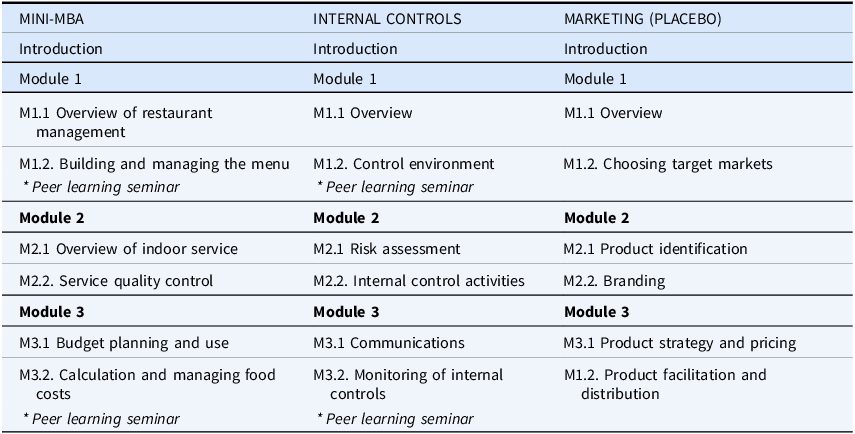


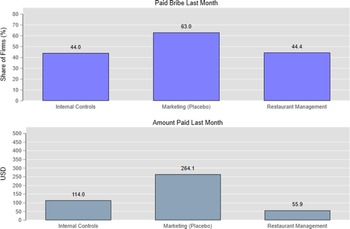

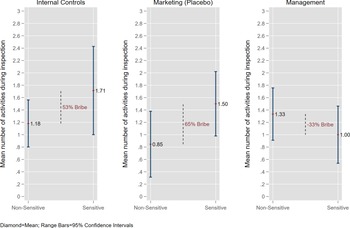


 Open access

