

According to Franklin D. Roosevelt (Reference Roosevelt1941), ‘freedom from fear’ and ‘freedom from want’ are two of the fundamental freedoms. These freedoms are regarded as the two pillars of the United Nations Millennium Declaration's Goals for the international community (United Nations, 2009). A crucial question to ask is: How can these two freedoms be ranked among the choicest of our fundamental freedoms? To put it another way, what is the universal reason underlying our motivation to strive for freedom from fear and freedom from want?
In considering this question, it is important to note that the proposal of these two freedoms is relevant to the past and ongoing changes in the environment we live in. The environment we live in is undergoing constant changes, sometimes for the worse, sometimes for the better. On one hand, environmental disasters (e.g., earthquakes, hurricanes, floods, tsunamis, pollutions, and wars) devastate the environment, making it a worse place to live. In this case, we seek to be free from the fear caused by the environmental changes. On the other hand, in order to be free from want, human beings have always been active in the transformation of the natural environment, making it a better place to live. In this case, industrialisation and urbanisation have served as effective approaches to helping local residents move from poverty to prosperity.
It is becoming clear that in the face of environmental changes, arousing our physical and psychological reactions and making adaptive judgments and responses is a good way to survive and exist. Such ‘survival of the fittest’ responses are illustrated well in the Chinese idioms 心由境生 (the mind depends on the environment) and 心随境转 (the mind changes with the environment). Specifically, in the context of disasters, our state of mind goes to freedom from fear, whereas in the context of transformation of the natural environment, our state of mind goes to freedom from want.
The right to freedom from fear deals with threats and hazards in the environment. It seeks to ensure human security and protect individuals from threats and hazards, such as wars, terrorism, crimes, nuclear or chemical leakage, economic deprivation, earthquakes, and infectious diseases (United Nations, 2005). As a region of numerous calamities, the Pacific Rim appears to be an especially important area of focus when examining the issue of the right to freedom from fear, and more studies on this issue are urgently needed. All of the most destructive natural disasters in history have occurred along the Pacific Rim (Kaur & Singh, Reference Kaur and Singh2014). For example, the most lethal earthquake of the 20th century occurred in Tangshan, China, causing approximately 250,000 deaths and 160,000 injuries (Sheng, Reference Sheng1987). The deadliest tsunami on record happened in the Indonesia area (Rofi, Doocy, & Robinson, Reference Rofi, Doocy and Robinson2006), killing 230,000–280,000 people in 14 countries. An earthquake near the coast of Tōhoku led to the Fukushima Daiichi nuclear disaster (Hindmarsh, Reference Hindmarsh and Hindmarsh2013), causing serious nuclear pollution to a large area for a long time. In addition to these rare catastrophes, some Pacific Rim countries are also constantly faced with frequent natural disasters. For example, the Philippines experiences on average 5.8 destructive storms annually (Kaur & Singh, Reference Kaur and Singh2014), and Japan suffers nearly 1,000 perceptible earthquakes per year (Fukagawa, Reference Fukagawa2007). Known as the Ring of Fire, the Pacific Rim is the most geologically active region globally, making it especially vulnerable to various disasters. These disasters and hazards bring a lot of fear, anxiety, panic, and grief to people in the Pacific Rim (Seiuli, Nikora, Te Awekotuku, & Hodgetts, Reference Seiuli, Nikora, Te Awekotuku and Hodgetts2016). Therefore, the Pacific Rim is expected to have more problems with realising the right to freedom from fear, which makes it especially imperative to discuss the right to freedom from fear in this geographical context.
The right to freedom from want deals with resource utilisation in the environment. It requires poverty eradication, economic development, reducing inequality, and improving housing, education, and health care (United Nations, 2005). Over the past few decades, the Pacific Rim has made great progress in realising freedom from want. Great changes and development are taking place in Pacific Rim countries. Traditional ‘post-industrial’ economies such as Australia, Canada, Japan, and the United States have shown a relatively steady but modest rate of growth (Kaur & Singh, Reference Kaur and Singh2014). Meanwhile, the four ‘Asian Tigers’ — Hong Kong, South Korea, Singapore, and Taiwan — have emerged as new, modernised, industrialised, and high-income economics (Kim, Reference Kim1998). China's growth has been spectacular, holding the record as the fastest developing major country in the history of the world, with an average annual growth rate of 7–9%. In less than three decades, the average real income per capita has increased more than six-fold, which is generally assumed to have raised the economic welfare of the Chinese people dramatically (Ravallion & Chen, Reference Ravallion and Chen2007).
Faced with such challenges and changes, human beings have evolved various psychological coping and adaptation mechanisms. Among these, emotion is one of the basic mechanisms (Kahneman, Reference Kahneman2011). For example, we get fearful when encountering hazards and cheerful when acquiring resources. Certain environmental changes induce corresponding subjective feelings. Therefore, we take it for granted that changes in subjective feelings should keep pace with changes in the objective environment. That is, people who live in an environment with more threats and hazards should feel more fearful than those who live in an environment with fewer threats and hazards. Similarly, people who live in richer areas should feel better than those who live in poorer areas.
Nevertheless, two counterintuitive effects were found in a series of studies, which showed that the relationship between changes in the objective environment and changes in subjective feelings is not linear. This process remains to be studied in greater detail.
The First Counterintuitive Effect: ‘Psychological Typhoon Eye’ Effect
Fear is one of the most basic instinctive responses to threats, danger, and risks (Soyk, Reference Soyk2011). The ‘ripple effect’ is commonly used to describe how we fear when faced with danger and risks; that is, the farther away you are from danger or risks, the less fear you will feel (Slovic, Reference Slovic1987). However, this turns out not to be the case in reality. The ‘psychological typhoon eye’ effect was found in several studies, suggesting that people show paradoxical psychological responses to danger.
On May 12, 2008, a catastrophic earthquake measuring 8.0 on the Richter scale struck China's Sichuan Province. This earthquake brought great suffering to China — 68,712 people died, 17,921 were missing, and 4.45 million were injured. Li et al. (Reference Li, Rao, Bai, Ren, Zheng, Li, Wang and Liu2009) conducted a survey to assess people's post-earthquake concerns about safety and health in both non-disaster areas (including 542 participants from Beijing, Fujian, and Hunan Province) and disaster areas (including 1,720 participants from Sichuan and Gansu Province). The results showed that the closer people were to the epicentre, the calmer they felt. In particular, as the residents’ devastation level increased, they estimated a smaller number of medical and psychological workers needed, lower probability of an epidemic outbreak, and a smaller number of safety precautions against earthquakes (Figure 1). This finding may be analogous to the meteorological phenomenon of the eye of a typhoon, in that the region located at the centre of a strong tropical cyclone is very calm, but its surroundings are very violent. Therefore, Li et al. (Reference Li, Rao, Bai, Ren, Zheng, Li, Wang and Liu2009) termed this effect the ‘psychological typhoon eye’ (PTE) effect: the closer people are to danger or risks, the calmer they feel.
Post-earthquake concerns about safety and health, as related to the respondents’ residential devastation level.

As a progression study of this effect, Li et al. (Reference Li, Rao, Bai, Zheng, Ren, Li, Wang, Liu and Zhang2010) conducted two sequential surveys of 5,216 residents in non-devastated (Beijing and Fujian) and devastated areas (Sichuan and Gansu) in September–October 2008 and April–May 2009, 4 and 11 months after the earthquake occurred. Again, they found a significant inverse pattern between the residential devastation level and the estimated number of medical and psychological workers needed, the estimated probability of an epidemic outbreak, as well as the estimated number of safety precaution behaviours needed (ps < .001). These results suggested that the PTE effect was quite robust and lasted for a long time after the earthquakes. More importantly, this study also found a ‘guanxi’ (关系) version of the PTE effect: People who had a closer relationship with either physically or economically damaged victims had relatively less concern about safety and health. Hence, the PTE effect can be found not only over physical distance, but also over social distance (Li, Reference Li2016).
Corroborating evidence from other studies supports the robustness of such a PTE effect. Xie, Xie, and Gan (Reference Xie, Xie and Gan2011) confirmed the PTE effect in a survey study after the Wenchuan earthquake. They found that residents who lived in devastated cities like Hanwang and Panzhihua perceived a lower risk of experiencing an aftershock than those who lived in a non-devastated city like Beijing. A survey conducted 3 months after another earthquake that occurred in 1988 in northern China reported fewer cases of post-traumatic stress disorder (PTSD) cases in a village closer to the epicentre (0.5 km) than in a much further (10 km) village (Wang et al., Reference Wang, Gao, Shinfuku, Zhang, Zhao and Shen2000). In addition to earthquake scenarios, the PTE effect was also found in the context of severe acute respiratory syndrome (SARS). Xie, Stone, Zheng, and Zhang (Reference Xie, Stone, Zheng and Zhang2011) examined the effect of the SARS crisis on the level of distress in people both in and around epidemic areas of China during the time of the SARS crisis. The results showed that the level of exposure to SARS did not primarily determine anxiety experienced; on the contrary, the distance from the centre of the epidemic was negatively correlated with people's anxiety levels. That is, people in uninfected areas, such as Tianjin, Hunan, and Chongqing, reported higher anxiety than those in infected areas, such as Beijing, Guangdong, and Shanxi.
The PTE effect has been found not only in the context of natural disasters, but also in the context of human-caused risks. For example, according to an attitude survey about a nuclear power station in France, people who lived closer to the nuclear reactor reported lower levels of anxiety than those who lived further away (Guedeney & Mendel, Reference Guedeney and Mendel1973). Maderthaner, Guttmann, Swaton, and Otway (Reference Maderthaner, Guttmann, Swaton and Otway1978) also had similar findings: People living further from a nuclear reactor (1.4 km) had higher risk perception than those living nearer (0.5 km). With respect to industrial factories, Tilt (Reference Tilt2006) found that farmers and commercial or service sector staff far from the pollution sources perceived higher risk than those who worked under highly polluted conditions. Wise (Reference Wise2009) reported that Londoners regularly suffering from German bombings during the Blitz in World War II finally grew blasé — it was people who lived in the suburbs who feared the bombings the most. Similarly, a post-9/11 study (Hoven et al., Reference Hoven, Duarte, Lucas, Wu, Mandell, Goodwin and Bin2005) found that children at schools far from Ground Zero had significantly more psychopathology problems than those from the nearest area.
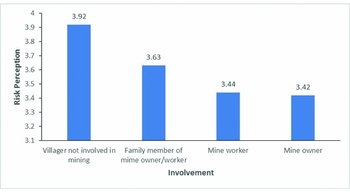
Zheng and colleagues found an ‘involvement’ version of the PTE effect when studying how people perceived environmental pollution risk (Zheng et al., Reference Zheng, Rao, Zheng, Cai, Wei, Xuan and Li2015). It was puzzling to find that people (e.g., policy makers and public bodies) under indirect threat from lead–zinc pollution opposed it, but those (e.g., lead–zinc mine owners and workers) under direct threat insisted on dangerous mining practices. To understand this puzzling phenomenon and see whether it was another variation of the PTE effect, Zheng et al. (Reference Zheng, Rao, Zheng, Cai, Wei, Xuan and Li2015) conducted a survey in the Feng administrative village of western Hunan Province, China, where there are many mining activities. The survey was designed to investigate the relationship between villagers’ mining risk perception and the degree of their involvement in mining. A total of 220 local villagers participated in the survey, and their level of involvement was measured by asking them to classify themselves into one of four categories: mine owner (highest involvement), mine worker (second highest involvement), family member of mine owner/worker (third highest involvement), and villager not involved in mining (lowest involvement). The results showed that villagers at different levels of involvement had significantly different risk perceptions, with scores increasing with decreasing levels of involvement (Figure 2). Similar to the PTE effect, the closer people were to the danger, the calmer they felt. Zheng et al. (Reference Zheng, Rao, Zheng, Cai, Wei, Xuan and Li2015) referred to this as the ‘involvement’ version of the PTE effect.
Means of risk perception of the villagers in the administrative village of Feng.
Mechanism Behind the PTE Effect
The PTE effect is interesting and counterintuitive. The mechanism involved, however, remains unclear. Several possible theories have been proposed to explain the effect (Li, Reference Li2016).
One possible explanation comes from Festinger's theory of cognitive dissonance. The theory of cognitive dissonance holds that when people experience opposing attitudes, beliefs, or behaviours, they feel uncomfortable. Such discomfort leads to an alteration in one of the attitudes, beliefs, or behaviours to reconcile them with each other (Festinger, Reference Festinger1957). People who live in the centre of a disaster area indeed experience a sense of danger. However, they may have no choice but to stay there, conflicting with their survival instinct to flee. To reconcile these conflicts, individuals may unconsciously adjust their risk perception in order to defend their choice to stay in the risky area. However, the cognitive dissonance account is difficult to test directly because it is difficult to manipulate or measure a person's level of cognitive dissonance.
Similarly, Feygina, Jost, and Goldsmith (Reference Feygina, Jost and Goldsmith2010) have proposed a system justification theory. They contend that to defend and justify the societal status quo in the face of the threat posed by environmental problems, people are willing to express greater denial of environmental realities and less commitment to pro-environmental action. Therefore, the system justification theory may provide an alternative explanation of the PTE effect, especially in the context of environmental risks.
Another possible explanation for the PTE effect, suggested by Li et al. (Reference Li, Rao, Bai, Ren, Zheng, Li, Wang and Liu2009) and Maderthaner et al. (Reference Maderthaner, Guttmann, Swaton and Otway1978), comes from the psychological immunisation theory. This theory assumes that resistance to adverse life events is naturally built through repeated exposure; for example, residents in central disaster areas are supposed to acquire an increased psychological immunity to disaster through more exposure to the hazard. Li et al. (Reference Li, Rao, Bai, Zheng, Ren, Li, Wang, Liu and Zhang2010) conducted studies to see whether the psychological immunisation theory could explain the PTE effect. They measured the extent and frequency of respondents’ personal exposure to earthquake damage using a 6-point scale. A multivariate analysis of covariance (MANCOVA) was performed on the estimates of the number of medical and psychological workers needed, the probability of an epidemic outbreak, and the amount of self-protective behaviours needed, using residential devastation level as a factor, with the extent and frequency of personal exposure to the earthquake damage and demographic variables (gender, age, and education) as covariates. The results revealed that even after controlling for the extent and frequency of personal exposure to the earthquake damage, the main effect of residential devastation persisted (ps < .001), indicating that the psychological immunisation theory cannot fully explain the PTE effect.
Xie et al. (Reference Xie, Xie and Gan2011) proposed a gap between experiencing and imagining account. They suggested that the gap between experiencing and imagining may explain why there existed a PTE effect in the SARS crisis. Participants who had actually experienced a risky event would have a more accurate estimate of the risks involved, while participants who had not actually experienced the event would overestimate the risks (Halpern-Felsher et al., Reference Halpern-Felsher, Millstein, Ellen, Adler, Tschann and Biehl2001). Respondents at the centre of the epidemic would have gained more objective SARS-related information and knowledge, which could help to attenuate the experienced distress (Kasperson et al., Reference Kasperson, Renn, Slovic, Brown, Emel, Goble and Ratick1988). On the contrary, those outside the centre of the epidemic mainly acquired SARS-related information and knowledge from mass media, relatives, and friends. Those information sources, especially the media, have been shown to be correlated with increased distress (Kasperson et al., Reference Kasperson, Renn, Slovic, Brown, Emel, Goble and Ratick1988; Marshall et al., Reference Marshall, Bryant, Amsel, Suh, Cook and Neria2007). However, Zheng et al. (Reference Zheng, Rao, Zheng, Cai, Wei, Xuan and Li2015) pointed out that this was not the case in the ‘involvement’ version of the PTE effect, which was found in their lead-zinc mining risk research. In their studies, the villagers under investigation all lived in the lead-zinc risk area, so the risks they perceived came out of personal experience, not imagination. Hence, the gap between experiencing and imagining might not provide a sufficient account of the PTE effect.
A so-called ‘perceived benefit’ explanation has also been proposed by several researchers. For example, in their earthquake studies, Wang et al. (Reference Wang, Gao, Shinfuku, Zhang, Zhao and Shen2000) explained why the villages closer to the epicentre had fewer cases of PTSD. They found that although villagers living closer to the epicentre received a higher level of initial exposure to the earthquake, they also received more immediate disaster relief and a higher level of subsequent reconstruction support, whereas villagers living further from the epicentre received less post-earthquake support and disaster relief. Hoven et al. (Reference Hoven, Duarte, Lucas, Wu, Mandell, Goodwin and Bin2005) used a similar account to explain why a school near the 9/11 attack was associated with lower rates of probable mental disorders. They suggested that students in the Ground Zero area schools were the recipients of significant mental health intervention immediately after the 9/11 attack, resulting in a higher level of psychological resilience. Meanwhile, Tilt (Reference Tilt2006) investigated risk perception from industrial pollution by comparing industrial workers with their commercial/service sector counterparts and found that risk perception decreased with increasing monthly salaries. Zheng et al. (Reference Zheng, Rao, Zheng, Cai, Wei, Xuan and Li2015) also examined a ‘perceived benefit’ account in their study on risk perception from lead-zinc mining. They designed a questionnaire with four items to measure perceived benefit and eight items to measure perceived harm, both of which were directly based on an interview with several local villagers and staff members at the local Center for Disease Control in the lead-zinc mining area. The results showed that involvement was significantly correlated with perceived benefit and perceived harm. At the same time, the perceived benefit (β = −0.19, p < .01) and perceived harm (β = 0.87, p < .001) significantly predicted risk perception. This evidence may well support the perceived benefit account of the ‘involvement’ version of the PTE effect.
Implications of the PTE Effect
The PTE effect suggests that the relationship between objective danger and subjective fear is not what it is commonly assumed to be. This finding has drawn great public attention. Noah Gray (Reference Gray2010), a senior editor for Nature, commented in a guest post that the finding is ‘important for policy makers when deciding how to best battle public health risks, because it enables researchers and policy makers to better understand the psychology of those who have suffered through a natural disaster’, and Harada (Reference Harada2011) pointed out: ‘The results are especially insightful for Japanese readers after the Great East Japan Earthquake of 2011’ (p. 67). The Washington Post published an in-depth report on this topic entitled ‘The Huge Paradox at the Heart of How People Think about Environmental Risks’ (Harvey, Reference Harvey2015). The report invited several specialists from the field to comment on the underlying mechanisms of the PTE effect and concluded that although the attempt to change people's minds by simply presenting facts and statistics did not seem to work effectively, activists and policy makers could nonetheless be inspired by these findings to better communicate on future environmental issues. The British Psychological Society's Research Digest also reported on this topic in an article called ‘Psychological Calm in the Eye of a Storm’ (Jarrett, Reference Jarrett2010).
Some implications can be drawn from the studies, comments, and reports on the PTE effect. First, future post-disaster interventions should not be confined exclusively to people in close proximity to a disaster, but should incorporate all of the disaster's reach, both physically and psychologically. Wang et al. (Reference Wang, Gao, Shinfuku, Zhang, Zhao and Shen2000) and Hoven et al. (Reference Hoven, Duarte, Lucas, Wu, Mandell, Goodwin and Bin2005) both suggested that the reason why people who lived further from the centre of a disaster had more mental disorders was that they did not get immediate or adequate post-disaster interventions. We may underestimate or neglect the needs of victims in peripheral areas. In fact, in the first 2 weeks after the Wenchuan earthquake, voluntary psychological workers all headed for the disaster zone and went to the epicentre area, ignoring the peripheral areas. Psychological interventions were so concentrated on the central disaster area that the Beichuan High School, which was located in the central earthquake area, was reported to have received so many psychological workers that they had to ‘close the door’ (Chen, Wang, & Liu, Reference Chen, Wang and Liu2009). Phenomena like these remind us that systematic, comprehensive, post-disaster interventions are needed to cover all of the victims in a disaster area.
Second, policy makers and managers in risk management should take different interest groups into consideration. Different risk communication strategies should apply for different interest groups. Zheng et al. (Reference Zheng, Rao, Zheng, Cai, Wei, Xuan and Li2015) and Tilt's (Reference Tilt2006) studies suggested that the reason why people who lived closer to the hazard perceived a lower level of risks was that they perceived a high level of benefit from risky activities. Paul Slovic, a professor of psychology at the University of Oregon and president of Decision Research, was interviewed by The Washington Post and said about the PTE effect: ‘In the brain, risk and benefit are often tied into the same process. The brain doesn't keep these separate.’ Instead, ‘They kind of blend these into an overall feeling of “this is something good or bad”’ (Harvey, Reference Harvey2015). Therefore, interest groups that are heavily involved in certain risks may be more risk seeking. Changing the way costs and benefits are framed, as Zheng et al. (Reference Zheng, Rao, Zheng, Cai, Wei, Xuan and Li2015) suggested, may be one potential intervention to protect people from getting involved in threat.
Third, researchers and surveyors should also pay attention to similar paradoxical psychological effects when studying how people react to disasters, dangers, and risks. Just as Noah Gray (Reference Gray2010) suggested, ‘Surveyors must maintain a cautious and healthy skepticism when interviewing survivors and assessing areas for aid because information provided and opinions given will not likely reflect the dire situations being experienced’.
The Second Counterintuitive Effect: Town Dislocation Effect
China has achieved remarkable economic growth since the start of economic reform, undergoing a rapid urbanisation process, with urban population growth from 1.7 million to 7.3 million between 1978 and 2013. By the end of 2014, China's urbanisation rate reached 54.77%, which exceeded the global average rate of 53%. The average real per capita income of 2012 was more than 10 times that of 1978 for both rural and urban areas (National Bureau of Statistics China, 2013). It is logical to assume that the remarkable economic growth and the rapid urbanisation process would have raised the subjective wellbeing of the Chinese people dramatically. However, some pioneering work has shown that in several advanced economies — including the United States, Japan, the United Kingdom, France, Germany, Italy, and the Netherlands — as income per capita rose continuously over one or more decades, the mean subjective wellbeing score remained roughly unchanged (e.g., Blanchflower & Oswald, Reference Blanchflower and Oswald2004; Easterlin & Sawangfa, Reference Easterlin, Sawangfa, Diener, Kahneman and Helliwell2010). These results suggest that the relationship between subjective feelings and the objective environment during the urbanisation process is not linear. Does this non-linearity also apply to developing countries like China during the urbanisation process? Some studies have attempted to help to shed light on this question.
To investigate whether the environmental changes during the urbanisation process would increase citizens’ subjective wellbeing, Wang et al. (Reference Wang, Li, Bai, Ren, Rao, Li and Zheng2015) conducted a nationwide, in-home survey from August to September 2007 on a stratified random sample of 3,716 Chinese inhabitants across the three tiers of settlements — country, town, and city. They measured people's attitudes towards their living situation using direct and indirect subjective indicators. The direct subjective indicator was rated social ambiance, which was measured with six items to see whether inhabitants rated their settlement as a harmonious and good society. The indirect subjective indicator was termed the projected endorsement, measured through a projective method (Li, Reference Li2016). Instead of directly asking about respondents’ attitudes toward their own place of settlement, researchers asked the respondents to decide on four important life issues: the selection or deselection to be reincarnated as a local/non-local inhabitant, the choice to marry a local/non-local projected future spouse, their willingness to pass on their own dialect to an offspring, and their emotional reaction to discriminatory words. Thus, the projected endorsement indicated whether inhabitants endorsed their own place of settlement. Respondents with a higher projected endorsement were expected to choose to be reborn as local inhabitants, marry local spouses, teach the local dialect to their offspring, or feel upset about discriminatory words directed at local people. Three objective (hard) indices, namely the under-5 mortality rate, the adult illiteracy rate, and the monthly household income per capita, which are commonly used to measure levels of development, were selected based on the United Nations Development Programme (1999) to compare with the subjective (soft) indices (Wang et al., Reference Wang, Li, Bai, Ren, Rao, Li and Zheng2015).
According to the objective indicators, inhabitants’ quality of life was improved from country to town to city monotonically with increasing urbanisation level. Inhabitants’ place attachment was supposed to follow a similar trend. However, the results revealed that the town residents rated their projected endorsement and perceived social ambiance lower than the country or city residents, and no significant difference was observed between the latter two groups (see Figure 3; Wang et al., Reference Wang, Li, Bai, Ren, Rao, Li and Zheng2015). Logically, the projected endorsement scores of people living in towns would be expected to fall between those of the country and city residents, but they resulted in an out-of-pattern score. Because of the illogical nature of these scores, Wang et al. (Reference Wang, Li, Bai, Ren, Rao, Li and Zheng2015) dubbed this V-shaped relationship the ‘town dislocation’ (TD) effect, describing a situation where the subjective feelings do not change in correspondence with the changing environment.
Data from the assessment of the effect of urbanisation.

This TD effect is unexpected but understandable. An Aesop fable called ‘The Town Mouse and the Country Mouse’ once told a similar story: There was a country mouse who envied a town mouse who had plenty of cakes and ale. So he moved to town. However, after experiencing the huge differences between the town and the country, the country mouse found ‘better beans and bacon in peace than cakes and ale in fear’ and at last moved back to the country. Just like the country mouse in the fable, human beings also seem to feel better country than town (Wang et al., Reference Wang, Li, Bai, Ren, Rao, Li and Zheng2015).
A similar discrepancy between soft and hard indicators was also reported in studies of urbanisation. For example, Kahneman and Krueger (Reference Kahneman and Krueger2006) found that the life satisfaction or happiness of Chinese people did not improve from 1994 to 2005 despite a great increase in their average real income. A series of studies on the rural–urban divide paradox in China demonstrated that rural residents had higher subjective wellbeing than their urban counterparts despite the fact that urban households were richer (Luo, Reference Luo2006; Knight & Gunarilaka, Reference Knight and Gunatilaka2010a, Reference Knight and Gunatilaka2010b). It was also reported that in the ‘mass incidents’ that occurred in 2012, the ratio of participation was slightly higher among urban residents than among their rural counterparts, signifying that the core of social conflicts was shifting from the country to the city (Chen & Fu, Reference Chen and Fu2012), which could potentially undermine the place attachment of urban residents. Similar side effects brought by rapid development have been reported in other cultures as well. A study from Sweden found that the higher population density that resulted from urbanisation was correlated with higher incidence rates of psychosis and depression (Sundquist, Frank, & Sundquist, Reference Sundquist, Frank and Sundquist2004). In Iran, informal settlement in urban areas as a result of rapid urbanisation brought about serious residential, health, and recreation issues (Zakerhaghighi, Khanian, & Gheitarani, Reference Zakerhaghighi, Khanian and Gheitarani2015).
Mechanism Behind the Town Dislocation Effect
To elucidate the potential mechanism of the TD effect, two possible explanations have been proposed (Wang et al., Reference Wang, Li, Bai, Ren, Rao, Li and Zheng2015). The first is concerned with social support. Unlike in cities, blood relationships form the basis of social support in country areas (Zhu & Shao, Reference Zhu and Shao2005). During the urbanisation process, professional relationships seem to take the place of blood relationships as the basis of social support (Cai, Reference Cai2005; Li, Chen, & Liu, Reference Li, Chen and Liu2012). Lack of community belonging and failure to integrate with the local community may lead residents to develop depressive symptoms (Bernardo & Liu, Reference Bernardo and Liu2015). It is possible that in towns, blood relationships have been weakened, but professional relationships have not yet been established, leading to lower social support in towns compared to either country areas or cities (Cai, Reference Cai2005; Zhu & Shao, Reference Zhu and Shao2005). The second explanation highlights the negative effect of uncertain situations on residents’ place attachment. In the Chinese urbanisation process, the Small City Strategy (Chen, Reference Chen2006) presents significantly more changes and unforeseen adventures to town residents than to people living in country areas and cities. These changes and adventures may be very challenging to handle, resulting in relatively lower place attachment for town residents.
Based on the above explanations, social support, receptiveness to innovation, and sense of adventure were proposed to mediate the relationship between place of settlement and projected endorsement (Wang et al., Reference Wang, Li, Bai, Ren, Rao, Li and Zheng2015). Wang et al. (Reference Wang, Li, Bai, Ren, Rao, Li and Zheng2015) conducted a second-round survey on a stratified random sample of 1,452 residents from the three tiers of settlements. In addition to the indicators previously used in the first-round survey, three potential mediators — social support, receptiveness to innovation, and sense of adventure — were measured. The researchers borrowed and modified five items from Blumenthal et al.’s (Reference Blumenthal, Burg, Barefoot, Williams, Haney and Zimet1987) Scale of Perceived Social Support and from the Survey Research Center's Trust in People Scale to measure social support. Attitudes towards genetically modified (GM) food were assessed to determine respondents’ receptiveness to innovation. Loss aversion was obtained as a measure of sense of adventure by asking questions about hypothetical payoffs, with a higher loss aversion coefficient indicating a higher level of risk aversion. Wang et al. (Reference Wang, Li, Bai, Ren, Rao, Li and Zheng2015) tested the mediation effects of social support, receptivity toward GM food, and loss aversion using the bootstrap method, controlling for gender, age, and education. The results indicated that receptivity towards GM food and loss aversion tendency failed to provide a satisfactory explanation for the TD effect. However, it was found that the effects of the three tiers of settlements on rated social ambiance and projected endorsement were mediated by social support. This was consistent with previous results suggesting that social relationships (Bonaiuto, Aiello, Perugini, Bonnes, & Ercolani, Reference Bonaiuto, Aiello, Perugini, Bonnes and Ercolani1999; Rollero & De Piccoli, Reference Rollero and De Piccoli2010), social bonds (Moser, Ratiu, & Fleury-Bahi, Reference Moser, Ratiu and Fleury-Bahi2002), and community ties (Scopelliti & Tiberio, Reference Scopelliti and Tiberio2010) were positively related to place attachment.
Implications of the Town Dislocation Effect
The TD effect has several practical implications, as discussed by Li, Liu, and Zheng (Reference Li, Liu and Zheng2017). First, it is imperative to combine subjective (soft) indices with objective (hard) indices to assess the urbanisation process. In the observed TD effect, although urban residents enjoyed better living standards than their rural counterparts, they did not assign higher ratings to endorse their places of settlement. Policy makers should always consider combining subjective indices with objective indices in order to better evaluate the efficiency of the urbanisation process. Only in this way can government departments better adjust and implement their policies.
Second, the relatively lower scores given by town residents on the soft indices imply that special attention should be paid to the development of towns. Towns have played a significant role in propelling Chinese urbanisation over the past three decades (Webster, Reference Webster2004). In the process, town residents have experienced major environmental and life changes. Therefore, future public policymaking should integrate more town residents’ voices to boost their economic and psychological welfare.
Furthermore, the mediation analysis of the TD effect found that social support mediated the effects of the three tiers of settlements on the subjective (soft) indicators (Wang et al., Reference Wang, Li, Bai, Ren, Rao, Li and Zheng2015). This finding reminds us that improving residents’ social support networks to enhance their subjective wellbeing deserves serious political consideration. Social support can be built in two ways: in the physical space and in the psychological space. In the physical space, we can construct face-to-face platforms to improve social support networks. For example, a well-constructed public space provides opportunities to meet and get to know new neighbours, helping those who are used to the environment of a traditional big family to better adapt to the transition to the nuclear family mode in modern city life. With respect to psychological space, communities should create more social platforms in the virtual world. Governments and communities can use online social platforms (e.g., Facebook, WeChat, Twitter) to create various types of activities to encourage residents into communal activity.
General Discussion
In short, the two aforementioned counterintuitive effects remind us that the relationship between the objective environment and the subjective mental state may not be linear, illustrating a rather complex psychological mechanism behind how people respond to environmental changes and strive for the freedom from fear and want. However, there are a few limitations to the existing research on this mechanism, with some critical issues to be addressed in the future.
First, the mechanism behind the two effects is still unclear. Although several possible explanations have been proposed to account for the PTE effect, few have been directly tested. Therefore, more research is needed to elaborate on the mechanism behind this effect. As for the TD effect, although the social support account was tested in Wang et al.’s (Reference Wang, Li, Bai, Ren, Rao, Li and Zheng2015) studies, the reason why people in towns lack social support compared to those in city and country areas needs further examination in future studies.
Second, some potential moderators and influencing factors should be identified for the PTE effect and the TD effect. For example, cultural differences may moderate the PTE effect by influencing how people react to environmental changes. A study showed that the Hakka spirit significantly predicted Taiwanese people's resilience to the 9/21 earthquake (Jang & Lamendola, Reference Jang, Lamendola, Paton and Johnston2006). The TD effect has been reported mainly in Chinese culture because the administrative divisions in China consist of three levels (city, town, and country), whereas such a division is rarely seen in studies from other countries. In addition, Wang et al. (Reference Wang, Li, Bai, Ren, Rao, Li and Zheng2015) pointed out that in towns, blood relationships have been weakened, but professional relationships have not yet been established, leading to lower social support in towns compared to either city or country areas. Such an account seems plausible in a collectivistic culture like China. Whether the account also applies in an individualistic culture is not yet clear. More research is needed to test the TD effect and the mechanism behind it in other cultures.
Third, in addition to self-report questionnaires and cross-sectional correlation studies, new research methods could be considered in future research. Big data from the internet, provided by social media companies such as Twitter and Facebook and micro-blog data, may be useful for investigating how people respond to different kinds of disasters or to the rapid urbanisation process.
In conclusion, the more freedom from fear and freedom from want are seen as the fundamental freedoms, the heavier the responsibility resting upon psychology scholars to explore the psychological adaptation mechanism behind how people respond to environmental changes in the realisation of the freedom from fear and want. As the mechanism remains largely unknown, we still have a long way to go to gain greater freedom from fear and want.
Acknowledgments
We thank Editor Li Liu and two anonymous reviewers for helpful suggestions and comments that have improved this paper. Preparation of this article was supported by CAS Key Laboratory of Behavioral Science, Institute of Psychology (Y5CX052003).
Funding
This research was partially supported by the National Natural Science Foundation of China (31471005), Foundation for the Supervisor of Beijing Excellent Doctoral Dissertation (20138012501) and CAS Key Laboratory of Behavioral Science, Institute of Psychology, Chinese Academy of Sciences (Y5CX052003).
Conflict of Interest
None.


 Open access

