


Researchers of suicide have investigated in numerous ways the motives and risk factors of this self-harming behaviour; however, the point is to find a theory that explains the etiology of suicide, or at least the majority of the variance in suicide so as to inform its prevention. Durkheim’s (Reference Durkheim1897/1951) classical theory of social integration and regulation explaining egoistic, altruistic, anomic and fatalistic suicide is in theoretical and practical conflict with psychopathological theories prevalent today, which puts more weight on the individual’s reasons rather than social and environmental reasons. In the past, over almost one century of suicide research in the world, the psychiatric model of suicide has been dominant over the social integration theory, both in the academy and in practice.
The overwhelming majority of suicidologists today are from a psychiatric background, and major funding for suicide research and prevention is from medical foundations such as the US National Institute of Mental Health (NIMH). The US NIMH spends about $62 million each year on suicide research and prevention and about $2,299 million each year on mental illness studies (US Department of Health & Human Services, 2016). In fact, the national suicide rates of the United States are not responding to the funding, with no decrease but a slight rise in the rates since the middle of the last century (Caine, Reference Caine2010; Everett, Reference Everett2018; Reidenberg & Berman, Reference Reidenberg and Berman2017; Xu, Murphy, Kochanek, & Arias, Reference Xu, Murphy, Kochanek and Arias2016). Also, internationally, there was a significant positive correlation between suicide rates and the health budget spent on mental health, and suicide rates in both genders were higher in countries with greater services in mental health, including the number of psychiatric beds, psychiatrists and psychiatric nurses, and the availability of training in mental health for primary care professionals (Shah, Bhandarkar, & Bhatia, Reference Shah, Bhandarkar and Bhatia2010).
On the other hand, suicide rates in China have fallen from as much as 23 per 100,000 people in 1999 to 8.61 per 100,000 in 2017 (Jiang et al., Reference Jiang, Niu, Hahne, Hu, Fang, Shen and Xiao2018). A number of other studies have also evidenced a sharp decrease in the rates in such a short period of time and tried to explain the change, even though China has done little to improve mental health (Wang et al., Reference Wang, Li, Chi, Xiao, Ozanne-Smith, Stevenson and Phillips2008; Zhang, Jing, Wu, Sun, & Wang, Reference Zhang, Jing, Wu, Sun and Wang2011; Zhang, Sun, Liu, & Zhang, Reference Zhang, Sun, Liu and Zhang2014).
According to a National Center for Health Statistics (NCHS) data brief released recently, suicide remains the 10th leading cause of death in the United States, and there was a statistically significant increase in the suicide rate from 13.0 in 2014 to 13.3 in 2015. The number of suicide deaths increased from 42,773 in 2014 to 44,193 in 2015. On average, there were approximately 121 suicide deaths each day in 2015 versus approximately 105 suicide deaths each day in 2010 (Kochanek, Murphy, Xu, & Tejada-Vera, Reference Kochanek, Murphy, Xu and Tejada-Vera2016).
It is noted that only a very small percentage of mentally ill people take actions to kill themselves (Mann, Waternaux, Haas, & Malone, Reference Mann, Waternaux, Haas and Malone1999), although over 90% of suicides in the West have been diagnosed with mental disorders, including major depression and alcohol/substance use disorders (Institute of Medicine, 2002). Of note is that in the United States, individuals who are male or white are more likely to kill themselves than those who are female or black. If the psychiatric model was valid, men and whites should be more psychologically ill than women and blacks, which is, of course, far from the truth. On the other hand, females attempt suicide at a higher rate than males, and this has created a gender paradox in suicidal behavior (Canetto & Sakinofsky, Reference Canetto and Sakinofsky1998). To identify suicide risk factors, the author agrees with Mann and colleagues (Reference Mann, Waternaux, Haas and Malone1999) that it is necessary to look beyond the presence of a major psychiatric syndrome.
The strain theory of suicide (STS) is an emerging approach to look into the etiology of suicide beyond psychiatry, as well as genetics and/or epigenetics, although these non-social features are also often discussed as risk factors. Suicidal thoughts (ideation) can be triggered by life events, which may create conflicts, frustration, psychological pain, hopelessness and even desperation, and they can be called psychological strains. The STS proposes four sources of strain that may lead to suicide: (1) value strain from at least two different social values, (2) aspiration strain from the large gap between aspiration and reality in life, (3) deprivation strain from the relative deprivation including poverty, and (4) coping strain from deficient coping skills in front of a life crisis. The STS postulates that a person with psychological strains but unable to solve them is psychologically tortured and angered. The outward release of the anger is violence against others, and the inward release of the pressure may result in depression, anxiety or suicidal ideation.
Theoretical foundations
Besides psychiatric models of suicide, social and psychological theories of suicide have been emerging in the academy. Durkheim’s (1987/1951) social integration and moral regulation theory, first published in 1897, laid out the conditions for suicide risk in 19th century Europe. For Durkheim, suicide seems to be an individual behavior not caused by the individual or personal reasons, but the reasons may be found in a social structure where integration and regulation converge. Empirical studies from various cultures have supported this anti-reductionism theory of suicide (Aliverdinia & Pridemore, Reference Aliverdinia and Pridemore2009; Stack, Reference Stack1979; Zhang, Reference Zhang2010). However, psychologists and psychiatrists do not necessarily agree with the Durkheimian structuralism. They argue that personal and psychological state-trait interactions cause the problems leading to suicide, such as hopelessness (Beck, Steer, Kovacs, & Garrison, Reference Beck, Steer, Kovacs and Garrison1985), psychache (Shneidman, Reference Shneidman1998) and interpersonal relations (Joiner, Reference Joiner2005).
It is a debate between individual and ecological theories. Sociological work on suicide has tended to be tested at the aggregate level, while the psychological theories of suicide have been tested mainly at the individual level of analysis. However, individual data collected at the ecological level can be used to explain variation in suicide rates. For example, Stack (Reference Stack1978) and many who have following this lead used female labor force rates as an index of role conflict. This macro level variable predicted some suicide rates from values conflict measures at the individual level. However, drawing conclusions about the individuals based solely on the aggregate data might be misleading. For example, using income inequality as an objective measure of relative deprivation to predict individual deviance has yielded mixed findings (Stack, Reference Stack2000). Therefore, in search of the correlation of suicidality, relative deprivation or relative poverty needs to be measured at a micro level to avoid the ecological fallacy.
Most of the previous theories of suicide have been restricted to one domain of possible risk factors, such as psychiatric, social psychiatric, or psychological (Joiner, Hom, Hagan, & Silva, Reference Joiner, Hom, Hagan and Silva2015). Most of those studies are based on medical perspectives and are exploratory in nature and therefore lack theoretical generalization. Mann and colleagues (Reference Mann, Waternaux, Haas and Malone1999) developed and tested a stress-diathesis theory of suicide, but it is only a clinical model based on and for psychiatric patients. Heeringen’s (Reference Heeringen2003) psychobiological model of suicidal behaviour, which focuses on the process of the state-trait interaction, seems more generalizable, but again is neurobiological in nature. Through overcoming such deficiencies, this article attempts to conceptualize a basic sociological paradigm that incorporates the available theories, hypotheses and findings explaining suicide in the world today.
Social integration, moral regulation, and suicide
Over a century ago, Durkheim (Reference Durkheim1897/1951), in his milestone work Suicide: A Study in Sociology, elaborated a social integration and regulation theory of suicide. Based on the overlapping dimensions of social integration and moral regulation in a society, Durkheim categorized suicide into four types: egoistic suicide is related to a lack of social integration; altruistic suicide is related to excessive social integration; anomic suicide is related to lack of moral regulation; and fatalistic suicide is related to over-strict regulation. Although the majority of the suicides in the world are egoistic and evidenced by empirical data, the three other types have also been studied and proven by research (Joiner et al., Reference Joiner, Hom, Hagan and Silva2015).
Simply, social integration is the status a person feels connected to or acceptance by a group or society. A person with a high level of integration feels accepted and loved by others and should have a low chance of suicide. A person with a low level of integration feels unwanted, excluded or rejected by others, and may have a high chance of suicide.
Durkheim used the concept of social integration to explain the higher suicide rate among people who lacked social connections – those who were single, divorced or never married had fewer connections to others in society and were less likely to feel part of the larger community. Regarding religion, Protestants were more likely to die of suicide than Catholics or Jews because the religious practices of the latter two religions emphasized the development of closer ties among their members. For gender, as men have more freedom and are more independent than women, this may lead some men to feel they have fewer significant relationships with other people and that it would be an admission of weakness to seek advice or comfort from others, which could lead to feelings of being cut off from a group or community. Therefore, men are at higher risk of suicide than women worldwide. In sum, people who do not develop close ties or connectedness with others and feel thwarted belonging and perceived burdensomeness (Joiner, Reference Joiner2005) are more likely to die of suicide.
Durkheim’s association of social integration to the suicide rate is still relevant today. People who attempt suicide are much more likely to say they feel lonely and isolated from others and claim disconnections from society, confirming what Durkheim hypothesized over one hundred years ago.
The social integration theory of suicide has been widely tested and supported since its inception in 1897. Gibbs and Martin (Reference Gibbs and Martin1958) and Gibbs’ (Reference Gibbs1982) status integration theory measured the concept of integration at individual levels and found support for Durkheim’s integration theory. Role conflict is at the heart of status integration theory. Stack (Reference Stack2000) reviewed the findings of 84 sociological studies published over a 15-year period that dealt with tests of the modernization and/or social integration perspectives on suicide. He found the strongest support for social integration theory came from research on marital integration, wherein more than three-quarters of the research participants had a significant relationship. Another study conducted by Duberstein and colleagues (Reference Duberstein, Conwell, Conner, Eberly, Evinger and Caine2004) with a case control psychological autopsy design compared 86 suicides and 86 living controls at 50 years of age and older, and found that the association between family and social/community indicators of poor social integration and suicide is robust and largely independent of the presence of mental disorders. Besides the effect on suicide, social integration also has an impact on health. People who are married, live in a family, go to church and are connected to community tend to be healthy, both physically and mentally (Berkman, Glass, Brissette, & Seeman, Reference Berkman, Glass, Brissette and Seeman2000).
However, lack of social integration is highly related to suicide, but it is by no means the root cause of suicidal ideation. Low integration facilitates suicide when a person has suicide in mind.
Disconnectedness, capability, and suicide
The interpersonal theory of suicide (Joiner, Reference Joiner2005; Van Orden et al., Reference Van Orden, Witte, Cukrowicz, Braithwaite, Selby and Joiner2010) suggests that suicide is likely to happen to an individual who has experienced thwarted belonging and perceived burdensomeness, and has acquired capability, and claims that this social disconnectedness, plus the means and environment, is the cause of suicide. As facilitators of suicide, disconnectedness, operationalized by thwarted belonging and perceived burdensomeness, is actually Durkheim’s lack of social integration.
The Interpersonal Needs Questionnaire (INQ) was devised by Van Orden, Witte, Gordon, Bender, and Joiner (Reference Van Orden, Witte, Gordon, Bender and Joiner2008) to measure thwarted belonging and perceived burdensomeness, proposed in the interpersonal theory of suicide. As these two elements are not sufficient to produce suicidal behavior in individuals, the Acquired Capability of Suicide Scale (ACSS) was added as one of the three measures for the interpersonal theory of suicide instrument. The interpersonal theory of suicide with its measurements, especially the INQ, offers operationalization of Durkheim’s social integration, which Durkheim did not accomplish.
However, thwarted belonging, perceived burdensomeness and acquired capacity are not at the root or the ultimate cause of suicide. Here is an analogy of cancer development. When a person is diagnosed with a malignant tumorous disease, even if the immune system is not strong enough, recovery with treatment is still possible. But if the patient does not rest enough, observe a healthy diet and mentally relax, the illness could become worse. However, all these activities, whether followed or not, have nothing to do with the causes of cancer. Likewise, social disconnectedness and capability may not be the root causes of suicidal mentality/thought. A person does not necessarily develop a suicidal idea because of not having friends or the suicide means available.
Many people in their daily lives feel constantly lonely and guilty about their burdensome to others and have easy access to suicide means, but most never think of suicide and have never tried suicide. For these people, despite an unfavourable immune system, they have not been infected with the disease. The disease is the cause. Stopping the disease or virus infection is the primary level of prevention, while strengthening the immune system is the secondary level of prevention. To strengthen social connectedness and social integration, and reduce the acquired capability or lethal means are only secondary to suicide prevention, which is less important and efficient than finding the real causes of suicide.
Disconnectedness can facilitate a suicidal behavior. When an individual is extremely frustrated and feeling hopeless, with the thought that living is not worth the psychological pain, he or she is likely to end their life if social integration is low or absent. Social integration may represent the immune system in suicide etiology. Thwarted belonging, perceived burdensomeness and social disconnectedness are all indicators of low immunity to suicide.
The interpersonal theory of suicide is an operationalization of Durkheim’s social integration theory of suicide and does not add much information to the root or ultimate cause of suicide. Joiner’s thwarted belonging and perceived burdensomeness can be understood as social disconnectedness, and are at most two indicators of the latent variable called low social integration.
What causes suicidal thoughts in the first place? What happens before the individual becomes extremely frustrated and hopeless about life, with thoughts that living is not worth the psychological pain? This, if we can find it, should be the cause of suicide.
Now another examination of the analogical example of the development of cancer. The cancerous virus or genes are definitely the cause of the disease. They exist in more people than can be identified. In other words, some infected people will develop a malignant tumorous illness and some will not. The different immune mechanisms in the body distinguish the ill and the healthy. For those infected with the cancerous cells, if you do not have a strong immune system, you will become sick. Those who do not originally have a strong immune system can build and strengthen it with exercise, diet and psychological adjustment.
In sum, neither Durkheim’s social integration theory nor Joiner’s interpersonal theory explain the cause of suicide. Instead, the theories illustrate the facilitation of suicide or the immune system against suicide. The theories might account for the sufficient conditions of suicide, but we still need to find its necessary condition.
If increasing social integration strengthens the immune system (to decrease the sufficient conditions) against suicide, what is the necessary condition (cause) of suicide? Where did the suicidal virus or disease come from? In other words, what makes a person determined to die at the beginning?
For a social psychologist, the answers can only be found in the social structure, the environment, and the life of those individuals. The strain theory of suicide (STS) postulates that psychological strains usually precede a suicidal thought or determination.
Hopeless pain, psychache and suicide
Klonsky and May (Reference Klonsky and May2014) suggested that an “ideation-to-action” link should guide suicide research in its theoretical development and prevention measures. They argued that the development of suicidal ideation and the progression from ideation to suicide attempts are two distinct processes. The three-step theory of suicide proposes that suicidal ideation is a function of the combination of pain (physical or psychological) and hopelessness. Then, social disconnectedness is a major risk factor to escalate suicidal ideation. Third, the theory views the progression from suicidal ideation to suicide attempts as facilitated by acquired capability that includes dispositional and practical contributors to the capacity to attempt suicide (Klonsky & May, Reference Klonsky and May2015).
The three-step theory of suicide is a further development of previous suicide theories of social integration by Durkheim (1987/1951) and interpersonal interaction by Joiner (Reference Joiner2005). Social connectedness in the theory’s second step is a protective factor against suicide, as proposed in Durkheim’s social integration, and the acquired capability, dispositional characteristics, and environment facilitate the progress from ideation suicide attempt. Klonsky and May’s (Reference Klonsky and May2015) contribution in their new theory is to separate Joiner’s thwarted belonging/perceived burdensomeness and acquired capability into two different steps.
The first step of the three-step theory of suicide is pain coupled with hopelessness as the motivation of suicidal ideation. Different sources of pain can lead an individual to develop a decreased desire to live. Pain can be physical or psychological or both (Baumeister, Reference Baumeister1990; Ratcliffe, Enns, Belik, & Sareen, Reference Ratcliffe, Enns, Belik and Sareen2008). The theory argues that pain alone is not sufficient to produce suicidal ideation. If someone living in pain has hope that the situation can improve, the individual likely will focus on obtaining a future with diminished pain rather than on the possibility of ending his or her life (Klonsky & May, Reference Klonsky and May2015). For this reason, hopelessness is also required for the development of suicidal ideation. In other words, the combination of pain and hopelessness, or some inescapable pain, is what causes suicidal ideation to develop (May & Klonsky, Reference May and Klonsky2013).
However, the pain theory of suicide motivation is not new. Shneidman (Reference Shneidman1998) articulated a pain theory of suicide focused on individual factors, with psychache – psychological and emotional pain that reaches intolerable intensity – as the primary factor causing suicide motivation. Further, psychache is intolerable because there is no way out, or it is an inescapable situation (Shneidman, Reference Shneidman1985). Intolerable physical pain and inescapable psychological pain must be a major cause of suicide motivation, but neither Shneidman nor other theorists have posited a parsimonious framework to account for the sources of the intolerable, unbearable or inescapable nature of the pain.
In sum, the three-step theory of suicide has separated the interpersonal theory of suicide into two parts. Social disconnectedness, as measured by thwarted belonging and perceived burdensomeness, is a major risk factor to escalate suicidal ideation, and acquired capability contributes to the actual action to suicide. For suicidal ideation, the three-step theory of suicide explains it as pain and hopelessness; in other words, inescapable and intolerable pain. But, what causes the pain and hopelessness in an individual? Do we need to explore the mechanism by which inescapable and intolerable pain develops in suicidal people? The STS may answer the question.
Mental disorder and suicide
Over 90% of the suicides in the Western world can be diagnosed with at least one type of mental disorder, including alcoholism and substance abuse (Institute of Medicine, 2002), and that percentage for Asians, including China, is about 50–70% (Hvistendahl, Reference Hvistendahl2012; Phillips et al., Reference Phillips, Yang, Zhang, Wang, Ji and Zhou2002). Suicide and mental disorder are highly correlated around the world. Even in China, where only about 50% of suicides were a result of a mental disease, mental disorder is still the strongest predictor of a suicidal behavior (Phillips et al., Reference Phillips, Yang, Zhang, Wang, Ji and Zhou2002).
This does not mean that mental disorder causes suicide. Two highly correlated variables may not have a causal relation, as a third variable may be the cause of both of them at the same time. Mental disorders and suicide symptoms are often found to go together for at least two reasons. First, the measures of suicidal ideation and behavior are always included in the measures of mental disorders, especially major depression, such as the Hamilton Depression Rating Scale (HAM-D; Hamilton, Reference Hamilton1960), Center for Epidemiologic Studies Depression Scale (CES-D; Radloff, Reference Radloff1991), and Structured Clinical Interview for DSM-III-R (SCID; Spitzer, Williams, Gibbon, & First, Reference Spitzer, Williams, Gibbon and First1988). Therefore, when researchers run correlations between mental disorders and suicidal behavior, they are comparing to some extent the same concept due to the intercollinearity of the measures, and thus they can be highly correlated. Second, for most people, suicide itself is a presentation of mental disorder. The majority of individuals do not suicide, and only a very few individuals want to kill themselves. Therefore, it is natural, especially for lay people, to connect mental illness to suicide.
Mental disorders and suicidal behavior are psychiatric diseases, as clarified in the Diagnostic and Statistical Manual of Mental Disorders (5th ed.; DSM-5; American Psychiatric Association, 2013; De Leo, Reference De Leo2011), the primary manual for psychiatrists in the United States. Mental disorders and suicidal behavior are comorbid; they are highly correlated variables but may not cause each other. We need to identify the third variable that causes both mental disorder and suicidal behavior.
Psychological strain as source of the unbearable pain
Lack of social integration or lack of social connectedness plus acquired capability may escalate the progression from suicidal ideation to suicide attempt, but neither Durkheim’s (1987/1951) social integration theory nor Joiner’s (Reference Joiner2005) interpersonal theory of suicide addressed the real cause of suicide, the cause of suicide motivation. It can be argued that those individuals killed themselves because they were living in a condition without friends or family caring about them and with easy access to suicidal means such as firearms or lethal pesticides, but these are not the root causes of suicide. Likewise, we cannot say that a mass massacre in a community was caused by the AK-47s or even the terrorists. They were simply instrumental for a war of hate. Rather than being etiological, lack of social integration, low connectedness and high capability are at most instrumental as facilitators of a suicidal ideation, implying the sufficient condition in a causal link. Now the question is: What is the necessary condition in the causal link of suicide?
Pain coupled with hopelessness seems to be a motivation for suicidal ideation, as an etiological cause of suicide, but the three-step theory of suicide by Klonsky and May (Reference Klonsky and May2015) does not elaborate on the comprehensive sources of psychological pain or the mechanism by which pain becomes intolerable, unbearable and inescapable and a situation becomes hopeless. Theoretical advances in this line of framework will help with a better understanding of the etiological cause of suicide so as to increase awareness and education for society at the primary (upstream) level of suicide prevention.
The strain theory of suicide
The STS posits that a suicide is usually preceded by some psychological strains (Zhang, Wieczorek, Conwell, & Tu, Reference Zhang, Wieczorek, Conwell and Tu2011). A strain is not simply a pressure or stress. People may frequently have the latter but not necessarily the former in their daily lives. A pressure or stress in daily life is a single-variable phenomenon, but strain develops with at least two pressures or two variables. Similar to the formation of cognitive dissonance (Festinger, Reference Festinger1957) but more serious and detrimental than cognitive dissonance, a strain pulls or pushes an individual in different directions so as to make them frustrated, upset, angry, or even to feel pain. Examples include two differential cultural values, a discrepancy between one’s aspirations and reality, a discrepancy between one’s own status and that of others, and lack of coping ability in a crisis. As cognitive dissonance, strain is a psychological frustration or even suffering that one has to find a solution to reduce or do away with. A very serious and strong strain may turn into a mental disorder. The extreme solution for an unresolved strain may be suicide.
Suicide as an undesirable personal choice
Suicide is a personal way to solve problems, although there are, of course, other socially desirable ways. It is an individual preference, or a rational choice, as put by Durkheim: “the term suicide is applied to all cases of death resulting directly or indirectly from a positive or negative act of the victim himself, which he knows will produce this result” (Durkheim, Reference Durkheim1897/1951, p. 44). Suicide is to kill oneself voluntarily and intentionally. Psychological strains that are painful and inescapable can force the individual to make a choice, as humans tend to maximize rewards (such as pleasure) and minimize costs (such as pain; Skinner, Reference Skinner1970; Watson, Reference Watson1950).
Actually, rewards and costs are both individually subjective; when the cost of living outweighs the reward of living, the person may consider suicide, which may not be comprehended by another individual. However, although most people with negative profits and punishments in daily life do not think of suicide, those who intentionally and willingly kill themselves may have had such a rational calculation and chosen to avoid further costs and punishments by finishing this life.
There is another calculation. On some very rare occasions, people kill themselves to benefit others or the community, which is called altruistic suicide by Durkheim (1987/1951). When these people believe that others or the community as a whole will be better off without them, they miscalculate the worth of their lives and conclude that their deaths will be more valuable. This misperception, coupled with a tendency toward self-sacrifice, may then result in a suicide. This represents a devastating variant of what otherwise is an adaptive tendency (Joiner et al., Reference Joiner, Hom, Hagan and Silva2015).
Here it should be noted that self-killing by severely mentally disordered people such as schizophrenic patients with hallucinations may not be a rational choice and does not belong in this discussion. As in a criminal court, a murderer can be acquitted once found to be mentally insane, because homicide may not be his/her rational choice.
If suicide is a kind of rational choice, the situation to make the choice possible must be one in which the suicidal person feels it more rewarding to die than to continue to live. The situation is usually made up of two or more conflicting social facts, which continue to bother or threaten the individual psychologically or physically, and he/she tries to find a solution in order to resume psychological or physical equilibrium. The word “strain” is used to indicate the psychological experience of a person facing and deciding on conflicting social facts. A strain is different from “pressure” or “stress”, which usually indicates a simple and unidirectional force. Some researchers use the term of “strain” in that simple and unidirectional sense. For example, Terling-Watt and Sharp (Reference Terling-Watt and Sharp2001, Reference Terling-Watt and Sharp2002) studied gender and race differences in strains associated with suicidal behavior among adolescents, and Stack and Wasserman (Reference Stack and Wasserman2007) used the word “strain” to indicate economic stress such as unemployment and economic loss. Here, “strain” is a psychological suffering and can be experienced when a person does not give up one of the two conflicting elements. For example, a person may experience great strain when he or she has a high aspiration in life but does not have the means to achieve the goal. This psychological suffering forces an individual to make a rational choice; strain precedes a suicidal thought, including impulsive suicide. In other words, suicide can be considered to be a consequence of strain in certain circumstances.
Strains leading to crimes or suicide
Several social and behavioral theorists have contributed to conceptualizing the STS. The strain theory of deviance has been present in sociological considerations of crime for over a century, from Emile Durkheim to Robert Merton and to Robert Agnew. Strain is understood in two ways: as social processes and as personal experiences. Structural strain refers generally to the processes by which inadequate regulation at the societal level filters down to how the individual perceives his or her needs, and individual strain refers to the frictions and pains experienced by the individual as they look for ways to meet their needs (i.e. the motivational mechanism that causes crime; Durkheim, Reference Durkheim1897/1951; Merton, Reference Merton1957). The basis for strain theory is Durkheim’s theory of anomie. Later thinkers in criminology used anomie theory to explain deviance. Anomie, a sociological concept, means an absence of social norms, or a situation of normlessness, which implies the failure of a society to control its members’ behaviors through laws, customs, and other norms. An anomic society has few or no moral regulations. Being less socially regulated, some people can be encouraged to expect too much from life and become liable to greater frustration when their expectations are not fulfilled. Thus, anomie can result in frustration or a type of strain (Agnew, Reference Agnew1992).
Based on the above notion, Robert Merton developed his anomie theory of deviance. Ironically, the implication of Durkheim’s concept of anomie is contrary to the very premise of Merton’s theory. Durkheim assumed that the lack of normative control causes deviance. This is similar to Freud’s (Reference Freud and Strachey1917/1957) assumption that deviance will break out if society fails to discourage it by restraining individuals’ impulses. But Merton assumes the opposite: deviance will occur if society encourages it by pressuring individuals to commit it. According to Merton, society pressures individuals to commit deviant behaviors through regulating strain in the life of the individuals. For Merton, strain occurs when one is expected to be as successful as all others but the legitimate means are not as available (Merton, Reference Merton1957). In other words, strain is a result of the disjunction between society’s overemphasis on the success goal and its under-emphasis on the use of or access to legitimate means for achieving that goal. With this encouragement of high aspirations and denial of success opportunities, a society, in effect, pressures people to commit deviance. In Merton’s original formulation, strain is in the social structure, not within the individual. The strain must be perceived and experienced by the individual, and then the individual is seen as a rational problem solver.
However, Merton’s strain theory of deviance fails to directly address suicide as a target for explanation. Among the five types of adaptation to strain brought about by the discrepancy between cultural goals and institutionalized means, one suggested by Merton is retreatism, which is a withdrawal from society into one’s shell. The retreatist does not care about success, nor does he or she care to work. Examples of such people are psychotics, outcasts, vagrants, vagabonds, tramps, alcoholics and drug addicts. “Suicides” – people with another form of self-harming and self-destruction – could have been added to Merton’s list (Merton, Reference Merton1957).
Strain theory, developed from the work of Durkheim and Merton and taken from the theory of anomie, has been a major theory in the etiology of deviance and crimes. Durkheim focused on the decrease of societal restraint and the strain that resulted at the individual level, and Merton studied the cultural imbalance that exists between goals and the norms of the individuals of society.
For Agnew, strain is neither structural nor individual, but emotional. The perception of an adverse environment will lead to strongly negative emotions that motivate one to engage in crime (Agnew, Reference Agnew1992). Distress occurs when individuals feel unrewarded for their efforts compared to the efforts and rewards of similar others for similar outcomes. The negative emotions associated with negative relationships may be more successfully handled by engaging in delinquent behavior than in non-delinquent behavior (Brezina, Reference Brezina1996). Unhappiness in negative relationships has a direct effect on anger and indirect effects on serious crime and aggression. Anger, in turn, has a significant impact on all measures of crime and deviance. Frustration is not due to interference with valued goals, but to an inability to escape from or cope with persistent reminders about the importance of these contexts. Agnew (Reference Agnew1992) treats anger as the most critical emotion since it is almost always outwardly directed. However, as an inner-directed frustration or anger, suicide behavior is not included in Agnew’s theorem.
Agnew also found Merton’s strain theory of deviance inadequate for focusing only on failure to achieve success goals as the strain that directly causes deviance. There are three major types of strain postulated by Agnew (Reference Agnew1992). The first is blockage of personal goals (actual or anticipated failure to achieve positively valued goals). The two other kinds of strain as theorized by Agnew are removal of positive (valued) stimuli and presentation of negative (noxious) stimuli. Examples of the former include the loss of a boyfriend/girlfriend, the death or serious illness of a friend, moving to a new school district, the divorce/separation of one’s parents, and suspension from school. The latter can be exemplified by unpleasant experiences such as child abuse and neglect, criminal victimization, physical punishment, and problems with parents and/or peers. These strains are argued by Agnew to cause depression, anger, disappointment, anxiety and frustration, which in turn lead to deviant actions such as theft, aggression and drug use (Agnew, Reference Agnew1992; Jang & Johnson, Reference Jang and Johnson2003). It is also noted that the three major sources of strain are not mutually exclusive. For example, unemployment can be perceived as involving a blocked goal (income) as well as a loss (removal of positively valued stimuli). According to Agnew (Reference Agnew1992, p. 52), goal blockage has three subdimensions. These are: (1) the gap between aspirations and expectations, (2) the gap between actual outcomes and expected economic outcomes, and (3) the gap between outcomes and subjectively perceived fair outcomes. In Agnew’s analysis, the sources of strain are mostly economic in nature, and emotions such as anger, depression, resentment and dissatisfaction are generally economically based.
Agnew’s revisions of strain theory address many of the criticisms of the original strain theory. He has also broadened the scope of strain theory to include additional variables that address the criticisms of the original strain theory. He has attempted to explore strain theory from a perspective that accounts for goals other than money and considers an individual’s position in their social class, expectations for the future, and associations with criminal others (Agnew, Cullen, Burton, Evans, & Dunaway, Reference Agnew, Cullen, Burton, Evans and Dunaway1996). Agnew’s general strain theory is based on the conception that when people are treated badly, they may get upset and engage in crime (Agnew, Reference Agnew2001). The general strain theory identifies the ways of measuring strain, the different types of strain, the link between strain and crime, and policy recommendations based on the theory.
Although they did not consider suicidality, previous strain theories of deviance and crime inspired the development of the current STS. However, it may not be a development, revision or refinement of Agnew’s theorem, since suicidal deviance differs from criminal deviance in nature. While suicide is an inward violence without physical victims, crime usually involves outward violence with physical victims.
Strain may lead to negative emotions and/or mental disorders, including substance and/or alcohol abuse, and may precede other deviant behaviors such as property crimes and personal assaults (Merton, Reference Merton1957). In the relationship between strain and suicide, negative emotions and mental disorders may intervene, strengthening the association of strain and suicide. On the other hand, the relationship between strain and suicide may be moderated by social integration, moral regulation and psychological factors such as personality. An individual who is well integrated into a social institution such as family, religion, school and employment may be at lower risk of suicide, even when confronting a major strain. The moderators and interveners in the model may play important roles in determining the probability of suicide resulting from strain. They could be the factors that help distinguish individuals who experience psychological strains and attempt suicide from those who experience the same type of strains but do not try to kill themselves.
General strain theory of crimes and the strain theory of suicide
Although they both employ the concept of strain, the general strain theory (GST) is directed to explain crimes, and STS is solely focused on the explanation of suicide and mental disorders. Obviously, STS and GST share certain commonalities. First, they are both built on previous theories of anomie and economic strain. They both explain deviant and antisocial behaviors of individuals, although one is inwardly and the other is outwardly directed. Also, they both focus on the psychological and individual levels of analyses and study how social structure affects individual behaviors. Finally, the sources of strain in each of the two theories are not mutually exclusive.
The STS deviates from GST in four major aspects. First, while the three sources of strain in GST are basically economy-oriented, the four sources in STS can be comprehensive and exhaustive. This suicide theory takes into consideration social values, cognition and coping skills, as well as economic aspects. Second, STS clearly defines the concept of strain and distinguishes it from the concept of stress or pressure, which, however, is not a concern for GST. One of the important contributions of STS is that it has separated the function of stress and that of a strain and has operationalized the term “strain”. For GST, stress and strain may be exchangeable, but in STS, the two concepts are not. Third, in GST, economic strains are likely to result in negative emotions such as anger, which in turn lead to criminality, but in STS, two conflicting social facts create psychological frustration, which may become so unbearable that the individual suicides as a way to reduce or defeat the frustration. This may help explain why the individual responds to strain with outward violence (crime) rather than inward violence (suicide) or vice versa. Fourth, Agnew (Reference Agnew2001, Reference Agnew2006b) argues that a lack of coping skills is not a type of strain, but rather a mitigating factor such that people who lack adequate coping resources may be more likely to respond to strain with crime. It is true that poor coping is usually a conditioning factor in a suicide event. However, in a very serious crisis, a lack of coping skills can be in a striking contrast with the crisis situation. The discrepancy between a crisis situation and poor skills to cope with it is therefore exemplified as coping strain. When a person is so frustrated by the strain caused by the crisis and inability to deal with it, suicide is an extreme solution to reduce or do away with the strain.
Cognitive dissonance and psychological strains
Cognitive dissonance is caused by holding two or more inconsistent notions or ideas, or by the discrepancy between our behaviors and our values (Festinger, Reference Festinger1957). It was discovered that dissonance is most powerful and most upsetting when people behave in ways that threaten their self-image. This is upsetting precisely because it forces us to confront the discrepancy between who we think we are and how we have in fact behaved (Aronson, Reference Aronson, Harmon-Jones and Mills1998). Festinger and Aronson (Reference Festinger, Aronson and Zander1960) suggested three options to reduce this dissonance: (1) to change our behavior to bring it in line with the dissonant cognition, (2) to attempt to justify our behavior through changing one of the dissonant cognitions, or (3) to attempt to justify our behavior by adding new cognitions. Strain, in its psychological impact, could be even more powerful than cognitive dissonance, and the reduction of strain may require something beyond the above three options for cognitive dissonance.
Again, strain is not equivalent to simple pressure or stress. People may frequently have the latter but not necessarily the former in their lifetimes. A pressure or stress in daily life is a single variable phenomenon. When we say we have pressure at work, we mean that we have a lot of work to do, we have a deadline to meet, or we have stressful relations with co-workers or bosses. A strain is made up by at least two pressures or two variables, similar to the formation of cognitive dissonance. Examples include at least two differential cultural values, aspiration and reality, one’s own status and that of others, and a crisis and coping ability. As cognitive dissonance, strain is a psychological frustration or even suffering that one has to find a solution to reduce or do away with. But in truth, it is more serious, frustrating, and threatening than cognitive dissonance. The extreme solution for a strain is suicide.
Four major sources of psychological strain
There are four sources of psychological strains that may cause suicidal ideation. Each of the four types of strain is derived from specific sources. A source of strain must consist of at least two conflicting social facts. If the two social facts are non-contradictory, there should be no strain.
Strain source 1: Differential values
When two conflicting social values or beliefs are competing in an individual’s daily life, the person experiences value strain. The two conflicting social facts are the two competing personal beliefs internalized in the person’s value system. A cult member may experience strain if the mainstream culture and the cult religion are both considered important in the cult member’s daily life (Sorrel, Reference Sorrel1978). Other examples include a second generation of immigrants in the United States who have to abide by the ethnic culture rules enforced in the family while simultaneously adapting to the American culture with peers and school (Zhang, Fang, Wu, & Wieczorek, Reference Zhang, Fang, Wu and Wieczorek2013). Value strains, or acculturation mismatch, may also happen out of intergenerational cultural conflict in the immigrant parent-offspring dyads that leads to a higher level of depression among the Asian and Latino American children (Lui, Reference Lui2015). In China, young rural women appreciate gender egalitarianism advocated by the government, but at the same time they are trapped in a sex discrimination culture traditionally cultivated by Confucianism (Zhang, Wieczorek et al., Reference Zhang, Wieczorek, Conwell and Tu2011). Another example that might be found in developing countries is the differential values of traditional collectivism and modern individualism. When the two conflicting values are taken as equally important in a person’s daily life, the person experiences great strain. When one value is more important than the other, there is then no strain (Zhang & Zhao, Reference Zhang and Zhao2013).
Strain source 2: Reality versus aspiration
If there is a discrepancy between an individual’s aspiration or a high goal and a non-ideal reality the person has to live with, the person experiences aspiration strain. The two conflicting social facts are one’s splendid ideal or goal and the reality that may prevent one from achieving it. It was Merton (Reference Merton1957) who first used this strain concept to account for crimes in the United States. When an individual living in the United States expects to be very rich or at least moderately successful but, in reality, the means to achieve the goal are not equally available to the person because of their social status or other reasons, they may tend towards criminal activity. Aspirations or goals can be a college a person aims to get into, an ideal girl a boy wants to marry, a political cause a person strives for, and so on. Divorce can be a source of strain (Agerbo, Stack, & Petersen, Reference Agerbo, Stack and Petersen2011). If the reality is far from the aspiration, the person experiences strong strain. Another example might be from rural China, where a young woman aspiring to equal opportunity and equal treatment may have to live within the traditional and Confucian reality exemplified by her family and village, which does not allow her to achieve her goals, and the young woman may become suicidal (Zhang, Reference Zhang2010). The larger the discrepancy between aspiration and reality, the greater the strain will be (Zhang, Kong, Gao, & Li, Reference Zhang, Kong, Gao and Li2013).
Strain source 3: Relative deprivation
In the situation where a poor individual realizes other people of the same or similar background are much better off, the person experiences deprivation strain. The two conflicting social facts are one’s own miserable life and the perceived wealth of comparative others. A person living in absolute poverty where there is no comparison with others does not necessarily feel bad, miserable or deprived. Suicide rates are generally low in under-developed countries (World Health Organization, 2017). On the other hand, if the same poor person understands that other people like him/her live a better life, he or she may feel deprived and become upset about the situation. In an economically polarized society where the rich and poor live geographically close to each other, people are more likely to feel this discrepancy. Economic deprivation, measured individually in an American sample, was strongly related to suicidality (Stack & Wasserman, Reference Stack and Wasserman2007), although the study did not include the concept of psychological strain resulting from relative deprivation. Increased perception of deprivation indicates relatively greater strain for individuals (Zhang & Tao, Reference Zhang and Tao2013). The deprivation strain is fundamentally different from the aspiration strain in that it lets a person compare self and the others, while the aspiration strain is the situation in which a person is comparing self with the person’s own past. The larger the discrepancies in either setting, the stronger the psychological strain.
Strain source 4: Deficient coping
Facing a life crisis, some individuals are less able than others to cope with it, and then they may experience coping strain. The two conflicting social facts are life crisis and the appropriate coping capability. Not all people who have experienced crises experience strain. A crisis may be only a pressure or stress in daily life, and those individuals who are not able to cope with the crisis have strain. Such crises as loss of money, loss of status, loss of face, divorce, death of a loved one and so on may lead to serious strain in the person who does not know how to cope with these negative life events. A high school boy who is constantly bullied and ridiculed by peers may experience great strain if he does not know how to deal with the situation (Kim, Leventhal, Koh, & Boyce, Reference Kim, Leventhal, Koh and Boyce2009). Likewise, a young Chinese rural woman who is frequently wronged by her mother-in-law may have strain if she is not psychologically ready to cope with a miserable situation with support from other family members and the village (Zhang, Reference Zhang2010). The less experienced one is in coping, the stronger the strain when a crisis takes place (Li & Zhang, Reference Li and Zhang2012).
Deficient coping is in some way different from all other three strains. An individual can be frustrated or angered by value conflict, unreachable goals or relative deprivation. A person can be frustrated and angered by lack of coping skills and coping environments, but coping can also play the role of moderation of the relationship between frustration, anger, psychache and suicidality. Good coping skills and environments may decrease the chance of suicide for an individual who has suicide in mind. For example, in the West, religion and religiosity have served as an important protection (strength and comfort) against suicidality and even suicide acceptability (Neeleman, Wessely, & Lewis, Reference Neeleman, Wessely and Lewis1998). An analysis at an individual level of about 50,000 adults from 56 nations found that religious coping was a leading protective factor against suicide acceptability (Stack & Kposowa, Reference Stack and Kposowa2011). Also, in a nation-by-nation analysis, religiosity predicted lower suicidality in all but 3 of 80 nations (Stack, Reference Stack2013). However, it is noted that religion and religiosity is often unrelated to or is an aggravating factor for suicide in China, as religious people are still a small minority of the population in China and many are persecuted (Zhang, Wieczorek et al., Reference Zhang, Wieczorek, Conwell and Tu2011).
In sum, in many of the non-ideation suicide cases (Copelan, Messer, & Ashley, Reference Copelan, Messer and Ashley2006), where none of the other three strains are involved, impulsivity is likely to be present, and because a lack of coping skills can predict suicidal behaviour, this is the rationale for placing coping strain along with value strain, aspiration strain and deprivation strain.
Durkheim’s four types of suicide and the four sources of strain
Durkheim’s four types of suicide are categorized by two dimensions of the social structure: social integration and moral regulation. Egoistic suicide is related to a lack of social integration; altruistic suicide is related to too much social integration; anomic suicide refers to lack of moral regulation; and fatalistic suicide is related to too strict moral regulation (Durkheim, Reference Durkheim1897/1951). The four sources of strain in STS can be linked to some extent to the four types of suicide.
First, Durkheim’s fatalistic suicide, due to excessive moral regulation is something like suicide preceded by value strain. To support Durkheim’s theory, Stack (Reference Stack1979) discovered that a sharp increase in political regulation – indicated by such events as declarations of martial law and banning of a political party – is associated with an increase in suicide. Too much regulation and control might lead to frustration in certain individuals. A young Chinese rural woman who is troubled with opposite values must be experiencing at the same time greater social and/or parental control and then frustration than her brothers. The same is true of the situation in which devoted cult members die in a mass suicide. With conflicted feelings between the mainstream culture of the bigger society and their specific religious beliefs, cult members must be restrained, constrained or controlled by the group of which they are members.
Second, Durkheim’s anomic suicide as a result of inadequate moral regulation is similar to suicide from aspiration strain. Rich countries have higher rates of anomic suicide than poor countries because the citizens of rich countries, being less socially regulated, may be encouraged to expect too much from life and thus may be more liable to greater frustration when their expectations fail to materialize (Thio, Reference Thio2004).
Third, altruistic suicide because of excessive social integration is similar to suicide from deprivation strain. Durkheim’s theory is supported by numerous facts, including those for Japanese kamikazes in World War II and the recent suicide bombers in the Middle East. Compared with ordinary soldiers, members of a close-knit terrorist group are more likely to die of altruistic suicide by becoming suicide bombers because they are more integrated into their organization. Here, the connection between excessive social integration and relative deprivation is information exchange. More social integration and social interaction increases information exchange, and increased information about another individual may lead to comparisons with oneself and occasionally feeling relative deprivation. As relative deprivation, regardless of the degree of its existence, must be subjectively perceived by the individual with some proxy reference, those who feel deprived must have someone nearby as a reference, that is, who is highly socially integrated.
Fourth, egoistic suicide, theorized by Durkheim as a consequence of inadequate social integration, is basically reflected by suicide due to coping strain. Danigelis and Pope (Reference Danigelis and Pope1979) documented that married people have lower suicide rates than single, divorced or widowed people because married people are more socially integrated. Gove and Hughes (Reference Gove and Hughes1980) evidenced that living alone, which reveals a lack of social integration, is a powerful predictor of suicide. Coping deficiency might be a function of lack of social integration because of the lower level of social support and psychological security. Egoistic suicide and suicide due to coping strain share another commonality, that each of them accounts for the largest number of suicides among the four categories in each theory. In sum, the relationship between STS and the Durkheimian theory of social integration and regulation indicates that the four sources of strain in STS might be psychological responses to the social facts exemplified in the four categories of suicide due to variations in integration and regulation of the social structure.
Synthesis of the social psychological theories
Earlier sociological, social psychological and criminological theories contributed to the developmental progress of STS. Durkheim’s anomie theory (Durkheim, Reference Durkheim1893/1960), Merton’s (Reference Merton1938) strain theory of crime, and Agnew’s (Reference Agnew1992) general strain theory of deviance serve as foundations for the current STS. For example, the aspiration versus reality strain was mentioned by Merton (Reference Merton1938) as a centerpiece of strain, narrowly defined in terms of failure to achieve financial success. Cohen (Reference Cohen1965) further developed this notion. Agnew (Reference Agnew, Cullen, Wright and Blevins2006a) greatly broadened it to include a variety of gaps (not just for financial success) between reality and expectations, as well as aspirations. Agnew also used a generalized concept – simply, loss of a valued object like a spouse or job or health (Agnew, Reference Agnew, Cullen, Wright and Blevins2006a, Reference Agnew2006b). Similarly in STS, Agnew’s strain has to be perceived as unjust and harsh for it to trigger criminality (Agnew & Messner, Reference Agnew and Messner2015). The consequence of unjust and harsh perception is frustration, anger and hopelessness, as conceptualized in STS.
The concept of strain here derives more from the cognitive dissonance theory than others. In social psychology, cognitive dissonance is the mental stress, discomfort or frustration experienced by an individual who holds two or more contradictory and conflicting beliefs, ideas, values or acts at the same time (Festinger, Reference Festinger1962). The theory of cognitive dissonance focuses on how humans strive for internal consistency when dissonance occurs. An individual who experiences inconsistency (dissonance) tends to become psychologically uncomfortable and is motivated to try to reduce this dissonance – as well as actively avoid situations and information likely to increase it. Psychological strains that result in the four sources in STS will be stronger than a cognitive dissonance and more detrimental if the individual is not able to reduce or get eliminate it.
The value conflict in STS can also be traced to earlier ecological work on role conflict and suicide rates. One study showed that female labor force participation was associated with greater female suicide rates and male suicide rates (Stack, Reference Stack1978). Follow-up studies replicated what was found earlier on role conflict in the United States for a sample of other nations (Cutright & Fernquist, Reference Cutright and Fernquist2001; Pampel, Reference Pampel1998). Those ecological studies associating role conflict and suicide rates at the national level reveal psychological value strains as risk factors of suicide.
The STS is different and one step above the previous strain theories, which are all intended to explain how criminal behaviour develops. In previous strain theories, little is addressed about suicide or suicidal thought as a deviant behavior. Although elements of aspiration strain and value strain can be found in previous studies on suicide, they were not conceptualized, generalized or integrated into one single parsimonious theory as in STS, which postulates that each suicide can be preceded by a psychological strain resulting from any or all of the following: value conflict, unreachable aspiration, relative deprivation and coping deficiency.
Psychological strain as the source of psychache (hopeless, helpless, unbearable, intolerable or inescapable pain) leads to suicidal mentality, which progresses towards suicidal behavior through a path moderated and intervened by social and psychological factors such as disconnectedness, capability and personality (Joiner, Reference Joiner2005). Other moderators in this model include personality, such as impulsivity (Lin & Zhang, Reference Lin and Zhang2017), and attitudes and beliefs, such as religion (Stack & Kposowa, Reference Stack and Kposowa2011). This notion is illustrated in Figure 1.
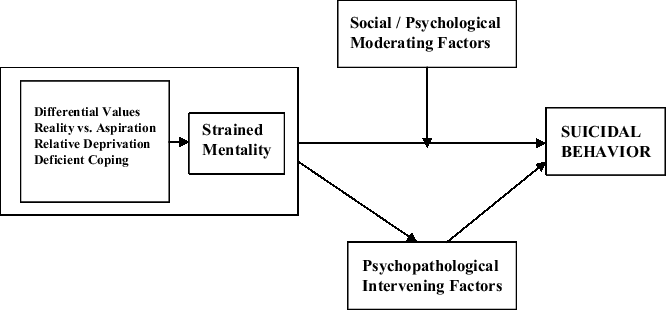
Fig. 1. From strain to suicidal mentality and to suicidal behavior: The path is moderated and intervened by social and psychological factors.
In sum, the STS is built on the previous notions of anomie and strain and on the psychological mechanism of cognitive dissonance. Different from Merton’s (Reference Merton1957) strain theory of deviance, Agnew’s (Reference Agnew1992) general strain theory, and Festinger’s (Reference Festinger1962) cognitive dissonance theory, STS explains how a suicidal mentality emerges, and it has developed detailed and personal level instruments for its measurement, with public health implications.
Measurements of psychological strains
One difficulty of previous strain theories of deviance lies in their measurements, which is also a major criticism of these theories. Neither Durkheim nor Merton has particularly offered instruments to measure such concepts as goal, success, aspiration, available means or the frustration (strain) derived from these social facts.
Agnew measures of strain
Agnew found two different ways to identify and measure strain in an individual’s life. The first method is the subjective approach, wherein the researcher directly asks the individual whether they dislike how they are being treated (Agnew, Reference Agnew2001). The second approach is the objective view, in which case the researcher asks individuals about predetermined causes of strain. The causes of strain are issues that the researcher identifies as, for example, treatment that a member of the group being studied would dislike. The objective approach is most often used in research, which usually involves relationships with friend, family and the community. One factor that must be considered is that individuals have different reactions to certain types of strain and therefore view different types of objective strain in varying subjective ways (Agnew, Reference Agnew2001).
Agnew also noted several processes that must be employed in order to obtain an effective measure of strain. First, the researcher must develop a comprehensive list of negative circumstances that can result in strain. In this process it must be noted that strain is experienced differently by each individual. Also, the specific situations must be objectively identified, along with variables that can determine the individual’s reaction to strain. To obtain an effective measure of strain, the cumulative impact of negative relations must be taken into account. It is not entirely clear whether this relationship is additive or interactive. Another factor that must be considered is the presence of positive relations and the lessening effect that they may have on the strain that the individual may experience. The last things that should be considered when measuring strain are the magnitude, recency, duration and clustering of negative events (Agnew, Reference Agnew1992).
Theoretically, Durkheim’s anomie can be operationalized into normlessness or irregulation, Merton’s strain into discrepancy between success goal and limitation of means, and Agnew’s general strain into dissatisfied treatment. Agnew tried to develop and validate scales to measure the strain in his GST and has made empirical studies of the theory possible (Agnew, Reference Agnew2001). Bao, Haas, and Pi (Reference Bao, Haas and Pi2004) measured strain based on self-reported negative relationships with parents, teachers and peers in an investigation of the association between strain and juvenile delinquency in China. The difficulty in developing a strain measure lies in its specificity of population and the hypothesis to be tested. In other words, strain measures have to be population- and hypothesis-specific. Further, different hypotheses may have different sources of strain, and the strain measures have to be based on the specific sources of strain. For example, in Agnew’s GST, the source of strain is usually the dissatisfied treatment a juvenile receives from school, peers and family, and therefore the measures are built around these social facts.
Development of the Psychological Strain Scales for suicide studies
We propose four types of strain that precede a suicide. Each of the four types of strain is derived from specific sources. A source of strain must consist of two, and at least two, conflicting social facts. If the two social facts are non-contradictory, there should be no strain.
The STS ascertains four types of strain with four major sources. Different measures must be developed for different types of strain with their specific sources, with a consideration of the population to be studied and the hypotheses to be tested.
The Psychological Strain Scales (PSS) have been developed for each of the four types of strains. Interested readers can refer to the published works by the current research team for the details in the development of the PSS instruments as well as the questionnaires in both English and Chinese (Zhang, Lu et al., Reference Zhang, Lu, Zhao, Lamis, Li, Kong and Ma2014; Zhang & Lyu, Reference Zhang and Lyu2014).
Briefly, over 40 researchers in the areas of psychology, psychiatry, social work, sociology, and publish health were recruited to contribute items that elicit psychological strains in an individual’s daily life. A group of six specialists who understood the structure of STS did a content analyses of about 400 items received from the 40+ researchers, and categorized them into the four types of strains: value, aspiration, deprivation and coping. The consensus meeting of the focused group finally selected 40 items for each of the strains, after deleting the repeated items as well as those inappropriate for the scales. An initial test of the 160 items was administered to a large group of college students. Factor analysis, item analysis and correlation tests were performed to streamline the scales to 20 items for each scale. As a test of a strain with 80 items can be tedious for some samples, we further streamlined the questionnaire to 60 items with 15 for each scale, and 40 items with 10 for each scale. Translation and back translation of the 60-item questionnaire were conducted, and the English and Chinese version of the instruments are comparable and available to use. The 60-item questionnaire was further streamlined to the final 40-item PSS measurement through rigorous reliability and validity tests with factor multiple analyses (Zhang, Lu et al., Reference Zhang, Lu, Zhao, Lamis, Li, Kong and Ma2014; Zhang & Lyu, Reference Zhang and Lyu2014). The instrument (PSS-40) can be found in the Appendix.
The most complicated and diverse measures to be developed were those for the value strain. A scale reflecting psychological strain or frustration derived from differential values must be developed based on the contradiction between the values. To ensure that the developed scale is a reflection of the competing values in different cultures, comprehensive items have to be included for various populations. In the questionnaire, we ask the respondents how they feel about themselves or view the world around them on each of the statements by choosing (1) never, it’s not me at all, (2) rarely, it’s not me, (3) maybe, I’m not sure, (4) often, it’s like me, or (5) yes, strongly agree and it’s exactly me. An example of value strain statement is: “I am unsure what is right or wrong regarding some things in my daily life.”
Measuring the other three types of strain may be less complicated or difficult than the value strain. To measure the aspiration strain in rural Chinese value systems, for example, the environmental reality can be assessed by asking how strongly the subject’s parents, spouses or other elder members in the family enforce traditional Confucian sexist norms at home and how strongly they believe in Communist egalitarian expectations. A young woman may have high aspirations for egalitarian gender role and opportunities, but if she has a repressive home environment, she may very likely experience the aspiration strain. An example statement for the aspiration strain is: “I wish I had a chance to get more education, but I cannot realize it according to some reasons.”
The measures of deprivation strain and coping strain are even more straightforward. Social economic status (SES) is an index that is measured by the family annual income, ownership of property, and education level of each of the adult members in the family. Basically, SES measures can be used for relative deprivation assessments, with the assumption that the subject is aware of the wealth elsewhere in their life. One of the statements for this measure is: “Compared to other families in my community, my family is poor.”
Coping strain can be simply assessed by a coping scale that is available, but we selected those items that are less culture specific. The poorer the coping skills an individual has, the stronger the strain the person may experience because of a stress, negative life events or crisis. One example for the measure is: “I always do things as I like, without thinking of the consequences.”
There seems to be an overlap between aspiration and deprivation strains. The factor analyses on different level of the tests with different samples all showed that many of the items from both subscales went together (Zhang & Tao, Reference Zhang and Tao2013). However, it is still important to distinguish the two types of strains. Aspiration strain is a situation in which an individual compares him/herself with their inner goals, while the deprivation strain is the situation where an individual compare him/herself with others (Zhang, Kong et al., Reference Zhang, Kong, Gao and Li2013).
The link between psychological strains and suicide, suicidal behaviour and mental disorders has been supported by a number of studies in both the United States and China (Li & Zhang, Reference Li and Zhang2012; Sun, Li, Zhang, & Wu, Reference Sun, Li, Zhang and Wu2015; Sun & Zhang, Reference Sun and Zhang2015; Yan, Zhang, & Zhao, Reference Yan, Zhang and Zhao2012; Zhang & Lester, Reference Zhang and Lester2008; Zhang, Wieczorek et al., Reference Zhang, Wieczorek, Conwell and Tu2011).
Development of the PSS was an important contribution in the suicide research methodology. It is a measurement at the individual level, and is far more detailed and a better measure of the strains than those by the vast majority of criminologists and suicidologists, many of whom work only with crude ecological data, such as correlating the GINI index of income inequality with homicide rates or female labor force participation with suicide rates, as in some of the works on a large sample of whole nations
Summary and conclusion
We have tried to establish a social psychological theory that disentangles the various models since Durkheim’s framework on suicide (Durkheim, Reference Durkheim1897/1951). Suicide research and prevention have been dominated by psychiatrists, mainly because a very high percentage of the suicides in the world can be diagnosed with at least one type of mental disorder. However, we agree with Durkheim that mental disorder or insanity may not be a reason for suicide. Instead, many mental disorders and suicidality are comorbid, and both may have different causes. Therefore, the high correlation between suicide and mental disorder is a function of a third variable that we believe is psychological strain, as this article has argued. In almost all multiple regression analyses on the risk factors of suicide, attempted suicide or suicidal ideation, mental disorder stands out as the strongest predictor of the dependent variable (Conwell, Reference Conwell2014). Therefore, working with psychiatric patients towards suicide prevention is an optimal strategy to reduce suicidality in a community, although it is only a secondary level of prevention for the indicative populations. The primary level prevention is for the general populations in society, where the reduction of psychological strains may decrease the prevalence of mental disorder and suicidal mentality at the upstream level. This is the major point of the STS.
Advancement of the STS is built on previous works by a number of theorists. Durkheim’s (Reference Durkheim1897/1951) anomie theory for social normlessness, Merton’s (Reference Merton1957) strain theory of social deviance, Agnew’s (Reference Agnew1992) GST for crimes, and Festinger’s (Reference Festinger1957) cognitive dissonance theory all enlightened the development of the STS. However, none of the previous strain theories were intended to explain suicide and suicidal behaviors.
A strain may be found preceding a suicide. Strain is frustration so unbearable that some solution must be taken to reduce the psychological pressure, possibly through a violent channel for some people experiencing a strain. Strain can lead to criminal behaviors towards others (Agnew, Reference Agnew1992; Merton, Reference Merton1957), and when the aggression is internal, suicide takes place (Henry & Short, Reference Henry and Short1954).
Psychiatric illnesses, especially mood disorders and substance abuse, could be a function of severe strain and lack of social integration. In this sense, the psychiatric model of suicide etiology may be too exclusive. As in epidemiological investigations for most other diseases, we need to go to the “upper stream” to find the source of the illness. Strain as a consequence of certain negative life events or perceived social relations, coupled with lack of social integration might have existed prior to each mental disorder that has existed for the majority of suicides. Thus, suicide preventions may have to begin at the “upper stream” by monitoring and curbing the strains in society.
For an individual experiencing great strain, social integration and moral regulation (Durkheim, Reference Durkheim1897/1951), and disconnectedness and capability (Joiner, Reference Joiner2005) may moderate (increase or decrease) the chance of suicide. While integration and regulation are pre-existent in the social context of all individuals, strain may only be experienced and perceived by certain individuals. Therefore, those who experience great strain and lack of social integration and high capability are at higher risk of suicide than others who do not have both experiences at the same time.
The STS tries to identify the root causes of suicide by explaining what happens before a suicidal mentality is built into a person. A lack of social integration (e.g. social disconnectedness) and capability (e.g. pro-suicide environment) facilitate the progression from suicidal mentality to suicidal behaviors. Psychache and hopeless pain, as well as suicidal mentality, are all functions of psychological strains.
The STS, with its simple concept of psychological strains from four sources, is a parsimonious theory of suicide because it explains much of the variance in suicidal behavior with the smallest possible number of predictors. However, as the complete model of the theory suggests in Figure 1, the path from psychological strains to suicide has to be moderated and intervened by other social, personal and psychopathological factors, meaning that the strained mentality cannot always be the direct cause of a suicidal behavior.
Another contribution of STS is its detailed and personal-level measurements. The PSS is an established instrument for the theory and is ready to implement in an empirical study in a given sample, although the instruments still need to be refined after further tests in various populations. It is also noted that previous testing of the strain theories of deviance and crimes was predominantly with community or national levels of data, which may be criticized for ecological fallacy. The implementation of the PSS at the individual level in a general population can be free of ecological fallacy and may also contribute to the deviance and crime studies.
Suicide researchers have remained content to propose and test a long list of psychopathological and social factors that increase the risk of suicide, combining the factors in a simple additive-regression model in exploratory studies. However, empirical research without a theoretical basis is not of much utility, and our understanding of suicide will not advance until better theories are proposed and tested (Lester, Reference Lester2000). The STS is a reflection of such an effort. Elegance of the new theory may be found in the parsimony and generality the theory strives to achieve. A theory with parsimony employs the fewest constructs and linkages necessary to explain the events of interest, and a theory with generality can take us beyond the already seen and familiar to predict what will happen in circumstances that we have never encountered (Dooley, Reference Dooley1995). In the absence of theory, our science would consist simply of lists of unrelated facts and thoughts (Dubin, Reference Dubin1978). The STS tries to employ as few predictors of suicide as possible by focusing on a concept of strain that is derived from four sources. This theory also attempts to explain various types of mental disorders and insanity and make sense out of long lists of isolated findings and observations through the concept of strain.
Author ORCIDs
Jie Zhang, 0000-0002-6538-2770
Funding
This research was supported by the National Institutes of Health grants (R03 MH60828 and R01 MH068560), of which the author is the principal investigator.
Appendix: Items Selected by Study 1 (20) and Study 2 (15) and then (10) in both English and Chinese
Value Strain
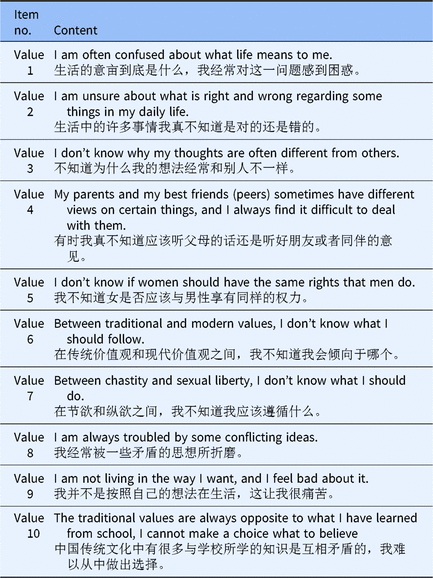
Introduction: These statements are hypothesized to indicate how you feel about yourself or view the world around you. Please read each of them carefully and respond truthfully by 1 (never, it’s not me at all), 2 (rarely, it’s not me), 3 (maybe, I’m not sure), 4 (often, it’s like me), and 5 (yes, strongly agree and it’s exactly me). There are not right or wrong answers.
Aspiration Strain
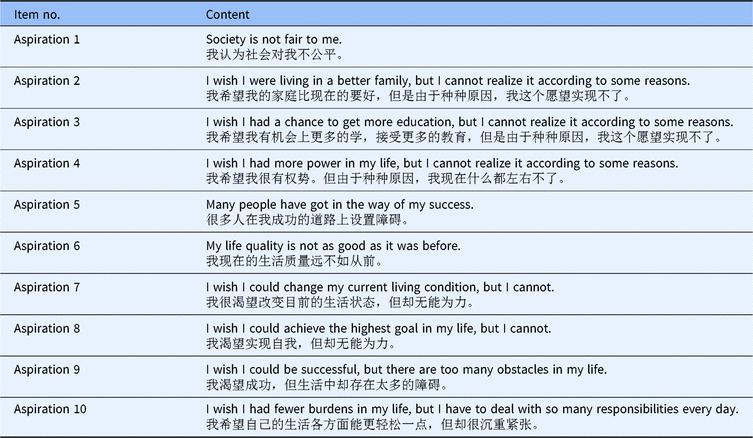
Deprivation Strain
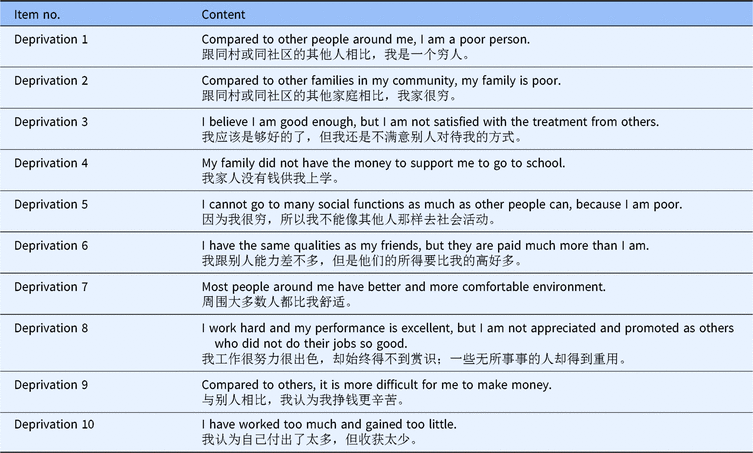
Coping Strain
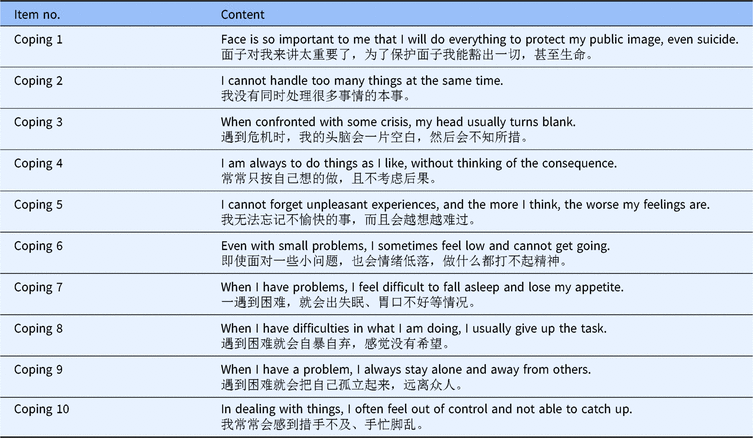
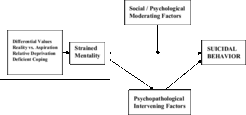

 Open access

