Introduction
Living with chronic obstructive pulmonary disease (COPD) is related to a complex life situation, including a high symptom burden (Blinderman et al., Reference Blinderman, Homel, Billings, Tennsteds and Portenoy2009) and comorbidities (Lindberg et al., Reference Lindberg, Larsson, Rönmark and Lundbäck2011). Not only respiratory symptoms but also fatigue is more common in COPD than in the general population (Stridsman et al., Reference Stridsman, Muellerova, Skär and Lindberg2013). In COPD, it is shown that the severity of fatigue is related to both physical limitations and decreased health (Theander et al., Reference Theander, Jakobsson, Torstensson and Unosson2008). Physical health is related to factors such as dyspnoea, physical impairment and inactivity (Hu and Meek, Reference Hu and Meek2005; Blinderman et al., Reference Blinderman, Homel, Billings, Tennsteds and Portenoy2009), whereas mental health is more closely related to negative emotions such as anxiety, hopelessness and depression (Hu and Meek, Reference Hu and Meek2005; Bentsen et al., Reference Bentsen, Henriksen, Wentzel-Larsen, Hanestad and Wahl2008). Despite the complex life situation, COPD is an underdiagnosed disease (Lindberg et al., Reference Lindberg, Bjerg, Ronmark, Larsson and Lundbäck2006; Miravitlles et al., Reference Miravitlles, Soriano and Garcia-Rio2009) and it has been shown that the quality of life (QOL) is also reduced among subjects with undiagnosed COPD (Miravitlles et al., Reference Miravitlles, Soriano and Garcia-Rio2009).
QOL includes physical, psychological, social and spiritual dimensions, and well-being is defined as the subjective aspect of QOL (Haas, Reference Haas1999). In a study by Dahlberg et al. (Reference Dahlberg, Todres and Galvin2009), the existential and life world-oriented experience of well-being is explained to include the cornerstones of vitality, movement and peace. Vitality can be seen as a capacity for movement and living forward, that is, being able to move into possibilities of engagement that connect us with others, other spaces, other times and other moods. Peace is seen as a notion of stillness or restfulness, accepting what is present at hand, an experience of letting-be. According to the World Health Organization (WHO, 1946), good health is defined as a state of complete physical, psychological and social well-being, and not only the absence of illness and disorders. Dahlberg et al. (Reference Dahlberg, Todres and Galvin2009) describe that health is characterized by a rhythmic movement, which in illness becomes unbalanced.
COPD is well described in aspects of symptoms, medical consequences and QOL (cf. Bentsen et al., Reference Bentsen, Henriksen, Wentzel-Larsen, Hanestad and Wahl2008; Miravitlles et al., Reference Miravitlles, Soriano and Garcia-Rio2009; Stridsman et al., Reference Stridsman, Muellerova, Skär and Lindberg2013). Qualitative studies describing the experience of living with COPD and its limitations are also common (cf. Fraser et al., Reference Fraser, Kee and Minick2006; Willgoss et al., Reference Willgoss, Yohannes, Goldbart and Fatoye2012; Stridsman et al., Reference Stridsman, Lindberg and Skär2014), often identifying themes as social isolation and self-blame (Clancy et al., Reference Clancy, Hallet and Caress2009). However, only a small amount of previous research explores the insider perspective focusing on health in different contexts. Caress et al. (Reference Caress, Luker and Chalmers2010) describe that people living with COPD seem to be unaware of the health benefits from a healthier lifestyle. Instead, their reality is to manage daily life. In COPD, healthy transitions are shown to be facilitated by pulmonary rehabilitation through a strengthened confidence in the person’s own resources, by increased awareness of opportunities for health and well-being, and by a hope for future well-being (Halding and Heggdal, Reference Halding and Heggdal2012). The importance of movement in COPD is explained by Williams et al.’s. (Reference Williams, Bruton, Ellis-Hill and McPherson2011) stagnation–movement theory. Air, physical and psychosocial movement are identified as important factors in escaping illness stagnation. Breathing fresh air and being outdoors give temporary relief from symptoms that lead to feelings of normality and freedom. However, despite physical limitations in COPD, it is important for well-being to continue with social engagements and to participate in social activities (Williams et al., Reference Williams, Bruton, Ellis-Hill and McPherson2007). According to Galvin and Todres (Reference Galvin and Todres2011), when people are facing health-related challenges, the perceived experience of well-being is important as an inner resource, and health-care professionals should be aware of the value and the importance of that experience.
The literature review shows that studies about well-being as a subjective description of QOL are rare. If health-care professionals can gain an increased understanding of how people living with COPD experience well-being, despite a complex symptom situation, appropriate care can be developed to support people’s inner resources and meet their needs.
Aim
The aim of this study was to describe experiences of well-being among people with moderate to very severe COPD.
Methods
A qualitative design based on semi-structured interviews (Kvale, Reference Kvale1996) and latent qualitative content analysis (Graneheim and Lundman, Reference Graneheim and Lundman2004) was utilized.
Participants
The participants were recruited from the epidemiological Obstructive Lung Disease in Northern Sweden (OLIN) COPD study, which includes 1986 people: 993 with spirometric COPD and 993 without obstructive lung function impairment. COPD and classification of severity of airflow limitation were defined according to the Global Initiative for Chronic Obstructive Lung Disease (GOLD, 2013) spirometric criteria after bronchodilatation: COPD: FEV1/FVC<0.7; Grade I (mild): FEV1⩾80% predicted; Grade II (moderate) 50%⩽FEV1 <80% predicted; Grade III (severe): 30%⩽FEV1 <50% predicted and Grade IV (very severe): FEV1<30% predicted. Since 2005, the participants in the OLIN COPD study have been invited to yearly examinations with a basic program including spirometry with a reversibility test, a structured interview and health-related QOL questionnaires (Lindberg and Lundbäck, Reference Lindberg and Lundbäck2008).
Ten people from the OLIN COPD study participated in the current study. A purposive selection method was used, and the selection criteria included a spirometric classification of COPD, reported respiratory symptoms in the OLIN structured interview questionnaire and stated feelings of fatigue in daily life. With the aim of achieving a variety of perspectives, further selection criteria included sampling five women and five men in different grades of COPD. The co-ordinating research nurse for the OLIN COPD study selected potential participants based on the selection criteria, contacted them, gave verbal and written study information, and invited them to participate. All of the first 10 individuals who were contacted agreed to participate in the study. The characteristics of the study participants are shown in Table 1.
Characteristics of the study participants

GOLD=Global Initiative for Chronic Obstructive Lung Disease; FEVı=forced expiratory volume in 1 s.
Data collection
The participants were interviewed from November 2012 until January 2013. The first author telephoned each participant to arrange a meeting for an interview. The participants selected the interview location, which took place either on the OLIN studies premises, in a health-care facility near the participant’s home or in their home. A semi-structured interview guide was used with the aim of covering various aspects of the participants’ experiences of well-being when living with COPD. The interview guide was influenced by previous literature about well-being when living with chronic illness (Olsson et al., Reference Olsson, Skär and Söderberg2010). The questions were: Can you tell me; how does it feel when you feel good/less good? What do you do when you feel good/less good? What are you thinking when you feel good/less good? What is important for well-being when living with COPD? What is health for you? What is well-being for you? Beyond these questions, follow-up questions were asked, for example, ‘Can you tell me more about that?’ to clarify the participants’ experiences. A pilot interview was conducted to evaluate the interview guide, which functioned well and required no changes. The first author conducted all the interviews, which lasted between 30 and 60 min. The interviews were audio-filed and transcribed verbatim.
Ethical considerations
After that the participants were reassured that participation was voluntary and that they could withdraw from the study at any time without being questioned; oral and written consent to participate were obtained. Confidentiality was guaranteed. The procedures contributing to this work comply with the ethical standards of the Helsinki Declaration and the study was approved by the Regional Ethical Review Board at Umeå University, Sweden.
Data analysis
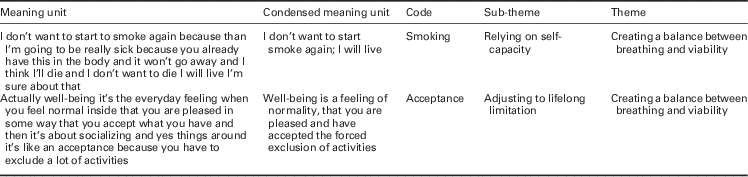
The interviews were analysed through latent qualitative content analysis, as described by Graneheim and Lundman (Reference Graneheim and Lundman2004). The interview texts were analysed in several steps. First, the unit of analysis was read through to get a sense of the whole. The unit of analysis refers to the interview texts about the experience of well-being when living with COPD. Then, the unit of analysis was divided into meaning units, which were then condensed. The condensed meaning units were abstracted and labelled with a code. The codes were compared based on differences and similarities, and then further abstracted and sorted into sub-themes. Finally, a reflection of the final four sub-themes was revealed in one theme. A theme tells us ‘what’ this is about (Morse, Reference Morse2008), and can be seen as the thread of an underlying meaning through condensed meaning units, codes or sub-themes on an interpretative level (Graneheim and Lundman, Reference Graneheim and Lundman2004). An agreement regarding the analysis was reached among the authors after a process of a back and forth movement between the whole and parts of the text, reflection and discussion. Examples of meaning units, condensed meaning units, codes, sub-themes and theme are shown in Table 2.
Examples of meaning units, condensed meaning units, codes, sub-themes and themes

Findings
The findings are visualized in Figure 1 and include one theme: Creating a balance between breathing and viability to achieve well-being, and four sub-themes: Adjusting to a lifelong limitation, Handling variations in illness, Relying on self-capacity and Accessibility to a trustful care.
Visualized experience of well-being described by people living with COPD
Creating a balance between breathing and viability to achieve well-being
To achieve well-being despite illness, the participants had to adapt to their breathing limitations and living forward. They created a balance between breathing and viability by adjusting to a lifelong limitation, handling variations in illness, relying on self-capacity and accessibility to a trustful care.
Adjusting to a lifelong limitation
The participants described that they had to adjust their lives to the presence of the illness, owing to breathing difficulties and fatigue. Acceptance of having COPD could make everyday life easier. In the beginning stages of the disease, acceptance was hard to reach, starting when the illness began to limit their daily activities. Acceptance was needed, though, because they had to slow down their tempo, do things at their own pace, exclude some activities and accept help from others. Living with COPD had to be a balance between acceptance and capitulation, and therefore replacement of former activities was important.
…you must accept that the situation is like this… and it may facilitate… but it can also be a disadvantage… that you became lazier than you should… (COPD Grade II)
…you have to find other things… you have to replace… but there aren’t so many things to choose from… when you can’t move… (COPD Grade IV)
Incorporating meaningful activities in daily life was viewed as important for well-being. This incorporating meant having the strength to take part in social events and socialize with family and friends, as well as having the energy simply to complete everyday tasks and to be content being at home. Well-being was also described as having the strength for self-care, getting sufficient and good-quality sleep, being in a good mood and feeling like anyone else. In contrast, health was described as the absence of physical problems, a high capacity to be physically active, a good mood and an absence of cognitive disorders.
…well-being is to have the strength and capacity to do the things I like to do… which make me feel even better… (COPD Grade II)
…well-being that’s how you feel yourself… but health is… you can have very good health but poor well-being… or like me… very poor health but still good well-being…
(COPD Grade III)
Handling variations in illness
Part of creating a balance meant being able to handle variations in illness, described as good and worse days. On good days, breathing was easier and the participants had more energy, emphasizing increased well-being. On these days, they could perform everyday tasks that they normally could not manage, and they took the opportunity to participate in extra activities that made them feel good. The participants felt that good days should be taken advantage of, seized and enjoyed; they did not want to regret things left undone. A good day could be followed by a worse day, the result of overexertion, but more often a good day would be accompanied by an even better day.
…yes but then you are more active… you get things done and you find them funny… and you have more patience to keep on going… it’s both the breathing and how bodily rested you are… (COPD Grade II)
…on good days I do so much more… the next day the energy can be gone and I feel worse… (COPD grade III)
Worse days were often described together with common colds and/or COPD exacerbations, and were related to the absence of well-being, that is, a poor mood, aggravated breathing difficulties, fatigue and weakness-prohibiting activities. Feelings of anger, sadness and frustration were described during the worst days, also leading to a loss of interest in performing activities. The participants did not talk about how they felt, describing that others were used to seeing them in bad shape or did not understand their situation. They knew that the disease could rapidly deteriorate, and gradually worsened breathing awoke feelings of anxiety. There was a fear of the future, of suffocating to death.
…it only requires an ordinary common cold and I find it harder to breathe… and I become more tired… and it gets boring and frustrating… (COPD Grade II)
… I don’t want to die like that… anyhow… you become anxious when you can’t breathe… (COPD Grade III)
To achieve well-being, the participants tried to find a balance between good and bad days. They used emotional adaptation strategies to reduce respiratory distress by working against negative feelings with positive thoughts and a good mood. Similarly, anger could make them more combative against breathlessness and fatigue. The participants also tried to avoid stress by actively working against the fear of breathlessness. They sought for loneliness and tried to distract themselves by reading or solving crosswords, or they took sedatives to calm down.
…if I have trouble breathing… I try to mentally ignore it… because I know it will pass… (COPD Grade II)
…I don’t have a tendency to become depressed… as some people have… I definitely don’t have… I get angry instead… but many become depressed and then it will go downwards… (COPD Grade III)
Relying on self-capacity
It was important for well-being to rely on one’s self-capacity. The participants described that their well-being increased when they stopped or cut down on smoking. They expressed more physical and mental energy, better condition, better breathing, stronger voice, decreased respiratory symptoms and fewer infections after smoking cessation. Some of the participants had tried to quit smoking their whole life, and making the final decision had not been easy. They described coming to an endpoint, where there were only two alternatives: to live or to die. This fear of death was caused by respiratory distress, cardiac infarction or when a relative had died because of smoking. The participants described that they would not have been alive today if they had not stopped smoking, and many described that they regretted not quitting sooner. After smoking cessation, feelings of loss and grief were present, and when abstinence appeared they only waited for these feelings to pass.
…it’s been a year since I stopped smoking and I think that’s what makes me feel so good…It’s easier… I think more clearly and I’m more alert in the mornings… physically it’s absolutely easier… (COPD Grade II)
…I don’t think I’d be alive today if I continued to smoke… it was impossible to smoke… (COPD Grade II)
Physical activities were seen as respiratory rehabilitation, leading to increased physical and mental well-being. It was important to dare to continue with physical exercise despite increased dyspnoea. The participants were striving for daily walks, cycling and other exercises. Some walked alone because of the need to adapt to the speed of walking and avoid stress. For those professionally active, work was good for both social and physical well-being, as it forced them to interact with other people and to be active.
…to dare continue with physical activity… even though the lungs feel tight or the airways feel tight… to dare continue… (COPD Grade II)
…work is social and it keeps you active… sometimes it’s difficult but it makes you struggle… if you had been at home you would have been inactive… (COPD Grade III)
Fresh air was also described as important for well-being. The participants felt satisfied during those seasons when they could be outdoors, as they experienced increased strength to perform activities, which would lead to improved breathing and mood. Homecare services and family members enabled activities outside the house for participants with a more severe illness. Some of the participants described spring, summer and fall as the best seasons, whereas others described the hot summer as worse because of the warm and heavy air. Being in the countryside also increased well-being because of the clean, fresh outdoor air to breathe. On the other hand, polluted air made breathing difficult because of traffic fumes, wood smoke, pollen, grass, perfumes and frying foods.
…it’s significant when you are walking out-doors… it’s easier to move and breathe… (COPD Grade II)
…what can I say… August, September it’s perfect… because it’s an ideal temperature… not so much fragrances and… that you can say… the best months up to December… pretty good… (COPD Grade II)
Inactivity was the worst thing that could happen for well-being, contributing to worsening of lung function and breathing. When it was cold or breezy outside, or during worse days, participants became distressed owing to fear of inactivity. It was important to continue to be physically active, to maintain one’s condition and to bring up phlegm. Therefore, the participants tried to walk inside the house or take a short walk outside, and noted feeling pleased afterwards.
…I have a treadmill that I walk on at home… I can walk in the evenings… but it’s easier to walk outside… but in cases of bad weather if I just can go for a short walk… then I can use it… but it’s not as fun… it’s better to walk outside… (COPD Grade III)
Accessibility to a trustful care
The participants described an increased well-being when there was continuity of care in both health-care and home care services. It was important for well-being to meet health-care professionals who listened to them and would propose treatments when they had difficulty in breathing. The participants were frustrated when health-care providers were unreachable or when they had to meet unknown professionals, which could lead to incorrect medications. Continuity of care brought feelings of safety, whereas discontinuity brought feelings of lack of safety and hopelessness. Some participants described that contact with a COPD nurse was important and reliable.
…it’s one after the other and I don’t trust anyone… but I’ve learned to deal with it… because it’s not the first time I have changed physicians… (COPD Grade IV)
…that would be good (meeting a COPD nurse)… because I could talk to her… a physician is generally too stressed… and as she has several patients with COPD she can see how different they are… (COPD Grade III)
Effective COPD medications were described as increasing well-being by improving breathing and increasing feelings of safety. Medications facilitated activities and decreased feelings of fatigue. Some of the participants described that the phlegm was the worst respiratory symptom and expectorants were therefore important for bringing up phlegm, making them feel better. When they used the once-daily treatment of bronchospasm, the reliever medication was not needed as frequently. During COPD exacerbations, cortisone and antibiotic treatments were described to be effective for well-being owing to their rapid effect.
…the medication works… and if it doesn’t… don’t be afraid to speak up… because then you have to try another one… it worked for me… (COPD Grade III)
…it’s my safety right now… without it… I wouldn’t know how to manage…
(COPD Grade II)
Discussion
The findings in this study provide knowledge about the experience of well-being when living with COPD. The theme describes the importance of creating a balance between breathing and viability to achieve well-being despite illness. This can be understood as the participants expressed increased well-being on those days when ‘they could breathe’. Viability as a desire to living forward helped them to overcome breathing limitations and awakened feelings of peace despite the illness. A meaningful life has been shown to give people living with COPD at the end of life the energy to continue living forward to the future (Ek and Ternestedt, Reference Ek and Ternestedt2008). According to Dahlberg et al. (Reference Dahlberg, Todres and Galvin2009), well-being is more than the physical condition of an illness; it includes an energetic feeling of flow that comes with being open to the invitational call of the future. People experiencing well-being live rhythmically and in balance; they are active, have meaningful life projects and seek peace. The future for an ill person can be threatening and problematic (Toombs, Reference Toombs2001), and it is important to focus on personal well-being, which is related to the ability to manage the illness in such a way that meaningful life projects can be pursued (Toombs, Reference Toombs2004). For people living in the end stages of COPD, physical limitations can limit meaningful activities in daily life and lead to further social isolation (Ek and Ternestedt, Reference Ek and Ternestedt2008). Therefore, in the care of people living with COPD, it is important to encourage meaningful life projects, with the goal of increasing people’s viability to strengthen their ability to manage the illness.
From this study, it can be understood that the ‘worse days’ in COPD were characterized by reduced well-being, which led to a loss of motivation to pursue projects. In COPD, there is a fragile balance because of triggers such as dyspnoea and exacerbations. If the balance is disrupted, there is a risk of falling back into a downward spiral (Gysels and Higginson, Reference Gysels and Higginson2009). The downward spiral of dyspnoea is explained as increased dyspnoea that leads to a reduction in daily activity, leading to further decondition and increased dyspnoea (Reardon, Reference Reardon2006). Well-being in COPD needs to be understood as a precarious balance needing skilful maintenance and hard work (Gysels and Higginson, Reference Gysels and Higginson2009). This may be the reason why the participants in our study highlighted the importance of taking advantage of good days, days characterized by easier breathing, and less fatigue that enabled independence and movement towards the future. Independence and engagement in activities are found to be important for well-being when living with COPD (Williams et al., Reference Williams, Bruton, Ellis-Hill and McPherson2007).
Similar to Galvin and Todres’ (Reference Galvin and Todres2011) description of well-being, the participants in our study expressed that well-being could be found despite illness, as it was described to be something greater than health. Irrespective of limitations, the participants emphasized that they had to adapt their life to the presence of illness and replace former activities. Toombs (Reference Toombs2001) points out that when bodily capacity changes, it is important to create alternative ways of interacting with life, ways other than those that were used when an individual had other abilities. The participants in this study accepted their illness, but they avoided capitulation and created alternative ways of functioning in daily life. The concept of acceptance can be understood through the work of Todres and Galvin (Reference Todres and Galvin2010) as a kind of willingness to be in the present, regardless of what it is like, emphasizing an experience of peace.
According to Olsson et al. (Reference Olsson, Skär and Söderberg2010), people living with chronic illness can feel well when the illness is not the dominant experience in their daily lives. Similar to other studies (cf. Harris et al., Reference Harris, Hayter and Allender2008; Willgoss et al., Reference Willgoss, Yohannes, Goldbart and Fatoye2012), this study shows that the fear of breathlessness is a dominant experience, making it difficult to remain in control. An integration of the illness and the symptoms into life can facilitate symptom control, and techniques for dealing with breathlessness (Fraser et al., Reference Fraser, Kee and Minick2006) and fatigue (Stridsman et al., Reference Stridsman, Lindberg and Skär2014) are often self-invented. The participants in our study tried to handle variation in illness by finding a balance between good and bad days, and working against negative feelings with positive thoughts and a combative stance. Similarly, emotional adaptation, that is, changing negative thoughts into positive thoughts, has been shown both among patients with end stage of COPD (Seamark et al., Reference Seamark, Blake, Seamark and Halpin2004) and among COPD patients with different disease severities (Chen et al., Reference Chen, Chen, Lee, Cho and Weng2008). According to Todres et al. (Reference Todres, Galvin and Dahlberg2007), mood can be a great motivator or demotivator of directed actions, and a recent study (Willgoss et al., Reference Willgoss, Yohannes, Goldbart and Fatoye2012) about anxiety in COPD shows that a logical and systematic thought process including self-talk and focus can calm breathing and assist in regaining control over life situation.
Toombs (Reference Toombs2001) notes that when living with a progressive disabling illness, loss of mobility leads to a feeling of a distance between oneself and the surrounding world, that is, formerly near location is experienced as far. Despite the fact that COPD is progressive, this study shows that people can slow down the disease progress, regain strength and increase their well-being, that is, ‘make far near again’, if they rely on their self-capacity. According to Galvin and Todres (Reference Galvin and Todres2011), feelings of self-belief and capacity, a sense of ‘I can’, are sources of well-being. In this study, smoking cessation was described as the most important factor for increased well-being. Nevertheless, the self-capacity to quit smoking was strengthened when the participants came to an endpoint between life and death. According to Eklund et al. (Reference Eklund, Nilsson, Hedman and Lindberg2012), smokers want to receive support, but they have to make the decision to quit on their own. This finding highlights the complexity and importance of enhanced support for smoking cessation, not only to prevent the disease’s progression but also for an increased well-being.
In this study, it was obvious that both indoor and outdoor physical activity led to increased well-being. It is well-known that physical exercise, despite triggering breathlessness, improves performance capacity in COPD (Chen et al., Reference Chen, Chen, Lee, Cho and Weng2008; Williams et al., Reference Williams, Bruton, Ellis-Hill and McPherson2011; Stridsman et al., Reference Stridsman, Lindberg and Skär2014). Indoor pulmonary rehabilitation can be one part of self-care undertaken to maintain a balance in well-being (Gysels and Higginson, Reference Gysels and Higginson2009). Williams et al. (Reference Williams, Bruton, Ellis-Hill and McPherson2011) suggest outdoor interventions, as fresh air is described as improving breathing and lessening the perception of fatigue and stress. Similar experiences were expressed in this study, although it was essential that the air temperature was right and that the air was unpolluted. Galvin and Todres (Reference Galvin and Todres2011) explain embodied well-being when variations of alertness and vitality are intertwined with variations of rest and comfort. According to this study, embodied well-being in COPD can be hard to attain as the balance between comfort and bodily vitality are interrupted by breathlessness and fatigue. Nevertheless, fresh air was found to facilitate both vitality and comfort, leading to increased well-being.
Increased COPD severity changes the life situation, which leads to an enhanced need for health-care support (Lindqvist et al., Reference Lindqvist, Heikkilä, Albin and Hjelm2013). In this study, well-being was achieved within a trustful care, including continuous care relationships and access to the correct COPD medications. People with severe COPD express positive experience with care, as good relationships involving a conscious discussion of diagnosis, prognosis and treatment options (Seamark et al., Reference Seamark, Blake, Seamark and Halpin2004). A feeling of belonging and perceived support is also shown to have positive effects on QOL, and facilitate coping and adaptation when living with COPD (Halding et al., Reference Halding, Wahl and Heggdal2010). However, health-care professionals can be hard to reach (Seamark et al., Reference Seamark, Blake, Seamark and Halpin2004), which in this study was described as leading to feelings of lack of safety. This highlights the responsibility to have highly accessible health care, for example, access to a COPD nurse with specialist knowledge about the illness may ensure security and meet personal needs. According to Dahlberg et al. (Reference Dahlberg, Todres and Galvin2009), health-care professionals can support patients’ own strategies to increase well-being, if they are open to their patients’ needs, listen actively and do not avoid uncertainties.
Strengths and limitations
A strength of this study is that the sample was recruited from an epidemiological study, making it possible to capture experiences of well-being from people living in their homes rather than being hospitalized. The participants were used to reflect on their life situation, which could have been a reason for the extensive interviews. According to Polit and Beck (Reference Polit and Beck2012), data saturation can be achieved with a relative small sample size if the participants are able to reflect and communicate effectively. Therefore, 10 participants were considered to contribute to that the amount of data and the quality was sufficient to answer the study aim. Dependability was ensured because all the interviews were conducted by the first author, an interview guide was used and follow-up questions were incorporated, which allowed the interview to be more profound. This data collection method decreased the risk of inconsistency. To achieve trustworthiness of the interpretations, the authors discussed the findings until consensus was reached, which strengthens the credibility of the study. Furthermore, the relevance of the sub-themes was illustrated by representative quotations from the transcribed text and presented in the findings section (cf. Graneheim and Lundman, Reference Graneheim and Lundman2004; Polit and Beck, Reference Polit and Beck2012). A limitation of the study is that these findings cannot be generalized, as they are limited to a small sample size. However, transferability was facilitated by a detailed description of the context and research process, making it possible for others to replicate the process and decide whether the findings can be transferred to similar settings (Graneheim and Lundman, Reference Graneheim and Lundman2004).
Conclusion and implications
In conclusion, when there was a balance between breathing and viability, the participants could adapt to their limitations and live forward into the future, experiencing increased well-being. Important aspects for achieving well-being in COPD were identified to be: adjusting to a lifelong limitation, handling variations in illness, relying on self-capacity and accessibility to a trustful care.
Knowledge of patient’s personal experiences is important for health-care professionals desiring to provide person-centred care. These findings may increase knowledge, both for primary and secondary care, of what people living with COPD experience as essential for increased well-being. Health-care professionals can encourage meaningful life projects for patients to enhance viability. They can support an acceptance of the illness and facilitate replacement of former activities. Health-care professionals can also highlight good days as something to be taken advantage of and encourage emotional adaptation strategies. Furthermore, they can support and empower patients to rely on their self-capacity regarding smoking cessation and physical activity. Depending on weather conditions, physical activities should ideally be performed outdoors. An accessible co-ordination COPD nurse may make health care safe and secure.
Acknowledgements
First of all, the authors thank the persons who took part in this study, and the coordinating research nurse for the OLIN COPD study, Anne-Christine Jonsson. The authors also thank Professor Bo Lundbäck the initiator of the OLIN studies, and Professor Eva Rönmark the present head of the OLIN studies for their support.
Financial Support
The County Council of Norrbotten provides funding for Caroline Stridsman’s work. Financial support was also provided by Luleå University of Technology. This research received no specific grant from any funding agency, commercial or not-for-profit sectors.