Introduction
The mean surface air temperature of the Earth may rise by about 0.1–0.35°C per decade during the next decades due to increasing concentrations of CO2and other greenhouse gases in the atmosphere (Reference Houghton, Jenkins and EphraumsHoughton and others, 1990, Reference Houghton, Callander and Varney1992, Reference Houghton, Meiro Filho, Callander, Harris, Kattenberg and Maskell1996). If realised, this warming will cause worldwide glacier retreat and lead to major runoff changes in glaciated areas. Increased runoff from glaciated areas is important for future global sea-level rise that may occur as a consequence of future climate warming (Reference Warrick, le Provost, Meier, Oerlemans, Wood-worth, Houghton, Meira Filho, Callander, Harris, Kattenberg and MaskellWarrick and others, 1996). Glacier dynamics will play a significant role in determining the time-dependent evolution of future runoff changes in glaciated areas. Therefore it is important to study the interaction between predicted glacier mass-balance changes and glacier dynamics when future runoff changes from glaciated areas are analyzed.
The ratio of the rate of change of glacier volume to a small change in a climatic parameter, usually temperature, is termed the static sensitivityof glaciers to climate changes (Reference Warrick, le Provost, Meier, Oerlemans, Wood-worth, Houghton, Meira Filho, Callander, Harris, Kattenberg and MaskellWarrick and others, 1996). The static sensitivity ignores the effect of time-dependent retreat of the glacier terminus, changes in the geometry of the glacier, non-linear effects due to the finite size of the climate change and other dynamic and non-linear effects. Including these effects leads to the concept of dynamic sensitivityof glaciers to climate change. The contribution of glaciers and ice caps to global sea-level rise in the future is analyzed in two independent ways in Reference Warrick, le Provost, Meier, Oerlemans, Wood-worth, Houghton, Meira Filho, Callander, Harris, Kattenberg and MaskellWarrick and others (1996). An approach based on Reference Wigley and RaperWigley and Raper (1995)takes dynamic effects into account in a heuristic way, whereas an approach based on Reference Oerlemans and FortuinOerlemans and Fortnin (1992)uses a range of static sensitivities of glaciers depending on latitude. The results of the two approaches differ considerably, but both nevertheless indicate an average near 0.5 m w.e. a−1°C−1for the global sensitivity of glacier mass balance to climate warming in the early part of the next century.
As part of the Nordic project, Climate Change and Energy Production (Sælthum, 1992), a coupled dynamic/mass-balance glacier model for temperate glaciers has been developed in order to estimate the effects of global wanning on glacier mass balance and runoff from glaciated areas. A special version of the HBV hydrological runoff model has been applied to selected Nordic river basins in order to estimate the hydrological effects of global warming (Reference Sælthun, Einarsson, Lindström, Thomsen, Vehviläinen, Rosbjerg and ThomsenSælthun and others, 1994a, Reference Sælthun, Bergström, Emarsson, Thomsen, Vehviläinen, Kern-Hansen, Rosbjerg and Thomsonb; HBV (Hydrologiska Byrän Vatten-balanssektionen) is the section at the Swedish Meteorological and Hydrological Institute where the model was initially developed). The Icelandic river basins chosen for this sludy are partly glaciated. In order to estimate the effect of the retreat and thinning of glaciers within the basins, the coupled dynamic/mass-balance glacier model was run for these glaciers, and simulated changes in the extension and the altitude distribution of the glaciers were used in the hydrological modelling. The primary motivation behind this work was to estimate the hydrological consequences of climate changes in party glaciated watersheds in Iceland. The results are also relevant in a wider context due to the importance of glaciers and small ice caps for future sea-level rise as mentioned above, because they shed some light on the relation between the static and dynamic sensitivity for the glaciers in question.
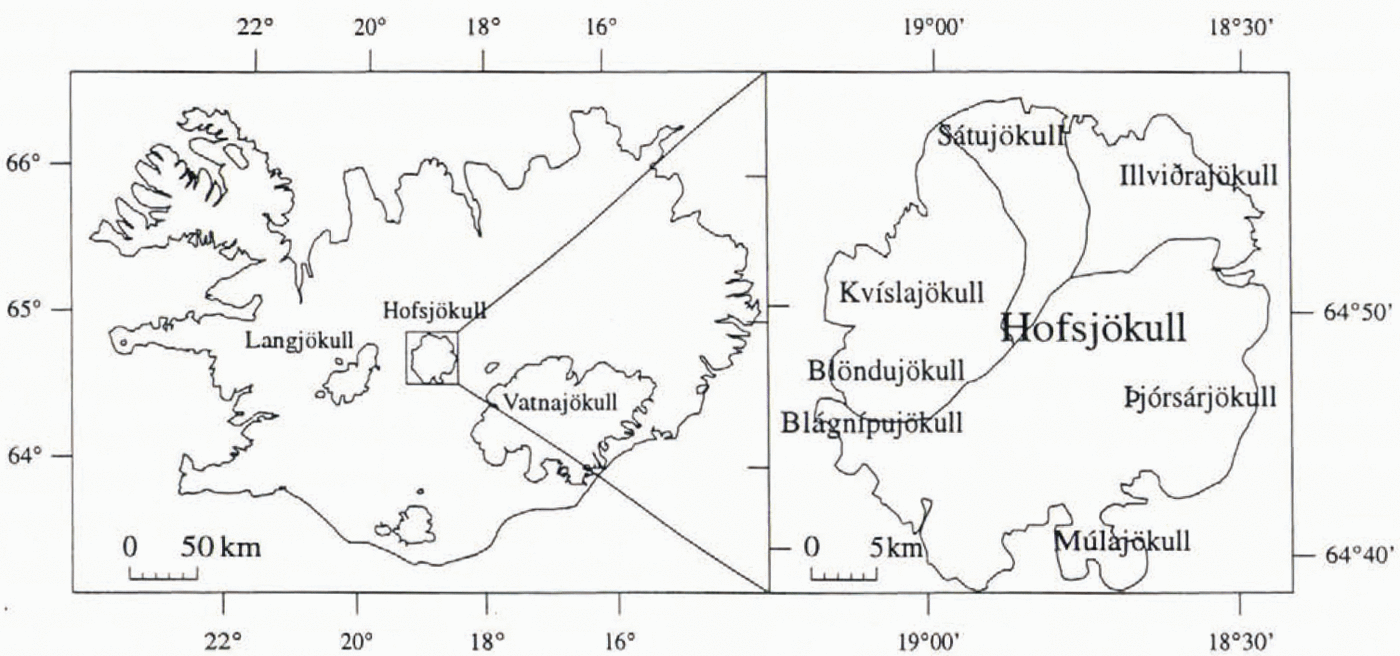
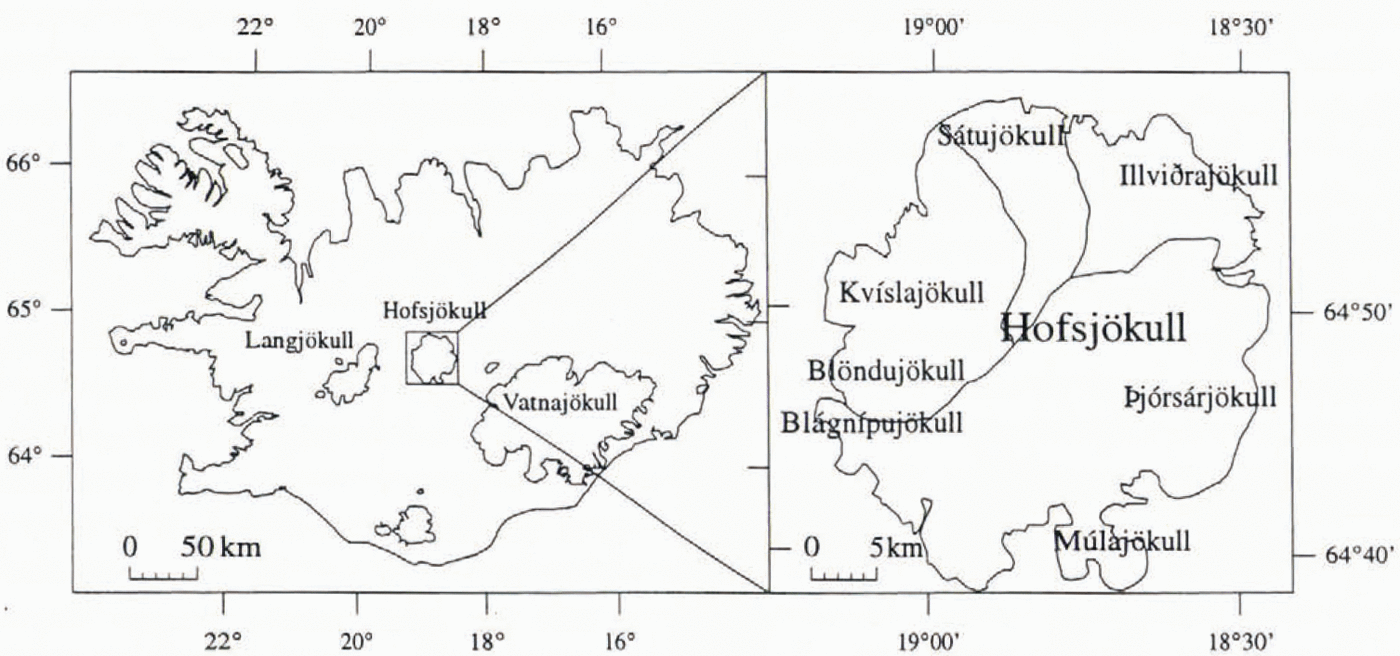
The results of the glacier modelling for two of the Icelandic glaciers that were considered in this modelling effort are described in this paper. These are Blöndujökull/Kvíslajökull on the western side of the Hofsjökull ice cap, central Iceland, and an unnamed outlet glacier on the northern side of Hofs-jökull, which has been called Illviðajökull, at Orkustofnun (seeFig. 1). In each case, the glacier that was modelled was delimited by the water divides of the rivers that were being considered in the runoff modelling, i.e. the river Blanda in the case of Blöndujökull/Kvíslajökull and the river Austari-Jökulsá in the case of Illviðajökull (seeFig. 1). The location of the water divides and the area distribution of the ice surface and subglacial bottom topography are taken from Reference BjörnssonBjörnsson (1988).
Map showing the location of Hofsjökull in Iceland (left) and the location of the outlet glaciers of HoJsjökull (right)
Glaciers in Iceland started retreating from their Little Ice Age maximum between 1850 and 1900 and the rate of retreat became quite rapid after 1930. As the clmate became cooler after 1960, the retreat of the glaciers slowed down and many glaciers started advancing, especially after 1970 (Reference Thórarinsson and LíndalThórarinsson, 1974; Reference BjörnssonBjörnsson, 1980). Since about 1985 the climate has become warmer and many glaciers have started retreating again. On average, around 50% of monitored non-surging glaciers in Iceland have been advancing and around 50% have been retreating in the period 1970–90 (Reference Jóhannesson, Sigurdsson and OstremJóhannesson and Sigurðsson, 1992). On the whole, glaciers in Ireland may therefore be expected to respond to future climate changes from an initial state which is relatively close to a steady-state condition (at least compared with the rapid retreat between 1930 and 1960), although the time period 1900–90 is too short for the glaciers to fully adjust to the climate during this period.
The Glacier Mass-Balance Model
The dynamic glacier model is coupled to the degree-day mass-balance model, МВТ (Mass Balance of Temperate glaciers; Reference Jóhannesson, Sigurdsson, Laumann and KennettJóhannesson and others, 1995b). This model computes glacier mass balance as a function of altitude based on observed temperature and precipitation at a meteorological station.
Meteorological data from the meteorological station Nautabú (65°27ʹN, 19°22ʹW, 115 m a.s.l.) were used in the mass-balance modelling for both glaciers. Data from the meteorological station Hveravellir were used in the modelling of the mass balance of Sátujökull in Reference Jóhannesson, Sigurdsson, Laumann and KennettJóhannesson and others (1995b). In the study described here, the meteorological station Nautabú was chosen in preference to Hveravellir. Hveravellir is situated in a sheltered location between the ice caps Langjökull and Hofsjökull, and Nautabú is believed to be more representative of the hydrological basins of the rivers which were considered in the hydrological modelling.
Precipitation and temperature at altitude zon the glacier are computed assuming a linear precipitation and temperature variation with altitude.

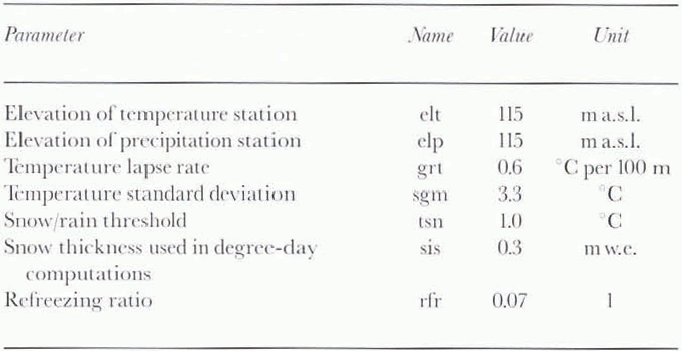
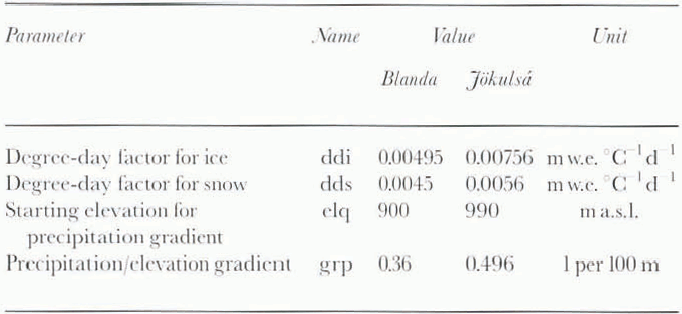
where z refris the elevation the meteorological station, z refpis a reference elevation for the precipitation gradient on the glacier (see below), and gT and gP are the gradients of temperature and precipitation, respectively. The special version of the HBV hydrological model which was used in this study represents the variation of precipitation with altitude as a linear function in up to two elevation ranges. This feature was used to specify different precipitation gradients for the ice-free and glaciated parts of the watersheds, a relatively low gradient of 8% per 100 m for the ice-free highland areas and a liigher gradient of 30–50% per 100 m (see Table 2below) for the glaciated parts of the basins. The reference elevation for the precipitation gradient on the glacier is therefore higher than the elevation of the meteorological station. A precipitation correction with separate correction factors for rain and snow was applied to the precipitation data in order to compensate for the effect of wind on the precipitation measurements and to transfer the precipitation measured at the meteorological station to the watershed in question. The correction factor for rain was given a value of 1.1 and the correction factor for snow was 1.4 for Blanda and 1.5 for Austari-Jökulsá. Precipitation on the glacier is assumed to fall as snow if the temperature at the altitude in question is below a specified threshold (see Table 2below).
Station and mass-balance model parameters common to both glaciers (see Reference Jóhannesson, Sigurdsson, Laumann and KennettJóhannesson and others (1995b)for further explanation)

Mass-balance model parameters which are different for the two glaciers (the column labelled “Blanda” applies to Blöndufjökull/Kvislajökull, and the column labelled “Jökulsȧ” to Illviðrajökull; see Reference Jóhannesson, Sigurdsson, Laumann and KennettJóhannesson and others (1995b)for further explanation)

Melting of snow and ice is computed from the number of positive degree-days (PDD), using different degree-day factors (amount of melting per PDD) for snow and ice. A statistical approach was used in the determination of the number of positive degree-days. Variation of temperature within the year was modelled as a sinusoidal function with superimposed statistical fluctuations which are assumed to be normally distributed with a standard deviation σ(see Rech(1991) and Reference Jóhannesson, Sigurdsson, Laumann and KennettJóhannesson and others (1995b)for a more detailed description of this approach).
The sinusoidal temperature variation is given by

where tis time and Ais the length of a calendar year. The mean value and amplitude of the sinusoidal function were chosen to be 2.5° and 7.1°C, respectively, in accordance with measured yearly mean temperature and the July temperature at the Nautabú meteorological station in the period 1961–90. The statistically determined PDD is given bv

where Tis temperature at the elevation in question and T threshis a threshold for the degree-day computations. The standard deviation of the statistical fluctuations was chosen to be σ= 3.3°C. The mass-balance model as described here computes the average variation of the glacier mass balance with elevation for the time period 1960–90. A detailed description of the mass-balance model is given Reference Jóhannesson, Sigurdsson, Laumann and KennettJóhannesson and others (1995b).
The mass-balance model was calibrated by alternating runs of the HBV runoff model and the glacier mass-balance models as described by Reference Einarsson, Jóhannesson, Kern-Hansen, Rosbjerg and ThomsenEinarsson and Jóhannesson (1994). Parameter adjustments were required in the hydrological model in order to produce better agreement with the hydrological discharge records in the rivers, so as to give modelled average variation of the glacier accumulation and ablation with elevation in agreement with available evidence about glacier accumulation and ablation. In each case a 7 year period of discharge measurements in the river was used for the calibration, and the rest of the available discharge data were used for verification. In this wav, it was possible to derive model parameters which gave simulated glacier mass-balancc components in reasonable agreement with available glacier mass-balance observations personal communication from O. Reference SigurðssonSigurðsson, 1991), and at the same time simulated runoff curves in agreement with observed runoff of the rivers fed by meltwater from the glaciers.
Scattered mass-balance measurements are available for Illviðrajökull, but only a lew measurements arc available from the upper part of the accumulation area of Blöndu-jökull/Kvíslajökull, and no ablation measurements exist from this part of the Holsjökull ice cap (personal communication from O. Reference SigurðssonSigurðsson, 1994). Mass-balance measurements have been performed on the neighbouring Sátujökull (seeFig. 1) since 1988 (Reference SigurðssonSigurðsson, 1989, Reference Sigurðsson1991,Reference Sigurðsson1993). The scattered mass-balance measurements from lllviðrajökull indicate that its mass-balance characteristics are similar to those of Sátujökull. The limited accumulation measurements on Blöndujökull/Kvíslajökull indicate that there is less precipitation on this part of the ice cap than on the neighbouring Sátujökull, and runoff measurements in Blanda and Austari-Jökulsá indicate that ablation on this glacier is also somewhat lower than on Sátujökull at the same elevations. Based on these considerations, the degree-day coefficients for ice and snow for lllviðrajökull were chosen to be the same as previously determined by mass-balance modelling for Sátujökull by Reference Jóhannesson, Sigurdsson, Laumann and KennettJóhannesson and others (1995b). Degree-day coefficients for Blöndujökull/Kvíslajökull were chosen to be somewhat lower than for Sátujökull in order to produce glacier runoff in accordance with runoff measurements in Blanda. The temperature lapse rate for both glaciers was given a value of 0.6°C per 100 m which is slightly higher than used in Reference Jóhannesson, Sigurdsson, Laumann and KennettJóhannesson and others (1995b)for Sâtujökull. A degree-day threshold of −0.5°C (see the equation for PDD above) was used for the Blanda watershed in order to improve the seasonal variation of the runoff, but this has little effect on the glacier mass-balance modelling compared to a model with slightly higher degree-day coefficients and without a degree-day threshold. A degree-day threshold was not specified for the Austari-Jökulsá watershed. Tables 1and 2summarise the glacier mass-balance model parameters for the two glaciers.
The precipitation gradient on the glaciers was determined such that the glacier mass-balance model predicted the glacier to be in approximate equilibrium in the period 1961–90. This is somewhat arbitrary of course, but the available evidence indicates that the glaciers were close to equilibrium in this period (personal communication from O. Reference SigurðssonSigurðsson, 1994). The precipitation gradient determined in this way (see Table 2) led to modelled accumulation in relatively good agreement with the the available accumulation measurements from the upper part of the accumulation areas of the glaciers and of the neighbouring Sátujökull. The glacier models thus start from an approximate steady state that is assumed to represent the climate of 1961–90, which is the climatological baseline chosen for the Climate Change and Energy Production project.
The Dynamic Glacier Model
The dynamic glacier model is a slightly modified version of the model described Reference Jóhannessonjóhannesson (1991). It describe the glacier as a one-dimensional flow system analogous to traditional models of valley glaciers flowing in valleys with variable width w(x, h) (see Reference WaddingtonWaddington, 1982). The model is based on the equation of continuity for ice, assuming a unique density of ice and a flux–geometry relationship which incorporates the flow law or the rheology of ice. The ice flow is described by the ice-volume–flux distribution Q(x, t), which is related to ice thickness h(x, t), channel cross-section area A(x, t) and mass balance B(x, t). through the one-dimensional continuity equation (Reference PatersonPaterson, 1981),

where xdenotes distance along the flow channel and tdenotes time.
For the two glaciers considered here, it is assumed that the ice thickness is only a function of the dislance xalong the flow channel which implies that the width wof the channel is independent of the ice thickness h. For this simple geometry, the flux–geometry relationship will be taken to be

where z sis the altitude of the ice surface. K= 2A(ρg)n/(n+2), n= 3, ρ= 900 kg m−3, g= 9.82 m s−2, and A= 5.3 × 10⁻²⁴s−1Pa−3is a constant in the flow law of ice (Reference PatersonPaterson, 1994). Formally, this flux–geometry relationship ignores basal sliding, but as in Reference JóhannessonJóhannesson (1991)it will be assumed that sliding can be adequately taken into account by varying the constant Kin the above equation. In view of the uncertain values of the constants Aand nin the flow law of ice (see Reference PatersonPaterson, 1994) this is not a drastic simplification.
The numerical formulation of the model equations is based on the control-volume concept (Reference PatankarPatankar, 1980). A time step Δt= 1 year and a grid spacing Δx= 0.25 km in the interior of the glaciers and Δx= 0.1 km near the terminus were used in the numerical calculations.
The bedrock and ice surface of the datum model glaciers uere determined from the area distributions of the sub-glacial bedrock and the ice surface for the corresponding watersheds of the Hofsjökull ice cap in the same way as described in Reference Jóhannessonjóhannesson (1991). The width, w(x), of the flow channels was estimated from recent maps of the Hofsjökull ice cap (Reference BjörnssonBjörnsson, 1988).Figure 1shows the divides which were used in the delineation of the glaciers. This procedure provides one-dimensional flow-channel model glaciers with the same area distributions of the bedrock and ice surface as are observed for the glaciers under consideration. Due to the simplifying assumptions about the geometry of the glaciers, each outlet glacier is considered independent of other outlet glaciers from the same ice cap, and all transverse variations in the ice surface and bedrock geometry are ignored. Thus, the models are very crude representations of the real glaciers. However, one may expect that the simulated response of the model glaciers to climate changes will capture the main features of the response of the real glaciers to such changes, because the model glaciers have the same size and overall shape as the real glaciers and a fairly realistic mass-balance distribution. One must keep in mind that the subdivision of the Hofsjökull ice cap into independent ice-flow basins in the manner attempted here is an approximation of the true dynamics of the ice cap, which must involve some interaction between the ice-flow basins. This becomes especially important if the modelling leads to substantial modifications in the volume of the glaciers, which in reality may be expected to alter the division of the ice cap into ice-flow basins. This should be borne in mind when the results of the transient model runs presented below are interpreted.
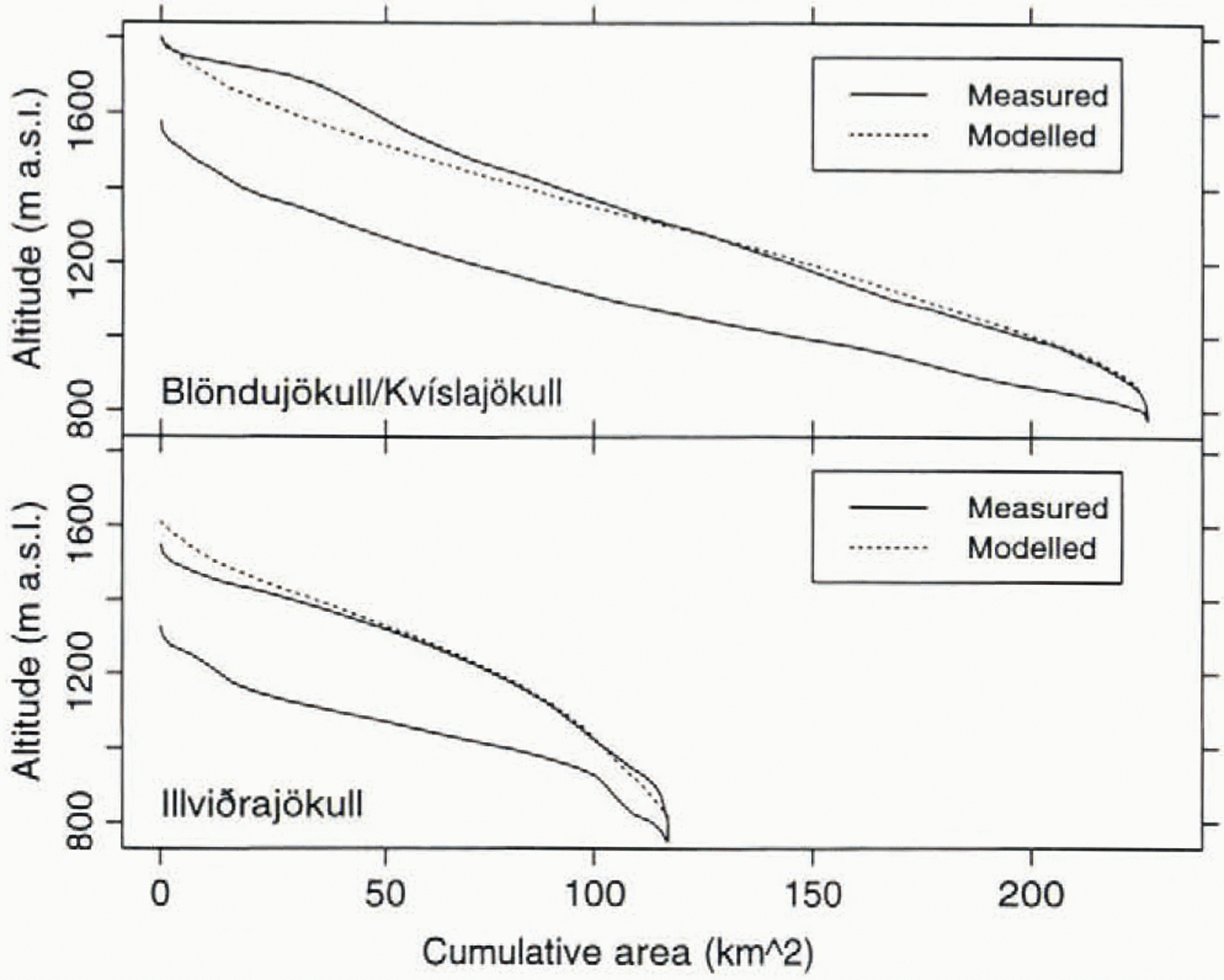
The coupled dynamic/mass-balance glacier model was run until it reached a steady state for the present climate as specified by the temperature and precipitation of Nautabú in 1951–90. The area distribution of the modelled steady state is compared with the measured area distribution in Figure 2. It is seen that the overall thickness and shape of the glaciers is adequately represented by the model, although there are slight discrepancies between the measured and modelled distributions in the upper part of the accumulation areas.
Measured area distribution with elevation of the bedrock and ice surface (solid curves) for Blöndujökull/Kvislajökull (upper panel) and Illviðrajökull (lower panel) together with the area distribution of the modelled steady-state ice surface corresponding to the climate of 1961–90 (dashed curve). The measured distributions are taken from Reference BjörnssonBjörnsson (1988)

Response Time
The response time of a glacier can be defined as the time constant in an exponential asymptotic approach to a final steady stale after a sudden change in climate to a new constant climate. Behind this definition lies the assumption that the time-dependent approach of a glacier to a new steady state after a small step change in climate will be relatively close to an exponential variation. It is of course possible to bypass this assumption of near-exponential variation by defining the response time as the time it takes the glacier volume perturbation to reach (1−е−1) of its final steady-state value. This, however, eliminates only superficially the hidden assumption of a near-exponential variation, because a response time defined in this way would be of little value il the time-dependent response were in fact far from exponential. It is of interest to compute the time-dependent response of glaciers to small step changes in climate both for estimating the response time of the glaciers and also to compare the response to an exponential variation, i.e. ΔV= ΔV ∞(1 − e−t/τ), where ΔV ∞is the volume perturbation in the limit t→ ∞, and τis the response time.
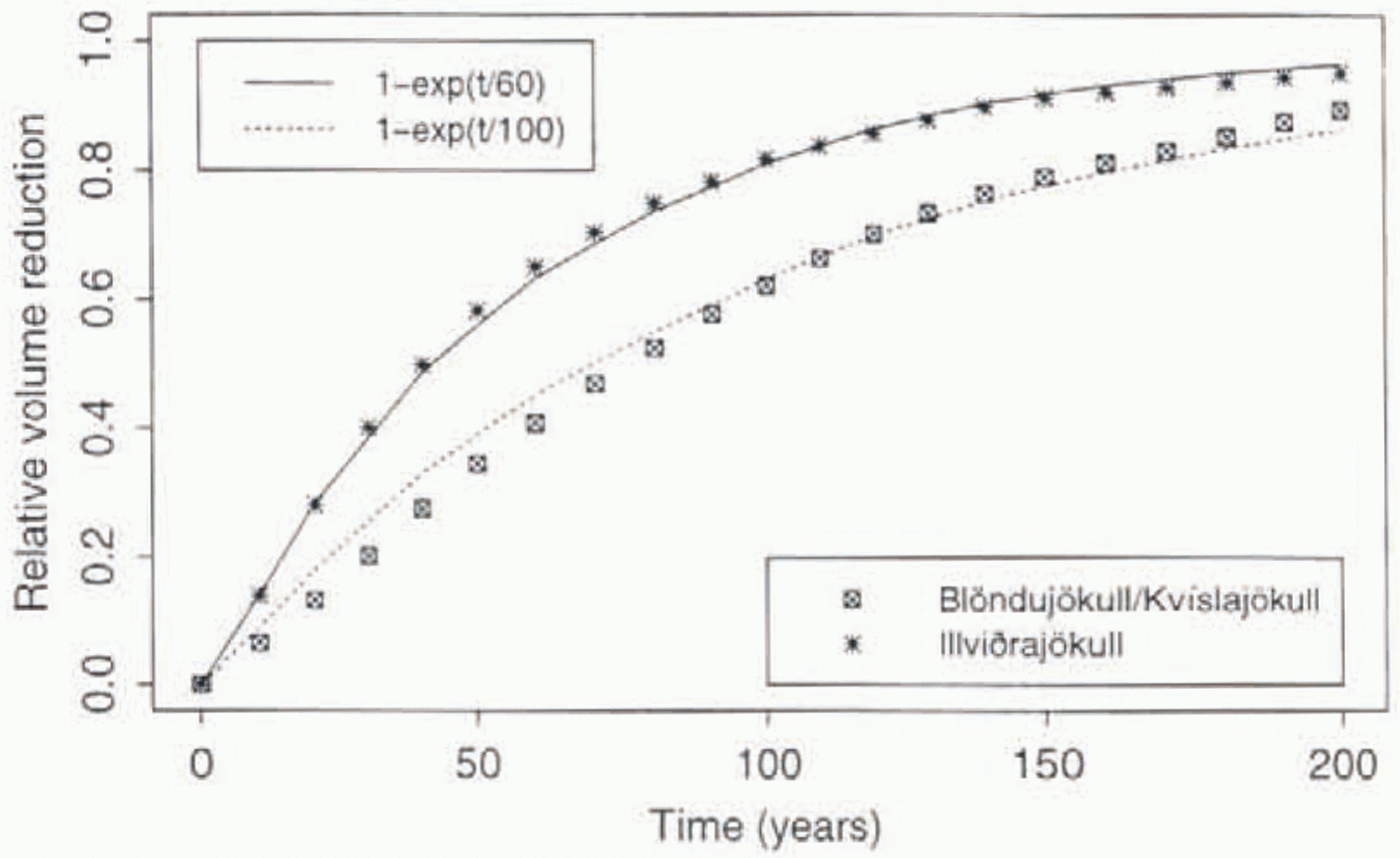
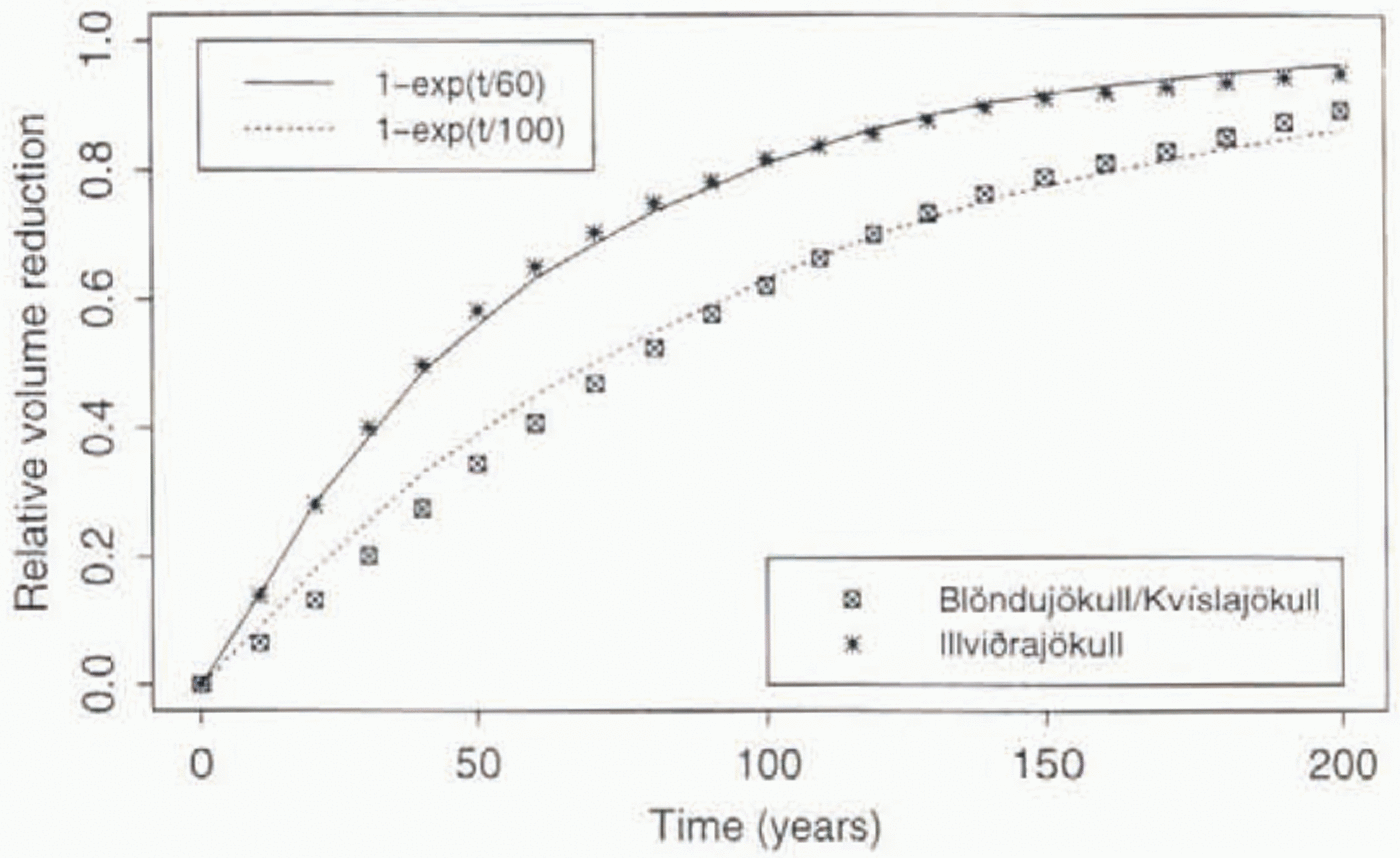
Τhe response time of the glaciers was estimated by suddenly increasing the temperature by 0.5°C and analyzing the approach of the glaciers to a new steady state. Figure 3compares the computed approach to a new steady state with an exponential variation predicted for a linear reservoir with a response time of 100 years for Blöndujökull/Kvísla-jökull and 60 years for Illviðrajökull. It is evident that the time-dependent approach to a new steady state is relatively close to an exponential variation. This conclusion is approximately valid for other temperature changes over a wide range of values until the steady-state volume change caused by the temperature change becomes on the order of one-half of the current volume of glaciers (not shown).
Relative volume reduction as a function of time (symbols) following a sudden warming of 0.5°C compared with an exponential relaxation with a time-scale of 100 years for Blöndujökull/Kvíslajökull and 60 years for Illviðrajökull (solid curves)
The estimated response times may be compared with the theoretical estimate  (see Reference Jóhannesson, Raymond, Waddington and OerlemansJóhannesson and others, 1989a, Reference Jóhannesson, Raymond and Waddingtonb), where h 0maxis a scale for the (maximum) thickness of the glacier and −(b T) is a scale for the mass balance near the terminus more exactly the average mass balance on the region exposed by the retreat of the glacier or advanced over by an advancing glacier). For Blöndujökull/kvíslajökull this estimate is τ= 93 years
 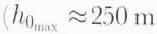 and (–b T) ≈ 2.7 m a–1), and for Illviðrajökull τ= 79 years
 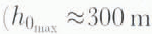 and (–b T) ≈ 3.8 m a–1) if the mass balance around 900 m a.s.l. is used for estimating (− b T). The theoretical estimate does not take the effect of variation in the width of the glacier with distance along the flow channel into account. As discussed in Reference Jóhannesson, Raymond, Waddington and OerlemansJóhannesson and others (1989a), one may expect the response time of glaciers in widening flow channels to be somewhat shorter than that of glaciers of Uniform width. The response time of a glacier in a linearly widening channel (or equivalenty a cylindrically symmetrical ice cap) may be expected to be reduced by a factor of two-thirds compared to the response time of a glacier of uniform width. The width of Illviðrajökull increases approximately linearly with distance along the flow channel, whereas the width of Blöndujökull/Kvísla-jökull increases rapidly in the upper part of the accumulation area and relatively slowly in the lower part of the accumulation area and in the ablation area (seeFig. 1). Therefore, the above theoretical estimate of the response time of Blöndujökull/Kvíslajökull is appropriate, but the estimate for IlIviðrajokull should be reduced by a factor of the order of two-thirds to approximately 53 years in order to take the effect of the shape of the glacier into account. The theoretical estimates do not take mass-balance elevation feedback into account and one may expect the true response time to be somewhat longer than the theoretical estimates due to this effect.
The numerically estimated response times of Blöndujökull/Kvíslajökull (100 years) and Illviðrajökull (60 years) are in reasonable agreement with the theoretical estimates when the effect of the variation of the channel width is accounted for as discussed above (93 years for Blöndujökull/Kvíslajökull and 53 years for Illviðrajökull) and the expected effect of mass-balance elevation feedback on the response time is kept in mind. Previous modelling of the entire Hofsjökull ice cap with a simpler numerical model indicated a response time of 50 years for the whole ice cap (Reference JóhannessonJóhannesson, 1991). The notion of different response times for different outlet glaciers and ice-flow basins of the same ice cap is ol course only approximately valid. Nevertheless, the above results indicate that the response of the Hofsjökull ice cap and/or its individual ice-flow basins to moderate climate changes can be qualitatively modelled with a linear reservoir with a response time of 50–100 years and that this estimate of the response time can be derived theoretically from the current geometry and mass-balance characteristics of the ice cap.
Transient Response to Climate Changes
For Ireland, the climate scenarios used in ihe Climate Change and Energy Production project specify a warming rate of 0.25°C per decade in mid-summer and 0.35°C per decade in mid-winter, with a sinusoidal variation through the year (Reference Jóhannesson, Jónsson, Källén and KaasJóhannesson and others, 1995a). Precipitation is assumed to increase bv 5% per °C of warming. These climate trends were superimposed on the average temperature and precipitation of the period 1961–90 in transient runs of the coupled dynamic/mass-balance glacier model.
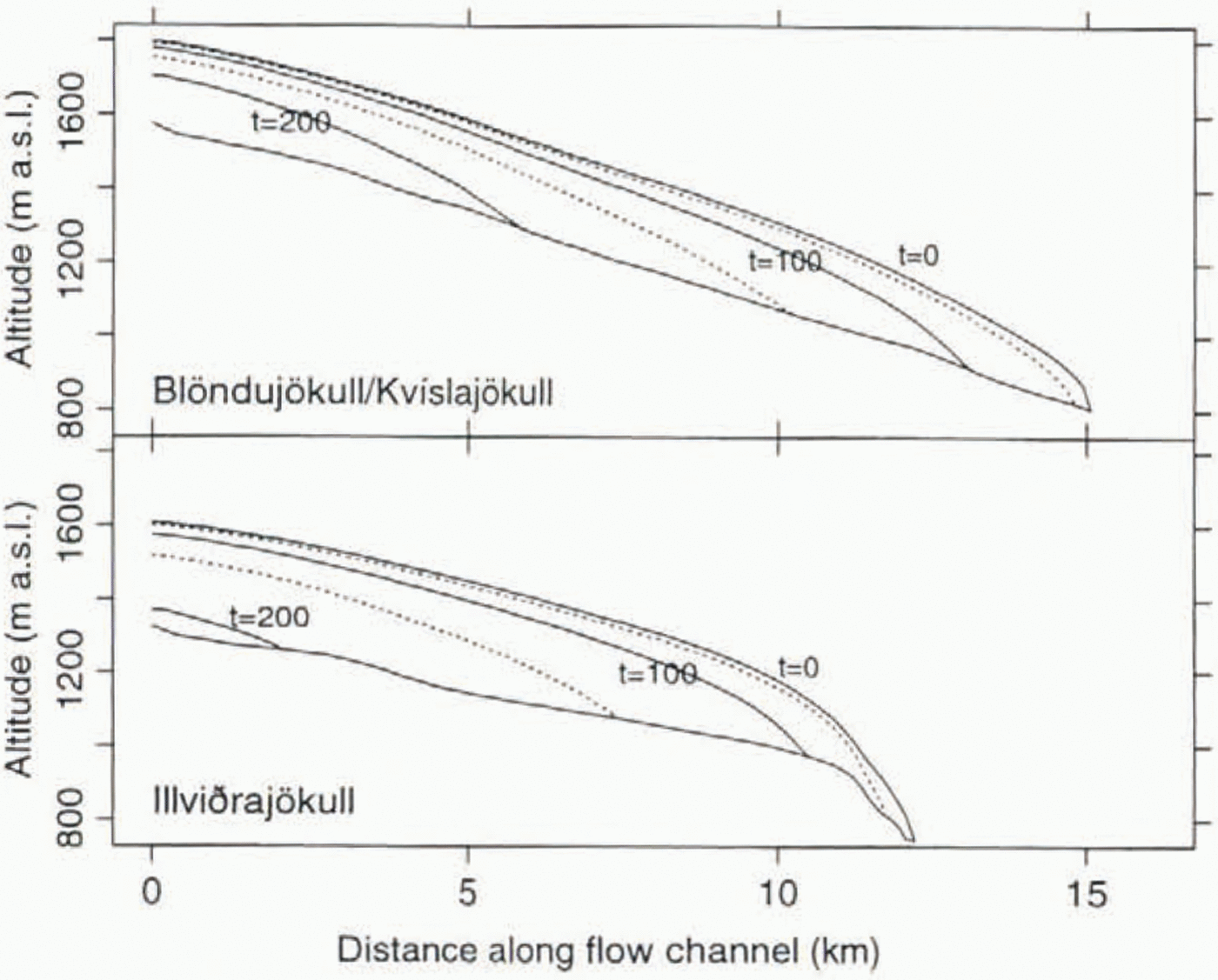
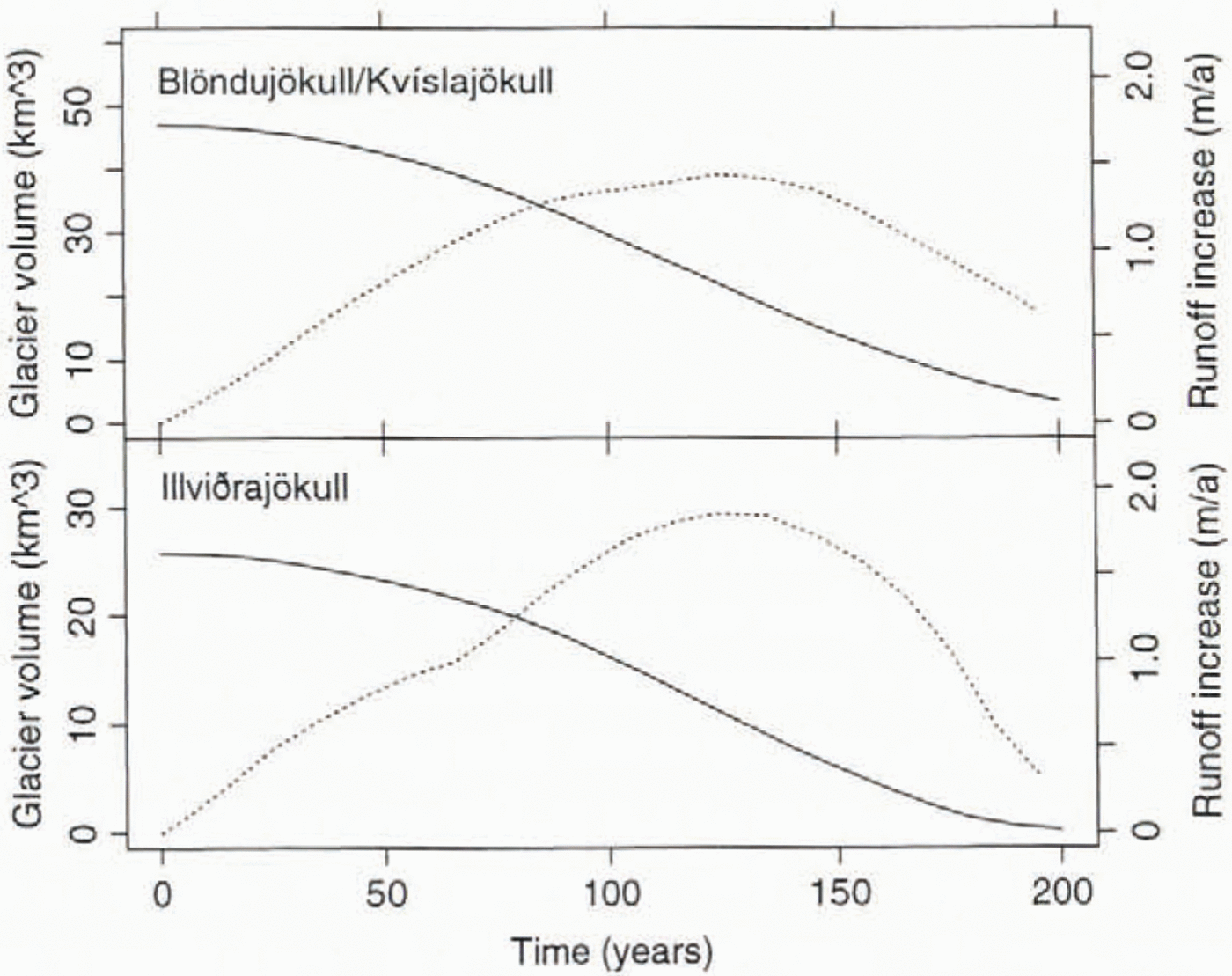
The glacier models were run 200 years forward in time from a near-steady state at t= 0. The retreat of the glaciers is shown in Figure 4. The reduction in the volume of the glaciers after 100 years is about 40% for each glacier, and the reduction in the ice-covered area is about 20% for Blöndujökull/Kvíslajökull and 25% for Illviðrajökull at t= 100. The glaciers essentially disappear at t= 200, with less than 10% of the initial ice volume remaining.
Glacier profiles as a function of time for 200 years after the climate starts in warm for Blödujökull/Kvíslajöhkull (upper panel) and Illviðrajökull (lower panel). The outermost profile is the datum ice-surface profile at t = 0, and the innermost profile is the ice surface at t = 200. The time interval between the profiles is 50 years. The lowest profile in each panel is the glacier bed

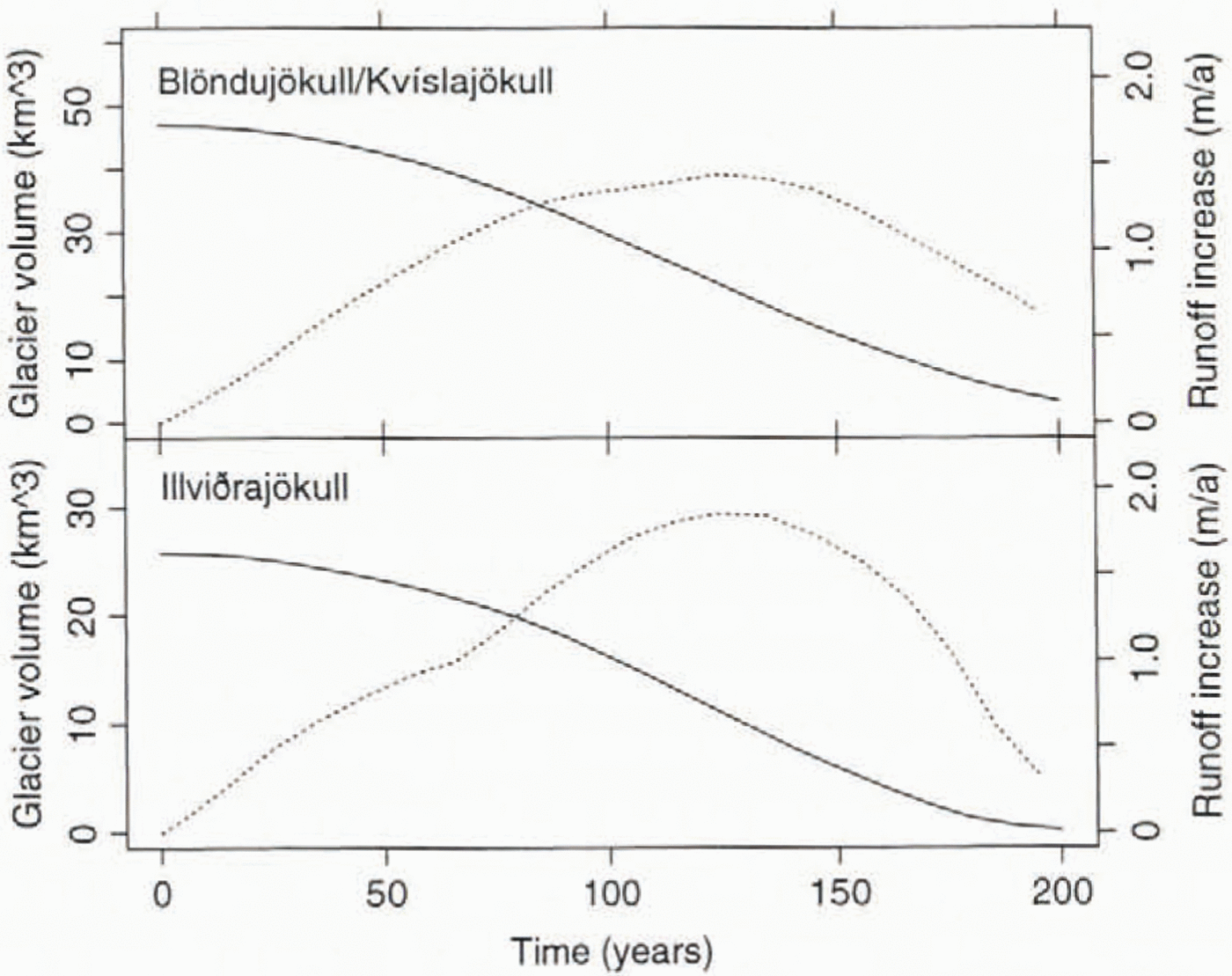
The reduction in the volume of the glaciers leads to a substantial increase in glacier runoff. Figure 5shows the variation of the ice volume of the glaciers with time, and the predicted runoff increase from the area presently covered by the glaciers. After 30 years the runoff contribution due to the negative net balance of the glaciers to the runoff from the area presently covered by the glaciers is 0.5 m a−1for Blöndujökull/Kvíslajökull and 0.6 m a−1for Illviðra-jökull. This is approximately 25% of the present runoff from the glaciers. This runoff contribution increases approximately linearly to a maximum of about 1.5 m a−1for Illviðrajökull/Kvíslajökull and 0.6 m a−1for Illviðrajökull 100–150 years from now. This is close to 75% of the present runoff from the glaciers. The runoff starts to decrease after approximately 150 years due to the reduction in the ice-covered area, but it is still significantly above the present runoff at t= 200. These results are in qualitative agreement with the previous results of Reference JóhannessonJóhannesson (1991)for the entire Hofsjökull ice cap which were based on a much simpler glacier mass-balance model.
volume as a function of time (solid curves) and predicted runoff increase from the area presently covered by the glaciers due to the reduction in the ice volume (dashed curves) for Blöndujökull/Kvíslajökull (upper panel) and Illvðdrajökull (lower panel)
Mass-Balance Sensitivity
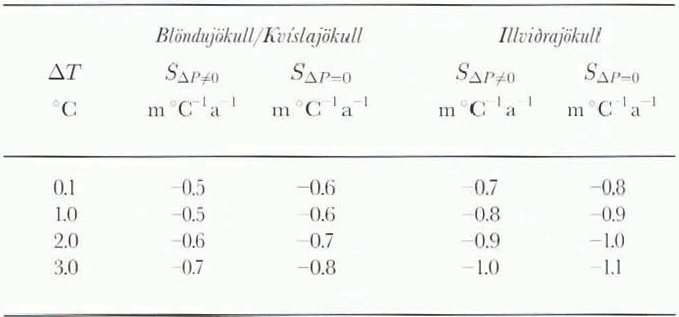
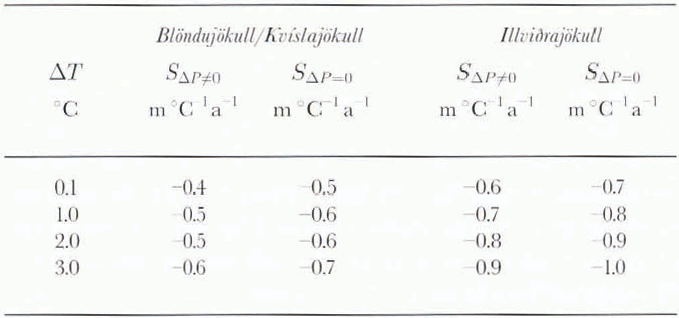
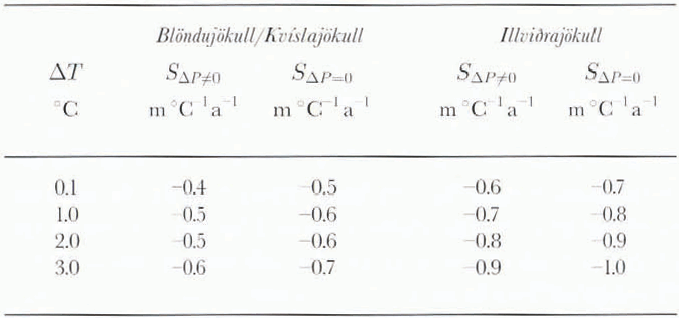
The sensitivity of the mass balance of glaciers and ice caps to climate changes is important for future global sea-level rise that may occur as a consequence of climate warming as discussed in the introduction. The static sensitivity is typically defined as the ratio of the change of the area-weighted average of the specific mass balance over the altitude range of the glacier to the magnitude of a small temperature change. It does not take time-dependent changes in the geometry of the glacier into account. Although the static sensitivity is defined with respect to a small uniform change in temperature, it is useful to compute the change in specific mass balance as a consequence of a finite temperature change which may vary through the year with and without an accompanying precipitation increase. The results of such computations for Blöndujökull/Kvíslajökull and Illviðrajökull are show in Tables 3and 4. Most of the values in the tables are in the range −0.5 to 10 m°C−1a−1. Seasonal variation and a precipitation reduce the sensitivity by approximately 0.1 m° C−1a−1each, whereas the non-linear effect of the finite size of the warming increases the sensitivity by −0.1 to 0.3 m°C−1a−1for ΔTin the range 2–3°C compared with a small ΔT.
Sensitivity of glacier mass balance for a uniform temperature increase with and without a 5% precipitation increase per °C of warming

Sensitivity of glacier mass balance for a seasonal temperature increase where winter warming is 40% higher than summer warming with and without a 5% precipitation increase per °C of warming
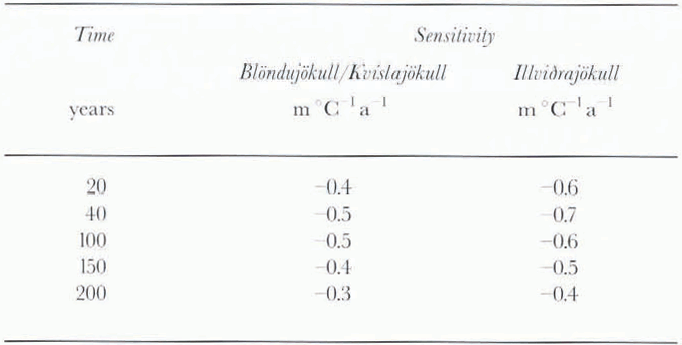
The dynamic sensitivity is computed directly from the volume reduction of the glacier as it responds to a time- [Table 2] dependent climate change. It therefore takes into account both the warming associated with the lowering of the ice surface and the retreat of the glacier terminus in addition to seasonal variation in the warming, a precipitation increase if present and the finite size of the warming which are described above. Here the dynamic sensitivity is computed as the total change in the volume of the glacier in the transient run described in the previous section divided by the originalarea of the glacier at the start of lhc integration and the average temperature change over the time interval. The dynamic sensitives derived in this way for Blöndujökull/Kvíslajökull and Illviðrajökull are given in Table 5.
Dynamic sensitivity of glacier mass balance as a function of time from the start of the integration for a seasonal temperature change with a 5% precipitation increase per °C of warming
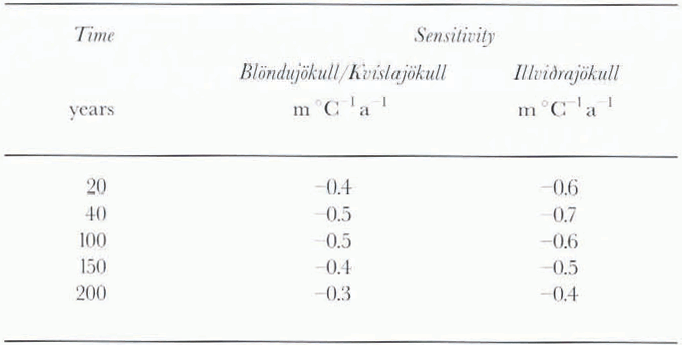
The dynamic sensitivity increases slightly with time during the first decades due to the lowering of the ice surface and reaches a fairly flat maximum around the time when the terminus starts retreating. The sensitivity does not start to fall off rapidly until after about 100 years. The fall is due to an accelerating retreat of the terminus. The dynamic lowering of the ice surface increases the sensitivity by less than −0.1 m° C−1a−1. For integrations longer than 100 years the lowering of the sensitivity due to the retreat of the terminus is substantial, and the sensitivity is reduced by about 50% for 200 year long integrations.
Conclusions
The modelling indicales that future climate warming of about 0.3°C per decade will have a dramatic effect on the two glaciers considered. The volume of the glaciers will be reduced by nearly 40% during the next century, and the runoff contribution from the diminishing ice storage will significantly increase the runoff in the rivers issuing from glaciers. The glaciers will essentially disappear during the next 200 years if the warming specified by the climate scenario coitinues unabated.
The response time of the glaciers estimated by numerical modelling is 50–100 years and can be derived theoretically from the current geometry and mass-balance characteristics of the glaciers. The dynamic response of the glaciers to moderate climate changes can be approximated by a linear reservoir with the appropriate response time. This indicates that the dynamic response of other temperate glaciers to climate changes can be estimated using a simple model based on a linear reservoir without performing detailed numerical ice-llow modelling of the glaciers.
The sensitivity of the mass balance of glaciers to a temperature increase is found to depend on the magnitude and seasonality of the warming, the presence of an accompanying precipitation increase and the dynamic lowering of the ice surface and the retreat of the terminus, These effects are partly counteractive and the dynamic sensitivity during the initial 100 years is not very different from the static sensitivity computed from the current geometry of the glaciers. After about 100 years the sensitivity is significantly reduced due to the decrease in the ice-covered area that results from the retreat of the glaciers.
Acknowledgements
This study was carried out as a pan of Climate Change and Energy Production, a joint project between Denmark, Finland, Iceland, Norway and Sweden sponsored by the Nordic Council of Ministers. Data on the geometry of Hofsjökull were provided by H. Björnsson and F. Pálsson at the Science Institute, Univ ersity of Iceland. Meteorological data were provided by the Icelandic Meteorological Office.