




Introduction
The intestinal barrier serves as a critical interface for nutrient absorption and the first line of defense against pathogens in livestock and poultry production (Celi et al. Reference Celi, Cowieson and Fru-nji2017). However, animals under modern intensive farming are frequently exposed to various stressors, including heat stress and inflammatory challenges. These stressors trigger a cascade of physiological disruptions, leading to increased intestinal permeability and systemic inflammation, ultimately impairing growth performance and feed efficiency (Lara and Rostagno Reference Lara and Rostagno2013; Mishra and Jha Reference Mishra and Jha2019). Identifying novel nutritional interventions to maintain the integrity of intestinal barrier and mitigate stress-induced damage is of paramount importance for the industry.
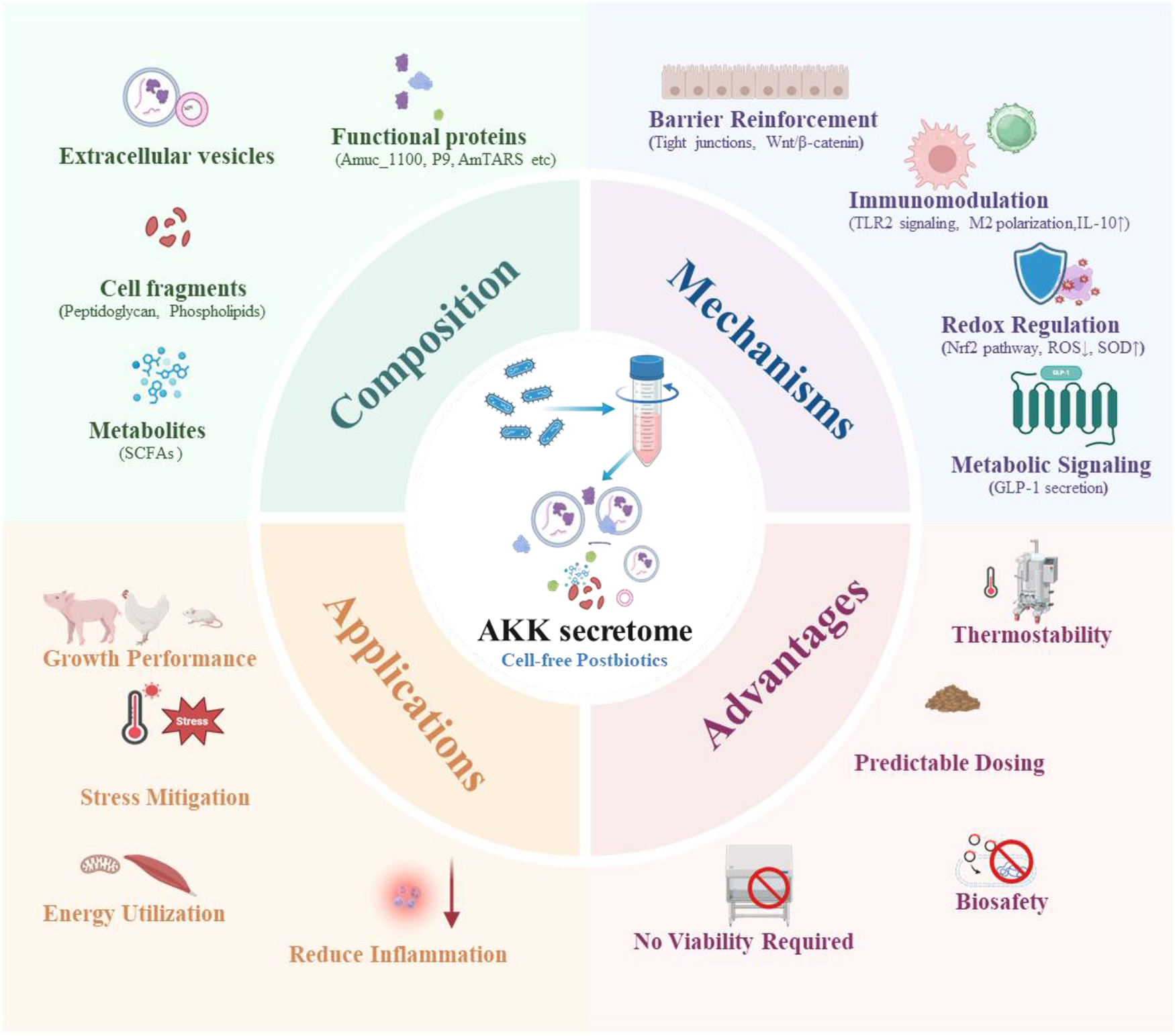
Akkermansia muciniphila (AKK) has risen as a promising candidate for next-generation probiotics (NGPs). Owing to its ability to colonize the intestinal mucus layer, AKK has emerged as a critical mediator of intestinal health, playing a multifaceted role in modulating systemic metabolism and immune responses (Cani and de Vos Reference Cani and de Vos2017; Plovier et al. Reference Plovier, Everard and Druart2017). Postbiotics are defined as “preparations of inanimate microorganisms and/or their components conferring a health benefit on the host,” according to the International Scientific Association for Probiotics and Prebiotics (Salminen et al. Reference Salminen, Collado and Endo2021). While early investigation focused mainly on the efficacy of viable bacterial cells, their secretome is emerging as a promising class of postbiotics for functional feed additives (Plovier et al. Reference Plovier, Everard and Druart2017). Unlike AKK live cells, which are strict anaerobes and highly sensitive to environmental conditions, the AKK secretome exhibits superior biological safety and enhanced stability (Chelakkot et al. Reference Chelakkot, Choi and Kim2018). Focusing on nonviable fractions enables the direct delivery of functional molecules to the intestinal epithelium, thereby eliminating the need for microbial survival within the gastrointestinal tract. In this review, the term “secretome” refers to the complete set of molecular components present in the cell-free supernatant of an AKK culture, including both soluble factors and membrane-bound entities that can be further fractionated. An overview of the AKK secretome’s composition, mechanisms, and application potential is presented in Figure 1.
Comprehensive overview of the Akkermansia muciniphila secretome as a functional postbiotic in animal production.
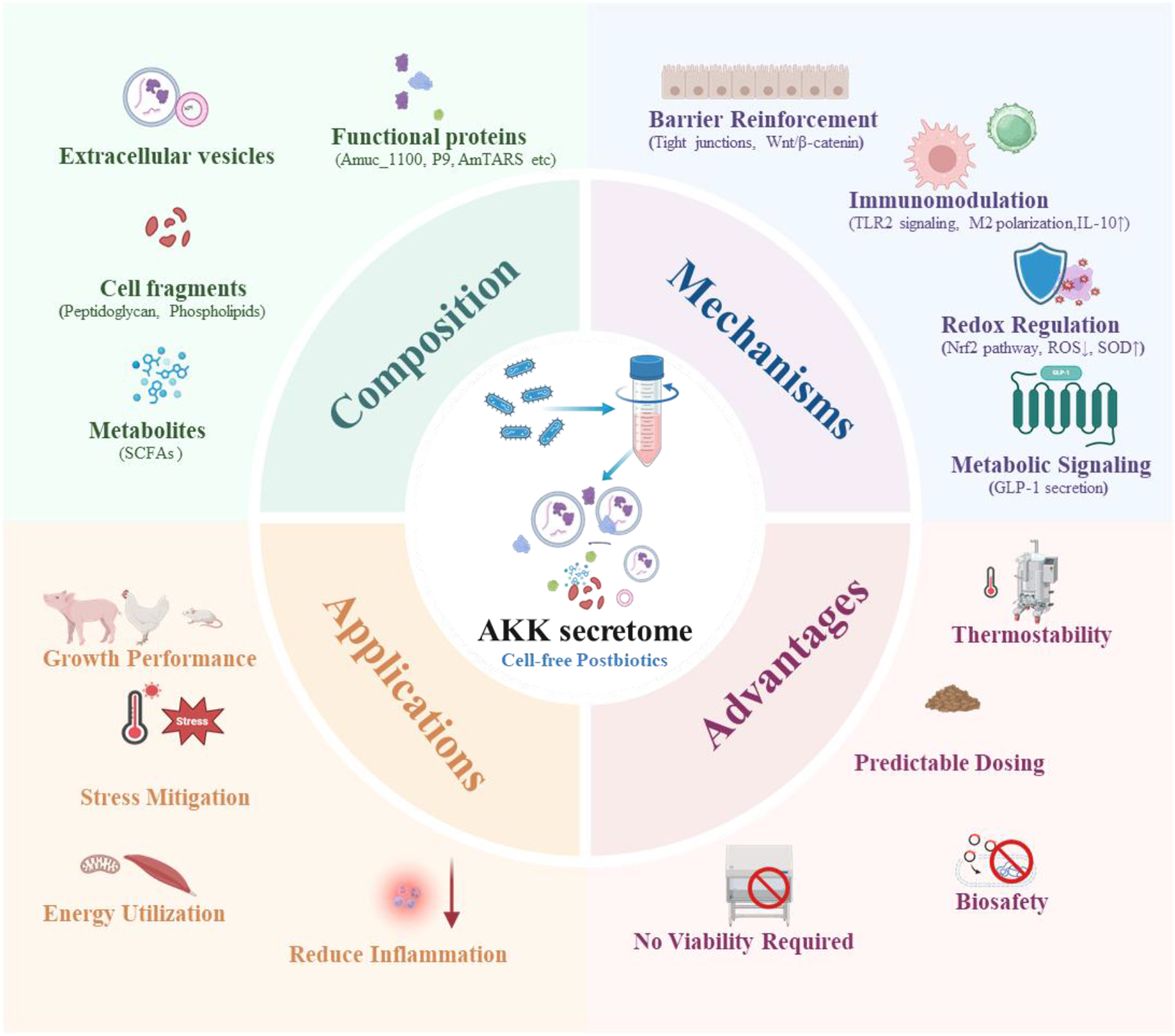
Figure 1 Long description
The infographic is divided into four sections around a central circle labeled ′AKK secretome Cell-free Postbiotics.′ Composition: - Extracellular vesicles - Functional proteins (Amuc_1100, P9, Amuc105, etc.) - Cell fragments (Peptidoglycan, Polysaccharide) - Metabolites (SCFAs) Mechanisms: - Barrier Reinforcement (Tight junctions, Wnt-beta-catenin) - Immunomodulation (TLR2 signaling, IL-10) - Redox Regulation (Nrf2 pathway, ROS, SOD) - Metabolic Signaling (GLP-1 secretion) Advantages: - Thermostability - Predictable Dosing - No Viability Required - Biosafety Applications: - Growth Performance - Stress Mitigation - Energy Utilization - Reduce Inflammation.
Composition of the AKK secretome
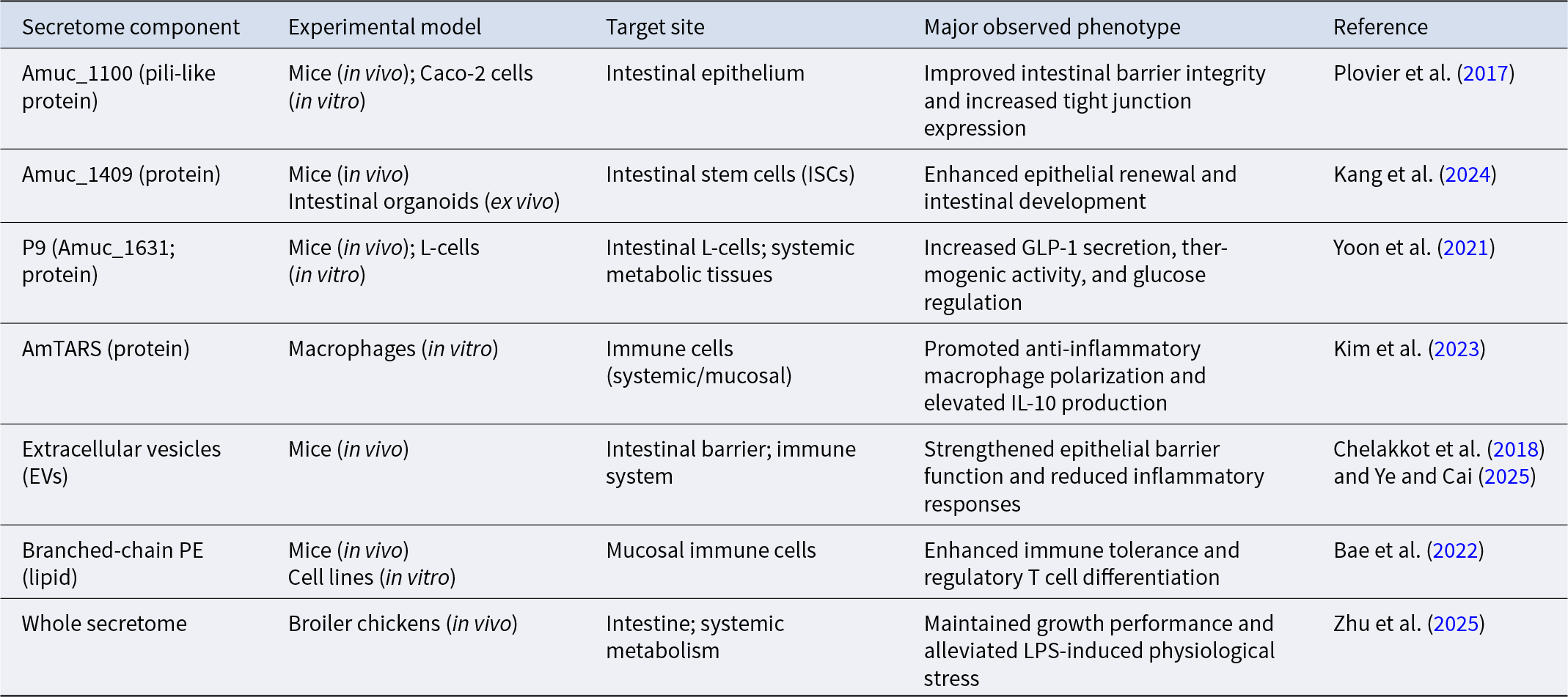
The secretome of AKK consists of a complex and diverse profile of bioactive molecules. It can be broadly classified into functional proteins, extracellular vesicles (EVs), metabolic by-products, and cell envelope-derived components, such as peptidoglycan and muropeptides (Abraham et al. Reference Abraham, Raise and Beney2025; Kang et al. Reference Kang, Kim and Kim2024; Wang et al. Reference Wang, Lin and Wu2025). The diverse components of the secretome constitute the total molecular signature of AKK, representing a cell-free platform of bioactive compounds capable of modulating host homeostasis. A comprehensive overview of key studies investigating the components, experimental models, targeted tissues, and physiological effects of the AKK secretome is summarized in Table 1.
Experimental evidence supporting the physiological activity of identified AKK secretome components
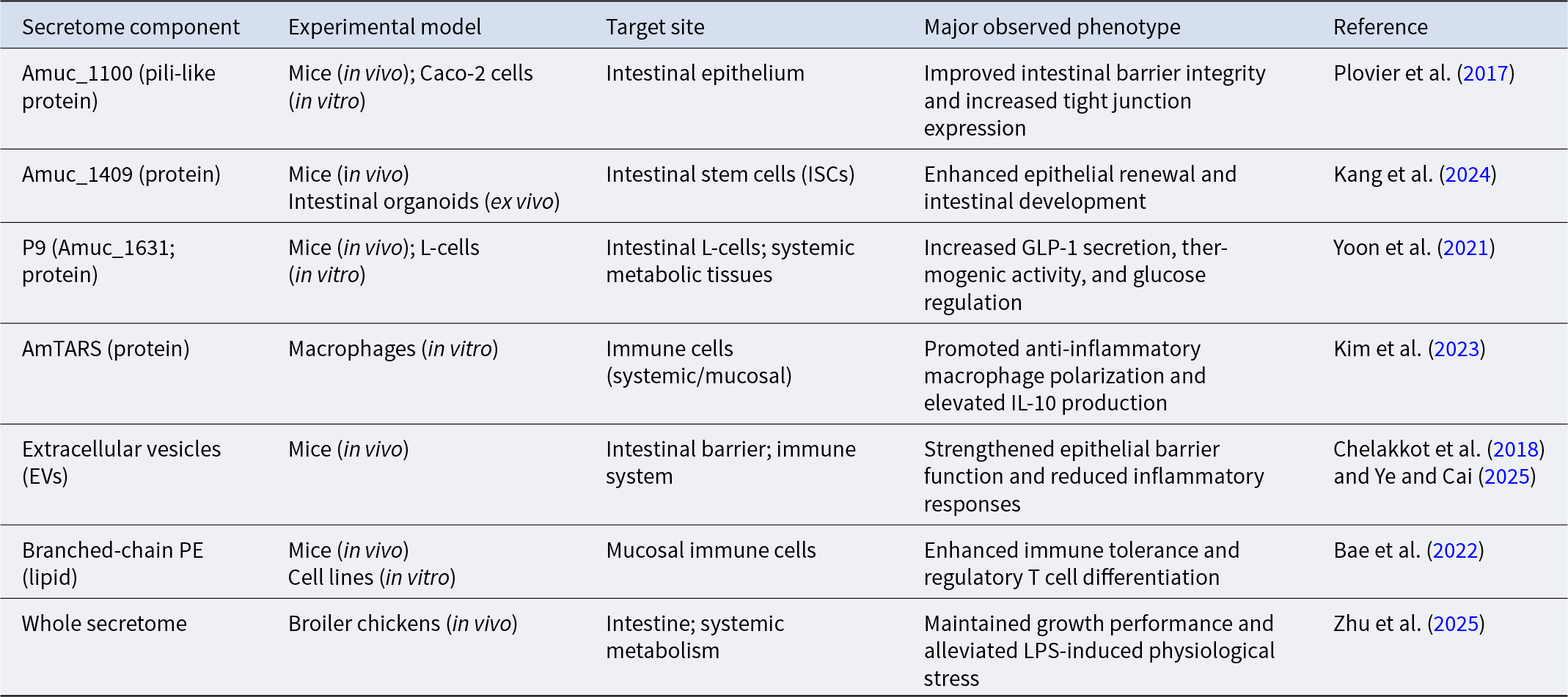
Table 1 Long description
The table summarizes experimental studies linking specific Akkermansia muciniphila secretome components to physiological effects, listing the model used, target site, main phenotype, and citation. Amuc_1100 was tested in mice and Caco-2 cells and was associated with stronger intestinal barrier integrity and higher tight junction expression. Amuc_1409 in mice and intestinal organoids targeted intestinal stem cells and supported epithelial renewal and intestinal development. P9, also called Amuc_1631, acted on intestinal L-cells in mice and in vitro, increasing GLP-1 secretion and contributing to thermogenic activity and improved glucose regulation in systemic metabolic tissues. AmTARS in macrophage cultures promoted anti-inflammatory polarization and increased IL-10 production, indicating immune-modulating activity. Extracellular vesicles in mice targeted the intestinal barrier and immune system, strengthening barrier function and reducing inflammatory responses, with evidence reported by two references. A branched-chain phosphatidylethanolamine lipid in mice and cell lines enhanced mucosal immune tolerance and regulatory T cell differentiation. Whole secretome administration in broiler chickens affected the intestine and systemic metabolism, maintaining growth performance and reducing LPS-related physiological stress; results span different species and experimental systems, so direct comparisons across rows should be made cautiously.
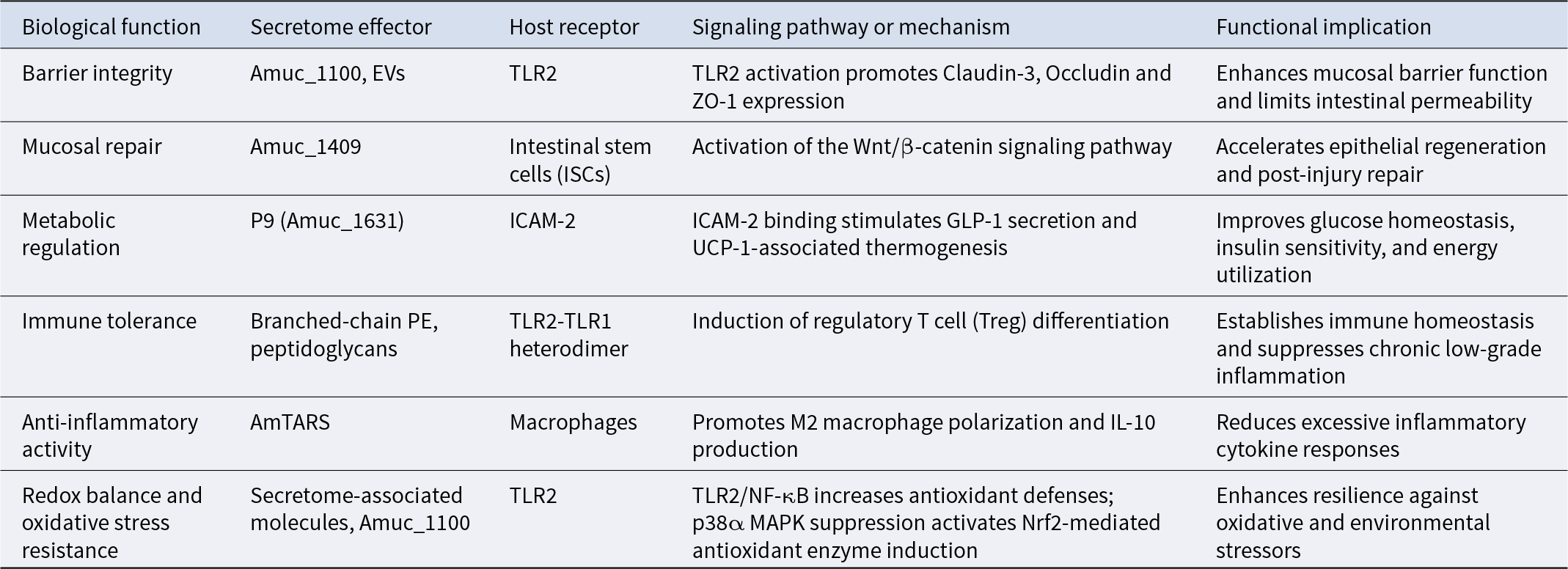
Among the proteomic constituents, Amuc_1100 is recognized as a dominant, membrane-associated protein that is shed extracellularly (Mulhall et al. Reference Mulhall, DiChiara and Deragon2020; Zhao et al. Reference Zhao, Yang and Wu2024). Other constituents, such as P9 (Amuc_1631) and the newly identified Amuc_1409, are characterized by their active secretion as soluble proteins. Specifically, P9 secretion is synchronized with the logarithmic growth phase (Di et al. Reference Di, Zhang and Zhang2024), whereas Amuc_1409 has been established as a novel member of the secretome involved in modulating host intestinal homeostasis (Kang et al. Reference Kang, Kim and Kim2024). Moreover, the secretome contains various mucin-degrading enzymes, such as glycosyl hydrolases, sulfatases, and proteases, which facilitate the breakdown of complex host mucin glycans (Si et al. Reference Si, Kang and You2022). EVs are biogenic, nano-sized particles characterized by a lipid bilayer that encapsulates a diverse molecular cargo, including cytoplasmic proteins, lipids, and nucleic acids (Chen et al. Reference Chen, Li and Zhang2026). These vesicles serve as stable delivery vehicles that protect their contents from environmental degradation. Beyond these macromolecular structures, the secretome contains a high concentration of primary metabolites, most notably short-chain fatty acids (SCFAs). As a mucin-degrading anaerobe, AKK releases less complex carbohydrates from the mucin layer and produces organic acids such as acetate and propionate (Derrien et al. Reference Derrien, Vaughan and Plugge2004). Finally, the secretome includes various cell envelope-derived molecules that are shed during cell wall remodeling or through natural secretion processes. These include structural fragments such as peptidoglycan and its derivative muropeptides, as well as specific membrane lipids like phosphatidylethanolamine (PE; Bae et al. Reference Bae, Cassilly and Liu2022; Ghosh and Mani Reference Ghosh and Mani2022). To systematically illustrate these complex interactions, the key molecular mechanisms by which the AKK secretome regulates host homeostasis, along with their specific effectors, host targets, and signaling pathways, are detailed in Table 2.
Molecular mechanisms of action of the AKK secretome in animal host homeostasis
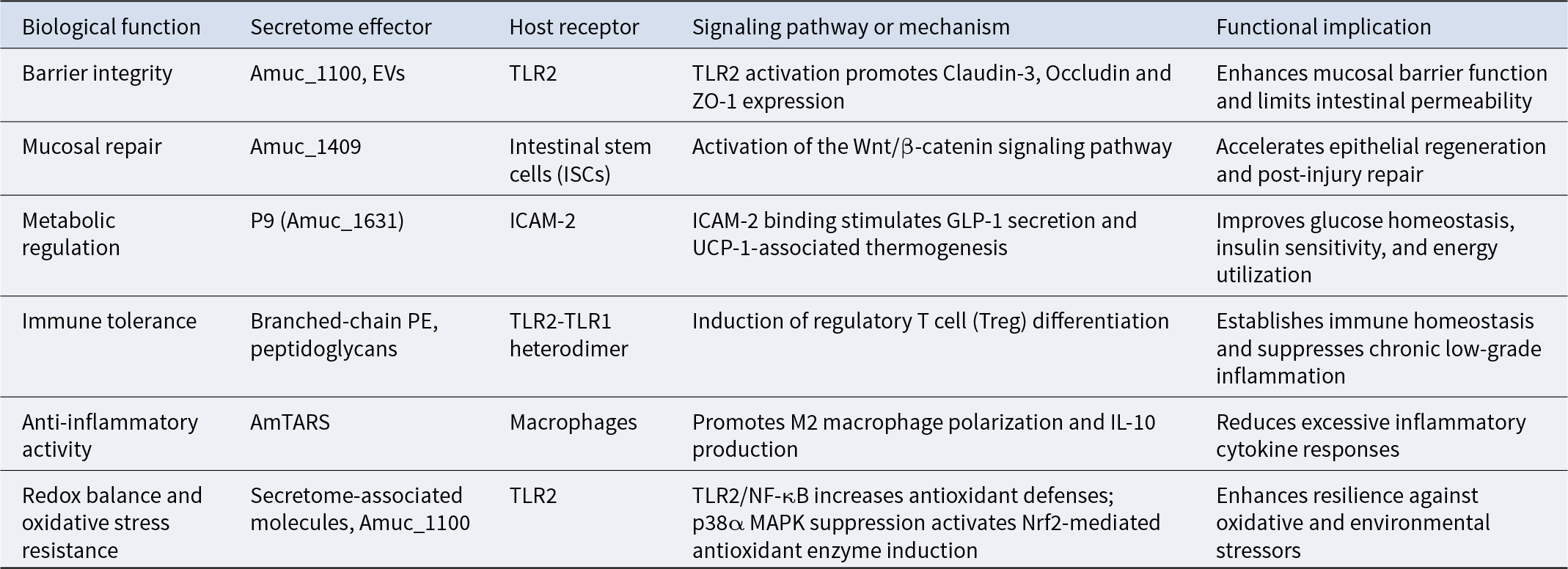
Table 2 Long description
The table links specific AKK secretome effectors to host receptors, signaling mechanisms, and resulting biological functions in the animal host. For barrier integrity, Amuc_1100 and extracellular vesicles engage TLR2, increasing tight junction proteins Claudin 3, Occludin, and ZO 1 to reduce intestinal permeability. For mucosal repair, Amuc_1409 targets intestinal stem cells and activates Wnt and beta catenin signaling to speed epithelial regeneration after injury. For metabolic regulation, P9 (Amuc_1631) binds ICAM 2, stimulating GLP 1 secretion and UCP 1 related thermogenesis, which supports better glucose control, insulin sensitivity, and energy use. For immune tolerance, branched chain phosphatidylethanolamine and peptidoglycans signal through the TLR2 and TLR1 heterodimer to promote regulatory T cell differentiation and limit chronic low grade inflammation. For anti inflammatory activity, AmTARS acts on macrophages to drive M2 polarization and IL 10 production, dampening excessive cytokine responses. For redox balance, secretome associated molecules including Amuc_1100 signal via TLR2, with NF kappa B linked antioxidant defenses and p38 alpha MAPK suppression enabling Nrf2 mediated antioxidant enzyme induction; receptor and pathway assignments reflect proposed mechanisms rather than direct proof for every step.
Molecular mechanisms of the AKK secretome in gut homeostasis
Intestinal barrier reinforcement and stem cell niche modulation
Accumulating evidence indicates that AKK secretome plays a key role in maintaining intestinal homeostasis, mainly by enhancing epithelial barrier integrity (Cani et al. Reference Cani, Depommier and Derrien2022; Si et al. Reference Si, Kang and You2022). Whereas live AKK cells need to overcome an initial colonization lag phase to occupy a functional niche, AKK secretome can interact with the host directly through its bioactive contents. More recent studies suggest that the role of Amuc_1100 extends beyond serving as a structural scaffold. In murine models and human cell lines, Amuc_1100 has been identified as a thermostable pili-like protein that directly interacts with Toll-like receptor 2, and this activation promotes the expression of tight junction proteins (Claudin 3 and occludin), thereby enhancing epithelial barrier integrity (Plovier et al. Reference Plovier, Everard and Druart2017). Similarly, rodent studies and ex vivo organoid assays showed that Amuc_1409 functions as a secreted effector that promotes intestinal stem cell (ISC)-mediated epithelial development through activation of the Wnt/β-catenin pathway (Kang et al. Reference Kang, Kim and Kim2024). These findings highlight the secretome’s capacity to drive epithelial repair, likely by triggering rapid regenerative signaling. While these mechanisms have primarily been attributed to specific secreted proteins, AKK secretome also contains EVs and low-molecular-weight metabolites that may participate in host–microbe interactions, although their roles in epithelial homeostasis are still poorly understood (Cani et al. Reference Cani, Depommier and Derrien2022).
Receptor-specific immunomodulation via novel lipid and peptidoglycan signaling
Beyond the immunomodulatory effects of secreted proteins discussed above, AKK secretome contains additional bioactive components that interact with host receptors and modulate immune responses (Cani and de Vos Reference Cani and de Vos2017). Because these secretome components can access mucosal surfaces more readily than bacterial cells, they may provide rapid and consistent interaction with host receptors even when gut conditions change (Liu et al. Reference Liu, Yang and Yan2022).
In vitro assays and mouse models indicate that a branched-chain PE derived from the AKK cell membrane acts as a specific ligand for the TLR2–TLR1 heterodimer, promoting regulatory T cell (Treg) differentiation and contributing to mucosal immune tolerance (Bae et al. Reference Bae, Cassilly and Liu2022). The secretome is also enriched in peptidoglycan fragments, liberated during bacterial cell wall remodeling. These molecules serve as bioactive ligands for Toll-like receptor 2, thereby contributing to the orchestration of homeostatic immune responses (Ghosh and Mani Reference Ghosh and Mani2022). EVs derived from AKK carry proteins, lipids, and nucleic acids capable of interacting with host cells. Furthermore, studies utilizing cell lines and murine models have demonstrated that AKK-derived EVs can attenuate pro-inflammatory cytokine production (TNF-α, IL-1β, IL-6) and modulate epithelial barrier function (Chelakkot et al. Reference Chelakkot, Choi and Kim2018), suggesting a critical role in receptor-mediated immunomodulation and gut homeostasis (Si et al. Reference Si, Kang and You2022).
Nrf2-dependent redox regulation and stress resilience
Environmental and metabolic stressors, including temperature fluctuations and pro-oxidative compounds, can disturb intestinal redox balance and reduce the survival of beneficial microbes (Celi et al. Reference Celi, Cowieson and Fru-nji2017). Excessive reactive oxygen species (ROS) generated under these conditions can alter microbial ecology and impair intestinal homeostasis (Prasad et al. Reference Prasad, Singh and Menge2024; Sun et al. Reference Sun, Wang and Li2024). In contrast, the molecular constituents of the AKK secretome exhibit superior biochemical stability and functional resilience under extreme environmental conditions. The secretome can interact directly with host redox signaling pathways, supporting epithelial repair and helping to restore redox balance more quickly than live-cell colonization (Ye and Cai Reference Ye and Cai2025).
While many regulatory effects have been characterized using AKK, current evidence suggests that these benefits are primarily driven by the bacterium’s molecular secretome interacting with host signaling receptors. In both in vitro colonic cell models and in vivo murine models of induced enteropathy, AKK-mediated intervention was shown to modulate the host p38α MAPK-Nrf2 signaling axis, specifically by suppressing p38α MAPK phosphorylation to promote Nrf2-mediated antioxidant defenses (Ye et al. Reference Ye, Feng and Su2026). Amuc_1100 has been reported to enhance the activities of key antioxidant enzymes, particularly superoxide dismutase, and reduce lipid peroxidation markers such as malondialdehyde in mice, likely via TLR2-mediated signaling (Ye and Cai Reference Ye and Cai2025). Rather than directly scavenging ROS, Amuc_1100 functions as a signaling ligand that modulates host antioxidant pathways. Specifically, rodent studies indicate that activation of the TLR2/NF-κB axis increases endogenous antioxidant defenses and reduces oxidative damage, connecting secretome molecules to epithelial redox balance during oxidative stress (Ye and Cai Reference Ye and Cai2025). Recent findings suggest that secretome-derived SCFAs mediate systemic antioxidant responses via gut–organ axis communication, while EVs ameliorate intestinal barrier dysfunction through MAPK signaling pathway modulation (Ye and Cai Reference Ye and Cai2025).
Application evidence and perspectives in animal production
Strengthening intestinal integrity and mucosal repair
While the regenerative capacity of the secretome has been largely elucidated in mice, its application in animal production shows similar promise. Studies in broiler chickens have demonstrated that AKK preparations, which primarily act through their secretome, can upregulate tight junction proteins and improve the intestinal morphology (Zhu et al. Reference Zhu, Jing and Tang2025). By stimulating goblet cells to increase MUC2 production, the secretome ensures a thick, protective mucus layer, which serves as the first line of defense in intensive farming environments (Trastoy et al. Reference Trastoy, Naegeli and Anso2020). Secreted EVs have been shown to significantly upregulate tight junction proteins such as ZO-1 and occludin, effectively improving the intestinal health in mice (Chelakkot et al. Reference Chelakkot, Choi and Kim2018; Plovier et al. Reference Plovier, Everard and Druart2017). Furthermore, the secretome accelerates mucosal repair by promoting the rapid renewal of the intestinal lining. The secreted protein Amuc_1409 plays a pivotal role by triggering the proliferation of ISCs, which is essential for livestock to maintain a functional absorptive surface area (Kang et al. Reference Kang, Kim and Kim2024). This regenerative capacity is critical for animals to recover from gut damage induced by weaning stress or enteric pathogens, therefore minimizing the duration of growth depression and diarrhea (Moeser et al. Reference Moeser, Pohl and Rajput2017), ultimately preventing decrease in average daily gain (ADG) during critical production phases.
Enhancement of metabolic performance and energy utilization
The AKK secretome serves as a critical regulator of host energy balance by providing bioactive effectors that modulate metabolic signaling. A hallmark of this regulation is the secretion of the P9 protein (Amuc_1631), which has been identified as a potential inducer of glucagon-like peptide-1 (GLP-1) (Yoon et al. Reference Yoon, Cho and Yun2021). In vitro and rodent-based studies indicate that P9 interacts with the host ICAM-2 receptor, triggering a significant increase in systemic GLP-1 levels and activating brown adipose tissue thermogenesis via uncoupling protein 1. These secretome-mediated actions collectively improve glucose homeostasis and insulin sensitivity, effectively diverting energy utilization toward metabolic expenditure rather than fat accumulation (Cani and Knauf Reference Cani and Knauf2021; Yoon et al. Reference Yoon, Cho and Yun2021). The interaction between P9 and ICAM-2 could be targeted by therapeutics for metabolic diseases (Yoon et al. Reference Yoon, Cho and Yun2021).
In the context of modern livestock science, these findings position the AKK secretome as a potent biological modulator of growth performance. The sustained elevation of systemic GLP-1 levels enhances the host’s capacity for rapid growth and tissue repair. For animals under production stress, this translates into more efficient nutrient utilization, where energy is diverted from the metabolic costs of stress-induced fat mobilization toward muscle protein synthesis and weight gain. This metabolic shift directly contributes to improved ADG and a more favorable feed conversion ratio (FCR), allowing for more predictable weight gain even under environmental challenges (Ye and Cai Reference Ye and Cai2025). Additionally, the secretome’s suite of mucin-degrading enzymes facilitates the release of SCFAs, primarily acetate and propionate (Si et al. Reference Si, Kang and You2022). SCFAs serve as direct energy sources for enterocytes and systemic signaling molecules that modulate lipid metabolism, thereby reducing the incidence of metabolic disorders and improving the overall FCR (van der Hee and Wells Reference van der Hee and Wells2021).
Precision immunomodulation and reduction of production loss
A significant part of production loss in modern agriculture is attributed to subclinical inflammation and the energetic costs of a hyperactive immune system (Kogut and Arsenault Reference Kogut and Arsenault2016; Patil et al. Reference Patil, Gooneratne and Ju2020). The AKK secretome provides a cost-effective means of modulating host immune responses, alleviating inflammation without compromising growth performance (Chen et al. Reference Chen, Li and Zhang2026; Zhu et al. Reference Zhu, Jing and Tang2025).
Notably, the recently identified protein AmTARS acts as a potent anti-inflammatory mediator by triggering M2 macrophage polarization and boosting the levels of the anti-inflammatory cytokine IL-10 (Kim et al. Reference Kim, Park and Hwang2023). This helps to dampen the cytokine storm induced by environmental stressors, reducing systemic levels of pro-inflammatory markers like TNF-α, IL-1β, and IL-6. Moreover, the secretome induces trained innate immunity, educating the animal’s innate immune cells to respond more precisely to secondary pathogen challenges (Bae et al. Reference Bae, Cassilly and Liu2022; Ghosh and Mani Reference Ghosh and Mani2022), which would effectively reduce mortality and the reliance on therapeutic antibiotic interventions (Byrne et al. Reference Byrne, Loving and McGill2020; Prasad et al. Reference Prasad, Patel and Kumar2025). The ultimate goal of the AKK secretome is the direct stabilization of animal growth performance and production efficiency under unpredictable farm conditions. Recent trials in broiler chickens suggest that AKK preparations exert their biological activity primarily through secretome components, enhancing overall growth performance by maintaining stable ADG and mitigating the severe weight loss caused by lipopolysaccharides challenge. By alleviating subclinical inflammation, the secretome reduces the maintenance energy requirements, leading to optimized FCR and improved production efficiency (Zhu et al. Reference Zhu, Jing and Tang2025, Reference Zhu, Tang and Jing2026).
Application challenges and strategic perspectives in the feed industry
The industrial transition from live AKK, a fragile, strictly anaerobic bacterium, to its cell-free secretome provides distinct advantages in terms of industrial scalability and manufacturability (Salminen et al. Reference Salminen, Collado and Endo2021). A key practical advantage of AKK secretome in animal production is its remarkable thermal stability. While live AKK cells are highly sensitive to environmental stressors, research has demonstrated that specific secretome components, such as the membrane-associated protein Amuc_1100, remain bioactive even after heat treatment at 70°C for 30 minutes (Plovier et al. Reference Plovier, Everard and Druart2017). This stability is particularly relevant to the feed industry, where commercial processes like steam pelleting or extrusion typically involve temperatures between 70°C and 90°C. Live bacteria often perish under such high temperatures, pressure, and moisture conditions due to cell membrane lysis and enzyme denaturation. However, the secretome, being a cell-free preparation of inanimate molecular entities, does not rely on cellular viability. Its constituents, including thermostable proteins and bilayer-protected EVs, are structurally more resilient, ensuring that the functional molecular dose remains consistent and effective throughout the feed manufacturing chain (Plovier et al. Reference Plovier, Everard and Druart2017; Salminen et al. Reference Salminen, Collado and Endo2021), and thereby circumventing the unpredictability associated with in vivo colonization of live bacteria. From a biosafety and regulatory perspective, the cell-free preparation eliminates risks associated with live bacterial translocation and the horizontal transfer of antibiotic resistance genes, which pose inherent challenges and safety risks (Machado et al. Reference Machado, Barbosa and Almeida2022). By aligning molecular precision with industrial-scale stability, AKK secretome provides a robust, One-Health-oriented framework for boosting animal resilience and productivity (El Far et al. Reference El Far, Zakaria and Kassem2023; Prasad et al. Reference Prasad, Patel and Kumar2025; Zhu et al. Reference Zhu, Tang and Jing2026).
Conclusions and future perspectives
The shift from live AKK cells to its cell-free secretome marks a significant paradigm shift in the application of NGPs within the animal industry. This review synthesizes current evidence demonstrating that the AKK secretome acts as a potent biological modulator bypassing the limitations inherent in live anaerobic cell colonization. From an industrial and regulatory perspective, the secretome provides the necessary robustness to survive the harsh conditions of commercial feed manufacturing, offering a predictable, mechanism-defined molecular dose, while addressing critical biosafety concerns regarding horizontal gene transfer and bacterial translocation. While the transition from fundamental rodent-based mechanistic discovery to livestock-specific application is still in its early stages, the consistency of the AKK secretome’s effects across species is encouraging. Moving forward, future research should prioritize the high-throughput characterization of yet-undiscovered secretome fractions and the direct validation of these rodent-derived pathways across diverse livestock species under challenging field conditions to fully optimize ADG and FCR in commercial settings.
Data Availability Statement
Not applicable.
AI statement
During the preparation of this manuscript, the authors used ChatGPT (GPT-4; OpenAI) for the purpose of language editing and grammatical correction. After using this tool, the authors reviewed and edited the content as needed and take full responsibility for the content of the published article.
Author Contributions
All authors have read and approved the final manuscript for publication.
Financial Support/Funding Statement
This work was supported by the Guangdong Province Poultry Industry System Project (2024CXTD20) and China Scholarship Council (CSC).
Conflict(s) of Interest
The authors declare that they have no competing interests.
Ethical Standards
Not applicable.

 Open access

