Introduction
Diabetes substantially increases the risk of depression, even lower-level depressive symptoms (Aarts et al., Reference Aarts, van den Akker, van Boxtel, Jolles, Winkens and Metsemakers2009), which demonstrate the greatest prevalence afflicting over 60% of patients (Gonzalez et al., Reference Gonzalez, Safren, Cagliero, Wexler, Delahanty, Wittenberg, Blais, Meigs and Grant2007), are prodromal to severe symptoms, and impact clinical outcomes (eg, self-management behaviours) (Gonzalez et al., Reference Gonzalez, Safren, Cagliero, Wexler, Delahanty, Wittenberg, Blais, Meigs and Grant2007) and perceived health status (Nichols et al., Reference Nichols, Barton, Glazner and McCollum2007). Research suggests a bidirectional association between diabetes and depression (Renn et al., Reference Renn, Feliciano and Segal2011), yet the mechanisms are unclear. Some evidence implicates emotional distress relating to diabetes and its management, ‘diabetes distress’, suggesting that interventions targeting this may optimise improvement in depression (Pouwer et al., Reference Pouwer, Skinner, Pibernik-Okanovic, Beekman, Cradock, Szabo, Metelko and Snoek2005).
Emotional and psychological support is inadequate in diabetes, particularly for mild to moderate, or ‘lower-level’, need and in primary care where this would be managed (Trigwell et al., Reference Trigwell, Taylor, Ismail, Nicholson, Alibhai, Gosden, Proud and Turner2008), spurring policy imperatives prioritising this (NHS Diabetes and Diabetes UK, 2010). Service provision has improved with initiatives such as Improving Access to Psychological Therapies, yet access issues persist particularly in long-term physical conditions.
WED is an intervention in which thoughts and feelings regarding a stressful event are disclosed for 15–20 min for three to four days within a short time period (Pennebaker and Beall, Reference Pennebaker and Beall1986). Over 100 randomised controlled trials (RCTs) have reported health improvements for a diverse range of populations including healthy participants (Smyth, Reference Smyth1998) and those with psychological problems (eg, depression) (Stice et al., Reference Stice, Burton, Bearman and Rohde2007) and long-term physical conditions such as arthritis, cancer and chronic pain. Systematic reviews of the original WED paradigm in long-term physical conditions, albeit no diabetes populations, suggest a small but clinically important improvement in psychological morbidity and perceived health status (Frisina et al., Reference Frisina, Borod and Lepore2004, Dennick, Reference Dennick2012).
Consistent with the National Institute for Health and Clinical Excellence (NICE) guidelines for patients with lower-level depression and chronic physical health problems including diabetes, WED is a low-intensity intervention that would serve the large proportion of individuals with diabetes and unmet lower-level emotional and psychological need in primary care (NHS Diabetes and Diabetes UK, 2010). It is consistent with other self-administered lower-level psychological interventions advocated by NICE [eg, computerised cognitive behavioural therapy (cCBT)], yet it is comparatively inexpensive, widely available and hence potentially appropriate for widespread dissemination to meet the substantial population need in primary care.
A number of potential influencing mechanisms mirroring those underpinning existing interventions (ie, CBT) have received empirical support, for example the cognitive and emotional processing approach in which submitting a stressor to a linguistic format and coherent narrative facilitates organisation, understanding and assimilation. Specifically, word use reflecting cognitive and emotional processing is observed across writing sessions and associated with improvement in outcomes (Pennebaker et al., Reference Pennebaker, Mayne and Francis1997). As such, WED has a sound theoretical grounding for improving health. WED is also theoretically appropriate in targeting stressors and presumably distress; improvement in depressive symptoms may be optimised. Moreover, an independent influence on self-management behaviours and HbA1c may be addressed (Fisher et al., Reference Fisher, Skaff, Mullan, Arean, Mohr, Masharani, Glasgow and Laurencin2007).
Before investment in a costly, large scale trial and certainly prior to consideration of WED for use in clinical practice, a trial is required to establish acceptability and feasibility, estimate potential benefit, and elicit trial protocol design issues. As such, many initial WED studies with patients with long-term physical conditions have been exploratory RCTs comprising small samples (n=30–50) (Dennick, Reference Dennick2012). No studies have tested the feasibility of WED for primary care patients with diabetes. The present study was a feasibility trial of WED for UK primary care patients with Type 2 diabetes, with exploration of its potential benefit for depressive symptoms and associated outcomes.
Participants and methods
Study design and population
The study was a feasibility RCT with three-month follow-up (ISRCTN 18442976). Recruited were adults with Type 2 diabetes aged ⩾18 years and diagnosed for at least six months. Exclusion criteria were diagnosed psychiatric disorder, depression treatment/psychological therapy, history of self-harm or general practitioner (GP) assessment as unsuitable. Recruitment was via mass mail out to eligible patients on local GP registers, supplemented with advertisements on online diabetes support groups (eligibility confirmed by self-report). The study was approved by the Warwickshire NHS Research Ethics Committee. Ethical review necessitated that eligibility was tightened to ensure exclusion of individuals at risk of re-traumatisation via WED yet not under current care by GPs. Specifically an eligibility check was introduced such that participants scoring ⩾16 on the Centre for Epidemiological Studies Depression (CES-D) scale were excluded and referred to their GP. This threshold has adequate sensitivity for detecting major depressive disorder (MDD) according to diagnostic interview in diabetes (Fisher et al., Reference Fisher, Skaff, Mullan, Arean, Mohr, Masharani, Glasgow and Laurencin2007). GPs were additionally required to consent at recruitment to deal with patients identified as experiencing potentially significant depressive symptoms, or experiencing screening or writing negatively.
Randomisation, allocation concealment and blinding
Participants provided written informed consent, baseline data and were randomised to the intervention or control (1:1), stratified by recruitment approach and blocked with random block sizes of four, six and eight. A list of random numbers allocated sealed, opaque, serially numbered writing packs, which a researcher mailed blind and in sequence each time a primary care patient was enrolled. Support group participants received materials electronically; the project supervisor provided successive allocations to the researcher each time a participant was enrolled. Patients’ group allocations were also withheld from GPs.
Intervention
Both groups were instructed to write at home in private for 20 min on three days over one week. Intervention participants were prompted to write their thoughts and feelings about any stressful experience over the last month or current concern (ie, not specifically diabetes related). Switching topics across sessions was permitted. Controls wrote a description of the previous days’ activities, without prompt to discuss thoughts or feelings in order to distinguish writing from content. To prevent inference of one’s group assignment the control exposure was identical bar the writing foci, and participants were informed that the study purpose was to explore whether writing about different aspects of life improves health. Primary care patients handwrote their disclosure, whereas support group participants typically typed. Usual care and treatment seeking were not restricted.
Assessment of feasibility
Feasibility was assessed on recruitment (practices and patients), compliance (return of writing, number of sessions completed and time spent writing per session), acceptability (reasons for not returning writing or completing the sessions as required) and intervention fidelity (degree of emotional disclosure in each group). Handwritten essays were transcribed verbatim and emotional disclosure was objectively quantified via the Linguistic Inquiry and Word Count software. This derives the percentage of words belonging to pre-defined categories of word use, including those reflecting cognitive and emotional processing; positive emotion (eg, love, nice and sweet), negative emotion (eg, hurt, ugly and nasty), insight (eg, think, how and consider) and causation (eg, because, effect and hence).
Assessment of potential benefit
The primary outcome was depressive symptoms assessed with the CES-D (Radloff, Reference Radloff1977). Higher scores represent greater symptom severity. Internal reliability for the current sample was 0.67. Secondary outcomes were diabetes distress assessed with the Problem Areas in Diabetes scale (Polonsky et al., Reference Polonsky, Anderson, Lohrer, Welch, Jacobson, Aponte and Schwartz1995), perceived health status measured with the EQ-5D and diabetes self-care behaviours assessed with the Revised Summary of Diabetes Self-care Activities questionnaire (Toobert et al., Reference Toobert, Hampson and Glasgow2000).
Baseline comparability and statistical analysis
The baseline data were inspected for systematic group differences of a notable magnitude on prognostic variables. Potential benefit was assessed in accordance with intention to treat (ITT), with imputation by baseline observations carried forward (as available). A pre-specified complete case sensitivity analysis tested the validity of the ITT assumptions. Analyses were conducted using SPSS for Windows. Analysis of covariance assessed the between-group difference in each outcome at follow-up, controlling for age, gender and outcome at baseline. Mean differences and the associated 95% confidence intervals were derived to estimate the magnitude and direction of potential effects given that the study was exploratory and not purposefully powered. A five-point difference on the CES-D was considered potentially clinically important as this discriminates between important levels of severity. Intervention fidelity was examined with a mixed factorial analysis of variance testing between-group differences in the percentage of words reflecting emotional disclosure (averaged across writing sessions for each of the four aforementioned categories of word use). The consistency of the main effect across the categories of word use was determined with planned contrasts and effect size r, interpreted at 0.10, 0.30 and 0.50 as small, medium and large sized, respectively (Cohen, Reference Cohen1988).
Results
Patient recruitment, characteristics and baseline comparability
Of the individuals invited, 106(6%) expressed an interest in the study. Reasons for non-participation could not be formally collected, yet information volunteered and expressed within forums suggested scepticism about the benefit of writing, concerns about literacy and the likelihood of implementation, and preferences for practical support (eg, free monitoring strips) and writing in forums. There were, however, some individuals who endorsed a belief in the value and benefit of writing. Notably, 31(36%) of those completing the eligibility check screened positive for potentially significant depressive symptoms (CES-D⩾16), suggesting an unmet treatment need. Participant flow and reasons for non-return of materials are provided in Figure 1.
Participant flow and reasons for non-return of materials

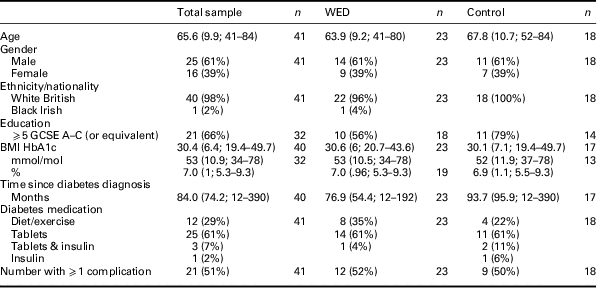
Forty-one participants, 25 men and 16 women, with a mean age of 56.6, BMI of 30, HbA1c of 53 mmol/mol (7%) and duration since diabetes diagnosis of seven years were enrolled (Table 1). Sixty one per cent were male, 98% described themselves as White British, 66% had at least five GCSE grades A–C (or equivalent), 61% were currently treated with oral diabetes medication and 51% had ⩾one complications. The intervention groups were comparable.
Baseline demographic and clinical data
Data shown as mean (SD; range) or frequencies (percentage) for randomised participants. Complications reported included coronary heart disease/stroke, retinopathy, sexual/urological problems, kidney disease/failure, neuropathies and or hypoglycaemia.
WED=written emotional disclosure; BMI=body mass index.
Compliance
Fourteen (61%) intervention and 13(72%) control participants returned their writing, with 12 in each group (89%) completing all sessions; one patient completed two sessions (WED) and two completed one (WED and control). On average, the allotted time was adhered to; median(range) minutes (averaged across writing sessions): 23(20–77) (WED) and 23(10–283) (controls). There were, however, outliers; one WED participant and a control that emotionally disclosed wrote for over an hour in one or more sessions, one of whom noted breaks within sessions. Thirty-two participants (78%) were followed up at three months, of whom 12(67%) WED and 13(93%) control participants had returned their writing.
Intervention fidelity
Intervention fidelity was confirmed. WED essays comprised more words reflecting emotional disclosure relative to controls’ (P=0.000, r=0.84), which was consistent for positive emotion, negative emotion and insightful word use (P>0.05) yet less pronounced for causal word use (P=0.000, r=0.65). WED participants displayed little continuity in the topics discussed within and across sessions. Approximately a third wrote about diabetes to a notable degree, which on average accounted for a third of the topics they disclosed. In addition to disclosing stressors, approximately half also wrote about positive and neutral diabetes and non-diabetes topics to a notable extent. On average, this accounted for over half of the topics they discussed. Control participants typically wrote an objective description of their previous day. However, a third exhibited some degree of emotional disclosure typically limited to discussion of stressors in the context of daily activities, albeit one participant disclosed in a manner consistent with the intervention.
Acceptability
Negative appraisals of WED (ie, reasons for not completing/returning writing but also issues raised by those completing it) related to the intervention; the associated burden, concern about literacy and no desire to or difficulty writing about feelings, but also the sample obtained; physical (age-related) difficulty writing and not having anything to write about. Participants attributed the latter to an absence of problems and no inclination to dwell on stressors, and in fact a number of these individuals were among those that additionally wrote about positive/neutral topics. These participants also indicated that thinking about what they were concerned enough to write about notably diminished their positive mood, evoked negativity and promoted rumination on incited stressors.
Potential benefit
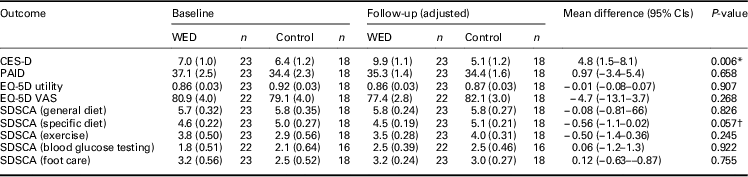
The intervention group exhibited significantly greater depressive symptom severity relative to controls at follow-up (P=0.006), a mean difference that was potentially clinically important (4.8) and there was a non-significant trend for worse dietary behaviour (ie, less consumption of fruits and vegetables and greater consumption of high fat foods) (P=0.057). These effects reflected worsening for the WED group, albeit also improvement for controls from baseline to follow-up. There was no significant effect on other secondary outcomes (P>0.05) (Table 2). The sensitivity analysis corroborated these findings.
Potential benefit of WED on the primary and secondary outcomes
Data shown as mean (SE) at baseline and follow-up, mean difference (95% CIs) and p-value (*P<0.01, † approaching significance) derived from the ANCOVAs (ITT analyses).
WED=written emotional disclosure; CES-D=Centre for Epidemiological Studies Depression; PAID=problem areas in diabetes; SDSCA=summary of diabetes self-care activities; ANCOVA=analysis of covariance.
Discussion
The evidence for the feasibility of WED for primary care diabetes was mixed. A substantial number of patients with Type 2 diabetes were not interested in WED and did not return and presumably complete it, and negative appraisals were observed among those agreeing to participate and those completing it. However, some patients were interested, an unmet treatment need was identified among them, and those that completed WED were willing and able to do so with some exceeding the request.
Recruitment of practices was also modest. Of those approached (n=113), 8(7%) of practices agreed and 5(4%) were retained. Recruitment from support groups was also not an effective alternative for accessing potential patients; of the 20 groups approached, only 5(25%) responded to the request and agreed. Reasons for practice non-participation were principally practice workload, and the absence of external funding and thus ineligibility for inclusion on the National Institute for Health Research Clinical Research Network Portfolio (ie, non-payment and resource costs). GPs infrequently cited WED as the reason. At most there was concern about eliciting emotional issues with which they would have to deal (Dennick, Reference Dennick2012). This reticence is reported in other feasibility studies of therapeutic writing in primary care (Hannay and Boulton, Reference Hannay and Boulton1999), yet previous writing studies have reported primary care patients, patients with long-term physical conditions and those with lower-level depressive symptoms typically experience the intervention positively without requesting additional support (Broderick et al., Reference Broderick, Stone, Smyth and Kaell2004; Stice et al., Reference Stice, Burton, Bearman and Rohde2007; Hannay and Boulton, Reference Hannay and Boulton1999).
Delivering WED as it was in the present endeavour may, however, cause iatrogenic harm. A possible explanation for this finding and in part the mixed acceptability observed could be the sample obtained, which did not represent the target population requiring support; the participants were in good control of their diabetes and the baseline CES-D score was well below that reported for people with diabetes in the community (Zhang et al., Reference Zhang, Norris, Gregg, Cheng, Beckles and Kahn2005). WED may have evoked rather than resolved previously unacknowledged stressors, an effect which extended beyond depressive symptoms to behaviour reflecting ‘comfort eating’, possibly via the change in depressive symptoms albeit this is not known. Indeed, many WED participants indicated they were generally well adapted yet were prompted to discuss troubling issues, for example family and health problems. It must be noted, however, that three months may be insufficient to observe the full trajectory of WEDs effects. A six month follow-up was intended yet had to be abandoned owing to the delay imposed by the ethical review and recruitment issues encountered. This change also meant that HbA1c obtained from medical records could not be reliably measured as an outcome.
Previous WED studies have reported detrimental effects in acutely stressed populations (Batten et al., Reference Batten, Follette, Hall and Palm2002; Solano et al., Reference Solano, Pepe, Donati, Persichetti, Laudani and Colaci2007) but also unselected students (Honos-Webb et al., Reference Honos-Webb, Harrick, Stiles and Park2000; Rogers et al., Reference Rogers, Wilson, Gohm and Merwin2007). In these studies, this was attributed to evocation yet avoidance and or an absence of resolution of stressors. Indeed, in the present endeavour, there was little evidence of continuity in the topics discussed by WED participants who had difficulty identifying and disclosing stressors. Interestingly, a WED study in cancer patients employed a similar eligibility check and also observed this phenomenon, yet did not assess outcomes (Bruera et al., Reference Bruera, Willey, Cohen and Palmer2008). There was also a bias to males in the current sample, who perhaps experienced particular difficulty in processing and resolving evoked stressors; participant feedback supported this assertion, and a body of evidence suggests WED may worsen outcomes for those with lower emotional processing ability (Lumley, Reference Lumley2004).
Importantly, the ethical review requirement to increase the eligibility threshold to essentially those without depressive symptoms was largely responsible for the sample obtained. In hindsight, perhaps some excluded participants could have safely participated; in diabetes 70% of those scoring ⩾16 on the CES-D do not meet the criteria for MDD according to diagnostic interview (Fisher et al., Reference Fisher, Skaff, Mullan, Arean, Mohr, Masharani, Glasgow and Laurencin2007). Future endeavours could include those scoring between the thresholds for lower-level and significant symptoms on a measure derived from the Diagnostic and Statistical Manual of Mental Disorders fourth edition diagnostic criteria. In fact, the Beck Depression Inventory exhibits a superior positive predictive value while maintaining sensitivity for detecting MDD in diabetes (Lustman et al., Reference Lustman, Clouse, Griffith, Carney and Freedland1997). Previous WED trials adopting this approach have reported improvement in depressive symptoms rather than deleterious effects (Stice et al., Reference Stice, Burton, Bearman and Rohde2007).
The exploratory nature of the study, however, necessitates that the observed effects are interpreted with caution, not least the recruitment rate and sample size. The multiple exploratory analyses also suggest a risk of Type 1 errors. The purpose of the study was to explore acceptability and feasibility and estimate the potential benefit in this patient group and setting, and identify trial protocol design issues before a costly effectiveness trial in a large, representative sample. Nonetheless, it must additionally be noted that one third of the participants did not return and presumably complete their writing, and effects were also partly explained by an improvement for controls completing the neutral writing task. Other WED studies in long-term physical conditions have observed the latter phenomenon, attributed in one study to a transient increase in perceived control for control participants (Gillis et al., Reference Gillis, Lumley, Mosley-Williams, Leisen and Roehrs2006). Randomisation and allocation concealment were apparently successful with no evidence of selection bias, and attrition was acceptable and apparently balanced. Participants reported that the control task lacked face validity though, and a check of blinding suggested this was compromised for approximately a quarter of the participants in each group.
Interestingly, the present study did not support the assertion that WED impacts distress and influences depressive symptoms via this. In fact, of interest was that a change in depressive symptoms yet not diabetes distress was observed. It is possible that these constructs are not as closely related as suggested by the literature. Indeed, it is cautioned that they overlap yet share only 23% of their variance (Gonzalez et al., Reference Gonzalez, Fisher and Polonsky2011), and they exhibit independent associations with clinical outcomes (Fisher et al., Reference Fisher, Skaff, Mullan, Arean, Mohr, Masharani, Glasgow and Laurencin2007). Furthermore, notable diabetes distress was observed in the sample obtained in the absence of depressive symptoms, which is less likely treated than the latter. Alternative intervention for diabetes distress is indicated.
This feasibility trial is the only one to consider WED for UK primary care patients with diabetes. This is important given the clinical issue of unmet lower-level emotional and psychological need in diabetes, which necessitates management with inexpensive, low-intensity intervention in primary care. On balance, WED is apparently not suitable for use in primary care diabetes in its current format. At best, further research with a more appropriate sample is required. The feasibility that was demonstrated and the unmet need identified suggest that this may be a worthy endeavour.
Acknowledgements
We thank the Warwick Diabetes Research and Education User Group (WDREUG) and Professor Scott Weich at Warwick Medical School for their contribution to the study.
Financial Support
The study was part of an internally funded PhD studentship, with costs in excess of salary covered internally and by securing funds for unrelated consultation work. No specific grant from any funding agency, commercial or not-for-profit sectors was received.
Conflicts of Interest
None.
Ethical Standards
The authors assert that all procedures contributing to this work comply with the ethical standards of the relevant national and institutional guidelines on human experimentation (British Psychological Society Code of Ethics and Conduct) and with the Helsinki Declaration of 1975, as revised in 2008.