


Introduction
Archaeological research on the Indian Ocean often suffers from a compartmentalisation of historiographies (Bellina Reference Bellina, Andaya and Starkin press; Seland Reference Seland2014), despite the Braudelian and globalizing paradigms inviting work on extensive connectivities. This article aims to decompartmentalize scholarship by focusing on Roman (mostly but not exclusively referring to the Mediterranean region) or Roman-inspired material and its local reception within Asian networks. In previous studies, we focused mainly on Mediterranean and Mediterranean-inspired materials found in Southeast Asia and China, with India being a secondary focus (Hoppál et al. Reference Hoppál, Bellina and Dussubieux2024; Reference Hoppál, Bellina, Dussubieux, Fragaki, Nenna and Versluys2022). Our previous work enabled us to find out that the most intense period for the arrival of Mediterranean imports in Southeast Asia was between the end of the first century bce and the first century ce. A shift in trading networks takes place in the early centuries ce, with an initial polarization towards earliest ports on the Kra Isthmus (Thailand and Myanmar) that emerged from the fourth century bce and mainly yielded evidence of Mediterranean imports, notably glass and intaglios. Maliwan (Myanmar) is the first site to provide gold glass beads and Aw Gyi to use raw Mediterranean glass to possibly produce artefacts (Bellina et al. Reference Bellina, Win and Htwe2018; Dussubieux et al. Reference Dussubieux, Bellina and Oo2020). High-quality objects corresponding to the earliest materials are mainly found in the Kra Isthmus. After the second century ce, there was a shift towards peninsular Thailand (further south of the Isthmus of Kra) and the Mekong delta. These early first-millennium ce early historic sites provide locally made Mediterranean-inspired and mass-produced materials, often of inferior quality. During both periods, glass, in the form of raw material, vessel fragments or beads, represents the most frequently reported Mediterranean import material. Intaglios and coin adaptations are also common. We also found out that the categories of Roman materials found in South Asia and Southeast Asia are largely similar. However, there is greater diversity in South Asia, where coins and amphorae dominate, whereas glass and intaglio are more prevalent in Southeast Asia. In China, only glass materials of Mediterranean origin have been found, primarily in royal tombs. Regarding local cultural reception, regionally selected Mediterranean objects and iconographic elements were accepted and appropriated in regions unfamiliar with the Roman Empire (Hoppal et al. Reference Hoppál, Bellina and Dussubieux2024).
What emerged clearly from the above study on Roman and Roman-inspired materials discovered in Southeast Asia was that not only Roman imports, but also inspirations for producing locally made objects, coin adaptations in particular, came via South Asia, and more especially that peninsular India was a pivotal region in the filtration of cultural traits and the provision of models that were adopted or adapted in Southeast Asia. After the fourth century, Sri Lanka’s involvement increased and the island started playing a fundamental role as a crossroads in Indian Ocean networks. Therefore, in this article, the comparison focuses on materials from Central and South India with Sri Lanka and Southeast Asia. In order to gain a more detailed understanding of the South Asia filter in the transfer of Mediterranean models, the article compares materials from Southeast Asia (Cambodia, Myanmar, Thailand, Vietnam and Indonesia: see Hoppál et al. Reference Hoppál, Bellina and Dussubieux2024) supplemented with recently analysed new materials (from Indonesia in particular) and from specific regions of South Asia (see de Saxcé Reference de Saxcé2015). This study focuses on peninsular India south of the Narmada River, following ancient texts that mark it as the start of the southern region (Dakṣiṇāpatha). Based on inscriptions and archaeological evidence, the Krishna-Bhima River basin is identified as the transition zone between central and southern India.
Because certain types of imports that can be found in South Asia are under-represented or completely missing from Southeast Asia (Roman coins, terra sigillata and other Roman pottery, bronze artefacts, jewellery, etc.), the primary focus is on material types that can be found in both regions. These include:
-
glass vessels and beads imported as finished objects from the Mediterranean area and locally produced beads and bracelets made from Mediterranean glass (here referred to as raw and recycled materials)
-
imported engraved gems
-
inspired engraved gems and other inspired ornaments
-
coin adaptations (often referred to as imitations or bullae in the scholarship)
The latter two categories represent objects produced in Asia that incorporate Mediterranean elements.
This study focuses on the period between the beginning of Rome’s Far Eastern interest until the transformation of cross-cultural communications during the fifth–sixth centuries. Consequently, post-fifth-century materials were not integrated in this study (except for some of the coin adaptations in Southeast Asia which are closely connected to earlier phases of the localization process, explained below, and illustrate its final stages).
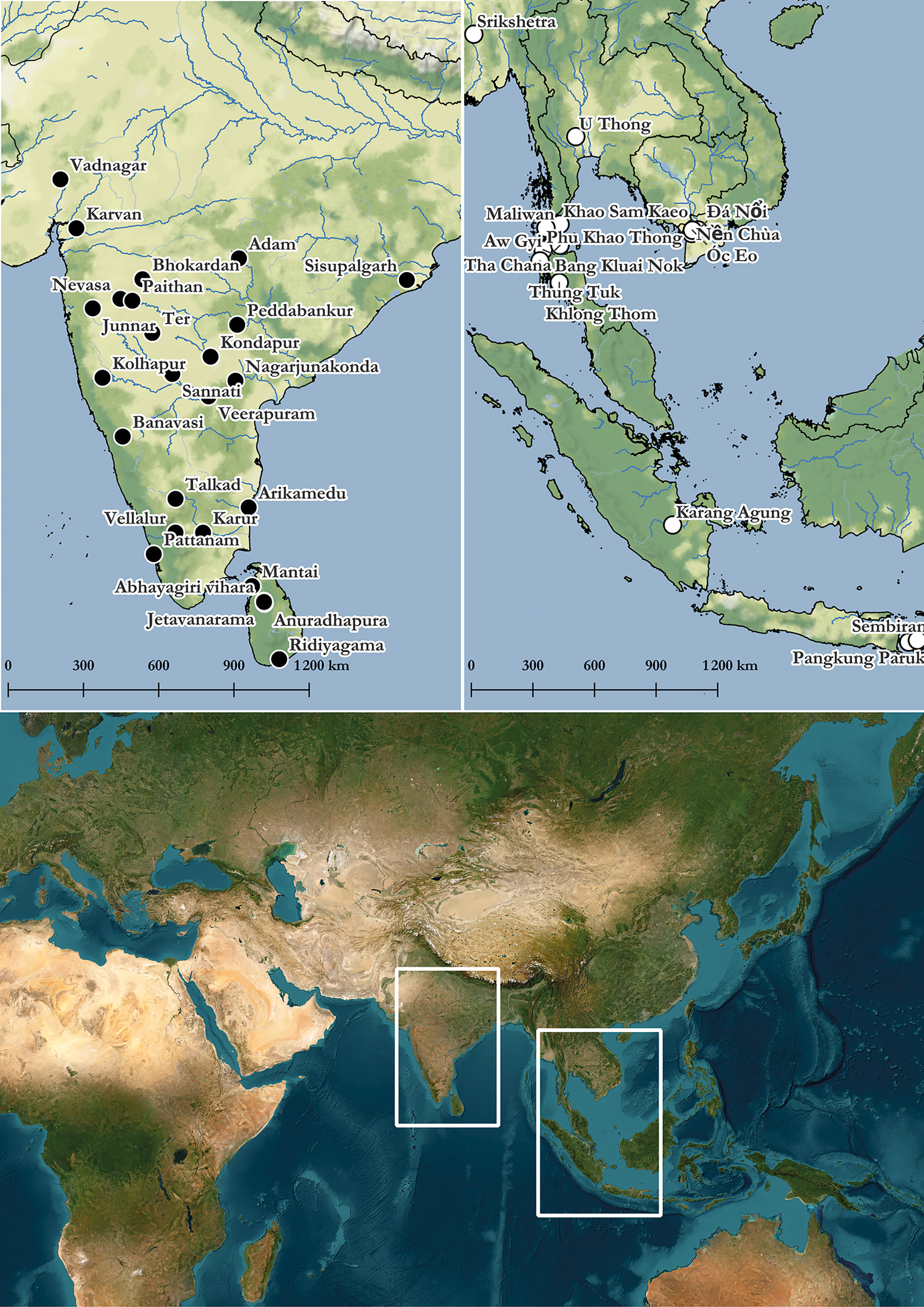
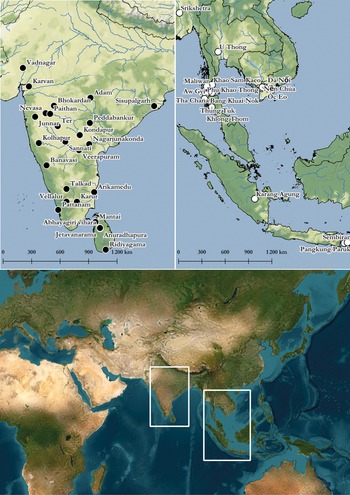
The aim is to compare imported and inspired objects. Similarities may point to sub-regions in South Asia as sources of Roman imports and inspirations in Southeast Asia. Differences can shed light on potential closer regional ties and object preferences. We emphasize the role of local and regional choices in shaping the distribution of imports and inspired items. By analysing spatial pattern distribution in India, Sri Lanka and Southeast Asia, we reveal varying ways foreign materials were integrated into local cultural contexts, including differences in how motifs and objects were recontextualized or raw materials reused. This study reveals that Southeast Asia engaged in a selective and localized appropriation of Roman and South Asian material culture, adapting foreign objects to fit local materials, aesthetics and symbolic systems. Rather than importing large quantities, as in South Asia, Southeast Asia communities reinterpreted selected items—such as coin pendants and engraved gems—into hybrid forms blending Roman and Indic elements. This led to divergent trajectories: while both regions integrated Mediterranean objects, Southeast Asia did so through creative transformation and regional innovation—primarily filtered by South Asia —reflecting different cultural priorities and forms of engagement with global trade networks (Fig. 1).
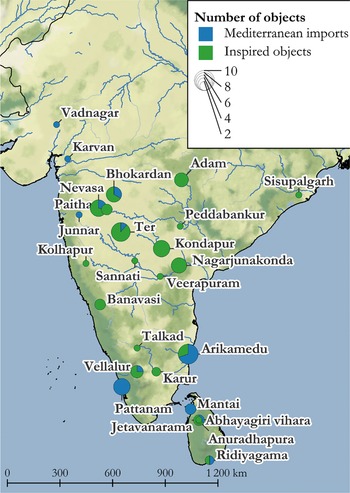
General map of the study areas and examined sites.
Methodology
We created an expandable database into which we included data gathered from excavations, publications, museum visits, excavation reports and site analyses (see Supplementary material).
In Southeast Asia, most Roman and related materials—though often lacking secure context—are recent finds. In contrast, much of the data from South Asia comes from old collections, many of which are now lost and known only through reports or catalogues. Given their importance, some lost South Asian artefacts were included in this study, on the condition that illustrations were available.
The exact number of artefacts is sometimes unknown. Identical items from the same site without distinguishing features are listed as entries, with quantities noted when possible—especially for beads and glass fragments. The database includes 78 entries from Southeast Asia (of which five represent recently studied new materials) and 90 from South Asia, covering over 300 objects. Each entry includes identification, description, likely origin, estimated production and site dates, and bibliographic references. Materials from Southeast Asia cover a greater area than those from South Asia, but as expected, the number of sites and entries are fewer in the case of Southeast Asia (26 South Asia sites with 90 entries versus 16 Southeast Asia sites with 78 entries). The table excludes objects lacking basic information, such as many Mediterranean glass fragments from Southeast Asia and South Asia. Coin adaptations from sites like Kondapur and Tirukoilur were also excluded for this reason (Nagaswamy Reference Nagaswamy1995, 24–5; Suresh Reference Suresh2004, 167). The so-called Augustus intaglio from Arikamedu was omitted as it is lost and lacks visual documentation (Wheeler et al. Reference Wheeler, Ghosh and Deva1946, 21). A few exceptions were made for objects without images but with detailed descriptions (e.g. the coin adaptation from Veerapuram). Items likely arriving in post-Roman times—such as certain Roman coins from Southeast Asia (Hoppál et al. Reference Hoppál, Bellina and Dussubieux2024, 295) and beads from Malaysia (Francis Reference Francis2002, 89–90 were also excluded, as were materials postdating the fifth–sixth centuries (with the exception of the previously mentioned coin adaptations from Southeast Asia) and those with uncertain Roman attribution.
Southeast Asia and South Asia private collections keep several other potentially Mediterranean or related objects: many of those were not included to the database either because of lack of accessibility or because their finding site is unknown. This is the case with beads having unknown provenance bought in the modern town of Kawthaung, on the Thai–Myanmar border (Borell Reference Borell, Coutinho, Vilariguez and Medici2025, 39, fig. 3, 40; Lankton & Gratuze Reference Lankton, Gratuze, Pongpanich and Thinapong2019, 72, 74).
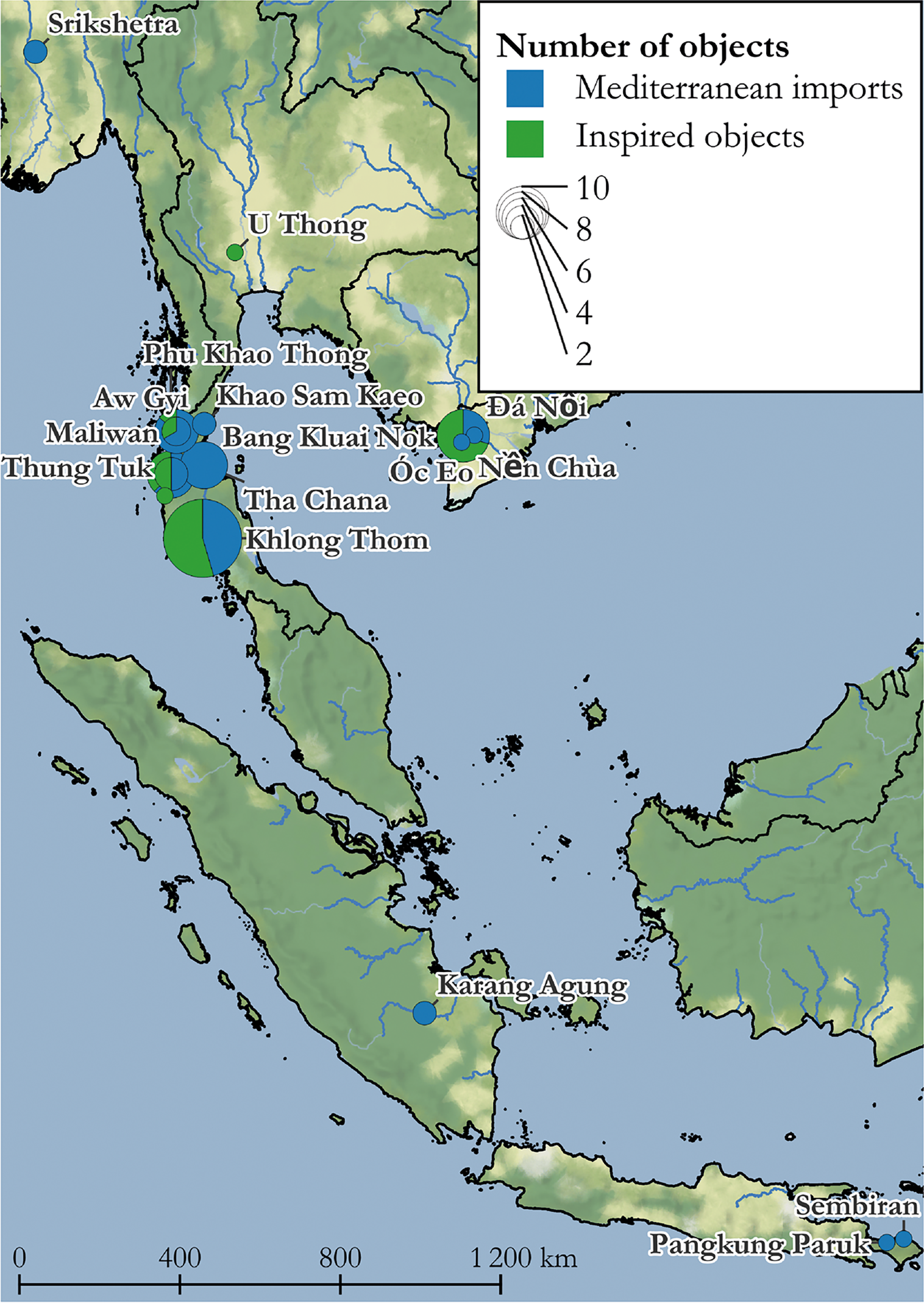
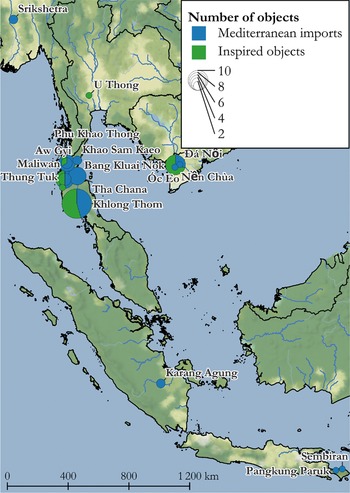
Proportional distribution of Mediterranean imports and inspired objects in Southeast Asia.
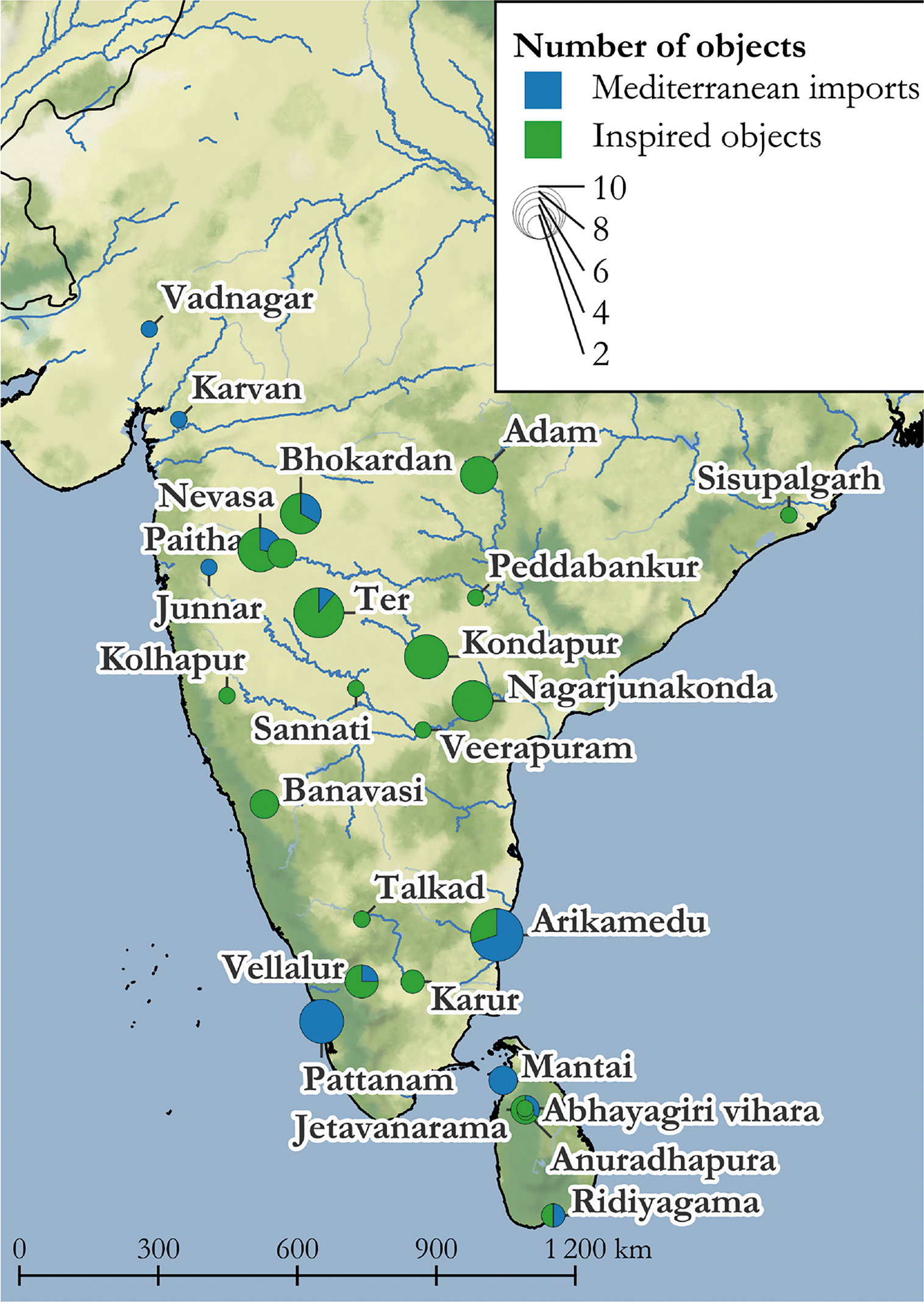
Proportional distribution of Mediterranean imports and inspired objects in South Asia.
We have excluded objects whose evolution likely resulted from Mediterranean influence that triggered local changes in practice. This may apply to key-rings and inscribed rings in southern India. In the early historic period, especially in Karur, the Cēra capital, a new type of jewellery emerged, mimicking second-century ce Roman key-rings but featuring local motifs like pūrnaghata or nagaraja. These rings, previously unknown in India, likely appeared with the arrival of Roman merchants. Likewise, a group of gold, silver and copper-alloy rings and seals (first century bce–first century ce) bearing names and symbols shows strong parallels with contemporary Roman types. Inspired objects adapted from different raw materials (adaptations of adaptations), e.g. from terracotta to engraved gems, were also omitted. This is the case with the quartz intaglio depicting a woman with stretched legs from Jetavanarama resembling terracotta figurines from Egypt and the Deccan (de Saxcé Reference de Saxcé2015, 240). It represents a motif extremely popular in Central India, especially on low-reliefs, called lajjā-gaurī, and being a symbol of fertility. In Egypt, the representation is found on small figurines of bronze or terracotta from the second century bce onwards (Török Reference Török1995, 132) and it is frequent in India in the first century bce and after.
Locally made objects with non-local motifs most likely with an undefinable western connection were also omitted, such as in case of locally made representations of owls (in Southeast Asia e.g.), as the motif itself cannot be directly connected to Roman art.
Sites and dating
Three periods
Earliest sites: fourth century bce–first century ce
Early sites: from the last centuries bce
Later sites: from the early centuries ce or later
Southeast Asia
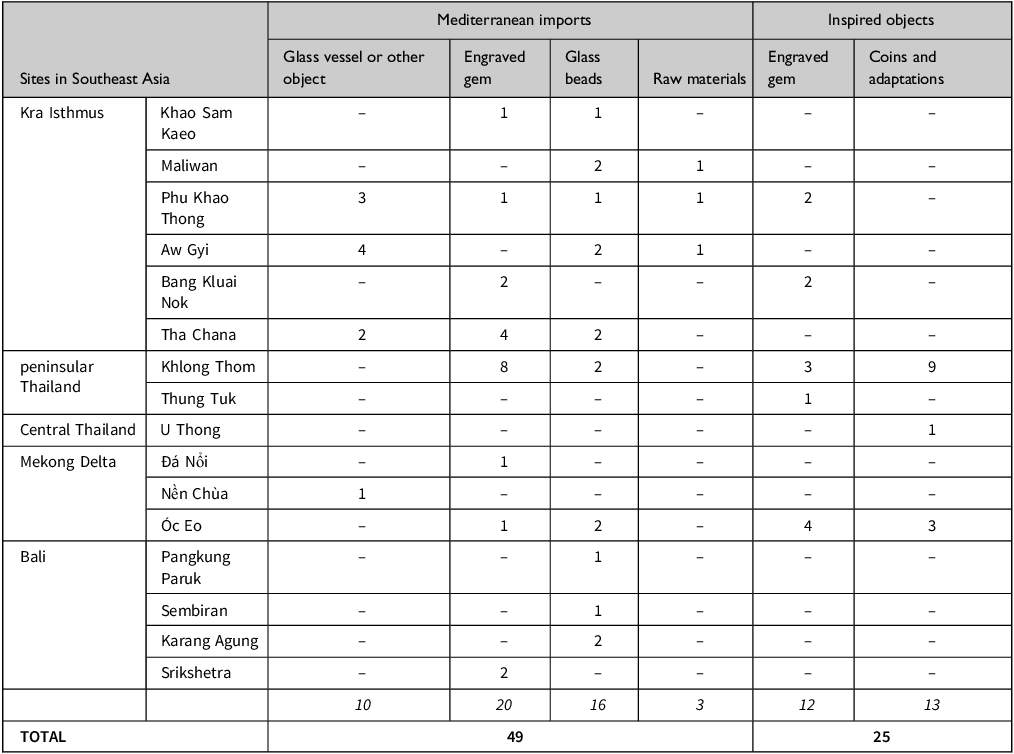
Materials come from 16 different sites (Fig. 2) located in the following regions: (central) Myanmar, (central) Thailand, Kra Isthmus (Thailand and Myanmar), peninsular Thailand, broader Mekong Delta region (southern Vietnam and Cambodia), Island Southeast Asia (Bali and Sumatra). Objects from the Isthmus of Kra have generally a better context that we will describe first before discussing more quickly the context of the artefacts from the other regions of Southeast Asia included in this study.
Sites from the Isthmus of Kra
A large proportion of the original evidence connected to the Mediterranean comes from the Thailand and Myanmar sections of the Kra Isthmus. It is there that the French Archaeological Mission in peninsular Thailand–Myanmar (FAMPTM) had been working since 2005 and investigated 36 sites, some intensively, while others are known from survey and surface collections. Footnote 1 A total of seven port-settlements were investigated, each providing important information on craft production and distribution. 105 radiocarbon dates were obtained from various organic materials, mainly charcoal; 77 come from settlements, mostly Khao Sam Kaeo in Thailand and Maliwan in southern Myanmar. A few contextualized Mediterranean and related materials came from these excavations, some in the form of imports, others in the form of what we refer to as hybridized materials, i.e. objects that combine Western and local elements.
The excavations of Khao Sam Kaeo (Chumphon province), Maliwan and Aw Gyi (Kawthaung, Tanintharyi) (Bellina Reference Bellina2017; Bellina et al. Reference Bellina, Win and Htwe2018) yielded a number of simple, undecorated, mass-produced objects the Mediterranean origin of which could only be revealed through laboratory analyses. Phu Khao Thong and Bang Kluai Nok formed part of a like complex and were surveyed on several occasions (Bellina et al. Reference Bellina, Silapanth, Chaisuwan, Revire and Murphy2014; Chaisuwan Reference Chaisuwan, Manguin, Mani and Wade2011); ceramics and glass materials, as well as archaeobotanical samplings, were analysed (Bouvet Reference Bouvet and Bellina2017; Castillo Cobo et al. Reference Castillo Cobo, Bellina and Fuller2016; Dussubieux et al. Reference Dussubieux, Lankton, Bellina-Pryce, Chaisuwan, Tjoa-Bonatz and Reinecke2012).
All of the above port-settlements, except Bang Kluai Nok, yielded large amounts of remains of craft industries whose products were distributed locally as well as regionally as far as the Philippines. Khao Sam Kaeo emerged as the earliest cosmopolitan incipient city-state acting as the ‘inter-regional’ market place for a confederation that included Khao Sek (Bellina Reference Bellina2018) and other feeding points and relay stations. Maliwan, contemporaneous to Khao Sam Kaeo, was also an early walled port-city (Bellina Reference Bellina2018; Reference Bellina, Higham and Nam2022). Phu Khao Thong was probably part of a complex including the neighbouring settlement of Bang Kluai Nok (Chaisuwan Reference Chaisuwan, Manguin, Mani and Wade2011; Bellina et al. Reference Bellina, Silapanth, Chaisuwan, Revire and Murphy2014).
Thung Tuk and Khlong Thom (or Khuan Lukpad, i.e. ‘Bead Mound’) are both situated further south in peninsular Thailand. The latter hosted several craft activities and local coinage probably associated to a trading polity, an early Tamil-Brāhmī inscription, and was probably contemporaneous to Óc Eo in southern Vietnam, near the Mekong Delta (Borell Reference Borell, Pongpanich and Thinapong2019; Chaisuwan Reference Chaisuwan, Manguin, Mani and Wade2011, 84–6; Veraprasert Reference Veraprasert1987). Thung Tuk flourished as a significant trading port during the later centuries of the first millennium (Chaisuwan & Naiyawat Reference Chaisuwan and Naiyawat2009).
Other sites in Southeast Asia
Later sites: from the early centuries ce or later (Srikshetra; Óc Eo, Đá Nổi and Nền Chùa; U Thong; Pangkung Paruk, Sembiran and Karung Agung).
There are no early sites yielding Mediterranean and related materials included into our database. All sites outside the Isthmus of Kra can be considered as later, such as those located in Central Myanmar, the Pyu urban settlement and regional centre of Srikshetra.
The only site from Central Thailand included into the database is U Thong, a major urban trading, political and ritual centre of the Dvāravatī period from the early fourth/sixth to the tenth centuries ce (Khunshong Reference Khunshong and Tan2018, 1–4). However, the single coin adaptation from the site might be of post-fifth-century date.
Óc Eo was occupied as early as the late centuries bce but only arose as a powerful regional centre during the Funan period (c. first–sixth centuries ce), interpreted as the early phase of the Khmer polity (Manguin & Stark Reference Manguin, Stark, Higham and Nam2022; Shewan et al. Reference Shewan, Ikehara-Quebral and Stark2020; Stark Reference Stark2006). A few other contemporaneous sites of the Óc Eo culture also yielded Mediterranean materials, namely, Nền Chùa, Đá Nổi, all from the Mekong Delta (Bùi Reference Bùi2023). Nền Chùa, the Takev of Malleret, is considered to be the port of Óc Eo (Malleret Reference Malleret1959–63, 6).
In Island Southeast Asia, the only sites yielding Mediterranean materials with a certain degree of reliability are Pangkung Paruk and Sembiran in Bali, Indonesia. Both sites benefited from excavations and are dated to the early first centuries ce (Ardika Reference Ardika, Hauser-Schäublin and Ardika2008; Calo et al. Reference Calo, Bellwood, Lankton, Reinecke, Bawono and Prasetyo2020; Reference Calo, Prasetyo and Bellwood2015). Karang Agung, a pre-Srivijayan port-settlement in South Sumatra, yielded two early glass beads with Roman-Sb compositions (first–fourth centuries ce) (Dussubieux et al. Reference Dussubieux, Bellina and Sofianin press).
South Asia
The materials come from 26 sites located in India and Sri Lanka (Fig. 3). As most of the sites show a long, continuous period of occupation, it was not possible to distinguish between early and later sites, as was done in Southeast Asia. The time-frame for artefacts in the database has been assigned on a case-by-case basis, after careful (re-)examination of the stratigraphy at each site.
Peninsular India
As most of the sites are settlements or port sites and thus, unlike tombs, show a long period of occupation, our classification relies on the strata in which imported or inspired material has been unearthed. Most imports from the Mediterranean are discovered in contexts dated from the first and second centuries ce, and to a lesser extent to the first century bce, at the very beginning of the direct maritime contacts. The inspired objects, though, such as the terracotta bullae, seem to have been manufactured at later dates, until the third or fourth centuries: their exact context will be discussed on a case-by-case basis depending on each site.
Among sites in Central India, Ter occupies a central place in the north–south and east–west networks: crossroads and active trade centre between the third century bce and the third century ce, it is notable for its important collection of glass (beads and bangles) and terracotta figurines (Chapekar Reference Chapekar1960). Connected to Ter and also mentioned in the well-known contemporary itinerary the Periplus of the Erythraean Sea is the city of Paithan (second century bce–eighth century ce), capital of the Sātavāhana dynasty: as a political and economic centre, it played a major role in long-distance as well as local exchanges in the whole Deccan region (Kennet et al. Reference Kennet, Varaprasada Rao and Kasturi Bai2020; Morwanchikar Reference Morwanchikar1985). Kondapur (second century bce–fourth century ce) to the south as well as Bhokardan and Nevasa to the north constitute secondary urban centres mainly active during the same period (third century bce–third century ce, with a longer occupation for Nevasa); they revealed Mediterranean imports (amphorae in Nevasa) and clay bullae (Deo Reference Deo1974; Sankalia et al. Reference Sankalia, Deo, Ansari and Ehrhardt1960; Yazdani Reference Yazdani1941). Junnar (second century bce–seventh century ce) is located close to the Naneghat pass that constitutes the gateway to the western coast from the Deccan plateau through the Western Ghats. The site is a crucial point of passage for imports and exports.
To the north of these sites but connected to the trade routes of the long-distance trade, the site of Adam shows an occupation from the Chalcolithic period and develops as an important urban centre between the fourth century bce and the third century ce (Nath Reference Nath2016). Closer to the coast, in Kolhapur (second century bce–ninth century ce), were also discovered amphorae pieces and other imports, among them the famous hoard containing bronzes from Campania (of the first century ce for the most part: de Puma Reference de Puma, Begley and de Puma1991; Sankalia & Dikshit Reference Sankalia and Dikshit1952). The site of Karvan, located near the major trading hub of the period—the harbour of Barygaza (Broach)—has shown occupation from the second century ce and the discovery of an imported cameo, despite limited archaeological explorations. Another site that yielded recently analysed new materials is Vadnagar in Gujarat, where two beads of Mediterranean composition were discovered (Dussubieux et al. Reference Dussubieux, Kanungo, Rawat and Sharma2025).
In the Krishna Valley, Nagarjunakonda (third century ce–sixteenth century ce) and Sannati/Kannaganahalli (third century bce–third century ce) were major Buddhist establishments during the Sātavāhana and Ikṣvāku dynasties and were highly connected to the other sites in the region (Poonacha Reference Poonacha2011; Soundararajan Reference Soundararajan2006; Nakanishi & von Hinüber Reference Nakanishi and von Hinüber2014). For instance, Veerapuram (fifth century bce–fourth century ce) and Banavasi (third century bce–sixth century ce) further west participate in the same network of Buddhist sites involved in trading activities (Narasimha Murthy Reference Narasimha Murthy, Devaraj and Krishnappa1997; Sastri et al. Reference Sastri, Kasturi Bai and Vara Prasada Rao1984). In South India, Arikamedu (third century bce at least–sixth century ce) and Pattanam (tenth century bce–present) stand out as the main emporia during early historic times, respectively on the eastern and western coast (Begley et al. Reference Begley, Francis and Karashima2004; Reference Begley, Francis and Mahadevan1996; Cherian Reference Cherian2016). The archaeological material unearthed at both sites indicates long-distance connections from the Mediterranean. Notably, large quantities of amphorae and glass objects were imported from the west. Karaikadu, a few kilometres south of Arikamedu, constitutes a secondary coastal settlement participating in this trade (amphorae were also discovered there).
Inland, the political capital of the Cēra dynasty—Karur (third century bce–fourth century ce) on the river Amaravati—is particularly noteworthy for the quantity of coins (gold, silver and copper) and jewels found both during excavations and fortuitously in the riverbed (Nagaswamy Reference Nagaswamy1995). Vellalur and Talkad are also locations of stray finds of jewels and/or moulds during early historic times.
Sri Lanka
In contrast, in Sri Lanka, the majority of the western finds belong to late contexts of the fourth and fifth centuries, when the direct trade pattern shifted from India to the island. The ancient capital of Anuradhapura, in the centre, was particularly active from the fourth century bce to the eleventh century ce (Coningham Reference Coningham1999; Reference Coningham2006; Deraniyagala Reference Deraniyagala1972) and the seat of important Buddhist monasteries, among which two have yielded Mediterranean material: the Abhayagiri vihara, founded in the first century ce and the Jetavanarama vihara, founded in the third century ce. In the latter site in particular were discovered thousands of glass and stone beads, among which a small proportion comes from the West. (For this reason, Jetavanarama is treated as a separate site in the Supplementary database.)
The site of Ridiyagama is located on the southeastern coastal zone of Sri Lanka, in a cluster of harbours and political centres of the kingdom of Ruhuna (with Tissamaharama as a capital: Weisshaar et al. Reference Weisshaar, Roth and Wijeyapala2001). Ridiyagama’s occupation spans from the fourth century bce to the seventh century ce; it is an inland trade and manufacturing centre, especially for iron and semi-precious stone beads.
Results
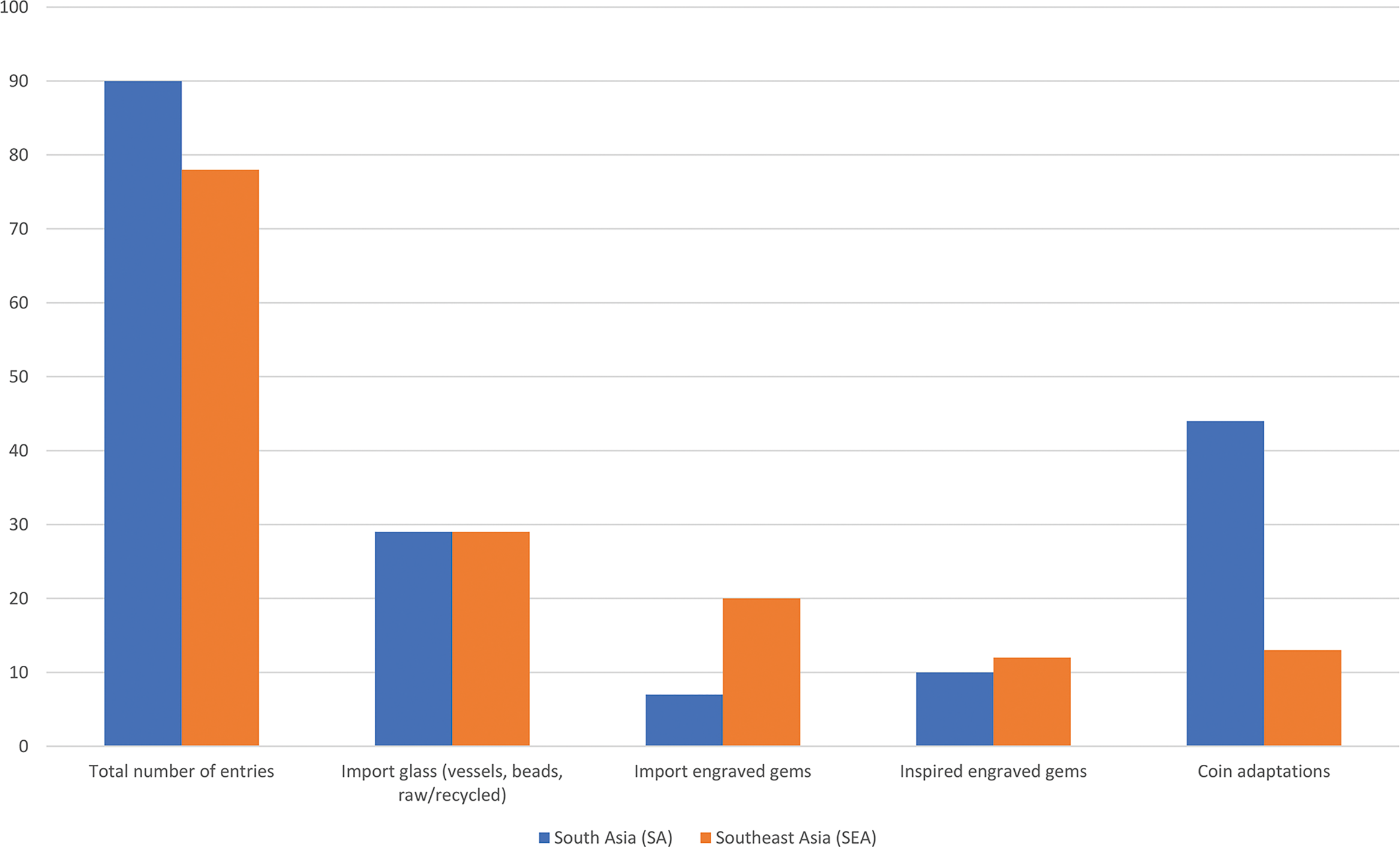
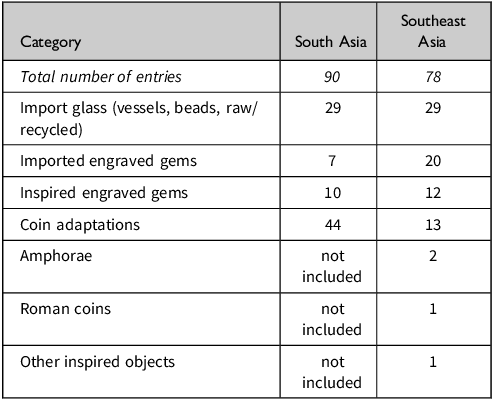
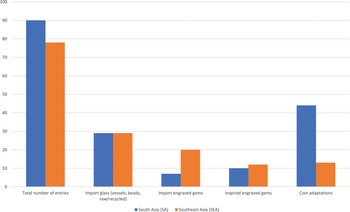
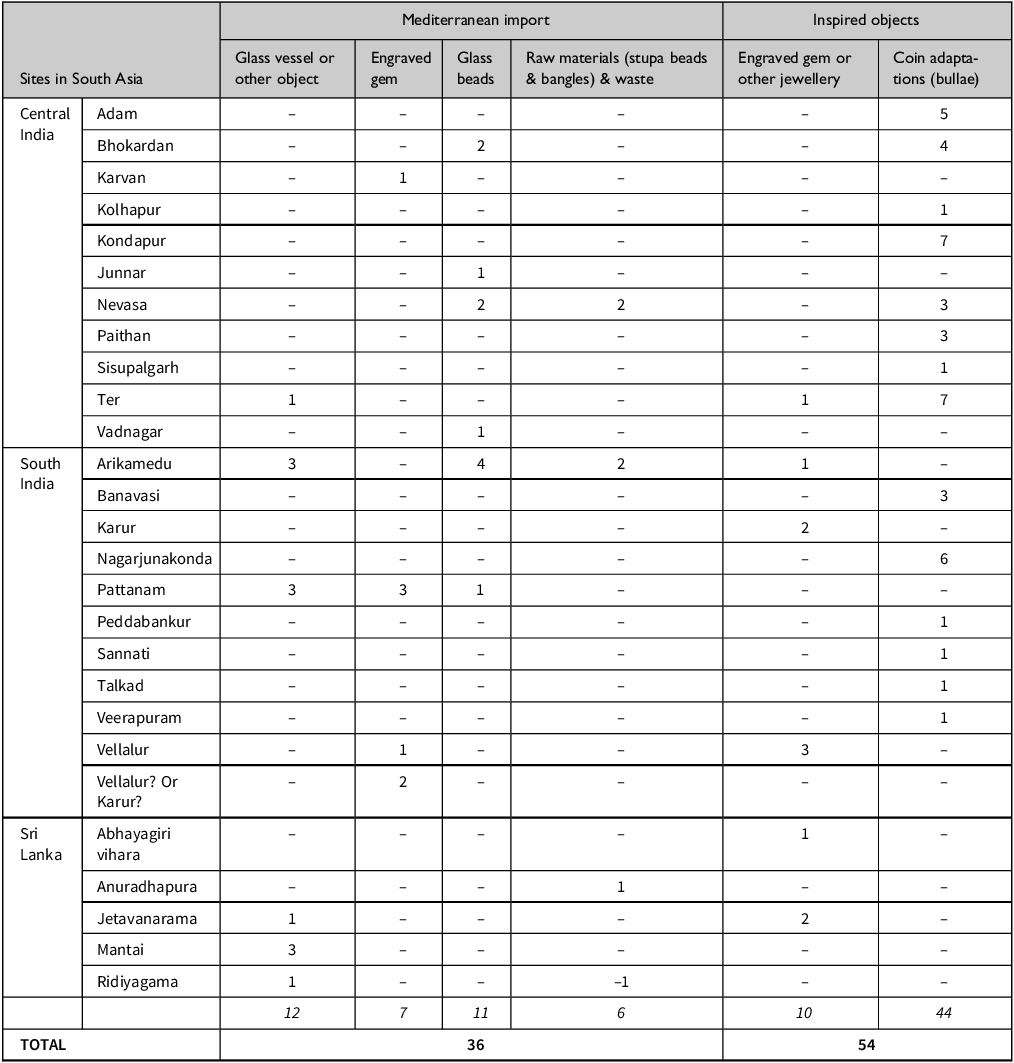
Table 1 summarizes comparisons of materials found in both South Asia and Southeast Asia (Fig. 4).
Comparative distribution of objects discussed in the text from Southeast Asia and South Asia.
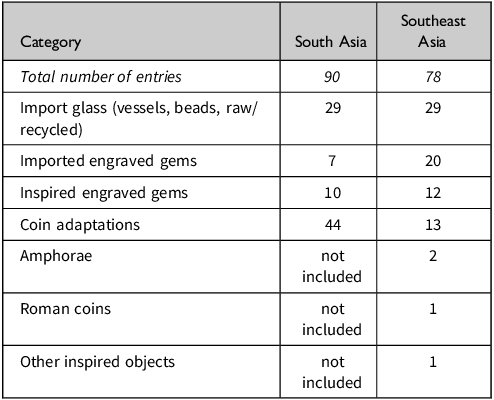
Comparative table of imported and inspired materials.
On contexts and varieties of artefacts
The main contrast between South Asia and Southeast Asia in terms of Mediterranean artefacts resides in the quantity and diversity of imports retrieved from South Asia, which are mainly from the early Roman period in India and the late Roman period in Sri Lanka. These include amphorae, terra sigillata, glass vessels, bronze statues and vessels, terracotta lamps and, of course, coin hoards (amounting to around 12,000 Early Roman gold and silver coins from India and 200,000 Late Roman bronze coins from Sri Lanka). Most of these objects have a secure context, even if they came from old excavations (in our Supplementary database, 66 out of the 90 entries). This is in sharp contrast with Southeast Asia where, except glass, these materials have rarely (amphorae) or never been reported, as is the case for terra sigillata and other types of Roman pottery, for bronze artefacts and inspired terracotta figurines. In Southeast Asia, the vast majority of materials are out of context and imports in general are under-represented compared to South Asia.
For this reason, only materials that could be found both in South Asia and Southeast Asia were compared in this study. These include:
imports: glass vessels, beads and raw materials, engraved gems, and other ornaments
inspired engraved gems and coin adaptations
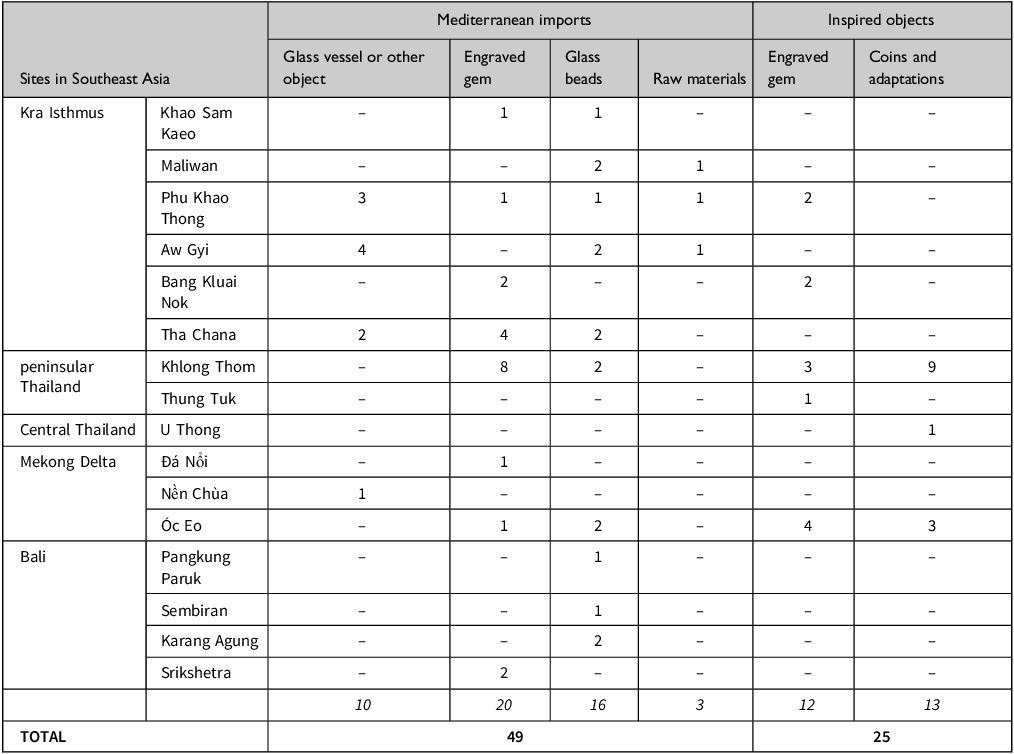
Although there are more entries in Southeast Asia (52) than in South Asia (36), the number of individual imports is still higher in South Asia, particularly because of the 114 individual import vessel fragments from Pattanam (Tables 2–3).
Synthesis of objects from Southeast Asia discussed in the text.
Synthesis of objects from South Asia discussed in the text.
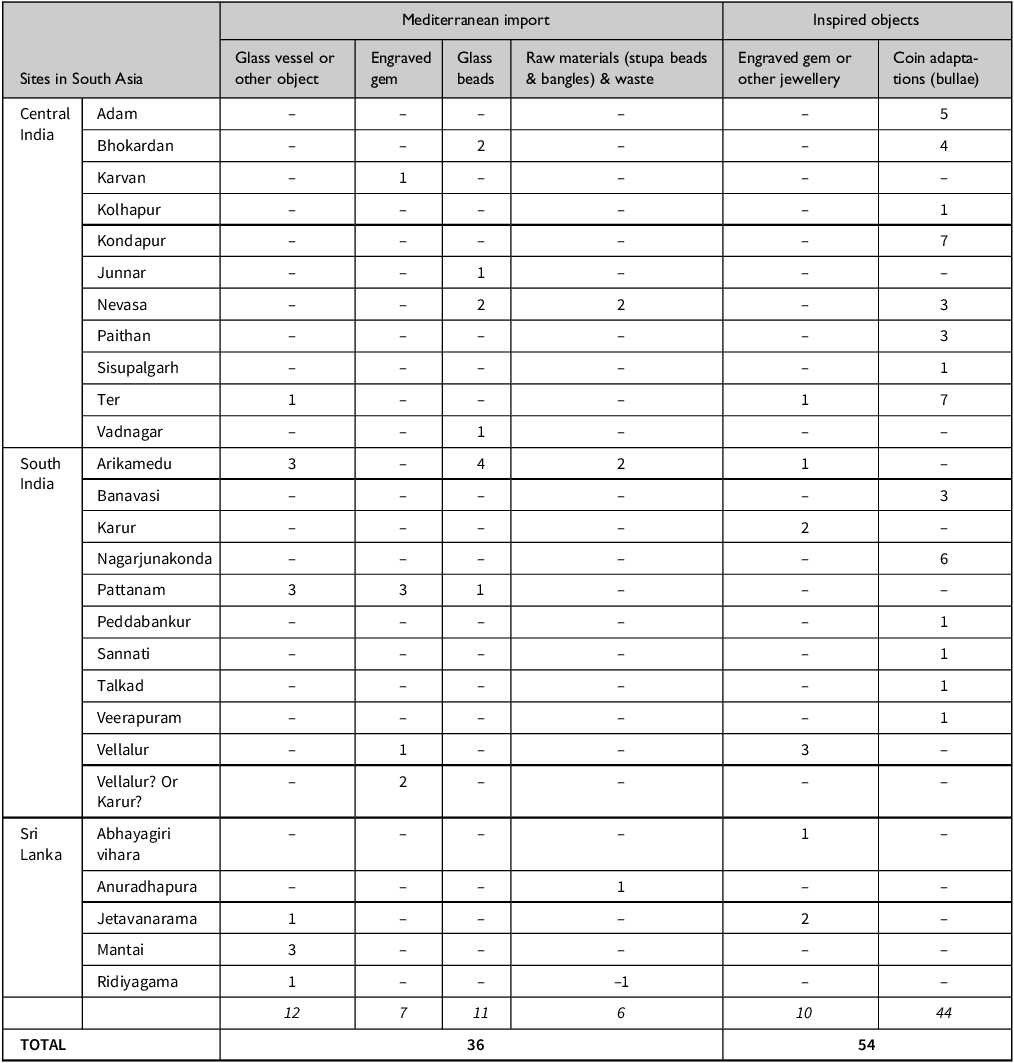
The number of inspired object entries is greater in South Asia than in Southeast Asia (54 versus 26). Those consist mostly of coin adaptations (44 entries), while in Southeast Asia the number of inspired engraved gems and coin adaptations is similar (12 versus 13).
About the general context at the scale of the site, both imported and inspired materials came from ports in Southeast Asia, whereas in South Asia, ports, settlements and religious structures yielded Roman and related artefacts. In other words, the types of sites yielding Roman import and related artefacts are more diverse in South Asia than in Southeast Asia.
Glass materials
Some glass artifacts were submitted to elemental analysis which helps determine glass recipes, sometimes region of production or chronology. It is possible to distinguish this way glass unambiguously produced in the Mediterranean area from the South Asian region. For Mediterranean glass, looking at the concentrations of different oxides related to the source of silica: SiO2, Al2O3 and TiO2, it is possible to separate glass made in Egypt from glass made in the Levantine area at different periods (Freestone Reference Freestone, Klimscha, Karlsen, Hansen and Renn2020; Schibille Reference Schibille2021) and to infer dating, although time periods are often quite wide, for example in the case of Roman Mn glass that is dated from the first to the fourth century ce.
We focus here on materials found in both South Asia and Southeast Asia and compare them in detail. In Southeast Asia, glass—whether as raw material, vessel fragments, or beads—is the most frequently reported Mediterranean import (29 out of 78 entries). In South Asia, fewer compositional analyses make it harder to identify Mediterranean glass, so only vessels identifiable as Roman by typology or style are considered. Overall, Mediterranean glass appears rarer in South Asia (29 out of 90 entries), especially compared to other imports like Roman coins or pottery. Locally made glass inspired by Roman forms may also exist, but identifying it requires further comparative analysis.
Despite research imbalances, Southeast Asia and South Asia show some shared features in imported glass, most of which dates to the early period (first century bce–first century ce).
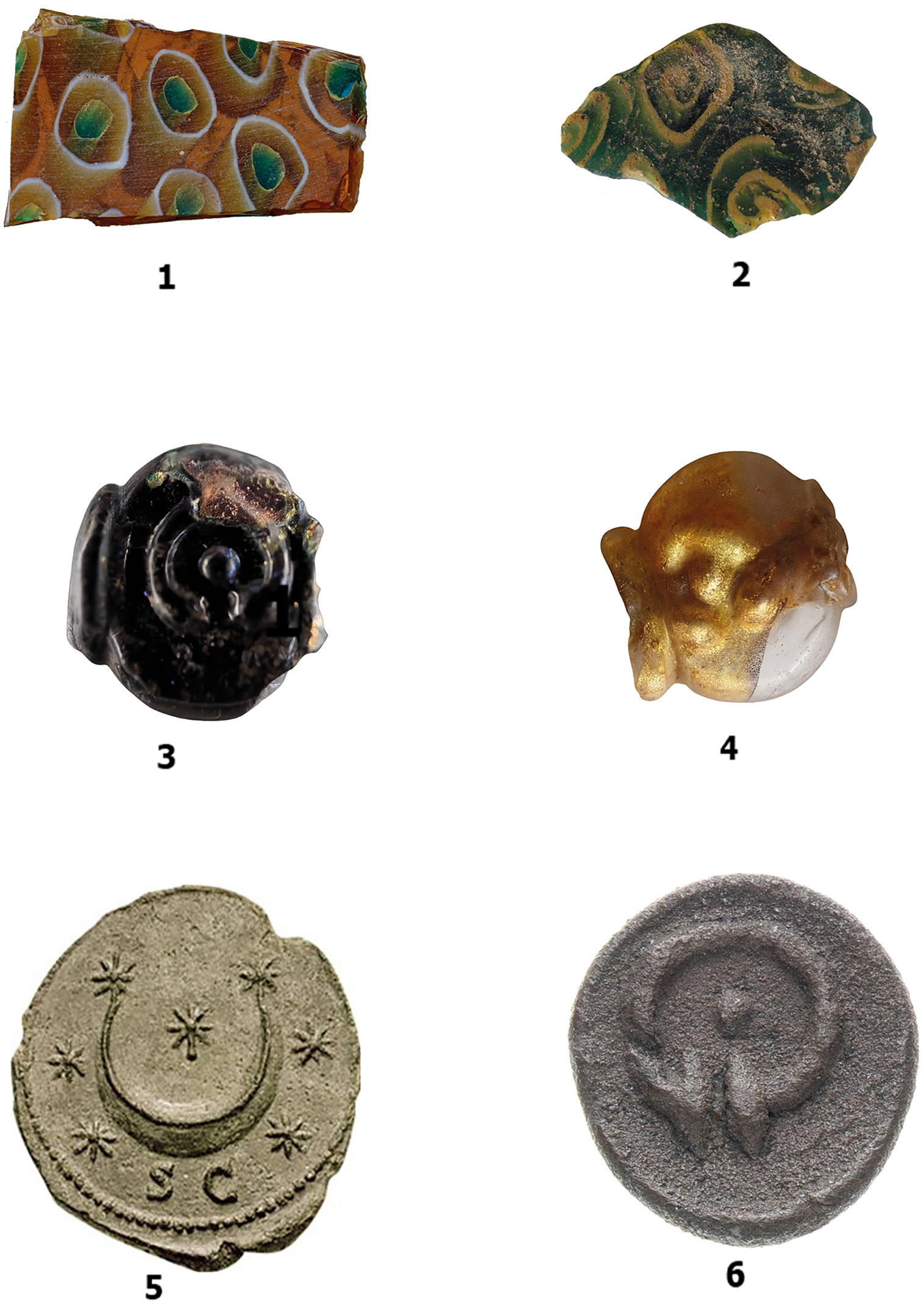
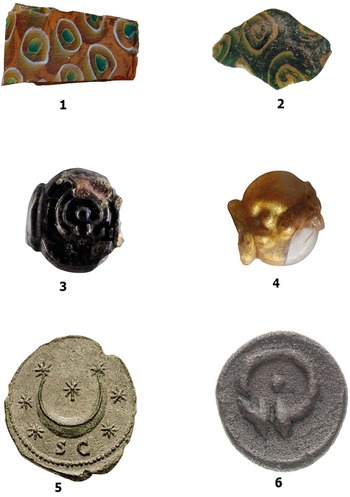
Vessels: Early Roman high-quality glass vessels (millefiori glass and ribbed bowls) are present in both regions. In Southeast Asia, these were typically discovered at early port sites (Phu Khao Thong, Aw Gyi and Tha Chana), while in South Asia context is more diverse, with early port sites (Arikamedu and Pattanam) but also Buddhist sites, like Jetavanarama or Ter. Moreover, despite the similar number of entries (12 entries from South Asia versus 10 from Southeast Asia), the quantity of individual glass vessel fragments also differs, because some of the port sites in South Asia, Pattanam in particular, yielded hundreds of Mediterranean glass vessel fragments. This contrasts with Southeast Asia, where the number of individual glass vessel fragments is relatively small. In Southeast Asia this could be the result not only of less—or more likely no—direct contact with the Roman world compared to sites like Pattanam, but might also be due to recycling of Mediterranean glass vessels (Fig. 5.1–2).
Mediterranean imported glass materials from Southeast Asia and South Asia with iconographic parallels. Objects are displayed at individual scales. (5.1) Mosaic glass vessel fragment from Pattanam (after Cherian 2014); (5.2) mosaic glass vessel fragment from Phu Khao Thong (after a photograph by B. Chaisuwan); (5.3) decorated bead from Junnar, after a photograph by J. Lankton); (5.4) decorated bead from Aw Gyi (after a photograph by B. Bellina); (5.5) lunula on the reverse of a coin of Diva Faustina Senior (courtesy of the Classical Numismatic Group https://www.cngcoins.com/); (5.6) torcs on a Celtic coin. (courtesy of Macho & Chlapovič Numismatics http://www.machochlapovic.com/).
Beads: Beads of Mediterranean origin are relatively frequent in Southeast Asia (16). In South Asia, statistics based on the chemical analysis of assemblages from numerous sites show that drawn beads of the Indo-Pacific type made of natron glass represent between 1 and 3 per cent of analysed samples (de Saxcé Reference de Saxcé2015). In this study, we have singled out certain types of beads that could be studied individually (11 out of the 90 entries). Three iconic beads are discussed here: the Roman face and mosaic beads, the gold glass beads, decorated and undecorated.
The Roman face and mosaic beads (3 entries of face beads concentrated on the Kra Isthmus and 2 entries of mosaic beads) were found in early port sites of Southeast Asia only. They have not been identified in South Asia. We cannot yet explain this difference.
Gold glass beads are present in both regions. There are 4 entries in South Asia and 9 entries in Southeast Asia. They are mostly found in port sites, namely Arikamedu, Pattanam and Junnar from South Asia. In the case of Southeast Asia, gold glass beads are present both at early sites (Kra Isthmus), as well as later sites (Óc Eo in the Mekong delta and Pangkung Paruk in Bali and Karang Agung in Sumatra).
Among those there is a decorated type that was reported from South Asia (Junnar and Arikamedu). These tabular, collared beads feature a penannular motif with thickened terminals and a central dot. One Junnar bead, made with gold-foil technique and natron glass of Mediterranean origin, was analysed (Lankton & Gratuze Reference Lankton and Gratuze2013), as was one of seven similar beads from Arikamedu, revealing Syro-Palestinian composition (Casal Reference Casal1949). Notably, decoration appears on only one side in the Junnar example and three Arikamedu beads (Fig. 5.3). Identical specimens were found at Khlong Thom, Tha Chana and Aw Gyi (Borell Reference Borell, Coutinho, Vilariguez and Medici2025; Dussubieux & Bellina Reference Dussubieux and Bellina2021, but not analysed; see Figure 5.4). Comparable, unstudied examples have been reported from Pattanam (Cherian et al. Reference Cherian, Tomber, Abraham, Giumlia-Mair, Kelly and Nayar2016) and the antiquities market, with Afghanistan tentatively suggested as a provenance. Casal proposed a triratna identification for the motif, implying local decoration, but the shape differs significantly and such modification would have been technically difficult. Borell (Reference Borell, Coutinho, Vilariguez and Medici2025, 40) alternatively identifies the motif as a Roman lunula, though this does not explain the thickening terminals. Stylized lunulas with stars are known from (mostly but not exclusively) Near Eastern Roman contexts, but differ in detail (Fig. 5.5). Celtic torcs—with similar thickened ends and central dots—offer a closer parallel, though rare after the first century bce (Fig. 5.6). To date, decorated beads of this kind are found almost exclusively in Asia, with only one Western example known from a first-century ce cremation burial in the Barbaricum (Voss Reference Voss1998). Their rarity in Roman contexts suggests they were likely produced for external communities. As with Roman coins bearing lunula motifs—more frequently found in Sarmatian regions (Vida Reference Vida2025)—these beads may have undergone local reinterpretation. The closest symbolic match might be the linga-yoni, supporting Borell’s hypothesis of their use as amulets linked to fertility cults such as the lajjā-gaurī.
Raw glass or recycled glass: Mediterranean raw glass has been found at the early port sites of the Kra Isthmus. Waste and locally made finished objects, such as stupa beads and bracelets, were found in Central and South India, as well as in Sri Lanka (6 entries from South Asia versus 3 from Southeast Asia).
Engraved gems and other ornaments
Materials: While Southeast Asia only yielded engraved gems (intaglios and cameos), South Asia shows greater material diversity, including gold signet rings and terracotta ear ornaments.
Provenance: In Southeast Asia engraved gems and other jewellery come mostly from ports and industrial sites. In South Asia, aside from the port site of Pattanam, the richest finds come from inland Karur, the political capital of the Cēra kingdom, and nearby Vellalur. Notably, three intaglios of major iconographic value were excavated at Pattanam, while finds at Karur and Vellalur are stray.
Imports versus locally produced: Imports show similar patterns in both regions, mostly found at early sites—especially in the Kra Isthmus (8/20 in Southeast Asia) and southern India (6/7 in South Asia). In contrast, inspired gems differ: in Southeast Asia, most (8/12) come from later sites in Peninsular Thailand and the Mekong Delta, while in South Asia, most (6/10) come from early South Indian sites, with only one from a later site in Sri Lanka.
Quantity: Southeast Asia yielded a greater number of engraved gems—both imported and inspired—than South Asia (32 versus 17). Accordingly, the number of imported engraved gems from Southeast Asia is also greater than in South Asia (20 versus 7). However, the number of inspired jewelleries is similar (12 from Southeast Asia versus 10 from South Asia). Cameos are underrepresented in both South Asia (1) and Southeast Asia (3).
Raw material: Both regions used similar semi-precious stones, such as carnelian or agate, but rock crystal and jasper can only be found in South Asia, while layered sardonyx and glass are only present in Southeast Asia. Both in South Asia and Southeast Asia carnelian dominates: at least 15 out of 32 cameo and intaglio in Southeast Asia; 5 out of 14 in South Asia. South Asia also yielded gold and terracotta jewellery with figural representations. Those are completely missing from Southeast Asia.
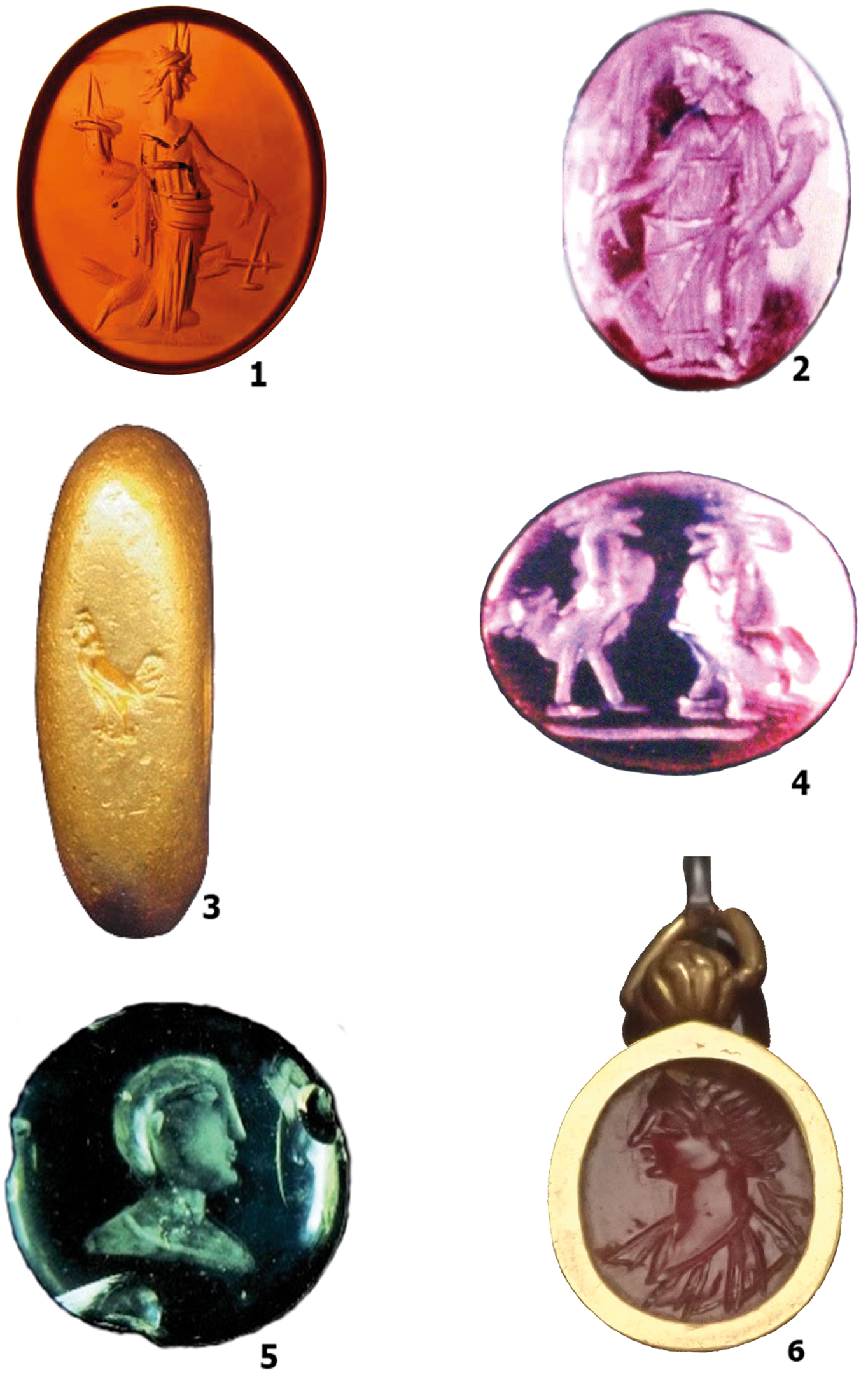
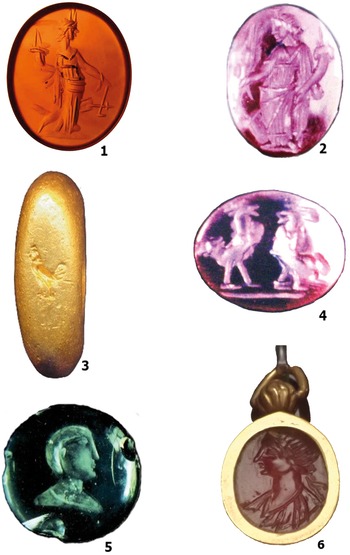
Style: Many of the themes present in South Asia are also found in Southeast Asia, although they occur less frequently in South Asia. Among the motifs shared by both regions are the horse (with or without a rider), Fortuna, and the rooster(s) (Fig. 6.1–4). However, some motifs relatively frequent in Southeast Asia are underrepresented in South Asia, particularly the several intaglios depicting human busts (8 in Southeast Asia versus 2 in South Asia). Other popular themes in Southeast Asia have not been identified in South Asia, for instance the satyrs and bucolic scenes or representations of Mars. On the other hand, some motifs found in South Asia such as the lion or the sphinx have not been found in Southeast Asia.
Quality: The quality of engraved gems also differs. While Southeast Asia yielded a number of high-quality imports of early dates, only one or two of the South Asia imports can be regarded as of higher quality. The Fortuna intaglio from Khlong Thom, for example, is of higher workmanship than a similar piece from Pattanam. This is even more apparent in the case of the inspired objects, as those in South Asia seem to feature less delicate workmanship (Fig. 6.5–6). In general, in South Asia inspired engraved gems adapted Roman elements with some freedom; thus their links to Roman art are less apparent than in the case of Southeast Asia.
Regarding the source of influence, Gandhāran connections of inspired intaglios can be seen in both regions; there are 3 pieces from Southeast Asia and 2 from South Asia. However, two of the Gandhāra-connected pieces in Southeast Asia came from later sites, while the two South Asia pieces are from early sites.
Mediterranean and inspired engraved objects from Southeast Asia and South Asia. Objects are displayed at individual scales. (6.1) Mediterranean intaglio depicting Fortuna from Pattanam (after Cherian 2014); (6.2) Mediterranean intaglio depicting Fortuna from Khlong Thom (after Bouzek & Ondřejová Reference Bouzek and Ondřejová2010); (6.3) Mediterranean gold ring depicting a rooster (after de Saxcé Reference de Saxcé2015); (6.4) Mediterranean intaglio depicting roosters from Khlong Thom (after Bouzek & Ondřejová Reference Bouzek and Ondřejová2010); (6.5) Mediterranean inspired intaglio from Jetavanarama (after Ratnayake Reference Ratnayake1990); (6.6) Mediterranean inspired intaglio from Thung Tuk (after a photograph by B. Bellina).
Coin adaptations
Presence and typology: Southeast Asia presents both pendants and coin adaptations (locally issued coins inspired by Roman designs), whereas such coin adaptations are absent in South Asia (coins issued by Cēra rulers, e.g. from Karur, show profile heads but lack clear Roman influence and are thus excluded; see Vikas Reference Vikas2023, 119). South Asia adaptations are restricted to pendants and bullae (amuletic impressions). In South Asia, imitations and counterfeits (especially from Sri Lanka) are frequent (see e.g. Bopearachchi & Wickremesinhe Reference Bopearachchi and Wickremesinhe1999, 25–6) but not observed in Southeast Asia. A unique South Asian adaptation type is the pendant derived from Ptolemaic coins, absent in Southeast Asia.
Provenance and context: In Southeast Asia coin adaptations originate exclusively from port and industrial sites, mostly Khlong Thom. In South Asia coin adaptations are primarily from Buddhist sites and urban centres, with the majority (32/44 entries) found in controlled archaeological contexts. Some South Asia examples, such as those from Nagarjunakonda, likely had religious or votive functions (de Saxcé Reference de Saxcé2015, 203).
Geographic distribution: In Southeast Asia, the distribution is highly localized; there 13 entries (23 items), mostly from Khlong Thom. In South Asia, the distribution is widely distributed; there are 44 entries (63 items) from Central India (e.g. Kondapur, Ter, Sisupalgarh, 48 objects) and southern India (15 objects). The site with the most finds is Kondapur (24 objects).
Raw materials: Southeast Asia adaptations are exclusively in metal (mainly tin, then gold). South Asia adaptations are predominantly made of clay/terracotta; only a few in metal (gold, copper, lead). Terracotta bullae are absent in Southeast Asia.
Suspension systems: In South Asia, pendants are either double-pierced or moulded with ribbed tubular loops. In Southeast Asia, suspensions consisting of tubular loops are present, but also gold wire and hook-like suspensions, not found in South Asia.
Quantity: In South Asia, there is a greater overall quantity—63 individual objects (41 pendants, 3 stone moulds). In Southeast Asia, there are 23 objects (18 pendants, 1 stone mould, 4 coins for transaction).
Quality and style: Southeast Asia includes both high-quality gold pendants faithfully copying Roman coins (especially Antonine dynasty) and crude tin pendants. Some coins bear localized features (e.g. Brāhmī legends). South Asia yields pendants inspired by Tiberius and Augustus coins, mostly clay, some with relatively accurate iconography and even pseudo-lettering. Metal examples (e.g. from Nagarjunakonda) are rare and stylistically less refined.
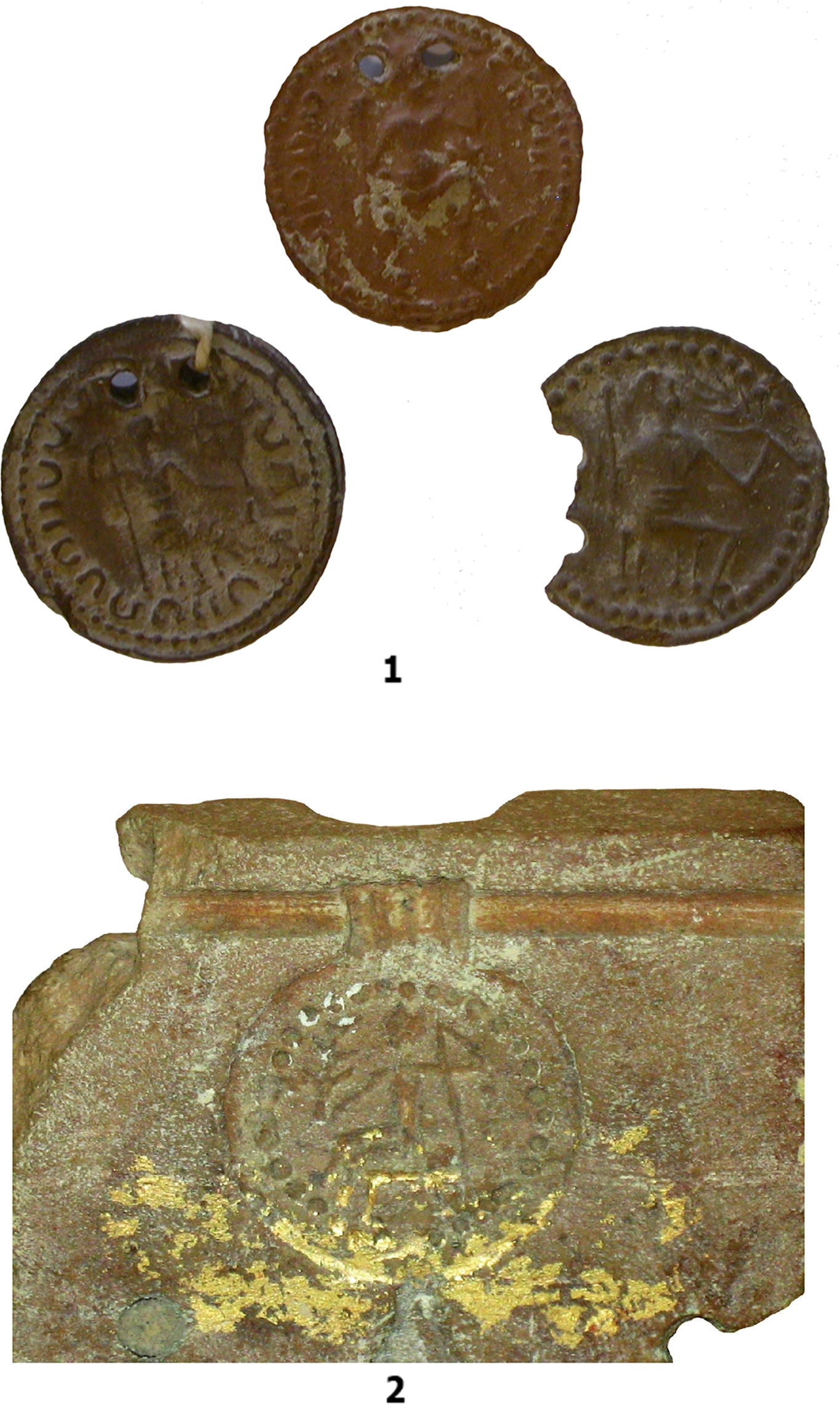
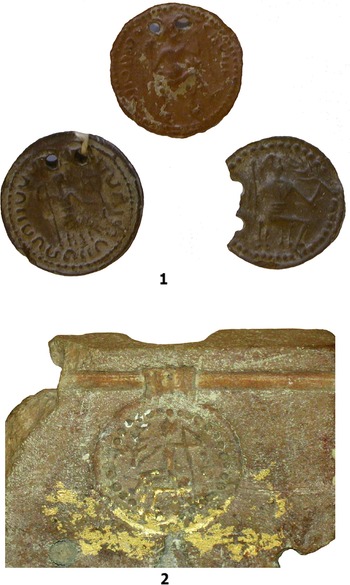
Models and inspirations: Tiberius (PONTIF MAXIM type): Found in both SA (43+2 moulds) and Southeast Asia (4+1 mould) (Fig. 7), with South Asia showing greater typological and technical variety. South Asia pendants (clay, lead) show varying degrees of fidelity, some with legible inscriptions. Southeast Asia versions are cruder and likely locally produced, possibly by Indian craftsmen (Borell Reference Borell2014, 22–3).
Coin adaptations from Southeast Asia and South Asia. Objects are displayed at individual scales. (7.1) Reverses of Tiberius type coin adaptations (bullae) from Bhokardan, (after a photograph by de Saxcé); (7.2) mould for Tiberius-type coin adaptations from Khlong Thom (after Borell et al. Reference Borell, Bellina, Chaisuwan, Revire and Murphy2014).
Antonine Dynasty: in Southeast Asia: high-quality gold pendants with mixed obverse/reverse models; unique to Southeast Asia (Borell Reference Borell2014, 27–9). In South Asia: faint evocations possibly of Antonine coins found in a few metal pendants (e.g. Nagarjunakonda).
Other Southeast Asia types: Local pale gold coins (fifth–sixth century) with profile heads and Brāhmī inscriptions reflect late-stage localization and divine rulership symbolism (Revire Reference Revire2021).
Chronology: South Asia pendants show prolonged use of Roman models, often centuries after the originals stopped circulating, implying long-term symbolic relevance rather than direct access to coins (de Saxcé Reference de Saxcé2015, 197–8, 200; Reference de Saxcé2026). Southeast Asia adaptations (e.g. Khlong Thom pendants) seem to post-date South Asia types (no earlier than second–third century ce), earliest types inspired by South Asian models.
Localization processes: In Southeast Asia, the adaptations likely emerged from Indian models, but evolved locally. High-quality Southeast Asia gold pendants may have been drawn from Roman coins directly, or unidentified South Asia high-quality models. Southeast Asia coinage with Roman-like iconography but Indian inscriptions (e.g. Khlong Thom pale gold coins) illustrates a complete assimilation into local ideological systems.
Discussion
There is currently no definitive evidence of direct contact between the Roman world and Southeast Asia. However, archaeological findings—such as high-quality glass vessels, gold beads and engraved gems—reveal strong indirect links between early port sites in the Kra Isthmus and major South Indian trading hubs, notably Pattanam and Arikamedu. These materials point to privileged links with distinct South Asia regions: imported glass appears to derive from South Indian port contexts, while coin adaptations are primarily associated with Buddhist sites involved in long-distance trade, underscoring the close interrelation between trade and religious networks. They also demonstrate localized reinterpretation: Southeast Asia lacked the large-scale Roman imports (such as coins, ceramics and bronzes) seen in South Asia. Instead, regional craftsmen adapted foreign models using their preferred materials (e.g. tin rather than terracotta) and blended Mediterranean styles with indigenous symbols (e.g. Gaja Lakshmi). In terms of coin adaptations, these objects assist in refining the chronology of Southeast Asian contexts by referencing well-dated South Asian prototypes, such as Tiberius-type coins linked to sites like Kondapur and Sannati. Southeast Asian craftsmanship, especially in ports of the Thai–Malay peninsula, frequently exhibits a high technical and aesthetic standard, in some cases surpassing that of the Indian examples. This is evident in the production of coin pendants and engraved gems that demonstrate both local innovation and a closer fidelity to Roman originals. Similar trends can be observed in the semi-precious stone and glass industries, where a distinct regional style was immediately developed (Bellina Reference Bellina2007; Reference Bellina2014). At sites such as Khlong Thom, coin pendants reveal a deliberate integration of Indic political markers—such as Brāhmī inscriptions and names like Viṣṇuvarman—with Mediterranean-style profile heads, creating a hybrid iconographic language. Further evidence of this process of localization is provided by artifacts such as Mediterranean-style gold glass beads featuring penannular motifs, found almost exclusively in Asian contexts. Finally, cultural repurposing comparable to modern India’s putalis (Venetian ducats reimagined as divine symbols) reflects a deliberate, creative synthesis of foreign and local traditions in Southeast Asia artefacts (Smagur Reference Smagur2023). These patterns suggest that, while Roman materials were integrated into local cultural frameworks in both South Asia and Southeast Asia, the latter region exhibits a distinctive trajectory marked by selective appropriation, technological adaptation, and stylistic elaboration—particularly evident in high-quality engraved gems.
Social context of reception
A comparison between South and Southeast Asia reveals a key contrast: while South Asia shows a broad, multi-contextual distribution of Roman and Roman-inspired artefacts, Southeast Asia exhibits a port-focused, restricted circulation pattern. In South Asia, Roman materials appear across diverse site types—from coastal settlements to inland centres—reflecting direct, multi-layered engagement in exchange networks. Political and social diversity (e.g. central versus south India: see de Saxcé Reference de Saxcé, Billé, Mehendale and Lankton2022) led to varied selection and appropriation of imports, influencing how goods and ideas spread toward Southeast Asia. Coastal emporia likely filtered certain Roman imports, while inspired objects (e.g. Tiberius-type coin adaptations) show more complex, inland distribution. In contrast, in Southeast Asia Roman and inspired objects are concentrated almost exclusively in port sites, suggesting localized circulation tied to entry points. Locally produced inspired objects mirror this pattern, indicating coastal communities were the primary handlers of both imports and adaptations, with limited inland appropriation.
Less is known about the specific agents responsible for moving these materials from South Asia to Southeast Asia. However, the distribution patterns in Southeast Asia suggest that the same groups involved in the circulation of South Asia goods may also have played a role in transporting Roman items. In other words, Roman materials likely entered Southeast Asia through the same networks and actors that facilitated the movement of South Asian commodities. The diaspora of merchants, especially transiting via big emporia like Pattanam-Muziris or Arikamedu, would have been instrumental in the movement of Roman objects and perhaps adaptations as well.
Even less is understood about the mechanisms underlying the selective appropriation of certain foreign artefacts by communities in South Asia and Southeast Asia. It appears plausible that the shared trajectories observed between the two regions indicate that these imported objects and cultural elements were perceived in comparable ways and could be similarly accommodated within their respective local frameworks. This, in turn, suggests a degree of commonality in attitudes toward certain non-local materials across South Asia and Southeast Asia, potentially grounded in parallel aesthetic preferences and overlapping indigenous religious or auspicious symbol systems, such as the lajjā-gaurī.
However, different environmental and cultural preferences—and the varying reception patterns that they produced—may also illustrate some degree of structural differences between the cultural frameworks of the receiving communities in South Asia and Southeast Asia. The apparent appropriation and localization of non-local human representations in Southeast Asia—evident in the prominence of anthropomorphic imagery on imported and inspired engraved gems and coin adaptations—may point to a yet unidentified symbolic system or cultural attribution specific to Southeast Asia. Other distinctions may likewise reflect intentional differentiation from adopted Indic political models, as suggested by the coin adaptations issued by the ruler of Khlong Thom.
In the same manner, the rejection of certain material categories in Southeast Asia—particularly those widely adapted in South Asia—may indicate fundamental differences in the cultural frameworks of the receiving communities. The case of South Asian-made, Roman-inspired terracotta figurines is particularly revealing: in principle, their foreign symbolism could also have been reintegrated into Southeast Asia cultural contexts, since comparable interpretative frameworks existed there as well, such as similar fertility-related traditions (possibly the lajjā-gaurī) within which the penannular designs with a central dot were successfully accommodated in both regions. This shows that foreign motifs could be integrated when they resonated with pre-existing symbolic structures. However, the terracotta figurines themselves appear to have been rejected in Southeast Asia, despite the fact that equivalent symbolic themes could theoretically have been accommodated. This suggests that their exclusion was not entirely due to the foreign concepts they carried, but rather to other factors—such as their aesthetic characteristics, their material medium (i.e. terracotta), or the absence of an appropriate position for these specific motifs within the local symbolic repertoire.
Conclusion
The incorporation of Roman materials into local cultural frameworks can be observed in both South Asia and Southeast Asia, though the nature and extent of appropriation varied. Certain material categories—such as high-quality imported and locally inspired engraved gems—are prominent in Southeast Asia but are underrepresented in South Asia. Conversely, some objects, such as imported gold glass beads with penannular motifs or Tiberius-type coin adaptations, appear to have been widely reinterpreted in both regions. These patterns reveal not only different levels of interest but also varying capacities to integrate foreign objects into local symbolic systems. For instance, the greater presence of imported and locally adapted face beads and high-quality intaglios in Southeast Asia, in contrast to their scarcity in South Asia, may reflect differing aesthetic preferences, ritual uses, or cultural frameworks of value.
A particularly illustrative case is that of engraved gems depicting the Roman goddess Fortuna, found in both South Asia and Southeast Asia. In the South Asian context, the motif may have been understood in connection with maritime protection, a reading possibly supported by a relief at Nagarjunakonda resembling classical depictions of Fortuna (de Saxcé Reference de Saxcé2015, 192). A similar interpretation may have prevailed in Southeast Asia, suggesting that the original meaning of the motif was not only recognized, but also assimilated into local symbolic repertoires. However, the limited number of such finds—only one example from each region—makes it difficult to draw definitive conclusions. Given the popularity of Fortuna in the Roman glyptic tradition, this scarcity may be the result of statistical chance, particularly in the less extensively excavated contexts of Southeast Asia. Fortuna was perhaps a symbol, perceived as a sort of small deity protecting sailors and merchants in the eastern Indian Ocean.
Taken together, these observations highlight both shared trajectories and regionally specific patterns in the reception of Roman material culture in Asia. While certain items were recontextualized in both South Asia and Southeast Asia, others were appropriated selectively, reflecting differing cultural priorities and the dynamics of local engagement with the Mediterranean world. Given the fragmentary nature of the available evidence, fully grasping the intricacies of cultural transfer and appropriation remains a challenge. Both South Asia and Southeast Asia actively reshape objects through regional dynamics (such as the distinct interactions between the ports of the Kra Isthmus and the Mekong Delta) and social processes (involving a range of actors, from merchants to religious elites). Future research should prioritize the identification and study of cosmopolitan zones within port cities to refine our understanding of the diverse groups—whether transient or long-term residents—who inhabited these spaces. By examining the presence of diasporic communities and their evolving religious practices over time, we can uncover the layered social and cultural dynamics that shaped these hubs of exchange. To date, too few distinct cosmopolitan quarters have been identified in archaeological contexts, with notable exceptions such as Khao Sam Kaeo (Bellina Reference Bellina2017). Expanding this focus would illuminate the intricate interactions between local populations, migrants and traders, offering deeper insights into the processes of cultural adaptation and transformation in these interconnected settings. Another future avenue for research would consist of a critical analysis of pre-fifth-century Chinese texts referring to Southeast Asia, South Asia and the Far West that would enrich our understanding of the varying perceptions of Mediterranean objects and the nature of local engagement in the networks that circulated them. Furthermore, the particular role of Sri Lanka as a crossroads in the middle of the Indian Ocean from the fourth century onwards, and particularly after the seventh century, needs to be considered with deeper attention.
Supplementary material
To view supplementary material for this article, please visit https://doi.org/10.1017/S0959774326100560
Acknowledgements
This work was funded by the Eötvös Loránd University Excellence Fund. Research regarding Southeast Asia was conducted under the frame of the French Archaeological Mission in Peninsular Thailand and Myanmar supported by the French Ministry of Foreign Affairs and the CNRS. Research on South Asia was supported by the University of Paris-Sorbonne, the Institut National d’Histoire de l’Art, the Getty Research Institute and the French archaeological mission in Sri Lanka (CNRS).


 Open access

