





Twin studies have long provided a foundational framework for explaining genetic and environmental contributions to individual differences across psychological, behavioral, and health-related traits (Polderman et al., Reference Polderman, Benyamin, de Leeuw, Sullivan, van Bochoven, Visscher and Posthuma2015). Twin registries, which serve as essential infrastructure for such research, have evolved from isolated national resources into collaborative platforms that are increasingly integrated with biobanks, administrative registries, and international consortia (Boomsma et al., Reference Boomsma, Busjahn and Peltonen2002; van Dongen et al., Reference van Dongen, Slagboom, Draisma, Martin and Boomsma2012). Within this context, the Serbian Twin Advanced Registry (STAR) represents a significant national initiative that has expanded considerably in both scale and scope since its inception.
The origins and early development of the STAR Registry were described in a previous publication (Smederevac et al., Reference Smederevac, Mitrović, Sadiković, Milovanović, Branovački, Dinić, Nikolašević, Kodžopeljić, Bugarski Ignjatović, Semnic, Vujanić Stankov, Vučinić, Oljača, Pajić, Stojadinović, Krstić and Milutinović2019), which detailed its establishment in 2014, its initial focus on adult twins, and its commitment to advancing behavioral genetic research in Serbia. The creation and continuous development of STAR have been supported by national funding, initially from the Ministry of Science, Technological Development and Innovation (2011–2019) and later through the Science Fund of the Republic of Serbia (‘Genetic and environmental influences on psychological adaptation of children and adults – GENIUS’, 2021–2024).
Since its inception, STAR has evolved into a multigenerational, multicohort resource that includes not only twins of different age cohorts and their other siblings and parents, but also singleton siblings of different age cohorts and their family members. With 9222 participants registered to date and 3105 examined, STAR functions as a comprehensive infrastructure for developmental, behavioral, and biological data, enabling the investigation of complex questions across the lifespan. Based on national birth statistics indicating a twin birth rate of approximately 13–14 per 1000 deliveries, it is estimated that Serbia has about 60,000–70,000 living twins (roughly 30,000–35,000 twin pairs). With its current coverage of about 5–7% of this population, STAR represents a substantial and nationally relevant resource, with considerable potential for further expansion through ongoing collaboration with maternity hospitals, schools, and healthcare institutions.
The present article builds upon earlier reports by providing a detailed overview of STAR’s methodological and conceptual advancements. We describe how the registry has overcome recruitment and retention challenges, adapted to contemporary developments in psychiatric nosology and genetic science, and implemented multi-informant, age-sensitive assessment protocols.
Registry Expansion and Structure
Since its establishment in 2014, the STAR Registry has grown from a focused registry of adult twin pairs into a comprehensive, multi-informant, and multigenerational database. This expansion reflects both the scientific goals of the research team and the practical needs arising from the demographic and developmental diversity of the Serbian population.
As the only twin registry in the Balkans, STAR Registry’s contribution lies also in its grounding within the Serbian context, offering unique opportunities to enrich international twin research. Serbia’s demographic characteristics, family structures, and sociocultural norms — such as multigenerational households, educational practices, and parenting styles — offer distinct environmental exposures that complement datasets from Western or Northern European populations (e.g., Dinić et al., Reference Dinić, Ferguson, Papageorgiou and Truhan2025). Additionally, Serbian culture creates context-specific variation in developmental and behavioral outcomes, allowing to examine gene–environment interplay in ways that are less represented in existing international consortia. By integrating these culturally and socially grounded factors, STAR Registry enhances the diversity and generalizability of findings in behavioral genetics. For example, one such study that included data from STAR Registry demonstrated the stability of genetic and environmental influences on personality traits across cultures (Smederevac et al., Reference Smederevac, Mitrović, Sadiković, Riemann, Bratko, Prinz and Budimlija2020).
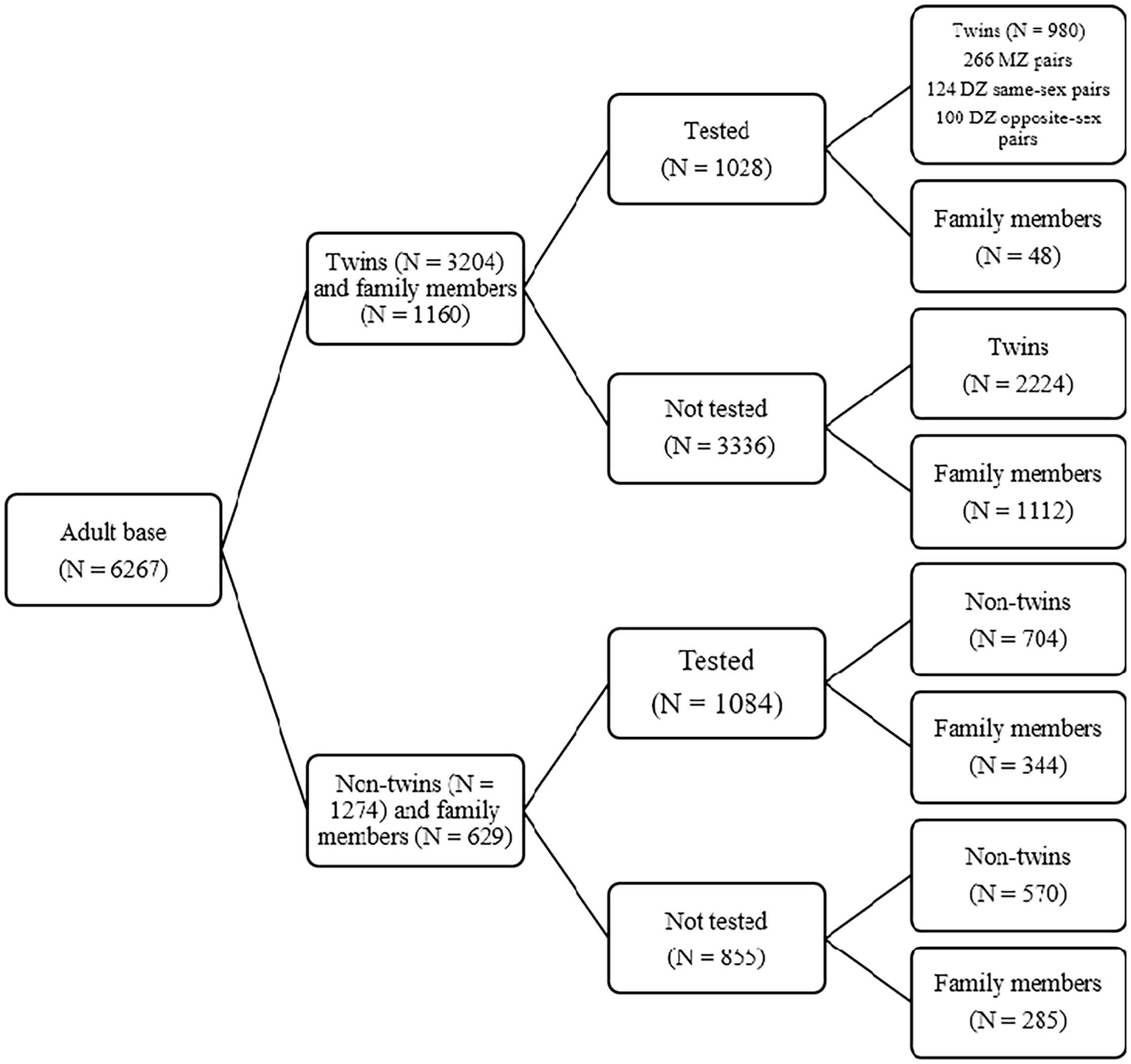
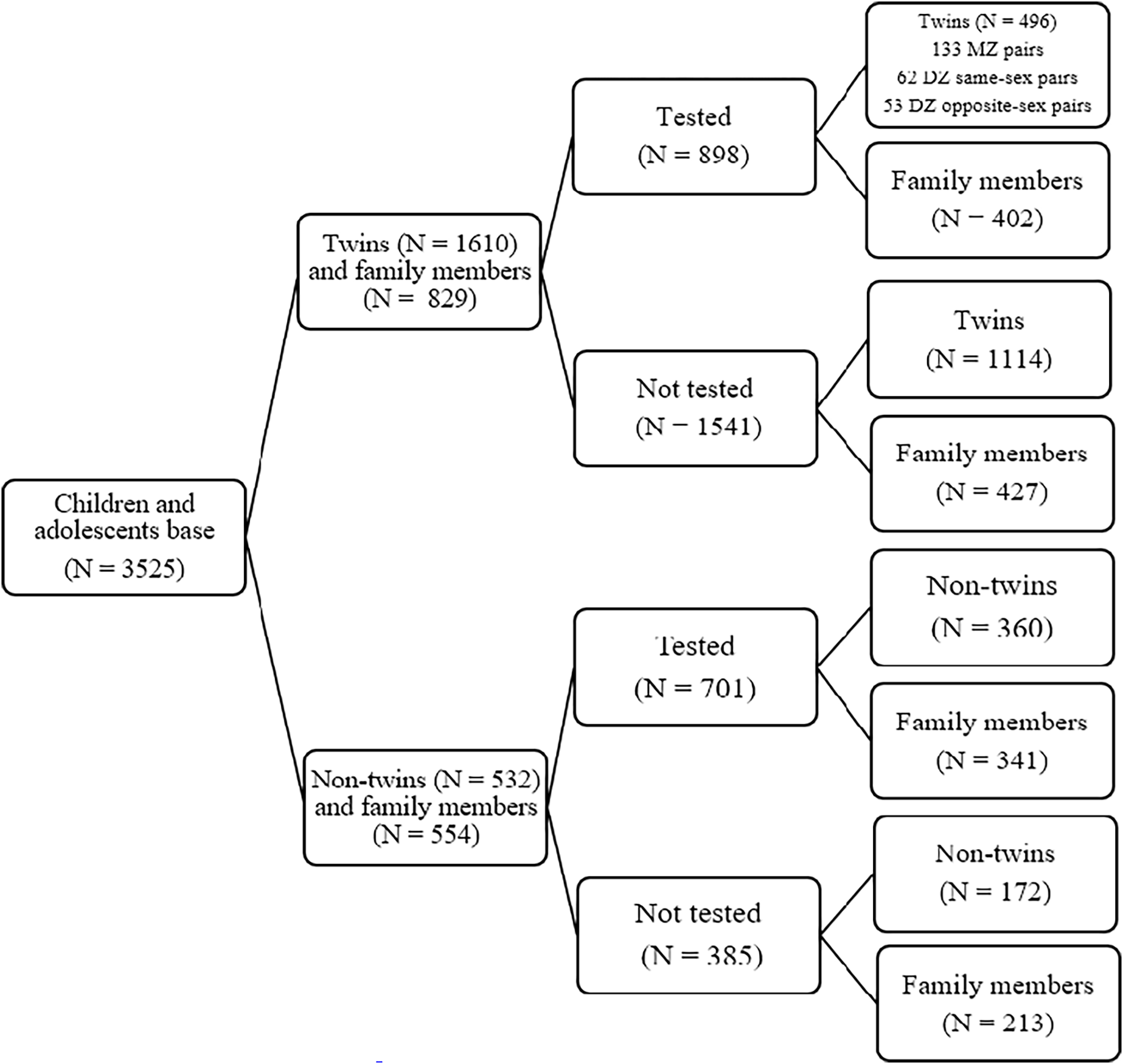
As of 2025, the STAR Registry includes over 9000 participants distributed across five cohorts (Figures 1 and 2).
Аdult STAR Registry sample, including twins, nontwins, and family members.

Children from STAR Registry sample, including twins, nontwins, and family members.

The strategic inclusion of singleton siblings and parents enhances statistical power, enables within-family comparisons, and supports extended twin–family designs (Neale & Maes, Reference Neale and Maes2004). These additions also permit the modeling of cultural transmission and broader familial influences on development and psychopathology.
In 2021, STAR transitioned to a fully digital infrastructure, including a dedicated online platform that facilitates recruitment, informed consent, instruments administration, and participant communication. This transition has improved logistical efficiency, enabled broader geographic reach across Serbia, and strengthened participant flow during the assessment and engagement through newsletters, educational content, and feedback on research results.
All data are stored and managed in accordance with national and international ethical guidelines and data protection regulations for research with human subjects. Identifiable data are stored separately from research variables, and procedures are in place for data de-identification, encryption, and secure access. The infrastructure also allows for future data linkage with biobanks or national health registries, subject to ethical and legal approval. Detailed descriptions of our ethical principles and personal data-protection policies are publicly available (STAR Center, 2022a, 2022b).
In line with our commitment to transparency and scientific integrity, STAR actively promotes open science practices, including preregistration, data sharing under controlled access, and dissemination of findings through open access channels. External researchers may access the data upon request and in accordance with the procedures outlined in the Rulebook on the Organization and Operation of the STAR Center (STAR Center, 2022c). In general, the STAR Center’s three-member Committee oversees data access requests, supervises all related procedures, ensures participant protection, and monitors compliance with research protocols. Consistent with the Center’s dedication to open science, publications authored by researchers affiliated with STAR are made available through gold or green open access, and all supplementary datasets are deposited in the dedicated OSF repository, ensuring long-term value for both national and international scientific communities (https://osf.io/98k5j/overview). These practices enhance the scientific impact of STAR and facilitate its integration into international collaborative networks. Numerous cross-country studies have already been published in cooperation with STAR partners from other countries (e.g., Nikolašević et al., Reference Nikolašević, Smederevac, Ignjatović, Kodžopeljić, Milovanović, Prinz and Budimlija2020, Reference Nikolašević, Dinić, Smederevac, Sadiković, Milovanović, Ignjatović, Prinz, Budimlija and Bosić2021; Smederevac et al., Reference Smederevac, Mitrović, Sadiković, Riemann, Bratko, Prinz and Budimlija2020, Reference Smederevac, Delgado-Cruzata, Mitrović, Dinić, Bravo, Delgado, Bugarski Ignjatović, Sadiković, Milovanović, Vučinić, Branovački, Prinz, Budimlija, Kušić-Tišma and Nikolašević2023, Reference Smederevac, Mitrović, Mihić, Sadiković, Dinić, Milutinović, Belopavlović and Corr2025), while future plans include further integration with other twin registries using standardized data exchange protocols.
Challenges and Solutions in Recruitment and Retention
Recruitment and retention of participants represent critical challenges in large-scale behavioral genetic studies, particularly when multiple age cohorts and family members are included. The STAR Registry set ambitious targets of enrolling twins and family members, spanning preschool children, school-age children, adolescents, and adults. The heterogeneity of the target sample required tailored outreach approaches and careful coordination across institutions, as well as adaptations in consent and testing procedures to suit different developmental stages.
The intended scale of recruitment, combined with the decision to employ a cross-sectional design with three testing cohorts, created additional challenges in sustaining participant interest and minimizing attrition. Coordinating large numbers of families proved especially demanding in the case of geographically distant participants and those with complex work or family obligations. To address these difficulties, STAR adopted a staggered testing schedule, allowing for more flexible planning and redistribution of resources across waves.
The methodological richness of STAR, ranging from behavioral experiments and virtual reality simulations to medical assessments and genetic sampling, added further complexity. While these components increase the registry’s scientific value, they also require participants to invest time and effort beyond standard questionnaire-based studies. This placed particular strain on families with young children and working adults. Flexible scheduling, a combination of remote and in-person assessments, and participant-centered communication strategies have been essential in maintaining cooperation.
Sustaining motivation has been another crucial element. STAR provides personalized feedback on cognitive performance, personality, and health indicators, which participants report as a meaningful benefit of their involvement. Families of young children especially value the developmental insights offered, and participants with identified medical or psychological concerns are referred for additional evaluation, ensuring that the study contributes directly to their wellbeing. Resources such as a guide for parents of children with developmental delay (Krstić et al., Reference Krstić, Stojadinović and Milovanović2024) further enhance STAR’s social relevance and strengthen trust.
Public engagement has also proven vital for both recruitment and retention. STAR collaborates with elementary and high schools, pediatric associations, NGOs related to psychological activities and children’s health, and the Serbian Association of Twins and Triplets, while also maintaining visibility through media appearances, social media, and science festivals. Annual events such as Twin Day foster community identity and reinforce the sense of contributing to a meaningful scientific endeavor. Importantly, STAR integrates citizen science principles, involving volunteers in seminars, codesign of research questions, and even data collection. These initiatives have culminated in the publication of the first Citizen Science Guide in Serbia (Dinić et al., Reference Dinić, Sadiković, Oljača, Milovanović and Smederevac2022) and have helped to transform public perception of twin studies from extractive research to collaborative science. Therefore, although the website is the main source for information and recruitment of participants, we use other channels to inform and animate potential participants, such as collaborations with schools and health institutions, NGOs and similar associations, as well as to develop the STAR citizen science network, along with media support of all our activities and events dedicated to science popularization and promotion of twin research. Moreover, we keep continuous contact with twins who have already participated in research. Besides regular announcements and invitations to our events, especially Twin Days, we inform them about novelty in our research (i.e., when we include new instruments on the platform and similar) and kindly ask them to continue with participation in the research. The response rate is high; almost 80% of twins respond to such invitations, even twins who participated in the research 10 years ago. All of this points to the conclusion that the STAR Registry has strong potential for conducting longitudinal studies.
In sum, recruitment and retention within STAR require balancing scientific ambition with participant-centered practices. By combining methodological innovation, ethical rigor, meaningful feedback, and strong public engagement, STAR demonstrates that large-scale behavioral genetic research can be successfully implemented and sustained even in emerging research contexts.
Methodological Innovations and Extended Twin Design
To address the complex interplay of genetic, environmental, and epigenetic factors in human adaptation, the STAR Registry has introduced a series of methodological advances that extend the classical twin paradigm into an extended nuclear twin and family design. In addition to monozygotic (MZ) and dizygotic (DZ) twin pairs, the inclusion of parents and singleton siblings allows for more precise differentiation of genetic inheritance, shared family environment, and cultural transmission effects (Eaves et al., Reference Eaves, Heath, Martin, Maes, Neale, Kendler, Kirk and Corey1999; Maes et al., Reference Maes, Neale, Kendler, Martin, Heath and Eaves2006). This expanded design substantially increases statistical power and enables the direct testing of models that integrate genetic and socio-environmental parameters with reduced bias (Keller et al., Reference Keller, Medland and Duncan2010). Incorporating nontwin family members also makes it possible to separate cultural transmission from genetic inheritance, distinguish shared from twin-specific environmental influences, and to improve the precision of heritability and environmental estimates (Best et al., Reference Best, Dao, Churchill and Cosco2020).
Beyond questionnaire-based methods, STAR integrates experimental paradigms into twin research, which is rarely achieved in behavioral genetic studies. Experiments focusing on risky decision-making and aggressive behavior create controlled conditions in which environmental manipulations can be studied, reducing the confounding effects of gene–environment correlations inherent to observational designs. These experimental approaches open the possibility of directly examining environmentally mediated processes that may otherwise remain undetected.
In addition, virtual reality (VR) methods — an innovative step in the Serbian research context — have been employed to create immersive and ecologically valid environments. VR technology enables the elicitation of realistic behavioral and physiological responses, offering a novel approach to investigating how genetic and environmental factors contribute to reactions in complex, emotionally salient situations. The ecological validity of VR-based behavioral indicators and physiological measures in exploring the relationship between personality traits and risky behavior has been demonstrated in our research on a nontwin sample (Pajić et al., Reference Pajić, Sadiković, Oljača, Popović, Milić, Stojanović and Smederevac2025). In this experiment, participants were required to walk through a virtual environment, collect diamonds, and choose between safe and risky paths. Behavioral indicators included elapsed game time, number of steps taken, average score, and decision-making time, all of which showed meaningful correlations with personality traits related to reactions to potential reward and immediate threat. Additionally, a small pilot study on a twin sample we conducted indicates that VR represents a valuable methodological tool for the broader field of behavioral genetics. Beyond personality traits, future research may extend to studies of spatial orientation (Malanchini et al., Reference Malanchini, Rimfeld, Shakeshaft, McMillan, Schofield, Rodic, Rossi, Kovas, Dale, Tucker-Drob and Plomin2020) or various aspects of social interaction (Rosén et al., Reference Rosén, Kastrati, Kuja-Halkola, Larsson and Åhs2022).
Another major innovation lies in the integration of epigenetic profiling with behavioral genetic designs. Reduced Representation Bisulfite Sequencing (RRBS) is used to examine genomewide DNA methylation patterns in discordant MZ twin pairs, allowing the detection of environmentally induced epigenetic modifications while holding genetic background constant. These data will be linked with rich phenotypic and environmental measures, enabling analyses of how exposures and life histories influence gene regulation. The STAR project maintains a formal repository for biological materials at the Faculty of Medicine, University of Novi Sad. The collection currently includes 431 buccal swab samples and extracted DNA obtained from participating twins. Storage, security, and management of samples follow institutional biosafety and data-protection standards. In the absence of national biobanking legislation in Serbia, STAR operates under internal governance documents, such as the Rules of Procedure, Ethical Principles and Informed Consent Procedures, and Data-Protection Policy (STAR Center, 2022a, 2022b, 2022c), which define ethical oversight, access control, and anonymization procedures. The Agreement on the Maintenance of the STAR Registry regulates shared use of phenotypic and biological data between partner faculties. Linkage between biological, phenotypic, and environmental data is achieved through pseudonymized identifiers and harmonized metadata, enabling secure integration for research purposes and supporting future participation in international multicohort studies.
Through the integration of an extended twin–family design, experimental approaches, VR methods, and genome-wide epigenetic analyses, the STAR Registry advances the methodological frontier of behavioral genetics. This comprehensive framework provides a more refined understanding of the interplay between genetic, shared, and nonshared environmental influences and establishes a sustainable infrastructure for large-scale, collaborative research.
Responding to Paradigm Shifts in Psychiatric Classification, Personality Assessment, and Genetic Methodology
Since the inception of the STAR Registry, major conceptual and methodological transformations have reshaped the fields of psychiatric classification, personality theory, and genetic research. The STAR team has actively responded to these paradigm shifts by adjusting research priorities, refining conceptual frameworks, updating measurement strategies, and integrating new analytical approaches. At the same time, the limitations imposed by prior investments in now-outdated instruments are acknowledged and critically addressed.
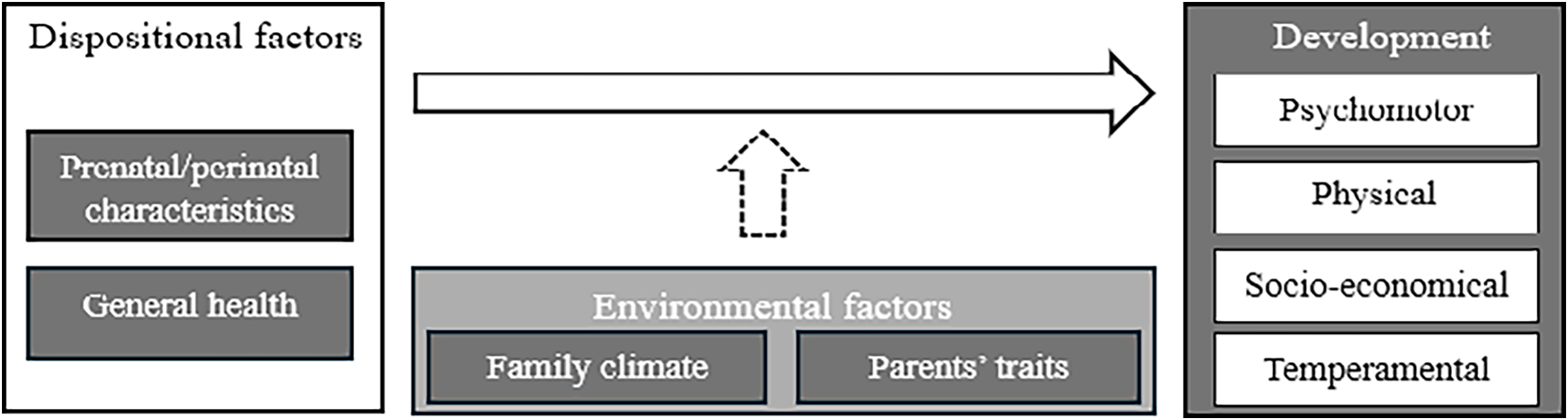
STAR Registry is grounded in developmentally informed designs tailored to different age groups, each with specific methodological frameworks. For children under the age of 5 (Figure 3), research is organized around a bioecological model, positing interactions between biological predispositions (e.g., prenatal and perinatal conditions, general health), family environment, and parental characteristics in shaping early developmental trajectories. This approach includes the assessment of various biological and contextual factors. Prenatal indicators, such as fertilization type, fetal growth rate, maternal health, and behavior during pregnancy, and perinatal characteristics, such as type of labor, birth weight and length, and Apgar scores, are collected through structured parental interviews and medical history forms. These variables are considered foundational in influencing children’s physical, psychomotor, socio-emotional, and temperamental development. Parental behavior and family functioning, in turn, serve as proximal environmental modifiers of these biological effects.
Research concept for ctwins up to 5 years.

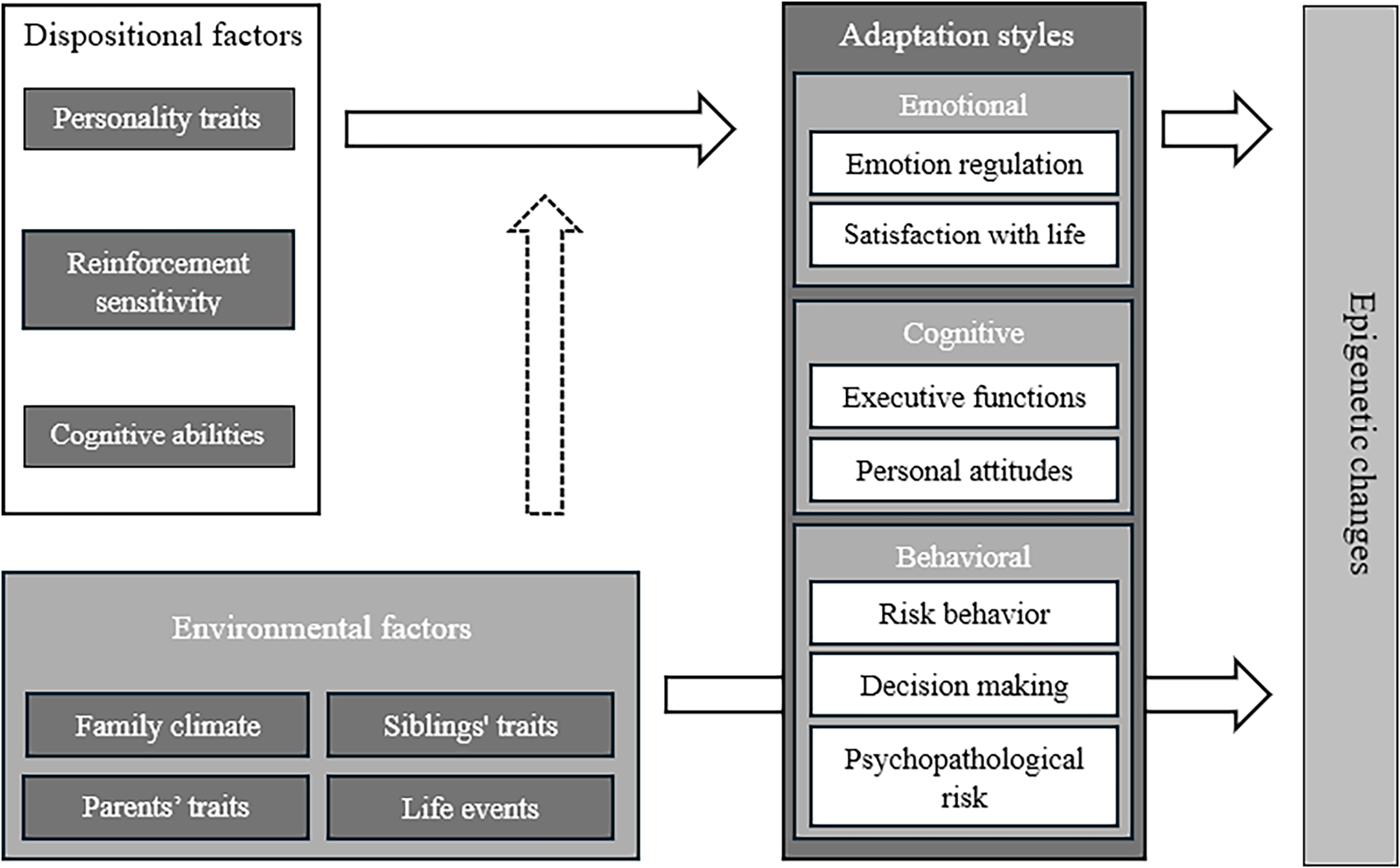
For school-aged and adult twins (Figure 4), the conceptual model emphasizes interactions between genetically influenced personality traits and cognitive abilities with environmental contexts. Adaptation is conceptualized as functional (e.g., wellbeing, emotional regulation) versus dysfunctional (e.g., internalizing or externalizing psychopathology, maladaptive behaviors), allowing for a comprehensive differentiation of psychological functioning.
Research concept for adult twins and school children twins.

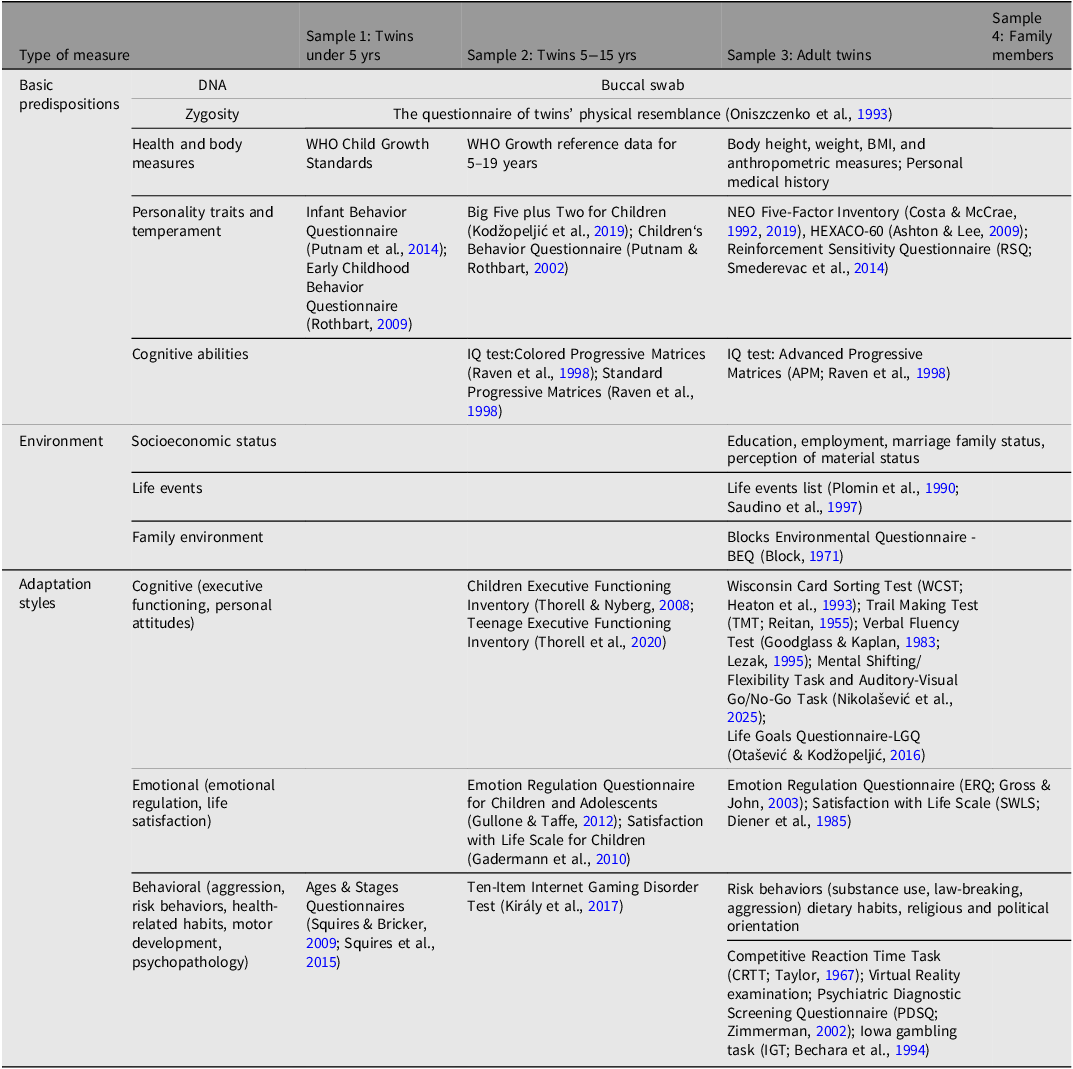
A broad range of instruments is employed across age groups (Table 1), covering biological indicators, personality, temperament, cognitive functioning, and psychosocial adaptation.
List of instruments, questionnaires and measures that were used in different samples

At STAR’s inception, the Diagnostic and Statistical Manual of Mental Disorders (4th ed.; DSM-IV; American Psychiatric Association [APA], 1994) categorical model of psychopathology provided the dominant framework. However, the publication of the Diagnostic and Statistical Manual of Mental Disorders (5th ed.; DSM-5; APA, 2013) and the emergence of dimensional models, particularly the Hierarchical Taxonomy of Psychopathology (HiTOP; Kotov et al., Reference Kotov, Krueger, Watson, Cicero, Conway, DeYoung, Eaton, Forbes, Hallquist, Latzman, Mullins-Sweatt, Ruggero, Simms, Waldman, Waszczuk and Wright2021), prompted a shift in orientation. HiTOP offers a model grounded in empirical factor structures that spans traditional diagnostic categories and emphasizes symptom continua. To align with this updated model, we adopted the Personality Inventory for DSM-5 − Short Form (PID-5-SF; Maples et al., Reference Maples, Carter, Few, Crego, Gore, Samuel, Williamson, Lynam, Widiger, Markon, Krueger and Miller2015) that correspond to HiTOP’s super-spectrum (e.g., internalizing, disinhibited externalizing) and spectrum-level domains.
Personality assessment within STAR Registry also evolved to reflect the growing emphasis on open science practices and the use of publicly available, well-validated instruments. Although early assessments included the NEO Personality Inventory-Revised (NEO-PI-R), the registry has since transitioned to instruments that are freely accessible and widely adopted in contemporary research, that is, the Serbian adaptation of Big Five Inventory–2 (BFI-2; Soto & John, Reference Soto and John2017; Smederevac et al., Reference Smederevac, Mitrović, Sadiković, Dinić, John and Soto2024), The 60-item HEXACO Personality Inventory-Revised (HEXACO-60; Međedović et al., Reference Međedović, Čolović, Dinić and Smederevac2019) and the Reinforcement Sensitivity Questionnaire (RSQ; Smederevac et al., Reference Smederevac, Mitrović, Čolović and Nikolašević2014), developed in Serbian language. These instruments support transparent, replicable, and theory-driven personality research and are well suited for phenotypic and biometric modeling.
In the genetic domain, initial studies conducted within STAR Registry followed a candidate gene approach, focusing on specific polymorphisms previously linked to behavioral traits or psychiatric vulnerabilities (e.g., COMT, BDNF, TPH2, DRD2, HTR1A, OXT). While these studies contributed to early insights (Nikolašević et al., Reference Nikolašević, Bugarski Ignjatović, Kodžopeljić, Sadiković, Milovanović, Vučinić, Prinz, Budimlija and Smederevac2022; Sadiković et. al., Reference Sadiković, Mihić, Belopavlović, Dinić, Tokodi, Vučinić, Prinz, Budimlija and Smederevac2025; Smederevac et al., Reference Smederevac, Sadiković, Čolović, Vučinić, Milutinović, Riemann, Corr, Prinz and Budimlija2022), the field has since shifted toward genomewide association studies (GWAS), which enable large-scale, hypothesis-free analyses of genetic variation. Although STAR does not currently have the sample size required for independent GWAS, the registry is actively pursuing collaborative partnerships to harmonize phenotypes and contribute data to consortia-based research.
Epigenetic research within STAR initially focused on targeted analyses of COMT promoter methylation (Mitrović et al., Reference Mitrović, Smederevac, Delgado-Cruzata, Sadiković, Pajić, Prinz, Budimlija, Oljača, Kušić-Tišma, Vučinić and Milutinović2024; Smederevac et al., Reference Smederevac, Delgado-Cruzata, Mitrović, Dinić, Bravo, Delgado, Bugarski Ignjatović, Sadiković, Milovanović, Vučinić, Branovački, Prinz, Budimlija, Kušić-Tišma and Nikolašević2023). More recently, the registry has expanded toward genomewide approaches, with Reduced Representation Bisulfite Sequencing (RRBS) currently being applied to buccal DNA from 26 discordant MZ twin pairs. These analyses are ongoing and will provide the first large-scale dataset on environmentally mediated methylation variability within STAR. The anticipated results are expected to advance understanding of how epigenetic mechanisms contribute to individual differences in adaptation and psychopathology across the lifespan. In addition, the STAR infrastructure is designed to support future connections with national biobanks and health registries, pending ethical and legal clearance, which would allow comprehensive integration of genetic, behavioral, and health data for enhanced research potential.
Key Findings and Empirical Insights From STAR
Recent findings from the STAR Registry have provided important insights into the genetic and biological foundations of individual differences in cognition, personality, and psychopathology. Studies using classical twin designs and molecular data have confirmed that executive functions, particularly those measured by the Wisconsin Card Sorting Test (WCST; Heaton et al., Reference Heaton, Chelune, Talley, Kay and Curtiss1993), show a clear latent structure with substantial heritability. Molecular analyses further indicated that individual differences in WCST performance are associated with variation in candidate genes related to prefrontal functioning (Nikolašević et al., Reference Nikolašević, Bugarski Ignjatović, Kodžopeljić, Sadiković, Milovanović, Vučinić, Prinz, Budimlija and Smederevac2022). Research also demonstrated both shared and distinct genetic influences on executive functions and intelligence, supporting a partially overlapping etiological structure (Nikolašević et al., Reference Nikolašević, Smederevac, Ignjatović, Kodžopeljić, Milovanović, Prinz and Budimlija2020). Furthermore, executive functions and personality traits, particularly Conscientiousness, were found to be phenotypically and genetically linked, indicating a common underlying mechanism for self-regulation and goal-directed behavior (Nikolašević et al., Reference Nikolašević, Dinić, Oljača, Milovanović, Kodžopeljić and Bugarski Ignjatović2025). Related findings showed that Openness and Conscientiousness facets share genetic variance with intelligence (Nikolašević et al., Reference Nikolašević, Dinić, Smederevac, Sadiković, Milovanović, Ignjatović, Prinz, Budimlija and Bosić2021), reinforcing the integration of cognitive and personality domains.
In the area of personality, twin studies have confirmed moderate to high heritability across the Five-Factor Model traits, with cross-cultural stability in genetic and environmental structure between German, Serbian, and Croatian samples (Smederevac et al., Reference Smederevac, Mitrović, Sadiković, Riemann, Bratko, Prinz and Budimlija2020). This multicohort study illustrates successful cross-national collaboration based on the use of an identical personality assessment instrument (NEO-FFI) across all participating cohorts. Although harmonization of personality measures was not required, methodological differences existed in sampling procedures and zygosity determination methods (DNA-based testing in Serbia vs. questionnaire-based classification in Germany and Croatia). The study demonstrates the potential of coordinated international efforts and open data sharing in advancing genetically informed personality research (data and materials available at https://osf.io/5shdy/).
Motivational traits related to approach and avoidance were also shown to be moderately heritable, with some associations to functional genetic variants in dopaminergic and serotonergic systems (Smederevac et al., Reference Smederevac, Sadiković, Čolović, Vučinić, Milutinović, Riemann, Corr, Prinz and Budimlija2022). On the contrary, findings from experimentally induced aggression showed only environmental influences, highlighting the importance of targeting environmental triggers and contextual factors in the prevention and intervention of aggressive behavior (Dinić et al., Reference Dinić, Smederevac, Sadiković, Oljača, Vučinić, Prinz and Budimlija2020). Comparative study from Germany and Serbia also showed that the relationship between personality and perceived parenting is largely genetically mediated, but that the environmental effect may play an important role in individual adaptation to the family setting (Milovanović et al., Reference Milovanović, Mitrović, Branovački, Sadiković, Riemann and Kodžopeljić2023).
A key direction in research has been the integration of personality and psychopathology within genetically informed models. A twin study demonstrated that internalizing symptoms share substantial genetic variance with specific personality traits, especially Neuroticism and low Conscientiousness (Mitrović et al., Reference Mitrović, Mihić, Sadiković and Smederevac2023). Network analysis of DSM-based symptoms revealed that depressive, anxiety, and somatic complaints load onto distinct genetic liabilities (Sadiković et al., Reference Sadiković, Mihić, Belopavlović, Dinić, Tokodi, Vučinić, Prinz, Budimlija and Smederevac2025). Additional analyses based on the Revised Reinforcement Sensitivity Theory confirmed that fear and anxiety, although phenotypically related, are genetically distinguishable constructs (Smederevac et al., Reference Smederevac, Mitrović, Mihić, Sadiković, Dinić, Milutinović, Belopavlović and Corr2025).
Epigenetic research within the STAR Registry initially focused on targeted analyses of COMT promoter methylation (Mitrović et al., Reference Mitrović, Smederevac, Delgado-Cruzata, Sadiković, Pajić, Prinz, Budimlija, Oljača, Kušić-Tišma, Vučinić and Milutinović2024; Smederevac et al., Reference Smederevac, Delgado-Cruzata, Mitrović, Dinić, Bravo, Delgado, Bugarski Ignjatović, Sadiković, Milovanović, Vučinić, Branovački, Prinz, Budimlija, Kušić-Tišma and Nikolašević2023). In the first study, after excluding cases with failed genotyping, the sample comprised 432 twins, of whom 92 individuals (46 MZ twin pairs) with high-quality buccal DNA were selected for methylation analysis. The second study included 430 twins aged 18 to 60 years (M = 24.66; SD = 7.72; 74.4% women), with a subsample of 35 MZ twin pairs (16 male and 54 female twins, aged 18–44 years, M = 23.30; SD = 6.68) analyzed for DNA methylation differences in relation to behavioral phenotypes.
These studies demonstrated that MZ twin differences in DNA methylation of the MB-COMT gene were associated with impulsivity-related traits (Smederevac et al., Reference Smederevac, Delgado-Cruzata, Mitrović, Dinić, Bravo, Delgado, Bugarski Ignjatović, Sadiković, Milovanović, Vučinić, Branovački, Prinz, Budimlija, Kušić-Tišma and Nikolašević2023), and with NEO-PI-R traits related to emotional regulation and cognitive control (Mitrović et al., Reference Mitrović, Smederevac, Delgado-Cruzata, Sadiković, Pajić, Prinz, Budimlija, Oljača, Kušić-Tišma, Vučinić and Milutinović2024). Together, these findings support the contribution of epigenetic mechanisms to stable personality traits, even among genetically identical individuals.
Future Directions
The next stage of STAR will focus on consolidating and expanding its multigenerational and multimethod design. A central priority is the growth of the child twin cohort, which remains relatively small but holds considerable potential for understanding the early origins of cognitive, emotional, and behavioral differences. Increasing the size and diversity of this sample will allow for more robust analyses of developmental trajectories, as well as the possibility to address intergenerational questions within extended twin–family models.
The family-based design will be further developed to investigate genetic nd cultural transmission, and environmental processes operating within families. This will be complemented by an increasing emphasis on contextual influences such as life events, social norms, and societal changes, which are particularly relevant in the Serbian cultural context.
Psychopathology will remain a major research focus, with plans to expand studies of personality, emotion regulation, and mental health outcomes. VR paradigms, already piloted within STAR, will be further integrated to provide ecologically valid assessments of behavior under controlled experimental conditions. These VR-based approaches, combined with multi-informant and longitudinal data, will enable innovative examinations of real-time adaptation, social interactions, and risk processes in both normative and clinical populations.
Although Serbia currently lacks national legal regulations for biobanking, the STAR Center operates under its own comprehensive governance framework. This includes a rules-of-procedure document, a document on ethical principles and informed consent procedures, and a data-protection policy, ensuring that participant information and biosamples are managed securely and in compliance with institutional standards.
These internal documents ensure that biosample collection, storage, and research use adhere to ethical, legal, and data-privacy best practices. The infrastructure is designed to support future integration with international research infrastructures, with practical steps including participation in European consortia, harmonization of phenotyping and metadata with other twin registries, and implementation of interoperable bioinformatics pipelines.
By strengthening developmental and family-based designs, expanding VR and psychopathology research, and advancing molecular analyses within realistic infrastructural limits, STAR is positioned to remain a unique and sustainable platform for behavioral genetics in Serbia and to contribute meaningfully to international research on how genes, environments, and epigenetic processes shape human adaptation across the lifespan.

 Open access

