

Introduction
Modern Mauritius was born in the early eighteenth century when a group of French colonists named it Île-de-France. The island has seen waves of colonial intervention both previously and subsequently, resulting in a contemporary population that is diverse and a past that is highly turbulent and infinitely interesting.
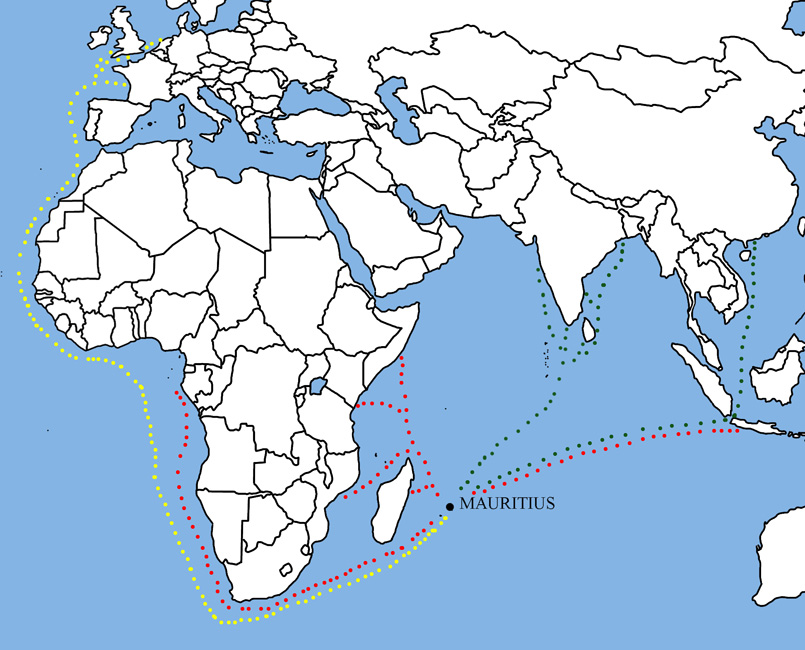
The archaeological potential that Mauritius offers, as a colonial enclave with Dutch, French and British influence, and as a multicultural melting pot derived from forced (Reference AllenAllen 1999; Reference VaughanVaughan 2005) and 'free' labour (Reference TeelockTeelock 2009), has barely been explored (Figure 1). Two UNESCO World Heritage Sites (Aapravasi Ghat and Le Morne Cultural Landscape) commemorate the transition from and resistance to slavery. Mauritius was the seat of Britain's 'Great Experiment' to replace slaves with indentured labour following abolition. This experiment in human exploitation proved highly successful and caused the largest diaspora to take place in the Indian Ocean.
Imperial (yellow), slave (red) and indentured (green) arrivals in Mauritius from the later medieval to the early modern period. Routes are indicative only; the situation was more complex as slaves were also brought from Asia before abolition, and indentured workers were brought from Africa after emancipation.

The volcanic island presents an exceptional opportunity to establish baseline data detailing specific environmental and landscape transitions as they relate to human agency. In addition, despite the fact that Mauritius is noted for having no indigenous population, this should not rule out the possibility that humans interacted with the island prior to the later medieval period. Its strategic position in the Indian Ocean should stimulate interest at least in the potential for early exploration and visitation, if not outright colonisation. Since May 2008, in collaboration with local partners, the Mauritian Archaeology and Cultural Heritage Project presented here has studied aspects of the island's past through the systematic archaeological investigation of a series of sites on Mauritius.
Objectives
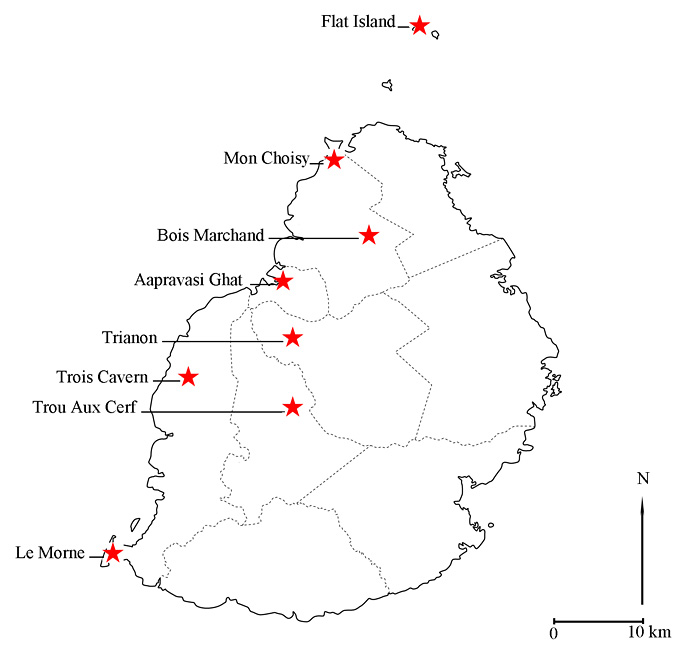
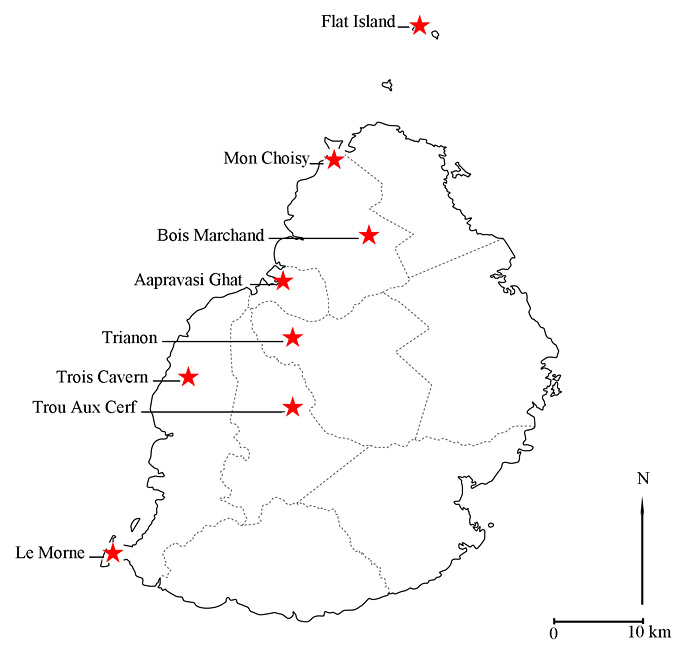
The main aim of this project is to understand how European colonial activity influenced environmental and cultural transformations in this region of the Indian Ocean (Reference SeetahSeetah 2010) by targeting specific locations (Figure 2), incorporating slave, indentured and imperial sites, as well as sites with high eco-archaeological potential. Establishing base-line soil conditions formed the focus of the first season and centred on a site in the north of the island at Mon Choisy (overall size 800m²). It forms part of a former plantation and offers a valuable opportunity to record the transition from virgin soil to agriculture. Core data showed clear indications of enrichment, with 14C dating providing a timeframe for the agricultural intensification of sugar agriculture that coincided with the arrival of the British. Subsequent research has centred on broadening the geographical and thematic scope of the project to delve deeper into the human and ecological implications of satisfying Europe's appetite for sugar.
Map of locations studied between 2008 and 2011.
Sugar, slavery, indenture and ecology
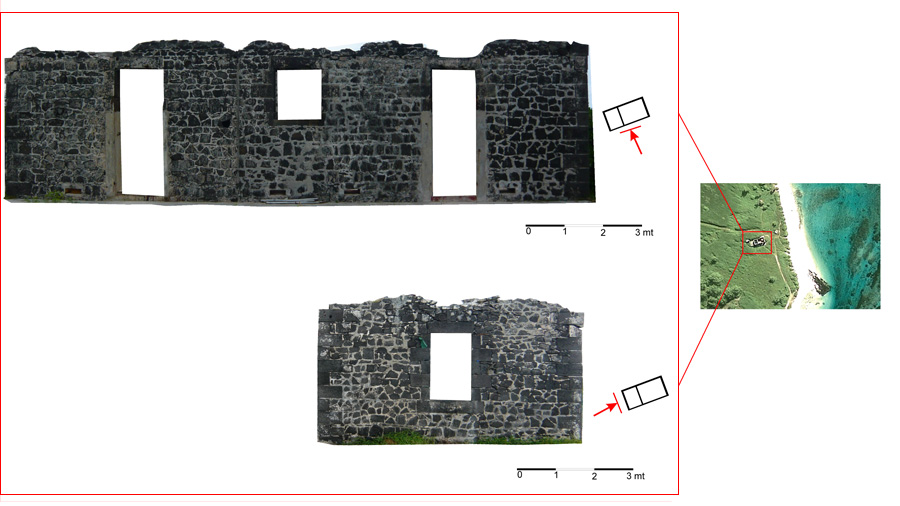
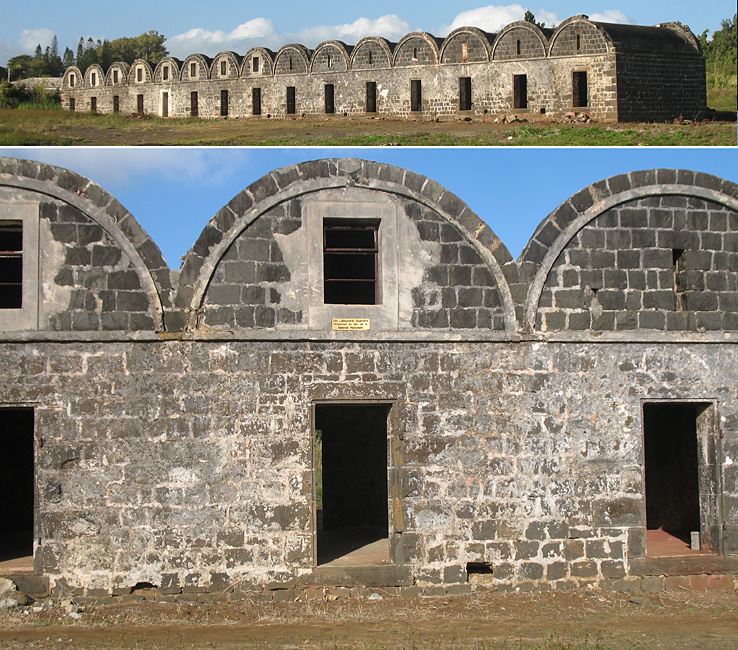
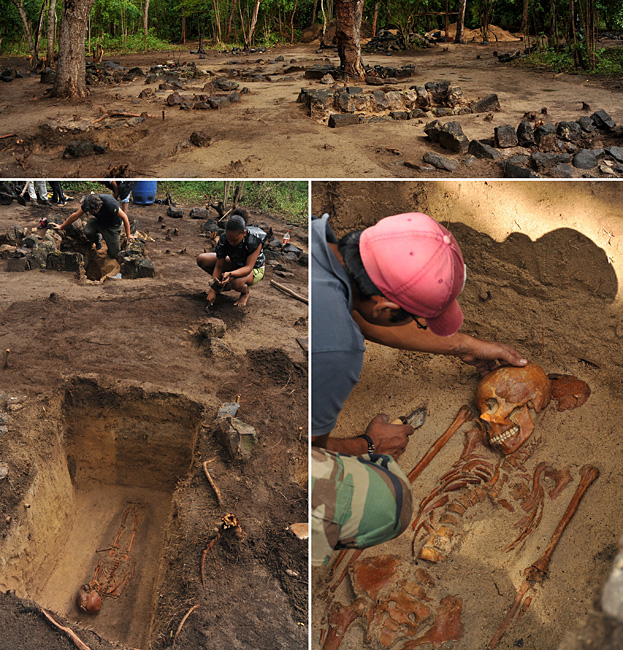
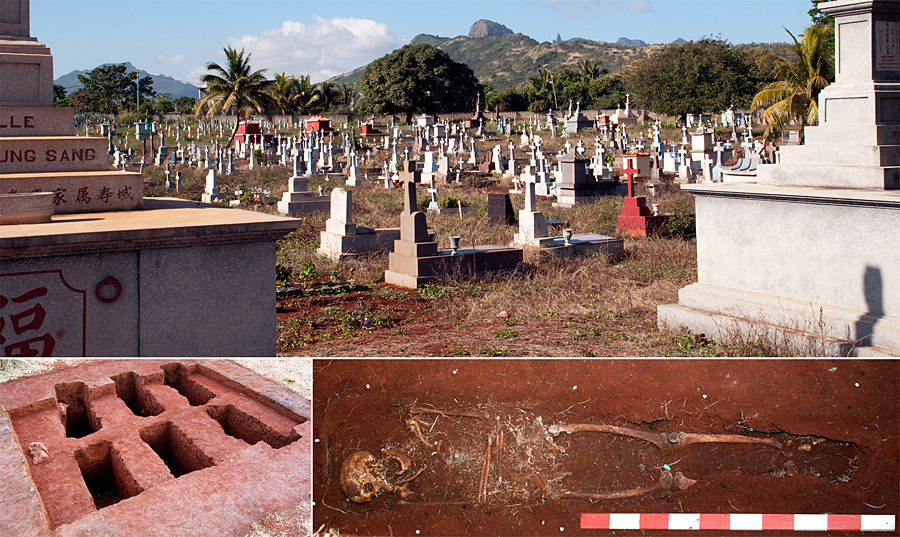
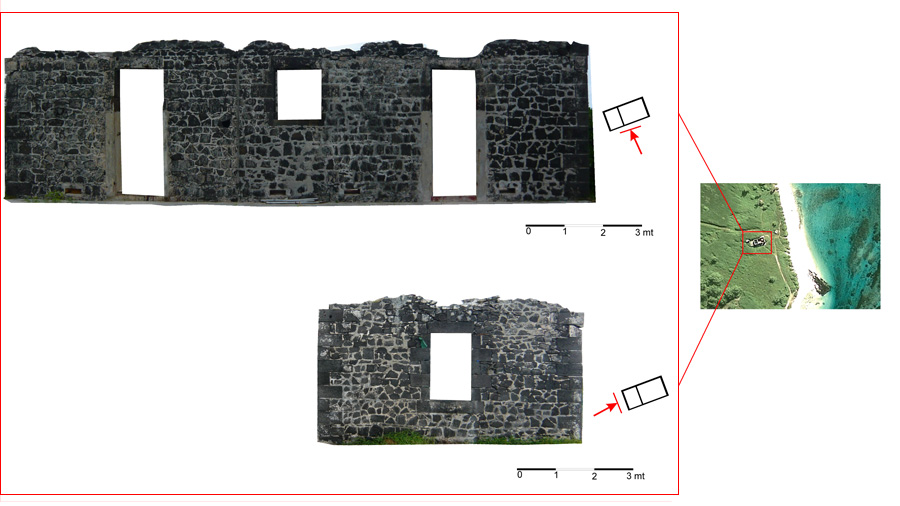
Probing the many facets of colonisation and colonialism in Mauritius requires an archaeological approach that is scientific, integrative and multidisciplinary, with, at its core, a conceptual appreciation of the nature of islands, which demands a careful appraisal of both maritime and terrestrial viewpoints. Aside from the nautical, strategic and economic significance of Mauritius during the post-medieval period, maritime research also offers insight into the relationship that local people had with the ocean. Following abolition, freed slaves concentrated in coastal regions, deriving a living from fishing. The extent of European influence is evident even in this sphere: a survey of boat construction methods undertaken in 2010 found little evidence of 'traditional' boat building (as might have been retained in social memory), the typical pirogue of the island being a melding of French technology and locally available raw materials. Further aspects of material culture, particularly architecture, are being investigated through comparisons between French (i.e. Flat Island, Figure 3) and British administrative buildings. These studies have revealed key details relating to the fabric of the structures, modes of construction as well as the maritime implications of island defence. Perhaps most rewarding is the reading of slave and labourer lifeways through the study of food culture and osteology (Appleby et al. submitted). Investigations of the island's two World Heritage Sites, as well as an indentured labourer barrack (Figure 4) have provided the most novel outcomes, with recent work uncovering the first post-emancipation cemetery on Mauritius at Le Morne (Figure 5). Excavations of the Bois Marchand cemetery (Figure 6) will add to these osteological investigations. At one time the largest cemetery in the Indian Ocean, it served as the final resting place for the huge numbers of people who died following the cyclical malaria epidemics that plagued the island in the mid-nineteenth century.
Photogrammetric representation of the building fabric from the quarantine hospital on Flat Island.
Trianon Barracks. Top: the sequence of barracks. Bottom: detail of a barrack used to house single families.

Views from excavations at Le Morne 'Old' Cemetery. Top: the cleared cemetery. Bottom left: child skeleton with coffin outline. Bottom right: double adult inhumation.

Views of Bois Marchand. Top: the cemetery with Chinese and Christian memorials (Muslim and Hindu sections not shown). Bottom left: six open graves from which eight individuals were recovered. Bottom right: adult skeleton.

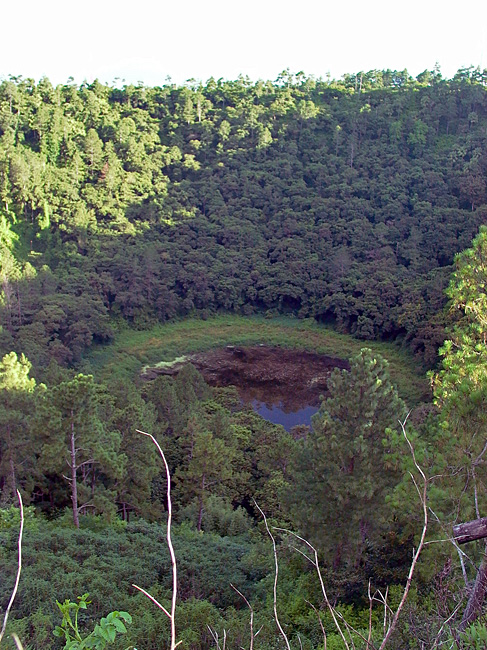
Trou Aux Cerf volcano showing water-filled crater basin.

Through careful integration of historical and archaeological datasets, this project has established a firm basis for understanding the island's rich past. Future work will include a programme of coring of inland (including a dormant volcano, Figure 7) and coastal sites as well as an ambitious plan to scan the island by LiDAR. These interventions will enable us to study how land use and biogeography changed from the post-medieval to the early modern period. They will also allow us to evaluate social transformations, for example through religion, which has served to segregate as well as unite different groups and is a critical marker of identity. On an island where everyone is a coloniser, ecology and archaeology, when combined with history, can provide a fine-grained narrative of the past.
Acknowledgments
The authors would like to thank the University of Central Lancashire, the British Academy, the British Council, the Society of Antiquaries of London, the McDonald Institute for Archaeological Research, the Truth and Justice Commission, the Aapravasi Ghat Trust Fund, the Le Morne Heritage Trust Fund, SOS Patrimoine, the US State Office in Mauritius, the University of Mauritius and the Australian National University for providing financial support. We would also like to thank Rose Ferraby, Branko Mušič, Matjaž Mori and Igor Medarić for their geophysical expertise and Vijaya Teelock, Anwar Janoo, Richard Allen, Atholl Anderson and Keith Dobney for their academic and intellectual support.