

Introduction
Ice-marginal valleys (IMVs) – also known as pradolinas – and sandurs belong to the explicit morphological features that originated during the Weichselian glaciations. Sandurs tend to develop in a direction roughly perpendicular to the ice margin; in contrast, IMVs commonly occur parallel to the line that indicates the maximum extent of the Weichselian ice caps (Fig. 1). The main IMVs of the Polish–German lowlands are the Wrocław–Magdeburg–Bremen, the Głogów–Baruth–Hamburg, the Warsaw–Berlin and the Toruń–Eberswalde valleys. All of these were formed between (and including) the Saalian and the Pomeranian phases of the Weichselian. It is therefore commonly assumed that the sedimentary record of IMVs represents a mixture of glacial sediments as well as extraglacial material. However, at present there are hardly any data that actually quantify the relative proportions of these different sources of the above-mentioned IMV sediments.
Location of the study area in northwest Poland. A. Main ice-marginal valleys positions in the Polish–German lowlands; B. Positions of the sandurs and the Toruń-Eberswalde IMV under study; C. Geology and geomorphology of the study area.

Some of the best developed sandur/IMV systems are situated in the northwest part of Poland. This system was formed during the Pomeranian phase of the Weichselian glaciation, when the Scandinavian Ice Sheet reached the area (16–17 ka BP; Marks, Reference Marks2012) and meltwater rivers deposited their sediment load south of the ice front. The system under study contains two of the Pomeranian sandurs (the Gwda and Drawa sandurs) and the Toruń-Eberswalde IMV (Fig. 1B).
The Drawa sandur and the Gwda sandur (Fig. 1B) are two examples of large sandurs (80 and 110 km long, respectively) where large amounts of sediments that were set free by ablation of the Pomeranian ice front were supplied, transported and deposited. The sandurs reached to the Noteć Middle Valley and the Gorzów Basin; both formed part of the Toruń-Eberswalde IMV (Fig. 1B), which is incised into a till plain and older sandur sands and gravels (Fig. 1C).
The Toruń-Eberswalde IMV is the largest (>500 km long, 2–20 km wide) IMV of the European lowlands. It runs from eastern Poland to Germany and was fed by water from proglacial meltwater rivers which ran from the ice sheet in the North. Although the relationships between the sandurs and the IMV were discussed extensively previously (see, among others, Galon, Reference Galon1961; Kozarski, Reference Kozarski1965), no details are available thus far concerning the sources of the sediments that were deposited in the Toruń-Eberswalde IMV. The fairly commonly accepted idea is that extraglacial rivers were also important sources of the sediment in the IMVs in the Pleistocene lowlands of northern Europe (Kozarski, Reference Kozarski1965), including the Toruń-Eberswalde IMV (Galon, Reference Galon1968).
Heavy-mineral analysis provides a tool that may help to assess the contribution of different sediment sources (e.g. Woronko et al., Reference Woronko, Rychel, Karasiewicz, Ber, Krzywicki, Marks and Pochocka-Szwarc2013; Van Loon, Reference Van Loon2013) and we therefore carried out such an analysis. The objective of the present contribution is to obtain quantitative data about the relative contribution of extraglacial (fluvial) sources to the sedimentary infill of the Toruń-Eberswalde IMV. We do this by comparing the heavy-mineral compositions of sediments in the studied part of the IMV (called ‘middle part of the IMV’ in the following; see Fig. 1C) with those of the sandurs (which must, by definition, have a northern source) and those derived from the pre-Wisła river system (which had a southern source); heavy-mineral species that might be present in the IMV sediments but not in the sandur sediments or significant differences in the percentages of specific heavy minerals might also be ascribable to the supply of sediments from extraglacial sources. It should be noted in this context that the concentrations of the heavy minerals in all analysed samples are comparable (the concentration differences do not exceed 1%).
Geological setting
According to Marks (Reference Marks2012), the maximum extent of the Weichselian ice sheet was reached 24 ka BP (OSL age; Leszno-Brandenburg phase). A second ice advance occurred 19–20 ka BP (Poznań-Frankfurt phase), and a third and final advance took place around 16–17 ka BP (Pomeranian phase). The sandurs in northwest Poland (an area referred to as the Pomeranian Lakeland; Fig. 1B) were formed during the Pomeranian phase. All Pomeranian sandurs in northwest Poland begin from end moraines or transitional fans (see Pisarska-Jamroży, Reference Pisarska-Jamroży2006, Reference Pisarska-Jamroży2008) in the north and reached to the Toruń-Eberswalde IMV in the south.
The Drawa sandur is situated at 110–120 m above sea level (a.s.l.), at least in the Woliczno and Mielenko pits, which are exploited in its most proximal part. The sandur surface dips towards the southeast and has a gradient of 0.0022–0.01. The Gwda sandur in the Parsęcko pit is situated at 145 m a.s.l. Its surface dips towards the south with a gradient of about 0.01. The orientations of the trough axes and the dip directions of cross-beds in the three sandur gravel pits indicate palaeocurrent directions toward the southeast, southwest and south (Fig. 2).
Average palaeocurrent directions of the rivers on the sandurs and in the IMV.

In the most proximal part of the Drawa sandur, the Woliczno gravel pit was investigated in detail earlier by Pisarska-Jamroży & Zieliński (Reference Pisarska-Jamroży and Zieliński2014). This was also done for the proximal part of the Gwda sandur (Parsęcko gravel pit). The pits are situated close to the end moraines of the Pomeranian phase (Fig. 1B and C). The distance from the gravel pits to the topographically highest point of the end moraine varies from 1 km (Drawa sandur) to ~5 km (Gwda sandur). The end moraines form a SW–NE trending line and form a prominent geomorphological element (Fig. 1C). North of the end-moraine zone, a till plain is present.
The Gwda sandur was, according to Jania & Bukowska-Jania (Reference Jania, Bukowska-Jania, Bukowska-Jania and Pulina1997), deposited by jökulhlaup-like catastrophic floods. Less catastrophic but still large ablation floods were responsible for the deposition of fining-upward cycles in braided channels running over the proximal part of the Drawa sandur (see Pisarska-Jamroży & Zieliński, Reference Pisarska-Jamroży and Zieliński2014).
The former pathways of the proglacial rivers are still in use by the present-day main rivers of the Pomeranian Lakeland (the Drawa, Gwda, Brda and Wda rivers), which run from north to south (Fig. 1B and C). The Drawa, Gwda, Brda and Wda sandurs have in their proximal parts large sandur plains, whereas the proglacial outflow was confined in their distal part, forming a so-called valley sandur (see Zieliński & Van Loon, Reference Zieliński and Van Loon2002).
The deglaciation processes during the formation of the IMV, and the role of fluvial processes in its development, were discussed by Kozarski (Reference Kozarski1965, Reference Kozarski1966), Börner (Reference Börner2007), Pisarska-Jamroży & Zieliński (Reference Pisarska-Jamroży and Zieliński2011), Pisarska-Jamroży (Reference Pisarska-Jamroży2013) and Weckwerth (Reference Weckwerth2013). In the middle part of the Toruń-Eberswalde IMV five gravel pits were investigated: Zwierzyn, Łącznica, Nowe Dwory, Kuźnica Czarnkowska and Walkowice (Fig. 1). They are all situated at the same terrace, which dips from 50 m a.s.l. in the most eastern pit (Walkowice) to 40 m a.s.l. in the most western pit (Zwierzyn). According to Galon (Reference Galon1961) and Kozarski (Reference Kozarski1986), all five gravel pits are located on terraces 14–16 m above river level (a.r.l.) that developed during the Pomeranian phase of the Weichselian glaciation. The palaeocurrent directions in the analysed parts of the IMV (Fig. 2) vary from SSW–SSE (Walkowice) to SW–W (Zwierzyn, Łącznica, Nowe Dwory and Kuźnica Czarnkowska).
Additionally, six pits (Kąkol, Olek, Trzciniec, Aleksandrów, Gorzeń and Jarki) in the Toruń Basin (Fig. 1B), excavated in terraces of the same age along the pre-Wisła river system, were sampled in order to obtain heavy-mineral data from sediments supplied from the south by S–N running extraglacial rivers.
Methods
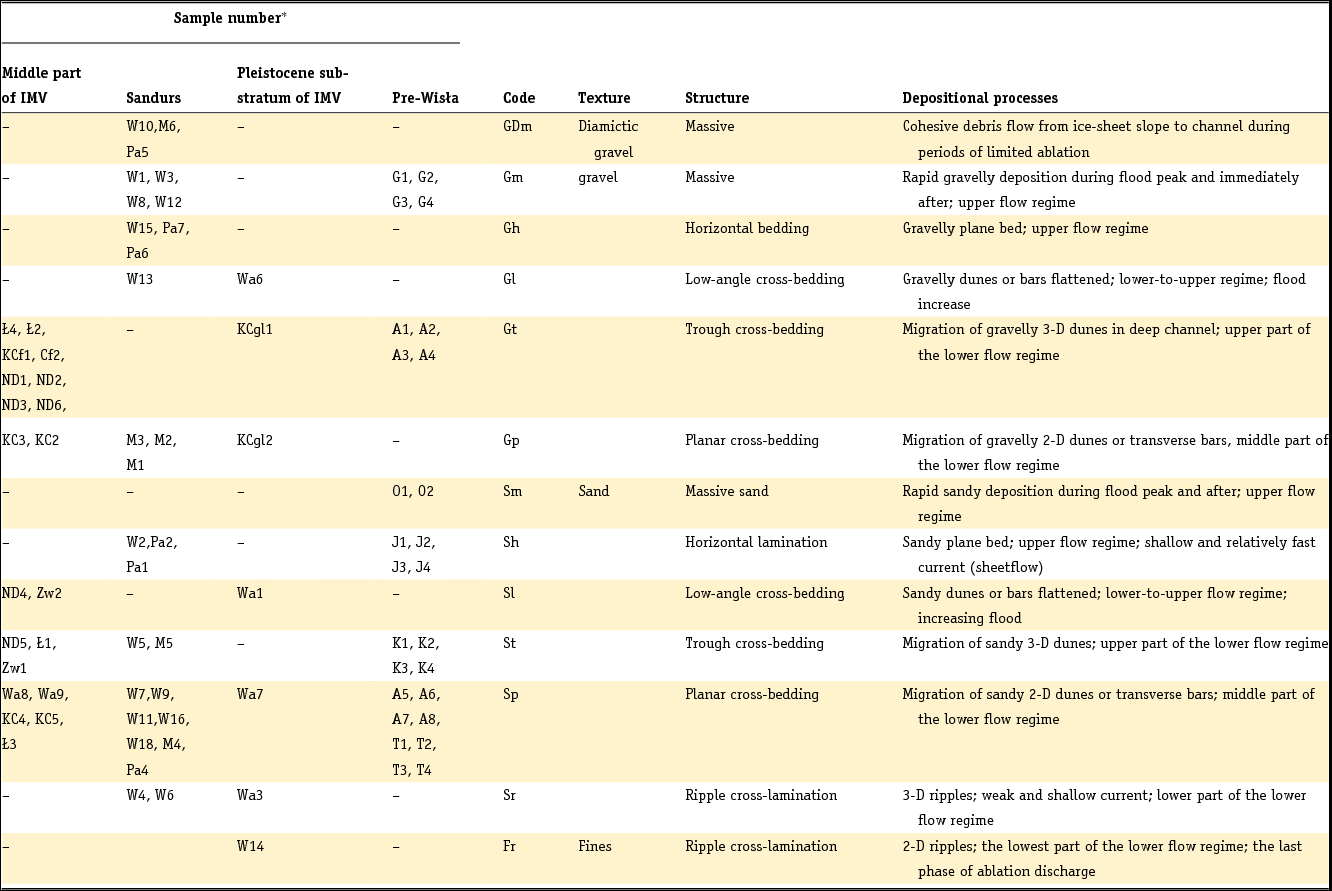
Samples for heavy-mineral analysis were collected from two gravel pits in the proximal part of the Drawa sandur, from one gravel pit in the proximal part of the Gwda sandur, from five gravel pits on the terrace of the middle part of the IMV and from six pits on the pre-Wisła terrace. All samples from the IMV were sampled from a single terrace, the pre-Wisła terrace, from which samples were taken corresponding with the sampled IMV terraces. The heavy-mineral analysis (according to Mange & Mauer, Reference Mange and Maurer1992 terminology) was performed on grains of the fine-sand fraction (0.1–0.2 mm) of 81 samples (Figs 3 and 4). The samples were taken mostly from gravels and sands to ensure that the samples represent a wide spectrum of flow-regime conditions (see Table 1 and Fig. 3).
Lithofacies codes (with explanation of the codes regarding texture and structure of the sediments as proposed by Miall, Reference Miall and Miall1978, and Zieliński & Pisarska-Jamroży, Reference Zieliński and Pisarska-Jamroży2012) and interpretation of the depositional processes for the various layers of the sandurs, the IMV, the Pleistocene substratum of the IMV and the pre-Wisła terrace that were sampled.
*W - Woliczno; M - Mielenko; Pa - Parsęcko; ND - Nowe Dwory; Zw - Zwierzyn; Wa - Walkowice; KC, KCf, KCgl - Kuźnica Czarnkowska; Ł - Łącznica, K - Kąkol; O - Olek; G - Gorzeń; A - Aleksandrów; T - Trzciniec; J - Jarki
Sedimentary successions of some lithofacies from which heavy-mineral samples were collected.

To separate the heavy fraction, the samples were treated with sodium polytungstate (3Na2WO4 • 9WO3 • H2O), with a density 2.84 g/cm3. The samples were subsequently split with a microsplitter in order to produce an adequate amount of heavy minerals. These samples were subsequently mounted in Canada balsam on glass slides. The identification of the various heavy-mineral species was carried out with a petrographic microscope following Mange & Maurer (Reference Mange and Maurer1992). To confirm the identification of selected heavy minerals, polished thin sections were prepared and analysed by scanning electron microscopy and energy dispersive spectroscopy (SEM/EDS).
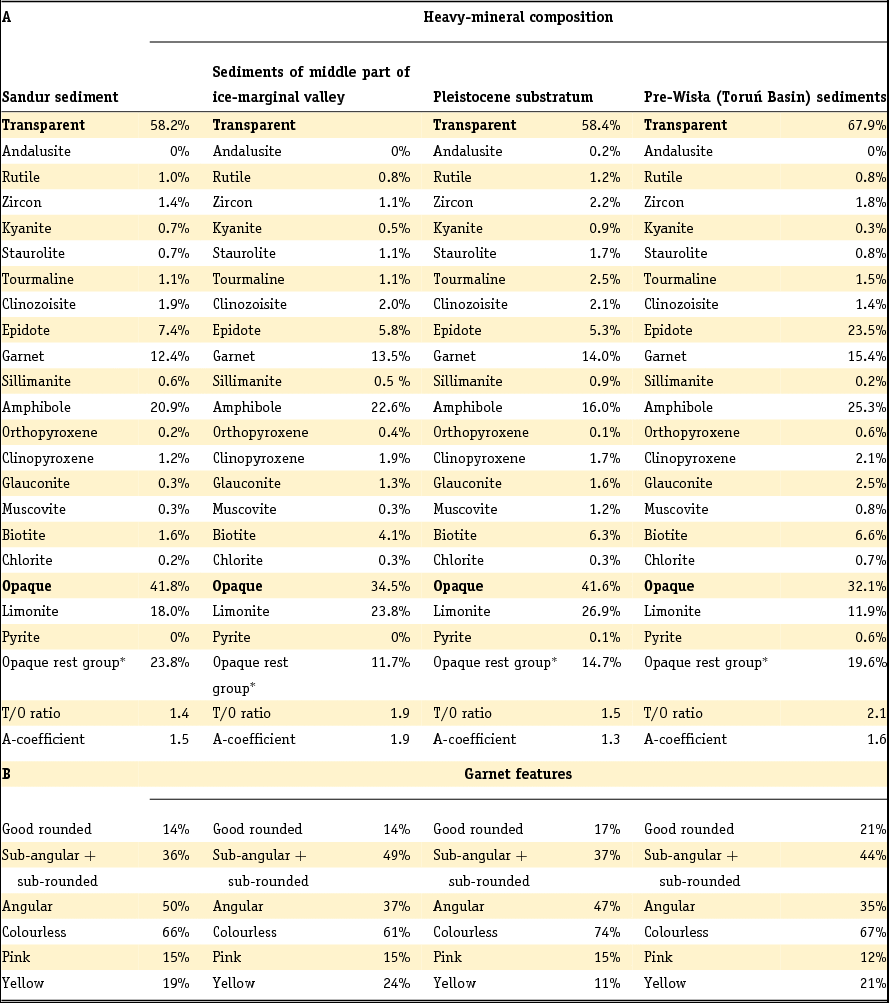
The relative abundance of each heavy mineral was determined by counting 400–2100 (700 on average) grains (transparent and opaque) per slide. At least 300 transparent grains were counted. The following minerals were recognised (Table 2A): andalusite (An), rutile (R), zircon (Z), kyanite (K), staurolite (S), tourmaline (T), clinozoisite (Cl), epidote (E), garnet (G), sillimanite (Si), amphibole (A), orthopyroxene (O), clinopyroxene (C), glauconite (Gl), muscovite (M), biotite (B) and chlorite (Ch). Among the opaque minerals, limonite (L) and pyrite (P) were distinguished; the other opaque minerals (other iron oxides and magnetite) were grouped jointly as the opaque rest group (RO). All percentages were subsequently calculated with respect to the sum of all transparent plus all opaque heavy minerals. We also investigated the garnet grains for their rounding, following Powers’ (Reference Powers1982) classification.
A. Heavy-mineral content, overall transparent/opaque ratio (T/O) and A-coefficient of the samples from the sandurs, the middle part of the IMV, the pre-Wisła system and the Pleistocene substratum of the IMV; B. Garnet rounding and colour of the samples from the sandurs, the middle part of the IMV, the pre-Wisła system and the Pleistocene substratum of the IMV.
* other iron oxides and magnetite
The non-transparent minerals were identified by their optical and macroscopic features under a petrographic microscope and binoculars. The term ‘all opaques’ is used in the following, unless indicated otherwise, for all opaque heavy minerals together, limonite, pyrite and other opaques, while the term ‘opaque rest group’ will be used for all opaque minerals except pyrite and limonite. Furthermore, we calculated the so-called ‘A-coefficient’, which is the ratio between amphibole and garnet (Fig. 4), following Marcinkowski (Reference Marcinkowski2007).
Average spectra of the main heavy minerals sampled from the two sandurs, the IMV and pre-Wisła terraces.

The degree of similarity among the individual heavy-mineral species as well as between the heavy-mineral compositions from each site (see Fig. 4) was established with Statistica 10 software through cluster analysis, using the Euclidean distance and the Ward method for the percentage data set. This cluster analysis is an exploratory tool for data analysis that aims to cluster different objects (e.g. heavy minerals) into groups in such a way that the degree of association between objects is a maximum if they belong to the same group. This is expressed in the form of lineages (Fig. 5). The vertical distances in the lineages between splits depend on the degree of association. The most straightforward way of computing these vertical distances between the various heavy-mineral species and their associations in a multi-dimensional space is to compute Euclidean distances (distances in a multidimensional space). The final result of the clustering method is that it forms clusters on the basis of the degree of similarity between heavy-mineral percentages.
Cluster analyses of the sediments based on their heavy-mineral compositions. The smaller the vertical distances, the more the assemblages are similar. A1. Clusters for the Drawa sandur; A2. Clusters for the Gwda sandur; B. Clusters for all sites in the middle part of the IMV; C. Clusters for the samples from the pre-Wisła terrace.

Our OSL dating of quartz from the terrace along the middle part of the IMV was performed in Poland in the Gliwice Absolute Dating Methods Centre. To do this, grains of 125–200 or 200–300 μm were selected by wet sieving. The quartz grains were etched with HF (40%) for 60 min. The equivalent dose was established by OSL-SAR. In order to prevent any possible disturbances, samples were taken only from clear sedimentological structures away from the contact zone with the PVC core tubes (see Busschers et al., Reference Busschers, Kasse, van Balen, Vandenberghe, Cohen, Weerts, Wallinga, Johns, Cleveringa and Bunnik2007). All OSL samples were taken from sediments for which the OSL signal must have been reset completely at the time of sedimentation (e.g. sediments deposited from shallow currents; see Weckwerth et al., Reference Weckwerth, Przegiętka, Chruścińska and Pisarska-Jamroży2013).
Heavy-mineral spectra in the sandur and IMV sediments
Six groups of heavy minerals (amphibole, garnet, limonite, the opaque rest group, epidote and biotite) dominate the sediments of the three sandur sites, the five sites of the middle part of the IMV and the two sites with Pleistocene substratum of the IMV. The small differences in heavy-mineral composition that occur between the sandur and IMV samples concern not only the above-mentioned dominant minerals but also less abundant mineral species such as glauconite and zircon; the A-coefficients also show differences (Fig. 4; Table 2A). The largest differences in percentages of heavy minerals are for epidote, for which the percentage in the pre-Wisła sediments is four to five times higher than in the IMV and sandur sediments. Details are provided in the following subsections.
Heavy-mineral composition of the sandur sediments
The median values of the transparent heavy minerals (Fig. 4) in both sandurs are comparable: 57% and 64% for the Drawa and Gwda sandurs, respectively. The mean T/O ratios (T = transparent minerals, O = opaque minerals) are 1.3 and 1.8 for these sandurs, respectively. The heavy-mineral spectra for both sandurs are also comparable; they are dominated by amphibole, which has a median value for the Drawa sandur of 19% and for the Gwda sandur of 21%, garnet (12% and 16%, respectively), epidote (7% and 8%, respectively), the opaque rest group (19% and 24%, respectively) and limonite (18% and 12%, respectively), which thus occur in order of frequency as RO > A > L > G > E. The platy minerals with low resistance to weathering (biotite, chlorite and muscovite) are present in low concentrations: biotite varies from 0.3% to 19.9% (median value only 1.9% for the Drawa sandur and 0.9% for the Gwda sandur). In both sandurs, the median amount of zircon is a little more than 1.0% (ranging from 0.5% to 6.0%) and that of rutile is 1.4% (ranging from 0.2% to 2.5%). The glauconite content in both sandurs is low (mostly below 1%).
The A-coefficients are 2.2 (Drawa sandur) and 1.6 (Gwda sandur). The garnet in the sandurs is mostly colourless (66% of all counted garnet grains) and very angular or angular (50%). The sub-rounded and sub-angular garnet amounts to 36%. Yellow garnet constitutes 19%, pink garnet 15% (Table 2B).
Heavy-mineral composition of the IMV sediments
The proportion of transparent heavy minerals (with regard to all heavy minerals) in each of the five sites in the middle part of the IMV varies from 14% to 72% (median value 65%). The T/O ratio for the entire IMV is 1.9; for the individual sites the ranges are Zwierzyn 2.6–2.7, Łącznica 0.7–2.7, Nowe Dwory 0.6–2.4, Kuźnica Czarnkowska 0.3–2.2 and Walkowice 1.0–2.1 (Fig. 4).
The heavy minerals are dominated at all five sites by amphibole (7–32%; median 23%), garnet (1–26%; median 14%), epidote (2–9%; median 6%), limonite (9–85%; median 24%) and the opaque rest group (2–24%; median 12%), resulting in the frequency order L > A > G > RO > E.
Platy minerals are present in low concentrations at Zwierzyn (2–5%), in medium concentrations at Łącznica (6–13%) and Walkowice (6–14%), and in largely varying concentrations at Nowe Dwory (1–19%) and Kuźnica Czarnkowska (4–26%). The median amount of platy minerals in all samples is 8.9%; for biotite, which is the most common platy heavy mineral in all samples, it is 4% (ranging from 0.2% to 21.8%). Glauconite content has a maximum concentration at Zwierzyn (2–4%).
The A-coefficient of all samples from the IMV ranges from 0.9 to 9.9 (median value 1.8); in 20 out of the 23 samples collected from the five sites, amphibole is the dominant transparent mineral. Garnet from the middle part of the IMV is mostly colourless (61% of all counted garnet grains), sub-rounded and sub-angular (49%). The group of very angular and angular garnet grains is 37%. Yellow garnet constitutes 24%, pink garnet 15% (Table 2B).
Heavy-mineral composition of the Pleistocene IMV substratum
Sediments older than the Pomeranian phase are exposed at two sites (Walkowice and Kuźnica Czarnkowska) in the middle part of the IMV. Samples were taken at both sites below a boulder pavement that forms the remains of a glacial till. Most heavy-mineral samples from the Pleistocene substratum (Fig. 4) have compositions that are roughly comparable to those from the middle part of the IMV, except for slightly higher percentages of ultradense minerals like zircon, tourmaline and rutile. Glauconite and muscovite occur also in higher percentages. The percentage of amphibole is lower than in the IMV. The overall trend of the heavy minerals from the Walkowice site is L > A > RO > G > E, and that from the Kuźnica Czarnkowska site is L > RO > G > A > B. The garnet grains at both sites are mostly colourless (74%), sub-angular and angular (47%; Table 2B).
Heavy-mineral composition of the pre-Wisła terrace
Most heavy-mineral samples from the pre-Wisła terrace (Fig. 4) have compositions that are roughly comparable to those from the middle part of the IMV, except for four heavy minerals: (1) epidote is present in percentages that are four to five times higher, (2) limonite has percentages that are half of those in other samples, and (3 and 4) glauconite and biotite have higher percentages (Table 2A). The overall trend of the heavy minerals from the pre-Wisła sites is A > E > RO > G > L. The T/O ratio for the entire pre-Wisła terrace is 2.1. The A-coefficient is 1.6. The garnet grains at all sites are mostly colourless (67%), sub-angular and sub-rounded (44%) (Table 2).
Comparison and interpretation of the heavy-mineral compositions
Comparison
The compositions of the heavy minerals in the samples from the sandur, the middle part of the IMV, the Pleistocene substratum of the IMV and the pre-Wisła terrace are largely comparable as they are all characterised by the same limited number of mineral species. In addition, they are all dominated by amphibole, limonite, the opaque rest group, garnet, epidote and biotite. The order of frequency of the heavy-mineral species is variable; significant differences occur particularly with respect to epidote, limonite and glauconite. Epidote has a percentage in the pre-Wisła sediments that is four to five times higher than in the other sediments, limonite has a percentage in the pre-Wisła sediments that is half that of the value in the other samples. The contribution of glauconite in the middle part of the sampled IMV and the pre-Wisła terraces is even four times higher than in the sandurs. It is also interesting that percentages of garnet, glauconite and limonite tend to fluctuate more in the samples from the middle part of the IMV than in those from the sandurs.
The role of dolomite, a mineral that may or may not belong to the heavy minerals, depending on its precise composition and the fluid used for separation of the heavy minerals from the light ones, is, in the context of heavy-mineral analysis, therefore commonly neglected. We found that it occurs 12 times more frequently in the middle part of the IMV than in the other sediments. The reason behind this is the objective of another study.
In the sediments of the sandur and the terraces of the middle part of the IMV and of the pre-Wisła, two similar clusters (area a and area b) can be distinguished (Fig. 5). In the sandur samples, area a contains limonite, the opaque rest group and amphibole; area a of the Drawa sandur contains, in order of frequency, limonite, amphibole, the opaque rest group, garnet and epidote (Fig. 5A1), whereas that of the Gwda sandur contains the opaque rest group, amphibole, garnet, limonite and epidote (Fig. 5A2). The remaining minerals are included in area b. For the middle part of the IMV, all samples contain limonite, amphibole, the opaque rest group and garnet in area a, while area b contains the remaining part of the heavy minerals (Fig. 5B). In the pre-Wisła samples, area a contains amphibole, limonite, biotite, epidote, garnet and the opaque rest group (Fig. 5C), whereas the remaining minerals are included in area b.
Interpretation
The sediments from the sandurs and the middle part of the IMV show comparable heavy-mineral spectra, which suggests the same source of the minerals. The most common minerals (in order of frequency) in the sandurs are L > A > G > RO > E > B, in the middle part of the IMV they are RO > A > L > G > E, and in its Pleistocene substratum they are L > A > RO > G > E and L> RO > G > A > B. This is significantly different from the spectra found for the pre-Wisła terrace: A > E > RO > L > B.
According to Racinowski (Reference Racinowski2010), Quaternary sediments in Poland are, regardless of the region, age and type, dominated by amphibole and garnet, supplemented by epidote, biotite and pyroxene. Woronko et al. (Reference Woronko, Rychel, Karasiewicz, Ber, Krzywicki, Marks and Pochocka-Szwarc2013) also found that glacial and periglacial sediments in eastern Poland are dominated by amphibole and garnet.
The fact that garnet and glauconite fluctuate more in the samples from the middle part of the IMV and in those from the pre-Wisła terrace than in those from the sandurs might be ascribed to inherited material: sandurs from successive glaciations may occur stacked upon each other, and erosion during the Pomeranian phase by meltwater floods may have set free older sandur sediments that were enriched in mineral grains from still older sandurs that have no well-known mineralogical content (the samples for our study were taken from the upper 10–30 m, whereas the thickness of the sandur complexes is ~40 m). In addition, the rivers in the IMV and the pre-Wisła valley eroded older bedrock so that minerals from these bedrock sediments became incorporated in the IMV sediments. It is worth noting in this context that we did not find any mineral that is unique for the middle part of the IMV; this may be explained by the fact that the braided-river system in the IMV that might in principle have yielded other minerals was deposited during earlier glaciations which supplied sediments from the same sources. Rivers from the east and from the south might, in principle, have supplied sediment with different heavy mineral spectra because they had other catchment areas (with rocks that distinctly differ from those that form the Scandinavian Shield).
Sources of the heavy minerals
Rappol & Stoltenberg (Reference Rappol and Stoltenberg1985), who studied the Saalian flint-poor till in the Netherlands and northern Germany, and Vareikienė et al. (Reference Vareikienė, Marmo, Chernet and Laukkanen2007), who studied basal till from the Weichselian glaciation and glacial sediments from the Saalian glaciation in Lithuania, suggest that the initial sources of the heavy minerals in the Quaternary deposits of their study areas are East Central Baltic sedimentary rocks belonging to the Fennoscandian Shield, which consist of Archaean-Proterozoic crystalline rocks and younger recycled sedimentary rocks ranging in age from Cambrian to Palaeogene. In Poland, the pre-Quaternary deposits are dominated by zircon, tourmaline, rutile, staurolite and kyanite. Garnet and epidote are, however, also present in small amounts (e.g. Goździk et al., Reference Goździk, Kenig and Skórzak2010; Racinowski, Reference Racinowski2010). Racinowski (Reference Racinowski2010) states that the less-resistant minerals in Polish glacial sediments originate from eroded non-weathered crystalline rocks and the resistant ones from the pre-Quaternary bedrock.
The difference between the ranges of the heavy-mineral species in the middle part of the IMV and those in the sandurs can at least partly be explained by fluvial erosion of older sediments (glacial till, glaciofluvial deposits and older continental deposits) by the river in the IMV. The relatively high values of the A-coefficient of the heavy minerals from the middle part of the IMV and from the pre-Wisła indicate that the dominating non-resistant minerals were probably derived from eroded older sediments (Fig. 4). On the other hand, the significantly higher proportion of epidote in the pre-Wisła terrace suggests a southern and possibly also an eastern source of the sediments. The large percentage of epidote is constant and occurs in almost all samples from the pre-Wisła terrace (70% of the samples contain more than 20% of epidote). That the high percentage of epidote in the pre-Wisła sediments left no trace in the IMV sediments implies that the sediment supply to the IMV by the pre-Wisła was relatively small or even negligible, so the catchment area of the pre-Wisła cannot be considered as a significant source area of the heavy minerals in the IMV.
Influence of erosion of the substratum of the IMV
That zircon reaches its highest percentages in the Pleistocene substratum of the IMV suggests that the mineral composition in the middle part of the IMV was affected by the incorporation of minerals derived from the fluvially eroded substratum (Table 2A).
The higher proportion of limonite in the middle part of the IMV sediments compared to that in the sandur sediments might be a result of weak currents and flow stagnation in abandoned channels and/or overbank basins of the braided-river system of the IMV. Weak currents were much more frequent in the middle part of the IMV than in the proximal parts of the sandurs, where the vertical aggradation was fast. Consequently, minerals were exposed much longer to weathering in the middle part of the IMV basins than on the sandurs, which is reflected by the difference in frequency of the weathering-induced alteration of minerals to limonite. Limonite also constitutes a substantial portion of the heavy minerals in the pre-Quaternary deposits, however, and its presence indicates intensive and long-lasting chemical weathering; this might indicate that a significant portion of the limonite is derived from the terrestrial Miocene deposits that constitute the highest pre-Quaternary sediments in the substratum of the middle part of the IMV.
The larger proportions of glauconite (and dolomite) in the middle part of the IMV and the pre-Wisła than in the sandurs must also be considered a direct consequence of downward erosion by the river into the IMV's substratum; the glauconite might be derived from Miocene deposits in which reworked glauconite is present (Widera, Reference Widera2007). It is interesting in this context that deep erosion was not necessarily the case, as Miocene sediments are still exposed only 8 km north of the investigated Walkowice site (Bartczak, Reference Bartczak2006).
Significance of garnet varieties
The existence of different sources of the sediments that build the sandurs, the middle part of the IMV, the Pleistocene IMV substratum and the pre-Wisła terrace is evidenced by the different proportions of garnets with specific colours (colourless, pink, yellow). Garnet is a mineral whose resistance against chemical weathering and abrasion depends on mineralogical composition. Colourless and pink garnets are more resistant than yellow ones (Morawski, Reference Morawski1969).
The relatively high proportion of yellow garnet grains in the middle part of the IMV sediments confirms previous findings that a significant portion of them had been subjected to intensive chemical weathering. The amount of resistant garnet grains (colourless and pink) in the Pleistocene substratum (89%) is significant. The presence of angular garnets in the sandurs (50%) indicates short fluvial transport. In contrast, the significant amount (49%) of sub-angular, sub-rounded and well-rounded garnets that are present in the samples from the middle part of the IMV and the pre-Wisła (63% and 65%, respectively) may be the result of longer fluvial transport during which abrasion changed the shapes of the originally angular garnets derived from the sandurs (Table 2B).
The role of opaques as more-than-average heavy minerals
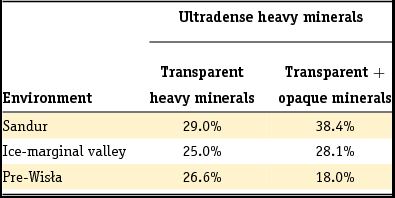
From a methodological point of view an interesting relationship appears when comparing the proportions of the heaviest heavy minerals in the transparent minerals group with those in the group of all minerals (transparent plus opaque minerals) (Table 3). In the exclusively transparent heavy minerals group, the heaviest heavy minerals in the sandurs and the middle part of the IMV and the pre-Wisła have more or less similar proportions, but there are differences if all minerals are analysed (Table 3). Such differences in relative proportions, depending on whether opaque minerals are included in the counting or not, are not uncommon, but this problem – however important for the interpretation of sediment sources – has not been investigated in any detail thus far. It is our intention to deal with this problem in a future study.
Percentages of the ultradense transparent heavy minerals (rutile, zircon, staurolite, garnet) in the sandur, IMV and pre-Wisła sediments, and percentages of the transparent minerals + pyrite and the opaque rest group.
For the time being, it can only be deduced that heavy-mineral analysis in both cases (the whole spectrum vs the exclusively transparent spectrum) requires, if reliable conclusions are to be drawn, that the proportion and composition of the opaques should be taken into account. Negendank (Reference Negendank1973) suggested some 40 years ago that analysis of the opaque minerals derived from igneous rocks is required for meaningful interpretations, but unfortunately this justified advice has not been followed thus far.
Dating of the fluvial sediments
Comparative studies like this one make sense only if the sediments of the various study objects (here sandurs and river terraces) were formed at (almost) the same time because only then might they indicate a similar or a different main source. The samples from the middle part of the IMV were dated by OSL as 23.2±1.7 ka (equivalent dose 22.7(14) Gy aliquots) and 20.8±1.4 ka (equivalent dose 22.8(12) Gy aliquots) at the Kuźnica Czarnkowska site but as 35.6±3.3 ka (equivalent dose 26.6(22) Gy aliquots) at the Walkowice site.
The two sandurs and the terraces under study are considered as having been deposited at more or less the same time during the Pomeranian phase of the Weichselian glaciation, but some questions about their ages have recently been raised as other datings (16–17 ka) of the Pomeranian phase, during which the IMV terrace was supposed to have originated, have been presented by Marks (Reference Marks2012). The IMV ages thus seem to imply that the terrace sediments are older than the Pomeranian phase (16–17 ka), but this is actually not justified, as detailed below.
The discrepancy between the datings from the Kuźnica Czarnkowska and Walkowice terraces should be ascribed to different degrees of accuracy of the OSL analyses; these are well known from literature (Preusser et al., Reference Preusser, Degering, Fuchs, Hilgers, Kadereit, Klasen, Krbetschek, Richter and Spencer2008; Rittenour, Reference Rittenour2008; Weckwerth et al., Reference Weckwerth, Przegiętka, Chruścińska and Pisarska-Jamroży2013), and it has been found that the accuracy depends largely on several parameters, such as the nature of the fluvial depositional environment, the transport mode and the sedimentation rate (Weckwerth et al., Reference Weckwerth, Przegiętka, Chruścińska and Pisarska-Jamroży2013). The main problem in luminescence dating of fluvial deposits is consequently the selection of well-bleached mineral grains, for which the OSL signal may have been totally reset at the time of sedimentation (Murray & Olley, Reference Murray and Olley2002; Singarayer et al., Reference Singarayer, Bailey, Ward and Stokes2005; Rittenour, Reference Rittenour2008). The successive phases of deposition and erosion of the banks and beddings of a river, the supply of older sediments (with a glacigenic origin), redeposition over short distances, an extremely high aggradation rate, ablation floods causing both erosion and sedimentation, and, finally, transport of fine-grained quartz in suspension restrict or even completely prevent exposure to solar light of the grains that may be used for OSL dating (Gemmell, Reference Gemmell1994; Jain et al., Reference Jain, Murray and Bøtter-Jensen2004; Preusser et al., Reference Preusser, Degering, Fuchs, Hilgers, Kadereit, Klasen, Krbetschek, Richter and Spencer2008; Rittenour, Reference Rittenour2008; Weckwerth et al., Reference Weckwerth, Przegiętka, Chruścińska and Pisarska-Jamroży2013).
For all these reasons, erroneous OSL ages may be found for the thick fluvial deposits that accumulated during a number of depositional cycles during which erosion and exposure to sunlight most probably took place only for part of the grains, resulting in grains with only seemingly different depositional ages. Sediments deposited at sites with a high aggradation rate (such as those present in sandurs and IMVs) by a turbulent current with a high suspension load undergo only limited solar resetting (e.g. Berger & Luternauer, Reference Berger and Luternauer1987; Berger, Reference Berger1990). Incomplete resetting of the OSL signal because of inadequate exposure to light results in age overestimations (Wallinga, Reference Wallinga2002). Field investigations and geomorphological relationships which show that sedimentation on the terraces and sandurs under study took place during the same time (see also Weckwerth et al., Reference Weckwerth, Przegiętka, Chruścińska and Pisarska-Jamroży2013) should therefore be considered more reliable.
Discussion
Heavy minerals are important for several analyses, including reconstruction of source areas and/or parent rocks (e.g. Ludwikowska-Kędzia, Reference Ludwikowska-Kędzia2013; Woronko et al., Reference Woronko, Rychel, Karasiewicz, Ber, Krzywicki, Marks and Pochocka-Szwarc2013), the transport history in a fluvial system (Weckwerth & Chabowski, Reference Weckwerth and Chabowski2013) and climate-controlled processes (Derkachev & Nikolaeva, Reference Derkachev and Nikolaeva2013; Wachecka-Kotkowska & Ludwikowska-Kędzia, Reference Wachecka-Kotkowska and Ludwikowska-Kędzia2013). In the case of successive glaciations that supplied minerals from the same source areas, the heavy-mineral composition of the various types of glacigenic sediment will, however, be roughly similar (Fig. 4). This is confirmed by the roughly similar heavy-mineral compositions in the sandurs and IMV of the study area. It must thus be deduced that it is necessary, if sandur sediments are to be distinguished from IMV deposits, that more features should be investigated. We therefore investigated also other characteristics of the heavy minerals, such as the rounding of grains (because of different transport distances for solely on sandurs vs jointly on sandurs and in the IMV), and the colour of garnets (because these may indicate different source areas).
Considering the fact that neither the climate nor the time-span available was suitable for chemical weathering, we did not analyse this parameter, although this might have been very useful under other erosional, transport and depositional conditions (Van Loon, 1972/Reference Van Loon1973, Reference Van Loon2013; Van Loon & Mange, Reference Van Loon, Mange, Mange and Wright2007).
Influence of depositional and erosional conditions
Transport in a braided system on a sandur is regular nowhere but occurs as a series of pulses or sediment ‘slugs’ at different spatial and temporal scales, and with both erosional and depositional phases. Ablation floods are common hydrological features on sandurs (Boothroyd & Ashley, Reference Boothroyd, Ashley, Jopling and McDonald1975; Church & Gilbert, Reference Church, Gilbert, Jopling and McDonald1975; Pisarska-Jamroży, Reference Pisarska-Jamroży2008). The rapid and rhythmic changes of the energy of currents on sandurs cause (1) channel-sheet evolution during large floods, (2) braid-bar development during initial and advanced diminishing of floods, (3) development of depositional cycles in the thalweg or interbar channels (see Pisarska-Jamroży & Zieliński, Reference Pisarska-Jamroży and Zieliński2014) and (4) at least part of the abrasion and mechanical destruction of platy minerals, which constitute in the area under study on average only 1.5% of the sandur sediments. The highest proportion of platy minerals, enriched by erosion of older Quaternary braided-river deposits, occurs consequently in the IMV and pre-Wisła sediments (8.9%). It is obvious that the current energy influences the turbulence of the water and thus the possible settling of platy minerals, but we analysed only heavy minerals from a fraction with a small range (0.1–0.2 mm), which diminishes the role of sorting. Some of the platy minerals were abraded and consequently fragmented during transport and thus possibly increased the percentage in the fractions that are finer than the analysed fractions. Because fragmentation may nevertheless have some influence on the relative percentage of a specific mineral, this will be investigated in another study for heavy minerals in sediments deposited at a high accumulation rate.
Not only the depositional but also the erosional conditions influence the heavy-mineral composition of a sediment. As mentioned before, the streams on the sandurs may, if powerful enough, have eroded gullies of such a depth that older sandurs became incised, thus supplying minerals to the sandur that is being built up. In the sediments under study, this seems not to have influenced the heavy-mineral composition, however, most probably because the sediments of the older (also Weichselian) sandurs were derived from the same Weich-selian source rocks.
A different situation existed in the middle part of the IMV. Miocene sediments, commonly forming the substratum of the Pleistocene glacigenic sediments, crop out locally. The exposed Miocene became eroded and supplied glauconite, which is an accessory in the sandur sediments. The glauconite in the IMV was consequently not supplied by the streams from the north. As calcite grains occur in the IMV in varying concentrations, it may be that Cretaceous sediments have locally been eroded or that calcite has formed as secondary mineral grains. As calcite is commonly not included in heavy-mineral analyses, we do not deal with this aspect in the present study.
Conclusions
Sedimentary particles transported by meltwater rivers coming from the ice sheet in the north built up sandurs. The proglacial streams on these sandurs flowed out into an IMV, then ran roughly E–W south of the sandurs. The braided stream in the IMV was probably also fed by extraglacial rivers from the east and by rivers (called here jointly the ‘pre-Wisła system’) from the south.
The heavy-mineral analyses show no significant differences in the composition of the heavy minerals between the sandur and the IMV sediments. It also appears that sediments supplied from the south have a high percentage of one heavy mineral (epidote) that is much rarer in the sandur and IMV sediments. As the input of the epidote grains from the south does not leave a clear trace in the IMV sediments, we can explain this satisfactorily only by a just marginal supply of sediment by the extraglacial streams coming from the south to the IMV. This is in contrast with what was expected, as thus far a significant sediment supply by the southern rivers was commonly taken for granted by Polish workers (e.g. see Galon, Reference Galon1968), even though no proof was ever provided.
The dominance of amphibole and garnet in both the sandur and the IMV samples suggests that the material was mainly derived from a single source: the Palaeozoic and Precambrian rocks in the East Central Baltic (cf. Passchier, Reference Passchier, Mange and Wright2007). The heavy minerals in the IMV were additionally slightly enriched by minerals derived from eroded Miocene sediments in the substratum of the IMV and from the pre-Wisła system.
Heavy-mineral analysis has been commonly found to be of hardly any use for the distinction of the sources of glacigenic sediments deposited by the Scandinavian Ice Sheet in northern Europe. The main reason for this is that all these sediments are derived from roughly the same rock units of the Scandinavian Shield. Our study shows, however, that investigation of not only the heavy-mineral compositions but also of the various aspects of the heavy minerals can help to deepen the insight into the various sources that may have contributed. Such a more detailed analysis thus proves to be a useful tool for investigating glacigenic sediments. On the basis of this approach, it was found that the spectrum of the heavy minerals in the sandur sediments appears to be similar to that of the sediments in the IMV, so the sediments in the Toruń-Eberswalde IMV must have been supplied mainly by proglacial (sandur) rivers from the north but hardly by extraglacial rivers from the south.
Acknowledgements
We thank Andrzej Muszyński and Robert Jagodziński for valuable suggestions that improved the quality of the present contribution, and both reviewers for constructive suggestions. The work has been financially supported by a grant from the Polish Ministry of Science and Higher Education (research project No. N N307 057540) and by a grant from the National Science Centre Poland (decision No. DEC-2013/09/B/ST10/00031).



