


Introduction
Squamous cell carcinoma (SCC) accounts for over 90 per cent of all head and neck carcinomas, and it represents about 4 per cent of all malignancies.Reference Armand and Couteau1 Squamous cell carcinoma of the head and neck is curable for a significant proportion of patients by locoregional therapy, i.e. radiotherapy and/or surgery. Patients with early-stage disease (stage I and II) are often cured by radiotherapy or surgery alone. By contrast, advanced locoregional SCC of the head and neck (stage III or IV) has a range of about 0–40 per cent for the five-year survival rate, and it often recurs after local therapy.Reference Forastiere2 In this situation, induction chemotherapy leads to high response rates and a quick reduction of symptoms, and this may predict the subsequent radio-responsiveness and can lead to a reduced rate of distant metastases at the first site of relapse. In addition, induction chemotherapy is also effective in preserving organ function.Reference Adelstein, Tan and Lavertu3, 4 Cisplatin and infusional 5-fluorouracil (5-FU)-based combination chemotherapy is the most commonly used induction regimen for the treatment of patients with locally advanced SCC of the head and neck. Five-fluorouracil chemotherapy is highly active for SCC of the head and neck, and it has been associated with a response rate of between 75–85 per cent and a complete response rate of 25–35 per cent in randomised trials.4–Reference Kish, Ensley, Jacobs, Weaver, Cummings and Al-Sarraf6 Despite the high overall response rates, the 5-FU regimen has low complete response rates at the primary site, and is associated with poor survival in advanced-stage disease.Reference Posner, Glisson, Frenette, Al-Sarraf, Colevas and Norris7
Docetaxel (Taxotere; Rhone-Poulenc Rorer, Collegeville, PA) is a drug that interferes with microtubule assembly and disassembly, and it is active against SCC of the head and neck xenografts and shows activity against cell lines that are less sensitive to cisplatin; this indicates that no cross-resistance exists.Reference Braakhuis, Kegel and Welters8, Reference Huttmann, Eckardt, Fokas and Haindl9 The differences in mechanisms of actions for the taxanes, compared with 5-FU, have prompted investigators to examine the potential of adding docetaxel to 5-FU and infusional 5-FU-related combination chemotherapy. A five-day regimen of docetaxel, cisplatin, 5-FU and leucovorin, with its shorter chemotherapy infusion time and an earlier intervention with growth factors and antibiotics, was associated with a complete response rate of 61 per cent and an overall response rate of 100 per cent in 23 patients that were treated in a phase I/II study.Reference Colevas, Busse, Norris, Fried, Tishler and Poulin10 Other studies, including a four-day regimen of docetaxel, cisplatin, 5-FU and leucovorin, resulted in a 60–90 per cent overall response rate with a 40–60 per cent complete response and a 30–50 per cent partial remission rate. In addition, the primary tumour site clinical response rate for this therapy was 50–90 per cent.Reference Posner, Glisson, Frenette, Al-Sarraf, Colevas and Norris7, Reference Colevas, Norris, Tishler, Fried, Gomolin and Amrein11–Reference Schrijvers, Van Herpen, Kerger, Joosens, Van Laer and Awada13 Despite the promising response data, the toxicity profile of docetaxel, cisplatin and 5-FU-based regimens were significant (febrile neutropenia 2–22 per cent, grade 3 or 4 neutropenia 8–100 per cent, grade 3 or 4 mucositis 5–65 per cent, and grade 3 or 4 nausea 15–83 per cent). Several studies have tested the feasibility of using only the docetaxel–cisplatin combination regimen without including 5-FU with or without leucovorin for locally advanced, recurrent or metastatic SCC of the head and neck. This regimen has shown good activity and considerably less toxicity.Reference Schoffski, Catimel, Planting, Droz, Verweij and Schrijvers14–Reference Specht, Larsen and Hansen18 Moreover, although docetaxel, cisplatin, 5-FU and leucovorin-based neoadjuvant chemotherapy for SCC of the head and neck is a popular subject for research, studies with the docetaxel and cisplatin regimen are rare.
In previously reported meta-analysis comparing neoadjuvant chemotherapy plus radiotherapy with concomitant or alternating radiochemotherapy in previously untreated patients with non-metastatic SCC of the head and neck, there was no significant benefit associated with neoadjuvant chemotherapy and a non-significant survival benefit in favour of the concomitant chemoradiotherapy.Reference Pignon, Bourhis, Domenge and Designe19 However, in this meta-analysis, almost all randomised trials used 5-FU-based combination chemotherapy as the neoadjuvant or concomitant chemoradiotherapy regimen. Nowadays, concurrent chemoradiotherapy has become a common strategy for the treatment of advanced SCC of the head and neck. This treatment modality increases both local tumour control and patient survival. However, the report comparing neoadjuvant chemotherapy with concurrent chemoradiotherapy with new agents such as docetaxel have been seldom published. Therefore, it may be worth considering if neoadjuvant combination chemotherapy with new agents including docetaxel followed by locoregional radiotherapy is effective and less toxic than concurrent chemoradiotherapy.
Based on the above observations, we evaluated the tumour response and the toxic effects of neoadjuvant docetaxel and cisplatin combination chemotherapy and treatment outcomes followed by definitive radiation therapy in patients with locally advanced resectable or unresectable SCC of the head and neck.
Materials and methods
Patient selection
The patients eligible for our study had to have measurable, histologically or cytologically confirmed stage III or IV oral cavity, oropharynx, hypopharynx or larynx tumours without any evidence of distant metastases. Other eligibility criteria were an age between 18–75 years and an Eastern Cooperative Oncology Group performance status of 0–2. The patients had received no prior chemotherapy, radiation therapy or surgery. Adequate haematological function (haemoglobin ≥10 g/dl, absolute neutrophil count ≥2.0 × 10⁹/l, platelet count ≥100 × 109/l), hepatic function (total bilirubin ≤1.5 mg/dl, serum transaminases ≤3 × upper normal limit), and renal function (serum creatinine ≤1.5 mg/dl) were also required. All patients gave informed consent to the treatment protocol according to institutional guidelines.
Treatment schedule
Before entry to the study all the patients had a complete history and physical examination, a complete blood count, serum chemistries (liver and renal function tests and electrolytes), electrocardiogram (ECG), chest radiograph, computed tomography (CT) scans or magnetic resonance imaging (MRI) of the head and neck, bone scan and, if indicated, CT scans of the chest. Docetaxel was administered intravenously at a dose of 70 mg/m2 over a period of one hour on day one. All the patients were pre-treated with dexamethasone twice approximately 12 and six hours before the docetaxel. Three hours after the completion of the docetaxel infusion, cisplatin was administered intravenously at a dose of 75 mg/m2 over a two hour period. Immediately before treatment, all the patients received antiemetic therapy with a 5-HT3 antagonist followed by a dopamine antagonist. Granulocyte colony-stimulating factor (G-CSF) or granulocyte-macrophage colony-stimulating factor (GM-CSF) was administered when the absolute neutrophil count decreased to 500 cells/μL. No oral prophylactic antibiotic therapy was allowed. This regimen was repeated every 21 days for a maximum of three cycles, but the regimen was expected to be adjusted or cut in case of disease progression, unacceptable toxicity or patient refusal. Radiation therapy was planned after three cycles of chemotherapy for all patients who achieved a partial remission rate or complete response after two cycles of chemotherapy. If the response to the drug regimen did not meet the above criteria after two cycles of chemotherapy, early radiotherapy was then performed. Radiation therapy was started within four weeks of the last cycle of chemotherapy, and it was administered five days per week. It was given in daily fractions of 1.8 Grays (Gy), and the total dose to the primary tumour site was 70.2 Gy.
Dose modification for adverse events
Toxicity evaluation was carried out before each treatment cycle according to the National Cancer Institute of Canada Common Toxicity Criteria version 3.0. Successive cycles of chemotherapy were given if the patient's blood count had returned to normal and the non-haematologic toxic effects greater than grade 2 had resolved. The dose of docetaxel was reduced by 25 per cent if the granulocyte nadir in the preceding cycle was <0.5 × 10⁹/l for more than seven days and/or there was an associated fever (≥38.5°C), if the thrombocyte nadir in the preceding cycle was <25 × 109/l, or if non-haematologic side effects greater than or equal to grade 3 had occurred in the preceding cycle. If on day 21 the neutrophil count was <1.5 × 10⁹/l, then treatment had to be postponed for one week. If the treatment had to be delayed for more than two weeks, then the patient was taken off the study. The dose of cisplatin was reduced by 50 per cent in the subsequent cycle if the creatinine clearance, as calculated according to the Cockcroft–Gault formula, was between 40 and 59 ml/min.
Follow-up studies and response evaluation
At the first visit, the patients were evaluated with a complete history and physical examination, performance status recording, complete blood cell count, serum chemistries, urinalysis, ECG, chest X-ray, thoracic and cervical CT or MRI, and bone scan. A follow-up history and physical examination, biochemical tests, urinalysis, and chest X-rays were carried out before each cycle of therapy. Physical examination and complete blood cell counts were performed on day 15 of each cycle. Tumour response was assessed after two cycles of chemotherapy. Response evaluation and assessment of performance status were evaluated according to the standard World Health Organization criteria.Reference Miller, Hoogstraten and Staquet20 A follow-up CT scan obtained at least two weeks later was required to confirm complete response or partial remission rate. A complete response required complete disappearance of all detectable tumour for at least four weeks; a partial response was defined as at least a 50% decrease in the sum of the largest diameters of all measurable lesions. Stable disease was defined as less than 50% decrease or a 25% increase in the sum of the products of the largest perpendicular diameters of all measurable lesions. Progressive disease was defined as more than a 25% increase in the sum of the products of the largest perpendicular diameters of all measurable lesions or sum of the largest diameters of all measurable lesion or the appearance of any new lesions.
Statistical analysis
Time to treatment failure was defined as the time to disease progression, additional anticancer therapy or treatment discontinuation that was attributable to toxicity or death. The survival time was defined as the duration from initiation of chemotherapy until death. Survival curves were calculated according to the Kaplan–Meier method. Data were analysed with the SPSS Windows 11.0 system.
Results
Patient characteristics
A total of 41 patients were enrolled between January 2002 and November 2003. Of these, one patient died after the first cycle because of a grade 4 neutropenic fever with sepsis, one patient died because of early tumour progression and two patients did not keep their follow-up appointment after one cycle of chemotherapy. Accordingly, a total of 37 patients received at least two cycles of chemotherapy.
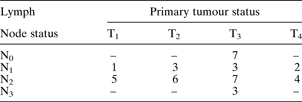
The adverse effects could be assessed in 109 chemotherapy cycles. The characteristics of the population are listed in Table I and the primary tumour and lymph node staging is listed in Table II. The median age of the patients was 61 years (range: 44–75 years), and males were predominant (39 male patients and two female patients). The primary tumour sites were the larynx in six patients (14.6 per cent), the hypopharynx in 13 patients (31.7 per cent), the oropharynx in 19 patients (46.3 per cent), and the oral cavity in three patients (7.3 per cent). There were 13 patients (31.7 per cent) with stage III tumour and 28 patients (68.3 per cent) with stage IV tumour. Twenty-five patients (61.0 per cent) had N2 or N3 nodal disease and 26 patients (63.4 per cent) had T3 or T4 primary tumours before the start of induction chemotherapy.
Patient and disease characteristics at baseline

Primary tumour and lymph node staging
Efficacy and survival
A total 109 cycles of docetaxel and cisplatin were administered. Induction chemotherapy was three cycles in 31 patients (75.6 per cent), two cycles in six patients (14.6 per cent), and one cycle in four patients (9.8 per cent). Of the six patients who received only two cycles of chemotherapy, three patients had early progression and were treated with radiation after two cycles of chemotherapy. One patient did not receive the third cycle of chemotherapy due to development of adverse psychiatric behaviour during the second cycle. Two patients did not reach the third cycle of chemotherapy because of severe side effects and received radiotherapy after two cycles of chemotherapy (Figure 1).
Treatment courses of 41 patients. DP = docetaxel and cisplatin; CR = complete response; CTx = chemotherapy; PD =progressive disease; PR = partial response; RTx = radiotherapy; SCCHN = squamous cell carcinoma of the head and neck

Time to progression (a) and overall survival (b) for 37 patients with squamous cell carcinoma of the head and neck. OS = overall survival; TTF = time to treatment failure

Of the 41 eligible patients, four (9.8 per cent) were not evaluated for response because of treatment discontinuation due to death or refusal of treatment. According to intention-to-treat analysis, 18 patients achieved a complete response (43.9 per cent) and 16 patients a partial remission rate (39.0 per cent), respectively. The overall response rate to the docetaxel and cisplatin regimen was 82.9 per cent (34 of 41). Seventeen out of the 18 patients who achieved a complete response received radiotherapy and of these, four patients relapsed (23.5 per cent) (regional relapse in all patients and there was no distant failure). The stage of the four patients having regional relapse was T1N2, T2N2, T3N2 and T4N1, respectively, and all of them were stage IV. Thirteen out of 16 patients who achieved a partial remission rate received radiotherapy and of these, nine patients achieved a complete response. Of the nine patients with a complete response after radiotherapy, six patients are alive without disease at a follow up of 36, 36, 38, 40, 41 and 44 months, one patient was lost to follow up, and two patients relapsed (one died and one alive with disease).
After a median follow up of 19 months, the median time to treatment failure was 24 months (95 per cent confidence interval, 0–48 months). The median survival was not obtained. Four year estimated survival rates were 78.2 per cent.
Adverse events and treatment delays/reductions
Toxicity was assessed for 41 patients. Thirty-one of 41 (75.6 per cent) patients received all three cycles of therapy and 15 of 109 cycles (9.2 per cent) were delayed due to toxicity. The most frequent moderate-to-severe toxicity was grade 3–4 neutropenia, and this occurred in 36.6 per cent (15 of 41) of the patients we could evaluate, and in 11.0 per cent (12 of 109) of the treatment cycles. Febrile neutropenia occurred in 7.3 per cent (eight of 109) of treatment cycles, which was complicated by fatal sepsis in two cases and grade 3–4 infection occurring in 1.8 per cent (two of 109) of treatment cycles. Grade 3 thrombocytopenia developed in only one patient and there was no clinically significant bleeding. There was one episode of grade 4 anaemia. Haematological toxicity resulted in a dose reduction in six cycles (5.5 per cent) and four patients (9.8 per cent). Thirty-four point one per cent (14 of 41) of patients and 20.2 per cent (22 of 109) of treatment cycles reported grade 3–4 non-haematologic side effects. The most common grade 3–4 acute non-haematologic toxicities included anorexia in 3.7 per cent, nausea in 2.8 per cent and asthenia in 3.7 per cent of the treatment cycles. Grade 1–4 mucositis was observed in 13.8 per cent (15 of 109) of the cycles, but grade 3–4 mucositis occurred in only one of the cycles. Similarly, grade 3–4 diarrhoea occurred in only two of the cycles. Skin rash was noted in one cycle (Table III).
Summary of toxic effects

Discussion
Five-fluorouracil-based induction chemotherapy is highly active in SCC of the head and neck.4 The taxanes also have been proven to have a significant single-agent activity in SCC of the head and neck.Reference Haddad, Tishler, Norris, Mahadevan, Busse and Wirth21 Many regimens have been developed to try to take advantage of the activity of paclitaxel and docetaxel. In a phase III trial performed for a European Organisation for Research and Treatment of Cancer (EORTC) head and neck cancer group, 177 patients with non-resectable locally advanced SCC of the head and neck were treated with docetaxel, cisplatin, 5-FU and leucovorin and they were then compared with the 5-FU regimen.Reference Vermorken, Remenar, Van Herpen, Germa Lluch, Stewart and Gorlia22 The docetaxel, cisplatin, 5-FU and leucovorin group demonstrated a significantly superior progression-free survival rate, overall survival rate and response rate (response rate: 67.8 per cent versus 53.6 per cent, respectively). Following the subsequent completion of radiation therapy, both the overall response rates and complete response occurred at a significantly higher rate in the docetaxel, cisplatin, 5-FU and leucovorin arm compared to the 5-FU arm (overall response rates 72.3 per cent versus 58.6 per cent, complete response 33.3 per cent versus 19.9 per cent, respectively). In our current docetaxel and cisplatin combination chemotherapy study, the overall response rate was 82.9 per cent and the complete response was 43.9 per cent. The median time to treatment failure was 24 months and the four year estimated survival rate was 78.2 per cent. These data are comparable with previously reported results with docetaxel, cisplatin, 5-FU and leucovorin-based induction chemotherapy.Reference Posner, Glisson, Frenette, Al-Sarraf, Colevas and Norris7, Reference Haddad, Colevas, Tishler, Busse, Goguen and Sullivan12, Reference Schrijvers, Van Herpen, Kerger, Joosens, Van Laer and Awada13, Reference Vermorken, Remenar, Van Herpen, Germa Lluch, Stewart and Gorlia22 In addition, treatment compliance, treatment delays and toxicity, in view of the number of received chemotherapy cycles, were minimal compared with the EORTC study. The main grade 3/4 adverse event associated with the docetaxel and cisplatin regimen was neutropenia that occurred in 11.0 per cent of all cycles, and this was complicated by neutropenic fever in 3.7 per cent of cycles with two patient dying of fatal sepsis. The incidence of adverse events other than neutropenia was rather low; the most common grade 3/4 non-haematological adverse events were anorexia, asthenia and nausea. The results of the present study indicate that the combination of docetaxel and cisplatin is active and well tolerated as neoadjuvant chemotherapy for locoregionally advanced SCC of the head and neck. Furthermore, the local radiotherapy after docetaxel and cisplatin neoadjuvant chemotherapy had an organ preserving effect and the regimen does not increase locoregional failure compared with other reports, including the docetaxel, cisplatin, 5-FU and leucovorin combination chemotherapy.Reference Posner, Glisson, Frenette, Al-Sarraf, Colevas and Norris7, Reference Haddad, Colevas, Tishler, Busse, Goguen and Sullivan12, Reference Haddad, Tishler, Norris, Mahadevan, Busse and Wirth21
The effects of treatment on functional abilities such as speech and eating are additional factors to consider for patients with head and neck cancer. Recent attempts to improve the major endpoints of treatment have focused on the use of radiotherapy with concomitant chemotherapy. At the Dana-Farber Cancer Institute, Tishler et al. have reported their results of concurrent chemoradiation therapy for patients with SCC of the head and neck.Reference Tishler, Norris, Colevas, Lamb, Karp and Busse23 Patients with locally advanced and poor prognosis SCC of the head and neck received at least two cycles of cisplatin-based neoadjuvant chemotherapy. Those patients with persistent biopsy-proved residual disease or that had only a partial response to induction chemotherapy subsequently underwent concurrent chemoradiation with docetaxel. The complete response and overall response rates were 57 per cent and 86 per cent, respectively. Yet this study's good results came at the expense of the increased local toxicity. In our present study, the complete response and overall response rates were comparable with the Dana-Farber Cancer Institute study, while the toxicity experienced in our study was judged to be minimal.
• This study showed the efficacy and safety of neoadjuvant docetaxel and cisplatin chemotherapy followed by local radiation for patients with locoregionally advanced squamous cell carcinoma of the head and neck
• The overall response rate of docetaxel and cisplatin chemotherapy was 82.9 per cent (complete response 43.9 per cent)
• The median time to treatment failure was 24 months and four year estimated survival rates were 78.2 per cent
• The toxicity of docetaxel and cisplatin chemotherapy was tolerable and manageable
To date, most docetaxel and cisplatin regimen-based studies have been done on patients with recurrent or metastatic SCC of the head and neck.Reference Schoffski, Catimel, Planting, Droz, Verweij and Schrijvers14–Reference Specht, Larsen and Hansen18 In the neoadjuvant chemotherapy regimens, docetaxel, cisplatin, 5-FU and leucovorin has been predominately studied, but the docetaxel and cisplatin regimen has not been examined nearly so well.
In conclusion, the docetaxel and cisplatin regimen can replace the docetaxel, cisplatin, 5-FU and leucovorin regimen in a neoadjuvant setting, and this regimen followed by radiotherapy is a feasible treatment strategy in patients with locoregionally advanced SCC of the head and neck.



