




Graduate employment is a heated politicized issue throughout China but particularly so in Tibetan areas given the severe disadvantages faced by Tibetans when competing for such employment. In particular, jobs that are deemed appropriate for university graduates are biased, through their recruitment processes, towards those who possess stronger Chinese language skills and related cultural aptitudes. While this might benefit a minority of Sinicized Tibetans or other ethnic minorities in Tibetan areas, in addition to the Han Chinese majority, it disadvantages the majority of Tibetan graduates with weaker Chinese language skills, who also have to contend with a range of other discriminatory practices.
Two contradictory dynamics have lead to mounting pressure since the early 2000s. Rising educational attainment among Tibetans, especially in tertiary education, has increased the demand for public employment, in particular because of the exceptionally limited supply of formal private employment in Tibetan areas that would correspond to the employment expectations of tertiary graduates. The even more rapid expansion of Tibetan-medium education in the Tibetan areas outside of the Tibet Autonomous Region (TAR), as analysed in detail by Adrian Zenz,Footnote 1 has accentuated this pressure for public employment as there is little desire for such education from even state-owned enterprises (SOEs).
In contrast, the phasing out of the erstwhile job assignment system (fenpei 分配), from the late 1990s onwards, worked against these rising attainments and expectations. This legacy of the collective and early reform eras effectively served as an implicit preferential employment policy in minority areas as it guaranteed employment to secondary vocational and university graduates, regardless of minzu 民族 (officially translated as “nationality” and unofficially often as “ethnicity”).Footnote 2 As discussed by Zenz,Footnote 3 the fenpei system also supported Tibetan-medium schooling in that employment was guaranteed to graduates regardless of the language medium or subject of their studies. It thereby allowed for several generations of a small but growing cohort of university-educated Tibetans to embed themselves within various state institutions.Footnote 4 Although implicit, the fenpei system was arguably the most important form of positive discrimination practised in Tibetan areas because it guaranteed outcomes in coveted public employment.
The end of fenpei was part of the broader state-sector employment reforms that began in eastern China earlier in the 1990s and reached the Tibetan areas from the late 1990s onwards.Footnote 5 The TAR was the last region to abolish fenpei, which was finalized in 2007.Footnote 6 The end of fenpei was compounded by the more general retrenchment and restructuring of state-sector employment in the late 1990s and early 2000s. As a result, one of the most substantive pillars of positive discrimination was removed precisely at a time when demand for preferentiality was increasing.
Explicit and implicit preferential employment practices nonetheless outlived the job assignment system. The explicit forms are in relation to the general system of preferential policies for ethnic minorities (youhui zhengce 优惠政策), which range from family planning to school admission, and include preferential points in job applications. Implicit practices include specifying certain language skills or even Tibetan-medium degree qualifications, as well as local residency requirements, in public employment recruitment. Language requirements are technically permitted under Article 49 of China's Regional Nationality Autonomy Law (minzu quyu zizhifa 民族区域自治法), which stipulates that cadres in minority regions should have knowledge of the respective minority language. This lends minorities an advantage when competing for such positions. Specifying local residency requirements similarly restricts competition from (mostly non-Tibetan) outsiders. Even beyond these practices, Tibetans might make up the bulk of more general hiring, particularly in remote areas populated largely by Tibetan majorities, which are seen as undesirable by non-local applicants, or else where informal practices of clientelism or nepotism tend to prevail in the recruitment process.Footnote 7 Language or residency requirements, however, are currently the most decisive formal means of exercising preferentiality in public employment, particularly as the specification of minzu status appears rarely in the recruitment criteria used in Tibetan areas.
Attempts to analyse practices of preferentiality have, however, been hampered by a dearth of any rigorous or systematic information on the extent of these post-fenpei practices or outcomes in Tibetan areas (or other minority areas of China). Moreover, the phasing out of fenpei led to a period of ambiguity and uncertainty in the public employment systems in Tibetan areas. A strong assimilationist policy orientation appeared to be in the ascendant. This was buffered by growing criticism of minority nationality policy in China by advocates of a second generation of ethnic policies (SGEPs). They argued that as well as reinforcing minority nationalism, preferentiality targeted towards minority groups was unfair to socio-economically weaker members of both the Han majority and the minority groups, and hence, it should be replaced by preferentiality based on socio-economic criteria.Footnote 8 As argued by Andrew Fischer,Footnote 9 the perception of this assimilationist orientation contributed to the political resentment that fuelled widespread protests throughout Tibetan areas in 2008 and after.
The main impediment to verifying this perception has been the lack of public employment data disaggregated according to minzu status, which have been non-existent in publicly available statistical sources since the early 2000s. The TAR provided state-owned unit staff and worker data disaggregated by Tibetans and non-Tibetans up until 2003,Footnote 10 although similar disaggregations are not publicly available for other provinces containing Tibetan areas.Footnote 11 Drawing from these data, Fischer observed a sharp reduction in Tibetan representation in 2002–2003.Footnote 12 In particular, the Tibetan share of cadre employment fell from over 70 per cent up to 2002 to just below 50 per cent in 2003, the lowest level since 1980. Since then, only anecdotal evidence or indirect extrapolations exist to suggest that the trends might have continued further into the noughties.Footnote 13
More recent policy developments appear to have altered the situation dramatically since the 2008 protests. Most notable is the major policy change launched at the Eighth TAR Party Congress in November 2011, when the then-new TAR Party secretary Chen Quanguo 陈全国 announced the aim of achieving “full employment” (quan jiuye 全就业) for all tertiary graduates who “originate” (shengyuan 生源) from the TAR.Footnote 14 This new policy thereby effectively reintroduced a form of job guarantee and could be termed a neo-fenpei system. The initiative might be understood as a measure to promote socio-political stability by using state resources to remedy major sources of grievance, as has been increasingly characteristic in the shift from the Hu–Wen to the Xi–Li administration.Footnote 15 The focus is evidently on co-opting a rising strata of university-educated young Tibetans through the promise of lucrative public sector jobs, particularly since the period of retrenchment in public sector employment that preceded the wave of protests in 2008. Chen's announcement also came just months after the beginning of the first spate of self-immolations by Tibetans in the Tibetan areas of neighbouring Sichuan province.Footnote 16 To the best of our knowledge, however, these policy developments have been completely absent from the social science scholarship on Tibet outside of China and they have barely registered in the scholarship inside China.
This article aims to address these lacunas by exploiting a new and entirely unexplored data source on public employment recruitment that has been available in digital online form starting from about 2006 onwards. These data contain specifications such as minority language capability, university degree and/or residency requirements. The actual recruitment outcomes (or else intermediate shortlists of candidates) have also been published, although with highly uneven consistency and comprehensiveness. The publishing of detailed recruitment advertisements and outcomes appears to be part of a wider effort to combat corruption in public recruitment processes through increased transparency.Footnote 17 It offers a unique opportunity to explore the evolution of formal practices of preferentiality in recruitment as well as the extent of minzu representation in recruitment outcomes. The documents do not indicate the extent of minzu representation in the stock of existing employment, nor the minzu composition of retirements, lay-offs or out-of-province transfers, which are especially important in light of the substantial retrenchment and restructuring of state-sector employment in the early 2000s. Nonetheless, they provide a far more substantiated understanding of current conditions than exists to date even in the Chinese literature.
Several major insights can be made from scrutinizing these data. These include chronic but not severe Tibetan underrepresentation within public recruitment; strong increases in recruitment levels from 2011 onwards; and the generalized decline in the use of language requirements (except in Amdo Qinghai) versus a sustained use of residency requirements, particularly in the TAR. These insights are discussed in the following sections. The first provides a brief overview of the urban employment situation in the Tibetan areas. Second, the new data sources are presented, along with an explanation of employment categories and recruitment processes. The recruitment outcomes are discussed in the third section, followed by an analysis of the more comprehensive recruitment advertisement data in the fourth section. The conclusion relates these findings to changing dynamics of social inequality, to ongoing debates surrounding SGEP, and to questions of affirmative action more generally.
Overview of the Urban Employment Situation in the Tibetan Areas
A key aspect of the employment predicament in Tibetan areas is that the state sector has remained as the almost exclusive source of jobs appropriate for university graduates. This situation has persisted despite dramatic changes in the structure of urban employment since the 1990s. Up until then, urban employment was dominated by state-sector employment (i.e. employment in “state-owned units”), whether in the public sector (for example, “government work units”) or in state-owned enterprises (SOEs). The subsequent rapid increase in urban employment, fuelled by the heavily subsidized growth of Tibetan towns and cities in the 2000s, was mostly driven by relatively less privileged and protected private employment, whereas the state sector was actually shedding jobs in the early 2000s and then only increased employment slowly later on in the decade. As a result, the state sector's share of total urban employment fell rapidly from the late 1990s onwards.
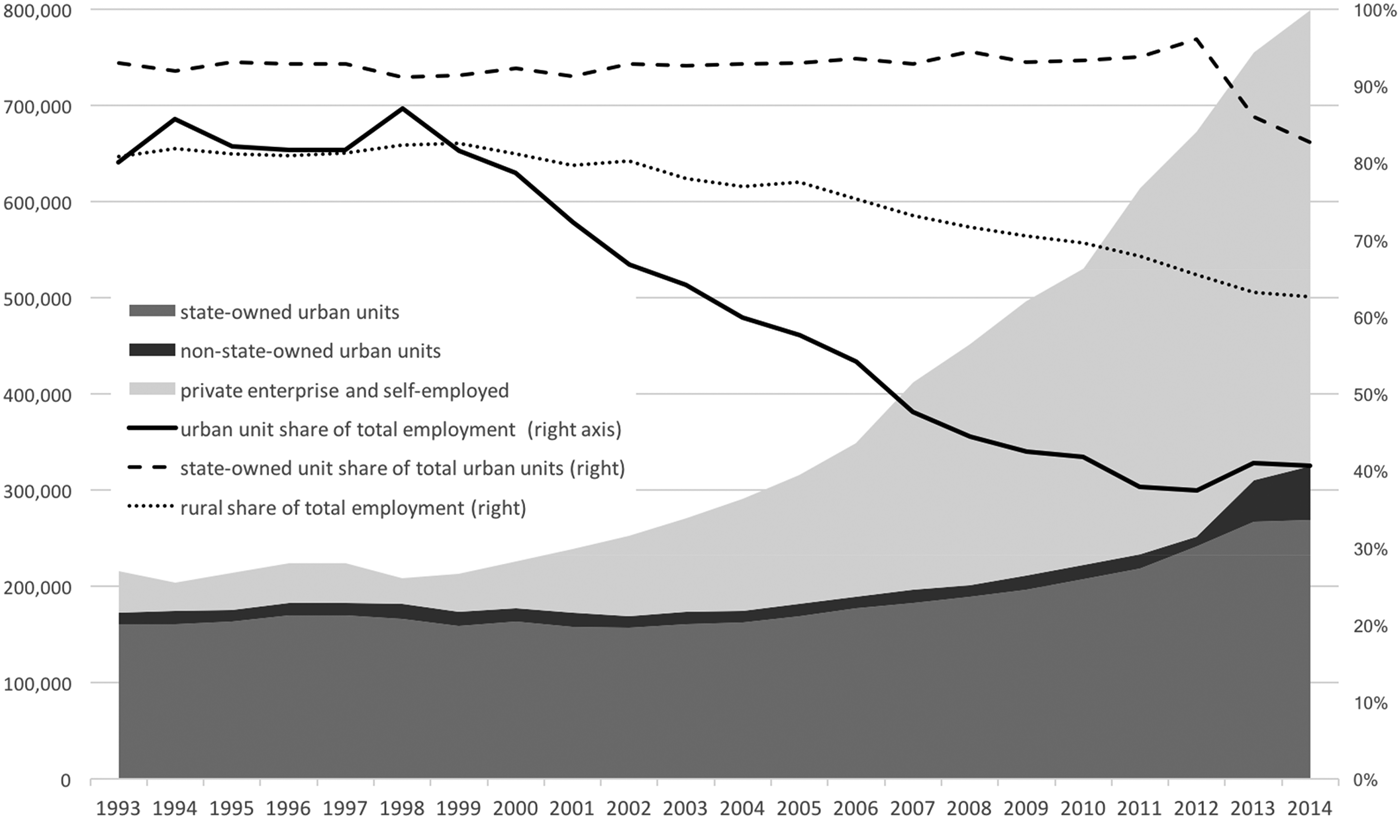
For instance, as shown in Figure 1, total registered urban employment in the TAR increased from 225,625 people in 2000 to 799,095 by 2014, which was more than twice as fast as the average growth rate of urban employment in China. However, the increase was dominated by burgeoning employment in “private enterprises” and self-employment, which increased almost ten-fold in the TAR, from 48,021 people in 2000 to 473,636 people by 2014. Meanwhile, state sector employment shrank from a peak of about 170,000 people in 1997 to a trough of 157,000 employees in 2002, a reduction which was disproportionately borne by Tibetans, as noted in the introduction.Footnote 18 State-sector employment then recovered slowly, relative to the rapid GDP growth of the state sector, reaching 207,267 employees by 2010. It then increased more rapidly to 269,083 by 2014, although still not as fast as private sources of employment. As a result, the state sector's share of total urban employment fell from almost 80 per cent in the late 1990s to about 34 per cent by 2014.
Urban Employment, TAR, 1993–2014
The retrenchment of state-sector employment was even more severe in China overall, from a peak of almost 113 million employees in 1995 to a trough of 64 million employees by 2009. However, the decline elsewhere in China was more than compensated for with an increase in non-state urban units, referring to non-state formal employment that offers wages, security, benefits and status on a par with those offered by state-sector employment. In the Tibetan areas, such employment has remained extremely limited.
For clarification, urban employment in China is officially defined, registered and reported according to three broad ownership categories: urban units, private enterprises, and self-employment. “Units” in this sense are akin to “private” corporate, collective/cooperative, or statal entities.Footnote 19 “Urban unit” employment, also referred to as “staff and workers,” effectively amounts to a formalized and relatively privileged sub-category of urban employment, with higher wages and greater job security than in other forms of urban employment. University graduates primarily target white-collar “staff” jobs, whether in the public or private sectors.
In contrast, “private enterprise” and self-employment are semi-formal employment categories, in the sense that they generally lack social security and other benefits and offer much lower wages on average than urban units (state or non-state).Footnote 20 Examples of both include restaurants, small retail shops, internet cafes, etc. In other words, the “private enterprise” category is not equivalent to the “private sector” in that it does not include large corporations and professional employment in these corporations. We know very little about these categories in Tibetan areas besides sporadic surveys,Footnote 21 extrapolation from related statistical sources,Footnote 22 and/or qualitative fieldwork. However, as concerns this study, Tibetan university graduates mostly do not target this space of more informal employment, or else they only rely on it temporarily while waiting for opportunities to arise in formal (mostly state) employment.
The dilemma in Tibetan areas is that, until recently, there has been little to bridge the extremes of privileged state-sector employment and much less privileged and unprotected employment in private enterprise and self-employment. For instance, only 7 per cent of urban unit employment in the TAR in 2010 was in non-state units, or only 3 per cent of total registered urban employment.Footnote 23 Similar proportions appear to have prevailed around the same time in other Tibetan areas. In the two Tibetan autonomous prefectures (TAPs) in Sichuan province, 83 per cent of urban unit employees in Aba 阿坝 (Tib. Ngawa) and 91 per cent in Ganzi 甘孜 (Tib. Kardze) were employed in the state sector in 2012.Footnote 24 Even within state-owned units, a reliance on public employment versus SOEs can be more specifically observed in the Tibetan areas outside of the TAR from reports issued by various universities on the employment outcomes of their graduates.Footnote 25 Likewise, the extremely rare, publicly available SOE recruitment documents pertaining to Tibetan areas indicate that Tibetans are massively underrepresented within these opportunities.Footnote 26 Tibetan graduates therefore tend to face an all-or-nothing prospect with respect to public employment, much more so than elsewhere in China (although similar dynamics also appear to prevail among other minorities in China).Footnote 27
The strong increase in public sector hiring from 2011 onwards across most Tibetan areas is particularly significant in this context given that it effectively represented – at least in the TAR – the return of full employment for resident tertiary graduates. Indeed, the TAR government claimed in 2014 to have achieved four consecutive years of such full employment.Footnote 28 At the end of 2016, it reported that 84 per cent of TAR resident graduates had been recruited into government positions from 2011 to 2016.Footnote 29 This is evidenced for the TAR in Figure 2, which shows the estimated public sector recruitment figures for each year (based on the data sources discussed in the next section).Footnote 30 Estimates of what fenpei recruitment would have been before it was phased out in 2006 are also included, based on the numbers of tertiary and secondary vocational (zhongzhuan 中专) graduates in each year (i.e. the graduates who qualified for fenpei). They are compared to a measure of annual student intakes of TAR residents in tertiary institutions anywhere in China and an estimate of the annual number of TAR residents graduating from tertiary institutions anywhere in China.Footnote 31 The latter graduate measure is relevant given that public recruitment from at least 2007 onwards has been explicitly open to all TAR residents who graduated from 2006 onwards, from tertiary institutions anywhere in China, as discussed further below.
Intakes and Graduation of TAR Residents and Public Employment Recruitment
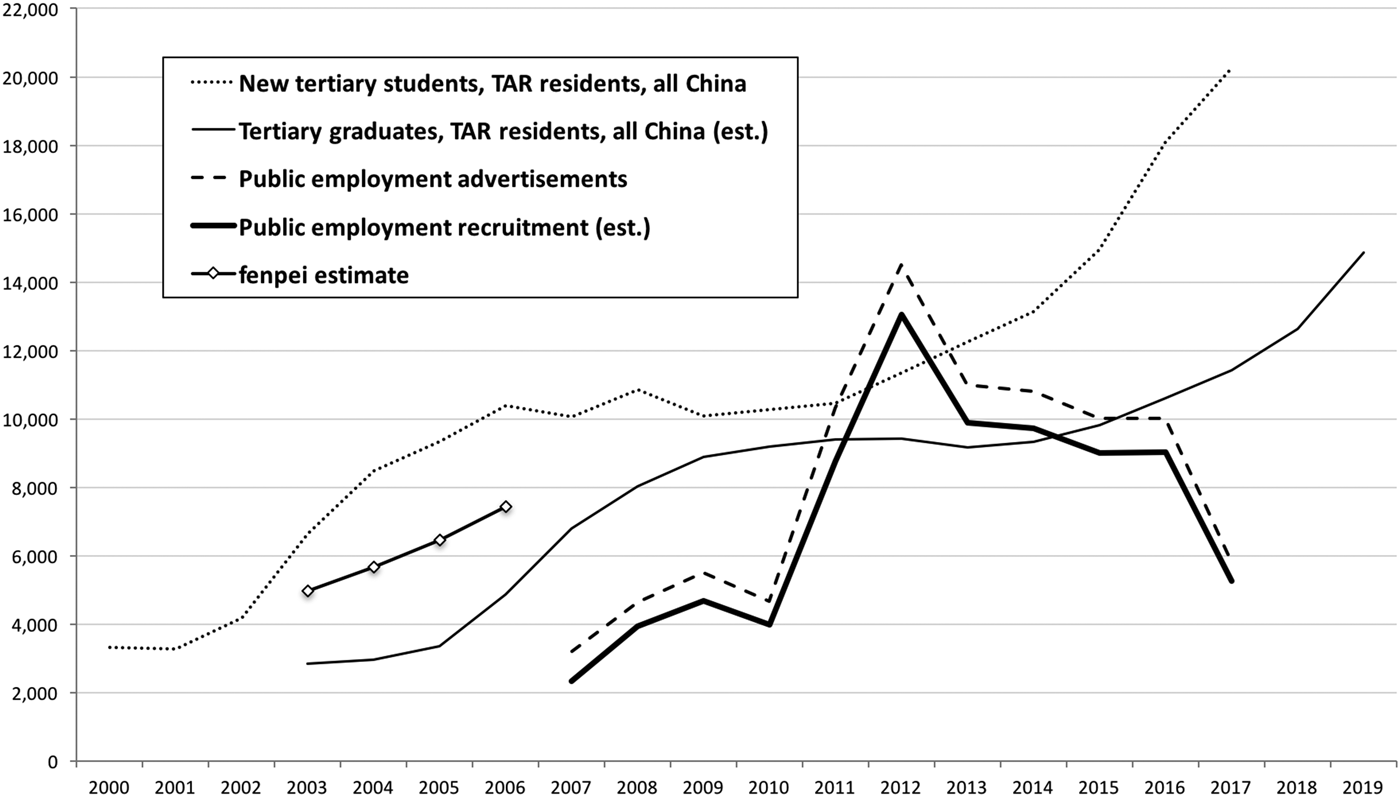
According to the recruitment data, the hiring surge in the TAR started in 2011, peaked in 2012 at 13,050 recruitments, and then settled to about 9,000 by 2016, slightly less than the initial level reached in 2011. This was up from a trough of about 4,000 estimated recruitments a year from 2008 to 2010, and a low of 2,338 actual recruitments in 2007. The estimate of the previous fenpei recruitment figures was in between these two levels, at around 6,000 recruitments a year from 2003 to 2006 (increasing throughout).
Considering the increasing numbers of graduating students during these years, the resurgence in hiring in 2011 effectively represented a return to the fenpei norm, except at a higher number of graduating students. Indeed, according to official sources, the TAR recruited 61,862 graduates into civil and public service positions from 2011 to 2016, which was more than the number of TAR graduates during that period.Footnote 32 Estimated recruitment figures slightly exceeded the number of TAR resident graduates from 2012 to 2014 (by a significant margin in 2012), which was likely designed to make up for the TAR resident graduates who were not hired in the intervening years since the end of fenpei in 2006. In particular, there were far fewer recruitments than graduates between 2007 and 2010, when the annual number of graduates was increasing rapidly (reflecting, with a four-year lag, the increased intakes of students earlier in the decade, before the fenpei was abolished).
The total number of public sector recruitments between 2007 and 2016 was nonetheless still less than the number of graduates by around 12,600, in part owing to a short fall in 2015 and 2016, when recruitments again started to lag behind new graduates. The neo-fenpei system then appears to have been effectively abandoned in 2017, when public job advertisements dropped suddenly to 5,844, while the estimated number of graduates reached an all time high of 10,757. This observation is supported by official reports that a record number of 27,500 applicants applied for the 4,551 positions of the first intake in 2017, along with the conspicuous absence of any reference to the term full “employment” in official or media statements from the TAR since mid-2016.Footnote 33 Some graduates might have been absorbed by employment in SOEs or by sharp employment increases in non-state urban units for the first time in 2013.Footnote 34 Indeed, the sudden increase in the latter might have been orchestrated by the government in part to address the looming possibility that the new employment guarantee would become difficult to sustain in the face of increasing numbers of graduates. We might also speculate that the quiet abandonment of the guarantee in 2017 was related to the transfer of Chen Quanguo, who left the TAR in August 2016 in order to become Party secretary in Xinjiang, and which might have removed much of the political impetus behind the policy or at least served as an excuse for back tracking on earlier promises.
As a result of this temporary revival in public hiring, at least in the TAR, the share of public sector recruitment increased substantially among the respective age-cohorts concerned.Footnote 35 For instance, assuming that 90 per cent of advertised positions were filled, appointments in the TAR in 2015 would have amounted to almost 17 per cent of the 22-year-old cohort in that year (and a peak of 22 per cent in 2012).Footnote 36 In comparison, graduate recruitment in the late fenpei period reached an equivalent ratio of 10 per cent in the peak year of 2006.Footnote 37 This ratio collapsed to only 3.7 per cent with the end of fenpei in 2007, and recovered to only 6 per cent in 2008, which offers some insight into the very austere employment conditions facing graduates during these transitional years, just before the outbreak of widespread protests in 2008.
Similar comparisons for the Tibetan regions outside the TAR are rendered difficult owing to the lack of equivalent data for the late fenpei period. Nonetheless, the ratio for the Qinghai “Tibetan majority areas” (see next section), for instance, was close to 17 per cent by 2015, similar to the TAR. Earlier data from 2007 to 2011 also show much lower ratios, suggesting a similar collapse in recruitment levels compared to the fenpei era.Footnote 38 Indeed, the Qinghai government claimed that it had achieved a 92.7 per cent employment rate for tertiary graduates across its Tibetan regions in 2016.Footnote 39 If true, this indicates that it had also effectively adopted a neo-fenpei approach, albeit less explicitly, as discussed further below.
Data Sources and Recruitment Processes
The new data sources on government recruitment are related to the routine advertisement of vacancies by local governments (provincial, prefecture or county). The lists are presented as spreadsheets or tables, entirely in Chinese.Footnote 40 As first analysed by Zenz, each advertised post has a separate line in these lists which contains various amounts of detail but in all cases specifies the required tertiary degree, the work unit and location as well as additional requirements such as Tibetan language skills.Footnote 41 These lists have been posted online starting from about 2006 onwards. Comprehensive online documentation across all public job categories began to be available for all provinces containing Tibetan areas around 2010–2011. Documents initially appear on the government websites of each region, and then quickly spread across career or news-related media websites. Total numbers of advertised posts can be corroborated with related government announcements.
Actual hiring outcomes at one or several stages of the recruitment process are also increasingly posted online, such as the shortlists for interviews or final appointments. The level of detail varies widely. Some contain many, even highly personal details, while others are largely useless for the present analysis because they do not indicate the minzu status of those recruited. Nonetheless, outcome documents that do not specify the minzu status of the applicants can still enable an identification of minorities if they indicate the provision of added points that only minorities receive.Footnote 42
For this study, these documents were systematically retrieved for all “Tibetan Majority Areas” (TMAs), including those outside the TAR (except for Dechen/Diqing 迪庆 TAP in Yunnan because of the poor quality of its published data).Footnote 43 We have defined a TMA as including any autonomous prefecture or county with a Tibetan population of more than 50 per cent of the total population.Footnote 44 The reason for not including other regions with a lower Tibetan population share is to enable a realistic analysis of Tibetan representation in areas that would have strong legitimacy in advocating for greater representation in public employment.
The final dataset was compiled by Zenz who parsed more than 20,000 individual entries, covering almost 110,000 jobs. In rare instances, the analysis required approximation owing to vague specifications. The complexity of intakes is another challenge: although intakes are centralized within the TAR, elsewhere they are often decentralized across jurisdictions and even government departments. Therefore, except for the TAR, figures for other regions are potentially incomplete, although based on extensive searches on relevant government and other websites, we believe that the majority of positions are reflected in our summaries.
Categories of public employment
These recruitment advertisement and outcome documents refer to categories of public employment in China that can be broadly divided into civil servants (gongwuyuan 公务员) and public service unit employees (shiye danwei 事业单位). Civil servants are the most prestigious category. They have considerable administrative powers (xingzheng zhifaquan 行政执法权) and dominate key power positions such as those within the legal system, law enforcement, inspection bureaus, and all ministries and government agencies.
The government employment category of public service units refers to public institutions that provide public services in areas such as education, culture, science, health, environmental services or the state media.Footnote 45 Additionally, various types of assistant staff positions at core government agencies are also classified in this category. In contrast to the civil service system, public service unit employees are directly employed by their respective local public institutions, with the exception of the TAR, where public service hiring is done at the provincial level. These positions are also typically lower paid and come with fewer benefits than civil service posts and have no direct administrative powers.
Another employment category was introduced in 2006 when the Ministry of Education launched the “Rural volunteer education phase school teachers special job positions plan,” abbreviated to tegang 特岗.Footnote 46 The aim of this initiative is to alleviate teaching staff shortages in China's less developed western regions.Footnote 47
The recruitment process
The recruitment process for these public-sector positions consists of two stages. The first is a written exam (bishi 笔试). Typically, there has to be a minimum number of applicants who complete the written stage and enter the interview stage (mianshi 面试), or else the advertised post is withdrawn. In recent years, such vacant positions are typically re-advertised in subsequent recruitment rounds. According to our estimates, approximately 80 to 90 per cent of positions have been filled overall, and the re-advertising of vacant positions has brought this share closer to 90 per cent.Footnote 48
Minorities typically receive added points (jiafen 加分) in line with preferential policies. Points are usually added to either written or interview scores (or both) and can range from between one and five points, out of a total of 100. In the TAR, minority applicants do not receive added points but benefit instead from a lower number of required points (fenshuxian 分数线), which can be up to 20 points in some cases, depending on the position.
There are generally two types of Tibetan-medium requirement: a Tibetan-medium tertiary degree (such as for jobs related to the Tibetan language, Tibetan medicine or Tibetan–Chinese translation), or else some level of Tibetan language proficiency. The latter requirement is for what is referred to as “bilingual” positions (shuangyu 双语) in the job advertisements and can include a wide range, from very weak to very strong language proficiency criteria. The exam practices also vary, from an interview in Tibetan but all or most of the written exam in Chinese, to the rare extreme of both the interview and exam being conducted entirely in Tibetan. A Tibetan-medium degree requirement is the most restrictive possible requirement and essentially guarantees that the successful applicant will be a Tibetan.Footnote 49
The advertised positions also often specify local residency requirements (regardless of minzu status). This effectively serves as an implicit form of preferentiality as it prevents more highly educated outsiders, usually Han but also non-local Tibetans from regions with superior educational opportunities, from applying for such positions.
Evaluating Public Employment Recruitment Outcomes and Tibetan Representation
Despite being more limited in coverage than the advertisement documents, the outcome data provide rare insights into actual Tibetan representation in public-sector recruitment. For this purpose, we have focused on a sample of 24 outcome documents that provide sufficient data to analyse minzu identity. These documents come from Aba (2 documents, from 2011 and 2013), Ganzi (10 from 2011–2014), the TAR (2 from 2007 and 2008), and the Qinghai TMAs (10 from 2009–2015).Footnote 50 This sample gives disproportionate weight to Ganzi (31 per cent of observed outcomes versus a population share of 16 per cent), although the other regions correspond roughly to their population weight within the remaining sample. The sample is also temporally imbalanced, particularly in terms of the TAR, which stopped listing the minzu status of applicants and providing outcome data after 2008. However, we are confident that it is roughly representative of the overall outcomes, especially for areas outside the TAR.
Across this dataset, the overall share of Tibetan (or minority) applicants who were recruited (or shortlisted after the written exam) averaged 69 per cent of the total. These shares do not reveal any particular pattern across regions, sectors or years. For instance, by excluding the TAR from the sample, the Tibetan share of appointments was slightly lower (63 per cent), although this also corresponds to a slightly lower Tibetan population share than in the TAR. Similarly, both lower and higher than average shares are observed in the same area and in both civil service and teacher recruitment.
A representativity ratio can be calculated by normalizing this recruitment share by the Tibetan (or minority) population share, whereby a ratio of one indicates parity, i.e. a recruitment share that is on par with the population share, a ratio of less than one indicates underrepresentation, and more than one indicates overrepresentation. If a document only indicates that the applicant is a minority (as opposed to a Han), the population share of all minorities is used to calculate this ratio.
Accordingly, the representativity ratio of these 24 documents was 0.83, indicating a significant although not severe underrepresentation of Tibetan (or minority) recruitment in public employment. Actual changes in Tibetan representation would depend on what was happening to the other unobserved variables, such as the minzu composition of retirements, layoffs and transfers into and out of the region. For instance, in the case of the TAR, it is likely that transfers out of the province are disproportionately non-Tibetan and hence compensate for the underrepresentation in recruitment. However, all of this is speculative as we cannot access the relevant data.
Some underrepresentation is to be expected given the marginalized and disadvantaged condition of Tibetans and other minorities. Indeed, although strong preferential policies might seek to redress past underrepresentation, such policies generally tend to result in lessening the extent of severe underrepresentation (as observed, for instance, in the 2003 staff and worker data for the TAR, as discussed above). Conversely, it is also interesting to observe in these data that there is a certain floor to Tibetan recruitment, irrespective of language preferentiality or residency requirements. In other words, more Tibetans were consistently recruited than there were job vacancies specifying language, degree-type, or residency requirements (with a few exceptions). This is partly explained by the fact that some Tibetans (such as those graduating from the mainstream Chinese-medium universities) simply compete well for non-preferential positions, or else that there is a lack of non-Tibetan competition for certain types of jobs, especially those in remote areas. Even so, language or residency requirements generally correspond to higher Tibetan shares of actual appointments.Footnote 51
Recruitment Advertisements: Language and Residency Requirements
A finer grained and more comprehensive assessment of the institutional practices of language and residency requirements can be gained from analysing the recruitment advertisements.Footnote 52 We have normalized the results of the detailed compilation of these advertisements by the general population in order to facilitate cross-regional comparison, drawing from the 2010 census data. While the recruitment numbers of the TAR were much larger than in other regions, in per capita terms they were very much within the wider regional norm at the beginning and end of this nine-year period, as shown in Figure 3. The TAR led the general surge in hiring by one to three years, in conjunction with the graduate employment guarantee announced in 2011, as discussed further below. Nonetheless, even though no other Tibetan area officially established a similar policy, per capita numbers of advertised vacancies in Ganzi, Amdo Qinghai and Yushu 玉树 reached or exceeded those of the TAR between 2013 and 2015.Footnote 53 As noted earlier, there appears to have been an implicit neo-fenpei policy also operating in the Tibetan areas of Qinghai.
All Advertised Public Recruitment per 100,000 of the General Population
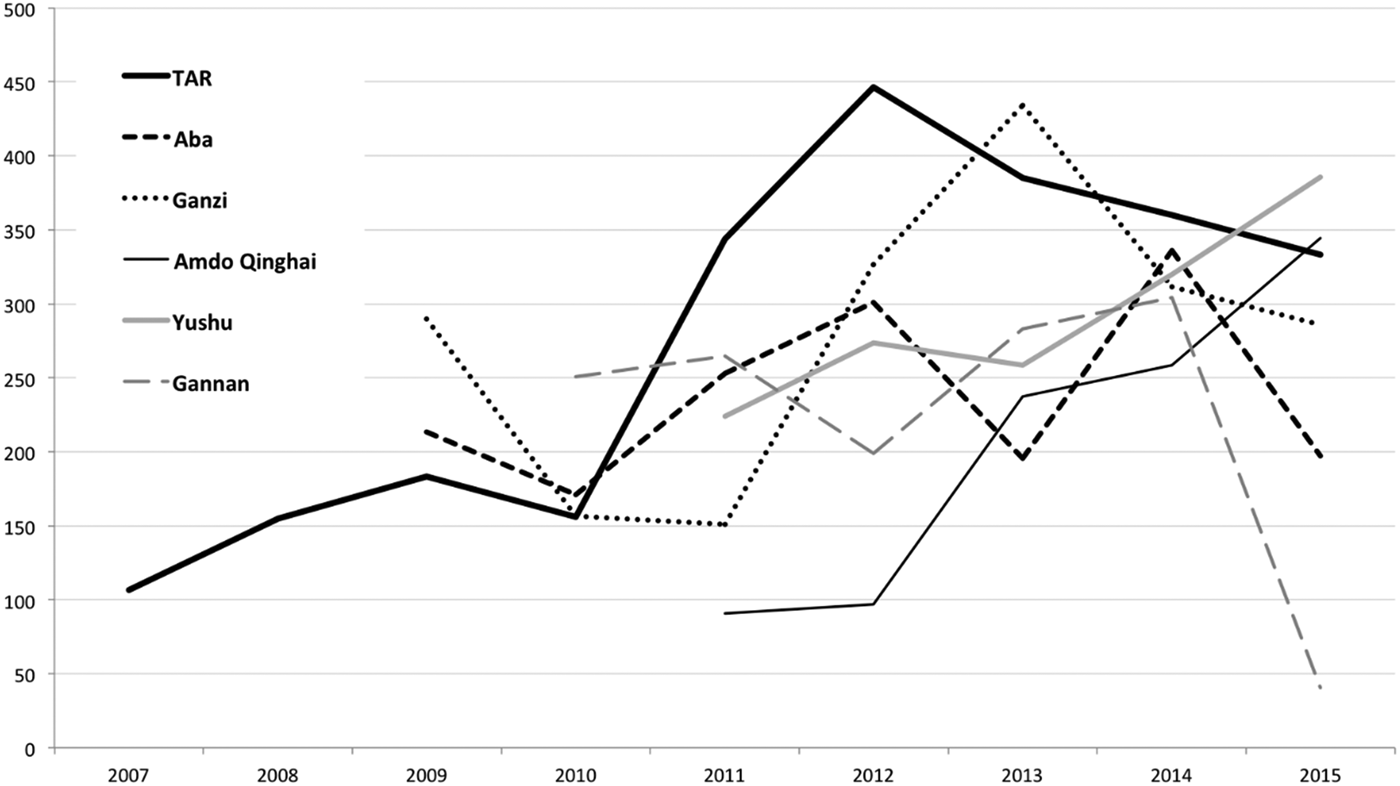
While the reasons behind this recruitment surge are open to speculation, it is notable that a particularly large share of the increase was in the security sector: the prison system, legal system (courts, etc.), law enforcement, police forces (including special police units) and public security.Footnote 54 Such positions increased 3.3 times between 2011 and 2015 for all regions. They constituted 20 per cent of all job advertisements in the TAR during these years, 24 per cent in Amdo Qinghai, 15 per cent in Yushu, 10 per cent in Ganzi and Aba, and 5 per cent in Gannan 甘南.
Language requirements
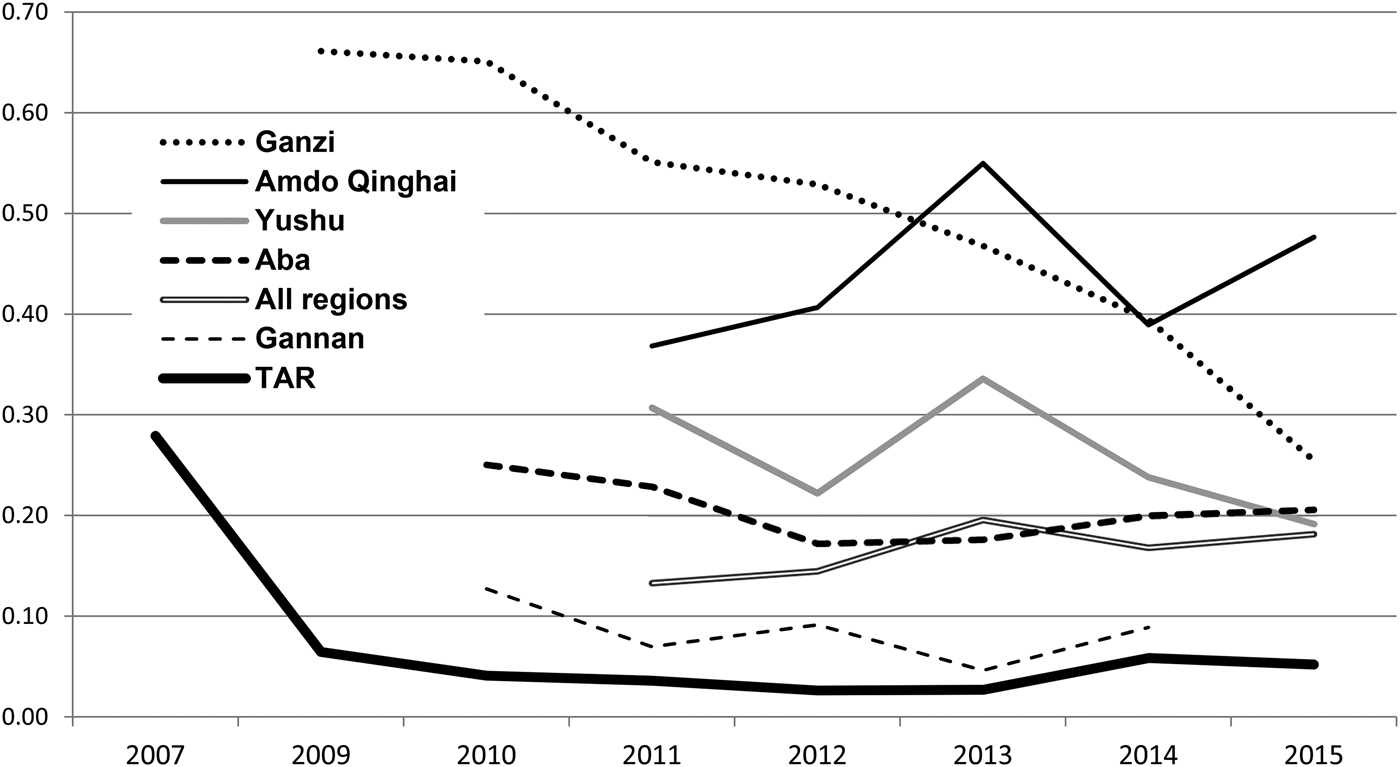
Only 12.5 per cent of all advertised positions in all Tibetan areas from 2011 to 2015 required any form of Tibetan language skills (13,551 out of 108,048). Normalized by Tibetan population shares in order to evaluate the availability of Tibetan-medium appointments relative to the Tibetan population,Footnote 55 this gave a representativity ratio of 0.16, which is quite low considering that minority language requirements are legally stipulated. Moreover, only 36 per cent of these Tibetan-medium positions mandated a Tibetan-medium college degree (4,857 advertisements), reflecting the specialized niche role of Tibetan minority education in the Tibetan areas of China. Indeed, the number of advertised positions requiring a Chinese language degree or closely related degrees such as secretarial studies (wenmi 文秘), at 4,552 advertisements, was only slightly lower than that for vacancies requiring Tibetan-medium degrees. Teaching dominated the Tibetan-medium positions,Footnote 56 whereas the administratively more significant civil service category was very marginal. The higher Tibetan-medium shares in teaching are understandable considering that Tibetan-language teachers are required to deliver a Tibetan-medium degree. However, the low shares in the civil service (and in non-teaching public service) are problematic because these sectors are the loci where the political and economic significance of the Tibetan language is ultimately decided.
Tibetan-medium recruitment shares were nonetheless strongly differentiated by region. As shown in Figure 4, there was a sharp decline (relative to Tibetan population share) in the TAR after 2007 and in Gannan, in contrast to Amdo Qinghai where the share was consistently high. In terms of five-year averages from 2011 to 2015, only 3.5 per cent of advertised appointments in the TAR had Tibetan-medium requirements, resulting in a representativity ratio of 0.04. In contrast, Ganzi and Amdo Qinghai featured average Tibetan-medium shares of 34 per cent each, resulting in representativity ratios of 0.43 and 0.46. These regional differences reflect fundamentally different political attitudes towards the role of the Tibetan language, with a notable discrepancy between the TAR (and Gannan) and most Tibetan regions outside the TAR, in particular Amdo Qinghai.
Regional Representativity Ratios of All Advertised Tibetan-Medium Positions
Residency requirements
Residency requirements can restrict local public job allocations to local residents of either the entire province, the prefecture where the position is advertised, or even just the county. The fiercest competition for desirable government jobs often comes from Han or even minorities from regions with stronger educational foundations.Footnote 57 Consequently, prefecture residency restrictions offer significant potential to increase the share of positions allocated to disadvantaged locals (to the extent that they are not circumvented by corruption, although this possibility has been arguably curtailed by recent anti-corruption campaigns).
Residency and language requirements also often overlap. Typically, 60 to 100 per cent of Tibetan-medium positions are restricted to local applicants. This protects graduates from regions with weaker Tibetan-medium education provision, although it also prevents the cross-regional transfer of highly skilled Tibetans across Tibetan regions. Indeed, cross-regional employment was a common phenomenon observed by both authors during fieldwork.
The proportion of advertised recruitments that specified the relevant residency requirements is shown in Table 1. The tally only includes prefecture-level residency requirements; it excludes the common provincial residency requirements outside the TAR since these are not sufficient to protect Tibetans from non-Tibetan competition in Tibetan areas.
Advertisements with Residency Requirements as Share of All Advertisements
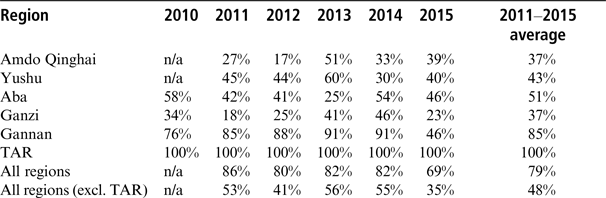
The most striking case is the TAR, which featured a comprehensive shengyuan requirement from at least the end of the region's fenpei system up to about 2012. This requirement restricted almost all advertised positions to applicants who sat their gaokao 高考 (university entrance examination) in the TAR and who were TAR residents at the time. This blanket shengyuan requirement has been well known to applicants and is discussed, for instance, on online forums. An official TAR news article in June 2015 reminded local secondary school graduates that they must choose a TAR gaokao location; otherwise, even a TAR resident can forfeit their right to compete for TAR public employment later on.Footnote 58 While someone could presumably overcome this barrier by changing their residency and taking their gaokao in the TAR, this would not be an obvious choice for a non-local. This shengyuan requirement contradicts much of the standard perception that non-local Han Chinese are prioritized over local Tibetans for such job opportunities. Rather, the restriction would have contributed to the substantial Tibetan share of public recruitment, which stood at 71 per cent in 2007 and 82 per cent in the second intake of 2008.Footnote 59
However, the shengyuan requirement for regular public job appointments has not prevented the TAR from actively recruiting graduates from other regions. From about 2012 onwards, the TAR has been increasingly advertising jobs that target applicants from outside the region, specifically aiming for graduates with higher degrees (BA and up) and often in specializations such as environmental engineering that are less common among shengyuan graduates. In 2016, this development culminated in a total of 1,740 advertised government positions that were only open to non-residents.Footnote 60 From our recent discussions (in November 2017) with several professional Tibetans from the TAR, it appears that this practice has continued to increase, in contrast to the drop in local recruitment levels in 2017, as noted previously. It has also been accompanied by a new practice of organizing job placements outside of the TAR for TAR (or Tibetan) graduates, with the motivation of creating more inter-ethnic mixing, at least at this level of privileged public employment.
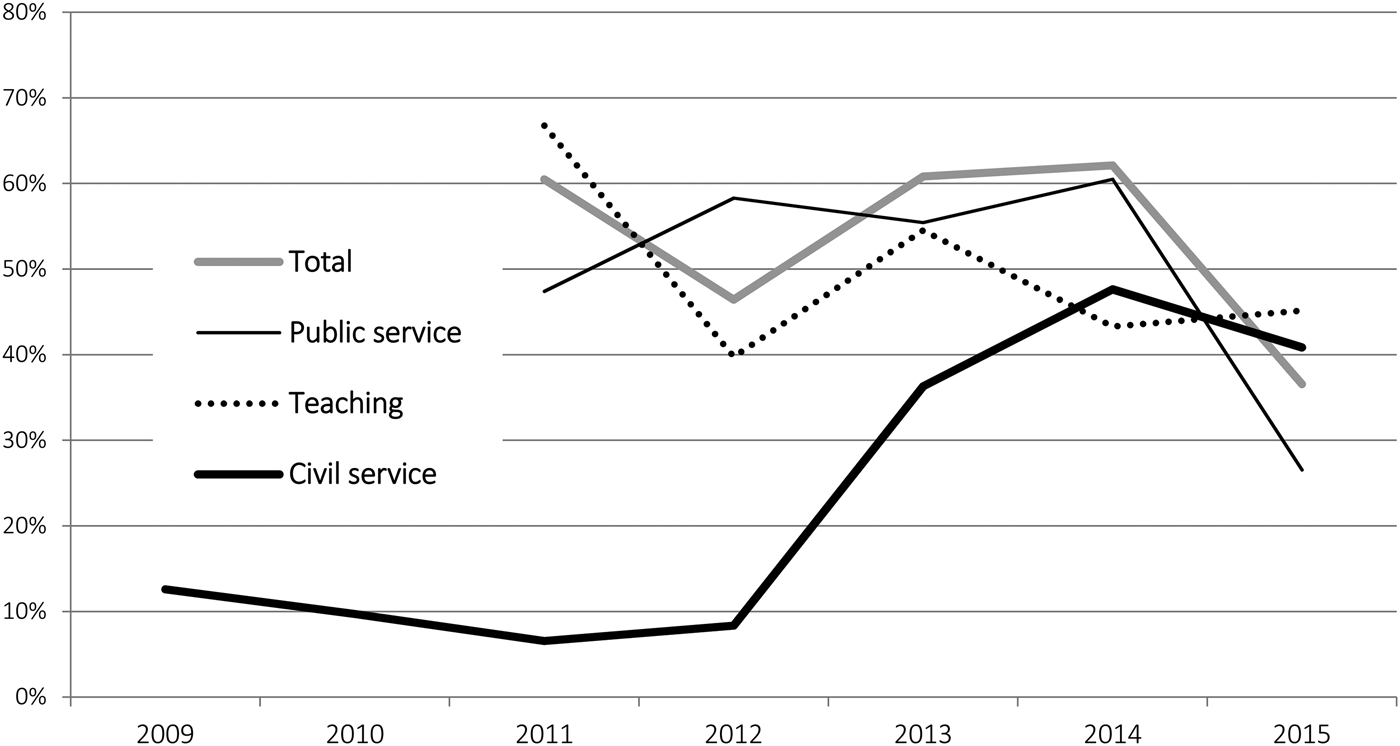
Outside of the TAR, we can discern basic policy changes in several regions starting in 2012 (see Figure 5). In that year, Amdo Qinghai introduced residency requirements for its public service positions, Aba TAP in Sichuan introduced residency requirements for its civil service positions, and Ganzi TAP in Sichuan introduced residency requirements for both public and civil service positions. Gannan started imposing higher shares of civil service residency restrictions in 2013. Given that civil service positions are targeted at higher-skilled applicants, they had typically been open to applicants from entire provinces, or even from the whole country. However, by 2014–2015, nearly half of all civil service positions outside of the TAR carried prefecture-level restrictions (48 per cent in 2014 and 41 per cent in 2015, compared to only 7 per cent in 2011). These increases are a sign that local governments of Tibetan-dominated prefectures are increasingly able (and willing) to meet their human resource needs with locals, likely as a result of improved educational levels.
Residency Requirement Shares of All Advertisements, All Regions Excluding the TAR, by Public Employment Category
The actual impact of local residency requirements can be tentatively gleaned from four of the sufficiently detailed public recruitment outcome documents discussed above. Based on only those positions that did not require any Tibetan-medium requirements, so as to isolate the preferential effect of residency requirements in the absence of overlapping language requirements, significantly higher shares of Tibetans (or minorities) were recruited to positions with residency requirements than to positions without residency requirements. Even though these few examples cannot be taken as representative, they confirm that local residency requirements have been associated with higher recruitment outcome shares for Tibetans. However, a negative side effect of this rising local labour protectionism is that it impedes Tibetan labour mobility across Tibetan regions. This development is especially problematic for regions such as Qinghai where strong Tibetan-medium education coincides with an insufficient local provision of related employment opportunities.
Conclusion
Several major insights can be made from scrutinizing these available data. Most importantly, despite almost a decade of ambiguity and uncertainty in the public employment systems of the Tibetan areas owing to retrenchment and the termination of fenpei, the surge in public employment recruitment from 2011 onwards points to the reassertion of the local state as the predominant employment provider for tertiary-educated Tibetan millennials. Indeed, following this surge, a much larger share of the university-aged population was recruited than during the late fenpei period.
Tibetan representation within the surge did not collapse. However, Tibetans were underrepresented in new appointments made across all Tibetan areas in China from 2007 to 2015, at an average of about 83 per cent of what would be parity with their population share, and without any significant patterns across regions or time. More information would be needed on the minzu composition of people exiting from public employment for a more holistic evaluation of the evolution of Tibetan representation. Even so, we can be confident in suggesting that the exercise of preferentiality through language or residency requirements significantly bolstered representation. Indeed, it is likely that a combination of policies within the surge would have maintained or even increased Tibetan representation, although we do not have access to sufficient data to evaluate this speculation.
The sustained and in some cases increasing use of residency requirements in particular, in contrast to the decline in language requirements, suggests a generally assimilationist continuity of minority policy from the Hu–Wen to the Xi–Li administration, together with the reinforced emphasis of security and social stability (weiwen 维稳) under the latter. This implies that the continuation of certain forms of minority preferentiality is seen as important for maintaining stability in minority regions, particularly in response to rising tensions such as those associated with the outbreak of large-scale protests in 2008 and the wave of self-immolations that gained momentum in 2011. The fact that a large portion of appointments were in security-related positions certainly supports this suggestion, given that these appointments aim to both absorb the labour reserves of young Tibetan graduates, who would otherwise be prone to political agitation, while at the same time using them to police their own people. Similarly, the use of local residency requirements for civil service jobs outside the TAR might be, in part, a means to engineer a stronger spatial fixing in the career trajectories of such Tibetans. The recruitment surge more generally reflects a recognition that an adequate supply of appropriate employment for minority graduates is central to securing social stability and that well-remunerated private employment in the Tibetan areas remains starkly inadequate, with local Tibetans severely disadvantaged when competing for the little that is available.
This is especially the case in the TAR, where the re-guarantee of graduate employment in 2011 led to a unique although temporary system that we term neo-fenpei, which was introduced at a critical time when the state was focused on pacifying and increasing the policing of the local population. This was preceded by what seems to have been a seamless transition from a fenpei system to a system of local residency requirements, with the comprehensive specification of local “origin” (shengyuan) in government posts. The neo-fenpei system had the same effect of guaranteeing employment for such graduates, but within a radically new context in which such public-sector employment only accounts for a minority of total urban employment, whereas it dominated urban employment during the fenpei period. Hence, whereas fenpei was an equalizing force within urban areas (although not across urban and rural areas), the neo-fenpei system became a strong source of segmentation and differentiation within the emerging urban employment system. It did this by accentuating university education as a gateway to privilege, at least for the brief generation of Tibetans who graduated just before or during its tenure. Given the much lower schooling attainments in rural areas, this would presumably have had the effect of also maintaining the strong differentiation between urban and rural areas that was characteristic of the earlier fenpei system, albeit through different, more competitive mechanisms.
The way in which these developments might be related to the influence of the advocates for a second generation of ethnic policies (SGEP) is somewhat complicated. The decline in the use of language requirements (with the exception of Amdo Qinghai), especially in the TAR, would appear to be in harmony with their push to phase out minzu-based preferentiality and replace it with regionally targeted allocations of state support based on regional socio-economic disparities. Similarly, the use of residency requirements might appear in line with such regionally based prioritization. However, it runs counter to the SGEP advocates’ defence of labour mobility: they would be at odds with the substitution of minzu identity politics with what they might deem as “local protectionism” that restricts competition from outsiders. We therefore expect tension and contestation with many of these trends at the national level of politics. Tension and contestation are also likely to occur at local levels as many of these developments represent the entrenchment of assimilationist trends in education and employment policies (again, with the exception of Amdo Qinghai, where the evolution of recruitment policy reflects a less bluntly assimilationist approach to minority policy).
As such, the neo-fenpei system (and its approximates in Tibetan areas outside of the TAR) contains many contradictory dynamics. It serves the overarching purpose of promoting weiwen by prioritizing the employment of relatively elite cohorts of Tibetan millennials but in a way that simultaneously tones down minzu language requirements (except in Amdo Qinghai). However, although preferential towards residents of disadvantaged regions, the neo-fenpei system is not necessarily preferential towards people of lower socio-economic status within these regions, as SGEP advocates would prefer. Rather, it seems to represent a discrete shift towards implicit rather than explicit ways of exercising preferentiality towards minorities, in ways that enhance intra-Tibetan competition and benefit Chinese-medium educated Tibetans. This assimilationist pressure would nonetheless be in harmony with the SGEP position, in that assimilation is argued to be the ultimate means for achieving better social integration and stability among minorities, a view that appears to be endorsed by the Xi–Li administration.
In this sense, these developments reveal the tensions of the SGEP position with the competing governance objectives of maintaining social stability and also more generally with the challenges of practising preferentiality in contexts of minority disadvantage. In the latter case, the government probably conceives of preferentiality as primarily addressing inter-group rather than intra-group disparities. The criticism of such an approach is that it tends to be elitist within the disadvantaged group (Tibetans), as is a common charge laid against affirmative action and other preferential policies in different parts of the world. However, this criticism arguably misconceives the purpose of such policies. As evidenced by the Tibetan case studied here, their purpose is to increase the representation of the disadvantaged groups in positions of social, political and economic influence, which are generally only accessed by elites of all groups in any case.
Whether or not the particular ways of doing this in the Tibetan context in China actually lead to Tibetan empowerment remains a hotly contested topic in both Tibetan and Chinese intellectual circles. Tibetans in particular often contest the assimilationist and instrumentalist orientation of such preferential policies whereby feigned benevolence actually operates as a technology of state control and often oppression. Indeed, this subaltern perspective is counterintuitive with the conventional wisdom that preferential policies necessarily enhance the empowerment of the targeted groups, as is assumed by SGEP advocates. The fact that they might not, in their current mutations in the Tibetan areas of China, points towards how such policy dynamics might well continue to aggravate grievances among new generations of Tibetans for the foreseeable future.
Supplementary Material
To view supplementary material for this article, please visit https://doi.org/10.1017/S0305741017001710.
Acknowledgement
The authors gratefully acknowledge the help of Wang Yaqiu in translating the abstract, as well as the anonymous peer reviewers for their helpful feedback. Thanks are also owed to Zhuang Shuting, who provided us with crucial insights on the reintroduction of graduate employment guarantees in the TAR in 2011. Numerous other colleagues also provided valuable feedback in initial presentations of this work, in particular Robbie Barnett, Tashi Rabgey and Tseten Wangchuk. Finally, this research was not funded, although the open access was funded by the Institute of Social Studies with the overheads earned by Andrew Fischer in his European Research Council Starting Grant (Aiding Social Protection: the Political Economy of Externally Financing Social Policy in Developing Countries, Grant No. 638647).
Biographical notes
Andrew M. Fischer is associate professor of social policy and development studies at the International Institute of Social Studies in The Hague, the founding editor of the book series, “Critical Frontiers of International Development Studies” (Oxford University Press), and editor at the journal Development and Change. His research combines work on the impact of Chinese regional development policies in the Tibetan areas of western China and global development issues more generally. He is currently running a research project on the political economy of externally financing social policy in developing countries, financed by a Starting Grant from the European Research Council.
Adrian Zenz is lecturer in social research methods at the European School of Culture and Theology, Korntal, Germany. His research focus is on China's ethnic policy and public recruitment in Tibet and Xinjiang. He is the author of Tibetanness under Threat (Global Oriental) and co-editor of Mapping Amdo: Dynamics of Change (Prague: Oriental Institute) through the Amdo Tibetan Research Network. He is a frequent contributer to the international media on China's ethnic minority policies in Xinjiang and Tibet.


 Open access

