


Introduction
In judicial sentencing, the core challenge of balancing consistency against individualised justice has long fuelled debates about the merits of sentencing guidelines. However, empirical evidence comparing the application of aggravating and mitigating factors in guideline versus non-guideline jurisdictions remains scarce, particularly with respect to individualised justice. This study aims to fill this gap by comparing England and Wales, where sentencing guidelines are extensively applied, and Hong Kong, a jurisdiction with a different approach, to explore how these contrasting systems impact the pursuit of individualised justice. Sentencing guidelines promote consistency and proportionate punishment by establishing standardised ranges for specific offences and offender characteristics. Nowadays, sentencing guidelines across jurisdictions are often offence-specific, with sentence determination broken into a series of discrete steps. Within these procedures, sentencing judges are tasked with setting initial sentence starting points, considering prescribed sentence ranges, and evaluating lists of aggravating and mitigating factors. Overall, sentencing guidelines aim to minimise unwarranted disparities in sentencing and promote transparency in judicial decision-making.Footnote 1
The pursuit of legal consistency emphasises the principle of formal equality, asserting that similar cases should be treated alike to ensure predictability. Conversely, individualised justice prioritises substantive fairness, advocating for judicial discretion to tailor outcomes to the specific circumstances and the defendants involved in each case.Footnote 2 However, a criticism of structured sentencing guidelines relates to what has been termed the bias effect,Footnote 3 whereby the inclusion of sentencing factors constrains judges’ capacity to consider all pertinent case characteristics. Sentencing guidelines set out factors that judges should consider. Despite this, they do not encompass all pertinent considerations because there is no normative consensus on which factors are relevant to sentencing.Footnote 4 In the absence of such guidelines, judges possess the discretion to evaluate and weigh a broad spectrum of factors. With the implementation of sentencing guidelines, sentence outcomes may therefore become biased, as the guidelines could limit judges’ ability to consider factors they might otherwise have taken into account if granted broader discretion.Footnote 5 This limitation may impede sentencing judges’ ability to deliver individualised punishments, thereby diverting sentences from the most equitable or personalised outcomes.
The criticisms articulated are consistent with those expressed by scholars and judges who oppose a dual-tiered system of sentencing guidelines. In a dual-tiered framework, judges initially establish a starting point for sentencing based on various factors, including the defendant’s culpability and the harm inflicted. Subsequently, the starting point is adjusted upwards or downwards in consideration of aggravating and mitigating factors. It has been argued that judges may not adequately attend to the individualisation of sentences within such structures, as they are likely to prioritise only a limited selection of sentencing factors.Footnote 6 Put differently, judges may fail to perceive each defendant as an individual, instead categorising them as stereotypes or generic offenders.Footnote 7
The concerns regarding the bias effect underscore a broader debate on sentencing guidelines, particularly in jurisdictions like Hong Kong, where such guidelines are the exception.Footnote 8 Subsequently, this raises questions about the role of judicial discretion and the pursuit of individualised justice. The prevailing opinion in these jurisdictions is that sentencing guidelines are overly prescriptive;Footnote 9 while some guidelines exist for specific offences, such as drug trafficking,Footnote 10 for other crimes, such as assault, there remains considerable variability in the particulars of each case. Therefore, it has been argued that preserving judicial discretion is essential in assessing sentencing factors on a case-by-case basis, ensuring the achievement of individualised justice.Footnote 11 When considering aggravating and mitigating factors, individualised justice requires looking beyond just the severity of the crime or the defendant’s guilt. There is particular emphasis on carefully weighing personal mitigating factors related to the defendant’s background or circumstances, rather than focusing solely on the offence itself. Such personal mitigating factors include: the defendant’s remorse, character, young age indicating a lack of maturity, the defendant’s physical/mental health, and determination to address their behaviour.Footnote 12 Judges are empowered with the opportunity and discretion to evaluate all factors presented by both the prosecution and the defence in an individualised system.
The existing body of literature on sentencing focuses on the uniformity of sentencing outcomesFootnote 13 as well as the deviations from established sentencing guidelines by judges.Footnote 14 In addition to delineating prescribed sentence ranges, such as durations of imprisonment for specific categories of criminal offences, an often-overlooked aspect of sentencing guidelines is their provision of guidance regarding the factors to be emphasised by judges. One prominent example is the United States Federal Sentencing Guidelines, which employs a two-dimensional grid system that emphasises two sentencing factors: the severity of the crime and the offender’s prior criminal record.Footnote 15 In England and Wales, sentencing guidelines are provided for most common offences, offering a step-by-step methodology that directs judges towards appropriate sentencing outcomes.Footnote 16 The English guidelines feature non-exhaustive lists of aggravating and mitigating factors for judges to consider relevant to various crimes. Although the listed factors are described as non-exhaustive, they underscore the significant considerations acknowledged by the Sentencing Council. When sentencing, judges thoroughly evaluate these factors and may increase or reduce the severity of the sentence.
Moreover, the extant literature on sentencing primarily emphasises jurisdictions that implement sentencing guidelines, with limited research allocated to those that do not utilise such guidelines.Footnote 17 Comparative studies examining the distinctions between guideline and non-guideline systems are even rarer. The present study examines how aggravating and mitigating factors affect sentencing for the three specific crimes of burglary, assault, and drug trafficking in both England and Wales, and Hong Kong. The selection of these three crimes is warranted, as each type of crime possesses its own set of unique aggravating and mitigating factors. For instance, the harm inflicted upon victims is pertinent to assault cases but not to drug trafficking, where an identifiable victim exists in the former situation but is absent in the latter.
As mentioned, in England and Wales, there are established sentencing guidelines for most offences, including the three crimes designated for this study. Conversely, with regard to Hong Kong, aside from a baseline sentence starting point of three years’ imprisonment for domestic burglary and two and a half years’ imprisonment for commercial burglary established by Hong Kong’s appellate court, no additional guidance exists for the offence of burglary in this jurisdiction.Footnote 18 Similarly, there are no sentencing guidelines for assault in Hong Kong. An exception arises in drug trafficking, where sentencing guidelines, commonly referred to as drug tariffs, are present in Hong Kong, akin to those in England and Wales.Footnote 19 The selection of these three crimes thus facilitates a comparison between offences for which detailed sentencing guidelines are available in one jurisdiction (England and Wales) and unavailable in another (Hong Kong), alongside an offence where such guidelines exist in both jurisdictions. This enables a comprehensive analysis of sentencing factors for different types of crimes, both with and without established sentencing guidelines in these two comparable jurisdictions. Even after the People’s Republic of China (PRC) resumed the exercise of sovereignty over Hong Kong in 1997, the territory has retained its English-style legal system, established during the colonial era.Footnote 20 This will be discussed in more detail in the subsequent section below.
The critical examination of aggravating and mitigating factors remains relatively underexplored, despite the significance of these factors in sentencing practices.Footnote 21 To empirically investigate the impact of sentencing guidelines and the pursuit of individualised justice, we employed a comparative analysis of criminal cases in England and Wales, and Hong Kong. The present research addresses the criticisms directed towards sentencing guidelines based on the bias effect.Footnote 22 Through this study, a paradox is revealed, where the rejection of sentencing guidelines to preserve individualised sentencing may inadvertently undermine the very individualised outcomes that are sought to be preserved.
1. Sentencing guidelines in England and Wales
The sentencing guidelines in England and Wales follow a methodical, step-by-step process that the courts must adhere to.Footnote 23 Section 59 of the Sentencing Code 2020 states that the court must comply with the pertinent sentencing guidelines. For example, consider the crime of burglary. First, the sentencing judge must ascertain the offence category by evaluating the defendant’s culpability and the resulting harm. Culpability is classified into three scaled categories: high culpability, medium culpability, and lower culpability. Similarly, harm is categorised into three levels: the most severe (category 1), medium (category 2), and least severe (category 3). Aggravating and mitigating factors are also pertinent in this initial step, as they influence the determination of culpability and harm. Such factors may include the extent of planning or organisation, the employment of tools for the burglary, and the financial loss incurred by the victim. Following the establishment of the category in the first step, the judge will determine a corresponding starting point for the sentence in the second step. This second step outlines a non-exhaustive list of aggravating and mitigating factors within the sentencing guidelines. Judges are expected to employ these factors to evaluate whether there should be an upward or downward adjustment of the previously calculated sentence. Currently, the sentencing guidelines for domestic burglary delineate three statutory aggravating factors, alongside an additional 11 aggravating factors, culminating in a total of 14 aggravating factors. Moreover, a list of 13 mitigating factors is also provided. The online version of the sentencing guidelines further includes a detailed description of these various factors, accessible via a drop-down menu. In the following steps, the judge is tasked with considering any potential reductions in the sentence for the defendant’s cooperation with the prosecution and for the defendant’s guilty pleas.Footnote 24
The rationale behind such structured sentencing guidelines is to attain consistency in sentencing outcomes. The prevalent definition of consistency suggests that ‘like cases should be treated alike’; however, this definition may be regarded as overly simplistic.Footnote 25 Other scholars have interpreted consistency as the direct antithesis of disparity.Footnote 26 Harris articulately contends that consistency in sentencing encompasses not only the uniformity of the sentence outcome but also the process by which the sentence is determined.Footnote 27 As a result, this implies that the procedural mechanisms leading to the derivation of the sentence hold equal significance. The sentencing guidelines in England and Wales address this by offering comprehensive step-by-step guidance on how judges can arrive at the final sentence. Furthermore, the Sentencing Council for England and Wales asserts that the sentencing guidelines in England and Wales integrate both methodologies:
Consistency of approach in sentencing can be defined as applying a consistent method to the sentencing process, whereas consistency in outcome focuses on the result of the sentencing process. Consistency of approach takes into consideration differences in offences and offenders and allows for judicial discretion which should lead to more consistent (although not identical) outcomes.Footnote 28
Furthermore, Harris asserts that consistency in sentencing necessitates the application of appropriate sentences in accordance with established sentencing principles.Footnote 29 In the context of England and Wales, retribution is one of the primary purposes of sentencing.Footnote 30 Retribution is grounded in the principle of proportionality in sentencing, which entails evaluating the offender’s culpability and the harm inflicted, to ensure that the sentence is proportional to the seriousness of the offence committed.Footnote 31 Given that the English sentencing guidelines begin with assessments of culpability and harm, Harris notes that: ‘Sentencers in England and Wales are given their powers and duties at sentencing in the context of a principally retributive scheme.’Footnote 32 Although retribution appears to be an essential purpose of sentencing, it is obviously not the sole aim. Other purposes of sentencing include reducing crime, reforming and rehabilitating offenders, protecting the public, and securing reparation from offenders.Footnote 33 As previously discussed, the sentencing guidelines in England and Wales enumerate a list of aggravating and mitigating factors, which require judges to consider the individual backgrounds of defendants when determining sentence outcomes. However, the sentencing guidelines do not attribute any specific weight to these aggravating and mitigating factors.Footnote 34 The extent to which the list of aggravating and mitigating factors influences the final sentence, if at all, is the prerogative of the sentencing judges.
However, proponents of the bias effect contend that the structured methodology offered by sentencing guidelines is excessively prescriptive, thereby restricting the individualisation of sentencing.Footnote 35 Additionally, commentators have noted that consistency in sentencing and individualised sentencing reside at opposite ends of the sentencing spectrum.Footnote 36 In various other common law jurisdictions, there exists a hesitance to implement sentencing guidelines for criminal offences, accompanied by a prevailing belief that judges should be accorded broad discretion to consider all relevant facts of the case, including both the specifics of the crime and the background of the defendant, devoid of the constraints imposed by sentencing guidelines.Footnote 37
2. Sentencing in Hong Kong
One such common law jurisdiction that embraces this framework of individualised sentencing is Hong Kong. The city was subjected to colonial governance by the UK for over a century, spanning from the late 1800s until the 1990s. Following the resumption of the exercise of sovereignty by the PRC in 1997, Hong Kong became a special administrative region of the PRC, and its legal system operates under the principle known as ‘one country, two systems’. Therefore, despite being under the jurisdiction of the PRC, Hong Kong maintains a distinct legal system compared to the remainder of the country. The English-style legal system, inherited from the colonial period, remains in force in contemporary Hong Kong.Footnote 38 For instance, Hong Kong continues to uphold its common law system and can refer to precedents from England and Wales and other common law jurisdictions.Footnote 39 The court system in Hong Kong bears a strong resemblance to that of England and Wales. The legal profession in Hong Kong, encompassing judges and lawyers, operates in a manner that is virtually identical to their practice before 1997 and parallels that of their English counterparts. However, a significant difference between Hong Kong and England and Wales lies in the absence of a Sentencing Council in Hong Kong; there are no established sentencing guidelines for most criminal offences. In instances where sentencing guidelines exist, they are imposed by the appellate courts in Hong Kong, typically by the Hong Kong Court of Appeal, the second highest court within the jurisdiction.
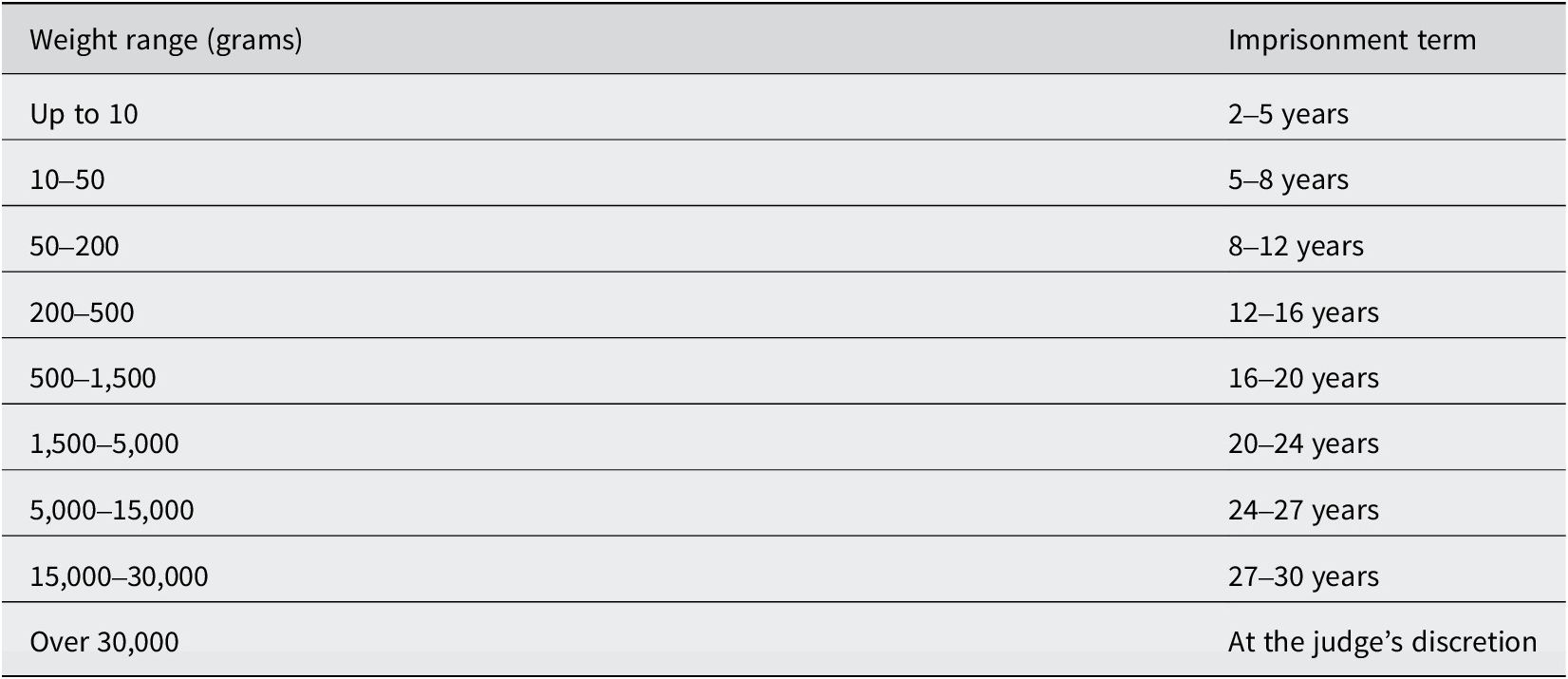
The appellate court in Hong Kong has historically demonstrated a reluctance to establish sentencing guidelines for the majority of criminal offences. The rationale behind such a position lies in the numerous variables that pertain to the nature of diverse crimes and the surrounding circumstances, thereby rendering the issuance of sentencing guidelines impractical for many offences.Footnote 40 An exception to this general rule is drug trafficking in Hong Kong, formerly known as trafficking in dangerous drugs. The sentencing guidelines for drug trafficking, commonly referred to as drug tariffs, consist of a two-dimensional table based on sentencing bands, where a range in the weight of drugs trafficked (measured in grams) corresponds to a specific range of imprisonment. Different types of dangerous drugs are assigned respective tariffs. For instance, for trafficking in heroin, the tariffs are as follows in Table 1.Footnote 41
Heroin tariffs in Hong Kong

Evidently, the most critical factors are the type of drug and the total weight of the drugs. In determining the starting point of the sentence for drug trafficking, judges would consider the role of the defendant, namely their culpability.Footnote 42
Another critical factor pertinent to sentencing that warrants emphasis is the aspect of guilty pleas. In this regard, Hong Kong possesses established sentencing guidelines that govern guilty pleas, akin to those of England and Wales. In England and Wales, there exists a distinct sentencing guideline specifically for the reduction of sentence due to guilty pleas.Footnote 43 The Hong Kong Court of Appeal has adhered to the methodology delineated in England and Wales in late 2016, whereby the earlier a defendant enters a guilty plea, the more substantial the reduction on the sentence is likely to be.Footnote 44 Mirroring the practices in England and Wales, if the defendant pleads guilty at the earliest possible opportunity in Hong Kong, it is highly probable that this will culminate in a one-third reduction of the sentence.Footnote 45
Considering that there is a lack of sentencing guidelines applicable to the majority of offences in Hong Kong, there is no pre-defined list of aggravating and mitigating factors to be considered by judges. Even in instances where such tariffs exist, such as in drug trafficking, the jurisdiction still contrasts with the guidelines observed in England and Wales. There are, of course, aggravating and mitigating factors that are commonly raised by either prosecutors or defence lawyers, such as the criminal history of the defendant.Footnote 46 However, prosecutors and defence lawyers may present any aggravating or mitigating factors, whether about the crime itself or about the defendant, for consideration by the judges. The potential impact of the presented sentencing factors on the final sentence remains a separate question, and this inquiry constitutes the primary focus of this study.
3. Methodology
The data used in this study includes cases of burglary, assault, and drug trafficking, sourced from two primary sources: the Crown Court Sentencing Survey (CCSS), conducted by the Sentencing Council for England and Wales between October 2010 and March 2015, and data from the Hong Kong Legal Reference System, which encompasses case entries from both the District Court and High Court from 2017 to 2020. In the case of the CCSS data, the sentencing judge responsible for the trial outcome completed a paper-based survey. This survey included various demographic variables, aggravating and mitigating factors, the sentence outcomes, and whether the defendant entered a guilty plea at the first opportunity. While the survey is comprehensive, some variables were recorded as ranges rather than specific numerical values. For example, the sentencing severity variable ranges from noncustodial sentences/Suspended Sentence Orders (SSOs) to low severity (less than 12 months’ imprisonment), medium-low severity (12–18 months’ imprisonment), medium-high severity (18 months–four years’ imprisonment), and high severity (more than four years’ imprisonment). Additionally, ages were categorised into groups: 18–24, 25–34, 35–44, 45–54, and 55+. Due to structural changes in the CCSS survey and alterations in coding during 2012–2013, the last fully completed year of data, 2014, was selected for this study. These changes included updates to demographic data and significant rephrasing of questions, which would complicate the alignment and comparison across multiple years of data.
The dataset from Hong Kong consists of cases from the Hong Kong District Court and High Court spanning the years 2017 to 2020. Although the timeframes for the CCSS and Hong Kong datasets do not align precisely, they remain more comparable, as Hong Kong commenced adopting the policy of sentence reduction for guilty pleas in late 2016, following the sentencing guidelines set by England and Wales.Footnote 47 Consequently, had the Hong Kong dataset included cases predating 2016, comparability would not have been feasible due to the disparities in the guilty plea mechanisms; most critically, the absence of a structured guilty plea sentence reduction would have significantly affected the framework of the present study. Additionally, relying solely on 2014 data for comparative analysis would have proven inadequate due to the substantially smaller number of cases available. This situation arises from Hong Kong’s relatively smaller size compared to England and Wales; thus, a compilation of four years’ worth of data was undertaken to address this discrepancy.
The Hong Kong District Court functions as the intermediate criminal court, with a maximum sentencing limit of seven years’ imprisonment. Cases deemed more serious are escalated from the magistrates’ court to the District Court, where a single judge conducts all trials without the presence of a jury. The next level of jurisdiction in Hong Kong, the High Court, adjudicates the most severe criminal cases. Trials are presided over by a judge and jury, and the court has no limitations on its sentencing authority, which allows for the imposition of maximum sentences. Following the abolition of the death penalty, the maximum sentence is life imprisonment, subject to statutory provisions.Footnote 48 Both courts were chosen for inclusion in the Hong Kong data due to their resemblance to the sentencing jurisdiction of the English Crown Court.
In the context of the Hong Kong cases, each case was methodically sourced and coded from the ‘Reasons for Sentence’, accessible within the Hong Kong Judiciary’s Legal Reference System. The ‘Reasons for Sentence’ comprises a collection of documents provided by sentencing judges that detail, in written form, the rationale behind their sentencing decisions for each case. Each ‘Reasons for Sentence’ about burglary, assault, and drug trafficking during the study period was meticulously examined, and the pertinent variables were manually recorded in a spreadsheet. The information includes the type of crime, the defendant’s background, the aggravating and mitigating factors presented by both the prosecution and the defence, which factors the judge explicitly stated were considered, along with the resulting sentence for the defendant. In contrast to the CCSS data, the precise sentence length in months and the exact ages of the defendants, represented in numerical values, were coded rather than using ranges as specified in the CCSS. Given the presence of precise numerical values instead of ranges, linear regressions were implemented for statistical analyses of the Hong Kong data.
As both datasets encompass various classifications of assault offences, we ultimately determined the types of offences that would be most comparable to one another. The chosen offences from England and Wales include common assault, affray, section 18 (wounding with intent to cause grievous bodily harm), section 20 (wounding or inflicting grievous bodily harm), and section 47 (assault occasioning actual bodily harm). Likewise, the offences listed in the Hong Kong dataset comprise common assault, wounding with intent, wounding, and assault occasioning actual bodily harm. Burglary was coded according to whether it was committed on domestic or non-domestic premises in Hong Kong. Regarding drug trafficking, the CCSS data extracted only possession with intent to supply to ensure comparability with the Hong Kong dataset, which included solely drug trafficking offences. It was imperative to restrict the offence type to drug trafficking exclusively, as the sentencing guidelines in Hong Kong (tariffs) pertain solely to drug trafficking offences and not other drug offences, such as drug possession.
During the sentencing process, both prosecutors and defence lawyers are responsible for respectively presenting relevant aggravating and mitigating factors to the sentencing judge. As a result, some of these factors are ultimately dismissed by the judge for various reasons, such as being considered irrelevant to the case. For this study, we focus solely on what the sentencing judges actually take into account during the process. Therefore, it is important to distinguish between sentencing factors that were raised but not considered and those that were raised and also acknowledged by the judges. In the CCSS, all recorded aggravating and mitigating factors are those that judges have considered. Of course, whether these considered factors influence the final sentence is another matter and one which this study aims to assess. In Hong Kong, the ‘Reasons for Sentence’ include information about aggravating and mitigating factors raised by prosecutors and defence lawyers, and the judges explicitly note which factors they have considered in each case. As an indirect result, variables such as ‘premeditation’ or ‘no premeditation’ may not be included in all cases, even if these variables appear mutually exclusive. For example, a defence lawyer might argue that there was no premeditation as a mitigating factor, and whether it is ultimately considered varies depending on the judge. This does not automatically mean there was premeditation by the defendant in the same case. This is why we decided to list certain factors separately in our subsequent analyses, even if they seem dichotomous. This discrepancy is the main reason why the total percentage of sentencing factors may not total 100%.
The two extensive datasets, which encompass three distinct categories of crimes across two comparable jurisdictions – one with sentencing guidelines and the other largely without –enable this study to empirically investigate the critiques against sentencing guidelines and the advocacy for individualised justice levied by the bias effect. Given the criticisms of the bias effect and the criteria of consistency set out above, the following research questions are asked:
R1: Would there be a more consistent approach to sentencing for offences governed by sentencing guidelines, particularly with respect to the purposes of sentencing? Specifically, do the sentences imposed for crimes subject to sentencing guidelines adequately reflect the purpose of retribution, while those for crimes not governed by sentencing guidelines do not?
R2: Would there be an increased emphasis on personal mitigating factors in relation to crimes that lack sentencing guidelines, thereby demonstrating a preference for individualised justice?
R3: What impact, if any, do guilty pleas have on sentence outcomes for the three crimes across both jurisdictions?
4. Results
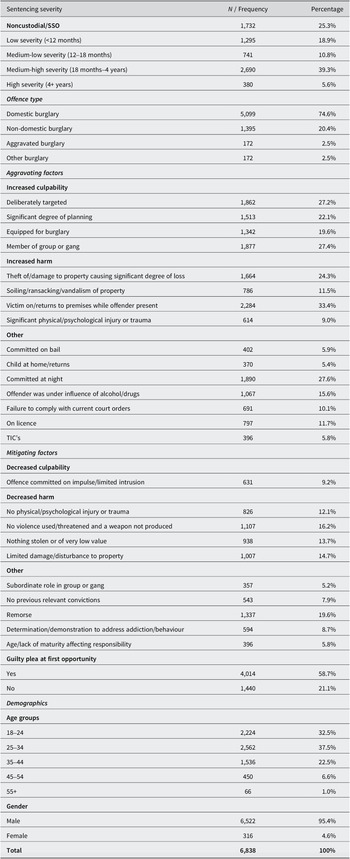
Table 2 displays the descriptive statistics of the CCSS data concerning burglary cases. Sentencing severity was predominantly categorised as medium-high (18 months–4 years’ imprisonment; 39.3%), whereas domestic burglary constituted the majority of offences (74.6%). Key aggravating factors included victim presence during the offence (33.4%) and group or gang membership (27.4%). Remorse (19.6%) and the absence of violence or threats (16.2%) were the most frequently observed mitigating factors. Other personal mitigating factors include determination/demonstration to address addiction/behaviour (8.7%) and age/lack of maturity affecting responsibility (5.8%). Notably, 58.7% of offenders entered a guilty plea at the earliest opportunity. Demographically, the perpetrators were overwhelmingly male (95.4%) and primarily aged between 25 and 34 years (37.5%).
CCSS burglary descriptives
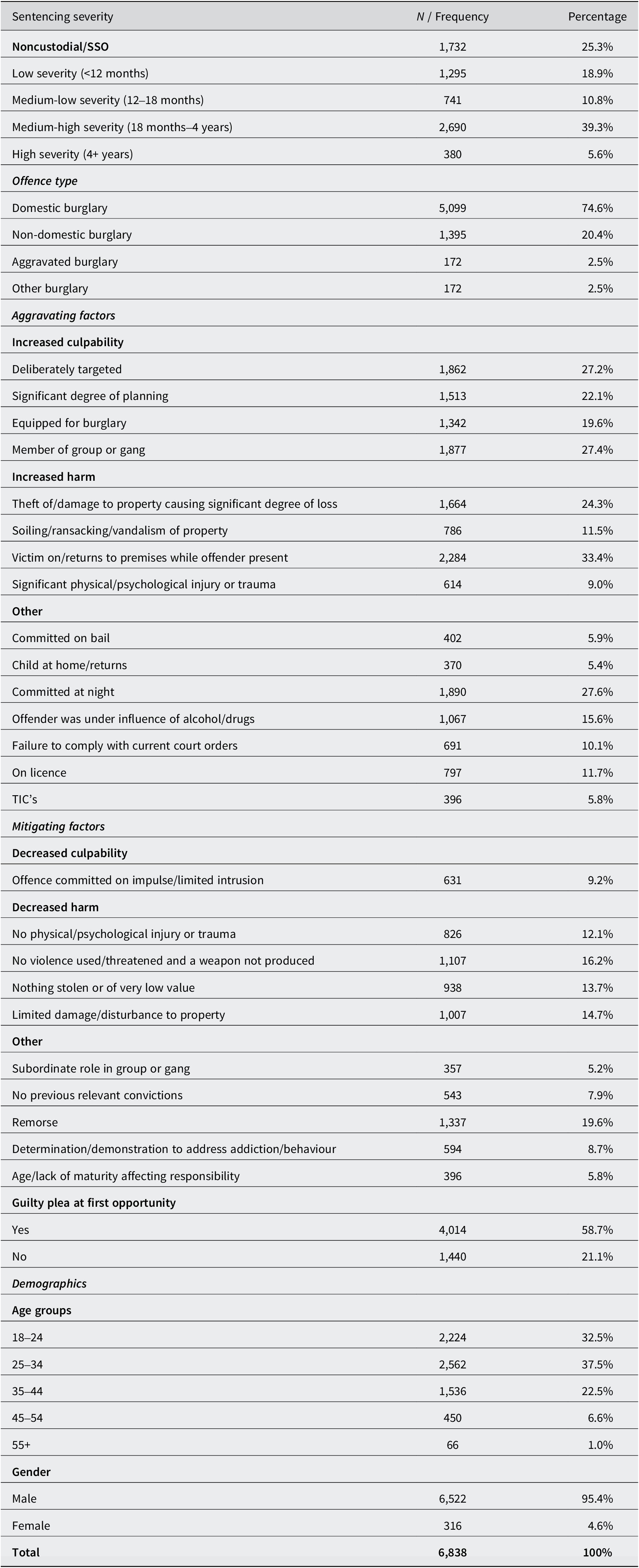
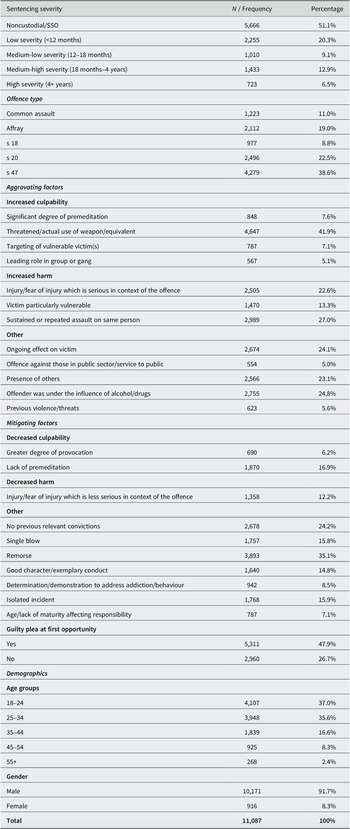
Table 3 presents the descriptive statistics of the CCSS data pertaining to assault cases. Non-custodial sentences or SSOs were identified as the most prevalent outcomes, accounting for 51.1%. Offences against the person under section 47 (38.6%) and section 20 (22.5%) comprised the majority of cases. In many cases, there was the threatened or actual use of weapons (41.9%), sustained or repeated assaults (27.0%), and ongoing victim impact (24.1%). Remorse, observed in 35.1% of cases, and the absence of prior convictions, noted in 24.2%, were other predominant mitigating factors. Other personal mitigating factors include the good character and past exemplary conduct of the defendant (14.8%), determination/demonstration to address addiction/behaviour (8.5%), and age/lack of maturity affecting responsibility (7.1%). Demographically, offenders were predominantly male (91.7%), with the highest representation within the 18–24 age group (37.0%). Additionally, a guilty plea at the first opportunity was recorded in 47.9% of cases.
CCSS assault descriptives
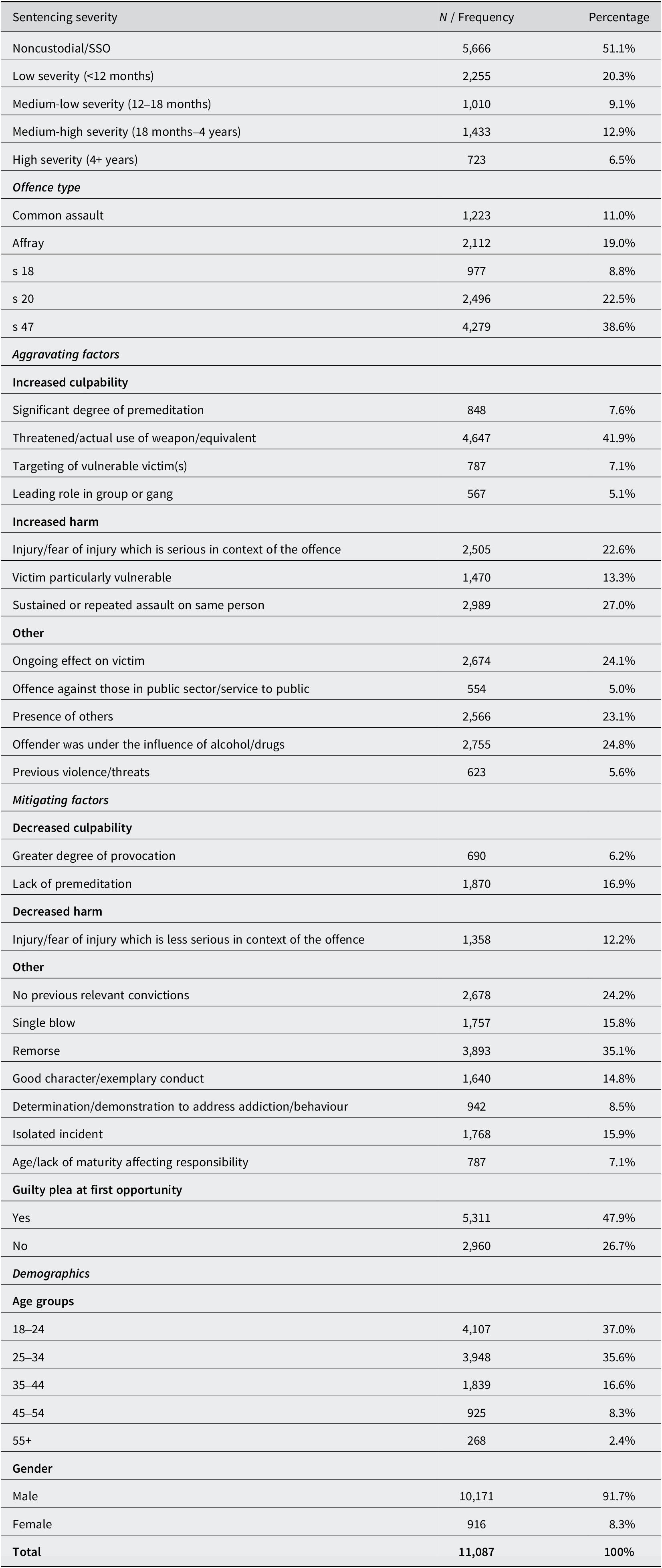
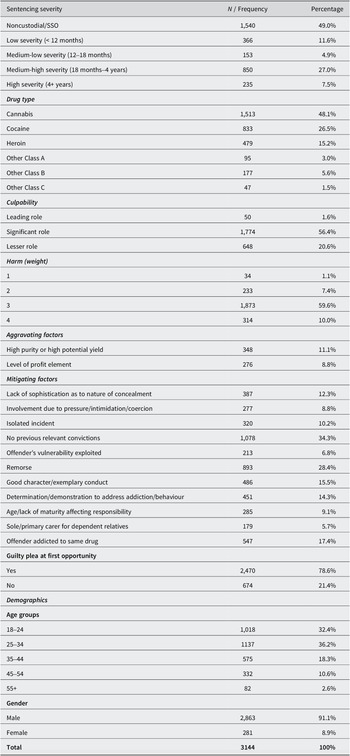
Table 4 presents the descriptive statistics of the CCSS data concerning drug trafficking cases (possession with intent to supply). Non-custodial sentences or SSOs emerged as the most prevalent outcome at 49.0%. Offences related to cannabis represented the largest proportion at 48.1%, followed by cocaine at 26.5%. Most offenders were assessed as having a ‘Significant Role’ in operations, accounting for 56.4%, with offences predominantly involving ‘Category 3’ harm at 59.6%. Key mitigating factors included the absence of prior relevant convictions (34.3%), the presence of remorse (28.4%), the defendant’s good character and exemplary conduct (15.5%), and the determination to address addiction and behaviour (14.3%). Notably, 78.6% of offenders entered a guilty plea at the earliest opportunity. Demographically, the offenders were predominantly male (91.1%) and most frequently aged between 25 and 34 years (36.2%).
CCSS drug trafficking descriptives
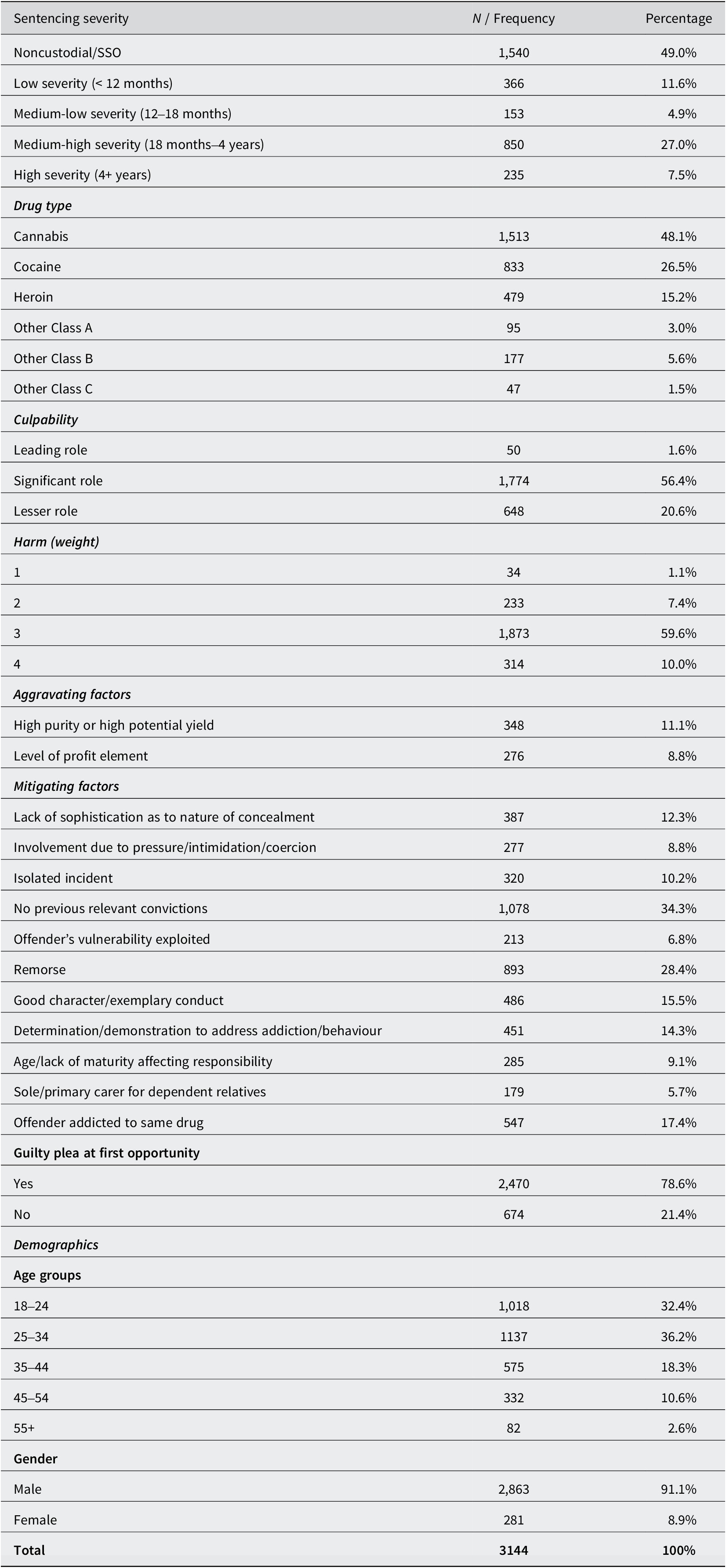
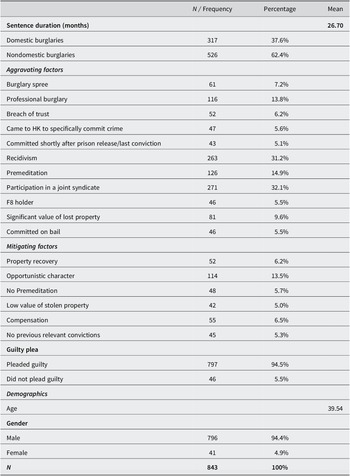
Table 5 turns attention to our Hong Kong data, specifically the descriptive statistics of our Hong Kong data regarding burglary cases. The mean sentence duration was 26.70 months. Key aggravating factors included participation in a joint syndicate (32.1%) and recidivism (31.2%). Mitigating circumstances were less prevalent, with opportunistic character (13.5%) and property recovery (6.2%) being most common. Indeed, there are not many mitigating factors that were considered by judges in Hong Kong, with personal mitigating factors such as remorse, good character, and age/lack of maturity notably absent. A notably high proportion of offenders entered a guilty plea (94.5%). Demographically, defendants were overwhelmingly male (94.4%) with a mean age of 39.54 years.
HK burglary descriptives
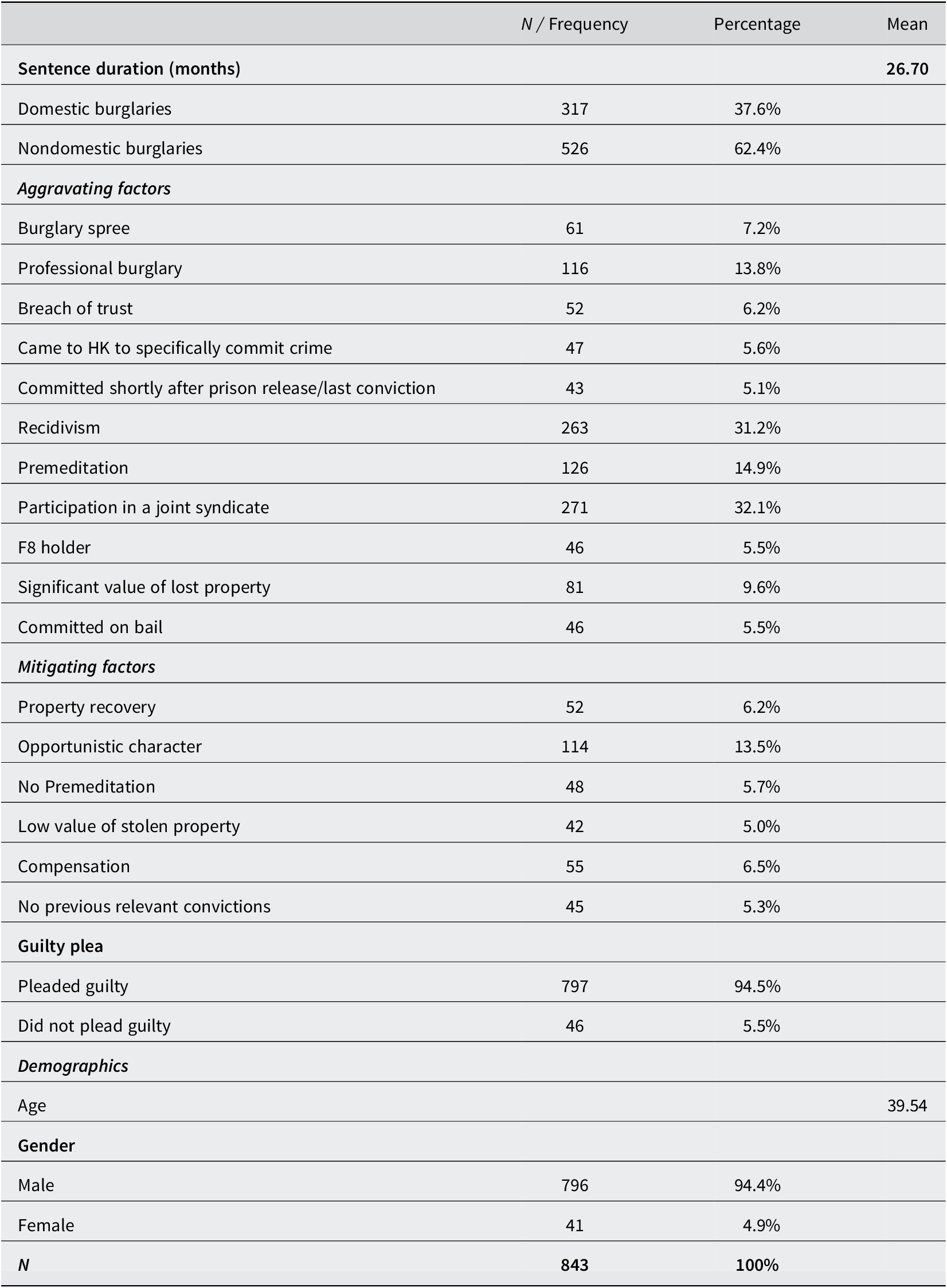
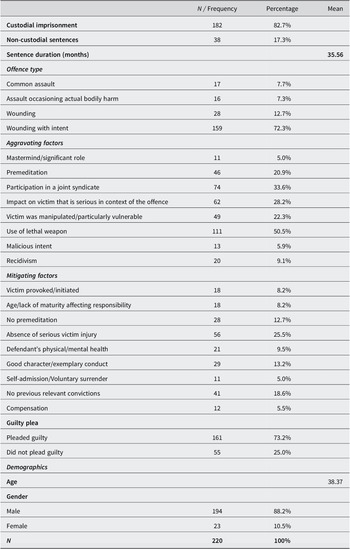
Table 6 presents the descriptive statistics of the Hong Kong data concerning assault cases. There is a high custodial sentencing rate (82.7%), with a mean sentence duration of 35.56 months. Offences were predominantly classified as ‘wounding with intent’ (72.3%). Key aggravating factors included the use of lethal weapons (50.5%) and participation in a joint syndicate (33.6%). The most common mitigating circumstance was the absence of serious victim injury (25.5%). Some personal mitigating factors were considered by judges, including good character (13.2%) and the defendant’s physical/mental health (9.5%). A significant majority of defendants pleaded guilty (73.2%). Demographically, offenders were overwhelmingly male (88.2%) with a mean age of 38.37 years.
HK assault descriptives
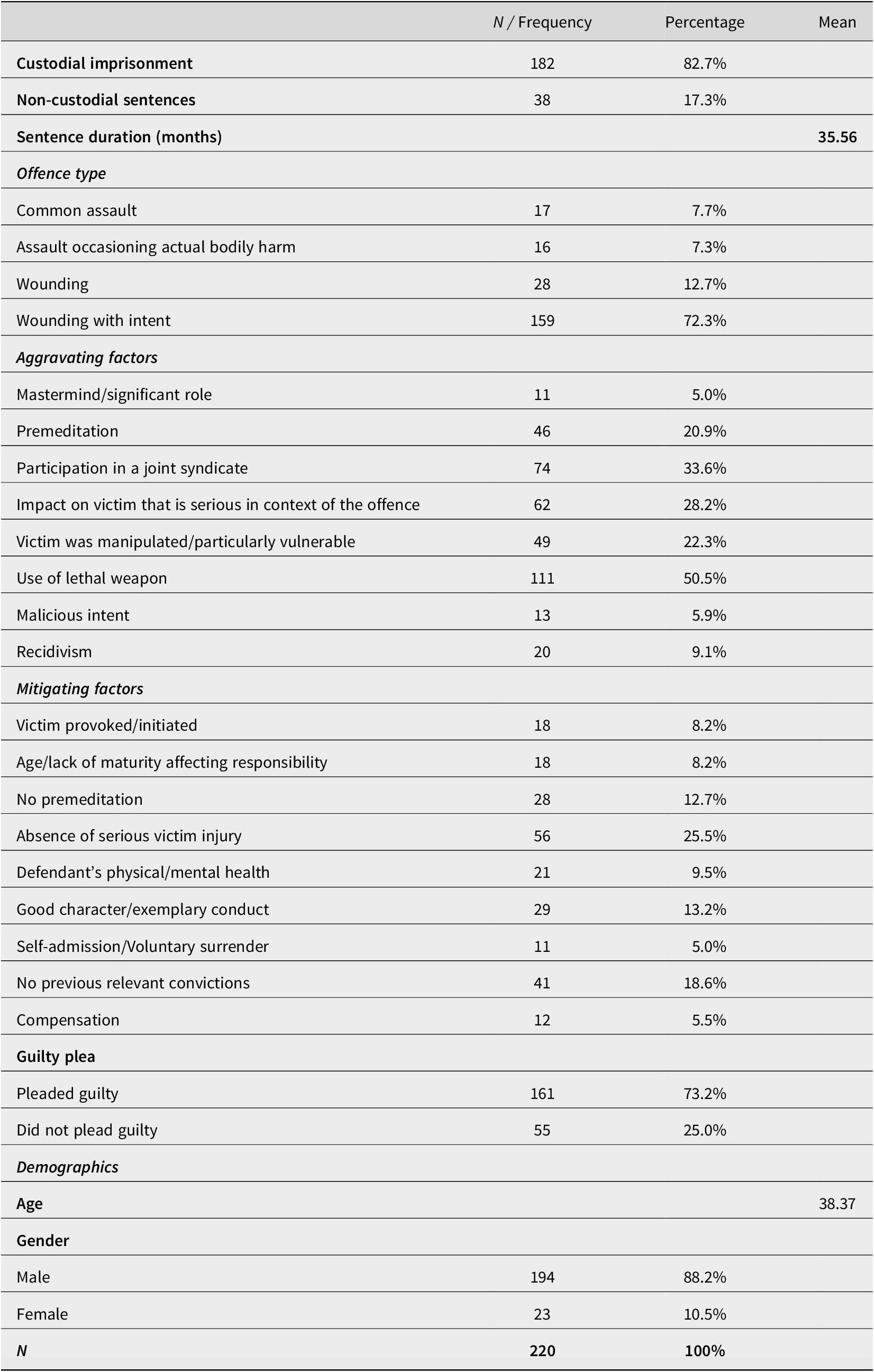
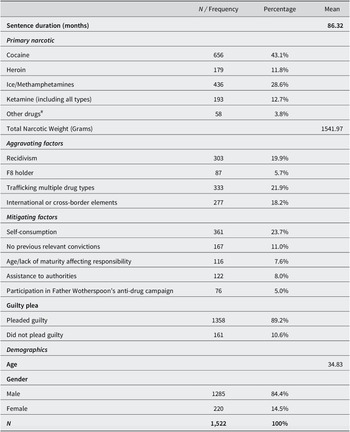
Table 7 displays the descriptive statistics of drug trafficking cases in Hong Kong, showing a mean custodial duration of 86.32 months. There were virtually no cases that resulted in a non-custodial sentence, indicating that overall, Hong Kong takes a harsher sentencing approach towards drug trafficking compared with England and Wales. Cocaine (43.1%) and methamphetamines (28.6%) constituted the primary narcotics involved. The mean total narcotic weight seized was 1,541.97 grams. Key aggravating factors included trafficking multiple drug types (21.9%), recidivism (19.9%), and international/cross-border elements (18.2%). The most prevalent mitigating circumstance was offender self-consumption (23.7%). A notably high proportion of defendants entered guilty pleas (89.2%). Demographically, offenders were predominantly male (84.4%) with a mean age of 34.83 years.
HK drug trafficking descriptives
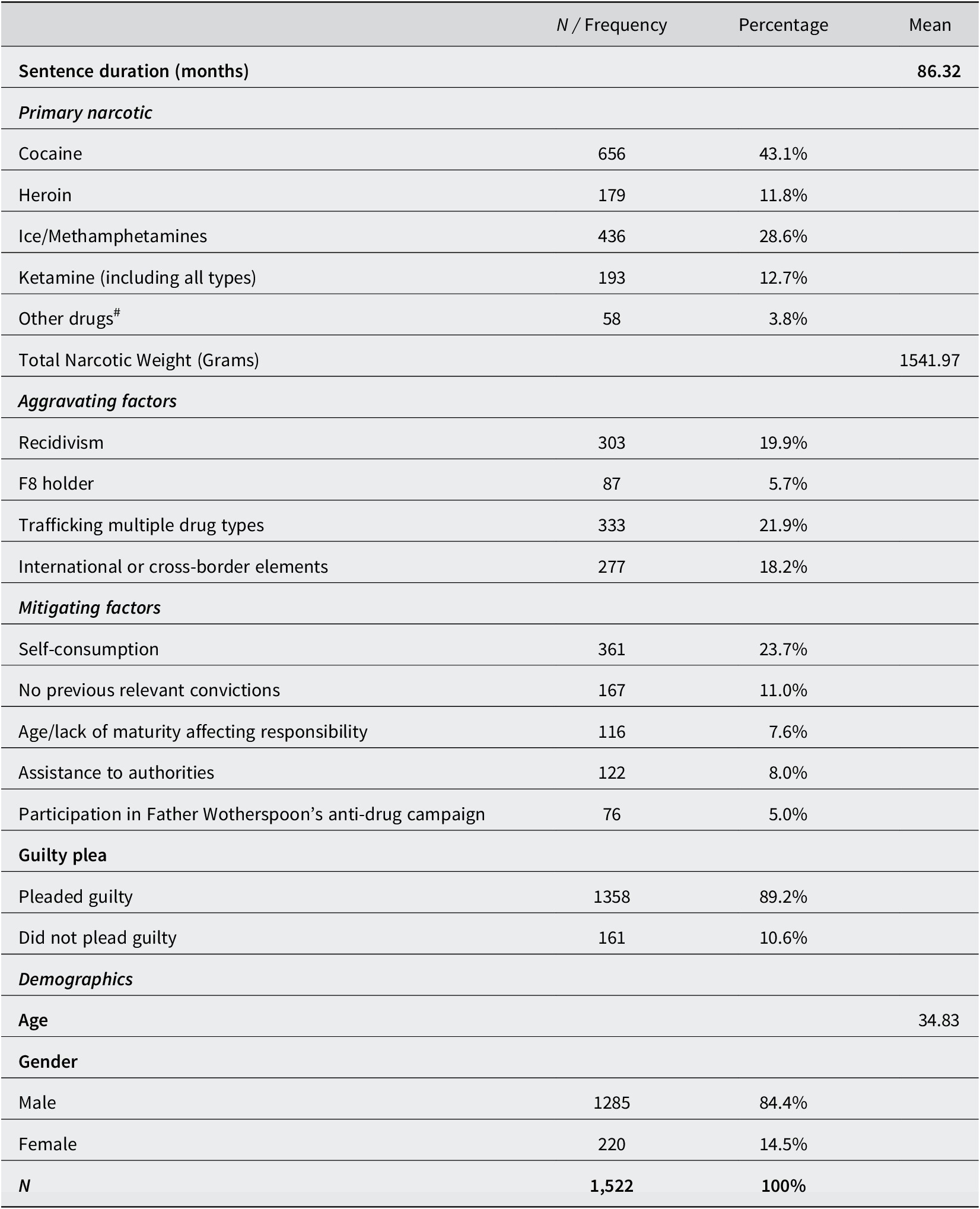
* Not all percentages add up to 100% due to missing data.
# Other drugs include Cannabis (both herbal and resin), GBL, and MDMA.
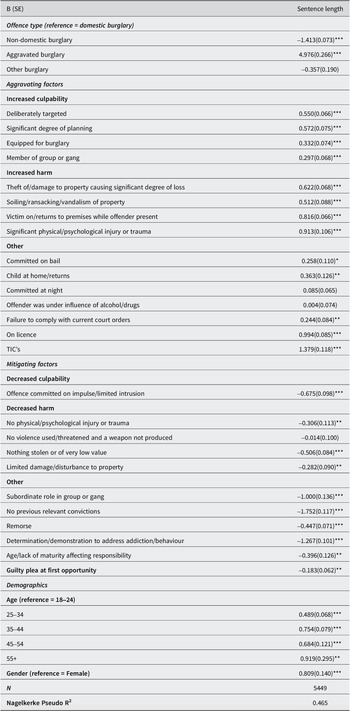
Attention is directed next towards the regression analyses of the potential effects of various factors on sentence severity for the three distinct crimes. Instead of detailing each jurisdiction individually, the results will be presented by crime type: first for England and Wales, and subsequently for Hong Kong, to facilitate easier comparison. All the regressions met the necessary statistical assumptions, and no issues of multicollinearity were detected. Tables 8 and 9 present the analyses for burglary in England and Wales, followed by Hong Kong. As can be seen in Table 8, all factors pertaining to increased culpability and increased harm significantly correlated with sentence severity. Likewise, numerous factors indicating decreased culpability and decreased harm were associated with reduced sentence severity. This evidence supports the notion that English judges adhere to the sentencing principle of retribution in their sentencing decisions. Personal mitigating factors were also found to be significant, with determination/demonstration to address addiction/behaviour and age/lack of maturity affecting the responsibility associated with lesser sentence severity. Defendants who pleaded guilty at the first opportunity were likewise associated with lesser sentence severity.
CCSS burglary ordinal regression
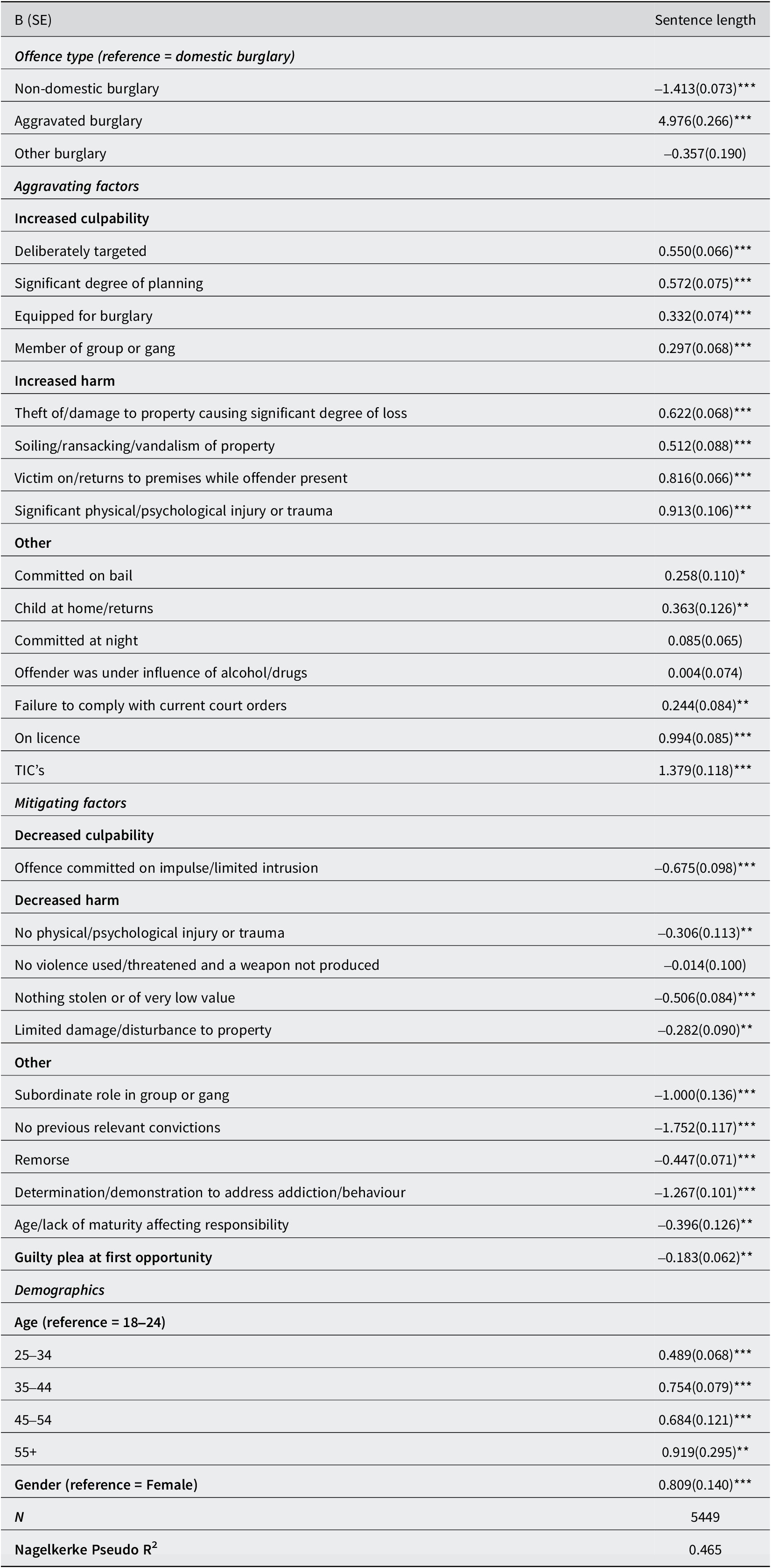
*p < 0.05; ** p < 0.01; *** p < 0.001
Brant Test: H0: Parallel Regression Assumption holds
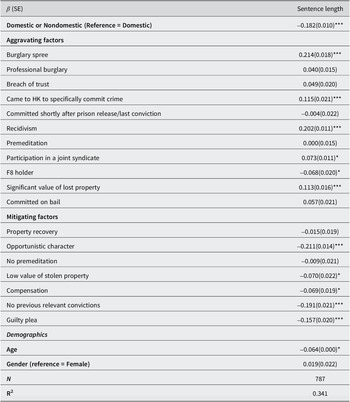
HK burglary linear regression
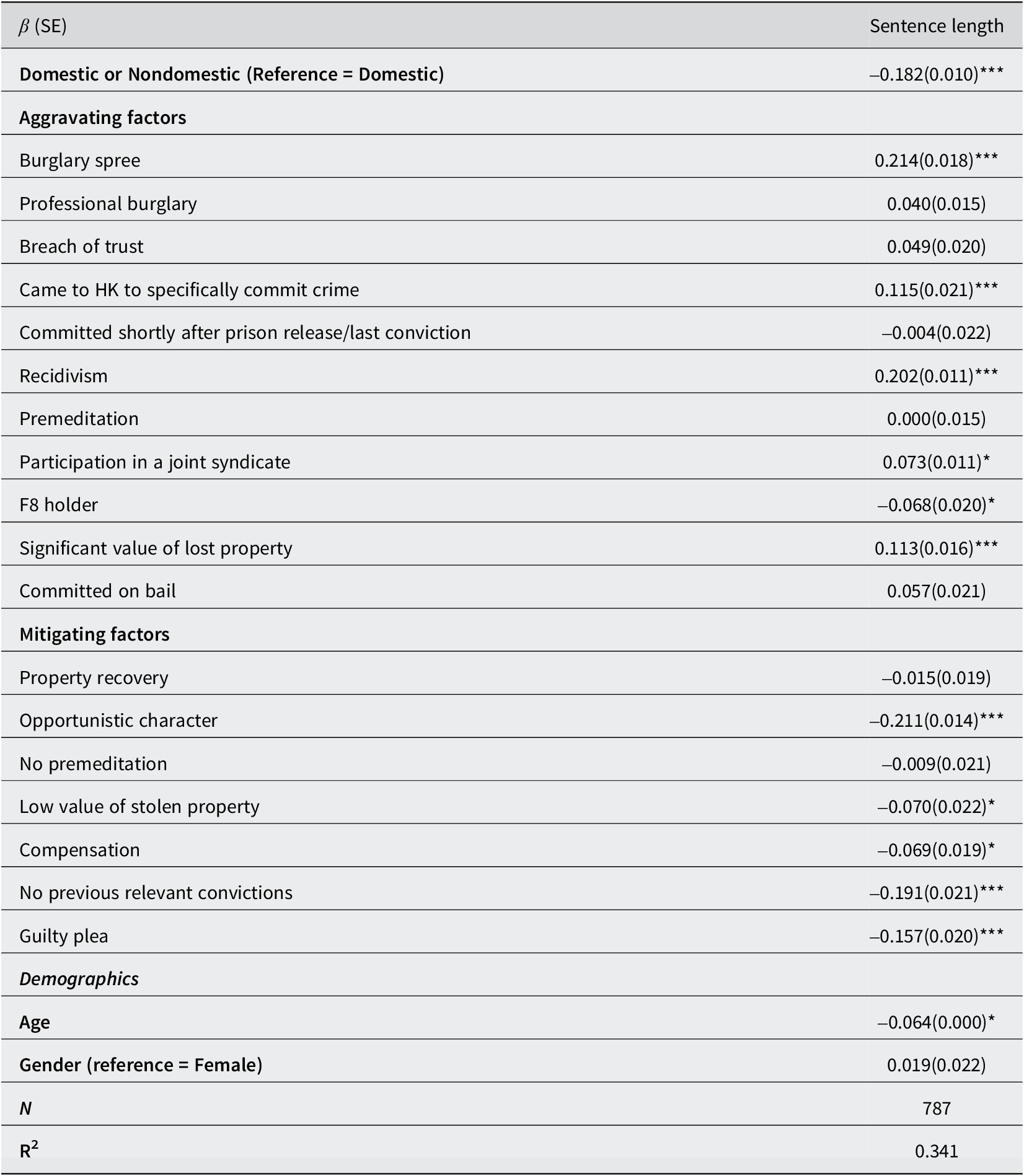
*p < 0.05; ** p < 0.01; *** p < 0.001
Table 9 presents the regression results for burglary cases in Hong Kong. There is evidence suggesting that increased culpability influences sentencing outcomes, with defendants identified as being on a burglary spree or who came to Hong Kong specifically to commit a crime being associated with longer sentences. However, other culpability-related variables, such as being classified by judges as professional burglars or the crime being premeditated, did not exhibit statistical significance. Concerning harm, the low value of stolen property showed slight significance, correlating with more lenient sentencing, whereas the significant value of lost property was associated with longer sentence length. As previously noted, judges in Hong Kong did not consider personal mitigating factors in burglary cases to the same extent as their English counterparts. Nonetheless, defendants who pleaded guilty were significantly more likely to receive shorter sentences.
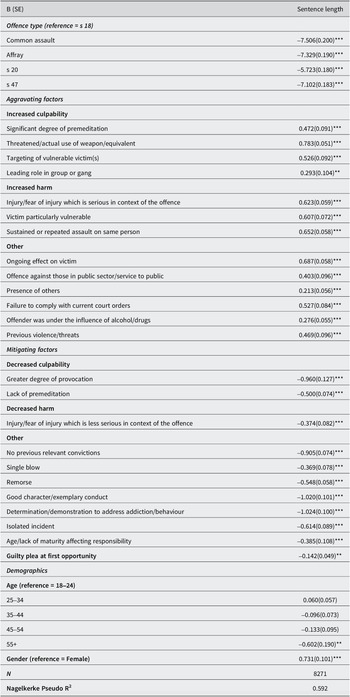
Tables 10 and 11 present the regression results concerning sentence severity for the CCSS and Hong Kong assault cases, respectively. As demonstrated in Table 10, all factors that heightened culpability and harm were significantly correlated with more severe sentences for assault cases in England and Wales. Conversely, factors that diminished culpability and harm were significantly associated with less severe sentences. Similar to burglary cases, this indicates that judges in England and Wales adhere to the principle of retribution when sentencing assault cases. Regarding personal mitigating factors, the following were also found to be significant: remorse; good character or exemplary conduct; determination or demonstration to address addiction or behavioural issues; and age or lack of maturity impacting responsibility, all of which exhibited significant negative correlations with sentence severity. Furthermore, defendants who pleaded guilty at the first opportunity were associated with reduced sentence severity.
CCSS assault ordinal regression

*p < 0.05; ** p < 0.01; *** p < 0.001
Brant Test: H0: Parallel Regression Assumption holds
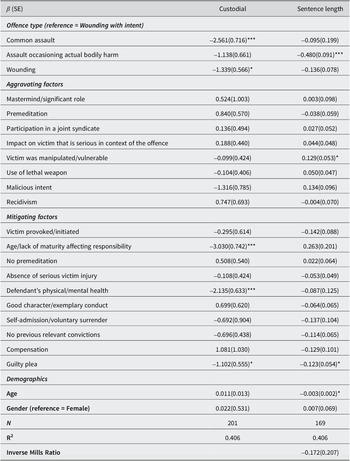
HK assault Heckman regression models

*p < 0.05; ** p < 0.01; *** p < 0.001
Table 11 illustrates the results for assault cases in Hong Kong. A Heckman two-step procedure was employed to account for the existence of non-custodial sentences. Regarding the likelihood of receiving a custodial sentence, it was unexpectedly observed that variables related to culpability and harm did not attain statistical significance; factors such as the defendant being the mastermind or playing a significant role in the crime, the crime being premeditated, and the impact on the victim were not statistically significant. Personal mitigating factors, namely the defendant’s physical and mental health and age/lack of maturity, were found to be significant in determining whether to impose a custodial sentence, but not in determining the length of the sentence. However, a guilty plea was significantly negatively associated with the likelihood of a custodial sentence. Similarly, with respect to sentence length, factors related to culpability and harm were not significant. The same applies to personal mitigating factors, which did not demonstrate statistical significance. Notably, the factor of a guilty plea stood out as significantly and negatively correlated with sentence length.
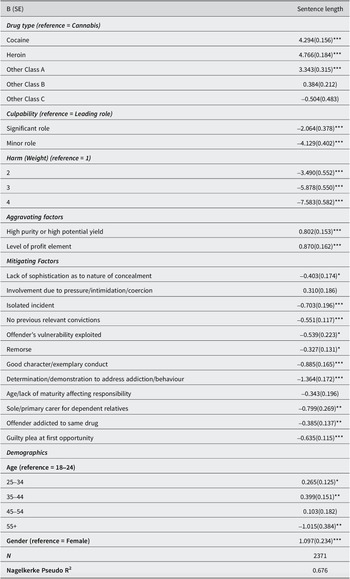
Tables 12 and 13 present the results on drug trafficking offences. Table 12 displays the regression outcomes concerning sentence severity for drug trafficking in England and Wales. Factors related to increased culpability, such as the defendant playing a leading role, and increased harm based on drug type and weight (with category 1 representing the highest drug weights and category 4 the lowest), were found to be associated with sentence severity. Personal mitigating factors, including remorse, good character/exemplary conduct, determination/demonstration to address addiction/behaviour, and the defendant being the sole/primary carer for dependent relatives, were all found to have a negative correlation with sentence severity. Defendants who pleaded guilty at the first opportunity were found to be significantly more likely to receive a lighter sentence.
CCSS drug trafficking ordinal regression

*p < 0.05;**p < 0.01; *** p < 0.001
Brant Test: H0: Parallel Regression Assumption holds
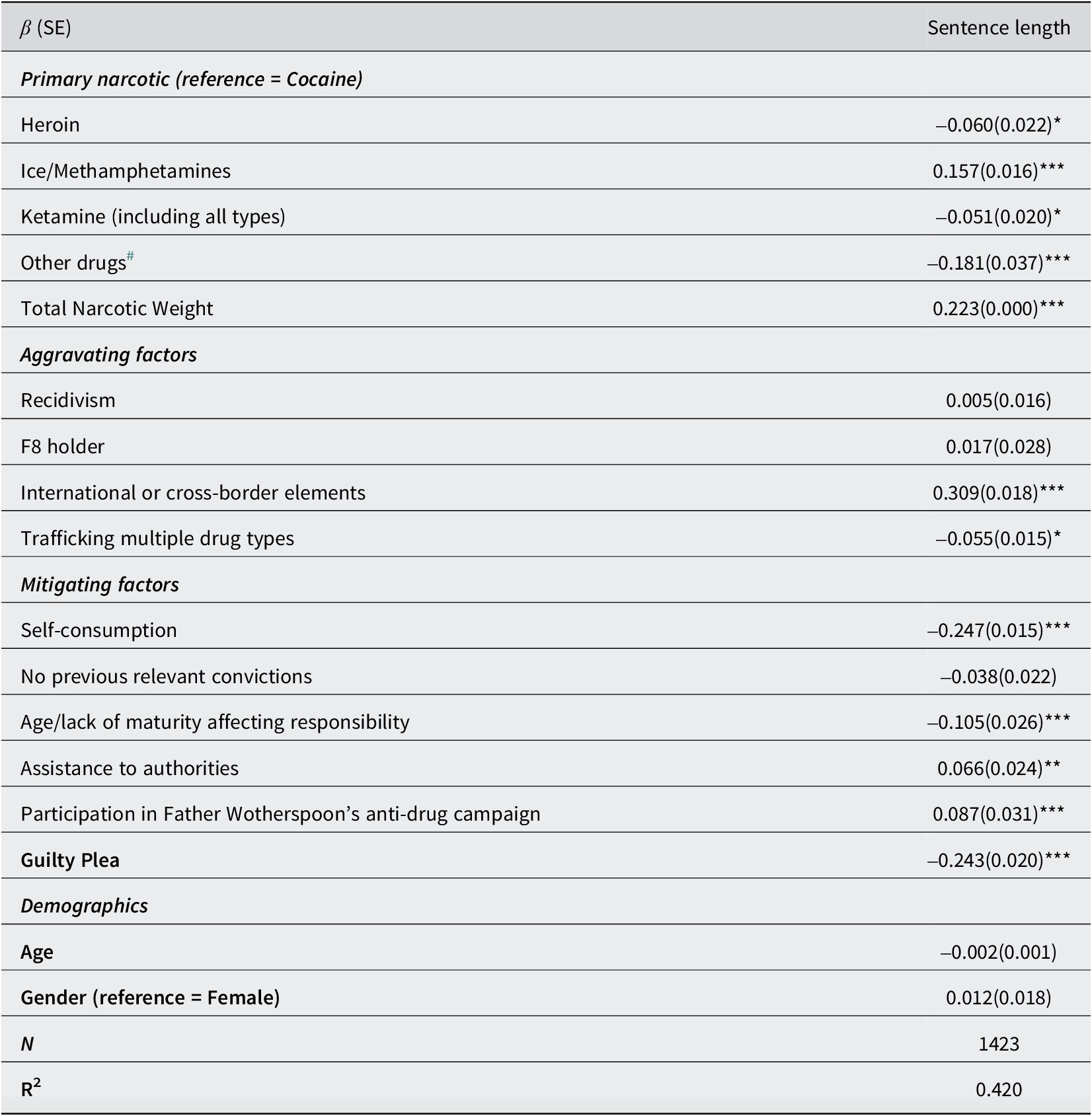
HK drug trafficking linear regression model
*p < 0.05;**p < 0.01; *** p < 0.001
# Other drugs include Cannabis (both herbal and resin), GBL, and MDMA.
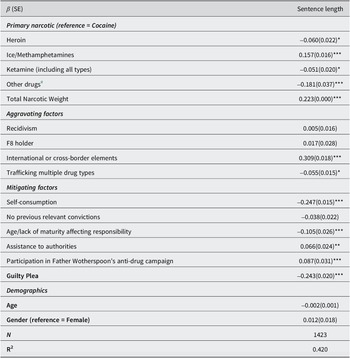
Finally, Table 13 delineates the regression results pertaining to drug trafficking cases in Hong Kong. Given that there were virtually no cases resulting in non-custodial sentences, the analysis concentrates on sentence length as a measure of sentencing severity. When assessed by drug type and drug weight in accordance with Hong Kong’s sentencing guidelines, the variables regarding harm were determined to be statistically significant. When compared to cocaine, which served as the reference drug type, substances deemed less harmful, such as ketamine and other drugs, including cannabis, exhibited a negative correlation with sentence length. The total narcotic drug weight demonstrated a positive correlation with sentence duration, highlighting the significance of drug quantity in sentencing outcomes within drug trafficking cases. It is perhaps unsurprising that the type of drugs and the weight of drugs, which represent harm, were found to be significant, given that Hong Kong’s drug tariffs (sentencing guidelines) primarily emphasise these two factors. Factors potentially indicative of culpability, such as an international or cross-border element, which suggests higher levels of planning, and self-consumption, were found to be significant, with the former associated with longer sentences and the latter with shorter ones. Notably, few personal mitigating factors were considered by Hong Kong judges in drug trafficking cases. The sole personal mitigating factor found to significantly correlate with reduced sentence length was age/lack of maturity affecting responsibility. Additionally, a defendant’s guilty plea was again significantly associated with shorter sentences.
Overall, the analyses indicate that in England and Wales, the presence of step-by-step sentencing guidelines and prescribed (though non-exhaustive) aggravating and mitigating factors is associated with a significant relationship between sentence severity and both culpability and harm-related factors. This pattern reflects a closer adherence to retributive principles (R1). Similarly, personal mitigating factors were also found to correlate with sentencing outcomes, suggesting that structured guidelines can, in practice, allow for greater emphasis on individualised justice (R2).
Conversely, in Hong Kong, the influence of culpability and harm factors varied by offence. While some were significant in burglary, they were not consistently associated with sentencing outcomes in assault cases. For drug trafficking, however, where sentencing guidelines explicitly require consideration of drug type and weight – indicators of harm – the results align more closely with retributive aims (R1). Furthermore, unlike England and Wales, none of the Hong Kong offences studied operate under a prescribed list of aggravating and mitigating factors. In line with this structural difference, judicial consideration of personal mitigating factors in Hong Kong was markedly less pronounced than in England and Wales, a result that contrasts with the bias effect critique (R2). Notably, across both jurisdictions and all offence types, guilty pleas emerged as a significant factor in sentencing outcomes (R3).
5. Discussion
The empirical findings of this study challenge the central premise of the ‘bias effect’ critique, that sentencing guidelines inherently compromise individualised justice by constraining judicial discretion. Our cross-jurisdictional analysis reveals a more complex reality: while England and Wales’ structured guidelines produced greater adherence to retributive principles and greater engagement with personal mitigation, Hong Kong’s discretionary approach to non-guideline offences yielded inconsistent application of sentencing factors and less emphasis on the defendant’s personal mitigating circumstances. Furthermore, both systems prioritised efficiency through sentence reductions for guilty pleas. These outcomes are examined through three key dimensions corresponding to our research questions.
The findings of our study strongly confirm that sentencing guidelines in England and Wales effectively promote consistency through retributive proportionality, thereby supporting R1. For guideline offences (burglary, assault, drug trafficking), all variables related to offender culpability and crime harm showed statistically significant effects on sentence severity in England and Wales. This systematic approach, where higher culpability factors (eg premeditation, weapon use) and harm factors (eg victim trauma, drug quantity) consistently resulted in harsher sentences, validates the structured nature of the English sentencing guidelines for retributive justice. In contrast, in Hong Kong’s burglary and assault cases, judicial consideration of culpability and harm was notably inconsistent. In cases of burglary, only certain factors in relation to harm, namely the value of the stolen property, exhibited statistical significance, while key elements relating to culpability, such as premeditation, yielded mixed results. Regarding assault cases, the findings were particularly noteworthy, as factors associated with culpability and harm did not demonstrate statistical significance. It is challenging to identify a justification for the notion that culpability and harm should not influence the determination of sentences. Where harm, and to a lesser degree, culpability were reflected in sentence outcomes, it could be observed in cases of drug trafficking, where Hong Kong’s drug tariffs emphasise harm (measured by drug type and weight) as the primary factors for judges. Our findings, therefore, align with concerns regarding individualised justice systems, revealing inconsistencies in their application and a discernible departure from principled sentencing.Footnote 49 This fundamental difference between the two jurisdictions highlights that consistency in applying retributive principles is likely closely tied to the presence of formal guideline frameworks.
On the other hand, the advantage of an individualised sentencing approach is to supposedly sacrifice consistency in favour of more personalised consideration of sentences. In contrast to theoretical predictions regarding the bias effect, the analysis of burglary and assault cases in Hong Kong’s discretionary system revealed that personal mitigating factors were accorded less weight than the criticism would anticipate. In Hong Kong’s burglary cases, judicial considerations tend to accord limited consideration to mitigating factors such as the defendant’s remorse, character, and rehabilitative efforts. Additionally, only the defendant’s health and youthfulness partially influenced the outcome of assault cases in determining custodial sentences, but not sentence length. This contrasts with the approach in England and Wales, where guidelines direct sentencing judges to consider personal mitigation through the non-exhaustive lists. Remorse was consistently associated with reduced sentences for burglary, and factors such as ‘determination to address behaviour’ were consistently correlated with lesser sentence severity across all three crimes. Notably, the jurisdiction that promotes judicial discretion, namely Hong Kong, tended in practice to place less emphasis on the individuality of defendants. In contrast, the guideline system in England and Wales more consistently incorporated individualised factors into sentencing decisions. The results are consistent with findings from a previous English Crown Court study, which found that identifying aggravating and mitigating factors in sentencing guidelines leads judges to consider more of these factors, thereby promoting individualised justice, rather than relying solely on submissions from the prosecution and defence, as is the case in Hong Kong.Footnote 50
The results paradoxically indicate that when judges are granted greater discretion to consider all mitigating factors presented to them, they do not necessarily do so. Conversely, when a list of aggravating and mitigating factors is provided, even if non-exhaustive, judges tend to give these factors greater consideration, thereby more significantly influencing sentencing outcomes. Our findings challenge the criticisms associated with the bias effect against sentencing guidelines. The absence of sentencing guidelines did not facilitate more individualised consideration of personal mitigating factors. In Hong Kong, either judges initially did not take numerous personal mitigating factors into account, or, even when they were considered, they had a negligible impact on sentencing outcomes. Surprisingly, R2 is answered in the negative.
Both jurisdictions demonstrated a pronounced institutional emphasis on procedural efficiency over individualised considerations. Guilty pleas consistently resulted in significant reductions in sentence length across all crime categories, even in cases where other mitigating factors were overlooked. After all, guilty pleas are regarded as a reward for defendants who save the court’s time and resources.Footnote 51 In England and Wales, early pleas were associated with reduced sentence outcomes for all three crimes. Hong Kong also showed pronounced effects: guilty pleas are likely to result in shorter sentences in burglary, assault, and drug trafficking cases. This consistency underscores the crucial role of guilty pleas in the sentencing process, thereby yielding an unequivocal response to R3: guilty pleas are significant. A possible reason for this situation is the existence of distinct sentencing guidelines governing sentence reductions for guilty pleas in England and Wales, and Hong Kong.Footnote 52 Consequently, judges in both jurisdictions are likely to consider whether the defendant pleaded guilty and to apply the prescribed sentence reductions applicable to their jurisdiction.Footnote 53 The findings in response to R3 further elucidate the intriguing results observed in response to R2. It appears that the presence of sentencing guidelines that direct judges’ attention toward specific mitigating factors increases the likelihood that these factors will be considered and subsequently influence the sentencing outcome.
The drawback of overreliance on guilty pleas may distort the retributive foundation of sentencing by decoupling the severity of the sentence from the seriousness of the crime and the defendant’s culpability. In both jurisdictions, the maximum reduction in sentence is capped at one-third. The 2017 English sentencing guidelines for sentence reductions in relation to guilty pleas reduced the recommended reduction from one-third to a maximum of one-third.Footnote 54 Instead, sentence outcomes become dependent on the defendant’s choice to plead guilty or not, rather than on an assessment of crime seriousness, the harm caused, and any personal mitigating circumstances. This may create what scholars have referred to as a ‘trial penalty’, where defendants exercising their right to trial who are ultimately convicted face disproportionately severe sentences compared to similarly situated defendants who plead guilty.Footnote 55 Consequently, such sentence reductions institutionalise a sentencing regime that prioritises the efficiency of the criminal justice system over the principled calibration of sentencing, possibly compromising individualised justice and proportionality in sentencing. It is therefore not only the quantum of punishment that changes with guilty pleas, but also its nature, as sentence reductions are regarded as a reward for the defendant for saving the courts’ time and resources. The disparity in sentences resulting from guilty plea reductions does not necessarily reflect the seriousness of the offence and other sentencing principles.Footnote 56
While this study provides novel insights into both guideline and non-guideline sentencing systems, it is essential to acknowledge certain inherent limitations characteristic of comparative legal research. First, the unavoidable differences in data collection periods across the jurisdictions reflect practical access constraints rather than methodological deficiencies: the data collection timeframe by the Sentencing Council for the CCSS, the smaller geographical size of Hong Kong, and the recent implementation of new sentencing guidelines concerning sentence reductions for guilty pleas are all limitations in similar studies.Footnote 57 Secondly, as with most sentencing research, unobserved factors such as prosecutorial discretion or plea bargaining agreements remain beyond the scope of quantitative measurement. These considerations do not undermine the fundamental findings of this study but suggest potential directions for future research, including qualitative analyses. Lastly, although focusing on England and Wales, and Hong Kong is methodologically justifiable given their shared common law heritage and court structures, their divergent approaches to sentencing guidelines inherently limit the generalisability of the results. Future research should explore other comparable jurisdictions, such as Australia, which has sentencing councils but emphasises individualised sentencing through an ‘instinctive synthesis’ approach. This process entails a single-step decision where a judge considers all relevant case factors to determine an appropriate sentence, as opposed to a step-by-step approach.Footnote 58
Our comparative study reevaluates the discussion on sentencing guidelines and judicial discretion by empirically showing that structured sentencing systems, like those in England and Wales, do not necessarily undermine individualised justice. Our evidence indicates that such guidelines can promote greater consistency in applying retributive principles while still allowing for meaningful consideration of personal mitigation, which is especially less apparent in Hong Kong’s more discretionary approach. The ongoing impact of guilty plea reductions in both jurisdictions, however, reveals a tension between aiming for efficiency and pursuing substantive justice. Our findings suggest that well-constructed sentencing guidelines that allow for judicial discretion without strict prescriptiveness may serve as an effective framework for balancing proportionality with individualised assessment.
Roberts, Freiberg, and Hester recently outlined a set of principles to guide the development of sentencing guidelines, and several of their key points warrant reiteration. They note that sentencing guidelines should: adhere to a principled approach; provide sentence ranges and guidance on aggravating and mitigating factors; be mandatory for judges yet allow necessary departures; preserve discretion to consider individual circumstances; address both custodial and non-custodial options; provide guidance on guilty plea reductions; and be periodically reviewed and updated through professional, legislative, and public consultation. With respect to guidance on aggravating and mitigating factors, the sentencing guidelines are recommended to provide a list of such factors and guidance on the interpretation of specific factors. Using the same list of sentencing factors will promote greater consistency between judges and lawyers.Footnote 59 In the absence of such lists, individual judges must rely on submissions from prosecutors and defence counsel, as well as on their own experience and intuition, when sentencing.Footnote 60 Future sentencing reforms should focus on guideline structures that embed flexibility for mitigating factors, balancing efficiency with fairness across different sentencing systems.

 Open access

