


Introduction
Obsessive–compulsive disorder (OCD) is a prevalent and disabling condition (Weissman et al. Reference Weissman, Bland, Canino, Greenwald, Hwu, Lee, Newman, Oakley-Browne, Rubio-Stipec and Wickramaratne1994; Kessler et al. Reference Kessler, Chiu, Demler, Merikangas and Walters2005) that often follows a chronic course if untreated (Skoog & Skoog, Reference Skoog and Skoog1999; Mataix-Cols et al. Reference Mataix-Cols, Rauch, Baer, Eisen, Shera, Goodman, Rasmussen and Jenike2002). Cognitive behaviour therapy (CBT) is considered to be an evidence-based treatment for OCD, with response rates averaging 50–70% (Abramowitz, Reference Abramowitz2006; Simpson et al. Reference Simpson, Huppert, Petkova, Foa and Liebowitz2006). However, despite evidence that CBT leads to reduction in OCD symptoms, few patients actually receive the treatment (Goodwin et al. Reference Goodwin, Koenen, Hellman, Guardino and Struening2002). In a British study conducted in 2000, only 5% of adults with OCD actually received CBT (Torres et al. Reference Torres, Prince, Bebbington, Bhugra, Brugha, Farrell, Jenkins, Lewis, Meltzer and Singleton2007) and similar numbers have been found in the USA (Blanco et al. Reference Blanco, Olfson, Stein, Simpson, Gameroff and Narrow2006). One of the possible reasons for this is the lack of CBT therapists within the healthcare system (Shapiro et al. Reference Shapiro, Cavanagh and Lomas2003; Mataix-Cols & Marks, Reference Mataix-Cols and Marks2006). Therefore, it is important to develop new treatment delivery formats that can increase accessibility of CBT with sustained efficacy. Internet-based CBT (ICBT) with therapist support is an effective treatment format for several psychiatric conditions (Andersson, Reference Andersson2009), including anxiety disorders such as panic disorder (Bergstrom et al. Reference Bergstrom, Andersson, Ljotsson, Rück, Andreewitch, Karlsson, Carlbring, Andersson and Lindefors2010), social anxiety disorder (Hedman et al. Reference Hedman, Andersson, Ljotsson, Andersson, Rück, Mortberg and Lindefors2011b ), and severe health anxiety (Hedman et al. Reference Hedman, Andersson, Andersson, Ljotsson, Rück, Asmundson and Lindefors2011a ) but there are no large-scale trials that have investigated ICBT for OCD. The effect sizes of ICBT are similar to face-to-face CBT for several psychiatric and medical conditions (Bergstrom et al. Reference Bergstrom, Andersson, Ljotsson, Rück, Andreewitch, Karlsson, Carlbring, Andersson and Lindefors2010), but ICBT has the advantage of being more accessible and requiring less therapist time (Andersson, Reference Andersson2009).
Historically, other types of self-help-based treatments for OCD have been developed and investigated in research (Mataix-Cols & Marks, Reference Mataix-Cols and Marks2006; Tolin et al. Reference Tolin, Hannan, Maltby, Diefenbach, Worhunsky and Brady2007; Moritz et al. Reference Moritz, Jelinek, Hauschildt and Naber2010), among which ‘Behaviour Therapy Steps’ (BT Steps) has the strongest empirical support (Tumur et al. Reference Tumur, Kaltenthaler, Ferriter, Beverley and Parry2007). In BT Steps, the patient follows a self-help book and uses a touchtone telephone system to receive automated guidance, but no therapist contact is provided. One trial showed that BT Steps had superior effects to relaxation training but inferior effects to individual CBT (Greist et al. Reference Greist, Marks, Baer, Kobak, Wenzel, Hirsch, Mantle and Clary2002). In another trial (Kenwright et al. Reference Kenwright, Marks, Graham, Franses and Mataix-Cols2005), patients received therapist support via telephone in addition to the BT Steps programme, and this procedure was associated with higher effects and lower dropouts than non-guided therapy (Tumur et al. Reference Tumur, Kaltenthaler, Ferriter, Beverley and Parry2007). In contrast to BT Steps, ICBT is a more flexible, completely internet-based and interactive. The patients are guided by an online therapist who grants gradual access to self-help modules and provides feedback on homework exercises (Andersson et al. Reference Andersson, Bergstrom, Buhrman, Carlbring, Hollandare, Kaldo, Nilsson-Ihrfelt, Paxling, Strom and Waara2008). In a recent open pilot study (n=23) of therapist-guided ICBT for OCD (Andersson et al. Reference Andersson, Ljotsson, Hedman, Kaldo, Paxling, Andersson, Lindefors and Rück2011), large effect sizes were found (Cohen's d=1.56), and a majority (61%) of participants had a clinically significant improvement using the clinician-administered Yale–Brown Obsessive Compulsive Scale (YBOCS). Similar effect sizes were found in another open pilot study of ICBT for OCD (Wootton et al. Reference Wootton, Titov, Dear, Spence, Andrews, Johnston and Solley2011). However, to the best of our knowledge, there are no published randomized controlled trials testing ICBT for OCD. Based on these findings, the aim of this study was to investigate the efficacy of ICBT for OCD in a randomized controlled trial. We hypothesized that ICBT would result in statistically significant reductions in OCD symptoms, depression and general functioning, compared to an active control condition.
Methods
Participants and recruitment
The present study was open to adults in Sweden with a primary diagnosis of OCD, according to DSM-IV-TR criteria (APA, 2000). Participants with co-morbid disorders were included if OCD was the primary psychiatric condition. Concurrent use of psychotropic medication was permitted, if it had been stable for at least 2 months prior to inclusion, and if the participant agreed to maintain a constant dosage throughout the study.
The exclusion criteria were:
-
(1) Having undergone CBT for OCD during the last 2 years.
-
(2) Current other psychological treatment.
-
(3) Current alcohol or drug abuse.
-
(4) Extreme OCD (YBOCS >31) (Goodman et al. Reference Goodman, Price, Rasmussen, Mazure, Fleischmann, Hill, Heninger and Charney1989).
-
(5) Minimal OCD symptoms (YBOCS <12) (McLean et al. Reference McLean, Whittal, Thordarson, Taylor, Sochting, Koch, Paterson and Anderson2001, van Oppen et al. Reference van Oppen, de Haan, van Balkom, Spinhoven, Hoogduin and van Dyck1995).
-
(6) OCD symptoms primarily associated with hoarding.
-
(7) History of psychosis or bipolar disorder.
-
(8) Suicidal ideation.
-
(9) Axis II diagnosis that could jeopardize treatment participation.
-
(10) Physical illness that could interfere with ICBT.
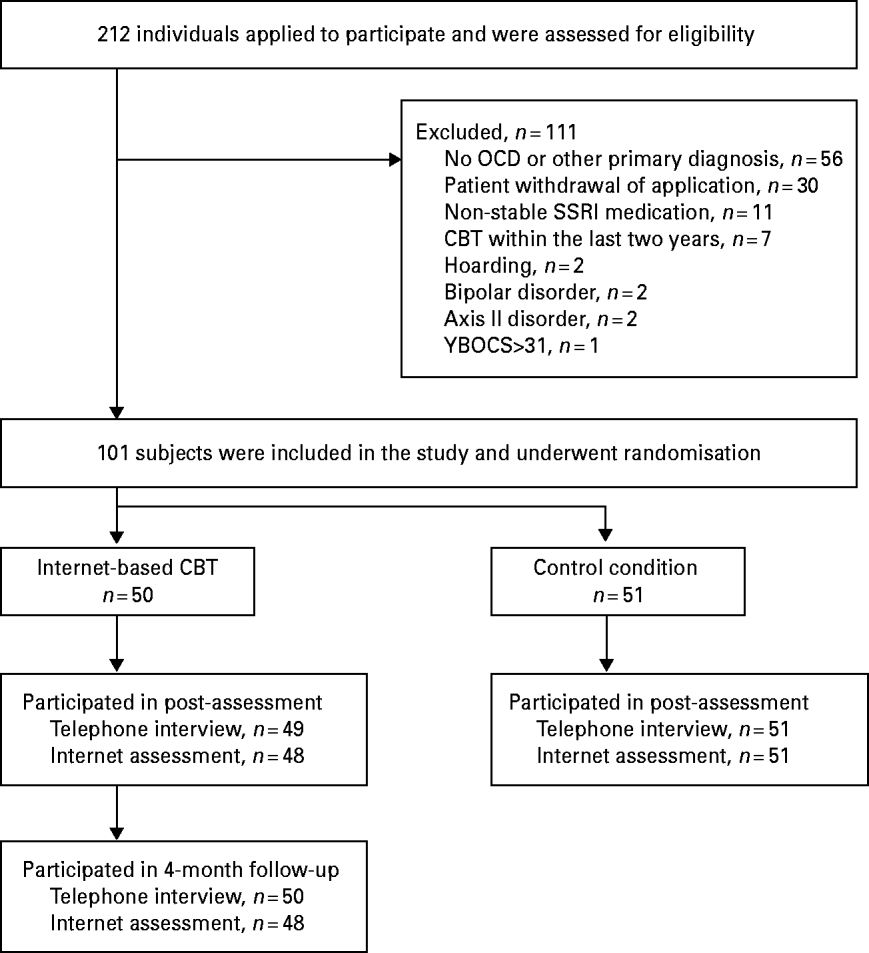
Participants were recruited by referral from primary-care physicians, mental health professionals and through self-referral. Information about the study was published on the official web page of the clinic at Karolinska University Hospital and through advertisements in national newspapers. In the first stage of recruitment, participants (n=212) consenting to participate completed an online screening consisting of YBOCS (self-rating version; Rosenfeld et al. Reference Rosenfeld, Dar, Anderson, Kobak and Greist1992), Obsessive Compulsive Inventory – Revised (OCI-R; Foa et al. Reference Foa, Huppert, Leiberg, Langner, Kichic, Hajcak and Salkovskis2002), Montgomery–Åsberg Depression Rating Scale – Self-report (MADRS-S; Svanborg & Åsberg, Reference Svanborg and Åsberg1994), Alcohol Use Disorders Identification Test (AUDIT; Saunders et al. Reference Saunders, Aasland, Babor, de la Fuente and Grant1993), and the Drug Use Disorders Identification Test (DUDIT; Berman et al. Reference Berman, Bergman, Palmstierna and Schlyter2005). After completing the online screening, participants fulfilling the initial criteria (n=191) were interviewed by telephone to establish whether inclusion or exclusion criteria were met and to assess baseline OCD severity and general functioning. Information on medical history and medication use were collected during the interviews. OCD diagnostic criteria were verified through the Structured Clinical Interview for Mental Disorders (SCID-I; First et al. Reference First, Gibbon, Spitzer, Williams and Benjamin1999) via the telephone. Severity level of OCD symptoms was assessed using the clinician-administered YBOCS (Goodman et al. Reference Goodman, Price, Rasmussen, Mazure, Fleischmann, Hill, Heninger and Charney1989) and the Clinical Global Impression Scale (CGI; Guy, Reference Guy1976). Comorbid psychiatric conditions were assessed with the Mini International Neuropsychiatric Interview (MINI; Sheehan et al. Reference Sheehan, Lecrubier, Sheehan, Amorim, Janavs, Weiller, Hergueta, Baker and Dunbar1998). The assessors were either licensed psychologists or clinical psychology students in their final year of the 5-year psychologist programme. All assessors received extensive training in psychiatric diagnostics from a senior psychiatrist. To ensure reliability in the diagnostic procedure, the psychiatrist and a licensed psychologist reviewed all cases before deciding on inclusion. After the telephone interview, participants completed an online assessment at baseline and were then included and randomized (n=101) into two groups, ICBT or control condition (Fig. 1).
Participant flow and reasons for dropout throughout the trial. CBT, Cognitive behavioural therapy; OCD, obsessive–compulsive disorder; SSRI, selective serotonin reuptake inhibitor; YBOCS, Yale–Brown Obsessive Compulsive Scale.
The study protocol was approved by the regional ethics review board in Stockholm, Sweden. The trial was registered at Clinicaltrials.gov, registration ID: NCT01347099.
Outcome measures
Primary outcome measure
The primary outcome measure was the clinician-administered YBOCS (Goodman et al. Reference Goodman, Price, Rasmussen, Mazure, Fleischmann, Hill, Heninger and Charney1989), which is regarded as the gold standard for assessing the severity of OCD symptoms (Baer & Blais, Reference Baer and Blais2010).
Secondary outcome measures
The secondary outcome measure of OCD symptoms was the OCI-R (Foa et al. Reference Foa, Huppert, Leiberg, Langner, Kichic, Hajcak and Salkovskis2002). In accordance with previous research (Simpson et al. Reference Simpson, Foa, Liebowitz, Ledley, Huppert, Cahill, Vermes, Schmidt, Hembree, Franklin, Campeas, Hahn and Petkova2008), the outcome was assessed by both the OCI-R total score and the subscale with the highest score for an individual participant. Depressive symptoms were assessed with MADRS-S (Svanborg & Åsberg, Reference Svanborg and Åsberg1994). Global functioning was measured with the Clinical Global Impression Scale – Severity (CGI-S; Guy, Reference Guy1976), Clinical Global Impression Scale – Improvement (CGI-I; Guy, Reference Guy1976), and the Global Assessment of Functioning Scale (GAF; APA, 2000).
Randomization and assessment points
Participants were randomized (www.random.org) with a 1:1 ratio by an independent person who was not involved in the study. All outcome measures were assessed at baseline, post-treatment and 4 months after treatment completion. A flowchart outlining the trial design is displayed in Fig. 1. The OCI-R (Foa et al. Reference Foa, Huppert, Leiberg, Langner, Kichic, Hajcak and Salkovskis2002) was administered as an online weekly rating in order to monitor treatment progression. The reason for having the OCI-R as weekly rating is that it is a short and easy to use instrument, with high test–retest reliability (α values 0.81–0.89) and has high sensitivity to change (Abramowitz et al. Reference Abramowitz, Tolin and Diefenbach2005). Clinician-administered measures were the YBOCS, GAF, and CGI. Assessors gathered information about adverse events. The assessors were blinded to treatment allocation at the post-treatment interview and were instructed to guess to which treatment condition the participant had been randomized in order to control for blinding integrity. Adverse events were also assessed via telephone interviews at the 4-month follow-up.
One participant in the ICBT group was lost to the post-treatment telephone interview assessment, and two participants did not complete the internet self-rating questionnaires. At the 4-month follow-up, all participants in the ICBT group were assessed via telephone while two participants did not complete the internet questionnaires. There was no loss of data for the control group at baseline or post-treatment. As the control condition was crossed over to ICBT after the post-treatment assessments were completed, this group was not included in the 4-month follow-up assessment.
Interventions
ICBT
The treatment was based on established CBT methods for treating OCD, including psychoeducation, cognitive restructuring, exposure with response prevention (ERP), and a relapse prevention programme (Abramowitz, Reference Abramowitz2006, Reference Abramowitz2009). The treatment consisted of text material (about 100 pages) and worksheets divided into 10 modules (i.e. chapters). The material was also accessible as an mp3 file (about 5 h of total listening) that the participant could download to their computer. All participants read the same texts relating to general psychoeducation and rationale for the treatment, but tailored examples of obsessions and compulsions were given according to participants' subtype of OCD (washing, checking, symmetry, forbidden thoughts). Modules 1–4 consisted of psychoeducation, cognitive restructuring of meta-cognitions, and of establishing an individual ERP hierarchy. Participants were encouraged to spend no more than 1 week on each of the first four modules. All participants had to proceed through modules 1–4 consecutively in order to access the ERP treatment. Modules 5–10 focused on doing daily in vivo ERP exercises. These modules were not fixed in a predetermined order but were opened by the therapist depending on the kind of OCD subtype the patient had. Worksheets, self-rating assessments, text material, mp3 files, and therapist e-mail contact were integrated in one single treatment platform that required username and password authentication to be accessed. Detailed information about the treatment content is presented elsewhere (Andersson et al. Reference Andersson, Ljotsson, Hedman, Kaldo, Paxling, Andersson, Lindefors and Rück2011).
The ICBT programme lasted 10 weeks. The therapists had no face-to-face contact with the participants during treatment and their main role was to provide feedback on homework assignments, grant consecutive access to the modules, and to support the participants in doing ERP. The therapists replied to the participants within 24 h on weekdays, and participants were encouraged to contact the therapist if they needed support or clarification. Participants were notified by a short mobile text message (SMS) whenever they received a new message from their therapist in the treatment platform. An SMS was also sent to participants if they had not logged on to the treatment platform for 7 days. If the participant had not logged on within a few days after this SMS, the therapist telephoned the participant to check their status and to remind him/her to log on as soon as possible.
The therapists were all clinical psychology students in their final year of the 5-year psychology programme and had access to on-demand supervision from a licensed psychologist and received scheduled supervision with a psychotherapist on six occasions during the treatment period. Participants interacted with same therapist throughout the whole treatment. Both the psychologist and the psychotherapist had extensive clinical experience in CBT for OCD. To ensure treatment integrity, the psychologist monitored treatment adherence in the treatment platform each day during the entire treatment period.
Control condition
The control condition received online non-directive supportive therapy, which consisted of access to an e-mail function integrated in the treatment platform, through which participants could communicate with a therapist. There were no active treatment components such as self-help texts or worksheets. Each week, the therapist contacted the participant through the treatment platform to enquire how the week had progressed and to encourage the participant to discuss current distressing life events. As with the ICBT group, an SMS was automatically sent whenever the participant had a new message from the therapist. The therapist also telephoned the participant, if he/she had not completed the weekly internet self-ratings. This group used the same therapists as the ICBT group but this contact did not include any CBT interventions.
Non-directive supportive therapy is effective in treating depression (Ward et al. Reference Ward, King, Lloyd, Bower, Sibbald, Farrelly, Gabbay, Tarrier and Addington-Hall2000) and generalized anxiety disorder (Hunot et al. Reference Hunot, Churchill, Silva de Lima and Teixeira2007), and, when delivered via the internet, reduces post-traumatic stress disorder symptoms and anxiety (Litz et al. Reference Litz, Engel, Bryant and Papa2007). Thus, the rationale for using this control condition was to ensure basic control for attention and possible alleviating effects of sharing one's distress with a professional therapist. As with the ICBT group, participants in the control condition could expect an answer within 24 h on weekdays, and a licensed psychologist monitored the therapist's communications each day to ensure treatment integrity.
Statistical analyses
Statistical data were analysed with SPSS v. 19 (IBM Inc., USA). Repeated-measures ANOVA was used for continuous data and independent and dependent t tests were used post hoc on continuous variables. Between-group ordinal and nominal data were analysed with Mann–Whitney and χ2 tests and within-group ordinal and nominal data were analysed with Wilcoxon's and McNemar's tests. Blinding integrity was tested with Fisher's exact test with the assessor's guess of treatment allocation as a variable, and with CGI-I scores held as covariate. Cases where blinding was broken were excluded from this analysis. To calculate effect sizes, Cohen's d formula, based on mean differences and pooled standard deviations (s.d.), was used. Clinically significant improvement was determined by the Jacobson & Truax (Reference Jacobson and Truax1991) criteria, where patients (a) made a statistically reliable baseline to post-treatment improvement and (b) obtained a post-treatment score 2 s.d. below the mean pre-treatment value. To control for the difference in therapist time and number of sent messages, the ANOVA was repeated using therapist time and number of sent messages as covariates. Baseline differences between completers and non-completers were tested using independent t tests. To test within-group changes after receiving ICBT, dependent t tests were conducted from post-treatment to follow-up. Power analysis indicated an 84% chance of detecting a between-group effect size of d=0.6 (α level=0.05).
Results
Baseline characteristics
Baseline demographics
There were no significant differences between treatment and control groups at baseline for any demographical variable or outcome measure. Mean CGI-S scores at baseline were 3.60 (s.d.=0.70) for the ICBT group and 3.47 (s.d.=0.86) in the control condition, respectively. Baseline demographics are presented in Table 1.
Patient characteristics at baseline

ICBT, Internet-based cognitive behaviour therapy; SSRI, selective serotonin reuptake inhibitors; SNRI, serotonin-norepinephrine reuptake inhibitors; OCD, obsessive–compulsive disorder; GP, general practitioner.
Primary outcome measure
There was a significant group×time interaction effect on the YBOCS (F=63.87, df=1, 98, p<0.001), and within-group improvements for both the ICBT group and control condition (t=12.27–4.34, df=48–50, p<0.001). The within-group effect size was large for the ICBT group (d=1.55) and borderline moderate for the control condition (d=0.48). At post-treatment, there was a between-group mean difference (t=5.61, d.f.=98, p<0.001), with a large between-group effect size (d=1.12) in favour of the ICBT group. The number of participants achieving clinically significant change according to Jacobson & Truax (Reference Jacobson and Truax1991) criteria was 60% (95% CI 46–72) in the ICBT group and 6% (95% CI 1–17) in the control condition (p<0.001). The results were sustained (t=0.99, df=49, p=0.33) with 54% (95% CI 40–67) of the ICBT group achieving clinically significant improvements at follow-up. The main results are presented in Table 2.
Continuous treatment outcome measures

CI, Confidence interval; YBOCS, Yale–Brown Obsessive–Compulsive Scale; ICBT, internet-based cognitive behaviour therapy; CC, control condition; OCI-R, Obsessive Compulsive Inventory – Revised; MADRS-S, Montgomery– Åsberg Depression Rating Scale – Self rating; GAF, Global Assessment of Functioning.
a Total score.
b Subscale with the highest score.
Secondary outcome measures
Significant interaction effects were found on the OCI-R total score (F=40.61, df=1, 97, p<0.001), OCI-R subscale with highest score (F=36.92, df=1, 97, p<0.001), MADRS-S (F=5.19, df=1, 97, p<0.05), and GAF (F=11.69, df=1, 98, p<0.01). There were within-group baseline to post-treatment improvements on all secondary outcome measures in the ICBT group (t=5.65–7.86, df=47–48, p<0.001). The control group made a baseline to post-treatment improvement only on the GAF (t=2.62, df=50, p<0.05). Independent t tests revealed between-group post-treatment differences on the OCI-R (t=3.07, df=97, p<0.01), OCI-R subscale with highest score (t=4.33, df=97, p<0.001), and GAF (t=2.83, df=98, p<0.01), with effect sizes ranging between 0.57 and 0.87 (Table 2). The MADRS-S between-group means were not significant at post-treatment (t=0.92, df=97, p=0.36). Weekly mean OCI-R total scores are presented in Fig. 2 with 95% confidence intervals.
Weekly Obsessive Compulsive Inventory – Revised (OCI-R) total score ratings with 95% confidence intervals. ICBT, Internet-based cognitive behaviour therapy; W, week.

At post-treatment, there were between-group effects on both CGI-I and CGI-S (Z=3.68–6.93, p<0.001). Mean CGI-S scores at post-treatment were 2.61 (s.d.=0.93) for the ICBT group and 3.43 (s.d.=1.01) in the control condition, respectively, but only the ICBT group had a significant within-group effect on this outcome measure (Z=5.77, p<0.001). The mean CGI-I scores were 2.27 (s.d.=0.073) in the ICBT group and 4.82 (s.d.=8.77) in the control condition at post-treatment. The results were sustained for the ICBT group at follow-up (mean=2.20, s.d.=1.11). The ICBT group made a significant increase on the GAF from post-treatment to follow-up (t=4.75, df=48, p<0.001). There were no significant post-treatment to follow-up change for any other secondary outcome (t=0.50–1.72, df=47, p=0.09–0.62) (Z=0.79–1.18, p=0.94–0.24). However, the MADRS-S had a non-significant within-group effect size at follow-up (t=1.62, df=47, p=0.11).
Treatment adherence and attrition
There were between-group differences regarding therapist time and number of messages sent from the therapist (t=9.90–11.60, df=99, p<0.001). The total mean therapist time for the ICBT group was 129 min (s.d.=67.26) and the total number of messages sent from the therapist was 35 (s.d.=13.95) per participant. The total mean therapist time for the control condition was 17 min (s.d.=15.16) and the average total number of messages sent from the therapist was 16 (s.d.=2.94). The average number of completed modules in the ICBT group was 7.28 (s.d.=2.56), and the therapists made 17 telephone calls to the ICBT group reminding them to report ERP progression on the treatment platform. For the control condition, the therapists made 41 telephone calls reminding them to do the weekly internet-administered self-ratings. To control for the difference in therapist time and number of sent messages the interaction analysis was repeated on the primary outcome (YBOCS) using these possible confounders as covariates. The results remained significant (F=5.73, df=1, 96, p<0.05). Six participants in the ICBT group were considered as non-completers, as they did not begin ERP. Independent t tests showed no significant baseline differences between non-completers and completers (t=−0.31 to 1.55, df=50, p=0.13–0.76).
Blinding integrity
Blinding was broken for five participants in the ICBT group and for one participant in the control condition during the post-treatment interview assessments. There was no association between assessor's guess and randomization allocation when Fisher's exact test was performed, with the CGI-I scores held as covariates (p=0.84–0.11).
Adverse events
At post-treatment, two participants in the ICBT group reported adverse events that could be associated with the treatment. One participant immediately stopped the treatment due to increased OCD symptoms and left the study. Another participant reported increased sleep disturbances due to a heightened anxiety level when beginning ERP, but these symptoms diminished after 5 weeks of ERP. At follow-up, one participant reported increased depressive symptoms a few weeks after the treatment ended: these symptoms were still prominent and impairing 4 months after receiving ICBT.
Discussion
This is, to our knowledge, the first randomized controlled trial to investigate the efficacy of ICBT for OCD. The results show that ICBT is superior to the control condition in improving OCD symptoms, depressive symptoms, and general functioning. The between-group effect sizes were large at post-treatment, significantly favoured ICBT despite a significant pre- to post-treatment improvement in the control group. The results were maintained at follow-up, indicating sustained efficacy and a lasting potential of ICBT for OCD. The effect sizes and proportion of treatment responders were in the same range as reported for face-to-face CBT in previous studies (Gava et al. Reference Gava, Barbui, Aguglia, Carlino, Churchill, De Vanna and McGuire2007; Hofmann & Smits, Reference Hofmann and Smits2008).
The therapists in this trial spent an average of 129 min per participant over the 10-week period, which is substantially lower than in traditional face-to-face treatment (with a corresponding figure in the range of 540–900 min). Despite reduced therapist time, the participants could expect feedback within 24 h on weekdays from their therapist and some participants had contact with the therapist 3–4 days per week. Thus, one possible advantage of ICBT is the combination of overall limited therapist time and the flexibility of increasing therapist input during some parts of the treatment (i.e. ERP intensive periods): intensive contact face-to-face CBT has also been tested for OCD with promising results (Storch et al. Reference Storch, Merlo, Lehmkuhl, Geffken, Jacob, Ricketts, Murphy and Goodman2008). Another advantage of ICBT is the highly controlled context of treatment delivery. This minimizes the risk of therapist drift and helps both the therapist and the patient to focus on maximizing the ERP intensity.
The major strengths of this study were the use of adequate power, randomization, and blinded assessors. However, the study also has limitations. First, the participants in the control condition were aware they would receive ICBT later and had less therapist contact than the ICBT group (129 min in the ICBT group v. 17 min in the control condition). Furthermore, more telephone calls were made to control group subjects reminding them about the weekly online assessments (41 calls in the control condition v. 17 calls in the ICBT group) and this suggests that the control subjects were not as engaged in the programme as the ICBT group. Thus, the differences in effects between the two groups might be due to non-specific factors. However, the results remained significant when repeating the analysis when holding therapist time and number of sent messages as covariates. Thus, the difference between the groups on these variables is unlikely to have affected the outcome to a substantial degree. Second, as the participants were crossed over to ICBT after 10 weeks, there could be no between group-comparisons at follow-up. Third, patients were largely self-selected and the study population might not have been representative of the typical OCD patient within psychiatric care. However, GP-referred patients may have better treatment outcome than self-referred patients or those referred by a mental health professional (Mataix-Cols et al. Reference Mataix-Cols, Cameron, Gega, Kenwright and Marks2006). Thus, even though the participants in this study were mainly a self-referred population, evidence does not suggest that they should be more responsive to treatment compared to GP-referred patients. Fourth, we excluded severe OCD (YBOCS >31) and this could affect the generalizability of the results. The reason for this exclusion criteria was because it has been suggested that face-to-face CBT should be the treatment of choice for severe cases of OCD (Mataix-Cols & Marks, Reference Mataix-Cols and Marks2006). However, the empirical evidence regarding this issue is limited and one recommendation for future studies is therefore to have a wider symptom range, including more severe OCD cases. As there was only one case of exclusion due to extreme symptoms in this trial, this criterion should not have affected the outcome substantially.
The results from this trial are promising as ICBT achieved large effect sizes and a large amount of treatment responders, yet the time to treat a patient was about one fourth of regular face-to-face CBT. Consequently, this treatment format could considerably increase the accessibility of evidence-based psychological treatment for OCD. This could be especially important for patients who would not otherwise seek help because of feelings of shame. This trial also opens new venues for future development. As previously mentioned, an advantage with ICBT is the combination of overall limited therapist time and also the flexibility of increasing therapist input during demanding parts of the treatment. A common problem for CBT therapists is that the patients do not do their homework properly. One possible future application is ICBT as an adjunct to face-to-face CBT, i.e. weekly face-to-face sessions in combination with online reports on treatment progression with the therapist reminding and encouraging the patient to do ERP between-session exercises. This could perhaps increase compliance to homework and at the same time increase the sense of responsibility for the treatment by the patient. Another problem in CBT is that some individuals with OCD relapse after receiving treatment. One option to counteract relapse and/or enhance further progression is to add internet-based booster programmes after receiving either face-to-face CBT or ICBT. Consequently, ICBT seems to offer various combinations and opportunities for strengthening treatment adherence and acceptability in patients suffering from OCD.
To summarize, ICBT reduces OCD symptoms, depressive symptoms and increases general functioning compared to an active control group. This treatment may also increase treatment accessibility thereby attracting patient groups who would not otherwise seek or receive help. This study warrants replications and future evaluations should test ICBT against face-to-face CBT.
Acknowledgements
Financial support was provided through the regional agreement on medical training and clinical research (ALF) between Stockholm County Council and Karolinska Institutet. Thanks to the Swedish Research Council and the Swedish Society of Medicine (Söderström Königska sjukhemmet) for funding the study and Maja Ågren and Elin Elveling for diagnostic assessments and treatment assistance.
Declaration of Interest
None.


 Open access

