

INTRODUCTION
Glass bangles from first and second century ad sites across the British Isles have been extensively studied over the past century. Footnote 1 They appear in the archaeological record at about the same time as the earliest Roman military fortifications in the south of Britain, having faded out in continental Europe shortly beforehand. Footnote 2 Glass bangles continued to be made and used in Britain into the second century, but had peaked by the mid-second century and largely disappeared not long afterwards. Although they have come to be associated with the Roman conquest, they are reminiscent of some Late Iron Age glass beads in their strong colours and some of the decorative styles (such as cable decoration), and the distribution patterns observed for different bangle types straddle Roman and indigenous, military and civilian sites. Footnote 3 They have been described as a Roman-inspired development of an existing Iron Age skill, facilitated when glass became increasingly available as Britain became a Roman province. Footnote 4 Many questions remain, however, about the chronological development of the different bangle types, where they were made and by whom, and the sources of their materials. This study uses scientific analysis of these objects to better understand the differences in glass-colouring and glass-working technology between the indigenous and Roman glassworkers.
Glass bangles were made in a range of distinctive styles and colours that lend themselves to typological classification. Some are plain or have a plain core coated in coloured glass, others are decorated with twisted polychrome cords, spirals, spots or trails. They are occasionally found in substantial numbers: at Traprain Law, East Lothian (180 fragments), and at Thearne, Yorkshire (180 fragments). Footnote 5 Kilbride-Jones divided them into three types, which have subsequently been refined as new discoveries were recorded. However, some of the earliest bangles from Britain, such as the examples from Wales discussed here, do not fit neatly into these categories. Footnote 6
-
Type 1, limited to Scotland, and typically found in segments with shaped ends, with a core of one colour, coated in a layer of opaque yellow and other colours.
-
Type 2, found throughout southern and central Britain and well established in the latter, are annular and decorated with twisted cords, often in white and blue. The large variants of this type include some from the earliest conquest-period sites in southern contexts dating to around ad 43.
-
Type 3, concentrated in northern England and Scotland, are annular, often plain opaque white (3A), a rarer plain opaque yellow (3B), colourless/naturally-coloured (3F), dark blue (3I) or amber (3E), and some are decorated with opaque white trails.
Previous study has furthered the understanding of the typology, distribution and potential uses of glass bangles in Britain, but there has been little chemical analysis. Footnote 7 These early analyses of Type 3 bangles hinted at some unusual characteristics, which could not be explained at the time. It is now well established that there was no primary glassmaking in Britain in this period, and so the bangles were made with imported glass, but analysis with modern methods has the potential to refine this further. The aims here were: to determine whether bangle production in different regions of Britain was standardised, or if instead the methods were unique to particular groups or regions; to investigate the sources of the glass used; the extent to which it was recycled or modified; and to establish the relative dating of the types. The project was able to sample material in the collections below, allowing identification of previously unknown methods for colouring and opacifying glass. The results show that chemical analysis and microstructural examination are powerful tools for testing, refining and expanding existing typological models.
BACKGROUND
Glass was traded over substantial distances throughout the first millennium ad. The chemical composition of glass depends on the raw materials and primary processes used to make it, but also on how it was later modified or re-used. Ancient glass was often coloured and shaped in a secondary stage, somewhere different from where it was made (the primary stage), and was frequently recycled in a third (or later) stage. Footnote 8 Chemical analysis can not only determine the origins of glass, but also improve understanding of its whole life cycle, shedding light on the glassworkers involved at each step by looking at the skills they used, the materials that they had access to and the style of the objects that they made. This can in turn highlight how they were affected by fluctuations in trade, technological developments, resource availability and political or economic events.
In the first century ad, Pliny describes making glass from natron and sand, which took place near to natron sources in Egypt as well as further along the coast in the Levant (Syro-Palestine coast) region. Footnote 9 The glass from Egypt tends to contain more sodium and less lime relative to the glass from the Levant furnaces. The resulting glass was transparent with a weak blue-green (‘naturally-coloured’) hue from the iron impurities in the raw materials.
Antimony or manganese additives were often added to this transparent natron glass in the primary glassmaking stage to modify the natural colour, from a pale blue or green tint to colourless if enough antimony or manganese was added. The glassmakers in the Levant region used manganese, and this manganese-containing glass became increasingly widespread from the second century bc. Conversely, the antimony-decolourised glass, which is common from the first century ad, was made in Egypt. Chunks of these natron glasses were then redistributed to workshops for shaping. ‘Natron glass’ became increasingly common in Europe through the Iron Age and dominated the Roman period and beyond. Footnote 10 Both the manganese- and antimony-containing transparent glasses circulated widely in Roman Britain, becoming mixed during later recycling, and were used as the base to which colourants were later added to make coloured and opaque glass. Footnote 11 As expected, these types of natron glass were used as the base to make the coloured glass for forming the bangles studied here.
Colouring often took place during a secondary process at workshops. Naturally-coloured or colourless raw glass or recycled cullet was re-melted and metal minerals were added to produce a strong colour and/or to make the glass opaque. The colourants and opacifiers used in Roman glassmaking remained fairly consistent over several centuries, and are well established from studies of enamels, vessels, beads and tesserae. Footnote 12 Antimony-based opacifiers dominate in Roman opaque glass but there is a marked change in post-Roman glass, which is thought to coincide with difficulty obtaining antimony minerals. Tin-based opacifiers subsequently become more common, together with innovative opacifying techniques, such as adding bone ash, or creating tiny bubbles in the glass. Footnote 13
The final composition of coloured glass is therefore a combination of the transparent natron glass base (which may contain dissolved antimony or manganese oxides as decolourisers, depending on where it originated) and additives to give the glass a strong colour (cobalt, copper, excess manganese) or make it opaque (commonly crystals containing antimony).
THE SITES AND MATERIAL
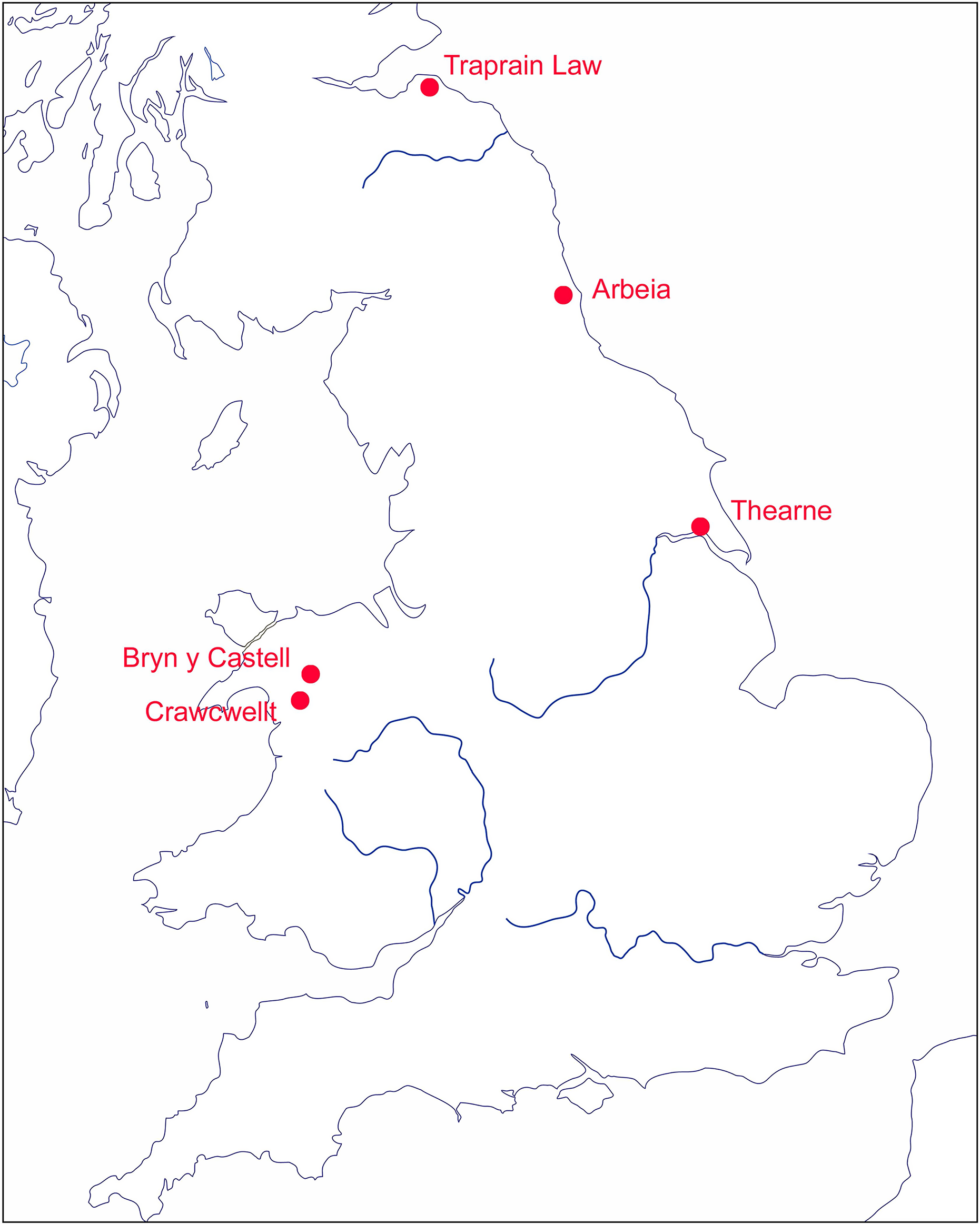
This study investigates assemblages from four key groups of material (fig 1). Footnote 14
-
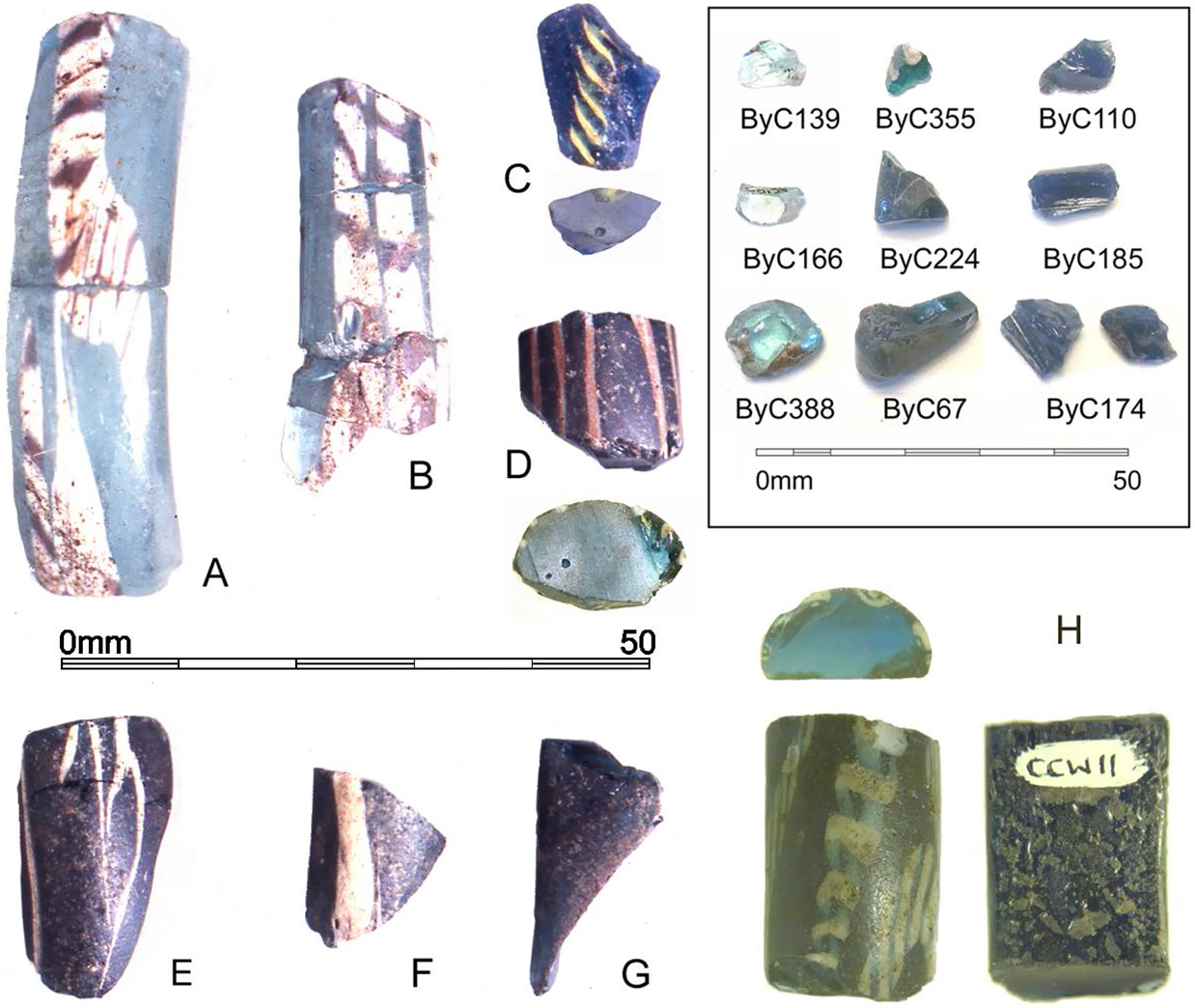
Two excavated sites in north-west Wales, Bryn y Castell and Crawcwellt (fig 2).
-
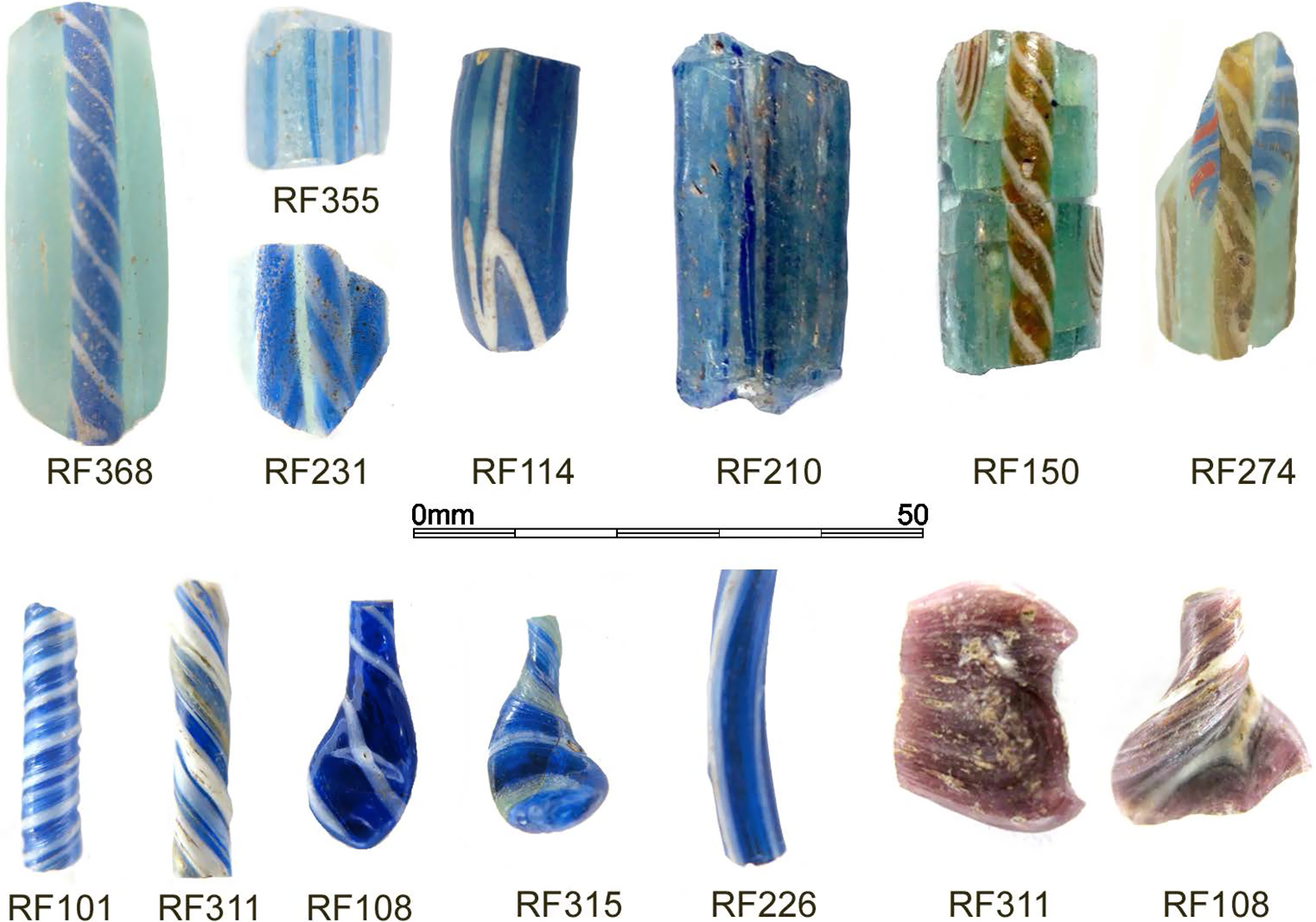
Finds from test pits and fieldwalking at the bangle making site at Thearne in East Yorkshire (fig 3).
-
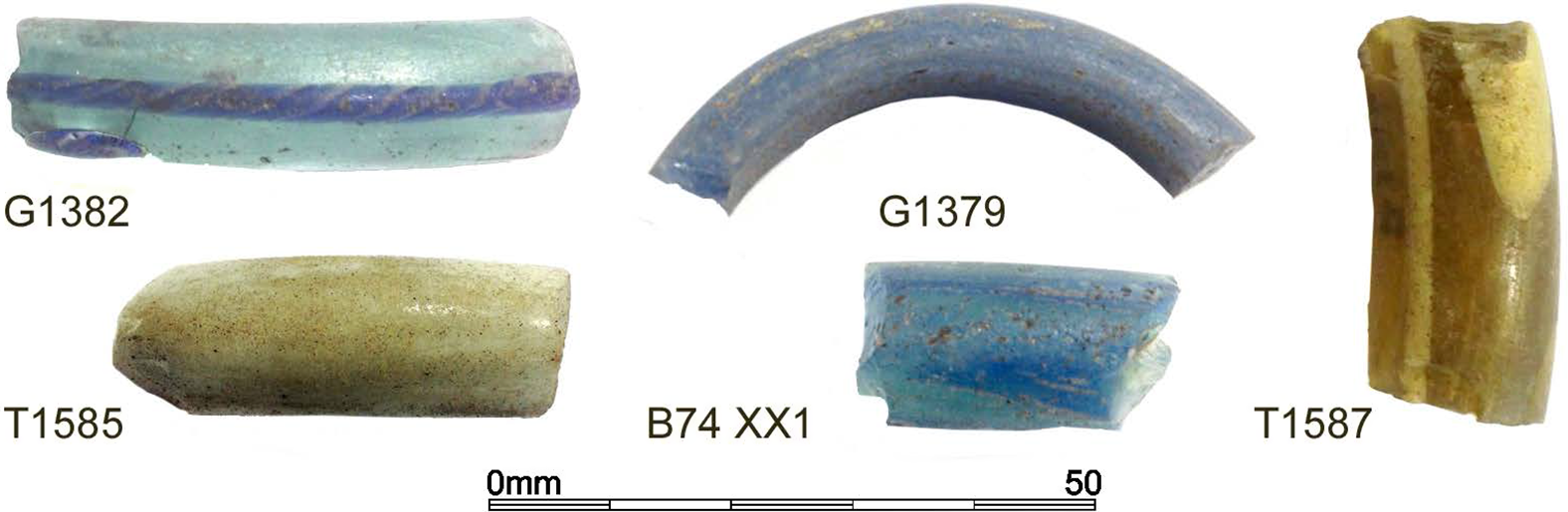
Three Roman fort sites in northern England, curated at Arbeia Roman Fort Museum in South Shields (fig 4).
-
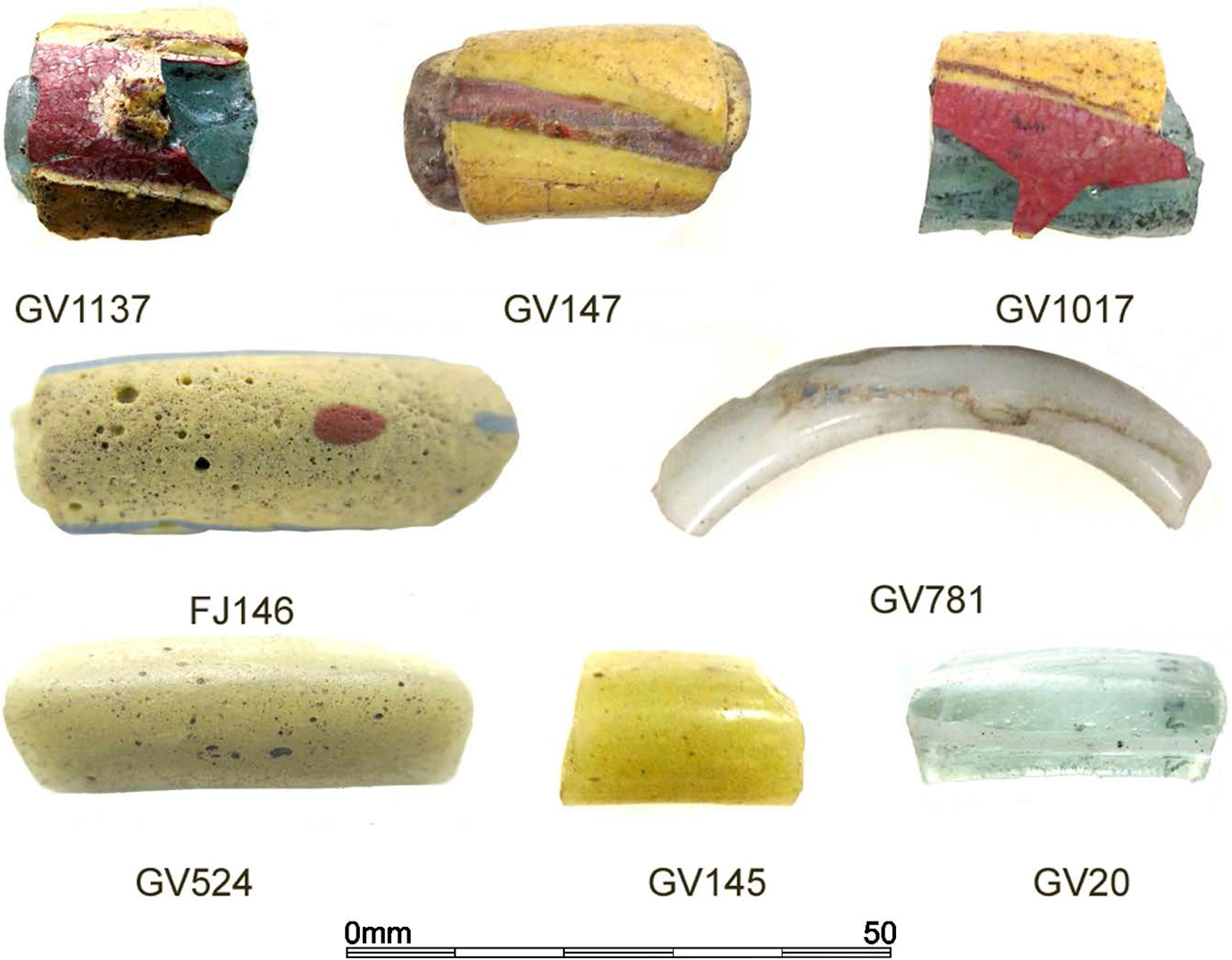
The Iron Age hillfort of Traprain Law in East Lothian (fig 5).
Location map of the assemblages examined. Drawing: Sarah Paynter.
A–G: Bryn y Castell larger and joining fragments. H: Crawcwellt. Top right box: smaller fragments used for analysis – left, naturally-coloured; centre, dark green; right, dark blue. Sections were cut from C, D and H for analysis. Photographs: Peter Crew.
Thearne, E Yorks. Top: Type 2 bangles and a single Type 3 (RF114). Bottom: examples of the bangle working waste, cord and rod fragments, some with flattened ends and tool marks (×2 size). Photographs: Caroline Jackson.
Arbeia bangle selection, Types 2 and 3. Photographs: Caroline Jackson.
Traprain Law bangle selection, Type 1, some with shaped ends, and Type 3 (GV 781 and bottom row). Photographs: Caroline Jackson.
The bangle fragments found at the Welsh sites Bryn y Castell and Crawcwellt are early examples, from contexts dating around the early to mid-first century ad. Both of these sites produced evidence for intensive ironworking. Footnote 15 These bangles are without exact parallels, although the pieces with cables resemble Type 2 and the fragments with white trails resemble Type 3. The fragments were widely scattered in and around one building that had been used for ironworking. Nearly all had fresh breaks and several pieces matched, probably deriving from seven or eight bangles. Two naturally-coloured glass bangles are decorated with thick distorted cords of twisted purple and opaque white glass, one with a dark blue body has a fine cord of dark green with opaque yellow, and one with a dark green body has six fine, loosely twisted opaque red and white cords. A distinctive feature is that all the cords are flush with the surface rather than proud, as in most Type 2 bangles. The rest are dark green with opaque white trails, akin to the later Type 3 bangles, and one is partially melted. At Crawcwellt a single dark blue bangle fragment was found in a hut with intensive ironworking, contemporary with Bryn y Castell. This had loose twisted cords with opaque white decoration, again flush with the surface. The surface is heavily abraded, but the breaks are fresh. A notable feature are the large flakes of iron scale on the inside surface, from the tool used to expand the bangle.
At Thearne, East Yorkshire, large numbers of bangle fragments, polychrome cords of glass, plain canes and pieces of glass waste were recovered during fieldwalking. This is the only certain bangle making site yet discovered in Britain. Footnote 16 Some of the waste fragments bear impressions from tools and have been deformed by heat, which is evidence of bangle production at the site. Much of the waste is very small, which highlights the difficulties in identifying the often ephemeral archaeological remains of glass-working. Nearly all of the bangles are Type 2 with a plain, naturally-coloured core and raised twisted cords, mostly blue and white.
Fragments of blue and white cords are common in the assemblage but there are also more unusual purple cords; some of both types have pinched ends where the glass was gripped during working and discarded once it was too short to use. Some have unusual brown or yellow (opaque and translucent) and rare opaque red twisted cords. There are also a few dark blue Type 3 examples, with and without white trails. Some of the naturally-coloured glass bangle cores contain streaks of darker blue glass. Test pits, some producing bangle fragments, also had pottery from either the late first to mid-second centuries, or the mid-third to fourth centuries, and the former coincides with the main period of bangle use in Britain. In the surrounding area an iron smelting furnace and large slag blocks have been found, suggesting that both iron and glass were being worked in the same complex. Many bangles, and much of the working waste, were sampled. Around sixty vessel glass fragments were recovered, including some in dark blue.
The collection held at Arbeia, South Shields Roman fort, in Tyne and Wear, derives from forts in north-east England and comprises ten fragments, which were analysed. Seven are from the fort at Arbeia, one from Segedunum (Wallsend) and two from Bainbridge, North Yorkshire. It includes Type 2 and Type 3 bangle fragments, the latter in plain off-white opaque glass 3A, all from Arbeia.
The National Museum of Scotland collection contains more than 250 bangle pieces, with around 180 of these from the hillfort of Traprain Law, East Lothian, including all bangle types (1, 2 and 3). The quantities suggest that bangles may have been made at the site, although the evidence is not conclusive. The site had a long occupation, but the bangles are likely to be mainly later first to second centuries ad, and Type 3A bangles are much more plentiful than 3B. A selection of these bangles was analysed non-destructively.
METHODOLOGY
Full details of the analytical methods used are given in Appendix A (Supplementary Material). The artefacts from Traprain Law were analysed non-destructively using portable X-ray fluorescence (pXRF). The results are qualitative because some components in the glass cannot be detected, and because the surface of the bangles is altered and uneven, but the method is effective at identifying the metal-based minerals used to colour the glass because these generate strong, easily detected X-rays.
Small samples were obtained from the bangles from Arbeia, Thearne and the Welsh sites, which were analysed using an electron probe micro-analyser (EPMA) and scanning electron microscope (SEM). These similar techniques have the advantage that the analyst can see the glass microstructure, particularly any undissolved colourants present. The disadvantage is that only a small area can be analysed each time, so it is more difficult to obtain a representative bulk composition for heterogeneous samples. The bangles contain opacifying crystals or different partially mixed colours, so the results presented here are averages of multiple analyses of areas that each encompass both crystals and the glass matrix. These techniques are able to detect major and minor concentrations quantitatively, down to 0.3–0.1wt% for the SEM and 0.01wt% in the case of microprobe.
RESULTS
The assemblage from Thearne was made using practices and glass types typical of the Roman period, but all of the other assemblages featured atypical, distinctive technologies used to colour the glass, or an unusual source of recycled glass. These deviations are revealing, in that the bangle makers drew on techniques and practices from indigenous glassworkers who may not have had easy access to standard materials via Roman controlled trade routes.
The results are grouped by colour, subdivided according to the colouring technique, with particular attention given to opacifiers. These are small particles, crystals, droplets or bubbles within the glass, which scatter light with varying effectiveness, depending on their properties and size. Footnote 17 The photographs of the bangles demonstrate the variation in colour and opacity caused by these different colouring techniques. The analytical data are given in Appendix B (Supplementary Material). The colours described as ‘standard’ below are ones that use common technology and colourants typical for the period.
Opaque white
Standard white
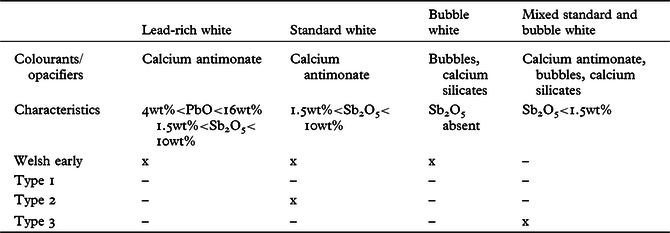
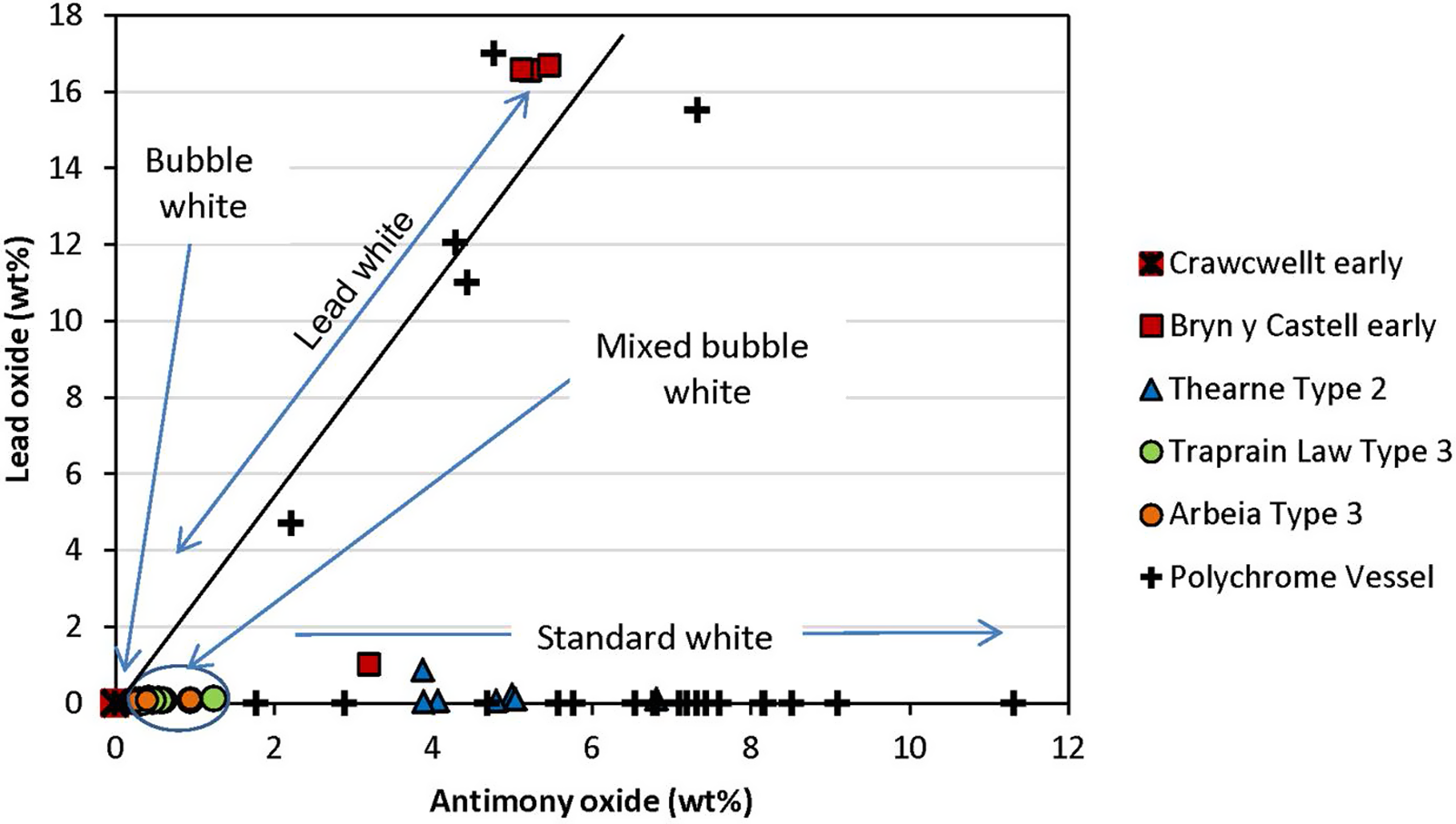
Most Iron Age and Roman opaque white glass is opacified by calcium antimonate (Ca2Sb2O7 and CaSb2O6). Footnote 18 These crystals are effective at scattering light, making the glass fully opaque and white. The white glass in Roman polychrome vessels can contain between 5 and 10wt% of antimony oxide. Footnote 19 Similar levels of antimony oxide (3–7wt%) were detected in the white glass of the twisted cords of the Type 2 bangles from Thearne (fig 3) so these are typical for Roman glass (table 1). One example of this white glass was also identified from Bryn Castell in the twisted red and white cord (fig 2D).
Types of white glass and opacifiers.
Lead-rich white
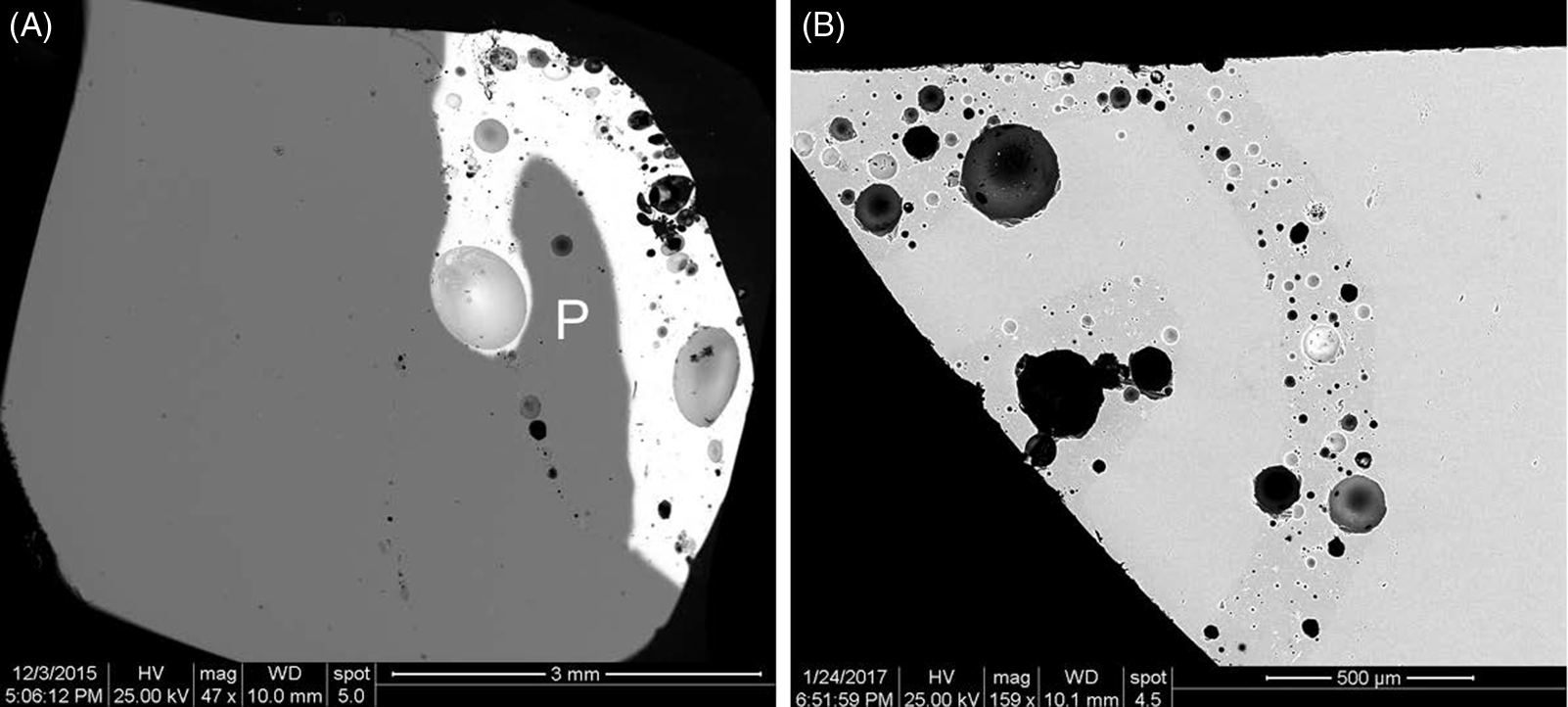
The white glass decoration on the early bangles from Bryn y Castell (fig 2A, B) is unusual because it contains high concentrations of lead as well as antimony, even though lead is not necessary to produce the white colour, which is again due to calcium antimonate crystals (see above).
Lead and antimony are found together in yellow glass (below) combined in yellow crystals of lead antimonate. With enough time and heat, however, the yellow lead antimonate will dissolve. The lead oxide stays in solution whereas the antimony reacts with calcium from the glass to make white crystals of calcium antimonate, resulting in a white glass rather than a yellow one. Usually more than 5wt% antimony oxide was detected in the lead-rich white glass (figs 6 and 7).
Chart showing the range of antimony and lead contents in the types of white glass identified in the bangles, compared to early Roman and Hellenistic vessel glass. Drawing: Sarah Paynter.
BSE images of white glasses from the Welsh sites. A: Bryn y Castell ByC388 (see fig 2) showing the near colourless body (mid-grey) with the opaque white and purple cord (right). The white glass has frequent voids, and the purple glass (P) is the mid-grey oval enclosed within the white glass, a line of bubbles marking the join with the body. Scale 3mm. B: The Crawcwellt bangle with the bubbly glass in two curving trails within the blue glass. Scale 500µm. Images: Sarah Paynter.
Bubble white
The white glass in the cord of the Crawcwellt bangle (fig 2H) is unusual as it does not contain any detectable antimony or tin, the basis of typical white colourants. Instead, numerous tiny bubbles and very small (less than 5µm) calcium silicate crystals can be seen in the melt with the SEM (fig 7B). These calcium silicate crystals and air bubbles are not such effective opacifiers as calcium antimonate, so the overall effect is more opalescent than completely opaque. The manganese content of the glass is high, so this was originally a transparent colourless glass that has been made opaque in this novel way.
Mixed standard and bubble white
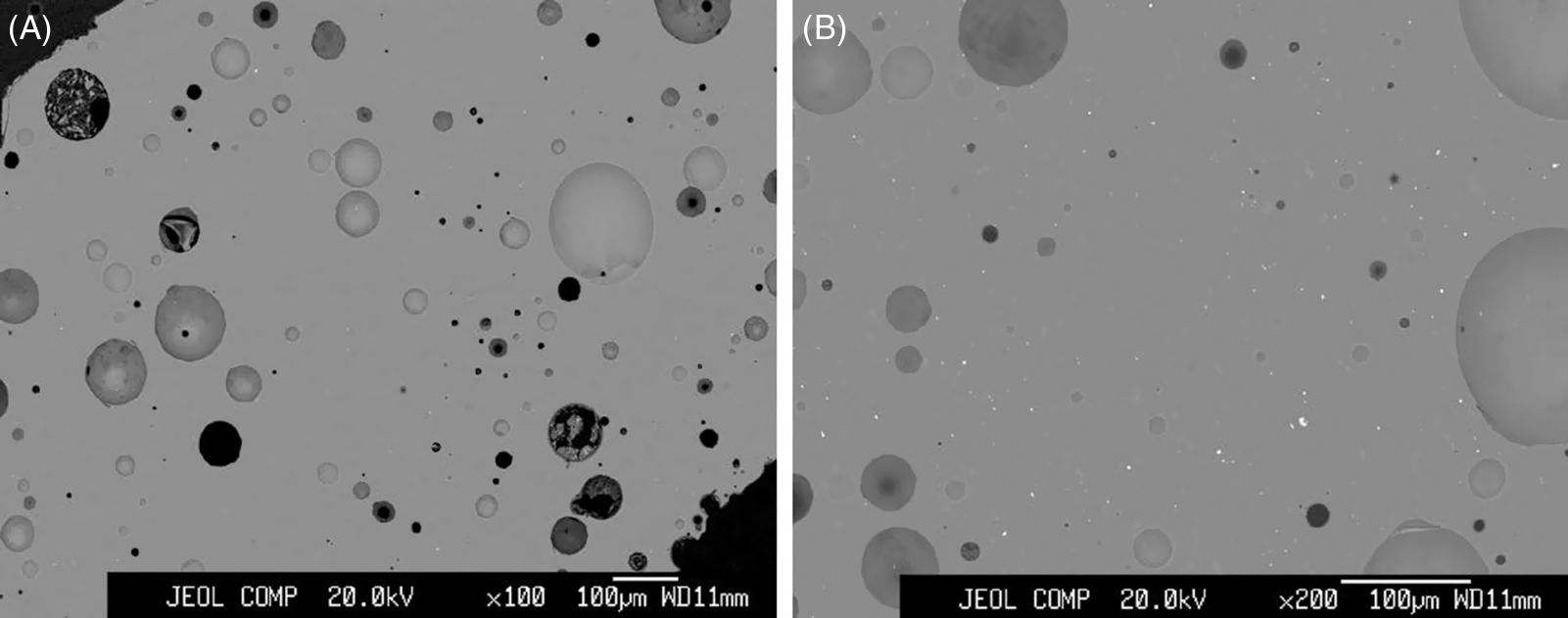
Three plain Type 3A white bangles sampled from Arbeia fort contained only 0.3 to 1wt% antimony oxide (measured by EPMA) and this is much lower than expected for typical white Roman glass (figs 4 and 6). Sparse crystals of calcium antimonate were visible, and also bubbles and small calcium silicate crystals, which are responsible for some of the opacity (fig 8), producing a more opalescent than opaque effect. Although the Traprain Law assemblage could not be sampled, the Type 3A white glass bangles from there were visually very similar to the Arbeia fort ones and probably made in the same manner. This is similar to an example from Eildon that contained only 1.4wt% antimony oxide. Footnote 20 Non-destructive analysis confirmed that the Traprain Law Type 3 bangles also contained far lower levels of the white opacifier than usual for white Roman glass (fig 6). Most contained less than 0.6wt% antimony oxide, with only three containing more, consistent with heavily diluted standard antimony white glass.
BSE images of white glasses from Arbeia. A: T1584 plain opaque white bangle and B: T1585 plain off-white Type 3A bangle (see fig 4); with numerous bubbles (black and grey circles), small crystals of calcium antimonate (white specks) and calcium-rich crystals (small light grey specks). Scale 100µm. Images: Eddy Faber and Caroline Jackson.
Opaque yellow
Yellow is rare among the Type 2 bangles (both the early and standard variants), where it was used mainly for small decorative features, but yellow is used for the entire body of the Type 3B bangles from Traprain Law and also for the capping of some Type 1 bangles from Traprain Law. The colour varies considerably, from vivid opaque yellow in some instances to a paler creamy colour in others (figs 5 and 9).
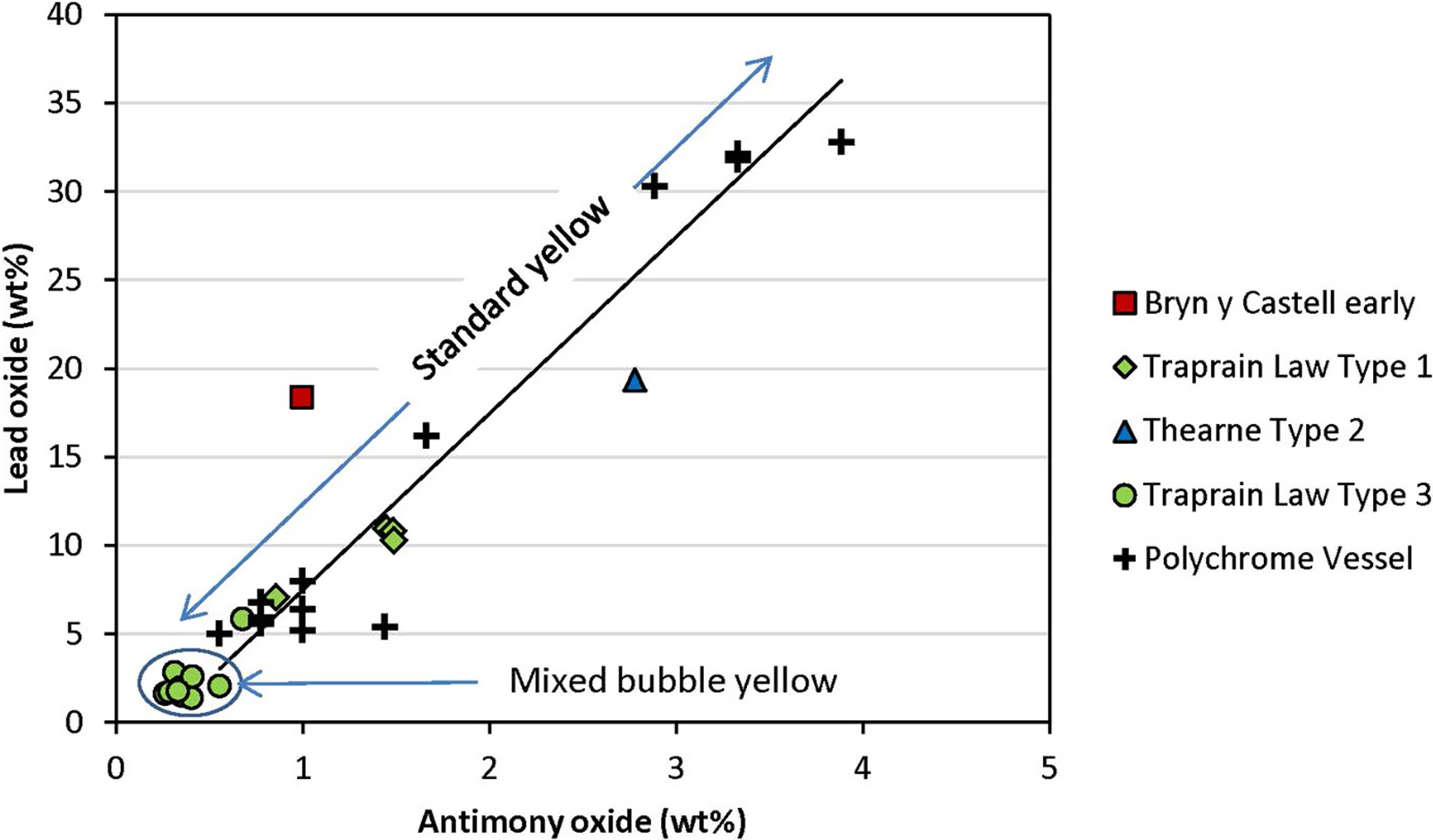
Chart showing the consistent ratio of lead to antimony oxide, characteristic of the yellow colourant lead antimonate in the bangle and vessel glass,Footnote 21 but the higher concentrations of the colourant in contemporary vessel glass, the bright yellow decoration on Type 1 and the lower concentrations in the plain ‘opalescent yellow’ Type 3B bangles. Drawing: Sarah Paynter.
Standard yellow
Most Iron Age and Roman yellow glass is opacified with lead antimonate (Pb2Sb2O7) with 5 to 35wt% lead oxide and 0.5 to 4wt% antimony oxide (although some exceptions are based on tin colourants). Footnote 22 Each yellow lead antimonate crystal contains a combination of lead and antimony, but in the analyses each element is quantified separately. An excess of lead was used when the colourant was made, which also helped to preserve the colour a little longer once it was mixed into the natron glass and diluted, so the ratio in the final glass is nearer to ten parts of lead oxide for one part of antimony oxide (fig 9). The yellow decoration on the Type 2 bangles from Thearne and the early bangle from Bryn y Castell were within the standard range, with ∼3wt% of antimony oxide and ∼20wt% lead oxide. The vivid opaque yellow glass used as an overlay on the Traprain Type 1 bangles, such as GV 147, GV 1137 and FJ 146, also contained 7 to 11wt% lead oxide and up to 1.5wt% antimony oxide. These high concentrations of opacifier account for the bright yellow colour of the decoration on the Type 1 and Type 2 bangles
Mixed standard and bubble yellow
The yellow glass used for the core of some Type 1 and all Type 3B bangles has a creamier colour and a markedly different composition. Yellow lead antimonate was still used (fig 9), but there was much less of it compared to typical Roman yellow glass. For instance, all of the Traprain Type 3B examples (with one exception), as well as the Type 1 bangle with a yellow core, contained less than 0.5wt% of antimony and less than 3wt% lead.
The bubbly texture, creamier opacity and low concentration of lead antimonate in the yellow Type 3B bangles parallels the opalescent white glass used for Type 3A bangles (above). As the Type 3B yellow bangles were made in a similar manner, by diluting coloured glass, they are also likely to contain small calcium silicate crystals as well as numerous bubbles.
Dark blue
Dark blue Roman glass is coloured by traces of cobalt oxide (CoO). Footnote 23 In some applications, like tesserae, white calcium antimonate is added as well, to make the glass opaque so that the substrate underneath is hidden. Cobalt blue is a significant colour in each assemblage, but the hue, clarity and homogeneity of the glass differ markedly (fig 10).
Standard cobalt blue
At Thearne, a large proportion of the decorative rod segments were twists of clear, vivid, blue glass with opaque white (fig 3). Two of these, the decorative blue and white rod on bangle RF368 and the segment of waste blue and white rod RF315, contained the highest amounts of cobalt colourant detected in this study (up to 0.47wt%). For the most part, however, the blue glass in the Thearne bangles was typical Roman glass with a bright clear colour, containing less than 1wt% of iron oxide with only occasional traces of other contaminants
More unusual were the small number of bangle fragments from Thearne that had streaky blue bodies (RF210). The blue Type 3 bangle from Bainbridge (B74) and some from Traprain Law were similar. These bodies appear to be a mixture of blue, white and naturally-coloured glass, visible in the SEM images of the glass microstructure, with bands of opaque glass appearing as brighter streaks incompletely mixed with the naturally-coloured glass. As well as the cobalt colourant, the opaque areas contain up to 3wt% of white antimony oxide, whereas the transparent areas of glass contain none.
Iron cobalt blue
The blue Crawcwellt bangle contains high levels of iron oxide (1.5wt%) relative to the standard blue glass from Thearne but is otherwise homogenous and free of crystals or particles, accounting for the transparent, bright hue (fig 10).
Blue glass from the Welsh sites. The Bryn y Castell fragments contain hammerscale and are made of recycled glass, which is slightly more opaque and darker than the Crawcwellt fragment. Photograph: Sarah Paynter.

Iron cobalt blue and hammerscale
The blue glass in the bangles from Bryn y Castell contains similar levels of iron oxide to the Crawcwellt glass but the microstructure shows unusual, elongated particles of iron oxide (fig 11). Similar iron oxide scale is sometimes found on the inside surface of glass beads or bangles, which has delaminated from the iron mandrel used to shape the object, so this could have been incorporated accidentally, by recycling beads for example. In this case, however, it seems to be a deliberate addition, as the scale was found scattered throughout the blue glass (and only the blue) in the Bryn y Castell fragments, and not just on the surface. It is likely to be hammerscale, a waste product from iron smithing.
BSE images of Bryn y Castell blue glass. A: ByC185 and B: ByC110 with trails of mixed opacifiers and partially reacted hammerscale (linear white inclusions). Scales 3mm. C: ByC 110 with magnified hammerscale and surrounding reaction products. Scale 100µm. Images: Sarah Paynter.
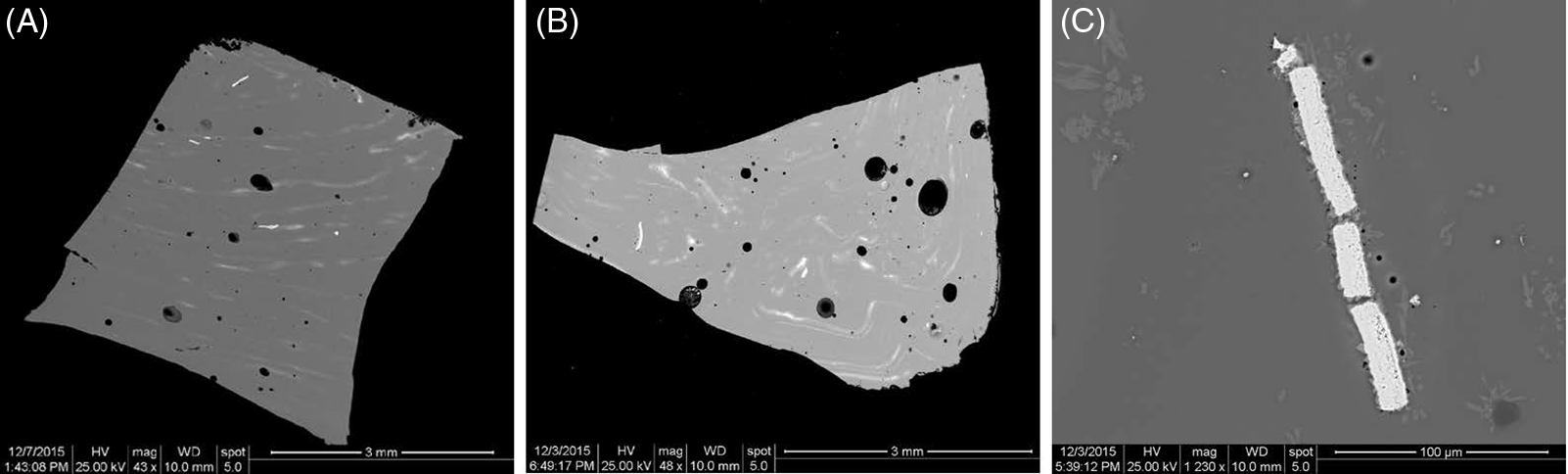
The Bryn y Castell and Bainbridge blue glasses also contain very thin trails, only visible in the microscope images, of tiny crystals (fig 12). The majority of these are calcium antimonate (white), but some crystals are lead-based colourants, perhaps yellow or red originally. These are in the bangle core, indicating that the bangle was probably made from a recycled blue glass that originally had some small elements of yellow, red or white decoration which were stirred into the glass during recycling. These mixed-in coloured glasses and the added hammerscale account for the more muted colour and cloudiness of the Bryn y Castell blue glass.
Dark green
A dark green glass was used for the body of some of the early bangles from Bryn y Castell. This glass is visually similar to translucent Roman emerald dark green glass, used for monochrome bowls, from just before the mid-first century ad. This latter glass has a very distinctive chemical make-up because it contained a significant proportion of added plant ashes, resulting in elevated potassium, magnesium and phosphorus levels, and was coloured by copper oxide (CuO). From its trace element composition, this green glass is thought to be a product of Egypt. Footnote 24
The green glass in the bangles from Bryn y Castell is different, however; although the colourant is again copper oxide, the levels of potassium, magnesium and phosphorus are normal.
Transparent naturally-coloured/colourless
As described in the Background section, there are slight compositional differences between the types of transparent natron glass made in different regions, and these can be recognised in the analysed bangles. Footnote 25 The naturally-coloured glass used for the bodies of two of the bangles from Bryn y Castell (fig 2A) contained only manganese (antimony was below detection) and the calcium levels were high (fig 13). This was the earliest assemblage analysed, slightly pre-dating the mid-first century ad and manganese-bearing glass, originating in the Levant region, still dominated at this time. Footnote 26 The only Type 1 bangle analysed with a naturally-coloured glass core, from Traprain Law, was also manganese-bearing.
BSE images of blue glass. A: ByC110 with trails of opacifiers and precipitated crystals throughout, the majority lead-rich and containing crystals of calcium (and lead) antimonate. Scale 500µm. B: Arbeia B74 with light streaks of opaque glass, containing bright flecks of white calcium antimonate, incompletely mixed with the blue body glass (darker grey). Scale 100µm. Images: Sarah Paynter, Eddy Faber and Caroline Jackson.
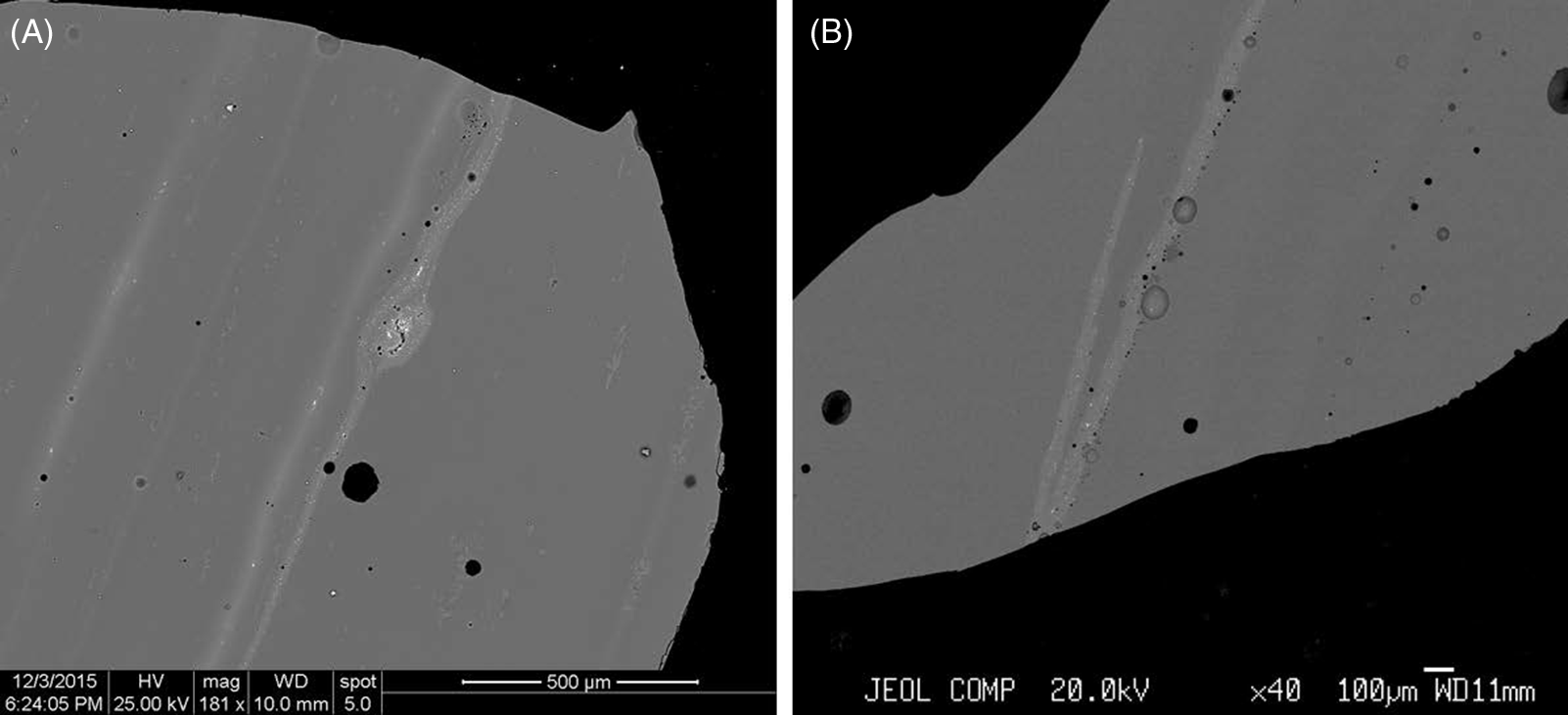
Chart showing the range of calcium and sodium contents in the glass bangles from Crawcwellt, Bryn y Castell, Thearne and Arbeia, compared to antimony decolourised glass from Egypt (top left) and manganese decolourised glass from the Levant region (bottom right). The colourants have been subtracted from the compositions and the remainder normalised to approximate the original base glass composition. The mixing line in between shows the result of recycling. The bubble white Crawcwellt glass is highlighted by a dashed circle, the green Bryn y Castell glass by a green circle. Drawing: Sarah Paynter.
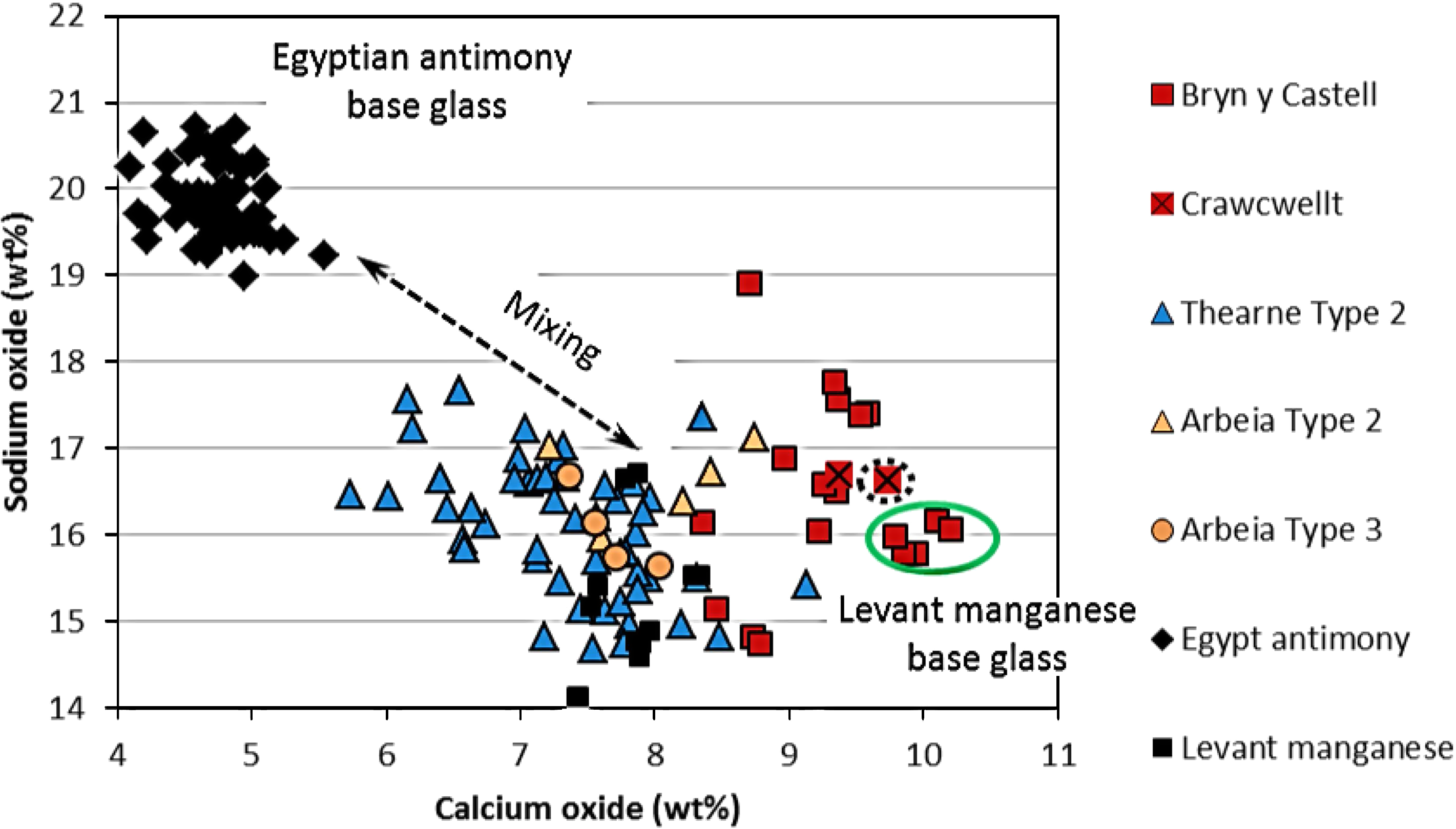
Egyptian-made colourless transparent glass, which contains antimony and less calcium, becomes more common from just before the mid-first century ad. In subsequent centuries, as recycling took place, the indiscriminate mixing of the Egyptian and Levant glass resulted in glass containing both manganese and antimony, and with an intermediate composition. Footnote 27 The Traprain Law Type 3F bangles, made with naturally-coloured/colourless glass bodies with and without white trails, were compositionally more mixed (fig 5). Around half contained only manganese (up to 0.6wt%) matching glass from the Levant, but the rest contained both manganese and antimony (up to 0.3wt% of the latter) and intermediate amounts of calcium, consistent with the use of previously recycled, mixed glass. The greater variation in composition might suggest a longer production span for this bangle style.
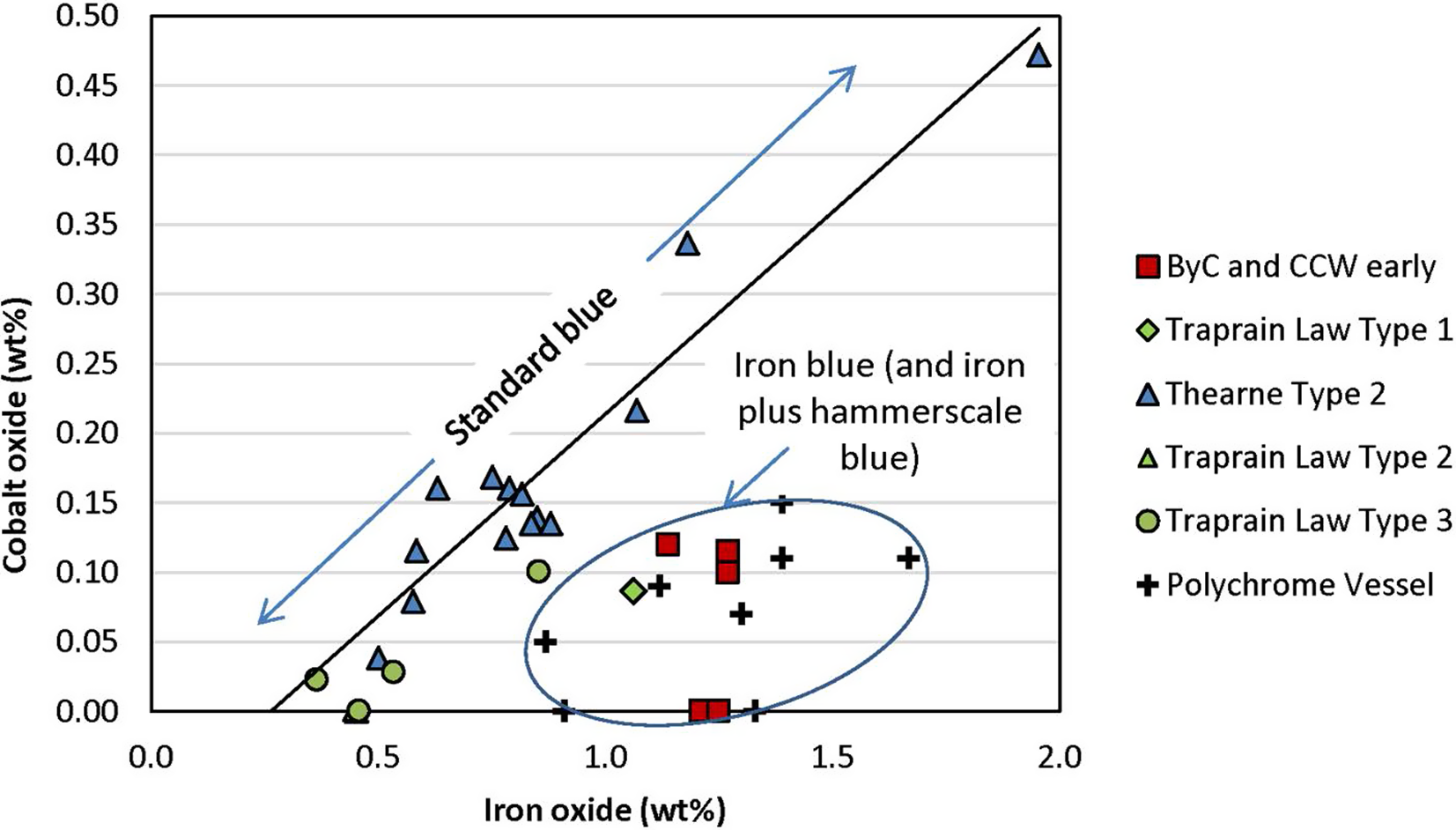
Chart showing the higher iron content of the Welsh blue glass bangles – similar to the concentrations in early Roman and Hellenistic vessels – relative to the lower levels in the Thearne Type 2 bangles and the Types 2 and 3 bangles from Traprain Law.Footnote 48 Drawing: Sarah Paynter.
Stanway, Colchester, beads from a context dating to around ad 43–50. The large bead (45mm diameter) is decorated with spots of lead-white glass. The smaller bead is decorated with flush twisted cables of opaque red and opaque yellow. Photograph: Sarah Paynter.

Nearly all of the naturally-coloured Type 2 glass bangles from Thearne and the one example from Traprain Law contained both manganese and antimony oxide, so again used previously recycled glass. This probably indicates a slightly later date for these bangles, by which time mixed recycled glass was the norm.
Other colours
Red glass was commonly coloured by crystals of copper oxide (Cu2O) but also contains lead oxide. Iron Age red enamel, known as sealing wax red, can have a very high lead oxide content of around 25wt%. In contrast, most Roman red glass (from around the mid-first century ad) contains ∼10wt% lead oxide or less, so the composition of red glass can again provide an indication of date. Footnote 28 No more than 10wt% lead oxide, consistent with typical Roman red glass, was detected in any of the bangles analysed. This included the Type 1 bangles from Scotland, which featured by far the most frequent use of red glass (fig 5), the terminal end of a rod from Thearne (RF225), the cord on a Bryn y Castell bangle (fig 2C) and mixed in the blue glass body of ByC330.
The amber glass on the Type 2 bangles from Thearne is similar to amber glass of the early Roman period. Footnote 29 Only one Thearne bangle has opaque light blue decoration, coloured by copper and matching contemporary turquoise tesserae. Footnote 30
The purple glass in two examples from Bryn y Castell and two from Thearne is coloured by high concentrations of manganese oxide (MnO) (between 1–3.45wt%), typical for Late Iron Age and Roman purple glass. Footnote 31 An example of purple glass is also noted at Traprain Law by Stevenson.Footnote 32
DISCUSSION
Colouring technology
White (table 1)
White glass opacified by bubbles has not been reported previously for Iron Age or Roman glass in Britain so it is highly significant that it was found in a decorative cord on one of the early bangles from Crawcwellt. Further work is needed to determine whether this technology originated in, or was restricted to, this region. The same method has been found among early Saxon beads from the UK, made with recycled Roman glass. Footnote 33 Although stirring and slow cooling would help crystals and bubbles form in the glass, a calcium-rich substance may also have been added to initiate a chemical reaction, releasing gases to make bubbles and encouraging calcium-based crystals to form. There are few clues in the glass as to what this additive could have been, but readily available alternatives include wood ashes or calcined bone. Bone ash, however, tends to leave more diagnostic traces; in later Byzantine examples, remnants of some bone particles survived and there were raised levels of phosphorus in the glass. None of these indicators were seen here, so the use of a material like plant ash is more likely. Footnote 34 The ashes of many plants contain a major proportion of calcium compounds, and the opacifying effect of plant ashes has been seen in glass that falls into furnace ash pits by mistake. Footnote 35
It is difficult to test this by comparing the overall calcium levels of the glass, for several reasons. First, the calcium content of manganese decolourised glass from the Levant area is several percent higher than for antimony decolourised glass from Egypt to begin with, and both of these natron glasses were used as the base for making coloured glass over this time period, as well as mixtures of the two (fig 13). This results in a fairly wide spread of calcium contents in the transparent base glass before any colourant is added. The second reason is that the addition of the colourant has a diluting effect on the other constituents in the glass, and the third is that different analytical methods were used for analysing the assemblages. If we only compare the base glass composition of the differently coloured Welsh glasses, however, which were all analysed by SEM and made using the same manganese natron glass as a base, then the Bryn y Castell dark green glasses have the highest calcium content (ringed by a green elipse in fig 13), followed by the bubble white glass from Crawcweltt (ringed by a dotted elipse in fig 13, the other datapoint is the blue glass). Although the data set is small, this may suggest that both these colours contain small amounts of extra calcium from an additive like plant ashes.
The Type 3A plain white bangles from Traprain Law and Arbeia fort were made using standard Roman white glass that had been diluted, a mixture of about one tenth white and the rest naturally-coloured glass. This agrees with Stevenson’s description of these bangles as ‘almost white’. Stevenson attributed the glass opacity to mechanical aeration, but the small silicate crystals probably have a bigger opacifying effect, and would have been formed in the manner described above.Footnote 36
The lead-rich white glass used in the bangles from Bryn y Castell was in use around 25 bc to ad 60, among a distinctive class of imported Mediterranean objects including polychrome and mosaic vessels, Footnote 37 mosaic and pillar moulded glass vessels and cameo vessels and plaques. Footnote 38 These latter objects were typically made from deep blue glass with white decoration, although they also occur in translucent purple, green and brown, but none are common in Britain. Lead-rich white glass has also been occasionally identified in some Late Iron Age beads from Britain, all blue and white, such as the bead from Stanway, Colchester, dating to ad 43–50 (fig 15), Footnote 39 a Guido Class 1 (Type 2) bead from Glastonbury Lake Village, Footnote 40 and a bead with cable decoration (bead 731) from Hayling Island dating to around ad 50 or earlier.Footnote 41 This suggests that coloured vessels, including luxury glass vessels of the Early Roman Empire, became a source of coloured glass for bead and bangle makers in the south west of Britain around the mid-first century ad and for glassworkers in the north too, shown by the similar colour palette and glass types in contemporary north-east Scottish beads (Class 13 and 14). Footnote 42
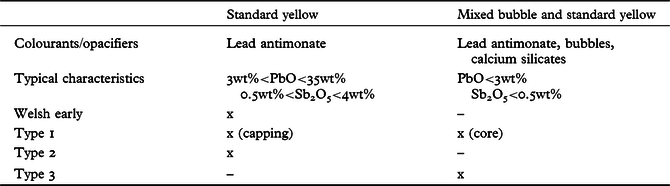
Types of yellow glass and opacifiers.
Yellow (table 2)
Stevenson commented on the shades of yellow in the Traprain Law bangles, from ‘chrome yellow’ to a muted ‘almost yellow’ colour.Footnote 43 In the subsequent analyses of Type 3B yellow bangles, small amounts of lead and antimony were detected in the glass, which was also found to be ‘aerated’. Analyses with XRF also detected about five times as much lead in the yellow glass capping a Type 1 bangle compared to the yellow Type 3B glass, both from Traprain Law. Footnote 44 The results from this study allow us to understand the significance of these observations. The same yellow colourant has been used in all cases, but the yellow glass had been used neat for the vivid capping of the Type 1 bangles whereas it was diluted for the ‘almost yellow’ core of the Type 3B and Type 1 bangles. Stevenson’s comment on aeration suggests that, again, the glass has been modified by creating small bubbles and crystals, which are also weakly opacifying. So the Type 3B yellow glass was achieved in a similar way to its 3A white counterpart (above), by mixing yellow glass with naturally-coloured glass and with an additive like plant ashes.
Types of blue glass and opacifiers.
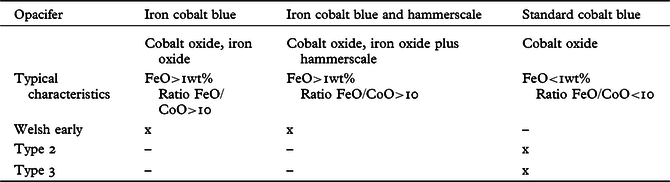
Dark blue (table 3)
The type of cobalt colourant used in all of the blue glass appears to be similar. Some of the glass contained enough of the colourant that the associated contaminants found in the cobalt-containing mineral used could be detected, commonly copper and more rarely nickel, as expected for the Roman period. Footnote 45 The early bangles from Bryn y Castell are unusual, however. Firstly, the iron content of the blue glass in these bangles is slightly higher than in the other assemblages. Dissolved iron oxide gives quite a strong blue to black colour under certain conditions. Similarly high levels of iron are also seen in the blue glass of early Roman Empire and Hellenistic polychrome vessels, confirming the early date of these bangles (fig 14). Footnote 46
Secondly, there are particles of hammerscale in the blue glass from Bryn y Castell, probably added intentionally. The hammerscale has not yet dissolved and so helps to scatter light, contributing to the opacity and colour of the bangles, although the small quantity added has had little effect on the overall iron content of the glass. Blackish-green glass coloured by hammerscale has been identified at two sites in the Balkans of around the fifth century ad, Footnote 47 but this unusual modification is not otherwise known in Roman glass, so again probably originates in pre-Roman practice. Cobalt-coloured black glass with a very high iron content has been identified among Iron Age gaming counters and beads, and black/green glass with a very high iron content has been identified in vessels and armlets of the second and third centuries ad, but it is not known whether any of these were modified with hammerscale because the microstructure of the glass needs to be seen to detect it reliably. Footnote 49 The Bryn y Castell blue glass microstructure also indicates it has been recycled from an object that had polychrome decoration in red, white or yellow, such as a bead or polychrome vessel.
Finally, many of the solid blue bangles from the north, mainly Type 3 with occasional Type 2, have a streaky core. Both Stevenson and Kilbride-Jones distinguished between the translucent bright blue used for decorative elements (eg on Type 2 bangles) and a mid-blue used for the bodies of some bangles, particularly Type 3 (fig 4). Footnote 50 This study confirmed Stevenson’s suspicion that the different shades of blue are due to variable combinations of dark blue, opaque white and naturally-coloured glass, sometimes incompletely mixed. The pairing of blue and white glass is common in many bangles, particularly Type 2 variants, so glassworkers could have reworked waster bangles or the leftover ends of decorative rods to achieve this effect.
Dark green
A small number of other bangles made from dark green glass have been reported in addition to the Bryn y Castell examples described here. The dating of these has been constrained by the assumption that these were made by recycling translucent monochrome green vessels, known from early Roman sites. These monochrome vessels were formed from a distinctive glass with a novel plant ash chemical signature, which was made in Egypt. Footnote 51 However the green glass used in the Bryn y Castell bangles is a different type. The high calcium to sodium ratio indicate that it was made using glass from the Levant, rather than Egypt (fig 13), and so is likely to predate the more common Egyptian variant. It may still contain some added plant ashes, as the calcium levels in the glass are the highest of all the colours, although phosphorus concentrations were below detection. There are some close parallels in other Iron Age glass objects, including contemporary highly decorated beads (Class 13 and 14) and plain cylindrical beads from Scotland, and possibly some polychrome vessels, Footnote 52 but the extent of the chronological and spatial distribution of this Levant green glass are currently unknown.
Bangle chronology
A small number of bangle fragments of Continental origin have been found in Britain, largely in the south of England. These imported La Tène type bangles predate the ones made in Britain and some of the colourants/opacifiers used were also different, such as a tin-based yellow colourant. Footnote 53 None of the bangles analysed here fall within this group of imports.
The Welsh bangles were deposited in contexts dating from before ad 79 and the white glass in these bangles has a distinctive lead-rich composition, which predates ad 50/60. The same glass has been identified in a small number of unusual blue and white Iron Age beads from southern Britain, one with cable decoration, one with white spots and another with white rings around blue eyes (see earlier). The Welsh bangles are among the earliest of the British examples, which is consistent with their unique combination of colours and decoration, and they were made from types of glass more typical of Iron Age artefacts than Roman ones. The dark green glass is a type found in some Scottish beads, and is made using glass from the Levant area, which is different from, and earlier than, the better-known emerald green Egyptian glass used for Roman monochrome bowls. The blue glass in the bangles has a slightly raised iron content more usual for glass from early Empire and Hellenistic vessels. Finally, the naturally-coloured glass in the Welsh assemblages contains manganese (antimony was below detection except where there was contamination from coloured trails), as Egyptian antimony glass was not widespread in Britain in the early first century ad. This is further confirmation that these bangles from Wales, as well as the early large diameter Type 2 bangles from the south, are among the earliest known from Britain. The Bryn y Castell bangles are likely to be from one workshop despite their differing decoration, as they have several very unusual glass types in common, so the early bangle makers diversified across decorative styles.
The dating of Type 1 and 3 bangles is more complex. Stevenson drew attention to some common aspects between Type 1 and 3, and between Type 3 and 2 bangles, as well as examples of each type from dated contexts that suggest some chronological overlap between all of the types, and Price suggested a late first to early second century date for Type 3 bangles. Footnote 54 This study found that the Type 1, Type 3A and 3B bangles are likely to have developed quite early in the sequence, probably near-contemporary with the early examples in the south (discussed below).
These analyses suggest that the Type 2 and 3 bangles with colourless and naturally-coloured cores, exemplified by some examples from Traprain Law and most from Thearne, were among the latest types being made, because a large proportion of the glass used for the bangle bodies is a mixed recycled glass, which becomes more common over time from around the mid-first century ad onwards. Footnote 55 The bangle maker at Thearne, specialising in Type 2 bangles, probably became established rather later, at a point when the glass-working practices had become Romanised south of Hadrian’s Wall. The Thearne collection is probably among the latest analysed in this study.
Novel versus Roman-derived glass-working practices
These analyses show that, although the bangle makers were making use of imported glass, including recycling vessels, some of them were also adapting and further modifying the glass by adding extra materials as colourants. The methods used to extend the glass are unknown from Roman assemblages, and so these are either recent innovations or derived from pre-Roman glass-working practices. It implies that the glassworkers making Type 1, Type 3A/B, and the early Welsh bangles were not strongly influenced by Roman technology for the duration of their production because they do not adopt standard Roman glass-working materials, methods or designs. The novel glass-colouring practices used in the bangles recur later in the post-Roman period in England and on the Continent, which raises important questions about the continuity and spread of these non-Roman craft techniques.
The use of bubbles and calcium silicate crystals to make white glass occurs in the decorative cord on the early bangle from Crawcwellt. This type of white glass would not lend itself to recycling because the crystals and bubbles would dissipate, so it was probably fairly fresh glass and worked by an experienced glassworker. The presence of hammerscale in the dark blue glass is also rare and has not yet been recognised in Roman blue glass. This may be a Welsh or south-west innovation, or potentially an older practice with origins in the burgeoning bead-making industry of the Later Iron Age. Similar methods have not been identified yet in Iron Age beads, but these are often analysed by non-destructive or purely chemical means; the microstructure of the glass must be examined to identify these alterations because the bulk composition is not changed significantly in the process. These early Welsh bangles were therefore more likely made by indigenous glassworkers, attempting a new style of object. The bangles may have been inspired by Continental examples (although these had declined by this point), Footnote 56 or represent a natural progression from the contemporary, large, cable-decorated beads and the bead-making industries of the south west, facilitated by ample supplies of glass as a result of local Roman presence, or some combination of these. But the analytical evidence suggests that the early bangles were an insular development stimulated by the Roman military presence in the south. Footnote 57
The unusual modification of the yellow and white glass in Type 3B and 3A bangles indicates that these were made by glassworkers drawing from an Iron Age tradition, since the techniques used are so far unique to this collection. Types 3A and 3B are undoubtedly related as they both incorporate this innovative way of extending the supply of opaque glass. Their distribution, concentrated in the north of England and in southern Scotland, and their style and colour palette, which are distinct from the Type 2 bangles, indicates that these varieties most likely developed in the north. The current chronology proposes that this coincided with the meeting of Iron Age and Roman cultures, as the border advanced north, sometime after the first Type 2 bangles were made in the south. Footnote 58 Price suggested that there may have been more than one production centre for the white Type 3A bangles, which are largely concentrated between Hadrian’s Wall and the Antonine Wall.
Type 1 bangles, made up of a core capped with strongly coloured glass, are widely accepted to originate in Scotland because they are only found there. The opaque yellow core of one is compositionally and visually similar to Type 3B bangles, suggesting that production of types 1 and 3B may overlap. The analytical results (with a manganese naturally-coloured core used for one Type 1 example) indicate that this style may also have developed fairly early in the chronology, around the mid-first century ad or shortly after, but not before (based on the type of red glass used). The novel production method for Type 1 bangles minimises the amount of brightly coloured glass needed by using an often plain, transparent glass core as the substrate on which to apply the coloured glass capping, making use of the lower melting points of the yellow and red glass. This new evidence of modified local traditions and novel approaches in glass-working around the conquest period finds wider parallels in other high-temperature crafts, such as bronze-casting and enamelling, across Britain at this time. Footnote 59
Recycling
Recycling of Roman transparent colourless/naturally-coloured glass was widespread and is much in evidence at glass workshops in Britain, Footnote 60 but less is known about recycling of coloured glass, although possible examples from the Iron Age have been identified. Footnote 61 Coloured glass was traded in the form of rods, chunks or cakes of glass, but was also imported in the form of objects, including vessels, bottles and tesserae, which could have been recycled. It has been supposed that there was re-use of Roman vessel glass and the analysis undertaken here confirms it, Footnote 62 while also suggesting that bangles, bangle working waste and beads were recycled as well. This is possibly seen in the Welsh bangles, which were broken in situ but only small fragments were found in the completely excavated contexts, implying the rest may have been collected for recycling.
The streaks of opacifier seen in the dark blue glass in some of the early Welsh bangles are remnants from opaque trails that have been stirred in during the recycling of a polychrome object. It is possible that hammerscale was then added to the glass as a means of compensating for any change of colour. This might suggest that there were close links between the glass- and iron-workers. The lead-rich white glass decorating the same set of bangles is only used in early Roman polychrome objects, and is rare in Britain, so again is recycled. Similar colour combinations, and recycling of vessel glass, are seen in contemporary Late Iron Age beads, so this may have been an established practice of bead-makers at this time, when fresh glass was presumably difficult to obtain. Footnote 63 The glass in the Type 3A and B bangles is also reworked and recycled, mixing naturally-coloured or colourless glass with yellow or white opaque glass.
This is in contrast with predominantly Type 2 bangle production taking place at Thearne. By this time within the Roman province, glassworkers were able to source blue and white glass for the decorative cords more easily – presumably through Roman controlled trade routes – but perhaps still made use of recycled glass since blue vessel glass was found from the site. They had less need of coloured glass because the bangle bodies were largely naturally-coloured. No evidence for the production of other types of glassware has been recovered from Thearne, so the glassworker(s) specialised in bangle making. Footnote 64 Some blue bangles that may have been made at Thearne are a mix of blue, white and colourless glass, and could have been made by recycling failed bangles and rod offcuts.
Colour palette
During the first three-quarters of the first century ad, strongly coloured glass vessels were at their peak. The most common colours were translucent dark blue, purple, emerald green and amber. Footnote 65 The Welsh bangles were made during this period, and make use of a full range of these strong colours, similar to those used in Iron Age beads. Footnote 66 They feature flush cable decoration, although distorted, as found on Class 9 beads in the south, which also have strongly coloured bodies. A strong colour palette is again adopted for north-east Scottish beads (Class 13 and 14), which are broadly contemporary and use similar glass types with evidence of recycling. Footnote 67
In contrast, the Thearne bangles are dominated by colourless and naturally-coloured glass, which became increasingly common from the mid-first century ad for tableware and bottles. These again feature cables, although raised, and appear to be a later variant of the earlier trend in the south. Coloured opaque glass was used in small amounts for decorative features, as this would have been more difficult to obtain.
The Type 1 and 3 bangle styles are formed from opaque colours, and developed within the Iron Age communities in central Britain. They feature trails, spots and blocks of colour rather than cables. The Type 3 bangles required large amounts of coloured opaque glass because it was utilised for the bodies as well as the decoration. Questions remain about the sources of the yellow and white glass used for this bangle making because neither colour was common in contemporary Roman glass assemblages, Footnote 68 although plain yellow Class 8 beads were widespread in the Iron Age. Some small pieces of opaque white glass ingots were found at Caersws vicus, which may have been traded mainly as chunks, and yellow and purple raw glass was found at Hengistbury. Footnote 69 The concentration of known and supposed bead or bangle making sites along the north-east coast of England and east coast of Scotland (Traprain Law, Culduthel, Thearne) hints at the existence of already established North Sea trade routes for the bead-makers and enamellers to supplement, or replace, supplies of glass from south of the border. More tentative bead-making evidence has also been found on the west coast, at Luce Sands, Wigtownshire, and some yellow glass blocks from Dunagoil hillfort, Bute. Footnote 70
Price pointed out the greater association of Type 3 bangles with civilian (as opposed to military) sites in the north of England. Footnote 71 The strong, opaque colours of early bangles, including the Welsh ones, and the Type 1 and Type 3 bangles appear to hold greater significance for indigenous communities, whereas the more ‘Romanised’ later Type 2 bangles had a broader appeal, found both at military sites and civilian settlements. The regional significance of particular colours, combinations of colours and motifs in Iron Age adornment is a subject deserving greater attention. Footnote 72
Glass properties and bangle typology
Lead-rich glasses are more fluid at a given temperature, which has affected the appearance of some of the bangles analysed here. The bangles from Bryn y Castell had flush, distorted purple and white decoration, which is without parallel stylistically. The glassworker may have intended to make a more conventional twisted cord but was caught out by the unusual fluidity and wettability of this lead-rich white glass, so the result does not necessarily indicate any lack of skill on the part of the bangle maker.
The properties of lead-rich glass may also be important for the manufacture of Type 1 bangles. The cores of these bangles are naturally-coloured natron glass, or a colour diluted with naturally-coloured glass. Conversely, the colours used for capping and decorating the bangle are mainly concentrated yellows and reds containing 10–20wt% of lead oxide, which would become fluid before the glass core, wetting and covering the core at temperatures low enough to avoid heavily distorting the bangle shape. Stevenson and others have highlighted the stylistic parallels between Type 1 bangles and Celtic enamelled metalwork. Footnote 73
CONCLUSIONS
The results from this work account for the variation in colour and technology of bangles of different types from the British Isles spanning the first and second centuries ad.
The bangles from Wales were among the first to be made, around the time of the Roman conquest. The bangle makers chose strong colours, like those in some contemporary Iron Age beads. As fresh coloured glass was difficult to come by in enough quantity, the bangle makers also reworked imported polychrome vessel glass, and potentially other sources, such as Iron Age beads. The unusual lead-rich white glass repurposed for the Bryn y Castell bangles was unexpectedly fluid, resulting in the distorted decoration. The maker of the Crawcwellt bangle used white glass made with a unique bubble/calcium silicate technology, and hammerscale was added to blue glass in the Bryn y Castell bangles. These techniques may have origins in the earlier bead-making industries or be innovations developed in this time of social change and material opportunity.
The early bangle makers were skilled glassworkers from an Iron Age tradition, with the earliest securely-dated finds concentrated around the Bristol Channel and Somerset regions, near to the bead-making sites at Meare and Glastonbury Lake villages. It supports previous theories that glassworkers were inspired to create bangles locally using skills developed for bead making, perhaps facilitated by additional quantities of coloured glass from the continent with the arrival of the Roman military. Footnote 74
Subsequently, bangles become increasingly common throughout Britain, with concentrations in the north east of England and southern Scotland. Here, opaque white and yellow held particular significance for the Iron Age communities that conceived these styles of bangle. The colours were scarce in contemporary Roman glass assemblages, so the source of large amounts of these colours is an important question. Yellow was much in evidence for Iron Age beads, but opaque white was used only for decoration, so the shift to white Type 3A bangles may hold particular significance for regional and cultural identity. Footnote 75 The concentration of bead-making and probable bangle-making sites along the north-east coast hints at routes across the North Sea from the Continent, and imported glass could be supplemented by recycling vessel glass and beads. Even then, the demand for coloured opaque glass, particularly white and yellow, was difficult to meet and so indigenous glassworkers extended their supply using novel techniques, creating bubbles and calcium silicate crystals in the glass. The same method was used in both Type 3A and 3B bangles, linking their production. They were made in areas where there was limited transfer of Roman technology, with a broader distribution encompassing the north of England and Scotland. Types 1 and 3B are restricted more closely, or entirely, to Scotland. Type 1 bangles comprised colourless/naturally-coloured glass, or diluted yellow glass, as a substrate, coated mainly with lead-rich red or yellow glass, which melted at lower temperatures, creating an effect reminiscent of Celtic enamel work. The composition of the glass in Type 1 and 3 bangles suggests that they may also have developed around the mid-first century ad or shortly after.
With the northern border of the Roman province more firmly established, glassworkers began making Type 2 bangles at Thearne, mainly in naturally-coloured/colourless glass with blue and white cords. The glassworkers at this site were integrated into Roman Britain, and able to source blue and white glass, including cullet, through established Roman supply routes. They obtained ample transparent glass locally by recycling bottles and tableware, which were plentiful, and occasionally recycled failed coloured bangles, thus making use of standard Roman materials and techniques.
In this period of transition, mass produced, blown, transparent colourless or naturally-coloured glassware became increasingly popular. In Britain, however, there was still a demand in many communities for strongly coloured opaque glass for objects like bangles. This research advances our understanding of this unique set of material by identifying how indigenous glassworkers used easily obtainable additives to alter the colour and opacity of imported glass. They also extended glass supplies by recycling vessels, beads and bangle-making waste. While questions remain about the origins of the unusual colouring methods identified in this work, the indications are that parallels may be found through microstructural examination and analysis of Iron Age glass beads, from Britain and from the continent.
SUPPLEMENTARY MATERIAL
To view supplementary material for this article, please visit https://doi.org/10.1017/S0003581521000378.
ACKNOWLEDGEMENTS
Thanks to Hilary Bronski, who started working on Thearne and South Shields for her Sheffield MA; EPSRC (grant EP/F019750/1) and Eddy Faber for the EPMA. Also Jim Wilson (National Museum of Scotland), for facilitating access to the Scottish bangles, and Alex Croom (Arbeia Museum). We are grateful to Historic England for supporting open access publication.
ABBREVIATIONS AND BIBLIOGRAPHY
Abbreviations
- BSE
-
Back scattered electron image
- EPMA
-
Electron probe micro-analyser
- pXRF
-
portable X-ray fluorescence
- SEM
-
Scanning electron microscope
- µm
-
microns


 Open access

