


There have been very few systematic studies of stress in psychiatrists. In a study comparing consultant psychiatrists with surgeons and physicians in Scotland, psychiatrists scored high in neuroticism, and reported greater work-related emotional exhaustion and depression (Reference Deary, Blenkin and AgiusDeary et al, 1996). In a study of old age psychiatrists, stress was identified (Reference Benbow and JolleyBenbow & Jolley, 1997), related to work overload, organisational structure and climate. In 138 psychiatrists in three Manchester teaching hospitals (Reference Guthrie, Tattan and WilliamsGuthrie et al, 1999) there was no difference in psychological morbidity between the training grades, but junior doctors reported higher levels of burn-out than either senior registrars or consultants. Dealing with violent patients was stressful for all psychiatrists.
It is probable that the changing patterns of the NHS system, with greater emphasis on community care, has imposed greater stresses on psychiatrists. Margison (Reference Margison, Payne and Firth-Cozens1987) listed the main stresses in psychiatric trainees as overwork, relationship problems with other staff, performance-related stress, organisation problems, inadequate resources, lack of planning, and threats to self-esteem. Kendell & Pearce examined reasons for premature retirement among 102 consultant psychiatrists in 1995 and 1996. Increasing bureaucracy and paperwork, the changing ethos and management of NHS and governmental reforms of the NHS were reported as reasons for retirement (Reference Kendell and PearceKendell & Pearce, 1997).
Materials
The questionnaire
A questionnaire was designed for the study based on discussions with local consultant psychiatrists. The first section recorded the demographic details. Sections 2-5 of the questionnaire used a Likert rating scale of 0-3 to measure perceived stress, positive and negative coping strategies and physical and emotional symptoms experienced. Negative coping strategies were defined as health-impairing behaviour patterns and positive coping strategies as health-enhancing behaviour patterns.
The aim of the current study was to measure the degree of stress perceived by a group of doctors working in psychiatry in the Wessex region, in the course of their duties and its influence on personal life. The study also examined the coping strategies used to cope with stress, as well as the physical and emotional symptoms experienced by the group. This was to be explored by questionnaire.
A final section asked doctors to respond with a ‘yes/no’ answer to a number of statements reflecting life choices recently considered. With the exception of demographic details all questions referred to the last three months.
The respondents
The questionnaire was mailed to doctors working in general adult psychiatry in the Wessex Region. Psychiatrists working in specialities, such as forensic, child and adolescent psychiatry, were not included in the study.
Doctors were divided into junior and senior grades. Senior doctors included consultants, those in staff grades and associate specialists. Senior house officer, registrar and senior registrar grades were counted as junior.
Findings
A total of 123 questionnaires were sent out. Seventy-six (62%) responses were received. Fifty-five per cent of the respondents were senior doctors: consultants (35%), staff grades (6.7%) and associate specialists (2.7%). Fifty-two per cent of the respondents were male. Eighty per cent had partners and 66% were above 35 years of age. Seventy-three per cent gained their primary qualifications in the UK and had more than five years of experience in psychiatry. Only five (6.7%) of the sample had practised psychiatry for less than one year.
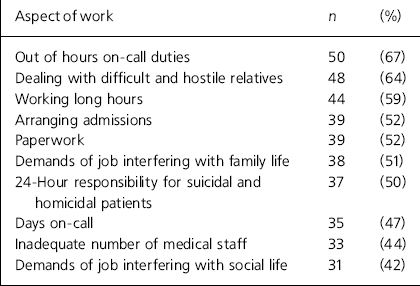
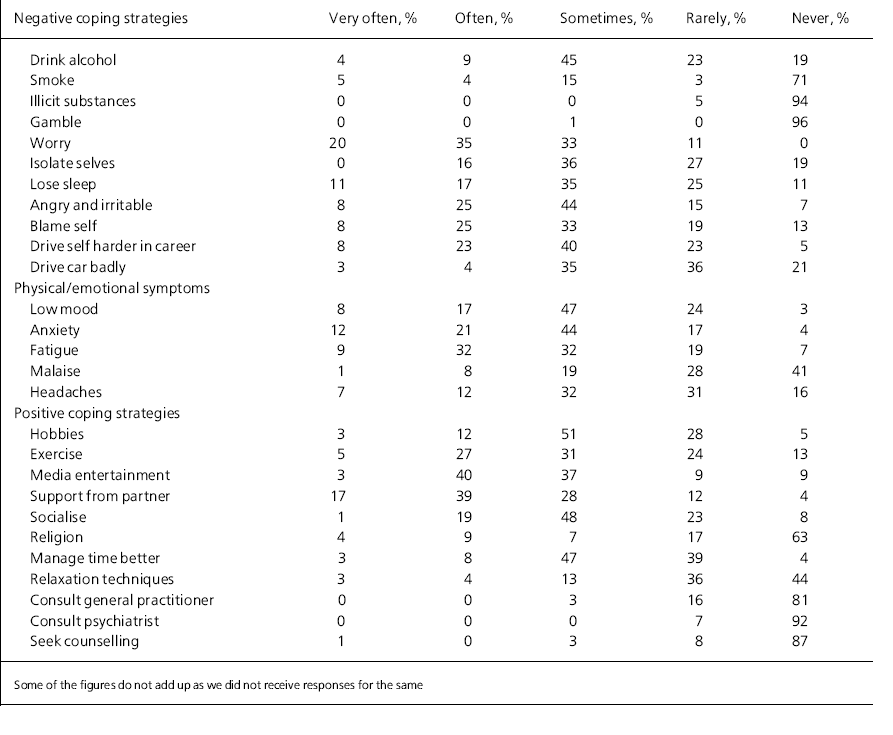
The respondents were asked to rate how stressful various aspects of their job were. The top 10 situations in terms of frequency ranked as most stressful by the doctors are described in Table 1a. Similarly the 10 least stressful situations are described in Table 1b. Coping strategies and emotional symptoms are described in Table 2.
Aspects of work experienced by psychiatrists causing moderate to extreme stress
| Aspect of work | n | (%) |
|---|---|---|
| Out of hours on-call duties | 50 | (67) |
| Dealing with difficult and hostile relatives | 48 | (64) |
| Working long hours | 44 | (59) |
| Arranging admissions | 39 | (52) |
| Paperwork | 39 | (52) |
| Demands of job interfering with family life | 38 | (51) |
| 24-Hour responsibility for suicidal and homicidal patients | 37 | (50) |
| Days on-call | 35 | (47) |
| Inadequate number of medical staff | 33 | (44) |
| Demands of job interfering with social life | 31 | (42) |
Aspects of work experienced by psychiatrists causing little or no stress
| Aspect of work | n | (%) |
|---|---|---|
| Dealing with professionals from other agencies | 68 | (91) |
| Driving in relation to work | 62 | (83) |
| Teaching medical studies/junior doctors | 60 | (80) |
| Poor communication between nursing and medical staff | 60 | (80) |
| Fear/threat of assault from patients | 59 | (79) |
| Conflict with colleagues | 58 | (78) |
| Boredom of routine aspects of work | 58 | (78) |
| Fear of litigation | 57 | (76) |
| Being a member of the community mental health team | 56 | (75) |
| Having inadequate secretarial support | 55 | (74) |
Negative and positive coping strategies and emotional symptoms in response to stress
| Negative coping strategies | Very often, % | Often, % | Sometimes, % | Rarely, % | Never, % |
|---|---|---|---|---|---|
| Drink alcohol | 4 | 9 | 45 | 23 | 19 |
| Smoke | 5 | 4 | 15 | 3 | 71 |
| Illicit substances | 0 | 0 | 0 | 5 | 94 |
| Gamble | 0 | 0 | 1 | 0 | 96 |
| Worry | 20 | 35 | 33 | 11 | 0 |
| Isolate selves | 0 | 16 | 36 | 27 | 19 |
| Lose sleep | 11 | 17 | 35 | 25 | 11 |
| Angry and irritable | 8 | 25 | 44 | 15 | 7 |
| Blame self | 8 | 25 | 33 | 19 | 13 |
| Drive self harder in career | 8 | 23 | 40 | 23 | 5 |
| Drive car badly | 3 | 4 | 35 | 36 | 21 |
| Physical/emotional symptoms | |||||
| Low mood | 8 | 17 | 47 | 24 | 3 |
| Anxiety | 12 | 21 | 44 | 17 | 4 |
| Fatigue | 9 | 32 | 32 | 19 | 7 |
| Malaise | 1 | 8 | 19 | 28 | 41 |
| Headaches | 7 | 12 | 32 | 31 | 16 |
| Positive coping strategies | |||||
| Hobbies | 3 | 12 | 51 | 28 | 5 |
| Exercise | 5 | 27 | 31 | 24 | 13 |
| Media entertainment | 3 | 40 | 37 | 9 | 9 |
| Support from partner | 17 | 39 | 28 | 12 | 4 |
| Socialise | 1 | 19 | 48 | 23 | 8 |
| Religion | 4 | 9 | 7 | 17 | 63 |
| Manage time better | 3 | 8 | 47 | 39 | 4 |
| Relaxation techniques | 3 | 4 | 13 | 36 | 44 |
| Consult general practitioner | 0 | 0 | 3 | 16 | 81 |
| Consult psychiatrist | 0 | 0 | 0 | 7 | 92 |
| Seek counselling | 1 | 0 | 3 | 8 | 87 |
Negative coping strategies (health-impairing behaviour patterns)
Twelve per cent of the sample rated themselves as drinking alcohol often, 9% smoked often, 16% often isolated themselves, 28% lost sleep when they were under stress and 33% became angry and irritable with friends and family. Twenty-one per cent got angry and irritable with patients sometimes and 5% often did so. The effect of stress caused bad driving in 39% of the sample and 32% drove themselves harder in their career.
Physical/emotional symptoms experienced in response to stress
Forty-two per cent felt tired, 28% suffered from muscle pains, 19% complained of headaches, 29% sometimes and 11% often had physical symptoms of anxiety. Twenty-three per cent sometimes and 9% often, had symptoms of a depressive illness and 16% suffered from exacerbation of existing physical problems.
Positive coping strategies (health-enhancing behaviour patterns)
Thirty-two per cent often exercised, 42% often used media entertainment, 56% often sought support from their partner and 20% of the sample socialised. Thirteen per cent often participated in religious activities. Fifty-seven per cent tried to manage their time better and 20% used relaxation techniques. Eleven per cent sought counselling and 65% took more interest in their hobbies to cope with stress. Fourteen respondents (19%) saw their general practitioner and five (7%) consulted a psychiatrist.
Life changes in response to stress
The respondents were asked whether they had seriously considered the following: 44% had seriously considered a change of job, 26% a change of speciality, 38 (51%) considered retiring early and 26 (35%) leaving medicine. Eight (11%) had seriously considered suicide and seven (10%) had self-prescribed psychotropic medication.
Comparison across groups
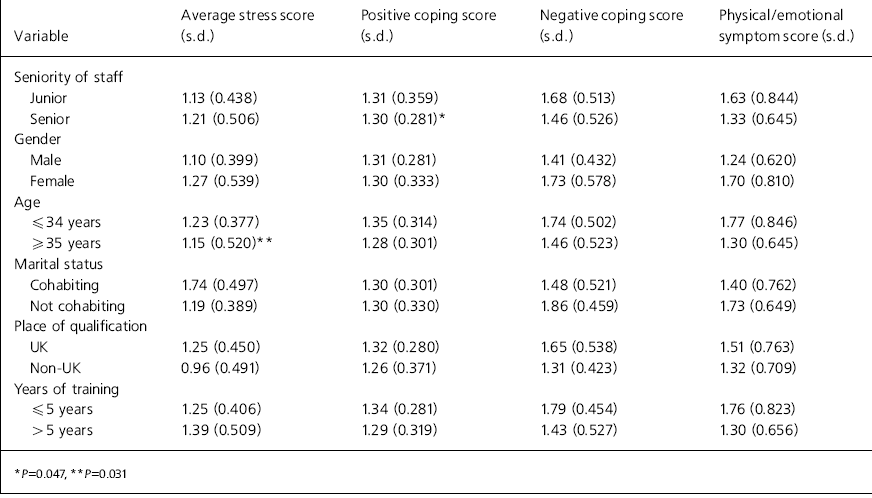
In order to compare stress levels across various groups, responses on the items from Section 2 on stressful situations were added: zero for no perceived stress and three for extremely stressful. The sum total was thus tabulated and a weighted mean score computed for each respondent, which ranged from 0-3. Similar scores were also derived for positive/negative coping strategies and for physical/emotional symptoms. Scores so derived were compared by t-tests across various subgroups. The results are shown in Table 3.
Comparison of stress, coping response and physical symptoms in various subgroups

| Variable | Average stress score (s.d.) | Positive coping score (s.d.) | Negative coping score (s.d.) | Physical/emotional symptom score (s.d.) |
|---|---|---|---|---|
| Seniority of staff | ||||
| Junior | 1.13 (0.438) | 1.31 (0.359) | 1.68 (0.513) | 1.63 (0.844) |
| Senior | 1.21 (0.506) | 1.30 (0.281)* | 1.46 (0.526) | 1.33 (0.645) |
| Gender | ||||
| Male | 1.10 (0.399) | 1.31 (0.281) | 1.41 (0.432) | 1.24 (0.620) |
| Female | 1.27 (0.539) | 1.30 (0.333) | 1.73 (0.578) | 1.70 (0.810) |
| Age | ||||
| ≤34 years | 1.23 (0.377) | 1.35 (0.314) | 1.74 (0.502) | 1.77 (0.846) |
| ≥35 years | 1.15 (0.520)** | 1.28 (0.301) | 1.46 (0.523) | 1.30 (0.645) |
| Marital status | ||||
| Cohabiting | 1.74 (0.497) | 1.30 (0.301) | 1.48 (0.521) | 1.40 (0.762) |
| Not cohabiting | 1.19 (0.389) | 1.30 (0.330) | 1.86 (0.459) | 1.73 (0.649) |
| Place of qualification | ||||
| UK | 1.25 (0.450) | 1.32 (0.280) | 1.65 (0.538) | 1.51 (0.763) |
| Non-UK | 0.96 (0.491) | 1.26 (0.371) | 1.31 (0.423) | 1.32 (0.709) |
| Years of training | ||||
| ≤5 years | 1.25 (0.406) | 1.34 (0.281) | 1.79 (0.454) | 1.76 (0.823) |
| >5 years | 1.39 (0.509) | 1.29 (0.319) | 1.43 (0.527) | 1.30 (0.656) |
There were two statistically significant findings. Junior staff seemed to employ significantly more positive coping strategies than the senior staff group. Those below 34 years of age seemed to perceive more stress than the older group. There was a statistically non-significant trend for women to use more negative coping strategies than men.
Logistic regression of variables explaining stress
Logistic regression was carried out to examine factors that predicted stress levels. Respondent's stress scores were dichotomised as low stress (>1.5) using the mean weighted score and then entered as the dependent variable. Six dependent variables were entered into the computation.
Of the variables, only gender was significant. Being female seemed to increase the odds ratio of being highly stressed 10 times. However, there was a near significant trend of the factor of experience to be associated with stress.
Discussion
The response rate of the survey was 62%, which is encouraging for a postal survey. The group consisted mostly of seniors, hence trainees may have been under represented. Gender distribution was roughly equal. Only five of the respondents had worked in psychiatry for less than a year, so most of the respondents were well settled into psychiatry.
The findings of this study are not directly comparable with the studies by Ramirez et al (Reference Ramirez, Graham and Richards1996) and Guthrie et al (Reference Guthrie, Tattan and Williams1999) because questionnaires like the General Health Questionnaire (Reference Goldberg and WilliamsGoldberg & Williams, 1988) and the Maslach Burnout Inventory (Reference Maslach and JacksonMaslach & Jackson, 1981) were not used, as the focus was on areas of work specifically dealt with by psychiatrists.
The areas most frequently rated as stressful were out of hours duties, dealing with difficult and hostile relatives of patients, working long hours, arranging admissions, paperwork, demands of job interfering with personal life, responsibility of suicidal and homicidal patients, recent changes within the NHS on increasing workload and bed scarcities. In the study by Guthrie et al (Reference Guthrie, Tattan and Williams1999) stresses most frequently cited were personal problems, problems involving patients (such as suicide and violence), career threat and administrative problems which were all similar to our findings.
The frequent use of alcohol, rates of tiredness (42%), anxiety (29%) and depression (23%) are disconcerting. It is also alarming to note that only 11% sought counselling and 19% saw their general practitioner for stress, although 51% seriously considered retiring and 11% considered suicide.
There were no significant differences between perceived stress levels in the junior and senior doctors, or males and females on direct comparison. However, the younger group (≤35 years of age) reported higher stress levels than the older group. On multiple regression analysis, being female showed higher odds ratio of being stressed.
The finding that being a female doctor working in psychiatry can be more stressful raises numerous issues as increasing females are opting for psychiatry as their career of choice. Females often have to cope with the responsibility of a career and family together. This compares with Firth-Cozens (Reference Firth-Cozens1987) findings of female house officers reporting more symptoms of depression on follow-up. Whereas the recent study by Guthrie et al (Reference Guthrie, Tattan and Williams1999), reports no gender differences in stress levels, the finding that registrars (junior doctors) had more stress scores were not substantiated in our study.
The findings of anxiety and depressive symptoms are not comparable with another population as a specific screening tool such as the General Health Questionnaire was not used.
As a control group was not used it would be difficult to comment on the comparative levels of stress experienced by this group.
Implications of the findings
This study does indicate that anxiety and depressive symptoms are not infrequent and that the stress of working in psychiatry can bring into consideration serious contemplation like retirement or suicide. The study also highlights important intergroup differences in perception of stress and coping strategies, notably female gender and younger age.
The findings of this survey need to be interpreted in the face of its shortcomings. It should be noted that a standardised and validated questionnaire was not used but one that was specifically designed for this purpose.
There is a need to investigate remedies to reduce the highly stressful aspects of the job, such as, on-call, training in dealing with relatives and administration.


 Open access


eLetters
No eLetters have been published for this article.