


Foreword
When, in 2022, I accepted the position of visiting professor at HBKU in Qatar, I decided to confine my research, by and large, to international education issues and their impacts on and encounters with cultural heritage and ways of learning in Arabia. The role of local culture in education, as a practice to be celebrated but slightly scripted in the curriculum, has always been a vexed question, perhaps not as much in Arabia as in the secular world of education at large. There is a general perception in Arabia that a school curriculum that fails to standardize the local culture perilously approximates ethical bankruptcy, and that Western education has overshot the mark in its excessive zeal for secular education.Footnote 1 There have been previous attempts to address this issue in its regional, social, and historical contexts. However, writing a detailed review of such encounters can only be highly selective, given the restraints of space and specificity. This Element resists dissociating culture from present-day educational realities, as it is fair to assume that learners are deeply connected to their broader beliefs. This is what this Element is: Arabian thought and culture as a pedagogy for contextualizing the internationalization of teacher education programs in the Arab Gulf States, in an effort to assimilate local culture into the liberal arts ethos of teacher education. My concern, therefore, is with the pedagogy of a living culture, something that deserves the descriptor of ways of being and knowing, which makes integrating culture worthwhile rather than merely decorative. It is my earnest hope that reflecting on local practices may give guidance in the days ahead to new generations in the Arab Gulf region that will allow them to address some of the misunderstandings and misrepresentations that may continue to unfold in the future of international education. As an educator with over two decades of teaching experience, I seek to draw attention to the ease with which culture could recede when encountering prevailing educational trends. Unless such educational trends accommodate a broader framework that ensures cultural continuity, future generations may lose sight of the foundations necessary for formulating an authentic sense of self. No policy alone can serve as a definitive anchor for cultural sustainability unless meaningful cultural practices are carefully applied. This Element is an effort to contextualize a curriculum for the internationalization of education in the Arab Gulf states. It not only acknowledges but also implements the local history of thought while remaining attuned to the ebb and flow of cultural heritage that such global engagements inevitably bring.
Introduction
The Majlis Curriculum: A Framework for Culturally Responsible Teacher Training
This Element proposes a Majlis curriculum for teacher training in Arabia, an initiative that refers to concepts and practices relevant to the Gulf Cooperation Council (GCC) cultural and intellectual heritage. The Element, therefore, addresses three principal points. First, it suggests a teacher training approach grounded in the Majlis curriculum, an interactive space for culture-oriented praxis and community engagement. Second, it introduces a new element, Al-Ra’y,Footnote 2 to be incorporated into the existing teacher training tripartite model of Tarbiya, Ta’lim, and Ta’dib. Introducing the Al-Ra’y element fosters a cross-cultural learning environment, which is crucial for advancing the internationalization of education. It supports pre-service teachers in engaging with global perspectives while remaining rooted in local cultural contexts. In this Element, Al-Ra’y refers to a set of identified interrelated intellectual and cultural dialectics to help integrate local heritage into the process of internationalizing teacher education curricula.Footnote 3 Third, this Element introduces what I call culturally responsible pedagogy, which emphasizes an obligation to thoroughly understand local cultural frameworks before engaging with other perspectives. One cannot be truly culturally responsive without first being culturally responsible. Responsiveness presupposes a solid understanding of one’s cultural epistemologies and modes of learning. Cultural responsibility, therefore, preconditions responsiveness. It focuses on how cultural thought translates into pedagogical epistemes and guides students to identify and apply the learning methods embedded in their cultural and intellectual traditions. Furthermore, culturally responsible pedagogy seeks to transcend the limited view of culture as merely abstract values, languages, beliefs, and rituals. It explores practical implementation through a culture attuned to civic duties, deliberative practice, and methods of knowledge acquisition. It examines how these are integrated into curricula and actively reflected in classroom practices. Fourth, it addresses the hegemonic intent that is often attributed to the expansion of liberal arts education in the region (Wilkins, Reference Wilkins2011). It does not engage in antagonistic rhetoric but instead negotiates with local epistemic horizons of possibility. The Element aims to address the challenge of denaturalizing Western epistemic dominance, characteristic of the internationalization of education, by promoting local epistemic frameworks and thereby contributing to liberal arts teacher education curricula in the Arab Gulf region.
The Majlis curriculum is a conceptual framework rooted in the cultural heritage and intellectual traditions of the Arab Gulf region. Traditionally, it serves as a gathering space for community members to discuss and share knowledge. It embodies domestic and formal governmental contexts, such as judicial and national councils. This duality allows the Majlis to reflect public involvement and intellectual engagement within the GCC sociopolitical landscape. The framework emphasizes the importance of the Majlis in fostering critical dialogue and community engagement, and promoting an inclusive educational environment that respects cultural contexts (Abdul-Jabbar, 2023). It aims to enhance intercultural competence among students and educators, and to prepare them for a globalized world. Conceptualizing a Majlis curriculum entails integrating local cultural heritage into teacher training, encouraging educators to act as cultural hosts, and facilitating intercultural understanding. It is critical to address global educational experiences while preserving traditional practices. However, the diverse economic and cultural landscape of the GCC makes theorizing Majlis, including balancing traditional methods with contemporary educational approaches, challenging. Overall, the Majlis curriculum represents an effort to navigate the complexities of globalization while maintaining the region’s cultural identity and fostering responsible citizenship.
This Element seeks to envision a curriculum yet to come. I use Majlis to theorize a curriculum embodied in cultural heritage and philosophical ways of learning and teaching. The Majlis curriculum, therefore, explores moments of convergence between Arabic thought, cultural practices, and the internationalization of education. The aim is to develop learning skills that enable and diversify effective participation in knowledge dissemination, social cohesion, and citizen engagement. It aims to design a curriculum that disseminates Arab Gulf states’ cultural values and intellectual tradition in a way that both affirms and transcends its own nationalistic and ethnic specificities. This Element addresses the urgent need to develop a culture-oriented and culture-sensitive curriculum. How can we create a teacher training curriculum that steers away from the dominant path of Western thinking and Eurocentric worldviews of what constitutes international education? The Element does not provide a piecemeal recipe for integrating GCC cultural heritage into teacher education. Instead, it invites reflection on how to preserve regional epistemes and value-laden practices in today’s divisive and conflict-prone educational realities. Preparing in-service teachers for interculturality in the GCC context primarily involves training in local intellectual traditions to enable them to interact interculturally with others in various pedagogical contexts and situations.
One key aspect of this endeavour is the need to move beyond a conservative and devotional perspective on Islamic religious education. As many scholars have noted, this traditional approach often fails to adequately address the complexities of living in modern, pluralistic societies, partly because of the ‘inadequate theoretical reflections on the meaning of education, which gravely hinder the task of thinking about Islam educationally and education Islamically’ (Saada & Magadlah, Reference Saada and Magadlah2020, p. 206). Proponents of this critical approach argue that Islamic education should ultimately emphasize the importance of critical dialogue and reflection during the learning process (Lahmar, Reference Lahmar2020). Instead, there is a growing call for what I refer to as the Majlis curriculum, an approach to cultural heritage teacher education that can equip students with the cognitive and affective liberal arts abilities to engage with their faith and the world around them in a more nuanced and reflective manner. This calls for teachers skilled in implementing teaching methods that foster critical thinking, rather than solely relying on rote memorization or uncritical acceptance of dogma. The effort to preserve, archives, and organize the Arabian intellectual and pedagogically relevant tradition is primarily educational and is essentially a curricular activity.
Navigating Postmodernism and Relativism
The idea that there is a single curriculum for all Arab Gulf States is convenient, and highly contingent, but certainly not definitive. Therefore, this Element does not serve as a review of teacher education programs in the Arab Gulf countries, nor does it provide a strict guide to curriculum development regarding the content or specific courses taught in the programs. Instead, this Element offers a forward-looking perspective and addresses the complexity of knowledge that the region will continue to encounter due to the encroachment of internationalized and internationalizing education. Currently, there is a prevailing perception that educators and practitioners in the Arab Gulf must continuously reconsider their current school curriculum to align with international imperatives and economic priorities (Khine, Reference Khine2022). A curriculum informed by policy-driven reform, competitiveness, and the development of well-trained citizens and teachers to meet global demands has become highly sought after and almost fetishized. In an increasingly unstable world, education is often pressed to offer alternatives to survive a disruptive and ambiguous future. This Element introduces a pedagogical framework, a significant essentials-oriented response to the wave of trendy but destabilizing forces: ‘It is in education that disorder can most easily creep in unobserved’ (Plato, Book IV, 424d). In other words, the Element appeals to historical and cultural narratives at a time when postmodern, relativistic thinking seems the most appealing, trendy, and conventional academic position.
In the constantly changing landscape of academia, the emergence of postmodern, relativistic thinking has become a compelling and increasingly common phenomenon. It aligns with what Haidt (Reference Haidt2016) describes as ‘a new moral order’, where universal principles are dismissed in favour of individualistic and relative perspectives, which now serve as the new ideological direction for university education: ‘Students who arrived at universities in the last five years or so are encountering an environment more politically orthodox than any that existed since perhaps the eighteenth century’ (Haidt, Reference Haidt2016). This shift towards a meta-paradigm of relativism has significantly influenced how we approach and understand knowledge, truth, and the fundamentals of scholarly discourse (Taylor, Reference Taylor1978). The limited amount of literature on postmodernism within higher education is a notable observation, considering that the postmodern debate has been prominent in nearly all areas of education, such as curriculum studies, school administration, educational theory, and also the internationalization of education (Bioland, Reference Bioland1995). The widespread influence of postmodern and relativistic thinking in academia has been both alarming and invasive, overshadowing more assertive and positivist approaches to learning. Undoubtedly, the appeal of postmodern relativism lies in its capacity to challenge strict adherence to certain epistemological positions. However, it can be harmful to any essence-based understanding of knowledge or truth that attempts to approximate certainty. It stands in opposition to the pursuit of universal truths, which is a cornerstone of traditional academic inquiry, including the curriculum proposed by the Majlis. Therefore, this Element seeks to identify the guiding elements and argues that certain essentials shape curriculum theorizing in times of decentralization. It is thus important to revisit Ahl Al-Ra’y, which explores ways to approximate universal truths under specific circumstances or contexts while upholding Aql (reasoning) and rejecting epistemological nihilism (Al-Salibi, Reference Al-Salibi2021). Al-Ra’y offers an emerging interpretive space that echoes Homi Bhabha’s (Reference Bhabha1990) concept of a ‘third space’, which allows different positions to emerge. This third space displaces existing histories that form it and establishes new structures of authority and political initiatives, which are often poorly understood through conventional wisdom (Reference Bhabha1990, p. 211). Consequently, implementing teacher education curricula inspired by the Majlis curriculum is vital, as it provides culturally responsible perspectives aligned with liberal arts.
Contextualizing Internationalization: Al-Ra’y, Liberal Arts, and Local Settings
The Ahl Al-Ra’yFootnote 4 school of thought relates to liberal arts by emphasizing rational and analogical reasoning. This school, which flourished in the early Islamic period, prioritized intellectual inquiry and critical thinking, key components of a liberal arts education. Ahl Al-Ra’y, for instance, emphasizes independent reasoning (ijtihad) and logic (mantiq) in interpreting Islamic law. It was marked by ‘searching for the reasons and objectives behind rulings in jurisprudence and legislation, exploring the rationale behind each ruling, and connecting the issues with each other’ (Al-Salibi, Reference Al-Salibi2021, p.192). Similarly, liberal arts, at least in principle, with their origins in classical Greek traditions, prioritize the development of critical thinking, logic, rhetoric, and mathematics, of course, within a different epistemic framework. Ahl Al-Ra’y advocates for using reason and logic in understanding and interpreting religious texts, encouraging individuals to engage with knowledge in a way that transcends strict dogmatism. While not a direct parallel, this approach aligns with the liberal arts focus on cultivating a well-rounded intellectual capacity and fostering skills in analysis, synthesis, and critical reflection. Furthermore, the interdisciplinary nature of liberal arts resonates with the Ahl Al-Ra’y tradition, which integrates logic, ethics, and language into its discourse (Brown, Reference Brown2009). By promoting an environment in which diverse ideas and methodologies are explored, Ahl Al-Ra’y contributes to the broader objectives of liberal arts education, which seeks to develop informed, critical, and culturally aware individuals.
Establishing a correlation between Al-Ra’y and liberal arts is meant to reconceptualize the internationalization of education within local settings. Coordination between efforts to internationalize education and maintaining cultural cognitive frames that create habitual praxis must become the common underlying assumption driving school education. This Element addresses the challenges in developing intercultural possibilities that can serve as essential sites for more culturally accountable future realities about the internationalization of education. It recognizes that internationalizing education requires dismantling the dominant relationship that seems to govern international education, from a fascination with Western knowledge to the desire to implement and not merely appreciate cultural heritage. This Element draws attention to how employing Western education without a clear commitment to indigenous systems and visions results in ambiguous epistemic authorities. Again, I do not refer to the Majlis curriculum as a way to challenge Western hegemonic modes. Instead, it acts as an intermediary and dialogical paradigm, a mode that registers a relational understanding with Western discourse within the context of teacher education and training. Indeed, expanding access to Western universities for local students advances a more inclusive global higher education landscape. However, integrating local synthesizing visions helps decentralize and disrupt hegemonic assumptions about internationalizing higher education.
Addressing Cultural Uncertainty: Educational Futures in the Gulf
This Element seeks to contextualize the internationalization of teacher education in Arabia. How can educators internationalize education without losing sight of cultural relevance? The proposed solutions to this question offer a promising path forward by developing the educational stamina to incorporate Arabia’s intercultural ethics, which provide alternative futures for curriculum theorizing and educational practices. This brings a sense of balance between the dominant Western discourses and the ethnocentric local rhetoric. The Element’s purpose is to present this curriculum as a possibility and to make the most relevant data readily available for those who wish to search for further ways to execute this or a similar vision and be convinced of its feasibility. The ethics, epistemologies, and cultural practices proposed here will help to provide an interpretive and descriptive Majlis curriculum. It will be considered insufficient if the Element only adumbrates the required expectations and scores. Nevertheless, it will have satisfied an equally important aim by contributing to the exploration of intercultural configurations beyond the West and Global North (R’boul & Dervin, Reference R’boul and Dervin2023), considering that scholarly recognition of the Arab Gulf region’s intercultural patterns and practices has been slow, recent, and undertheorized.
The future of education in the Arab Gulf is exciting; however, it is also riddled with questions. A generation of teachers rising from within the region, ready to endorse the virtues of excellence while simultaneously scrutinizing and censuring flaws or inadequacies, is vital to ensuring efficacy and conflict resolution in education. A generation of teachers and learners who approach contemporary problems with less dogmatic yet less relativistic assumptions is both recommended and sensible. Therefore, this Element seeks to map out possibilities of reducing cultural uncertainty and engineering educational futures through integrating an innate and homely consciousness into internationalizing education in the Gulf region. The Majlis curriculum aims to contribute to the future of education by implementing pedagogical praxes marked by a philosophical paradigm. This paradigm preserves the regional, Islamic, and Arabic complexion while engaging interculturally with what is conceived as foreign and yet familiar, considering how our realities continue to be globally informed.
This Element positions itself as a response to the following question: Is there a curriculum peculiar to Gulf identity and culture? This question is complicated to answer when we recognize and consider the variables and diversifying currents. Should we then give up the search for certainty and essentials? Far from it, it is possible to engage in the pursuit of such a curriculum without being completely dismissive or overly confident. There exists a shared wisdom tradition that can function as a liberal arts education or an educational consciousness guiding curricular development, which can be implemented to serve clear pedagogical purposes. These shared values and practices can be connected to an educational foundation from which curriculum theorization may begin.
The Element serves not only researchers and experts but also a wider audience of interested readers. It aims to present its ideas in an accessible yet rigorous way; for general readers, this goal is threefold. First, it seeks to introduce youth in Arabia to a set of critical thinking methods that shape Islamic thought and are unique to the region. Second, it emphasizes the importance of integrating culture into international curricula to help students reflect deeply on their intellectual heritage. This approach enables them to challenge radical ideas, dismantle stereotypes, and promote the blending of culture with the Islamic philosophy of education. Third, it promotes awareness of intercultural approaches within Islamic thought that reduce tension between the secular and religious public spheres. The key survival skill is creating a synthesis, an intercultural space that merges what is perceived as home-then with home-now, fostering an international perspective on education. Therefore, this Element advocates a revival of critical thinking pedagogies in Arabia. It focuses on cultivating a deeper sense of responsibility in current teacher education, while also developing intercultural and abstract skills among pre-service teachers. It aims to contribute to Muslim education beyond liturgical practices and identity issues, moving towards a more open landscape of internationalizing education. The goal is to contextualize and then adapt a critical literacy pedagogy to navigate the challenges and tensions that may arise during border crossings.
1 Internationalizing Education, the Erosion of the Local Episteme, and Intercultural Possibilities
1.1 The Internationalization of Education
The internationalization of education advocates for specific pedagogies that foster critical approaches, promote interactive learning, and enhance skill-oriented outcomes. It promotes inquiry-based learning, which presents teachers as facilitators who encourage students to explore, inquire, and discover information independently. Additionally, it uses pedagogical practices, such as the Socratic dialogue and problem-solving activities, that address real-world problems and guide students towards identifying effective solutions and making informed decisions (Billingham et al., Reference Billingham, Gragg and Bentley2013; Foster et al., Reference Foster, Yao, Buchanan-Butterfield and Powell-Brown2013). This approach seems admirable, however, the extent to which such approaches are implemented as intended often depends on teachers’ proclivities, ideologies, and the quality of their training. Moreover, international education advocates should consider the following regional concerns: What critical thinking skills qualify pre-service teachers in the Arab Gulf region to promote active engagement and critical thinking skills in an increasingly interconnected world? Which ways of knowing from within the Arabic and Islamic traditions that approximate critical thinking approaches in progressive education and international education can be implemented to promote culturally responsible teaching?
The internationalization of teacher education reflects a growing need to prepare global teachers for diverse cultural and pedagogical contexts: ‘[The] internationalisation of teacher education … positions teacher education in a global context, not merely local, and necessitates that prospective teachers develop global disposition and intercultural competence’ (Koh et al., Reference Koh, Pashby, Tarc and Yemini2022, p. 537). This view indicates that teaching today goes beyond local borders. It requires teacher education programs to equip future teachers with knowledge of cultural pluralism. However, Sieber and Mantel (Reference Sieber and Mantel2012) caution us that although internationalization promotes exchange, it also risks imposing uniformity on diverse traditions. Similarly, Haley & Uusimaki (Reference Haley and Uusimaki2024) remind us that the primary purpose of internationalizing education is not only developing competence to navigate cultural differences or pedagogical approaches (p. 168). The epistemic challenge is an equally significant dimension, which manifests in how local knowledge systems and interpretive frameworks can be internationally included and contextualized. Likewise, Little et al. (Reference Little, Golledge, Agarwalla, Griffiths and McCamlie2019) note that ‘in international settings, teacher training programmes cannot possibly adopt transmission-style pedagogy … teachers must critically explore their contexts, identify training needs, and develop interculturally responsive methods’ (p. 38). Collectively, these perspectives demonstrate that internationalization in teacher education is not about importing dominant pedagogical models, programs, and curricula, but about preparing educators to engage with a diverse learning environment while remaining attentive to local contexts.
Additionally, the internationalization of education addresses students’ mobility across geographical and disciplinary boundaries and institutions. It encourages the inclusion of foreign faculty and administrators, conducts international conferences, and establishes exchange programs. However, such educational streams, among other internationalization components, have been implemented using English as a medium of instruction, a practice that the Arab Gulf region’s indigenous camp, so to speak, has criticized as a hegemonic exercise of institutionalized power. Such criticism highlights the devaluation of the Arabic language and the relegation of the region’s linguistic and cultural practices, perhaps, to a subordinate position (Ahmad, Reference Ahmad, Rahman and Al-Azm2023; Gamal, Reference Gamal and Abdul-Jabbar2025). The erosion of the essential or the authentic identity becomes almost inevitable, and the effect could be irreparable. Recognizing the urgency of preserving linguistic and cultural practices as a mitigating factor aimed at balancing the impact of internationalization is a crucial matter of academic debate and a pressing concern that requires our immediate attention. During his participation in a panel discussion hosted by the Qatar Foundation in Education City on the occasion of the International Day of Education, Dr Ibrahim Al-Khalifi, a Kuwaiti educational expert and expert in educational psychology and developmental psychology, stated that ‘a balanced approach must be followed in teaching languages to address the challenges of cultural alienation among our children’. He added, ‘While mastering a foreign language is necessary in our world today, it remains essential to ensure that this does not lead to a cultural disconnect with the identity of the rising generations’ (Education City, 2024, para. 2).Footnote 5 The conceptualization of international education, primarily influenced by Western scholars and institutions, has led to an imbalance of scholarly and educational agency that is particularly evident in Arab/Islamic settings in which the promoter seemingly dictates the definition rather than the consumer, who listens and adapts in awe. Despite calls for their inclusion, subaltern perspectives have often been overlooked or inadequately recognized, further perpetuating this imbalance. For example, a perceived dichotomy, which dictates problem-solving approaches, critical thinking, and self-actualization as an exclusively Western invention, underscores the need for cultural sensitivity in education that counters this hegemonic take on critical literacy. Muborakshoeva (Reference Muborakshoeva2013) ponders the implications of ‘perceiving European education to be “modern” and “progressive,” as opposed to the “backward” and “obsolete” Indigenous education’ (p. 31). In the Gulf States and beyond, the benefits of international education are seen as a pathway to prosperous future careers, contrasting with the dominance of rote memorization and passive learning methods that are supposedly linked to sectors and institutions untouched by Western educational models and practices.
The internationalization of education advocates for Ta’lim in teacher training programs that promote student-centred, project-based pedagogy, and differentiated assessment. This approach challenges traditional educational notions of standardization, memorization, the teacher as the sage on the stage, the oral tradition, and a uniform method of pedagogy that was dominant in GCC nations during the first half of the twentieth century: ‘The decline of scholarly and educational rigor in the Muslim world was furthered by mimicking Western educational systems rather than genuinely actualizing the Madrassas’ educational perspective … [and] the implementation of an outdated Western model of assessment’ exemplifies the adoption of an obsolete mandated education legacy (Abdul-Jabbar, Reference Abdul-Jabbar2021, p. 1251). This dwindling pedagogical approach has maintained only a Tarbiya-centred focus, emphasizing comportment and character development. The inevitable contact with the internationalization of education has triggered a transition marked by a shift from Tarbiya to Talim, incurring significant challenges, if not misgivings. It underscores the crucial role of educators, policymakers, and citizens in carefully considering and integrating these new approaches into existing educational systems.
Gulf Cooperation Council states have successfully implemented distinctive academic and institutional changes whose contributions should be examined beyond the socioeconomic paradigm and more within the context of Gulf cultural heritage and national identity. Advocating for a more visible paradigm of intercultural encounters in international education and research can address the challenge of preserving traditional components while accommodating modernism, which is ‘equated with the hegemony of Western standards and forms of life, and to this extent interpreted as another attempt to push through Western-style cultural homogeneity’ (Hamzawy, Reference Hamzawy, Chawe and Hamzawy2006, p. 52). This rhetoric has succeeded in shaping how the Arab world has internalized ‘a tendency to fetishize the West as superior and therefore desirable’ (Abdul-Jabbar, Reference Abdul-Jabbar2017, p. 200). Educators should be aware that the West is often perceived as the most advanced, knowledgeable, and uniquely suited to lead the rest of humanity by sharing their knowledge and technology with ‘those whom they consider to know nothing’ (Freire, Reference Freire2006, p. 72), referring to the ‘less developed’ or ‘underdeveloped’ regions. The dichotomy between hadatha and asala (Hamzawy, Reference Hamzawy, Chawe and Hamzawy2006, p. 52) can be resolved by ‘closing the gap between the secular and the religious through a better understanding of the Islamic underpinnings of the Arab polities’ (Abdul-Jabbar, Reference Abdul-Jabbar, Carr, Thomas, Porfilio and Gorlewski2016, p. 295). To achieve this, Islamic thought must be pedagogically contextualized so that internationalized education genuinely includes Arab Gulf asala.
This perception of Western superiority in knowledge production has been further reinforced by the dominance of English as the global academic and professional language, which has significantly influenced the Arab Gulf. In the second half of the twentieth century, many Arab Gulf students studying abroad faced the geopolitical implications of English as an international language. It became the lingua franca and was thus seen as superior, relegating Arabic to a barrier rather than a bridge to knowledge. Overseas Arab Gulf students found themselves at a crossroads, where ‘Western culture has come to be even more corrosive of their customs and their standards than before’ (Robinson, Reference Robinson and Boase2005, p. 78). Critics of Western universities with established international branch campuses in the Arab Gulf often accuse them of promoting ‘the new neo-colonialism which benefits the providers much more than the receivers’ (Wilkins, Reference Wilkins2011, p. 73). As a result, local culture and identity have become marginalized as Western values and lifestyles have taken precedence. Moreover, the wealth generated from Western intervention has rapidly transformed traditional life in GCC states, leading to a sense of double consciousness and double lifestyles. This shift in Arab Gulf awareness has sparked a nostalgic longing for continuity with a preserved past that must be retrieved, taught, and presented to the younger generation in a clear and desirable manner. The primary concern is that internationalizing education has been criticized for its alleged role in perpetuating colonial rhetoric and reinforcing cultural hegemony. However, in a multicultural society, engaging with international education projects has become vital for fostering active and participatory citizenship. In response to this debate in curriculum theorization, the infusion of Islamic and Arabic intellectual traditions challenges remnants of postcolonial legacies, disputes their educational frameworks, and counters their narratives across the Arab Gulf region.
1.2 The Hegemonic Decentralizing Aspects
The rise of modern postcolonial enterprises has allowed the West to unchallengedly assert certain epistemic modes both symbolically and geopolitically, dividing the world into knowledge producers and consumers, contributors and receivers, and reinforcing an unequal epistemic hierarchy within an already highly imbalanced global power structure. This does not deny that European contributions to knowledge have significantly advanced human development in science, technology, discovery, and philosophy over the past few centuries, a fact that postcolonial rhetoric does not always readily acknowledge. Such reluctance is understandable because postcolonial and social justice discourse often perceive European knowledge as a forceful intervention meant to govern and dominate, rather than as a participatory and collaborative force that acknowledges and engages with different perspectives. Consequently, this Element uses the Majlis curriculum to address these uneven power dynamics and hegemonic implications by seeking common ground and negotiating epistemic configurations within the context of internationalizing higher education. Furthermore, Wilkins, for instance, is concerned about the hegemonic implications of internationalized education, referring to how ‘Western universities can be seen as the new neocolonists’ (Reference Wilkins2011, p. 81). For example, internationalized higher education prioritizes English as the language of instruction to equip students with the necessary communication skills to navigate the rise of the globalized job market, which may indicate an imbalance of, if not a deviation from, the original intentions of prioritizing local culture. This is, arguably, the inevitable consequence of adopting models developed in different cultural and educational settings and implementing them without careful consideration of their compatibility with the new contexts. This causes a ‘deterritorialization’ of the local culture and a diminution in the fundamental elements and essentials that constitute a cultural assemblage, which then trigger a ‘reterritorialization’ (Abdul-Jabbar, Reference Abdul-Jabbar2024, p. 21), a de-hegemonizing response to the incurred epistemic crisis. Such a displacement afflicts the unseated cultures in the GCC.
Decentralization triggers a reallocation of the governing bodies that direct educational priorities. The recirculation of educational governance and learning possibilities prompted by the internationalization of education initiates a redistribution of authority, outcomes and content within academic contexts and at the institutional level (Haug, Reference Haug2009). The decentralization of education, therefore, emerged rapidly and almost concurrently in the GCC states, which promised to redesign their educational system, which was considered outdated and lacked a focus on career readiness and skills development:
For example, the United Arab Emirates began a massive education reform plan, Vision 2020, in 1999, Bahrain started Schools of the Future in 2004, and Qatar’s reform Education for a New Era was established in 2002 … The vast majority of these educational reforms are primarily Western decentralized models that shift authority from a centralized education system to local governments or schools.
International education, particularly Western education, has been criticized for implementing educational systems that are culturally incompatible, as they are based on ‘systems developed for other educational contexts built on different educational and cultural views’ (Ellili-Cherif et al., Reference Ellili-Cherif, Romanowski and Nasser2012, p. 473). In contrast, it has been praised for its decentralizing effects, which have gained popularity among proponents of democratization. Decentralization implements a participatory approach that upholds accountability in decision-making and, therefore, serves as a democratizing impetus that facilitates the transfer of power as normative and circulatory (Naidoo, Reference Naidoo and Verspoor2005). Consequently, it could initiate improvement but may, in the long run, prompt a site of contestation, signalling the loss of centre and realizing that its visibility has become barely discernible.
In effect, while the internationalization of education introduces models and curricular changes intended to improve the quality of learning, it often slips into a decentralizing force that can become alienating as it moves further away from the centre. A deeper insight into the impact of the internationalization of education invokes a physics analogy. The internationalization of education exercises a centrifugal force that causes decentralization. It pushes an object away from its centre and appears during movement to negate inertia in a centralized system. This process can be beneficial as an enunciation of improvement, but can also be alarmingly destabilizing. Like the centrifugal force, the internationalization of education acts outward and, if not properly balanced with other existing forces, will cause the object to derail and lose sight of its axis. Managing centrifugal forces, which are essential to ensuring stability during change, requires a solid understanding of the centre or axis of the system as a participating force. Accordingly, this Element engages with the following questions to delineate the cultural centrality of teacher training: What is central to theorizing culturally responsible teaching, which is decentralized by the internationalizing force? What elements constitute the axis of a Majlis curriculum in the GCC context? Knowing what Bhabha calls ‘the location of culture’ or the characteristic of the centre allows educators, like engineers, to measure and predict the magnitude of the shifts occurring. This stresses the need for a solid understanding of the centre or axis of the system, which should reinforce the essential role of local educators in teacher training and emphasize the importance of their knowledge and expertise in managing the effects of internationalizing education. Local educators should be more involved despite the critique. Hanson (Reference Hanson1997) posited that ‘educational officials who managed the centralized system tend to be less than enthusiastic about decentralization and slow down the change process’ (p. 16). Therefore, educational officials focused on decentralizing the educational system by incorporating Western paradigms, but are not necessarily eager to relinquish power in favour of integrating culturally responsible elements.
Advocates for centralized education prioritize Tarbiya, which considers the local values and language as catalysts for curriculum theorization, while proponents of decentralization focus on Ta’lim, which champions international education and its educational models as global standards. As a process, decentralization is preconditioned by the axis of a cultural assemblage, which prescribes and upholds specific guiding principles, collective values, and practices. It seems, therefore, fairly reasonable to assume that decentralization de facto assumes a centre. It is noteworthy to mention that this Element does not view decentralization as merely the diversification of knowledge or the loss of authority per se. Instead, it focuses on its impact on the centre and the loss of an identifiable imprint that defines education and imparts a culture’s distinctive and unique quality. The elements presented here to guide curriculum theorization are not intended to neutralize decentralization so much as to provide a shared vision, the possibility of a centre that preserves cultural heritage while also directing intercultural encounters.
1.3 Broadening the Horizon of Liberal Arts Education
Education in liberal arts ‘imposes forms not on matter as do other arts (for instance, carpentry or sculpture) but on mind. These forms are received by the student not passively but through active corporation … The Trivium [are] the three arts of language [which] provide discipline of mind in as much as mind finds expression in language … the function of the Trivium is the training of the mind for the study of matter and spirit which together constitute the sum of reality’ (Joseph, Reference Joseph2002, p. 8). Liberal arts education advocates for an understanding of reality informed by culture, as defined by Matthew Arnold as ‘the knowledge of ourselves and the world’, which adds to the knowledge of reality. Liberal arts education also functions through the study of metaphysics. Hamza Yusuf (Reference Yusuf2017) explains that ‘traditionally, metaphysics was studied after one mastered the qualitative arts of grammar, logic, and rhetoric’ (para. 8). Emphasizing the role of liberal arts in shaping the intellectual framework of Islamic thought, he explains that ‘mastering them freed the mind from the fetters of faulty thinking … Armed with these essential “instruments,” students went on to study theology, law, or medicine, the three advanced studies of the pre-modern world’ (para. 8). Indeed, Bertolacci (Reference Bertolacci2006) observes that ‘the first specific endeavour of clarifying the relationship between ontology and theology within the Metaphysics took place, as far as we know, in Arabic philosophy’ (p. 113). Therefore, by implementing the trivium and metaphysics, liberal arts education cultivates pathways to understanding reality, uniting intellectual rigour with cultural and spiritual insight.
This Element contextualizes liberal arts in internationalization education from within Arabic/Islamic thought. It explores how the liberal arts were instrumental to the Islamic intellectual tradition that shaped Muslim education. In effect, it argues that the implementation of liberal arts embedded in Arabic thought serves to promote and produce critical thinking practices in the Arab Gulf region. There is a general and misleading perception that education in Arabia places a strong emphasis on memorizing the Quran and Hadith as primary sources of knowledge and guidance and, therefore, is interculturally divorced from and dialogically disinterested in the world (Rostron, Reference Rostron2009, p. 224). Such an orientalist perspective conflicts with the valuing of rational reasoning, argumentation, and dialogical language in Islamic thought and pedagogy (Abdul-Jabbar & Makki, Reference Abdul-Jabbar and Makki2024). Hamza Yusuf, one of the founders of Zaytuna College, and Seyyed Hossein Nasr, professor of Islamic Studies at George Washington University, ‘describe the symbiotic relationship between liberal arts and Islamic scholarly traditions as a two-sided tool: Liberal arts education can protect Islamic traditions in a Western minority setting, and authentic Islam can revive Western liberal arts education’ (Sinclair, Reference Sinclair2016, p. 44). In an interview, Abdullah bin Hamid Ali, an Islamic Law lecturer at Zaytuna College, explained the Islamic correlation with liberal arts:
Classical Islamic education was rooted in liberal arts. Liberal arts are an Islamic idea. Think of Ibn Khaldoun and his distinction between tool sciences and goal sciences, for instance. Liberal arts colleges teach tool sciences and that is also what we do here. Muslims re-introduced liberal arts to Europe after the Greeks. It disappeared for a while and came back with Muslim thinkers.
In effect, developing a teacher training program that nurtures liberal arts education informed by non-Eurocentric knowledge and pedagogies will not only decolonize the curriculum but also contribute to the internationalization of education by integrating an Arabic thought perspective central to the region. This Element, therefore, explores how teacher education can be enhanced by including a liberal arts component grounded in Arabic thought, exemplified by Al-Ra’y.
Liberal arts education cultivates a profound sense of curiosity and an inquisitive spirit that pursues universal truth by exploring fundamental principles, establishing a tradition of wisdom (Tubb, Reference Tubbs2014, p. 1). This resonates strongly with the history of Arabic thought, as in ninth-century Arab philosopher Al-Kindi’s On First Philosophy, which advocates for the practice of philosophy as a means of attaining truth through the first principle: ‘Of the human arts, the highest in rank and the noblest in degree is the art of philosophy … the knowledge of things as they really are (bi-haqa’iqiha)’ (Adamson, & Pormann, Reference Adamson and Pormann2012, p. 10). Al-Kindi’s conception of philosophy as the disciplined pursuit of truth through first principles also anticipates later traditions of Ahl al-Ra’y, which emphasize reasoned judgment, contextual interpretation, and the recognition that truth necessitates an intercultural Minhaj (Abdul-Jabbar, Reference Abdul-Jabbar2020). Similarly, Ahl Al-Ra’y’s school of thought generally held a nuanced view of approximating universal truth while recognizing that interpretations could vary based on sociopolitical contexts, personal experience, and reasoning. Drawing on the intellectual legacy of Ahl al-Ra’y, the theorization and contextualization proposed in this Element aim to contribute to scholarship on this eighth-century tradition and advocate for incorporating a local liberal arts component into the training of future teachers.
The relationship between Ahl Al-Ra’y and liberal arts is complex and rooted in historical and intellectual contexts. Both Ahl Al-Ra’y and liberal arts value reason and critical thinking as essential tools for engaging with the world, creating a natural affinity between them. The rise of Ahl Al-Ra’y during the Islamic Golden Age coincided with significant translations of, and interactions with, Greek philosophical works, which likely influenced their rationalist approach to jurisprudence: ‘This interest in the liberal arts, the trivium of logic, rhetoric, and grammar, is a part of the forgotten Islamic/Arab tradition that is now, regrettably, being perpetuated as the exclusive property of the Western intellectual repertoire’ (Abdul-Jabbar, Reference Kh2019, p. 377). However, it is important to acknowledge that Ahl al-Ra’y is a specific legal school within Islam. Meanwhile, liberal arts refer to a broader educational approach, showing that while there are overlaps, they are not entirely the same. Ultimately, the relationship between Ahl al-Ra’y and liberal arts developed and differed across various regions of the Islamic world. Nonetheless, this connection highlights a shared intellectual foundation that contributed to the rich tapestry of knowledge and scholarship during the Islamic Golden Age.
What liberal arts literacies can be integrated as guiding principles into teacher training programs in Arabia to reconcile the dichotomies of East vs. West or religious education vs. secular learning to address Al-Tagrib al-Thaqafi as a cultural hegemony that stems from the monopoly of Western education? Al-Tagrib Al-Thaqafi is an Arabic term that means ‘to adopt the beliefs, ideas, and visions of another nation that is culturally and religiously distant from is distorting its educational curricula, and creating a barrier between it and its predecessors, its history, language, and culture, which are the backbone of a nation’ (Alhadi, Reference Alhadi2018, p. 2). It describes a sense of ambivalence in which Arab youth generally find themselves torn between feeling unbelonging to the local culture and being drawn to the appealing Western ways of knowing and lifestyle. Al-Tagrib al-Thaqafi alludes to maladies inherent in intercultural encounters when they are not properly mediated:
The term refers to the … dominance of Western cultural, military, sociopolitical or economic influences on the Arab world. It does not take the direct character of an intrusive attitude but rather that of distortions and distractions, and its goal is divisive, though it is appealing on the surface and seemingly benign.
Therefore, the primary objective of this Element is to contextualize teacher education curricula, particularly those informed by international education, by introducing a culturally responsible framework that I call Majlis. This approach integrates the Al-Ra’y component in a way that aligns with liberal arts education for pre-service teachers.
1.4 Contextualizing International Education through an Intercultural Approach
What is international education, after all? The definition of this concept continues to be contentious: ‘[It has] become a catch-all phrase used to describe anything and everything remotely linked to the global, intercultural or international dimensions of higher education and is thus losing its way’ with no direct reference to ‘the fundamental values underpinning it’ (Knight, Reference Knight, Mihut, Altbach and de Wit2014, p. 76). The internationalization of education seems to be undergoing an identity crisis. Similarly, Hans (2014) also argued that the concept of internationalization ‘requires an update, refreshment and fine-tuning taking into account the new world and higher education order’ (p. 97). Arguably, the internationalization of education addresses three domains. The first pertains to the sensibilities of relationships among nations, cultures, and institutions. The second addresses the diversity of cultures present within local curricula. The third involves the capacity to engage with a wide range of academic perspectives across various disciplines and contexts. The purpose of internationalizing education has consistently been centred on diversifying local curricula while simultaneously westernizing educational structures. This process is often tied to the importation and implementation of educational systems that are regarded as universally accredited, as well as the acquisition of skills that facilitate the transformation of local educational systems into surrogates of what are perceived as authentic accredited formations and forms of learning. Is it reasonable to postulate a fourth domain? Is it justifiable to add that international education attempts to internationalize the local context, episteme, and praxis of education, not to replace them? Engaging in international education, therefore, entails identifying patterns of cross-cultural interactions, recognizing ethical responsibilities, and enabling alternative pedagogies. Therefore, international education must be contextualized through intercultural engagement rather than merely adhering to importing educational models without actively engaging with the various interconnected local and global epistemologies. After all, isn’t international education fundamentally about partnership?
A shift from merely stating commitments to living interculturally, in terms of recognizing practice, involvement, and a continuous process of forming partnerships, seems to be chased but hardly captured. Hence, contextualizing international education through intercultural praxis is essential to counter the nearly subconscious acceptance of the Western academic approach that has become normative. This propensity often mis/leads local learners to willingly associate with Western discourses and pedagogical practices, an attitude that can be explicitly identified as cultural hegemony.Footnote 6 Redefining, if not re-examining, the internationalizing drive beyond dominant approaches and within the errors and trials, if not the ethical considerations of the receiving cultures, could be a move in the right direction. Resistance to implementing the Western model or reconceptualizing the internationalization of education may not benefit the preservation of geopolitical and economic interests. This power dynamic has effectively sustained the epistemic hegemony, which espoused a continuous fascination for the Western approach to education.
Conceptualizing teacher education curricula in the Arab Gulf has been subject to two conflicting self-perceptions: an education crisis of being caught in the past, and a profound recognition of significant historical achievements. In other words, educational development seemed trapped between the glory of medieval times and the underachieving present. Therefore, debilitating and dissonant feelings about the current state of underachievement also pervade. This epistemic dichotomy, stigmatized both by past glories and by present impoverishment, has consistently underpinned the internationalization of education to rekindle traditional ways of learning rather than exclusively embracing contemporary approaches and ensuring that outdated modes of thinking do not impede fostering forward-thinking strategies. In effect, fairly enough, the move towards the internationalization of education in the Arab Gulf was partly a response against an isolationist approach, which contrasts starkly with the decisively globalized and futuristic nature of the contemporary world. With the turn of the twenty-first century, Arab Gulf states revitalized their institutions and invited branch campuses to modernize and improve the quality of education. The proliferation of Western universities in the Arab Gulf countries, especially in the UAE, Qatar, Bahrain, and Kuwait, has been noticeable and celebrated. This necessitates redirecting Arab education towards many pragmatic and pedagogical praxes and approaches that adopt an intercultural synthesis-oriented approach to the internationalization of teacher education programs in the Arab Gulf region. Prioritizing local epistemologies and cultural ways of learning that align with the pedagogical approaches and instructional strategies advocated by international education opens up teacher education programs to an increasingly changing and developing global environment that has been elusive due to the need to situate education in the necessary cultural and Islamic ways of being and worldviews. Considering that the common Islamic and cultural specificities unique to the region necessitate identifying standard practices and shared attributes, it is fair to assume that the GCC teacher education programs tend to be culture-bound. Internationalizing teacher education programs in the Arab Gulf and engaging with the local culture is as crucial as respecting and valuing the knowledge and traditions of ta’lim and tarbiya. On the other hand, without intercultural rigor and engagement, teacher preparation programs informed only by the current tripartite model of tarbiya, ta’lim, and ta’dib will find engaging with controversial issues challenging.
In the wake of the ascendancy of internationalizing curricula in the region, delegating more responsibility, if not attention, to a representative pedagogy, a unifying collective centrality rather than uniformity, is imperative: ‘In most countries, a balance between both is required to make an effective educational system’ (Yazdi, Reference Yazdi2013, p. 98). This Element, therefore, addresses an existing tension generated by importing models of education: ‘The post-colonial expansion of higher education, while it has undeniably contributed to multiple aspects of social and political development, has also engendered a great degree of tension and debate’ (Herrera, Reference Herrera, Forest and Altbach2007, p. 412). As the urgency to thwart instructive, authoritative and erudite learning approaches representative of early twentieth-century education in Arabia continues to exercise paramount importance, the issue of creating a locus of convergence between the global and the local culture is equally significant. Which concepts, pedagogies, and dialectics can we use, if possible, to contextualize and regionalize the internationalization of education? How can internationalizing education broaden the ethnocentric horizons of knowledge? How might the internationalization of education recognize and include different regional, cultural, and epistemic frameworks as part of its essential and imperative globalized dynamic? Bridging the gap between local and global does not necessarily entail a social justice campaign of decolonizing Western epistemological and ontological assumptions. However, it can be accomplished by advocating for internationalizing education that encourages local engagement. This initiative raises the question of which local thoughts and cultural epistemes are pedagogically relevant and could be incorporated into the curriculum, as well as which Arabian epistemic dialectics rooted in its cultural and historical heritage are pedagogically viable.
2 Curriculum Gaps and Culturally Responsible Teaching in the Arab Gulf Region
This section investigates the internationalization of education in Gulf countries such as Oman, Bahrain, Kuwait, the UAE, Qatar, and Saudi Arabia. It focuses on their engagement with Western counterparts, their partnerships and educational models, and the adoption of Western practices and curricula in their educational landscapes. In the spirit of contextualizing the curriculum, this section examines the growing imperative to engage with the challenges posed by the internationalization of education in teacher training. The purpose here is neither to provide a literature review on teacher education programs’ nature or current state, nor to offer a detailed account of the materials taught or the content of the curriculum across various Arab Gulf countries. Instead, it focuses on these programs’ contemporary challenges due to their interactions with Western institutions. Considering the growing imperative to embrace the internationalization of education, this section seeks to elucidate the tensions and challenges that teacher education programs currently contend with. It advocates for a culturally responsible teaching model in international education that enables the participating culture to contribute meaningfully to liberal arts education, a cornerstone of international education, by considering the Majlis curriculum.
This section addresses, therefore, two primary challenges the secondary education system encounters in the region. The first is the need for a well-contextualized curriculum that helps teachers translate their cultural understanding into practical teaching strategies. The second is that most high school teachers are expatriates who, to a great extent, face limited training opportunities and resources in the local culture. This shortfall hinders their ability to engage with Arabic and Islamic pedagogical practices effectively. Though they are generally familiar with the nuances of the local context, local teachers may lack deeper engagements with the principles and practices of Arabic thought. As a result, they face similar, albeit distinct, challenges within the educational context.
2.1 Weaving Culturally Responsible Pedagogy into Internationalization Practices
Bakali and Memon (Reference Memon, Bakali and Memon2021) identify three global trends in educational discourse that explain the main approaches to international education. The first approach draws on New Pedagogies Studies, which is influenced by critical pedagogy and social justice education. A well-known pedagogical model within this approach, often called culturally responsive teaching (CRT), offers strategies to create inclusive classrooms that reflect students’ cultural backgrounds. The aim is to make learning more relevant and support their cultural identities. The second discourse aims to develop ‘a critical consciousness in learners’, which ‘relates to preparing learners to “read the world” … and thereby … an engagement with the social, political, and economic structures that shape the world around them’ (Bakali & Memon, Reference Memon, Bakali and Memon2021, p. xiii). This approach focuses more on understanding the global market and accountability. The third trend involves education for social-emotional learning and well-being. It links educators and learners to human and child development, with an emphasis on family issues and emotional growth. This focus has become common in schools because it connects children and learners to interpersonal skills, community values, and emotional and cognitive development. These educational approaches form part of the international discourse within GCC contexts. As a result, the conceptual foundation is predominantly Western in epistemology and methodology, and it is implemented by expatriates or Western-trained educators who aim to practice these inquiry-based learning trends that informed their training:
Western-trained (expatriate) university faculty who embark on teaching in higher educational institutions in GCC countries … need to be explicitly and sufficiently prepared for unique teaching experiences … so as to facilitate the best type of learning experience appropriate for the GCC region … Many in the field of higher education contend that this can be achieved through the implementation of an asset-based pedagogy, such as a culturally relevant pedagogy (CRP).
Culturally responsive teaching (CRT), also called culturally responsive pedagogy (CRP), is a pedagogical model that uses ‘meaningful cultural connections to convey academic and social knowledge and attitudes’ (Vavrus, Reference Vavrus and Good2008, p. 519). Culturally responsive teaching is interested in deconstructing mainstream knowledge by introducing non-Western epistemic techniques that challenge normative perspectives:
Teachers who utilize CRT practices value students’ cultural and linguistic resources and view this knowledge as capital to build upon rather than as a barrier to learning … Teachers who use CRT apply interactive, collaborative teaching methods, strategies, and ways of interacting that support CLD (culturally and linguistically different) students’ cultural, linguistic, and racial experiences and integrate the methods with evidence-based practices.
A distinction must be made between culturally responsible and responsive teaching, and how the former shapes the latter. Culturally responsible teaching is rooted in a culture’s local knowledge. It asserts that teaching about a specific culture is not merely descriptive, ritualistic, or based on anecdotal accounts but is deeply rooted in culture as a way of knowing and contributes to the concept of the curriculum-as-lived (Aoki, Reference Aoki1993). Culturally responsible teaching is, therefore, a prerequisite for responsiveness. Culturally responsive teaching aims to engage with diverse intercultural perspectives. Although well-intentioned, it is not grounded in a deeper epistemological engagement with culture as a serious way of knowing. It is often seen as an effort to incorporate cultural awareness into educational contexts but does not necessarily engage with the epistemic frameworks produced by that culture. As a result, the effort to respond is often limited to surface-level representations or general knowledge of cultural norms. Therefore, culturally responsive teaching must go beyond a superficial understanding of cultural beliefs, habits, and rituals, and should commit to true implementation, which requires epistemic training in the culture concerned. Teachers need to be familiar with a local curriculum that can adapt to international education; interculturality begins at home. What I propose as culturally responsible teaching should not replace culturally responsive teaching but serve as a vital foundation. Culturally responsible teaching emphasizes a solid grounding in the principles, practices, and intellectual traditions of the culture in which an educator works. Without such prerequisites, culturally responsive teaching risks becoming disconnected, losing context and utility. This distinction is crucial: culturally responsible teaching maintains that the intellectual epistemologies of the region’s cultural heritage should be seriously considered and integrated. Without this civic sense of responsibility, responsiveness can slip into tokenism. Rooted in a culture’s epistemological frameworks, culturally responsible teaching captures how the increasing focus on responsiveness might lead to a loss of centre, a diminished understanding of one’s own culture before engaging with others. Culturally responsible teaching underscores the importance of first understanding one’s own cultural context, without which responsiveness risks becoming superficial.
Palmer (Reference Palmer1997) identified three primary sources of complexity in teaching: the subjects being taught, the students being engaged, and the identity and integrity of the teacher. He argued that ‘we teach who we are’ (p. 15), and emphasized that teaching inevitably reflects the educator’s ‘inwardness’, for good or ill. This perspective entails reconsidering ‘know thyself’ pedagogy as a foundational teaching principle and also the need to ‘interweave them into our pedagogical discourse’ (p. 16). Accordingly, the Majlis curriculum adopts an integrative approach, where content informs self-knowledge and encourages students to engage with a culturally responsible pedagogical framework. The aim is to anchor education in a holistic and contextually relevant discourse. In effect, teaching emerges as a manifestation and a reflection of the educator’s key aspects of identity, forming a communal ethos. If teachers prioritize external influences without effectively integrating and implementing the local episteme, they may inadvertently internalize educational systemizations without critically engaging with them. This, in turn, can undermine the very principle of Tarbiya and the ability to find meaningful connections with one’s educational context. In the context of this Element, culturally responsible teaching aims to integrate cultural epistemes and local practices into the classroom’s curriculum and instruction. Since the internationalization of education is grounded in critical literacy and inquiry-based learning, this Element aims to contextualize secondary education in Arabia to align with the perspectives championed by international education. The Majlis curriculum, therefore, contributes to theorizing education in Arabia, embedding it within the lexicons and dialectics of the local culture. It aims to create a distinctive pedagogical setting tailored to local realities while engaging with international education standards without diminishing cultural heritage.
Many teachers in international schools struggle to incorporate culture into classroom routines and curricula. They also find it difficult to observe behaviour linked to thinking patterns and students’ responses to culturally responsive teaching (Gay, Reference Gay2002). Addressing this challenge is essential because teachers’ preparation and knowledge acquisition influence their own and their students’ success. Our response to this issue also determines how well a particular teacher education program aligns with the country’s priorities and current intercultural challenges. However, the main problem here is that integrating Islamic or Arabic thought and cultural elements into teacher training remains overlooked due to the lack of proper contextualization of these contents within the Arab Gulf region (Abu-Tineh & Sadiq, Reference Abu-Tineh and Sadiq2018). Several studies have detailed education programs and highlighted several attributes they lack, leaning towards a modern approach to teacher training and development (Romanowski et al., Reference Romanowski, Ellili-Cherif, Al Ammari and Al Attiya2013). The movement towards internationalizing education can involve establishing new institutes with international curricula or enhancing existing programs at public universities. In Qatar, for example, early-career teachers ‘experienced a gap between the [teacher training] program and their work-life, and sometimes they felt insecure about how to handle specific real-life situations’ (Qadhi et al., Reference Qadhi, Hendawi and Elham Ghazi Mohammad2020, p. 127). To bridge this gap, teacher training programs in the GCC should consider a Majlis curriculum that emphasizes culturally responsible teaching.
Culturally responsible pedagogy involves a dual responsibility: it must respond to the local, hosting culture, as previously explained. However, this responsibility is not to be ethnocentric. The goal of culturally responsible pedagogy is not to valorize culture for its own sake or to be confined by its epistemic limits, but instead to engage with it deeply to eventually transcend it. However, this transcendence does not mean abandoning one’s cultural boundaries. The second and equally vital responsibility, therefore, is the ability to move beyond provincialism while remaining grounded. Such an approach positions cultural understanding as a foundational stage in a broader educational journey. It represents a pedagogy of mobility that stays connected to its point of origin while extending its dialogical boundaries. This pedagogical aspect of rooted mobility aligns conceptually and semantically with the idea of Majlis, both as a cultural practice and an educational metaphor. Etymologically, Majlis derives from the Arabic root j-l-s, as previously described, meaning to sit, and thus to be grounded. Yet, the term also implies a space of dialogic engagement and exchange. Therefore, it embodies both stillness and flow, grounding and movement. The Majlis curriculum, then, promotes a pedagogy of rooted mobility. Its goal is to situate learners within their cultural context to equip them for meaningful engagement across epistemic and civic boundaries. In this way, culturally responsible pedagogy is not static but dynamic and dialogical, marked by cultural fidelity while also seeking to be interculturally responsive.
In essence, culturally responsible pedagogy reflects cultural awareness by incorporating additional content to explore further pedagogical opportunities that draw on cultural practices and wisdom traditions. It seeks to recognize and respect local knowledge as instrumental to the learners’ behavioural norms and lifestyle. It is hospitable to the cultural and religious ways through which learners accommodate worldviews, while also feeling that their own are included in the process as hosts, not as strangers exposed to completely foreign forms of learning. The push for performance and vocational-oriented skills, which compels teachers to adhere to a prescribed curriculum, stifles educators’ and students’ ability to incorporate what local learners find relevant to class. It allows teachers to explore perspectives and practices of thoughts to help them ‘teach who we are’ (Palmer, Reference Palmer1997, p. 15).
Culturally responsive teaching continues to influence the Arab Gulf region significantly and has been well incorporated into teacher education programs. For example, a study involving the facilitation of ‘educator roundtables’ at four schools and two universities in Dubai to discuss the inclusion of CRP within the Gulf context showed that using culturally responsive pedagogy is crucial for curriculum development. Engaging in conversations with UAE-based teacher educators, preservice and in-service teachers, and researchers
uncovered an overwhelming aspiration toward CRP that embraces deeper relationships, connectedness, and sense of belonging within diverse educational communities. Prioritizing CRP in educational philosophy and practice was advocated as affording inspiration of high intellectual challenge within all students, thereby enhancing academic achievement, social cohesion, and preservation of national identity, a recognized national priority.
Some felt teachers needed to ‘learn more’ and ‘read about my students’ culture and also know different words’ (Memon et al., Reference Memon, Bakali and Memon2021, p. 189) by applying effective pedagogies and ethics. The proposed Majlis curriculum identifies a missing foundational element that could provide a more contextually grounded basis. Although this approach has demonstrated pedagogical effectiveness in the region, it requires a deeper grounding in local epistemologies and educational traditions. The Majlis framework offers a solid foundation, enabling culturally responsive teaching to move beyond mere adaptation and towards genuine contextualization.
International education is often shaped by globally recognized models that describe common learning approaches. These models show their adaptability across different cultural contexts and remain relevant when combined with local epistemologies and knowledge systems. The following model illustrates how international education can be effectively implemented by drawing on and integrating local epistemes. In a large-scale study involving more than 250 researchers across 60 institutions worldwide, Schleicher (Reference Schleicher2012) categorized and conceptualized teachers’ twenty-first-century skills into four broad groups.
Ways of thinking: creativity, critical thinking, problem-solving, decision-making, and learning
Ways of working: communication and collaboration
Tools for working: ICT and information literacy
Skills for surviving in the world: citizenship, life and career, and personal and social responsibility (p. 34).
Schleiche’s (Reference Schleicher2012) categorization of twenty-first-century skills is integral to culturally responsive teaching because it emphasizes the competencies necessary for engaging with culture as a way of learning and simultaneously addresses the complexities of multicultural classrooms. However, how does that manifest in a culturally responsive classroom in Arabia? Skills related to ‘ways of thinking’ enable teachers to adjust pedagogical strategies to reflect students’ cultural contexts. For example, in the Western context, racial identity is considered paramount, and racial denigration is widely condemned, both socially and legally, as it should be. However, religious identity tends to receive comparatively less attention, does not hold a similar level of severe censure, and is often subject to critique or disregard. In contrast, in the Arab world, religious identity holds an equivalent, if not greater, significance than racial identity, and commands a higher degree of respect and serious consideration. Similarly, ‘ways of working’ entail proper communication and collaboration, which are essential for building strong relationships with students, parents, and communities. High-context culture, characteristic of many Arab Gulf countries, manifests in schools through various interpersonal practices with attention to shared cultural manners, public space, implicit communication, and relational dynamics. For example, nonverbal communication, tone, and context are essential and are often used alongside explicit verbal instructions.Footnote 7 Building and maintaining relationships with students, establishing a common ethos (Tarbiya), and engaging personally with students and their families demonstrate a communal attention to the collectivist and relationship-oriented nature of the culture. Establishing a sense of authority involves understanding the hierarchical structure prevalent in Gulf societies, which regulates teacher–student interactions where teachers are seen as moral and intellectual guides (Ta’adib). Understanding these high-context dynamics is crucial for teachers to create culturally relevant classrooms that align with the local cultural context. Furthermore, using ‘tools for working’ allows teachers to incorporate culturally applicable materials and practices relatable to learners, such as Rihla (sojourn of inquiry), Suhba (companionship), or Uswa (role modelling) and Shura (collaborative learning based on consultation), which are not necessarily prioritized by international schooling. Such pedagogical approaches may appear distinct or alien compared to their Western counterparts; however, they may also share similarities with liberal arts education, often exclusively appropriated by Western international curricula. In contrast, these similar or different Arabic pedagogical epistemes and practices are overlooked and excluded from formal curricular frameworks. Finally, focusing on ‘skills for surviving in the world,’ such as citizenship, social responsibility, and personal growth, allows teachers to introduce locally driven epistemic practices that resonate across cultures, in order to create a good society and establish culture-oriented citizenship behaviour. The ethical dimension is, therefore, instrumental because citizenship is behavioural at its core (Schugurensky & Wolhuter, Reference Schugurensky and Wolhuter2023). Citizenship is about cultivating an inner ethical life, which tends to be, to a certain extent, theological and cultural, becoming institutional and constitutional. This aspect is undertheorized in teacher education. Such ways of thinking enable teachers and learners to engage in life-learning aspects of culture and intellectual tradition and use them as inquiry methods, classroom activities, and instructional strategies as ‘skills for surviving in the world.’ They ultimately become part of a collective pedagogy and praxis that are peculiar to the region. For pre-service teachers to holistically use these ways of thinking, a more integrated or content-infused approach must be implemented across the teacher education program.
The proposed lexicon in this Element can, therefore, help to develop intercultural competence to aid expatriate teachers in learning about the culture of their host. Socially interactive content can enhance student learning by fostering feelings of belonging and reinforcing the idea that their culture is part of the educational experience, rather than being subordinate or entirely irrelevant. Effectively using culture as pedagogy can have positive psychological effects on students, who thus feel encouraged to share meaningful anecdotes. This approach humanizes the teaching and learning process and contributes to building a humanities curriculum. Pedagogically, it allows the teacher to develop a class that embodies the ‘curriculum-as-lived’ rather than just the ‘curriculum-as-plan’, (1993, p. 255) as proposed by Ted Aoki. Establishing a humanities curriculum strongly connects the practices and beliefs of pre-service teachers (Rideout & Koot, Reference Rideout and Koot2009). It also aids in developing teacher education programs that align more closely with the institutional and national vision of the GCC countries, which generally draw from cultural heritage. Therefore, the main aim of this Element is to identify pedagogical concepts that support the contextualization of teacher education programs guided by humanities-oriented curricula.
2.2 Curriculum Gaps for Local and Expatriate Teachers
The sociopolitical and economic upheavals of the first half of the twentieth century in the Arab Gulf region paved the way for international educational trends that have become accepted as global educational practices. The denationalization or internationalization of schooling is now believed to be universally endorsed and internalized, mainly, and rightly, because of the co-corporate benefits and global implications. This shift presents significant challenges and opportunities for the Arab Gulf states as they navigate the complexities of creating a fusion of schooling horizons (Kalisman, Reference Kalisman2022). More recently, two significant driving forces have been shaping educational changes in the Arab Gulf region. First, social and political reforms within the GCC are driving educational transformation to align with the demands of the twenty-first-century labour market and global challenges. Second, the growing expatriate population in the region are playing influential roles. This demographic transition, marked by the recruitment of Western educators and teachers for primary and secondary schools and higher education, is significantly shaping the changes in the region (Bakali & Memon, Reference Memon, Bakali and Memon2021). Hence, initiating the pendulum’s swing is necessary to bring a sense of equilibrium.
Assessing higher education in the Arab Gulf region, Ibrahim and Barnawi (Reference Ibrahim and Barnawi2022) observe ‘new desires for Western-inspired forms of education, internationalization and transnational education; new ethos of English-medium formal education policies, curricula and classroom pedagogical practices; and new strong desire to purchase western higher education products, goods and services’ (p. 1). Once established at the higher education level, Western educational and pedagogical approaches or ways of learning need to be reconciled with secondary education curricula to ensure continuity of visions and objectives that align with the cultural priorities of the nation. Short-term intersectional encounters between Western institutions and educational bodies in the Arab Gulf occurred between 2012 and 2014. A two-year collaborative project between the College of Basic Education in Kuwait and the University of Hull in England was organized to enhance initial teacher preparation by improving and reconceptualizing methodology, curriculum contents, assessment, and pedagogy (AlAjmi, et al., Reference AlAjmi, Al-Harbi, Al-Kandari, Al-Fadley and Khine2022, p. 252). Such intermittent interactions between Western institutions and Arab Gulf universities have been a common practice. Therefore, teacher training that seeks synergy is essential, given that the preservation of local culture and heritage has been designated a national priority in the GCC. However, the rise of English as the dominant language of instruction in private schools and universities presents significant challenges. The relevance and implementation of culture as a learning context or medium risk becoming pedagogically limited and disconnected from real-world applications and could slip into mere celebrations and tokenism (Abdul-Jabbar, Reference Abdul-Jabbar2023a). This does not imply that international schools do not provide numerous opportunities to go beyond tokenistic national celebrations or required mandates. To what extent they genuinely integrate and celebrate local culture remains an open question and a matter of focus. In Qatar, for instance, recent decisions, such as reversing the use of English as the language of instruction in public schools, may have been well received by some but remain contentious. The proliferation of international education providers, the adoption of international curricula, and the growing diversity of learners and educators within GCC private schools raise concerns about the risk of these institutions alienating themselves from their local contexts. This could minimize opportunities to appreciate the culture and promote social cohesion.
It is also worth noting that international schools are required to offer Arabic language and Islamic studies as core subjects in their curricula, with some variations depending on the type of school and student population, particularly in Qatar and the United Arab Emirates (Harb & El Hajj, Reference Abdul-Jabbar2025). That said, the dominance of Eurocentric and American curricula is inconspicuously replacing the receding significance of the Arabic language and identity. For instance, in the UAE in 2018, several junior high students scored highly in Arabic on the national Ministry of Education test across the public and private sectors, demonstrating that their schools meet credibility standards (Memon et al., Reference Memon, Bakali and Memon2021). This condition may lead to cognitive dissonance, which cannot be addressed in the absence of relevant pedagogical contexts. For example, working in an international setting is challenging for Islamic studies teachers, who feel trapped between two distinctive approaches to education: adherence to the Islamic tradition, which values specific pedagogical patterns, and the demands of the international setting. The second approach is the critical, inquiry-based, secular pedagogy characteristic of Eurocentric or American international curricula, which emphasizes secularism, liberal educational values, and skills for global competitiveness. Consequently, teachers in Islamic studies or general education programs must come to terms with two conflicting pedagogical realities (Gamal, Reference Gamal, Bakali and Memon2021, p. 21). As a result, Islamic studies teachers often rely heavily on Qur’anic anecdotes and recitations, while engaging only minimally with the intellectual tradition. Students, therefore, find this method at odds with the critical inquiry-based curriculum characteristic of international schools. This disparity further intensifies the divide between Islamic pedagogy and contemporary instructional strategies; for instance, ‘while Western-educated teachers are the natural product of liberal and secular upbringing and education, Emirati students are not only the product of their Islamic education and upbringing but also live and socialize in a conservative Islamic context’ (Diallo, Reference Diallo2014, p. 46). The large-scale influx of Western-trained professors and teachers triggers a pedagogical dichotomy, particularly in teaching within an Arabian, largely non-secular educational setting informed by unique social, cultural, and religious contexts. Drawing exclusively on Western educational models to teach students with different, if not conflicting, sociocultural epistemologies fails to help students see how cultural values interact with the world. An example of this disparity is the emphasis on establishing a well-educated population directed towards merit-based employment, which negates the rhetoric of entitlement and advocates for professionalism, competitiveness, and transferable skills. This model of citizenry risks sidelining cultural heritage and replacing it with a process of secularization or perhaps an alternative ideology and ways of existing:
Expatriate teachers arrive in the UAE with certain expectations and political ideologies, often influenced by Western standards. While there is great potential for positive experiences on both sides, inevitably, there are misaligned cultural values between the Emiratis and the expatriates. One abstract theme from the participants’ responses is the resulting discord for them as they attempted to adjust.
In this context, the internationalization of education can reshape citizenship by fostering more business-minded and monochronic-oriented individuals. While moving towards job-focused education might be beneficial, it also leads to behavioural changes and a shift in societal values. Over time, cultural principles may give way to consumerist ethics. This process acts like a Trojan horse, gradually undermining the cultural fabric and replacing it with consumerist ideologies.
Although such a situation should be monitored carefully, let us not lose sight of the importance of international standardization in education, which could significantly improve the quality of teacher training at institutions. One common practice in the GCC required external institutions to provide an accrediting substrate for constructing new private universities or newly launched programs and colleges. This ambitious regulatory initiative attempted to ensure that the new institutions would follow stringent regulations developed by Western accreditation establishments (Donn & Al Manthri, Reference Donn and Al Manthri2010). Such practice mandates duplicating many pedagogical practices to facilitate and ensure smooth institutional approval of contents, outcomes, and implementation requirements (Badry & Willoughby, Reference Badry and Willoughby2015, p. 71). Institutions are, therefore, variably bound by international affiliations. For instance, Mazoon College indicates that it is affiliated with the Missouri University of Science and Technology for many of its degrees. Oryx University College in Doha is another case in point in partnership with Liverpool John Moores University. Similarly, the Gulf University for Science and Technology in Kuwait states that it forged a strategic partnership with the University of Missouri-St. Louis. A large number of universities in the GCC are following the same model of accreditation and affiliation (Badry & Willoughby, Reference Badry and Willoughby2015, p. 68).
Likewise, Jane Knight (Reference Knight2011) draws attention to Bahrain seemingly joining Qatar and the UAE in its effort to boost the quality of higher education, creating an international educational initiative (p. 221). Similarly, the American University of Sharjah was an attempt to establish an Arab Gulf duplicate of the American University of Beirut and the American University in Cairo. Due to a contract with the American University of Beirut and the American University in Washington, DC, the AUS has developed a prestigious academic reputation in the region, and has been ranked among the top 430 universities worldwide (Badry & Willoughby, Reference Badry and Willoughby2015, p. 80). Likewise, Kuwait ‘shares its language, in addition to the religion, cultural aspects, and education, with its GCC counterparts. Kuwait’s 2035 vision of the future considers education as a fundamental right of all citizens’ (Alsaleh et al., Reference Alsaleh, Alabdulhadi, Alqallaf and Khine2022, p. 103). Established in the early 1980s, the College of Education at the University of Kuwait ‘constantly strives to achieve the morals of Kuwaiti society and educational goals by providing educational programs based on merit, in addition to conducting educational research and community service through collaboration with other educational institutions and local and international bodies’ (Alsaleh et al., Reference Alsaleh, Alabdulhadi, Alqallaf and Khine2022, p. 105). The surge of joining universities has been increasing and almost becoming a norm, considering the high demands of the international job market and university ranking system, which, for good or ill, has become the determinant of education. To illustrate this point of tension, the prevalent educational discourse on credibility and performativity has increasingly challenged the UAE’s push towards a ‘Cohesive Society and Preserved Identity’, as recommended by the UAE Vision 2021 and the Dubai School Inspections Bureau (DSIB) protocol. The UAE National Agenda 2021 prioritized preserving identity, but also lists a ‘First Rate Education System’ as a priority that stresses student performance on international assessments (Memon et al., Reference Memon, Bakali and Memon2021, p. 180).
One way to address concerns about cultural erosion could be to implement a process of nationalization in public schools to strengthen cultural practices. For example, in Kuwait, foreign teachers may be replaced with Kuwaiti teachers as part of the Kuwaitization policy (AlAjmi et al., Reference AlAjmi, Al-Harbi, Al-Kandari, Al-Fadley and Khine2022, p. 247). Likewise, teacher education in Bahrain is also focused on ‘international emphasis on inclusive education and response to student diversity … Teacher education should incorporate an inclusive philosophy and an integrated approach to inclusion where inclusive practices are embedded across the curriculum’ (Bukamal, Reference Bukamal and Khine2022, p. 227). Similarly, strategic plans have been developed ‘to equip Omani teacher candidates with the knowledge, skills, and dispositions that are aligned with national and international standards’ (Al-Balushi, et al., Reference Al-Balushi and Khine2022, p. 87). A comparable approach can be observed in Qatar’s Education City (Qatar Foundation, n.d., para. 7). At the time, the internationalization of educational prerogatives demonstrated productive and knowledge-driven affiliations, reflecting a serious commitment to quality accreditation standards. This process also highlighted the ambivalent nature of education, leaning more towards Tal’im to prioritize outcome-oriented international education standards. However, it also reveals the urgent need for a homegrown lexicon that bridges the widening gap between local pedagogical practices and the import of vocation-oriented, problem-based, inquiry-driven curricula unique to global learning.
Saudi Arabia introduced a pioneering initiative that closely aligns with the conceptual framework of the Majlis curriculum by implementing a course called Al-tafkir Al-naqid (Critical Thinking) into its educational curriculum (Asharq Al-Awsat). This initiative seeks to move away from the narrow path of the traditional memory-centred approach and, instead, train students in analytical and critical skills. The goal is to engage in thought-provoking discussions that enable students to develop their visions and unique intellectual stamps. The course Al-tafkir Al-naqid encourages the students to be reflective and logical by promoting skills such as communication, problem-solving, openness to others, and considering alternatives (Independent Arabia, n.d.). This course appears to embody and implement the principles of Ra’y discourse and offers a practical application of its theoretical structure within the school setting. Therefore, this initiative serves as a tangible example of how the conceptualization of Al-Ra’y can be effectively translated pedagogically. Dalia Tunsi, who contributed to drafting the initial versions of the philosophy and critical thinking curriculum for the Saudi Ministry of Education, stated that the course reflects specific outcomes and skills suitable for the future job market and prepares a generation for future changing realities. She added in an interview with Asharq Al-Awsat: ‘Most of these skills aim to establish the virtue of doubt – not existential doubt, but methodological doubt – providing children with tools to scrutinize, filter, and engage in internal dialogue about what they see or hear in any form’ (Asharq Al-Awsat, Reference Al-Awsat.n.d., para 5). Tunsi further emphasized that critical thinking should not be isolated from other teachable subjects, but should be part of the curricular journey and lived experiences (Asharq Al-Awsat. Reference Al-Awsat.n.d.). Dr Abdullah Al-Mutairi, a philosophy-of-education professor, explained to Al Arabiya.net that the course Al-tafkir Al-naqid represents a lifestyle in which people exercise their natural inclination to question and seek the truth. This purpose aligns with liberal arts education. He highlights the gap in training educators qualified in the philosophy of education, which is essential for effectively teaching this course. He also explained that the lack of adequate knowledge-based training to carry out this task effectively is the most immediate challenge:
Currently, teachers from various disciplines are being assigned to teach the critical thinking curriculum. At best, the teacher undergoes a critical thinking course as part of the ‘Optimal Investment’ program under the supervision of university professors who are often not specialists. This leads to limited results, as education is not merely about transferring information from books to students but about establishing a deep dialogue with the student regarding the subject matter.
Dr Al-Mutairi emphasizes the necessity for teachers to be well-trained in the subjects they are teaching and present them in a way that allows students to see their relevance to their lives and the world, which resonates with culturally responsible pedagogy. Without genuine philosophical training and proper preparation to connect the local context with critical thinking, Dr Al-Mutairi observes, teachers will not be able to deliver the course effectively (Al Arabiya, Reference Arabiya.2024, para 4). This course serves as a solid example of applying culturally responsible teaching within a Majlis curriculum that incorporates liberal arts standards for teacher education.
Liberal arts have been formalized into a humanities curriculum (Kimball, Reference Kimball2010, p. 7). They are anchored in pursuing humanistic values, which should be pedagogically implemented. However, this is often easier said than done, as the internationalization of education creates ‘boundaries that are difficult to cross unless the teacher facilitates connections within and beyond the classroom’ (Horowitz et al., Reference Horowitz, Darling-Hammond, Bransford, Darling-Hammond and Bransford2005, p. 115). A humanities-driven curriculum facilitates such interaction between the university walls and the social fabric. In a study of the humanistic qualities of teachers as perceived by undergraduate students in Bahrain and Kuwait, Nu’man Al‐Musawi and Ebraheem M. Karam (Reference Al-Musawi and Karam2011) outlined the essential role of teachers for the students as communicators of and for culture. The interview-based data collected in this study asserted that effective teaching entails a sense of human authenticity. The study concluded that, from the students’ perspective, a humanities curriculum generates a caring, humanistic pedagogy that considers students’ personal positions and aligns with the country’s existing traditions. It implements culturally responsible teaching that genuinely seeks to understand and reconcile cultural values with critical literacy. Such an approach confirms that the Gulf States have ‘adopted western models of schooling, but incorporated these models into their religious and cultural contexts rather than recreating their culture based on these models’ (Wiseman & Al-Romi, Reference Wiseman and Al-Romi2003, p. 222). This integration negates hegemonic assimilation and ensures that Tal’im does not supersede Tarbiya.
Observing how some public schools in the Arab Gulf countries focus solely on ritualistic practices and faith-based approaches to education makes designing a curriculum that offers epistemological perspectives from Islamic thought, while also fostering critical thinking, a challenging task and Qatar is a case in point (Amin & Cochrane, Reference Amin and Cochrane2023, p. 1). The intersection of Islamic thought and critical thinking in educational settings presents various challenges and opportunities. In Arab Gulf countries, public schools must carefully develop curricula that draw from the rich epistemological streams of Arabic thought and offer students opportunities for critical inquiry from within their cultural context. Incorporating critical thinking skills alone across disciplines exemplifies this approach but does not guarantee the integration of cultural heritage (Brewer et al., Reference Brewer, Augustine and Zellman2007). Essentially, this element contextualizes a liberal arts curriculum to encourage culturally responsible pedagogy. The aim is to make the internationalization of education more meaningful within its context and less externally imposed. Consequently, it stresses the importance of teacher training that supports intercultural engagement.
This is not an easy gap to bridge, considering that, historically, Gulf states adopted teacher education, often wholesale, from external providers. Early curriculum plans were imported from Egypt, Britain, or India. These pedagogical frameworks emphasized teacher licensure, centralized curriculum control, and lecture-driven instruction (Roucek, Reference Roucek1956; Mazawi, Reference Mazawi, Davidson and Mackenzie-Smith2008). Since then, many projects and initiatives have been undertaken in collaboration to revamp the K-12 education system:
According to a report issued in April by the RAND Corporation, in just three years, the State of Qatar has begun a far-reaching redesign of its K-12 education system … The report describes the first phase of the K-12 reform project – 2001 to 2004 – which saw the opening of a first generation of independent schools.
The spread of international curricula in many private schools that adopt IB curricula requires teacher training programs to adjust their training to meet these curricula’s expectations. These imported curricula promote Western rhetorical models that come with implicit assumptions about classroom instruction, assessment approaches, and ways of reasoning:
Internationally recognized norms highlight the importance of teacher qualifications, and evidence-based instructional strategies. Examples of these are UNESCO’s guidelines from top educational institutions like those in Finland and Singapore. Moreover, a vital part of the GCC’s long-term objectives, such as the UAE’s National Agenda and Saudi Arabia’s Vision 2030, is educational opportunities. These programs put high importance on excellent educational institutions, thereby calling for the establishment of prominent teacher licensure frameworks.
Over time, therefore, the Gulf countries saw an intensifying wave of partnerships with Western universities and licensing bodies, which have introduced not only instructional strategies or pedagogical approaches but also epistemic norms and general perceptions, such as the increasing dichotomy between what is viewed as typical Islamic education, often dismissed and perpetuated as archaic, and the modern Western ways of knowing and learning (Caldwell, Reference Caldwell2018, p. 3).
The imported content and pedagogical frameworks often do not resonate with local values, languages, and epistemic traditions. This Element, therefore, highlights the need to reframe Gulf teacher education through the perspective of Arabic and Islamic epistemologies, especially because current teacher education programs are still largely shaped by Western paradigms.
TEPs in the GCC region rely heavily on paradigms, curricula, and policies developed in Western contexts, which can be rooted in accreditation-driven pressure. Colleges of Education seek international accreditation, such as the Council for the Accreditation of the Educator Preparation (CAEP), to demonstrate TEP quality and gain recognition that attracts candidates
Teacher preparation often seeks to meet standards and apply accreditation criteria aligned with Western benchmarks. Novice teachers in Gulf programs report that their curricula rely heavily on Western models rather than regionally anchored frameworks: ‘Beginning teachers criticised their TEP curricula, content, and resources for heavily relying on Western ideologies and theories … Such a finding unequivocally demonstrates the profound influence of neocolonialism in shaping teacher preparation programs in the Arabian Gulf countries’ (Alharthi, Reference Alharthi2024, p. 78). The same study identifies common shortcomings such as a ‘theory–practice gap’ and ‘non-culturally responsive curricula’ in teacher preparation programs (p. 65). The discussion of the Majlis curriculum and its pedagogical philosophy stems from this very gap: the lack of a culturally rooted model of teacher preparation that reflects the region’s intellectual, ethical, and dialogical thought.
Similarly, regarding the challenges facing teacher education in Qatar, the participants expressed widespread ‘exasperation towards college-based teacher education’ and agreed on the significant ‘impact of culture on teacher education’ as an issue (Alkhateeb et al., Reference Alkhateeb, Romanowski, Sellami, Abu-Tineh and Chaaban2022, p. 7). The teachers and officials involved shared how imported training models do not align well with local cultural norms. Romanowski and Alkhateeb (Reference Romanowski and Alkhateeb2020) critically examine the push for US-based accreditation of teacher education programs in the Gulf region and elsewhere. Using the concept of ‘McDonaldization’, they argue that the Council for the Accreditation of Educator Preparation (CAEP) exports a one-size-fits-all, efficiency-driven model of teacher training. The article shows how CAEP ‘propagates American understandings of teacher education in non-US universities’ (Romanowski & Alkhateeb, Reference Romanowski and Alkhateeb2020, p. 1), often without adequate regard for local contexts. Moreover, Diallo (Reference Diallo2014) observes that a large proportion of expatriate teachers are Western-trained and tend to use Western educational models and pedagogical approaches when working with students whose learning values and epistemological orientations are often different or even opposed to those frameworks: ‘Effective and successful cross-cultural teaching in this educational setting requires Western-trained teachers to adapt their positionality, choice of teaching materials, textbooks, epistemologies, and, above all, their cultural symbolism to the cultural space (epistemologies, cultural and religious values) of their Emirati students’ (Diallo, Reference Diallo2014, p. 57). Together, these studies highlight how the uncritical application of Western teacher-education models in Gulf settings creates epistemic tensions that require culturally responsible, context-aware pedagogical frameworks.
Engaging with the history and content of teacher education in the Gulf, the Element addresses a pressing educational issue where imported standards, accreditation systems, and pedagogical models have influenced the region’s educational identity. Furthermore, positioning the Majlis as a conceptual and curricular framework is not a rejection of an international approach to teacher training but an effort to contribute to and restore an epistemic balance. This is accomplished by incorporating Arab-Islamic thought into the broader discussion about internationalizing education, integrating liberal arts, and reforming pedagogy in the Gulf. In fact, the presence of Western methods in Gulf teacher education means that the Majlis curriculum does not start from scratch. Instead, it can reorient its inherited institutional and epistemic structures by layering Western models. The responsibility is to identify and teach local epistemologies that can operate within international, liberal arts-focused educational systems.
3 A Majlis for Teacher Education: Tarbiya, Ta’lim, Ta’dib, and Al-Ra’y
The role of the Majlis, a traditional gathering space in the GCC countries, has long been intertwined with the region’s approach to education. As Gulf nations have embraced globalization and sought to modernize their societies, the Majlis has remained a central institution that serves as a platform for discourse, decision-making, and transmitting cultural values. The relationship between the Majlis and education in the GCC region reflects the delicate balance between preserving traditional practices and embracing new educational paradigms (Abdul-Jabbar, Reference Abdul-Jabbar2023a). It could help address a contentious aspect of the academic landscape of GCC countries, which are eager to adopt modernization while maintaining their national and cultural identities. The Majlis can be seen as a pedagogical space where knowledge is shared, discussed, and debated. It plays a significant role in shaping the educational experiences of individuals within the GCC context (Almansour, Reference Almansour2015). As the GCC countries continue to invest in their educational systems, the role of the Majlis as a catalyst for change and a repository of cultural knowledge will undoubtedly continue to evolve, shaping the academic landscape of the region in unique and meaningful ways.
The ultimate goal of the integrative curriculum suggested here is to help pre-service teachers become well-grounded in the pedagogical implications of cultural heritage and Arabic thought to navigate and foster intercultural understanding, thereby contributing to a more inclusive and globally minded educational landscape in the GCC region. It underscores the potential of localized pedagogical approaches to inform teacher training and foster a participatory learning environment that prepares students for an interconnected world. In the context of the Majlis curriculum, intercultural action requires redefining teachers’ roles so they can serve as cultural hosts or intercultural actors. It uses epistemic practices such as Qiyas, Shura, and Ijma’, among others, to plan, execute, and deeply embed culture with teachers and students alike. Moreover, the Majlis has traditionally been a space for preserving and transmitting cultural knowledge, including passing down educational traditions and values. In this regard, the Majlis functions as a bridge between the past and the present, ensuring that the educational system in the GCC countries is grounded in the region’s rich cultural heritage while also adapting to the demands of a rapidly changing global landscape. However, integrating Majlis with the evolving teacher education landscape in the GCC countries is not without its challenges. As the region embraces modernization and internationalization, there is a need to strike a delicate balance between preserving the traditional role of the majlis and incorporating new educational approaches and technologies. Furthermore, the diverse nature of the GCC countries, with their varying levels of economic development, cultural traditions, and educational priorities, requires a nuanced and context-specific approach to integrating the Majlis into education. The Majlis curriculum is a conceptual framework rooted in culturally responsible teaching and the intellectual traditions of the Arab Gulf region, such as Al-Ra’y. Therefore, the proposed curriculum comprises a quadripartite structure of interrelated components: Tarbiya, Ta’lim, Ta’dib, and Al-Ra’y. As shown in Figure 1, the Majlis curriculum integrates Al-Ra’y into the tripartite model.Footnote 8
Conceptual framework of the Majlis curriculum
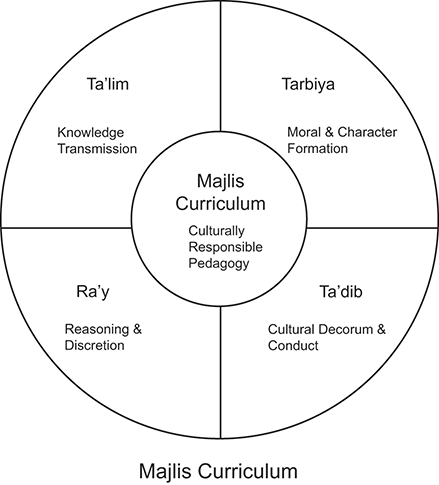
Figure 1 Long description
The circular conceptual framework is titled Majlis Curriculum. The center circle reads Majlis Curriculum – Culturally Responsible Pedagogy. Surrounding it are four equal quadrants labeled: Ta’lim (Knowledge Transmission), Tarbiya (Moral & Character Formation), Ta’dib (Cultural Decorum & Conduct), and Ra’y (Reasoning & Discretion). The diagram presents these four components as integrated pillars of the Majlis Curriculum model.
3.1 What’s Majlis Got to Do with It?
Considering its collaborative, interactive, and community-centred nature, the Majlis could serve as a conceptual framework for teacher training in GCC countries. It offers a praxis to adopt global practices while preserving national and cultural identities. For instance, by leveraging the Majlis’s inclusive and dialogical nature, institutions can create spaces that cultivate cross-cultural understanding, promote positive relationships, and prepare individuals to navigate the complexities of our globalized world (Al-Kawari, Reference Al-Kawari2016). The concept of Majlis, which emphasizes the importance of inclusive, respectful, and neutral dialogue, can serve as a framework for fostering such intercultural interactions within higher education institutions. Majlis-inspired practices, such as facilitating open discussions, recognizing diverse perspectives, and promoting active listening, can create an environment that encourages cultural exchange and mutual understanding derived from the Arabic intellectual landscape. The impact of the majlis on education in the GCC countries is multifaceted. It serves as a hub for community engagement, where local issues, including educational concerns, are discussed and addressed. This allows for a direct connection between the community and educational institutions. It provides a platform for exchanging ideas and ensuring that the needs and aspirations of the local population are considered in developing educational programs and policies.
The Majlis, also known by other names such as Al-Diwaniya (reception hall) and Al-Mudhafah (a place for hospitality), serves as a gathering space. The term Majlis, predominantly used in the Arab Gulf countries, has a dual and ambivalent meaning: it can suggest a domestic setting while at the same time referring to formal governmental venues, such as Al-Majlis Al-Qadhaai (Judicial Majlis) and Al-Majlis Al-Watani (National Majlis). Therefore, the Majlis is a central element of Arab Gulf cultural heritage, symbolizing a household’s involvement in public affairs and reflecting its intellectual engagement in the sociopolitical landscape:
The majlis is a crucial element of Qatari civil society, as well as a means for the government to track public opinion. A great deal of consensus-building takes place in these informal gatherings, which promote discussion of political and economic topics, while also cementing tribal and social relations … some Qataris consider majlis meetings important enough to be formalized as part of the political apparatus, with the amir’s majlis meeting weekly and with other shaykhs holding regular majalis to hear citizens’ grievances.
This space articulates the perspectives of its participants and has been integrated into the collective consciousness of the GCC. It can be analogous to notable historical spaces such as Socrates’ Agora, Kierkegaard’s Frederiksberg Gardens, or the Salons of eighteenth-century France. Thus, the Majlis emerges as a methodological framework and a discourse within the GCC culture that critically examines contemporary contentious issues:
The Majlis determines the community ethos and entails a sense of membership. True to its name, it is a meeting of the like-minded where both ideas and attendees are well-seated. Majlis, therefore, regiments identity as it influences people’s behaviour and attitude to life. Hence, reconciling Majlis with the public sphere, where foreign and modern cultures and values seem to be increasingly imported, internalised, and bound to dominate, is essential.
Majlis is invoked first because of its cultural relevance and social context to learners in the Arab Gulf countries. It is a traditional gathering space where community members engage in discussions, share knowledge, and exchange ideas. Second, this hospitable and dialogical nature fosters critical engagement and inclusivity. Third, it provides a holistic and problem-solving site that can be aligned with the principles of Tarbiya (character development), Ta’lim (formal education), Ta’dib (decorum), and Al-Ra’y (rational thought/liberal arts), to promote a well-rounded educational experience. Fourth, Majlis’s Shura-oriented positioning nurtures an environment that values diverse perspectives and advances intercultural interactions. In effect, the Majlis curriculum aims to equip students and educators with a set of concepts and skills that are pertinent to their cultural heritage, invoking a culturally responsible pedagogy that prepares them for intercultural challenges in an increasingly globalized world. Overall, it seeks to create a more inclusive and participatory educational framework that respects and integrates the unique cultural context of the Arab Gulf region.
The Majlis curriculum is an effort to address how the Arab Gulf States can account for ongoing epistemic disparities by establishing a synergy between the seemingly incompatible Global North and South, terms that are ‘meant to loosely distinguish the northern and southern hemispheres, affluent and marginal nations and communities obviously do not line up neatly within this geographical frame’ (Mohanty, Reference Mohanty2003, p. 505). It contends that local epistemic supplies can withstand the claim of potential intercultural dialogical shortages without recourse to Western or Eurocentric storehouses of ideas. This Element effectively contributes to Global Citizenship Education (GCE) studies in the Gulf Cooperation Council (GCC) region and demonstrates an increasing interest in raising awareness of responsible citizenry. The GCE strives to create tolerant, accommodating, and fair-minded societies. The proposed conceptual framework of the Majlis curriculum promotes the region’s cultural and Islamic imprint and contextualizes liberal arts aspects of the internationalization of education.
3.2 The Majlis Curriculum: A Shift into the Quadripartite Structure
This discussion begins with the assumption that we do not know what constitutes teacher education in Arabiya. Then it seeks to find out, by briefly examining its semantic and etymological contexts, what the substance and purpose of education is or is expected in the region. Education in the Arab world has often been conceptualized as a triangular-based pyramid that mainly seeks to discover and disseminate viable knowledge and the use thereof, and to assess its production and acquisition through foundational components. The three main components of the Islamic view ingrained in Arab education are Tarbiya (comportment), Ta’lim (teaching and learning), and Ta’dib (decorum and responsibility). The closest Arabic word for education is Ta’lim, which generally refers to helping a person to learn and acquire knowledge. However, Ta’lim in Arabic means to leave a print or a mark on something. Therefore, the Islamic epistemology of education offers its own comprehensive lexicon that includes three concepts: ‘tarbiya, bring up; ta’dib, discipline; and ta’lum, educate. Tarbiya refers to leading people to maturity; ta’dib means accepting and performing communal and ethical conduct; and ta’lum is the act of receiving knowledge’ (Risha, Reference Risha2015, p. 25). The epistemological boundaries of Arabic and Islamic education are established in a tripartite structure. Each of these terms has been the subject of extensive debate among Arab scholars, who have employed them to define education within Islamic intellectual tradition.
This tripartite structure emerged from the classical Islamic tradition. For instance, in his Muqaddimah, Ibn Khaldun associates Ta’lim with Ta’dib: ‘This is the case with students, whose occupation it is to study and to learn from teachers and religious leaders, and who constantly apply themselves to instruction (ta’dib) and education (ta’lim) in very dignified gatherings’ (p. 170). He then argues that self-restraint (ta’dib) was an Arab Bedouin virtue that was encouraged and endorsed by Islamic law: ‘When the Muslims got their religion from Muḥammad, the restraining influence came from themselves, as a result of the encouragement and discouragement he gave them in the Qur’ân. It was not a result of technical instruction or scientific education’ (p. 170). What would later become an inseparable component of education was initially a fundamental Islamic principle: ‘Umar said, “Those who are not disciplined [yuadabah] by the religious law are not educated [adabah] by God.” Umar’s desire was that everyone should have his restraining influence in himself. His certainty was that Muḥammad knew best what is good for mankind’ (p. 170). Adabah is the verb form that corresponds to the noun Ta’dib. Ibn Khaldun seems to argue that Ta’dib started as a religious principle, and then points out that, with the erosion of religious character and the advent of civil societies, it became part of the Islamic educational code. Similarly, in Section Five of the Book of Knowledge, ‘On the Proprieties of the Student and Teacher’, Al-Ghazali explores the adaab (plural form of adab) that the scholar should acquire in his/her pursuit of knowledge, which could be provoked by Rihla (Abdul-Jabbar, Reference 75Abdul-Jabbar2023b).
The Arabic intellectual heritage is rooted in an Islamic understanding of teacher education that focuses on three elements: personality growth (tarbiya), the presence of immediate collective guidance and feedback in a communal and ethical learning environment (ta’dib), and verifiable means of acquiring knowledge (ta’lim). Tarbiya extends far beyond the narrow confines of traditional academic instruction to encompass the holistic development of the individual and address the spiritual, emotional, physical, and intellectual dimensions of human experience. At the heart of this broader understanding of education lies the concept of Ta’dib, which refers to cultivating moral and ethical character within the individual. Tarbiya carries a broader meaning that incorporates an individual’s upbringing, education, and character development, including physical, intellectual, moral, and spiritual aspects. On the other hand, Ta’dib refers explicitly to cultivating good manners, etiquette, and moral conduct, focusing on refining behaviour and instilling social and ethical values. An example of Ta’dib in practice is the emphasis in Islamic schools on character development and moral education. In contrast, Tarbiya encompasses the overall process of nurturing the child in all aspects (Ayub et al., Reference Ayub, Hamzah and Razak2020). The two elements are intricately linked, with Tarbiya providing the broader framework for holistic education and Ta’dib serving as a crucial component focused on refining character and behaviour. Bagheri and Khosravi (Reference Bagheri and Khosravi2006) indicate that Ta’dib ‘refers to ethical and social aspects of education, without including instruction in the sciences and the like’ (p. 93). Therefore, the concept of Ta’dib refers to an unwritten component that aligns with the notion of the hidden curriculum. Ta’ dib comes from the root word Adab, which signifies Islamic norms of behaviour and means both good manners and literature. Rosenthal (Reference Rosenthal2007) remarks on that inseparable relationship between Adab, knowledge, and education: ‘The combination of ilm with adab on the one hand and with talim (instruction) and taallum (study) on the other’ (p. 251). Conversely, Tarbiya, a cultural attribute and core ethical value of Islam, correlates the pursuit of knowledge with the acquisition of appropriate behaviour.
Medieval madrasas depended on congregational face-to-face education, including tutorials, to establish the relationship between students and teachers anchored in Tarbiya, Ta’lim, and Ta’adib. Therefore, the idea of Majlis (a form of gathering) as a pedagogical site has been an integral component of Arabo-Islamic educational history. MujalasatFootnote 9 and Majlis, the predominant educational models during this period, were literary salons that emerged in ninth-century Baghdad. These gatherings ‘offered edification, entertainment, and escape for middle- and upper-class men and women; they also served as a means of building one’s public reputation, establishing social status, expanding social networks, and socializing the youth’ (Ali, Reference Ali2010, p. 3). Majlis, therefore, refers to a space, typically within a mosque, where teaching and learning take place. However, later, the term acquired a space where individuals would sit and receive knowledge, thus negating the mosque’s role as the only central institution of learning in early Islamic culture:
The so-called maglis figured prominently in the Abbasid court culture. Maglis literally means ‘place where one sits down’, and the caliph and his entourage regularly organized sessions where he and his boon companies would invite the intellectual and cultural elite to discuss the prominent topics of the day
Learning at this stage involved a rigorous memorization process to develop comprehensive knowledge, which was both conversational and disputatious. Islamic studies sometimes require years of commitment and movement between scholars to ensure mastery of one area of knowledge. Such a pursuit guarantees Tarbiya in terms of growth and maturity. The tripartite model seems to offer, to a large extent, a common, if not favourable, epistemological framework for education in the Arab world. Consequently, any educational endeavour is inherently valued for its capacity to foster these approaches to knowledge. The integration of these three parts continues to be instrumental in contemporary Arab societies, where teacher education is viewed as a socialization process intricately embedded within Islamic values and ways of acquiring knowledge. In Arab countries such as Jordan, Lebanon, Iraq, Kuwait, Oman, the United Arab Emirates, Libya, and Egypt, the Ministry of Education is called Wizarat El-Tarbiya; in Morocco and Algeria, it is referred to as Tarbiya Watania, which is Arabic for national education. The word Wizarat means ministry, whereas the word Tarbiya takes precedence over the word Ta’lim, which denotes the act of acquiring knowledge. This Element contextualizes the tripartite structure by adding an additional component that helps situate the existing three elements within the broader framework of international education, which has informed teacher education programs in Arabia. Adding Al-Ra’y as a conceptual structure identifies and integrates the essential lexicon and pedagogical terminology that equips pre-service teachers with praxis from Islamic and Arabic thought that institutes culturally responsible teaching and resonates with liberal arts. Such pedagogy allows teachers to infuse local episteme into the liberal arts.
In effect, the Majlis curriculum is structured around four foundational components. Each represents a distinct dimension of a holistic model of Islamic and liberal arts synthesis. Table 1 demonstrates how each component extends beyond its traditional meaning to align with liberal arts and internationalization.
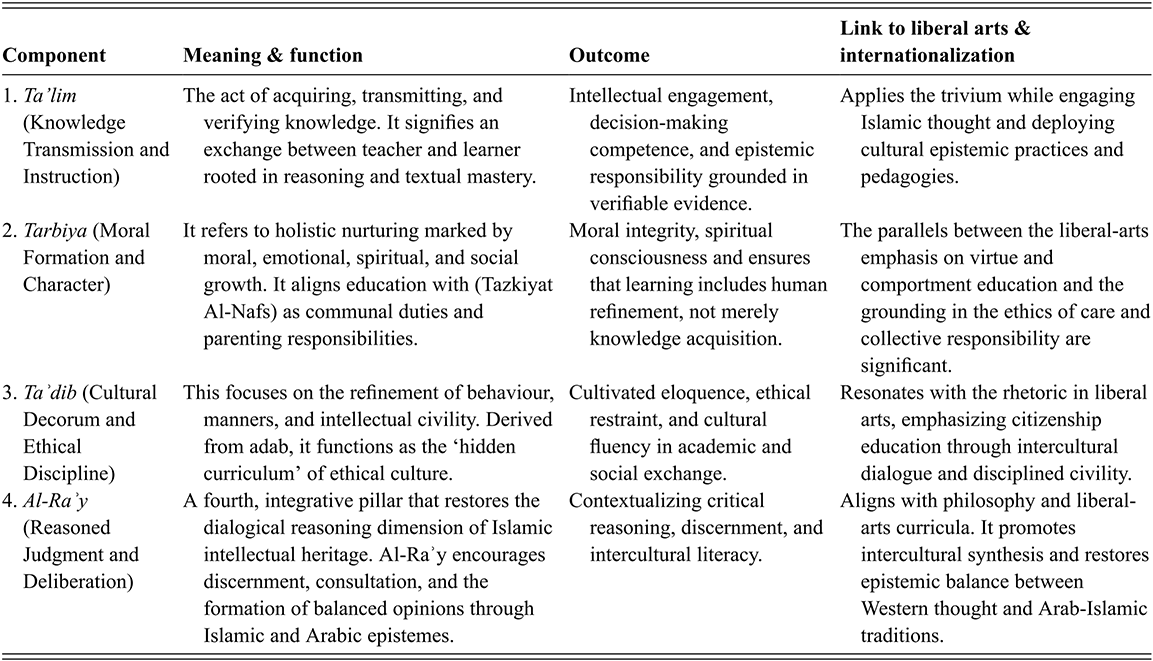
Table 1 Long description
The table outlines four components of the Majlis Curriculum: Ta’lim (knowledge transmission), Tarbiya (moral formation), Taʾdib (ethical discipline), and Al-Raʾy (reasoned judgment). Each component is described in terms of its function, expected outcomes (such as intellectual engagement, moral integrity, and intercultural literacy), and its alignment with liberal arts traditions, including reasoning, ethics, rhetoric, and philosophy.
The movement towards internationalized education necessitates a transition from the tripartite framework of Arab education, traditionally encompassing Tarbiya, Ta’lim, and Ta’dib, to a quadripartite structure that integrates a fourth component, Al-Ra’y. This shift is increasingly vital to fostering a synthesis between liberal arts education, promoted by international education systems that have become normative, asserting their own curricula and dominant lexicons. Addressing this semi-hegemonic or unevenly balanced approach to internationalization, including Al-Ra’y, grounded in Arabic intellectual and Islamic epistemological traditions, restores balance and cultivates epistemic synergy. This addition equips pre-service teachers to engage in critical and rational thinking through tools embedded in their cultural and intellectual heritage rather than relying on frameworks derived from Western paradigms. Such an approach not only counters the prevailing dominance of Western frameworks in academia but also reclaims and revalidates the capacity for intellectual engagement within the Arab-Islamic tradition.
Al-Ra’y, as a fourth component, is positioned within a balanced epistemic framework where the Majlis curriculum is already reflected in moral education, civic dialogue, and deliberative reasoning. The Majlis curriculum strongly aligns with modern educational practices across the GCC. For example, the Qatari Majlis tradition remains a forum for civic dialogue, where the intergenerational sharing of wisdom and cultural heritage aligns with educational goals (Abdul-Jabbar, Reference Abdul-Jabbar2023a). In the United Arab Emirates, Tarbiya holds a central place in the national curriculum, implementing Tarbiya Al-akhlaqiyyah by emphasizing the state’s focus on moral education as the foundation for citizenship and civic responsibility. Additionally, a digital platform for school principals was introduced to empower educational leaders to promote Tarbiya and integrate moral and ethical values into school practice (Al-Tarbiya lil-Muwatana, Reference lil-Muwatana2019). In Saudi Arabia, the course Al-tafkir Al-naqid was added to the school curricula to encourage students to engage with practical deliberation within culturally rooted epistemologies (Independent Arabia, n.d.). In Oman and Kuwait, the enduring Majalis and Diwaniyyat gatherings exemplify Ta’dib in practice, where knowledge is exchanged with restraint and rhetorical civility (Segal, Reference Segal2012; Rabi, Reference Rabi2002). These contemporary examples demonstrate that conceptualizing the Majlis is not merely a nostalgic endeavour but a pedagogical model adaptable to current educational reforms in the Gulf region. Collectively, these examples demonstrate that the Majlis structure already exists in practice, awaiting the theoretical framework that includes Al-Ra’y to extend these traditions towards a structured curriculum.
4 Al-Ra’y, Early Islamic Thought, and the Foundations of Critical Pedagogy
The term Islamic thought primarily refers to an examination of the epistemological, metaphysical, and ethical foundations of Islam. It ‘deals with a range of areas … from the foundation texts to law, theology, philosophy, politics, art, and mysticism as well as key trends of Islamic thought in both the pre-modern and modern periods’ (Saeed Reference Saeed2006, vii). More specifically, at least within the confines of this Element, it denotes the Islamic intellectual tradition as defined by the importance of Aql (intellect): ‘It also suggests a departure from “Taqlid,” the uncritical adherence to a particular school of thought or authoritative sources … The Quranic exultation of “Aql” as a rare commodity that defines “ulu al albab” [people of intellect]’ (Abdul- Jabbar, Reference Kh2019, p. 382). This emphasis on Aql took centre stage after the Prophet’s death. Knowledge was prioritized, with the Quran continuing as the primary source, and the Prophet’s sayings and actions were referenced when the Quran lacked information. When neither the Quran nor the Prophet’s sayings addressed a particular matter, the companions would decide as the Prophet would have in similar situations. This led to the formation of the sunnah, an ethical system based on the Prophet’s habitual practices and social interactions, which is a vital source of Islamic law and thus essential to the Islamic tradition: ‘The Ethical system was developed before the Doctrinal, and it has been able to hold the leading position up to the present day’ (De Boer, Reference De Boer1903, p. 39). Many Islamic schools claim to propagate their objectives in accordance with sunnah, and the term sunnah appears on nearly every website belonging to a Sunni Islamic school. No modern discussion of a controversial issue or doctrinal disagreement should occur without engaging with the sunnah for guidance. The educational issue to note and address here is that Muslims receive a glimpse of the end product, the hukm, but rarely examine the process itself that leads to the verdict. Students of Islamic studies may be acquainted with the interpretive methods and reasoning skills derived from the Islamic intellectual tradition, which should be included in a culturally responsible pedagogy. However, such methods are seldom engaged with or thoroughly explored outside the academic constraints of theology, particularly within the broader Humanities and Social Sciences fields in higher education.
4.1 The Emergence of the Two Schools of Thought
The first companions were close followers of the Prophet who observed his practices and pronouncements and were able to make relevant and practical decisions after his death. The lack of radical doctrinal differences during these formative years was significant. Similarly, the second-generation scholars’ ability to return to trustworthy and knowledgeable companions for affirmation and counsel dispelled the urgency to write down every ruling and hadith, let alone codify, report, and categorize their investigations into written work. That is not to say that their legacy was exclusively oral. This disposition succeeded until, over the following years, rivalries and contentions emerged among Muslims. Disagreements prevailed among scholars, with differences of opinion tinged by a tendency towards unsolicited innovations and fatwas (dispensations). These were accompanied by an abundance of unwelcoming and hostile incidents against scholars (Taftazani, Reference Al-Taftazani1987, p. 10). The need for a method to respond to this epistemic crisis was urgent.
In response, two schools of thought emerged and dominated the early Islamic scene after the death of the Prophet: Ahl-Al-Ra’y and Ahl-Al-Hadith. They aimed to explore which source of authority should be used to determine a hukm (legal decision) in situations where no direct hukm could be derived from the Quran or the Prophet’s practices. Similarly, Saeed (Reference Saeed2006) refers to distinct schools of Islamic thought emerging with the rise of written scholarship on Quranic exegesis: ‘Two different approaches to exegesis became crystallized – that which emphasized “tradition” (tradition-based exegesis, tafsir bi alma’thur) and that which focused on “reason” (reason-based exegesis, tafsir bi al-ra’y)’ (p. 27). More specifically, the first response to the epistemic crisis was by jurists who adhered to what became known as Ra’y,Footnote 10 substantiated by the Quran and Sunna [the Prophet’s legacy] but determined mainly by individuals with scholarly authority. Al-Ra’y’s school was an attempt to respond to the epistemic crisis with a more malleable approach than what they considered the unbending and firm Al-ma’thur or hadith school. Both schools were, in part, responses to random cases of forgery and indeterminacy, and thus strove to create a rigorous verification system to measure and determine the authenticity of a hukm and to ensure consistency.
Ahl Al-Hadith, the adherent of the Hadith tradition in Medina, is a school of thought that emerged during the eighth and ninth centuries. It advocates for the Quran and Hadith as the only acceptable sources of authority, but often takes on controversial issues: ‘Thus they upheld the conclusions of their own methods of legal reasoning in the face of contradictory hadith’ (Brown, Reference Brown1996, p. 13). Over the years, however, ‘the differences between the two groups diminished, as a synthesis between the two forms of legal jurisprudence was achieved’ (Hennigan Reference Hennigan, Fleet, Krämer, Matringe, Nawas and Rowson2009, para 2). One of the various reasons for this divergence in opinion between Ahl-Al-Hadith and Ahl-Al-Ra’y is sociocultural. The Ahl-Al-Hadith School was the product of Al-Medina, which enjoyed relative stability as the birthplace of the first Muslim society, with many of the Prophet’s companions. Al-Medina was fairly homogeneous, with an established Islamic tradition nurtured when the Prophet immigrated and established it as a polity. In sharp contrast, Iraq, in this particular case, was known for its ethnic diversity. However, the coexistence of people of different backgrounds living together, colliding, blending, and learning from one another made the scene more prone to diasporic challenges. In other words, in the formative years of the growing Islamic civilization, Al-Medina represented Islam’s throbbing heart and centre. In contrast, Iraq represented its peripheries, at which cultures often cross: ‘Most of the problems that confronted the Muslims living in the time of Revelation were bound to differ from those of the coming generations in the wake of the interplay of Islam and other neighbouring cultures with which they came in contact’ (Hasan, Reference Hasan1967, p. 47). The emerging diasporic condition necessitates a Muslim generation that is Al-Ra’y-trained in critical thinking in order to navigate its intercultural realities.Footnote 11
Al-Medina and Al-Kufa were the two main centres of Islamic scholarship during this period. One of the leading figures in Medina was Malik, who left Medina only once, for a pilgrimage to Mecca; therefore, his ‘attachment to the city of the Prophet determined his legal views … it was the Medinans, he argued, who had best preserved the Islam of the Prophet and his companions’ (Morrissey, Reference Morrissey2021, p. 34). Meanwhile, Kufa was developing into a vibrant hub of Islamic scholarship. Established in 638 and chosen as the home of the fourth caliph in 656, it played both an intellectual and political role: ‘Kufa was increasingly becoming home to non-Arabs – particularly those from the lower classes of the conquered peoples of Iran and Iraq – who were moving to the city, converting to Islam’ (Morrissey, Reference Morrissey2021, p. 35). The Ahl Al-Ra’y school appears to have emerged from an intercultural encounter, as Islam expanded beyond Arabia into Iraq and beyond, clashing and merging with other cultures and ethnicities.
It should be noted here again that, during Umar’s time, the second Caliphate, Islam expanded, and people of different ethnicities either lived under Islamic rule or joined Islam. This diversity required a diversification of knowledge and the formation of an Islamic thought that is interculturally active and accommodating. Ra’y is, therefore, an expert’s opinion that applies a set of critical thinking methods and prioritizes social wellness and benefits over strict adherence to a specific law or a particular text. This ethically coded tradition continued to be practised with the spread of Islam into other non-Arab territories, which marked the beginning of Islam in diaspora. Encountering different cultures, Muslim scholars expanded and re-oriented the rules of engagement: what do Muslims do in cases of remote areas and strange lands concerning issues for which the Quran left no instructions and the Prophet’s sayings and lifestyle offered no precise directions? To meet these challenges, Muslim thinkers offered a framework for individual cases and decisions; therefore, an interpretive tradition presented itself. This formative phase of the development of Islamic thought continues to be relevant today.
This application of Al-Ra’y as a culturally responsible model in teacher education is not meant to be loosely exercised. It is still bound by rational thought and adherence to Maqasid Al-Shariah (objectives of Islamic divine rulings), which are most succinctly defined by the twelfth-century Muslim scholar Imam Al-Ghazali as five principles: ‘to preserve religion, life, intellect, lineage and their possessions’ (Reference Al-Ghazali1993, p. 174). Similarly, Jurist Imam Abu Ishaq Al-Shatibi defined maqasid al-shariah as ‘the attainment of good, welfare, advantage, benefits and warding off evil, injury, loss of the creatures’ (Reference Al-Humaidan1992, p. 176). Recent studies have drawn attention to establishing connections between religious practices and universal values in addressing social challenges. Such studies explore Maqasid Al-Shariah as conducive to Muslims’ Maslaha, a point in which the objectives of Shariah are reasonably met without jeopardizing Muslims’ welfare or public interest (Duderija, Reference Duderija and Duderija2014). How do we fairly represent the Prophet’s legacy reasonably when addressing changing circumstances? Early Islamic thought showed the possibility and validity of contextualized thinking when reaching a ruling and, in doing so, deconstructed the one-size-fits-all dogmatic appeal.
4.2 The School of Al-Ra’y, Analytical Reasoning, and Pedagogical Implications
Abu Hanifa Nu’man (699–767), one of the founders of the Ahl Al-Ra’y school, was known to favour reason in theological deliberations, a trait that later marked the Hanifite School. Ahl is Arabic for people of or advocates of; Al- is an Arabic definite article meaning the; and Ra’y means common sense or rational discretion. Umar ibn Al-Khattab, the second Caliph and a close companion of the Prophet, appears to have initiated this tradition of deliberation. As a pragmatic enthusiast and advocate for social justice issues, he was diligent in understanding. He proceeded with deliberation to express his opinions on the problems that the Companions confronted and discussed. For example, when Umar suspended the Sharia-prescribed punishment for theft due to a famine, Abdullah ibn Masoud (594–653) followed his approach to reasoning, deduction, and informed opinion in situations for which no texts were available to serve as guides. Like Umar, therefore, Abdullah bin Masoud relied on his own discretion and consultation. Umar sent Abdullah ibn Masoud to teach the people of Kufa. As a jurist, his movement was broad, and his pupils followed his approach. The Ibn Masoud School in Iraq was considered the nucleus of the school of informed opinion (Al-Qatan, Reference Al-Qatan1989, pp. 289–290). The members of the school engaged in speculative thinking because of the large number of different cases presented to them, to the extent that they developed a habit of anticipating an issue before it occurs and pondering how to deal with it in advance: ‘If it were such and such’ (Al-Qatan, Reference Al-Qatan1989, pp. 289–290), they would ask, and, leaving no stone unturned, they would then propose a specific approach to guide this hypothetical situation.
It seems that Al-Ra’y focused more on what is called Maqasid Al-Sharia’ (the higher ideals and objectives of Islamic law), subjecting its application to common sense and rational thought instead of mere adherence to Sharia rules. The point of Ahl Al-Ra’y is to fulfil the intended aims of Al-Sharia’ and not just mimic its rulings, in effect tending to relegate general statements and absolute rulings into secondary positions. For example, the ninth-century Persian translator and thinker Ibn al-Muqaffa’ discarded the notion of ‘total law’, which, he thought, would make religion inflexible for ordinary people (Hasan, Reference Hasan1967, p. 62), since applying such one-size-fits-all practices negates social justice and public welfare. However, Ra’y does not exist in a vacuum without recourse to reason and argumentation or a solid understanding and recognition of available Prophetic texts and practices. Therefore, Ra’y implies independent thinking aligned with sound judgment, as Al-Zuhri observes: ‘What a fine minister of knowledge is sound opinion (al-ra’y al-hasan)’ (Al-Darimi, Reference Al-Darimi1930, p. 92). Likewise, Ra’y was ultimately defined as ‘a decision which the mind arrives at after thinking, contemplation and genuine search for truth in a case where indications are conflicting’ (Ibn Qayyim, n.d., p. 23). Both the Quran and the Prophet’s life are abundant with instances in which independent thinking is encouraged:
The Qur’an itself time and again exhorts to deep thinking and meditation over its verses. It justifies the exercise of reason and personal opinion in legal matters. The Prophet himself set examples by accepting the opinion (Ra’y) of the Companions in the matters where he was not directed by the Revelation. On the occasion of Badr, to give an instance, the Prophet chose a particular place for the encampment of the Muslim forces … When the Companion suggested another place the Prophet told him: ‘You have made a sound suggestion (laqad asharta bi’l-ra’y)’.
In this context, Ra’y is also the outcome of Shura (Arabic for consultation), which is central to Islamic thought, such that one chapter of the Quran bears that title. Shura is the process by which one consults those with preponderant minds and informed opinions until the right decision becomes clear. This consultation process happens in matters where there is no direct command from God or explicit instruction from the Prophet, and usually involves the reinterpretation or modification of a legal text. Shura also refers to discussions among experts and those who will be affected by the final decision in order to resolve a particular issue. In an educational context, Shura refers to critical discussion, frequently used in class as a teaching strategy to help students think about the materials and information they receive. Therefore, Muslim and Arab high school students unknowingly exercise Shura almost every day in class, perhaps unaware that they are practicing a critical thinking method that is distinctive to Islamic thought in general and Al-Ra’y in particular. Al-Ra’y was often the outcome of a discussion that took a dialogical form: ‘Legal conclusions derived through Ra’y were often elicited employing a question-and-answer dialogue characterized by the use of the terms qultu (I said) and qala (he said)’ (Hennigan, Reference Hennigan, Fleet, Krämer, Matringe, Nawas and Rowson2009, para 1). The Al-Ra’y school presupposes the exercise of Shura and experts’ discernment to improve Muslims’ affairs, an exercise that can be central to liberal arts education.
Pedagogically, while critical pedagogy challenges students’ presuppositions and worldviews, it does not necessarily equip them with the tools needed to think independently. For instance, we instruct our students to avoid stereotypical representations and to identify sociopolitical examples of racial profiling, but we rarely explain that these generalizations stem from faulty inductive reasoning. In this way, critical literacy supports critical pedagogy by identifying discriminatory and biased Ra’y and providing practices to help students develop a solid one. Similarly, although students are taught to analyse literary pieces, Elder and Paul argue, ‘How many students can explain what analysis requires? How many have a clear conception of how to think it through? Which of our graduates could complete the sentence: “Whenever I am asked to analyze something, I use the following framework …”’ (Reference Elder and Paul2012, p. 4). For instance, students learn to assess an assignment by following existing rubrics but do not differentiate or modify, let alone create, their own rubrics. Analytical thinking involves examining and identifying purpose, questions, assumptions, information/data, a specific point of view, relevant concepts, interpretation/inferences, and implications/consequences (Elder & Paul, Reference Elder and Paul2012, pp. 12–13). Like Ra’y, analytical thinking is a process of verification that dismisses subjective observation and encourages consensus and inferential reasoning, characteristic of the process of internationalizing education. For example, Ahl Al-Ra’y valued analogical reasoning (qiyas) and sought to derive legal and ethical principles through rational thought, suggesting that truth is accessible through human intellect and experience rather than divine revelation. This approach allows for multiple interpretations and a degree of flexibility. However, this is not a disposition towards scepticism; rather, it is a spirit of inquiry that solidifies rather than negates the pursuit of universally accepted truth while considering different cultural and intellectual contexts. Examples such as these will be examined in the subsequent section.
5 Contextualizing Liberal Arts Teacher Education through the Practices of Al-Ra’y
Most teacher education programs are shaped by conventional research models, with teachers often positioned as consumers rather than knowledge producers (Hennessy et al., Reference Hennessy, Kershner, Calcagni and Ahmed2021, p. 22). Significant barriers to reform persist, including the quality of teacher education programs, particularly regarding their relevance to the learning environment. A critical factor in addressing these challenges is the principle that ‘local contextualization is key’ (Hennessy et al., Reference Hennessy, Kershner, Calcagni and Ahmed2021, p. 22). This disconnection calls for aligning teacher education with the specific cultural, social, and educational contexts to which it applies, which registers with culturally responsible teaching. The Majlis curriculum proposed here injects Al-Ra’y practices into teacher training programs.Footnote 12 The resulting pedagogical approach generates a shift into dialectic literacy that advocates for liberal arts education. This curriculum aims to achieve the following objectives:
(1) Reintroduce Arabia-oriented critical thinking practices that align with liberal arts tradition. Students’ learning outcomes resonate with regional cultural values, contributing to the education of future generations and preserving cultural heritage instituting culturally responsible teaching.
(2) Establish a locally grounded liberal arts element that contributes to the internationalization of education in the region. Students’ learning outcomes enhance students’ capacity to engage with foreign ideas, critically evaluate them, and substantiate justifiable claims.
(3) Incorporate elements informed by intercultural Ra’y encounters. Students’ learning outcomes are geared towards developing broader intercultural competencies.
(4) Foster an educational approach that negates doctrinal directives and encourages critical engagement. Students’ learning outcomes are to promote the ability to navigate dichotomies and mitigate dogmatic thinking.
(5) Advance education beyond memorization and traditionalism. Students’ learning outcomes emphasize the application and interpretation of concepts within a meaningful cultural and intellectual framework.
The tools proposed in this section are designed to be integrated into the training of prospective teachers in the Arabian region. This approach ensures that cultural heritage plays a part in informing the learning process. It renders cultural heritage a medium for learning and an object of knowledge. This paradigm, teaching culture as an integral element of pedagogy, extends beyond the principles of culturally responsive teaching to what can be termed culturally responsible teaching. It emphasizes the responsibility of teachers to serve as custodians and advocates of local culture, not merely as an endearing exhibition of abstractions but as a repertoire of practical applications. This approach enables culture to become an integral part of the internationalization of the education process, to avoid slipping into tokenism, and to be pedagogically implemented in the classroom as a liberal arts component.
This section presents these Aliyat tools in a structured format resembling a glossary, a reader’s guide, or a lexicon of key terms. This approach is designed to offer clear explanations, provide illustrative examples, and furnish detailed insights while also organizing the concepts into distinct sections. By compartmentalizing the material in this manner, this section ensures clarity and accessibility, allowing for a systematic and structured exploration of each concept.
5.1 Qiyas: Analogical Reasoning
Asking how or when the concept of analogy (qiyas) emerged in the Arabian Peninsula may not be entirely fair and appropriate. One cannot precisely name a specific time at which the use of the mechanism of analogy began, whether in its general sense or the sense of analogy based on religious texts, because analogy is a natural intellectual process. It is well known that the Arabs, and later the Muslims, used it as others did and still do. It is also common sense to argue that jurisprudential practice was the field most likely to apply this mechanism in any practical and documented manner. It was used not only for legislative purposes but also to provoke debates among jurists. Such practices caused the nature of qiyas to evolve in terms of benefits, types, methods, validity, and legitimacy. Thus, it claims no dispute, as the Muslim scholar and student of al-Shafi’i did, that qiyas have been a source of Islamic legislation since the time of the Prophet; Al-Muzani highlights the centrality of qiyas in Arabic thought:
The jurists from the time of the Messenger of God to this day and beyond have used analogies in jurisprudence for all rulings related to their religion. They unanimously agreed that what is analogous to the truth is truth, and what is analogous to falsehood is falsehood. Therefore, it is not permissible for anyone to deny qiyas because it compares and represents matters.
Qiyas was a method extensively used by Ahl Al-Ra’y. Since Ra’y considers social circumstances, current contingencies, and the spirit of the law, it initiates a genuine response to the questions of what the Prophet would have done or what the Quran has said in this particular case in a way that assists Muslims and their families:
The most reliable was thought to be qiyas, or analogy, a basic form of which we’ve already encountered being used by the caliphs. This was the method of deriving laws by seeking out the underlying rationale (‘illa) of comparable rulings found in the Quran … for instance, it was generally agreed that date wine was also forbidden, the underlying rationale in both cases (grapes and dates wines) being that drunkenness was sinful.
Therefore, Qiyas is the exercise of analogical reasoning with an eye on the teleological perspective. It focuses more on the degree of correlation between two situations, determines which previous situation is closest to the one at hand, and determines the solution based on correlation:
Qiyas is a comparison between two parallels because of their resemblance … [which] is not always defined. One may differ in its determination. Qiyas indeed is an extension of a precedent. Its scope, therefore, is more limited than that of Ra’y. In Ra’y we find the emphasis on the actual situation, while in Qiyas the emphasis is on abstract analogy, whatever the situation may be.
Qiyas is predicated on the use of logical thinking, which has developed into a tool to determine law through critical reflection. It is, therefore, more predicated on an analogical method of reasoning, whereas Ra’y is more reliant on a specific predisposition:
The more one grew accustomed to employ Qiyas in grammatical and logical researches, the more readily could he include this principle in the institutes of jurisprudence, whether by way of reasoning from one instance to another, or from the majority of instances to the remainder (i.e. analogically).
Qiyas, however, is still recognized as an instrument that ranks fourth after the Quran, Hadith, and Ijma’ (consensus) and is sometimes prioritized in the context of moral guidance or unprecedented situations:
We find in Ibn al-Muqaffa’ an example of this limitedness of Qiyas. He illustrates it by the following example. Suppose a man consults you as to make a suggestion whether he should speak the truth or tell a lie. You would certainly suggest him that he should speak the truth. Again he asks you whether on every occasion, say, when a person who wants to kill him, should he speak the truth and give the pursuer the trail of the fugitive? Here Qiyas demands that he must speak the truth but Ra’y suggests to break the law and not to speak the truth but to do what is generally beneficial.
Analogies are useful pedagogical tools because they illustrate complex ideas by providing relatable incidents and examples resembling the idea or situation under discussion. The eighteenth-century philosopher David Hume refers to the importance of analogical reasoning and its nature:
All our reasonings concerning matters of fact are founded on a species of Analogy, which leads us to expect from any cause the same events, which we have observed to result from similar causes. Where the causes are entirely similar, the analogy is perfect, and the inference, drawn from it, is regarded as certain and conclusive … But where the objects have not so exact a similarity, the analogy is less perfect, and the inference is less conclusive; though still it has some force, in proportion to the degree of similarity and resemblance.
Analogical reasoning is common in real-life situations and used in different academic disciplines and vocations.
High-school teachers often draw comparisons to capture similarities and identify differences, for instance, to teach English and social studies. Encouraging students to engage in analogic analysis of themes, characters, historical figures, and rhetorical techniques is central to classroom activities that involve drawing correlations between characters, chapters, and authors. This process guides students to evaluate the text’s literary merit and formulate conclusions about the value and purpose of the work under study. Qiyas includes this process but extends beyond it to encompass a more profound method of reasoning and analysis. It is worth noting that the term qiyas has deep etymological roots in Arabic, stemming from the verb qasa, which means to ‘measure, to estimate.’ The literal meaning of qiyas suggests an act of measurement, while the second involves drawing parallels and comparing. The term Qiyas is intriguing, as its primary etymological meaning is not to compare but to measure with precision. While it is often used to signify comparison, its foundational etymological root of measurement preconditions other layers of meaning. The duality of the term indicates that Qiyas does not imply a pursuit of similarities, but rather a search for exactness and accuracy. This semantic duality illustrates how, in Arabic, the act is inherently tied to the quest for precision, which is part of the centrality of Haq in Islamic epistemology. It reveals that the role of Qiyas is to serve as a rigorous and methodical process. One definition of qiyas is ‘the extension of a Shar’i ruling from an original case (asl) to a new case because the new case has the same effective cause (illa) as the original case’ (Hossain, Reference Hossain2002, p. 237). Qiyas refers to extending a known ruling to a novel situation based on a shared underlying rationale.
The Ahl Al-Ra’y school techniques remain relevant today as Qiyas continues to be used effectively: ‘Typical techniques of ra’y-based legal discourse included reliance on qiyas (“analogical reasoning”), a fortiori argumentation, and istihsan (“juristic preference”), or appeals to equitable legal principles and customary practices’ (Hennigan, Reference Hennigan, Fleet, Krämer, Matringe, Nawas and Rowson2009, para 1). Additionally, Baggini and Fosl demonstrate the usefulness of analogical reasoning in how lawyers ‘cite precedents in making their cases, they are appealing to arguments from analogy’ (Reference Baggini and Fosl2003, p. 46). Scientists also rely on analogy whenever they discover or observe new phenomena and appeal to theories based upon past experiments (Vosniadou, Reference Vosniadou1995). Similarly, theologians advance the design argument for God’s existence by analogy, such as William Paley’s cosmic watchmaker model, which posits that ‘a watch implies the existence of an artisan, so the universe implies the existence of a divine creator’ (Baggini & Fosl, Reference Baggini and Fosl2003, p. 47). Moreover, Vendetti et al. showcase the importance of implementing analogical reasoning in the classroom: ‘Analogical reasoning is a cognitive underpinning of the ability to notice and draw similarities across contexts. Reasoning by analogy is especially challenging for students, who must transfer in the context-rich and often high-pressure settings of classrooms’ (Reference Vendetti, Matlen, Richland and Bunge2015, p. 100). Analogical reasoning can also scaffold learning by providing students with the required training and examples to make valid comparisons between situations and concepts. Asking students to highlight similarities, notice contrasts, and mark interlinked images, words, and concepts becomes key to fostering critical literacy. Analogical reasoning (Qiyas) is thus the conceptual basis that helps students learn to detect similarities across contexts, observe interrelations among different cultures and school subjects, and develop a capacity for interdisciplinary learning. Including analytic analogy in teacher education training in Arabia supports culturally responsible teaching by integrating Arabic intellectual traditions into modern pedagogy, ultimately advocating for intercultural competencies (Abe, Reference Abe2019). Qiyas, therefore, is a liberal arts element that attempts to measure and value precision, logic, and relevance. This approach not only equips teachers with practical tools for instruction but also contributes to the development of well-rounded learners (tarbiya). It instills a deep appreciation for intellectual heritage and can help pre-service teachers mitigate cultural tensions by establishing common grounds. Thus, differences are reframed as complementary rather than oppositional. By incorporating Qiyas into liberal arts teacher education, educators can support the internationalization of education while remaining rooted in their cultural heritage.
5.2 Isnad: The Architecture of Reliability
Isnad is a fundamental concept in the Arab-Islamic tradition, developed as a process of verifying knowledge. It demonstrates the significance of trust, credibility, and authority in Islamic epistemology. The word comes from the Arabic trilateral root (s-n-d), which means supporting, upholding, sustaining, or attributing. In the context of Hadith studies, isnad is the process of attributing a narration to a series of reliable sources to establish a reliable chain. The method of Isnad evolved from the process of preserving authentic Hadith, which refers to ‘any report or narrative … the “text” of which is ascribed either to the Prophet himself or to one of the Companions, and which is attested to by a chain (or chains) of supporting authorities or transmitters (the isnad)’ (Graham, Reference Graham1977, p. 18). Isnad ensures the validity of ‘a chain of transmitters through which the report is traced back to an eyewitness or at least to an earlier authority’ (Motzki, Reference Motzki and Motzki2004, p. xiii). Isnad is, therefore, a chain of authority that legitimizes a reported event or the process of the dissemination of knowledge, ‘a list of authorities for the report stretching back to the original source, usually a witness to the event or a participant in it’ (Peacock, Reference Peacock2007, p. 8). This list of authorities establishes credibility because the distance between the author and the reported event creates a link of trust, and this chain of transmission verifies a report’s authenticity. This chain is useful to researchers since it traces its causes, sources, or narrators back to its original foundation, which is deemed reliable; something that we can consider Sanad, which literally means something to lean on. The most accurate translation of Isnad depends on context, but it includes:
(1) Chain of transmission:
This is widely used in Hadith studies and emphasizes narrating and verifying reports.
(2) Chain of authorities:
This highlights the role of the narrators as authorities in the report. It serves as a crucial mechanism for the transmission and authentication of knowledge.
(3) Referencing or attribution:
Incorporating Isnad-based activities can be a valuable pedagogical tool in high school education, because it offers students a unique opportunity to engage responsibly with Islamic intellectual history while developing their critical thinking and research skills.
Exposed to the intricacies of Isnad, students gain a deeper understanding of the importance of verification and the role of scholarly scrutiny in addressing daily challenges (Engkizar, Muliati, Rahman, & Alfurqan, Reference Engkizar, Muliati, Rahman and Alfurqan2018). Furthermore, Isnad can also combat the spread of misinformation and extremist ideologies that often thrive on cherry-picking scripture interpretations. Teachers can tackle the widespread issue of false knowledge by applying Isnad-based practices to unpack how technology makes everything accessible with just one click, and students often assume that accessible knowledge is already verified. Isnad, much like the liberal arts tradition, helps students distinguish between credible knowledge and unsupported assumptions. Applying Isnad encourages students to develop a more disciplined approach to knowledge by tracing the chain of narrators and verifying the reliability of sources, which links directly with the research and citation practices that students apply in their assignments. The entire apparatus of Isnad has become a legitimate practice that broadly asserts the reliability of knowledge, which can be comfortably linked to the issue of quality assurance, textual evidence, and verification. The impact of Isnad as an assessment criterion extends beyond the scholastic act of deciding the authenticity of Hadith into the realm of teaching and learning. Observing a pre-service teacher use Isnad reveals a training-based pattern in action that emphasizes the methodological nature of teacher education and the trustworthiness of future scholars, reflecting how Isnad informs their Ra’y. At its core, Isnad, the meticulous process of tracing and verifying chains of transmission, represents an architecture of reliability and reflects a principled commitment to evidence, authentication, and intellectual accountability. In this sense, Isnad is deeply aligned with the ethos of liberal arts education, which similarly pursues critical inquiry, evidentiary reasoning, and rigorous verification. Both traditions, though arising from different epistemic contexts, converge in their shared insistence on the reliability of knowledge and the substantiation of claims, instating a culturally responsible Majlis curriculum.
5.3 The Art of Naqd for Teacher Training
Naqd, meaning critique, refers to the verification of knowledge and historically defines Arabic epistemology. It acts as an analytical framework that enables thinkers and educators to pinpoint flaws and provide an appraisal. In higher education across the Arab world, methodology courses and critical analysis often centre on post-structuralism, postmodernism, and interpretivism, among other Western theoretical frameworks; as a result, Naqd is overlooked. This omission marginalizes the intellectual contributions of Arab/Muslim scholars, reinforces the assumption that critical discourse is exclusively a Western construct, and thus subconsciously and indirectly upholds Western cultural hegemony, which in turn restrains the integration of Arabic thought within academic discourse. The hegemonic perception that Western models offer superior methods marginalizes Arabic critique traditions. Ultimately, educators must navigate an intellectual climate where Arabic thought is undervalued, which disregards their cultural heritage. By positioning Naqd as a vital element of teacher training, educators can reclaim critical discourse grounded in local ways of knowing (see Abdul-Jabbar, Reference Abdul-Jabbar2025).
Naqd’s origins go back to pre-Islamic Arabia, where poets functioned as critics. Later, scholars in early Islam expanded this tradition. They apply it to theological texts and literary forms. This engagement allowed Naqd to develop its vocabulary and serve as a tool to unpack the emerging ideologies that shaped society at the time. The Arabic language structure significantly shapes the practice of Naqd, as its trilateral root system provides nuanced expressions and allows for the derivation of multiple meanings from a single concept. For example, the root k-t-b (meaning to write) generates terms like Khatib (writer), Kitab (book), and Kutayib (booklet), which activate a range of interpretations within the Arabic lexicon. This semantic flexibility enables the practice of critique (Abdul-Jabbar, Reference Abdul-Jabbar2025). The language’s emphasis on verbs over nouns prioritizes action, which aligns critically with examining the relationship between form and meaning.
The term itself, derived from the Arabic root (ن-ق-د), refers to the act of evaluating the quality of coins, which over time became akin to examining the worth of an object or an action. This association with currency signifies the critical role that Naqd plays in authenticating values, both literally and metaphorically. The modern Arabic verb Naqd means critique and signifies a process of verification and examination for appraisal. Naqd is intricately tied to the reasoning process in Arabic, which resonates with Ra’y. Al-Alusi (Reference Al-Alusi2017) argues that Naqd functions as a way to arrive at the truth about raised controversies by providing rational evidence to validate informed opinions and refute the contrary views. Naqd, therefore, comes in the form of rational debate characterized by logical and rhetorical precision (p. 87). This connection signifies that critique is not merely about identifying flaws. Like Ra’y, it involves a comprehensive understanding of the broader context, moral implications, and the inherited intellectual legacy. However, Naqd focuses more on assessments. Naqd’s dialectical nature is a significant aspect that promotes Ra’y rather than a simplistic judgment. The Arabic tradition embraces a form of critique that involves continuous dialogue, reflection, and reciprocal learning. For example, Naqd has been pivotal in assessing religious texts and doctrines in theological contexts. The emergence of Hadith scholarship, with its stringent authenticity criteria, showcases the application of Naqd.
Scholars used Naqd to distinguish between authentic religious accounts and those deemed unreliable. They achieved this by applying the Naqd dialectics of Tamhis and Tamyeez. These Naqd dialectics vary in depth of analysis and functionality. Tamyeez (distinguishing) is the process of acutely distinguishing between ideas and clarifying what could be misinterpreted. It refers to the ability to perceive differences, separate entities, and categorize them based on features and characteristics. It is also related to disambiguation, which determines a single, correct meaning in a given context. On the other hand, Tamhis (scrutinizing) suggests rigorous investigation in a positivistic attempt to approximate the truth. The Quran uses Tamhis to indicate a method of scrutiny that involves a meticulous process of verification but also purification: ‘and [this] to the end that God might mark out those who have attained to faith, and choose from among you such as [with their lives] bear witness to the truth’ (3:141). Tamhis also aims to identify falsification concerning what seems conflicting with the social and cultural norms of the time: ‘The task of Naqd is to deplore texts that deprecate meaning; Naqd is, therefore, Tamhis, which is Arabic for verify to confirm via scrutiny and validation’ (Abdul-Jabbar, Reference Abdul-Jabbar2025, p. 1421). Therefore, the difference is that Tamyeez is a classification, a preliminary level of qualitatively distinguishing and clarifying, while Tamhis is a subsequent scrutiny that seeks to refine based on that initial distinction and implies a quantitative effort to test and analyze based on those differences to confirm the validity or accuracy of information.
In teacher training programs, Tamyeez provides support for scaffolding using different pedagogical methods and accommodating cognitive and cultural diversity, in order to distinguish proper teaching strategies based on a given situation. Tamhis, on the other hand, may refer to how teachers must evaluate their teaching materials and content through reflective practice and assessing student progress. For example, to implement culturally responsible teaching, the teacher must first recognize and identify the local ways of being and then use Tamhis to determine the effectiveness of applying the selected values and practices within a given classroom context. In this sense, Tamhis is connected to Ra’y because it is primarily inquisitorial. Another way to apply the dialectic of Tamhis, as the elimination of flaws, is through self-evaluation. For instance, after class, teachers might annotate the end of a lesson plan by identifying what was effective, what activities did not work as expected, and what pedagogical challenges emerged. They identify elements that must be refined or eliminated to enhance future instruction. Therefore, by engaging in both Tamyeez and Tamhis, teachers can contribute to a continuous process of Naqd as part of their training to create more effective and culturally responsible learning environments.
5.4 From Shura to Ijma’: The Arc of Deliberation to Consensus
This section explores Shura as a pedagogical process leading to Ijma’. It operates as a method of deliberation through which consensus is achieved, and serves as an interactive and discursive practice that enables students to reach a collective agreement or shared understanding. Pedagogically, it can serve as both a methodology and a classroom activity, guiding students towards a consensus-based outcome. Shura derives from the trilateral root (sh-w-r), which conveys meanings related to consultation and deliberation while evoking Ra’y. The verb shawara means to consult or to seek counsel, while the noun mashura refers to advice or counsel. Shura refers to a collaborative decision-making process rooted in Arabic tradition, which emphasizes collective deliberation, shared responsibility, and the active engagement of all stakeholders (Surip et al., Reference Surip, Razak and Tamuri2019). It is also a part of the administrative style in Islamic education (Memaish, Reference Memaish2016). The references in the Quran ‘and consult them in the matter’ (3:159) and ‘conduct their affairs by consultation’ (42:38) indicate support for the use of Shura. Interestingly, the root also carries connotations of extraction and drawing out, illustrated by its connection to extracting honey from a hive (Abu Al-Ula, Reference Abu Al-Ula2012, p. 17). This shared meaning is not coincidental but reveals a deeper semantic level characteristic of the Arabic language. The representational, almost metaphysical aspect denotes a correlation between extracting honey from bees and deducing wisdom or sound judgment through consultation. Both require equal diligence, effort, selection, and refinement. Like housekeeping, Shura involves gathering and filtering opinions to arrive at a well-reasoned conclusion.
Recognizing its pedagogical potential, the Arab Gulf educational system has explored practical classroom implementation of Shura. Dr Rajab Ali Al-Owaisi, writer and researcher in citizenship, social security, and education in Oman, points out that the philosophy of education, referred to in Article (1) of the School Education Law, issued by Royal Decree (31/2023), has given Shura (consultation) a presence in educational content. The seventh principle of the Philosophy of Education in the Sultanate of Oman (2017), under the title ‘Education on the Principle of Shura’, states: ‘The ethics of education aim to nurture learners in a socially sound manner to shape them into responsible citizens capable of expression and active participation within a society that guarantees social justice and equality’ (2023, para. 6). Previous studies have looked at the degree to which secondary school teachers in Kuwait, for instance, practiced the Shura method as a teaching strategy (Al-Anzieh & Najadat, Reference Al-Anzieh and Najadat2023); others emphasized the Shura style for secondary school leaders in Saudi Arabia (Al-Babatin, Reference Al-Babatin2021). Therefore, Shura is philosophically grounded in national education policies and has demonstrated practical application in regional studies to inform a culturally responsible citizen. Shura recognizes the role of fostering a participatory learning environment within the Arab Gulf educational landscape.
Within the Majlis curriculum, Shura can be implemented as a pedagogical strategy that encourages students to engage in dialogue, exchange perspectives, and collaboratively analyze complex issues, in order to cultivate a culturally responsible environment in which students critically examine ideas through rational discourse and ultimately converge on shared conclusions. Thus, the aim is not to diversify opinions for their own sake but to facilitate agreement among participants. The primary objective of Shura extends beyond the mere analysis of intricate ideas; its main purpose is to identify common ground and shared values to achieve consensus. In this regard, Shura aligns more closely with a positivistic approach, which emphasizes convergence in thought. Shura can take various forms in liberal arts education as a classroom practice, including Socratic-style discussions, structured debates, collaborative problem-solving, and deliberative exercises, to mirror liberal arts education by using Shura as a consultative process leading to Ijma’. In this context, Shura connects to deliberative pedagogy, an educational approach that promotes rational thinking and inclusive dialogue (Shaffer et al., Reference Shaffer, Longo, Manosevitch, Shaffer, Longo, Manosevitch and Thomas2017). Like Shura, this pedagogical discourse encourages students to collaborate in their analyses to reach well-informed decisions. In 1969, Schwab advocated for a curriculum centred on deliberation: ‘It is the discipline concerned with choice and action, in contrast to the theoretic, which is concerned with knowledge. Its methods lead to defensible decisions’ rather than ‘to warranted conclusions’ (p. 2). Therefore, deliberation is the act of making sound and reasonable decisions: ‘[It] must try to identify … [and] generate alternative solutions … to trace the branching pathways of consequences that may flow from each alternative and affect desiderata. It must then weigh alternatives and their costs and consequences’ (Schwab, Reference Schwab1969, p. 20). He argued that deliberation aims to reach valid decisions rather than merely engage in discussions; thus, deliberation involves carefully considering options, predicting solutions, and identifying potential outcomes. This pedagogy of purposeful inquiry aligns with the principles of Shura. Moreover, Schwab’s concept of deliberative education, which emphasizes practical reasoning and contextual understanding, resonates with the broader liberal arts framework, advocating nuanced analysis, ethical discernment, and persuasive skills (Gibson, Reference Gibson2020). The connection lies in their commitment to developing well-rounded individuals capable of informed and responsible leadership in citizenship (Shook, Reference Shook2013), effectively cultivating culturally responsible pedagogy. By grounding deliberative practice in the rich intellectual traditions of the liberal arts, we can foster a more robust and meaningful form of civic education that empowers individuals to navigate the complexities of the modern world with wisdom and integrity (Miller, Reference Miller2007).
Pedagogically, Shura resonates with deliberative dialogue, which is a teaching strategy that encourages students to engage in structured discussions to explore different perspectives, analyze issues critically, and reach a reasoned conclusion:
Tadabbur, Arabic for “to deliberate” and “carefully consider” … aims to provide insights into implementing intercultural philosophy as pedagogy and highlights examples of its application in Muslim educational contexts … [which is introduced] through instructional strategies such as Think–Pair–Share and the 5E instructional model, which use deliberative pedagogy
Tadabbur, therefore, enacts Shura as a pedagogical practice that invokes careful reasoning and ethical responsibility in decision-making. Shura also involves students working together to reach a common understanding, often through discussion, negotiation, and compromise, facilitating collaboration with students in instructions and decision-making (Villa, Thousand, & Nevin, Reference Villa, Thousand and Nevin2010). Another pedagogical approach, common in teacher education programs, that speaks to Shura is problem-based learning (PBL), in which students work together to solve complex real-world problems. ‘Problem-based learning is an instructional method in which students learn through facilitated problem solving. In PBL, student learning centres on a complex problem that does not have a single correct answer’ (Hmelo‐Silver, Reference Hmelo-Silver2004, p. 235). This model, like Shura, requires active engagement, consultation, and shared decision-making. Investigating an issue, deliberating on possible solutions, and collectively formulating conclusions mirrors the Shura framework in teacher training settings. While these models reflect aspects of Shura, a key distinction is that Shura is oriented towards achieving Ijma’ (consensus). In contrast, many Western pedagogical approaches prioritize critical inquiry without necessarily aiming for consensus.
Ijma’ comes from the Arabic verb Ajma’h, which means to agree unanimously or firmly resolve to do something. Etymologically, Ijma’ means consensus, reflecting the Islamic principle of collective decision-making and agreement as a source of authority. Ijma’ represents informed Ra’y: ‘For example, ajma ‘a al-amr wa al-ra’y means that a thing or opinion is composed and settled, which had earlier been unsettled, or an affair is determined, resolved or decided so as to make it formally settled’ (Nasution, Reference Nasution1994, p. 94). Ijma’, a principle in Islamic jurisprudence, can be an effective pedagogical practice in the classroom, particularly for high school students. As a principle, Ijma’ reflects the effort and process of reaching a collective agreement in a community on controversial and ethical matters. This collaborative approach develops decision-making skills that can be leveraged to promote social cohesion, draw on deliberative pedagogy and encourage active engagement. Teachers can enact Ijma’ by presenting students with a few scenarios or issues about a controversial issue and tasking them with reaching a consensus instead of sharing their different views. Teachers can encourage students to consider other perspectives, identify their merits, and, most importantly, arrive at common grounds for complex ethical and social quandaries. The Editors of Encyclopaedia Britannica explain that Ijma’ should not be understood as inherently exclusive and that it ‘has come to operate as a principle of toleration of different traditions within Islam. It thus allows, for example, the four legal schools (madhhabs) equal authority and has probably validated many non-Muslim practices taken into Islam by converts’ (2018).
From an educational perspective, Ijma’ refers to an agreement among a widely accepted position among the foremost scholars and practitioners in the field that are the ‘uli al-amr’ (those in and of authority): ‘The ulii al-amr’s agreement will serve as the agreement of the whole community. This agreement will be obeyed by the community as a whole, on account of public interest (maslaha), and not because of the infallibility of such an agreement. This public interest can be different in different places, times and environments’ (Nasution, Reference Nasution1994, p. 94). Therefore, in Islamic epistemology, Ijma’ cannot be achieved by an individualistic exercise of Ijtihad. Shura presents itself as the more practical alternative, a judicial process grounded in Dalala (indication or evidence-based reasoning). In this sense, Uli al-Amr assumes an oligarchical rather than a democratic dimension. Unlike the majority principle, which is determined by a majority vote, a consensus is reached through a community of experts across various disciplines who are qualified to deliberate and decide. The majority principle closely resonates with the concept of Ijma’, allowing students to engage in decision-making processes and understand the value of collective deliberation:
The term majority principle denotes a device employed by groups for reaching decisions. It operates in definitely organized groups whose members are considered equal for the purpose of voting, and where the opinion of the greater number is deemed expressive of the collective will. It is unfortunate that the development of the concept has received only scant and fragmentary treatment; for an understanding of its applications and characteristics in past times is essential to an appreciation of its present importance.
By exploring the majority principle and its application in high school settings, pre-service teachers can gain insights into the role of consensus-building in various real-world contexts. However, although Ijma’ appears to consolidate the centrality of authority as it refers to an agreement among prominent scholars on a particular issue. Ijma’ also refers to an agreement not necessarily as an accord but mainly as a consensus that is achieved through discussion and compromise, where everyone’s views are considered, and a solution is reached that everyone can support. However, it may not appeal to everyone’s liking or fit their ideal first choice. Ijma’ can, therefore, potentially help ‘to modify a rigid use of the majority principle’ (Heinberg, Reference Heinberg1926, p. 68). It is noteworthy that although Ijma’ is generally defined as a unanimous agreement or consensus established by competent experts or jurists, this Element adopts and applies it without directly engaging in the historical debates and jurisprudential differences surrounding Ijma’. This Element also acknowledges that Ijma’ is not considered complete if a qualified Mujtahid presents a differing perspective and the agreed-upon decision has been the subject of critique. It does, however, refer to Ijma’ as a pedagogical potential, recognizing its role in deliberative teacher education. It does not propose Ijma’ as an absolute or final authority but as a dynamic and evolving process that contributes to reasoned deliberation based on available evidence. As a manifestation of deliberative pedagogy, Ijma’ integrates considerations of the common good and social solidarity into the process of consensus formation. Over time, Ijma’ was also employed to prevent Ijtihad from becoming an overly subjective and individualistic exercise. Therefore, consensus-building activities can be structured exercises to guide students towards reaching agreement on specific issues. Shura is a collaborative decision-making process, emphasizing deliberation and shared responsibility, that serves as a pedagogical method to achieve Ijma’. Shura, therefore, mirrors liberal arts education through consultative processes that foster a culturally responsible environment in which students not only critically analyze issues but also engage in rational discourse and converge on shared conclusions, which ultimately inform their teacher identity as responsible citizens.
6 Final Majlis Thoughts: Towards a Culturally Responsible Pedagogy
Education in the Arab world is commonly perceived as consisting of three primary components: Tarbiyah (character development), Ta’lim (the dissemination of knowledge), and Ta’adib (decorum and discipline). This Element proposes the inclusion of a fourth essential component, complementing the three established canonical elements: Ra’y (reasoning and sound discretion). Al-Ra’y tools are meant to correlate with the liberal arts approach to teacher education. This alignment bridges the gap between the conventional tripartite model of Arab education and the internationalization of secondary school curricula. Therefore, the proposed Majlis curriculum, encompassing all four components, directly addresses the liberal arts realities of Arab education and offers a sense of shared purpose in educational philosophy. This Element introduces Ra’y pedagogical dialectics into teacher education programs to equip pre-service teachers with liberal arts tools grounded in the cultural and intellectual tradition. The result is a Majlis curriculum that is anchored in culturally responsible pedagogy. Al-Ra’y positions Arabic and Islamic pedagogy as vital to traditional liberal arts education, fostering critical thinking, intellectual inquiry, and sound judgment. This addition will help expatriate teachers and local educators straddle the great divide between the two educational realities: the international trends of education and GCC regional contexts and cultures. The Majlis curriculum, therefore, contributes to the theorization of education in Arabia, embedded in the lexicons and dialectics of local culture. It could also be considered an attempt to retrieve a contemporary liberal arts paradigm from the archives of Arabic thought and the Islamic intellectual tradition.
Culturally responsible pedagogy extends beyond mere responsiveness; it entails a deep sense of responsibility in understanding the cultural foundations that shape the local subject. This approach begins with a thorough knowledge of the dominant or home culture before being responsive to other cultural perspectives. Developing pedagogical methods and learning practices rooted in the home culture is instrumental to culturally responsible teaching. Such a pedagogical objective can be achieved by integrating cultural elements into the learning process and allows for broader possibilities for application. The purpose of the Majlis curriculum, therefore, is to expand the tools of liberal arts education beyond the traditional trivium of rhetoric, grammar, and logic to incorporate local epistemologies and thereby make liberal arts education genuinely international. This approach necessitates integrating culturally specific practices and ways of learning into the framework of liberal arts education, in order to recognize a localized complexion of liberal arts. In the context of teacher education programs, the Majlis curriculum initiative considers local epistemologies and cultural practices to foster a culturally responsible pedagogy.
A culturally responsible educational system in the Arab Gulf states that resonates with the demands of international education is a complex task that requires a collective understanding of the region’s history, culture, and religion. Indeed, the goal of such a system is, ideally, to ensure that pre-service teachers are well-trained and adequately prepared to meet the expectations of their country’s vision. An adequate understanding of the local culture becomes imperative for would-be or in-service teachers to select and integrate into the classroom, considering the challenges related to the internationalization of curricula in the Arab Gulf countries. Conceptually, two streams operate concurrently to determine the locus of Arab Gulf teacher education. The first is representational, which constitutes a national culture ingrained in territorial rituals and practices inseparably attached to Islamic values, which is often critiqued as being too nativistic and centre-oriented. The second is relational, which can be informed by government interventions and the internationalization of education. This direction may cause a sense of ambivalence. While the first discourse emphasizes the importance of upholding the Arabic language and scholarship, as well as their historical significance as an epistemic repertoire, the second strives to identify moments of synthesis and synergy. To achieve equilibrium, the representational stream requires culturally responsive teaching to strengthen its ties with international education, and the relational stream needs culturally responsible teaching for effective implementation.
Culturally responsible pedagogy serves as a positivistic response to a relativistic approach to education that dismisses knowledge, values, and learning methods as context-based and varying across cultures rather than universal, let alone absolute. A common perception of culture in Western pedagogical practices and intercultural educational discourse marks it as fluid, non-static, and dynamic (Otsuji & Pennycook, Reference Otsuji and Pennycook2009). This notion of culture encountered some critique since it denounces an essence-based approach to culture; added to that is the prevalent notion that culture is fluid and unfixed, which represents only half-truth. Even if we accept this view, fluids themselves consist of essential elements. For instance, water has intrinsic components; if they were to change, water would change into steam or ice. Similarly, culture as fluid involves core elements that must be acknowledged, without which a culture could lose its shape, chemistry, and fundamental essence.
The introduction of Al-Ra’y as a fourth component partly serves to rescue liberal arts education in Arabia from the dominant relativistic approach and restore its truth-seeking principles. The desire for a universal understanding is fuelled by curiosity expressed in doubt, which does not serve itself but prompts one to enquire about the possibility and existence of universals. Such a journey of inquiry leads us to the Aristotelian Wisdom of ‘the first causes and the principles of things’ (Aristotle, Reference Aristotle and Barns1984, p. 982b 16–17). In a world guided by relativism, informed by technology, and unsettled by doubt, and where subjectivity feeds substance, advocating for liberal arts education that counts for the virtuous in character and the meaningful in life seems quite a task. Consequently, nation-building grounded in cultural heritage and local values becomes more elusive; hence, the dissipation of tradition and cultural heritage has been a common worry in Arabia. Exposure to Western technology and educational approaches has brought mixed blessings and feelings. Modernization has successfully presented itself, for good or ill, as avant-garde, introducing experimental ideas and new methods that speak to present-day realities. It has sown seeds of secularism and deterritorializing misgivings about local religious values and traditions, sparking concern that the prevailing secular-liberal trend could erode the moral ethos in education, a trend often associated with secularism in Western contexts. Such apprehension highlights the risk of prioritizing Talim, mobilized by STEM sciences, at the expense of Tarbiya, which could be interpreted as a relapse into a semblance of Jahiliya, albeit an exaggerated view,Footnote 13 referring to the dissemination of knowledge in the absence of the transcendental and metaphysical dimension, which Ra’y could supply within the model of the Majlis curriculum.
Contextualizing Ra’y is instrumental in preserving cultural heritage. No culture has ever existed or sustained itself in isolation from rational inquiry and structured reasoning. A culture that remains insulated from such practices cannot endure. A culture that embraces only fairytales, rituals, beliefs, and triable membership risks becoming predominantly superstitious and disconnected. Culture, as a cult contending with rationality, has effectively developed its own geometrical presence. Hence, tradition has it that the phrase ‘Let no one ignorant of geometry enter’ was engraved at the entrance to Plato’s Academy. Likewise, culturally responsible pedagogy ensures a foundation in rational inquiry, and those who are easily unsettled or lack the necessary intellectual grounding should dread engaging with culture. It may lead to internalizing norms without testing them or discovering their underlying moral principles, which does not align with liberal arts education.
In the spirit of culturally responsible pedagogy, I always emphasize to my students that the first step in effectively engaging in intercultural dialogue is not to know the other culture but to ‘know yours very well’. In On Becoming a Leader, Warren Bennis (Reference Bennis2009) pointed out that ‘Until you know yourself … you cannot succeed in any but the most superficial sense of the word’ (p. 51). This Element, therefore, is an invitation to pre-service and in-service teachers to know the epistemic elements of their intellectual tradition and deploy them effectively and appropriately, depending on the subject they teach. It is an attempt to contextualize a pedagogical consciousness that is peculiar to the culture of Arabia. This Element is not intended to reduce education to a specific set of principles, but rather to respond to the encroaching internationalization of education that has come to the forefront. Integrating Islamic and Arabic practices unique to the region into a Teacher Education program might be perceived as a College of Islamic Studies or a deviation from international standards. Infusing Islamic and Arab Gulf practices into education is bound to create controversy. That said, this Element invites neither a polemic nor an apologetic attitude; it advocates integrating Ra’y into teacher training curricula to promote liberal arts embedded in international and intercultural education. Liberal arts education, with its emphasis on critical inquiry, interpretive depth, and dialogical engagement, inherently challenges rigid, literalist approaches to knowledge. Ra’y can be fundamental to critical pedagogy because it subverts literalism without slipping into subjectivism or relativism.
The crisis of internationalizing teacher training programs in the Arab Gulf is intellectual and intercultural. The goal of such internationalization is to participate in forming an education program that allows local cultures to draw from their traditions to obtain the tools and dialectics needed to formulate a Majlis lexicon. The result is a language that enables teachers to unseat hegemonic aspects of internationalized education. Conceptualizing a teacher training curriculum that mediates the encounter between global education and culture, and offers engagement tools, seems imperative, as these are common dialectics relevant to a particular region. The result is a curriculum that informs education at a crossroads. Hence, there is an urgent need for a shift into the Ahl-al Ra’y school of thought in teacher training that moderates the global imperative and translates cultural heritage into pedagogical forms. This Element contributes to unpacking the complexities of internationalized education across the GCC states. It identifies a set of intercultural dialectics, which provides teachers with a broader terrain to navigate international schooling while trying to preserve cultural heritage. It does not advocate for education as a national vision with an international brand if teacher training embraces education as a global assemblage of heritage and humanity and includes cosmopolitan standards without obscuring the inherent and distinctive cultural and regional constituents. The intercultural dialectics identified here negate a reductionist approach to learning; they equip future teachers with terminology and lexicons that allow for a more nuanced exploration of and integration of the histories of knowledge. They also respond to the claim of ‘civilizing’ the non-liberal, non-critical Arabia.
This Element is about two hearts and two realities: local and international. It takes a broad view of how they intersect, given the emergence of new areas of contemporary thought and their impact on teacher education in Arabia. Intercultural teacher education is not merely about swapping opinions and tolerating views; it aligns itself with philosophical thought, religion, and cultural understanding. It puts forward a number of Al-Ra’y dialectics, primarily because of my concerns about a disconnect between philosophical practices peculiar to Arabic thought and present-day educational realities. However, I leave it to teachers to determine its usefulness, appeal, and practicality. Due to this Element’s limited scope in terms of space, I have decided to engage less with how in-service teachers might implement such Aliyat al-Ra’y (thinking mechanisms) within the classroom. This decision was driven by my intent to leave room for teachers to adapt and apply these Aliyat as they see fit, based on the specific subject matter and teachable instructional strategies they adopt. Addressing this gap would require further work, and I recognize the need for an additional volume or section that specifically addresses this aspect. As a result, this Element focuses more extensively on the contextualization and the potential for inclusion of these tools in pre-service teacher programs. This localized rubric not only enriches the liberal arts tradition but also equips pre-service teachers with the tools to engage with global and local knowledge systems in a way that fosters intercultural and intellectual diversity.
In conclusion, this Element explains and adds to an ongoing attempt to reconcile Arabic thought with globalized educational paradigms. What is being collated here reveals not merely a disciplinary convergence but an ontological inquiry about how ‘knowledge’ is conceived, transmitted, and legitimized within Gulf education systems. In this sense, the Element provides both a contextual outline and an implicit critique of current teacher training practices across the Gulf, which continue to privilege Western methodologies. It contends that the current established models and accepted centralized standards and norms of accreditation, which can indeed be beneficial, yet they have often marginalized the local modes of knowledge and ways of learning specific to the region. The dilemma is that the existing teacher-training programs, guided by international curricula and standards, remain driven by technocratic competency models with limited space for local intellectual heritage. The problem is that if we disconnect teacher training programs from the international component, they could lose their global appeal, accreditation, and the ability to produce teachers competent to teach in diverse school settings.
Such models produce an efficient teacher-education structure, but they remain epistemically detached. They produce qualified teachers, yet not necessarily aware of their own cultural and intellectual epistemes, which does not allow them to mediate between local identity and international knowledge frameworks. Therefore, what emerges is not an antagonism towards Western education, but a negotiation with it. The Element proposes a dialogical paradigm rather than a polemical attitude. This position contextualizes the epistemic horizons of curricular possibility, which conceptually serves as a site where divergent intellectual traditions negotiate shared intelligibility. In this sense, what this Element proposes aligns closely with Hans-Georg Gadamer’s concept of the fusion of horizons (Horizontverschmelzung), where synthesis ‘is not a matter of one horizon merging into another, but rather of both being fused in a new, shared horizon’ (Gadamer, Reference Gadamer1975, p. 306). What is being contextualized here too is a hermeneutic encounter in which Arabic intellectual heritage and the internationalization of education guide and reshape one another. The Element, therefore, proposes an ongoing interpretive process through which meaning is neither entirely local nor fully global, but negotiated as shared horizons. Moreover, the proposed contextual paradigm proposes not only merging an external framework with Arab-Islamic epistemic lenses. Rather, the notion of epistemic horizons of possibility starts at home; it begins from within its own cultural logic by integrating Tarbiya, Ta’lim, Ta’dib, and Ra’y. The merging of these local horizons invites educational systems to reconsider how teachers are prepared.
Global benchmarking efforts such as the Organization for Economic Co-operation and Development’s (OECD) Programme for International Student Assessment (PISA), the Sustainable Development Goals, and the overreliance on English as the only medium reinforce Western epistemic dominance. While intended for comparability and quality assurance, such approaches establish value hierarchies. What is off balance here is the challenge of reconciling such external educational pressures with the need to make teacher education culturally relevant and contextually grounded. If this balance breaks down, it not only leads to cultural erosion but also to the development of a hidden curriculum. This results in an ideology of internalized inferiority, where local epistemologies are seen as secondary to imported ones. Looking ahead, the future of teacher education curricula remains uncertain. The rapid digitalization driven by artificial intelligence could threaten traditional ethics, but it also offers opportunities for epistemic renewal. After all, the Majlis curriculum suggests that the way forward is not to abandon global models but to contextualize them locally.
It is within this broader set of curricular tensions and possibilities that the writing of this Element unfolded. In the course of writing, two distinct moments emerged. The first was an unavoidable limitation, as the accumulated body of knowledge remains modest relative to the Element’s scope, particularly when condensed to address the diverse pedagogical landscape of the Arab Gulf region. While the Element may not have fully achieved its aims, I hope it has at least sparked readers’ interest in further exploring curriculum theory and interculturality in teacher education programs in this particular region. If this is the case, it will have fulfilled its purpose. The second moment was one of intellectual enrichment; a development I had hoped for and was fortunate to experience. Among the most compelling aspects of studying intercultural interactions is the unexpected encounter with ways of thinking, impulses, and forms of life that are distinctive to a region, as well as the discovery of a future in the past. Ultimately, communication happens when the common becomes a commodity.
Acknowledgments
Open Access funding for this Element was provided by the College of Humanities and Social Sciences (CHSS), Hamad Bin Khalifa University (HBKU). This work was made possible for open access publication through institutional support, making the digital version freely available under a Creative Commons licence.
Tony Loughland
University of New South Wales
Tony Loughland is an Associate Professor in the School of Education at the University of New South Wales, Australia. Tony is currently leading projects on using AI for citizens’ informed participation in urban development, the provision of staffing for rural and remote areas in NSW and on Graduate Ready Schools.
Andy Gao
University of New South Wales
Andy Gao is a Professor in the School of Education at the University of New South Wales, Australia. He edits various internationally-renowned journals, such as International Review of Applied Linguistics in Language Teaching for De Gruyter and Asia Pacific Education Researcher for Springer.
Hoa T. M. Nguyen
University of New South Wales
Hoa T. M. Nguyen is an Associate Professor in the School of Education at the University of New South Wales, Australia. She specializes in teacher education/development, mentoring and sociocultural theory.
Editorial Board
Megan Blumenreich, CUNY
Ricardo Cuenca, Universidad Nacional Mayor de San Marcos, Peru
Viv Ellis, Monash University
Declan Fahie, UCD Dublin
Amanda Gutierrez, ACU Australia
Jo Lampert, Monash University
Lily Orland-Barak, University of Haifa
Auli Toom, University of Helsinki
Simone White, RMIT Australia
Juhan Ye, BNU China
Hongbiao Yin, Chinese University of Hong Kong
Zhu Xhudong, BNU China
About the Series
This series addresses the critical issues teacher educators and teachers are engaged with in the increasingly complex profession of teaching. These issues reside in teachers’ response to broader social, cultural and political shifts and the need for teachers’ professional education to equip them to teach culturally and linguistically diverse students.
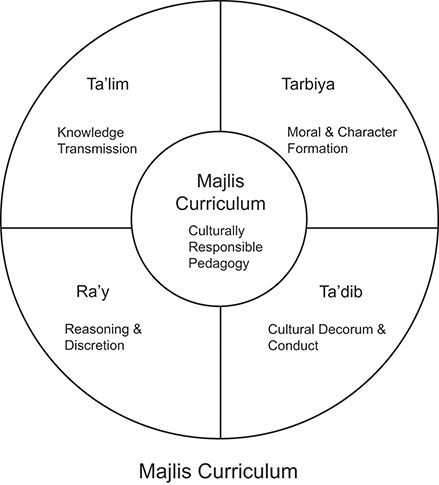
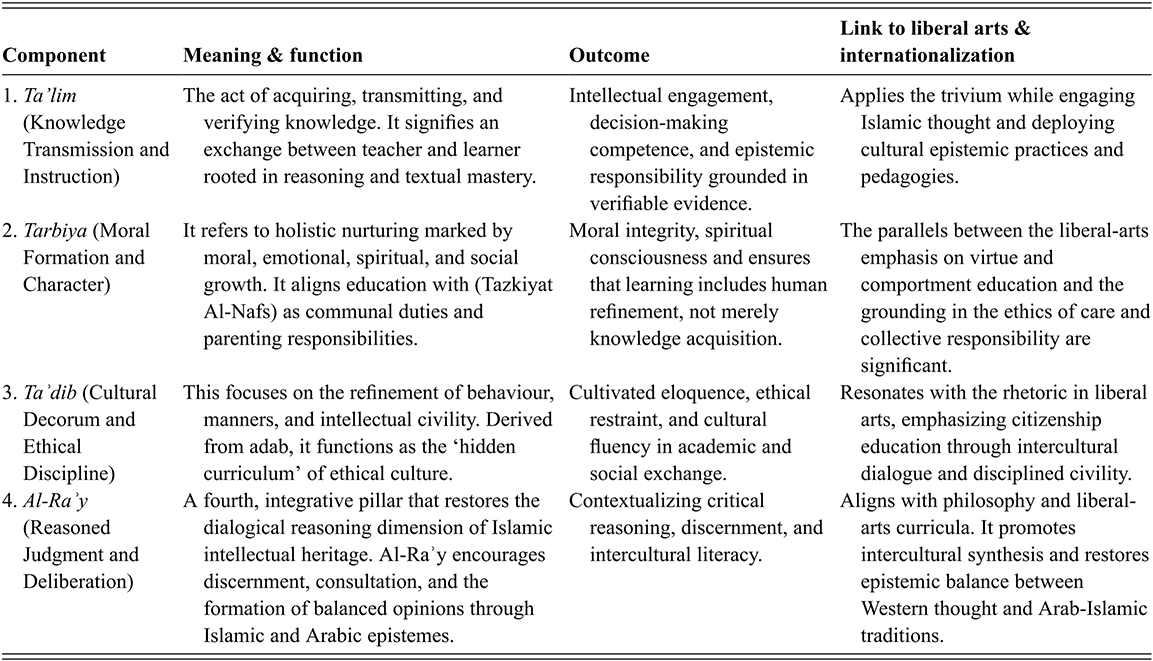

 Open access