

The term Wang-dda, which is a Korean word implying a target of bullying, was first introduced in the Korean media in March 1997. In the following years, bullying has been increasingly highlighted as one of the most serious social concerns affecting students in Korea. According to a poll conducted by the Seoul Suicide Prevention Center (2010), bullying or conflicts with friends appeared to be the most common reason for which students sought out counselling services (27.9%), followed by family issues (26.7%) and academic concerns (13.9%). In 2011, a middle school student in Daegu jumped to his death from his apartment due to constant abuse from his peers. He left a suicide note stating that he had been physically and verbally abused by bullies, including being subjected to water torture; however, he felt that he could not seek help from his parents, school or even the police due to his fear of possible revenge from the bullies. The 2005 Youth Statistics dataset from the Korean National Statistical Office (KNSO) indicated that the suicide rate of middle and high school students in Korea increased dramatically between 2000 and 2005, from 3.8 to 8.2 per 10,000 of the youth population, becoming the second leading cause of death among teenagers. Approximately 54.2% of those who took their lives were reported to have been the target of school bullying. Such individuals also exhibited other adverse outcomes, such as school refusal, depression, insomnia and social phobia, indicating that bullying and victimisation may cause serious psychological problems.
Extensive research has been conducted to develop an understanding of bullying behaviours. Yet, certain critical issues have often been overlooked in such studies. First, previous studies have primarily focused on the targets of bullying rather than on the bullies themselves. However, according to the results of recent studies, bullies also experience psychological forms of distress, such as depression or anxiety (Kim, Reference Kim2011; Park, Reference Park2007). Specifically, bullies are likely to experience low self-esteem and loneliness (Kim, Reference Kim2011) and furthermore, hold a negative self-concept (Yang, Reference Yang2005). Interestingly, many bullies have also been targets of bullying in the past. According to Ah, Jeong, and Cha (Reference Ah, Jeong and Cha2005), in order to avoid being bullied again, these individuals decide to become active bullies rather than to remain as passive bystanders or to continue being the targets of bullying. However, students who fail or refuse to take this route may choose extreme methods of avoiding further abuse, including suicide. It is apparent that the impact of bullying is of serious concern to all the students involved, regardless of their role. As such, comprehensive research that looks into both bullies and targets, as well as the different factors implicated in these students’ behaviours, is required.
Second, previous studies often failed to acknowledge the importance of different social contexts that could influence bullying behaviours (Espelage & Swearer, Reference Espelage and Swearer2003; Lee & Yoo, Reference Lee and Yoo1999; Morrison, Reference Morrison, Braithwaite and Strang2001). Bullying does not occur due to one particular factor, but instead occurs because of the complex interactions between factors from each ecological system level, such as individual characteristics, relationships with family and peers, and the school environment. However, studies have thus far tended to focus on the relations between bullying and one particular factor, such as school connectedness, life satisfaction or parental divorce. Moreover, some studies have exclusively considered the link with individual students’ characteristics, such as their gender, dissatisfaction with physical appearance, low self-esteem and life satisfaction (Huh, Park, & Jung, Reference Huh, Park and Jung2009; Park, Kim, & Kim, Reference Park, Kim and Kim2007). Conversely, other studies have focused on family characteristics, including family conflicts and relationships with parents (Cho & Park, Reference Cho and Park2003; Holt, Kantor, & Finkelhor, Reference Holt, Kantor and Finkelhor2008), or on factors at the school level, such as school connectedness, relationships with peers and teachers, and academic problems (Lee, Reference Lee2003; Sohn, Reference Sohn2005). Such studies are often fragmentary and fail to examine how factors within the different levels of the ecological system mutually interact and impact on the students involved in bullying. Therefore, studies from an ecological perspective are needed in order to gain a more comprehensive and thorough understanding of bullying behaviours.
Another issue to which greater research attention should be devoted is that many of the findings regarding bullying have thus far relied on cross-sectional data. Longitudinal data enables the examination of the impact of certain factors on students’ bullying or victimisation behaviours in the long term.
Lastly, it is fundamental to study the different types of bullying to better understand the behaviours involved. Previous studies, however, have often assessed bullying inclusively, rather than looking at the subtypes of bullying (Lee & Ko, Reference Lee and Ko2006). In fact, different factors may affect each of these subtypes or have different relations with them.
The Present Study
A better understanding of the ecosystemic factors in the bullying phenomenon is expected to help prevent problematic behaviours, as well as encourage positive growth and development among adolescents. To our knowledge, there are only a few studies that have examined the effects of multilayered factors (individual, family and school) on both bullying and victimisation experiences across subtypes (i.e., physical, sexual, verbal and cyber) using a nationally representative sample. Therefore, the current study aimed to add extant research on bullying by addressing the multidimensional, longitudinal and bullying subtype issues related to this topic.
Because the extant research reported mixed findings regarding the effects of individual characteristics, family and school factors, this study hypothesised that the effects of individual, family and school factors differ across subtypes of bullying and victimisation experiences. Therefore, we do not yet predict the positive or negative effects of individual, family and school factors in particular.
Previous Bullying Studies
This section will summarise the current state of research on the relations between individual, family and school factors with regard to bullying/victimisation. Individual factors may include demographic traits and psychological states, such as gender, self-control, self-esteem, aggression, social skills, and self-perception of physical appearance. However, research findings on the relationship between gender and bullying behaviours have been inconsistent. Ah, Jeong, and Cha (Reference Ah, Jeong and Cha2005) examined 354 middle school students and found that male students more often engaged in bullying behaviours than female students. However, another study of 714 middle school students found that female students were more likely to show bullying behaviours than male students (Lee, Reference Lee1999). These inconsistencies have tended to disappear when researchers have considered the subtypes of bullying instead of examining the overall bullying behaviours. For example, females tend to engage in isolation type bullying more than males, whereas by contrast, males tend to engage in verbal and physical types of bullying more than their female counterparts (Ah, Jeong, & Cha, Reference Ah, Jeong and Cha2005; Kim, Reference Kim2011). This may be due to the fact that male students are more likely to express their anger through overt means, such as physical attack or threatening, whereas females tend to choose a relational style of bullying that affects the target's peer relationships (Lee & You, Reference Lee and Yoo1999).
Previous studies have also yielded inconsistent results in the relationship between self-esteem and bullying behaviours. Park (Reference Park2007) conducted a 3-year longitudinal study and discovered that continued bullying was related to low self-esteem in both the bullies and targets. Similarly, another study of 3,449 middle school students indicated that students with low self-esteem were more likely to be bullied than students with high self-esteem (Yang, Reference Yang2005). However, Hu, Park, and Jung (Reference Huh, Park and Jung2009) indicated in their 4-year longitudinal study that prior to being the targets of bullying, the targets did not show a significantly lower self-esteem compared to their peer group. More specifically, the targets did not necessarily have negative self-concepts or low self-esteem prior to their actual victimisation experience. These mixed findings underscore the need for a more detailed research on how self-esteem is related to bullying and victimisation.
Researchers have reported that aggression is related to both bullying others and being bullied by others. Olweus (Reference Olweus1993) argued that students who show high levels of aggression toward their peers, teachers and parents tend to become bullies. Some researchers have also investigated how different groups of children involved in bullying are associated with different types of aggression. According to Camodeca, Goossens, Meerum Terwogt, and Schuengel (Reference Camodeca, Goossens, Terwogt and Schuengel2002), when rated by peers and teachers, bullies and bully/targets (i.e., who were involved in bullying as both bully and target), were both reactively and proactively aggressive, whereas targets were only reactively aggressive. These findings call for further detailed research on the relation between bullying/victimisation and different types of aggression.
Another individual trait that has been examined for its relation with bullying is self-control. Low self-control reportedly acts as a potential risk factor for both bullying and victimisation in young adolescents (Unnever & Cornell, Reference Unnever and Cornell2003). Fanti and Kimonis (Reference Fanti and Kimonis2012) also found that youth with high impulsivity showed higher initial levels of bullying and more stable victimisation by peers across development. These findings suggest that increasing the level of self-control may reduce children's involvement in bullying.
The relationship between social skills and bullying/victimisation has also been examined. Fox and Boulton (Reference Fox and Boulton2005) found that bullying targets are perceived to have poor social skills when rated by three different sources (i.e., self, peer, and teacher). Also, Gofin and Avitzour (Reference Gofin and Avitzour2012) reported that students with poor social skills are more likely to become bullies in junior high school students. Further research on social skills related to bullying and victimisation experience may help explain why some students are frequent targets of bullying while others are not; and furthermore, provide important implications for interventions to support bullying targets.
Previous studies suggested that being a target of bullying was significantly associated with one's perception of physical appearance. Boulton, Smith, and Cowie (Reference Boulton, Smith and Cowie2010) found that earlier victimisation negatively predicted self-rated physical appearance scores in girls. According to a recent study on bullying experiences of middle school students (Horowitz et al., Reference Horowitz, Vessey, Carlson, Bradley, Montoya, McCullough and David2004), middle school students reported that physical appearance was a significant source of teasing and bullying. However, further research needs to look at whether there is a causal relationship between stress over physical appearance and bullying/victimisation, as well as the direction of the relationship.
In addition to individual traits, family factors are believed to play a significant role in adolescent bullying. It is thus necessary to consider family-level variables, such as parental discord and parental supervision. The parent-child relationship is, in general, the first interpersonal relationship that a child experiences. Thus, the structure of this relationship will affect a child's development throughout his or her lifetime. Previous studies on bullying have examined the impact of parental affection and supervision on their children's involvement in bullying. Lereya, Samara, and Wolke (Reference Lereya, Samara and Wolke2013) conducted a meta-analysis study on parenting behaviour and the risk of becoming a target of bullying. It was found that negative parenting behaviour, including abuse, neglect, and maladaptive parenting, was associated with becoming a target of bullying and a bully/target. On the other hand, positive parenting, including good communication with the child, warm and affectionate relationships, parental involvement and support, and parental supervision was protective against becoming a target of bullying.
Parental discord and child abuse carried out by parents also play critical roles in children's involvement in bullying (Ah, Jeong, & Cha, Reference Ah, Jeong and Cha2005). Bernstein and Watson (Reference Bernstein and Watson1997) found that bullies at schools are often targets in their homes, where their parents frequently adopt physical punishment as a means of discipline and display hostile and rejecting attitudes to their children. Bowes et al. (Reference Bowes, Arseneault, Maughan, Taylor, Caspi and Moffitt2009) also reported that family factors, such as child maltreatment and domestic violence, were associated with all groups of children involved in bullying (i.e., victims, bullies, or bully-victims). Another recent study exploring the association between interparental discord and bullying found there is a significant relation between the two, and that the child's self-concept mediates the relation (Christie-Mizell, Reference Christie-Mizell2003). Although family factors may not directly cause bullying behaviours in schools, the previous findings emphasise the importance of familial influence in understanding children's bullying behaviours.
There is a need for more comprehensive research into the impact of school factors, such as having teacher support, peer support, or deviant friends, on children's involvement in bullying. Wilson, Lipsey, and Derzon (Reference Wilson, Lipsey and Derzon2003) suggested that social learning from peers had a significant role in sustaining bullying behaviours. Social learning theory (Bandura, Reference Bandura1977) proposes that children will imitate the behaviour of others in such a way that witnessing bullying may evoke a similar behavioural response. This may also indicate that witnessing the subjugation of the targets of violence can make children believe that they can also successfully subjugate others by bullying them. Another school factor that has been frequently examined is teacher support, in which there were some inconsistent findings regarding the association between bullying and teacher support. While Galand and Hospel (Reference Galand and Hospel2013) reported no significant connection between victimisation and teacher support, Marachi, Astor, and Benbenishty (Reference Marachi, Astor and Benbenishty2007) found that high levels of teacher support were associated with lower rates of victimisation. Additionally, teacher support was reportedly not only related to victimisation, but also bullying behaviours. Barboza et al. (Reference Barboza, Schiamberg, Oehmke, Korzeniewski, Post and Heraux2009) suggested that bullying behaviours increased among students who lack teacher support. Specifically, more teacher support was associated with less verbal bullying (Beran & Tutty, Reference Beran and Tutty2002). In addition to teacher support, researchers have examined the relationship between peer support and bullying/victimisation. Barboza et al. (Reference Barboza, Schiamberg, Oehmke, Korzeniewski, Post and Heraux2009) reported that bullying behaviours increased among children who had emotional support from their peers, suggesting that bullying may not be simply an individual behaviour, but is a peer-group behaviour. In contrast, Williams and Guerra (Reference Williams and Guerra2007) reported that bullying was significantly related to lack of peer support. Furthermore, a recent study of adolescents in Grades 7 and 8 in the United States found that students who reported higher classmate support were less likely to be targets of school bullying (Wang, Iannotti, & Luk, Reference Wang, Iannotti and Luk2011). However, some studies have not found a significant, direct association between bullying/victimisation and peer support, but suggested that peer support ensures that targets do not lose their self-confidence (Koh, Kim, & Noh, Reference Koh, Kim and Noh2000) and mitigates the impact of bullying on the quality of life of the targets (Flaspohler, Elfstrom, Vanderzee, Sink, & Birchmeier, Reference Flaspohler, Elfstrom, Vanderzee, Sink and Birchmeier2009). Further research on the impacts of school factors on student bullying and victimisation can be beneficial for both prevention and intervention efforts.
Based on these previous studies, the current study will examine how various factors from different levels of the ecological factors influence the experiences of bullying and victimisation in students. These factors are divided into three subcategories as follows: (1) individual factors, that is, gender, appearance-related stress, self-esteem, aggression, self-control, social skills; (2) family factors, that is, parental discord and supervision; (3) school factors, that is, the number of deviant friends, teacher support, and peer support.
Method
Procedures and Participants
The data used in the present study comes from the Korean Youth Panel Survey, a 6-year longitudinal study of students’ school life experiences conducted by the National Youth Policy Institute, with funding from the national government. Participants were chosen using a stratified multi-stage cluster sampling. The institute stratified 15 administrative districts; schools were randomly selected in each district in line with the population rate, based on proportionate probability sampling, and one class per school was randomly selected. This survey was initially completed in 2003, when all of the students were in their second year of middle school. At that time, the mean age of the participants was 13 years. Students then completed the survey in every last quarter of the year until 2008. The analyses in the current study are based only on the first 2 years of the data (i.e., the second year of middle school to the third year of middle school). Middle school students were selected on the basis that this group showed the greatest percentage of students with bullying and victimisation experiences. We examined the longitudinal effects of independent variables (Time point 1) on the next year's bullying and victimisation experiences (Time point 2). There was a total of 3,449 participants in the first year of the study, 2003, comprised of 1,725 (50%) male and 1,724 (50%) female students.
Measures
The dependent variables included yes/no questions with regard to respondents’ experiences of or involvement in bullying and victimisation over the past year. Specifically, five questions were presented to assess students’ experiences. Physical bullying was assessed by two items (‘I have been beaten up’ and ‘I have been threatened’); sexual bullying was assessed by one item (‘I have been sexually assaulted or harassed’) and verbal bullying was assessed by one item (‘I have been called names or mocked’). There were six additional questions designed to capture the individual's involvement in these three subtypes of bullying as a perpetrator. Physical bullying items included experiences of ‘violently beating others’, ‘stealing others’ money or possessions’ and ‘threatening’. The sexual bullying item captured whether the respondents had ever ‘sexually abused or sexually harassed others’. The verbal bullying item included ‘making fun of others or mocking them’, and the cyberbullying item included ‘using violent language online’.
The independent variables were divided into three categories: individual, family and school factors. For the individual factors, (1) three items (alpha coefficient = .73) were used for the level of stress over their appearance (e.g., ‘my perception of myself as too fat or too skinny causes me stress’), (2) six items (alpha coefficient = .73) were used for self-esteem (e.g., ‘I believe that I am a person with good character’), (3) six items (alpha coefficient = .70) were used for aggression level (e.g., ‘I can use physical violence when I become extremely irritated’), (4) six items (alpha coefficient = .76) were used for low self-control (e.g., ‘I can't stay calm when I get angry’), and (5) one item were used for social skills (e.g., ‘I get along well with my friends at school’). All of the individual variables were measured by a 5-point Likert scale (1 = not at all to 5 = always true).
The family factor items were parental discord and supervision, which were measured on a 5-point Likert scale (1 = not at all to 5 = always true). Specifically, (1) two items (alpha coefficient = .74) were used for parental discord (e.g., ‘How much conflict did your parents have?’), and (2) three items (alpha coefficient = .78) were used for parental supervision (e.g., ‘My parents set up a rule regarding my curfew’). The school factor questions dealt with students’ perceptions toward their peers and teachers. Specifically, (1) three items (alpha coefficient = .70) were used for teacher support on a 5-point Likert scale (1 = not at all to 5 = always true; e.g., ‘There is at least one teacher in this school I can talk to if I have a problem’), (2) two items (alpha coefficient = .76) were used for peer support on a 5-point Likert scale (1 = not at all to 5 = always true; e.g., ‘My friends at this school care about me’), and (3) three items were used for measuring the number of deviant friends an individual had through items such as ‘I have a friend who has been asked to leave school during the past year’, ‘I have a friend who has hurt others in the past year’, and ‘I have a friend who has stolen others’ money or possession in the past year’.
Statistical Analyses
A series of multiple logistic regression models were developed and tested using Mplus (Muthen & Muthen, Reference Muthen and Muthen2006). The first model contained only the student's individual variables, the second model included school variables, and the third model included family factors. The models estimated the size and statistical significance of a number of predictors simultaneously. Overall, we determined the unique contribution of each variable in the model by controlling for the effects of the other variables in the model.
Results
Descriptive Statistics
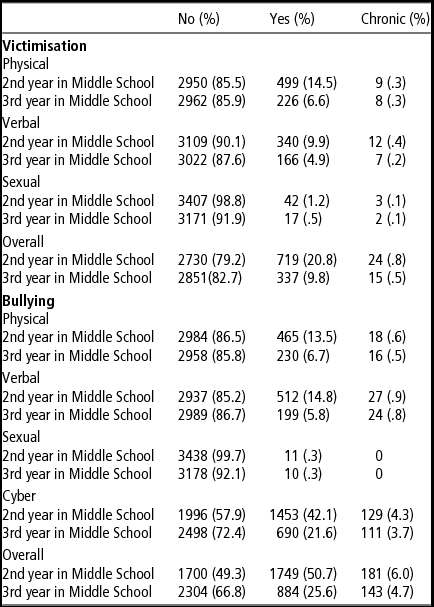
Participants were asked whether they had taken part in bullying across the physical, sexual, verbal and cyber subtypes. They were also asked whether they had been bullied across the physical, sexual and verbal subtypes. Table 1 presents the number and percentage of participants who had bullying and victimisation experiences (i.e., No indicates having had no experience over the past year and Yes indicates having had experience over the past year) as well as the number of participants who experienced chronic bullying/victimisation (i.e., students who experienced bullying and victimisation more than 24 times a year).
Descriptive Statistics of Subtypes in Victimisation and Bullying Experiences

Many participants indicated that they had not engaged in bullying or been bullied over the past year. Across 2 years, there was a smaller number of reported cases of sexual bullying/victimisation compared to the other subtypes. There were more sexual bullying cases reported by the targets than there were cases reported by the bullies. Interestingly, bullies reported a significantly higher number of chronic bullying cases than did the targets. Furthermore, the bullying subtype that was reported as being the most prevalent over 2 years was cyberbullying, with 42.1% of participants recording having bullied someone in cyberspace when they were in their second year of middle school.
The Effects of Independent Variables on Bullying and Victimisation Experiences
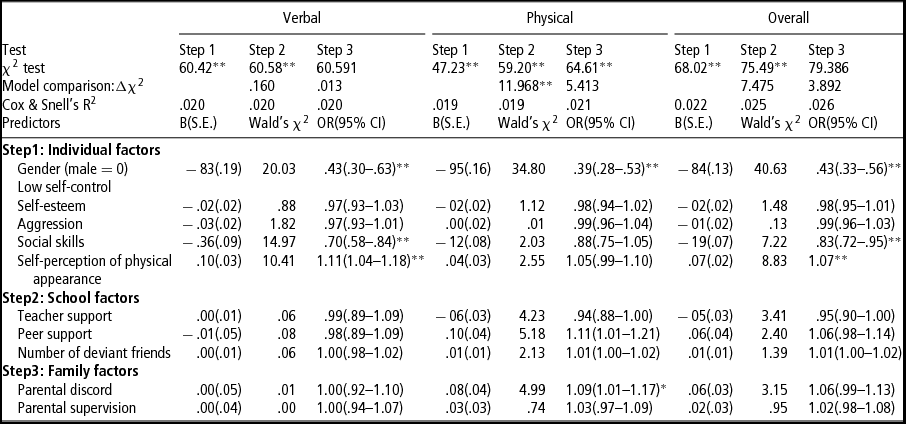
We examined the long-term effects of individual, school and family variables (Time point 1) on the following year's bullying and victimisation experiences (Time point 2). The relative influences of the independent variables on victimisation and its subtypes are shown in Table 2. In terms of individual factors, the results indicated that overall victimisation was associated with being male, having low social skills, and high levels of appearance-related stress. Among the school factors, having less support from teachers was associated with overall victimisation. Specifically, verbal victimisation was associated with being male, low self-control, low social skills, and high appearance-related stress. Physical victimisation was associated with being male, low teacher support, and high level of family discord.
Logistic Regression on Victimisation Experience
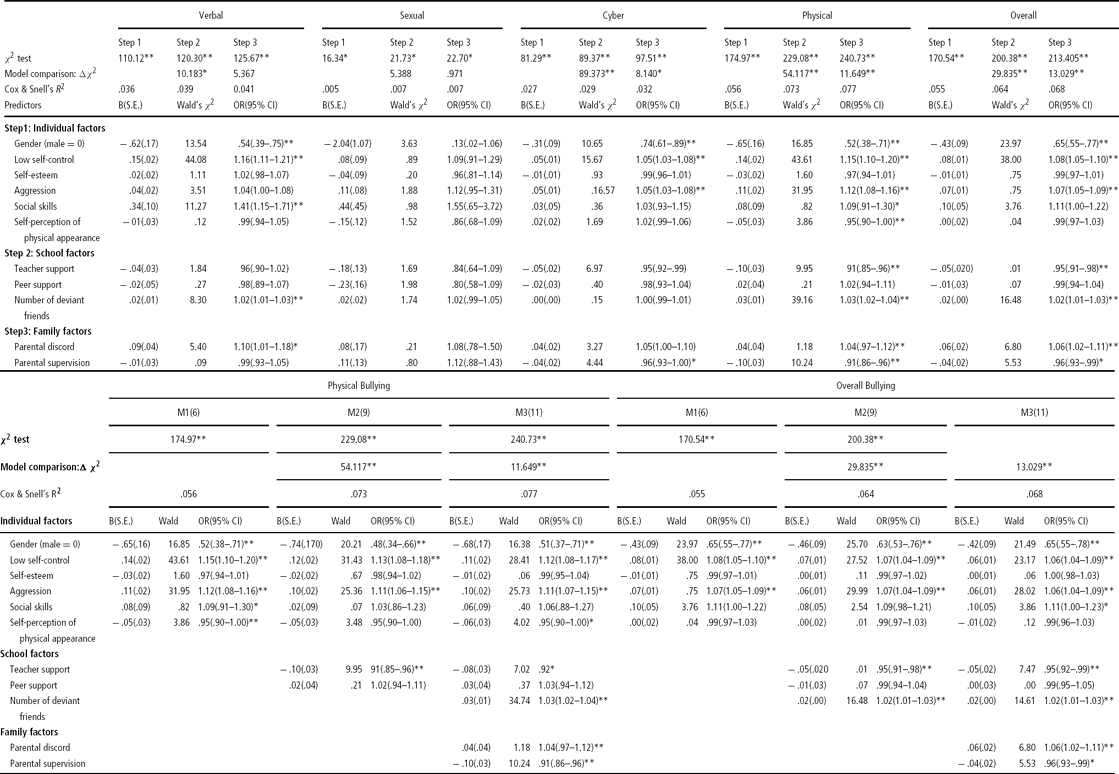
The relative influences of the independent variables on bullying across subtypes are shown in Table 3. Overall, bullying was associated with several individual factors, including being male, a lack of self-control and a high level of aggression and social skills. It was also associated with school factors, including a higher number of deviant friends and lower teacher support, along with a family factor, a higher level of parental discord. The results indicated that individual, family and school factors might work differently depending on the subtype of bullying involved.
Logistic Regression on Bullying Experience
Note: OR = odds ratio; CI = confidence interval; ** p < .01 *p < .05.
Note. OR = odds ratio; CI = confidence interval; M1 = Only individual factors, M2 = Individual and school factors, M3 = Individual, school, and family factors, ( ) = df, ** p < .001 *p < .05
Discussion
The purpose of this study was to examine the varying effects of the individual, family and school factors on Korean adolescent bullying and victimisation experiences. Moreover, we hypothesised that the subtypes of bullying and victimisation would be influenced by different factors. The descriptive statistics demonstrated that regardless of subtypes, the number of students who experienced bullying and victimisation decreased as students grew older. This may indicate that as students mature, bullies begin to understand the seriousness of bullying and accordingly change their behaviour. Perhaps the bullies may focus on other activities that they find more interesting or important, such as sports or studying. Likewise, the targets may learn how to better defend themselves from bullies and socialise with peers who can provide them with support that protects them from bullies.
The findings of the current study revealed that among the individual factors, students with low social skills and a high degree of appearance-related stress were more likely to be bullied. This may suggest that bullies tend to target those who have difficulties interacting/socialising with peers and those who have a lower level of confidence in their appearance. On the other hand, students with high social skills more frequently reported that they had bullied others, particularly using verbal bullying, which may indicate that the levels of social skills play a significant role in how students are involved in bullying/victimisation. Additionally, students with low self-control were more likely to report that they had been verbally bullied or that they had engaged in bullying behaviours, particularly verbal, cyber and physical bullying. This may suggest that whether or not students have a hard time controlling their behaviours is a critical factor that has a significant impact on students’ bullying behaviours. Aggression was only associated with bullying behaviours, not victimisation experiences. In particular, students with a high aggression level indicated that they had shown physical and cyberbullying behaviours, thereby indicating that aggression is another important factor for understanding the bullying behaviours; further, it affects certain forms of bullying more than it affects others.
Among the school factors, teacher support appeared to be associated with both bullying and victimisation. Students with low teacher support tended to report that they had been bullied, especially physically, or had bullied others, particularly physically or online. These results support the previous finding that having higher teacher support was indicative of less victimisation (Marachi et al., Reference Marachi, Astor and Benbenishty2007) or fewer bullying behaviours (Barboza et al., Reference Barboza, Schiamberg, Oehmke, Korzeniewski, Post and Heraux2009). These findings also added to the further understanding of how teacher support was related to certain forms of bullying and victimisation. Additionally, students with high peer support more frequently reported that they had been physically bullied. Relationship with peers did not appear to be a significant factor influencing other types of victimisation and bullying behaviours. However, this does not support the previous findings that high peer support was related to less victimisation experience (Jeong & Lee, Reference Jeong and Lee2013) and that peer support was significantly related to students’ bullying behaviours (Williams & Guerra, Reference Williams and Guerra2007). In addition, the number of deviant friends was not significantly associated with victimisation, but instead was associated with bullying behaviours, particularly physical and verbal bullying. In other words, students with a higher number of deviant friends appeared to report that they engaged in bullying others more than those with a low number of deviant friends. The results support the social learning theory, which highlights the importance of the impact of peer groups on students’ bullying behaviours.
Students reported that when there is a high level of parental discord or less parental supervision, they tend to show more bullying behaviours. The level of parental discord was specifically related to physical bullying, whereas the level of parental supervision was specifically related to both physical and cyberbullying. Neither of them was reportedly associated with experiences of being targeted in students. This finding appears to be inconsistent with the previous findings, which reported a significant relationship between levels of parental supervision (Jang, 2008) or parental discord (Bowes et al., Reference Bowes, Arseneault, Maughan, Taylor, Caspi and Moffitt2009) and being targeted or bullied. However, the results suggest that if parents fight too often or if parents are less likely to monitor their child's behaviours/activities, there is a higher rate of students reporting their engagement in bullying as a bully, which is consistent with the previous findings (Ah, Jeong, & Cha, Reference Ah, Jeong and Cha2005; Bernstein & Watson, Reference Bernstein and Watson1997; Bowes et al., Reference Bowes, Arseneault, Maughan, Taylor, Caspi and Moffitt2009).
In agreement with our hypothesis, it was found that the different subtypes of bullying and victimisation were associated with different individual, family and school factors. This may indicate that certain factors need to be more carefully considered and evaluated in order to prevent or intervene with each subtype of bullying or victimisation experiences. For example, Morita (Reference Morita1985) reported that when different preventative measures were taken based on the subtype of bullying involved, an increased effectiveness in the prevention of bullying was observed. As such, understanding which factors are uniquely associated with the different subtypes of bullying and victimisation is critical for designing effective preventive programs that target both the bullies and targets.
One concern is that the bullying items used in this study measured a wide range of behaviours, which may raise a concern as to whether the items were intended to measure incidents of bullying or overall ill-treatment at school. Although similar items used in this study were compared to those of the previous bullying research (Felix & You, Reference Felix and You2011), this study data did not consider the repetition and intentionality components of bullying. Therefore, in future studies, bullying should be measured carefully using different levels of exposure to victimisation (i.e., no victimisation, some victimisation, and chronic victimisation with a power imbalance).
Another important finding of the current work was that cyberbullying was reported to be an increasing problem in students, as the subtype of bullying with which the greatest number of students were reported to be involved. This may indicate the increasing influence of the internet on peer relationships. Thus, future studies should conduct surveys that are more specific and inclusive of various realities, examining both the bullies and targets. Through such methods, further research should provide an insight into which factors are most closely related to cyberspace bullying and whether students with certain demographic factors are more likely to engage in bullying online. Knowledge of the relationships between various factors, along with the subtypes of bullying, can provide more in-depth insights that can ultimately assist in the development and design of services for students involved in bullying, and in initiatives aimed at preventing bullying at school.
Acknowledgement
This work was partially supported by the Hankuk University of Foreign Studies Research Fund granted to Sukkyung You.