




INTRODUCTION
Sub-Saharan Africa is characterised by diverse and heterogeneous environments (World Bank, Reference World Bank2009), languages, cultures, institutions and histories (Hopkins, Reference Hopkins2009) and farming systems (Giller et al., Reference Giller, Tittonell, Rufino, Van Wijk, Zingore, Mapfumo, Adjei-Nsiah, Herrero, Chikowo, Corbeels, Rowe, Baijukya, Mwijage, Smith, Yeboah, Van Der Burg, Sanogo, Misiko, De Ridder, Karanja, Kaizzi, K'ungu, Mwale, Nwaga, Pacini and Vanlauwe2011b; Tittonell et al., Reference Tittonell, Muriuki, Shepherd, Mugendi, Kaizzi, Okeyo, Verchot, Coe and Vanlauwe2010, Reference Giller, Murwira, Dhliwayo, Mafongoya and Mpepereki2011). These diverse contexts are a constant challenge to agricultural development programmes. Many initiatives that target smallholder farmers and pastoralists who have not benefited from the one-size-fits-all technologies of the green revolution grapple with scaling up and out agricultural innovations (Franzel et al., Reference Franzel, Cooper and Denning2001). Whilst the return on investment of many technologies has been proven in pilot studies or over small areas, it has been difficult to achieve adoption of these technologies by large numbers of farmers over large areas (Lynam and Twomlow, Reference Lynam, Twomlow, Hazell and Rahman2014). This is especially pertinent to innovations which offer potential long-term benefits (Andersson and D'Souza, Reference Andersson and D'souza2014), which are complex, or which rely on the positive alignment of multiple enabling environments (e.g. Johansson et al., Reference Johansson, Axelsson, Kimanzu, Sassi, Bwana and Otsyina2013). Successful scaling therefore requires that the factors affecting adoption as well as the spaces or contexts that scaling has to navigate, are well understood, are incorporated in the scaling process and are iteratively evaluated (Linn, Reference Linn2012).
The N2Africa: Putting Nitrogen Fixation to Work for Smallholder Farmers in Africa project aims to enable African smallholder farmers to benefit more from symbiotic N2-fixation by grain legumes through effective production technologies including inoculants and fertilisers. N2Africa is guided by a principle of ‘development to research’ (Giller et al., Reference Giller, Franke, Abaidoo, Baijukya, Bala, Boahen, Dashiell, Kantengwa, Sanginga, Sanginga, Simmons, Turner, De Wolf, Woomer, Vanlauwe, Vanlauwe, Van Asten and Blomme2013), whereby project monitoring and evaluation allows the challenges associated with delivery and dissemination of legume options to guide the research questions. This is implemented by feedback loops between the ‘development’ activities to research, and back again.
In a first phase from 2009–2014, N2Africa demonstrated that symbiotic N2-fixation by legumes depends on the interactions amongst the legume genotype, the strain of rhizobium, the environment in which the legume is grown and the management of the crop and rhizobium, (i.e. (GL × GR) × E × M). This interaction results in ‘best fit’ combinations of legume variety and rhizobium at the field scale for the different socio-economic conditions and environments experienced by farmers. The second phase of N2Africa which began in 2014 focusses on disseminating promising technologies from the first phase at scale amongst heterogeneous farming conditions of smallholder farmers. N2Africa focusses on the quantitative or horizontal scaling up, i.e. scaling out (Menter et al., Reference Menter, Kaaria, Johnson, Ashby, Pachico and Fujisaka2004; Uvin, Reference Uvin1995), of a relatively limited set of grain legume innovations (e.g. improved varieties, rhizobium inoculants and fertiliser blends) over a diverse set of geographical locations, in an iterative manner with a strong learning component (Giller et al., Reference Giller, Franke, Abaidoo, Baijukya, Bala, Boahen, Dashiell, Kantengwa, Sanginga, Sanginga, Simmons, Turner, De Wolf, Woomer, Vanlauwe, Vanlauwe, Van Asten and Blomme2013, Linn, Reference Linn2012).
Impact studies carried out in Rwanda show that adoption of components of soybean technology packages varies according to previous experiences of the package distributed by N2Africa as well as the household level resource endowments. Farmers who continued to cultivate soybean but did not apply inputs (phosphorus fertiliser and/or rhizobium inoculant) were relatively poorly resource endowed, whilst those farmers who adopted the whole package were better resource endowed (Figure 1). Meanwhile in western Kenya factors that positively affected the use and intensity of inoculant on soybean were farm size, knowledge of root nodulation, contact with organisations promoting legume technologies, as well as the location of the farmer, with distance to the market negatively associated with use of inoculants (Mutuma, Reference Mutuma2013). These two examples demonstrate the need to fit the grain legume technologies not only within farm systems but also within the market and institutional context of the value chain.
Relation between resource endowment (based on housing quality, land, livestock and household and farm assets) and levels of soybean adoption in 2013 for households in eastern and southern provinces of Rwanda who had previously received a N2Africa soybean package. P = phosphorus fertilizer (mainly DAP, some used NPK), I = rhizobial inoculant. Source: Authors.

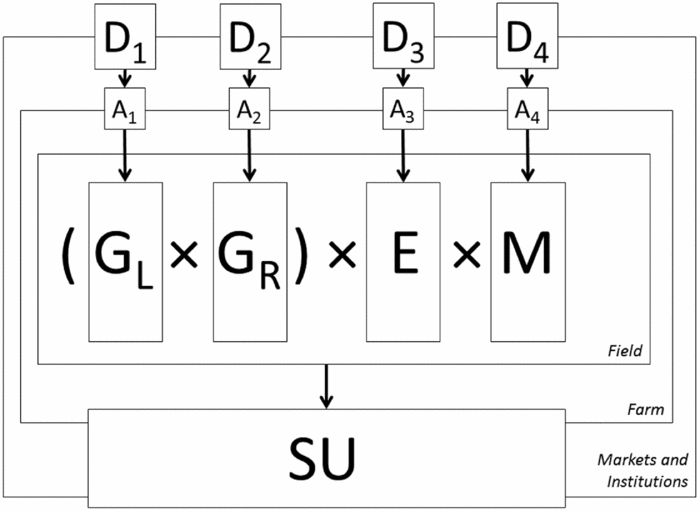
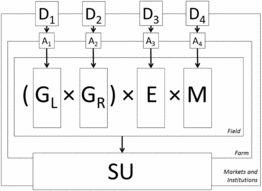
We captured the major components and entry points of N2Africa in a conceptual framework of a scaling out programme (Figure 2), which embeds ((GL × GR) × E × M) at the field level within farm systems, and the market and institutional contexts. Each component contributes to the adoption of grain legumes in individual farmers’ fields, to greater production and productivity of grain legumes over larger areas and increased biological nitrogen fixation. However, more information is required on the specific factors affecting adoption of grain legumes in Africa and how we manage these in the design of the N2Africa project. We then need to reconceptualise ‘best fit’ (Birner et al., Reference Birner, Davis, Pender, Nkonya, Anandajayasekeram, Ekboir, Mbabu, Spielman, Horna, Benin and Cohen2009) within a scaling out programme to ensure more effective targeting in the multiple biophysical and socio-economic contexts of smallholder agriculture in sub-Saharan Africa. Additionally, we need to document and evaluate the practical aspects of implementing such a design in a development to research project that depends on partnership with non-research institutions.
Conceptual framework of a scaling out programme for legume technologies. Where D1 is the delivery of/availability of legume genotypes; D2 is the delivery of/availability of strains of rhizobium; D3 is the delivery/availability of other inputs; D4 is the delivery of management practises or availability of information about such practises and SU is the marketing for sale and utilisation of the legume crop. A1 is the accessibility of legume genotypes for a farm; A2 is the accessibility of inoculant for a farm; A3 is the accessibility of other inputs for a farm; A4 is the accessibility of management practises for a farm. GL is the legume genotype; GR is the rhizobium strain; E is the environment and M is the management of the crop.
Specifically, we identify three research questions that we address in this paper:
RQ1. What factors affect the adoption of grain legume technology packages?
RQ2. How can those factors be incorporated into the design of a development to research project?
RQ3. How can this research design be successfully operationalised in five countries with multiple and contrasting institutional settings?
In the following section, we review evidence on the factors that promote or hinder adoption of grain legumes and other crops in Africa and the developing world. On the basis of this review, we develop a research design for N2Africa. Subsequently, we report on the implementation of this research design and present a preliminary assessment of the implementation.
REVIEW OF ADOPTION STUDIES
We addressed the first two research questions given above with the following objectives: (1) to identify and assess the relative importance of different factors that affect the adoption of legumes at different levels; and (2) to organise these factors within the conceptual framework so that they can be implemented within a development to research project. This assessment was guided by Figure 2 from which we developed a priori a list of potential factors (Table 1) but with the possibility of adding unanticipated barriers or incentives to adoption and utilisation.
Number of the papers reviewed that mentioned the specific factors affecting the adoption of legume technologies.
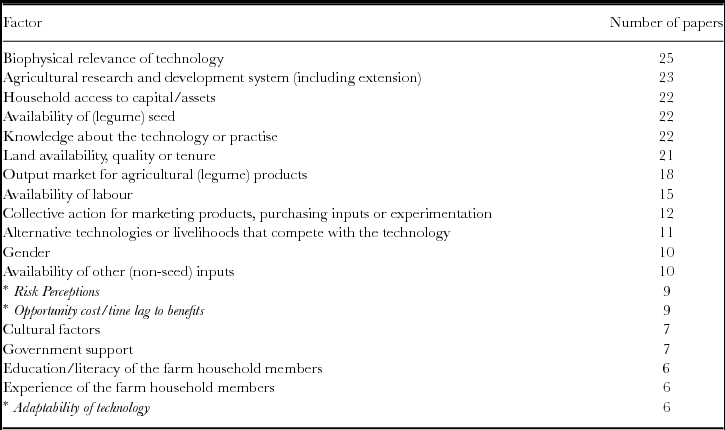
*Factors added during the review.
The search universe included peer-reviewed papers that were listed in the Scopus database. The search criteria within Scopus was ‘legume’ AND ‘adoption’, which resulted in 318 documents. These were reviewed and were chosen subjectively based on the document title, giving 32 documents. A further 21 documents cited in these texts were added to the list for evaluation. Where relevant, snowball sampling from citations in key texts was used to add further documents. In addition, N2Africa reports were reviewed with an emphasis on the lessons learned with regard to adoption constraints. A matrix was developed in MSExcel with full citation, and abstract (where appropriate), each paper was classified according to whether the paper addressed legumes and if so what species or function in the farm system (grain legume, forage legume, etc.). We recorded the frequency of each type of factor, wrote a narrative describing its importance and defined the basic spatial units. To address our second research question, we assessed potential confounding factors and the frameworks used to organise factors affecting adoption.
Factors affecting the adoption of grain legumes
The most commonly mentioned factors affecting the adoption of legumes (Table 1) were the biophysical relevance of the technology or practise (such as suitability for the agro-ecological zone, or response to specific problems), followed by the effectiveness of the research and extension service, and access to capital/assets (or credit). All of the factors determined a priori were mentioned in at least six papers. Three additional factors were encountered and added to the list: (1) Adaptability of the technology; (2) Risk Perceptions and (3) Opportunity cost/time lag to benefits.
The potential components of the agricultural research and development system include institutions such as governmental extension system, governmental agricultural research organisations, international agricultural research organisations, universities, non-governmental organisations, producer federations and community-based organisations that have a role in agricultural or rural development, as well as the models and approaches that these institutions use to increase crop productivity, build soil fertility, raise farm incomes and improve the nutritional status of farming families (Abate et al., Reference Abate, Shiferaw, Gebeyehu, Amsalu, Negash, Assefa, Eshete, Aliye and Hagmann2011; Ajayi et al., Reference Ajayi, Akinnifesi, Sileshi and Chakeredza2007; Bantilan and Johansen, Reference Bantilan and Johansen1995, Chianu et al., Reference Chianu, Nkonya, Mairura, Chianu and Akinnifesi2011; Mhango et al., Reference Mhango, Snapp and Phiri2013; Nyemeck Binam et al., Reference Nyemeck Binam, Abdoulaye, Olarinde, Kamara and Adekunle2011; Shelton et al., Reference Shelton, Franzel and Peters2005; Snapp et al., Reference Snapp, Kanyama-Phiri, Kamanga, Gilbert and Wellard2002a; Spielman et al., Reference Spielman, Davis, Negash and Ayele2011; Wambugu et al., Reference Wambugu, Place and Franzel2011).
Household access to capital and assets is an important adoption factor. First, capital affects the available labour in a household (Place and Dewees, Reference Place and Dewees1999) and the ability of a farm household to manage the environment in which their legume crop grows. Second, capital affects access to improved legume seeds, inoculant and fertilisers (Bohlool et al., Reference Bohlool, Ladha, Garrity and George1992; Boys et al., Reference Boys, Faye, Fulton and Lowenberg-Deboer2007; Chianu et al., Reference Chianu, Nkonya, Mairura, Chianu and Akinnifesi2011; Mhango et al., Reference Mhango, Snapp and Phiri2013; Place and Dewees, Reference Place and Dewees1999; Shelton et al., Reference Shelton, Franzel and Peters2005; Shiferaw et al., Reference Shiferaw, Kebede and You2008b).
The importance of the availability of legume seeds was also commonly mentioned, with recognition that commercial seed systems were often not well developed for legumes in sub-Saharan Africa (Ajeigbe et al., Reference Ajeigbe, Singh, Adeosun and Ezeaku2010; Amare et al., Reference Amare, Asfaw and Shiferaw2012; Jones and Rakotoarisaona, 2006; Shelton et al., Reference Shelton, Franzel and Peters2005; Shiferaw et al., Reference Shiferaw, Kebede and You2008b). As a consequence, a variety of seed system models have been proposed or promoted such as farmer to farmer diffusion (Ajeigbe et al., Reference Ajeigbe, Singh, Adeosun and Ezeaku2010), interventions by campaigns and projects (David et al., Reference David, Mukandala and Mafuru2002; Shiferaw et al., Reference Shiferaw, Kebede and You2008b), via trader networks (Snapp et al., Reference Snapp, Rohrbach, Simtowe and Freeman2002b), community seed multiplication (Shiferaw et al., Reference Shiferaw, Obare and Muricho2008a), local seed banks (Freeman et al., Reference Freeman, Van Der Merwe, Subrahmanyam, Chiyembekeza and Kaguongo2002) and support to the formal sector (Jones and Rakotoarisaona, 2006; Wambugu et al., Reference Wambugu, Place and Franzel2011).
Land availability and land tenure systems also affect legume production. When farm sizes are small, producers might prefer to grow cereals on what small fields they have (Kamanga et al., Reference Kamanga, Kanyama-Phiri, Waddington, Almekinders and Giller2014). On the other hand, where producers have large areas of land which can be left fallow, there is less incentive to invest in soil fertility improvement through the use of legumes (Bamire et al., Reference Bamire, Fabiyi and Manyong2002). Finally, land tenure is a proxy for the security that producers have to invest in the land that they cultivate, with private ownership associated with greater security (Bamire et al., Reference Bamire, Fabiyi and Manyong2002; Banadda, Reference Banadda2010; Kerr et al., Reference Kerr, Snapp, Chirwa, Shumba and Msachi2007).
Access to markets for the sale of grain legumes is an important incentive for production. For soybeans access to markets is almost a necessity given the great value that is added by processing, and that it is not a traditional food in many countries. Three components to marketing were most often mentioned in the literature: The demand for legume products and the existence of a market, functioning linkages amongst market actors (Abate et al., Reference Abate, Shiferaw, Gebeyehu, Amsalu, Negash, Assefa, Eshete, Aliye and Hagmann2011; Alene and Manyong, Reference Alene and Manyong2006; Nyemeck Binam et al., Reference Nyemeck Binam, Abdoulaye, Olarinde, Kamara and Adekunle2011) and marketing of grain legumes by individual or groups of producers (Boys et al., Reference Boys, Faye, Fulton and Lowenberg-Deboer2007). We treat the first two components together since they are structural and span multiple scales, whereas marketing at the community scale is dealt with separately. Collective marketing allows producers with very small farm areas or low yields to aggregate their legume grain harvest and benefit from economies of scale in transportation and storage, and to respond to demands from distributors or retailers for larger quantities of grain. Collective marketing is also a response to asymmetries in the market whereby some value-chain actors have access to more information and might also benefit from monopolistic or monopsonistic positions in the value chain dictating terms to producers (Giller et al., Reference Giller, Murwira, Dhliwayo, Mafongoya and Mpepereki2011a).
Categorising adoption factors
Seven papers discussed or suggested frameworks for categorising or organising the factors affecting adoption. A general framework relevant for the analysis of adoption of all agricultural innovations (e.g. technologies) is proposed by Sumberg (Reference Sumberg2005). Sumberg organises factors according to three interactions amongst the user (farmer), the innovation and the context: Innovation × User, Innovation × Context and Innovation × User × Context. Sumberg considers that only factors which are an interaction between the innovation and the user are modifiable by organisations implementing development and research activities. The context is defined as external to a project and not modifiable, so factors involving the context are deemed prerequisites for adoption. Sumberg assumes a predominantly technological innovation and we can see that the boundaries of the context change according to the type of innovation being promoted or tested.
Ndah et al. (Reference Ndah, Schuler, Uthes, Zander, Triomphe, Mkomwa and Corbeels2015) document an approach for assessing conservation agriculture (Qualitative expert Assessment Tool for CA adoption in Africa – QAToCA) containing seven thematic areas: (A) the characteristics of the technology as an object of adoption; (B) the capacity of the organisation that is implementing the promotion of the technology; (C) the attributes of the diffusion strategy used; (D) the political and institutional framework of the country/region where the technology is being promoted; (E) the political and institutional framework of the village where the technology is being implemented; (F) conditions of the input and output markets at both village and regional level and (G) the attitude of the communities towards the technology and its adopters. Thematic area A would be considered by Sumberg (Reference Sumberg2005) as the ‘innovation’, G as the ‘users’ and B–F as part of the ‘context’, expanding considerably the components of the context that affect adoption.
The relative importance of different factors to adoption can be conceptualised as a series of filters through which a technology would need to pass in order to be tested, such as those proposed by Haigis et al. (Reference Haigis, Wezel, Rath, Graef, Muehlig-Versen, Abele, Frick, Neef, Lawrence, Renard and Von Oppen1998). The top layer of these filters comprises agro-ecological factors which cannot be modified; followed by technical, institutional, sociological and economic filters. The socio-ecological niche framework (Ojiem et al., Reference Ojiem, De Ridder, Vanlauwe and Giller2006) also proposes a hierarchical arrangement of adoption factors: agro-ecological, socio-cultural, economic and local ecological factors, and cross cutting institutional support service. In contrast to Haigis et al. (Reference Haigis, Wezel, Rath, Graef, Muehlig-Versen, Abele, Frick, Neef, Lawrence, Renard and Von Oppen1998), the socio-ecological niche framework does not seek to filter out suitable technologies, but instead to match legume technologies to specific niches based on a combination of factors (Ojiem et al., Reference Ojiem, Vanlauwe, De Ridder and Giller2007).
Shelton et al. (Reference Shelton, Franzel and Peters2005) conclude that five key factors are important for adoption of forage legumes: The most important is (1) the technology meets a need of farmers, followed equally by; (2) the socio-economic situation and skills of farmers; (3) the existence of stakeholder partnerships (including the private sector); (4) a commitment by these stakeholders over long periods and (5) the implementation of an extension programme focussing on the needs of farmers. The existence of functioning output markets for the legumes is not considered, perhaps because the forage legume technology is an input for animal production.
Sirrine et al. (Reference Sirrine, Shennan and Sirrine2010) focus on the adoption potential of agroforestry technologies. The authors cite an approach by Franzel et al. (Reference Franzel, Scherr, Coe, Cooper, Place, Franzel and Scherr2002) which also investigates the adoption potential of agroforestry, and which identifies six factors: (1) Biophysical performance; (2) Profitability; (3) Feasibility and acceptability; (4) Boundary conditions (including input and output markets); (5) Lessons for effective dissemination: extension and policy and (6) Feedback to research and extension. Both this framework and that of Shelton et al. (Reference Shelton, Franzel and Peters2005) incorporate explicitly the sustainability of effort on the part of extension and other support services when promoting technologies that only provide a return on investment over a longer time frame.
Managing adoption factors in a scaling out programme
We classify the factors affecting adoption according to the component of scaling out programme for legume technologies which they affect (Figure 2) and – following Sumberg (Reference Sumberg2005) – the category of interaction between the user, the innovation and the context that they represent. These categories, along with the scale or level at which they act, determine how the factors can be managed in the research design of N2Africa (Table 2).
Management in the N2Africa research design of factors affecting adoption of grain legume technologies and practises.
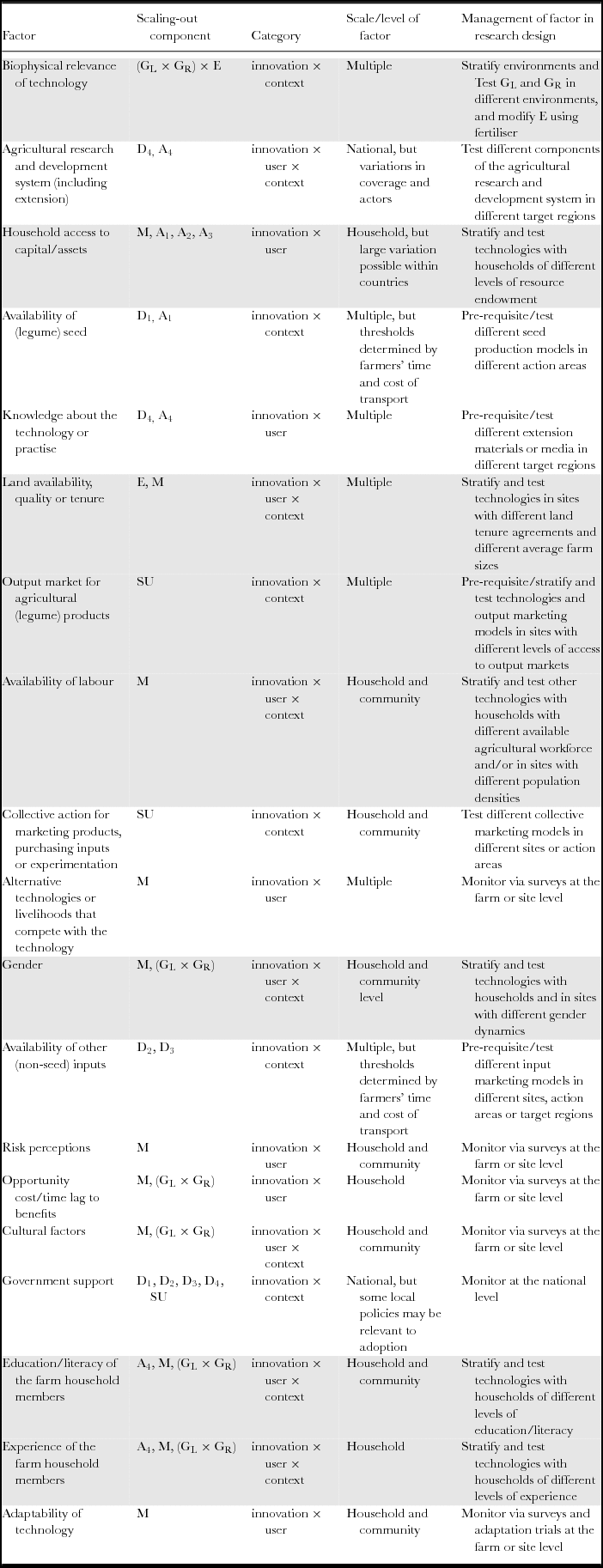
Where D1 is the delivery of/availability of legume genotypes; D2 is the delivery of/availability of strains of rhizobium; D3 is the delivery/availability of other inputs; D4 is the delivery of management practises or availability of information about such practises, and; SU is the marketing for sale and utilisation of the legume crop. A1 is the accessibility of legume genotypes for a farm; A2 is the accessibility of inoculant for a farm; A3 is the accessibility of other inputs for a farm; A4 is the accessibility of management practises for a farm. GL is the legume genotype; GR is the rhizobium strain; E is the environment, and; M is the management of the crop.
Shaded rows denote factors that require stratification.
For some factors, there exists the opportunity to demonstrate, test and adapt the innovations that are part of N2Africa's scaling-out programme. Factors which are prerequisites for adoption at the farm level are included in this category. These innovations are technologies which need to be relevant for farmers, and they are mechanisms for delivering and generating knowledge and training which must be effective. The innovations also include models of seed multiplication and diffusion as well as the production, marketing and delivery of rhizobia and other inputs. Likewise at the community level, the different models of selling and adding value to legume products can be tested.
The second category includes contextual factors that cannot be controlled but which will have an effect on the ‘fit’ of different legume technologies and practises, and the subsequent diversity of options. These factors include the climate and some general soil parameters, and to a certain extent land tenure and average land sizes, as well as some household/farm attributes. These factors need to be identified, measured and incorporated in the research design via stratification. The biophysical relevance of the technology will change for different reasons at different scales. At the field level within a farm, fields vary in soil fertility and in soil texture and drainage due to topography, past management, distance from the homesteads and intra-household issues such as ownership and gender dynamics. Farms also differ in soil characteristics and access to water, whilst at broader scales, there are differences in elevation, climate and geology. Other contextual factors include the resource endowment and production orientation of farmers, as well as the degree of poverty of aggregations of households.
A third category of factors operate in ways that are dynamic, difficult to predict and therefore difficult to stratify. These factors require monitoring and include government support or regulatory framework around inoculants, fertilisers, seed movement, seed certification, and agricultural development, extension and research priorities. A sub-set of factors acts at the household level and might not become apparent until the project is underway; these factors should be monitored and their effects evaluated during the course of the project.
INCLUDING ADOPTION FACTORS IN THE RESEARCH DESIGN OF A SCALING OUT PROGRAMME
The review of adoption factors provided recommendations for managing those factors in the research design of N2Africa. The management recommendations include (i) testing different technologies and practises; (ii) evaluating the performance of different technologies and practises in different contexts and (iii) monitoring factors which are dynamic or difficult to predict. In the following sections of this paper, we document and report on how the management recommendations in categories (i) and (ii) have been implemented and evaluated. More specifically, in this section, we address research question three:
RQ3. How can this research design be successfully operationalised in five countries with multiple and contrasting institutional settings?
Our approach to this practical question was two-fold. First, we created adoption domains for each N2Africa country based on important national level contextual factors. Second, we provided maps of the adoption domains and guidelines within the project plans on selecting locations for dissemination and evaluation activities.
We hypothesised that the incorporation of the determinants of adoption in the research design would lead to targeted differentiation of best bet technologies, practises and approaches amongst the different domains in which N2Africa operates. We expected certain technologies or models to be tested in different contexts (for instance, Sites in different adoption domains or households with different resource endowment levels), and we expected a range of best bet technologies or models to be tested in the same context (for instance, in the same Action Area, Site or with the same household).
N2Africa operates in 11 sub-Saharan African countries, five so called core countries and six Tier 1 countries. The two different sets of countries within N2Africa offer some possibilities for comparison because adoption domains were not created for Tier 1 countries and the characterisation of Tier 1 countries (Franke et al., Reference Franke, Rufino and Farrow2011) was not explicitly incorporated into the project planning. However, the activities in core and Tier 1 countries are different, and there are also core countries that participated in the first phase of N2Africa and those new countries that did not.
Stratification of contexts at multiple levels
The review of adoption studies showed that adoption factors affected the components of the N2Africa scaling out programme at different or multiple spatial levels. This implied that we needed to stratify at multiple levels depending on the adoption factor and the scaling out component (shaded rows in (Table 2)).
The first level of stratification was the choice of the country. Each country has distinct histories, sets of institutions, policies and cultures, which defined many institutional and policy conditions that affect the delivery and availability of agricultural inputs, knowledge and market opportunities. In each country, a number of Target Regions were identified. These Target Regions typically corresponded to administrative regions and were used mainly for organising project activities and impact assessment.
The next level of stratification was within the country to characterise the N2Africa Action Areas and guide the selection of Sites. Action Areas are sub-national administrative units often defined by the zone for which an agricultural extension officer is responsible. Within each Action Area, a selection of specific localities such as communities, villages or wards were selected; we refer to these localities as Sites.
Further levels of stratification within Action Areas and Sites were also necessary to select Farms, these lower levels of stratification are not discussed here but included variables such as farm resource endowment (e.g. Franke et al., Reference Franke, Baijukya, Kantengwa, Reckling, Vanlauwe and Giller2019), soil properties and landscape position.
Within country stratification and creation of Adoption Domains
To characterise Action Areas and select Sites we focussed on three factors affecting adoption that showed variation across each country: (1) Biophysical relevance of technology; (2) Land availability, quality or tenure and (3) Output market for grain legume products (Table 2).
For each of the factors, we sought the most appropriate indicators and data for each of the five core countries. We used variables in this stratification step that exhibited more variability across the country than within the Action Areas, and we modelled market access maps separately for each crop species in each country (Farrow, Reference Farrow2014). We stratified each indicator into two classes (e.g. Humid and Dry, Warm and Cool, Low population density and High population density) based on thresholds appropriate for the indicator and country.
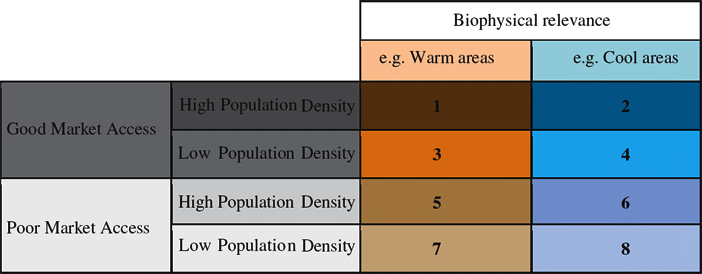
We combined the reclassified binary indicators to create domains (ASARECA, 2005; Homann-Kee Tui et al., Reference Homann-Kee Tui, Blümmel, Valbuena, Chirima, Masikati, Van Rooyen and Kassie2013; Notenbaert et al., Reference Notenbaert, Herrero, De Groote, You, Gonzalez-Estrada and Blummel2013; Okike et al., 2000; Weber et al., Reference Weber, Smith and Manyong1996) in which we could test N2Africa technologies, practises and models (Kristjanson et al., Reference Kristjanson, Place, Franzel and Thornton2002). The combination of factors resulted in eight possible adoption domains (Table 3) for each crop per country due to the different market access models.
Possible adoption domains based on binary stratification of indicators.
The characterisation of the six Tier 1 countries concentrated on climatic variables, population density and access to urban areas. These variables were not stratified nor combined to create adoption domains (Franke et al., Reference Franke, Rufino and Farrow2011).
Characterisation of action areas and selection of sites to guide development and research
We characterised each Action Area according to the adoption domains and made available the maps and spatial datasets of the domains. We incorporated adoption domains into the N2Africa development and research plans to ensure that development and research locations were selected from different domains. The inclusion of adoption domains was explicit as part of the protocol for selecting locations for demonstration and adaptation trials. These trials would test different legume varieties, inoculant products, fertiliser blends, organic soil amendments and management practises.
One of the main mechanisms of dissemination was through public–private partnerships (PPPs); these partnerships with commercial input suppliers and marketing companies operated in multiple Action Areas with only limited scope for pre-defining actual implementation sites.
Evaluation of targeting technologies, practises and approaches in N2Africa
To address RQ3, we reviewed current N2Africa activities to assess the extent to which adoption domains and other stratification tools and data had been used to target the testing and demonstration of technologies. We compiled information from all 11 N2Africa countries, comprising the five core countries (Ethiopia, Ghana, Nigeria, Tanzania and Uganda) and the six Tier 1 countries (DRC, Kenya, Malawi, Mozambique, Rwanda and Zimbabwe). The activities in the two sets of countries were slightly different with Tier I countries dedicated to scaling out the technologies that had been more intensively tested in the previous phase of the project.
Specifically, we compiled a matrix of which technologies were being tested, whether there was differentiation and if so at what scale. We included all of the components of the N2Africa scaling out programme (Figure 2) and assessed whether specific best bet technologies, practises or models were being tested or applied in multiple contexts, and also whether multiple best bets were being tested or applied in the same context.
RESULTS
Characterisation of action areas
Adoption domains were used to characterise Action Areas and to guide the choice of contrasting Sites within the Action Areas for testing different technologies or practises, or for monitoring the performance of a single component of an N2Africa package or intervention. Action Areas had already been tentatively selected in each of the five core countries before the characterisation. In the cases of Ghana and Nigeria, there were ongoing activities and partnerships that defined specific areas of activity. For the three new countries of Ethiopia, Tanzania and Uganda, there were multiple reasons for the choice of Action Areas, including the location of project partners, existing projects on grain legumes or regional initiatives for agricultural development.
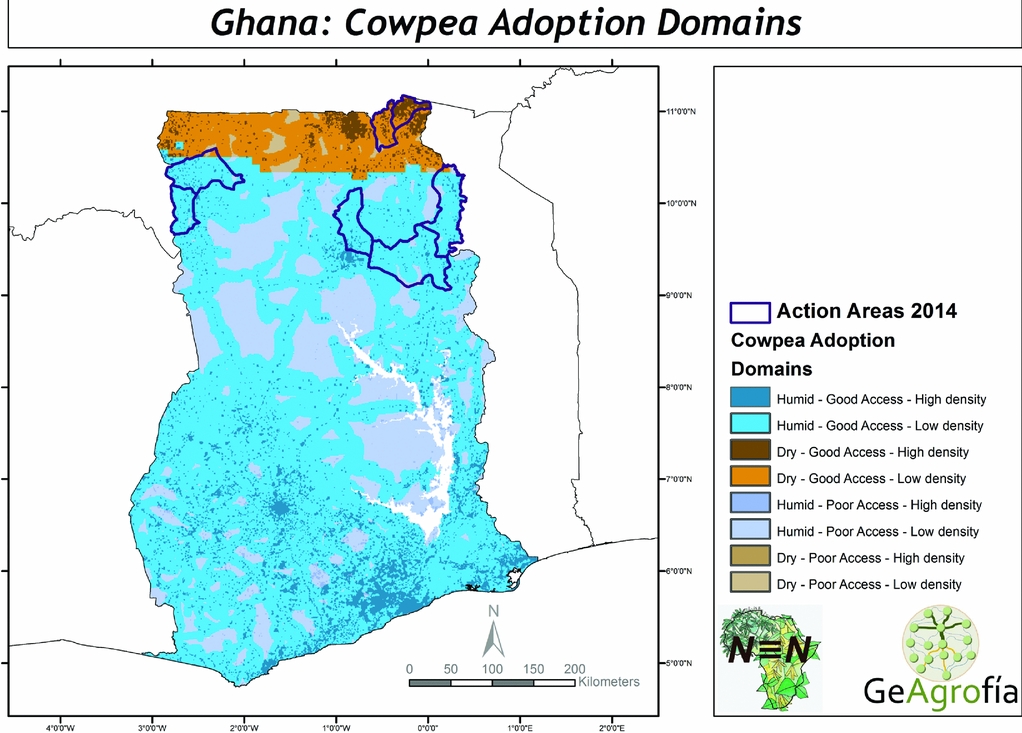
In Ethiopia, Ghana, Nigeria and Tanzania, all of the adoption domains were encountered in at least one Action Area, whilst in Uganda, all domains except one (warm – poor market access – high population density) were encountered in the Action Areas. In Nigeria and Tanzania, all eight domains were encountered in one Action Area (Kajuru and Lushoto), whilst in Ethiopia, up to seven different domains were encountered in a single Action Area (Akaki). In Ghana (Figure 3) and Uganda, the Action Areas were slightly more homogenous but still up to five and six domains, respectively were encountered. The implication for those Action Areas with multiple domains was that Site selection must be undertaken with care, but that the Action Areas offered opportunities for multiple niches to be considered. At the same time, many of the Action Areas were dominated by one domain (e.g. Kole in Uganda, Kiteto in Tanzania, Bunkure in Nigeria, Damot Gale in Ethiopia and Savelugu in Ghana) which implied that Site selection within these Action Areas was less important (Farrow et al., Reference Farrow, Wolde-Meskel, Adjei-Nsiah, Sangodele, Kamara, Nkeki, Baijukya and Ebanyat2014). Nevertheless, across the country, there was still a sufficient diversity of domains in which to test the N2Africa technologies or practises.
Adoption domains described in Table 3 as applied to the case of cowpea in Ghana within N2Africa.
Technologies, practises and models tested in different contexts
Test best bet legume varieties, rhizobium inoculants and fertiliser blends in different environments
Within N2Africa, six grain legume species – common bean (Phaseolus vulgaris L.), groundnut (Arachis hypogaea L.), soybean (Glycine max (L.) Merr.), chickpea (Cicer arietinum L.), faba bean (Vicia faba L.) and cowpea (Vigna unguiculata (L.) Walp.) – have been or are being tested in 11 different countries. At the country level, there is differentiation of the legume options being tested according to the policy, market and biophysical context (Table 4).
Operationalisation of N2Africa research design to manage factors affecting adoption of grain legume technologies and practises.
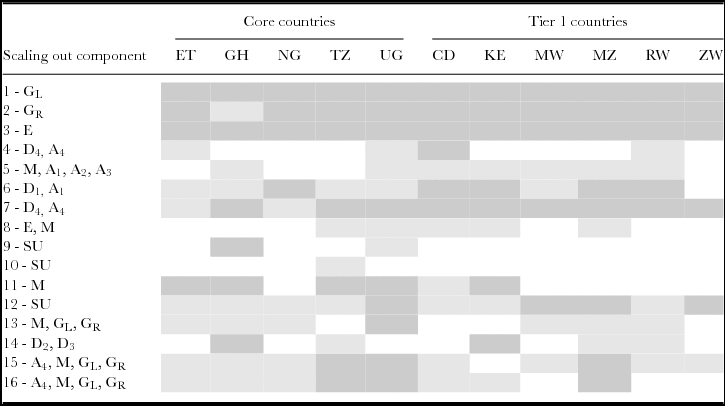
Dark shading = full Options by Context (OxC) testing. Light shading = partial OxC testing. No shading = no OxC testing.
1 = Test best bet legume varieties in different environments; 2 = Test best bet rhizobium inoculant products in different environments; 3 = Test best bet fertiliser blends in different environments; 4 = Test different components of the ARD system in different Target Regions; 5 = Test best bet technologies and practises with households of different levels of resource endowment; 6 = Test best bet seed production models in different Action Areas; 7 = Test best bet extension materials or media in different Target Regions; 8 = Test best bet technologies in Sites with different land tenure agreements or land endowment; 9 = Test best bet technologies in Sites with different levels of access to output markets; 10 = Test best bet output marketing models in Action Areas with different levels of access to output markets; 11 = Test best bet practises with households and in Sites with different population densities (or available agricultural workforce); 12 = Test best bet collective marketing models in different Sites or Action Areas; 13 = Test best bet technologies and practises with households and in Sites with different gender dynamics; 14 = Test best bet input marketing models in different Sites, Action Areas or Target Regions; 15 = Test best bet technologies and practises with households of different levels of education/literacy; 16 = Test best bet technologies with households of different levels of experience.
Where ET = Ethiopia; GH = Ghana; NG = Nigeria; TZ = Tanzania; UG = Uganda; CD = Democratic Republic of the Congo; KE = Kenya; MW = Malawi; MZ = Mozambique; RW = Rwanda; ZW = Zimbabwe.
Where D1 is the delivery of/availability of legume genotypes; D2 is the delivery of/availability of strains of rhizobium; D3 is the delivery/availability of other inputs; D4 is the delivery of management practises or availability of information about such practises and SU is the marketing for sale and utilisation of the legume crop. A1 is the accessibility of legume genotypes for a farm; A2 is the accessibility of inoculant for a farm; A3 is the accessibility of other inputs for a farm; A4 is the accessibility of management practises for a farm. GL is the legume genotype; GR is the rhizobium strain; E is the environment and M is the management of the crop.
Within countries, there was also targeting of species at the level of Target Regions, such as in Uganda and Mozambique or at the level of the Action Area as in Ethiopia and Zimbabwe. Multiple varieties of grain legume species were tested or demonstrated in all of the 11 countries except for Kenya, and different varieties were tested in different Action Areas in Nigeria (soybean), Ghana (groundnut), Tanzania (common bean and soybean) and in Malawi (soybean). Within Action Areas, there was no difference in the varieties or species being tested amongst the different sites, farm or fields, except in Rwanda where the farm cropping system – maize (Zea mays L.) or cassava (Manihot esculenta Crantz) – determined whether soybean or common bean, respectively were tested.
Rhizobium inoculant products were specific to legume species and previous research had shown that there was no consistent or strong interaction between different rhizobium strains and different varieties (Giller, Reference Giller2001). This implied that inoculant products were generally tested in the same locations as their respective legume species. Different rhizobium strains were tested for soybean in Nigeria, Ghana, Uganda, Tanzania, Malawi, Mozambique and Zimbabwe. Unlike legume varieties, different inoculant products were not readily available in all countries and depended on the number of suppliers, the existence of an inoculant supply-chain, and the agreements for testing different formulations as part of N2Africa PPPs.
Fertilisers were limited in their variety and only a single fertiliser product was tested or demonstrated in all Action Areas in Nigeria, Ghana, Ethiopia, Rwanda and Mozambique. However, in the other N2Africa countries (and in selected farms in Mozambique), different blends of fertiliser with micro-nutrients were tested widely. In Malawi, fertiliser was only demonstrated in combination with soybean, and in Zimbabwe, different fertiliser blends were used with different legume species. In Tanzania, different blends of fertiliser were tested in different Action Areas implying combinations of different fertilisers with different varieties of different legume species.
Test components of the agricultural research and development system in different target regions
During the first phase of N2Africa, a single extension model of training for farmers predominated: The participatory research extension, or ‘lead farmer’, approach, which is a training of trainers approach (Ellis-Jones et al., Reference Ellis-Jones, Schulz, Chikoye, De Haan, Kormawa and Adezwa2005). Whilst the approach envisaged roles in extension for the private sector and donors, the emphasis was on facilitation of farmer groups and training lead farmers to manage farm and field level research and demonstrations. This approach continued to be used in N2Africa in those countries that participated in the first phase (Nigeria, Ghana, Kenya, Malawi, Mozambique, Rwanda, DRC and Zimbabwe), as well as Tanzania. Ethiopia used mainly the lead farmer approach but was experimenting with a Farmers Technology Dissemination Group in 2015. The country with most diversity of extension approaches was Uganda which worked with three international NGOs in different target regions. Each NGO had a preferred extension method – Farmer Field Schools, Community-based-facilitators and Cooperatives. Because each operated in different Target Regions in Uganda with differing adoption domains the possibilities of testing different extension methods in the same context were limited. In Rwanda, different types of stakeholder platforms were leveraged according to the major partners in the different target regions, but in both countries, the testing of different systems was serendipitous rather than an explicit choice as part of the implementation design.
Test best bet technologies and practises with households of different levels of resource endowment
Differentiation in product packaging and pricing can lower the barriers for purchase and allow producers with different resource endowments to access these inputs (Kelly et al., Reference Kelly, Adesina and Gordon2003; Sperling and Boettiger, Reference Sperling and Boettiger2013). N2Africa worked with seed, inoculant and fertiliser suppliers and distributors, so there was the possibility of advocating for different pack sizes for experimentation and potentially to boost demand. Differentiation in pack size for soybean seeds occurred in Ghana, DRC, Kenya and Mozambique. In the latter two countries, inoculants were also available in different pack sizes. In Kenya, DRC and Malawi fertilisers were also available in different pack sizes.
Availability of staking materials was an important factor for the adoption of climbing beans in Uganda, Rwanda and Kenya, and in all three countries different staking options were tested that required differing quantities and costs of staking materials; in Uganda, one of these technologies could be adapted to use locally available materials such as banana, papyrus and sisal. To date, there was no differentiation of labour-saving devices that were being tested in the five core countries.
Test best bet seed production models in different action areas
The general availability of grain legume seeds depends on farmers saving a proportion of their harvest for seed, on traders or retailers selecting and reserving grain for seed, on specialised seed multipliers, or on donations by NGOs and government institutions. Donations are not a sustainable source of seed so N2Africa worked with other actors in the seed supply chain to produce sufficient quantities of grain legume seeds to meet the demand that successful scaling out implied.
Community-based seed production was the best bet model in most countries, but alternative seed production models were tested in Ethiopia, Uganda, Kenya and Mozambique. In Kenya, commercial and community-based soybean seed models were tested in all Target Regions whereas in Mozambique four different soybean seed production models were operating in three different sites in three different Action Areas. However, these models were not tested formally. In Uganda, N2Africa developed local seed business models with World Vision and the Integrated Seed Sector Development Programme in three Action Areas. Chickpea seed multiplication formed an important component of a PPP in Ethiopia, with a commercial producer linking to farmer cooperative unions.
Test best bet extension materials or media in different target regions
Availability of information on management practises for grain legumes, inoculants and fertilisers is an essential component of a scaling out programme for grain legumes. Extension materials and media are an important source of information and have been used extensively in N2Africa.
Leaflets, booklets and radio were the most common materials and media used. Countries with the most diverse range of media were Uganda, Tanzania, Malawi and Mozambique. Different media were often tested in different locations (e.g. Nigeria, Malawi, Mozambique and Zimbabwe) making it difficult to evaluate their effectiveness vis a vis other media or materials.
Test best bet technologies in Sites with different land tenure agreements or land endowment
Stratification according to land endowment was only carried out in Uganda, at both the Action Area and household level. In other countries, it was recognised that farm households had different land endowments but farmers were not selected purposively according to farm size. Detailed information on crop management and on farmer households hosting the try-outs was collected through the use of a farmer ‘field book’. This allowed ex post analysis of factors such as gender and resource endowment on technology performance (e.g. Franke et al., Reference Franke, Baijukya, Kantengwa, Reckling, Vanlauwe and Giller2019).
Land tenure systems vary across and within the N2Africa countries and it was recognised that farms where N2Africa technologies were tested or demonstrated had a mixture of land tenure arrangements, with private and traditional (communal) ownership mentioned in Nigeria and Malawi. In contrast, Ghana and Ethiopia were characterised by individual land ownership. Land tenure was not considered in stratification in those countries with a mixture of land tenure systems.
Test best bet technologies and output marketing models in sites and action areas with different levels of access to output markets
Collective marketing models were common in all countries but only in Ghana, Ethiopia, Uganda, Tanzania and Mozambique were other models evaluated. There was some evidence that market access was used in Tanzania to select or stratify the different Sites within a PPP, but these locations were primarily chosen in collaboration with partners and due to the location of soybean poultry feed processors. In Ethiopia, one PPP included all chickpea growing Action Areas and offers the opportunity for some evaluation of performance in areas of different market access.
Only in Ghana and Uganda was the physical access to output markets an explicit factor in choosing where and how to test technologies or approaches and in these two countries Action Areas and Sites, respectively were chosen according to their access to market.
Test best bet practises with households and in Sites with different available agricultural workforce
Population density or availability of labour was used in five of the eleven countries. In one of these countries – Ghana – population density was only used to select Action Areas, whereas in three countries – Uganda, Tanzania, and Kenya – it was used to select Sites and Action Areas. In four countries – Ethiopia, Uganda, Tanzania and Kenya – population density was used to select farms.
Test best bet collective marketing models in different sites or action areas
N2Africa relied on existing collective marketing approaches or groups working with partner organisations. This severely limited the possibilities for testing different approaches in the same Sites or Action Areas.
Some form of collective marketing was in place in all the countries, although it was not always practised in all Action Areas. For instance, in Ghana, it was only practised in one Target Region where there was a combination of sufficient soybean production and demand. In Tanzania, collective marketing was limited to three Action Areas where common bean was the major grain legume crop, whilst in Ethiopia Farmers’ Cooperative Unions were active in only a few Sites. The most diverse mix of collective marketing approaches was encountered in Mozambique where in addition to bulking by farmers associations there are sales directly to soybean processors as well as intermediated by traders or middlemen.
Test best bet technologies and practises with households and in sites with different gender dynamics
Gender disaggregation at the household level was common in all of the countries although gender was only used explicitly to stratify households in Ethiopia. In DRC, some of the N2Africa partners worked only with women groups whilst other partners worked with mixed groups of producers. Labour-saving devices were a technology aimed at women farmers but there was little mention of targeting of households or sites for this purpose in any of the core N2Africa countries.
Test best bet input marketing models in different sites, action areas or target regions
Input marketing models for fertiliser, inoculants and agricultural equipment have not been tested in depth in any of the N2Africa countries. Nevertheless, different models were studied in Tanzania, and over all the countries it would be possible to draw some lessons from performance of the agro-dealer model and the development organisation model.
Test best bet technologies and practises with households of different levels of education/literacy and different levels of experience
Disaggregation of the results of testing different technologies at the household level is possible in all of the countries that have these kinds of activities. However, only in Uganda, Tanzania and Mozambique were the farmers selected explicitly due to their differing levels of education and/or literacy. In none of the countries were Sites with different levels of average educational level selected purposively, perhaps due to a lack of sub-national data or because of competing criteria for selection.
Households with different levels of experience were selected on purpose to test technologies and practises in Ethiopia, Uganda, Tanzania and Mozambique, whereas in Nigeria and Ghana, this was a more chance occurrence rather than part of the research design. In DRC, there were differences in the experience of the farmer group (related to how long they had been established) rather than individual members.
DISCUSSION AND CONCLUSIONS
Our review of the drivers of adoption (Table 1) suggests that, at broad levels at least, some factors appear to be universally significant in the adoption of agricultural technologies and which should be incorporated in the research design. This contrasts with Tittonell et al. (Reference Tittonell, Scopel, Andrieu, Posthumus, Mapfumo, Corbeels, Van Halsema, Lahmar, Lugandu, Rakotoarisoa, Mtambanengwe, Pound, Chikowo, Naudin, Triomphe and Mkomwa2012) who concluded that ‘There are no universally significant factors that affect CA [conservation agriculture] adoption’ (pg. 169). Our review of the literature allowed us to assess the relative importance of different factors that affect the adoption of legumes at different levels. We determined the importance based on the frequency that a factor was mentioned in a specific study or paper. An improvement on our method would involve a meta-analysis to assess the importance of specific factors in individual studies (Pattanayak et al., Reference Pattanayak, Mercer, Sills and Yang2003; Wauters and Mathijs, Reference Wauters and Mathijs2014), yet this would have restricted our sample to quantitative assessments of adoption. Additionally, reliance on quantitative studies would increase the possibility of omitted variable bias (Wauters and Mathijs, Reference Wauters and Mathijs2014). We deliberately focussed on peer-reviewed journal papers as the universe of our literature search, due to the ease of querying bibliographic databases as well as the quality implied by the peer-review process. As a result, the literature suffers from publication bias in which studies not written in English, or with non-significant results or which have yet to be peer-reviewed are excluded (Haddaway et al., Reference Haddaway, Woodcock, Macura and Collins2015). Nevertheless, the initial findings from the N2Africa adaptation trials shows that the farm level factors affecting adoption were all captured in the review (Table 1), albeit with small modifications required.
We combined a number of different frameworks for organising the adoption factors into a design that could be implemented within a development to research project. The most useful frameworks were those of Sumberg (Reference Sumberg2005), Haigis et al. (Reference Haigis, Wezel, Rath, Graef, Muehlig-Versen, Abele, Frick, Neef, Lawrence, Renard and Von Oppen1998) and Ojiem et al. (Reference Ojiem, De Ridder, Vanlauwe and Giller2006). The framework of Sumberg (Reference Sumberg2005) was most theoretical and addressed most directly the context in which a technology or practise is used. From the N2Africa research design that emerged (Table 2), we can see that the context in which the N2Africa project operates is dynamic. The context is essentially everything outside of the boundary of the system but we have seen that it is difficult to define boundary conditions for all N2Africa interventions because the systems are not limited to field or farm but change according to activity and whether farmers are linked to other actors in a value chain (for example, through a public–private partnership). The separation of endogenous and exogenous factors is important for the research design of N2Africa and requires the identification of apparently exogenous factors which can be influenced by the project – such as seed systems and knowledge delivery – and those, like market infrastructure and the climate, which cannot.
We incorporated testing, stratification and activity site selection in the N2Africa design and planning, in order to evaluate and overcome the contextual factors that affected the adoption of grain legumes. However, the operationalisation was inevitably compromised by competing requirements for activity location selection, such as the practicalities of carrying out field research, the location of existing activities of project partners, new opportunities and the timing of the characterisation and stratification. Nevertheless, the characterisation of those broad contextual factors has allowed Action Areas and Sites to be seen within a context and for gaps to be identified. The adoption domains that were created were unlikely to be equally representative of either the rural population or the land area due to the deliberate choice of thresholds for the three factors, but instead represented niches in which the legume technologies needed to fit (Ojiem et al., Reference Ojiem, De Ridder, Vanlauwe and Giller2006), and for targeted diffusion of a new iteration of best bet technologies. Our use of domains for stratification and communication does not preclude the analysis of the adoption of specific technologies along a distribution (Franke et al., Reference Franke, Van Den Brand and Giller2014; van Wijk, Reference Van Wijk2014) of the constituent indicators, such as rainfall or access to legume markets. Of the three factors that comprised the adoption domains, the biophysical relevance of the technologies was most successfully incorporated in the implementation of research and development activities, perhaps due to the ease of defining the context and field system boundaries (Schut et al., Reference Schut, Van Asten, Okafor, Hicintuka, Mapatano, Nabahungu, Kagabo, Muchunguzi, Njukwe, Dontsop-Nguezet, Sartas and Vanlauwe2016). In contrast, the access-to-market context was more complex, spanning multiple spatial scales along value chains.
In general, there was greater evaluation of legume varieties than other technologies possibly given the relatively low number of inoculant and fertiliser products. Likewise in most countries, there were few models for input and output marketing that could be tested in the same environments. There were no consistent differences between core and Tier 1 countries in terms of whether best bet technologies, practises and models were being evaluated in different contexts.
Variety trials in the earlier phase of the project or in other grain legume projects provided many best bet varieties for evaluation in N2Africa (e.g. Ronner et al., Reference Ronner, Franke, Vanlauwe, Dianda, Edeh, Ukem, Bala, Van Heerwaarden and Giller2016). The diversity of both varieties and species across all the countries is large so as a whole the project has succeeded in matching the diversity of conditions in farmers’ fields with a basket of technology options (Weber, Reference Weber1996). Only in Uganda was there diversity of extension models, and this was due to the partnerships with Non-Governmental Organisations in different Action Areas. A mixture of seed production models only occurred in Mozambique. The number of different approaches for input and output marketing was low and in general we observed a reduction in the number of institutional options as the project concentrated on dissemination via public–private partnerships. Taken as a whole, we observe a differentiation of technologies and practises amongst the different countries participating in N2Africa, as well as notable differences within the countries. Yet, it is difficult to conclude that these differences were the result of targeting within adoption domains.
We did observe, however, that some contextual factors within sites led to different configurations of technologies and management practises. This shows that best fits are already being discovered at the farm level. Further research is necessary to see how best fits are determined at the Site and Action area levels and the potentially contradictory impacts of greater adoption and area sown to grain legumes without optimal productivity or biological nitrogen fixation. Another issue that will warrant further attention are the best fit configurations of the public–private partnerships. Due to the demands by value chain actors, the combination of multiple best fits – the legumes in the farm system, the input models and the output models – might lead to a reduction in the number of options and contexts that are successful as a public–private partnerships.
Good targeting implies that resources are used efficiently to test varieties that are agronomically or socio-economically suited to a location, to management practises that fit within the cropping or farm system, or to the promotion of marketing models where markets exist (Rosenstock et al., Reference Rosenstock, Mpanda, Rioux, Aynekulu, Kimaro, Neufeldt, Shepherd and Luedeling2014). The incorporation of the adoption factors in the research design ought to lead to better targeting of technological and institutional options and subsequently higher levels of adoption than without their incorporation. A significant challenge to evaluating the impact of targeting is the lack of clear counterfactual cases with which to compare the N2Africa countries (cf. Farrow et al., Reference Farrow, Opondo, Rao, Tenywa, Njeru, Kashaija, Kamugisha, Ramazani, Nkonya, Kayiranga, Lunze, Nabahungu, Kamale, Mugabo and Mutabazi2013). Furthermore, N2Africa considers that a farm household is an ‘adopter’ if, for three seasons, it uses at least two of the N2Africa technology components, e.g. a new variety, inoculant, fertiliser, or improved agronomic practises, on an area of at least 100m2. N2Africa also does not claim adoption whilst the project is actively promoting the technology (farmers are expected to be experimenting/testing/adapting). Only after at least 3 years can ‘sustainable adoption’, with increases in legume productivity and associated benefits, be claimed. We were therefore unable to assess the impact of the targeting in terms of adoption.
An objective of N2Africa is to learn what works best where, why and for whom as part of an iterative learning loop between development outcomes of a scaling out programme and research. The results and framework presented here are an important first step towards the construction of a database that explains how context affects best bets and leads to adoption of best fit technologies, practises and approaches. The lessons learned are also applicable to other initiatives that are scaling out agricultural innovations that are adopted by smallholder farmers, communities and agricultural value-chain actors.
Acknowledgements
We would like to thank the Bill & Melinda Gates Foundation for partnering in this research through a grant to Wageningen University to support the project N2Africa: Putting Nitrogen Fixation to Work for Smallholder Farmers in Africa (www.N2Africa.org).



 Open access

