





Introduction
Research indicates that traumatic life events play a causal role across the psychosis continuum, including the general population, ultra-high risk, and psychosis diagnoses (Arseneault et al., Reference Arseneault, Cannon, Fisher, Polanczyk, Moffitt and Caspi2011; Kelleher et al., Reference Kelleher, Keeley, Corcoran, Ramsay, Wasserman, Carli and Cannon2013; Kraan, Velthorst, Smit, de Haan, & van der Gaag, Reference Kraan, Velthorst, Smit, de Haan and van der Gaag2015; McGrath et al., Reference McGrath, McLaughlin, Saha, Aguilar-Gaxiola, Al-Hamzawi, Alonso and Kessler2017; Varese et al., Reference Varese, Smeets, Drukker, Lieverse, Lataster, Viechtbauer and Bentall2012). Higher rates of post-traumatic stress disorder (PTSD) and subclinical PTSD symptoms are also found in people with psychosis diagnoses compared to the general population, and voices and paranoia are associated with PTSD severity and diagnosis (Alameda et al., Reference Alameda, Rodriguez, Carr, Aas, Trotta, Marino and Murray2020; Bloomfield et al., Reference Bloomfield, Chang, Woodl, Lyons, Cheng, Bauer-Staeb and Lewis2021; Brewin & Patel, Reference Brewin and Patel2010; de Bont et al., Reference de Bont, van den Berg, van der Vleugel, de Roos, de Jongh, van der Gaag and van Minnen2015; Freeman et al., Reference Freeman, Thompson, Vorontsova, Dunn, Carter, Garety and Ehlers2013). A history of trauma is associated with poorer treatment outcomes and symptom persistence among those with a psychosis diagnosis (Hassan & De Luca, Reference Hassan and De Luca2015; Thomas, Höfler, Schäfer, & Trautmann, Reference Thomas, Höfler, Schäfer and Trautmann2019; Trotta, Murray, & Fisher, Reference Trotta, Murray and Fisher2015). Further research is required to understand the trauma-related psychological mechanisms which may contribute to the development and maintenance of psychosis (Schäfer & Fisher, Reference Schäfer and Fisher2011). An increased understanding of the trauma-related mechanisms implicated in this relationship may support improved assessment, treatment, and clinical outcomes for individuals across the psychosis continuum (Hardy, van de Giessen, & van den Berg, Reference Hardy, van de Giessen, van den Berg, Badcock and Paulik2020; Heriot-Maitland, Wykes, & Peters, Reference Heriot-Maitland, Wykes and Peters2021). This review will specifically focus on the role of negative trauma-related beliefs (also known as appraisals or cognitions) which reflect the meaning(s) an individual ascribes to trauamatic event(s), and can contribute to the development of trauma-related mental health problems (Ehlers & Clark, Reference Ehlers and Clark2000).
Seminal cognitive behavioral models of psychosis propose that the etiology of psychosis is multifactorial, involving an interaction between biological, psychological, and social factors (Freeman, Garety, Kuipers, Fowler, & Bebbington, Reference Freeman, Garety, Kuipers, Fowler and Bebbington2002; Garety, Kuipers, Fowler, Freeman, & Bebbington, Reference Garety, Kuipers, Fowler, Freeman and Bebbington2001; Morrison, Reference Morrison2001). The triggering of a biopsychosocial vulnerability is theorized to give rise to sensory-perceptual intrusions, with the meaning ascribed to intrusions resulting in delusions and hallucinations, leading to coping responses which may paradoxically maintain intrusions and their appraisals (Freeman et al., Reference Freeman, Garety, Kuipers, Fowler and Bebbington2002; Garety et al., Reference Garety, Kuipers, Fowler, Freeman and Bebbington2001; Morrison, Reference Morrison2001). PTSD symptoms (e.g. negative beliefs [also referred to as appraisals of cognitions] about the self and others, avoidance, hyperarousal and re-experiencing) are hypothesized to play a role in the development and maintenance of psychosis (Berry & Bucci, Reference Berry and Bucci2016; Hardy, Reference Hardy2017; Longden, Madill, & Waterman, Reference Longden, Madill and Waterman2012; Morrison, Frame, & Larkin, Reference Morrison, Frame and Larkin2003). Trauma-related beliefs about the self, others, and the world (e.g. ‘I'm bad and others will harm me’) are proposed to play a role in psychosis by influencing the content (e.g. hearing a voice saying ‘you're nothing and I'm going to get you’) and appraisals (e.g. ‘I'm being persecuted’) of unusual or anomalous experiences (Garety et al., Reference Garety, Kuipers, Fowler, Freeman and Bebbington2001; Morrison, Reference Morrison2001). Trauma-related beliefs are also likely to interact with emotional regulation and memory processes to further influence the occurrence and maintenance of psychosis symptoms (Hardy, Reference Hardy2017). For example, a belief that ‘the world is dangerous’ may lead to increased hypervigilance, which exacerbates the likelihood of interpreting ambiguous stimuli as threatening, or alterntively, a belief that ‘it was my fault’ may reinforce shame-laden trauma memories, which could intrude as derrogatory voices.
Systematic reviews and meta-analyses provide evidence to support the hypothesized role of negative beliefs (about the self, others, and the world) in psychosis, alongside emotion regulation difficulties, dissociation, attachment, and other PTSD symptoms (Alameda et al., Reference Alameda, Rodriguez, Carr, Aas, Trotta, Marino and Murray2020; Bloomfield et al., Reference Bloomfield, Chang, Woodl, Lyons, Cheng, Bauer-Staeb and Lewis2021; Humphrey, Bucci, Varese, Degnan, & Berry, Reference Humphrey, Bucci, Varese, Degnan and Berry2021; Sideli et al., Reference Sideli, Murray, Schimmenti, Corso, La Barbera, Trotta and Fisher2020; Williams, Bucci, Berry, & Varese, Reference Williams, Bucci, Berry and Varese2018). However, the reviews conducted to date are limited as they evaluate studies that measure negative schemas in general and do not focus specifically on the role of trauma-related beliefs. This limits the causal inferences that can be drawn, as it is not possible to establish if the beliefs reported are specifically linked to the meaning attributed to traumatic experiences. To the best of the researcher's knowledge, research investigating the relationship between trauma-related beliefs and psychosis symptoms has not been systematically reviewed nor the strength of the association evaluated. In contrast, evidence concerning trauma-related beliefs has been examined in relation to PTSD (Ehlers & Clark, Reference Ehlers and Clark2000; Foa, Ehlers, Clark, Tolin, & Orsillo, Reference Foa, Ehlers, Clark, Tolin and Orsillo1999). Meta-analyses have found a significant, large association between trauma-related beliefs and PTSD in both adult and child samples (de La Cuesta, Schweizer, Diehle, Young, & Meiser-Stedman, Reference de La Cuesta, Schweizer, Diehle, Young and Meiser-Stedman2019; Mitchell, Brennan, Curran, Hanna, & Dyer, Reference Mitchell, Brennan, Curran, Hanna and Dyer2017). Moreover, meta-analyses indicate that changes in trauma-related beliefs appear to be a mechanism of change in trauma-focused therapies for PTSD (Cooper, Zoellner, Roy-Byrne, Mavissakalian, & Feeny, Reference Cooper, Zoellner, Roy-Byrne, Mavissakalian and Feeny2017; Scher, Suvak, & Resick, Reference Scher, Suvak and Resick2017).
It is proposed that a review of research investigating trauma-related beliefs and psychosis symptoms is required to evaluate theoretical models and improve therapeutic interventions. The aim of the present review is to systematically examine the literature regarding the relationship between trauma-related beliefs and psychosis symptoms, including delusions, hallucinations, paranoia, and negative symptoms. The review will employ meta-analytic techniques to quantify the magnitude of the association between trauma-related beliefs and specific psychosis symptoms respectively.
Method
Literature search
PROSPERO was examined to identify reviews with an overlapping research question, none were identified. The review was registered on the PROSPERO database (registration no. CRD42022306118). Relevant studies were identified through a systematic search of the databases Medline, PsychINFO, Embase, Web of Science, CINAHL, and Cochrane. Search terms were developed based on an initial scoping review of the research literature, then reviewed by two subject librarians. To ensure a comprehensive search strategy, a range of search terms pertaining to psychosis and trauma-related beliefs were used as heading or key word searches (for search terms see supplementary materials). No date restrictions or search limits were used. The database search results were collated in an Endnote library and duplicates were removed. The results were then exported to the systematic review web application Rayyan for title and abstract and full-text screening conducted by the first author (R. F.). The initial search was conducted in March 2022 and updated in August 2023. To assess reliability of the selection process, 10% of abstracts and 10% of full-text articles were screened by a second rater (O. C.).
Inclusion criteria
The review followed the flow of information as suggested by the PRISMA statement (Page et al., Reference Page, McKenzie, Bossuyt, Boutron, Hoffmann, Mulrow and Moher2021). Studies were included if they; (i) used a quantitative or mixed methodology design; (ii) used a validated quantitative measure for psychosis symptoms; (iii) used a validated quantitative measure for trauma-related cognitions; (iv) were published in a peer-review journal; and (v) were written in English. Adult and adolescent samples (≥13 years) were included as well as clinical and non-clinical samples to capture individuals with subclinical psychosis as well as individuals along the psychosis continuum. Studies were included regardless of whether the primary focus of the paper was examining the association between psychosis symptoms and trauma-related beliefs.
Exclusion criteria
Studies were excluded if they; (i) were book chapters, conference abstracts, dissertations, qualitative studies, case studies, commentaries, editorials, or reviews; (ii) studies with participants < 13 years; and (iii) insufficient statistical information or authors did not respond to request for data.
Quality assessment
Studies were assessed using an adapted version of the Quality Assessment Tool for Quantitative studies (Thomas, Ciliska, Dobbins, & Micucci, Reference Thomas, Ciliska, Dobbins and Micucci2004; for adapted rating scale and scoring dictionary see supplementary material). The measure was adapted to be consistent with the aim of the present review; therefore, sections C, D, and G were removed as these are only relevant for reviews of randomized control trials. The tool included six components (rated weak, moderate, strong); (1) selection bias; (2) study design; (3) data collection tool psychosis symptoms; (4) data collection tool trauma-related beliefs; (5) withdrawals and drop-outs; and (6) analysis. Global ratings were calculated for each study; weak (two or more weak ratings), moderate (one weak rating), or strong (no weak rating). All studies were rated by R. F. and a proportion of the studies (20%) were rated by a second-rater (O. C.).
Data extraction
Data extracted from each study included; study details (author, year, country, study design, sample); demographics (age, sex, ethnicity); trauma-related cognitions measure; psychosis symptom measure; key findings regarding the association between trauma-related cognitions and psychosis symptoms (see Table 1).
Summary of studies
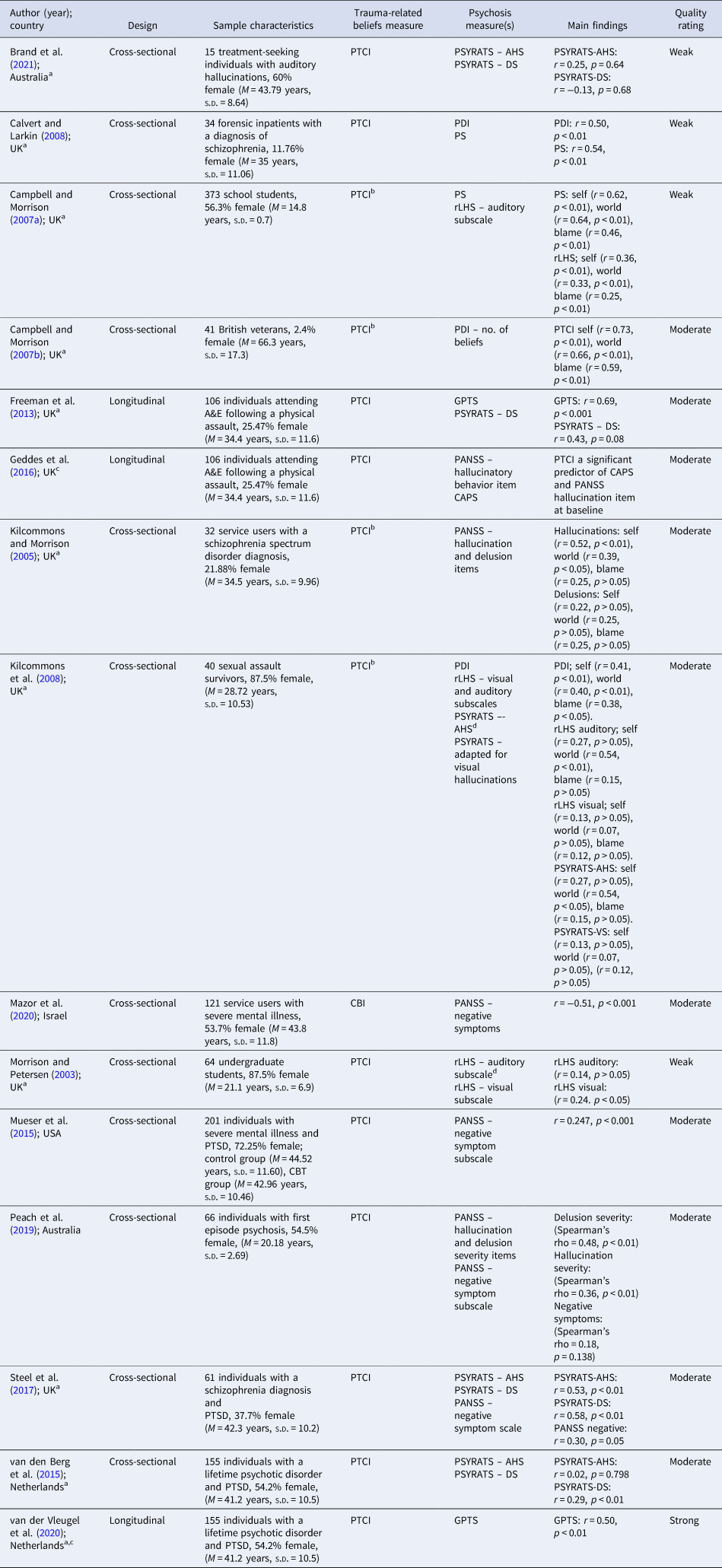
PTCI, Posttraumatic Cognitions Inventory; CBI, Core Beliefs Inventory; PSYRATS-AHS, Psychotic Symptoms Rating Scale – auditory hallucinations scale; PSYRATS-DS, Psychotic Symptoms Rating Scale – delusions scale; PDI, Peterson Delusion Inventory; PS, Paranoia Scale; rLHS, Launay-Slade Hallucination Scale-revised; GPTS, Green Paranoia Thought Scale; CAPS, Cardiff Anomalous Perceptions Scale; PANSS, Positive and Negative Syndrome Scale.
a Study included in meta-analysis.
b No composite PTCI score available – mean of subscale associations extracted for meta-analysis.
c Uses secondary data (please see method section).
d Indicates measure selected for meta-analysis when more than one measure was used to assess the same psychosis symptom.
Data analysis
Separate meta-analyses were conducted to examine the relationship between trauma-related cognitions and severity of each psychosis symptom. A meta-analysis was conducted if four or more studies reported the unadjusted association between trauma-related beliefs and the specific psychosis symptom – this threshold was set by the authors during pre-registration. For the meta-analyses, Pearson's r was chosen as this was a commonly reported effect size measure across studies. If Pearson's r was not reported, authors were contacted for further information. Seven authors provided additional data and one author could not be reached (see supplementary material). Reporting multiple effect sizes for the same study would violate the assumption of independence required to conduct a meta-analysis (Borenstein, Hedges, Higgins, & Rothstein, Reference Borenstein, Hedges, Higgins and Rothstein2010). If studies used the same dataset, only one study was included in the meta-analysis. If effect sizes were provided for more than one time point, the first time point (i.e. baseline data) was included. If multiple correlations were reported for different subscales of the same measure rather than a composite score, and authors did not provide the data requested, these associations were combined for use in the meta-analysis (for scores reflecting aggregated mean please see Table 1). In studies where multiple measures were utilized for the same psychosis symptom (e.g. hallucinations), the measure used for the analysis is indicated in Table 1. The measure selected was based on the most frequently measured psychosis symptom or domain (e.g. auditory as opposed to visual hallucinations) across other studies included in the review.
The meta-analyses were conducted in Rstudio using the metafor package in R (Viechtbauer, Reference Viechtbauer2010). There was expected to be considerable methodological and clinical heterogeneity across studies, so random-effects models were used (Borenstein et al., Reference Borenstein, Hedges, Higgins and Rothstein2010). The effect sizes were converted to Fisher's z scores to minimize the risk of bias associated with Pearson's r, then converted back to Pearson's r to provide a summary correlation (Borenstein et al., Reference Borenstein, Hedges, Higgins and Rothstein2010). Cohen's guidelines (Cohen, Reference Cohen1988) for effect sizes were applied; small (r = 0.10), moderate (r = 0.30), and large (r = 0.50). Heterogeneity across studies was assessed via Q and I 2 statistics; heterogeneity is indicated by a statistically significant Q test or by a higher I 2 statistic. I 2 higher than 25, 50, 75% may be interpreted as representing low, moderate, or high level of heterogeneity, respectively (Higgins, Thompson, Deeks, & Altman, Reference Higgins, Thompson, Deeks and Altman2003). Funnel plots were inspected for possible asymmetry which may indicate risk of publication bias as indicated by a significant Egger's test statistic (Egger, Davey Smith, Schneider, & Minder, Reference Egger, Davey Smith, Schneider and Minder1997). ‘One study removed analyses’ were completed to consider if any of the studies had a substantial influence on the results.
Results
Search results
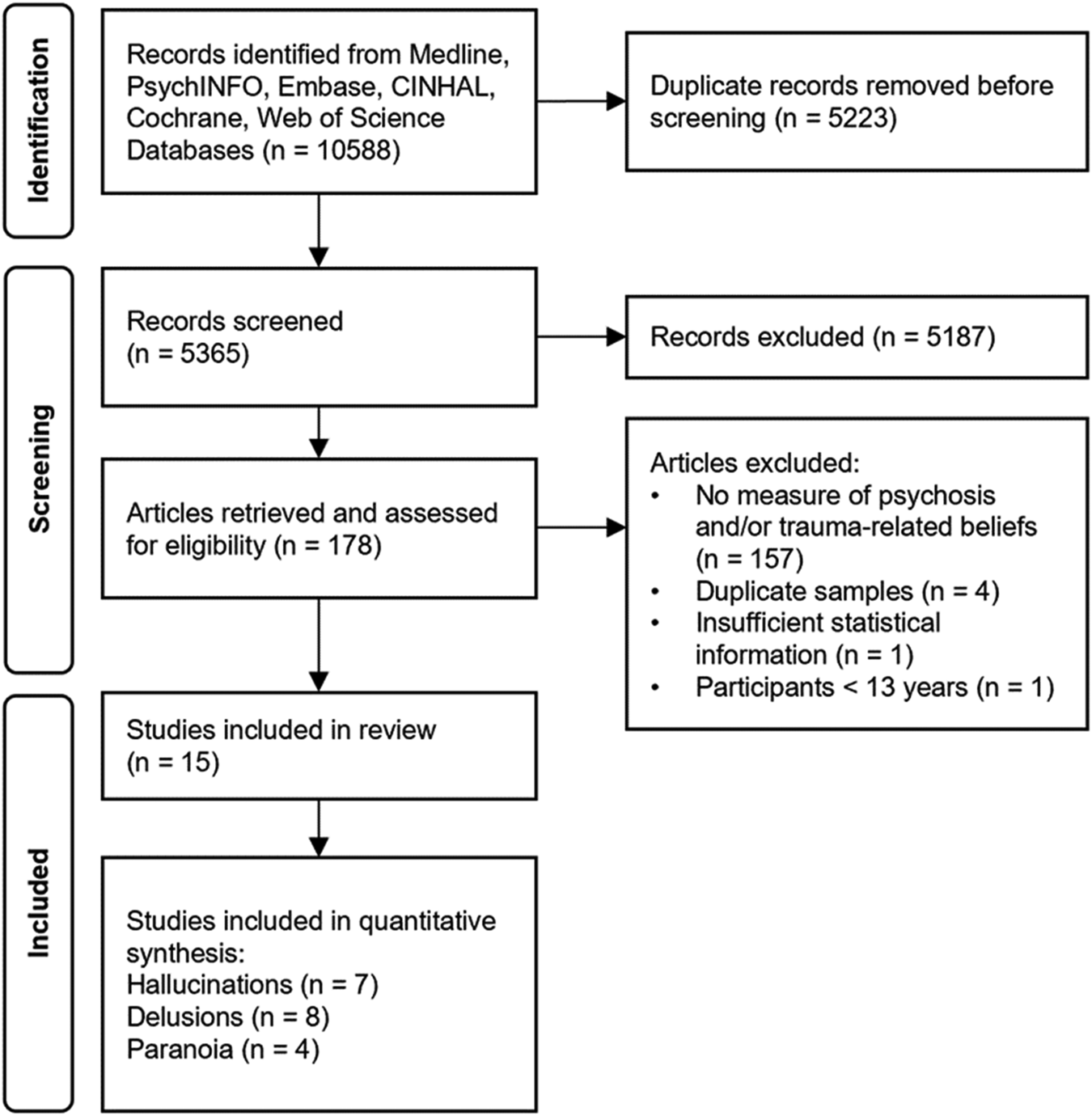
The literature search and the study selection process are illustrated in Fig. 1. Fifteen studies met the systematic review inclusion criteria. Eleven studies were included in the meta-analyses (see Table 1). Two studies drew participants from the Treating Trauma in Psychosis (T.TIP) trial (van den Berg et al., Reference van den Berg, de Bont, van der Vleugel, de Roos, de Jongh, Van Minnen and van der Gaag2015; van der Vleugel et al., Reference van der Vleugel, Libedinsky, de Bont, de Roos, van Minnen, de Jongh and van den Berg2020). In addition, Geddes, Ehlers, and Freeman (Reference Geddes, Ehlers and Freeman2016) drew participants from the same local population as Freeman et al. (Reference Freeman, Thompson, Vorontsova, Dunn, Carter, Garety and Ehlers2013). One study included a sexual assault sample and a control sample (Kilcommons, Morrison, Knight, & Lobban, Reference Kilcommons, Morrison, Knight and Lobban2008), but findings regarding the association between trauma-related beliefs and psychosis symptoms were only measured and reported in relation to the sexual assault sample, therefore, the control group has not been included in this summary of study characteristics or in the review. Inter-rater reliability showed perfect levels of agreement for title and abstract screening (100% inter-rater reliability) and almost perfect levels for full-text eligibility (kappa = 0.82, p < 0.001; McHugh, Reference McHugh2012).
PRISMA flow diagram.
Study characteristics
A summary of each study can be found in Table 1. The identified studies included 1309 unique participants; 53.1% were female, age ranged from 14 to 89 years, with a mean of 36.69 years. Studies were conducted across five different countries, most commonly in the United Kingdom. Nine studies reported ethnicity, two of which drew from the same sample; 54.9% Caucasian, 28.9% Black, 1.5% Asian, 9.2% mixed/other ethnicity, 5.5% not specified or recorded as missing. Ten studies were conducted using clinical samples and five with non-clinical samples. Nine studies included participants with severe mental illness (psychotic disorder, major affective disorder, and/or personality disorder). Three study samples were characterized by a shared traumatic experience (sexual assault, physical assault, or combat) and two characterized by student populations.
Study quality
The global quality appraisal scores can be found in Table 1 (for domain-specific quality ratings please see supplementary material). Most studies received a ‘weak’ or ‘moderate’ quality rating. Only one study received a ‘strong’ quality rating. Studies generally scored lower on selection bias as a participation rate of less than 60% was reported or participants self-referred to the study. Most studies also scored lower due to being cross-sectional in nature. Inter-rater reliability for global quality appraisal score was 100%.
Meta-analysis
Hallucinations
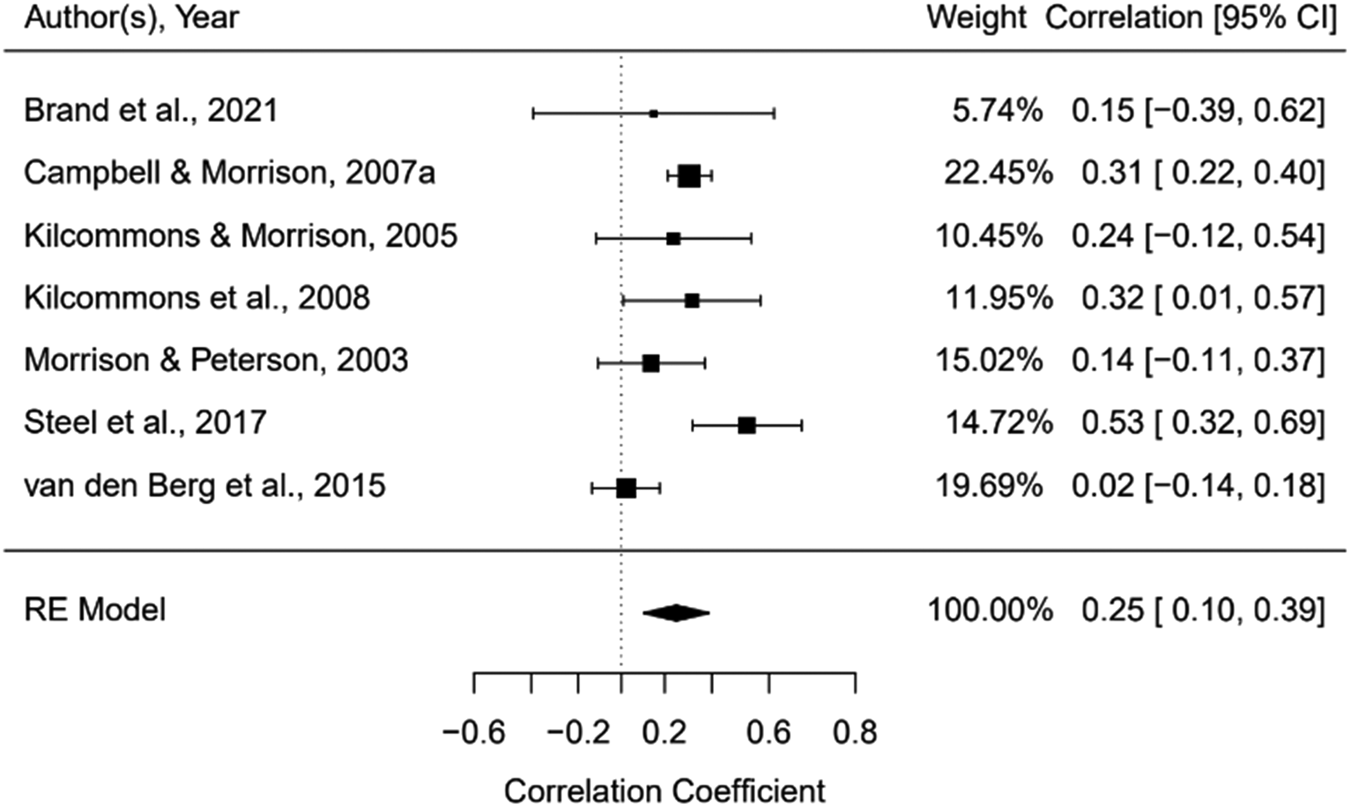
Nine studies investigated the relationship between hallucinations and trauma-related beliefs: including seven Pearson's r correlations for meta-analysis (n = 740). The meta-analysis showed a small to moderate significant positive association between hallucination severity and trauma-related beliefs (r = 0.25, 95% CI 0.10–0.39, z = 3.27, p < 0.001; see Fig. 2). Heterogeneity was in the moderate range (Q = 17.63, df = 6, p = 0.007, I 2 = 66.8). Visual inspection of the funnel plot showed publication bias to be unlikely. This was confirmed by Egger's test which found no evidence of publication bias (p = 0.93). One study removed analysis revealed that no study had substantial influence on the results.
Forest plot of the relationship between trauma-related beliefs and hallucinations.
Delusions
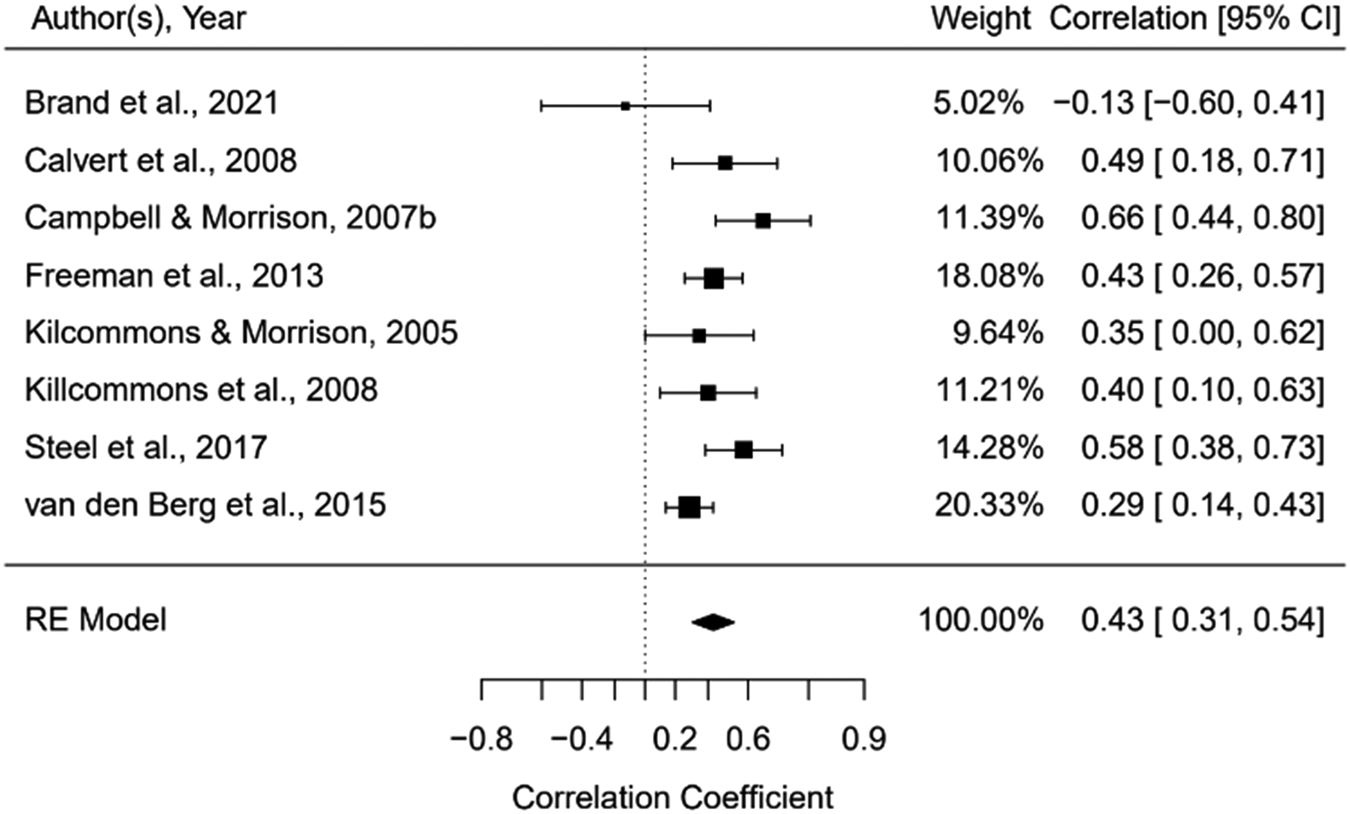
Nine studies investigated the relationship between delusions and trauma-related beliefs: including eight Pearson's r correlations for meta-analysis (n = 484). The meta-analysis showed a moderate to large significant, positive association between delusion severity and trauma-related beliefs (r = 0.43, 95% CI 0.31–0.54, z = 6.42, p < 0.001; see Fig. 3). Heterogeneity was in the moderate range (Q = 15.05, df = 7, p = 0.040, I 2 = 49.45). Visual inspection of the funnel plot showed publication bias to be unlikely. This was confirmed by Egger's test which found no evidence of publication bias (p = 0.47). One study removed analysis revealed that no study had substantial influence on the results.
Forest plot of the relationship between trauma-related beliefs and delusions.
Paranoia
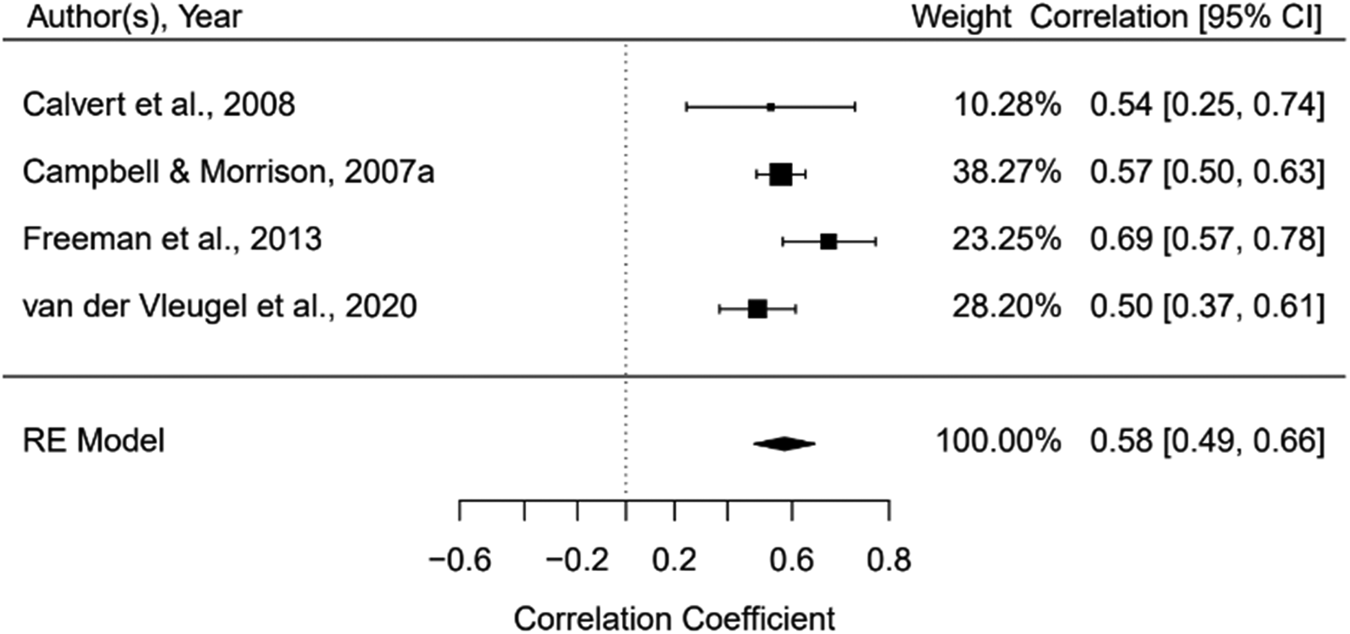
Four studies investigated the relationship between paranoia and trauma-related beliefs and Pearson's r correlations were available for the four studies (n = 668). The meta-analysis showed a significant large, positive association between paranoia and trauma-related beliefs (r = 0.58, 95% CI 0.49–0.66, z = 10.27, p < 0.001; see Fig. 4). Heterogeneity was in the moderate range (Q = 5.63, df = 3, p = 0.131, I 2 = 51.72). Visual inspection of the funnel plot showed publication bias to be unlikely. This was confirmed by Egger's test which found no evidence of publication bias (p = 0.95). One study removed analysis revealed that no study had substantial influence on the results.
Forest plot of the relationship between trauma-related beliefs and paranoia.
Negative symptoms and trauma-related beliefs
Data from four studies were available regarding the association between negative symptoms and trauma-related beliefs (Mazor, Gelkopf, & Roe, Reference Mazor, Gelkopf and Roe2020; Mueser et al., Reference Mueser, Gottlieb, Xie, Lu, Yanos, Rosenberg and McHugo2015; Peach, Alvarez-Jimenez, Cropper, Sun, & Bendall, Reference Peach, Alvarez-Jimenez, Cropper, Sun and Bendall2019; Steel et al., Reference Steel, Hardy, Smith, Wykes, Rose, Enright and Mueser2017). Only three studies included Pearson's r correlation coefficient; therefore, a meta-analysis was not conducted as the number of studies was below the threshold set at pre-registration. All studies were conducted amongst clinical samples. Evidence concerning the association between negative symptoms and trauma-related beliefs was mixed. A significant association between trauma-related beliefs and negative symptom severity was reported amongst a sample of individuals with serious mental illness and co-occurring PTSD (Mueser et al., Reference Mueser, Gottlieb, Xie, Lu, Yanos, Rosenberg and McHugo2015). Two studies did not find evidence of a significant association between trauma-related beliefs and negative symptoms; the studies were conducted amongst a sample with co-occurring schizophrenia and co-occurring PTSD (Steel et al., Reference Steel, Hardy, Smith, Wykes, Rose, Enright and Mueser2017) and with first-episode psychosis (Peach et al., Reference Peach, Alvarez-Jimenez, Cropper, Sun and Bendall2019). Diagnostic heterogeneity across the study samples may account for the differences between study findings.
Another study which measured trauma-related beliefs using the Core Beliefs Inventory (CBI; Cann et al., Reference Cann, Calhoun, Tedeschi, Kilmer, Gil-Rivas, Vishnevsky and Danhauer2010) reported a significant association with negative symptoms (Mazor et al., Reference Mazor, Gelkopf and Roe2020). The CBI measures disruption to a person's assumptive world following traumatic life events (Cann et al., Reference Cann, Calhoun, Tedeschi, Kilmer, Gil-Rivas, Vishnevsky and Danhauer2010). Lower levels of negative symptoms were associated with higher levels of re-examination of core beliefs, which led to higher levels of posttraumatic growth. Overall, there was mixed evidence regarding the association between negative symptoms and trauma-related beliefs.
Discussion
The present review systematically examined research investigating the associations between trauma-related beliefs and psychosis symptoms, including hallucinations, delusions, paranoia, and negative symptoms, and the magnitude of these associations. The review identified 15 studies eligible for inclusion, with 11 studies eligible for inclusion in the meta-analyses.
The meta-analyses findings provide evidence for significant positive associations between trauma-related beliefs and psychosis symptoms, including hallucinations, delusions, and paranoia. A large association was observed between trauma-related beliefs and paranoia severity, a moderate to large association between trauma-related beliefs and delusion severity, and a small to moderate association between trauma-related beliefs and hallucination severity. The strength of the association observed for paranoia and delusions is similar to that observed in meta-analyses examining the association between trauma-related beliefs and PTSD (de La Cuesta et al., Reference de La Cuesta, Schweizer, Diehle, Young and Meiser-Stedman2019; Mitchell et al., Reference Mitchell, Brennan, Curran, Hanna and Dyer2017). It is possible that trauma-related beliefs may have a greater influence on paranoia and delusions compared to hallucinatory experiences given how they are both primarily conceptualized as appraisal-based phenomena. Accordingly, paranoia assessments focus on appraisals and their impact, whereas for hallucinations the emphasis is on their sensory-perceptual characteristics and effects.
The results provide support for cognitive-behavioral models of psychosis, which highlight the role of trauma-related beliefs in the development and maintenance of psychosis (Garety et al., Reference Garety, Kuipers, Fowler, Freeman and Bebbington2001; Hardy, Reference Hardy2017; Morrison, Frame & Larkin, Reference Morrison, Frame and Larkin2003). It is theorized that trauma-related beliefs, characterized by threat and vulnerability, influence the content and appraisals of unusual or anomalous experiences, resulting in hallucinations and delusions, consistent with their hypothesized role in re-experiencing symptoms in PTSD (Ehlers & Clark, Reference Ehlers and Clark2000). Trauma-related beliefs are also likely to interact with other putative mechanisms, such as PTSD symptoms of hyperarousal, avoidance, dissociation, emotions, memories, and nightmares, in influencing psychosis. However, little is known about the relative contributions of trauma-related mechanisms to psychosis. Network analyses of clinical and non-clinical samples indicate potential associations between emotions, emotional regulation (particularly dissociation), interpersonal relating, trauma-related beliefs, and psychosis symptoms (Barnes, Emsley, Garety, & Hardy, Reference Barnes, Emsley, Garety and Hardy2023; Chung et al., Reference Chung, Yun, Nguyen, Rami, Piao, Li and Kim2021; Cui et al., Reference Cui, Piao, Kim, Lee, Kim, Yu and Chung2020; Fung et al., Reference Fung, Wong, Moskowitz, Chien, Hung and Lam2024; Hardy, O'Driscoll, Steel, van der Gaag, & van den Berg, Reference Hardy, O'driscoll, Steel, Van Der Gaag and Berg2021; Isvoranu et al., Reference Isvoranu, van Borkulo, Boyette, Wigman, Vinkers and Borsboom2017). In support of this, a large ecological momentary sampling study of PTSD and psychosis symptoms conducted over 6 days found complex PTSD symptoms (i.e. negative self-concept, emotional regulation, and interpersonal difficulties) played a greater role than PTSD symptoms (i.e. re-experiencing, avoidance, hyperarousal) in predicting paranoia, voices, and visions from moment-to-moment (Panayi et al., Reference Panayi, Peters, Bentall, Hardy, Berry and Varesein press). This finding may seem paradoxical, given that targeting trauma memories is a core element of trauma therapies and has been found to reduce paranoia and voice severity (Brand, Bendall, Hardy, Rossell, & Thomas, Reference Brand, Bendall, Hardy, Rossell and Thomas2021; Keen, Hunter, & Peters, Reference Keen, Hunter and Peters2017; Ison, Medoro, Keen, & Kuipers, Reference Ison, Medoro, Keen and Kuipers2014; Paulik, Steel, & Arntz, Reference Paulik, Steel and Arntz2019; van der Vleugel et al., Reference van der Vleugel, Libedinsky, de Bont, de Roos, van Minnen, de Jongh and van den Berg2020; Varese et al., Reference Varese, Sellwood, Pulford, Awenat, Bird, Bhutani and Bentall2024). However, focusing on memories of past experiences, alongside supporting emotional regulation, may assist the processing or management of associated beliefs, emotions, and coping styles that contribute to PTSD and psychosis symptoms. Future research should aim to better understand the interplay between PTSD and psychosis symptoms, and the interventions that optimally target them.
The narrative synthesis summarized research regarding the association between trauma-related beliefs and negative psychosis symptoms. A meta-analysis was not conducted given the limited number of studies and data required for the analysis. Whilst some studies provided evidence of a significant association (Mazor et al., Reference Mazor, Gelkopf and Roe2020; Mueser et al., Reference Mueser, Gottlieb, Xie, Lu, Yanos, Rosenberg and McHugo2015) others did not (Peach et al., Reference Peach, Alvarez-Jimenez, Cropper, Sun and Bendall2019; Steel et al., Reference Steel, Hardy, Smith, Wykes, Rose, Enright and Mueser2017). It is plausible that trauma could result in negative symptoms, as self-efficacy and self-defeatist beliefs are theorized to underlie negative symptoms (Grant & Beck, Reference Grant and Beck2009), which could relate to trauma-related beliefs including self-blame and negative beliefs about the self. Alternatively, trauma-related threat beliefs may lead to withdrawal and avoidance, which could further contribute to negative symptoms (Hardy et al., Reference Hardy, van de Giessen, van den Berg, Badcock and Paulik2020). Further work is required to better understand whether trauma-related beliefs play a role in negative symptoms of psychosis.
The present review has several limitations. There was a relatively small number of studies available for inclusion which were conducted across different populations (e.g. adolescents and adults from non-clinical and clinical samples, with heterogeneous diagnoses). In the meta-analyses moderate to high levels of heterogeneity were observed. The findings may be influenced or explained by methodological variation in the included studies, the true effect size could be smaller or larger than estimated. In addition, as requested data from authors were not provided in some cases, mean correlations for subscales were used in the meta-analysis. As computing a correlation is non-linear, the meta-analytic results should be interpreted with caution. The quality rating for most studies was weak to moderate which may introduce the risk of bias. Studies with a strong quality rating are required to assess the generalizability of the review findings. Given the limited number of studies it was not possible to conduct meta-regression analysis to account for the impact of methodological differences across studies. A further limitation of the review was the exclusion of unpublished studies and grey literature. It is possible relevant studies with null findings may have been omitted (Rosenthal, Reference Rosenthal1979). Most eligible studies were of a cross-sectional design. There were few longitudinal studies included in the review and further research is required to investigate the causal role of trauma-related beliefs in psychosis, such as the currently underway STAR and ReProcess trials (Burger et al., Reference Burger, van der Linden, Hardy, de Bont, van der Vleugel, Staring and van den Berg2022; Peters et al., Reference Peters, Hardy, Dudley, Varese, Greenwood, Steel and Morrison2022).
The experience of trauma and psychosis has been associated with poorer treatment outcomes and symptom persistence (Hassan & De Luca, Reference Hassan and De Luca2015; Thomas et al., Reference Thomas, Höfler, Schäfer and Trautmann2019; Trotta et al., Reference Trotta, Murray and Fisher2015). An increased understanding of the mechanisms implicated in the relationship between trauma and psychosis may contribute to efforts to improve clinical outcomes for individuals across the psychosis continuum with a history of trauma exposure. Although a range of trauma-related mechanisms have been implicated in the relationship between trauma and psychosis, trauma-related beliefs may represent a key treatment target (e.g. Alameda et al., Reference Alameda, Rodriguez, Carr, Aas, Trotta, Marino and Murray2020; Bloomfield et al., Reference Bloomfield, Chang, Woodl, Lyons, Cheng, Bauer-Staeb and Lewis2021; Hardy et al., 2021; Humphrey et al., Reference Humphrey, Bucci, Varese, Degnan and Berry2021; Sideli et al., Reference Sideli, Murray, Schimmenti, Corso, La Barbera, Trotta and Fisher2020; Williams et al., Reference Williams, Bucci, Berry and Varese2018). There is increasing research interest regarding the use of trauma-focused therapies among individuals presenting with schizophrenia spectrum disorders (Burger et al., Reference Burger, van der Linden, Hardy, de Bont, van der Vleugel, Staring and van den Berg2022; Hardy, Good, Dix, & Longden, Reference Hardy, Good, Dix and Longden2022; Keen et al., Reference Keen, Hunter and Peters2017; Peters et al., Reference Peters, Hardy, Dudley, Varese, Greenwood, Steel and Morrison2022; Steel et al., Reference Steel, Hardy, Smith, Wykes, Rose, Enright and Mueser2017; van den Berg et al., Reference van den Berg, de Bont, van der Vleugel, de Roos, de Jongh, Van Minnen and van der Gaag2015). It was found that changes in trauma-related beliefs mediated change in paranoia in a trial of trauma therapies for PTSD in psychosis (van der Vleugel et al., Reference van der Vleugel, Libedinsky, de Bont, de Roos, van Minnen, de Jongh and van den Berg2020). We therefore hypothesize that trauma-focused therapies developed for PTSD which target threat, vulnerability, and self-blame may, in turn, reduce psychosis symptoms (Brand et al., Reference Brand, Bendall, Hardy, Rossell and Thomas2021; Hardy et al., Reference Hardy, Good, Dix and Longden2022; van den Berg et al., Reference van den Berg, de Bont, van der Vleugel, de Roos, de Jongh, Van Minnen and van der Gaag2015). However, further longitudinal research, which considers a range of possible mediating or moderating variables, is required to test this hypothesis.
In conclusion, this review is the first to provide empirical evidence for a specific association between trauma-related beliefs and positive psychosis symptoms. The findings provide support for cognitive-behavioral models regarding the role of trauma in psychosis and the targeting of trauma-related beliefs in psychological therapy to improve psychosis outcomes.
Supplementary material
The supplementary material for this article can be found at https://doi.org/10.1017/S0033291724002629.
Data availability statement
All data generated or analyzed are included in this published article or supplementary material files.
Acknowledgements
A. H. was part funded by the NIHR including the Maudsley Biomedical Research Centre at South London and Maudsley NHS Foundation Trust and King's College London.
Author contributions
R. F. and A. H. conceptualized the review. R. F. conducted the literature search, data extraction, data analysis, interpretation of the results, and manuscript preparation. O. C. was involved in the literature search and data extraction. A. H. contributed to the interpretation of results and the final manuscript preparation. All authors approved the final manuscript.
Funding statement
This research received no specific grant from any funding agency, commercial or not-for-profit sectors.
Competing interests
None.
Ethical standards
As this is a literature review and did not involve collection of data from human research participants, further approval of an ethical committee was not necessary.


 Open access

