


EU law scholarship is experiencing an empirical turn. Although early examples of research exploring legal aspects of European integration through empirical methods can be traced as far back as the late 1980s, it is the past decade that has brought about a veritable explosion of activity in this area. Scholars have published important quantitative and qualitative studies, relevant thematic networks have emerged, and large-scale projects with an empirical focus have received funding.Footnote 1 Perhaps unsurprisingly, the increasing popularity of empirical legal studies (ELS) in the EU has gone hand in hand with growing resistance against the new movement. ELS has been criticised for failing to understand the unique nature of (European) law, thus producing insights that have ultimately no relevance for its study.Footnote 2
The present chapter seeks to interrogate this proposition by asking a simple, yet fundamental question: does empirical legal research add anything to our understanding of EU law and, if so, what? Debates about the merits and demerits of ELS are as old as the field itself. US scholars have conducted empirical research on law-related topics for over a centuryFootnote 3 and have had fierce exchanges about the promise and pitfalls of ELS.Footnote 4 Similar discussions have emerged whenever empirical methods entered new jurisdictions or areas of law.Footnote 5 Typically, defenders of ELS stress the virtues of falsifiability, reproducibility, generalisability, and similar traits of empirical research which can benefit the analysis of legal phenomena. Critics point to the reductionism inherent to ELS, its excessive emphasis on objectivity and scientific rigour, as well as the methodological flaws marring individual studies.
Even though a significant body of empirical research has surfaced in EU law, there has, so far, only been limited reflection on the role and legitimacy of ELS.Footnote 6 It may be tempting to fill this gap by recycling the arguments exchanged in prior debates outside the EU context, but there is good reason to engage in a bespoke contemplation of the issue. Despite certain parallels, the different iterations of empirical legal scholarship have varied across time and space. The initial realist research in the US differs from the later law-and-society movement which, in turn, has little to do with the modern version of ELS that has emerged in the 2000s.Footnote 7 Similarly, the empirical legal research landscape in Europe appears to begin to deviate from its North American counterpart, focusing on different problems and employing different approaches.Footnote 8 Against this background, it is warranted to examine empirical legal research on EU law as a distinct, not detached, development.
Drawing on a number of examples from the European empirical legal literature, I will argue that ELS makes a three-fold contribution to the study of EU law: first, it allows us to investigate old questions which we have always been asking, but with different – often better suited – tools; second, it adds important new questions to the research agenda that previously escaped scholarly attention; third, it extends the concept of EU law, making it richer and more inclusive. This intellectual acquis is its strength but also makes ELS susceptible to two lines of critique. Some may see it as going too far, methodologically and substantively, from existing legal scholarship and discourse, others as not going far enough.
1.1 Empirical Legal Studies in the EU
What is ELS? At its most basic, it constitutes a combination of method (empirical) and object (law). While some ambiguities remain, there is an emerging consensus on both components of this definition. ‘Empirical’ is generally understood to include any evidence about the world based on observation or experience.Footnote 9 Although there are voices who seek to limit the range of acceptable evidence to that of quantitative nature,Footnote 10 the more common – and convincing – position is to include qualitative data.Footnote 11 Less thought has so far been given to the ‘legal’ dimension of ELS. The notion is usually interpreted widely, even though explicit definitions of its scope remain rare. The statute of the recently founded European Society for Empirical Legal Studies makes an attempt in this direction. It refers to any study that tries to ‘describe and explain the context within which the law is applied, the application itself of the law, and the impact which the application of laws and regulations has on this context’, underlining that ‘the questions of how to determine the characteristics and the application of valid law (along with the societal implications of this process) [are] two equally valid and interesting research questions’.Footnote 12 The European Journal of Empirical Legal Studies embraces a similarly broad definition.Footnote 13 In the EU context, any reference to law relates to the law or, more generally, legal order of the European Union and its Member States.
A significant body of scholarship on EU law fulfills these elementary criteria. But one would err in thinking of that body as a uniform whole. Instead, EU-focused ELS shows signs of variation in relation to both method and object, which poses intriguing questions about the state and boundaries of the field.
Let me start with the former. As already noted, ELS is, in theory, open to any empirical method. However, in practice, often quantitative approaches dominate. This is true of the current wave of ELS in the US, as well as more recent offshoots in countries such as Germany and Israel or substantive areas such as private and comparative constitutional law. In EU law, too, we see many – probably the majority of – ELS studies employing quantitative tools. But there is a relatively high(er) number of qualitative research as well. Interviews constitute a particularly popular tool which has, inter alia, been used to investigate the behaviour of Member State judges,Footnote 14 the implementation of European environmental standards,Footnote 15 and the application of EU rules on classified information.Footnote 16 Systematic content analysis, which combines qualitative and quantitative insights, is likewise gaining traction as a means of analysing court rulings, antitrust decisions, and other types of legal text.Footnote 17
There is also variation as to the degree of empiricism applied. Different projects embrace the empirical method to different extents. Despite the growth of ELS in EU law, at present a large share of research continues to resort to fairly simple methodological tools. In many publications the sole empirical information featured is frequencies (e.g., how many times the Court applies a certain doctrine or the Commission resorts to a certain provision) or other descriptive statistics (e.g., means or shares). There is a more than fleeting resemblance to the empirical scholarship produced by the pioneers of legal realism. Yet, we are, likewise, seeing a rapidly growing amount of empirically advanced work. Large-N studies, ambitious interview projects, and sophisticated data analyses are becoming increasingly widespread. More innovative methods that have entered other social sciences or jurisdictions outside of the EU, such as experimental research designsFootnote 18 and machine learning,Footnote 19 remain scare, though.
In addition to method, we see variation in relation to the object of study: EU law. This is linked to the question as to what counts as ‘legal’ for the purposes of empirical legal research. Some work rather evidently falls into this category. Think, for instance, of studies examining what role non-economic interests play in decisions on Article 101 TFEU,Footnote 20 how often national supreme courts cite foreign authorities,Footnote 21 or to what extent online traders comply with EU consumer law.Footnote 22 All of these are directly related to the foundational elements of a legal system: rules, judges, statutes. Which is not to say that all classical sources of law are equally well represented in ELS scholarship; the number of projects on litigation, for instance, eclipses those concerning legislation.Footnote 23 But, without much doubt, each of them constitutes an equally valid target of empirical enquiry.
Ambiguities may start to arise once our focus shifts ‘outward beyond the legal system’s institutional core or downward from the legal system’s intellectual peaks’.Footnote 24 Consider, to name but one example, research on trilogues. Given their enormous practical significance (they affect around 90 per cent of EU legislation) and constitutional sensitivity (they potentially collide with the principle of democracy), trilogues have attracted a great deal of academic interest over the past years.Footnote 25 Scholars have tried to understand the reasons underlying and factors determining the success of the process. A particular focus has been put on the internal perspectives of politicians, civil servants, and other actors participating in the negotiations. How do they behave during trilogues? What motivates their decisions? Which constraints are they under? The resulting scholarship has considerably advanced our understanding of European law-making. There is no doubt that it is empirical in nature, with interviews, quantitative evidence, and other types of data underpinning the findings. Whether it also constitutes legal research may, by contrast, be less evident. On the one hand, there is the substantive proximity to EU legislation and Court of Justice of the European Union (CJEU) case law, or what has just been called the foundational elements of the European legal order.Footnote 26 On the other, the work does not examine archetypical legal actors or sources (informal decisions made by subordinate decision-makers) and does not, at least not primarily, seek to interact with legal debates.Footnote 27
The purpose of this reflection is to illustrate the diversity of topics and approaches that are, or could be, captured under the banner of ELS. The empirical legal movement in Europe has rightly been committed to methodological and substantive inclusivity. This inclusivity means that the scholarship it produces touches partly on core aspects of EU law and legal discourse, but is also concerned partly with their penumbra.Footnote 28 One might, against this backdrop, wonder about where to draw the boundaries of ELS and whether it is even worth trying to draw them. What may, however, be a more rewarding and ultimately more relevant endeavour is to look in the opposite direction: to explore how ELS has expanded the boundaries of EU law and legal discourse.
1.2 Three Functions
The varied nature of empirical legal research has allowed it to make a three-fold contribution to EU legal scholarship. The contribution extends to the way in which we study EU law (methodological), which aspects of it we study (theoretical), and what we consider to fall within the field’s scope (conceptual).
1.2.1 Asking Old Questions about EU Law
A significant part of European ELS focuses on examining questions which have always pre-occupied EU lawyers, but employs empirical methods to answer them. This includes a vast array of topics ranging from the use of specific doctrines, to the development of case law in certain areas, to other phenomena related to adjudication and law-making. What typically motivates scholars here is a combination of two interrelated objectives: generating systematic (through quantitative means) or contextual (through qualitative means) knowledge on issues that were so far only partially understood, and using that knowledge to demonstrate that some conventional wisdoms about EU law might be false.
The literature on precedents and legal reasoning provides a good example. Both the grand arrêts of the CJEU and its methods of interpretation have, since the beginning, sparked great interest among academic observers. The mixed nature of EU law, which combines aspects of the civil law and common law traditions, has raised questions about the effect of CJEU rulings and the existence of a system of precedents.Footnote 29 Historically, legal scholars would study these issues by looking at individual high-profile judgments and draw – often contradictory – conclusions about their meaning as well as relative importance. This generated a set of beliefs around which rulings have been leading or influential in the establishing of the EU legal order and, relatedly, which of them hold precedential value, in the sense of creating legal principles that are employed to resolve future disputes.Footnote 30 Yet, these beliefs remained unverified.
A number of ELS researchers, including Derlén, Lindholm, Šadl, and Panagis, decided to investigate the matter by examining citation patterns in the Court of Justice’s jurisprudence.Footnote 31 Borrowing from the network analysis toolkit, they studied how often the Court cites which judgments, measuring their relative importance and influence on the case law over time. Their findings show that there are, indeed, rulings to which the Court resorts more frequently than others and which can, therefore, be seen as having precedential value. They also demonstrate that the Court rarely cites some judgments considered to be ‘classics’, while frequently citing others which EU lawyers would consider less important. Bosman is referenced more frequently than Cassis de Dijon, PreussenElektra considerably outperforms Van Gend en Loos.
This stream of scholarship has made an empirical contribution to the debate by measuring which judgments have a reasonable claim to influence in the Court’s case law. However, its most significant contribution may lie elsewhere. It has forced the field to reflect harder on the question as to what constitutes a precedential or leading case. Is the importance of a ruling measured by the number of times it is referenced in other rulings (or opinions of Advocates General, or Google PageRank)? Can a judgment have landmark status although it is cited only infrequently? Can it be highly impactful during certain periods and insignificant during others? Each option embodies a different understanding and focuses on a different dimension of importance: practical, symbolic, temporal.Footnote 32 Their juxtaposition illustrates that sometimes the truly meaningful insights of empirical legal research need not, or not exclusively, regard the empirical results produced, but the theoretical and conceptual work that takes place before data analysis begins.
Another example is the research on judicial deference. It has been a longstanding source of concern to legal scholars, as well as political commentators, that the Court of Justice shows insufficient deference to the Member States. This is often tied to the charge of judicial activism. The CJEU is accused of going beyond the legitimate role of a court and expanding its powers at the detriment of national authorities, as evidenced by the high standards of scrutiny it applies and the growing number of domestic laws it quashes. Already in the 1970s, Michel Debré complained that the European judges suffered from ‘pathological megalomania’ – and he has not remained the only one to resort to such drastic words.Footnote 33 The foundational credo of both Eurosceptics and enthusiasts, inside and outside of academia, appears to be that the Court of Justice is activist.Footnote 34 Yet, is it actually? Does it constantly expand its powers? Is it engaging in ever-stricter forms of judicial review? A look at some of the best-known judgments on internal market law would suggest the answer is in the positive. Think of Dassonville, Bosman, Centros, and Viking, which all seem to point this way.Footnote 35
In Europe’s Passive Virtues, I tried to get a more comprehensive picture of the CJEU’s behaviour by looking at the development of free movement case law since the 1970s.Footnote 36 I examined the frequency with and circumstances under which the Court grants national authorities deference, one symptom of judicial restraint and, in this sense, the opposite of activism. The findings suggest that not only judicial deference has always been a relevant part of the Court’s jurisprudence, but that it has become more relevant over time. This casts doubt on the activism narrative. Rather than intensifying their scrutiny of Member State action, the European justices are willing to delegate regulatory decisions to national authorities to a greater extent. The results also show that the legal principles which are, according to the Court, meant to guide the application of deference capture the actual decision-making practice only poorly. Similar studies containing more data and focusing on other areas of internal market law have since confirmed the findings, while probing further into the factors that determine the use of deferenceFootnote 37 and critically interrogating its role in expanding EU law.Footnote 38
Some may wonder whether ELS scholars, in these and similar projects, are really studying the same questions as traditional legal scholars. It may seem that there is a categorical difference between the aims of both groups: whereas legal scholars are interested in finding out what the law is, empirical legal scholars are interested in its causes, effects, and application. I shall say more about this distinction in the final section, which is not as stark as it may initially appear. Suffice it to note at this point that it is, indeed, true that the objective of empirical research such as the above is often not to elucidate the meaning of a legal rule from an internal perspective, akin to what a judge would do when interpreting it in a dispute they must solve. Gathering data on which CJEU rulings are most frequently cited cannot settle the question whether, as a matter of law, there is a formal system of precedent. Demonstrating that Member States are or are not granted deference in certain scenarios cannot settle the question when, as a matter of law, they ought to be.
And, still, it would be hard to deny the relevance of these empirical insights for legal research, even if defined in the above narrow way. One need not embrace extreme rule scepticism to accept that there is a world beyond the official statements made in constitutions, statutes, and judgments – and that this world matters for those engaged in the study of law. If a CJEU ruling makes a doctrinal change that is never picked up in subsequent case law or systematically applies a principle in a manner contradicting its own standards, this is, of course, something that a legal scholar must reflect on. Perhaps more importantly, it is something that they have always reflected on. Limiting legal scholarship, even of the traditional kind, to mere rule exegesis would fail to do justice to its richness, especially, but not only, in the EU where theoretical and contextual approaches have been prominent from early on.Footnote 39 EU lawyers have made claims about the prevalence of judicial activism, the impact of CJEU judgments on subsequent case law, as well as a myriad of other – empirical – phenomena. In these and many other ways, empirical questions have been on the mind of EU law scholars for long. They just have not been answered with the appropriate tools.
1.2.2 Asking New Questions about EU Law
Whereas the first category of ELS scholarship expands how research on EU law is conducted, the second category expands what research is conducted. When we embrace new research methods, we do not only gain a set of hitherto unavailable tools through which we can examine the phenomena we had previously studied. We also start adjusting our expectations as to the questions we could – and should – pose. In this way, methods can have a direct and profound effect on theorising. Merton recognised this already in the 1940s, highlighting that ‘empirical research goes far beyond the passive role of verifying and testing theory … it initiates, it reformulates, it deflects, and it clarifies theory’.Footnote 40 EU law scholarship exemplifies that dynamic well. Empirical methods have led scholars to investigate topics which had not been on the research agenda before, through theoretical frameworks adopted from other disciplines.
Research on the autonomy of the CJEU from, and its interaction with, the multi-level political processes in Europe has been one line of enquiry which has particularly profited from this cross-pollination. Does the Court respond to threats of legislative override or non-compliance? To what extent is its jurisprudence influenced by other EU and Member State institutions? These are questions which, despite their relevance for European law, were largely absent from legal scholarship. Their origins lie in writings of scholars of political science and international relations in the 1990s, many of whom were concerned with theories of European integration.Footnote 41 The ability of the EU’s apex court to make and expand law independently of, or even against, the preferences of national governments and European law-makers was seen as a litmus test for the two dominating accounts of integration, neofunctionalism and intergovernmentalism. Through descriptive heuristics such as ‘law as a mask’ and ‘shield’, which have since become staples in the field, authors made the first serious attempts to understand the interplay of legal and political factors in EU adjudication.
The topic was subsequently picked up by scholars like Carrubba and Gabel and largely reframed as an issue of judicial behaviour, thus acquiring a more immediate significance for EU lawyers.Footnote 42 Gathering data on the positions expressed in EU legal proceedings, Carrubba and Gabel showed that Member State submissions have a systematic and sizeable impact on the outcomes of CJEU rulings. Later studies by Larsson and Naurin corroborated the results and delved deeper into the mechanisms underlying judicial responses to political uncertainty.Footnote 43 They concluded that the Court of Justice incorporates the views expressed by national governments for strategic reasons, viewing them as proxies for the adverse reactions which its judgments could trigger. These are insights which are crucial for understanding what shape CJEU judgments end up taking.
A second example of the type of questions that ELS has brought into EU law scholarship concerns the research on national courts. European law is, to a vast extent, applied by national, not European, judges – a result of the Union’s singular brand of judicial federalism.Footnote 44 The two judiciaries are connected through the preliminary reference mechanism, which allows national courts to reach out to European courts when questions concerning the interpretation of EU rules arise. The ingenuity of the preliminary reference procedure as a forum for engagement with European law and, thus, a vehicle for its enforcement and expansion was quickly understood by EU legal scholars. Significant effort was put into analysing key rulings stemming from the procedure, identifying failures to use it by domestic apex courts, and commenting on specific legal requirements concerning its scope (eligible courts, acte clair, etc.). What was largely missed, however, was that preliminary references operated unevenly across the EU’s territory. Whereas courts in some cities and regions of individual Member States repeatedly referred questions to Luxembourg, others never did.
Inspired, again, by debates on European integration, scholars mainly affiliated with political science departments began to look at which courts submitted preliminary references, how many references they submitted and why, and what explained the differences in referral rates across Member States. A seminal study by Golub argued that UK courts did not refer nearly as frequently as was to be expected, thus questioning the idea of the universal popularity of judicial co-operation in the European communities.Footnote 45 Later work by Stone Sweet and Brunell suggested that levels of trade may explain differences in the levels of referrals in individual Member States.Footnote 46 What followed was one of the most extensive streams of research ever produced on EU law. Scholars examined the impact of variables such as legal culture,Footnote 47 structural factors,Footnote 48 geographic aspects,Footnote 49 as well as the trust of domestic judges in and their familiarity with EU law.Footnote 50 This collective endeavour substantially widened what we know about national courts, their influence on the European legal order, and thereby, the process of European integration through law.
1.2.3 Expanding the Concept of EU Law
Empirical legal research has had a third effect: it has broadened the conceptual boundaries of EU law. This is its least tangible but, at the same time, possibly most meaningful contribution. It concerns the question as to whom and what we consider to be a worthy object of inquiry and, more broadly, how far we understand European law to reach.
Research on non-institutional actors provides a good example. EU law scholarship traditionally focused on the key institutions of the European Union. This includes, above all, the Court of Justice. The Commission, Parliament, and Council have also sparked some, if more limited, academic interest in the legal community. ELS scholars with a background in sociology began to investigate the role of other – not formally recognised – actors. Vauchez is among those who initiated this line of scholarship. Inspired by Bourdieu’s theoretical apparatus, he collected a variety of ethnographic, bibliographical, and qualitative data on what he dubbed ‘Euro-lawyers’, a group including the barristers involved in bringing cases before the CJEU, the domestic civil servants implementing European rules, and the academics lobbying for certain legal positions. In his own words, his book Brokering Europe:
inserts living, acting people into what has so far tended to remain a disembodied narrative of reified actors (‘the Court’, ‘the Commission’) pursuing abstract goals and ex ante defined interests. Rather than contemplating the ‘cathedral’ of European law from the outside, this book goes inside the edifice and sheds light on the assembly of clerks on which the EU law controversies exercise a calling. Thus shifting the focus on real life and historically situated actors, the book seeks to identify how their legal and non-legal undertakings have been shaped and informed by their individual backgrounds, their social and professional socialization and their oft-interlocking networks within and outside the legal field.Footnote 51
Vauchez’s work draws our attention to the unsung heroes (or, if you are so inclined, villains) of EU law. Individuals and communities who were instrumental figures in the European integration process had a considerable influence on the court cases that were brought, the legal principles that ended up being established, and the acceptance of these principles in the Member States. There is an explicit connection with some classical questions of EU law: how did rulings like Van Gend en Loos and Costa/ENEL come about? Why were they accepted by national authorities? At the same time, there is a radical departure from its prior intellectual limitations. Actors outside the institutional centre of the legal system are investigated as pivotal characters in the story of EU law.Footnote 52
Scholarship on compliance provides another example in this context. One of the earliest strands of ELS in EU law, its aim is to examine whether, when, and why Member States abide by European rules. Significant effort has gone into determining the degree of and conditions for compliance. A first wave of research concentrated on what we may call ‘the law in the books’. Scholars, including a number of legal scholars, looked into the implementation of CJEU judgments by national courts. They found that domestic judges, by and large, complied diligently with European rulings, in spite of the much-publicised conflicts between the Court of Justice and national constitutional courts.Footnote 53 Similarly, the implementation of EU directives by national parliaments attracted academic interest, although, here, primarily within the political science community. The rates and speed at which directives were transposed at Member State level were studied across sectors, countries, and periods.Footnote 54 Overall, the research testified, again, to high levels of compliance, with substantial improvements over time.
Subsequent waves of compliance scholarship emphasised, in good realist tradition, the need to go beyond formal indicators and look at ‘the law in action’. Political scientists like Versluis, Börzel, and Conant examined to what extent domestic inspectorates, administrative agencies, and individual officials implemented European rules in their day-to-day operations, often finding striking differences between official records and street-level experiences.Footnote 55 A directive, for instance, could formally be transposed, but this did not necessarily mean that it was also applied as intended. There were numerous ways in which national authorities could ‘contain’Footnote 56 the enforcement and, ultimately, penetrative force of EU law. The shift from macro to micro, and abstract to concrete, has not just complicated the compliance story. It has broadened the field’s sensibilities as to what constitutes an effective application of EU law. Actors as well as places, stages, and forms of enforcement that had previously been disregarded begun to be considered as relevant for our comprehension of the functioning of the European legal order.
1.3 Too Radical or Not Radical Enough?
So does empirical legal research add something to our understanding of EU law? This chapter suggests that the answer is a clear yes. ELS has given scholars interested in EU law new methodological tools, enabling them to tackle research questions in which they are interested more effectively, while also expanding their theoretical and conceptual horizons. This is a significant contribution. What may, by contrast, be less clear is what to make of that contribution. The nature of ELS, somewhat paradoxically, opens it up to two lines of critique: that it is too radical and that it is not radical enough.
Let me start with the former. ELS has been portrayed as problematic or outright dangerous by EU law scholars, notably those with a doctrinal focus, echoing the pushback against employing empirical methods to study legal issues which had previously surfaced in other areas and jurisdictions.Footnote 57 The list of objections includes, first of all, the peril of reductionism. ELS, so it is frequently claimed, boils down complex legal phenomena into unduly simple data or, even worse, perverts law and doctrine by using it as a mere input variable. Second, and relatedly, it is argued that law and legal reasoning are unique, and that the empirical method is unable to capture this uniqueness. What it can capture is, in turn, irrelevant for law and legal reasoning. Finally, opponents have taken issue with the assumptions underpinning parts of empirical research, critiquing the antiquated scientism and belief in objectivity that often goes along with it.
Some of these objections are, indeed, warranted some of the time. In a field that, by definition, combines legal topics with social science methods, problems of translation can arise. Simplifying ever so slightly, political scientists occasionally do a poor job at conceptualising legal phenomena and overlook relevant doctrinal variables,Footnote 58 whereas legal scholars struggle with methodological hurdles such as data collection and analysis.Footnote 59 The belligerent rhetoric of ‘scientific’ empirical as opposed to ‘un-scientific’ doctrinal research which can, at times, be found in ELS work – an understandable but unnecessary justificatory tactic – adds to a sense of antagonism. Still, though valid, none of these criticisms detract from the legitimacy of ELS. If anything, they are a plea for better empirical legal research, and a better communication of that research. For, of course, it is possible to conceptualise legal phenomena adequately, consider the legally relevant factors, comply with accepted methodological standards, while explaining the limitations and uncertainties of the findings. In fact, the previous section has provided plenty of real-life examples of such research.
Overall, the conflict between ELS and doctrinal legal research may be less categorical than often thought. Critics of empirical legal scholarship are keen to emphasise the difference between law and fact, or ‘ought’ and ‘is’. Augsberg, for instance, posits that ‘cognition of facts will never lead to cognition of rules’.Footnote 60 In a similar vein, Hesselink observes that: ‘If one wants to know what the right answer is to a question of law then empirical research of whatever kind will simply not be helpful.’Footnote 61 Yet, the philosophical boundary between ‘ought’ and ‘is’ is no longer as hard as it used to be.Footnote 62 What is more, the idea of doctrine operating in complete isolation from empirics is an illusion. As noted above, many doctrinal publications make empirical claims, just typically without the necessary empirical grounding. The same goes for the courts and legislatures which they study.Footnote 63 Vice versa, many empirical insights have clear implications for the creation, application, and enforcement of law. All of this suggests that the world of law, including that of EU law, is receptive to, sometimes even reliant on, the world of empirics.Footnote 64
This does not mean all legal scholarship must become empirical.Footnote 65 There is, and forever will be, a central place for doctrinal work as a means for determining, systematising, and critiquing EU law. Nor does it mean that the relationship between empirical and doctrinal research is a one-way street, with only the former benefitting from the latter. There is ample room for co-operation, much of which remains underexplored. The impact of ELS on theorising in the legal literature was already mentioned; the reverse, of course, is equally true. There are plenty of things that EU lawyers care about – direct effect, mutual recognition, procedural rules, and so on – which traditionally were not but now increasingly are, or should be, on the radar of social scientists. Conceptualisation is another example. Formulating valid and useful concepts is a crucial step in every empirical study.Footnote 66 Legal scholars have, due to their extensive experience with defining complex notions such as judicial independence, trade barriers, or subsidiarity, a comparative advantage in this regard. Finally, and perhaps most obviously, law can matter on both sides of the equation (or qualitative equivalent). Doctrinal work can be key for making informed choices about dependent and independent variables, as well as interrogating the findings.
While critiques of empirical legal research on EU law being too radical, thus, appear overblown, we may want to consider the opposite possibility: that it is insufficiently radical. This might sound curious at first, but take the following passage from a Suchmann and Mertz piece in which the authors critically assess the latest generation of US-based ELS:
Rather than critiquing the role of legal doctrine (contra the ‘rule skepticism’ of the original Legal Realists), ELS sees doctrine as a source of empirical propositions to be tested. Rather than shifting the center of gravity from the legal academy to the disciplinary social sciences, ELS sees the disciplines as repositories of technical skills that can be imported into established legal endeavors. And rather than demanding that legal scholars engage more directly with the social world, ELS emphasizes the ease with which statistically skilled law professors can pluck low-hanging empirical fruit in the comfort of their campus offices. In each of these ways, ELS is less radical and less threatening to the legal establishment than many of its empiricist predecessors.Footnote 67
In the EU context, too, we may wonder whether ELS is as subversive as some hope – and others fear. In fact, we have even more reason to do so than our American counterparts. The problems already start with the requisite technical skills. Mayoral and Pavone have highlighted that empirical legal research is, methodologically, lagging behind the disciplinary social sciences.Footnote 68 The tools used by European ELS scholars are relatively simple and, for the most part, simpler than those to be seen in the US (even though a similar line of critique could be equally explored there). Many of the methodological advances, big and small, which have occurred elsewhere have not, as of yet, been properly digested.Footnote 69 Think credibility revolution, formal modelling, and so on.
More generally, the potential of EU-focused ELS for ‘threatening the legal establishment’ has, so far, been realised to a limited extent at best. The impact on theory – the academic dimension of the establishment – has remained modest. The theorising done by empirical legal scholars is often thin. Many empirical studies on EU law do not seek to fundamentally change the status quo or see themselves as forming part of a bigger research puzzle, but aim to test some hypotheses here and there. Those with a more in-depth theoretical focus tend to import paradigms from other fields or jurisdictions, particularly the US, and use the EU as a case study to test their validity, instead of drawing on it to engage in theory-building. To avoid a misunderstanding: it is not that European ELS has failed to make noteworthy theoretical contributions. It has debunked and qualified a number of foundational assumptions about EU law surrounding issues such as judicial empowerment,Footnote 70 rule enforcement,Footnote 71 and the relationship between negative and positive integration.Footnote 72 But, even recognising the incremental nature of academic research and the relatively slower pace of (resource-intensive) empirical research, there is room for growth.
The impact on practice – the judicial and political dimension of establishment – has been more limited still.Footnote 73 Despite the gradually rising role played by empirical evidence in front of the Court of Justice, ELS research on EU law is hardly ever picked up by its Advocates General. The situation at the national level appears to be similar. This, it should be stressed, is only partly due to reasons internal to that research and, to an important degree, a function of the continuous relative lack of training and interest in empirical methods among the judges and lawyers across Europe. Unlike in the US,Footnote 74 there have been few instances where empirical studies on EU law-related topics have made media headlines or prompted political change.Footnote 75
None of this is to suggest that the effect which ELS has had on EU law has not been profound. In fact, the purpose of the chapter was precisely to show how much the field has been transformed by empirical legal research. Yet, this transformation has had the flavour of evolution, not revolution – something which may be rooted in the relationship between ELS and traditional legal research in Europe. At least on the lawyers’ side, empirical legal work still unfolds in a mainly doctrinal landscape, which continues to be the principal force in EU law scholarship. This may nurture the temptation to cater to the characteristics of that landscape. Not in the sense of embracing its outlook on European law and integration, but in the sense of remaining connected to its research priorities and sensibilities. For empirical legal scholarship, this connection can be beneficial but also potentially damaging. While inspiring a meaningful research agenda, it risks, at the same time, undermining its success. Too much innovation can lead to alienation, too little innovation can result in irrelevance. The point of empirical legal research may, in part, be to unsettle.
2.1 Introduction
In 1998, Mattli and Slaughter declared that ‘Political scientists have discovered the European Court of Justice’ (Mattli and Slaughter Reference Mattli and Slaughter1998: 177). The assertion came after the first political scientists had entered the ongoing debate among legal scholars about the role of law and courts as drivers of European integration. The same year, Armstrong responded more critically to the newcomers: ‘But has it [political science] discovered law?’ (Armstrong Reference Armstrong1998). Twenty-seven years later, that annoying (to political scientists) question still hangs in the air.
This chapter argues that Armstrong’s provocation deserves to be taken seriously and that now is the time to do it. It first sets out to specify the question in a way that makes it useful: What is it about law that political science research on the Court of Justice of the EU (CJEU) should discover? It then goes on to investigate what approaches to law that the last thirty years of political science research on the CJEU has taken, and what remains to be discovered. While our focus is law in political science research on judicial politics, we demonstrate how our findings benefit also the broader interdisciplinary field of empirical legal studies (ELS) in EU law.
We argue that political science research on judicial politics in the EU should discover law to the extent that it is necessary and useful to achieve the following: (1) Develop and test theories of how the interplay between the Court of Justice, the EU’s political institutions, and relevant actors in Member States shapes EU law, (2) that are based on clear micro-level assumptions about drivers of and constraints on actors’ behaviour, and (3) that are grounded in realistic understandings of judicial practices (i.e., what judges actually do).
For the purpose of this chapter, we adopt a working model of the law corresponding to what may be described as the ‘lawyer’s view’. Understanding the practice of judicial behaviour and judicial decision-making requires us to consider law as lawyers understand it. Central to this view is the existence of a set of norms, rules, and principles, that is distinct from other social norms and whose legal character can be determined based on their source and the procedure by which they have been established (see, e.g., Hart 1994). According to the ‘lawyer’s view’, these norms, rules, and principles, along with the legal concepts used to construct, organise, and use them (Frändberg Reference Frändberg, Hage and Von Der Pforden2009), exist – law as fact – and form a discrete and independent system (Cotterell Reference Cotterrell1992: 38–43). This also includes legal institutions and the practices of the legal community, for example accepted methods of legal interpretation and argumentation.
The goal of political science research is not to determine ‘what the law is’ or the appropriateness of legal argumentation. However, the study of judicial law-making, how courts change the law, rests on and (at least implicitly) makes claims about what the law was before and after some judicial intervention. Similarly, law’s constraining effect on judicial behaviour hinges largely on how clear it is for the actors involved what the law ‘is’, and which arguments are perceived to be legal, acceptable, and persuasive.
Our chapter proceeds as follows. We first review the literature of the last three decades based on our criteria introduced above. We focus mainly on research relevant for understanding judicial law-making – the creation, modification, and application of rules and principles through selection and interpretation of legal sources and judicial reasoning – by the CJEU (or the Court). Our review broadly follows the development of the field chronologically. It starts with a brief look back at the discovery phase and the initial debates in the 1990s. This period was characterised by an impressive surge of creative theorising, not always matched by credible empirical research designs. Law was conceptualised as a mask and a shield (Burley and Mattil Reference Burley and Mattli1993), but most importantly as a constraint on judicial discretion (Garrett, Kelemen, and Schultz Reference Garrett, Kelemen and Schulz1998). It goes on to the debates following Carrubba, Gabel, and Hankla (Reference Carrubba, Gabel and Hankla2008) and the subsequent (re)convergence around a state of the art where the CJEU is seen as situated in a separation of powers relationship with the EU Member States, acting with bounded discretion under uncertainty (Larsson and Naurin Reference Larsson and Naurin2016) but with significant implications for EU and national level legislation and policy-making (Martinsen Reference Martinsen2015; Schmidt Reference Schmidt2018).
We then turn to more recent research that demonstrates how political science in different ways has become more nuanced in its approach to law and the decision-making of the CJEU. A stream of new studies has focused on carefully theorising and measuring significant legal concepts (e.g., legal complexity, consistency, and uncertainty), and on identifying and explaining legal innovations and doctrinal developments (e.g., deference, effective judicial protection). Recent research has also opened the black box of the Court itself, generating a range of insightful studies on judicial practices and the internal affairs of the Court.
Finally, we will argue that there is untapped potential in taking a micro perspective on judicial law-making and exploring the multidimensionality of legal cases. By breaking down the process of judicial reasoning into a sequence of choices in the hands of judges, political scientists, and ELS, researchers may find that there is not only law but also politics to be discovered in the details.
2.2 The Discovery: Law as Mask, Shield, and Constraint
Political scientists discovered the CJEU in the early 1990s when they saw that it had a role to play in the debate between the two dominating integration theories, neofunctionalism and intergovernmentalism (Burely and Mattli Reference Burley and Mattli1993; Garrett Reference Garrett1992). According to Mattli and Slaughter, that debate had in fact already been settled when they made their assertion about the discovery in 1998. Scholarship had converged towards a middle ground, where the discretion of the Court to act ‘within a sphere of law insulated from direct political interference’ was recognised along with a realisation that both legal and political factors imposed ‘significant constraints’ on judicial behaviour (Mattli and Slaughter Reference Mattli and Slaughter1998: 178). That same year, Garrett, Kelemen, and Schultz (Reference Garrett, Kelemen and Schulz1998) endorsed their proposition, developing a model where both legal precedent and external political preferences worked as constraints on judicial behaviour in Luxembourg.
The discovery phase also included important works by Alter (Reference Alter1996, 2001), Pollack (Reference Pollack1997, Reference Pollack2003), Stone Sweet (Reference Stone Sweet2004), and Stone Sweet and Brunell (Reference Stone Sweet and Brunell1998). In hindsight, the theoretical development that occurred during a few years in the mid-1990s was impressive. The discovery of the Court seems to have been a catalyst of scholarly creativity and engagement. It is notable that the EU literature at the time was developed largely by American scholars and in tandem with the US judicial behaviour literature. As a result, how European judicial politics scholarship has approached and measured law is heavily influenced by American political science and legal thinking about law.
The theorising in these early studies had the elements of high quality political science research. It demonstrated clarity with regards to the micro-level preferences and constraints of key actors: judges are assumed to have interests pertaining to both institutional status and power as well as substantive policy preferences. But they are also ‘socialized to understand themselves as agents and servants of the law’ (Mattli and Slaughter Reference Mattli and Slaughter1998: 196). The Court is constrained, on the one hand, by the demands of legal reasoning, ‘the weight of text and precedent; the elemental requirements of precision, clarity, and determinacy in rule interpretation and application’ (Mattli and Slaughter Reference Mattli and Slaughter1998: 198). On the other hand, it was also perceived as constrained by the necessity of safeguarding its social legitimacy and to anticipate and avoid hostile political reactions.
Notably, Mattli and Slaughter politely conceded to the legal community that ‘the language of preferences and constraints is harshly instrumental, likely to jar and even offend the sensibilities of many judges (and lawyers). Judges are likely to describe their own thought processes in reaching decisions based on deeply internalized notions of both the idea and the ideal of the rule of law’ (Mattli and Slaughter Reference Mattli and Slaughter1998: 197). However, other than the nod towards the world of legal and judicial practice, there was little attempt in these studies to model or measure the content of the judgments or the decision process of the judges. The court remained a black box with a single mind: more Europe (Pollack Reference Pollack2013).
The empirical research designs were also relatively limited compared to today’s standards. While some of the work demonstrated the qualities of case study-based research, including a deep understanding of important events and cases, it also came with well-known limitations regarding external validity and theory testing. For example, landmark cases, where the Court makes important advances in case law, are central to this research, but they are rarely systematically compared to cases where the Court could have made a brave new move but chose not to.
Where was law in this? Several distinctive conceptualisations of law were present in the political science literature in this period. Burley and Mattli (Reference Burley and Mattli1993) famously developed the notion of law as a mask and shield. While law as a shield emphasises the ‘independent “non-political” rationale’ of judicial decision-making, ‘which must be met by a counterargument on its own terms’ (Burley and Mattli Reference Burley and Mattli1993: 72), law as a mask builds on neofunctionalist ideas about the role of technical expertise for European integration, focusing on the obscure nature of legal discourse (a frustration also for many political scientists). The Court of Justice’s development of EU case law had been able to fly under the radar of the Member States, according to this argument, partly because governments simply did not understand what the judges were saying (for a similar argument on obfuscation at the US Supreme Court, see Owens et al. Reference Owens, Wedeking and Wohlfarth2013). Latter research has argued that law as a mask may be a thing of the past, as politicisation of the EU has increased and as few close observers of the EU today underestimate the political potential of the Court’s decisions (Blauberger and Martinsen Reference Blauberger and Martinsen2020; Larsson et al. Reference Larsson, Naurin, Derlen and Lindholm2017: 881; but see Ovádek Reference Ovádek2022). The law-as-mask analogy introduced an important observation about law, namely that legal and political discourse are different in significant regards. However, while Burley and Mattli (Reference Burley and Mattli1993: 70) focused on how the Court can potentially use the ‘inexorable logic of law … to camouflage controversial political decisions in “technical” legal garb’, they paid less attention to when that legal logic and garb is warranted from a legal perspective.
Law as a constraint was subsequently most clearly developed by Garrett, Kelemen, and Schultz (Reference Garrett, Kelemen and Schulz1998), and remained the most important conception of law in the political science research on the CJEU in the following decade. In this notion, law is an external limitation on judicial decision-making contributing to defining the discretion of the court vis-a-vis the Member States. The Court is expected to provide answers to legal questions that are consistent with its existing jurisprudence. As Garrett, Kelemen, and Schultz (Reference Garrett, Kelemen and Schulz1998: 157) point out, if the CJEU’s ‘jurisprudence were to change frequently from case to case in response to pressure from the actors involved … the court would surely lose legitimacy’. The authors claim that the Court is more likely to reach decisions that have adverse effects for Member States if existing precedent and legal norms supporting such a decision are ‘clear’. While highlighting that precedent’s clarity factors into the Court’s decision-making, Garrett, Kelemen, and Schultz’s theoretical model omits that the Court itself to some extent determines such clarity. The CJEU may consciously avoid the creation of clear precedent to pre-empt future scenarios in which the Court is pressured into decisions that provoke conflict with Member States. Hence, law may act as a constraint, but it is the Court itself along with the EU legislator that tightens the bolts.
2.3 The Second Debate: Estimating the Boundaries of Judicial Dscretion
Despite Mattli and Slaughter’s (Reference Mattli and Slaughter1998: 178) attempt to close the book on the neofunctionalist–intergovernmentalist debate already in 1998, which they believed had ‘reached the limits of its usefulness’, the debate was far from over. It took a new and unusually heated turn after the publication of Carrubba, Gabel, and Hankla (Reference Carrubba, Gabel and Hankla2008, see also Carrubba, Gabel, and Hankla Reference Carruba, Matthew and Hankla2012; Stone Sweet and Brunell Reference Stone Sweet and Brunell2012). For a while, law had very little to do with it.
At the core of the debate was the question of how much discretion the judges in Luxembourg enjoyed from the Member States and what factors determined the limits to that discretion (threat of override and non-compliance). The debate resembles previous debates within the American judicial politics literature. The neofunctionalist position (similar to the attitudinalists such as Segal Reference Segal1997: 31) depicted a court with few limits, whether from law or politics. According to Stone Sweet and Brunell, the CJEU has no reason to take Member State governments’ preferences into account other than at the margins, because the Court is ‘effectively insulated’ from override, and non-compliance is not a problem the judges care much about (Stone Sweet and Brunell Reference Stone Sweet and Brunell2012: 205). As a result, the CJEU had been able to complete its ‘judicial construction of Europe’ largely undisturbed by external constraints, with a zone of discretion that was ‘close to unlimited’ (Stone Sweet Reference Stone Sweet2004: 9).
Carrubba and Gabel, on the other hand, argued that Member States grant the Court just enough discretion to allows them to create the credible commitments they need to co-operate efficiently (Carrubba and Gabel Reference Carrubba and Gabel2015; Carrubba, Gabel, and Hankla Reference Carrubba, Gabel and Hankla2008). How the judges in Luxembourg engage with law and legal reasoning has little to do with the outcome of importance, which is whether Member States comply with their commitments. Normative aspects of law as a shield, or judges’ professional expertise in legal reasoning, are not necessary to explain compliance, which is driven by the threat of sanctions by other Member States. The cases brough by litigants to the Court work as a fire alarm alerting the Member States that something fishy is going on. The Court’s only role is to provide a venue for the Member States to clear out their differences (‘information clearinghouse’).Footnote 1
Carrubba and Gabel provide a very slim role to law and judicial decision-making. They do so not because they are unaware that judges also engage with law, involving legal sources, case facts, and legal reasoning. The power of Carrubba and Gabel’s argument comes from the fact that they do not need to theorise what the court is doing with the law to demonstrate the logics of their theory of how international courts like the CJEU provide important functions that makes international co-operation possible. However, a cost of simplification in this case is that the model is not grounded in a realistic understanding of what judges do. Consequently, the judicial proceeding becomes a theatre play, where the real questions asked are not those that are voiced in the hearings and put on paper in the opinions and judgments. While the Court’s reasoning seems to focus on whether a Member State action is legal or not, what the Court is really looking for is information about whether the other Member States find the action tolerable from a material policy perspective.Footnote 2 While Carrubba and Gabel’s work has been groundbreaking in the international relations and comparative judicial politics literature, both theoretically and empirically, the detachment from judicial practices makes it a hard sell to ELS.
In Carrubba and Gabel’s research design, too, law entered the analysis merely as a control variable in the form of the Advocate General’s opinion, which was presumed to be a proxy for the legal merits of the case. Unfazed by the political mood in Member States, the Advocate General (AG) would provide answers to legal questions that are consistent with the CJEU’s existing jurisprudence, mitigate the legal uncertainty that had sparked the question in the first place, and consider the impact of their answer on the future development of EU law. Hence, once the researcher knows what the Advocate General proposed in their opinion, the judges’ legal considerations are accounted for in the analysis and any deviation in the CJEU’s ruling from the Advocate General’s opinion must stem from the political pressures felt by the Court (see also similar work by Larsson and Naurin Reference Larsson and Naurin2016).
Notably, not all political science research studying the impact of the CJEU’s judgments on Member State sovereignty or reactions from the legislative institutions of the EU showed the same disinterest in the finer details of law. Martinsen’s (Reference Martinsen2015) study of the CJEU’s influence over EU social policy uncovered ‘what becomes of law after it leaves the hands of the judiciary and enters legislative politics with its battles, dialogues, and compromises’ (Martinsen Reference Martinsen2015: 3). Her work extended political scientists’ conceptual toolkit, finding nuance beyond the dichotomous distinction between compliance and non-compliance. Negotiating in the EU’s legislative process over their response to the CJEU’s decisions, Member States may ‘codify’ judge-made law in legislation, ‘modify’ what the CJEU had intended to achieve, ‘override’ judicial interpretations of EU secondary legislation, or simply fail to respond at all, causing legal uncertainty (Martinsen Reference Martinsen2015: 35–6). The effects of the ‘codification’ of the case law created by the CJEU also features prominently in Schmidt’s (Reference Schmidt2018) work. Although the CJEU resolves legal questions that typically involve only one or two Member States, its answers set legal precedents that apply to all Member States. Emphasising the precedential nature of the CJEU’s case law and its erga omnes effects throughout the EU, Schmidt (Reference Schmidt2018: 47) argues that the CJEU does not need to regularly constrain national sovereignty to have a lasting impact on politics in the EU and Member States – ‘even infrequent activist rulings go a long way’.
Eventually, the literature converged on a broad agreement about a court with substantial discretion, with strong preferences for European integration, limited by its political and social environment to varying degrees. Its discretion was seen to depend on the salience and conflicts of interest generated by the cases, and on the institutional rules governing collective action among the Court’s interlocutors (e.g., Blauberger and Schmidt Reference Blauberger and Schmidt2017; Larsson and Naurin Reference Larsson and Naurin2016; Martinsen Reference Martinsen2015). How the judges reached their conclusions as outlined in their legal reasoning, however, was not an object of research. While the conception of law as a mask and constraint in earlier research had pointed to a feature of judicial reasoning with implications for the Court’s discretion, it ostensibly did not invite scholars who built on this work to disentangle the technical jargon or investigate whether the reasoning included significant choices for the judges.
The limited attention given to law and judicial practices in the literature likely contributed to the perception among legal researchers (even those interested in ELS) that political science research was out of touch with the real world of judicial decision-making and the inability of this research to answer legally relevant questions. Similar concerns about political science and law have featured in relation to the US judicial politics literature. It underlines the potency of Armstrong’s question.
However, at the same time, studies of citations of case law pointed to new opportunities for testing political science theories, by taking more seriously the content of the decisions of the CJEU and the legal reasoning of the judges (Frankenreiter Reference Frankenreiter2017; Larsson et al. Reference Larsson, Naurin, Derlen and Lindholm2017). These studies were inspired by work from other courts (Lupu and Fowler Reference Lupu and Fowler2013; Lupu and Voeten 2014) and by legal researchers (Derlén and Lindholm Reference Derlén and Lindholm2014; Šadl and Hink Reference Šadl and Hink2014). They demonstrated that significant political science questions could be addressed by looking more carefully at the reasoning of the Court.
Larsson et al. (Reference Larsson, Naurin, Derlen and Lindholm2017) used network analysis to calculate measures of the ‘embeddedness’ of judicial decisions in previous case law, finding that the Court put more effort into its reasoning when taking politically sensitive decisions that constrained the sovereignty of EU Member States. Still, the judicial practice of citing case law was set in a familiar frame of Court–Member State interactions. The purpose of embedding the decisions in case law was assumed to be to increase the zone of discretion of the Court by fortifying law as a constraint when it aligned with the judges’ preferences for More Europe.
Frankenreiter (Reference Frankenreiter2017) connected citations to case law to the political ideology of the opinion writers, finding that judges appointed by Member State governments with a pro-European leaning were more likely to cite previous cases written by judges with a similar background. The study followed previous work that had started to open up not only for more theorising about individual judges’ heterogeneous policy preferences (Malecki Reference Malecki2012), but also for considering the link to Member States through the appointment procedure (Kelemen Reference Kelemen2012). While Frankenreiter engaged with one expression of legal reasoning (citations) he did so in order to reveal ideological preferences, placing law firmly in the background.
2.4 The Present: Political Science Research with a Better Sense of Law as Craft …
More recently, a stream of new studies shows that political science research is coming closer to the nuts and bolts of CJEU decision-making, without losing in stringency with regards to general theory and credible research designs.
Two recent studies have made important contributions into understanding the Court’s approach to the rule of law, one of the most important challenges for the EU in recent years triggered by democratic backsliding in some Member States. Ovádek (Reference Ovádek2022) studied both the background to and the implications for doctrinal development of the Court’s landmark judgment in Portuguese Judges (C‑64/16). The study uses political science theory to explain the judgment and its subsequent impact. While recognising that judicial law-making is constrained by the cases a court receives, Ovádek shows how the CJEU decided to make a lot more of Portuguese Judges than anyone expected. In a case that was not strategically driven by Euro-lawyers, that flew under the radar of the Member States (only one submitted observation), the Court reformulated the question asked by the national court, ignored the Commission’s suggestion that the case was inadmissible, and went much further on the merits than the Advocate General in their opinion in terms of expanding the Court’s jurisdiction into core matters of state institutional design.
Manriquez and Pavone (Reference Mandujano Manriquez and Pavone2024) develop a new measurement strategy for studying judicial innovations. They define a legal innovation as a proposal for establishing a new legal basis or principle for rule of law enforcement, and/or making such innovations ‘bite’ by sanctioning Member States’ actions as infringing such innovative legal constructs. By a combination of citation analysis, hand coding, and the use of regular expressions they identify when the Court innovates in its case law. They investigated all ninety-six rule of law cases decided by the Court after 2010, finding that sixteen of those included legal innovations. Furthermore, they also study whether the Court might have been inspired by earlier suggestions by the Commission in its observations and extra-legal writings. Manriquez and Pavone conclude that it is the Court itself that has been the main innovator in the rule of law area in recent years, thus taking on a crucial role in an area where the other EU institutions were struggling to take decisive action.
These two studies have in common serious engagement with legal doctrine and the judicial reasoning of the Court in a large number of cases, firm anchoring in general theory about European integration and agenda setting (Manriquez and Pavone Reference Manriquez and Pavone2024), and legal mobilisation and separation of powers models of judicial politics (Ovádek Reference Ovádek2022). They are both built on credible research designs, including a systematic selection of cases, rather than looking only at the most visible landmark cases, and a mixed methods empirical strategy.
Two other recent studies based on IUROPA data show how political science work can include both an understanding of the decision-making process of the CJEU and a sense of the legal purpose of a court of precedent like the CJEU, in contrast to the more functionalist theories of international courts as credible commitment devices found in the International Relations (IR) literature. Lindholm, Naurin, and Schroeder (Reference Lindholm, Naurin and Schroeder2025) argue that negative references to Member States observations – instances where the CJEU explicitly signals disagreement with the legal arguments by Member States – provides the Court with a tool for increasing the precision of its case law. Their empirical analysis indicates that negative references are used both to boost its legitimacy and to specify not only what the law is but also what it is not.
Schroeder (Reference Schroeder and Lindholm2023) demonstrates empirically that the CJEU is more likely to leave it to national courts to decide on legal questions when these are narrower and more contextual, affecting only a single or a smaller set of Member States. One important aspect of the theory is the uncertainty about the future legal and policy implications of the Court’s decisions and the information the Court can collect from other actors to mitigate that uncertainty. Analysing all preliminary reference cases lodged with the Court between 1995 and 2011, Schroeder shows that the Court is more likely to clarify legal rules and principles in a more precise manner when it senses a stronger need to safeguard the uniform application of EU law. This work builds on and contributes to previous political science literature, but also to the work by legal scholars on the deference doctrine (Zglinski Reference Zglinski2020).
2.5 … and Judicial Practice
For many years, the inner workings of the CJEU was a black box to political science. In his review of the literature in 2013, Pollack argued that ‘a virtual consensus exists among otherwise diverse disciplines and otherwise hostile schools of thought that the Court should be studied as a unitary actor with a consistent, decades-long preference for European integration’ (Pollack Reference Pollack2013: 1265). Opening that box gives political scientists access to the production of substantive law. Some of the procedural elements may also inform researchers about important legal aspects of court judgments, such as whether new important legal issues are raised in a case. Furthermore, acknowledging the significance of the practice and procedures of judicial decision-making helps political scientists communicate research findings with judges and legal researchers. Understanding the judicial practices also helps with generating new research questions, developing new theories of relevance to political science and ELS, and coming up with new ideas for empirical operationalisations to test theories.
Malecki (Reference Malecki2012) and Kelemen (Reference Kelemen2012) are early examples of research looking into the delegation of decision-making within the CJEU to smaller panels of judges. Fjelstul has broken new ground in this area by theorising the role of the chamber system and analysing the consistency and productivity of the Court (Fjelstul Reference Fjelstul, Gabel and Carrubba2023; Fjelstul, Gabel, and Carrubba Reference Fjelstul, Gabel and Carrubba2023). This research shows that the increasing use over time of the practice of delegating decision-making to smaller panels has fulfilled its purpose in terms of productivity, reducing case duration and the Court’s backlog.
Moreover, highlighting the link between judicial procedures and the substance of law, this research also indicates that increased productivity may come with serious costs in terms of inconsistency when cases are decided in smaller chambers. Fjelstul uses a case space model and machine learning techniques to generate predictions about the impact of the size of the panel on the consistency of outcomes in infringement cases. Inconsistency, in this perspective, occurs when a party that won the case in one chamber could have lost in a differently composed chamber. The findings contain worrying signs of inconsistency in the Court’s application of the infringement procedure, in particular under legal uncertainty (when the case facts are not clearly favouring one party) and preference heterogeneity among judges (Fjelstul Reference Fjelstul, Gabel and Carrubba2023). In the empirical analyses, Fjelstul also designs new ways to measure legal complexity useful for future work (see, e.g., Schroeder Reference Schroeder2025).
Other studies look more closely at the role and functioning of key members of the Court, including the Reporting Judge (Boulaziz Reference Boulaziz2025; Cheruvu Reference Cheruvu2019; Hermansen Reference Hermansen2020), the President of the Court (Hermansen Reference Hermansen2020) and the Advocate General (Carrubba and Gabel Reference Carrubba and Gabel2015; Frankenreiter Reference Frankenreiter2018; Makszimov Reference Makszimov2024). While the CJEU is non-transparent in terms of judicial votes and does not allow separate opinions, it publishes information on who is the Reporting Judge. The Reporting Judge is case manager with important responsibilities from the early stages of the process to the final writing of the judgment. They make proposals to the General Meeting of the Court concerning key procedural questions (chamber size, whether more background research is needed, whether an AG opinion or an oral hearing is needed), they draft the first outline and manage revisions of the judgment during the deliberations in the chamber (regardless of whether they are in the majority or not, see Dunnoff and Pollack Reference Dunoff and Pollack2017).
Hermansen (Reference Hermansen2020) studies the assignment of Reporting Judges by the President of the Court. The assignment of the Reporting Judge is potentially a powerful tool in the hands of the President for influencing the direction and coherence of the Court’s case law (and possibly for building an internal coalition favourable to the President’s re-election). Looking at almost 10,000 case allocations over a forty-five-year period, Hermansen finds that these assignments are far from random, but strategically tailored to satisfy the competing demands of legal consistency and external social-political legitimacy. The President is more likely to assign cases with substantial legal uncertainty to judges appointed by governments with a moderate ideological position (on the economic Left–Right scale). Hermansen also finds that case allocation to some extent contributes to the specialisation of judges in specific areas of law, despite the Court’s explicit denial of practicing such specialisation.
This research brings new light to one of the most important procedural decisions in the Court. It pictures a President who needs to balance the legal professional expectations on the Court in terms of developing consistent case law, while at the same time managing its political environment. It is cognisant of the fact that the judges on the Court are both legal professionals and appointees of the governments of the Member States, pointing to the importance of taking seriously the implications of the fact that the Member States appoint and re-appoint the members of the Court (see also Cheruvu Reference Cheruvu2024; Frankenreiter Reference Frankenreiter2017, Reference Frankenreiter2018; Hermansen and Naurin forthcoming; Kelemen Reference Kelemen2012).
Boulaziz (Reference Boulaziz2025) studies gender-based selection and performance biases at the Court. She finds that female judges are more often assigned what she calls ‘the judicial housework’ at the Court, while male judges are assigned to more prestigious groundbreaking cases. Moreover, she finds that female judges complete their cases faster than their male counterparts. Cheruvu (Reference Cheruvu2019) demonstrates that who gets assigned as the Reporting Judge in combination with the Court’s French-language mandate matters also for the efficiency of the Court. His study of more than 10,000 judgments finds that judges who are natively French speaking complete their cases as Reporting Judge about a month quicker than non-francophone judges.
These studies show that political science is getting closer to the factory floor where EU case law is being produced, complementing the work by legal researchers on the actors and processes of the internal decision-making of the Court (e.g., Kim Reference Kim2022; Krenn Reference Krenn2022; Šadl and Sankari Reference Šadl and Sankari2017; Wijtvliet and Dyevre Reference Wijtvliet and Dyevre2021). Opening the black box has been facilitated by the IUROPA CJEU Database, which includes complete and research-ready information on a range of procedural events and decisions as well as positions and background information of key actors involved in the Court’s decision-making (Brekke et al. Reference Brekke, Fjelstul, Hermansen and Naurin2023).
2.6 The Future: The Politics Is In the Details
A constructive response to concerns about a perceived detachment of political science research from law and judicial practice is the case space approach to judicial decision-making. It includes an explicit recognition that judicial law-making is different from policy-making in the executive or legislative branches in that its incremental and constrained by the facts of the case (see Clark Reference Clark2019; Kornhauser Reference Kornhauser1992a, Reference Kornhauser1992b; Lax Reference Lax2007 on theorising the decision-making of courts of precedent in the United States). Political scientists interested in explaining the decision-making of the CJEU should develop theoretical frameworks that capture how judges make law one case at a time. Each case reaching the CJEU may be a vehicle for law-making – for defining rules and principles and developing doctrine – but these cases come with specific sets of factual circumstances that frame what is possible.
Recognising that judicial law-making is distinct from policy-making also invites the political scientist to consider the multidimensionality of legal problems, rather than sticking to simple policy scales such as Left–Right or More–Less Europe. Judges approach cases as ‘bundles of facts’, and adjudication requires determining which legal and factual dimensions are relevant to consider before a decision is possible. This goes for both the specification of rules, the balancing of principles, and eventually for determining whether a challenged action was on the right side of the law. While thus attentive to the micro-level details of adjudication, what is liberating from a political science perspective is that it is up to the researcher to theorise whether judges’ decisions (e.g., the selection of relevant factual and legal dimensions) are rooted in political ideology, judges’ concerns about societal impact or social legitimacy, or different views on legal methodology or philosophy (see Lax Reference Lax2007: 592).
Equally comforting to the political scientist is that this way of thinking about judicial decision-making invites theorising about strategic behaviour. The fact that adjudicating cases requires addressing multidimensional problems opens the door to classic political science theory about agenda setting, including ‘conflict expansion and contraction’ (Schattschneider Reference Schattschneider1960) and ‘heresthetics’ (Riker Reference Riker1986). Judges and lawyers may strategically emphasise those dimensions of the case that make it more likely that their preferred outcome prevails. ‘What is this case about?’ is a legal and a factual question that is open to manipulation. Which dimensions that become decisive for the case may determine the winning coalition within the court as well as the outcome in a broader sense, including both precedent and policy impact.
This approach provides opportunities for analysing how judges’ and other actors’ preferences and ideas are promoted through law. In Clark’s (Reference Clark2019) terminology, law is the material (clay) that judges use to reach their goals (pottery). Here is not the place to develop a detailed case space model of the preliminary reference procedure, but a brief example may illustrate the potential for political scientists to discover law in a way that is likely to be constructive for interdisciplinary synergy and generating new questions and research designs.
In his important work on free movement in EU law, Zglinski has demonstrated how the CJEU over time has shifted its attention from questions concerning the scope of application of rules to justification of restrictive measures (Zglinski Reference Zglinski2020). In free movement cases, the Court’s reasoning often comes in the following sequence: First, the Court must decide whether a restriction on free movement has occurred in the case at hand. If it finds that this is the case, it goes on to determine whether that restriction was justified or not (often by means of a proportionality review). In practice, the principle of free movement is then balanced against other public values that the Member States seek to defend by means of restrictive measures.
The sequential structure of the Court’s reasoning invites theorising of judicial heresthetics: We may assume that judges will anticipate what the implications are of closing or opening the door to the second justificatory stage. For judges that are at least partly motivated by nurturing the social legitimacy of the Court, and therefore sensitive to the policy implications of its judgments, that decision may have profound consequences. Allowing the case to go through to the justification stage may force/invite the Court to make decisions in politically highly sensitive matters.
A closer look at the scope of the application stage reveals that it includes several decisions that may be used to close or open that door. In case space model terminology, the Court defines the relevant factual dimensions, stipulates the rule by specifying thresholds, and places the case inside or outside of the rule. A strategic court that anticipates trouble – should it be forced to balance sensitive public values against free movement – may search for ways to stop the case moving to the justificatory stage.Footnote 3
Zglinski’s work shows that the Court’s room for manoeuvre in this regard has decreased over time in the area of free movement of goods. He found that defining the scope of free movement was the main occupation of the Court for decades, but that gradually more focus was directed towards the justification stage. The central problem for the Court ceased to be whether national laws fall within the scope of the free movement rules. Instead, it became ‘can these laws be justified and, most importantly, are they proportionate?’ (Zglinski Reference Zglinski2020: 14). One important reason for the shift in attention is that – due to the Court’s own case law – the scope of the rules has become so encompassing that they now cover most of the cases that arrive at the Court.
One implication of this shift is that the types of problems that the Court needs to deal with have also changed, often including politically sensitive rights and interests (Zglinski Reference Zglinski2020: 14). At the same time, there may be more opportunities for strategic judicial behaviour at the justificatory stage. In the preliminary reference procedure, the CJEU may choose not to decide on the disposition of the case, by deferring to national legislative authorities or national courts. In fact, there are several options for the Court if it allows the case to go through to the justification stage. The CJEU may:
(a) Go all in, by fully specifying the relevant dimensions of the case space, drawing the line and placing the case (what Zglinski calls ‘no margin of appreciation’, e.g., Cassis de Dijon (C-120/78)). Although formally, it is for the national court to decide the case at hand, in practice the CJEU may go a long way towards doing that.
(b) Go some way in, by defining the relevant dimensions and drawing a line, without placing the case. The latter happens when the court determines what the case is about (factual dimensions) and identifies a threshold or substantive criteria for national courts to take into account when deciding ‘cases like these’, without determining on which side the specific case at hand falls (what Zglinski calls ‘partial margin of appreciation’, e.g., Food additives Denmark (C-3/00)).
(c) Go lightly in, by indicating the relevant dimensions, but leaving it to national authorities to draw the line and place the case (what Zglinski calls ‘full margin of appreciation’, e.g., Omega (C-36/02)).
The point here is that there is little to lose in terms of political science theory by coming closer to the everyday professional activities of adjudication and judicial reasoning. Specifying the micro-level choices that go into deciding cases is fully compatible with theorising about judicial decision-making as strategic choice, both in terms of agenda setting and disposition, and of case law as the product (add ‘partial’ if you like) of judges’ preferences (whatever you think they are). There is plenty of politics to be explored in these details.
However, an important remaining challenge is that gathering large-N data on the more fine-grained elements of law and judicial reasoning requires a lot more than looking for winners and losers in the operative part of judgments. This is likely one explanation why there are still relatively few large-scale empirical applications of the case space model (Clark Reference Clark2019 being a pioneer in this regard).Footnote 4 Nevertheless, knowing that these choices exist and are expressed in the reasoning, that is, in the text of the judgment, is a first step. Furthermore, recent work by Schroeder and Lindholm develops a useful machine learning approach to splitting judgments of the CJEU into more fine-grained units of analysis that they refer to as ‘issues’; ‘blocks of text within judgments that address distinct legal questions’ (Schroeder and Lindholm Reference Schroeder and Lindholm2023: 165).
2.7 Discussion
One could frame these suggestions for future research as political science with a sense of law and legal practice. More importantly is to acknowledge that such research is transcending the disciplinary boundaries and pointing towards a truly interdisciplinary ELS. In our view, it is largely a myth that legal researchers and political scientists are interested in different things. Most of the time, political scientists and legal researchers in ELS raise questions about the origin and impact of law and legal change that call for convergence with regards to conceptualisations and measurements strategies.
Is there a risk that political science research that focuses more on the details of judicial reasoning and practices becomes less attentive to significant macro questions about the separation of powers in the EU and the role of the CJEU for European integration? When you dive deeper, it is easy to get stuck in the nitty gritty and to forget to look up to see the bigger picture. This is where large-scale identification and quantification of legal concepts, methods, and practices come in (Kim and Schroeder 2024). Careful conceptualisation and measurement strategies allow for taking the reality of law and judicial practice seriously while developing and testing general theories about law and politics.
3.1 Introduction
The (told) story of EU law scholarship is one of metamorphosis and methodological conflicts: from a doctrinally centred area of legal scholarship, it has moved towards empirical-driven approaches which have emerged since the 1980s, becoming popular in the 1990s.Footnote 1 A competition between methods for the study of the law, including EU law, has accordingly erupted and is currently reshaping the field.Footnote 2 But is this the full story? Let us start from the beginning.
Under the influence of European continental scholarship, EU law scholarship is traditionally deemed to be born ‘doctrinal’, meaning that it focused on the wording of the Treaties and the judgments of the Court of Justice of the EU.Footnote 3 The latter was the centre of the attention of EU law researchers as the source of the ultimate interpretation of EU law.Footnote 4 However, since the late 1990s a metamorphosis has taken place. In addition to doctrinal studies of EU law, empirical explorations of EU law have started emerging.Footnote 5 Under the aegis of AmericanFootnote 6 and ScandinavianFootnote 7 realist schools’ offspring, as well as the (competing) claims to academic audience from political scientists,Footnote 8 legal scholars have increasingly acknowledged the limits of doctrinal research methods, including in the field of EU law.Footnote 9 As a result, a new wave of research questions and evidence has enriched the doctrinal studies of EU law. Through the empirical turn in EU law scholarship, authors have provided useful evidence to complement and sometimes recalibrate claims advanced by EU law scholars.Footnote 10
Thus, the competition between methods and approaches to the study of EU law has started; its first effect being that the value of EU law-in-the-books has been re-assessed. An external observer to this ‘battle’ could argue that EU law doctrinal studies have suffered a blow, and in academic circles their importance appears to have diminished. Moreover, because of the breadth of research questions and methodological approaches, empirical EU law scholars have often claimed a higher epistemological comprehensiveness of their methods compared to doctrinal EU legal scholars.Footnote 11
Currently, EU law scholars are standing at a crossroads. Should they choose to engage in the doctrinal analysis of EU case law and legislation, or should they rather employ methodologies venturing beyond the interpretation of the wording of the Treaties and of the Court of Justice’s judgments? How much ‘pure EU law’ should be considered in EU legal scholarship while also striving to capture the reality of EU law? Vice versa, how much quantitative evidence is needed to effectively analyse the implications and application of EU law, without disregarding the role of the Treaties and EU case law in moulding the EU legal order?
Such dilemmas are the result of the (perceived) antagonism between doctrinal and empirical studies.Footnote 12 A constructive solution would be to advocate for harnessing the synergies between the two methodologies.Footnote 13 In this chapter, I would like to advance some critical reflections on research methods and their synergies in EU law, and an untold story on the evolution of EU law scholarship. The critical reflections and the untold story advance novel perspectives both on the role of empirical methods in the study of EU law, as well as the doctrinal approaches to researching EU legislation and jurisprudence. They help us rethink the discussion on methodological synergies in this field of law.
First, the critical reflections: while EU law scholars should acknowledge the gains of empirical legal methods, the epistemological benefits that these bring do not always make them the most appropriate method to study law, including EU law. Empirical methods, especially those including a numerical component, advance a ‘computational’ view of the law that can fail to capture crucial unquantifiable complexities, especially in legal reasoning, in the EU legal order.Footnote 14 Second, the untold story: even traditional doctrinal work on EU law tends to have an empirical component. This is because doctrinal legal scholarship on EU law has, from its very inception, focused on the practices of EU institutions, especially the Court of Justice: in so doing, it has revealed the importance of the law-in-action paradigm. The chapter concludes that EU law researchers should embrace methodological modesty, since the boundaries between methods may not be as clear-cut as one would think, especially in this field of law.
The discussion proceeds as follows. Section 3.2 discusses the complexity surrounding the study of EU law and what roles research methods play. Section 3.3 offers critical reflections by unpacking the promises (and the perils) of methodological synergies between empirical and doctrinal methods in EU law research. Section 3.4 introduces the untold story of the empirical underpinnings of EU law doctrinal scholarship, followed by concluding remarks.
3.2 Complexity and Methods in EU Law
EU law has been a complex subject of study from the start. There are several reasons for this that are linked to the governance and constitutional architecture of the EU, which is different from a nation state legal order. First, the EU functions through the legal instruments and practices of a multitude of institutions and bodies, such as the European Commission, the European Parliament, the Council of Ministers, and the European Central Bank. Jointly, they all shape the EU as we know it through the measures, provided with more or less binding effects, that they negotiate and adopt.Footnote 15 These institutions and bodies are often subject to procedural rules governing their actions and conducts; they must also comply with the EU Treaties and the EU Charter, as well as international law obligations.Footnote 16 It is the Court of Justice of the EU to act as final interpreter of EU law and thus determine what EU law is.
Second, another layer of complexity surrounding the study of EU law stems from the web of actors belonging to various levels of governance that are not of EU origin. This includes, among others, individuals, national administrations, national courts, as well as international bodies and organisations. Because of the dependence of EU law on national legal orders, the EU administrative apparatus often relies on national law and implementing measures. For instance, under the principle of procedural autonomy, Member States have remained historically free to adopt procedural rules; these rules are also to be used for the enforcement of EU law claims before national courts.Footnote 17 This web of actors can either contribute to or undermine the effective application and enforcement of EU law.Footnote 18 As an example, the division of labour between the Court of Justice and the national courtsFootnote 19 was envisaged to ensure smooth co-operation between the two levels of jurisdictions, but can also complicate the interactions between the EU and the Member States.Footnote 20
Third, and as a result, the complexity of EU governance has exacerbated an impression of opacity. The diversity of institutional actors and processes has pushed researchers to broaden the toolkit for studying EU law in order to cut across that veil of opacity. This opacity has also been conducive for and provided a shield behind which contestation could flourish, including among anti-EU factions and movements such as the ‘Leave’ campaign in the UK.Footnote 21 The EU bureaucratic machinery has been criticised for being impenetrable to the public, both administrativelyFootnote 22 and judicially.Footnote 23 Moreover, following the advancement of political integration and the EU enlargement, EU law and its meaning has been increasingly contested.Footnote 24 Hence, the very richness of the EU, marked by the presence of various legal orders and their traditions, which are able to influence and contribute towards the moulding of EU law concepts, has also been its weakness.
Since the creation of the European Communities, EU legal scholarship has focused on the EU case law and Treaties. This was by no measure surprising. Because of the ‘constitutional’ role of the Court of Justice, scholars have focused on its judgments since the very establishment of the European Communities.Footnote 25 The faith in the law and the proliferation of international law contributed towards the centrality of the law in the EU constitutional architecture, making the latter an exemplary organisation for its focus on the compliance with the law.Footnote 26 The centrality of the law has been imprinted into the DNA of EU law scholarship by EU law researchers and political scientistsFootnote 27 alike. Yet, such an attention to the law-in-the-books was increasingly deemed insufficient for capturing the complexity outlined above. For instance, why do certain Member States decide not to implement EU directives? Or why do national courts refer (or not) to the Court of Justice? To answer these questions, a doctrinal approach can only take us so far.
This more critical awareness of the EU complex functioning has contributed to the development of empirical studies in EU law, in addition to the well-settled EU doctrinal legal scholarship. The empirical turn in EU law studies is unsurprising: the scholarly analysis of only EU legal principles may not necessarily grasp the variety of factors and variables contributing towards the functioning of the EU and its laws.Footnote 28 By contrast, empirical studies can reveal the context in which the law – including EU law – is created and operationalised, thus unearthing the forces and dynamics underpinning the evolution of legal systems and their rules. In other words, empirical studies can better identify the causes, reasons, and effects of the developments of (EU) law.
Scholars engaging in empirical research on EU law have extensively discussed the limits of doctrinal studies in the area of EU law; their long list of criticisms cannot be exhaustively treated within the space of this chapter.Footnote 29 As a consequence, the analysis of EU law as ‘law-in-action’, or through a realist lens, was deemed more appropriate to understand and explain the functioning of the EU by a growing number of EU law scholars. Empirical studies in EU law have thus proliferated and asserted their pivotal role in the exploration and understanding of the EU and its laws.
Taking as examples the research questions outlined above, the use of quantitative methods (e.g., statistics) combined with qualitative methods (e.g., interviews with authorities and courts) has helped identify the causes of non-compliance with EU law and the ways in which national courts engage with the preliminary ruling procedure.Footnote 30 Such approaches have also helped with tracing the effects of EU law in relation to the implementation of EU directives in the Member States.Footnote 31
Empirical studies have further highlighted important questions on the legitimacy and the effectiveness of EU law. The presence of various actors with diverse interests and agendas in the EU has inevitably engendered a higher level of contestation. Empirical studies have offered a platform for voicing some of the waves of contestation discussed above and have articulated these criticisms in useful reflections for the EU and its institutions. For instance, authors have embarked on empirical journeys exploring the application of EU law to shed light on actors and dynamics that were not central in doctrinal scholarship which, as mentioned, tends to focus on the Court of Justice of the EU.Footnote 32 Another group of legal researchers have used quantitative methods to rethink the impact of EU law and its procedures not only on EU governance,Footnote 33 but also on the Member States.Footnote 34 The empirical turn in EU law has, in these ways, demonstrated its value by shedding light on some of the untold aspects of the functioning of EU law. The creation of journals such as the Journal of Common Market Studies are examples of the advancement of empirical works in the field of EU law in addition to topics pertaining to political science. Yet, the progression of empirical studies has also underpinned antagonism between doctrinal and empirical legal studies in this field.
Supported by several leading publication outlets in the field, EU law doctrinal studies have indeed continued to flourish.Footnote 35 Doctrinal approaches have remained crucial in assessing the interpretation of EU law. They have provided a systematisation of the EU case law and have contributed towards the shared understanding of EU law among legal scholars of different traditions. As a matter of fact, both the EU Treaties and the EU case law are still an essential source for the rules and the protections afforded by EU law. Notwithstanding the various forms of contestation advanced towards the limits of doctrinal works on EU law, the written text of the Treaties and of the Court of Justice’s jurisprudence constitute the first pit stop in the study and understanding of the EU.
Calls for a revitalised doctrinal approach to EU legal studiesFootnote 36 are one of the topics investigated in this edited volume, with the view to identifying the epistemological gains of such a synergetic methodology. A combination of empirical and doctrinal methods can bring further benefits to the study of EU law, it may be logically argued. However, as EU law researchers we encounter several problems with this way of thinking. By embracing the view that doctrinal studies of EU law should be revitalised through empirical methods, EU law scholars may believe that they found the most comprehensive method to unearth the ‘truth’ about the functioning of the EU and its laws. True, empirical methods can enhance transparency and reduce the opacity of EU law. Nonetheless, EU law scholars employing both empirical and doctrinal methods will not obtain a perfect recipe for studying EU law.
While methodologies drawn from political science and adjacent disciplines enrich the study of EU law,Footnote 37 could they risk discounting the role of the Treaties and of the EU case law in shaping the EU? What is more, the advancement of empirical methods brings to the fore the tension between traditional and techno-friendly views of the law. Namely, the push towards datafied EU law that ensues quantitative research dominating empirical legal scholarship raises concerns around the kind of EU law that scholars are advocating for – a form of quantitative, ‘computational’ EU law. In other words, the method followed by scholars is also conducive to a specific view of the law. Such conceptions of the law are irreconcilable with the incommensurability of the law,Footnote 38 including EU law. These reflections are particularly relevant and topical in light of the advancement of artificial intelligence in the legal field. The following section unpacks and illustrates these claims.
3.3 Revitalising Doctrinal EU Legal Scholarship through Empirical Studies?
The combination of empirical and doctrinal methods for EU law seems to undoubtedly bring benefits. And, certainly, this is the case from an epistemological perspective. But some caveats are necessary.
First, we should recall that methods tend to mirror their object of study.Footnote 39 For instance, the empirical method applies to natural sciences and was conceived to observe phenomena that are replicable and drawn from the natural and physical world. Accordingly, features of natural and physical phenomena that are introduced in the empirical methods are replicability, verifiability, a certain degree of precision, and objectivity.Footnote 40 Ultimately, empirical research allows the discovery of theories on the natural and physical world. This method has been applied to other disciplines such as social sciences, thereby supporting researchers in their endeavour to draw correlations and connections between various dynamics.Footnote 41
By contrast, the doctrinal method developed in legal scholarship reflects the specific features of law. The latter distinguishes itself from other disciplines because of its authority in society, able to bind individuals’ behaviours;Footnote 42 its functions, linked to the solution of disputes but also the creation of entitlements and protections;Footnote 43 and to its systemic and reactive nature, being the means through which society can consolidate rules but also mobilise to achieve change.Footnote 44 Law is also influenced by space, being location-bound and shaped by the interpretations of institutions and legal professionals. The outcome of doctrinal legal research focuses on better understanding the implications of the law, as well as systematising and criticising the law. All in all, the law is the product of human experience, is capable of shaping prospective conduct through the interpretation of words and concepts, and is imbued with values developed by humans.
Second, another corollary is that objects and methods cannot be entirely disentangled, in the sense that the research questions and approaches developed within methods carry some of the features of their field of application. It follows that combining methods and objects that are not traditionally paired engenders some conceptual gains (but also some losses). This phenomenon can be defined as methodological hybridity.
By applying these observations to the law, we will notice that using purely empirical methods in legal research, including on EU law, would appear as mismatching the features of the law, and almost taking away the gains of doctrinal research. This remark does not intend to suggest that empirical scholars advocate for a pure empirical methodology as the most appropriate approach to the study of EU law. At the same time, the challenges around the use of the most appropriate balance between research methods when studying the law, including EU law, deserve examination.
For instance, quantifying aspects of judgments or surveys and interviews on lived experiences can provide insights on quantitative and qualitative aspects of EU law enforcement, but do not necessarily contribute towards critical reflections on the law and legal reasoning, or capture the nuances of legal traditions. Statistical data by itself does not reveal the qualitative aspects of how the law is interpreted, nor necessarily and consistently engage with distinctive questions of authority, functions, and the systemic nature of the law.
By contrast, methodological synergies drawing from various disciplines, in this case, science and law, can be less controversial than methodological hybridity. Methodological synergies differ from methodological hybridity because they seek to employ jointly empirical and doctrinal legal methods, rather than pure empirical approaches to legal questions.
Drawing on the work of Zglinski, it becomes evident that quantitative empirical methods can clarify the extent of the impact of principles of EU law. His book Europe’s Passive Virtues illustrates that the Court of Justice is cautious in exercising deference to national courts in the internal market. My work on the impact of fundamental rights in the action for annulment before the EU judicature has also benefitted from quantitative insights.Footnote 45 By counting the instances of annulment of EU measures based on fundamental rights violations, I have reached the conclusion that, while only a small percentage of annulment actions leads to (total or partial) annulment of EU law on fundamental rights grounds, fundamental rights constitute nonetheless the most successful ground for annulling EU measures. Between December 2009 and December 2022, 64 per cent of the successful annulment actions before the General Court included pleas based on fundamental rights. Accordingly, it may be argued that quantitative and qualitative evidence drawn from empirical methods can help with studying EU law, but only if connected with doctrinal insights.
This seems to be the happy ending to our story. However, some words of caution are in order. First, intrinsic problems of empirical legal methods are ‘measurement’ and ‘co-existence’: how much interpretation of the law is necessary, and how much empiricism is needed? A practical example can help illustrate this point. A scholar interested in conducting empirical legal research on the effective protection of fundamental rights through the preliminary ruling procedure may identify and analyse several numerical parameters, such as the references to fundamental rights in the Court of Justice’s decisions, or numerical evidence on the instances of incompatibility of EU or national measures with EU fundamental rights. A lower or higher number of references or of EU and national measures incompatible with EU law may reveal a significant presence of arguments based on fundamental rights, but would not say much about the effective protection of fundamental rights through that procedure.
At this point, doctrinal methods become crucial: the researcher should read and study the judgments under a ‘black letter approach’Footnote 46 to unpack how the Court of Justice deals with legal questions concerning fundamental rights. When digging into the case law and writing up the findings, the researcher will inevitably decide to focus on selected judgments and fundamental rights in order to build their argument. While shedding light on selected aspects of the EU case law, such analysis is by nature subjective and partial, and may also fail to capture the effective protection of fundamental rights through the preliminary ruling procedure. This is because it is for national courts to implement EU judgments, thus bearing the duty of applying EU law – and its effectiveness. Does this mean that the scholarly analysis conducted until that point is insufficient or unsatisfactory to advance a compelling and reliable argument? Should another layer of empirical or doctrinal analysis be added? When would the research question be satisfactorily answered?
On the basis of this scenario, it becomes evident that the perfect ‘recipe’ for research methodology synergies may not exist, after all; rather, it would be for each researcher to reflect on how much of both methods to use. However, the ‘volatility’ of methods and approaches for each research question and individual scholar’s preferences indicates a significant degree of subjectivity (which may be at odds with the aspiration of accuracy and replicability of empirical methods), while also inevitably leaving some aspects of a research issue under-explored. The pursuit of truth and full accuracy through research methods should be recalibrated, and the limitations of the various scholarly explorations and relevant methodological approaches should be carefully acknowledged.
Second, going beyond the question of methods combination, the fact remains that there is an innate tension between the questions and objects of empirical and doctrinal methods that may subvert the nature of EU law. Considering my own work and experience with empirical legal methods on the impact of fundamental rights in the action for annulment, it is certainly important to reflect on the numbers of cases brought before the EU judicature. For instance, in my chapter ‘The Power of Fundamental Rights’ (see Footnote fn. 33), I have observed that the limited number of successful actions for annulment involving fundamental rights claims could be a reflection of the limitations on standing for individuals under Article 263 TFEU. This may certainly be part of the story.
Yet, a number can only give us evidence of a fact (i.e., the limited number of successful annulments involving EU fundamental rights), and not necessarily its causes. Traditionally, when faced with empirical evidence, scholars (including in the EU law field) engage in speculations on possible causes of certain legal events or dynamics. The accuracy of those speculations is nonetheless open to contestation. Considering again my own work, and the limitations of empirical doctrinal methods, the importance of fundamental rights in the EU constitutional architecture remains, notwithstanding the underwhelming presence of those entitlements in the action for annulment. In other words, the numerical evidence has given a quantitative dimension to a problem – that of the challenges for individuals in accessing the direct jurisdiction of the EU judicature – but in this sense, the addition of empirical evidence may be only partially useful to understand EU law and its functioning.
Similarly, looking at Glavina’s work, surveys and interviews on why national judges do not engage with EU law are once again useful sources of reflections on how to better ensure compliance with Article 267 TFEU; but they cannot measure the soundness of judges’ reasoning when deciding to decline a referral to the Court of Justice under Article 267 TFEU. In essence, one may argue that empirical evidence somehow misses the point of (EU) law studies insofar as it can essentially quantify numerical aspects. True, empirical methods can help test theories and concepts developed in EU law and the relevant scholarship, while providing insights on the application of EU law and connected quantitative aspects. Yet, by itself, empirical data on the numerical aspects of the law does not disclose much about how (EU) law functions and the reasons underpinning its functioning.
Building on the intrinsic limitations of empirical methods, there is also another more controversial aspect of doctrinal empirical methods to consider in this context. Discussing the complementarity between doctrinal and empirical methods, Šadl and Olsen wrote in 2017:Footnote 47
Quantitative methods set objective benchmarks from which legal scholarship can, when required, criticize the practice of international courts for a lack of coherence of legal reasoning, for unjustified breaks with established case law, or for deviations from precedent which exceed judicial powers and competences; yet, such methods also provide a necessary means of critically evaluating the research practice of the discipline itself. These are methods through which normative questions of judicial legitimacy, continuity, and legal certainty can be discussed from the same vantage point. They also represent one way of rendering future debates concerning the methodology of international law and the method of international courts significantly more productive. Law remains an argumentative practice, which can be analyzed empirically without compromising its normative core.
This passage raises interesting points regarding the synergies between doctrinal and empirical research, especially with reference to international courts. However, it also advances some controversial issues about the nature of law. The excerpt above suggests that law can be measured against objective criteria. While this is of course true to a certain extent, this line of argumentation could hint at a computational dimension of the law. Computational law draws from the idea that the law can be transformed in mathematical relationship and representations, and thus be subject to algorithmic power. The literature is currently exploring whether law is and should be at all computable under the aegis of artificial intelligence.Footnote 48 However this view presents several drawbacks from the angle of ‘human law’.Footnote 49 Suffice to say here that there is academic consensus that computable law would be deprived of features that are crucial to the essence of law – open-endedness, contestability, and the result of human experiences and thinking.Footnote 50 This observation in no way seeks to assimilate empirical research with computational law as a programmatic agenda.
Yet, the areas of convergence between empirical method and computational law are evident and should not be underestimated – law would be increasingly analysed and treated as a mathematical science rather than as law. The establishment of computational law may have its advantages, but also significant drawbacks from the perspective of the individual, unique legal cases that may be lost under the rule of big data. From a research perspective, empirical methods and a view of the law as computational present significant limitations failing to match the complexity of EU law and its qualitative features, including, for instance, coherence and rationality of legal reasoning.
Let us consider a possible empirical legal research project in the field of EU law: an empirical exploration of the justifications used by the Court of Justice to find whether a measure complies with proportionality. At least two challenges undermine the usefulness of empirical methods and an understanding of the law as computational. First, the measurement of this empirical evidence will entail the main challenge of the inconsistencies of wording used by the Court of Justice in its judgments. The multilingual and transnational group of judges sitting at the Luxembourg Court will inevitably infuse variations of language and concepts drawn from legal traditions in the decisions – in my view, one of the strengths and reasons of richness of the EU legal order. These nuances may run counter to an effective use of quantitative approaches. Second, the political weight given by the Court to specific justifications to find or not compliance is hardly measurable in light of the unique context in which cases surface. It follows that the current degree of subjectivity of the readings of EU law and case law is an aspect that cannot (and perhaps should not) be eliminated from EU law (and EU legal scholarship) under the aegis of computational law and empirical methods.
This section has illustrated some of the reasons why EU legal scholars should approach with caution the methodological synergies between empirical and doctrinal methods. In so doing, this section of the chapter has delivered on its promise to advance some critical reflections. The following paragraphs will instead recount the ‘untold story’ of EU law scholarship – one in which the line between doctrinal and empirical has in reality been blurred since the beginnings of EU law as a scholarly subject. This under-explored account will help us rethink the methodological competition as well as the nature of EU doctrinal scholarship.
3.4 EU Law Scholars as Empirical Scholars
One of the peculiarities of EU law scholarship is that it grew alongside the EU legal order. EU law scholarship was de facto an influence on the development of EU law. Citations of academic works by Advocates General are one piece of evidence of the dialogue between academia and the Court of Justice. Because of the need to comment and analyse, while contributing towards the development of EU law, the observation of the conduct of EU institutions from EU law academics – with the Court of Justice of the EU being the primus inter pares – has been historically part of the study of EU law. It should be acknowledged that the way in which courts behave is intrinsically enshrined in relevant judgments and legal reasoning. Hence, by studying the way in which courts, and particularly the EU Court of Justice, reason and argue their decisions, legal scholars are ultimately engaging in (empirical) observations concerning judicial behaviour. Judicial behaviour is typically understood as the study of ‘the choices judges make and the consequences of their choices for society’.Footnote 51 This includes, among others, analysing whether factors such as ideology, gender, and class influence court rulings, and how external factors constrain the actions of judges.Footnote 52 Because of the combined necessity to study and construct EU law, EU law scholarship is prone to empirical observation.
This foundation of EU law scholarship has survived until today. However, the ‘original’ empirical approach distinguishes itself from the more modern one which has emerged since the 1990s in terms of procedure and data. Namely, the empirical elements of the modern ‘empirical EU law research’ are clearer methodological approaches and the use of a certain amount of data. By contrast, the ‘original’ EU legal scholarship did not systematically articulate the methods (i.e., procedure) or the data used in the analysis. One could argue that the difference is in the prominence and space given to methodological and data consideration.
Notwithstanding these differences, the empirical component of EU legal scholarship cannot be denied. This becomes evident when reading one of the very first pieces that appeared in the Common Market Law Review in 1963.Footnote 53 The piece reported below analyses the seminal judgment in van Gend en Loos,Footnote 54 which established the principle of direct effect of EU law. The entire paper is imbued with observations about the way in which the Court reasoned and decided the case. For instance:
In reply to the observations of the Netherlands and Belgian Governments who contested the competence of the Court on a number of grounds, the Court remarked that it had not been requested ‘to give a ruling on the applicability of the Treaty according to the principles of Netherlands national law’, which is left to the national judge. The request was merely for an interpretation of the ‘intention of Article 12 … seen within Community law as a whole and from the point of view of its applicability in respect of private parties’. In other words, it is only on this point that the Court is to put its interpretation of Community law before the national judge. It cannot prescribe how the latter should apply the Community law defined by this interpretation, in his own national legal order. This is why the Court was able to find the Belgian argument against its competence without foundation in law.
The analysis of van Gend en Loos is clearly geared towards the observation of the behaviour of the Court of Justice as manifested through judicial reasoning. In this passage, the author explores the Court of Justice’s approach to judicial interpretation and the politics with national courts. He does so by noticing that the Court of Justice has confined its role to the interpretation of Community law, and thus by excluding national law from its jurisdiction. The author observed that the Court of Justice framed the question as exclusively concerning Community law, and considered the contextual elements of the judicial interactions between courts to assess the correctness of the decision. However, in that judgment, the Court could have declined jurisdiction and indicated that the referred question was not purely about Community law. As a matter of fact, the preliminary ruling request concerned the interaction between national and Community law. The referring court, considering EU law as a form of international law, asked how it had to deal with conflicts between Community law and subsequent measures of national law. The Court could have also deemed the question inadmissible, as it was influenced by the Dutch approach to the application of international law. The choice of the Court of Justice in van Gend en Loos has had far-reaching implications and has laid the foundation of the EU legal order as we know it. And later in the same piece:
This ruling and the late date at which it comes to the knowledge of interested jurists, demonstrates the need for a documentation at Community level of national, judicial and administrative decisions which are of immediate interest in the application of Community law. The initiative to start this documentation had already been taken within the Community some considerable time ago. The Community itself has a duty in this respect to co-ordinate the decisions taken in the Member-States, and it is hoped that as a matter of urgency an official documentation service will be started without further delay.
This latter quotation demonstrates the awareness of the author concerning the role of institutions other than the Court of Justice of the EU in shaping the EU legal order. It is an invitation to documentation, to ensure that Community law knowledge reaches the general public. With this excerpt, the scholar has embedded considerations on the effectiveness of Community law from an empirical perspective: because of the absence of a mechanism to document the Community’s jurisprudence, legal operators in the Member States lagged behind in terms of compliance with the Treaties and relevant jurisprudence. This paragraph strengthens a view of then Community law as law-to-be-put-in-action. Fast-forwarding to 2015, Alan Dashwood wrote:Footnote 55
There was a moment, in Marshall (No. 1),4 when the Court of Justice might have made a clear choice between the objectives, opting either to maximise the effectiveness of Directives at the price of significantly eroding their particularity, or to accept that they are capable of having only a very limited measure of direct effect. Instead, the Court has sought to maintain a rather uncomfortable balance between the two objectives (though one that leans towards effectiveness), which is hard to justify in an intellectually coherent way. It is also an unstable balance, because there has been an occasional further lurch in the direction of the effectiveness objective. Thus, just when it seemed that reasonable clarity, if not perfect rationality, may have been achieved by the decision of the Grand Chamber in Pfeiffer, the judgment in the Mangold case5 has brought fresh uncertainty … The Court of Justice summarily dismissed that objection, which the United Kingdom had raised in Marshall (No. 1), on the ground that such an outcome could easily be avoided if Member States would only implement Directives properly.30 That is, with respect, a poor answer, because it assumes that the incorrect implementation of Directives is always a matter of bad faith. In reality, as the Court itself has acknowledged,31 Directives may sometimes be imperfectly transposed through an honest misunderstanding.
The extracts consider the outcome of the Marshall (No. 1)Footnote 56 case and its adverse implications. They are yet another example of the attention paid by Dashwood towards the judicial behaviour of the Court of Justice. These passages identify and criticise the underpinnings of the Court of Justice’s decision in that case, by submitting that the Court sought to ‘punish’ Member States incompliant with EU law by introducing a broad notion of state and thereby expanding the instances in which direct effect of directives could be invoked. In so doing, Dashwood has identified the external empirical factors (i.e., non-compliance of Member States with directives) and the ‘internal assumptions’ of the Court (i.e., intention to ‘punish’ Member States not having transposed directives) leading to the judgment in Marshall (No. 1). He also criticised the effects of the same decisions due to the uncertainty it engendered. The blend of (one may argue, untested) empirical and legal considerations are evident in this work. Many other authors pursuing similar lines of enquiry would deserve attention for the purposes of this paper. Suffice it to mention the work of scholars such as Tridimas,Footnote 57 Arnull,Footnote 58 and SpaventaFootnote 59 as instances of (empirical) observation of the judicial behaviour of the Court of Justice of the EU.
This untold story sheds light on a less traditional, mainstream way of theorising about EU (doctrinal) legal scholarship. A clear-cut distinction between doctrinal and empirical methods, especially in EU law, seems to be misplaced for several reasons. Beyond the necessity to study the EU legal order while building it, there is also the undeniable component of the lived experiences enshrined in the law by legal professionals, be they judges, lawyers, or academics. Particularly in EU law, the lived experiences of academics, who may have differing degrees of international experiences or background, inform their views on EU law and accordingly their scholarship. This also means that the way in which they observe and understand EU law is influenced by their own perceptions. In other words, claiming that doctrinal EU law scholarship, while also being concerned with conceptual, theoretical, and critical approaches to the EU legal order, is predominantly, if not exclusively, interested in the wording of the Treaties and EU case law is reductive.Footnote 60 Rather, based on their sensitivities, EU legal scholars may react more strongly to specific characteristics of the reasoning and behaviour of the EU Court of Justice. In so doing, they imbue their own legal traditions and training in the discussion around EU law.Footnote 61 While this scholarship may be perceived as less inclusive because it focuses mostly on the Court of Justice and not on other actors, it in fact constitutes an important testament to the plurality of legal traditions co-existing within the EU.
The ‘untold story’ of the co-existence of empirical elements with doctrinal approaches in the DNA of EU law scholarship prompts two recommendations for current and future EU legal scholars. First, competition between research methods in EU law may not be as productive as one may think, risking the distortion of the multifaceted, nuanced nature of EU law (scholarship). Second, and consequently, researchers in EU law may want to embrace modesty regarding methodology labels, without adopting strong positions in or advocacy for one methodological school or another. The boundaries of each methodology or approach to the study of EU law may not be as pure or clear as they may think. All in all, the untold story of the empirical underpinnings of EU law scholarship offers a lesson: methodological modesty in the field of EU law appears a wise way forward that can respect the nature of EU law while also acknowledging the limits of various research questions and methods.
3.5 Conclusion
In this chapter, I have sought to advance critical reflections on the relationship between empirical and doctrinal methods in EU law. I have done so by presenting some critical observations on possible deviations of empirical research methods in EU law and by telling the untold story of the origins and nature of EU law scholarship. Empirical methods could foster a view on the law which is ‘computational’, in other words lacking the nuances of human input. The chapter has further revealed the proto-empirical components of EU legal scholarship since its inception. The ultimate objective of this piece was one of reconciliation and invitation to methodological modesty: because of the features of the law, research methods will present varying limitations and gaps. There is no perfect mix of research methods that could lend itself to the most comprehensive knowledge of EU law. This is precisely because of the nature of the law, and even more so, EU law; shaped by various actors and sources, and open to contestation, full, complete knowledge of EU law may be hard (if not impossible) to achieve.
4.1 Introduction
EU legal scholarship has traditionally been contextual and theoretical and largely evidence-free: it is rich in conceptually developed but empirically untested claims about the origins, dynamics, and consequences of the law.Footnote 1 It has had the autonomy and textual orientation associated with traditional legal scholarship, but with a greater tendency than most national legal scholarship to engage in wider social and political reasoning.Footnote 2 Now the EU, and academic law, are both, in different ways, engaged in their own almost existential crises, and looking for new ways forward, and EU legal scholars, with their relative freedom from both tradition and methodological constraints have been agile in moving to think about these. Empirical legal studies (ELS) is developing into a part of their response.Footnote 3 It is a movement which seems to offer a methodological pathway from knowledge of the law to knowledge about the law, from doctrine to socio-legal fact, potentially enhancing both the scientific and policy impact of legal scholarship.Footnote 4 EU lawyers have embraced it, and in very little time it has become the new orthodoxy among emerging researchers, as standard an approach for the PhD researcher in EU law, at least in many faculties, as law-in-context once was. Yet there is a certain irony to be found in this embrace. For, on the one hand, the researchers most open to ELS are often from the more theoretically minded and contextual wing of EU law, rather than those who do more traditional court-oriented narrowly doctrinal scholarship.Footnote 5 Yet for the empiricist who wants to do any kind of quantitative research, it is the old-fashioned doctrinal lawyers who may be more interesting partners.Footnote 6 It is hard to measure the kinds of things that many of the more theoretically minded EU lawyers enjoy writing about. On the other hand, a solid knowledge of the rules can be very handy for the fact-finding empiricist.Footnote 7 So having invited ELS into their research groups in a spirit of adventure, curiosity, and self-interest, thinking that it would strengthen their relative position against the less ‘scientific’ practice-oriented lawyers,Footnote 8 the theoretical and contextual EU legal scholars may yet find that they become the marginalised, as legal doctrine and social science methods form new and practical partnerships.Footnote 9 The centre of gravity of EU legal scholarship may be pulled away from quasi-philosophical speculations towards what can be measured. Alternatively, EU scholars may succeed in seducing ELS into embracing more narrative and qualitative methods, colonising the movement which came to colonise.Footnote 10 Another future for EU legal scholarship may be enhanced story-telling, as free-ranging as law-in-context but with more engagement with the personal and the experienced, and not just words and ideas.Footnote 11 Or, who knows, maybe the different kinds of lawyers will find a way to come together, perhaps backed by the legal profession, splitting their ideological differences to maintain funding, teaching space, status, and influence against the social scientists edging into their institutions. Professional incentives may align with an Ur-instinct to defend the academically idiosyncratic, but amongst lawyers beloved, traditional, non-empirical, art of law.
Whichever pattern dominates, the future of EU legal scholarship looks as if it will be different from the past. Two – the doctrinal scholars and the contextual scholars – may have been company, but three is a crowd, and it is hard to see how coalition-forming and alliances can be avoided, with the inevitable consequence that the practice of the disciplines involved itself changes.Footnote 12 ELS will be important not just for what it is, but for what it does to others.
The aim of this chapter is to outline the ways in which ELS may influence the character of EU legal scholarship, suggesting that a rebalancing of the methodological community and skills within law schools can lead to a different kind of commentary on European integration. It begins by describing what scholars have seen as the distinctive characteristics of EU legal writing, by comparison with European national legal scholarship. It then moves on to the unusual and synergetic relationship of EU lawyers to European integration and to EU institutions. It suggests the EU’s need for legitimation and development as well as practical operation, have made it possible for EU lawyers to combine contextual academic scholarship with institutional and functional roles. After this the chapter introduces ELS and briefly charts its development, and the reasons why within Europe it has been very successful among EU legal scholars. Then finally it considers the way this new methodological element within the field disrupts the balance between differing communities of EU lawyers, and how this could lead to EU legal scholarship taking on a new character and role in European integration. The philosopher-lawyer, sketching normative visions for Europe’s future, may be edged out by the social scientist-lawyer, fine-tuning the functioning of the EU machine, perhaps in a reflection of the development and needs of European integration itself.
4.2 The Character of EU Legal Scholarship
Writing by lawyers about EU law has often been relatively contextual and theoretical by comparison with much other legal scholarship.Footnote 13 Contextual in the sense that it has been to a very large extent concerned with how the law is shaping the EU, and its wider and longer-term consequences for the fabric of life, the economy and society, as well as for the project of European integration.Footnote 14 Theoretical in the sense that legal scholars tend to use this word, meaning not necessarily that it is full of complex social or legal theories, but that it makes arguments which are broader or stranger than those which would be effective in court: theoretical in the sense of ‘not directly applicable in legal practice’.Footnote 15 It is thus more theoretical than purely positive doctrinal work, but not as rigorously committed to particular theoretical frames or methods as would be customary in other branches of social science. If doctrinal legal scholarship is largely ‘case law journalism’,Footnote 16 then more theoretical and contextual legal scholarship is journalism of a very highbrow, well-informed, and associative type.
Of course, not all EU legal scholarship has been like this, but much of the most influential has – the most well-known names, the leading journals, have often clearly been a part of a discussion of EU law that is wider than the question of what the law is, or even, in an immediate concrete sense, what it should be. EU lawyers have, like social scientists, but with a little more methodological freedom,Footnote 17 tried to consider underlying dynamics and processes and the expression of values in the law.
This relative experimentalism, this free-ranging character, has been partly possible because EU law is a new field, and one resting on many legal traditions but belonging to no single one. Despite European legal commonalities in many areas, often referred to by the Court of Justice where they can be found – and sometimes even where they cannot – the differences between the tidy legal minimalism of the Scandinavian approach, the case-based common law of the major European Atlantic islands, the formalist tendencies of Central Europe, the dense and normative philosophical ramblings of the German constitutional court, and the French haiku-style judicial decision-making have meant that there is no cut-and-paste approach available to determining how EU law should work, or be.Footnote 18 That has left it a field to be developed, with due respect to its participant traditions, but also liberated from them, a new building project. It has been possible to think further and wider, and in a more policy-based way, about the law. That has fitted the social moment: since the last world war governments and rule-makers have been expected not just to guarantee physical security and the robustness of private transactions, but also to solve social problems and maximise public happiness – to take away the risks to well-being.Footnote 19 This has also suited the European project, which, as often noted, is a law-based project, meaning that the EU has traditionally had a lot less money to spend than governments do, as well as no armies or police of its own, and so has achieved its goals by making and enforcing laws.Footnote 20 EU law is, in this sense, inherently purposive and policy-oriented, demanding an interpretation in the light of goals, an invitation to treat legal text as a springboard more than a world in itself.Footnote 21
That project has also needed legitimation and explanation, as something almost state-like in its impact and scope, yet not a state, and lawyers have engaged to a great extent in contributing to the construction of EU founding myths, to legitimating stories about what EU law does in the context of Europe and its history and geography.Footnote 22 It is as if private law had just been invented, and private lawyers were not only engaged in thinking about disputes, but also constructing a whole philosophy of contract and tort and relations between people and showing how this was all embodied in the rules.
In short, everything has come together to give lawyers a pass to be more than experts on the rules in practice, and encourage them to engage in the widest, sometimes deepest, most creative normative speculations on the shape of Europe that they can.
This is not all to say that all European legal scholarship has been overtly Europhile. Law needs disagreement, and if in the early decades this was primarily EU lawyers kicking back against national status quos and explaining why the Member States and their legal systems needed to change and EU law needed to grow,Footnote 23 more recently, within the EU law community there has been a flowering of differing opinions on structural questions of EU law itself: its style, its relationship to national law, its policy-goals and effectiveness, and perhaps above all, on where it should stop.Footnote 24 Yet even among the more restrictive views, the approach to the EU is critical rather than hostile.Footnote 25 True hard-core Euroscepticism is not very visible in legal scholarship. Rather, it is a debate within a community who largely believe in the basic idea and want to make it work.Footnote 26 Lawyers have fallen under the ‘enchantment’ of EU law, and who can blame them?Footnote 27 It is a radically innovative social governance project aiming, it says, to create an egalitarian, just, and inclusive society through the use of new legal tools and techniques. What’s not for lawyers to love, at least young ones not yet committed to local traditions? Which young legal researcher would not jump on this train?
4.3 Revolving Doors and Private Rooms
What is remarkable however, is that despite all this philosophical freedom, EU legal scholars have also been closely engaged with institutions and practice and have been influential in it.Footnote 28 One might think that an academic lawyer has to choose between social theory and practical usefulness, and often that is the case, but in the EU legal world the two have managed to co-exist within the same career to a remarkable extent.Footnote 29 This is partly possible because the number of those with detailed knowledge of EU law has been relatively small, by comparison with those knowing national law, and the EU institutions have been growing and in need of such expertise. There are also specialised training institutions in Florence and Bruges which have fed both the academic market and the institutional one and created a tightly networked community of EU lawyers.Footnote 30 Alongside this, practical functions within the EU are perhaps more interesting for the contextually minded EU legal scholar than analogous functions would be in national institutions, because the EU is so fast-developing and policy-based and influential. The scholar who goes to Brussels or Luxembourg, or even to the EU liaison or implementation departments of national governments, has the chance to put their big ideas to work to a greater extent than in the more tradition-bound and embedded national equivalent functions. The EU, at least until quite recently, has still had much of the character of a startup, albeit a very well-funded one, always looking to the future and dreaming the next big dream. Member States are mature corporations at best, decaying cartels at worst.
Hence, there have been revolving doors between universities and EU institutions, and between the specialised EU functions within Member States, and for the lawyer who tires after a while of either academic theorising or policy-making there has always been the opportunity for a refreshing change.Footnote 31
All this has been very liberating for lawyers, creating dynamic career paths rich in both intellectual and practical possibilities, in a field which has seemed only likely to grow and develop in the future. Combine this with the fact that law is the most nationally restricted of the professions and EU law offers a way to be professionally mobile, and it is hardly any surprise that for several decades it seemed as if every PhD student in a European law faculty was doing something with EU law, even if they were nominally in a department of criminal or private or constitutional law. It was where the action and the adventures were. To think about national law without its EU law context was probably to be missing the bus, or the point.
An additionally liberating factor was that EU lawyers have formed a relatively autonomous community. Despite being engaged with issues far beyond the traditional doctrinal expertise of the lawyer, deploying and framing their legal knowledge in ways traditionally associated with politics, economics, sociology, or history, their engagement with the professional groups specialising in these fields has been limited.Footnote 32 With their own ‘law in context’ or ‘theoretical’ legal journals, and large numbers of students maintaining a community of legal scholars substantial enough to cite, and even read, each other, legal scholars have been able to develop ideas and draw normative conclusions about political, institutional, and social matters in a largely data-free way.Footnote 33 We have been able to know that EU law is neoliberal, or solidaristic, and that the Court is influenced by A, B, or C, and to understand the power balance between the EU institutions essentially on the basis of legal texts, not having felt the need to deep-dive into whether the values expressed in such texts – on which lawyers are, arguably, the experts – are an accurate representation of the actual consequences and causes. EU law has developed an almost theological character, its normative energy in no sense diminished by the lack of empirical evidence for its claims.Footnote 34 EU legal scholars are, to a significant extent, a group of legally well-informed story-tellers, who have been able to become so partly because there has been an institutional market for their legitimating and clarifying stories, and partly because there was a need for their underlying legal knowledge.Footnote 35 Like good monopolists they have been able to tie the secondary, harder-to-sell, narrative product to the more marketable doctrinal one and force their customers to take both.
4.4 The Empiricists at the Door
And then comes ELS and spoils the fun. It has been growing and developing for several decades,Footnote 36 beginning in the US, and is driven by several dynamics. It has been described as a process of colonisation of law by social science, and a movement of social scientists into law schools has been an important element of it.Footnote 37 However, the colonisation is as much, perhaps more, ideational than it is personal. Those trained as lawyers have begun learning and applying empirical methodologies, whether they are at the beginning of their research career, or changing directions during it.Footnote 38 The success of ELS is because it has something to offer both social scientists and lawyers, as well as perhaps the outside world.Footnote 39
For lawyers, ELS is partly attractive because of the way out that it offers from the widely acknowledged disaffection with legal doctrinal research generally.Footnote 40 Its inability to make findings of fact about the world beyond doctrine is seen, at least by some, as limiting its impact on policy-making, and has also led many in the university world to regard law as unscientific, in the sense that its scholarship does not conform to the theory forming-theory testing-fact pathway that is broadly standard in most fields, and to some extent also because legal scholars tend to embrace their own normativity, using it to frame and present their writing rather than merely to motivate it.Footnote 41 ELS is also increasingly, particularly within EU law, turned on doctrine itself, providing a new, more quantitative, way of studying the legal process and judicial decision-making.Footnote 42 This has the potential to challenge or complement, and in either case to revitalise thinking about doctrinal law, to give lawyers new ways to talk about what the law is, and how it is made. Intellectual curiosity, academic competition to achieve new insights, and the desire for influence and status beyond the narrowly legal world, all provide robust reasons for lawyers to be interested in empirical investigation of their own field.Footnote 43
For the empiricists, usually social or human scientists of some sort by training – political scientists, sociologists, psychologists, or criminologists, sometimes anthropologists – the fact that law plays an increasing role in resolving urgent social questions provides a motivation to engage with the working of the legal system in more detail. ELS was conceived as ‘legally sophisticated’ empirical research into legal phenomena and systems, using traditional empirical methodology but focusing on questions where substantive doctrinal law is one of the variables.Footnote 44
There were also institutional motivations at play. In the US, where modern ELS began its recent resurgence, it took quickest root in wealthy elite law schools.Footnote 45 These have more internal research funding than is common in social science faculties,Footnote 46 as well as high salaries.Footnote 47 It is not impossible to imagine that these powerful and self-sufficient institutions seem a tempting sanctuary to at least some social scientists, if only their research could somehow be embedded in the curriculum. For elite US law schools, it was suggested that this was not unwelcome: in the fiercely competitive law school market, ELS could be a marketing tool, promising students broader insights into the world around them, and a bigger skill-set than their more narrowly trained peers.Footnote 48 When some European national funding bodies, and a few prominent institutions, began to pick up on the ELS trend, that set off, or at least accelerated, the current wave of European interest.Footnote 49
4.5 Stockholm Syndrome among EU Lawyers
And so a synergy was born, which has been spreading and has reached Europe with full force.Footnote 50 EU law is one of the fields which has been most open to ELS, for a number of reasons.Footnote 51 Perhaps the greatest is the policy-orientation of EU law, which comes from its very nature, and is reflected not just in the law-making process but also in the famously purposive interpretative style of the Court.Footnote 52 The question what a particular legal choice will actually do, in practice, is essential even to understanding of the doctrine, so that ELS is apparently a logical addition to the lawyer’s toolkit. In a legal world where the habit of lawyers and judges has been to draw conclusions of fact using merely common sense, the lawyer with evidence may imagine themselves king.
However, there are also practical and institutional considerations. There is relatively little practice of EU law as such in national courts, so that by comparison with colleagues in criminal or civil law, the pull of the courtroom is fairly weak on EU lawyers. The Court of Justice looms large, of course, but few will be actively involved in litigation there. That releases EU lawyers from a difficult choice. For there is a methodological tension between the text-based doctrinal and rhetorical expertise which is at the heart of practice, and the empirical methods of ELS which are rarely relevant in national courts.Footnote 53 That makes it hard for many academic lawyers to fully embrace ELS. It would mean pulling themselves away from practice, and the world where their status is highest and which their students and colleagues care about the most. By contrast, the EU lawyer is often looking for an alternative to practice, a way to fill the gap in real world relevance of their scholarship, since national judges use it even less than they should. If they cannot intervene in adjudication as much as their national law colleagues, ELS offers them the chance to intervene more in law-making and policy formation.Footnote 54
Finally, institutionally and culturally, EU law is still relatively young and looking for its place in the world of academic law, or indeed social science. Relatively unbound by traditions, but also somewhat unrooted – not least because EU lawyers are often expatsFootnote 55 – it is attractive for EU lawyers to engage with methodologies that most of their law faculty colleagues do not know about, and which open doors to them within the wider university. Their international outlook and relative familiarity with working in English – by contrast with the very local linguistic cultures of national law – made it easier for them to pick up on US ELS developments and bring them to Europe.Footnote 56 It is no accident that some of the European institutions prominent in current European ELS, such as iCourts in Copenhagen and the European University Institute (EUI), are also prominent in EU law.
On top of this, the crisis of doctrinal scholarship has been felt particularly hard within the EU law world because it has been paralleled by crises in EU law itself, and in the EU.Footnote 57 Certainties seem particularly vulnerable to those whose career is built on EU legal doctrines, rather than national private or criminal law. The political changes within Member States of the EU and the rise of political parties that if not always directly Europhobic, represent philosophies at odds with many entrenched EU policies, alongside the juddering of geopolitical tectonic plates make the future, or at very least the direction of the EU seem uncertain, and raise the question whether those who have been steering it, both practically and ideologically, need to rethink their approach. Legal scholars have often been critical of particular EU acts or judgments, but broadly they have shared the commitment to the agenda of openness, anti-nationalism, integration, and expert-led policies on matters such as the environment and social policy.Footnote 58 What should legal scholars do now if it turns out that the public do not share that commitment, and are not even prepared to tolerate it? To continue developing and critiquing doctrine which embodies policies that the public apparently reject may come to feel like rearranging deckchairs on the Titanic.Footnote 59 Defending those policies on normative grounds is one option, a principled and committed one, but this is what lawyers have been doing for decades, and apparently it has not been fully successful. Is it time for a new approach?Footnote 60
More specifically, EU law is undergoing its own crisis.Footnote 61 The headlines concern assertive supreme courts challenging primacy and rejecting the authority of the Court of Justice, and using conservative notions of national identity to fight the implementation of EU law rules. However, perhaps even more serious is the growing realisation that EU law is not working as well as it should in more banal contexts, on the ground, at the level of national authorities and lower courts.Footnote 62 The assumption was always that these would gradually integrate EU law into their daily practice, and compliance would slowly but surely increase. Instead, recent scholarship as well as anecdotal evidence suggests that – although admittedly the picture is mixed, and hard to measure accuratelyFootnote 63 – the lower-level effectiveness of EU law is decreasing, and many policies are not effectively implemented by Member States.Footnote 64 EU law may start to look like a rhetorical wish-list, rather than a body of transformative hard law. Even its export success must be at risk if domestically it fails to work.Footnote 65
What, then, is the value of commenting on doctrine that has limited, and perhaps in some Member States, no effect?Footnote 66 This question is particularly burning in a field that is committed to policy outcomes, that is genetically purposive. The crisis of doctrinal scholarship for many lawyers arises out of frustration with their inability to establish truths about the world, but at least they have had the comfort that they could always play a meaningful role in disputes and adjudication, which in turn shape society.Footnote 67 If EU law is not being realised at this practical level, then the need to do more than engage in word games about its meaning becomes urgent, and it is entirely logical that EU lawyers turn to empirical research so that their knowledge leads to some concrete and potentially useful result. In making EU legal studies methodologically a part of social science, it also gives EU lawyers a new academic home – a place of asylum, for the case that their discipline of origin decays or collapses beyond the point of hospitability.
Alongside this it should be noted that EU law is an attractive field for empiricists to apply their skills. It is a rich ground for the empirical investigation of how a legal system works and the causes and consequences of law. Partly, that is because the EU’s governance is more law-based than are national systems. It is also because the law that the EU uses is more institutionally expressed, more policy-coherent (at least in ambition), and more technocratic – thus evidence-based, in principle. Finally, it is because the EU legal system is young, and core doctrines such as precedent and inter-court relations are not settled. That makes them particularly amenable to extra-doctrinal examination. EU legal studies as a whole are ripe for colonisation by social science.Footnote 68
4.6 Which Chick Will the Cuckoo Kill?
What will this mean for EU legal scholarship? Do EU lawyers understand the consequences of their engagement with ELS? Are they just adding a new skill to their collective portfolio, or are they changing the direction, the internal dynamics, and the external function of a discipline? What does the cuckoo do to the nest?
The group as a whole most open to ELS has been the more theoretically and contextually minded EU legal scholars. They are furthest from practice, most eager for academic status, more methodologically curious, more interested in using their legal knowledge to study the EU than in resolving disputes. ELS also addresses the same kinds of questions that they do, about the social consequences of law and the dynamics of the legal system, but with more data.Footnote 69
They are also the most committed to the European project, in that they have made its development and ideas central to their careers, rather than merely the legal practice it generates. As such, they are the group most threatened by its tremors – there will always be the possibility of critique, but a loss of dynamism in the project means a loss of dynamism in their careers.Footnote 70 By contrast, for the EU legal scholars who are already embedded in practice or in governmental institutions – for they do of course exist, even if they have not dominated the intellectual development of the field of EU law – it is easier to carry on using their legal expertise in the way that lawyers always have. Even a decaying and contested EU will generate litigation and disputes for quite some time, and if this litigation may be more national than European, and more mundane than foundational, and may no longer generate so many of the high concepts on which contextualists thrive, it will still generate the fees and case notes which are the bread and butter of doctrinal life. The lawyers will be fine. It is the contextual-theoretical scholars whose world is shaken by a Europe adrift. It is then logical that they should look for something new, something that can freshen up their methodological and conceptual gene pool.Footnote 71 Innovation and takeovers are how failing firms revive.
And so we arrive at the current situation, where many of the leading and most progressive and influential centres of EU legal scholarship have embraced ELS, and it seems to have the intellectual and institutional energy that critical, ideological, ‘theoretical’ approaches had a couple of decades ago.
This changes the internal dynamics of EU law research centres and university departments. Until recently their scholars could be distributed, like most legal scholars, along a continuum from the most positively legal – those who made scholarly arguments that could be cut-and-pasted to a courtroom – to the most theoretical, meaning those who primarily considered the general shape of the law in its political, social, philosophical, or other non-legal context. Certainly there were outliers, including some, like the new EU legal historians, who were arguably ELS scholars avant la lettre.Footnote 72 It must also be said that the contextualists were always diverse in the theories and disciplines that they took as inspiration. Nevertheless, the majority of those identifying as legal scholars could be placed somewhere on this line from practice to theory, and to a significant extent they tended to cluster in groups at the ends, often creating political tensions and contests for power, money, and status.
Now there is ELS. It would be misleading to represent this as a third group of scholars, for that implies clear distinctions. Rather, it is most accurate to say that where there were two dominant methodologies there are now three, and while some scholars place themselves firmly and entirely within one, others may be on the boundaries, or self-identify as inter- or multi-methodological. However, there are now three cakes to eat from.
I suggest here that given the presence of limited funds, and indeed limited students, there will inevitably be some kind of contest between these methodologies for positions in curricula, and in research, and in appointments. From the perspective of advancing knowledge they may complement each other, and ELS may be an enriching of our understanding of law. However, from the perspective of which groups of scholars and which methodologies enjoy influence and prominence, there is an unavoidable element of competition.Footnote 73 Law syllabi, policy impact, research funding, and public status may not be quite zero sum, but to the extent that one group increases its role within these arenas it does diminish the role of others.
As part of that competition, it is hard to imagine how alliances can be avoided – scholars and groups with a centre of gravity in one camp will look for synergies with scholars and groups in another, strengthening their position over others. That may play out in dynamic, variable, and complex ways which only time will reveal, and which are a proper object of study for empirical scholars. Arguably, it falls within ELS, in as much as the structure of teaching and research in law is a foundational element of the working of the legal system as a whole.
As a contribution to this, it is suggested here that a question to be asked is which of these methodologies form the most natural and comfortable partnership, for if there is a clear and consistent answer to that, it may well play a major role in shaping the development of EU law institutions, and so the future of EU legal scholarship.
For many theoretical, contextual EU lawyers it seems obvious that they are the natural partners for empiricists. They represent the academic wing of EU law, and like empiricists their desire is to say something about the world, about Europe in particular, and not just about what is allowed or not. They will quite often share a background with ELS scholars to a greater extent, either having been through Florence or faculties and departments within its broad orbit, close enough intellectually to feel the warmth of its glow. By contrast, the more practical lawyers, the teacher-practitioners, are more likely to have completed their training domestically, and to be more locally embedded. Above all, perhaps, for the theoretically minded EU lawyers, ELS may seem an exciting opportunity. For this is a group who already have the answers to all important social questions. ELS could be, for them, a way to prove they are right.
For the teacher-practitioners, the doctrinalists, ELS will seem initially far from their world. They are wordsmiths, who have little affinity for numbers and have not looked at a graph since high school, and the gravitational pull that they feel is not towards Tuscany but towards the courtroom and government. Yet precisely that practical orientation gives the basis for a connection. ELS as a movement has been criticised for its policy orientation, meaning its tendency to produce research that is aimed at policy change rather than deeper understanding or new paradigms.Footnote 74 The academic lawyer who sits on government committees and advises institutions may realise that they can use these experts, just like they might use other expert witnesses. If the wordsmith and the numbersmith – for ELS has a quantitative bias – get together they can produce practical, persuasive, influential research than will be welcomed by decision-makers.Footnote 75 They are both fundamentally in the same business of working out what should be done next, and the very fact of their methodological difference and different expertise lays the basis for synergy on a basis of mutual respect. Each can do what the other cannot, and together they can do more.Footnote 76
It is, however, the view of the ELS scholar which counts most, for they have the empirical methodological skills, and while some lawyers may be able to acquire these to some extent,Footnote 77 and do autonomous inter-disciplinary or empirical research, many research projects will be multi-disciplinary, each contributing their own expertise to a common outcome, as is the norm in most fields of research. Who will the empiricists want to work with most?
They may initially find most common ground with the theoreticians. These are the lawyers who are best versed in politics and social science, and will have a greater shared knowledge with the ELS scholar. They are also the most university and research oriented, and will speak the same language of review, funding, and rankings. The teacher-practitioners are a strange, perhaps unique, phenomenon within the university, people appointed to academic posts whose writing primarily serves to facilitate legal practice.
Yet ELS scholars have their own research agenda, one may assume. They are interested in investigating the legal system empirically.Footnote 78 The added value of lawyers for empirical research is not in their supply of normative commentary, however sophisticated, but in the way that the lawyer can explain some of the doctrinal complexities, and so help the empiricists design their research.Footnote 79 The lawyer is like the engineer to the ELS designer: the engineer who looks at the design and says ‘don’t fix it there, it will break – try attaching it like this, or turn it the other way, then it will stay on for longer’. The designer has their own overall plan, but this kind of specialist advice on components and mechanisms is useful. ELS has been proceeding for decades under other names, as political scientists and other social scientists have researched courts, crimes, parliaments, and other phenomena where law is involved.Footnote 80 The ELS name is indicative of a desire to engage more deeply with the doctrinal mechanisms involved, with the law itself, and not just the system.Footnote 81 It is then the teacher-practitioners who have the kind of knowledge that can turn social science research into ELS, and who are its most natural partners.Footnote 82 By contrast, the theoreticians produce a kind of writing which is poor in testable hypotheses, but rich in ambiguity, embracing its own complexity but quite a few steps away from being translatable into a working policy recommendation or a new directive.Footnote 83 What does one measure about a Foucauldian critique of neoliberal constructivism? Marrying empiricism to this kind of writing would entail a much more qualitative turn, narrative and first-person approaches being a more comfortable match than the more mainstream ELS quantitative ones.Footnote 84
Finally, one should not exclude the possibility that after a dalliance with ELS the lawyers close ranks to keep it in its place – if not to exclude it, but to prevent it becoming dominant. For despite the sometimes passionate hostility between the ends of the non-empirical legal scholarly spectrum, their identity conflicts with each other can be seen as the narcissism of small differences. These non-empirical lawyers, whether strictly doctrinal or wildly theoretical, are all, in their different ways, exploiting a knowledge of the rules to make arguments that entertain and sometimes persuade: no more than this, but also no less. Those at both ends of the spectrum chose law for their career, meaning they like creating disagreement more than resolving it, and they find opinions more engaging than facts. Like artists experimenting with paint, non-empirical lawyers of all kinds are essentially linguistic experimentalists, seeing what can be made or done with words. To some extent, the crisis of doctrinal scholarship is a refusal to be satisfied with this and to accept its limitations – or its value. If lawyers from both ends of the spectrum can re-embrace their nature and their limitations, then the crisis may yet be resolved in a re-emergence from the ashes of old-fashioned legal scholarship. ELS may be the Nietzschean test which rather than killing law, made it stronger.
4.7 Conclusion: The Future Will Be Different from the Past
None of these outcomes need to be permanent, nor will all collaborations be the same, and, most importantly, researchers and research groups may adapt to new realities, creating a constant flux. Theoreticians may become more practical and concrete in their writing. Teacher-practitioners may go deeper into contextual issues to understand their research partners, but find that in doing so they are moving away from the pull of practice. Empiricists may be inclined to accept more narrative and qualitative methods in order to engage with a wider range of lawyers and legal writing. However, what does seem like an overwhelmingly plausible working hypothesis is that the shape of legal scholarship in the coming decades will not be the same as it has been in the past, and in particular, the new high priests, whoever they may be, will have a differing theology from those who came before them. The holy texts of previous generations of EU law scholars may come to be seen by new generations as primarily ‘historical’ and ‘not so relevant any more’ because the way in which they reached their conclusions no longer fits our methodological expectations. The glorious days when EU lawyers could answer any question about the EU by a process of pure reasoning, and find an academic community who would take their answer for truth, may be passing away.
5.1 Introductory Notes
From various accounts of the evolution of empirical legal studies (ELS), a common story emerges – and it unfolds in three chapters; Legal Realism, Expansion, and Globalisation.
Chapter 1 starts in the 1920s with the legal realists – a group of US academics, lawyers, and policy-makers who decided to collect ‘facts’ (data) to help solve a range of societal problems (Adler and Simon Reference Adler and Simon2014; Kalman Reference Kalman1986; Kritzer Reference Kritzer2009, Reference Kritzer, Cane and Kritzer2010). The idea was to convince judges, policy-makers, legislators, and the like to reach evidence-based – not speculative-driven – decisions.
Among the original realists were some very prominent people, including Felix Frankfurter – a Harvard Law professor and later a US Supreme Court justice – and Roscoe Pound – dean of the Harvard Law School. Together they produced a landmark report, Criminal Justice in Cleveland (Pound and Frankfurter Reference Pound and Frankfurter1922), which sought to render a statistical accounting of the criminal justice system with an eye towards identifying its defects. Not surprisingly, the report is chock-full of data and recommendations based on the data.
Yet another famous team of legal realists consisted of William O. Douglas and J. Howard Marshall. Douglas had been a professor at Yale, chair of the Securities and Exchange Commission, and ultimately, like Frankfurter, a US Supreme Court justice. Marshall was a lawyer in the US Department of the Interior and later co-founder of the Great Northern Oil Co. Together they wrote an influential article in the Columbia Law Review, ‘A Factual Study of Bankruptcy’. As its title suggests, the piece houses lots and lots of data on the bankruptcy system (Douglas and Marshall Reference Douglas and Marshall1932).
After these auspicious starts, chapter 2 of the ELS story suggests the project expanded in two ways. One was the spread of ELS beyond the US borders, especially to the UK. Rather early on, for example, Radzinowicz (Reference Radzinowicz1939) deployed data to analyse sentencing patterns in England. And around the same time, Jackson (Reference Jackson1937, Reference Jackson1938) published two articles on English juries, one on the decline in civil jury trials and the other, on juror eligibility – both published in law journals.Footnote 1 Other studies soon followed.
A second expansion came in the number of topics treated. Work continued on criminal and civil justice (e.g., Rosenberg Reference Rosenberg1964; Zeisel and Callahan Reference Zeisel and Callahan1963). But studies also began to cover the legal profession and education (e.g., Carlin Reference Carlin1962; Johnstone and Hopson Reference Johnstone and Hopson1967), judicial staffing (e.g., Gadbois Reference Gadbois1968; Jacob Reference Jacob1964), the judges’ behaviour (e.g., Pritchett Reference Pritchett1948; Schubert Reference Schubert1965), and on and on.
The story of ELS’s evolution concludes in chapter 3 with ELS spreading worldwide and to most law-related subjects (e.g. Cane and Kritzer Reference Cane and Kritzer2010; van Dijck, Sverdlov, and Buck Reference van Dijck, Sverdlov and Buck2018; Wulf Reference Wulf2016).Footnote 2 Hence the title of this chapter: ‘The Globalisation of Empirical Legal Studies’. Or one might say: We’re all data analysts now.
I leave the veracity of chapters 1 and 2 to historians. My interest is in chapter 3, specifically in the question of whether, in fact, ELS has spread across the US and Europe in particular, such that it’s now an accepted, even mainstream, approach to the analysis of law and legal institutions. Hence the question mark at the end of the chapter’s title.
To develop an answer, I begin by asking what we mean by ‘empirical legal studies’; specifically, how can we characterise projects falling into this genre? The answer, I propose, focuses on the goals of the research rather than on (contentious matters of) data and methods (Section 5.2). Based on this characterisation of ELS, I inventoried academic journals to gauge the spread of ELS in leading US and European law-related journals (Section 5.3). Because the results show that the percentage of ELS articles in traditional law journals is quite small, Section 5.4 considers why ELS hasn’t gone mainstream (as the standard story suggests) and offers proposals for forward movement.
5.2 What Exactly Is ELS?
This volume centres on empirical legal studies but doesn’t that seem one word too many? Why call it ‘empirical legal studies’, and not simply ‘empirical studies’? After all, regardless of whether empirical researchers are addressing a legal question or any other, they follow the same rules – the rules that allow them to extract meaning from the information they’ve collected (Epstein and King Reference Epstein and King2002; King, Keohane, and Verba Reference King, Keohane and Verba1994). What’s more, because empirical research in law has methodological concerns that overlap with those in biology, chemistry, economics, medicine and public health, political science, psychology, and sociology, empirical legal researchers can – and do – adopt methods from these other disciplines to suit their own purposes.
Even so, in virtually every discipline that has developed a serious empirical research programme – law not excepted – scholars discover methodological problems that are unique to the special concerns in that area. Each new data source often requires at least some adaptation of existing methods, and sometimes the development of new methods altogether. There is bioinformatics within biology, biostatistics and epidemiology within medicine and public health, econometrics within economics, chemometrics within chemistry, political methodology within political science, psychometrics within psychology, sociological methodology within sociology, and so on (Epstein and Martin Reference Epstein, Martin, Cane and Kritzer2010).
As of the time of writing, there’s no ‘legalmetrics’ but there is ELS. It surely has features in common with methodological programmes in adjacent disciplines (especially when it comes to executing the studies), yet it’s also presumably distinct too. In what ways? How might we characterise ELS?
Well, substantively ELS centres on concerns distinctive to the legal community (broadly defined): law and legal institutions. In response to a prompt about ELS, ChatGPT put it this way: ‘Overall, empirical legal studies aim to bring a more rigorous and evidence-based approach to the study of law, offering insights that can inform legal practice, policymaking, and the development of legal theory.’ That sounds about right and certainly distinguishes ELS from other disciplines.
Beyond that, the various definitions of ELS offered by scholars and organisations don’t help much. Some seem way too inclusive, including, regrettably, one my co-author and I offered: research ‘based on observations of the world – in other words, data, which is just a term for facts about the world’ (Epstein and King Reference Epstein and King2002: 3). To the extent that many (most?) articles published in law journals cite some ‘facts’ to support their claims (Diamond and Mueller Reference Diamond and Mueller2010), this definition is too broad.Footnote 3 Citing a supporting fact and conducting the research to develop that fact are two different things.
Other definitions seem too narrow and exclusive, equating ELS with quantified data and ‘statistical techniques and analyses’ (Heise Reference Heise2011: 821),Footnote 4 when there are alternatives to both.
To wit (again according to ChatGPT): ‘Empirical legal studies use various quantitative and qualitative research methods to gather and analyse data related to legal questions. This can include surveys, experiments, observational studies, case studies, and statistical analysis.’
Like the other definitions, though, the Chat is focused on data and methods. But ‘data are data and methods are methods’ (Patty Reference Patty2015). None is more empirical than another, making any definition based on them actually worse than no definition, for battles will (actually always do) ensue over whether a particular study is sufficiently empirical to be deemed ‘ELS’.
Far more relevant in characterising ELS, I think, are the aims of the research. In service of, say, answering a research question or assessing a hunch related to law and legal institutions, these aims typically entail summarising systemically the information (facts) the researcher has collected and/or drawing descriptive or causal inferences (i.e., using facts we know or can learn to learn about facts we do not know).Footnote 5 Using AI and other approaches to forecast outcomes of interest at the individual or collective level, to identify patterns in law, and so on may soon join this list of ‘typical’ goals, though presently with many cautionary notes and downsides (see generally Chau and Livermore Reference Chau, Livermore and Epstein2024; Forecasting Collaborate 2023; Niblett Reference Niblett and Epstein2024).
Note that this approach to characterising ELS is agnostic about the type of information researchers use to pursue their goals or how they gather it. Whether the information is quantified or not is irrelevant, as is the plan for generating it (e.g., analysing text, surveying, observing, etc.). Where the approach is not agnostic is over the aims of the research. To the extent that the goals of summarising and drawing inferences from information cannot be met willy nilly, researchers ought to adhere to tried-and-true procedures regardless of the type of facts they intend to collect and their plan for collecting them (see, e.g., Baude, Chilton, and Malani Reference Baude, Chilton and Malani2017; Epstein and King Reference Epstein and King2002).
It is well beyond the scope of this chapter to set out those procedures, but an example from traditional doctrinal legal research should suffice to make the point. In some, perhaps most, of these studies researchers (and judges too) look over court cases to make empirical claims about whatever doctrine is under analysis. This may seem to amount to summarising the state of the case law but only in the loosest sense. For, as Baude, Chilton and Malani (Reference Baude, Chilton and Malani2017: 40–41) demonstrate, the ‘summaries’ are often just a description of a few (cherry-picked) cases listed in string cites. Only if authors conduct a more ‘systematic review’ – for example, by taking the four steps outlined in Baude, Chilton, and Malani – would this type of study fall under the heading of ELS.Footnote 6
More generally, characterising ELS based on the aims of the research has the benefit of tying ELS to the illumination of law and legal institutions and so differentiates it from bioinformatics, biostatistics, econometrics, and all the rest. And because the characterisation emphasises summarising systematically and drawing inferences from data, it differentiates ELS from traditional academic legal work, whether doctrinal, theoretical, or historical (see, e.g., van Boom, Desmet, and Mascini Reference van Boom, Desmet, Mascini, van Boom, Desmet and Mascini2018). (What is not a point of differentiation: the capacity of both ELS and traditional work to generate normative, practical, and policy implications. I return to this point in Section 5.4.)
5.3 Has ELS ‘Globalised’ (At Least in the US and Europe)?
With this characterisation of ELS in mind, has ELS indeed globalised across the US and Europe – such that more scholars are pursuing one or more of the goals of ELS and more law and legal institutions are coming under analysis?
To be sure, it’s not hard to locate evidence in support of the globalisation story. Take my corner of ELS – judicial behaviour, defined as the analysis of the choices judges make and the consequences of their choices for society (Epstein and Weinshall Reference Epstein and Weinshall2021). Globalisation on all dimensions has been just astonishing. In two decades, the field went from a niche US political science project to a true worldwide enterprise (Epstein, Šadl, and Weinshall Reference Epstein, Šadl and Weinshall2021). Virtually no apex domestic court has escaped systematic attention. And judges serving on international and supranational courts, long of interest to scholars, are now more than ever the focus of ELS research; the Court of Justice of the European Union, in particular, has generated a substantial number of interesting studies (e.g., Frankenreiter Reference Frankenreiter2017; Larsson et al. Reference Larsson, Naurin, Derlén and Lindholm2017; Ovàdek Reference Ovádek2021; Šadl and Olsen Reference Šadl and Olsen2017; Schroeder and Lindholm Reference Schroeder and Lindholm2023).Footnote 7
In a nutshell, ELS work on judicial behaviour worldwide is now so expansive that we recently edited an Oxford Handbook on the subject, with 40+ chapters covering the range of topics and showing off the key aims of ELS (Epstein et al. Reference Epstein, Grendstad, Šadl and Weinshall2024): from summarising vast amounts of information (see, e.g., Naurin and Voeten Reference Naurin, Voeten and Epstein2024; Smyth Reference Smyth and Epstein2024; Solberg and Waltenburg Reference Solberg, Waltenburg and Epstein2024) to drawing descriptive or causal claims using a multitude of data and methods (see, e.g., Bricker, Carrubba, and Gabel Reference Bricker, Carrubba, Gabel and Epstein2024; Engel Reference Engel and Epstein2024; Epperly Reference Epperly and Epstein2024) (though, happily, many gaps remain for future work).
Looking more broadly and systematically the picture is decidedly mixed – or at least that’s the takeaway from an inventory I made of articles published in academic journals.Footnote 8 The inventory is of two types of journals: those in which legal academics have traditionally published (‘conventional’ law journals), and those a bit more outré because they specialise in empirical legal studies or are discipline-adjacent to law but nonetheless are attractive outlets for legal scholars (‘less conventional’ journals). Both categories include (non-randomly selected) US-based and European-based journals (see Sections 5.3.1 and 5.3.2 below).
For each articleFootnote 9 published in 2023, I determined whether or not the author collected the information (‘data’) with an eye towards systematically summarising, drawing inferences, or both. Making the determination wasn’t especially difficult. Judgment calls chiefly came in articles making use of (unstructured) elite interviews. If the content was summarised in any way, I counted it as ELS; if the interviews were used mainly for background or insights, as in journalism, I didn’t count it as ELS.
Note that my aim here is obviously not to draw inferences about all articles in all journals. It is rather to summarise the information I’ve collected.
5.3.1 The ‘Less Conventional’ Journals
Turning to the results, let’s start with the good news for those desiring the spread of ELS: publications in the less conventional journals. I selected four based in the US: the Journal of Empirical Legal Studies, Journal of Law & Courts, Journal of Legal Analysis, and Journal of Legal Studies. The volume’s editors pointed me to European journals that are attractive outlets for empirical legal scholars specialising in EU law: European Union Politics, Journal of Common Market Studies, Journal of European Integration, and Journal of European Public Policy. Almost needless to write, the US and European journals are different in kind, with the latter less oriented towards law than the four US journals, perhaps making any comparisons apples-to-oranges. And yet in reviewing the articles in the European journals, it is striking how many are sufficiently focused on law and legal institutions that they could have been published in one of the US journals – including investigations of citizens’ attitudes towards the EU COVID-19 recovery package (Unger et al. Reference Unger, Sirsch, Stockemer and Niemann2023), the use of law in the manifestos of right-wing Eurosceptic parties (Castillo-Ortiz Reference Castillo-Ortiz2023), and the creation of the European Public Prosecutor’s Office (Schmeer Reference Schmeer2023), among many others.Footnote 10
Figure 5.1 displays the results of my small study, showing the percentage of articles in each US/Europe-based journal that could be fairly characterised as ‘ELS’ based on the approach outlined in Section 5.2.
Percentage of articles published in 2023 in less conventional law-related journals in line with the aims of ELS: systematically summarising information and/or drawing inferences. The numbers in parentheses are the total number of articles.

Figure 5.1 Long description
The X-axis represents the percentage of articles in line with aims of E L S, ranging from 0 to 100. Left. The graph titled U S based journals plots bars for J Emp Legal Studies 28, J Law and Courts 20, J Legal Studies 13, and J Legal Analysis 8. The values are 100, 90, 38, and 13, respectively. Right. The graph titled Europe-based journals plots bars for E U Politics 26, J Eur Public Policy 13, J Common Market 75, and J Eur Integration 24. The values are 100, 77, 60, and 42, respectively. Note, all values are approximated.
Begin with the US journals. All in all, 75 per cent of the 69 total articles, across all four journals, could be characterised as ELS – though differences emerge among the four. Considering its name, the Journal of Empirical Legal Studies is something of a ringer: All the articles embrace one or more of the aims of empirical research. The percentage is also comparatively high for the Journal of Law and Courts, but far lower for the Journal of Legal Studies, which publishes a good deal of (formal) theoretic work lacking an empirical component, and the Journal of Legal Analysis, which blends traditional law articles and interdisciplinary studies.
Likewise, a healthy percentage of articles published in the four European journals falls into the ELS category: 66 per cent of the 138 articles across the four journals – a percentage that isn’t significantly different from the US journals. Again, there’s some variation among the four, but even the least frequent publisher of ELS articles, the Journal of European Integration, bests two of the US-based journals.
The upshot is this: looking at some important European and US-based non-traditional journals, the globalisation story receives some support. Though the data do not allow for over-time comparisons, at least in 2023 well over a majority of the studies across the eight journals could be characterised as ELS.
But whether the ELS articles themselves reflect globalisation on other potentially interesting dimensions is a matter of interpretation, as Figure 5.2 suggests. Starting with the US bars, note that of the 52 ELS articles, 29 per cent are set in locales/cover topics other than the US. Likewise, of the 123 total authors of ELS articles, 28 per cent are affiliated with universities outside the US. Both data points, I suppose, could seem impressive for US journals.
Various (potential) dimensions of ELS globalisation in 2023 articles published in the ‘less conventional’ law-related journals by whether the journal is based in the US or Europe. See Figure 5.1 for the journals. The last three sets of bars pertain only to ELS articles.
Notes:
1. % ELS Articles = Per cent of articles published across the journals in line with the aims of ELS (systematically summarising information and/or drawing inferences). Total N of articles = 69 (US) and 138 (Europe).
2. % ELS Articles Set Outside … = Per cent of ELS articles set in countries/cover topics other than the US (US bar) or Europe (Europe bar). Total N of articles = 52 ELS (US) and 91 ELS (Europe).
3. % ELS Authors with Affiliation … = Per cent of authors with an institutional affiliation outside the US (US bar) or outside of Europe (Europe bars). Total N of authors = 123 ELS (US bar) and 194 ELS (Europe bar).
4. % ELS Articles with an International Team = Per cent of articles (with more than one author) with a US co-author and non-US coauthor (US bar) or with a European co-author and a co-author from another country (in Europe or otherwise) (Europe bar). Total N of articles with more than one author = 36 ELS (US bar) and 58 ELS (Europe bar).

Figure 5.2 Long description
The X-axis represents the percentage, ranging from 0 to 80. Left. The graph titled U S based journals plots bars for percent of E L S articles, percent of E L S articles set outside the U S, percent of E L S authors with affiliation outside the U S, and percent of E L S articles with an international team. The values are 75, 29, 28, and 14, respectively. Right. The graph titled Europe-based journals plots bars for the percent of E L S articles, percent of E L S articles set outside Europe, percent of E L S authors with affiliation outside Europe, and percent of E L S articles with an international team. The values are 66, 7, 15, and 48, respectively. Note, all values are approximated.
Then again of the 36 total empirical articles with more than one author, in only five (14 per cent)Footnote 11 did a US researcher collaborate with a non-US researcher.11 Aside from the implications for ELS’s globalisation, the low number of internationally diverse teams may bode poorly for the impact of US-ELS studies. Research shows that international teams, to be sure, have their costs (e.g., ‘communication and cultural challenges’ resulting from personal diversity that can reduce productivity) (Specht and Crowston Reference Specht and Crowston2022: 15).Footnote 12 But the benefits of cross-country partnerships (e.g., enhanced creativity and overall better decisions) may well outweigh the costs (Krammer et al. Reference Krammer, Dahlin, Doh and Potočnik2024; Stahl and Tung Reference Stahl and Tung2015; Taras et al. Reference Taras, Baak, Caprar, Dow, Froese, Jimenez and Magnusson2019).
In contrast come the journals based in Europe. Of the 91 ELS articles, published across the four journals, the focus is, yes, on the EU (40 per cent) or European countries (or some combination thereof, e.g., the EU and UK) (53 per cent): only six studies (7 per cent) are set outside of Europe (no surprise considering that the journals are not only European-based but Europe-focused). And, yes, most of the authors are from Europe (85 per cent). But, perhaps reflecting funding conditions and geography (among other factors), international collaboration between/among one Europe-based author(s) and an author(s) from another European country (or elsewhere) is nearly the norm: Of 58 ELS articles with more than one author, 48 per cent were cross-border collaborations.Footnote 13
All in all, differences emerge between Europe- and US-based non-traditional journals. But, to reiterate, the overall picture generally supports the globalisation story: The majority of articles published in the eight journals could be characterised as ELS by almost any definition or metric.
5.3.2 The ‘Conventional’ Law Journals
Where the ELS story starts to unravel is with the conventional law reviews, as Figure 5.3 shows. Paralleling Figure 5.1, the data depict the percentage of 2023 articles embracing the aims of ELS in 10 traditional law reviews: five based in the US and five in Europe.
Percentage of articles published in 2023 in traditional law journals in line with the aims of ELS: systematically summarising information and/or drawing inferences. The numbers in parentheses are the total number of articles.

Figure 5.3 Long description
The X-axis represents the percentage of articles in line with aims of E L S, ranging from 0 to 40. Left. The graph titled U S based journals plots bars for the standard L Rev 16, S Calif L Rev U S C 22, Wash U L Rev 23, Harvard L Rev 9, and Yale L J 16. The values are 43.8, 22.8, 21.7, 11.1, and 6.3, respectively. Right. The graph titled Europe-based journals plots bars for Modern L Rev 34, European Con L Rev 14, European L Open 17, Common Market L Rev 26, and European L Rev 19. The values are 8.8, 7.1, 5.9, 3.9, and 0, respectively. Note, all values are approximated.
Starting with the US-based journals, I selected two that would be considered ‘top’ publication outlets by any definition: the Harvard Law Review and the Yale Law Journal. The remaining three are also leading journals but, unlike Harvard and Yale, they come out of law schools that embrace ELS (Stanford, University of Southern California (USC), and Washington University-St. Louis (WashU)).
True to their reputed disinterest in ELS, the percentages are infinitesimal for Harvard and Yale (collectively only 2 of 25 articles, or 8 per cent).Footnote 14 This is so even though many of the articles lend themselves, even beg for, empirical analysis, such as articles on search and seizure law, public nuisance, and precedent.
Moving from the staid East Coast schools of Harvard and Yale to the more progressive (Mid)West and ELS-friendly institutions (Stanford, USC, and WashU), not surprisingly the percentages jump considerably. Overall, 17 of the 61 articles published in their law reviews (28 per cent) are ELS-oriented – with Stanford leading the way at 44 per cent (7/16).
The findings for the European-journal analysis (the right panel of Figure 5.3), which includes five journals thought to be important outlets for European and especially EU studies,Footnote 15 look a lot more like the US East Coast: Only six out of 110 articles (5 per cent) published across the five journals bear any resemblance to an ELS study – even though, like their US-East Coast counterparts – many might benefit from empirical analysis (or, at the least, some attention to the empirical literature).
Obviously, drawing any inferences about the traditional law journals from the small (non-random) sample in Figure 5.3 isn’t possible. Still, I hasten to note, the percentages in the underlying data are not altogether different from other inventories of ELS articles in the law reviews. For example, Diamond and Mueller (Reference Diamond and Mueller2010) find ‘substantial’ empirical content in about 14 per cent of US law reviews; the percentage here, for the five US law reviews, is somewhat higher, at 22 per cent. Van Dijck, Shahar, and Sverdlov’s (Reference van Dijck, Sverdlov and Buck2018) figure of 5 per cent ELS for traditional European legal journals is about the same as the 8 per cent in my data.
These are the numbers. What about the content of the articles that could be characterised as empirical? There are so few, especially in the European journals, that I can’t provide much more than a couple of impressions. Beginning with substance, parallels exist between the US and European publications; for example, articles in both, naturally enough, focus on the law community, including a small survey in the Modern Law Review of where law professors publish their articles (Manley Reference Manley2023) and an analysis in the Harvard Law Review of how judges select their clerks (Fogel, Hopes, and Liu Reference Fogel, Hopes and Liu2023). In terms of the goals of the articles, they are strikingly similar, with almost all seeking to summarise systematically the data they have collected. For example, a Stanford Law Review article inventoried references in US federal courts to the ‘political question doctrine’,Footnote 16 displaying the results in a bar chart with the references organised by year (Bradley and Posner Reference Bradley and Posner2023: 1050). In contrast, work attempting to draw inferences, whether descriptive or causal, is relatively rare in the US law reviews (but see, e.g., Fisch and Robertson Reference Fisch and Robertson2023; Nunna, Price, and Tietz Reference Nunna, Price and Tietz2023) and almost non-existent in the European journals. Whether this reflects the state of ELS scholarship in the law schools and departments, the taste of law students (who select the articles in the US), the desire of faculty to publish in conventional versus less conventional publications, or some combination thereof, who knows?
5.4 Why Hasn’t ELS Gone Mainstream? And How It Can
Leeuw and Schmeet (Reference Leeuw and Schmeet2017: 256) write that ‘empirical legal research is blossoming, if not booming’. Well, that seems to depend on the corner of ELS under scrutiny. Based on the analysis here, ELS does indeed seem to be booming in the non-traditional journals, what with about 75 per cent of the articles fairly characterised as empirical studies. But articles in the ten traditional law reviews are a different story with only 13 per cent falling into the ELS category; removing the Stanford Law Review reduces the percentage to 10. The 8 per cent figure for Europe alone is paltry.
To put it simply, ELS is hardly mainstream, at least not in the law schools. This is a sobering finding because it quite likely means that legal academics are not keeping pace with the needs of larger law-and-policy communities. Way back in the 1920s, the legal realists recognised the importance of evidence-based decision-making for the development of law and policy. The need for data and ELS studies among lawyers, judges, policy-makers, and commissioners has likely increased exponentially ever since (see, e.g., Epstein, Friedman, and Stone Reference Epstein, Friedman and Stone2015; Epstein and Martin Reference Epstein and Martin2014; Lawless, Robbennolt, and Ulen Reference Lawless, Robbennolt and Ulen2016; Leeuw and Schmeet Reference Leeuw and Schmeet2017). But you couldn’t tell as much from the traditional law reviews.
What can be done? How can ELS truly globalise or at least move to the ‘blossoming’, if not ‘booming’ phase? To me, there are a series of related challenges blocking true progress but, happily, all present real opportunities for forward movement. Below I describe three: Open the Gates (Section 5.4.1), Make ELS (More) Relevant (Section 5.4.2), and Work Collaboratively (Section 5.4.3).
5.4.1 Open the Gates
With little doubt, traditional law scholars both in the US and Europe – the ‘gatekeepers’ – have slowed the advancement of ELS by devising various ways to prevent it from going mainstream. Even in this day and age when many conventional law review articles cite some data (see Diamond and Mueller Reference Diamond and Mueller2010), the gatekeepers write articles with titles that border on the hilarious: for example, ‘Is a Science of Comparative Constitutionalism Possible?’ and ‘Empirical Research in Comparative Constitutional Law: The Cool Kid on the Block or All Smoke and Mirrors?’ – chock-full of warnings about the dangers of data and methods.
These words are not meant to belittle informed critiques of ELS, for in executing their studies, ELS researchers make scores of decisions, many of which amount to (educated) judgment calls that can (and should) be questioned. To deny that ELS blends science and art is to misunderstand the nature of the enterprise.
The problem with the gatekeepers’ bashing is that it’s not informed. It comes mostly from traditional scholars who don’t know much if anything about executing ELS research. By way of example, consider the task of defining and measuring concepts in concrete terms, which has long been targeted by the gatekeepers because it’s so easy to poke holes! You need to know next to nothing about methods or even the topic at hand to say: ‘Your measures are too simple.’ It’s also a complaint that has the ring of truth because all measurement schemes are susceptible to the critique of oversimplification; understanding the real world always requires a certain level of abstraction. But ELS researchers not only acknowledge the problem; they have developed a principled response that stresses the importance of abstracting the right dimensions for their purposes, of measuring enough dimensions of each subject to capture all the parts that are essential to their research, and, most crucially of all, carefully evaluating their choices and procedures.
The fundamental problem of causal inference provides yet another point of vulnerability that the gatekeepers are all too willing to exploit. Because this is indeed a problem without a solution it opens the door for the traditionalists to assert that ELS scholars shouldn’t bother trying to make causal claims, that they should talk only in the language of correlations or associations. Or better yet that they shouldn’t conduct data studies at all. Nonsense. Lawyers, judges, and legislators often depend on, if not make, causal inferences, and so throwing in the towel isn’t an option. Moreover, generating useful, policy-relevant research is among the things that ELS-minded legal academics do best. And, on top of it all, scholars have hardly ignored the difficulties of performing causal inference. To the contrary: they’ve spent decades devising various fixes.
I could go on, but you get the drift. A set of traditional US and European legal academics who don’t think that ELS plays to their own competitive advantage have developed all kinds of ways to prevent ELS from going mainstream – writing overly-simplistic, naive evaluations of data studies of course, but also trying to keep ELS work out of the journals altogether and lobbying against hiring empiricists on their faculties.
How can we open the gates? A couple of prospects present themselves, but education is key. Because van Dijck, Sverdlov, and Buck (Reference van Dijck, Sverdlov and Buck2018) describe in some detail various approaches for enhancing the skills necessary to undertake or even simply interpret ELS projects, let me emphasise but one here: the development of training programmes. For over a decade my colleague Andrew D. Martin and I taught a weekend course on ELS once or twice a year to law professors, lawyers, and judges – thousands of them. It’s not that we were able to teach them how to do empirical research in a compressed course. But I do think we helped them to appreciate the work. Along similar lines, Daniel Naurin and Urška Šadl have been running more targeted workshops for early-career researchers.
This is all to the good. But, obviously, given the law review percentages in Figure 5.3 and the presence of gatekeepers, there’s only so much a handful of workshops can accomplish. We need to scale up.
Many avenues exist for so doing, but surely one is to train the next generation of students by pushing law faculties to incorporate into their curriculum at least one course on empirical research – as many top US law schools now do (including USC, Stanford, Michigan, and Virginia). Increased use of online programming suggests that teaching these courses to very large numbers of students, as well as to judges, lawyers, and policy-makers, is well within the realm of the possible.
Whatever the approach, developing and expanding courses could have many happy byproducts. For one, students with ELS skills will be more marketable than those without them, considering the increased demand for data analysis and data science. Virginia Law justifies its (quantitative) ELS course in these terms: ‘Legal practice and research increasingly involve analysis of big data to resolve legal questions, and the importance of quantitative analysis is likely to continue growing in the coming years.’ Second, faculty would benefit. Offering empirical courses will require law schools to hire ELS scholars (even if to teach solely online) who, in turn, could serve as resources for the faculty (even if from a distance).
5.4.2 Make ELS (More) Relevant
Creating these opportunities would be great. But we can’t stop there; scholars need incentives to shift their mode of research. And that takes me to my second recommendation: make ELS more relevant.
Many scholars, but perhaps especially legal academics, hope that their research will have both academic impact and policy consequence. But a non-trivial fraction of law professors just don’t seem to see the relevance of ELS for the analysis of law and legal institutions. And for this reason, the so-what question looms large. Or to put it in terms of Zglinski, Chapter 1 in this volume, ‘What is the point of empirical legal research’?
Our responsibility is to address this – the so-what – question by pointedly and deliberately demonstrating the relevance of our work for law, as well as its real-world implications. The legal realists of the 1920s may be “‘distant relatives” to those presently engaged in empirical legal scholarship’ in terms of their data and methods (Heise Reference Heise2011: 822; see also Schlegel Reference Schlegel1995), but the realists were really good at articulating the importance of their projects for the betterment of society; and my hope is that today’s ELS scholars will become equally trained on the real-world implications of their work with the twin goals of increasing its policy relevance and, I believe, its scientific impact.
How? Let me start with how not to proceed: We shouldn’t reorient our research questions to address transient policy concerns. So doing is a bad idea because it’s patently obvious that career payoffs in law (and the social sciences for that matter) come not from asking narrow questions about fleeting phenomena; the payoffs follow from theoretical, substantive, and, yes, methodological breakthroughs. If, and only if, we ELS scholars think we can make these sorts of contributions will (should) we undertake research with the potential to influence law and public policy.
So, if we ELS scholars don’t need to revise our research questions, how can we heighten both the scientific impact of the work and its importance for policy and society? I propose three paths; (1) clarify the real-world implications of our research, (2) assess speculation in the law reviews and court decisions, and (3) develop collaborations with journalists.
First and most obvious, we should take the extra step and state the contemporaneous importance of our research. This should be easy because there’s almost no ELS study lacking in real-world implications and potential contributions to society. It’s just that we academics have failed to notice, much less to develop them ourselves.
To me, there’s a simple fix. Instead of concluding our articles with the almost never illuminating call for ‘more research’, how about a section that contemplates the consequential nature of our findings? This recommendation should not be altogether unfamiliar because funding agencies often consider the potential ‘broader impacts’ of proposals when deciding whether to fund them. Here’s the US National Science Foundation’s policy:
When evaluating NSF proposals, reviewers will be asked to evaluate … the Broader Impacts of the study, [including] the potential to benefit society and contribute to the achievement of specific, desired societal outcomes.
Sometimes, perhaps often, the ‘impacts’ or implications will centre on institutional arrangements; for example, should we change the method of selecting judges? Others might focus on improving public policy. Whatever, developing implications should not be hard because often it involves little more than thinking through the findings, although more systematic approaches are possible (and perhaps preferable) too (see Bartels and Bonneau Reference Bartels and Bonneau2015).
A second path to making our work more relevant is to assess rigorously the speculation and (unsubstantiated) empirical claims – call them hypotheses – so rampant in the law journals, policy reports, and even judicial decisions. For example, based on little more than intuition and a few anecdotes, Scheppele (Reference Scheppele2013: 559) not only makes empirical claims but suggests we should jettison time-tested rule of law (governance) indicators in favour of ‘forensic legal analysis’:
Around the world, organizations are developing indicators of the rule of law that measure whether countries have more or less of it. However, such indicators often miss something crucial: interaction effects among the elements that, if recognized appropriately, would send a country from the top to the bottom of the scale …
Although checklist-based rule-of-law indicators may seem an advance over fuzzy definitions, only forensic legal analysis can tell how a constitutional order works in practice. And ultimately that is the rule-of-law indicator that really matters.
Is Scheppele right? Would an ELS project support her claims? This is but one example. There are so many others that it’s hard to pick and choose (see Epstein, Friedman, and Stone Reference Epstein, Friedman and Stone2015), but here are a few untested empirical claims in US court decisions.
Campaign Finance. When it ruled that corporations and other outside groups could spend unlimited funds on elections, the Supreme Court declared ‘The appearance of influence or access … will not cause the electorate to lose faith in our democracy.’Footnote 17 Really?
Abortion. In upholding restrictions on abortion, the Court observed ‘While we find no reliable data to measure the phenomenon, it seems unexceptionable to conclude some women come to regret their choice to abort the infant life they once created and sustained.’Footnote 18 True?
Diversity Programmes. In expressing his agreement with the Court’s decision to invalidate university admission programmes that consider race, Justice Thomas had this to say: ‘Large racial preferences in college admissions stamp Blacks and Hispanics with a badge of inferiority.’Footnote 19 Is he right?
At least in the US, these are big topics that could lead to terrific studies – even theoretical and methodological breakthroughs. And it’s probably just as easy to identify equally important but unsubstantiated ‘hypotheses’ in the decisions of the CJEU, not to mention in the many law review articles on the Court and the EU more generally.
The final path to increasing the policy relevance of ELS is to develop collaborations with journalists. Such partnerships can perform an educative function, teaching the public, its elected representatives, and even the judges themselves about how law and legal institutions work on the ground, which, in turn, could promote positive societal change. Working with journalists also helps to promote and publicise ELS research thereby legitimising it among traditional law scholars (so many of whom desire to produce impactful work). In other words, partnering with journalists is yet another way to answer the so-what question.
How can we ELS scholars initiate such collaborations? One approach is to contact the relevant reporters and email them our studies. If the journalist is empirically oriented, we might get lucky and the journalist will write a story about our project. That happened to us recently. We wrote a paper about the US Supreme Court’s lack of deference to the president (eventually published as Brown and Epstein Reference Brown and Epstein2023), which was rather ‘scientific’ – full of graphs and even statistical results. But the reporter, Adam Liptak, read it anyway, asked us some questions, and wrote stories for the New York Times that received a fair amount of attention (Liptak Reference Liptak2022, Reference Liptak and Parlapiano2023).
Honestly, though, I don’t know if there are a lot of reporters like Liptak – reporters willing to take the time to read and understand dense ELS papers. For this reason, I offer a second recommendation: write a digestible, easy-to-understand version of your study in the form of a short report. You don’t have to dumb it down, but you do have to eliminate the jargon so that people without training can grasp and appreciate your major findings.
For the New York Times, we write such reports, chock-full of data and narrative, at the end of each US Supreme Court term. Sometimes our analysis drives the story of the term and even occasionally makes the front page.Footnote 20
Another example are studies for journalists summarising the results of research papers. One I’m particularly proud of is our report on free speech,Footnote 21 which led to an article in the Times that generated over 1,500 comments (Liptak Reference Liptak2018) – that’s about 1,500 more than the modal number of citations to an article published in a social science or law journal.
Do these reports take time and effort; and are they stressful to produce because of the tight deadlines? Yes and yes. But I have no doubt that more translational work for ELS studies will yield equally high rewards.
To summarise: clarifying the real-world implications of our work, assessing speculation in the law reviews and court decisions, and developing collaborations with journalists are three specific suggestions aimed at making our research more relevant. The more general point is that with a little effort on our part, not only can our ELS work make a difference in academic circles but in the wider world. We have the skills and tools to do just that. We should.
5.4.3 Work Collaboratively
So far, my proposals focus mostly on our connection with external audiences. My last suggestion is aimed at us: the ELS community. Widespread agreement exists among ELS scholars that data infrastructure for analysing law and legal institutions has not kept pace with interest in these subjects (see, e.g., Weinshall and Epstein Reference Weinshall and Epstein2020). From there, consensus breaks down – with deep divisions over exactly what form the infrastructure should take, for what purposes it should be developed, and on and on.
These differences and debates matter to some people, but, honestly, what a waste of time: as I wrote earlier, data are data, methods are methods. As long as infrastructure can advance knowledge and accelerate discovery, these are differences without meaning. Put another way: moving forwards with ELS requires us to put aside our disagreements, to work together for the common good. Because suggestions for so doing have been offered in other places (Epstein, Šadl, and Weinshall Reference Epstein, Šadl and Weinshall2021; Staton Reference Staton and Epstein2024; Weinshall and Epstein Reference Weinshall and Epstein2020), suffice it to note that IUROPA’s CJEU project is a model.Footnote 22 And contributors to this volume have equally great ideas for forwards movement along these lines.
If we can put these ideas into effect and collaborate as a community of scholars, I have no doubt that we will rewrite chapter 3 of the ELS story, eliminating the question mark and realising the true potential of empirical legal studies.

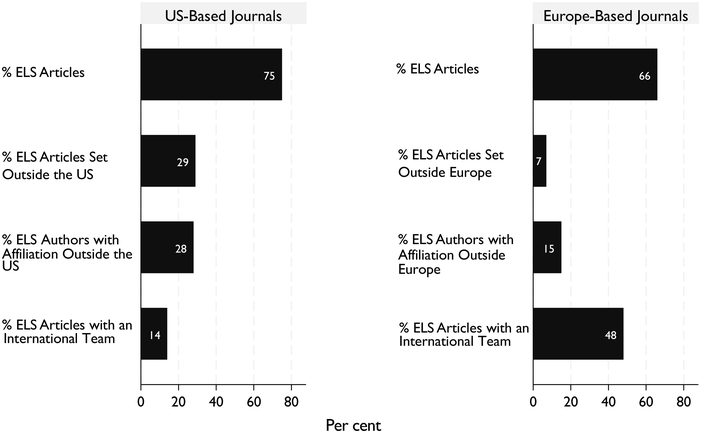
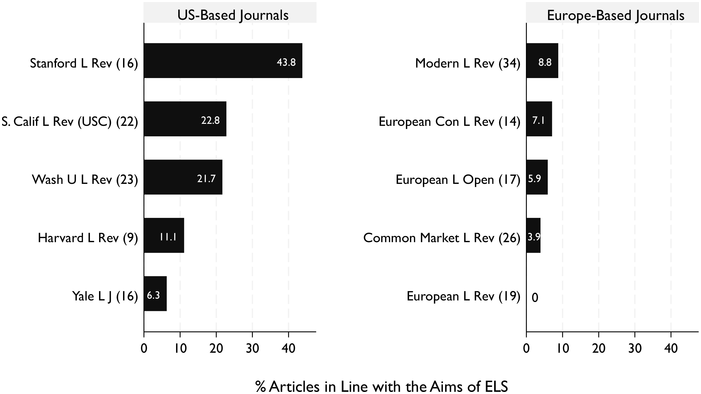

 Open access