



INTRODUCTION
People who inject drugs (PWID) are vulnerable to a wide range of bacterial infections, and also to tissue damage, at their injection sites [Reference Cherubin and Sapira1, Reference Del Guidice2]. Infections will arise due to the difficulties in maintaining hygienic injection practices when injecting illicit substances. Poor injection technique, frequent injection, and the reuse of injection equipment, particularly needles, may result in tissue damage at an injection site which can also be become infected [Reference Dwyer3]. These localized injection site injuries and skin and soft tissue infections can produce a range of symptoms; including abscesses, open wounds, and areas of redness, swelling and tenderness (cellulitis) [Reference Cherubin and Sapira1, Reference Del Guidice2]. Injection-related bacterial infections can also cause systemic illness, such as endocarditis [Reference Cherubin and Sapira1, Reference Del Guidice2], and rarely they may be due to the toxin-producing bacteria that cause anthrax, botulism and tetanus [Reference Hope4]. These infections and injuries can place substantial burdens on healthcare systems [Reference Darke, Ross and Kaye5–Reference Marks9] and can be fatal [Reference Cherubin and Sapira1, Reference Del Guidice2].
The prevalence of the symptoms of recent or current injection-related skin and soft tissue infections and injuries in PWID has been reported to be as high as one in three in studies in North America [Reference Takahasi10–Reference Lloyd-Smith12] and the UK [Reference Hope13, Reference Hope14], although lower levels have been reported by studies in Vancouver and Sydney [Reference Lloyd-Smith15, Reference Salmon16]. In the UK there has been concern over the last decade about the extent of injection-related bacterial infections in PWID and the burden that these may be placing on health services [17–Reference Kearns20]. A study in 2004 estimated the annual healthcare costs due to injection site infections and injuries in PWID in the UK to be between £15·5 and £47 million [Reference Hope13], but they could be substantially higher [Reference Marks9].
Previous studies of symptoms of injection site infections and injuries in the UK have used simple accessibility approaches to recruit PWID and have only collected limited information on their responses to specific symptoms. This study recruited PWID using respondent-driven sampling (RDS), a form of structured chain referral sampling, which aims to adjust for selection biases that may arise from simple purposive surveys [Reference Abdul-Quader21, Reference Heckathorn22]. It also collected more detailed information on PWID responses to individual symptoms than previous UK studies. This paper examines the factors associated with: (a) reporting symptoms of an injection site infection or injury; (b) seeking advice about these symptoms; and (c) being admitted to hospital with these symptoms.
METHODS
PWID were recruited into an unlinked anonymous survey in three major urban areas of England: Bristol (2006), Leeds (2008) and Birmingham (2009), using the same RDS methodology [Reference Turner23]. RDS methods are explained more fully elsewhere [Reference Abdul-Quader21, Reference Heckathorn22, Reference Heckathorn24, Reference Salganik and Heckathorn25]. Briefly, RDS recruits subjects through their own social networks. The initial recruits, or ‘seeds’, needed to commence RDS were selected in relation to location within each city and gender through key informant referrals and street outreach. To be eligible participants had to live within the survey area, and be aged >15 years, and have injected drugs during the preceding 4 weeks. Participants underwent a computer-assisted interview, provided a dried blood spot sample (DBS) sample [tested for antibodies to the hepatitis B core antigen (anti-HBc), and hepatitis C (anti-HCV)], and were offered an acknowledgement. Participants were asked to act as recruiters and those who agreed were given three uniquely numbered date-limited coupons. They were instructed to give these coupons only to eligible individuals whom they knew. All participants were screened for eligibility, and for attempted repeat participations, by a single fieldwork coordinator. In chain referral surveys there is a tendency for participants to recruit people like themselves, and a higher probability that people with large networks will be recruited. Therefore, information on the size of participants' networks and the characteristics of who they recruited were used to test for evidence of selection bias and to generate sample weights (RDSAT version 5.4.0. Ithaca, New York: E. Volz & D. D. Heckathorn, 2005). The study received ethical approval (London REC).
Participants were asked if during the preceding year they had any of these symptoms at an injection site: redness, swelling and tenderness (RST); an abscess; or a sore/open wound. For each of the symptoms the participants reported they were asked if, during the preceding year, they had: sought medical advice (i.e. from a doctor or nurse) about that symptom; where they had sought the advice about that symptom; and if they had then been admitted to hospital as a result of that symptom. They were also asked, in relation to the last occasion that they had each symptom, how long after they first noticed that symptom they had sought advice and if they had been prescribed antibiotics on that occasion.
Weighted data from those who fully completed the questionnaire were included in the analyses, which were performed with SPSS v. 19 (SPSS Inc., USA). Bivariate associations between the reporting of symptoms and demographic and environmental characteristics, the drugs used, injecting practice, and recruitment site were examined using χ2 test. Those characteristics found to be associated in the bivariate analysis were then entered using the forward stepwise procedure in SPSS into a logistic regression model with inclusion assessed using the likelihood ratio (with the stepwise probability for inclusion of 0·05 and exclusion of 0·1). For those who reported each symptom, the same approach was then used to assess the factors associated with seeking healthcare advice and with admission to hospital. Each of the three symptoms was examined separately as there are differences in their aetiologies, severity and frequency of occurrence, and also because PWID healthcare-seeking behaviours may vary by symptom.
RESULTS
A total of 855 individuals fully completed the survey questionnaire across the three urban areas (273 in Bristol, 291 in Leeds, 291 in Birmingham). The weighted sample had 217 (25%) women, and there were 113 (13%) participants aged <25 years, with 293 (34%) aged >34 years (mean age 32 years, median age 31 years). One-fifth (181, 21%) had first injected <5 years ago, with 217 (25%) having first injected >14 years ago (mean time since first injection was 10·6 years, median 10 years). During the preceding year, 819 (96%) had injected heroin, 524 (61%) crack-cocaine, 123 (14%) cocaine powder, and 158 (18%) amphetamines. Overall, 56% (479) reported never having experienced an overdose. For 31% (267) their main source of income was illicit (i.e. not employment or benefits); with 6% (54) reporting they had received either money or goods in exchange for sex during the past year. During the preceding year, 574 (67%) had been arrested, 284 (33%) imprisoned, and 430 (50%) homeless. A fifth (19%, 167) had anti-HBc and half (50%, 431) anti-HCV.
During the preceding year almost half (48%, 414) reported having RST, around one-fifth (19%, 160) reported an abscess, and a tenth (10%, 85) reported a sore/open wound at an injection site. Overall, 54% (464) reported having at least one of the three symptoms (i.e. RST, an abscess, or sore/open wound) at an injection site during the preceding year. A quarter (24%, 202) of participants reported having either an abscess or a sore/open wound at an injection site during the preceding year.
The demographic, environmental and drug use characteristics associated with reporting each of the three symptoms in the both the bivariate and multivariate analyses are given in Table 1. In the multivariate analysis reporting an abscess at an injection site was more common in those: who reported an overdose in the preceding year; who injected cocaine; who reported sharing needles or syringes during the preceding year; and who were anti-HCV positive. Those who had sex in the preceding year, but who had not done so in exchange for money or goods were less likely to report an abscess. Reporting a sore/open wound at an injection site was more frequent in those: aged >34 years; who had ever been homeless; who reported their main source of income as being illicit; and who reported ever injecting with a cleaned needle or syringe. RST at an injection site was found to be more common in those: who had ever been homeless; who reported an overdose in the preceding year; who reported sharing needles or syringes during the preceding year; and who reported ever injecting with a cleaned needle or syringe.
Factors associated with a self-reported abscess, sore or open wound, or redness, swelling and tenderness at an injection site in the previous 12 months among people who inject drugs
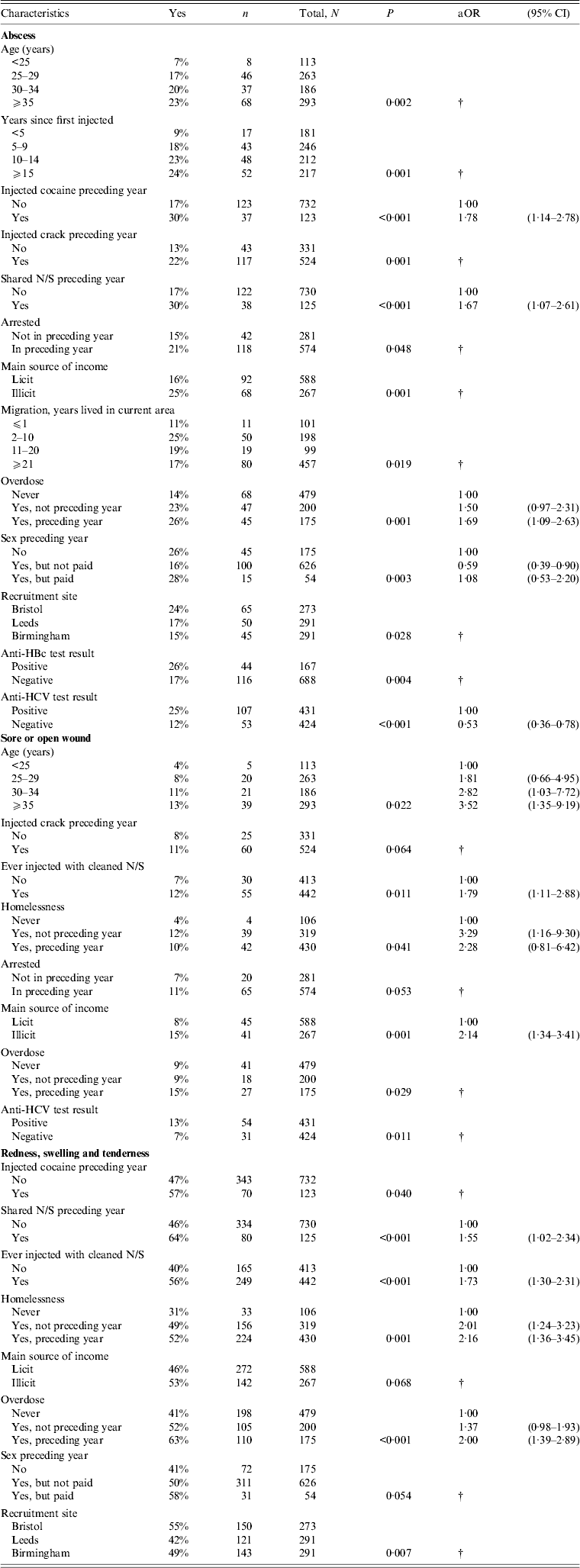
aOR, Adjusted odds ratio; CI, confidence interval; N/S, needle or syringe.
Reporting an abscess not associated with: gender, injecting amphetamine preceding year, injecting heroin preceding year, ever injected with cleaned N/S, homelessness, and imprisonment.
Reporting a sore or open wound not associated with gender, number of years since first injected, injecting amphetamine preceding year, injecting cocaine preceding year, injecting heroin preceding year, shared N/S preceding year, imprisonment, number of years lived in current area, sex preceding year, recruitment site, and anti-HBc test result.
Reporting a redness, swelling and tenderness not associated with: gender, age, number of years since first injected, injecting amphetamine preceding year, injecting crack preceding year, injecting heroin preceding year, being arrested, imprisonment, main source of income, number of years lived in current area, anti-HBc test result, and anti-HCV test result.
† Not included in the final model.
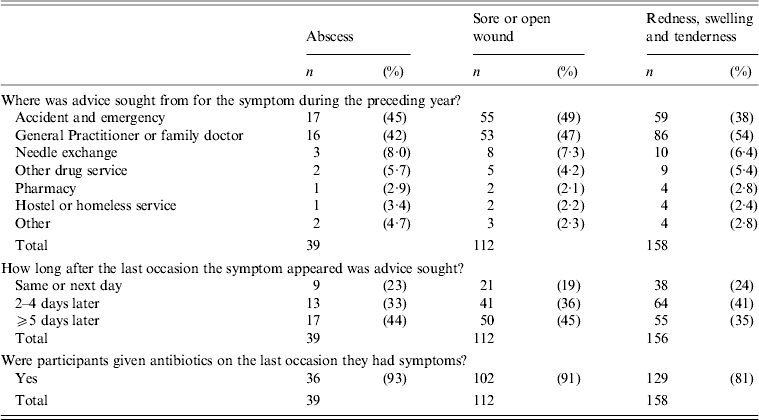
Those who reported a symptom were asked if they had sought medical advice about that symptom: 70% (112) of those reporting an abscess, 45% (39) reporting a sore/open wound, and 38% (159) of those reporting RST had all done so. Overall, 209 (24%) of those surveyed had sought advice about one or more of these symptoms during the preceding year (45% of those reporting one or more of the symptoms). The factors associated in the bivariate and multivariate analyses with having sought advice about each symptom in the preceding year are given in Table 2. In the multivariate analysis seeking advice about an abscess at an injection site was more common in women and those anti-HCV positive. Reporting seeking advice about a sore/open wound at an injection site was more frequent in those anti-HCV positive. Seeking advice for RST at an injection site was found to be more common in women, those injecting cocaine, in those recruited in Leeds, and those anti-HCV positive. The two most commonly used sources of advice about these symptoms were accident and emergency departments (most frequently reported for an abscess or sore/open wound) or General Practitioners (most frequently reported for RST); although a range of services had been used (Table 3).
Factors associated with seeking medical advice about an abscess, sore or open wound, or redness, swelling and tenderness at an injection site in the previous 12 months among people who inject drugs
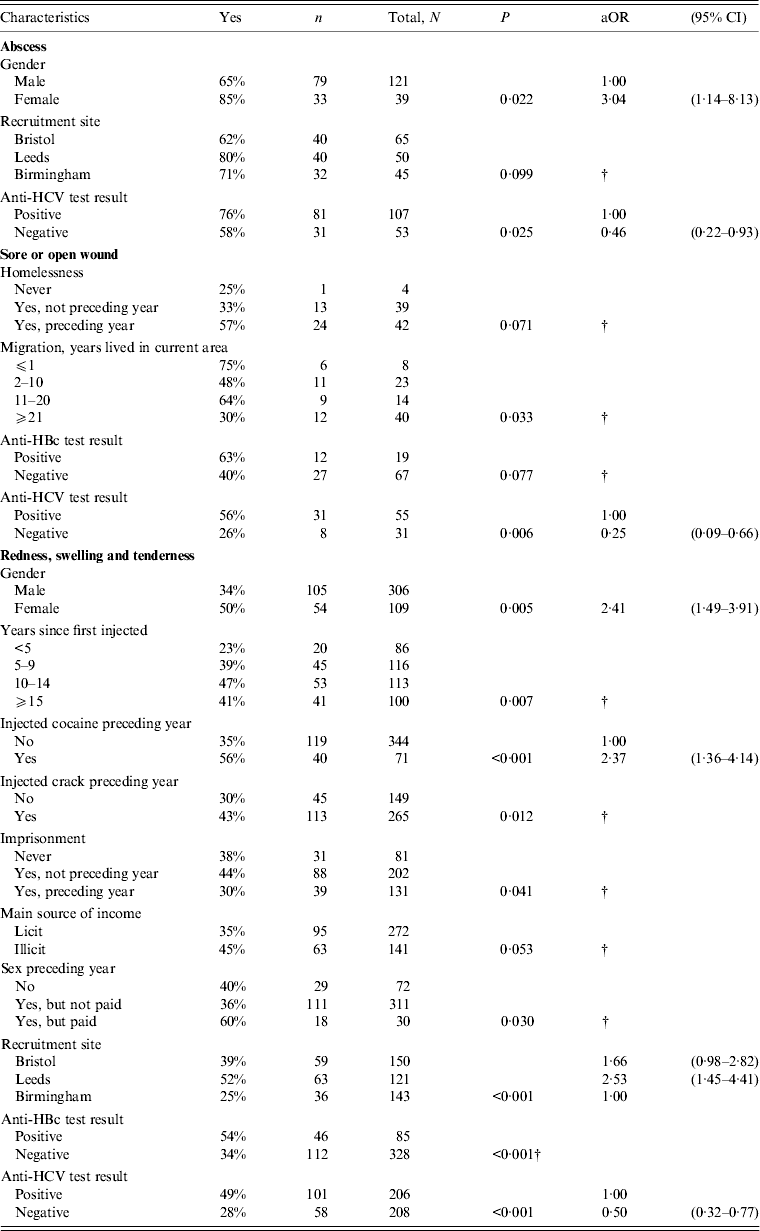
aOR, Adjusted odds ratio; CI, confidence interval.
† Not included in the final model.
Services where medical advice about a symptom at an injection site was sought in the previous 12 months, and how quickly the advice was sought and whether antibiotics were prescribed on the last occasion among people who inject drugs
Those who sought medical advice about a symptom were asked if they had been admitted to hospital because of that symptom: 45% (51) of those reporting an abscess, 43% (16) of those reporting a sore/open wound, and 30% (47) of those reporting RST had been admitted to hospital. Overall, 81 (9·5%) of the survey participants reported that they had been admitted to hospital during the preceding year when they had one or more of these symptoms (17% of those who had reported one or more of the symptoms, and 39% of those who had sought advice about a symptom). The associations between demographic, environmental and drug use characteristics and reporting admission to hospital for either RST or an abscess in the preceding year are given in Table 4. Only 16 were admitted due to a sore/open wound and so due to small numbers were not considered further. In the multivariate analysis, reporting admission for an abscess at an injection site was more common in those: who had first injected >14 years ago; who had injected crack-cocaine; and who reported sharing needles or syringes during the preceding year. Reporting admission for RST at an injection site was found to be more common in those anti-HCV positive.
Factors associated with hospital admission for an abscess or redness, swelling and tenderness, at an injection site in the previous 12 months in people who inject drugs
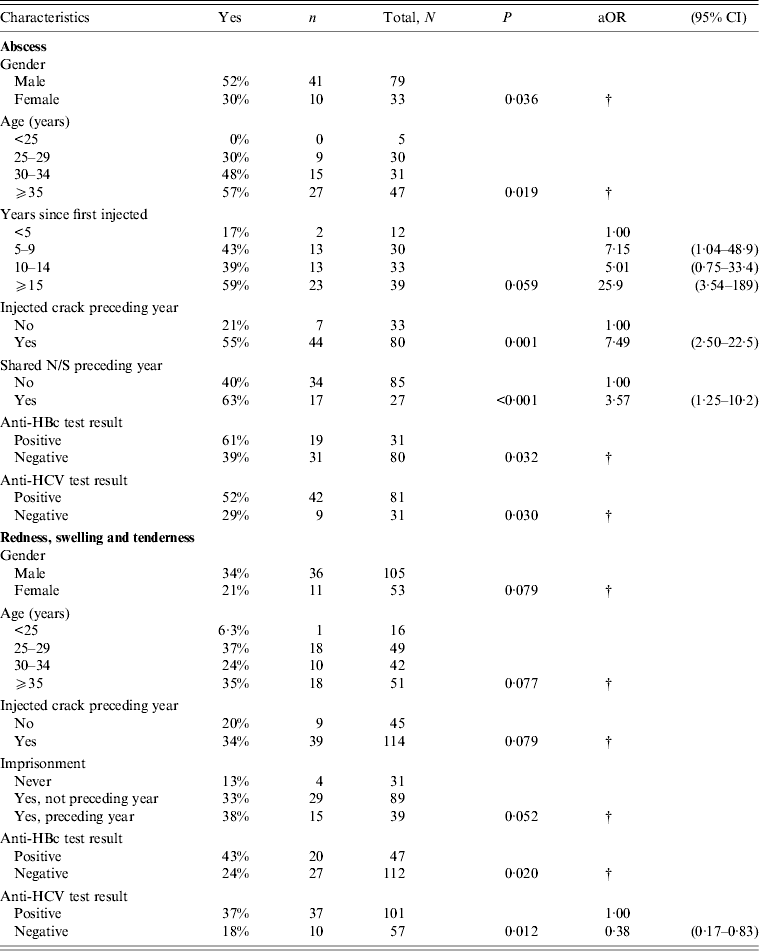
aOR, Adjusted odds ratio; CI, confidence interval; N/S, needles or syringe.
† Not included in the final model.
In relation to the last occasion they had sought advice about each symptom, participants were asked how long after they first noticed the symptom they had done so (Table 3). Medical advice was sought ⩾5 days after the symptom first appeared by 44% (17) of those reporting an abscess, 45% (50) reporting a sore/open wound, and 35% (55) of those reporting RST. Participants were also asked if they had been given antibiotics on this last occasion: 93% (36) of those reporting an abscess, 91% (102) reporting a sore/open wound, and 81% (129) of those reporting RST had received antibiotics (Table 3).
Participants were also asked if they had ever been diagnosed by a doctor as having either septicaemia or endocarditis (n = 848): 75 (8·8%) and 25 (2·9%), respectively, reported that they had been.
DISCUSSION
Symptoms of injection-related bacterial infections and injuries were common in PWID in the three urban areas. Overall, almost half (48%) reported having RST at an injection site during the preceding year; one-fifth (19%) reported an abscess and a tenth (10%) a sore/open wound. Furthermore, one in 11 and one in 34 reported ever being diagnosed as having septicaemia and endocarditis, respectively.
It is important to consider the limitations and generalizability of these findings. Self-reported symptoms were used in this study, although the accuracy of self-reports can be questioned, studies have shown good concordance between self-reported symptoms and clinical diagnosis [Reference Morrison, Elliott and Gruer8]. The marginalized and illegal nature of injecting drug use, as well as its comparative rarity, impedes the recruitment of a representative sample of PWID. This study aimed to minimize sampling biases and maximize representativeness by recruiting participants using RDS [Reference Abdul-Quader21, Reference Heckathorn22]. RDS aims to reduce recruitment bias when sampling from hidden populations, such as PWID; however, it is not possible to test how successful it has been in achieving this. Even so, RDS is currently regarded as the most appropriate method for recruiting community-based samples of PWID. Finally, since this study recruited at only three urban locations in England, and the levels of two of the symptoms varied by location, these findings should be generalized with caution.
Previous studies of PWID in the UK found that around one-third reported having an abscess, sore, or open wound at an injection site during the preceding year [Reference Hope13, Reference Hope14], which is higher than the level found in the present study (24%). However, while previous studies have had wider geographical coverage, they have recruited either through health services provided to people who use drugs or from community settings using simple accessibility sampling approaches [Reference Hope13, Reference Hope14]. The use of these approaches could have resulted in the over-sampling of higher-risk individuals. Similar levels of symptoms to those reported here have been found in studies from other countries [Reference Lloyd-Smith12, Reference Pollini26].
Overall a quarter of the PWID participating in this study had sought advice from a doctor or nurse about one of the three symptoms enquired about in the study. While the majority of those reporting an abscess had sought advice; less than half of those reporting either a sore/open wound or RST had done so. This might reflect the latter symptoms being a more common occurrence, and so more familiar, than abscesses, or these being perceived as being less serious. However, of those who sought advice about their last episode of RST two-thirds had done so within 4 days of it appearing compared to just over half of those reporting the other two symptoms. This could suggest that seeking advice about RST may be related to more severe episodes. The majority of those who sought advice about a symptom reported receiving antibiotics on the last occasion. A number of factors were found to be associated with healthcare utilization in response to the symptoms considered here, including having antibodies to hepatitis C and the use of certain drugs. While these associations need further examination, these factors might be related to having more severe episodes.
Overall, almost one in 10 of the study participants had been admitted to hospital when they had one or more of the symptoms in the preceding year. At one London hospital it was estimated that the average cost of an inpatient admission for a skin and soft tissue infection in PWID is £4180 (with mean length of stay of 12 days) [Reference Marks9]. Considering that there are an estimated 130 000–200 000 PWID in England [Reference Hay27, Reference Harris28], these findings indicate that injection site infections and injuries in PWID are placing a considerable burden on the healthcare system; with annual inpatient costs alone possibly being between £54 and £84 million.
The healthcare burden associated with injection site infections and injuries is, in part, likely to be due to delays in seeking healthcare. Studies suggest that PWID tend not to seek timely medical care for their injection-related health problems, often resulting in costly emergency treatment [Reference Darke, Ross and Kaye5, Reference Palepu7, Reference Hope13, Reference Ciccarone29, Reference French30]. This is supported by the findings presented here, where many of those with symptoms waited at least 5 days before seeking advice, and the most common source of advice for abscesses and sores/open wounds were accident and emergency departments. The delays in PWID seeking treatment probably reflects a number of issues, such as barriers to accessing care, poor compliance with medication and follow-up care, and competing priorities, for example, obtaining money and acquiring and using drugs [Reference Darke, Ross and Kaye5, Reference Palepu7, Reference French30, Reference van Beek, Dwyer and Malcom31]. It has been suggested that these issues could be addressed through the provision of targeted services in low-threshold agencies, such as, needles and syringe programmes (NSPs). Such interventions have been shown to reduce accident and emergency department attendances, the need for surgery, and the length of in-patient stays [Reference Harris and Young32, Reference Grau33].
The symptoms examined here were associated with a range of factors with these varying to some extent between each of the three symptoms. This probably reflects differences in their possible aetiologies. An abscess will be due to an infection, and a sore/open wound will most probably be infected, although it might have initially been caused by injecting an acidic drug solution as a result of using excessive acid to dissolve the drug (the brown heroin found in the UK and crack-cocaine both need to be dissolved in an acidic solution prior to injection). RST often reflects an infection; however, it could also be due to an injury caused by poor injection technique, reuse of needles, or injecting an acidic drug solution. The factors found to be associated with one or more of the three symptoms examined here are similar to those associated with injection site infections and injuries in other studies. These include demographic factors (such as age [Reference Dwyer3, Reference Hope13, Reference Topp34] and gender [Reference Lloyd-Smith12–Reference Salmon16, Reference Topp34]), environmental and social factors (such as homelessness [Reference Dwyer3, Reference Hope14–Reference Salmon16] and source of income [Reference Salmon16, Reference Pollini26]), the type drug used [Reference Marks9, Reference Hope13, Reference Hope14, Reference Salmon16, Reference Murphy35, Reference Spijkerman, van Ameijden and Mientjes36], injection practice and hygiene [Reference Dwyer3, Reference Darke, Ross and Kaye5, Reference Biswanger11–Reference Hope14, Reference Topp34, Reference Murphy35, Reference Vlahov37], having overdosed [Reference Salmon16], and general health [Reference Lloyd-Smith12, Reference Hope13, Reference Topp34, Reference Spijkerman, van Ameijden and Mientjes36].
Together these findings indicate that preventive interventions to reduce injection site infections and injuries need to focus on further reducing the reuse of injecting equipment and improving injection hygiene, and should target those using stimulants, the homeless and those who have recently overdosed. The UK, like many countries, has adopted a range of interventions to reduce the harms associated with injecting drug use, including NSPs and opiate substitution therapy. Recent activities to support reduction of drug-related harm in England have included the National Institute for Health and Clinical Excellence issuing guidance on optimizing NSP provision [38] and a national awareness and information campaign [39]. However, these activities have principally focused on preventing bloodborne viral infections and reducing overdoses. Our findings indicate a need for the evaluation of interventions, and the development of guidance, on preventing, identifying and managing injection site infections and injuries. Development of community-based interventions, such as targeted wound clinics may be an effective approach [Reference Harris and Young32, Reference Grau33]. As both specialist and pharmacy-based NSPs are widely provided in UK, these could be used to deliver such interventions.
Taken together these findings confirm that injection site infections and injuries are a common experience in PWID in the three cities (and probably in most other urban locations in England), and that the resultant healthcare burden is likely to be substantial. Interventions therefore need to be developed and piloted to reduce the level of injection site infections and injuries in PWID and to support prompt healthcare seeking in those affected.
ACKNOWLEDGEMENTS
We are grateful to all the people who participated in the surveys and to the fieldworkers who performed the data collection. We also thank those who conducted the bloodborne virus testing on the dried blood spot samples, and those who assisted with the running surveys, particularly Steve Jones for coordinating the fieldwork, and Merrington Omakalwala for administrative support.
DECLARATION OF INTEREST
None.



