

Introduction
The Kazeroon Plain in southern Iran has been host to human settlement from the earliest times up to today, due to its favourable geographical situation. Although Kazeroon is best known for its remains of the historical period, such as the Sassanid era, it has also witnessed many prehistoric cultures. Recent surface reconnaissance at Dehdaran mound (Fath Abad) offered a useful assemblage dating back seven millennia.
Location
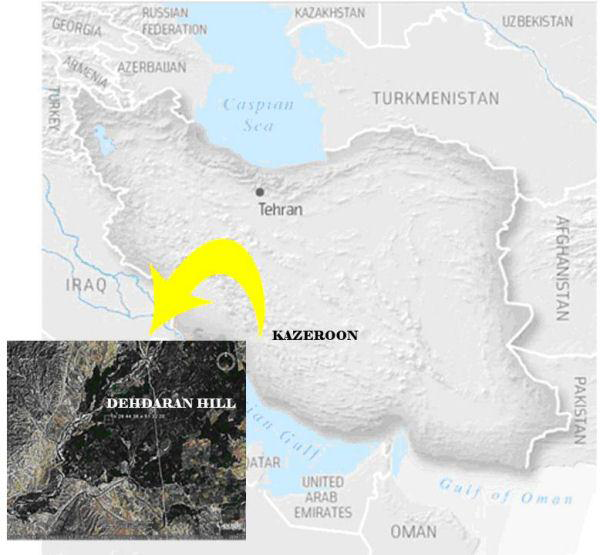
Kazeroon district (29°35' N, 51°35' E) is located in the west of Fars province at an elevation of 732m above sea level. It is bordered to the north by Mamasani and Behbahan, to the east and north-east by Shiraz, to the west and south-west by parts of Borazjan and Bushehr counties and to the south-west by Firooz Abad (Figure 1). It is a mountainous area surrounded by high peaks. Tracks through the mountains align north-west to south-east, like others in Fars (Reference MozafarianMozaffarian 1995).
Location of Kazeroon.

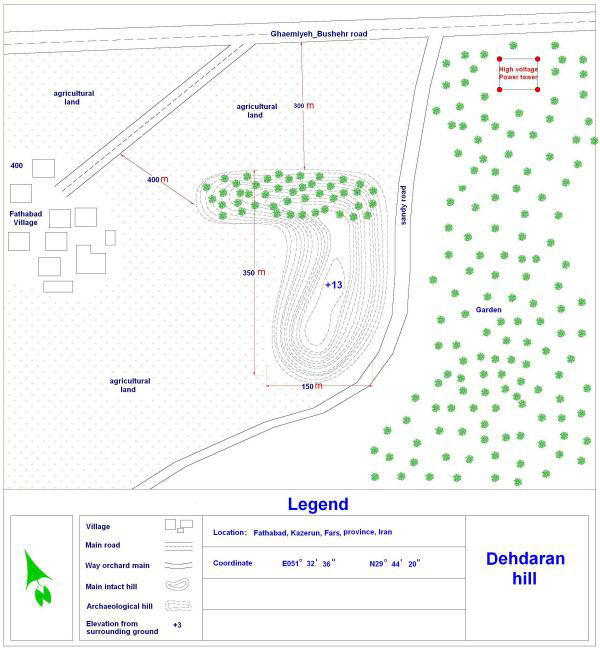
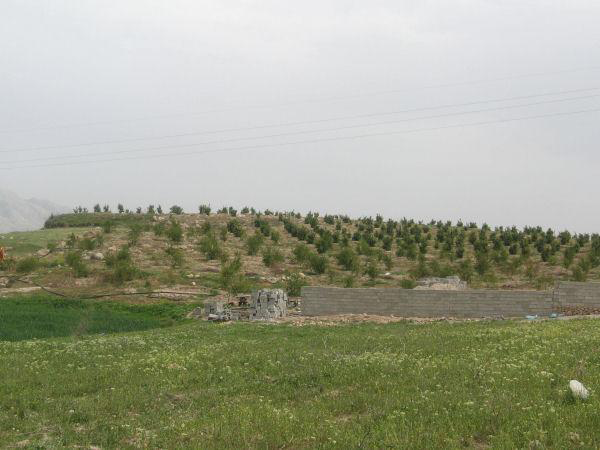
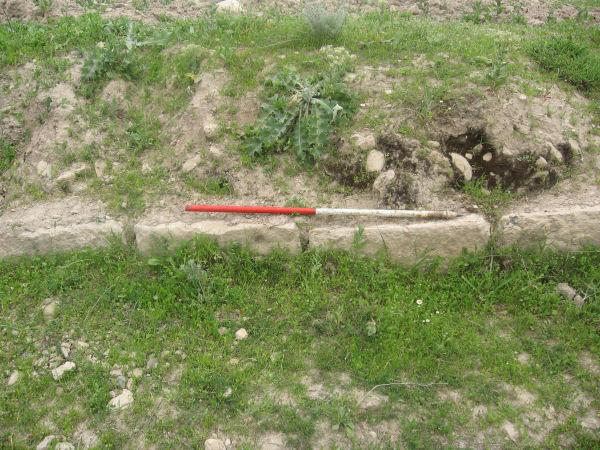
The Dehdaran mound (29°44' 36” N, 51°32' 20” E) is situated 7km from the Ghaemiye to Bushehr road. At its highest (eastern) end, the mound rises 13m above the level of the neighbouring orchards. The mound is 400m long and 350m wide at the east end and 150m wide at the west end (Figure 2). The mound has been seriously damaged by fruit trees, citrus trees and vegetables planted on its summit and flanks (Figure 3). Ancient surface features have been displaced or disturbed. Stone and ceramic artefacts are scattered on the surface, and at least one stone structure shows, in the form of laid ashlar blocks on the north side of the mound (Figure 4). Here we make a preliminary assessment of the ceramics and lithics recovered from the surface.
Location plan and topography of Dehdaran.

Dehdaran mound, eastern view.

Sehdaran mound, stone footings on the northern side.

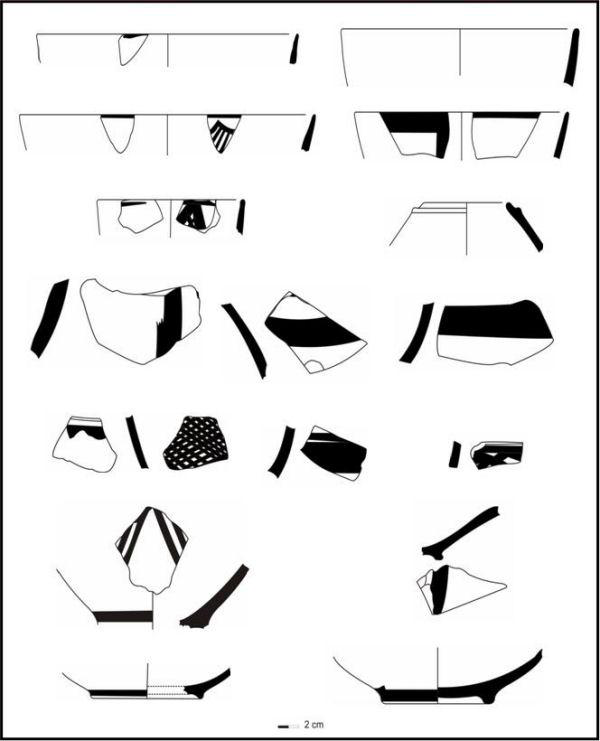
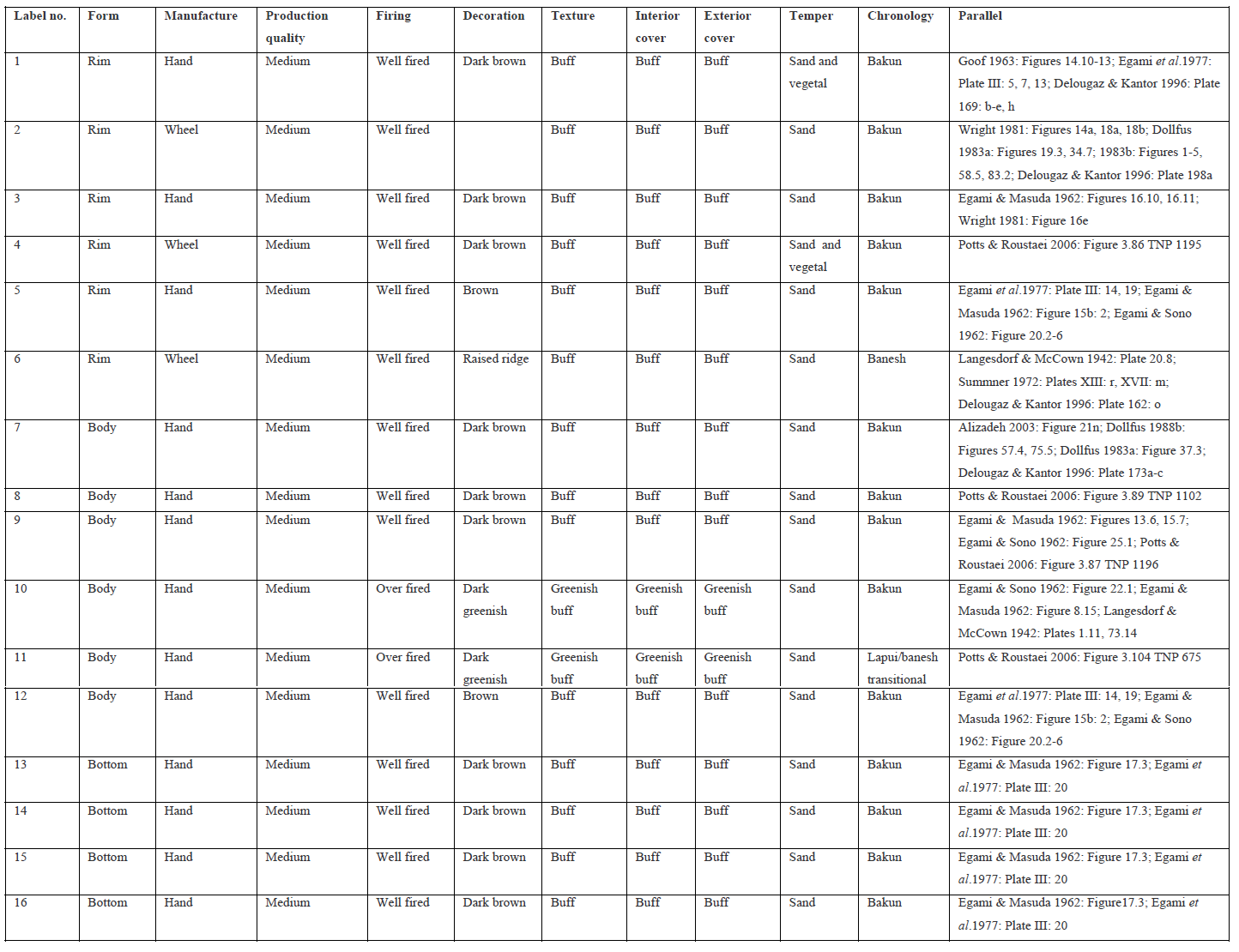
The Pottery (Figure 5; Table 1)
Pottery.


Figure 5 illustrates six rim sherds (1-6), six body sherds (7-12) and four base sherds (13-16). Nos. 2, 4 and 6 are wheel-thrown, the remainder formed by hand. All are well fired, have buff fabrics with interior and exterior clay slip, and have mineral inclusions (Potts & Roustaei 2006). All the rims carry simple brown decoration, except for No. 6 which has an element in relief, comparable with material from the Kor river valley, Cheghamish (Reference DelougazDelougaz & Kantor 1996) and Tal Espid (Potts & Roustaei 2006b). The body and base pieces also show simple geometric designs, but with a deep blue colour. Apart from No. 11, the sherds are comparable in form, design and production technique to pottery of the Bakun culture (fifth millennium BC). Bakun pottery is known in the Fars region in the form of bowls and jugs with green, reddish brown or deep brown bands and stripes. Examples come from Bakuni A1 (Reference EgamiEgami et al. 1977) and Tale Jary B2 (Reference EgamiEgami & Masuda 1962), Erpachiye (T.T. 6-10) and Siyalk I and III (Reference DysonDyson 1987).
No. 11 relates to the transition period from Lepui to Banesh and is comparable to early Banesh pottery from the Nurabad mound. This a type with geometric decoration succeeding Bakun B1 pottery. It was hand-made and formed from levigated clay without organic inclusions on an undulating plank and dates to the fourth millennium.
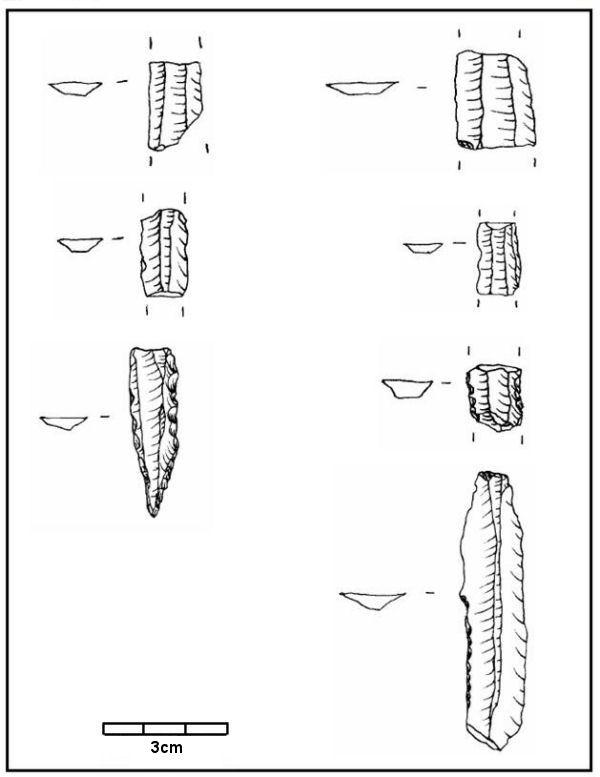
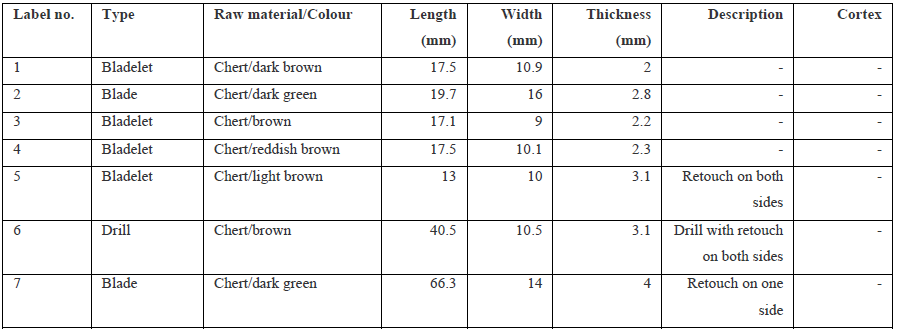
Stone tools.


The seven implements illustrated include one drill, two blades and four bladelets. They are made of chert ranging in colour from pale brown to very dark brown. The drill (No. 6) retouches on both sides and could make a hole with a diameter of 10.5mm. No. 7 (blade) and No. 5 (bladelet) have retouches on both sides. Two whole unmodified flakes were among other findings at this site. Considering the prominent striking platform of these pieces they have probably been knapped using a stone hammer with direct percussion technique.
Conclusion
Based on the Fars regional chronology, the pottery and stone finds from the Dehdaran mound show that it was occupied during the Bakun period (early fifth millennium BC). At least one sherd suggests that occupation continued into the Lapui and Banesh periods (middle to late fourth millennium BC). The stone footings on the north side are more likely to belong to the Sassanid era. The Dehdaran mound (Fath Abad) thus constitutes an archaeological site of great value, having potentially an area of 10ha and an occupation sequence of some 7000 years.