





Gestational diabetes mellitus (GDM) is one of the most common gestational complications during pregnancy (Sweeting et al., Reference Sweeting, Hannah, Backman, Catalano, Feghali, Herman, Hivert, Immanuel, Meek, Oppermann, Nolan, Ram, Schmidt, Simmons, Chivese and Benhalima2024). It is associated with fetal overgrowth, cesarean delivery (CD), neonatal hypoglycemia and other adverse perinatal outcomes in singleton pregnancies (Metzger et al., Reference Metzger, Lowe, Dyer, Trimble, Chaovarindr, Coustan, Hadden, McCance, Hod, McIntyre, Oats, Persson, Rogers and Sacks2008). However, the evidence is limited and controversial with regard to twin pregnancies. While some scholars have argued that, by sharing the same pathological alterations theoretically under hyperglycemic conditions, a similar right shift in birth weight is also observed among mothers with GDM in twins (Hiersch et al., Reference Hiersch, Berger, Okby, Ray, Geary, McDonald, Murray-Davis, Riddell, Halperin, Hasan, Barrett and Melamed2019; Tward et al., Reference Tward, Barrett, Berger, Kibel, Pittini, Halperin, Cohen and Melamed2016), while others have reported no relationship between GDM and large or small for gestational age (LGA/SGA) infants (Lin et al., Reference Lin, Fan, Li, Chen, Rao, Zhou, Zhang, Luo, Ma, Feng, Lu, Wang, Lan, Luo, Guo and Liu2022). Conclusions regarding other perinatal outcomes, such as hypertensive disorders of pregnancy (HDP) and admission to the neonatal intensive care unit (NICU), have also varied (Dave et al., Reference Dave, Bodnar, Vani and Himes2021; Lin et al., Reference Lin, Fan, Li, Chen, Rao, Zhou, Zhang, Luo, Ma, Feng, Lu, Wang, Lan, Luo, Guo and Liu2022; McGrath et al., Reference McGrath, Hocking, Scott, Seeho, Fulcher and Glastras2017). Therefore, implementing universal glucose management for GDM twin pregnancies is challenging (Weitzner et al., Reference Weitzner, Barrett, Murphy, Kingdom, Aviram, Mei-Dan, Hiersch, Ryan, Van Mieghem, Abbasi, Fox, Rebarber, Berghella and Melamed2023).
Many factors contribute to these inconsistencies. Despite the heterogeneity in GDM diagnosis and the difference in ethics among populations, the intrinsic greater baseline risk of twin pregnancy itself also accounts for this difference (Melamed et al., Reference Melamed, Avnon, Barrett, Fox, Rebarber, Shah, Halperin, Retnakaran, Berger, Kingdom and Hiersch2024; Sheehan et al., Reference Sheehan, Umstad, Cole and Cade2019). Some adverse outcomes, namely, SGA and CD, are more strongly related to HDP or fetal abnormalities, which are highly common in twin pregnancies (Dave et al., Reference Dave, Bodnar, Vani and Himes2021) and often mask the true relationship with GDM. Moreover, only by observing the final birth weight and other perinatal outcomes can valuable information within the fetal growth process be missed. To the greatest extent, we aimed to explore the relationship between GDM and longitudinal fetal growth trajectories in twin pregnancies to provide insight for future clinical practice.
Materials and Methods
Study Population
This was a retrospective matched cohort study of women with GDM and non-GDM twin pregnancies who delivered between January 1, 2012 and June 30, 2023 at Peking University First Hospital. The inclusion criteria were: (1) parturition ≥36 weeks and (2) both fetuses were born alive. The exclusion criteria were: (1) pregnancies with maternal HDP, pregestational diabetes mellitus, or other systemic diseases; (2) complicated twins, such as twin-to-twin transfusion syndrome and selective intrauterine growth restriction; and (3) twins with chromosomal/genetic or structural anomalies. The control group was 3:1 matched according to maternal age, year of delivery, and complications (low risk). This study was approved by the Ethics Board of Peking University First Hospital (No. 2022-112), and informed consent was exempted because of the retrospective nature of the study.
Protocols and Definitions
All the women visited the hospital regularly during gestation, and their demographic and basic information, including their gestational age and chorionicity, was collected in the first trimester. From 22–26 weeks, an anomaly scan was performed for all the pregnancies to screen for structural abnormalities. At 24–28 weeks, a 75-g oral glucose tolerance test (OGTT) was routinely carried out, and GDM was diagnosed on the basis of the International Association of Diabetes and Pregnancy Study Group’s Consensus Panel criteria (2010), with any of the glucose values meeting the following criteria: (1) fasting plasma glucose (FPG) ≥5.1 mmol/L (91.8 mg/dl); (2) 1-hour postprandial plasma glucose ≥10.0 mmol/L (180.0 mg/dl); and (3) 2-hour postprandial plasma glucose ≥8.5 mmol/L (153.0 mg/dl) (Metzger et al., Reference Metzger, Gabbe, Persson, Buchanan, Catalano, Damm, Dyer, Ad, Hod, Kitzmiler, Lowe, McIntyre, Oats, Omori and Schmidt2010). Once confirmed, all patients were referred to the ‘one-day care’ clinic, where they received similar glucose surveillance as singleton pregnancies and initiated lifestyle interventions, including diet therapy, exercise recommendations, and weight management. However, if FPG failed to reach 5.3 mmol/L (95.4 mg/dl) or 2-hour postprandial plasma glucose level over 6.7 mmol/L (120.6 mg/dl) in 2 weeks, medical intervention was implemented, with a preference for insulin, and the dosage was adjusted during each antenatal visit until delivery (Juan & Yang, Reference Juan and Yang2020). Between 28 and 33 weeks, another anomaly ultrasound scan was performed, followed by another ultrasound exam generally performed before delivery (approximately 36 weeks). During each scan, the fetal biparietal diameter, head circumference (HC), abdominal circumference (AC), and femur length (FL) were measured, and the fetal HC, AC, and FL were further used to estimate the fetal weight according to the Hadlock Formula 1985 (Hadlock et al., Reference Hadlock, Harrist, Sharman, Deter and Park1985).
The prepregnancy body mass index (BMI) was classified according to the standard of the Chinese Ministry of Health. Underweight was defined as a BMI under 18.5 kg/m2, normal was defined as a BMI between 18.5 and 24 kg/m2, and overweight/obese was defined as a BMI greater than 24 kg/m2 (National Health and Family Planning Commission, 2013). Gestational weight gain (GWG) was defined as the difference between the maternal weight last measured before delivery and the self-reported prepregnancy weight. LGA and SGA were defined as fetal weights greater than the 90th or lower than the 10th percentile of the birth weight of Chinese twins of the same sex who were born at the same gestational age (Dai et al., Reference Dai, Deng, Li, Yi, Li, Mu, Li, Yao and Wang2017). Discordant twins were defined as any fetus born with fetal weight less than 3% of the gestational age or a birth weight discordance ≥25% with any fetus born SGA (Gynecology, Reference Gynecology2021).
Outcomes
The primary outcome was the longitudinal trajectories of fetal weight. The secondary outcomes included the longitudinal fetal trajectories of other biometric indices, such as HC, AC, FL, and the HC/AC (index for disproportionate growth), as well as fetal growth related perinatal outcomes, namely, birth weight, LGA, SGA and the discordant twins.
Statistical Analysis
In the univariate analysis, distribution normality was first evaluated for continuous variables by histogram observation and the Kolmogorov–Smirnov test. If normality was confirmed, the data were presented as the means ± standard deviations, and the independent-samples t test was used for comparison. If normality was not achieved, the data were presented as the median values (25th and 75th percentiles), and the Mann–Whitney test was used instead. Categorical variables were expressed as the percentages (ratios), and Pearson’s chi-square test was used to analyze differences between groups. In the multivariate analysis, the generalized estimating equation (GEE) was used to explore the relationships between GDM and birth weight, LGA, SGA, and discordant twins, with consideration of the relationships within the twin pair, and the models were further adjusted for maternal BMI, GWG, gestational age at delivery, fetal chorionicity and sex.
A linear mixed model (LMM) was fitted to examine associations between GDM and the longitudinal fetal growth trajectories of twins. The fixed effects were GDM, gestational week (continuous variable), and their interaction, as well as other covariates such as maternal age, BMI, mode of conception, OGTT results, fetal chorionicity and neonatal sex. The random effects included a random intercept and slope, and they were fitted at the level of each fetus to account for the relationship within the twin pair. The first-order antedependence covariance structure was selected for modeling the correlated repeated measurements. Kenward–Roger adjustment was further applied to address the upward bias of test statistics for fixed model effects in the scenario of longitudinal repeated measurement data. The GBTM approach was applied to identify latent fetal weight trajectories (z score transformed) for all twins, with gestational week used as the underlying time scale. The final model with the best performance was chosen according to the Akaike Information Criterion (AIC), the Bayesian Information Criterion (BIC) and the graphics, with three trajectories presenting three different speeds of growth. GEE was also used to estimate associations between GDM and identified trajectories.
All the statistical analyses were conducted via SPSS 25.0, SAS 9.4 (SAS Institute, Cary, NC), and R language 4.3.1 (WR Foundation, Vienna, Austria), with a two-tailed alpha of 0.05 considered statistically significant.
Results
Characteristics and Perinatal Outcomes
In total, 215 GDM twin pregnancies and 645 non-GDM twin pregnancies were included in the study, with only 13 (6.0%) patients requiring medication therapy. As shown in Table 1, no differences were found in maternal gravidity, parity, mode of conception or chorionicity between the two groups (all p > .05); however, those with GDM had a greater proportion of overweight/obese individuals (35.3% vs. 23.9%, p = .004) than did the control group, and they also had a lower total GWG (14.60 kg vs. 16.35 kg, p < .001). Moreover, both groups presented similar levels of gestational age, mode of delivery, LGA, SGA and discordant twins at birth (all p > .05).
Characteristics and outcomes of the study population
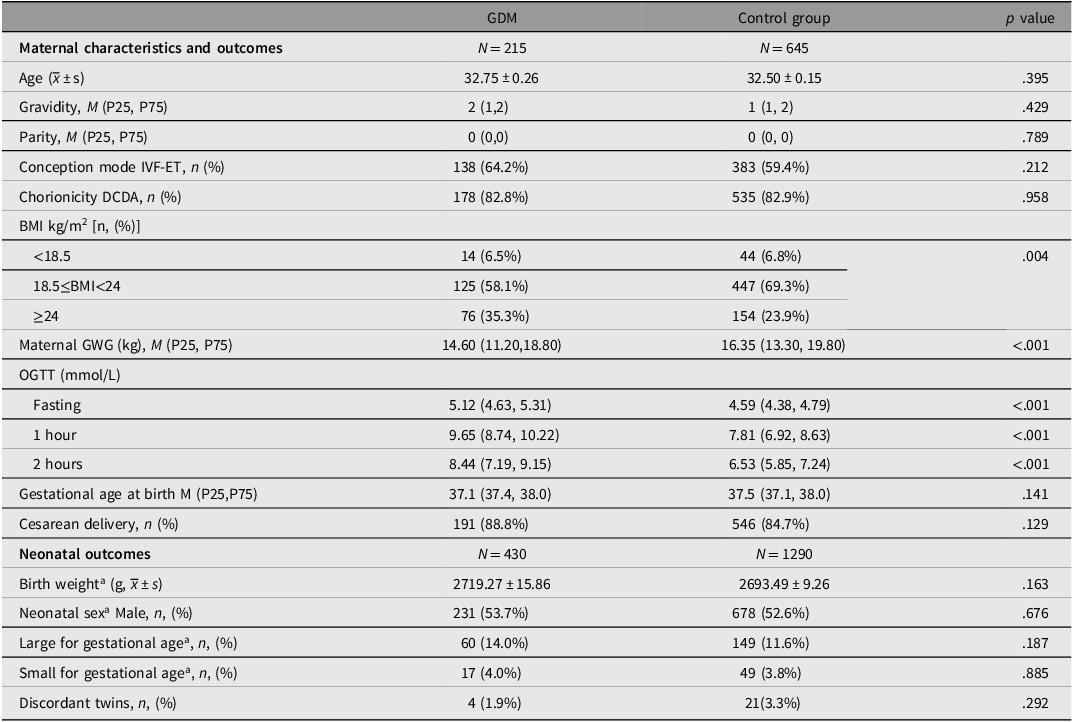
Note: GDM, gestational diabetes mellitus; IVF-ET, in-vitro fertilization and embryo transfer; DCDA, dichorionic diamnionicity; BMI, body mass index; GWG, gestational weight gain; OGTT, oral glucose tolerance test.
a Each infant was analyzed separately.
Relationships Between GDM and Perinatal Outcomes
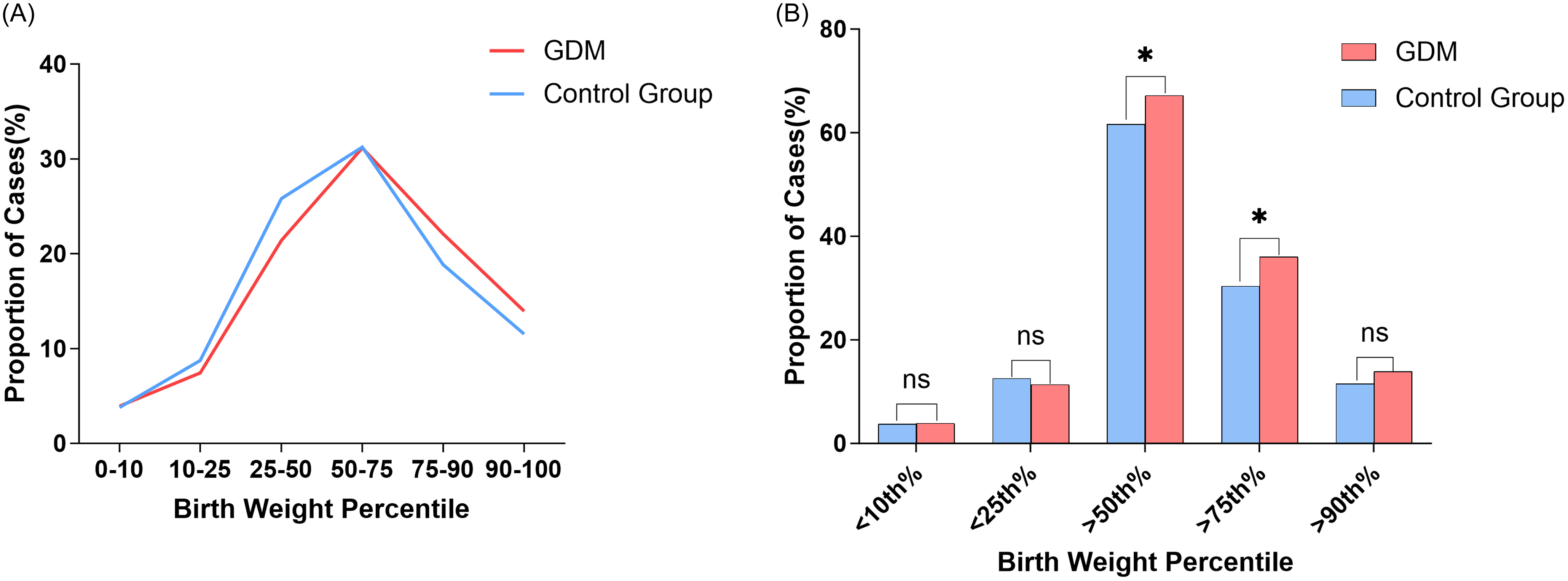
After adjusting for confounders, GEE revealed that GDM was significantly associated with a right shift in birth weight among GDM twins, with an average increase of 49.44 g (95% CI [11.41, 87.48]) per fetus. However, it was not associated with a higher odds of LGA, SGA or discordant twins (all p > .05). The results are shown in Table 2 and Figure 1.
Relationships between GDM and the fetal growth related perinatal outcomes
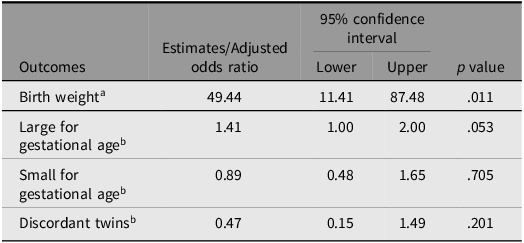
Note: GDM, gestational diabetes mellitus.
a Presented as estimates.
b presented as the adjusted odds ratio. The models were adjusted for maternal body mass index, gestational weight gain, gestational age at delivery, fetal chorionicity and sex.
Birth weight distributions of GDM and non-GDM twin pregnancies.
A. Birth weight as a continuous variable. B. Birth weight as a categorical variable.
Note: GDM, gestational diabetes mellitus, ns, not significant. *Indicates p < .05.
The Relationship Between GDM and Longitudinal Fetal Growth
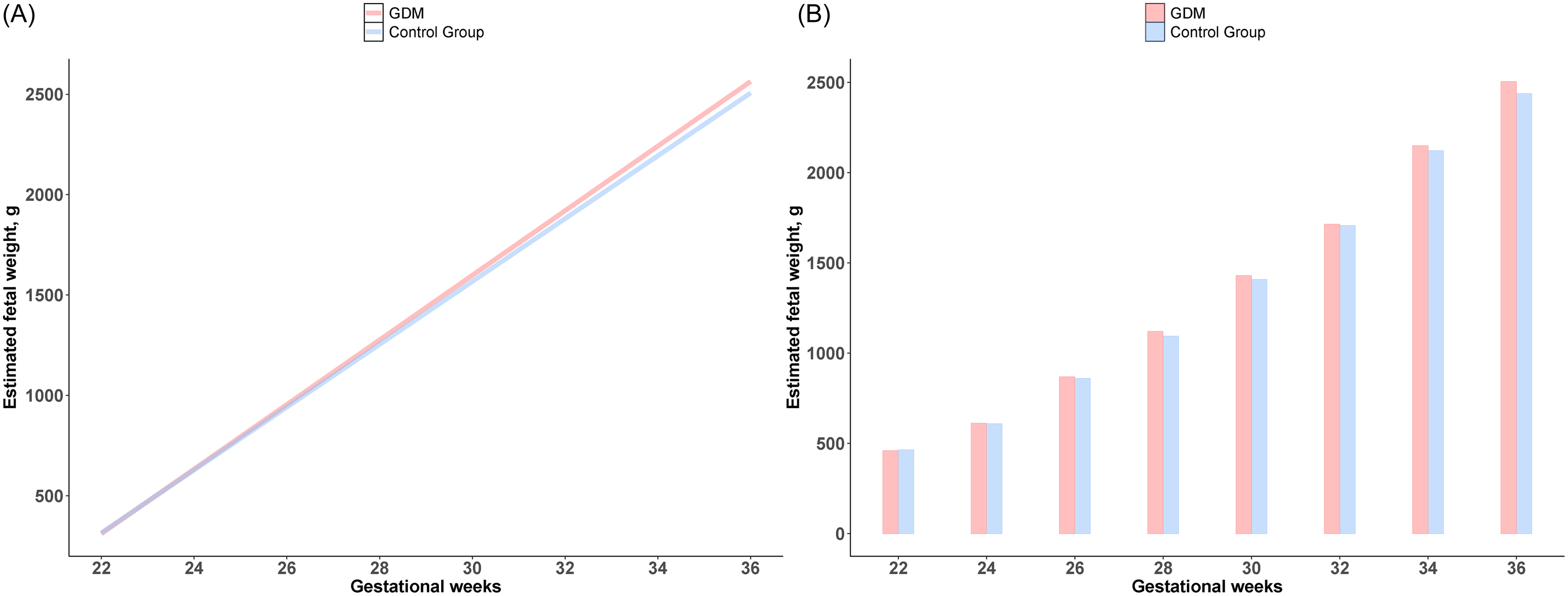
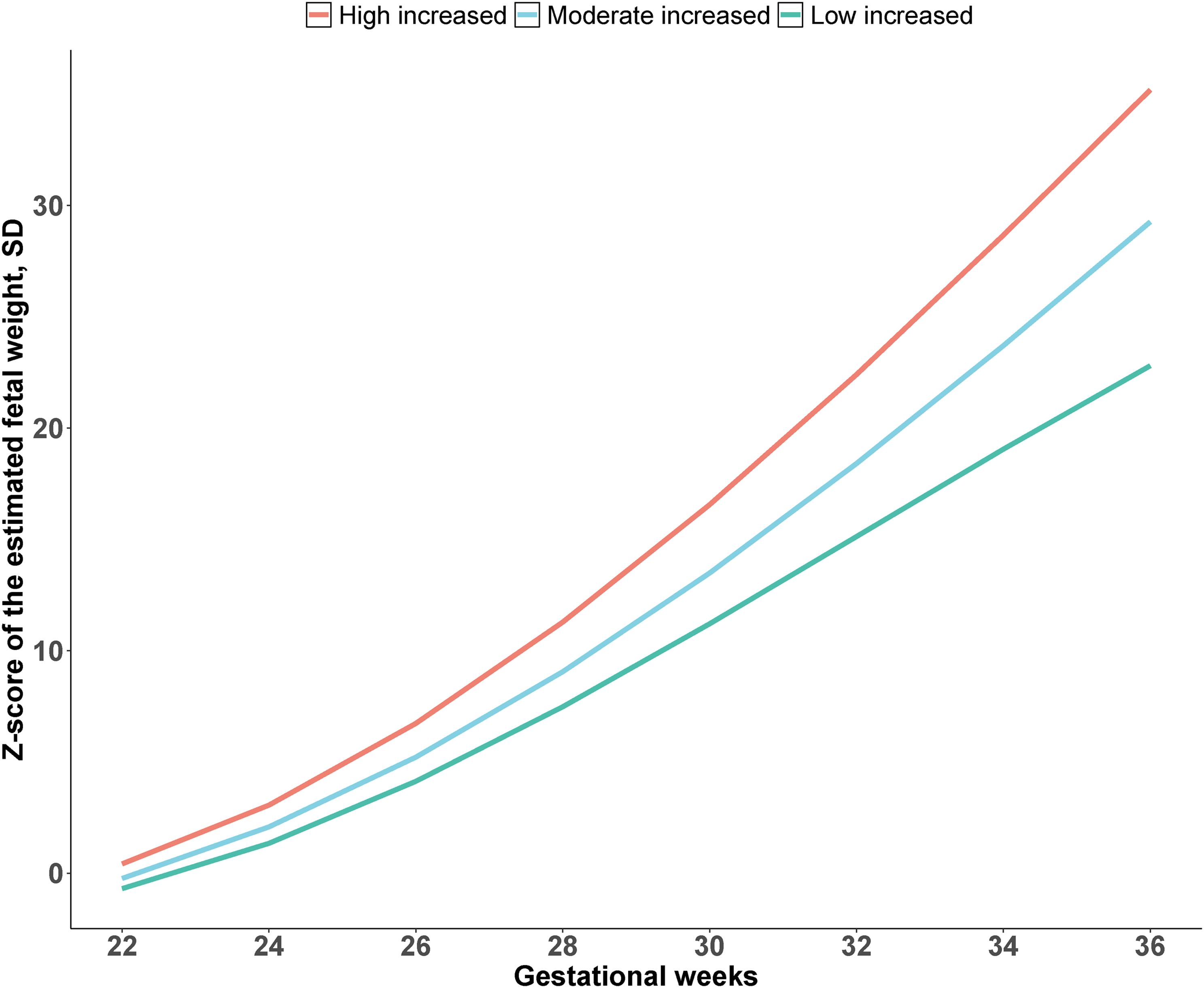
After accounting for confounders, LMM analysis indicated no statistical significant difference in average fetal weight between pregnancies with GDM and those without GDM (β = −4.13 g, 95% CI [−22.39, 14.14], p = .658). Furthermore, across all fetuses, there was a significant average weekly increase in weight of 156.50 g (95% CI [148.20, 164.79], p < .001). Specifically, male fetuses, dichorionic diamniotic twins, and fetuses conceived via in-vitro fertilization exhibited greater weight gains compared to their respective counterparts, with average increases of 24.85 g (95% CI [13.81, 35.89]), 30.75 g (95% CI [15.14, 46.36]), and 26.61 g (95% CI [13.95, 39.27) respectively (all p < .001). No relationship was observed between maternal age, BMI and gestational fetal weight on average (both p > .05). Compared with the control group, GDM was associated with an increased fetal weight of 4.36 g (95% CI [1.25, 7.48], p = .008, Figure 2) per fetus on average from week 22 until delivery. GBTM further identified three latent fetal growth patterns, including the low increased (n = 229), moderate increased (n = 883), and high increased (n = 608) group, characterized by distinctive longitudinal fetal growth speed. GEE analysis further proved that GDM increased the odds of the trajectory being classified into the high-speed group by nearly 40% (aOR = 1.39, 95% CI [1.03, 1.88], p = .034; Figure 3). However, no associations were detected between GDM and other fetal biometric trajectories, such as AC, HC, FL and HC/AC (all p > .05). The data are shown in Table 3 and Supplementary Table 1.
Growth trajectories of the estimated fetal weights of GDM and non-GDM twin pregnancies.
A. Line chart, B. Bar chart. Both were analyzed by the linear mixed model.
Note: GDM, gestational diabetes mellitus.
Three different patterns of fetal weight trajectories analyzed via the group-based trajectory model approach.
Associations between GDM and the weekly change of fetal biometric indices
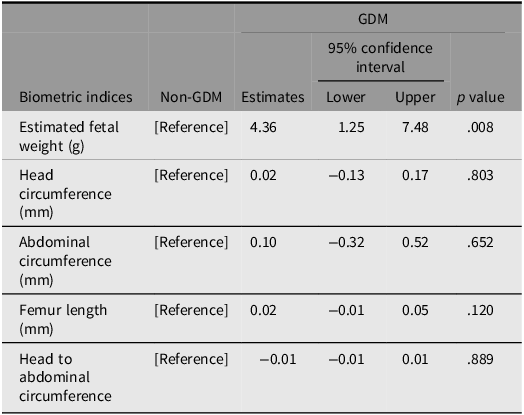
Note: GDM, gestational diabetes mellitus. The models were adjusted for maternal age, body mass index, fetal chorionicity, mode of conception, oral glucose tolerance test results and the neonatal sex.
Subgroup analysis revealed that this increase in fetal weight was observed only among GDM pregnancies that did not require medication therapy (GDMA1), with an average amount of 4.45 g (95% CI [1.32, 7.59], p = .008) per fetus per week, and it increased the odds of the fetal weight trajectory being classified into the high-speed group by 39% (aOR = 1.39, 95% CI [1.03, 1.89], p = .033). However, no relationship was detected between GDM patients who needed medical therapy (GDMA2) and accelerated fetal growth (p > .05). Moreover, no associations were detected between any of the GDM subtypes and the growth trajectories of the other biometric indices (all p > .05). The results are shown in Table 4 and Supplementary Tables 2 and 3.
Associations between GDM subtypes and the weekly change of fetal biometric indices
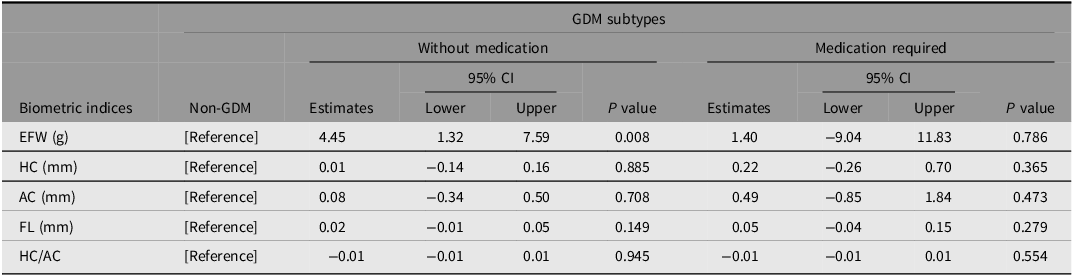
Note: GDM, gestational diabetes mellitus; CI, confidence interval; EFW, estimated fetal weight; HC, head circumference; AC, abdominal circumference; FL, femur length.
The models were adjusted for maternal age, body mass index, fetal chorionicity, mode of conception, oral glucose tolerance test results and the neonatal sex.
Discussion
In this study, we found that GDM (GDMA1) is associated with a mild increase in fetal weight in twin pregnancies and that it is not correlated with other adverse perinatal outcomes.
To date, although many studies have shown a positive relationship between GDM and gestational fetal growth acceleration in singleton pregnancies (Li et al., Reference Li, Hinkle, Grantz, Kim, Grewal, Grobman, Skupski, Newman, Chien, Sciscione, Zork, Wing, Nageotte, Tekola-Ayele, Louis, Albert and Zhang2020; Sovio et al., Reference Sovio, Murphy and Smith2016; Zou et al., Reference Zou, Wei, Shi, Wang, Zhang and Shi2022) evidence is lacking with respect to twins. The only study from Canada revealed that only GDMA2 twin pregnancies were related to accelerated fetal growth during gestation, not GDMA1 pregnancies, and the author further stressed that all the other biometric indices were comparable between GDM and non-GDM twin pregnancies (Ashwal et al., Reference Ashwal, Berger, Hiersch, Yoon, Zaltz, Shah, Halperin, Barrett and Melamed2021). Despite these differences, we both showed that this GDM-related right shift in fetal weight was mild in twins, and our study further quantified this difference to be 4.36 g per week during gestation and 49.44 g at delivery, which explains why some scholars found that GDM did not increase or decrease the odds of LGA or SGA in twin pregnancies (Alkaabi et al., Reference Alkaabi, Almazrouei, Zoubeidi, Alkaabi, Alkendi, Almiri, Sharma, Souid, Ali and Ahmed2020; Lin et al., Reference Lin, Fan, Li, Chen, Rao, Zhou, Zhang, Luo, Ma, Feng, Lu, Wang, Lan, Luo, Guo and Liu2022). Greco et al. (Reference Greco, Calanducci, Nicolaides, Barry, Huda and Iliodromiti2023) also proved this theory by using meta-regression to compare the relationships between adverse perinatal outcomes and GDM in both singleton and twin pregnancies and showed that, compared with singleton pregnancies, the odds ratio of CD, NICU admission, stillbirth, and neonatal death was indeed lower in twin pregnancies (relative risk, all p < .05). The evidence from placental studies also revealed that certain placental variations, such as vascular malperfusion lesions, villous immaturity and villitis of unknown etiology, were more common in singleton pregnancies with GDM than in twin pregnancies (all p < .05) (Weiner et al., Reference Weiner, Barber, Feldstein, Schreiber, Dekalo, Mizrachi, Bar and Kovo2018).
Unfortunately, in our study, due to the relatively small sample size of GDMA2 patients, a significant relationship was not detected in relation to fetal overgrowth. Hiersch et al. (Reference Hiersch, Berger, Okby, Ray, Geary, Mcdonald, Murry-Davis, Riddell, Halperin, Hasan, Barrett and Melamed2018) also reported that the higher prevalence of GDM in twin pregnancies is due mainly to GDMA1 instead of GDMA2 and that GDMA1 is less likely to contribute to adverse perinatal outcomes (Ashwal et al., Reference Ashwal, Berger, Hiersch, Yoon, Zaltz, Shah, Halperin, Barrett and Melamed2021). Therefore, we highly agree with the recommendation to differentiate GDMA1 and GDMA2 in research and in clinical practice, to identify those GDM twins that are truly at risk, and to provide customized management accordingly (Melamed et al., Reference Melamed, Avnon, Barrett, Fox, Rebarber, Shah, Halperin, Retnakaran, Berger, Kingdom and Hiersch2024).
Another underlying question that must be addressed is the glucose demand for twin pregnancies, since it is the major fuel for fetal growth and metabolism in all pregnancies (Beardsall & Ogilvy-Stuart, Reference Beardsall, Ogilvy-Stuart, Kovacs and Deal2020). Considering that both glucose need and insulin resistance are evaluated in twins, understanding the maternal-to-pancreatic reaction physiologically is extremely essential for GDM diagnosis and management. Moreover, the literature also revealed that the optimal threshold of the glucose tolerance test for screening for GDM might differ between twin pregnancies and singleton pregnancies (Rebarber et al., Reference Rebarber, Dolin, Fields, Saltzman, Klauser, Gupta and Fox2014; Zhao et al., Reference Zhao, Murphy, Berger, Shah, Halperin, Barrett and Melamed2022). Furthermore, Hiersch et al. (Reference Hiersch, Shah, Berger, Geary, McDonald, Murray-Davis, Guan, Halperin, Retnakaran, Barrett and Melamed2021) showed that if the 75-g oral glucose tolerance test result for diagnosing GDM in twins aligns with the same level of maternal beta-cell dysfunction observed in singletons (at risk of future type 2 diabetes), the values should be set at 5.8 mmol/L (104 mg/dL) for fasting, 11.8 mmol/L (213 mg/dL) for 1 hour postprandial, and 10.4 mmol/L (187 mg/dL) for 2 hours postprandial. These findings indicate the necessity of exploring natural physiological glucose metabolism for twin pregnancies; moreover, more prospective scientifically designed studies are needed to provide longitudinal data on glucose and insulin during the gestational process.
In this study, we testified that GDM (GDMA1) was associated with a mild acceleration of fetal growth in twin pregnancies with specific values. The exclusion of other circumstances that affect fetal growth, the adjustment for crucial confounders such as BMI, the reference of the fetal growth chart of twins and the similar conclusions drawn by two rigorous statistical approaches (LMM and GBTM) added to the scientific nature of the study. However, owing to the retrospective design, the study acknowledges its limitations in generalizing the findings. Moreover, the heterogeneity of the ultrasound exams performed by different sonographers also caused measurement bias in the study. Most importantly, without the regular follow-up of these mothers and infants, the long-term relationship between GDM and twins remains unexplored.
In conclusion, GDM (GDMA1) is related to an increase in fetal weight in twin pregnancies from gestation until birth, but it does not increase the odds of LGA at delivery. However, whether this is beneficial for twins in the long term requires further exploration.
Supplementary material
To view supplementary material for this article, please visit https://doi.org/10.1017/thg.2025.6.
Data availability
The data that support the findings of this study are available from the corresponding author upon reasonable request.
Author contributions
X.S., M.Y. and H.Y. contributed to the conception and design of the study. X.S., N.C., and Y.Z. collected, entered and validated the medical data. X.S., X.K., and C.L. performed the statistical analysis. X.S. wrote the first draft of the manuscript. M.Y., J.J. and H.Y. revised the manuscript. H.Y. funded and supervised the study. All the authors met the ICMJE criteria for authorship and approved the final manuscript for submission.
Financial support
This study was funded by the National High Level Hospital Clinical Research Funding (22cz020401-4811009) and the National Key Research and Development Program of China (2021YFC2700700).
Competing interests
None.
Ethical statement
The authors assert that all procedures contributing to this work comply with the ethical standards of the relevant national and institutional committees on human experimentation and with the Helsinki Declaration of 1975, as revised in 2008.


 Open access

