Introduction
The Primary Child Health Care (PCHC) services have a long tradition in Sweden. These services are part of the primary health care and available without charge to all parents nationwide, including immigrant and asylum-seeking parents and their children. The PCHC services are used by almost all parents at some time. Core services deal with children’s general health and include health checks for children from birth to age five years. Services are provided mostly by nurses, who assess children and families to determine the interventions or support needed to provide for the child’s optimal physical, mental, and psychosocial well-being. Nurses are also obligated to alert social services if they believe a child may need protection (National Handbook of Child Health Care Services, 2014).
Multicultural encounters in child health care services
Multicultural encounters between health care providers and immigrant parents seeking health care for their children seems to be challenging and problematic worldwide (Flores, Reference Flores2000; Lessard and Ku, Reference Lessard and Ku2003; Berlin et al., Reference Berlin, Hylander and Törnkvist2006; Berlin et al., Reference Berlin, Johansson and Törnkvist2008; Avila and Bramlett, Reference Avila and Bramlett2013; Toomey et al., Reference Toomey, Chien, Elliot, Ratner and Schuster2013). These encounters can jeopardize the quality health care given to children and can cause health care disparities (Ngui and Flores, 2006; Toomey et al., Reference Toomey, Chien, Elliot, Ratner and Schuster2013), especially among ethnic minorities and child immigrants (Avila and Bramlett, Reference Avila and Bramlett2013).
In Sweden, immigrants have greatly different cultures, languages, and social origins. About one-fourth of the total population is of foreign origin (ie, the person is foreign-born or has at least one foreign-born parent). In the capital, Stockholm, immigrants comprise 33% of the inhabitants. The three largest ethnic groups are from Asia (35%), the European Union outside the Nordic Countries (18%), and Africa (16%) (Stockholm Area Statistics, Reference Shatell2014).
Many nurses in the Swedish PCHC services have experienced challenging interactions with foreign-born parents and their children (Berlin et al., Reference Berlin, Hylander and Törnkvist2006; Reference Berlin, Johansson and Törnkvist2008). A qualitative study found that parents often come to the PCHC services with a general sense of ‘feeling exposed’ and ‘anxiety about being misjudged’ because of their immigrant status. Thus, they are concerned about establishing rapport with the nurse to assure their child’s continued access to PCHC services (Berlin et al.; Reference Berlin, Törnkvist and Hylander2010: 3).
To address this situation, nurses need a strategy to engage patients and a way to assess the quality of this engagement. To meet this need, we propose achieving the three aspects identified in the ‘I-relation-support’ goal of nursing. In turn, these aspects can be achieved when nurses express the four qualities identified by the theory of Confirming Encounter: Sympathy, Acceptance, Understanding, and Caring competence that comprise the SAUC model of nursing care (Gustafsson, Reference Gustafsson1997; Gustafsson and Willman, Reference Gustafsson and Andersson2003). These qualities can be assessed by patients completing the SAUC-based questionnaire (Gustafsson, Reference Gustafsson1997). These concepts are described below.
The I-relation-support goal of nursing
In the nursing process, the health care provider’s confirming competence is of outmost importance in maintaining the patient’s ‘I-relation-support’; that is, to maintain and support the patients’ view of themselves as actors with responsibility and some control for their own health care decisions. I-relation-support has three aspects. In the first, ‘person support in the nursing process’, the nurse supports the patient’s experiences of security, freedom of choice, self-competence, and the capacity to take responsibility for actions. In a successful encounter, the nurse provides concern, respect, and understanding to strengthen the patient’s readiness and ability to act on his or her own behalf (Gustafsson, Reference Gustafsson1997; Reference Gustafsson and Willman2004). In the second aspect, ‘self-support in the interactive confirming process’, the nurse supports patient’s experiences of motivation, partnership, uniqueness, and maturity. In a successful encounter, the nurse should impart to the patient a sense of being an accomplice/partner with own influence and being a unique individual. The overall purpose is to strengthen the patient’s individual maturity and personal development. In the third aspect, ‘self-perspective support in the interactive confirming process’, the nurse should validate patients’ thoughts and beliefs, identity, self-understanding, world view, quality of life, and ability to take control over own health care (Gustafsson, Reference Gustafsson1997; Reference Gustafsson and Willman2004).
The theory of Confirming Encounter
The theory of Confirming Encounter (Gustafsson, Reference Gustafsson1997; Reference Gustafsson and Willman2004) identifies the essential qualities of a desirable encounter with patients. In Sweden, the theory and its associated SAUC questionnaire has been adopted in clinical nursing practices nationwide and is recommended by the National Handbook of Care (Reference Snowden, Martin, Mathers and Donnell2014) as a quality indicator of nursing (Figure 1).
The Theory of Confirming Encounter consists of the Sympathy–Acceptance–Understanding–Caring competence model and is intended to help nurses achieve the goal of I-relation support with their patients.

A confirming encounter is based on mutuality and partnership (Gustafsson, Reference Gustafsson and Willman2004) as expressed in four nursing qualities with respect to the patient – Sympathy, Acceptance, Understanding, and Caring competence (Gustafsson, Reference Gustafsson and Willman2004). The SAUC model helps nurses understand and investigate goals of care and caring and identifies important qualities of a ‘good’ encounter between patients and providers (Gustafsson, Reference Gustafsson and Willman2004).
The SAUC-model questionnaire was developed to measure the qualities of the encounter between patients and health care providers. The questionnaire is a validated indicator of nursing quality (Gustafsson and Andersson Reference Gustafsson2001a; Reference Gustafsson and Andersson2001b).
A confirming encounter is especially important when patients feel exposed, vulnerable, and helpless, or when communication is difficult (Kumlien and Axelsson, Reference Kääriäinen, Kanste, Elo, Pölkki, Miettunen and Kyngäs2000), all circumstances that have been expressed by immigrant parents (Berlin et al., Reference Berlin, Törnkvist and Hylander2010). These circumstances can be demanding of the health care providers (Berlin et al., Reference Berlin, Hylander and Törnkvist2006; Reference Berlin, Johansson and Törnkvist2008).
The SAUC-model questionnaire has been validated in qualitative studies (Gustafsson and Andersson, Reference Gustafsson2001a; Reference Gustafsson and Andersson2001b; Larsson et al., Reference Larsson, Nilsson, Runeson and Gustafsson2007; Hoffren-Larsson et al., Reference Hoffren-Larsson, Löwstedt, Mattiasson and Falkenberg2013), but its psychometric properties have not been determined. Futher, we found no studies that tested the questionnaire in a cross-cultural setting.
The study
The overall aim of the study was to determine the psychometric properties of the questionnaire when completed by foreign-born parents visiting the PCHC services with their pre-schoolchildren. Specifically, we sought to: (1) determine the theoretical factor structure of the questionnaire and (2) determine the degree of consistency and factor structure with the theory of Confirming Encounters.
Material and methods
Participants
To be considered for the study, parents had to be first-time parents within the last year, been born outside the Nordic Countries, and be moderately proficient in reading and writing in Swedish. We chose this population because parents with children under one-year-old often use PCHC services and so are likely to have recent contact with nurses. Also, foreign-born parents in general feel exposed when visiting PCHC services (Berlin et al., Reference Berlin, Törnkvist and Hylander2010). First-time parents born in another country are likely to feel vulnerable in this situation, making a confirming encounter especially important and therefore suitable for assessing how well the questionnaire performs in a cross-cultural setting.
Setting
Parents were recruited from the urban county of Stockholm and the rural county of Sörmland. According to the annual statistic report, 20 municipalities in Stockholm county and four in Sörmland county had at least 20% children with foreign-born parents (Bergström et al., Reference Bergström, Blennow, Bågenholm, Dozai, Ekroth Porcel, Idenstedt, Lindfors, Lindstrand, Lundvall and Schedvins2009). In these municipalities, 51 nurses working at 50 different clinics providing PCHC services, where asked to recruit parents meeting the inclusion criteria. In addition, judge the parents’ Swedish language proficiency and possible understanding of the questionnaire.
The questionnaire
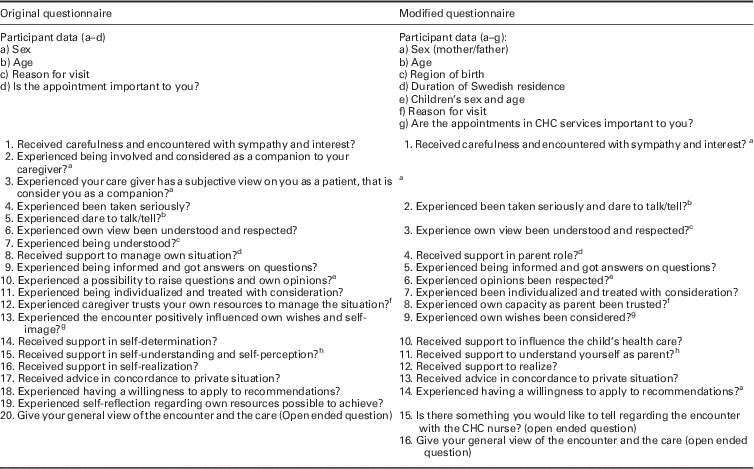
The original SAUC questionnaire consists of 24 questions (four asking for participant data, 19 relating to the SAUC model, one open-ended question) that allow adult patients to evaluate their encounter with a caregiver. Each question is scored from zero (not at all) to seven (to a high degree) and measures four qualities of a confirming encounter: Sympathy, Allowing actions, Understanding, and Caring competence (Table 1) (Gustafsson, Reference Gustafsson1997). The survey instrument’s validation relates to the theoretical base: the theory of Confirming Encounter and its ultimate goal, I-relation-support (Gustafsson and Andersson, Reference Gustafsson2001a; Reference Gustafsson and Andersson2001b). The theory has been qualitatively evaluated and tested in outpatient and inpatient settings with focus on the patient’s self-assessment (Gustafsson and Andersson, Reference Gustafsson2001a; Reference Gustafsson and Andersson2001b; Hoffren-Larsson et al., Reference Hoffren-Larsson, Löwstedt, Mattiasson and Falkenberg2013). However, to better fit the needs of foreign-born parents and to improve comprehension the number and wording of questions were modified with permission from the creator of the theory, the SAUC-model and the questionnaire (B. Gustafsson). In addition, two Swedish-speaking persons born outside Sweden judged the wording and comprehensibility of each question. The modified questionnaire consists of 23 questions: seven for participant data, 14 relating to the SAUC-model, and two open-ended questions (Table 1).
The original and modified versions of the Sympathy, Acceptance, Understanding, and Caring competence model questionnaire
The questionnaire was modified to better meet the needs of parents born outside Sweden.
a Change: original question 2, 3, 19 was eliminated.
b Change: original question 5 merged into question 2.
c Change: original question 7 merged into question 3.
d Change: original question 8 changed in wording.
e Change: original question 10 changed in wording.
f Change: original question 12 changed in wording.
g Change: original question 13 changed in wording.
h Change: original question 15 changed in wording.
Ethical considerations
Ethics committee approval was obtained from a university hospital (registration number, 2008/1743-31/2). A form attached to the questionnaire described the study and said that participation was confidential, voluntary and anonymous. Parents provided written consent to be included in the study before participation. The form with written informed consent and the questionnaire was returned in closed envelopes to a secretary with no connection to the project. The secretary kept the list of names, including the codes. Therefore, nurses, the project leader, and the research team did not know the identity of the parents answering the questionnaires. All data were de-identified and aggregated for analysis.
Data analysis
The power calculation assumed a population root mean squared error of approximation (RMSEA or R) of 0.08, which is commonly regarded as the lower limit for acceptability of fit and, therefore, a suitable choice of R to be used in power calculation for exact fit within this paper. We used the guidelines suggested by MacCallum et al. (Reference MacCallum, Browne and Sugawara1996). Furthermore, the null hypothesis RMSEA (R0) is 0.00; alpha of Type-I is 0.05; beta of Type-II is 0.2; Power Goal is 80%; degrees of freedom are 71 (number of estimated parameters by model) and type of hypothesis is one-tailed (R⩾R0) (MacCallum et al., Reference MacCallum, Browne and Sugawara1996). The results indicated the required sample size to be 79.
Factor structure and internal consistency were performed in three steps. Group tendency between questions was assessed with exploratory factor analysis. The reliability of each question was assessed with Cronbach’s α. The total variance explained by each question was estimated with the exploratory factor analysis maximum likelihood method, based on a polychoric correlation matrix, and was followed by orthogonal varimax rotation (Crawford and Ferguson, Reference Crawford and Ferguson1970; Olsson, 1979; Drasgow, Reference Drasgow1986; Bonett and Price, Reference Bonett and Price2005). To confirm that the number of questions in each factor was adequate, the Kaiser–Meyer–Olkin measure of sampling adequacy was calculated and, after rotation of the four factors, the factors were confirmed with Bartlett’s test of sphericity. The likelihood ratio test (χ 2) was used to compare the four-factor model against the saturated factors model.
As a second step, the factor structure identified by exploratory factor analysis was tested by using confirmatory factor analysis. Goodness-of-fit of the factor structure was evaluated by examining seven types of analyses: the root mean square error of approximation, the root mean square residual, the standardized root mean residual, the goodness-of-fit index, the adjusted goodness-of-fit index, the parsimonious goodness-of-fit index, and the Bentler–Bonett normed fit index (Bentler and Bonett, Reference Bentler and Bonett1980).
Three criteria defined an acceptable model: (1) values of a root mean square error of approximation below 0.08 [an upper limit of the 90% confidence interval (CI) close to 0.08 and non-significant Fit Function]; (2) goodness-of-fit index values above 0.90; and (3) standardized root mean residual values below 0.08, as suggested by (Bentler and Bonett, Reference Bentler and Bonett1980; Hu and Bentler, Reference Hu and Bentler1999). The factor structure was confirmed with sample correlation matrix based on polychoric correlation, followed by the estimation method (Olsson, 1979; Drasgow, Reference Drasgow1986; Bonett and Price, Reference Bonett and Price2005). Unweighted least squares were used to accommodate the underlying ordinal scale of manifest variables and violations of multivariate normal distribution.
In the third step, the internal consistency of the obtained factor structure was examined by creating a path diagram related to the factor structure found with confirmatory factor analysis (Cronbach, Reference Cronbach1951). This structure was compared in relation to the SAUC model and the theory of Confirming Encounter. Moreover, the pattern of factors sending or receiving arrows was examined to identify dominant or secondary characteristics of the obtained factor structure of the model.
Frequencies, percentages, means, standard deviations (SD), and medians were calculated for all questions. Alpha was set at 0.05, and all tests were two-tailed. All statistical analyses were performed with SAS version 9.3, LISREL version 8.80, and IBM SPSS Amos 21.
Results
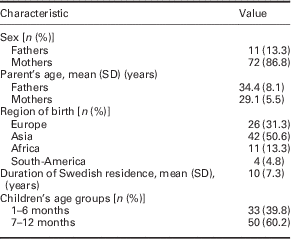
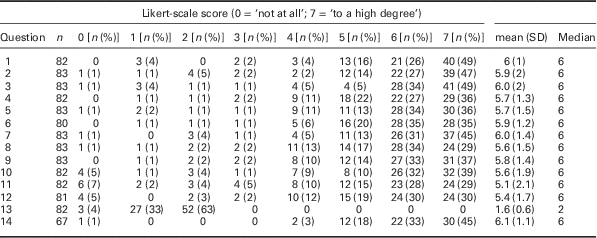
Of the 83 parents recruited (mean age, 32 years), 72 (86.8%) were mothers, Asia was the most common region of birth (50.6%), and the mean duration of residence in Sweden was 10 years (Table 2). The parents answered all the 14 questions but to different degree (Table 3).
Demographic characteristics of 83 foreign-born parents using the Swedish child health care services in a study of the psychometric properties of the Sympathy, Acceptance, Understanding, Caring competence (SAUC) model questionnaire
Responses of new, foreign-born parents using the Swedish child health services to the Sympathy–Acceptance–Understanding–Caring nursing competence model questionnaire
Results of explorative factor analysis
Explorative factor analysis revealed a group tendency among the 14 questions (Table 4). Consequently, loading a four-factor structure model revealed good internal consistency (Cronbach’s α, 0.91–0.94). Factor 1 (person support) had the highest variance explanation before rotation (72%); the next highest was Factor 3 (self-perspective support) (14%). However, after rotation and selection of the factor model, the variance of explanation became more stable [Factor 1 (Personal Support) explaining 39%; Factor 2 (self-support) (explaining 28%; Factor 3 (self-perspective support) explaining 25%; and Factor 4 (Concordance) explaining 8%]. The three questions with the highest uniqueness value were question 3 (35%), question 13 (32%), and question 14 (46%), but these questions significantly indicated a group tendency to their own factors (Table 4).
Pattern of factor after varimax rotation and confirmatory pattern results with all questions
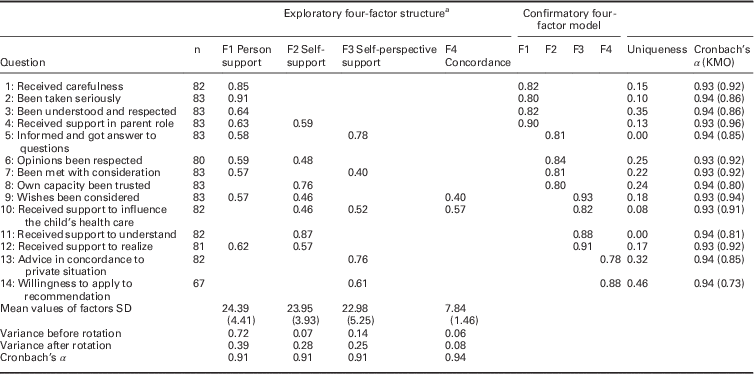
KMO=Kaiser–Meyer–Olkin.
a Factor loadings <0.40 are not presented. Reliability statistics for all 14 questions with Cronbach’s α is 0.94 and 0.94 when based on standardized questions Type C interclass correlation coefficient using a consistency definition for a single measures is 0.52 and 0.94 for average measures, assuming the interaction effect is absent because it is not otherwise estimable and both correlation coefficients are significant at 5% level.
Results of confirmatory factor analysis
Evaluating the pattern of the four-factor structure model with confirmatory factor analysis loading values and their error indicated a good fit (root mean square error of approximation 0.061, root mean square residual 0.055, standardized root mean residual 0.055, goodness-of-fit index 0.99, adjusted goodness-of-fit index 0.99, and parsimonious goodness-of-fit index 0.67) with the three-factor theory of Confirming Encounter (Gustafsson, Reference Gustafsson and Willman2004).
Internal consistency
The path diagram shows how Factors 1 through 4 relate to each other and to the 14 questions (Figure 2). High loading values (range, 0.23–0.73) reveal a high concordance with the theory of Confirming Encounter and the SAUC model questionnaire. Factor 1 dominates, and Factors 2, 3, and 4 are more secondary and are generated from Factor 1. In addition to the three factors already described in the theory of Confirming Encounter (Figure 1 and Factors 1 through (3), we identified a fourth, which we termed ‘concordance’.
Relationships between Factors 1 through 4 and questions on the Sympathy–Acceptance–Understanding–Caring nursing competence questionnaire. Factor loadings are indicated on the relationship lines between factors and items, correlation coefficient among factors are indicated on the outside of each ellipse by direction, and error of each item is indicated outside each box.
Factor 1: person support in the nursing process
Questions 1 through 4 are included in Factor 1, ‘receiving carefulness’ (question 1); ‘having been taken seriously’ (question 2); ‘having been understood’ (question 3); and ‘receiving support in the parent role’ (question 4). The path diagram reveals that Factor 1 sends arrows to the three other factors (Figure 2). Factor 1 is correlated with and generates Factor 2 (with a 73% correlation), Factor 3 (with a 23% correlation), and Factor 4 (with a 60% correlation).
Factor 2: self-support in the interactive confirming process
Question 5 through 8 are included in Factor 2: ‘informed and got answers to questions’ (question 5), ‘opinions being respected’ (question 6), ‘being individualized and treated with consideration’ (question 7), and ‘own capacity being trusted’ (question 8). Factor 2 is secondary to and generated from Factor 1 (with a 73% correlation) and from Factor 4 (with a 43% correlation) and generates Factor 3 (with a 66% correlation). Moreover, Factor 2 mediates between Factor 1 and Factor 4 (Figure 2). All these relations are positive and statistically significant.
Factor 3: self-perspective support in the interactive confirming process
Questions 9 through 12 are included in Factor 3: ‘wishes been considered’ (question 9), ‘received support to influence the child’s health care’ (question 10), ‘received support to understand’ (question 11) and ‘received support to realize’(question 12). Factor 3 is secondary and is generated from Factor 1 (with a 23% correlation) and Factor 2 (with a 66% correlation) (Figure 2).
Factor 4: concordance
Factor 4, concordance, is new factor and not included in the original Confirming Encounter theory. Questions 13 and 14 are included in Factor 4: ‘advice in concordance to private situation’ (question 13) and ‘willingness to apply to recommendations’ (question 14). Factor 4 receives one arrow from Factor 1 and sends one arrow to Factor 2 (Figure 2). Factor 4 is secondary and generated from Factor 1 (with a 60% correlation). Moreover, Factor 4 also generates Factor 2 (with a 43% correlation).
Discussion
We determined the psychometric properties of a modified version of the SAUC-model questionnaire in a sample of foreign-born parents encountering nurses in PCHC services with their children. Our results indicate that this version of SAUC model questionnaire has generally acceptable psychometric properties for assessing nursing competence in cross-cultural contexts. Psychometric evaluation revealed a group tendency between questions loading in a four-factor structure model that was statistically confirmed. Factor 1 (receiving personal support in the nursing process) was dominant and fundamental, which means Factors 2 through 4 were generated from and exist in relation to Factor 1. The new Factor 4 further develops the theory of Confirming Encounter. In this case, the new factor found can be seen as a completion of the theory.
The hypothesis in this study – that the factor structure of the questionnaire was related to the theory of Confirming Encounter – was based on qualitative validations of the theory (Gustafsson and Andersson, Reference Gustafsson2001a; Reference Gustafsson and Andersson2001b). This hypothesis guided the analysis of factor structure between questions in the first step; that is, as preliminary research to select the number of factors without (eliminating questions). In our data, all potential questions that cannot be explained by confirmatory factor analysis are highlighted in the exploratory factor analysis framework. Exploratory factor analysis is appropriate for finding associations between all questions, which allows the structure to be explored and estimated before moving to confirmatory factor analysis (Jörskog, Reference Jörskog1969; Jörskog and Sörbom, Reference Jörskog and Sörbom1979). Confirmatory factor analysis was used as a next step and after this analysis the model with the SAUC-model questionnaire became significant.
Internal consistency
We found a fourth factor, which we called concordance. This factor had a 60% correlation with Factor 1, person support (questions 1 through 4), which indicates that to be encountered with carefulness means being taken seriously, being understood, and receiving support as a parent is fundamental in attaining concordance.
We named Factor 4 ‘concordance’ to be consistent with the philosophic and spiritual meaning of the theory of Confirming Encounter; that is, emphasizing mutuality and partnership between the nurse and the patient (Gustafsson, Reference Gustafsson and Willman2004). The literature describes concordance as intending to involve the patient (De las Cuevas et al., Reference De las Cuevas, Rivero, Perestelo-Perez, Gonzalez, Perez and Peñate2011), focusing on agreement and mutual understanding (Barron and Snowdon, Reference Barron and Snowdon2012), and being a ‘patient-centered process of supported decision-making’ (Snowden et al., Reference Olsson2013: 47). Concordance contrasts with the related concepts of compliance and adherence, which cast patients as subordinate, passive actors and is inconsistent with the patient-centered approach (Bissell et al., Reference Bissell, May and Noyce2004; McKinnon, Reference McKinnon2013; Snowden et al., Reference Olsson2013).
Implications
As stated by Kääriäinen et al. (Reference Kumlien and Axelsson2011), theory testing is intended to inform clinical practice. Our result indicates that the questionnaire could be a reliable and valid measure of the encounter between nurses and foreign-born parents. The modified questionnaire and the further-developed theory could assist in assessing a confirming encounter as a quality indicator in international nursing care. In addition, it would alert nurses regarding the essential and fundamental qualities in the nurse–parent encounter. These assessments and guidance are of specific importance in a health care setting where cross-cultural encounters take place between nurses and foreign-born parents. Thus, worldwide, these encounters are known to be challenging and problematic, risking health care disparities in children (Ngui and Flores, 2006; Toomey et al., Reference Toomey, Chien, Elliot, Ratner and Schuster2013). Responses to the questionnaire allow nurses in PCHC services to identify variables and deficiencies important to providing high-quality care to foreign-born parents and their children. This ability is important because a good and a respectful encounter and interaction between patients and nurses are considered to be ‘a central element’ and of the utmost importance in providing high-quality nursing care (Shatell, Reference Ngui and Flores2004: 714).
The concept of concordance, its role, and meaning for clinical practice in PCHC services, needs to be further explored and discussed by nurses. Consequently, concordance is essential in clinical settings ‘not only as an ethical term but as a fundamental principle underpinning the care process’ (McKinnon, Reference McKinnon2013: 770). We suggest nurses use the further-developed theory of Confirming Encounter when critically reflecting on the care process in PCHC services, thus, adjusting advice in concordance with the parent’s private situation and following up on the parent’s willingness to apply their recommendations. This is of the utmost importance in reducing health care disparities in this group of children.
Strengths and limitations of the study
Our study has some strengths, especially satisfactory data quality and generally acceptable psychometric properties. It also has some limitations. First, including parents with moderate proficiency in the Swedish language might have potential to limit the results. To reduce this presumed limitation, nurses judged the parents’ language proficiency, which might be considered a strength. We do not know how well the foreign-born parents understood and interpreted the questions. Even though only parents with sufficient Swedish-language skills were included, they may still have misunderstood some of the questions.
Second, the limited sample size might be considered a limitation even though power estimation demonstrated acceptable quality. However, we calculated sample size using the old-fashioned hypothesis of perfect fit by testing the hypothesis within the boundaries of a perfect fit (pattern of a four-factor model presented inside the SAUC-model questionnaire can be accepted) against the alternative hypothesis that it is not perfect.
Third, in any self-report survey, respondents can be affected by their position of dependence to the nurses and to social expectations. However, the questionnaire assesses parents’ opinions of the encounter, but patients are the only source of their opinions and experience. In addition, responses and respondents were anonymous. Fourth, we also tested a modified questionnaire. The original was developed to allow adults to evaluate their first caregiver. By eliminating three questions, changing the wording, applying the questionnaire in a multi-cultural context, and having parents evaluate the care given to their children and not to themselves, we may have introduced some degree of error, confounding, and bias.
Conclusions
To conclude, it is necessary to develop instruments suitable for measurements in different populations. This study is believed to be the first evaluating the SAUC-model questionnaire in a sample of foreign-born parents. As such, it provides a useful baseline for future research and in testing the questionnaire in a larger population. Our study supports the conceptual model implicit in the theory of Confirming Encounter. The factor structure confirmed three of the categories, and internal consistency revealed a fourth and new category: concordance. We believe findings confirm that the questionnaire is adequate to allow foreign-born parents to assess their encounter with nurses in PCHC services and that the new factor of concordance further develops the theory. Overall, results supports the use of the SAUC-model questionnaire since it helps nurses to detect the quality of health care provided to foreign-born parents and their dependent child. This might be of international interest since cross-cultural encounter is a worldwide phenomenon due to international migration.
Acknowledgements
The authors offer sincere and respectful gratitude to Professor Barbro Gustafsson, late of the Karolinska Institute. Her encouragement and support were invaluable throughout the process of modifying the questionnaire. Unfortunately, she did not live to see the results of her life’s work. The authors would also like to thank all parents who participated in this study.
Source(s) of Funding
This research received no specific grant from any funding agency in the public, commercial, or not-for-profit sectors.
Conflicts of Interest
None.
Ethical Standards
The authors assert that all procedures contributing to this work comply with the ethical standards of the relevant national and institutional guides on the Helsinki Declaration of 1975, as revised in 2008.