

13.1 Introduction
By adopting the Recovery and Resilience Facility (RRF) Regulation in 2021, European Union (EU) legislators added two new governance tools to the EU’s new economic governance (NEG) regime. The first tool is the National Recovery and Resilience Plans (NRRPs) that governments must draft in close collaboration with the Commission to get RRF funding. The second tool is the Council Implementing Decisions (CIDs) of the Council (of finance ministers). With its CIDs, the Council endorses the Commission’s assessment of an NRRP, including the timeline for the implementation of its milestones and targets. This is crucial, as the Commission will only release RRF funding – which comes in funding tranches up to twice a year – once the member state has met the milestones and targets outlined in the corresponding CID.
As the Commission possesses considerable leeway in assessing member states’ progress in implementing their NRRPs, a full assessment of the post-Covid NEG regime’s policy orientation will be possible only after 2026 when the NRRP phase of the NEG regime is completed. This flexibility stems from the RRF Regulation’s qualitative evaluation criteria for NRRPs that give EU executives significant scope for interpretation when assessing governments’ progress in meeting the CID benchmarks (Table 12.1). Furthermore, some governments, such as those of Ireland and Italy, sought EU executives’ permission to amend their NRRPs to take account of changing circumstances, such as the Russian invasion of Ukraine in 2022, rising inflation, or unforeseen technical obstacles. Nevertheless, given the pivotal role of the EU’s 2019 and 2020 country-specific recommendations (CSRs) for the drafting of NRRPs and the corresponding CIDs, we are already able to outline the likely policy orientation of the post-Covid NEG regime in our fields.
The RRF Regulation’s evaluation scoreboard for NRRPs and their implementation includes four core assessment categories (Chapter 12). Of these, the CSR-related scoreboard category is the most important one. Whereas NRRPs must merely ‘contribute’ to ‘economic, social and territorial cohesion’ and the ‘green’ and the ‘digital transition’, all NRRPs must ‘address … all or a significant subset of challenges identified in CSRs’ (RRF Regulation, quoted in Table 12.1, emphasis added).
In this chapter, our analysis of the EU’s post-Covid economic governance regime based on a) the CSRs issued in the 2019 and 2020 cycles of the European Semester process, b) the targets and milestones included in the NRRP’s CIDs, and c) recent EU laws. As in Chapters 6 to 10, we analyse the policy orientation of the post-Covid NEG prescriptions across two areas (employment relations and public services), three sectors (transport, water, and healthcare services), and four countries (Germany, Ireland, Italy, and Romania). Pursuing our methodology (Chapters 4 and 5), we do so by considering the NEG prescriptions included in CSRs and CIDs in their broader semantic, communicative, and policy contexts.
13.2 EU Governance of Employment Relations: Towards Decommodification?
As shown in Chapter 6, Ireland, Italy, and Romania recurrently received commodifying NEG prescriptions on wages, collective bargaining, and hiring and firing mechanisms until 2019. By contrast, EU executives asked German policymakers to pursue more expansionary wage policies – not, however, for social reasons but to rebalance the EU economy (Chapter 11). Hence, all NEG prescriptions on employment relations that EU executives issued after the financial crisis were compatible with NEG’s overarching commodifying script – with the exception of the 2018 prescription that asked the Romanian government to enhance social dialogue and the earlier prescriptions that asked the German government to curtail the use of mini-jobs. This situation changed after the outbreak of the pandemic.
In April 2020, the Council created the SURE unemployment insurance support fund to back the creation and operation of short-time work schemes across the EU. This allowed employers to keep their workers on payroll during the Covid lockdowns (Chapter 12). Accordingly, the CSRs issued in 2020 encompassed NEG prescriptions that urged member states to prevent a rise in unemployment by developing flexible working arrangements and activation measures, including access to short-time work schemes (Rainone, Reference Rainone2020).
Two years later, the European Parliament and Council adopted the EU directive (2022/2041) on adequate minimum wages. This directive signified a real EU labour policy volte-face (Maccarrone, Erne, and Golden, Reference Maccarrone, Erne, Golden, Clegg and Durazzi2023) that went even further than the Commission’s 2020 proposal (COM (2020) 682 final). EU legislators specified the setting of a national minimum wage ‘with the aim of achieving a decent standard of living, reducing in-work poverty, as well as promoting social cohesion and upward social convergence, and reducing the gender pay gap’ (Art. 5(1) Directive 2022/2041). Whereas EU executives urged governments to curb wages after the crisis in 2008 (Chapter 6), the 2022 directive returns to what Marshall (Reference Marshall1950: 69) called the right to a ‘living wage’, defined as ‘the right of the citizen to a minimum standard of civilised living’. To monitor the implementation of this goal, the directive sets statutory EU reference values for national minimum wage levels: ‘60% of the gross median wage and 50% of the gross average wage’ of a fulltime worker (Art. 5(4)). Following this, 18 per cent of the EU’s workforce was in line to get a wage increase (Schulten and Müller, Reference Schulten and Müller2021: Table 1). Only in France were the statutory minimum wage levels higher than the new EU reference values (2021: Table 1).
Furthermore, EU legislators recognised that workers’ wages would be set best through collective bargaining. Their Minimum Wage Directive thus also commits member states to increase the ‘collective bargaining coverage’ rate and to facilitate ‘the exercise of the right to collective bargaining on wage-setting’ (Art. 4(1)). To monitor the implementation of this goal, EU legislators again provided an EU reference value: an 80 per cent collective bargaining coverage rate in each member state. In 2022, only sevenFootnote 1 of the twenty-seven member states reached this benchmark (Commission, Communication, COM (2023) 40 final: Graph 1). The Minimum Wage Directive thus obliges member states to (a) strengthen the social partners’ capacity to engage in collective bargaining on wage-setting at sector or cross-industry level, (b) protect workers and union representatives from acts that discriminate against them, and (c) protect unions from any acts of interference by employers (or their agents) in their establishment, functioning, or administration (Art. 4(1)).
The directive’s approval by a very large majority of the European Parliament and Council shocked North American and European business leaders (Erne, Reference Erne2023b) and not just because the directive represents a U-turn in EU wage policy-making. Business leaders had been confident that they would be able to defeat any Commission proposal in this field,Footnote 2 as the EU would not have the legal competence to legislate on it. After all, opponents of EU collective bargaining laws had effectively used such arguments in the past (Cooper, Reference Cooper2015). This time, however, their EU-competence arguments no longer worked,Footnote 3 paradoxically because Business Europe (2020b) and its national affiliates compromised them by their own actions during the financial crisis when they lobbied EU executives to prescribe wage cuts and to decentralise bargaining systems (Chapters 3 and 6; Maccarrone, Reference Maccarrone2020). Aptly, European trade union leaders simply flipped the EU competence argument by asking EU executives the following question: How can one say that the EU has no right to provide a framework for adequate minimum wages, after a decade of binding EU prescriptions that tasked governments to curb wages and to marketise collective bargaining mechanisms? (Erne, Reference Erne2023b). Not only did arguments about the apparently lacking EU competences in the field no longer work to prevent the adoption of the EU Minimum Wage Directive, they also failed to stop the Commission from proposing additional directives in the field of pay and employment relations policy in 2021 and 2022, namely,
• the Pay Transparency Directive (COM (2021) 93 final) to strengthen the application of the principle of equal pay for equal work or work of equal value between men and women through pay transparency and equal pay enforcement mechanisms, which came into force on 10 May 2023 (Directive (EU) 2023/970);
• the Directive on Improving Working Conditions in Platform Work (COM (2021) 762 final) to make it harder for companies in the gig economy to impose bogus self-employment (which triggered fierce opposition from platform companies, such as Uber, and still had to be adopted by EU legislators at the time of writing);
• the Directive on Corporate Sustainability Due Diligence (COM (2022) 71 final), which obliges companies and their suppliers to adopt measures to curb human rights abuses (forced labour, child labour, inadequate workplace health and safety, exploitation of workers) and activities that negatively affect the environment and the climate. This proposal also triggered the opposition of some capital factions; and also still had to be adopted by EU legislators at the time of writing.
These legislative proposals show that the European Commission reoriented its employment relations policy in a decommodifying policy direction. In the 2019 and 2020 CSRs for Germany, Ireland, Italy, and Romania, however, this policy shift was not yet very visible. In addition to the references to the short-time work schemes mentioned above, the CSRs issued to these four countries contained only two sets of prescriptions on employment relations.Footnote 4 The first tasked the Romanian and Irish governments to strengthen ‘the resilience of the health system, in particular with regard to health workers’. The second tasked the Romanian government to ‘improve the quality and effectiveness of public administration and the predictability of decision-making, including through adequate involvement of social partners’ (Council Recommendation Romania 2020/C 282/23, emphasis added).
Prescriptions on employment relations were also largely absent in the four NRRPs. The Irish NRRP contained only one in relation to healthcare workers. Given the proposal to establish a single-tier healthcare system (see below), it stipulated public-only employment contracts for doctors, with increased salaries for new entrants. More important for Irish employment relations, however, were the new EU laws regarding pay. Consequent to the EU directive on adequate minimum wages, the Irish government announced the introduction of a statutory ‘living wage’ to be set at 60 per cent of the median wage, matching the EU directive’s reference value. The government also set up a tripartite high level working group, which proposed a strengthening of Ireland’s sectoral wage-setting mechanisms. These developments are significant, as they reversed measures implemented in the period of MoU conditionality after the financial crisis (Chapter 6; Maccarrone, Erne, and Regan, Reference Maccarrone, Erne, Regan, Müller, Vandaele and Waddington2019).
The 2019 and 2020 CSRs for Italy did not entail any prescriptions on workers’ terms and conditions while in employment. Even so, Italy’s NRRP contained a decommodifying prescription on wages. It stipulated that procurement procedures for publicly funded cultural events would have to include social and environmental criteria, including decent wages. Surprisingly however, this prescription did not apply to all instances of public procurement. Instead, the plan tasked Italian policymakers to reduce the restrictions on subcontracting currently contained in the Public Procurement Code, potentially therefore putting labour standards under increased competitive pressures.
In their 2019 CSR, EU executives tasked German policymakers to support higher wage growth. Nonetheless, the NRRP did not include any such measure. The narrow victory of the SPD led by Olaf Scholz in the federal elections in September 2021, however, paved the way for a sizable increase in the minimum wage from €9.82 to €12 in October 2022. The €12 rate came very close to the 60 per cent of the median wage that the Commission had included in its 2020 proposal for an EU directive on adequate minimum wages, thereby facilitating the adoption of the EU Minimum Wage Directive by the German labour minister in the Council. However, although the government programme of the SPD’s traffic-light coalition with the Greens and the neoliberal Free Democrats (FDP) included the one-off increase of the minimum wage to €12, the FDP prevented the inclusion of the EU’s reference values in it. As a result, the German minimum wage commission was able to remove the 2022 gains of minimum wage workers by setting wage rises for 2024 and 2025 well below the EU’s reference values for adequate minimum wages (Zeit.de, 1 July 2023). After all, German lawmakers had not yet transposed the new EU directive into German law.
EU executives repeatedly tasked the Romanian government to use ‘objective criteria’ for setting the minimum wage between 2014 and 2019. As outlined in Chapter 6, these prescriptions pointed in a commodifying direction, as EU executives had issued them to prevent unilateral wage increases by social democratic governments against the will of employers. After the approval of the EU Minimum Wage Directive however, the meaning of the term ‘objective criteria’ changed, as the implementation by March 2024 of the EU’s new reference values for adequate minimum wages and the corresponding CID benchmark (Annex to the Council Implementing Decision … for Romania 12319/21 ADD 1: 449) may lead to significant minimum wage increases. In 2022, its government had already increased the minimum wage by 17.65 per cent, which was the third largest increase in the EU (Eurofound, 2023).
The Romanian NRRP also contained another prescription on wages, namely, a call to implement a unitary pay scale in the public sector. When Romania was under bailout conditionality, this call had been linked to budgetary retrenchment (Chapters 6 and 7). In 2022 however, its meaning changed when Romanian public sector unions, such as the healthcare workers’ union Sanitas, were leveraging the NRRP prescription to demand the inclusion of the social partners ‘in the process of designing the new law on the salaries of budgetary staff – which the government has assumed through the NRRP – so as to guarantee a direct correlation between salary income and purchasing power and the cost of living’ (Sanitas, 2022).
In addition, Romania’s NRRP included a prescription on hiring and firing mechanisms: the introduction of hourly tickets, or vouchers, which employers can use to pay domestic care workers in a tax compliant manner. The rationale provided in the plan is a decommodifying one, namely, ‘to provide incentives to create formal employment for domestic workers who are currently recorded as unemployed or inactive’ (Annex to the Council Implementing Decision … for Romania 12319/21 ADD 1: 449). Given the Italian experiences with such vouchers however, their introduction might not end informal employment as such but only lead to a regularisation of some working hours. If used widely, they may even lead to more precarious employment, as vouchers create incentives for employers to use them instead of standard contracts of employment, given their lower costs (Anastasia, Bombelli, and Maschio, Reference Anastasia, Bombelli and Maschio2016).
Most importantly however, the CID also included a hard benchmark on intersectoral employment relations, as it tasked Romania’s legislators to revise its collective labour law by the end of 2022 in order to secure the payment of the subsequent tranche of RRF funding:
Q4 2022 Entry into force of a new law on social dialogue, negotiated with the social partners. The law shall address deficiencies in the social dialogue process as highlighted in the relevant Country Specific Recommendation and be in line with the International Labour Organisation recommendations issued in April 2018 and referred to in recital 25 of the 2020 Country Specific Recommendations. Also, the Law shall foresee a Revision of the definition of the economic sectors as a basis for sector level collective agreement.
This binding EU benchmark enabled the Romanian social democrats to overcome the opposition of their centre-right coalition partners from the Partidul Național Liberal (PNL), which initially resisted reversing the 2011 collective labour law reforms that the then centre-right Romanian government adopted under MoU conditionality (Chapter 6). Subsequently, on 22 December 2022, the Romanian legislators adopted a new Law on Social Dialogue (‘Legea privind dialogul social’ nr. 367/2022), which strengthened workers’ and union rightsFootnote 5 and re-established multi-employer bargaining structures at sectoral and intersectoral level. This may be a ‘real game changer’ (industriAll Europe, 2023), as sectoral collective bargaining broke down in almost all sectors following the adoption of the 2011 Social Dialogue Law (Chapter 6). This change would not have been possible without EU leaders’ changing policy orientation, the persistent lobbying of the ETUC and its affiliates for the EU Minimum Wage Directive, and the concurring mobilisations of Romanian unions for the revision of the Romanian collective labour law. The latter included a five-day-long protest ‘Caravan of Social Rights’ by trade unionists from Bucharest to Brussels in July 2021, which politicised the EU Minimum Wage Directive, the Romanian NRRP, and its demand for reform of the Romanian labour law (Table 13.1). Powerful employers, such as all foreign-owned banks operating in Romania, accepted the return to sectoral bargaining too, to create a level playing field in ‘a tight labor market’ (De Spiegelaere, Reference De Spiegelaere2023: 9). National and EU policymakers, however, would hardly have shifted the direction of their labour policy interventions in a decommodifying direction had they not feared popular discontent and a revival of collective union action following the cost-of-living crisis that ‘has pushed millions of people into poverty’ (Vanhercke, Sabato, and Spasova, Reference Vanhercke, Sabato and Spasova2023: 7).
| Date | Location | Action type | Topic | Coordinators |
|---|---|---|---|---|
| 25 February 2020 | Brussels | Demonstration | Commission proposal for gender pay transparency legislation | ETUC |
| 25 September 2020–25 June 2022 | Online | ECI | Unconditional basic incomes (UBI) throughout the EU | Netzwerk Grundeinkommen |
| 18 June 2021 | Brussels | Demonstration | Gender Pay Transparency Directive | ETUC |
| 1–5 July 2021 | Multi-sited | Demonstration | Caravan of Social Rights: Bucharest to Brussels | Cartel Alfa |
| 7 October 2021 | Multi-sited | Demonstration, strike | World Day for Decent Work | ITUC, ETUC, national unions |
| 23 June 2022 | Multi-sited | Demonstration | World Public Service Day | EPSU |
| 5 October 2022 | Strasbourg | Demonstration | End the cost-of-living crisis. Increase wages, tax profits | ETUC, French unions |
| 26 November 2022 | Schengen | Demonstration | Against the neoliberal policy that has been implemented in Europe for decades | OGBL, DGB, ver.di, CGT, Younion, FGTB |
| 30 November 2022 | Brussels | Demonstration | Ban unpaid internships | ETUC |
The table includes transnational protest events (1 January 2020–28 February 2023) targeting EU authorities in relation to employment relations, using the database’s political category, excluding socioeconomic protests at company, sectoral, and systemic level.
Overall, our assessment of the four NRRPs, the corresponding CIDs, and the recent EU laws has revealed a substantial change of direction in EU policymaking in the area of employment relations. Whereas EU executives prescribed wage cuts and commodifying reforms of collective bargaining and hiring and firing mechanisms after the financial crisis in 2008, the EU interventions in the field predominantly pointed in a decommodifying policy direction after the outbreak of the Covid pandemic. The same, however, cannot be said of their interventions in the field of public services, as we outline below.
13.3 EU Governance of Public Services: Public Investment for Private Gain
Before the pandemic, the EU NEG prescriptions had already shifted away from demanding a curtailing of resources for public service providers. Instead, EU executives prescribed greater investments in sectors that would be critical for economic development. Most of these expansionary quantitative NEG prescriptions, however, remained subordinated to NEG’s overarching commodification script, given their semantic links to policy rationales – such as boost competitiveness and growth, rebalance the EU economy, and enhance private sector involvement (Table 11.2) – that are compatible with public service commodification.
Conversely, all qualitative NEG prescriptions pointed clearly in a commodifying policy direction across all four countries and all years until 2019 (Table 11.1). In the 2019 Semester cycle, EU executives tasked the Italian government to ‘address restrictions to competition … through a new annual competition law’ (Council Recommendation 2019/C 301/12), and Romania was required to improve the efficiency of public procurement (Council Recommendation 2019/C 301/23). Italy was asked to reform its public administration, whereas the Romanian government was told to strengthen the corporate governance of state-owned enterprises (SOEs), ‘with a view to upgrading operational performance, limiting risks to the government budget and improving their functioning in the economy’ (Council Recommendation 2019/C 301/23).
In response to the Covid-19 pandemic, member states massively increased their public spending. EU leaders supported this response by temporarily suspending the Stability and Growth Pact (SGP) (Chapter 12). The Council’s 2020 NEG prescriptions reflected this new reality, as most governments were told to take all necessary measures, in line with the SGP’s general escape clause, to effectively address the crisis caused by the pandemic (Council Recommendations for Ireland (2020/C 282/07), Italy (2020/C 282/12), and Germany (2020/C 282/05)). Even so, EU executives toned down these expansionary prescriptions by requesting a return to restrictive fiscal policies once the situation improved. Furthermore, in 2020, EU executives expected the Romanian government to limit the public deficit with a view to bringing it below 3 per cent of GDP in 2022. After all, Romania had been made subject to an excessive deficit procedure just before the outbreak of the pandemic (Council Recommendation 2020/C 116/01). In 2021, EU executives nonetheless extended to 2024 the deadline to bring the deficit below the SGP threshold, given the negative impact of the pandemic on the Romanian economy (Commission SWD (2021) 530 final). This shows that the fiscal flexibility granted to governments was temporary and still constrained by the overarching EU fiscal framework. This, we expect, will clearly be the case if EU leaders re-enact a constraining SGP regime, a question to which we return below. In addition, EU executives did not ask governments to increase resources for all public service providers. Instead, they asked governments to ‘front-load’ approved public investment projects and to ‘focus’ investment on the green and digital transition (Council Recommendations for Ireland 2020/C 282/07, Italy 2020/C 282/12, and Germany 2020/C 282/05). As shown in Chapter 7, however, the prioritisation of investments in some areas at the expense of other areas does not have a decommodifying effect on public services in general. In addition, the prescriptions in the area of provider-level governance mechanisms issued to Italy and Romania also pointed in a commodifying direction, tasking the two governments to ‘improve the effectiveness of public administration’ (Council Recommendations for Romania 2020/C 282/23 and Italy 2020/C 282/12). Given that the pandemic’s devastating impact underlined the importance of adequate and accessible public services, we expected to find more prescriptions in the 2020 Semester cycle on people’s access to public services. However, only Romania received a prescription to extend the coverage of essential public services (Council Recommendation 2020/C 282/23), as in previous Semester cycles (Chapter 7).
The four NRRPs prescribed a similar policy mix, combining calls for more public investments with demands for marketising public sector reforms. These patterns were most notable in the Romanian and Italian NRRPs; this is hardly surprising, as EU executives matched those countries’ greater share of RRF funding to more policy conditionalities. Given the RRF Regulation’s evaluation criteria, the NRRPs channelled public expenditure towards capital (rather than personnel) spending and towards the green and digital transitions. Most green and digital investments were directed towards specific sectors, as we shall see below. If we look at green investments across sectors, only those for spending on the energy efficiency of Irish, Italian, and Romanian public buildings stand out in their respective NRRPs, in which, by contrast, digitalisation played a more prominent cross-sectoral role.
All four NRRPs first committed governments to digitalise public administrations and then operationalised the corresponding expenditure and reform targets in more detail. All plans prescribed measures to increase the digital delivery of public services, with the stated aim of increasing citizens’ access to them. Other measures concerned the internal operation of public administration, such as the creation of shared cloud services and data centres or the provision of training on digital skills for public service workers. The Romanian NRRP also committed the government to automate laborious, repetitive, and rule-based tasks in the public sector. This could have a commodifying or a decommodifying impact, depending on whether automated services will be used to reduce the public sector workforce or to expand public services. All NRRPs presented digitalisation as a means to increase citizens’ access to public services, but only Romania’s plan foresaw additional measures to increase access to, and the quality of, local-level services. These measures mirrored the decommodifying prescriptions on the same issue that Romania received in the 2019 and 2020 Semester cycles. At the same time however, Romania’s NRRP linked digitalisation to commodifying public services reforms, that is, to the creation of digital platforms for human resource management (HRM).
More generally, the Italian and Romanian NRRPs combined decommodifying (quantitative) prescriptions for more investments with prescriptions for commodifying (qualitative) public sector reforms. In the sector-level governance mechanisms category, the Italian NRRP committed the government to remove obstacles to competition in the services sector, both public and private, through the introduction of annual law to further competition. This had been a recurrent theme in the CSRs for the Italian government up to the 2019 cycle (Chapter 7). In the NRRP, the Italian government thus committed itself to foster competitive tendering for local public services; to curtail the possibility of in-house delivery of public services; and to reduce the length of public concessions contracts in several areas, such as ports, highways, electric charging stations, and hydropower. The Italian NRRP also required the simplification of Italy’s procurement rules to accelerate the awarding of public contracts, which was a recurring theme in the NEG prescriptions for Italy, albeit not in the 2019 and 2020 cycles. The theme of increasing the efficiency of public procurement was very present in the NEG prescriptions for Romania too, including the 2019 ones. In turn, the Romanian NRRP committed the government to fully implement its National Public Procurement Strategy approved in 2015. Another commodifying measure of both the Italian and the Romanian NRRPs was the commitment to strengthen spending review procedures, mirroring NEG prescriptions that EU executives had already issued before the 2019 and 2020 Semester cycles (Chapter 7).
Both the Italian and Romanian NRRPs also contained prescriptions on provider-level governance mechanisms. The reform of HRM practices in public administration had been a long-standing theme in NEG prescriptions for Italy and Romania, including in the 2020 cycle. Accordingly, they featured prominently in the NRRPs too. The Italian NRRP prescribed an update in public sector job profiles, a reform of hiring procedures and career trajectories, and new provisions on public sector workers’ horizontal and vertical mobility. In addition to these commodifying goals, the plan mentioned some decommodifying ones, including a stronger commitment to gender equality. In addition to the digitalisation of HRM practices discussed above, the Romanian plan prescribed a reform of the recruitment procedures for public sector workers and the introduction of a unitary pay system in the public sector, which may or may not be linked to budgetary retrenchment, depending on its implementation. Moreover, the Romanian NRRP addressed another recurring theme in NEG prescriptions, namely, the reform of governance mechanisms in SOEs. EU executives thus set implementation targets that tasked the Romanian government to insulate SOEs’ senior management from government interventions by separating SOE ownership and regulatory functions and to ‘remove any direct or indirect advantage that might derive from State ownership’ (Annex to the Council Implementing Decision … for Romania 12319/21 ADD 1: 474–475).
In sum, the post-Covid EU governance interventions on public services at cross-sectoral level very much mirrored the patterns of NEG prescriptions that EU executives had issued before the pandemic. The NRRPs committed governments to spend more in certain areas, but the quest for greater investments continued to be predominantly linked to policy rationales that did not question NEG’s overarching commodification script in public services. The NRRPs’ qualitative prescriptions on public services reforms largely pointed in the same commodifying direction as the qualitative NEG prescriptions that EU executives had issued before the pandemic (Chapter 11). Accordingly, unions and social movements tried to politicise EU economic governance interventions through transnational union protests in 2021 and 2022 also (Table 13.2).
| Date | Location | Action type | Topic | Coordinators |
|---|---|---|---|---|
| 23 June 2021 | Multi-sited | Demonstration, strike | World Public Service Day | EPSU |
| 23 June 2022 | Multi-sited | Demonstration | World Public Service Day | EPSU |
| 26 November 2022 | Schengen | Demonstration | Against the neoliberal policy that has been implemented in Europe for decades | OGBL, DGB, ver.di, CGT, Younion, FGTB |
As EU executives’ commodifying public service NEG prescriptions continued to be country-specific, protest organisers used very general watchwords to mobilise people, such as ‘no to privatisation and commercialisation’, which somewhat shielded the specific NEG interventions – such as the NRRP commitment for Italy to liberalise local public services – from their politicisation in the transnational public sphere.
Having assessed the EU’s post-Covid NEG prescriptions and the corresponding transnational actions by trade unions and social movements in our two intersectoral areas, we now turn to the analysis of the post-Covid prescriptions in our three public sectors.
13.4 EU Governance of Transport Services: Still Commodifying
Before the pandemic, EU executives’ prescriptions on resource levels for public services had already taken an expansionary turn, especially in sectors regarded as critical for economic growth, including transport and water services but not healthcare (Chapter 11). In the 2019 Semester cycle, they promoted investment in sustainable transport for Germany, Romania, and Ireland and quality infrastructure for Italy after the collapse of the Morandi Bridge (Chapter 8). The prescriptions also promoted investment to address regional disparities in Romania, Ireland, and Italy. These quantitative NEG prescriptions pointed in a decommodifying direction – although with some qualifications, given their semantic links to policy rationales such as ‘enhance private sector involvement’, which were compatible with NEG’s commodification script (Table 11.4).
Conversely, all qualitative prescriptions on transport services issued in 2019 pointed in a commodifying direction (Table 11.3). EU executives tasked the Romanian government to reform governance of its SOEs and urged the Italian government to introduce each year a bespoke annual ‘competition law’ (Council Recommendation 2019/C 301/12) to expose in-house public service providers (namely, public transport and water services) to greater market competition.
The prescriptions issued by EU executives in the 2020 Semester cycle mirrored the patterns of previous years. All four countries received a decommodifying prescription for greater investment in the ‘green and digital transition’ (Council Recommendations Germany 2020/C 282/05, Ireland 2020/C 282/07, Italy 2020/C 282/12, Romania 2020/C 282/23). At the same time, EU executives again tasked the four governments to combine public and private investment, effectively diluting the decommodifying component in favour of commodification.
After the end of the Covid lockdowns and the return to workplaces, public transport operators faced challenges in terms of getting people back to using their services. Whereas private car usage surged with car manufacturers capitalising on public fears, a declining trend persisted in public transport. On account of the central role of transport in the transition to a green economy, however, it featured consistently across the four countries’ NRRPs, channelling a substantial share of RRF funds into this sector. This is in line with the 2019–2020 CSRs on investment and, more generally, the 37 per cent minimum spending threshold on the green transition mandated by the RRF Regulation (Chapter 12).
Nevertheless, each NRRP differed in terms of the funds for transport and mobility, with the four countries planning to spend between 17 and 26 per cent of the RRF funds on them (European Parliament, 2022). The plans also differed in content. Whereas all NRRPs stipulated investments in railways, electrification was envisaged in the case of Ireland, and the Italian plan included the building of new rail connections, increasing capacity on (high-speed) passenger and freight rail transport, and upgrading regional rail lines. The German NRRP foresaw the replacement of old diesel trains with 280 new ones using alternative fuels and the roll-out of zero-emission buses. The Italian plan also envisaged greening regional fleets with 150 trains and, along with Romania’s plan, investing in regional and urban transport networks. Both the Romanian and the Italian plan included cycle tracks in urban areas and the development of cycle routes to promote cycling tourism.
The NRRPs thus mirrored the quantitative expansionary prescriptions on transport that EU executives had issued in the 2019 and 2020 Semester cycles, but the plans also implemented the qualitative 2019 prescriptions that pointed clearly in a commodifying direction. The Italian plan included the implementation of the bespoke annual competition law, which EU executives had requested in 2019 and before without success, which will also affect local public transport services. The Romanian plan likewise included a clear commitment to reform the governance structures of SOEs, including in the transport sector. To that aim, the NRRP tasked the Romanian Ministry of Transport and Infrastructure to ‘contract/select through competitive public procurement an International Financing Institution or an international auditing company, recognised for the competence and expertise in state-owned enterprises’ performance. The recommendations from this independent assessment shall be implemented by 30 June 2023’ (Annex to the Council Implementing Decision … for Romania 12319/21 ADD 1: 103). The OECD provided the blueprint for such a corporate governance reform. It urged the government to further centralise control over SOEs by setting up an ‘independent public agency … not otherwise involved in the ownership and regulation of SOEs’ and to create ‘a level playing field with other [e.g., private] companies’ (OECD, 2023b). On 28 June 2023, the Romanian president Klaus Iohannis promulgated the new lawFootnote 6 that established such an agency (Agenția pentru Monitorizarea și Evaluarea Performanțelor Întreprinderilor Publice, AMEPIP) to be set up under the aegis of the government’s general secretary, who is also a member of Iohannis’ centre-right PNL party (ADZ.ro, 06 July 2023).
After the pandemic, governance interventions by law also triggered some interesting developments. At national level, the German monthly €9 ticket valid on all local buses, trams, metros, and regional trains nationwide garnered considerable attention as a radical measure incentivising the use of public transport. Although the initiative lasted only three months, it put the question of green public transport front and centre. In May 2023, Germany’s federal legislators therefore amended its regionalisation law (Regionalisierungsgesetz), in turn enabling its Länder to introduce a permanent successor ticket for €49. On the other hand, the largest NRRP investment in the German transport sector involves support for the purchase of electric vehicles, a ten-year tax exemption, and the establishment of a comprehensive charging infrastructure. In other words, car-dependent transport systems will continue to the detriment of alternative (public) transport modes, despite the climate emergency.
At EU level, in December 2020, the Commission published an ambitious legislative new transport policy agenda called ‘Sustainable and Smart Mobility Strategy’ (Commission, Communication, COM/2020/789 final). Although the Commission linked it to the green transition, the creation of a single EU transport market remained its principal goal. The Commission also opened proceedings against Europe’s biggest publicly owned rail-based cargo operators, as the state aid that they had received would disadvantage their (road-based) competitors (Commission, Announcement (2023/C 131/13), Fret SNCF; Commission, Announcement (C/2022/639), DB Cargo). These actions are revealing, as a further weakening of the EU’s biggest rail freight operators in the name of market competition will hardly reverse the ongoing decline of rail freight, which began in the 1990s after the EU started liberalising its transport policies (Chapter 8). How this will further the green transition is unclear.
The Commission’s continuing quest for the marketisation of transport services has also informed its draft implementation guideline for a Public Service Obligation Regulation that was part of the fourth package of EU railways laws (Chapter 8), which infuriated the ETF (2023), as the Commission’s draft guidelines wrongly insinuated that direct PSO concession awards of national and local governments to their public rail companies would no longer be legal. The Commission’s draft implementation guideline triggered not only a response from the European Parliament in which it reiterated that it would not accept any attempt by the Commission to alter the spirit of the regulation without involving the Council and Parliament in a co-decision procedure but also a European demonstration of rail workers in Brussels (see Table 13.3).
| Date | Location | Action type | Topic | Coordinators |
|---|---|---|---|---|
| 28 June 2022 | Brussels | Strike, demonstration | Fair Transport rally: ‘30 years of liberalisation – it’s enough’ | ETF, CGT |
| 28 June 2023 | Brussels | Demonstration | Protests for democracy and against the Commission’s unilateral attempt to force public transport liberalisation | ETF, Members of the European Parliament |
The table includes transnational protest events (1 January 2020–28 February 2023) targeting EU authorities in relation to transport services.
Despite another transnational strike and demonstration day in June 2022 against the thirty years of transport liberalisation, commodifying policy objectives continued to shape the Commission’s transport policy, regardless of the need to foster a green transition. On 11 July 2023, the Commission proposed its ‘Greening freight for more economic gain’ package of two draft EU laws, which included:
• the draft Monster Lorry Directive (COM (2023) 445/2), which aims to increase the productivity of road transport operators by removing the current maximum height and weight restrictions for low emission lorries (Politico.eu, 11 July 2023);
• the draft Rail Capacity Management Regulation (COM (2023) 443/2), which aims to make rail more attractive for cargo companies by replacing the current national rail capacity management systems that would hinder ‘the functioning of the Single Market’ by a single EU system that gives freight operators ‘non-discriminatory’ access to all railway lines according to an ‘industry-led’ rail capacity management plan for the entire ‘single European railway area’ (European Commission, 2023b).
In sum, neither Covid nor the climate emergency triggered major changes in the EU governance interventions in the transport sector. Although all NRRPs foresaw greater transport infrastructure investments, the NRRPs’ policy conditionalities and the Commission’s 2023 draft transport laws still clearly point in a commodifying, transport-service-marketisation direction.
13.5 EU Governance of Water Services: Towards a New Commodification Push?
In the 2019 and 2020 Semester cycles, EU executives explicitly prescribed more resources for local public services (including water services) for all four countries except Romania. As in preceding years, EU executives tasked the German authorities in 2019 to ‘achieve a sustained upward trend in private and public investment, in particular at regional and municipal level’ (Council Recommendation 2019/C 301/05). This is relevant for water services, as they are normally located at local level. Similarly, the 2019 and 2020 CSRs urged Ireland to focus investment on green transition in sustainable water services. These prescriptions followed up on earlier ones of ‘investment prioritisation’ issued since 2016. Italy received a similar prescription in 2020 to ‘focus investment on the green and digital transition, in particular on … waste and water management’. In 2019, Romania did not obtain any explicit prescriptions on higher resource levels, even though Recital 19 to its 2019 CSR lamented the country’s deficiencies in water and wastewater infrastructure. Instead, it got a decommodifying prescription in 2020, which tasked the government to ‘extend social protection measures and access to essential services for all’. Water was not mentioned in the main CSR text, but its Recital 19 considered water services as essential: ‘Social and essential services remain largely insufficient, including in areas such as water and sanitation, energy and housing.’ We categorised all these expansionary prescriptions as decommodifying, as they represented a shift away from the austerity cuts of 2009–2014 by advocating higher resource levels for public service providers or higher public service coverage levels (Chapters 9 and 11). When assessing the semantic links of the recent quantitative NEG prescriptions to their underlying policy rationale however, we found that most of the policy rationales behind the expansionary prescriptions, such as ‘rebalance the EU economy’, ‘boost competitiveness and growth’, or ‘enhance private sector involvement’, were compatible with NEG’s commodification script (Table 11.4). Since 2018 however, the ‘shift to a green economy’ rationale has also gained traction in relation to these prescriptions.
Conversely, the qualitative prescriptions concerning the mechanisms governing the provision of water services continued to point in a commodifying direction. Despite the 2011 Italian referendum vote in favour of public local (water) services, and a subsequent 2016 Constitutional Court decision (Chapter 8), EU executives tasked the government to increase ‘the efficiency and quality of local public services’. This prescription does not sound commodifying, but Recital 24 of the same CSR document clearly discloses its policy direction: ‘A new legislative initiative is thus needed to promote the efficiency and quality of local public services, including by prioritising competitive bids over in-house solutions or direct grants’ (emphasis added).
The four countries’ NRRPs pursued commodifying qualitative and decommodifying quantitative objectives too. As mentioned in Chapter 12, each NRRP had to allocate at least 37 per cent of its RRF funds to support the green transition. According to the Commission’s Recovery and Resilience Scoreboard,Footnote 7 member states promised to spend approximately 2 per cent of their RRF funds on the sustainable use and protection of water and marine resources. At the same time, the spending targets differed greatly across countries. Water did not feature in the German NRRP and was only marginally present in the Irish one, which mentioned wastewater management as part of the Irish River Basin Management plan. By contrast, the Italian and Romanian NRRPs included sections on the management of water services.
The Italian plan included several qualitative reform commitments. The first mirrored the commodifying prescriptions on the sector- and provider-level mechanisms governing local public services that Italy received in the 2019 and 2020 Semester cycles, namely, the commitment to adopt bespoke ‘Annual Competition Laws in 2021, 2022, 2023 and 2024’ to increase ‘competitive procedures to award public service contracts for local public services’, including ‘transport’ (see section 13.4) and ‘water’ services (Annex to the Revised Council Implementing Decision … for Italy 10160/21 ADD 1 REV 1: 188–189). In addition, the plan criticises the fragmentation of the Italian water sector and sets out incentives to regional governments to integrate small water providers into single operators per at least 40,000 inhabitants. The Italian NRRP thus committed the Italian authorities to introduce new laws and regulations on water services that shall ‘at least reduce the number of water service providers’ and introduce new ‘pricing policies … to facilitate a more sustainable consumption of water’ (Annex to the Revised Council Implementing Decision … for Italy 10160/21 ADD 1 REV 1: 370–371). Hence, EU executives are again instrumentalising green arguments as a means to increase users’ water charges, as happened earlier (Chapter 8). Water services also featured in the first component of Romania’s NRRP, which included far-reaching governance reforms of the water sector and aimed to extend access to water services by ‘support to families and single people with low incomes … to cover the costs of connection to the public water supply and sanitation system’ (Annex to the Council Implementing Decision … for Romania 12319/21 ADD 1: 3). Whereas this prescription at face value points in a decommodifying policy direction, we must recall that Romania privatised its lucrative water service providers long ago (Chapter 9). This NRRP prescription thus amounts to a call to subsidise privately owned water providers to incentivise them to set up water services in rural areas that still have no access to any water and sanitation systems.
In sum, the quantitative measures prescribed in the CSRs and the NRRPs called for more public investment across all four countries, although the water sector played only a marginal role in the German and Irish cases. The same policy documents called for higher water service coverage levels for Romania to give more people access to drinking water and wastewater service grids. As shown in Chapter 11, calls for greater public investments can go hand in hand with qualitative prescriptions that point in a commodifying policy direction, as in the case of the Italian NRRP that prescribed several reforms that further advanced the commodification of the mechanisms governing the public provision of water services.
The future orientation of the post-Covid EU governance of water services will also depend on the outcome of the ongoing discussions about new EU laws in the field. In 2020, EU legislators adopted the Recast Drinking Water Directive (2020/2184). This directive contains a decommodifying provision on people’s rights to access drinking water, thanks in part to political pressures created by the successful Right2Water European Citizens’ Initiative (Chapter 9). More legislative changes are in the pipeline. In 2022, the Commission proposed a new Water Directive (COM (2022) 540 final) and the Recast Urban Wastewater Treatment Directive (COM (2022) 541 final). The former aims to reduce the pollution of groundwater and surface waters across the EU and the latter aims to set higher EU standards for the extraction of pollutants from wastewaters. If adopted, the latter in particular will require much higher investments in water treatment plants. So far, these proposals have not triggered any protest actions by public service advocates, but both public and privately owned water operators have lobbied EU lawmakers to force polluting industries to contribute more to their higher prospective wastewater treatment costs. Even so, the need to invest more in greener water treatment facilities may lead to a renewed push to privatise water services and renewed social protests later, namely, when EU leaders terminate the suspension of the SGP.
13.6 EU Governance of Healthcare Services: Growing Discontent
In the years preceding the pandemic, the prescriptions for our set of four countries displayed a combination of mostly commodifying healthcare prescriptions, with few decommodifying ones (Chapter 10). In 2019, in the first category, we saw prescriptions to shift from inpatient to outpatient care (Romania) and to increase cost-effectiveness (Ireland) and cost-efficiency (Romania) in healthcare; and in the second, the prescription to improve users’ access to long-term care (Italy) and to healthcare (Romania).
After the outbreak of the Covid-19 pandemic, EU member states faced a significant increase in the numbers of patients in need of highly specialised care. In March 2020, the importance of well-equipped and well-staffed public hospital services became apparent to almost everyone. In response, in the 2020 Semester cycle, EU executives introduced a general prescription that urged member states to ‘strengthen the resilience of the health system’. The concrete substance of the prescription remained vague however, as its language neither defined ‘resilience’ nor clearly outlined how it should be ‘strengthened’. By considering other healthcare-related texts in CSRs and recitals, we tried to unearth the meaning of the ‘strengthen the resilience of the health system’ prescription, as indicated in brackets in Table A13.1 of the Online Appendix. This enabled us to establish that the prescriptions for the four countries to ‘strengthen the resilience of the health system’ were meant to direct more funding towards healthcare infrastructure and healthcare workers, to secure long-term financing (Germany) or investment in healthcare (Romania), to improve healthcare infrastructure (Ireland), and to address the needs of healthcare workers (Ireland) and their retention in the healthcare system (Germany, Italy, Romania). These prescriptions were thus quantitative and expansionary and pointed in a decommodifying policy direction. Nonetheless, in a context where healthcare systems in all the four countries had already been affected by service commodification before (Germany, Italy, Ireland) or after (Ireland, Romania) the 2008 crisis, greater public spending may actually benefit private providers more than public ones. Tellingly, the prescriptions referred to ‘the health system’ rather than to public health service providers. In this context, increased healthcare financing may also be used to boost the profits of private providers of medical services and products or of the builders of healthcare infrastructure.
In addition to these 2020 prescriptions on resource levels, we found several prescriptions on users’ access to healthcare services to ‘improve accessibility of the health system’ and ‘ensure universal coverage to primary care’ (Ireland) and to ‘improve access to healthcare’ (Romania), all pointing in a decommodifying direction. These prescriptions are a continuation of similar exhortations in previous years in recitals for Ireland and in CSRs for Romania (Chapter 10; Online Appendix, Table A10.4). The same caveat applies to these prescriptions as to those seen above: in significantly commodified healthcare systems, calls to increase accessibility may also translate into measures seeking to redirect public funding towards private providers. Overall however, EU executives reoriented their quantitative NEG prescriptions in 2020 towards higher resource levels for healthcare providers and higher service coverage levels for its users, away from their curtailment. This development is notable, as healthcare did not profit from the earlier shift of EU executives’ prescriptions in favour of more investment that occurred in allegedly more productive sectors (including transport and water) from 2016 onwards (Table 11.4).
Finally, the 2020 CSRs also included prescriptions on the sector-level governance of healthcare services. Germany was tasked to deploy e-health services, mirroring EU executives’ earlier prescriptions calling for healthcare digitalisation to advance their commodifying agenda. As shown in Chapter 10, although e-health has been presented as a means for increasing patient choice, in practice it was introduced as a tool to reorganise health systems along managerialist financial control lines. Italy’s prescription to ‘enhance coordination between national and regional (healthcare) authorities’, which we classified under the same category, leaves space for both commodifying and decommodifying possibilities inasmuch as neither the nature of this coordination nor the means to achieve it were specified.
The subsequent NRRPs had to address both 2019 and 2020 CSRs, and this is where both commodifying and decommodifying streams in healthcare prescriptions for the two years became relevant. On the decommodifying side, the 2020 prescriptions to ‘strengthen the resilience of the health system’ were translated in the CIDs of the corresponding NRRPs into very detailed measures seeking to improve healthcare infrastructure, service provision, and access to health services (Online Appendix, Table A13.2). On the infrastructure side (our category of resource levels for service providers), the four NRRPs included measures aimed at improving emergency services (Germany); de-institutionalised health services, the use of local pharmacies as health services, community health houses, homecare services, community hospitals, hospital equipment, and intensive care services (Italy); community health networks (Ireland); and GP practices, integrated community services, preventive services, long-term care services, and hospital infrastructure (Romania). In the area of users’ access to services, NRRPs included measures to simplify access to health services for people with disabilities and the elderly (Italy) and to extend the range of services covered by the national insurance fund (Romania).
Prescriptions to ‘strengthen the resilience of the health system’ also led to measures concerning healthcare workers, which fell under our resource level category too. Its NRRP committed the Irish government to issue public-only healthcare service contracts for medical consultants, a measure that pointed in a decommodifying direction. Romania’s NRRP in this area, however, was more ambivalent. On the one hand, pointing in a decommodifying direction, it committed its government to establish, and fund from the state budget, two skills and development training centres for healthcare workers and to build houses for healthcare professionals in marginalised communities. On the other hand, the plan obliged the government to fund skills and integrity training programmes, opening new business opportunities for private training operators. In addition, the plan required the government to introduce performance-based rewards mechanisms for health professionals, a clearly commodifying measure.
This brings us to the commodifying side of the NRRPs’ healthcare-related measures, mirroring 2019 NEG prescriptions to increase ‘cost-effectiveness’ (Ireland) or ‘cost-efficiency’ (Romania), which meant marketising the provider- and sector-level governance mechanisms of healthcare services (Chapter 10). All NRRPs emphasise digitalisation, either in the form of digitalising hospitals (Germany and Italy) or in terms of digitalising healthcare data for the purpose of financial management (Italy, Ireland, Romania). In addition, the Italian NRRP committed the government to simplify public procurement rules, which is a measure seeking to commodify provider-level governance. In turn, the Romanian NRRP tasked the government to introduce further spending reviews in budgetary processes and additional performance-based mechanisms to finance healthcare providers. These measures sought to commodify the governance of healthcare services at sector level: the first sought to further entrench budgetary discipline in healthcare management, continuing the line traced by the prescriptions to strengthen budget control mechanisms for hospitals issued to Romania between 2011 and 2014; the second sought to generalise to all healthcare providers the prescription issued in 2013 to introduce performance-based payments in primary care (Chapter 10).
This commodifying orientation could be reinforced also by developments taking place through the ordinary legislative procedure, namely, the Commission’s draft Regulation on the European Health Data Space (COM (2022) 197 final). The draft regulation not only obliges all healthcare practitioners to input their patients’ data into a European database to facilitate the management of healthcare services and to create a European healthcare union but also entitles private companies to access the proposed European database for ‘secondary use’ to facilitate their commercial research and innovation. Although the big tech TNCs, the pharmaceutical industry, and private healthcare providers ‘stand to benefit’ from the draft regulation (Politico.eu, 27 October 2022) and despite the popular critiques of digital capitalism, for example by Shoshana Zuboff (Reference Zuboff2019), no transnational protests against the proposed regulation took place until February 2023 (Table 13.4). However, the EU’s own in-house privacy regulator, the European Data Protection Board, raised concerns about the sharing of certain data with industry, echoing the disquiet of other not-for-profit organisations representing patients, healthcare professionals, hospital pharmacists, payers, and healthcare institutions that advocate for a ‘society-centred digitisation of healthcare’ (AIM et al., 2022). An EPSU (2022b) press release struck a similar tone: ‘We cannot trust nor rely on an approach that would give commercial interests (from companies seeking profits) any role in a health data sharing space. Health is not a commodity and commercial interests can have no place in our public and private health issues.’ Instead, however, of mobilising their members against the proposed European Health Data Space, EPSU, but also the rank-and-file European Network against Privatisation and Commercialisation of Health and Social Protection (ENPCHSP, or the European Network), organised several transnational protests that responded to the more burning challenges for health services and healthcare workers caused by the Covid-19 pandemic (see Table 13.4).
| Date | Location | Action type | Topic | Coordinators |
|---|---|---|---|---|
| 7 April 2020 | Brussels, multi-sited | Demonstration | World Health Day: European action against the commercialisation of health and social protection | ENPCHSP, PHM |
| 30 November 2020–1 August 2022 | Online | ECI | Right to cure. No profits on the pandemic | No profit on pandemic coalition |
| 26–30 October 2020 | Brussels, multi-sited | Demonstration | European Action Week ‘Invest in care’. Fighting for health and care beyond the pandemic. Higher wages, more staff, quality care for all | EPSU, ENPCHSP, PHM Europe |
| 7 April 2021 | Brussels, multi-sited | Demonstration | World Health Day: Europe-wide mobilisation to defend access to vaccines | ENPCHSP, PHM Europe |
| 29 October 2021 | Brussels | Demonstration | Global Action Day for Care workers: ‘Investment and decent work in care’ | EPSU, PSI, ITUC, other global union federations |
| 8 March 2022 | Paris, Porto | Demonstration | For the right to care and the non-commercial nature of care | EPSU |
| 7 April 2022 | Brussels, multi-sited | Demonstration | World Health Day: European action against the commercialisation of health. ‘The other pandemic’ | ENPCHSP, PHM Europe |
| 9 December 2022 | Brussels | Demonstration | #Applauseisnotenough. Higher pay – more staff – no commercialisation | EPSU |
The table includes transnational protest events (1 January 2020–28 February 2023) targeting EU authorities in relation to healthcare services.
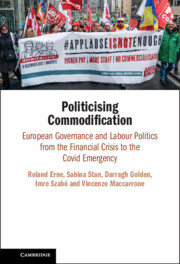
The pandemic made the negative consequences of NEG’s insistence on cuts in healthcare spending more visible, notably in terms of public hospital bed, staff, and equipment shortages. Healthcare workers called for better working and employment conditions in response to the heavy toll that the pandemic had taken on them (Vandaele, Reference Vandaele2021). The European Network held an action day in April 2020 called ‘Against the commercialisation of health and social protection’, but it had to be confined to actions on social media and a press conference because of Covid lockdowns. In October 2020, EPSU organised a European action day ‘Fighting for health and care beyond the pandemic’, which focused on ‘higher wages, more staff and quality of care for all [Table 13.4]’, mirroring the International Trade Union Confederation’s call for a Global Day of Action on ‘Investing in care now’. The European Network’s 2021 action day focused on ‘universally accessible and affordable’ access to Covid-19 vaccines, in support of the ‘No profit on pandemic’ European Citizens’ Initiative launched by members of the European Left and supported by both the European Network and EPSU. However, by embracing the cause of fighting the larger commodification of health by pharmaceutical companies, the European Network drifted away from the more specific issue of healthcare commodification, although the pandemic did not reverse the EU executives’ healthcare commodification agenda. The fight against the ‘commercialisation’ of healthcare services nonetheless remained a central theme in the protests of European healthcare workers – as shown by the cover picture of this book, which was taken on 9 December 2022 at the EPSU demonstration before the Council and Commission buildings in Brussels.
13.7 Continuity and Change in EU Economic Governance after the Pandemic
After the financial crisis, EU executives’ NEG prescriptions followed similarly commodifying trajectories in employment relations and public services. After the Covid-19 emergency, however, the trajectories of their governance interventions on employment relations and public services clearly pointed in opposite directions. Whereas EU executives virtually stopped prescribing commodifying qualitative prescriptions in employment relations, public services continued to be targeted by commodifying qualitative prescriptions also after the pandemic.
In the employment relations area, the most relevant developments took place outside the NRRP framework, following the approval of the aforementioned EU directive on adequate minimum wages. Only the Romanian NRRP addressed the issue directly, namely, by prescribing the 2022 labour law reform that sought to increase collective bargaining coverage and better protect union and workers’ rights and by reversing the commodifying 2011 Social Dialogue Law introduced under the EU–IMF economic adjustment programme. In Ireland, improvements to the legislation underpinning collective bargaining are also forthcoming, but as an effect of the Minimum Wage Directive and not of the NRRP. In October 2022, the Scholz government substantially increased the German minimum wage, through an ad hoc intervention, to €12, almost matching the reference values of the EU directive. So far however, given the opposition of the FDP, the German government has not yet proposed any national legal changes transposing the EU directive into German law; this explains why the German Minimum Wage Commission has been able to propose derisorily low minimum wage increases for 2023 and 2024. Nevertheless, both EU executives and legislators clearly adopted a decommodifying U-turn in their wages and collective bargaining policies, as they came to realise even before the advent of the pandemic that they could hardly re-establish some popular legitimacy for the EU integration process without attempting to re-integrate workers and trade unions into the process (Ryner, Reference Ryner2023).
At the same time, our analysis has shown that these attempts to increase the popular legitimacy of the EU integration process did not involve any significant deviation from the overarching commodifying policy script informing EU executives’ NEG prescriptions on public services. Before 2019, NEG’s overarching commodification script had already been more visible in the EU executives’ prescriptions on public services compared with those on employment relations. Although EU executives tasked governments to pursue qualitative commodifying structural reforms in both areas up to 2019, they gradually adopted more expansionary prescriptions on wages and public service resource levels from 2016 onwards – not to address pressing social concerns but to rebalance the EU economy and to boost its growth and competitiveness.
Accordingly, EU executives committed member states to prioritising public investments in allegedly more productive public sectors, excluding, however, public healthcare services from the allegedly social investment turn in EU executives’ NEG prescriptions (Tables 11.1–11.4). Whereas water and transport had already been identified in prescriptions as deserving more investment before 2020, healthcare had not (Chapter 11). This oversight, in turn, contributed to making healthcare systems less able to respond to the Covid-19 emergency (Stan and Erne, Reference Stan and Erne2023). After the pandemic, even DG ECFIN Commission officials stopped perceiving healthcare expenditure primarily as a drag on healthy public finances, as they had done before the pandemic (Chapter 10). This, however, did not lead them to see public healthcare as a common good. Instead, they began their thematic analysis of the NRRPs in healthcare by stating the following: ‘Healthcare services constitute one of the most important economic sectors in Europe, accounting for almost 10 per cent of GDP, 15 per cent of government expenditure and 8.3 per cent of the total workforce in the EU’ (emphasis added) (European Commission, 2021: 2). Hence, healthcare also became a sector worth investing in, as it ‘contributes to higher productivity and boosts economic growth’ provided that the NRRP investments and reforms addressed the ‘structural weaknesses in health systems across the EU’ (2021: 2).
The policy orientation of the post-Covid NEG regime in public services thus did not shift dramatically. After the pandemic, EU executives reinforced trends detected in the previous empirical chapters and summarised in Chapter 11: combining expansionary prescriptions on resource levels with calls for commodifying structural reforms. However, although EU executives had already prescribed commodifying policy reforms, for example on the digital transition of public services, before the pandemic (Chapter 11), the EU funding conditionalities specified in the RRF Regulation significantly increased the coercive power of their corresponding prescriptions even in countries that were not subject to an excessive deficit procedure or a macroeconomic imbalance procedure (see Chapters 2 and 12).
In terms of the post-Covid NEG prescriptions on people’s access to public services, we uncovered more continuity than change. Where there were decommodifying prescriptions before 2020 to increase the coverage levels of public services, they remained also after 2020, circumscribed to specific sectors or countries, namely, Romania. This is striking, as the pandemic showed the need for accessible public services across all sectors and countries. Calls for increased investment did not target public services in general but remained sector-focused. Among the sectors that we analysed, water and, especially, transport were obvious targets of increased investment in the green and digital transition in the NRRPs. Although healthcare investments were not shaped by concerns about the green transition (apart from the retrofitting of hospital buildings), they were meant to advance the sector’s digitalisation.
Although we classify prescriptions aimed at increasing resources for public services as decommodifying, both pre- and post-Covid NEG prescriptions remained silent on whether increased public investment should go to public or to private services operators. It is too early to study the implementation of the NRRPs now but, to be able to fully assess the orientation of the post-pandemic NEG regime, this is something that future research will need to address. In light of the RRF funding criteria discussed in Chapter 12, however, it is indeed quite likely that the public money channelled through NRRPs will end up fuelling private profits (Bellofiore and Garibaldo, Reference Bellofiore and Garibaldo2022).
Regarding qualitative NEG prescriptions on public services, this risk is even greater. Indeed, across the public transport, water, and healthcare sectors, as well as public services across sectors, almost all post-Covid prescriptions on sector- and provider-level governance mechanisms pointed in a commodifying policy direction. Both national and EU executives thus used RRF funding not only to address underinvestment but also as a leverage tool to advance additional commodifying, structural reforms of public services.
However, the picture concerning intersectoral employment relations differs. It is in relation to qualitative prescriptions on employment relations that a break with the pre-Covid NEG regime is most evident. In the 2019 and 2020 Semester cycles, EU executives issued only a few prescriptions on employment relations. Consequently, NRRPs addressed employment relations issues in only a few cases. More precisely, the Romanian NRRP included a commitment to reform Romania’s 2011 collective labour law to foster social dialogue. The trajectory of EU interventions in employment relations shifted in a decommodifying direction, as shown also in the adoption of the EU Minimum Wage Directive in 2022. The directive not only set EU reference values that should lead to minimum wage increases in almost all EU member states but also shifted EU executives’ views on decommodifying multi-employer collective bargaining mechanisms. In the public sector however, workers remain subject to post-Covid prescriptions advocating commodifying structural public sector reforms. The coercive power of these prescriptions has even increased significantly given the threat of withdrawal of RRF funding in the case of non-compliance.
Notwithstanding the change in EU executives’ perspective in favour of healthcare investments after the Covid pandemic, the contribution of the €37bn of RRF healthcare funding directed at addressing the acute staff shortages in Europe’s public healthcare systems was very limited, as ‘support from the Facility shall not, unless in duly justified cases, substitute recurring national budgetary expenditure’ (Art. 5(1) RRF Regulation). Accordingly, the RRF investments in this regard were typically limited to supporting staff training initiatives provided by public but also private operators. Moreover, all NRRPs directed a large amount of investment (€15bn) towards the ‘digital transition in healthcare’ to achieve ‘the target of allocating at least 20% of their total budget to the digital transition’ (European Commission, 2021: 3), a measure with the potential to use technology for the long-term replacement of staff – further indicating that public services have become a key site for capital accumulation (Huws, Reference Huws2012).
13.8 Conclusion
In sum, the trajectories of the EU’s post-Covid governance of employment relations and public services have increasingly pointed in opposite directions. The policy direction of forthcoming EU laws and NEG prescriptions governing employment relations and public services, but also the forthcoming EU laws on the revised Stability and Growth Pact, will determine whether we shall see a continuation of this polarising trend.
The recent strengthening of decommodifying EU labour law was certainly important. After all, EU executives did not dare to adopt NEG prescriptions that explicitly went against existing EU labour laws, even before the outbreak of the pandemic. By contrast, neither national law nor the EU Treaty’s primary law on the EU’s competences stopped EU executives from prescribing commodifying structural reforms across all policy areas (Chapter 3), for instance in relation to pay and collective bargaining (Chapter 6) or healthcare services (Chapter 10). For workers and unions, and for public services users and social movements, the policy direction of secondary EU law is thus of utmost importance.
Advocates of a more social Europe thus would be well advised to focus their energies on the fight for decommodifying EU laws; for example, new EU laws prioritising non-profit-oriented public services for the common good over private operators that seek to maximise their profits. We believe that this would be much more promising than the attempts to ‘socialise’ the NEG regime through the inclusion of social scoreboards in its technical procedures or the addition of a ‘“Social Imbalances Procedure” (SIP) complementing existing fiscal and macroeconomic procedures’ (emphasis added) (Vanhercke, Sabato, and Spasova, Reference Vanhercke, Sabato and Spasova2023: 147).
Our analysis has also shown that any socialisation of the NEG regime is very difficult to achieve, given the exclusion of national parliaments, the European Parliament, unions, and social movements from the NEG (and even more so the post-Covid NEG) policymaking process. NEG’s technocratic and country-specific design makes it indeed very difficult for unions and social movements to politicise its prescriptions in a transnational political sphere through collective action that can shift the balance of power in their favour (Erne, Reference Erne2015).
At the same time, unions and social movements should politicise the NEG regime as a whole. The looming threat of EU executives re-enacting the full constraints of the Stability and Growth Pact in 2024 and the Commission’s April 2022 proposal for a new packageFootnote 8 of EU laws governing the NEG regime represent important opportunities to do that, notably given the latter’s explicit goal to use greater leeway in terms of quantitative budgetary austerity as a tool to advance qualitative structural reforms. This will in turn substantially increase the capacity of national and EU executives to further enforce qualitative structural reforms, as has already happened in the case of the NEG prescriptions included in NRRPs and the corresponding CIDs analysed above.

 Open access