


At the end of both world wars, Germany lost considerable territory, especially in eastern Europe, accompanied by the compulsory migration of local German populations, only some of whom were citizens of the German Reich. After 1918, approximately 850,000 individuals from former German territories in the east resettled in Germany. A multitude of reasons caused this exodus, including Poland's restrictive policies towards its German minority.Footnote 1 Additionally, at least 120,000 ethnic Germans fled from the former Russian empire and likewise relocated to Germany.Footnote 2 Some authors estimate the total number of German refugees in the 1920s at about 1.5 million.Footnote 3 In the wake of the Second World War, the numbers were even higher. Approximately 12 million Germans fled from the Red Army or were expelled from their homelands in central and eastern Europe, with about 8 million settling in western Germany.Footnote 4 This expulsion was motivated by two factors: the Allied forces and the local governments in central and eastern Europe sought to create ethnically homogeneous nation-states, aiming to quell any potential ethnic tensions in the region permanently. And, in response to the substantial backing from ethnic Germans in the area for Nazi Germany's conquest of peoples and territories, their expulsion was a collective reprisal for Nazi war crimes and atrocities in the east.Footnote 5
Different terms were used to characterize the forced migrants: those who relocated after 1918 were termed Verdrängte (displaced), while those who arrived in western Germany after 1945 were labeled Vertriebene (expellees).Footnote 6 Yet both groups endured comparable experiences. Many lost the entirety of their financial and social positions, arriving in Germany empty-handed. For numerous individuals, especially those who had resided outside the borders of the German empire, arriving in Germany was not a homecoming but a resettlement in a new country, sometimes altered after many years of absence, sometimes entirely unknown. The presence of such a large number of needy people constituted not only a humanitarian crisis but also represented a serious political challenge to the Weimar Republic and the Federal Republic of Germany.Footnote 7 This was particularly true after 1945, when the expellees, being more numerous than the displaced, had the potential to become a powerful electoral base for extremist revisionist parties.Footnote 8 In 1950, a West German Social Democratic Party leader emphasized this risk by drawing a parallel to the year 1930, when the Nazi Party, leveraging the economic crisis, had made significant gains in the German federal election. He warned that the “mass social misery” of the expellees could once again act as “fuel, even dynamite,” for political agitation capable of undermining the democratic system. As a result, he advocated for extensive financial support for the expellees to prevent such destabilization.Footnote 9
Hence, to mitigate the economic struggles of the newcomers and prevent their political radicalization, both republics enacted comprehensive compensation laws: the Gewaltschädengesetze (Violent Damages Laws) of 1921Footnote 10 and the Lastenausgleichsgesetz (Equalization of Burdens Law) of 1952.Footnote 11 Both laws aimed to regulate the claims for material losses and damages of Germans who had fallen victim to war-related displacement. The two laws shared considerable similarities. First and foremost, the objective of compensation was to aid the forced migrants in achieving economic stability and facilitating their integration into German society.Footnote 12 Following both wars, compensation payments were designed on a degressive scale, incorporating a redistributive dimension: smaller losses were fully compensated, whereas larger ones were reimbursed to a proportionally lesser extent.Footnote 13 Moreover, both laws expanded their reach beyond the prewar borders of the German Reich and thus included in the compensation system Germans who had been living abroad before the outbreak of the war—the so-called Auslandsdeutsche (Germans abroad)Footnote 14—and who had suffered losses because they belonged to Deutschtum (Germanness). As a result, after both wars, questions arose about who was actually German and entitled to reparations. This article will address these questions in detail.
Despite their similarities, the 1921 Violent Damages Laws and the 1952 Equalization of Burdens Law also exhibited striking differences, including their financing mechanisms.Footnote 15 These different sources of funding reflect the distinct approaches taken by the Weimar Republic and the Federal Republic in compensating the forced migrants and, more broadly, in negotiating the notion of national belonging. The post-1918 German state assumed responsibility for material damages sustained by the displaced due to the war. This obligation was contained in the 1919 Treaty of Versailles, which mandated that Germany compensate its citizens (and private companies) owning assets in the victorious states for property losses they incurred.Footnote 16 Hence, Germany recognized Germans from enemy countries as members of the Volksgemeinschaft (people's community) or Schicksalsgemeinschaft (shared community of fate), supported them financially, and integrated them socially, but this did not imply the erasure of class distinctions.Footnote 17 The term Volksgemeinschaft indeed promised cohesion and unity among Germans, aiming to integrate individuals into a larger whole. It gained popularity during the First World War as a device for mobilizing the entire population for the war effort, emphasizing the shared fate imposed by the war on German compatriots. However, this vision of a collective was anticipated for the future and did not reflect social reality. In reality, the German population was marked by class differences and increasing antisemitism, which categorically excluded Jews from the imagined people's community.Footnote 18 To finance the post-1918 compensation system, the Weimar government introduced new taxes, but these, coupled with inflation, ultimately led to an uneven distribution of the load: the burden of compensating the displaced, along with general war costs, disproportionately fell on holders of paper assets, while real asset holders were exempt from their equitable share of taxation.Footnote 19
Unlike the Treaty of Versailles, the Potsdam Agreement, signed on August 2, 1945 by the United States, United Kingdom, and Soviet Union, did not require Germany to compensate Germans residing in the victorious countries. On the contrary, the Allies sought only to ensure that the population transfers of Germans from Poland, Czechoslovakia, and Hungary to Germany “should be effected in an orderly and humane manner.” Germany was obligated solely to “compensate to the greatest possible extent for the loss and suffering that she has caused” to the Allies.Footnote 20 Subsequently, unlike the Weimar Republic, the Federal Republic was free to disavow liability for material losses incurred by the expellees.Footnote 21
Regardless, policymakers after 1918 and 1945 acknowledged that the displaced and the expellees, respectively, as a result of their forced migrations, had endured a more tragic fate than the rest of the German Volksgemeinschaft and thus deserved compensation. In contrast with the Violent Damages Laws, the Equalization of Burdens Law largely relied on a special property levy, charged to West German citizens with assets undamaged by the war.Footnote 22 In 1963, Erich Kaufmann, the influential legal advisor of West German Chancellor Konrad Adenauer, explained this remarkable show of solidarity not in terms of legal duty, but in terms of a “moral and social duty rooted in the principle of Billigkeit (equity).” He emphasized that it was “national solidarity” and the “shared community of fate” that necessitated the equalization of the heavy burdens of war.Footnote 23 The rationale behind the equalization of burdens system, which basically imposed its costs on all undamaged property holders, strikingly mirrored the Nazi concept of a purportedly solidarity-based people's community:Footnote 24 the community—now virtually “free of Jews” and more unified than ever by the shared experiences of a lost war and the trauma of expulsion—took on the responsibility of compensating its members. Unlike after the First World War, it was the community, rather than the state, that bore the obligation to provide compensation.
It is worth noting that, irrespective of the financing method, compensation rates for the displaced and the expellees were approximately equal—around 20 percent of property losses for the former and around 22 percent for the latter.Footnote 25 However, the value of the compensation payments differed significantly. The displaced faced severe hardships due to the economic and financial crisis following the war. The hyperinflation of the early 1920s devalued compensation payments, and the deflationary policies implemented by German Chancellor Gustav Stresemann in October 1923 further curtailed compensation funds. It was only in March 1928 that the parliament enacted legislation to partially revalorize compensation.Footnote 26 Consequently, economic instability fueled the growing resentment of the displaced toward the Weimar Republic, ultimately contributing to the destabilization of its democratic social order.Footnote 27 Conversely, the expellees benefited from the economic miracle of the 1950s, which played a significant role in facilitating their economic and social integration into West German society. The Equalization of Burdens benefits also contributed to the rebuilding of their financial lives and, indirectly, to West Germany's social and political stability.Footnote 28 In short, the Equalization of Burdens payments bought “legitimacy for the new Federal Republic.”Footnote 29
Despite the centrality of compensation for the displaced and the expellees, the 1921 Violent Damages Laws and the 1952 Equalization of Burdens Law have received comparatively little attention in research on modern German history.Footnote 30 It is also striking that the few studies that place the two compensation systems in a common context ignore both the individual applicants and the compensation procedures.Footnote 31 Our article aims to address this research gap by focusing on Germans who filed claims for compensation for material losses resulting from their war-related forced migration westward to Germany. We examine for the first time case studies in which the same individuals submitted applications both under the preliminary compensation procedure that preceded the implementation of the 1921 Violent Damages Laws and then under the 1952 Equalization of Burdens Law. Our cases thus involve Germans (or their heirs) who lost their homes twice in their lives and applied for compensation twice: first after the end of the First World War and then following the Second World War.
Uncovering these rare cases proved challenging. Initially, we explored the Reich Finance Ministry collection, housed in the German Federal Archives in Berlin-Lichterfelde, searching for documents relating to displaced Germans who filed for compensation after 1918 and who resided, in the interwar years, in areas from which Germans were expelled or forced to flee after 1945. Although most individual files from the post-1918 period have been destroyed, making it difficult to conduct a comprehensive investigation of individual compensation procedures after 1918—unlike the more complete Equalization of Burdens records—some documents containing names of applicants (primarily ethnic Germans) have survived. We cross-referenced the names of these individuals with the inventory of the Equalization of Burdens Archive in Bayreuth. This method led us to discover six cases wherein the same claimant (or his heirs) was forced to migrate following both world wars and filed for compensation both times. Notably, all the claimants were male, perhaps because experiences such as internment more often, albeit not exclusively, affected men of military age.Footnote 32 Beyond this, the six claimants represent a diverse social spectrum: born between 1877 and 1900, they include two craftsmen, a farmer, a civil servant and writer, an industry executive, and a wholesaler.
In the context of millions of applications submitted under the German compensation laws,Footnote 33 the significance of these six examples may be called into question. However, we believe that it is precisely the unique situation of these applicants who sought compensation under two different legal frameworks and political regimes after two world wars that holds value in conducting a diachronic comparison of the two German compensation systems. This comparison sheds light on the following questions: How did the post-1918 and post-1945 German authorities evaluate these applications? What criteria did they use to determine eligibility for compensation payments, and under what circumstances were applications approved or denied? What factors did they employ to determine the German identity of the applicants? Answering these questions allows us to develop a new understanding of the evolving practices and policies of German compensation, elucidating the complexities inherent in claims related to forced migration and material loss, and providing a nuanced understanding of the experiences of those seeking redress in the aftermath of historical upheavals. Our analysis highlights not only the multifaceted nature of national belonging, but also the role of class status in the context of compensation and, ultimately, of what being German meant in the twentieth century. Compensation was a test case for the strength of the new political regimes that emerged after military defeats and for the redefinition of boundaries, including internal ones, of citizenship and national belonging.
Procedures in the Post-1918 and Post-1945 Compensation Schemes
We begin by offering an overview of the bureaucratic procedures involved in the two compensation systems that the claimants in our case studies had to navigate. In both, the advocacy organizations of the displaced or the expellees played a crucial role as gatekeepers of Germanness, determining who was eligible for compensation and who would be excluded.
In November 1919, the German government launched the Vorentschädigung (preliminary compensation) procedure to provide the displaced with immediate financial aid,Footnote 34 which included advance payments on the compensation.Footnote 35 The Reichsministerium für Wiederaufbau (Reich Ministry of Reconstruction), which administered the Vorentschädigung through its agencies, especially the Reichskommissar für Auslandsschäden (Reich Commissioner for Damages Abroad), closely cooperated with the associations representing the displaced. Organized according to territorial criteria, the two major organizations were the Bund der Auslandsdeutschen (Association of Germans Abroad) and the Verband der im Ausland geschädigten Inlandsdeutschen (Association of German Residents Damaged Abroad).Footnote 36 In principle, only displaced people who held German citizenship were entitled to claim preliminary compensation. Under exceptional circumstances, ethnic Germans without German citizenship were also included in the reparation system,Footnote 37 but their applications were examined by the Reichskommissar in collaboration with the Reich Ministries of Finance and Reconstruction and the advocacy associations of the displaced. These bodies assessed the applicants’ eligibility on a case-by-case basis, considering two criteria: the extent of their losses and of their affiliation with Germandom. The latter criterion was evaluated using a combination of objective standards, including mother tongue, upbringing, children's names, and descent, along with subjective criteria such as loyalty to the German nation during the war. If their application for preliminary compensation was approved, these ethnic Germans would also benefit from the Violent Damages Laws under the same terms as German citizens. As we will see, all six applicants discussed here underwent this special procedure for preliminary compensation.
The 1952 Equalization of Burdens Law, for its part, covered “individuals of German citizenship or German Volkszugehörigkeit [ethnicity]” originating from “the German territories east of the Oder-Neisse line or from territories beyond the borders of the German Reich, as of December 31, 1937.”Footnote 38 The law provided financial assistance to the expellees in the form of loans for housing, education, establishing new businesses, and other forms of integration and development. It also offered compensation for loss of household goods. The cornerstone of the system was the Hauptentschädigung (primary compensation) for loss of agricultural and forestry assets, as well as real estate and business assets.Footnote 39
The Equalization of Burdens Offices, operating under the Federal Ministry of Finance, verified the accuracy of the information supplied by claimants in the application forms and evaluated their losses in Reichsmarks (RM). To accomplish these tasks, the Offices had at their disposal Heimatauskunftstellen (Homeland Information Centers) which, like the associations of the displaced, were organized according to the expellees’ areas of origin. These Centers, whose personnel were usually themselves expellees, often relied on information provided by the expellees’ advocacy organizations.Footnote 40 Next, the Offices converted the assessed amount from RM into Deutsche Marks (DM) and disbursed the funds to claimants on a degressive scale. Like the post-1918 preliminary compensation system, the Equalization of Burdens Law necessitated an assessment of both objective and subjective German identity markers for expellee applicants without German citizenship. The legal status of “belonging to the German Volk” was verified by a “specialized expellee bureaucracy.”Footnote 41 The law detailed objective indicators such as “descent, language, upbringing, and culture,” alongside a subjective identity marker termed Bekenntnis (self-identification).Footnote 42 Once approved, ethnic Germans would basically enjoy the same compensation benefits as German citizens. As we will show, all of our applicants held German citizenship after the beginning of the Second World War, which made verification of their belonging to the German Volk unnecessary. Indeed, with the exception of one case, which we will discuss in detail, their Volkzugehörigkeit was not checked by post-1945 authorities.
In 1952, in the framework of the Holocaust Reparations Agreement between Israel and the Federal Republic, a special regulation was established for Holocaust survivors who had been German citizens or of German Volkszugehörigkeit prior to the onset of Nazi persecution and had originated from regions from which Germans fled or were expelled after 1944/45. These “fictive expellees” were eligible to claim compensation under the Equalization of Burdens Law for persecution-related material damages and losses. This regulation was based on the assumption that, had these individuals not been persecuted by the Nazis due to their Jewish origins, they would have faced expulsion after 1945 due to their German identities. To be recognized as fictive expellees, Holocaust survivors from central and eastern Europe had to provide evidence of their German identity markers prior to persecution, which the Homeland Information Centers then verified.Footnote 43
It is notable that of the six applications for post-1918 preliminary compensation, only two were approved—a stark contrast to the post-1945 scenario, in which all applicants (or their heirs) received compensation. Throughout the presentation of the case studies, we will elucidate the reasons behind this disparity.
Romania-Germany Round Trip: The Story of Albert Beck
Albert Beck was born to a middle-class family in Pitești, one of the major cities of Romania, in November 1900. His mother hailed from Germany, whereas his father, Gustav, was a Hungarian citizen from the German-speaking community in Transylvania, the Siebenbürger Sachsen (Transylvanian Saxons), at that time part of the Habsburg empire.Footnote 44 After Gustav's death, Albert and his mother sought to get German citizenship. However, when Germany declared war on Romania in August 1916, both still held Hungarian citizenship. They avoided internment as enemy aliens because the Romanian government arrested only men over sixteen.Footnote 45 In May 1918, Romania was defeated, and the country was forced to sign a harsh peace treaty with the Central Powers.Footnote 46 During its military occupation by Germany, Beck, despite his young age, actively cooperated with the German forces, distinguishing himself for his “precious assistance as an interpreter.”Footnote 47 But in November 1918, his situation became worse. After the collapse of the Macedonian front, the Romanian government denounced the peace treaty and re-entered the war on the side of the Allies. Following the German army's withdrawal, the Romanian state expelled Beck as an enemy alien and confiscated his personal belongings, including books and clothes.Footnote 48
Beck resettled in a town near Berlin, where, being impoverished, he applied for preliminary compensation for material losses resulting from his expulsion.Footnote 49 Since his application for German naturalization had remained unexamined during the war, Beck was not automatically entitled to compensation but had to undergo the special procedure for ethnic Germans. The Reichskommissar recognized that Beck not only was of “German descent” (deutschstämmig) according to objective criteria but also had demonstrated his allegiance to the German cause by collaborating with the German military during Romania's occupation. His affiliation with Germandom, his young age, and the economic difficulties he was experiencing prompted the authorities to accept his application.Footnote 50
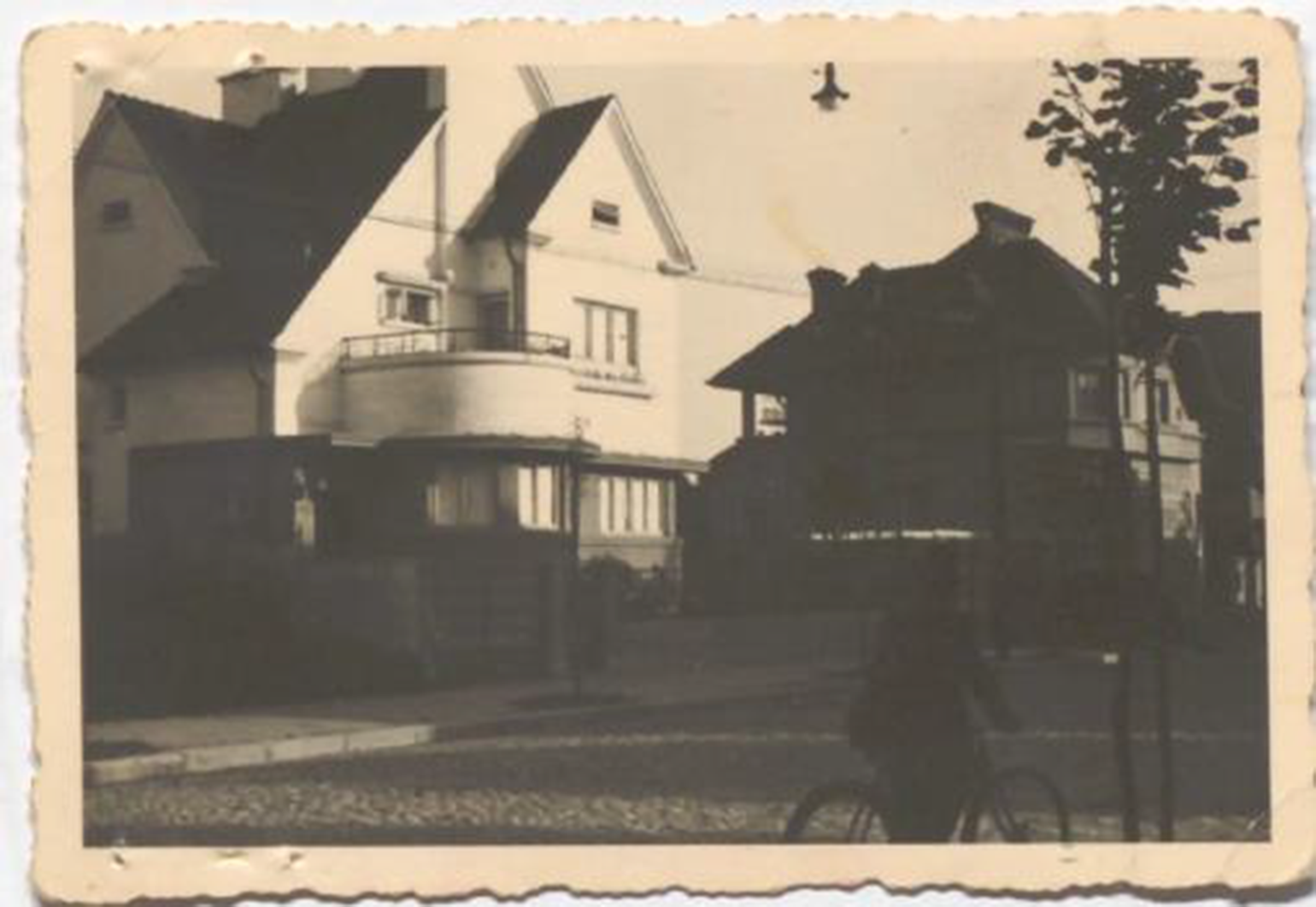
In 1921, Beck, who by then had acquired German citizenship, began working as a salesman for Leopold Casella, one of Germany's largest chemical companies.Footnote 51 Like many other large German firms, the company sought to re-enter the Romanian market by using the knowledge of ethnic Germans with ties to the Siebenbürger Sachsen community. Beck relocated to Romania as the company's representative. In a few years, he had a very successful career, thanks in large part to the close relationship he established with the director of the local Casella branch.Footnote 52 Besides working with him, Beck married the director's daughter, and the couple had two children. After the chemical and pharmaceutical concern IG Farben was created in Germany in 1925, Beck became a top executive of its Romanian subsidiaries.Footnote 53 In 1933, he built a large villa for his family in a residential area of Bucharest (see Figure 1).Footnote 54
Albert Beck's House in Bucharest.
Source: BArch-LAA, ZLA 1/11375848.

The armistice between Romania and the Soviet Union on August 23, 1944, marked the abrupt end of Beck's career. On that day, Romanian authorities arrested prominent local representatives of economic and political institutions linked to Nazi Germany,Footnote 55 including Beck. Subsequently, Soviet authorities confiscated his house, household goods, and bank accounts, considering them enemy property.Footnote 56 Beck and his family were interned in a camp in Romania's Sub-Carpathian region.Footnote 57 In January 1945, together with over 100,000 local Germans, Beck was sent to a labor camp in the Soviet Union.Footnote 58 After several months, he was released from detention and rejoined his family in Bucharest, where they lived for a few years in miserable conditions. In January 1951, coinciding with the start of radical socioeconomic reforms that also targeted the local German minority,Footnote 59 Beck's work permit was revoked by the Romanian authorities because of his German citizenship. Subsequently, he and his family were “deported” (ausgewiesen) to West Germany, where he was found eligible for Equalization of Burdens benefits.Footnote 60 In 1953, Beck successfully applied for compensation for the confiscation of his private assets in 1944, receiving 2,150 DM for the house and 1,100 DM for the household goods.Footnote 61 He resettled in Munich and resumed a decent social standing, eventually heading the commercial office at the chemical and pharmaceutical company Bayer. Hoping to purchase a house in Munich, he reapplied for compensation in 1963 for savings he had allegedly lost in 1944,Footnote 62 but the Equalization of Burdens Office rejected his request because of a lack of documentation.Footnote 63 Beck protested that such documentation was impossible to provide “because I completely lost everything when the Russians moved into Bucharest and I was interned and subsequently deported to Russia.”Footnote 64 Finally, in 1964, the authorities accorded him additional compensation of 4,590 DM.Footnote 65
Following the two world wars, Beck encountered remarkably similar challenges and arrived at comparable resolutions. Twice the wars resulted in his forced displacement from Romania—in the first instance to Germany, and in the second to the Soviet Union and then to Germany—and in asset confiscation due to his identification with Germanness. In the aftermath of both conflicts, Beck pursued compensation in Germany for the material losses he had suffered in Romania. On both occasions, the authorities granted him compensation. He received preliminary compensation after 1918, despite lacking German citizenship, because of his loyalty to German troops. Similarly, after 1945, now a German citizen, he obtained Equalization of Burdens payments. Each time, the authorities acknowledged his plight, extending assistance that enabled him to rebuild his middle-class life.
From Tsarist Subjects to German Citizens: Theodor Klingsporn and Albert E. Till
By the end of the nineteenth century, 1.8 million people in the Russian empire spoke German as their mother tongue.Footnote 66 These so-called Russian Germans were dispersed across the country and were known to be loyal subjects of the tsar. They often had large families, maintained their German language, culture, and religious customs, and resisted assimilation into the rural Slavic environment. As the First World War approached, they had little to no political affiliation with Germany.Footnote 67 The German declaration of war on the Russian Empire on August 1, 1914, had profound repercussions for Germans residing in the country, whether or not they had German citizenship, as the military and civic leadership took the opportunity to implement Russification of key economic sectors. These discriminatory measures targeted Germans and other minorities that authorities perceived as “internal enemies,” and thus as a security threat. They faced forced displacement and internment, and military and civil forces seized their assets, particularly their land, intending to reallocate them to ethnic Russian settlers.Footnote 68 During the war, between 200,000 and 250,000 ethnic Germans were deported within the Russian empire. Between October and December 1914 alone, 50,000 male Germans were moved to a large internment camp in the Vologda Governorate.Footnote 69 In addition, over 115,000 ethnic Germans with Russian citizenship from the Volhynia Governorate were deported by June 1916.Footnote 70 Meanwhile, to avoid persecution, numerous Germans sought refuge in Germany, even after the war ended.Footnote 71
Among the displaced from the Russian empire were Theodor Klingsporn and Albert E. Till. Born in 1891, Klingsporn lived on his family's small farm in Blumenthal (Tsvityanka), a German-speaking settlement in Volhynia. After the outbreak of the war, Klingsporn—a Tsarist subject by birth—served in the Russian army, whereas his relatives were sent to Siberia in June 1915. Upon his discharge, between 1917 and 1918, Klingsporn returned to Blumenthal, where he found that, while the Russian authorities had not confiscated his property, troops had completely plundered the farm. Thus, he was compelled to sell the farm to a Polish citizen. Afterward, along with approximately 10,000 Russian German families from Volhynia,Footnote 72 Klingsporn and his family relocated to Prussia. They settled in Stürmersberg (Górna) in the district of Marienwerder (Kwidzyn), which remained part of Germany after the war.Footnote 73
Upon arriving in Germany, Klingsporn resumed farming and filed for preliminary compensation for the plundering and forced sale of his Blumenthal farm. Despite securing German citizenship in 1919, he had to undergo the special procedure for ethnic Germans, because he had not been a citizen during the war. On the advice of the Bund der Auslandsdeutschen, the Reichskommissar für Auslandsschäden denied his application.Footnote 74 According to the authorities, Klingsporn's wartime hardships did not result from his affiliation with Germandom. Furthermore, he had not actively contributed to the German cause during the war; indeed, he had even served in the Russian army, fighting against the Central Powers. His German descent (Abstammung) did not automatically imply political loyalty to Germany. In fact, as the authorities saw it, Klingsporn had chosen to become a German citizen only when left with no alternatives. They perceived his application as driven solely by material interests and not by a sincere commitment to Germandom.Footnote 75
After the birth of his fifth child in 1921, Klingsporn found a new position in the Eastern Prussian village of Gross Krebs (Rakowiec), where he purchased a farm with livestock and machinery. The archived documents offer no information on his life until the end of the Second World War, solely indicating that, before the arrival of Soviet troops at Gross Krebs, Klingsporn fled to western Germany in January 1945. In 1952, he applied for compensation under the Equalization of Burdens Law for the loss of his farm and house in Gross Krebs, together with all personal belongings.Footnote 76 This time he was successful. In 1957, he received a sum of 5,670 DM, which was later raised to 7,810 DM.Footnote 77 In 1964, his request to use the compensation to repay a loan he received to purchase a house in Bremen was accepted.Footnote 78
More complicated was the case of Albert E. Till. Born in 1877, Till hailed from Heimthal (Yasinivka), a small rural village in Volhynia. Unlike Klingsporn, he possessed German citizenship from birth, as his parents originated from Germany. However, in 1899, to avoid conscription in the German army, he was naturalized as a Russian subject. When the First World War broke out, Till owned a blacksmith shop in a small town near Kyiv. As we have seen, the Russian authorities singled out “internal enemies,” including ethnic Germans such as Till and his wife and eight children. In January 1915, they were taken to an internment camp in the Ural Mountains, where they remained until their release in March 1917. The authorities did not officially confiscate Till's property, but he was compelled to liquidate all his assets. After the war, he fled with his family to Germany, where he resumed his activity as a blacksmith in Katrinowen (Katarzynowo), a small village in East Prussia that remained part of Germany afterward.
In 1920, Till applied to the Reichskommissar for preliminary compensation for the forced sale of his belongings in Russia. Unlike the Bund der Auslandsdeutschen, which supported his request, the Reichskommissar suggested dismissing it. He argued that, despite being of German descent (deutschstämmig), Till did not deserve financial support because he had not made any significant contributions to Germanness. On the contrary, he had switched his citizenship to avoid fulfilling his obligation to serve in the German army.Footnote 79 As the Ministries of Finance and Reconstruction sided with the Reichskommissar, Till's application was rejected.Footnote 80
In subsequent years, Till and his family obtained German citizenship.Footnote 81 In 1929, they moved to Wachau (Budziska), another small town in East Prussia, where Till established a locksmith workshop and acquired a farm that he later passed to his oldest son, Adolf. However, once again, war destroyed the family's livelihood. In 1945, Soviet and Polish troops plundered the farm, stealing all personal belongings and destroyed the workshop. Till and his wife fled Wachau in 1945, but then returned. His son, Adolf, was held as a prisoner of war in the Soviet Union, while other family members were deported to Siberia, where at least one daughter died. Nevertheless, unlike nearly 8 million ethnic Germans who were forced to leave the former eastern territories of Germany between 1944 and 1948, Till and his surviving relatives returned to Wachau, where the family again acquired livestock and equipment.Footnote 82 Their new farm was nationalized by the Polish state in 1947. That same year, Albert Till died in Wachau.Footnote 83
In 1974, Adolf Till relocated to Germany and applied for compensation under the Equalization of Burdens for the plunder of his father's belongings by Russian and Polish forces in 1945. Even though Albert Till had remained in Poland after 1945 and had died there, his son was eligible to apply for compensation on his behalf. This entitlement was established by an amendment to the Equalization of Burdens Law in 1969, which specified that if a German suffered material losses as a result of anti-German measures, and had then died in the expulsion area after the general expulsion of Germans had begun, his losses would be recognized as “expulsion damage of the deceased.”Footnote 84 Thus, after a review of just two years, the Equalization of Burdens Office granted Adolf Till compensation of about 1,400 DM.Footnote 85
Klingsporn's and Till's cases shed light on aspects of German compensation practices following the two world wars that persisted and those that changed, particularly regarding the interpretation of German identity markers. Although both men were objectively affiliated with Germandom by descent, the post-1918 authorities rejected their preliminary compensation applications on subjective grounds. Both applicants and their families endured hardships in Russia following the First World War, also because of their German ethnicity. However, German authorities deemed “passive” suffering insufficient for compensation, as the Weimar Republic's conception of national belonging emphasized active citizenship.Footnote 86 Neither Klingsporn nor Till, according to the authorities, had demonstrated allegiance to Germandom during the war by participating actively in the German cause. This rigid, exclusive understanding of Germanness resulted in part from the chronic scarcity of economic resources.Footnote 87 After 1945, the situation was different. Unlike after 1918, Till's son and Klingsporn applied for compensation as German citizens, and thus avoided scrutiny of their subjective allegiance to Germandom. In contrast to the post-1918 situation, their German citizenship and the economic hardship they had endured because of their affiliation with Germandom were sufficient grounds for compensation under the Equalization of Burdens Law.
Danzig Stories: August Scheffler and Wolfgang Federau
The German population in the Free City of Danzig presented a special case in the post-1918 compensation system. The Treaty of Versailles severed Danzig from Germany and established it as an autonomous city-state. This shift led to a change in the legal status of the local inhabitants, who became citizens of the newly formed Free City of Danzig. Yet, according to the treaty, locals had the option to reclaim German citizenship until January 1922, provided they resettled in Germany within a year. In August 1920, with negotiations for a citizenship treaty between Germany and Danzig ongoing, German authorities extended preliminary compensation coverage to ethnic Germans residing in the city-state, even if they lacked German citizenship. However, this provision applied to urgent financial cases only and was conditional upon the claimants’ willingness to apply for German citizenship within two years.Footnote 88 Then, in the autumn of 1920, the Reichskommissar raised concerns that allowing Danzig residents to claim German citizenship might not align with Germany's political interests. The most fervently German-oriented residents could well relocate to Germany, potentially “weakening Germandom” in Danzig and “accelerating the city's Polonization.” Therefore, the Reichskommissar recommended that eligibility for compensation be based on the claimants’ subjective adherence to a “German mentality” (deutsche Gesinnung) instead of citizenship.Footnote 89
Among those who filed for preliminary compensation payments despite lacking German citizenship were August Scheffler and Wolfgang Federau. The Russian German Scheffler was born in 1888 in Neustuttgart (Berdyansk), a Swabian colony situated on the shores of the Sea of Azov in the Russian empire. Scheffler, who earned his livelihood as a shoemaker and was married with five children,Footnote 90 belonged to the group known as Black Sea Germans. Despite their cultural and linguistic distinctiveness, the vast majority of the approximately 500,000 Black Sea Germans were careful to emphasize their loyalty to the Russian state.Footnote 91 However, after the outbreak of the First World War, even they were not exempt from Russian persecution as “internal enemies.” Scheffler was among those interned by the Russian authorities during the war. The extant documents do not say when and under what circumstances he was freed from internment and left the Russian empire. All that is certain is that the Scheffler family was part of a group of approximately 700 Russian Germans who migrated from their homeland to Danzig following the war. There, they encountered challenging material circumstances and faced legal uncertainties regarding their citizenship.Footnote 92 In the summer of 1920, Scheffler was recognized by German authorities as an ethnic German from Russia who had suffered material damages due to the war and who had not opted for German citizenship.Footnote 93 He was classified as employable, and the value of his lost assets was estimated at 1,740 RM. Nevertheless, the Reichskommissar advised against granting him preliminary compensation. The rationale was not the lack of German citizenship or a German mentality, but rather that Scheffler had already received substantial support from the German state through loans and other means, and thus his case was not urgent.Footnote 94
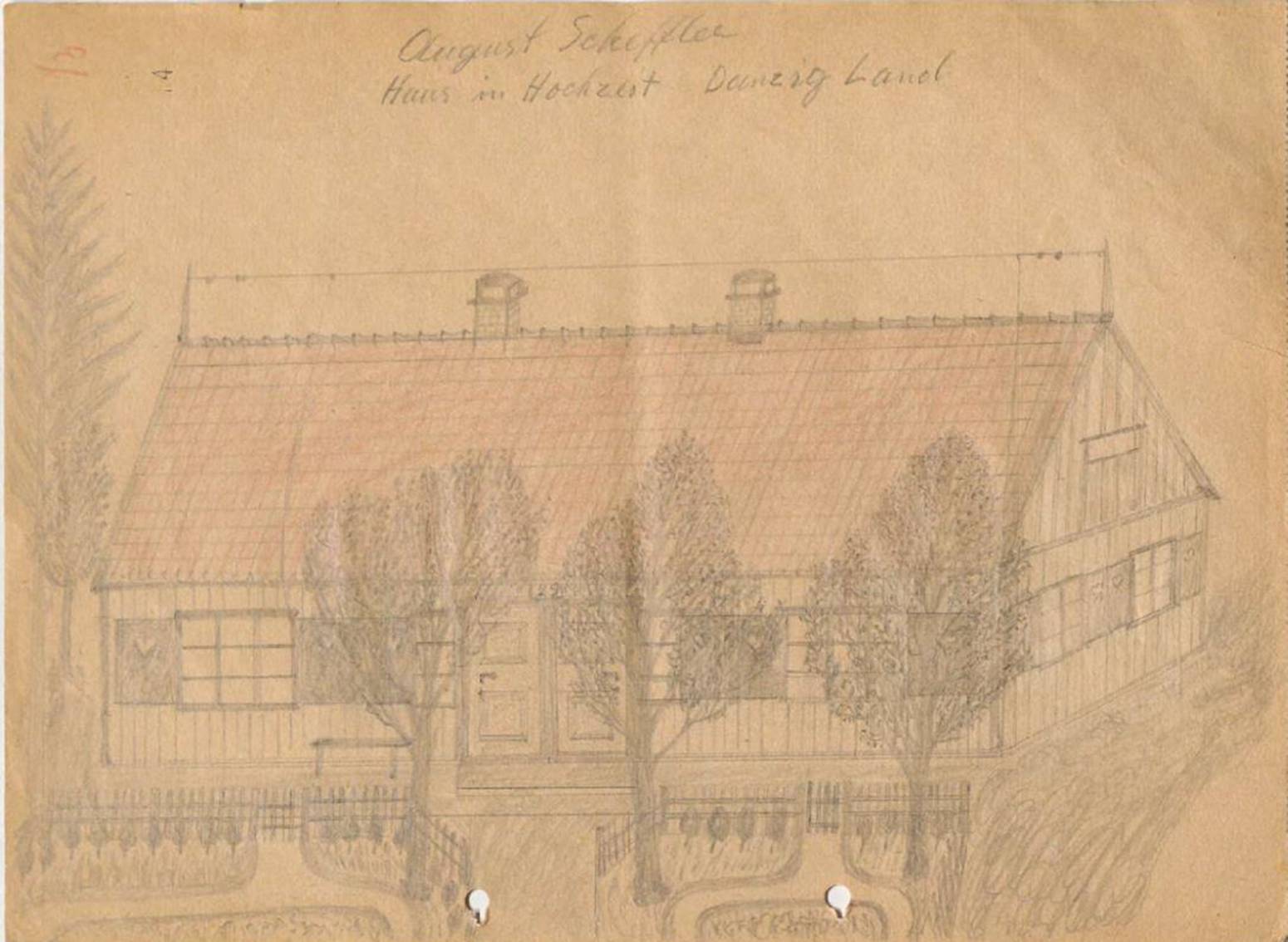
Despite benefiting from financial assistance provided by the Weimar Republic, Scheffler apparently never opted for German citizenship. Upon the annexation of Danzig by the Wehrmacht on September 1, 1939, he became a citizen of the Third Reich.Footnote 95 Indeed, Scheffler continued to reside in the Danzig region until his expulsion in 1946. He remarried and initially settled near the city of Danzig.Footnote 96 After qualifying as a master shoemaker, he established his own business, eventually hiring a journeyman and attaining modest prosperity.Footnote 97 In 1938, he and his second wife relocated to the neighboring village of Hochzeit (Wiślina), where they purchased a house situated prominently on the main street. The ground floor boasted a spacious, fully equipped shoemaker's workshop, complete with machinery. Additionally, the property included an extensive vegetable garden and a large orchard (see Figure 2).Footnote 98 As the sole shoemaker in the town, Scheffler thrived until the arrival of the Red Army in April 1945, when his workshop was closed and looted.Footnote 99 In February 1946, he and his wife were expelled to western Germany and subsequently resided in Schleswig-Holstein. In 1952, Scheffler successfully submitted an application under the Equalization of Burdens Law for compensation for the loss of his property.Footnote 100 He filed a complaint regarding what he perceived as an undervaluation of his property by the authorities, but his appeal was rejected.Footnote 101
“August Scheffler—Haus in Hochzeit—Danzig Land.”
Source: BArch-LAA, ZLA 1/7246495.

Scheffler's case illustrates the contrasting approach of the compensation authorities in the Weimar Republic and the Federal Republic. From the perspective of the post-1918 authorities, Scheffler had received an above-average amount of financial support following his escape from Russia to Danzig, and his application for preliminary compensation was rejected. In contrast, under the post-1945 Equalization of Burdens procedure, he was compensated for losses he sustained when he escaped from Danzig to Germany, even if he considered the amount insufficient. The process by which authorities verified the German affiliation of applicants in Danzig after 1918, and its significance in compensation proceedings post-1945, will be explored further in the subsequent case.
Wolfgang Federau was born in 1894 in Danzig, growing up in the nearby village of Oliva (Oliwa), which belonged to the German empire until the end of the First World War and then became part of the Free City. To finance his studies at Danzig Technical University, starting in February 1914 Federau worked as a private tutor in the Livonia region, then part of the Russian empire.Footnote 102 Shortly after the outbreak of the First World War, on June 28, 1914, the Russian authorities issued a decree mandating the arrest and removal of German citizens of military age to governorates in the interior of the empire.Footnote 103 As a German citizen, Federau was among those detained and was interned in various locations in the Volodga province until June 30, 1918.Footnote 104
Upon his return to Danzig after the war, he received citizenship of the newly founded Free City and applied to the Reichskommissar for preliminary compensation for the loss of his belongings, including linens, cash, books, and manuscripts. In his application, he stated that his great financial difficulties resulting from the war and his long confinement had compelled him to abandon his studies and to seek employment as an office worker. He explained that he had depleted his personal assets during his internment in Vasilyevskoye from 1915 to 1917, using some in an unsuccessful attempt to escape, leaving some behind in another internment camp on his journey home, and having all that was left of them confiscated by Bolshevik authorities in Riga in 1918.Footnote 105
Initially, German authorities advised Federau to submit a provisional declaration that he was opting for German citizenship so that he could access preliminary compensation smoothly. However, he rejected this suggestion, citing his reluctance to relocate to Germany as a primary reason. He was unwilling to abandon his homeland and risk his job, which could lead to financial instability once more. Additionally, Federau expressed a strong sense of “duty” toward preserving the Germanness of Danzig and actively contributing to the German cause “in spoken and written” form, further solidifying his determination to remain in his hometown. Indeed, the Reichskommissar noted that Federau's education and talents positioned him to champion German interests in Danzig effectively. Even during his internment in Russia, Federau had uplifted the spirits of his fellow Germans through written works and lectures, proving himself a “good German.” Consequently, the Reichskommissar recommended against pressuring Federau to opt for German citizenship. Instead, based on his pro-German attitude, he advocated for being granted access to preliminary compensation, which in his case was meager anyway.Footnote 106 Hence, despite receiving financial support, albeit modest, from the Weimar Republic, Federau—like Scheffler—refrained from adopting German citizenship until Danzig's annexation by the Wehrmacht in 1939.
Federau remained in Danzig, where he joined the police and eventually ascended to superintendent, a position he held until his flight to western Germany towards the end of the Second World War.Footnote 107 Concurrently, he pursued a career as a writer from the 1920s until his death. His literary endeavors garnered significant acclaim in Danzig and Germany, with his works appearing almost weekly in the local press during the 1920s and 1930s. True to his commitment, declared in his preliminary compensation application, he staunchly championed Germandom in his literary output.Footnote 108 Shortly after Adolf Hitler's rise to power in Germany and long preceding the annexation of Danzig, Federau openly embraced Nazism, joining the Nazi Party on May 1, 1933, and the SS in 1934.Footnote 109 Since then, his literary works regularly appeared in several local Nazi newspapers.Footnote 110
As the Red Army approached Danzig in March 1945, Federau and his wife fled to the western German city of Lübeck, where he died in 1950. Three years later, Federau's wife submitted, on his behalf, an application under the Equalization of Burdens Law for the expulsion-related loss of the entire household goods, two typewriters, and around three thousand books. The Equalization of Burdens Office deemed the claim credible, and paid benefits in 1962.Footnote 111 As the authorities were not required by law to withhold compensation from former Nazis, Federau's affiliation with Nazism did not appear in the authorities’ correspondence. Thus, unlike in 1920, his allegiance to Germandom was completely ignored in the compensation procedure after 1945. The fact that he had written literature in the spirit of Nazi ideology and had joined both the Nazi Party and the SS played no role.
The cases of Scheffler and Federau show the special relationship between Germany and the Danziger Germans, who constituted about 95 percent of the population of the Free City. These former German citizens, now classified as Germans abroad, along with the ethnic Germans who settled in Danzig following the First World War, played a pivotal role in the Weimar Republic's revisionist politics. The German Foreign Ministry pursued a policy aimed at maintaining German influence in Danzig until its reintegration into the German Reich. According to Herbert von Dirksen, the former German consul to Danzig, forfeiting control over the Free City would have undermined Germany's broader strategy of reversing territorial losses and adjusting the border in the east to its advantage. Fearing that Danzig would ultimately become a part of Poland, Germany implemented proactive measures to strengthen the local Volksgemeinschaft. This included not only financing German cultural institutions in Danzig but also subsidizing the salaries of local ethnic German civil servants.Footnote 112 This commitment was further evident in the high acceptance rate of claims for preliminary compensation from Danziger Germans, which exceeded 75 percent, compared to approximately 50 percent for claims of ethnic Germans overall.Footnote 113 In contrast to the post-1918 situation, the Equalization of Burdens Law was not about strengthening ethnic Germans in Danzig but about integrating them into Germany. Scheffler and Federau, who became German citizens following Danzig's annexation by Nazi Germany in 1939, submitted their compensation claims as such after 1945. In both cases, the claims were approved.
German, Jew, or German Jew? The Case of Arthur Fabisch
Residents of Danzig aside, the German population living in German territories lost to Poland after 1918 posed a special challenge in the compensation procedure.Footnote 114 With a few exceptions, the Treaty of Versailles automatically gave Polish citizenship to these Germans, and eliminated their German citizenship. Still, until January 1922, they could opt to keep German citizenship provided they relocated to Germany within twelve months of that date.Footnote 115 In November 1920, a decree issued by the German Ministry of Reconstruction outlined a rigorous approach to handling preliminary compensation claims from those former German citizens who did not opt to do so.Footnote 116 As the following case shows, compensation was granted only in exceptional circumstances,Footnote 117 typically involving severe financial hardship. As in the cases above, the authorities were concerned that excessive compensation might encourage the migration of Germans to Germany. This posed a threefold risk: it could weaken German minorities in their Eastern European homelands, jeopardize Germany's revisionist territorial strategy in the east, and intensify the refugee crisis within the Weimar Republic.Footnote 118
Arthur Fabisch, born in 1880, was a German citizen from a Jewish family in the Lower Silesian town of Glogau (Głogów). By 1905, he had relocated to Breslau (Wrocław), the capital city of the province of Silesia. He later married Hedwig Rath, whose father owned M. Radt, a company trading in animal feed and grain based in the West Prussian city of Thorn (Toruń). Arthur became the owner of this company in 1906. In the same year, his only child, Rudolf, was born.Footnote 119 Following the First World War, Thorn became part of Poland, and the Fabisch family automatically acquired Polish citizenship. Apparently, they chose not to reclaim their German one. Nonetheless, Fabisch submitted a claim for preliminary compensation. His request detailed financial losses incurred at the war's outset due to undelivered shipments of bran he had ordered from Russia. Additionally, he had lost 10,000 RM that he had deposited in a bank for a flour delivery to the town's population. His case stands apart from others discussed here, as his financial setbacks did not stem from war-related relocation. The association of German businesspeople with investments abroad, the Verband der im Ausland geschädigten Inlandsdeutschen, opposed granting him preliminary compensation, and the Reichskommisar echoed this stance in November 1920. The rationale provided was twofold: Arthur Fabisch not only “refused” to opt for Germany but also likely engaged in wartime profiteering.Footnote 120
However, in the following months, the Fabisch family did opt for German citizenship, relocated to Germany, and, in 1921, settled in Breslau, where Arthur had already lived as a young man.Footnote 121 Their decision may have stemmed from Poland's policies of confiscation and boycotting directed at German Poles, which led to a significant deterioration of conditions for ethnic German merchants in Poland during the early 1920s.Footnote 122 By January 1922, many ethnic Germans had opted for German citizenship and relocated to Germany, despite the escalating inflation there. The exodus from the Thorn region took on dramatic proportions, with 92.6 percent of local Germans moving to Germany by the mid-1920s.Footnote 123
In Breslau, Arthur Fabisch established the company Firma Arthur Fabisch, specializing in grain and seeds. In 1931, he appointed his son Rudolf as junior manager.Footnote 124 Additionally, Arthur held ownership stakes in four residential and commercial buildings in the city.Footnote 125 But with Hitler's rise to power in Germany, the situation for Jews deteriorated rapidly, as radical policies systematically excluded Jews from all facets of German life with the aim of pressuring them to leave the country.Footnote 126 The Fabisch family endured a Nazi boycott of their company starting in 1933.Footnote 127 The process of Aryanization, which involved the transfer of Arthur's assets to non-Jewish individuals, began on January 26, 1938, when his company was forcibly transformed into a general partnership, with Breslau merchants Georg Heidenreich and Alfred Jentsch as the so-called partners. They were, in fact, two of Fabisch's competitors.Footnote 128 The hostile takeover entailed Rudolf's dismissal from his job.Footnote 129 By June 1942, the company had changed its name to Jentsch & Co.,Footnote 130 further signifying the erasure of its previous Jewish owner.
In March 1938, Rudolf was compelled to flee to Palestine, where he settled in Haifa.Footnote 131 Half a year later, the forced liquidation of his father's real estate holdings in Breslau commenced, with properties sold well below their market value.Footnote 132 In compliance with anti-Jewish legislation, Arthur was obligated to allocate a significant portion of the sales’ proceeds toward discriminatory taxes.Footnote 133 His wife died on November 6, 1938, in Breslau, just three days before Kristallnacht.Footnote 134 This pogrom, orchestrated against Jews across the German Reich, represented a harrowing climax of the Nazi regime's terror campaign. Subsequently, anti-Jewish measures assumed ever more radical forms.Footnote 135 On March 1, 1939, Fabisch was compelled to sell an additional landholding, and this time, he received none of the proceeds.Footnote 136 A few days later, he fled Breslau and moved to Haifa to live with his son. Both were stripped of their German citizenship on April 12, 1940.Footnote 137 Arthur's one remaining property, of which he was a co-owner, was expropriated by the German state in his absence and auctioned.Footnote 138 After having been deprived of almost all his belongings, Arthur Fabisch died in Haifa on October 4, 1945.Footnote 139
In 1963, Rudolf applied for compensation on behalf of his father for the four properties in Breslau.Footnote 140 As Arthur's German citizenship had been revoked in 1940 and was not reinstated before his death, his prewar affiliation with the German Volk had to be verified by the Breslau Heimatauskunftstelle. It is noteworthy that Arthur's German identity was verified, not based on his subjective self-identification, but rather based on a single, objective criterion: that both his birthplace, Glogau, and his place of residence before his expulsion, Breslau, were within the borders of the German Reich on December 31, 1937. Consequently, the Homeland Information Center “assumed” that he was of German ethnicity and recognized him as a fictive expellee, making him posthumously eligible for compensation.Footnote 141 Rudolf was awarded just over 40,000 DM for his father's material damages. Separately, he received indemnification for himself and his father under the German compensation law for victims of the Nazi regime (Bundesentschädigungsgesetz) for several persecution-related damages, such as emigration costs and damage to career advancement.Footnote 142
Arthur Fabisch's case offers a framework for analyzing the continuities and shifts in German compensation procedures following the First and Second World Wars. Both times, his affiliation with the German Volk was at issue. Clearly, Fabisch exhibited markers of German identity: born a German citizen in 1880, he held German citizenship throughout the First World War and at the beginning of the Second World War. However, this status was involuntarily revoked twice: first in 1920, under the Treaty of Versailles, and again in 1941, due to Nazi policy. Because he lacked German citizenship when the compensation claims were submitted in 1920 and, posthumously, in 1963, German authorities closely scrutinized his ties to Germandom. In the 1920 procedure, the Reichskommissar emphasized Fabisch's purported refusal to opt for German citizenship, further alleging that he had profited from the war at the expense of the German populace. These accusations implied a lack of allegiance towards Germany and its people, resulting in the denial of his compensation claim. While subjective factors led to the denial of his claim for post-1918 compensation, the Homeland Information Center in the 1960s determined his belonging to the German Volk through an objective criterion—his territorial connection to Germany—leading to recognition of his compensation claim. However, even then there was an implication that Fabisch may not have been a true member of the German Volk, as his affiliation with Germandom was merely “assumed” by the German authorities and not definitively confirmed.
Did Fabisch's Jewish background influence the determinations? In the earlier case, the answer must remain speculative, but it is plausible that accusations of lacking solidarity with Germany and its people stemmed from an anti-Semitic bias on the part of the Reichskommissar. Such allegations, including disloyalty and war profiteering, were typical anti-Semitic tropes prevalent in Germany at that time.Footnote 143 Thus Fabisch's Jewish origins may have influenced the denial of his 1920 claim. In the later case, his Jewish identity unequivocally factored in, as the claim was explicitly based on Fabisch's persecution by the Nazis as a Jew. This time he was awarded compensation posthumously, but only because he had lived within the borders of the German Reich, and only as a fictive expellee.
Conclusion
The six case studies presented here offer a unique opportunity for a diachronic comparison of the German compensation systems for material damages arising from forced displacement after the two world wars. A major issue was the determination of the applicants’ Germanness and how its interpretation evolved over time. In both the post-1918 and post-1945 compensation procedures, the criteria for defining Germanness involved determining the boundaries of German belonging through a combination of objective and subjective national identity markers. The cases of Wolfgang Federau, a Nazi, and Arthur Fabisch, a Jew, provide the clearest illustration of this deliberation. It is salient that among the six examples, only Federau and Fabisch were German citizens when their material losses occurred during the First World War. Both involuntarily lost their German citizenship under the Treaty of Versailles and abstained from reclaiming it before applying for post-1918 preliminary compensation. Consequently, in both cases, the Weimar authorities examined their attitude towards Germanness based on subjective criteria.
Notably, the same decision for which Fabisch was castigated earned Federau praise: The former's decision not to opt for German citizenship after 1918 was seen as a mark of insufficient German affiliation and provided grounds for denying his compensation claim. The latter's choice was explained as an effort to preserve Germanness in Danzig, an expression of loyalty to the German Volk, and thus a reason for granting his claim for preliminary compensation. This is all the more remarkable because the question of Federau's identification with the German Volk played no role under the Equalization of Burdens Law. His membership of the Nazi Party and even of the SS was neither discussed nor considered a legal basis for excluding him from indemnification. As we discussed in the introduction, the Equalization of Burdens Law was founded upon a Nazi concept of Volksgemeinschaft. Hence, it was precisely Fabisch, a Jewish victim of Nazi persecution whose German citizenship was revoked by the Third Reich, whose affiliation with Germandom had to be examined.
Of our six claimants, only Federau, alongside the Romanian German Beck, received compensation after the First World War. Notably, both claimants were childless and unmarried, the youngest of the six. Both had displayed active support for the German cause in the First World War, and both had incurred relatively minor material damages. Their cases fulfilled the criteria set by Weimar authorities for granting preliminary compensation to ethnic Germans after 1918: demonstrated loyalty to the Volksgemeinschaft and claims that would not overly burden state coffers. The evaluation of the applicants’ Germanness and the financial considerations of the bureaucracy were thus the key factors driving the compensation practice. It is difficult to assess the political fallout of this stringent approach, as we cannot know whether Federau and Beck were dissatisfied with the relatively low compensation payments they received and whether the other four applicants were disgruntled when their applications were denied. Hence, it is unclear if these six case studies contributed to the negative sentiments harbored by tens of thousands of the displaced, which led to broader destabilization of the prevailing social and political order in interwar Germany. After the Second World War, in contrast, all six applications were approved, and applicants were spared having their subjective attitude toward the German Volk (posthumously) checked.Footnote 144 However, it remains equally unclear whether benefiting from the Equalization of Burdens Law positively impacted the six men's (or their heirs’) opinions of the Federal Republic and thereby strengthened the legitimacy of its democratic system.
What is certain, however, is that following each war and forced migration, almost all six applicants were able to rebuild their lives and regain, or even improve, their social status. While compensation played a marginal role in fostering this process after the First World War, post-1945 payments facilitated it much more substantially. Remarkably, the only exception was Arthur Fabisch and his son Rudolf. In their case, post-1945 compensation only partially remedied the loss of property and social descent they suffered. More importantly, the Equalization of Burdens benefits were not aimed at promoting their reintegration into German society.
Finally, the comparison of these six cases reveals that Germanness and compensation were in practice intertwined with class. Indeed, both the post-1918 and the post-1945 compensation systems reflected a conception of Volksgemeinschaft that privileged certain social classes at the expense of others. In order to be eligible for compensation, it was not enough to be German; one also had to have owned property and subsequently lose it. To be sure, after both wars, the authorities showed sympathy for the propertied who had lost their financial and social positions, but they were also committed to the formely unpropertied to prevent them from turning to political extremism, especially communism. By the mid-1920s, the German state, in collaboration with the Red Cross and the associations of the displaced, established camps for repatriated Germans and provided them with welfare support, regardless of their prewar ownership.Footnote 145 In 1949, three years before the enactment of the actual Equalization of Burdens Law, the West German legislature passed a First Aid Law to address the immediate needs of expellees and other war-damaged individuals. This law aimed to alleviate their most severe hardships by focusing on urgent necessities, applying equally to the previously unpropertied and the propertied, without considering prewar assets.Footnote 146 Both the First Aid Law and the compensation payments for lost household goods under the Equalization of Burdens Law incorporated strong social elements. Nevertheless, the goal of both the post-1918 and the post-1945 compensation systems was not to “reestablish the prewar distribution of wealth and status,”Footnote 147 for two main reasons: First, the limited financial resources and the absence of political consensus in both postwar periods regarding the restoration of prewar socioeconomic inequalities made it unfeasible for the German state to fully restore the lost private wealth of the displaced and the expellees. Second, due to these financial and political constraints, German policymakers chose to embed a social dimension into the compensation systems by reimbursing only certain types of losses and introducing a degressive payment framework.
However, despite these adjustments, both compensation systems maintained a connection between compensation and prewar property ownership.Footnote 148 This mechanism indemnified people specifically for the kinds of economic losses and social downgrading that typically affected members of the middle and upper-middle classes. Thus, in choosing to compensate material damages, both the Weimar Republic and the Federal Republic implicitly endorsed a class-based criterion and privileged the propertied (Besitzbürgertum) over other social groups—favoring precisely the social stratum that was traditionally the backbone of German nationalism.Footnote 149
Acknowledgments
The authors would like to thank the two anonymous reviewers as well as Daniel Siemens (Newcastle University), Gideon Reuveni (University of Sussex), and Gilly Nadel for their insightful comments and thoughtful critiques that enhanced the depth and clarity of earlier versions of this article. Iris Nachum's research leading to this article was supported by the Israel Science Foundation (ISF) (research grant number 678/21). Her research for this article was conducted at the Israel Institute for Advanced Studies (IIAS), as part of the Research Group “Paying for the Past: Reparations After the Holocaust in Global Context” (2023–2024).
Disclaimer
In preparing this article, the authors utilized AI for proofreading. Following its use, the authors reviewed and edited the content as necessary and take full responsibility for the publication's final version.

 Open access

