

Acknowledgements
In writing this study on labour, I have become increasingly aware that no one works alone. Although I am solely responsible for the views expressed in this monograph, and especially for any remaining errors, I should like to take the opportunity to extend my warm thanks to the numerous people and institutions that have contributed to its completion.
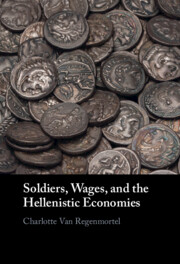
The present text is the revised version of my doctoral thesis, which was defended at the University of Leicester in 2019. The work for this research was made possible financially by sponsorship from several institutions, for which I remain greatly appreciative. I express my gratitude to the College of Social Sciences, Arts, & Humanities at the University of Leicester for funding the first three years of the project, as well as to the British School at Athens, where I completed the final version of the thesis as Macmillan-Rodewald Student. Generous grants from the School of Archaeology and Ancient History and the Doctoral College at Leicester made several research and conference trips possible. I also thank the Kommission für Alte Geschichte und Epigraphik in Munich for their hospitality during the summer of 2018. I completed revisions for the present monograph while holding a Leverhulme Trust Early Career Fellowship at the University of Liverpool, and I am indebted to both the Leverhulme Trust and the Department of Archaeology, Classics, and Archaeology for their support, and for offering me the time and opportunity to finalize this work. I thank the American Numismatic Society for kindly supplying the cover image.
My greatest thanks are owed to my supervisor, Professor Graham Shipley, whose enthusiastic encouragement from the outset was fundamental not only to the research, but also to the completion of the present text (and, indeed, for compiling the index). His unfailing and continued generosity in terms of time and advice remain so important to me. Graham’s ever-discerning comments and aquiline ocularity were expertly supplemented by both Professor Andrew Meadows and Professor David Mattingly as examiners of the original argument. Also at Leicester, I must thank Professor Neil Christie, not only for his extensive proofreading of both thesis and book chapters, but also for the (numerous!) walks, talks, and friendship.
Naturally, I have benefited enormously from several conferences where aspects of this research were presented. I thank especially the organizers and participants of the conference ‘Skilled Labour and Professionalism in Ancient Greece and Rome’ held at the University of Nottingham in 2016; those of the conference on mercenaries in the Greek world held in Halle in the same year; and finally, the organizers and participants of the ‘Strapped for Cash’ panel held in Bonn at AIAC 2018.
The British School at Athens has proved a brilliant place to study over the last few years, and I hugely appreciate all staff and members for their many kindnesses. During my studentship, Professor Adele Scafuro, Justin Yoo, Dr Thomas Clements, Professor Stephen Lambert, and Dr Nefeli Pirée Iliou were generous sources of advice and ideas, bolstering my research over many conversations.
Numerous other people have kindly taken the time to discuss parts of both thesis and book, sending (unpublished) work, or have guided in other ways. I thank Dr Zosia Archibald; Dr Mathieu de Bakker; Professor François de Callataÿ; Dr Christelle Fischer-Bovet; Professor Edward Harris; Professor Panagiotis Iossif; Dr Katerina Panagopoulou; Professor Selene Psoma; Professor Catherine Rubincam; Dr Rolf Strootman; Professor Peter Thonemann; Professor Christopher Tuplin; Dr Branko van Oppen; and Professor Hans van Wees. Professor Vincent Gabrielsen has expertly briefed me on the Athenian navy and its implications for my own study. Especial thanks go to Professor Nicholas Sekunda for entertaining my thoughts on Hellenistic warfare and for his characteristically incisive comments and prompts for improvement. Likewise, I should thank both Michael Sharp and Katie Idle at Cambridge University Press for their patient guidance in finalizing this book, as well as the anonymous readers for their helpful advice and comments.
Finally, friends and family alike have throughout been a constant source of encouragement. My immense thanks go to my husband, Bart: ever helpful, always enthusiastic, and admirably patient, he has been a major inspiration in writing this book. My father, often bemused by my interests yet always supportive, was sadly taken before seeing this monograph complete. I lovingly dedicate it to his memory.

 Open access