


Impact statement
This transdisciplinary review has the potential to shift the classic paradigms of perceiving and applying ecological engineering in coastal ecosystems. This impact is primarily driven by the centrality of Indigenous knowledge, people and local communities in the co-creation of nature-based solutions. Through an equitable and fair process, the active engagement by local communities in eco-creative innovations and transformative pedagogies will lead to meaningful benefits for people and the biological coastal communities.
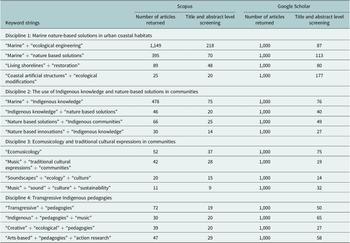
The main objective of this review is to summarise diversified evidence, identify gaps in knowledge and extract concepts from multiple disciplines to offer a pioneering model and change of narratives for research on nature-based ecological engineering approaches in the coastal realm. This perspective involves and relates to multiple topics or fields, more specifically marine nature-based solutions in urban coastal habitats, Indigenous knowledge, musicology (ecomusicology) and transgressive pedagogies. An extensive review of literature was therefore required to ensure an inclusive and exhaustive synthesis and assessment of the information available on this transdisciplinary objective. To explicitly achieve this, multiple strings of keywords, closely related to the different topics/disciplines, were entered into search engines (refer to Table 1 for keyword strings searched). Each keyword string, was assessed using the standard repositories and bibliographic database tools, Elsevier Scopus (www.scopus.com) and Google Scholar (www.scholar.google.com) between 1960 and 2022. Web of Science (WoS) was initially also used, however, WoS generated the fewest records and those largely overlapped with the results obtained from the searches from the other engines. The search engine WoS, was therefore excluded. The number of articles returned from each search was screened and selected based on the relevant keywords (Table 1) being present in the title and abstract. For Google Scholar, the maximum amount of scholarly literature returned did not exceed 1,000, therefore, for each field of study/discipline and search, a maximum of 1,000 peer-reviewed articles were reviewed using this search engine. From the literature screened, according to the procedure described above, references and in-text citations were included in the manuscript where applicable (see Supplementary Materials A and B for full outputs of search strings).
Assessments of the search strings outputs based on the main disciplines of the review using Scopus and Google Scholar, filtering keywords in titles and abstracts

Note: Timing of acquisition: 1–25/11/2022.
Overview
Ecological engineering in the built coastal environment
With continued societal and economic pressures on our coast and oceans, the impact on natural coastlines from urbanisation through development and coastal defence cannot be reversed, especially with increasing challenges from climate change affecting shorelines worldwide (e.g., Costanza et al., Reference Costanza, d’Arge, de Groot, Farber, Grasso, Hannon, Limburg, Naeem, O’Neill, Paruelo, Raskin, Sutton and van den Belt1997; Todd et al., Reference Todd, Heery, Loke, Thurstan and Kotze2019). Due to trade and maritime transport (Todd et al., Reference Todd, Heery, Loke, Thurstan and Kotze2019), humans increasingly migrate towards coastlines (Creel, Reference Creel2003; McGranahan et al., Reference McGranahan, Balk and Anderson2007), with the population density within 100 km of the sea being almost three times higher than the global average (Small and Nicholls, Reference Small and Nicholls2003; Duarte et al., Reference Duarte, Dennison, Orth and Carruthers2008). An example of the sharp growth in coastal urbanisation is given by the rapid increase in infrastructures being built in coastal areas which range from 3.7% (merchant ships requiring harbour space) to 28.3% a year (offshore wind energy; Duarte et al., Reference Duarte, Losada, Hendriks, Mazarrasa and Marbà2013). In addition, the escalating atmospheric concentrations of greenhouse gases linked to human activities have resulted in the rising of the Earth’s average temperatures which in turn has increased the world’s coastal sea surface temperatures by approximately 1°C (IPCC, Reference Pörtner, Roberts, Masson-Delmotte, Zhai, Tignor, Poloczanska, Mintenbeck, Alegría, Nicolai, Okem, Petzold, Rama and Weyer2019). As a result, global mean sea levels have risen over the last 10 years at a rate of almost 4 mm per year and extreme weather events are increasing in frequency and intensity (Doney et al., Reference Doney, Ruckelshaus, Emmett Duffy, Barry, Chan, English, Galindo, Grebmeier, Hollowed, Knowlton, Polovina, Rabalais, Sydeman and Talley2012; IPCC, Reference Pachauri and Meyer2014, Reference Pörtner, Roberts, Masson-Delmotte, Zhai, Tignor, Poloczanska, Mintenbeck, Alegría, Nicolai, Okem, Petzold, Rama and Weyer2019). To counteract the effects of climate change threats and to protect people and property from inundation and erosion (i.e., shoreline stabilisation) in these ever expanding coastal urban cities, multifaceted coastal defences or armouring (i.e., “ocean sprawl”; Duarte et al., Reference Duarte, Losada, Hendriks, Mazarrasa and Marbà2013), such as seawalls, breakwaters, revetments, bulkheads, pontoons, jetties and slipways, are constructed (Chapman and Bulleri, Reference Chapman and Bulleri2003; Moschella et al., Reference Moschella, Abbiati, Aberg, Airoldi, Anderson, Bacchiocchi, Bulleri, Dinesen, Frost, Gacia, Granhag, Jonsson, Satta, Sundelof, Thompson and Hawkins2005; Bulleri and Chapman, Reference Bulleri and Chapman2010; Dafforn et al., Reference Dafforn, Glasby, Airoldi, Rivero, Mayer-pinto and Johnston2015).
The current worldwide pressures on the sea and fundamental structural alteration of coastscapes pose serious challenges to the sustainable functioning of coastal ecosystems and the long-term reliance on blue economies. This is particularly relevant to South Africa and the 2014 Operation Phakisa (Sotho expression for “hurry up”), a governmental socio-economic plan to fast-track the “blue economy” of ocean development across a number of sectors (https://www.operationphakisa.gov.za/; Vreÿ, Reference Vreÿ2019; Oceans Economy in the Eastern Cape and South Africa, 2020). Yet, limited country-specific information on the links between coastal urban development and ecosystem functioning is available. The start of the new decade, and specifically the recent worldwide state of COVID-19-related disaster, have also highlighted how important safeguarding natural biodiversity is to fuel the resilient recovery of natural ecosystems (Coll, Reference Coll2020). It has long been predicted that by increasing the stress on natural systems through pollution and/or habitat destruction, marine biodiversity will change, with repercussions for the ecosystem functioning (Worm et al., Reference Worm, Barbier, Beaumont, Duffy, Folke, Halpern, Jackson, Lotze, Micheli, Palumbi, Sala, Selkoe, Stachowicz and Watson2006). High species richness and diversity can enhance ecosystem productivity and stability (Stachowicz et al., Reference Stachowicz, Bruno and Duffy2007), while a decline in biodiversity may alter ecosystem functioning with a consequent loss of services (Worm et al., Reference Worm, Barbier, Beaumont, Duffy, Folke, Halpern, Jackson, Lotze, Micheli, Palumbi, Sala, Selkoe, Stachowicz and Watson2006; reviewed in Gamfeldt et al., Reference Gamfeldt, Lefcheck, Byrnes, Cardinale, Duffy and Griffin2015; Jungblut et al., Reference Jungblut, Liebich and Bode-Dalby2020). As such, a more diverse community is likely to respond to anthropogenic stressors without compromising (or at least, not fully) the functions and services of a system. Yet, the structural modification and hardening of the shores often result in significant direct and indirect ecological impacts on natural coastscapes that cannot be reversed (Bulleri and Chapman, Reference Bulleri and Chapman2010; Todd et al., Reference Todd, Heery, Loke, Thurstan and Kotze2019). These impacts too frequently biologically translate into habitat degradation, reduced resilience to natural disasters, loss of biodiversity, accelerating species extinction and the spread of invaders (e.g., McKinney and Lockwood, Reference McKinney and Lockwood1999; Chapman and Bulleri, Reference Chapman and Bulleri2003; Arkema et al., Reference Arkema, Guannel, Verutes, Wood, Guerry, Ruckelshaus, Kareiva, Lacayo and Silver2013; Airoldi et al., Reference Airoldi, Turon, Perkol-Finkel and Rius2015; Dafforn et al., Reference Dafforn, Glasby, Airoldi, Rivero, Mayer-pinto and Johnston2015; Mayer-Pinto et al., Reference Mayer-Pinto, Dafforn, Bugnot, Glasby and Johnston2018).
Furthermore, concerns about the sustainable functioning of marine ecosystems and the long-term reliance on blue economies may arise (Claudet et al., Reference Claudet, Bopp, Cheung, Devillers, Escobar-briones, Haugan, Heymans, Masson-Delmotte, Matz-Luck, Miloslavich, Mullineaux, Visbeck, Watson, Zivian, Ansorge, Araujo, Arico, Bailly, Barbiere, Barnerias, Bowler, Brun, Cazenave and Diver2020). Direct ecological impacts from coastal armouring, especially made from concrete and granite to replace natural habitats, for example, rocky shores (Firth et al., Reference Firth, Thompson, Bohn, Abbiati, Airoldi, Bouma, Bozzeda, Ceccherelli, Colangelo, Evans, Ferrario, Hanley, Hinz, Hoggart, Jackson, Moore, Morgan, Perkol-Finkel, Skov, Strain, Van and Hawkins2014; Dyson and Yocom, Reference Dyson and Yocom2015; Todd et al., Reference Todd, Heery, Loke, Thurstan and Kotze2019) are numerous. These include habitat loss, fragmentation and degradation (Peterson and Lowe, Reference Peterson and Lowe2009; Bulleri and Chapman, Reference Bulleri and Chapman2010; Bishop et al., Reference Bishop, Mayer-Pinto, Airoldi, Firth, Morris, Loke, Hawkins, Naylor, Coleman, Yin and Dafforn2017; Heery et al., Reference Heery, Bishop, Critchley, Bugnot, Airoldi, Mayer-Pinto, Sheehan, Coleman, Loke, Johnston, Komyakova, Morris, Strain, Naylor and Dafforn2017; Airoldi et al., Reference Airoldi, Beck, Firth, Bugnot, Steinberg and Dafforn2021), reduction in microbenthic diversity of invertebrate community integrity (Peterson et al., Reference Peterson, Mcdonald, Green and Erickson2001; Chapman, Reference Chapman2003; King et al., Reference King, Hines, Craige and Grap2005; Bilkovic et al., Reference Bilkovic, Roggero, Hershner and Havens2006; Seitz et al., Reference Seitz, Lipcius, Olmstead, Seebo and Lambert2006; Bilkovic and Roggero, Reference Bilkovic and Roggero2008; Morley et al., Reference Morley, Hirse, Thorne, Pörtner and Peck2012), alteration to the physical (Bozek and Burdick, Reference Bozek and Burdick2005; Heery et al., Reference Heery, Bishop, Critchley, Bugnot, Airoldi, Mayer-Pinto, Sheehan, Coleman, Loke, Johnston, Komyakova, Morris, Strain, Naylor and Dafforn2017) and chemical (Heery et al., Reference Heery, Bishop, Critchley, Bugnot, Airoldi, Mayer-Pinto, Sheehan, Coleman, Loke, Johnston, Komyakova, Morris, Strain, Naylor and Dafforn2017) properties and processes, increase in marine pollution associated with sewage and urban runoff (Trombulak and Frissell, Reference Trombulak and Frissell2000; Cornelissen et al., Reference Cornelissen, Pettersen, Nesse, Eek, Helland and Breedveld2008; Todd et al., Reference Todd, Heery, Loke, Thurstan and Kotze2019), change in nutrient availability (e.g., Bishop et al., Reference Bishop, Mayer-Pinto, Airoldi, Firth, Morris, Loke, Hawkins, Naylor, Coleman, Yin and Dafforn2017). Indirect ecological impacts from coastal artificial structures include altering species composition, abundance and predator–prey interactions (Bishop et al., Reference Bishop, Mayer-Pinto, Airoldi, Firth, Morris, Loke, Hawkins, Naylor, Coleman, Yin and Dafforn2017; Heery et al., Reference Heery, Bishop, Critchley, Bugnot, Airoldi, Mayer-Pinto, Sheehan, Coleman, Loke, Johnston, Komyakova, Morris, Strain, Naylor and Dafforn2017), decreasing the reproductive output of species (Moreira et al., Reference Moreira, Chapman and Underwood2006), altering trophic transfer (Airoldi et al., Reference Airoldi, Fontana, Ferrario, Franzitta, Magnani, Bianchelli, Pusceddu and Thrush2010; Moss, Reference Moss2017). Alternatively, limited studies have shown that artificial structures could have ecological benefits such as increasing the abundance of subtidal epibiota, their fitness and overall diversity in shallow urbanised coastal areas (Page et al., Reference Page, Dugan, Dugan, Richards and Hubbard1999; Burke et al., Reference Burke, Koch and Stevenson2005; Connell and Glasby, Reference Connell and Glasby1999; Davis et al., Reference Davis, Takacs, Schnabel, Erdle, Davis and Sellner2006; Currin et al., Reference Currin, Chappell, Deaton, Shipman, Dethier, Gelfenbaum, Fresh and Dinicola2010; Feary et al., Reference Feary, Burt and Bartholomew2011) due to the generally more benign, sheltered, and retentive nature of such environments. As such, marine biodiversity will change, with repercussions for the ecosystem functioning (Worm et al., Reference Worm, Barbier, Beaumont, Duffy, Folke, Halpern, Jackson, Lotze, Micheli, Palumbi, Sala, Selkoe, Stachowicz and Watson2006). While differences in biodiversity between natural and anthropogenically-modified habitats have been reported, mostly highlighting the common thread of an increase in invasive species (Perkol-Finkel et al., Reference Perkol-Finkel, Ferrario, Nicotera and Airoldi2012; Firth et al., Reference Firth, Browne, Knights, Hawkins and Nash2016), the effects of urbanisation on the functionality of these systems have received less attention. Recent research efforts within intertidal communities have shown that the functional properties and biological interactions also suffer from the structural alterations to the natural ecosystems (Ferrario et al., Reference Ferrario, Ivesa, Jaklin, Perkol-Finkel and Airoldi2016).
Evidence of the (economic) impacts of coastal development and associated activities have been reported for coastline adaptation/transformation to, for example, sea level rise (Williams et al., Reference Williams, McNamara, Smith, Murray and Gopalakrishnan2013; Reguero et al., Reference Reguero, Bresch, Beck, Calil and Meliane2014; Rizvi et al., Reference Rizvi, Baig and Verdone2015; Hummel et al., Reference Hummel, Griffin, Arkema and Guerry2021; Hynes et al., Reference Hynes, Burger, Tudella, Norton and Chen2022). The consequences for marine biodiversity and food security have, however, been more challenging to explicitly translate (but see Carlton, Reference Carlton1996 for an example of ship ballast mediated bio-invasions and impacts on fisheries and Mead et al., Reference Mead, Carlton, Griffiths and Rius2011 for ports as major pathways for the introduction of invasive species). New paradigms, integrating a dual approach that addresses both the safe development of human societies and the integrity of biodiversity, are hence clearly needed (Steffen et al., Reference Steffen, Richardson, Rockström, Cornell, Fetzer, Bennett, Biggs, Carpenter, De, De, Folke, Gerten, Heinke, Mace, Persson, Ramanathan, Reyers and Sörlin2015). This is especially true for the vulnerable coastal regions of the world, Africa included, where the effects of climate-change and urbanisation are likely to be severe (Nicholls and Cazenave, Reference Nicholls and Cazenave2010). The need for a blue economy to incorporate not only economic perspectives but also ecological, socio-cultural and institutional objectives is sorely needed to enable a more holistic approach that includes social equity and environmental sustainability (Okafor-Yarwood et al., Reference Okafor-Yarwood, Kadagi, Miranda, Uku, Elegbede and Adewumi2020). Mitigation, adaptation, rehabilitation and restoration options for degraded or altered habitats, either through active ecological engineered interventions or managed realignment (sensu French, Reference French2006) should include innovative, socially responsible practices, as well as solutions that speak to local conditions and local communities as well as broad latitudinal gradients. Finally, such solutions should be used to allow urban shorelines to enhance and/or recover as many biological processes as possible and ensure a long-term, effective functionality of coastal ecosystems (Mayer-Pinto et al., Reference Mayer-Pinto, Dafforn and Johnston2019).
Rising research on ecological engineering is tackling how improvements on the design of artificial structures and increase in complexity can mitigate the effects of urbanisation and climate change by considering species’ current home ranges; species’ adaptive potential to endure and function under current and predicted environmental and ecological conditions; and interactions between global and local stressors to sustainably enhance and restore natural biodiversity (Mayer-Pinto et al., Reference Mayer-Pinto, Johnston, Bugnot, Glasby and Airoldi2017; Strain et al., Reference Strain, Mayer-Pinto, Cumbo, Bishop, Morris, Bugnot, Dafforn, Heery, Firth and Brooks2018; Mayer-Pinto et al., Reference Mayer-Pinto, Dafforn and Johnston2019). Heterogeneity of otherwise homogenous coastal armouring is key to biodiversity enhancement and examples of coastal ecological engineering include either additive or subtractive processes (Chapman and Underwood, Reference Chapman and Underwood2011). Additive processes comprise the use of elements such as concrete tiles and flowerpots to attach to seawalls (e.g., Chapman and Underwood, Reference Chapman and Underwood2011; Dafforn et al., Reference Dafforn, Glasby, Airoldi, Rivero, Mayer-pinto and Johnston2015). Subtractive processes include the drilling of pits and/or grooves; alteration of surface texture/roughness/porosity/slope; fingerprinting of the natural substrate; creation of pools of different sizes and potential microhabitats that favour ecological improvement through, for example, water retention and fine scale flow (Chapman and Blockley, Reference Chapman and Blockley2009; Chapman and Underwood, Reference Chapman and Underwood2011; Perkol-Finkel et al., Reference Perkol-Finkel, Ferrario, Nicotera and Airoldi2012; Firth et al., Reference Firth, Thompson, White, Schofield, Skov, Hoggart, Jackson, Knights and Hawkins2013, Reference Firth, Thompson, Bohn, Abbiati, Airoldi, Bouma, Bozzeda, Ceccherelli, Colangelo, Evans, Ferrario, Hanley, Hinz, Hoggart, Jackson, Moore, Morgan, Perkol-Finkel, Skov, Strain, Van and Hawkins2014, Reference Firth, Browne, Knights, Hawkins and Nash2016; Evans et al., Reference Evans, Lawrence, Natanzi, Moore, Davies, Crowe, Mcnally, Thompson, Dozier and Brooks2021). Ecological engineering options have also recently been compiled to provide informed guidance to a range of stakeholders for interventions on hard artificial infrastructures (O’Shaughnessy et al., Reference O’Shaughnessy, Hawkins, Evans, Hanley, Lunt, Thompson, Francis, Hoggart, Moore, Iglesias, Simmonds, Ducker and Firth2020). These innovative approaches, that is, “hard ecological engineering”, however, still mostly operates on the use of replacement habitats made of barren substrates (e.g., concrete, metal and stone; Komyakova et al., Reference Komyakova, Chamberlain, Jones and Swearer2019) for nature to restore. The greenest and latest innovative approaches include hybrid ecological engineering, which combines ecologically enhanced hard structures with ecosystem engineers to enhance coastal biodiversity and resilience of coastal communities (Sutton-Grier et al., Reference Sutton-Grier, Wowk and Bamford2015; Firth et al., Reference Firth, Browne, Knights, Hawkins and Nash2016; Bishop et al., Reference Bishop, Mayer-Pinto, Airoldi, Firth, Morris, Loke, Hawkins, Naylor, Coleman, Yin and Dafforn2017; Strain et al., Reference Strain, Mayer-Pinto, Cumbo, Bishop, Morris, Bugnot, Dafforn, Heery, Firth and Brooks2018, Reference Strain, Steinberg, Vozzo, Johnston, Abbiati, Aguilera, Airoldi, Aguirre, Ashton, Bernardi, Brooks, BKK, Cheah, Chee, Coutinho, Crowe, Davey, Firth, Fraser, Hanley, Hawkins, Knick, Lau, Leung, McKenzie, Macleod, Mafanya, Mancuso, Messano, Naval-Xavier, Ng, O’Shaughnessy, Pattrick, Perkins, Perkol-Finkel, Porri, Ross, Ruiz, Sella, Seitz, Shirazi, Thiel, Thompson, Yee, Zabin and Bishop2020). Ecosystem engineering species such as seagrass (Bos et al., Reference Bos, Bouma, de Kort and van Katwijk2007), oysters and mussels (Gutiérrez et al., Reference Gutiérrez, Jones, Strayer and Iribarne2003) can improve the physico-chemical water conditions, reduce the physical stress (Arkema et al., Reference Arkema, Guannel, Verutes, Wood, Guerry, Ruckelshaus, Kareiva, Lacayo and Silver2013; Möller et al., Reference Möller, Kudella, Rupprecht, Spencer, Paul, Van Wesenbeeck, Jensen, Bouma, Miranda-Lange and Schimmels2014) and favour the establishment of associated biodiversity (Jones et al., Reference Jones, Lawton and Shachak1994). Additional practices include the establishment of vegetated reinforcements, through the use of natural materials (e.g., bio-reeds; Pan et al., Reference Pan, Li, Amini and Kuang2015).
In parallel to the structural improvement of coastal defence, so-called nature-based solutions are increasingly being implemented for climate change mitigation and adaptation (Nesshöver et al., Reference Nesshöver, Assmuth, Irvine, Rusch, Waylen, Delbaere, Haase, Jones-Walters, Keune, Kovacs, Krauze, Külvik, Rey, van Dijk, Vistad, Wilkinson and Wittmer2017; Seddon et al., Reference Seddon, Chausson, Berry, Girardin, Smith and Turner2020). Natural and nature-based structures are designed by humans for coastal protection and mimic the environmental characteristics (Sutton-Grier et al., Reference Sutton-Grier, Gittman, Arkema, Bennett, Benoit, Blitch, Burks-Copes, Colden, Dausman, DeAngelis, Hughes, Scyphers and Grabowski2018). Nature-based solutions are ecosystem-based, and involve an umbrella of concepts and approaches. These include sustainability, community involvement, respect for cultural diversity, and embracing diverse knowledge (Cohen-Shacham et al., Reference Cohen-Shacham, Walters, Janzen and Maginnis2016) and have the scope to maintain and restore diverse and resilient ecosystems while providing critical services, biodiversity benefits, prosperity and human wellbeing (Davis et al., Reference Davis, Currin, O’Brien, Raffenburg and Davis2015; Sutton-Grier et al., Reference Sutton-Grier, Gittman, Arkema, Bennett, Benoit, Blitch, Burks-Copes, Colden, Dausman, DeAngelis, Hughes, Scyphers and Grabowski2018). Nature-inspired designs have often been used as a hybrid model, pairing civil engineering with intertidal planting of vegetation (Currin et al., Reference Currin, Davis, Malhotra, Marie Bilkovic, Mitchell, La Peyre and Jason2018) or ecosystem engineers (e.g., oyster sills; Milligan et al., Reference Milligan, Hardaway, Wilcox and Priest2018) and they have mostly been successful in low energy environments (van der Nat et al., Reference van der Nat, Vellinga, Leemans and van Slobbe2016). Examples of applications of such innovative urban management of the coast are the living shorelines (Smith et al., Reference Smith, Puckett, Gittman and Peterson2018; Sutton-Grier et al., Reference Sutton-Grier, Gittman, Arkema, Bennett, Benoit, Blitch, Burks-Copes, Colden, Dausman, DeAngelis, Hughes, Scyphers and Grabowski2018) which comprise practices that reduce energy onsite while ensuring the occurrence of the natural physical processes (O’Donnell, Reference O’Donnell2017) and improving nutrient fluxes (Onorevole et al., Reference Onorevole, Thompson and Piehler2018). Nature-based techniques used for the development of living shorelines include the planting of native vegetation, use of organic, biodegradable material and concrete natural breakwaters like oyster reefs (Piazza et al., Reference Piazza, Banks and La Peyre2005) that can be seeded to enhance and make Indigenous ecosystem engineers self-maintained (O’Donnell, Reference O’Donnell2017).
Despite the increasing numbers of living and ecologically engineered shorelines projects worldwide, integration between ecological and engineering efficiency is still needed to ensure the best practices are biologically, ecologically and financially sustainable, hydrodynamically and cost effective and manufacturing durable (Morris et al., Reference Morris, Heery, Loke, Lau, Strain, Airoldi, Alexander, Bishop, Coleman, Cordell, Dong, Firth, Hawkins, Heath, Kokora, Lee, Miller, Perkol-Finkel, Rella, Steinberg, Takeuchi, Thompson, Todd, Toft, Leung, Hawkins, Allcock, Bates, Firth, Smith, Swearer and Todd2019). Furthermore, in marine systems, natural, nature-based, soft eco-engineering remains an emerging concept because even if there has been a proliferation of applying concepts of natural/nature-based solutions to coastal artificial infrastructures in the marine environment since the early 2000s, these applications have not really scaled-up nor have yet been implemented as routine practices (Evans et al., Reference Evans, Firth, Hawkins, Hall, Ironside, Thompson and Moore2019). Globally, there have been a few examples of non-research driven implementation of natural/nature-based solutions (e.g., Toft et al., Reference Toft, Ogston, Heerhartz, Cordell and Flemer2013; Scyphers et al., Reference Scyphers, Powers and Heck2015; Perkol-Finkel and Sella, Reference Perkol-Finkel and Sella2016; Naylor et al., Reference Naylor, Spencer, Lane, Darby, Magilligan, Macklin and Möller2017; Palinkas et al., Reference Palinkas, Orton, Hummel, Nardin, Sutton-Grier, Harris, Gray, Li, Ball, Burks-Copes and Davlasheridze2022), however, most of the specific policies to encourage implementation of natural/nature-based are lacking outside of Europe (as discussed by Dafforn et al., Reference Dafforn, Glasby, Airoldi, Rivero, Mayer-pinto and Johnston2015).
Nature-based solutions and communities
The integration of local knowledge, as well as community-participatory engagement that enables local economic and social empowerment is becoming common-place in management, conservation and restoration programmes of marine ecosystems (Lepofsky and Caldwell, Reference Lepofsky and Caldwell2013; Mathews and Turner, Reference Mathews, Turner, Levin and Poe2017; Lombard et al., Reference Lombard, Ban, Smith, Lester, Sink, Wood, Jacob, Kyriazi, Tingey and Sims2019) although is often still subsumed within scientific practice rather than given equal recognition. Community-based management of ecosystems and resources has been proven successful in several cases, but varies substantially depending on the global or local nature of the arrangement, the sector and actors involved, and the specific landscape and history of the case in question (Wynberg and Hauck, Reference Wynberg and Hauck2014; Kairo and Mangora, Reference Kairo and Mangora2020). Endeavours that integrate community involvement, Indigenous knowledge, access to equitable benefits and nature-based solutions for improving the quality and functioning of (urban) ecosystems are, however, still scarce (Gaspers et al., Reference Gaspers, Oftebro and Cowan2022). The most common efforts of community involvement revolve around nature-based (eco)tourism efforts (Coria and Calfucura, Reference Coria and Calfucura2012; Bluwstein, Reference Bluwstein2017; Padma et al., Reference Padma, Ramakrishna and Rasoolimanesh2022).
Building on centuries of cultural and biological co-evolution, Indigenous peoples and local communities have developed multi-generational knowledge that can hold often intangible, yet enormous value in the design and implementation of innovations that are innately “nature-based”, imitating the structure and function of natural ecosystems. The involvement of local communities in supporting innovations to restore functionality of ecosystems is, however, still largely lacking (Gaspers et al., Reference Gaspers, Oftebro and Cowan2022; Reed et al., Reference Reed, Brunet, McGregor, Scurr, Sadik, Lavigne and Longboat2022). This gap, and lack of participation by Indigenous people and local communities, is concerning (Seddon et al., Reference Seddon, Chausson, Berry, Girardin, Smith and Turner2020) given the academic (and political) momentum of the nature-based solution concept, with global traction on practices to sustainably and innovatively address appropriate economic development while mitigating climate change, resolving biodiversity crises, and restoring the functionality of coastal systems (Cohen-Shacham et al., Reference Cohen-Shacham, Andrade, Dalton, Dudley, Jones, Kumar, Maginnis, Maynard, Nelson, Renaud and Welling2019; Hanson et al., Reference Hanson, Wickenberg and Olsson2020). There are numerous pitfalls in the application of nature-based solutions for ecological rehabilitation, many due to the fact that Indigenous peoples and local communities are not typically recognised as holders of knowledge that contribute towards these solutions (Rizvi et al., Reference Rizvi, Baig and Verdone2015; Cassin and Ochoa-Tocachi, Reference Cassin and Ochoa-Tocachi2021; Reed et al., Reference Reed, Brunet, McGregor, Scurr, Sadik, Lavigne and Longboat2022). Such pitfalls are aggravated when focus shifts from urban terrestrial or freshwater systems to marine settings, where sparse support is generally provided (Lepofsky et al., Reference Lepofsky, Smith, Cardinal, Harper, Morris, Bouchard, Kennedy, Salomon, Puckett and Rowell2015; Nguyen and Parnell, Reference Nguyen and Parnell2019; Bryndum-Buchholz et al., Reference Bryndum-Buchholz, Boerder, Stanley, Hurley, Boyce, Dunmall, Hunter, Lotze, Shackell, Worm and Tittensor2022).
The failure to fully include Indigenous and local communities and associated knowledge in the co-creation of nature-based solutions, and the benefits that arise from them, is inimical to the growing prominence of nature-based solutions themselves in international climate and biodiversity policies, and links to Sustainable Development Goals (SDGs) of reducing inequality and poverty (Hanson et al., Reference Hanson, Wickenberg and Olsson2020; IPCC, Reference Masson-Delmotte, Zhai, Pirani, Connors, Péan, Berger, Caud, Chen, Goldfarb, Gomis, Huang, Leitzell, Lonnoy, JBR, Maycock, Waterfield, Yelekçi, Yu and Zhou2021; One Planet Sustainable Tourism Programme, 2021; Post-2020 Global Biodiversity Framework, 2021). The rich and increasing evidence of local and Indigenous knowledges and practices that contribute directly to nature-based technologies and innovations provides compelling proof of the need to absorb them into programmes, policies and governance schemes (Cassin and Ochoa-Tocachi, Reference Cassin and Ochoa-Tocachi2021). Indigenous peoples and small-scale farmers, women, fishers, pastoralists and forest dwellers continue to be custodians of 80% of the world’s biodiversity, managing 28% of global lands, including more than 40% of protected areas (Garnett et al., 2018; Worsdell et al., Reference Worsdell, Kumar, Allan, Gibbon, White, Khare and Frechette2020; https://www.iccaconsortium.org/). This connection is expressed in the relationships held with nature and related technological and engineering innovations (McGregor et al., Reference McGregor, Whitaker and Sritharan2020; Bielawski, Reference Bielawski2021; Cassin and Ochoa-Tocachi, Reference Cassin and Ochoa-Tocachi2021). Recognising, maintaining and protecting these customs, practices and innovations is also underlined in commitments articulated in the Paris Agreement for sustainable governance (Brodie-Rudolph et al., Reference Brodie Rudolph, Ruckelshaus, Swilling, Allison, Österblom, Gelcich and Mbatha2020), the United Nations Declaration on the rights of the Indigenous People (UNDRIP) and the UN Declaration on the Rights of Peasants and other People Working in Rural Areas (UNDROP) and the recent Intergovernmental Science-Policy Platform on Biodiversity and Ecosystem Services (IPBES) assessment on the sustainable use of wild species (Cohen-Shacham et al., Reference Cohen-Shacham, Andrade, Dalton, Dudley, Jones, Kumar, Maginnis, Maynard, Nelson, Renaud and Welling2019; IPBES, Reference Díaz, Settele, Brondízio, Ngo, Guèze, Agard, Arneth, Balvanera, Brauman, Butchart, Chan, Garibaldi, Ichii, Liu, Subramanian, Midgley, Miloslavich, Molnár, Obura, Pfaff, Polasky, Purvis, Razzaque, Reyers, Chowdhury, Shin, Visseren-Hamakers, Willis and Zayas2019; Ruckelhaus et al., Reference Ruckelshaus, Jackson, Mooney, Jacobs, Kassam, Arroyo, Báldi, Bartuska, Boyd, Joppa and Kovács-Hostyánszki2020; Reed et al., Reference Reed, Brunet, McGregor, Scurr, Sadik, Lavigne and Longboat2022). It is clear that Indigenous and locally-led knowledge, governance and recognition of Indigenous people and local communities as rights-holders should be prioritised to achieve transformative and tangible environmental benefits provided by nature-based solution approaches (e.g., Seddon et al., Reference Seddon, Smith, Smith, Key, Chausson, Girardin, House, Srivastava and Turner2021; Reed et al., Reference Reed, Brunet, McGregor, Scurr, Sadik, Lavigne and Longboat2022), yet the exclusion legacy continues.
Transgressive practices: Merging Indigenous knowledge, traditional creative expressions and scientific knowledge
To deeply recognise and value the active contribution of Indigenous knowledge, people and local communities towards culturally embedded principles of nature-based innovations, one must integrate disciplines outside the classic economic frame, for a sustainable advancement of the environmental protection and economic empowerment (Grant et al., Reference Grant, Bartleet, Barclay, Lamont and Sur2021). As such, the fields of ecoacoustics, community music, ecomusicology can be used as a transgressive, interdisciplinary link between the scientific, cultural, creative and pedagogical research areas. In essence, a link must be established between local communities and scientific interventions that break traditional boundaries and experiment with ways of teaching and learning that foster recognition of Indigenous cultural values and human expressive output. The transformative, transgressive forms of learning taking place require engaged forms of pedagogy that involve multi-voiced interaction with multiple actors. This approach has an emphasis on co-learning, cognitive justice, and the formation and development of individual and systemic agency. We ask if human civilisation, which is essentially guided by culture and heritage, threatens the ecosystem then where are those uniquely human disciplines, such as the arts and humanities, in the process of solution development, understanding, education and struggle (Allen, Reference Allen and Gallagher2012)? Ecomusicology, a sub-genre of ethnomusicology can be defined simply as the critical study of sound and environment (Allen and Dawe, Reference Allen and Dawe2015) and was initiated as a field in Europe during the 1970s in order to stir interest in the relationship between humanity and the natural environment (Allen, Reference Allen2011). It has developed to encompass any environmental study through the perspective of traditional cultural expressions (TCEs), but particularly relates to researching environmental questions of direct public relevance from a musical perspective (Allen, Reference Allen and Gallagher2012). A more elaborate definition of ecomusicology is that it is a critical study of music and the environment which considers the interconnections between sound, nature and culture (Challe, Reference Challe2015; Feisst, Reference Feisst2016). In the field of ecomusicology, there are critical environmental questions that have led musicologists, ethnomusicologists, popular music researchers, musicians, producers, anthropologists, sociologists and scientists to give focus to common areas of interest (Pedelty, Reference Pedelty2013). The significance of this transdisciplinary research is timely as it supports the balanced approach that understands environmental problems as also having cultural underpinnings and solutions (Allen, Reference Allen and Gallagher2012). The eco-creative process applied through an ecomusicological lens aims at using TCEs collected and developed, and the scientific output as co-created material for teaching and learning. The goal is to revalue through educative resource development Indigenous knowledge and heritage practices, which are historically neglected (Allen, Reference Allen and Gallagher2012; Allen and Dawe, Reference Allen and Dawe2015).
Culture can be seen as a product of human behaviour, and thus it is important that behaviour is also looked at when dealing with the environment. Gosling and Williams (Reference Gosling and Williams2010) write that one of the ways of achieving the task of changing behaviour, is through promoting dialogue and creating a new culture of recovering and publicising the dissemination of cultural and environmental heritages to encourage a sense of the environment belonging to the community. This can yield positive results because when people have a level of connectedness with nature they tend to have a greater and more connected environmental concern (Gosling and Williams, Reference Gosling and Williams2010). Thus, through active reflection of self, the community can engage with their environment as a cultural asset, interact with the Indigenous knowledge through creative output and therefore promote a drive for environmental custodianship (Impey, Reference Impey2006). Examples of these types of interdisciplinary interventions include Pedelty et al.’s (Reference Pedelty, Dirksen, Hatfield, Pang and Roy2020) “Field to Media” co-creation of five different music videos to address a range of pressing environment related matters in USA/Canada, Tanzania, Bangladesh, China and Haiti (Worm et al., Reference Worm, Elliff, Fonseca, Gell, Serra-Gonçalves, Helder, Murray, Peckham, Prelovec and Sink2021); the Canadian freely available audiovisual resource called Ocean School (http://oceanschool.ca) which uses a combination of visual storytelling, scientific inquiry and Indigenous knowledge to foster ocean literacy and engagement; Rothenberg’s (Reference Rothenberg2008) duet with a Humpback whale; and, in South Africa, work done by Empatheatre (https://www.empatheatre.com) which is a collaborative, documentary theatre process that is being used by researchers to open up generative dialogue on complex issues and sources of conflicts about the ocean to offer potential methodological innovation in public consultation through storytelling and theatre performance. At this stage, however, there is little evidence of more eco-creative ocean-based pedagogy being produced in Southern Africa.
The South African case study
The next section of this review provides a regional perspective and elaborates on certain concepts that frame a recent South African case. While local circumstances drive best practices and approaches, we believe that this example from the Global South is especially important to address some of the gaps identified in the previous section of the paper, in order to bridge boundaries. Here, we hope to offer an alternative and original opportunity to reflect on transdisciplinary participatory research on nature-based ecological engineering of the coastal environment. This regional perspective funnels notions of cherishing the multiple benefits of equitable social inclusion through the co-creation of both scientific and creative TCEs, in order to attain effective and sustainable research and governance practices for ecological engineering endeavours aimed to enhance urban coastal functionality and ensuring human wellbeing.
The Indigenous Marine Innovations for sustainable Environments and Economies (IMIsEE) project
In South Africa, pressure on marine biodiversity has been recognised as a major concern due to the intensifying of human activities, including coastal urbanisation (Mead et al., Reference Mead, Carlton, Griffiths and Rius2011; Department of Environmental Affairs, 2015; Classeens et al., Reference Claassens, de Villiers and Waltham2022). One of the most worrisome and obvious challenges of a loss of coastal biodiversity is the threat to food security, especially in light of Operation Phakisa, the most recent governmental enterprise that aims to unlock the blue economy of the Republic (www.operationphakisa.gov.za; DAFF, 2014). Operation Phakisa’s narrative has thus far attained modest economic results (Walker, Reference Walker2018) and through its focus on economic growth, minerals and oils exploitation, seismic exploration, harbour development and aquaculture, seriously threatens marine biodiversity and undermines the livelihoods of local coastal communities (Carroll et al., Reference Carroll, Przeslawski, Duncan, Gunning and Bruce2017; Pichegru et al., Reference Pichegru, Nyengera, McInnes and Pistorius2017; Bond, Reference Bond2019; Andrews et al., Reference Andrews, Bennett, Le Billon, Green, Cisneros-Montemayor, Amongin, Gray and Sumaila2021). Despite a national prioritised focus on ecosystem-based resources and identification of services hotspots (Davids et al., Reference Davids, Rouget, Boon and Roberts2016), most management plans for harbours (large and small) touch only remotely on the preservation of biodiversity. Rather, efforts are directed to the biological monitoring of indicator species in relation to threats to sediment (e.g., effects of accumulation of heavy metals and organic compounds; Fatoki et al., Reference Fatoki, Okoro, Adekola, Ximba and Snyman2012; Kampire et al., Reference Kampire, Rubidge and Adams2015), water and sanitation (especially for estuarine ports with direct discharges from cities and agricultural runoff; Mema, Reference Mema2010; Olarinan et al., Reference Olaniran, Nzimande and Mkize2015), with recent concern about the impacts on marine ecosystems from sea mining (Republic of South Africa White Paper, 2014; Currie, Reference Currie2015).
The value of biodiversity-associated Indigenous knowledge has increasingly been recognised through international agreements such as the UN Convention on Biological Diversity and its Nagoya Protocol which sets up a legal framework requiring access and benefit-sharing arrangements to be negotiated between users and providers of genetic resources and associated traditional knowledge (Secretariat of the Convention on Biological Diversity, 2011). In South Africa, government has recently promulgated an Indigenous Knowledge Systems Act (6 of 2019) that sets out the framework for the protection, promotion and management of the rights of bearers of Indigenous knowledge. The act also includes details for the establishment and functions of the National Indigenous Knowledge Systems Office (NIKSO) to assist with commercial use of Indigenous knowledge and cultural expressions. The re-naming and re-branding of a central governmental department from the Department of Science and Technology (DST) to the Department of Science and Innovation (DSI) underlines the national shift in emphasis towards research and technological innovations to support economic development. The production of innovative applications, embedded within Indigenous knowledge (IK technoblending; Mwantimwa, Reference Mwantimwa2008), is well suited for a context such as South Africa, where rural communities mostly rely on traditional expressions and practices (Jauhiainen and Hooli, Reference Jauhiainen and Hooli2017). The strategy also supports the potential for scaling-up innovative Indigenous approaches and could assist in empowering local communities and providing much needed new sustainable economic opportunities (Hooli and Jauhiainen, Reference Hooli and Jauhiainen2018). Although considered economically marginal and typically ignored in national decision-making (Shackleton, Reference Shackleton2009; Laird et al., Reference Laird, Wynberg and McLain2010), plant material is often used for craft making (weaving), and is an important element for rural communities, in terms of livelihoods, Indigenous knowledge and heritage (Kepe, Reference Kepe2003; Makhado and Kepe, Reference Makhado and Kepe2006; Traynor et al., Reference Traynor, Kotze and McKean2010; Kotze and Traynor, Reference Kotze and Traynor2011).
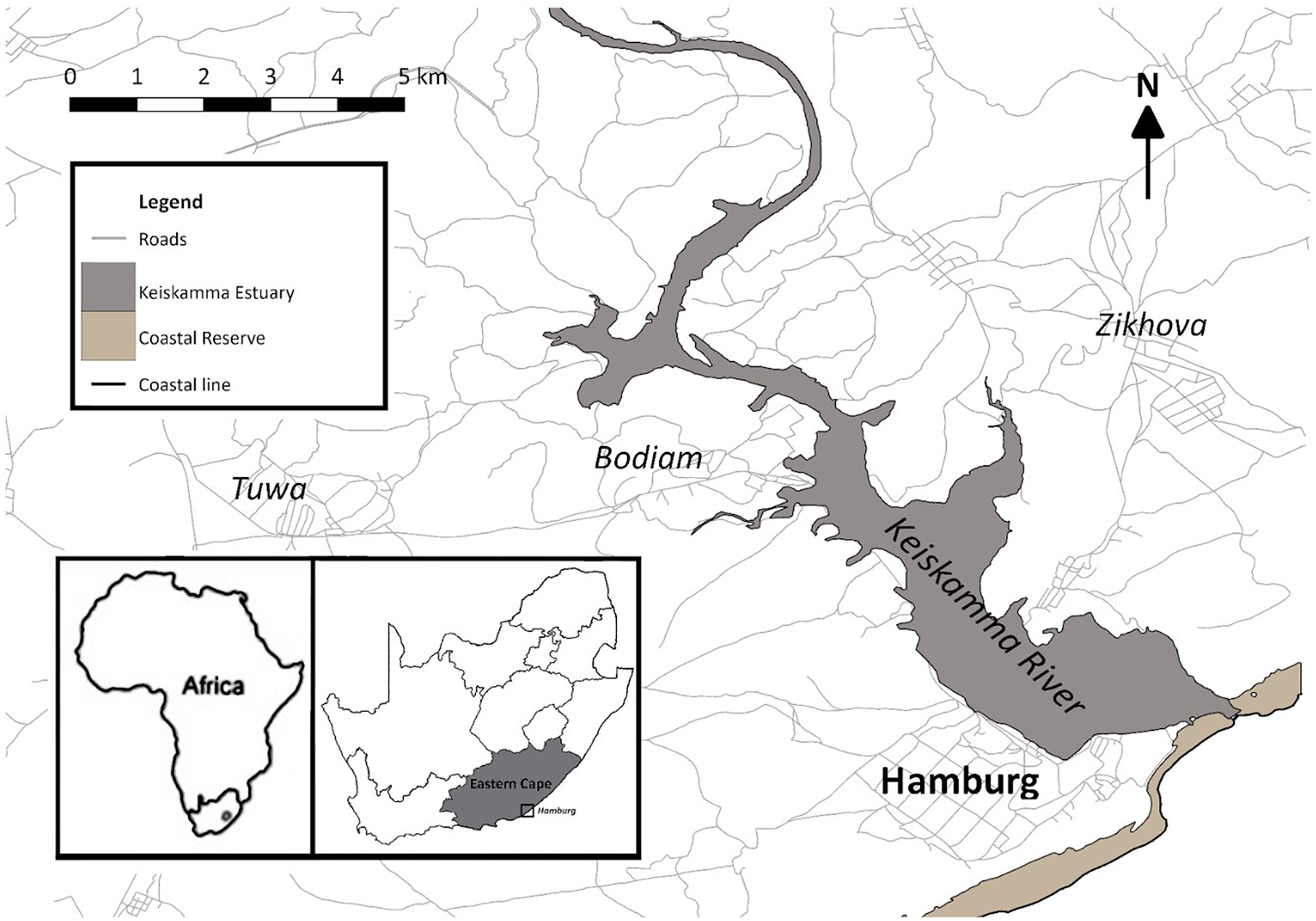
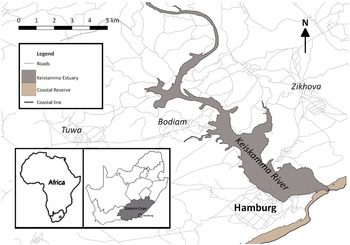
Within this framework, and in an attempt to fill some of the gaps articulated in this paper, a new, nonconforming research project (2022–2024) funded by the South African National Research Foundation, takes inspiration from both scientific and Indigenous synergistic practices to forge a collaborative partnership between scientists and members from a local rural community (Hamburg, Eastern Cape Province, Figure 1). Through the project, Indigenous Marine Innovations for sustainable Environments and Economies (IMIsEE project), natural woven biodegradable structures are co-created to retrofit the built coastal environment (small and large harbours) as well as two control natural rocky shores and tested for their short- to mid-term ecological functional value for early stages of marine species in urban settings located along one of the poorest provinces of South Africa, the Eastern Cape (Figure 1). The merging of scientifically innovative, eco-creative approaches and TCEs has the potential to sustainably and ethically improve the functioning and diversity of these urban habitats. As reviewed in this paper, testing of innovative nature-based designs to improve their surrogacy for natural marine organisms to thrive requires attention in coastal ecology. Yet efforts to undertake such testing are still limited, especially in developing economies (Shackleton et al., Reference Shackleton, Cilliers, du Toit and Davoren2021). Often, rural coastal communities are neglected, and left marginalised, at the expense of urban development, governance or blue economy initiatives (Cohen et al., Reference Cohen, Allison, Andrew, Cinner, Evans, Fabinyi, Garces, Hall, Hicks, Hughes, Jentoft, Mills, Masu, Mbaru and Ratner2019; Isaacs, Reference Isaacs2019). The IMIsEE project takes a much needed holistic approach that aims to combine urban and blue economy development, which often only has one tier, economics, with the needs of traditional rural communities (in the form of Indigenous knowledge and job creation), as well as increased biodiversity and ecological functionality in urban coastal ecosystems.
Geographic location of the Eastern Cape Province, where a component of the IMIsEE project is conducted, as well as the village of Hamburg, where the rural community is based.
Community participatory action: Benefit-sharing for real rural empowerment
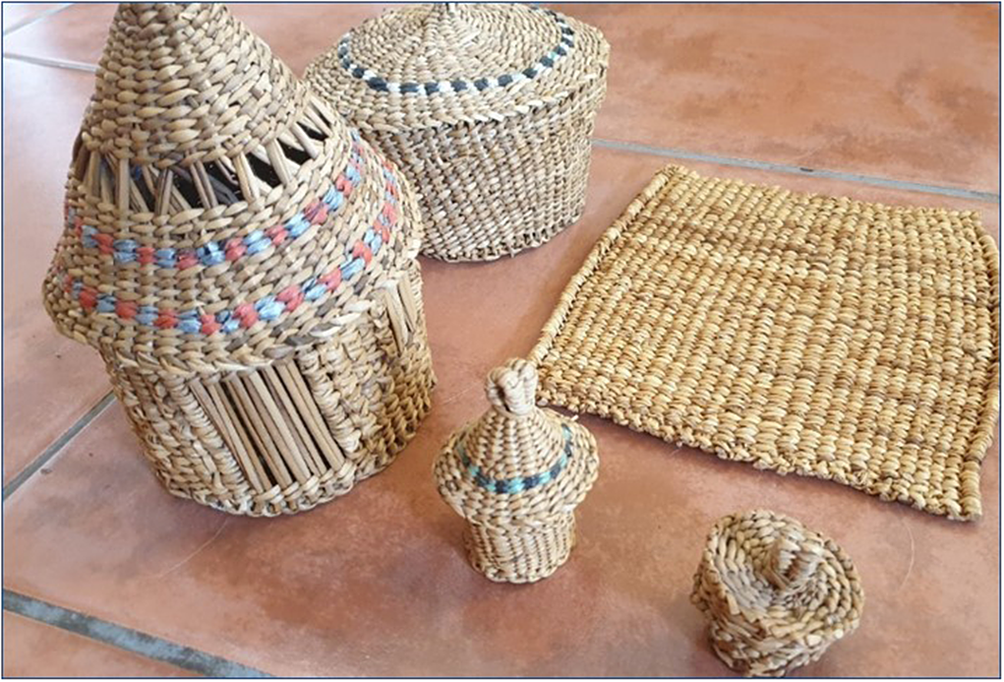
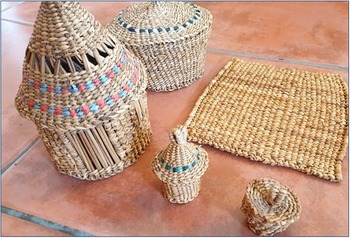
The material used to co-design and manufacture the nature-based structures for the IMIsEE project is the grass-like sedge Cyperus textilis (Cyperaceae), locally known as imizi. This fibre is widely used by artisanal crafters, mostly women (Makhado and Kepe, Reference Makhado and Kepe2006), in the rural areas of the Eastern Cape Province in South Africa (Figure 1), to weave traditional sleeping and sitting mats as well as baskets and serving trays (Fukweni, Reference Fukweni2009; Figure 2). Indigenous knowledge and specialised skills are required for the successful crafting of the woven structures required for this research and used to retrofit the built coastal environment. As such, women within the community, who are the traditional knowledge-bearers of the weaving practice, have the greatest influence throughout the project and will be the most empowered. Currently five women crafters (the number is likely to double) are involved in the production of the woven nature-based structures for the research, with the price per unit established through fair cost price analysis with representatives of the community.
Examples of woven crafted objects made using the plant Cyperus textilis, locally known as imizi (photo by: Francesca Porri).
The application of Indigenous knowledge for the co-creation of these low-tech, easily reproducible nature-based substrate alternatives may hence serve the bio-enhancing ecological needs while reducing social, especially gender-based, inequalities and alleviating poverty. Through the project, this innovation is already providing some economic upliftment to the second poorest province in the country and the worst national unemployment rate (47.1%), directly improving the income of several households within the Hamburg community and placing traditional knowledge bearers, mostly women in this case, at the epicentre of this creative production. Given that the artisanal practice of weaving is a dying practice, the intention is for the IMIsEE project to boost the heritage value of this local innovation while providing a benchmark for the direct (and potential future) economic empowerment of the rural Hamburg community, while ensuring active and valued participation of local communities as co-creators of innovative science and promoters of principles of conservation of coastal biodiversity.
Inclusive, democratic engagement with community partners to co-create the nature-based innovation is of primary importance and forms the foundation of this research. The 76-4project builds on a novel collaboration among three main institutional partners from the Eastern Cape Province in South Africa, namely the community-lead Keiskamma Trust, The National Research Foundation government facility, The South African Institute for Aquatic Biodiversity and the tertiary research and training institution, Rhodes University. The Keiskamma Trust is a non-governmental organisation (NGO) established in 2002, which aims at supporting vulnerable social groups. This NGO has a long lasting trusted relationship with the local communities around Hamburg, Eastern Cape, South Africa (33.2823°S, 27.4263°E; Figure 1). This reliable connection has been fundamental for facilitating the crucial engagement steps included in the first objective of the project (“Community participatory action and Indigenous pedagogies”), such as the selection of community participants (including ensuring gender equality), obtaining prior informed consents, and the drawing up of the necessary Memoranda of Understanding (MoU; see details below). The collaboration is ongoing and strengthened through a series of community engagements to help co-design nature-based structures and implement the project, and it was signed by an imbizo (gathering) during the first year (August 2022), where key representatives of the community and knowledge bearers gathered to sanction the project and co-participation. Sourcing of the woven nature-based structures has been signed by entering academic-community memoranda of agreement and Code of Practice (informed by the Global Code of Conduct for Research in Resource-Poor Settings; Schroeder et al., Reference Schroeder, Chatfield, Singh, Chennells and Herissone-Kelly2019), which includes drafting of Isi-Xhosa (the prevalent language in the region) translated informed consent for the key knowledge bearers, woman artisanal crafters. A key part of this innovation stems from the partnership between researchers and crafters, which is characterised by ongoing conventional and ad-hoc conversations as well as structured workshops, trials, the in-field deployment and retrieval of nature-based structures and the drafting of intellectual property agreements for potential commercialisation. This agreement ensures protection of this Indigenous innovation, while empowering local entrepreneurship. Depending on the success of this initial testing phase, the potential upscaling for commercialisation and hence patenting may be considered for large-scale positive income creation. Background consideration of intellectual property in the context of Indigenous knowledge has therefore also been carefully considered and transparently reflected into the MoU completed with the community collaborators and beneficiaries. Again, depending on the outcomes of this experimental pilot phase, scaling up may lead to uptakes by local industry stakeholders (Transnet National Port Authority [TNPA]) and policy makers (Department of Environmental Affairs). Importantly, the Indigenous knowledge bearers will be the direct beneficiaries of this innovative co-creation as well as recognised as knowledge-creators.
Indigenous pedagogies
As a link to sustainable knowledge development and community enrichment, the scientist- rural community partnership within the IMIsEE project also includes ecomusicological interventions. Ecomusicology is a key approach for this research and considers the relationships between culture, nature, music/sound, humans and to cross transdisciplinary boundaries. For Allen (Reference Allen and Gallagher2012), the educational benefits of ecomusicology include six key areas in the field: ecology and acoustic ecology/sound-scapes, biology and biomusic, anthropology and ethnomusicology, history and musicology, and sustainability and cultural studies of music. As one of the few ecomusicology projects currently underway in South Africa, a large part of this research is the exploration of the parameters of ecocritical musicology evaluated through TCE representations, including sounds, songs, music, fables, life-stories, handicrafts and individual narratives. This collection of TCE will be disseminated using various sonic approaches such as digital story-telling, podcasts, film documentaries, plays, poems, songs and digital soundscapes, co-created by the scientists, community members and musicians. Impact is expected to result in a sustainable interest in the community’s role in maintaining an ecologically efficient coastline as well as establishing the importance of Indigenous knowledge systems as a contemporary agent in societal reinvigoration. These outcomes will further create opportunities for transgressive teaching and learning (Allen, Reference Allen and Gallagher2012; Lotz-Sisitka et al., Reference Lotz-Sisitka, Wals, Kronlid and McGarry2015).
Indeed, our vision for inclusive and sustainable Indigenous performing arts pedagogies builds on transgressive learning. Through transgressive and eco-creative learning approaches, in parallel to the co-creation of the nature-based structures, researchers regularly engage with knowledge bearers, educators and learners to generate new forms of eco-knowledge and learning material through the science, arts and music. Researchers closely document testimonials throughout the co-design, manufacturing and testing of the nature-based structures. These interactions form the core mediators among all objectives of the research and will be translated into shared TCEs as transgressive pedagogical tools for communicable science. Transgressive eco-creative pedagogical intervention are aimed to empower the community and revalue Indigenous ways of knowing and being by giving the knowledge bearers agency as well as by disseminating the developing knowledge in accessible and creative ways. The value and sustainability of this kind of knowledge and pedagogical approach is incalculable. Pedagogically, the development of Indigenous and transgressive learning approaches adds to the emerging data on STEAM (Science, Technology, Engineering, Arts and Mathematics) learning education, a proposed goal of curriculum development (Barajas-López and Bang, Reference Barajas-López and Bang2018; O’Connor, Reference O’Connor, Corbett and Gereluk2020).
Knowledge production and dissemination in research have long treated local communities as informers rather than knowers and knowledge producers themselves (Lund et al., Reference Lund, Panda and Dhal2016; Lepore et al., Reference Lepore, Hall and Tandon2021; MacLean et al., Reference Maclean, Woodward, Jarvis, Turpin, Rowland and Rist2022). A fundamental problem is that South African educational structures inherited from colonialism are based on cultural values different from those existing in most African Indigenous societies, where education is still conceived through marginalising Indigenous cultural values and ways of teaching and learning into the education system at all levels (Masinire, Reference Masinire, Masinire and Ndofirepi2020). Using “call-and-response” singing in Africa as a metaphor, this research develops co-creating praxis in active pedagogy innovation by combining arts-based pedagogies and action research. The tradition of “call-and-response” singing, where a lead performer interacts with answering musicians, is deeply embedded in knowledge co-production as it values the relationships among people. This tradition is being translated in our project as valuing the relationship between nature and culture, between people and the ocean, between researcher and community, between heritage and innovation. One cannot exist without the other.
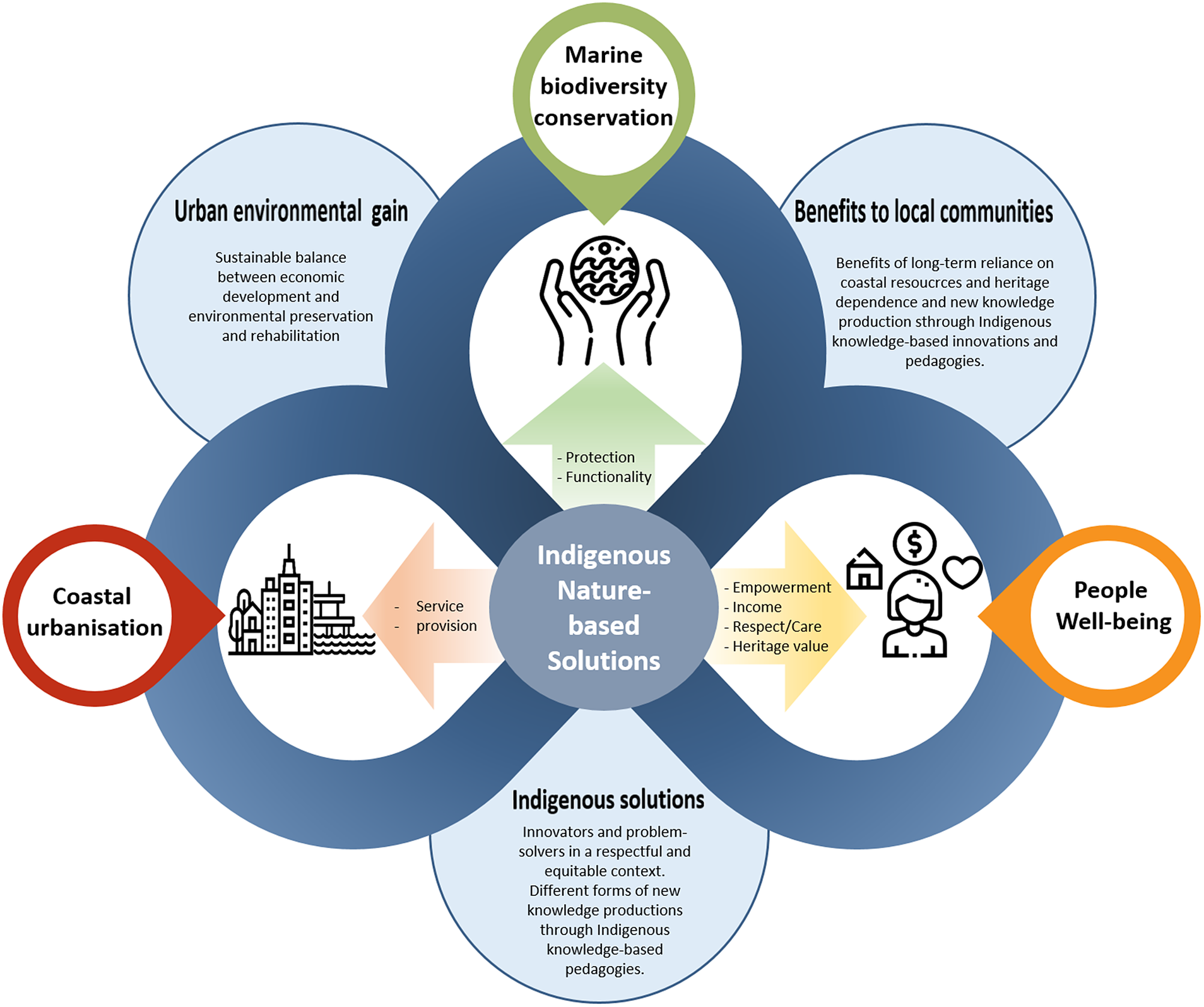
In addition, the research through the IMIsEE project supports the National Research Foundation Vision 2030 in addressing the strategic beacons of Transformation, Impact, Excellence and Sustainability (TIES; https://www.nrf.ac.za/wp-content/uploads/2021/03/NRF-Vision-2030_0.pdf). Through active, participatory community involvement, the promotion of gender equality, the implementation of transversal and experiential education practice, and sustainable, innovative outcomes, the IMIsEE project will produce sustained impact through responsibly driven, innovative transdisciplinary research, including the fields of science, music, heritage and Indigenous knowledge production and revaluation. This strong community-science tier has the ultimate potential to regenerate the coastal environment, while prospering human wellbeing and economic development. This delicate, yet much needed endeavour provides an example of how scientific Indigenous knowledge-based innovations can foster transformative change and reconcile the socio-economic, heritage and conservation interests in coastal systems, for the wellbeing of humankind and the strengthened resiliency of nature and society. Deeply founded in a TIES framework, through a nature-based solutions approach, the project ultimately tackles the intricate synergies of conservation of marine biodiversity, mitigation of the effects of coastal urbanisation and social needs.
Conclusions
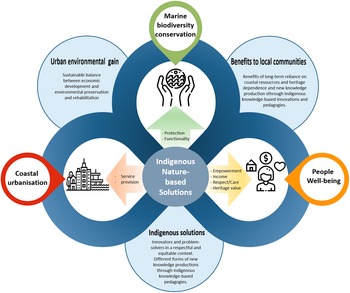
We regard this South African case study as an innovative and path-breaking regional roadmap that fills several of the gaps identified in this paper. It offers opportunities to shift mind sets and in doing so change narratives of research agendas in order to better integrate the needs of both the environment and people (Kelly, Reference Kelly2018). Through this paper and further research, an integrated outcome will be developed that holistically covers several dimensions and standards: implementation of novel designs, evidence-based quantification of methodologies, enhancement of coastal biodiversity, alignment of functionality of coastal urban systems, integrated action and assimilation of Indigenous knowledge, practices, legitimacy, derived pedagogies and cohesive safeguarding and respect of Indigenous People and local communities (Figure 3). Given the early stage of the project, we acknowledge the many risks and challenges that will result from its implementation, hence unlocking a further platform for lessons learnt, but we trust this perspective is timeous and valuable. While pioneeringly ambitious, we believe this inclusive and transparent framework is necessary to create new knowledge for a sustainable, long-term and empowering resolution of nature–human conflicts, which could further assist in shifting towards meaningful environmental perspectives, strategies, policies and good governance.
Integrated holistic framework for research on Indigenous nature-based solutions applied to coastal systems that covers multiple dimensions (coastal urbanisation, marine biodiversity, people) and gains (new designs; environmental gain; benefits to local, Indigenous communities).
Open peer review
To view the open peer review materials for this article, please visit http://doi.org/10.1017/cft.2022.10.
Supplementary material
To view supplementary material for this article, please visit https://doi.org/10.1017/cft.2022.10.
Acknowledgements
F.P. acknowledges use of infrastructure provided by the South African Institute for Aquatic Biodiversity Research Platform – National Research Foundation of South Africa. The authors acknowledge the community partner, Keiskamma Trust, Hamburg, South Africa.
Author contributions
F.P. conceived and wrote the bulk of the manuscript with contribution by B.M., K.-A.W., R.W., and P.P. All authors contributed to editing the manuscript. All authors have approved the contents of the submitted manuscript.
Financial support
Funds for this research were provided by the National Research Foundation (Grant Number 136486; Reference: MCR210218586984).
Competing interest
The authors declare no competing interests exist.
Ethics standards
Although the paper does not present unpublished data, the IMIsEE project is covered by animals (RU- 2022-5423-6632 – and SAIAB- 25/4/1/7/5_2022–04 – Animal Ethics Committees) and human (RU- 2022-4951-6722) ethics applications.


 Open access


Comments
Dear Professor Spencer,
Please consider our manuscript “Eco-creative nature-based solutions to transform urban coastlines, local coastal communities and enhance biodiversity through the lens of scientific and Indigenous knowledge” for publication as a review in Cambridge Prism: Coastal Futures.
This review examines the variety of ecological engineering and nature-based approaches considered to address the rehabilitation of urban coastal ecosystems and the resulting challenges and mitigating effects of armouring and habitat fragmentation. Through an original and innovative African case study, we propose an inclusive alternative and transdisciplinary framework for ecological engineering approaches, centered around Indigenous, nature-based solutions that potentially redress ecological crises and lead to new pedagogies. While ambitious, we believe this inclusive and transparent model is as central to the future of coastal biodiversity conservation as necessary to create transgressive attitudes for sustainable and long-term resolutions of sea-human conflicts.
We believe that the insights offered through this review are broadly relevant to the readers of Cambridge Prism: Coastal Futures because of the significance to assist in shifting paradigms towards meaningful environmental perspectives, strategies, policies and overall good governance.
This review is original and is not under consideration for publication elsewhere, nor has it been previously published.
Please consider this list below as a suggestion for potential reviewers for the manuscript.
1) Prof George Branch, mbranch@mweb.co.za
2) Dr Moises Aguilera: moises.aguilera@uai.cl
3) Dr Angela Impey, ai6@soas.ac.uk
Yours Sincerely,
Francesca Porri,