

Introduction
Death does not separate, death unites. Life separates.
Heinrich HeineThe artistic aspects of Chinchorro mummies have fascinated me for years. Their expressive faces, vibrant colours and intricate masks captivate me. Initially, scholars met my proposition to consider the Chinchorro as works of art with scepticism. However, prominent publications, such as the Atlas of World Art (Onians Reference Onians2004, 27), now feature brief descriptions of the Chinchorro, further validating the significance of their artistic legacy. Scholars have traditionally categorized the ancient Chinchorro culture, which settled along the Atacama Desert, as a fishing and gathering society (Arriaza Reference Arriaza1995; Marquet et al. Reference Marquet, Santoro and Latorre2012; Rivera Reference Rivera and Dillehay1995; Standen Reference Standen2003). This classification, based on subsistence, overlooks other vital aspects, such as their intricate worldview, artistic preparation of the deceased for the afterlife, and their early social complexity. The Chinchorro, as small-scale maritime communities, were not only skilled fishers but also master morticians and artisans. By employing carefully planned technological and social strategies, they transformed decaying corpses into iconic, artistic figures.
The elaborate and artistic nature of these mortuary practices raises fundamental questions about their significance and meaning. Ethnographic studies have shown that cultural responses to death vary widely, with hunter-gatherer societies often motivated by spiritual beliefs that prioritize respecting the deceased’s spirit rather than representing social hierarchy (see, for example, Carr Reference Carr1995; Marshall Reference Marshall1976). However, bioarchaeological studies suggest that early social differentiation based on hereditary social positions and economic ranking may have played a role in some societies (see, for example, the Russian Mesolithic cemetery of Oleneostrovoski mogilnik: O’Shea & Zvelebil Reference O’Shea and Zvelebil1984). Given these complexities, the Chinchorro’s intricate treatment of the dead demands further exploration, new explanatory frameworks and new propositions to uncover the underlying motivations and meanings.
Debating art in ancient cultures
A critical aspect of examining the artistic treatment of human remains among the Chinchorro is understanding the concept of art in ancient cultures—an issue that has sparked ongoing debate (Gell Reference Gell1998; Robb Reference Robb2017). Defining art poses challenges in both anthropology and archaeology. The Oxford Dictionary defines art as ‘the expression or application of human creative skill and imagination, typically in a visual form such as painting or sculpture, producing works to be appreciated primarily for their beauty or emotional power’. In some cases, art may refer to material culture, sparking minimal debate. For example, Marshall (Reference Marshall2023) synthesizes evidence of Neanderthal art from 57,000 years ago, focusing on the engraving of symbols such as lines, circles and dots. Alternatively, defining art can involve intricate analytical discussions and agency, as explored by Gell (Reference Gell1998) and Robb (Reference Robb2017), among others. Much like the saying ‘beauty lies in the eye of the beholder’, art exists in the mind of the interpreter. Cultural and disciplinary relativism therefore play a crucial role in shaping approaches to art. Consequently, the concept of art can range from a Western perspective of aesthetic appreciation to a contrasting view that encompasses all creative processes. As Robb (Reference Robb2017) notes, ‘the concept of art could be applied to almost any object or action, unbounding the category; art as aesthetic action is not a thing, but a way of doing’.
Synthesizing Robb’s (Reference Robb2017) definition, art in all societies should possess key elements, which include social value, aesthetic qualities, tangibility, display, contextual relevance, special treatment, meaning, and evoking emotional responses from viewers or users. In addition, the final product in art creation is not only important, but so are the collective process of cooperation that leads to its creation, and the relationship between the two as shown in the creation of image-objects in Tierra del Fuego (Fiore Reference Fiore2020). The technical process of image creation and the way users and viewers interact with them are connected through the images’ techno-visual and performance affordances (Fiore Reference Fiore2020). According to Fiore (Reference Fiore2020), economic, technological and cognitive factors interact to shape the creation of visual images. However, the focus here is not on whether ancient Andean coastal societies developed art in the Western sense, but rather on appreciating the creativity, artistic function and skills of the pioneering cultures that settled along the Atacama Desert. By studying the Chinchorro mummies from an artistic perspective, we can foster a deep connection with our shared human experience, revealing universal emotions that unite us, such as grief and joy. These aspects can reflect state of mind, creativity, consciousness and, above all, the feelings of those who created the mummies and the mourners contemplating the outcome of the unique sacred object/subject produced. Needless to say, one cannot escape the influence of our own agency in this argument, as most museums would understandably prioritize conserving a beautifully decorated body over a decomposing corpse.
Art and grief
Another key aspect of this inquiry is understanding how grief and artistic expression relate to each other. The loss of a loved one elicits highly variable responses, including a range of physiological and emotional changes (Weiskittle & Gramling Reference Weiskittle and Gramling2018). Specifically, the bereaved person navigates a series of stages, often categorized into multiple phases—typically between three to seven—including emotional shock, denial, anger, bargaining, depression, hope and processing grief, and acceptance (Kübler-Ross Reference Kübler-Ross1969; Oates & Maani-Fogelman Reference Oates and Maani-Fogelman2022). The bereaved will seek different mechanisms to alleviate suffering and regain their daily life. One of these mechanisms can be art therapy. From this theoretical perspective, engaging in artistic creative expressions can be an important tool to contribute to the healing process and mitigate emotional pain (Weiskittle & Gramling Reference Weiskittle and Gramling2018; Zahmatkesh et al. Reference Zahmatkesh, Siahkal and Alahverdi2024). Visual art provides a non-verbal outlet for processing intense emotions experienced after the loss of a loved one. Through artistic creative expressions, individuals can find a narrative or give existence to their life after a significant loss. This therapeutic art strengthens the sense of belonging and shared metaphorical discourse (Gutierrez Reference Gutierrez2018). Using this artistic view, art can provide a space of comfort for both an individual and an affected group. Even though the response to art therapy can be heterogeneous, participation in art-making activities during the grieving process can help channel and externalize emotional pain ultimately contributing to the healing process. Studies by Zahmatkesh et al. (Reference Zahmatkesh, Siahkal and Alahverdi2024) conclude that bereavement after abortion or intrauterine death can lead to high levels of anxiety and threaten a woman’s quality of life, and recommend art therapy as a beneficial approach for women who have experienced pregnancy loss.
This paper seeks to highlight both the artistic aspects of the Chinchorro mummies and their broader social meanings and connections to grief. To this end, I will address several key questions, such as, why did the Chinchorro mummify their dead? Who prepared the mummies? What can we say about the artistic aspects and the social complexity of Chinchorro society? What is the cultural significance of the Chinchorro culture for the Arica people today?
Finally, the focus of this paper is to explore arguments that position the Chinchorro mummies as artworks which may have buffered grief through the therapeutic process of their creation. This exploration will examine both the artistic and social perspectives that drove the development of their funerary art within the context of this complex hunter-gatherer society.
Background on Chinchorro
Prior to focusing on the artistic nature of the Chinchorro mummies, we must first consider the cultural context that enabled the development of artificial mummification among the Chinchorro people, including their natural environment and way of life. The Chinchorro settled in arid terrain with scarce water resources, yet small rivers like the Lluta, San José and Camarones brought life to the Atacama Desert, supporting their settlements (Fig. 1). The patchy distribution of resources and human curiosity probably forced them to explore surrounding areas, but their deep understanding of the natural setting enabled them to thrive.
Chinchorro sites, along the Atacama coast, main rivers, and details of manganese deposits along the Lluta River in northern Chile. (a) General view of the area; (b) strata showing darker area of minerals (manganese) in gravel from the Lluta Valley River mouth, at the coast; (c) sampling process of dark sediment from gravel deposits in the Lluta Valley, Las Colcas area, approximately 6.6 km inland. A close-up image reveals the naturally granular and small texture of the black manganese sediment sample.
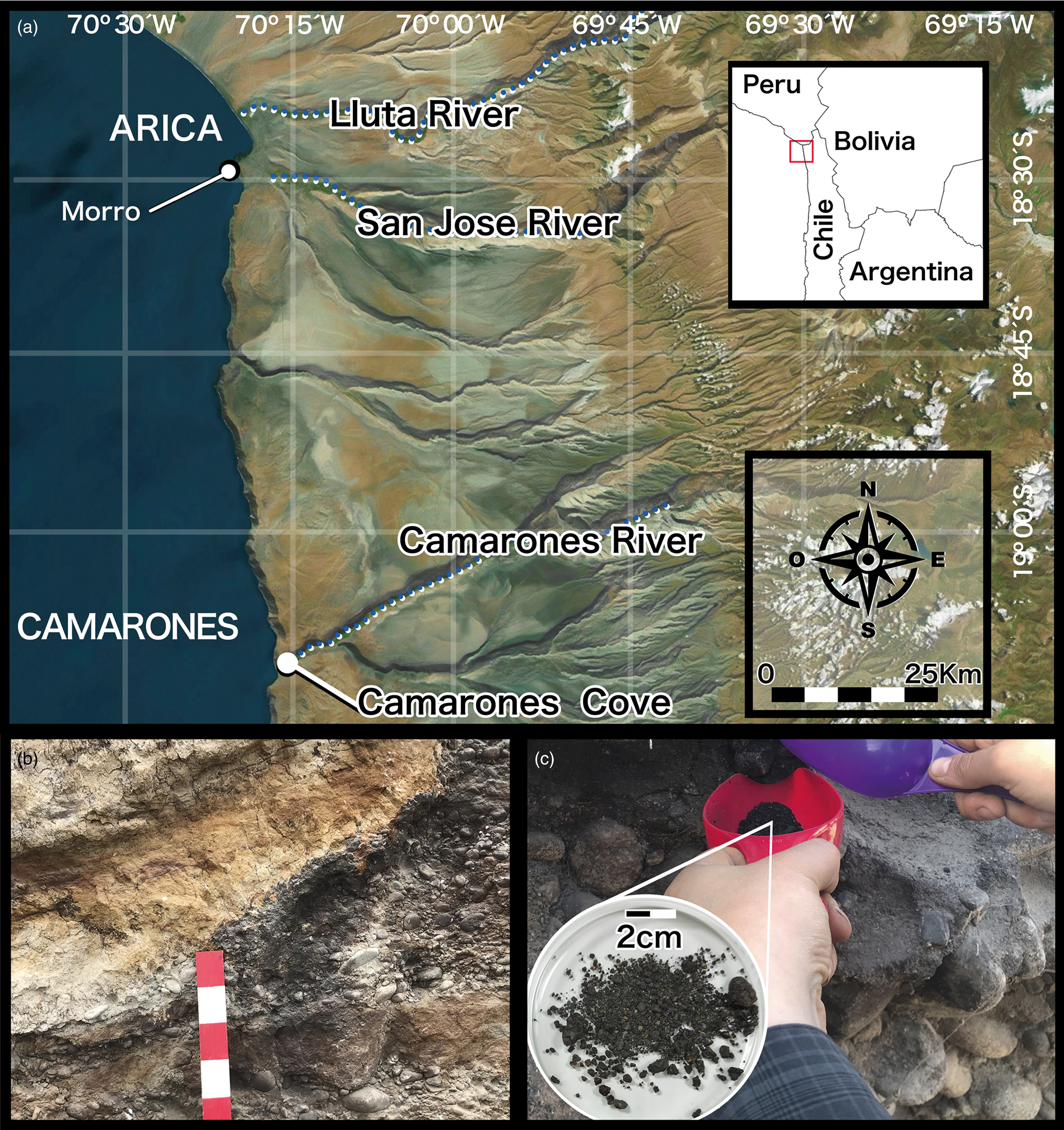
The Chinchorro are a highly dynamic groups of skilled fishers, artisans, and morticians who interacted extensively—and remarkably early—along the Atacama Desert coast. Archaeological evidence for this includes cemeteries, mummies and shell middens that vary significantly in size and depth (Castelleti et al. Reference Castelleti, Arriaza and Solís2024; Guillén Reference Guillén1997; Sandweiss Reference Sandweiss, Silverman and Isbell2008; Schiappacasse & Niemeyer Reference Schiappacasse and Niemeyer1984). These coastal populations undoubtedly shared mates, subsistence experiences, and must have had a complex social organization that enabled them to achieve their elaborate death rituals. In addition, their permanent coastal occupation allowed the Chinchorro to develop an intimate knowledge of the landscape and exploitation of natural resources, enabling them to procure essential materials for their elaborate mummies, including minerals for mortuary preparations (Fig. 1).
Notably, the Atacama’s extreme aridity, with annual rainfall of less than 3 mm, has preserved Chinchorro cultural remains, making them highly visible and accessible for study. Most Chinchorro sites lie along the slope of the coastal cordillera and came to light fortuitously due to city expansion. Researchers have not sought to survey and excavate the sites systematically, except in cases such as Morro 1 and Camarones sites 14 and 15 (Rivera Reference Rivera and Dillehay1995; Standen Reference Standen2003). As a result, we still lack detailed information on the spatial distribution of mortuary remains at most Chinchorro sites. Notwithstanding this problem, numerous studies have contributed to reconstructing their daily life, highlighting the Chinchorro’s continuous maritime dependence, diet, chronology, mortuary practices and early sedentism (Arriaza Reference Arriaza1995; Standen Reference Standen2003, among others). This prolonged coastal adaptation primarily involved hunting, and gathering coastal and maritime products. The Chinchorro complemented their subsistence with the use of riverine resources (Arriaza Reference Arriaza1995; Standen Reference Standen2003). The richness of the coastal-riverine environment permitted year-round occupation of the coastal landscape, enabling the Chinchorro to develop extensive manipulation and care of the dead, establish cemeteries and thereby have a lasting link to their ancestors and territory. Under this scenario, the intentional treatment of the dead to preserve their essence began in the Camarones cove area, c. 7000 bp, and declined approximately 3500 bp (variable depending on the region).
Archaeological concerns
Raw materials
To prepare the bodies for the hereafter, Chinchorro morticians used raw materials like clay, sticks and reeds. These materials were likely readily available, given the Chinchorro settlement along the Atacama coast, particularly near rivers that drain into the Pacific Ocean. Although the environment is dry overall, the surroundings provide ample natural resources for basic survival, such as fish, shellfish and sea mammals, as well as materials for mortuary ritual activities. Inorganic materials like iron and manganese oxides, and silicates, are abundant along river terraces and in the Atacama Desert landscape, useful for preparing the bodies. The riverine environment and coastal wetlands also offer abundant vegetation, such as Distichlis spicata, Typha sp. and Scirpus sp., which people used to make cords and twined mats to wrap the bodies. They also collected bushes like Tessaria absinthioides and Pluchea chingoyo, as well as trees such as Prosopis sp. and Schinus molle, for various purposes (Arriaza Reference Arriaza2016; Castelleti et al. Reference Castelleti, Arriaza and Solís2024; Santos & Standen Reference Santos and Standen2022).
Material culture
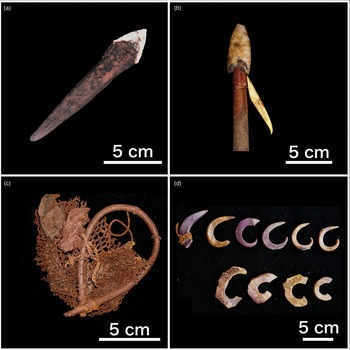
The material evidence found in Chinchorro sites reflects functional elements associated with coastal subsistence (harpoon heads, hooks, lines, weights, etc.), along with other items of body ornamentation (e.g. headbands, grass skirts) and miscellaneous products (Fig. 2). This material culture contributes to the understanding of cognitive practices in the manufacture of artefacts for subsistence or ritual purposes. From the list of artefacts mentioned above, a significant portion can be associated with mortuary rituals, especially during the final stage of mummy making, such as pestles for grinding minerals and small bags with pigments and brushes for painting bodies.
Chinchorro artefacts. (a) Knife; (b) harpoon head; (c) net bag; (d) fish hooks.

However, the evidence of the material culture of these populations alone is not adequate to comprehend fully Chinchorro’s highly complex treatment of their dead. Chinchorro populations, in general, present little evidence for specialized artefacts for the mummification process, either in mortuary contexts (offerings) or in domestic deposits (see Arriaza Reference Arriaza2016; Rivera Reference Rivera and Dillehay1995; Standen Reference Standen2003; Standen & Arriaza Reference Standen, Arriaza, Sanz, Arriaza and Standen2014; Reference Standen and Arriaza2016). Although many types of artefacts that have been found were no doubt used in mortuary preparation, they were likely not used exclusively for this purpose. Hafted knives, bifacial instruments, pestles for grinding minerals, bags with pigments, shells with mineral pigments, vegetable brushes, pointed sticks and awls represent 33 per cent (9/27) of the artefacts from 15 Chinchorro sites (Standen & Arriaza Reference Standen and Arriaza2016) which were undoubtedly used in mortuary preparation, but the evidence alone does not necessarily imply artificial mummification.
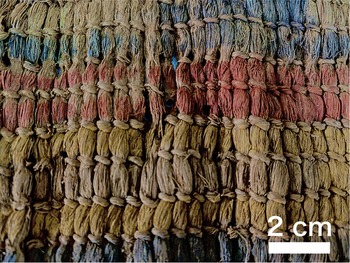
Researchers have reported widely the use of reed mats to wrap the deceased in Andean prehistory (Santos & Standen Reference Santos and Standen2022; Schiappacasse & Niemeyer Reference Schiappacasse and Niemeyer1984). In Arica, Santos and Standen (Reference Santos and Standen2022) identified plant fibre mats (Cyperaceae and Typhaceae) from funerary contexts at 12 archaeological sites. They found that artisans created 94 per cent of the mats using the twining technique and sewed the remaining 6 per cent, with the latter technique emerging around 4000–3500 bp. Approximately 23 per cent of the mats feature red and black painted areas and embroidered edges (Fig. 3). During the Early Archaic period (10,000–7000 bp), people commonly used checkerboard patterns and bicolour lines. In later periods, they added stepped designs, circular motifs, and embroidery along the edges (Santos & Standen Reference Santos and Standen2022).
Decorated reed mat.

Santos and Standen’s (Reference Santos and Standen2022) study reveals notable consistency in mortuary mat manufacture, with no discernible differences in age, sex, or production style. The authors suggest that individual artisans wove the mats. The key point is that, with access to abundant resources and permanent settlement, the Chinchorro had the time and means to engage in multiple social activities, including gathering and processing of reed fibres to aid in the complex preparation of the dead.
Cultural materials, body transformation and beliefs
To contextualize the essence of the raw and cultural materials, as well as the importance of Chinchorro mortuary rituals and their mummies in particular, it is essential to consider that in many non-Western cultures, non-human objects—animated or not—are often regarded as living entities and social agents. People believe that rocks, mountains, plants and animals possess their own power and energy. Objects also hold intentionality through their own agency, influencing the construction of social reality (Vigliani Reference Vigliani2016). Unlike the Cartesian dichotomy of body and mind/spirit, which confines spirituality exclusively to humans, non-Western cultures often see no such separation. In the ancient Andes, for example, people periodically exhumed mummies and offered the dead drinks and food, as they regarded the deceased as alive and vibrant (Guamán Poma de Ayala 1615/Reference Guamán Poma de Ayala, Murra and Adorno1980, among others). Under the stated scenario, the artefacts associated with body preparation were probably full of symbolic meaning and likely imbued with emotions and feelings during mortuary rituals. From a contextual point of view, the grave goods, either functional (e.g. a knife to open the body) or symbolic (e.g. a bag with pigment for the afterlife), I posit, ultimately mitigated social pain and made mourning more bearable.
Thus, one can propose that extraordinary care for the dead was central to the Chinchorro ethos, as it was for the Egyptians and the Toraja people of Indonesia, who view body preservation as a spiritual journey and a continuation of life (Crosta Reference Crosta2021; Ikram Reference Ikram2003). The object/subject as a mummy is a relevant ontological theme in Chinchorro culture, where mimesis is notably absent. Instead, the mummy transcends representation, embodying not just a likeness or imitation of the person, but the person themselves, thereby encapsulating personhood, ensoulment and the essence of Chinchorro culture. Without this cultural practice, Chinchorro social and spiritual life would lose its profound meaning.
The study of the Chinchorro mummies and their artefacts provides insight into the social persona, mourners and society and the creative nature of early hunters and gatherers. This, complemented by archaeological and bioanthropological research as well as microanalysis, provides solid evidence to reconstruct their ancient way of life holistically. As Buikstra (Reference Buikstra and Dillehay1995, 232) states, ‘The post-processualists have shifted the balance back to the mourners, sometimes to a fault, with the deceased becoming a shadow behind the political machinations of the living.’
Explanations for the emergence of artificial mummification
Non-regional origin
The origins of the Chinchorro’s unique practices have garnered increasing attention in recent years. There are several instances of archaic cemeteries in southern Peru (e.g. Villa del Mar, Kilometro 4, and Yara: Umire Reference Umire2013; Wise Reference Wise1999) and in Arica, northern Chile (Acha 2 and Acha 3) with pre-artificial mummification features (Muñoz & Chacama Reference Muñoz, Chacama, Muñoz, Arriaza and Aufderheide1993; Standen & Santoro Reference Standen and Santoro2004). These sites, that date to approximately 8000–9000 years bp, include bodies buried in an extended position, wrapped in reed mats and with minimal offerings. Although there is no evidence for artificial mummification practices at these sites, the type of inhumations, and fishing and gathering technology related to marine resources, link these sites to the Chinchorro way of life, reflecting ancestral populations that depended heavily on coastal and local resources.
Although some explanations for the development of artificial mummification may fall short, the main proposed hypotheses include external origin and local development. Rivera (Reference Rivera and Dillehay1995), a pioneer in Chinchorro studies, suggested that the origins of these practices might be linked to the Amazonian region rather than supporting local development. He based his hypothesis on evidence from grave goods and cross-cultural comparisons.
Considering the external origin hypothesis then begs the question, what is the relationship with distant groups, such as those from the Amazon? My view is that there may have been a connection with distant groups, but mainly towards the end of the Chinchorro complex mortuary practices (c. 3500–3000 bp), not at the beginning (c. 7000 bp), nor during its peak of social complexity (c. 6000–5000 bp). For example, Rivera (Reference Rivera and Dillehay1995, 50, 65) reported tropical feathers in Cam 15D, a site dated to 4240±145–2915±70 bp, which corresponds to the later phase of the Chinchorro period. Moreover, early southern Peruvian sites show no evidence of goods associated with the Amazonian region (Standen & Santoro Reference Standen and Santoro2004). Standen (Reference Standen2003), in her analysis of Morro-1—a classic Chinchorro site—also found no cultural evidence suggesting ties to Amazonian territories. Similarly, ancient mitochondrial DNA evidence (Moraga et al. Reference Moraga, Aspillaga and Santoro2001) indicates a genetic link between ethnographic populations from the Amazon and individuals from Chinchorro contexts but dating after 3800 bp. Therefore, it is plausible that the exchange of long-distance goods and people occurred, but towards the end of the Chinchorro period.
Local origin
This section presents a synopsis of the main argument for why artificial mummification developed. Losing a baby is arguably one of the most painful losses people can experience, and this raises questions about how the Chinchorro dealt with such unbearable loss. I have argued that this unexpected departure led to the development of artificial mummification as an emotional response to cope with the loss of babies (Arriaza Reference Arriaza2005). The elaborate post-mortem care of infants served as a means to assuage social grief and emotional distress, ultimately honouring and preserving the deceased. Similarly, Ramírez (Reference Ramírez2023) presents a healing hypothesis, arguing that ancient mummies, especially foetuses, had therapeutic and cathartic power as healing devices in post-partum rituals, aiding those parents suffering a child loss. I hypothesized Chinchorro artificial mummification practice originated in Camarones (Fig. 1), driven by arseniasis or chronic arsenic poisoning, and the resulting social grief. Chinchorro were probably the first population to settle, year-round, exposing themselves to toxic arsenic levels of 1000 µg/L—100 times the recommended limit of 10 µg/L. Many studies have found that arsenic significantly affected these populations (Amarasiriwardena et al. Reference Amarasiriwardena, Ahmed and Arriaza2023; Arriaza et al. Reference Arriaza, Amarasiriwardena and Standen2018; Swift et al. Reference Swift, Cupper and Greig2015).
Nearby valleys had better water quality, but Camarones’ women could have suffered frequent miscarriages due to arsenic contamination, probably causing immense suffering to parents (Arriaza Reference Arriaza2005). Toxic arsenic crosses the placenta affecting foetal development, causing natural occurring abortion and high infant mortality (Ahmad et al. Reference Ahmad, Sayed and Barua2001; Hopenhayn-Rich et al. Reference Hopenhayn-Rich, Browning and Hertz-Picciotto2000). Environmental factors such as arsenic contamination severely affected pregnancy outcomes, contributing to high infant mortality rates. In fact, Chinchorro infant mortality was approximately 26 per cent (Arriaza Reference Arriaza2016, 113), comparable to the mean rates of modern hunter-gatherer societies, which ranged from 14 to 40.5 per cent (mean = 26.8 per cent) (Volk & Atkinson Reference Volk and Atkinson2013). In contrast, agriculturalist societies had lower infant mortality mean rates, ranging from 11 to 53 per cent (mean = 20.6 per cent) (Volk & Atkinson Reference Volk and Atkinson2013). Cross-cultural comparison and evolutionary data from Burger et al. (Reference Burger, Baudisch and Vaupel2012) demonstrate a drastic decline in infant mortality across generations since 1900. Notably, small-scale hunter-gatherer society populations from around the world experienced infant mortality rates over 100 times higher than in modern countries like Japan and Sweden. To cope with the emotional and social impact of infant mortality, ancient populations around the world likely developed strategies such as specialized mortuary treatments and the burial of children within residential spaces (see Muñoz Reference Muñoz2017; Spano et al. Reference Spano, Grimoldi and Palamarczuk2014).
Grief most likely affected all society, thus to cope with the sorrow of losing their fragile infants, I argue that Chinchorro parents began transforming and ornamenting their beloved children with earth and sticks, essentially keeping them present. Over time, with subsequent generations, the decorating of the dead (painting, adding wigs, facial mask, etc.) became increasingly lavish and applied to all age categories.
Recent studies by Zhang et al. (Reference Zhang, Rigo and Su2020), which examined brain responses to infant facial expressions, demonstrated that new mothers exhibit greater brain activation in emotion- and empathy-related areas compared to nulliparous women. Mother–infant post-mortem care clearly triggers complex emotional responses, including distress and depression (Lykke et al. Reference Lykke, Ekholm and Schmiegelow2019). This behaviour, also observed in non-human primate mothers (Biro et al. Reference Biro, Humle and Koops2010), has a deep evolutionary history, influenced by both biological factors (e.g. hormones) and social factors (e.g. empathy). This interplay of elements contributes to the maternal care of deceased infants.
Another hypothesis that has been proposed for the development of Chinchorro artificial mummification is from improved climatic conditions and greater water availability (Marquet et al. Reference Marquet, Santoro and Latorre2012). According to the authors, these environmental changes led to population growth and increased mortality. They also argue that the extreme aridity contributed to the accumulation of naturally preserved bodies, which in turn shaped spiritual beliefs, perceptions and innovations, ultimately triggering the practice of artificial mummification. In brief, Marquet et al. (Reference Marquet, Santoro and Latorre2012) propose that intentional manipulations of the bodies arose stimulated by a significant visualization of naturally preserved bodies. Additionally, Santoro et al. (Reference Santoro, Rivadeneira and Latorre2012) argued that the extraordinary biomass production of the marine littoral was essential for the development and maintenance of the long-term social system developed by the Chinchorro. Rothhammer (Reference Rothhammer2014), in contrast, argues that Chinchorro mortuary manifestations originated without a utilitarian purpose and did not relate to the struggle for survival. However, he added, the prepared bodies contributed to prolonging their social death.
Expanding the arsenic hypothesis
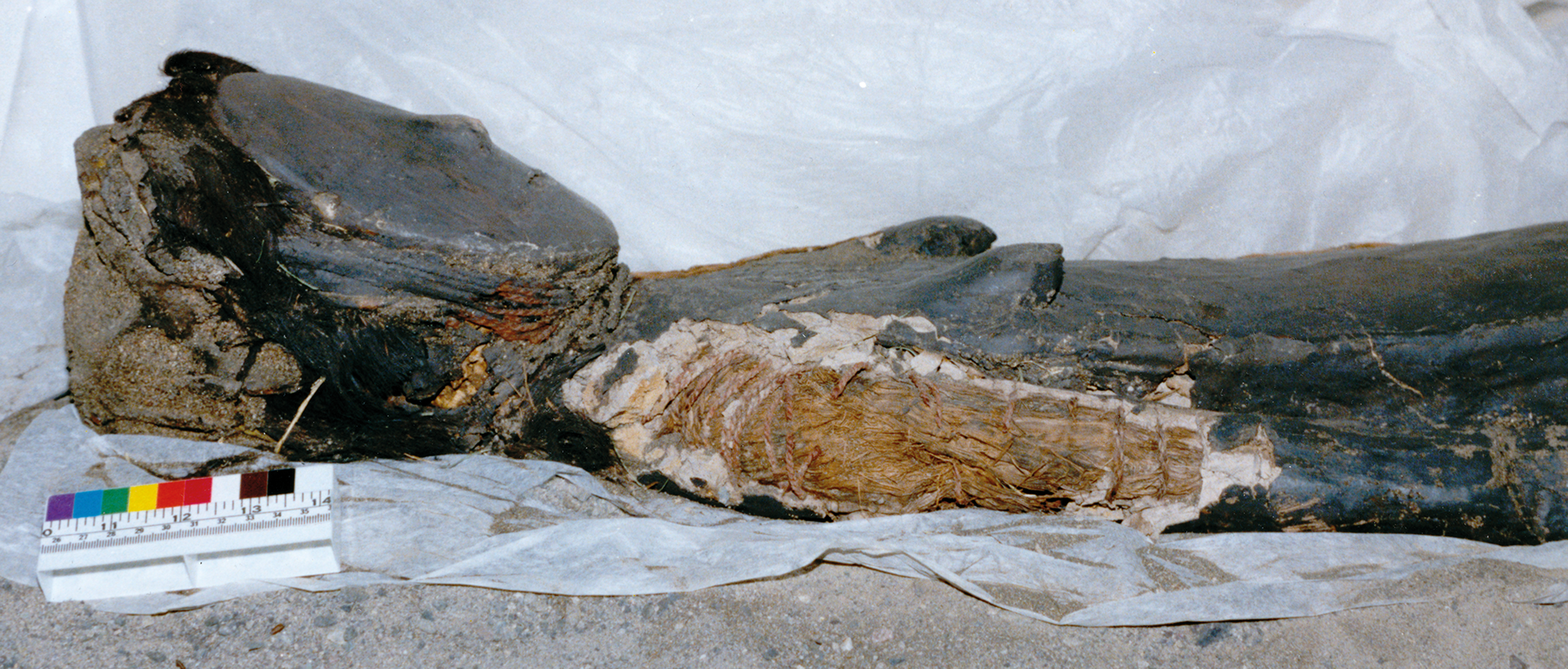
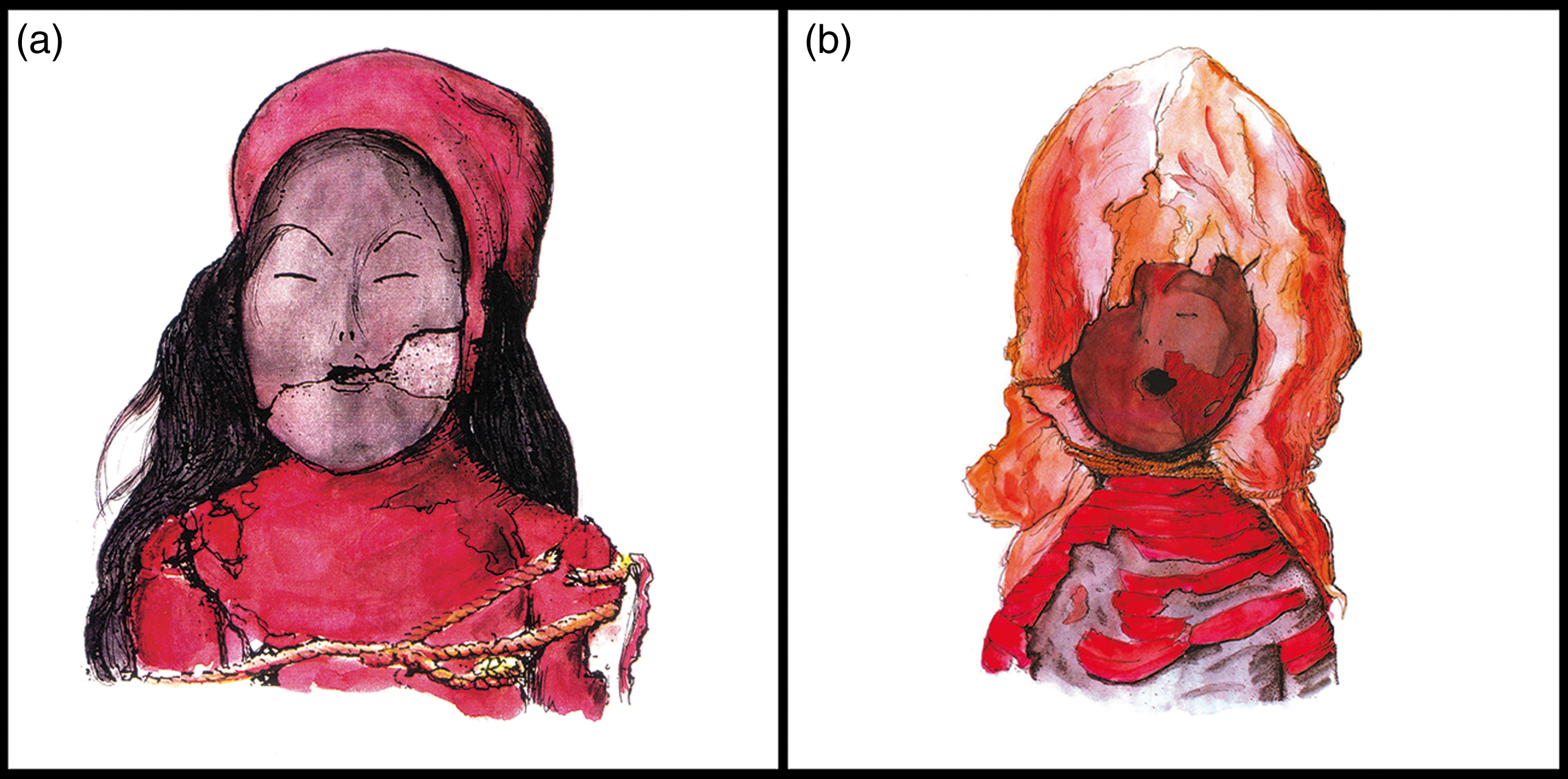
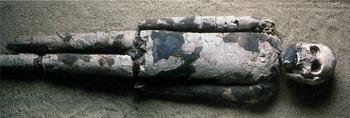
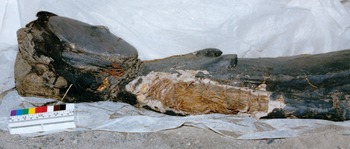
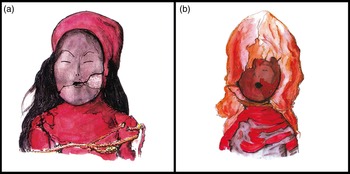
I further develop the arsenic hypothesis by presenting an artistic and functional component. I posit that the long duration of the Chinchorro mummies represents an early artistic and functional expression by the Atacama Desert’s complex hunter-gatherers, which will be explained in the following sections. The term ‘Chinchorro mummy’ refers here to bodies that were anthropogenically prepared, such as the black, red and bandaged mummies. The preparation of the dead was both specialized and a collective effort to mitigate grief. The creative aspects of Chinchorro mummy-making procedures implies that these mummies had significance as both objects and subjects. However, considering the chronological context, we need to keep in mind that not all artificially prepared Chinchorro mummies emerged simultaneously, but as a long cultural process. Archaeological evidence suggests a three-phase development: emergence (c. 7000 bp), peak/classic Chinchorro mummies (c. 6000–4000 bp) and a decline (c. 4500 bp). The following analysis focuses on the peak of Chinchorro social complexity, considering initial and declining phases likely exhibited less representative social cohesion, crafts divergence and unrefined mortuary treatment. The black mummification style (modelled bodies), which features an intricate bone, sticks, reeds and grey clay internal structure (Fig. 4), presents a deceptively simple exterior, with a uniform appearance of black manganese painting (manganese oxide) (Fig. 5). The black style began around 7000 bp and remained in use until 4500 bp, when the Chinchorro introduced the red mummification style, marked by stuffed bodies painted with red ochre (Fig. 6). The red mummification style lasted roughly 500 years and features striking visual displays (Arriaza et al. Reference Arriaza, Doubrava and Standen2005; Montt et al. Reference Montt, Fiore and Santoro2021).
Adult male mummy, artificially prepared in the black style, with external coating partially lost, exposing the underlying grey clay that modelled the body.

Adult female mummy artificially prepared in the black style. The right shoulder is damaged, revealing internal grey clay and reeds used to reshape the body.
Watercolour illustrations of vivid Chinchorro child mummies, showing (a) a red mummy and (b) bandaged style.
Who was making the black and red mummies?
Chinchorro elaborate preparations of the dead have received various terms in the literature, including ‘complex preparation’ (Montt et al. Reference Montt, Fiore and Santoro2021; Uhle Reference Uhle1922), ‘statues’ (Arriaza Reference Arriaza1995), sculptures (Ramírez Reference Ramírez2023), mixed media (Arriaza et al. Reference Arriaza, Hapke and Standen1998), effigy (Arriaza et al. Reference Arriaza, Figueroa and Ogalde2023), black, red and bandaged mummies, and variants (Arriaza 1995; Reference Arriaza2016), anthropogenic figures (Aufderheide et al. Reference Aufderheide, Salo and Madden2004), modelled and stuffed types (Montt et al. Reference Montt, Fiore and Santoro2021), and various other typologies (Guillén Reference Guillén1997; Llagostera Reference Llagostera2003). These terms emphasize the intricate and varied nature of the Chinchorro mortuary practices. The identity of the individuals responsible for creating the complex Chinchorro mummies remains unclear, with no definitive evidence indicating whether women or men were the primary morticians. However, I propose the tentative hypothesis that during the classic Black mummy period (c. 6000–4750 bp), women may have taken on the role of leading morticians, while men assumed main responsibility during the Red mummy period (c. 4500–4000 bp). This hypothesis draws from the fact that the earliest prepared bodies (c. 7000 bp) belong to newborns and infants, reflecting the deep emotional bonds and grief experienced by women in response to miscarriages (foetal death before 20 weeks of pregnancy) and stillbirths (after 20 weeks until birth). The complex treatment of foetuses and children most likely reveals the strong attachment of mothers to their offspring. As such, women were active participants and empowered in Chinchorro society, not merely observant of dying children. Additionally, we assume that women’s cooperative behaviours characterized the Black period, whereas during the Red period men could have taken leading roles, emphasizing visibility and bright colours as part of their inclination to compete and demarcate territory (see also Arriaza Reference Arriaza, Cockburn, Cockburn and Reyman1998, 190–97; Hapke Reference Hapke1996). We need to keep in mind that freshwater resources in this region are scarce and often of bad quality (Amarasiriwardena et al. Reference Amarasiriwardena, Ahmed and Arriaza2023; Arriaza et al. Reference Arriaza, Amarasiriwardena and Standen2018), which may have increased competition for better living environments and harvesting grounds. Thus, if population density increased as proposed by Marquet et al. (Reference Marquet, Santoro and Latorre2012) with a peak at about 4200 bp, competition for maintaining access to better resources, including freshwater availability and territoriality, may have also intensified. This could have made the highly visible red mummies a strong symbolic sign of belonging, display and territoriality.
Recent studies on Chinchorro overexposure to manganese reveal that women, like men, suffered significant levels of contamination—strongly indicating that women played an active and essential role in collecting, grinding and applying manganese during the mummification process (Arriaza et al. Reference Arriaza, Figueroa and Ogalde2023). Notably, using Atomic Absorption Spectroscopy analyses, 83.8 per cent (57/68) of Chinchorro mummies show endogenous manganese concentrations above 1 ppm (mean = 10.6 ppm, range 1 to 64.3 ppm) and 20.6 per cent (14/68) present manganese values of higher toxicity >10 ppm (mean = 29.1 ppm), with no significant sex-based differences, indicating equal handling and associated health risks for both women and men during pigment collection, processing and mummy preparation. In addition, the complex funerary treatment afforded to foetuses and newborns, comparable to that of adults, hints that the Chinchorro may have maintained a matrilineal organization. Consequently, women likely held significant empowerment and cooperative roles within their communities. Furthermore, craniometry studies (Cocilovo et al. Reference Cocilovo, Varela and Valdano2019) indicate that the phenotypic variance of coastal women in northern Chile populations is significantly lower than that of men, suggesting matrilocal descent due to the shared physical traits among women. In short, while current data suggest both sexes were exposed to manganese contamination, women and men likely had different leading roles in the artificial mummification practices, depending on the social dynamics of cooperation and competition prevailing at various stages of the lengthy Chinchorro cultural process. Future studies with new data and methodologies should test this hypothesis.
The artistic dimension of Chinchorro mummies
Bodily treatment
Here, I highlight various artistic aspects and procedures involved in the preparation of Chinchorro mummies across all ages and sexes. Several key features stand out, including internal and external treatments, colour selection and preparation, transitions between colour applications, and visual presentation. In general, Chinchorro morticians removed internal organs and sometimes defleshed the body. In later periods, they made incisions to extract major organs. Afterwards, they filled the body cavities with various materials—such as vegetal fibres, sticks, clay, and soil—to restore some of the lost volume. Then, morticians painted the body of the deceased with manganese and iron oxides.
They ornamented the head with a wig made of small bundles of human hair interlocked together (see Schiappacasse & Niemeyer Reference Schiappacasse and Niemeyer1984, 91). The added wig was simpler in black mummies, while in red mummies, it was more elaborate and longer, approximately 60 cm, held in place with a manganese paste that followed the head’s contours (see Arriaza & Standen Reference Arriaza and Standen2016, 125). Morticians paid attention to facial features also, modelling the eyes, nose and mouth. They also modelled the genitals for both sexes and all ages. For a detailed discussion of Chinchorro body treatment, readers are encouraged to consult the specialized literature on the multiple steps involved (Arriaza Reference Arriaza1995; Arriaza & Standen Reference Arriaza and Standen2016; Uhle Reference Uhle1922).
Colour preferences in Chinchorro mortuary art
The colours of mummy stuffing materials ranged from brownish/yellowish for the dried reeds and sticks to black, red, or whitish for the soils, minerals and clays. As stated above, morticians externally painted bodies black or red and, in one case, added black, red and whitish/yellowish stripes (Arriaza & Standen Reference Arriaza and Standen2016, 196–9). In a couple of cases, they decorated the faces of the mummies with whitish and greenish geometric designs (Arriaza & Standen Reference Arriaza and Standen2016, 192–5, 260–3). In the early period associated with the black mummies, morticians carefully painted the entire body with a thin layer of manganese and deliberately left the short wig uncovered. During the later period, morticians painted the whole body with red ochre (red mummies) and painted the face black.
Interpretations of colours and body treatment
Chinchorro morticians applied most of the filling materials to the corpse with little refinement. Most likely, the internal treatment may have conveyed a private message in the social reconstruction and transformation of the deceased—a hidden text decipherable by morticians and close relatives. In contrast, for external treatment (e.g. painting), the minerals were refined and of better quality, creating a paste to paint the entire body. This external artistic treatment, including colours and display, likely served as visual communication, conveying a message to a broader audience.
The raw materials themselves carried significance, with wood probably representing durability, clay signifying plasticity and transformation, vegetal and animal fibres the connection to the living world. Collectively all combined materials (organic and inorganic, plants, animals and minerals) permeated their essence onto the object/subject created.
Colours carried socio-cultural, political and ideological meanings that varied from culture to culture (Jones & MacGregor Reference Jones and MacGregor2002; Muro et al. Reference Muro, Nash and Gorman2023; Scarre Reference Scarre, Jones and MacGregor2002, 231; Turner Reference Turner1970). The primary triad of black, red, and white represents the earliest colours produced by humans, offering a classification of primordial reality. These colours are often associated with bodily fluids (Turner Reference Turner1970). Black often symbolizes death but also the transition to another existential stage. Red, as in many cultures, represents life, vital forces and transformation, while white can signify purity or a new phase of existence (Turner Reference Turner1970). Therefore, for the Chinchorro, these colours likely held profound social and spiritual significance, possibly representing notions of life and death, and reflecting their beliefs in eternal life and transcendence (Arriaza Reference Arriaza1995, 120). The colours of these mummies stand out vividly, like the phoenix rising from the barren desert. Thus, body treatment, colour selection, application and visibility suggest a search for multiple types of materials, preparation and, I argue, above all, emotional and cognitive factors that ultimately created powerful visual images of the dead to alleviate mourning.
Ultimately, the mummies embody the materialization of conceptual ideals, transforming intangible dreams into tangible realities. As stated by Montt et al. (Reference Montt, Fiore and Santoro2021),
These transformations provide archaeological links across several scales of human experience: individual, site and environment. In sum, funerary art is associated with diverse realms of human experience and offers insights into connections between the worlds of the living and the dead.
The Chinchorro provide a unique window into early artistic and symbolic manifestations of pre-Columbian America, specifically in maritime and hunter-gatherer societies’ mortuary practices. The Chinchorro mummies exemplify the Oxford ‘art’ definition, showcasing creativity (body transformation), artistic expression (body painting), aesthetic appeal (colour and texture), symbolism (colours and transformation of substance) and contextual significance (group burial and emotional connection) through their black, red and bandaged mummies, shedding light into our understanding of early pre-Columbian artistic expressions. Investigating the artistic capabilities of the Chinchorro as evidenced through the mummification of the dead sheds light on processual and non-processual aspects during the Archaic period. This perspective challenges traditional Chinchorro views that often minimize the artistic capabilities of early pre-Columbian societies, particularly ancient Andean hunter-gatherers, overlooking aspects like creativity and grief beneath the subsistence category.
Archaeology and emotions
Both biological and cultural factors shape emotions. While all babies cry to show distress, cultural norms can reshape this expression later in life. For example, hearing the phrase ‘men don’t cry’ was a common experience growing up in Chile. That is, emotions can be culturally modelled, suppressed, or enhanced. However, most cultures, if not all, experience sadness when a social member passes away. Grief is a universal emotion that connects us all, eliciting diverse responses, bringing people together and making social bonds stronger. Archaeology and mortuary studies offer a unique opportunity to understand human emotions in the past, including fear, grief, anger and compassion, among others (Baitzel Reference Baitzel2018; Reference Baitzel2022; Tarlow Reference Tarlow2000; Reference Tarlow2012). The study of archaeological context allows researchers to extrapolate cultural meaning and shed light on ancient emotional values. Material culture serves as a text to decode ancient emotions (Tarlow Reference Tarlow2012). Focusing on children’s funerary rituals including body and bundle preparation, interment, and remembrance as part of the entire process is a useful dimension to explore emotional response (Baitzel Reference Baitzel2018; Reference Baitzel2022). In her study of Andean grief in Tiwanaku society (1450–950 bp), Baitzel (Reference Baitzel2018) states, ‘The results display remarkable consistency in Andean childhood experiences, parent-child attachments, and socialization processes over the course of the last millennium’, underscoring the enduring strength of parent–child bonds and the evolving nature of parental roles across different stages of childhood.
Thus, this study will explore the Chinchorro mortuary art hypothesis within the theoretical framework of a medium to express and alleviate grief. To make a parallel, well- known artists have used the canvas to express their emotional and physical sorrow such as Frida Kalo (The Broken Column) and Edvard Munch (The Scream), for example. Mortuary treatments and death rites help alleviate grief and mitigate both personal and social loss. However, exploring the archaeology of emotions and grief through time can be challenging, as the evidence may be obscure or not necessarily reflected in the material culture. How did the Chinchorro express their grief? Their mortuary practices offer valuable insights into the emotional dimensions of death. As such, examining these practices provides a compelling framework for understanding their responses to loss.
Just as today we may be mesmerized and exclaim in awe upon learning that the ancient Chinchorro culture even mummified foetuses, likely the emotional response of the ancient Chinchorro people could have been similarly filled with wonder as they witnessed the final result of a ‘born again’ handcrafted body depicting vivid features (open eyes and gaping mouth). Chinchorro bodies, as complex cultural artefacts, may have embodied a duality of grief (at the time of departure) and happiness (at the time of final preparation and community presentation). Although this dichotomy represents two extremes, people likely experienced other emotions (e.g. anger, frustration) throughout the ritualistic process of caring for the dead. For example, ethnographic studies have reported that blaming each other and engaging in mock combats can be part of dealing with social pain, illustrating the complexity of emotional responses to death (see Wiessner Reference Wiessner1983).
The artistic dimensions of the Chinchorro mummies reveal a profound expression of cultural values and social meaning. Arriaza et al. (Reference Arriaza, Hapke and Standen1998) pioneered the investigation of the Chinchorro’s creative capacities, transforming decaying corpses into pre-Columbian art masterpieces. This work posited that the Chinchorro mummies constitute works of art, emphasizing their striking visual aspects, such as plasticity and variation, vibrant colours, and innovative mixed-media construction. In addition to the visual aspects of art, we use the term art here to refer to image-making as an expression of symbolic thought and consciousness, as discussed by Lewis-Williams (Reference Lewis-Williams, Cummings, Jordan and Zvelebil2014). Notably, the ancient Chinchorro people, despite lacking pottery, monumental architecture, and other cultural features suggesting centralized power and specialized labour forces, excelled in the elaborate treatment of their dead by creating artistic representations of the dead. This elaborate mortuary art treatment, applied to individuals of all ages and sexes, was central to their existence. The prepared body served as a canvas for expressing emotions, particularly grief, since morticians first applied artificial mummification to newborns and infants, as shown by the earliest evidence. However, grief was not limited to the death of children, but extended to the loss of any member of Chinchorro society.
Losing a loved one inflicts profound emotional suffering. Today, art therapy can also contribute to easing the emotional pain associated with the loss of a loved one (Weiskittle & Gramling Reference Weiskittle and Gramling2018; Zahmatkesh et al. Reference Zahmatkesh, Siahkal and Alahverdi2024). In addition to its traditional aesthetic and commercial purposes, art in stressful situations can also serve emotional and psychological functions, such as: a) appeasing grief by providing solace and comfort in times of loss; b) expressing and managing emotions, helping individuals process and cope with their feelings; and c) inspiring and motivating, by evoking a sense of empowerment and hope.
The Chinchorro expressed their creativity through the elaborate treatment of the dead and through other cultural materials, such as textiles used as funerary shrouds (Santos & Standen Reference Santos and Standen2022). Born out of grief, their complex mortuary practices formed a visual art that transformed the body into a vibrant mirror, a unique image, or sculptural portrait of the former self. Through this artistic process, the Chinchorro found emotional release, processing their social pain by ornamenting the departed body. I hypothesize that catharsis achieved through creative expression helped alleviate bereavement and sorrow. Consequently, Chinchorro mortuary art holds both functional and symbolic meaning, serving as a poignant testament to their emotional and artistic expression.
The function of the complex mummies
The meaning of the artistic value
Mummies are objects and subjects simultaneously. As an object, a mummy possesses its own physical dimensions and attributes. In contrast, a subject is an entity, a person that has its own self, identity, prestige, and agency. However, even today, treating mummies, as objects and property is complex legally and contestable (Chen Reference Chen2022). In the Chinchorro mummy case, after much energy expended, the final prepared bodies were not merely passive objects but, through their embellishment, transformed into active subjects or social agents. Similarly, in various cultures worldwide, such as ancient Egyptian, Inca and the Torajan today, the dead play a vital role in the social lives of the living. Thus, in the Chinchorro case, the living not only meticulously painted their mummies with black and red colours but also no doubt utilized the finished mummies as agency to evoke emotional responses, as vibrant object-subjects.
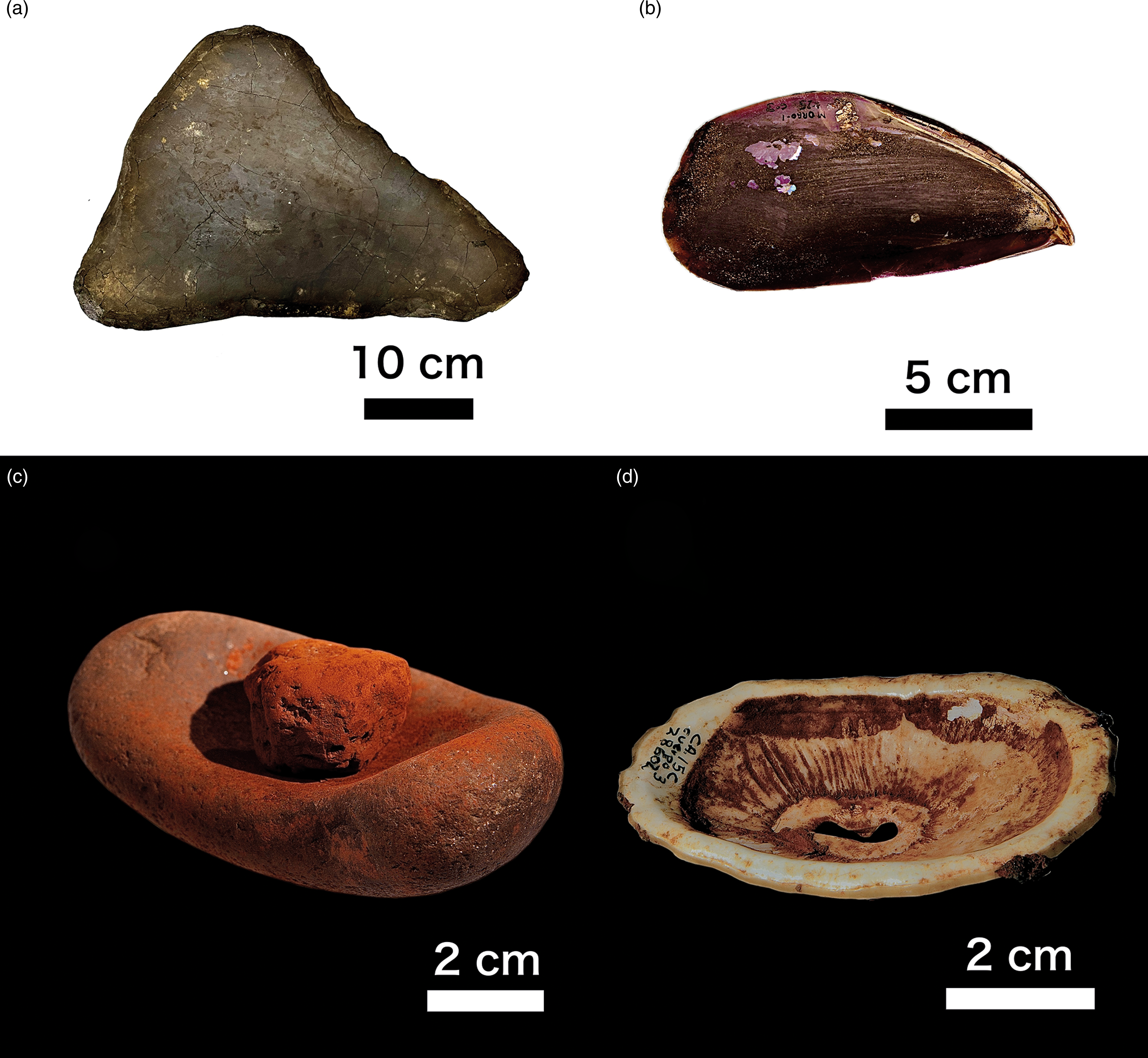
The Chinchorro mummies, as artful objects, reveal the technical expertise and creative expression of their manufacturers. The materiality of the mummies is striking, comprising human body tissue (e.g. bones, hair), natural fibres, animal skin, wooden sticks, clay and mineral pigments (Arriaza Reference Arriaza1995; Montt et al. Reference Montt, Valenzuela and Cases2023). Using simple tools and pigments (Fig. 7), expert artisans possessed the knowledge to transform raw materials into lifelike representations, demonstrating a high level of craft. Hypothetically, lightweight mummified children, as object-artefacts, likely facilitated short-distance transport during group movements, enabling their display in nearby public spaces to reinforce social bonds and cultural values. Moving bigger mummies, longer distances would have been more difficult considering their weight, and the raw clay used, making them more fragile.
Various artefacts with pigment residues that were used to ornament the mummies. (a) Flat stone for grinding manganese sediments; (b) Choromytilus chorus shell used as a container for manganese; (c) mortar for pulverizing red ochre (iron oxide); (d) Fissurella sp. shell used to hold iron oxide pigment.
Gone but not forgotten
Chinchorro mortuary art has a longue durée, representing ancestor worship and conveying spiritual significance. Chinchorro mortuary art provides emotional comfort and cultural identity to Chinchorro groups. It is probable that generations passed down artistic skills through apprenticeships or family ties. Through these rites and ceremonies, the Chinchorro likely found cohesion and unity after losing a beloved member. Mortuary art brought together the deceased individual and the community. It also may have served as therapy to process painful emotions of losing someone, transforming the departed into beautifully decorated bodies or even alleviating parent losses (Ramírez Reference Ramírez2023). The permanent mummy, akin to a statue or sculpture, honoured the deceased. Although the individual was gone, the community likely did not forget them; instead, they probably reintegrated the person into the realms of the living, fostering permanent emotional attachment. Through body maintenance (e.g. retouching), the community preserved connections with departed loved ones. As stated by Montt et al. (Reference Montt, Fiore and Santoro2021), this longue durée and different modes of social engagement (e.g. visibility, display, funerary goods, choice of materials) of the dead was dynamic: ‘This involved a twofold process of embodiment within the treated bodies: “invisible plastic”, in which the complexity of producing corporeal volume decreased over time; and “visible plastic”, in which the complexity of external body treatment using animal fibres increased over time’.
As subjects, the Chinchorro mummies embodied the social persona of the deceased, conveying status, age, and gender through varied mummification styles. They likely expressed social belonging through distinct funerary traditions that may have reflected kinship ties and community affiliation. The mummies’ social meaning extended beyond individual identity, encapsulating cultural values, and probably mythological narratives, and ancestral heritage, as there are regional and temporal variations in the mummy features. Probably the Chinchorro mummies served as agents of social memory, linking the living to the realms of the ancestor and reinforcing and potentiating biocultural continuity (Arriaza et al. Reference Arriaza, Hapke and Standen1998; Montt et al. Reference Montt, Fiore and Santoro2021). The finished mummy represents the individual in another social dimension. However, its mummification and placement near camps reflect the dead’s participation in the living’s affairs. Variables like retouching, shallow disposal, spatial arrangement and lifelike facial expressions convey the dynamic interplay between the dead, the living and the environment. Ancestors, now beautifully mummified, had the function of mitigating social pain, alleviating mourning and remaining integral to community life, neither forgotten nor abandoned. They facilitate more than symbolic dialogue between the dead and the living, serving social and emotional functions likely evolving across generations and millennia of mummy preparation. According to Rothhammer (Reference Rothhammer2014), these practices aimed not only to preserve the body from decomposition, but also to beautify and display it, thereby prolonging its social death through continued interaction with the living.
Mortuary rites and community participation
Rites of separation
Death creates social chaos, and rituals contribute to regaining the balance of life. Perceiving the death ritual as a rite of passage, we could examine the social and ideological aspects of death through post-processual perspectives. This includes understanding death as a paramount social event, comprising three stages: separation, transition (liminality) and reintegration (Fig. 8). This rite of passage parallels the grieving process of denial/numbness, grief, struggle, and acceptance as basic sequences of emotional reactions while coping with bereavement, as debated by Rosenblatt et al. (Reference Rosenblatt, Walsh and Jackson1976), among others. Hypothetically, we could envision the following steps during the Chinchorro ritual.
Stages of mortuary rites, comprising body separation, preparation and presentation to the community.
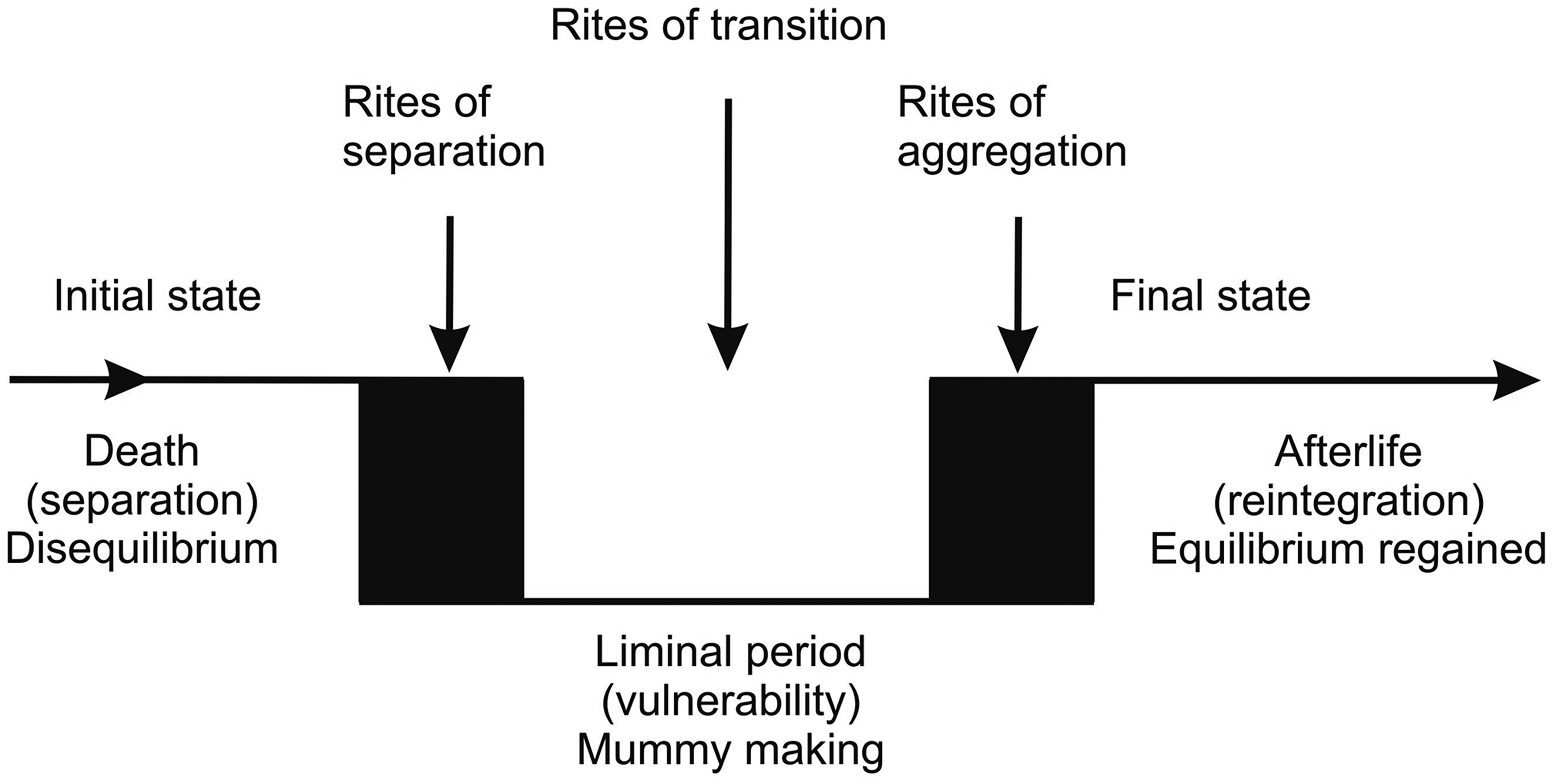
Following a death within Chinchorro culture, there is a physical and emotional separation of a member of the community. At this separation stage, the mourners laid the body to rest, initiating the mummification process. It is reasonable to propose that, at this moment, the living could have undertaken tasks such as exploring the landscape for raw materials (pigments, clay, reeds), preparing pigments (through grinding and sifting) and assembling mortuary toolkits, crafting mortuary shrouds and gathering family members and expert morticians. All this implies energy investment, commitment and labour organization that is becoming visible in the archaeological record.
Rites during uncertainty
During the liminal stage, the community carried out the mummification process on the body. At this stage, society as a whole faces uncertainties. It is likely that, through mortuary treatment, the living separate both the dead and the mourners from everyday social life. I imagine that specialist morticians become the centre stage, performing intense body treatments, including internal and external treatments, organ removal and volume replacement with clay or soil, and pigment application. For the community, it is a time to reflect on roles and human existence, and initiation time (Turner Reference Turner1970, 105). Towards the end of the mummification process, I propose that four activities became central to the Chinchorro ritual: adding a wig to the body, symbolizing unity with community and relatives; modelling sexual characteristics, emphasizing fertility and procreation; crafting facial features that convey vitality and the individual; and painting of the corpse, symbolizing unity with the cosmos and transcendence. These features collectively restored the individual’s identity, showcasing delicacy, craftsmanship and intergenerational transmission of artistic knowledge. Notably, the mummies (as artificially prepared bodies) have bones in anatomical position, with minimal bone loss from the preparation process, and intricate preparation details, demonstrating remarkable care, skill and anatomical knowledge. The Chinchorro were expert thanatologists. This suggests that knowledge transmission across generations may involve memory narratives that downplay negative emotions and grief, instead emphasizing positive aspects such as aesthetic and bodily transformations (e.g. decorative and permanent body representation).
It is interesting, that in one notable case from the Camarones area, Santos and Standen (Reference Santos and Standen2022) describe a mat that covered a multiple burial, featuring decoration that ends precisely where the mat wraps around the bodies. They argue, therefore, that people applied the paint after depositing the bodies. This case offers compelling evidence that may reveal specific aspects of the mortuary ritual and its closing processes.
Rites and the grand finale
During the reintegration or closure stage, the intricate mummification process would have ended, transforming the decomposing body into a statue-like figure or sculpture that blurs the boundaries between life and death. At this point, the main artistic process of mummification had been completed. It is likely that master morticians, accompanied by their apprentices, transported the mummified body to its resting place for final rituals. This stage implies reintegration of the dead to the realms of living and the ancestors. It was the grand finale for the living and for the dead.
Funerary ceremonies and communal feasting with the dead are common practices in many cultures (Dillehay Reference Dillehay1995; Metcalf & Huntington Reference Metcalf and Huntington1991; among others). Rituals bring people together, allowing them to reassess social roles, honour their ancestors, reaffirm group unity and lineage and create social memory. As Hastorf (Reference Hastorf2003) states, ‘Ceremonies create communitas as they construct social identity and delimit a corporate group.’ In Chinchorro culture, the community most likely received the finished mummy as a tribute to the deceased and a way to reintegrate mourners. A ceremony that, in its ultimate form, empowered the living, making Chinchorro families become stronger; after all, whoever holds the body holds the power. The community came together to feast with the dead, creating a moment that needs to be teased out in the archaeological record. As Baitzel (Reference Baitzel2022) notes, ‘The archaeological study of memorable events that would have produced episodic memories, such as communal events and rites of passage, becomes essential to approximating identity formation and memory making.’
Deposited in shallow places, the vivid and colourful mummies show signs of exposure, repainting and retouching, most probably to emphasize their perceived status as living entities, their centrality to the living and the extension of their social death (Dillehay Reference Dillehay2012; Marquet et al. Reference Marquet, Santoro and Latorre2012; Rothhammer Reference Rothhammer2014; Sepúlveda et al. Reference Sepúlveda, Arriaza and Standen2015). Mummification and disposal of the dead also implied territory and belonging. In Buikstra’s words (1995, 237), ‘both the elaborate Chinchorro mortuary ritual and the development of formally bounded disposal areas appear to be symbols of corporate rights over resource use and /or control’. Moreover, each mummy, distinct and irreplaceable, represented a former self, reflecting the culture’s enduring reverence for life, death and legacy. Death can create social chaos; thus, one could argue that the performance of these mortuary rites serves to strengthen social bonds and restore social harmony within Chinchorro society. In the circle of life, in the ultimate instance, death brings people together, in Heine’s words—death unites. These mummification processes enable individuals to experience and process their emotions fully, rather than disenfranchise their grief (sensu Doka Reference Doka1989), where mourners are deprived of proper catharsis. Ultimately, I propose that the Chinchorro’s powerful visual images of the dead facilitated a collective healing process by preserving both the body and social memory.
The health risk of ornamentation of the dead
For the Chinchorro, manganese was a highly desired black pigment used to prepare the body for the hereafter. However, exposure to manganese dust is highly toxic, posing significant neurological risks, as it can enter the body through the respiratory tract, reach the bloodstream and brain, and cause multiple disorders. In fact, prolonged over-exposure to manganese produces manganese madness and a Parkinson’s-like manganism syndrome, characterized by psychosomatic disorders including pathological laughter, hallucination, aggressiveness, compulsive behaviour and abnormal postures, a fixed gaze, irritability, memory disturbances, walking problems, hypertonia, muscle pain, limb stiffness, involuntary movements, facial spasms and ‘masked facies’ or loss of facial expression (O’Neal & Zheng Reference O’Neal and Zheng2015; Rodier Reference Rodier1955). In Rodier’s (Reference Rodier1955) words, affected people developed ‘a facial expression at once jovial and fixed, which gives the patient a dazed appearance’.
The mummy’s gaze parallels the face of a person affected by manganism. Pregnant mothers and children living near high-manganese mining areas may also face risk of cognitive impairment (Gunier et al. Reference Gunier, Mora and Smith2014; Menezes-Filho et al. Reference Menezes-Filho, Novaes and Moreira2011; Riojas-Rodríguez et al. Reference Riojas-Rodríguez, Solís-Vivanco and Schilmann2010; Solís-Vivanco et al. Reference Solís-Vivanco, Rodríguez-Agudeloa and Riojas-Rodríguez2009). Mining activities have historically been associated with numerous health risks and side effects, including respiratory problems, cancer and other occupational health hazards due to exposure to toxic substances and harmful environments (Arriaza & Galaz-Mandakovic Reference Arriaza and Galaz-Mandakovic2022). For example, miners in Corral Quemado, Chile, suffered severe manganese poisoning, experiencing mood changes and speech and psychomotor problems. Despite knowing the risks, they continued working under harsh conditions due to economic necessity (Arriaza & Galaz-Mandakovic Reference Arriaza and Galaz-Mandakovic2022). The Chinchorro people were likely oblivious to the dangers of manganese when they first started using it.
Handling minerals can be hazardous for artists as well, and pigment poisoning is not unique to the Chinchorro. It is worth noting that artists who work with heavy metals in their paintings often experience significant health declines due to metal poisoning (Cipriani et al. Reference Cipriani, Cipriani and Picchi2018). For example, renowned painter Goya may have unknowingly suffered from lead poisoning while preparing paints. Lead exposure can cause health issues like melancholy, colic and central nervous system damage, often leading to a decline in artists’ health (Cipriani et al. Reference Cipriani, Cipriani and Picchi2018; Montes-Santiago Reference Montes-Santiago2013). Chinchorro mining of manganese and ritualistic activity to honour their dead may have come at a steep price. Working with manganese may have presented an occupational hazard in antiquity for the whole Chinchorro community, not only those involved directly with the manganese chaîne opératoire. In fact, about 21 per cent were over-exposed to levels of higher toxicity (≥10 ppm) (Arriaza et al. Reference Arriaza, Figueroa and Ogalde2023). I hypothesized that the Chinchorro people, recognizing the harmful effects of manganese, gradually phased out its use.
Notably, in the red mummies, the Chinchorro applied manganese only to the head. This drastic colour change from black to red, around 4450 bp, may reflect the creation of new identities, shifts in leadership, social competition and changes in the symbolism and meaning of colour. The red mummies were now highly visible, marking a stronger presence and territory. The corollary is that the Chinchorro had a fascination with manganese, which may ultimately have become their Achilles’ heel, contributing to the decline of their sophisticated mortuary practices.
Final remarks
The Chinchorro were versatile people, expertly skilled as fishers, weavers, artisans, morticians and pigment miners. They possessed not only the cognitive capacities to harvest from the sea and manufacture tools, but the ability to express their creativity and spiritual beliefs through the artistic manipulations of the dead.
The Chinchorro faced high infant mortality rates, making child loss a significant concern for mothers, parents and close relatives. In this harsh desert environment, the emotional toll of losing a child likely weighed heavily on families, reflecting the deep investment required for survival. Chinchorro women probably played a vital role in social and family organization, given the nature of childcare. Notably, the Chinchorro took great care in treating the remains of premature and stillborn infants, likely ascribing personhood to the unborn and treating them similarly to older infants, children and adults. The use of wigs made from relatives’ hair on some mummified babies suggests a deep sense of mourning and care. Future aDNA studies may uncover the genetic relationships between the wig donors and the mummified infants.
Over time, the Chinchorro people made the complex preparation of the dead a central practice, applying it to all ages and sexes. Chinchorro people transformed decaying bodies into permanent artistic structures, or artistic images of the dead, honouring beloved members of their community. This gradual process involved intensive body modification using whitish (silicate), black (manganese), and red (hematite) colours. These earth pigments were carefully mined, processed and applied, complemented with reeds and sticks, to create mixed-media, functional, colourful and complex statues or sculptural forms.
These artistic mummification processes may have helped to minimize the social pain of the parents and their family. This cooperative and specialized endeavour showcased the creative prowess of early complex hunter-gatherer-fisher-miner societies. The transformed bodies and their display likely held special significance within their community, transcending mere mortality. It seems that through their mummification practices, the Chinchorro sought continuity with life, turning the dead into extensions of the living and active social agents. The preserved bodies, encased in reed textile shrouds, hypothetically became living objects-subjects—revered ancestors—conveying visual, symbolic and spiritual meaning. This understanding underscores a profound and unique aspect of Chinchorro ontology, where the distinction between the living and the dead, and between the original and the representation, becomes significantly blurred.
However, the extensive use of the black manganese pigment to prepare the dead may have led to health issues, including ‘manganese madness’, affecting a significant segment of the Chinchorro population. Future studies should investigate whether manganese pollution could have played a role in the violence seen in Chinchorro society (Standen & Arriaza Reference Standen and Arriaza2000), offering a fascinating intersection of environmental science, neuroscience and anthropology. The mineral they loved so much to paint the bodies with may have become the sword of Damocles that threatened their very existence. This likely prompted them to gradually shift away from and eventually abandon their elaborate preparation of the dead. Additionally, cultural changes (such as horticulture) and new population dynamics also contributed to the ultimate abandonment of these unique mortuary practices.
Today, the Chinchorro mummies warrant significant attention, not only as the oldest intentionally preserved human remains, but also as remarkable artistic achievements. Their artistic significance has transcended academic discourse, capturing the social imagination of the broader community and gradually becoming integral to northern Chile’s collective identity. This phenomenon is now reflected in a wide range of expressions, including murals, streets named after this culture, many cultural organizations taking the Chinchorro name, souvenir production, comics, songs, theatre performances, novels (see Lagos & Arevalo Reference Lagos, Arevalo, Arriaza and Standen2016) and large-scale sculptures, such as the one made by Paola Pimentel and Johnny Vasquez in 2010, reflect this (Fig. 9). On its posterior side is the following inscription, which translates to:
“The Chinchorro mummies are the earliest known funerary artworks in the Americas”
Quotation from Bernardo Arriaza, physical anthropologist
Modern Chinchorro-inspired sculpture at Camarones Desert Cove. (a) Front view; (b) rear view.
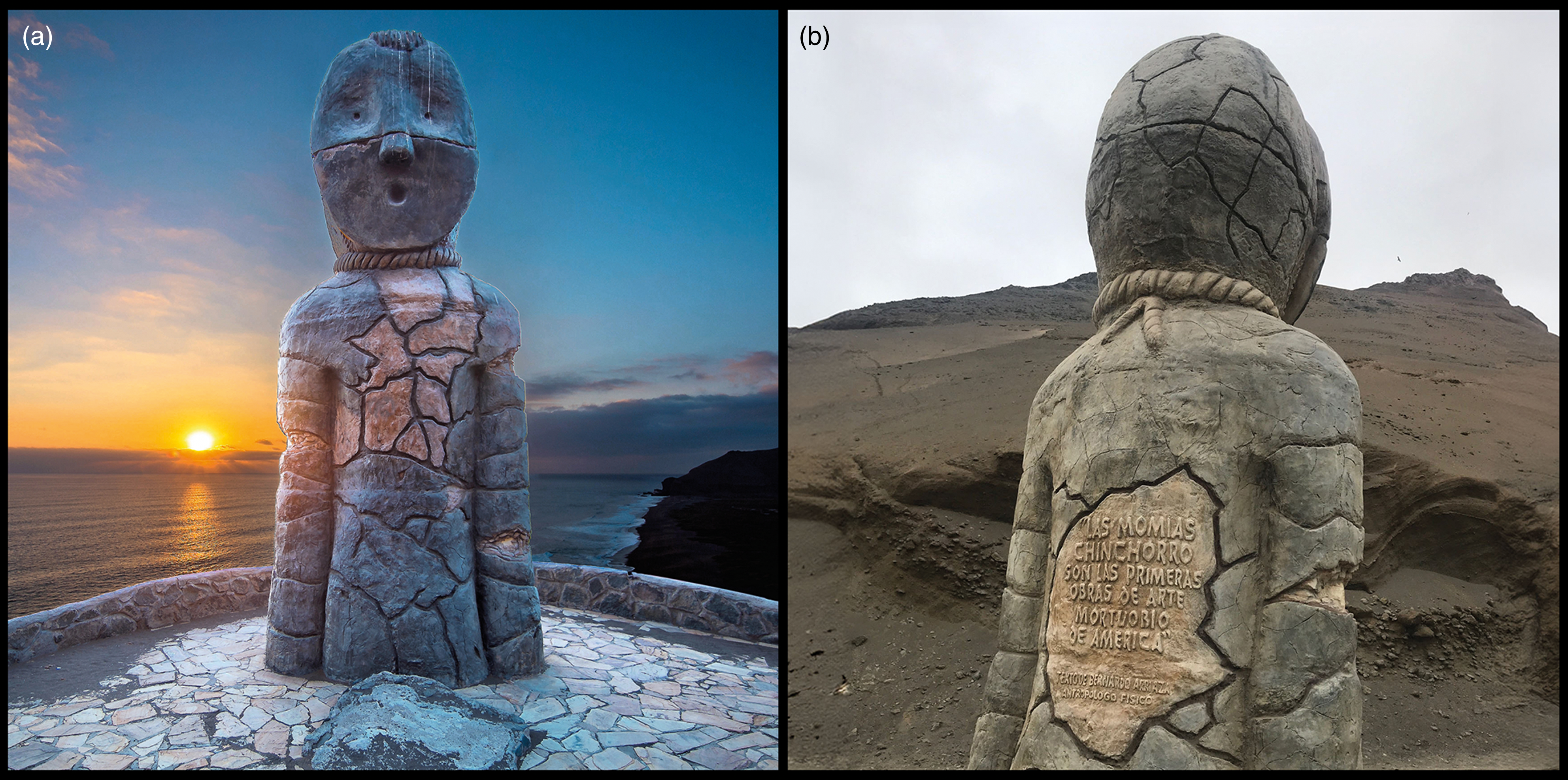
The seed planted during many lectures to the community reached fertile ground in the hands of these artists. The modern artists captured Chinchorro’s artistic essence that the author has been emphasizing for decades.
In sum, the Chinchorro people devoted meticulous care to the bodies and their artistic ornamentation over multiple generations, highlighting the central role of mortuary rituals in their culture. The mummified bodies, crafted with visual artistry, probably served as a tangible outlet for mourners to express and cope with loss. This elaborate mummification process may have functioned as a form of visual art therapy, enabling the Chinchorro to process emotions individually and collectively. By creating mummies as mortuary art, they navigated both personal and communal bereavement, fostering emotional healing, group identity and resilience in the harsh Atacama Desert environment. Through these continuous artistic and ritualistic practices, the Chinchorro people strengthened their social bonds, engaging with the mummies as symbolic objects that carried their own agency.
Given that death is a universal human experience, the insights offered here help to deepen our understanding of how ancient societies coped with loss and reveal the central role of artistic expression in their mortuary traditions. As the motto of the Paleopathology Association reminds us, Mortui viventes docent—the dead teach the living. The past offers valuable lessons, particularly about our shared humanity and the enduring emotional bonds between parents and their children, even when those children never had a chance to live.
Acknowledgements
I developed this paper during my fellowship at Dumbarton Oaks (DO) from 2024 to 2025. I extend my sincere gratitude to DO for its financial support and to the pre-Columbian staff for providing exceptional library facilities. I also appreciate the academic support provided by the Universidad de Tarapacá (UTA), Arica, Chile. My gratitude goes to Arnoldo Vizcarra for assisting with figure preparation and to Verónica Machaca for editing the references. Figures courtesy of Centro de Gestión Chinchorro, UTA; credits are given in the referenced work. Special thanks are due to Dr Noa Corcoran-Tadd (DO) and Dr Jordan Wilson (George Washington University) for their valuable comments. I am especially grateful to Dr Siân Halcrow (University of Otago) for generously devoting time to editing the manuscript. I greatly appreciate her editorial expertise and take full responsibility for any remaining errors. Many thanks to the reviewers for their thoughtful input. Dumbarton Oaks Fellowship and Fondecyt Grant 1250092 provided funding and support.



 Open access

