


Introduction
The COVID-19 pandemic exacerbated the profound psychological distress one experiences when losing a loved one.Reference Joaquim, Pinto and Guatimosim 1 The majority of deaths in the latter half of the twentieth century have been due to chronic illnesses.Reference Weisz 2 According to the World Health Organization (WHO), chronic diseases caused over 43 million deaths in 2021 alone. 3 While in the United States, chronic diseases account for 7 of the top 10 causes of death, with over 60% of adults living with at least 1 chronic condition, and according to the CDC, approximately 70% of all deaths annually are attributed to chronic diseases.Reference Hacker, Briss and Richardson 4 , Reference Geng, Yu and Bao 5 For families, deaths of loved ones that follow chronic illness are often more predictable, allowing time for anticipatory grieving and seeking closure, unlike sudden or traumatic deaths.Reference Statz, Kobayashi and Finlay 6 However, COVID-19-related deaths were much less foreseeable and sudden, with a median time from symptom onset to death of 19 days.Reference Joaquim, Pinto and Guatimosim 1 It was this short time span that disrupted the grieving process and made the event more traumatizing. This issue was exacerbated by the social distancing precautions surrounding COVID-19, which often prevented loved ones from physically visiting those dying of COVID-19.Reference Mortazavi, Shahbazi and Taban 7 Additionally, social distancing precautions made mourning more difficult due to the inability to access support systems.Reference Mortazavi, Shahbazi and Taban 7 As COVID-19 mortality had been disproportionately high among people with limited income and access to social and healthcare support, there was a similar unequal burden of loss of loved ones among these groups.Reference Mishra, Seyedzenouzi and Almohtadi 8
Sudden and unexpected loss of a loved one can sharply heighten psychological distress, a burden likely intensified during early COVID-19 when quarantine and social distancing limited social support and mourning rituals.Reference Salisbury, Harmsen and Muller 9 , Reference Carlsson, Årestedt and Alvariza 10 Based on an earlier study in the United States, individuals reported more severe depressive symptoms among those who had experienced loss due to COVID-19 than those who had experienced no loss.Reference Grace 11 A similar context was also observed in another US-based study, where the study found elevated levels of acute grief, posttraumatic stress, and psychological distress among individuals who recently experienced COVID-19-related bereavement, highlighting the significant psychological toll of pandemic-related loss.Reference Breen, Lee and Neimeyer 12 Building on this evidence, this study examined whether COVID-19–related bereavement is associated with a greater likelihood of experiencing heightened psychological distress symptoms. Addressing the gap in bereavement-related deaths alongside co-occurring health behaviors can be beneficial in future disaster response and managing disease outbreaks.
The COVID-19 pandemic additionally plays a critical role in increasing the risk of adopting adverse health behaviors, with previous studies indicating a rise in alcohol consumption and substance use as a coping mechanism for stress. Beyond its direct mortality, the pandemic was associated with increases in alcohol- and substance-related deaths, White et al. reported that the number of deaths involving alcohol increased between 2019 and 2020 (from 78,927 to 99,017 [relative change, 25.5%]), the number of deaths with an underlying cause of alcohol-associated liver diseases increased from 24,106 to 29,504 (22.4%).Reference White, Castle and Powell 13 Similarly, the number of opioid overdose deaths involving alcohol as a contributing cause increased from 8,503 to 11,969 (40.8%).Reference White, Castle and Powell 13 Potential factors that could contribute to heightened alcohol consumption and related deaths associated with COVID-19 include increased negative emotional state, dysphoria, disrupted access to treatment, social isolation, and the loss of loved ones.Reference White, Castle and Powell 13 , Reference Koob, Powell and White 14 During the pandemic, lockdowns and social distancing increased stress and isolation, which worsened mental health, obstructed substance use treatments, and obstructed harm reduction interventions, and many people who already used opioids used more to cope, with studies linking these strains to higher substance use and more opioid overdoses.Reference Ochalek, Cumpston and Wills 15 , Reference Slavova, Rock and Bush 16 These observations revealed an unexpected increase in adverse behavior related to the rise in alcohol consumption and substance use during the COVID-19 pandemic.
While the majority of deaths due to abrupt causes like accidents, suicides, or homicides can disrupt grieving, COVID-19 deaths often occurred under visitor restrictions, isolation, and limits on funerals, further constraining mourning and social support, which is thought to cause increased psychological distress when compared to other causes of death. Additionally, alcohol and substance use increased during the COVID-19 pandemic. The purpose of this study is to explore the relationship between individuals who have experienced COVID-19-related deaths in loved ones and their psychological distress symptoms, while adjusting for relevant demographics and adherence to adverse health behaviors.
Methods
This study is based on the “Mental Health Epidemiological Assessment,” which was conducted to evaluate the perceptions and experiences of living through COVID-19 among Missouri residents. The online survey was carried out for a period of 2 weeks in February 2022. The sample was recruited from a surveying company with a panel of participants throughout Missouri (n = 1,002). Inclusion criteria included: age 18 years or older, resident of Missouri. The only exclusion criterion was those who did not respond within those parameters. Among these, 962 cases with complete data were included in these analyses, and survey weights were not applied to align estimates with Missouri population demographics.
Measures
Psychological Distress
The severity of psychological distress symptoms was measured using a composite measure from the Patient Health Questionnaire (PHQ)-8 and Generalized Anxiety Disorder (GAD)-7 scales, respectively.
The eight-item based PHQ-8 is used to diagnose the severity of depressive disorder symptoms measured using responses to a set of 8 questions on the number of days respondents had experienced a particular depressive symptom within the last 14 days.Reference Kroenke, Strine and Spitzer 17 , Reference Umam, Razzak and Munni 18 Each item is assigned between 0 and 3 points based on the response category, and the total score, ranging from 0 to 24 points, is obtained by summing the scores for each item.Reference Kroenke, Strine and Spitzer 17 Participants were considered to have moderate to severe depressive symptoms if their scores on the PHQ-8 were 15 to 24. This higher threshold demonstrates approximately 88% sensitivity and 87% specificity for major depression.Reference Kroenke and Spitzer 19
The GAD-7 is a 7-item questionnaire with each item scoring from 0 to 3 to measure the severity of anxiety disorder symptoms.Reference Sapra, Bhandari and Sharma 20 It examines how frequently the patient has experienced 7 different anxiety symptoms in the past 2 weeks.Reference Spitzer, Kroenke and Williams 21 The total score is measured by summing points from each item, which ranges from 0 to 21. For the GAD-7 scale, individuals scoring 10 or higher were classified as having moderate to severe anxiety symptoms. At a cutoff of ≥10, the GAD-7 demonstrates optimized diagnostic performance, with sensitivity of approximately 89% and specificity of approximately 82%.Reference Spitzer, Kroenke and Williams 21
A composite score indicating moderate to severe levels of psychological distress symptoms was introduced if individuals were endorsed to have moderate to severe levels of anxiety or depression symptoms on either the GAD-7 or PHQ-8 scales.
COVID-Related Bereavement
Experiencing COVID-19-related deaths refers to whether respondents had lost one or more family member or friend due to COVID-19 complications over the previous 2 years.
Covariates
The sociodemographic variables included in this study were categorized as such: gender (male, female), race (white, non-white), age (18-24 years, 25-44 years, 45-64 years, 65+ years), home environment (urban, rural) as defined by Missouri Department of Health and Senior Services (MDHSS), 22 education level (high school graduate or less vs. higher than high school diploma or GED), employment status (working full-time, part-time, other [unemployed, retired, student, etc.]).
Stress-Coping Behaviors
This study defined coping strategies as maladaptive health behaviors that people adopt to reduce stress related to COVID-19 and associated factors. Stress related coping behaviors included in the study were average alcohol consumption in a year (never, 1-4 times per year, 2-4 times a month, 2-3 times per week, 4 or more times per week) and substance use patterns in lifetime (no substance use, used only one substance, polysubstance use in lifetime), and current smoking behavior (non-smoker, smoker). To understand the substance use patterns of the respondents, the patterns of substance use included cannabis (marijuana, pot, grass, hash, etc.), cocaine (coke, crack, etc.), prescription stimulants (Ritalin, Concerta, Dexedrine, Adderall, diet pills, etc.), methamphetamine (speed, crystal meth, ice, etc.), other amphetamines, inhalants (nitrous oxide, glue, gas, paint thinner, etc.), sedatives or sleeping pills (Valium, Serepax, Ativan, Xanax, Librium, Rohypnol, GHB, etc.), Ecstasy/MDMA (molly), Ketamine (Special K), other hallucinogens (LSD, acid, mushrooms, etc.), street opioids (heroin, opium, non-prescription fentanyl), and prescription opioids (oxycodone [OxyContin, Percocet], hydrocodone [Vicodin], methadone, buprenorphine, etc.) were assessed.
Statistical Analyses
Pearson correlation analysis was performed with the scores from the GAD-7 and PHQ-8 to assess the strength of the association between measures of the severity of anxiety and depression symptoms. Descriptive statistics were used to understand the distribution of sample participants. The chi-square test for categorical variables and the Wilcoxon rank sum for continuous variables were conducted to test independence. Variables showing significant associations were considered in 2 separate binomial logistic regression models used in this study. The first model investigated the factors impacting the severity of psychological distress symptoms among respondents in Missouri. The other model, designed to understand more deeply the impact of adopting various negative coping strategies, contributed to the levels of psychological distress symptoms among individuals who experienced the deaths of their loved ones due to COVID-19. Generalized variance inflation factor scores were used with the logistic regression models to assess multicollinearity among the predictors. The statistical significance of all the statistical tests was determined at the 0.05 significance level. All analyses were conducted in R(v 4.2).
Ethical Approval and Consent to Participate
The study protocol was reviewed and approved by the Institutional Review Board (IRB) of Saint Louis University. Informed consent was obtained from all participants before data collection. Participants were informed about the purpose of the study, their right to withdraw at any time, and how their data would be handled to ensure privacy and confidentiality.
Results
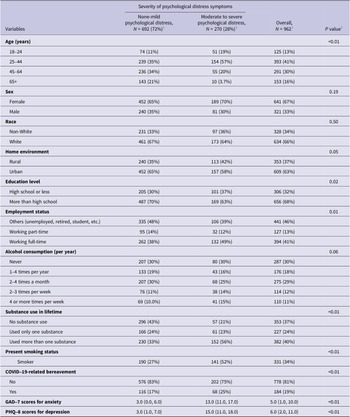
The total sample of 962 participants was utilized in this analysis, and their demographic characteristics are represented in Table 1. The sample comprised around two-thirds of female (67%; n = 641) and white (66%; n = 634) participants. The mean age of the respondents was 44.8 years (SD 16.7), with ages ranging from 18 to 86 years. Regarding age groups, approximately 2 in 5 respondents were from the 25-44 years age group (41%; n = 393), with participants aged 45-64 years being the second largest group (30%; n = 291). Among the respondents, 63% (n = 609) were from urban areas. More than two-thirds (68%; n = 656) of respondents completed more than high school level education, and 54% (n = 521) of the respondents were employed either full-time or part-time. Approximately 28% (n = 270) of the sample experienced moderate to severe psychological distress symptoms. At the same time, approximately 19% (n = 184) of respondents lost a loved one due to COVID-19. Among them, about one-third of individuals (32%; n = 58) suffered the profound loss of multiple loved ones due to COVID-19.
Characteristics of the sample population by the severity of psychological distress symptoms

1 n (%); median (IQR).
2 Pearson’s Chi-squared test; Wilcoxon rank-sum test.
Based on univariate analysis through chi-square and Wilcoxon rank sum tests, significant associations were identified between age (P < 0.01), educational status (P = 0.02), substance use (P < 0.01), smoking (P < 0.01), employment status (P = 0.01), and COVID-19-related bereavement (P < 0.01) with the severity of psychological distress symptoms, highlighting variations in distress levels across sociodemographic groups.
The correlation between PHQ-8 and GAD-7 was 0.81; thus, a composite score of severity of overall psychological distress symptoms was considered if a person endorsed having moderate to severe levels of anxiety or depression symptoms. This allowed the interpretation of these results to highlight overall distress that was experienced during this time period and under these conditions.
Factors Associated With the Severity of Psychological Distress Symptoms Among Missouri Residents
Table 2 presents the results of the logistic regression analysis examining how different contributing factors are associated with the severity of psychological distress symptoms among Missouri residents.
Adjusted logistic regression of the association between COVID-19-related bereavement and the severity of psychological distress among Missouri residents

1 CI, confidence interval; OR, odds ratio; GVIF, generalized variance inflation factor.
2 GVIF^[1/(2*df)]; df, degrees of freedom. *P value < 0.05.
The generalized variance inflation factors (GVIFs) indicated no multicollinearity among the predictors. Based on the logistic regression analysis after controlling for age, education status, employment status, smoking status, and substance use, people with COVID-19-related death experiences were 46% (AOR: 1.46; 95% CI: 1.00-2.12, P = 0.04) more likely to suffer from moderate to severe psychological distress symptoms than those without COVID-19-related death experiences during this time period. Smokers had a 68% greater chance of experiencing moderate to severe psychological distress symptoms compared to non-smokers (AOR: 1.68; 95% CI: 1.20-2.36, P = 0.02). Polysubstance use (such as cannabis, cocaine, inhalants, sedatives, street opioids, prescription opioids) was observed to increase the likelihood of experiencing moderate to severe levels of psychological distress symptoms with AOR: 2.44 (95% CI: 1.64-3.65, P < 0.05). Results from the above binary logistic regression indicated that individuals who experienced COVID-19-related bereavement were significantly more likely to report moderate to severe psychological distress symptoms.
To further explore the association between negative health coping mechanisms and distress severity, a separate logistic regression analysis was conducted specifically among bereaved respondents.
The Impact of Negative Coping Strategies on the Severity of Psychological Distress Symptoms Among Sampled Individuals Who Have Lost Loved Ones Due to COVID-19 Till February 2022
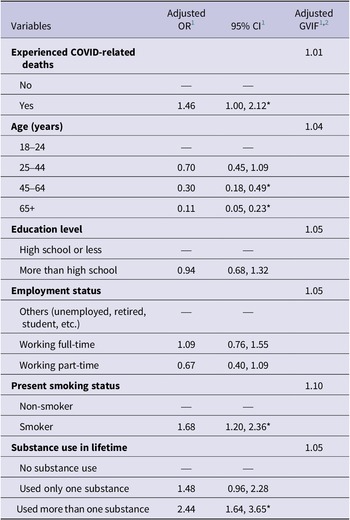
Table 3 illustrates the impact of coping mechanisms on the severity of psychological distress symptoms among individuals with COVID-19-related bereavement.
Logistic regression findings on the impact of negative coping strategies on the severity of psychological distress symptoms among sampled individuals who have lost loved ones due to COVID-19

1 CI, confidence interval; OR, odds ratio; GVIF, generalized variance inflation factor.
2 GVIF^[1/(2*df)]; df, degrees of freedom. *P value < 0.05.
The results indicated that older adults exhibited a lower likelihood of experiencing severe psychological distress symptoms compared to younger individuals, which was persistent with a statistically significant decreasing adjusted odds ratio as age increased 0.91 (95% CI: 0.35-2.37; P = 0.8), 0.32 (95% CI: 0.11-0.93, P = 0.04), and 0.05 (95% CI: 0.00-0.32, P = 0.01) for age groups 25-44, 45-64, and 65 and above years age groups, respectively. However, no significant association was found between current smoking (P = 0.80), single (P = 0.50), or polysubstance use (P = 0.12) and the severity of psychological distress symptoms.
Discussion
From 2020 to 2023, there were approximately 24,000 COVID-19-related deaths in Missouri out of a population of around 6,196,156.Reference Times 23 , 24 To understand the mental-health impact of COVID-19, this study examined whether psychological distress severity was associated with COVID-19–related bereavement across sociodemographic groups and endorsement of harmful coping behaviors. Among the respondents, approximately 19% of individuals reported that they had lost family members or friends due to COVID-19-related deaths. Not surprisingly, this study found that individuals who experienced the loss of close family members or friends due to COVID-19 were more likely to have higher levels of psychological distress symptoms compared to non-bereaved individuals. Unexpectedly, respondents who were bereaved and experienced higher distress did not show a greater likelihood of smoking or substance use compared to their peers.
This study is a novel study to investigate the association between COVID-19-related bereavement and psychological distress symptoms, and the different uses of health-compromising behaviors to manage their distress, using state-level information during the post-acute pandemic period. These findings suggest that COVID-19-related bereavement has a profound impact on mental health, highlighting the importance of addressing grief-related distress in the context of the pandemic in Missouri. The study’s findings revealed that after losing loved ones to COVID-19, a significant number of participants reported experiencing heightened levels of psychological distress symptoms. Prior studies also found that people who experienced the deaths or hospitalization of their loved ones due to COVID-19 were at a higher risk of anxiety or depression symptoms compared to those who did not face similar situations.Reference Khubchandani, Sharma and Webb 25 –Reference Mejia, Alvarez-Risco and Mejía 27 The intensity of acute grief experienced following COVID-19-related deaths exceeds that observed after natural deaths.Reference Tang, Yu and Chen 28 During the pandemic, individuals faced a medical crisis and experienced abrupt separation from their loved ones, leading to heightened levels of uncertainty, loneliness, and despair; thus, those who lost family members found the death and subsequent separation more traumatic than usual.Reference LeRoy, Robles and Kilpela 29 The absence of physical contact and emotional support, combined with financial strain, halted funeral rituals, fear of illness or further loss, social isolation, and limited medical access, can adversely affect the mental health of individuals grieving the loss of loved ones.Reference Khubchandani, Sharma and Webb 25 , Reference Caci and Giordano 26 , Reference LeRoy, Robles and Kilpela 29 –Reference Oh, Marinovich and Rajkumar 31
Along with these, the implementation of COVID-19 lockdown quarantine and social distancing measures may have contributed to the exacerbation of symptoms in individuals with pre-existing psychiatric conditions, including but not limited to depression, anxiety, and psychotic disorders such as schizophrenia.Reference Caci and Giordano 26 The implementation of quarantine and lockdown increased vulnerability and loneliness,Reference Wang, Shi and Que 32 disrupted social interaction and support networks,Reference Chen, Xia and Wang 33 and caused loss of income,Reference Jassim, Jameel and Brennan 34 which affects the psychological distress of individuals.
Compared to younger individuals, older adults in this study were found to have a lower likelihood of experiencing moderate to severe psychological distress symptoms. A similar phenomenon was also observed among those who lost loved ones due to COVID-19. This aligns with findings from McGowan et al.,Reference McGowan, Sherr and Rodger 35 who observed a notable decrease in psychological symptoms of depression among older adults, particularly in feelings of hopelessness. This is further supported by Henning-Smith,Reference Henning-Smith 36 who noted that older adults are less likely to report psychological distress compared to younger individuals, indicating a potential resilience that develops with age. Older adults develop better skills to manage their emotions and experience fewer discrepancies between their expectations and reality, which is often linked to lower feelings of distress.Reference Umam and Razzak 37 , Reference Kestler–Peleg, Greenblatt-Kimron and Even-Zohar 38 In addition to these, older individuals often have stronger social networks that can provide emotional and practical support during stressful times.Reference Parlapani, Holeva and Nikopoulou 39
This study found that moderate to severe symptoms of psychological distress were associated with substance use and smoking. COVID-19 restricted access to physical and mental well-being facilities, such as meeting with friends and family, engaging in social networks, obtaining mental health support, and going to the gym, which likely heightened anxiety and depression symptoms.Reference Foundation 40 Based on earlier research, with increased levels of psychological distress, people adopt negative coping strategies such as substance use and smoking, which is exacerbated by the uncertain conditions of COVID-19 distress.Reference Fisher, Rice and Zuleta 41 Due to the pandemic, additional stressors such as job loss, heightened financial challenges, social isolation, and COVID-19-related concerns contribute to a stressful situation that may amplify the use of substances.Reference Imeri, Holmes and Desselle 42
On the contrary, there was no significant association observed between the severity of psychological distress symptoms with smoking and substance use among the individuals who lost their loved ones as a result of the COVID-19 pandemic. The COVID-19 pandemic dramatically highlighted the vulnerability of respiratory health,Reference Mallah, Ghorab and Al-Salmi 43 and individuals who witnessed the devastating effects of the virus on their loved ones may become more acutely aware of the dangers of smoking and other substances.Reference Bommelé, Hopman and Walters 44 Additionally, reducing the perceived risks of health issues related to COVID-19 and the fear of losing loved ones can serve as a potential motivator for these affected individuals to avoid engaging in escapist behaviors such as alcohol or drug use while experiencing increased levels of psychological distress.Reference Ford, Sohansoha and Patel 45 , Reference Klemperer, West and Peasley-Miklus 46 This emphasizes the need to reduce pandemic-related harm as a potential motivator for people to quit smoking and using substances.
Limitations
This study’s strength lies in assessing the link between grief caused by pandemic-related deaths and mental health, as well as the use of negative coping strategies, while considering the local context, such as health system capacity and access, sociodemographic and economic conditions, and the state’s COVID-19 mortality and bereavement burden. This helps better understand these issues during a health emergency that needs to be addressed in the context of future crises.
One key limitation is that the study uses a cross-sectional approach and the inability to test causal associations between variables. Secondly, the study evaluated all variables through self-report measures, which may be susceptible to recall bias. The study included a sample of Missouri residents, exploring how other regions with diverse populations’ healthcare systems and COVID-19 exposure status could help explain the outcomes in diverse contexts. The survey was conducted via an external opt-in panel. Since participants self-select and may complete multiple surveys, and may be influenced by previous participation, panel-conditioning effects are possible. Considering this, analyses of this study focused on adjusted associations rather than population prevalence. Lastly, survey weights were not applied to align estimates with Missouri population demographics; therefore, results may not fully reflect the population structure.
Conclusions
During the COVID-19 pandemic, people faced profound changes in how they experienced loss and grief. The study’s findings highlighted that the individuals who experienced the death of a family member or friend due to COVID-19 reported increased levels of psychological distress from sudden and isolated loss, and it also led to negative coping mechanisms among the bereaved. The unique circumstances of the pandemic—marked by social distancing, restrictions on traditional mourning rituals, and often abrupt or isolated farewells—have compounded the typical challenges of bereavement. The dual burden of grief and addiction to unhealthy ways of coping calls for convenient and effective current mental health support systems for the bereaved. Given these insights, future studies and interventions must focus on providing accessible, culturally sensitive mental health care that not only addresses the unique challenges of pandemic-related loss but also offers healthier alternatives to substance use. Strengthening community-based mental health support systems, grief counseling, and integrated substance abuse treatment can be crucial in breaking the cycle of maladaptive coping during future pandemics.
Author contribution
SU: Conceptualization; formal analysis; visualization; writing—original draft and writing—review and editing. GL: Conceptualization and writing—original draft. SG: Writing—original draft and writing—review and editing. JT: Formal analysis and visualization. ES: Conceptualization; supervision; validation and project administration.
Funding statement
This research received support from the St. Louis County Department of Health to conduct this study.
Competing interests
None.
Acknowledgements
The authors would also like to acknowledge the funding opportunity through the St. Louis County Department of Public Health, with PI Dr. Tom Burroughs. The St. Louis City Department of Health and Hospitals and the St. Louis County Department of Public Health staff provided guidance and co-developed the survey.


 Open access

