


INTRODUCTION
Measles is one of the most contagious infectious diseases, a viral disease that can cause severe morbidity and complications such as pneumonia or encephalitis. Its case-fatality rate is estimated to be 0·2% in developed countries [1] and 3–5% in developing countries [Reference Heymann2]. A vaccine has been available since 1963 [1], but population vaccination coverage has to exceed 92–95% to prevent outbreaks [Reference Anderson and May3]. Besides a routine two-dose measles vaccination strategy in childhood, the German Standing Committee on Vaccination (STIKO) recommends immediate vaccinations in measles outbreak settings. The intervention [i.e. one dose of measles virus (MV)-containing vaccine] should target all persons born after 1970 (with the exception of children aged ⩽6 months and pregnant women) that are either unvaccinated, received only one vaccination during childhood, or whose immunization status is unknown [4].
In the past 6 years, 19 000–43 000 persons annually have been seeking asylum status in Germany [5, 6]. They are housed upon their arrival in admittance shelters in all 16 federal states, based on a preset state quota for intake per year. Each of these shelters hosts several hundred persons of various ethnicities. Living conditions are crowded and individuals remain for at least 6 weeks up to several months until a final decision regarding their refugee status has been made. The German Asylum Seeker Benefits Law stipulates that asylum seekers are entitled to receive all vaccinations recommended by STIKO for the general German population. The ensuing costs are thereby covered by the responsible asylum-seeker authorities instead of the statutory health insurance funds providing for the general population [7].
During the last years, outbreaks of varicella and measles have been reported in migrant populations or in asylum shelters in Germany [Reference Gold8, Reference Niedermeier and Dreweck9]. The STIKO rec-ommendations contain no specific regulations for the management of communicable disease outbreaks in shelters, and on-site management of the outbreak lies with the discretion of the responsible district health authority where the shelter is located. In general, outbreaks in such settings impose unique challenges on local health authorities involving language barriers, cultural differences, potentially dismissive habitus of residents towards public authorities due to previous negative experiences, large family sizes, and unavailability of medical or vaccination records. These challenges become even more severe as containment actions require a rapid response to prevent further cases.
In October–November 2010, a measles outbreak occurred in a shelter in Northern Germany with a total of eight cases in the 427 residents. The shelter usually accommodates about 400 residents from many nations with 4–6 people sharing one room and about 80 people living on each floor. The shelter has a common dining room and hosts a kindergarten and school. A medical post in the shelter grounds performs the statutory medical examinations at intake and provides medical services during weekdays. For identification, the shelter administration issues identity cards upon arrival that include information on name, sex, birth date, shelter entry date and nationality. Children are either added on the mother's or father's identity card.
As available public health resources in Germany are decreasing and measles-mumps-rubella (MMR) vaccine doses are comparatively expensive, local health authorities increasingly consider the alternative of prior serological testing of all shelter residents followed by a selective vaccination for those without protective measles antibodies instead of a mass vaccination. Compatible with this observation, the local health authorities in charge decided upon serological testing and selective vaccinations in this recent measles outbreak.
Previously published studies have focused on the cost comparison of different vaccination strategies and the costs related to individual patients [Reference Davis10–Reference White, Koplan and Orenstein12]. Some studies analysed the comprehensive costs of a measles outbreak [Reference Wichmann13–Reference Sugarman15] but did not incorporate the comparison of different outbreak control strategies. The objective of our study was first, to give an epidemiological description of the outbreak and second, evaluate the executed strategy against a hypothetical immediate mass vaccination in terms of potentially avoided cases, logistics, and costs.
METHODS
Epidemiological description and timeline of the outbreak
We described the time-course of the outbreak, basic demographics of the shelter population, percentages of residents participating in the voluntary serological testing and vaccination, and seronegativity by age group. The epidemiological description was based on the official residents list and complemented by the review of information on residents' identity cards during the serological testing and vaccination.
Case definition
A confirmed case was defined as a shelter resident with a laboratory confirmation [positive immunoglobulin (Ig)M, fourfold increase in IgG, or a positive polymerase chain reaction (PCR)] and clinical symptoms (⩾3 days of maculo-papular rash and fever and cough or catarrh or Koplik spots or conjunctivitis) with disease onset between 13 October and 11 December 2010. A suspected case was defined as a shelter resident with the above-mentioned clinical symptoms and disease onset, but without laboratory test results. We assumed every resident to have been exposed to a measles case due to the crowded living conditions at the shelter.
Laboratory analyses and persons eligible for vaccination
Residents with measles symptoms identified at the shelter's medical post or the local hospital were tested for MV-specific IgM and IgG antibodies, as well as MV-specific nucleic acid by PCR at either the local hospital or a large regional laboratory in Hamburg (~60 km from the shelter). In addition, oral swabs of suspected cases were sent for genotyping [Reference Kremer16] to the National Reference Center (NRZ) for MMR.
Blood samples of participating shelter residents were sent to and analysed within 1 day at the laboratory in Hamburg. An enzyme-linked immunosorbent assay (ELISA) test (Virotech, Germany) was used to determine IgG antibody titres. A test was declared positive if titres were >11 Virotech units (VE) [VE=(OD serum/OD cut-off)×10], borderline if 9–11 VE, and negative if <9 VE. All residents with a negative or borderline IgG test result or no test result available and who were not pregnant or aged ⩽6 months were offered a MMR vaccination.
Immunization cards of all employees working in the shelter were checked to assess their immunization status. Employees without sufficient protection according to STIKO recommendations were offered vaccination.
Evaluation of the two containment strategies
We evaluated two containment strategies in terms of potentially avoided cases, logistics and costs: serological testing followed by selective vaccination vs. a hypothetical mass vaccination immediately starting after the first diagnosed measles case.
Potentially avoided cases by immediate mass vaccination
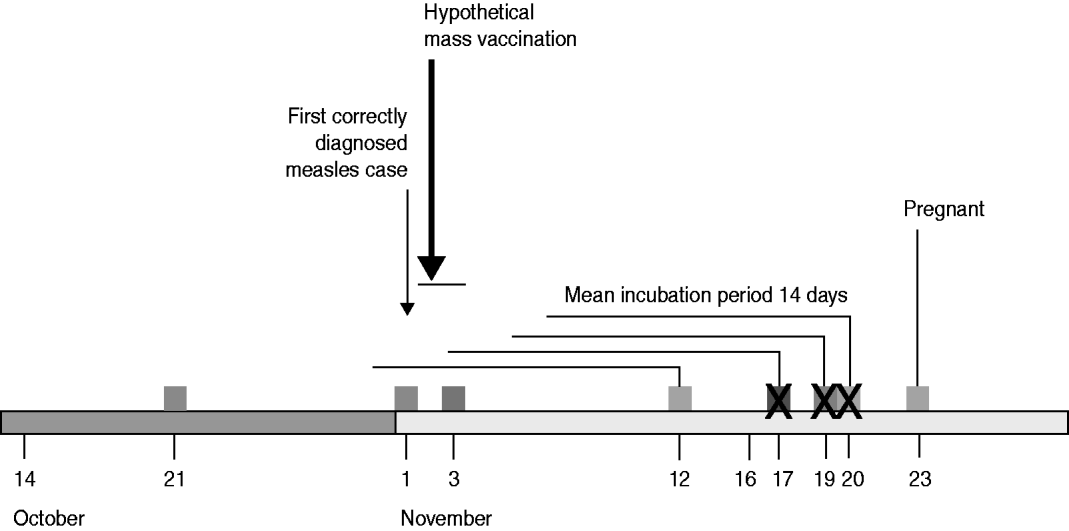
We made three assumptions to assess the number of potentially avoided cases by immediate mass vaccination. First, a mass vaccination would have started the day after the first correctly diagnosed measles case (2 November) and therefore 18 days earlier than during the actual outbreak intervention. Second, we assumed the commonly acknowledged mean incubation period for measles from infection to onset of rash of 14 days (range 7–18 days) [1, Reference Heymann2, 17] to calculate the assumed time-point of infection. Third, we assumed that a mass vaccination would have targeted all persons included in the STIKO recommendations. Based on those assumptions, we reviewed all cases occurring after 2 November.
Outbreak intervention logistics
We closely documented the logistics of the conducted outbreak intervention. The goal of this precise description was to evaluate the operability and specific challenges encountered during the serological testing strategy and then compare the findings to anticipated logistical steps and infrastructural needs in a mass vaccination.
Name and date of birth on each identity card were double-checked with the information on the official residents list, name on the test tube, and the laboratory request form prior to blood drawing. Blood samples were collected at the end of each intervention day and analysed immediately, even on the weekend. Names on the test tubes and the laboratory request forms were handwritten and then translated into the laboratory computer system. We matched incoming test results with the residents list of persons that came for testing. Shelter staff sought out residents individually to communicate the test findings. If the test result was seronegative or borderline, residents were asked to attend for vaccination during the following 2 days. Further, all residents who opted not to participate in the serological testing were offered a vaccination. If persons could not be contacted personally, a message was left.
Cost assessment of the two strategies
We assessed medical and non-medical costs for both strategies by reviewing outbreak-associated bills. Medical costs included MMR vaccines, serological testing, hospitalization, and costs for medical staff. Non-medical costs incorporated personnel costs of the shelter administration, translators, a police-enforced curfew, and costs associated with an instantaneous shelter transfer stop for new incoming or outgoing asylum seekers. The bill review was supplemented by stakeholder interviews (local health authorities, shelter administration, shelter's medical post, laboratory staff, and vaccine manufacturer). Information concerning the hypothetical mass vaccination was extrapolated from actual outbreak figures and stakeholder interviews. For the transfer stop we assumed the moratorium to end about 2½ weeks after the first case occurred. It was not possible to assign all personnel costs in exact detail to each single logistical step of the serological testing strategy. Therefore, based on the observed length of the serological testing strategy of 41 days (1 November to 11 December), we calculated the personnel costs for the local health authority as a fraction (18 days, 1–18 November). Translator-associated costs were listed according to the smaller number of required assignments. Personnel costs for the medical shelter's post were based on experiences during the intervention: total number to be vaccinated and different vaccination times needed per child (~15 min) and adult (~10 min). In addition, we added medical shelter post personnel costs related to other logistical tasks again as a time fraction. Personnel costs of the shelter administration were calculated by the shelter administration head with knowledge of the transfer stop duration.
RESULTS
Epidemiological description and timeline of the measles outbreak
A total of eight measles cases occurred over a period of about 4 weeks in the 427 shelter residents, who originated from 18 different nations (Afghanistan 25%, Serbia 17%, Macedonia 10%, Iraq 10%, Iran 7%, Syria 6%, Turkey 5%, and each of the following below 5%: Azerbaijan, Somalia, Kosovo, Russian Federation, Eritrea, Algeria, Vietnam, Armenia, Yemen, Ghana, India). A total of 254 (59·2%) of the residents were male and 172 female (40·3%). The median age was 23 years (range 14 days to 67 years). There were 145 (34%) children aged ⩽18 years, 229 (53·9%) persons aged 19–40 years, and 51 (12%) aged >40 years. No information on nationality, age or sex was available for two long-term absent residents.
The median age of the eight cases was 19 years (range 4–30 years). Four (50%) were female, two of them were pregnant. Six (75%) out of eight cases had to be hospitalized with an average duration of 4 days. All eight cases were confirmed measles cases: four were confirmed by PCR, three by MV-specific IgM, and one by an increase in MV-specific IgG titre. Genotyping identified MV genotype D4 Hamburg [Reference Kremer16] as the causative strain of the outbreak.
The timeline of the outbreak with date of symptom onset in cases is presented in Figure 1. The first measles case was a 30-year-old woman with disease onset on 21 October, whose rash was misdiagnosed by a physician as a generalized allergy. On 1 November, her 5-year-old son (case 2) developed a rash that lead to the correct diagnosis of measles. Case 3 was a 19-year-old pregnant woman (8th month), who was diagnosed with a measles infection on 3 November and went into fever-induced labour on the same day. The child was given immunoglobulins on day 3 postpartum and showed no signs of infection later. Case 4 (4 years), case 7 (6 years) and case 8 (25 years) lived on the same floor as the first two cases. Case 8 was 8 months pregnant, and the mother of cases 4 and 7. Cases 5 and 6 were young adults of different nationalities that had no different epidemiological link to the other cases than using the common shelter facilities. It could not be resolved where the index case had contracted her measles infection. She and her family had entered Germany on 4 October from Hungary and arrived in the shelter 10 days later, after having passed through two other asylum shelters in a different federal state in Germany. No associated measles cases were reported from those two shelters or the surrounding health districts.
Timeline of the measles outbreak in an asylum-seekers' shelter in Northern Germany, October/November 2010. Identical shading indicates members of the same family.
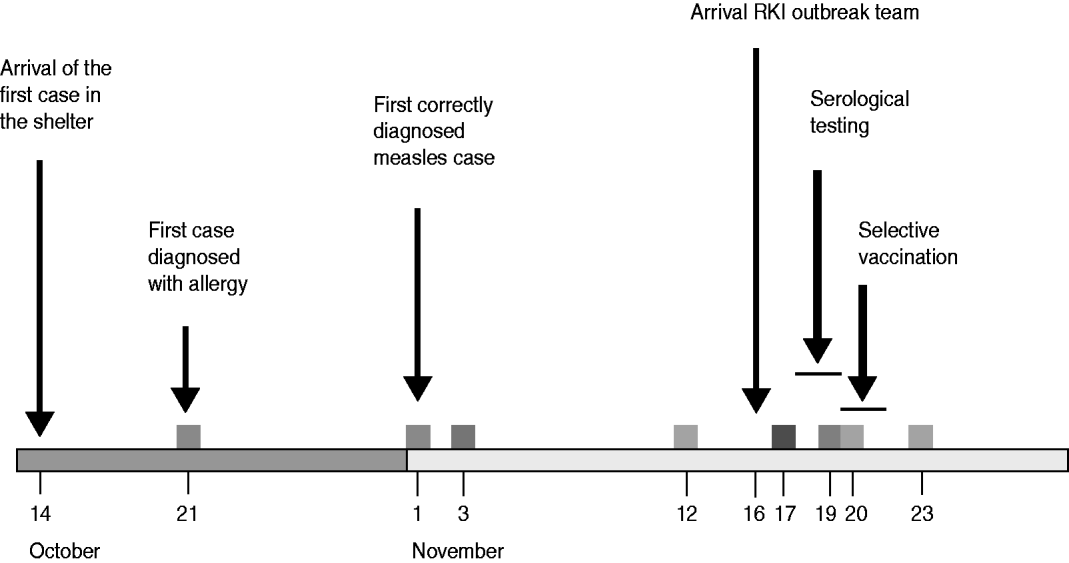
Simultaneously with the report of the first correctly diagnosed measles case (case 2), the local health authorities issued an immediate transfer stop for the shelter that lasted from 1 November until 11 December. In addition, a police-enforced curfew for all residents (enforcing shelter residents not to leave the compound) was declared on 1 November but proved unmanageable and was thus ended after 27 h. The local health authorities requested outbreak support from the Robert Koch Institute (RKI) on 15 November. The voluntary serological testing and selective vaccinations took place within the following 5 days (Fig. 1).
Forty-five (31%) out of 144 shelter employees received a MMR vaccination due to unknown or incomplete vaccination status. None of the employees contracted a measles infection. No measles cases were reported outside the shelter during the outbreak period, but it cannot be ruled out that cases occurred without being reported.
Serological test results and persons eligible for vaccination
None of the residents was able to provide immunization documentation. Three hundred (70·3%) out of 427 shelter residents participated in the voluntary serological testing, of whom 39 (13%) tested negative for MV-specific IgG. Children aged <9 months were not tested for MV-specific antibodies. Figure 2 shows the proportion of seronegative persons by age group. The attack rate in all residents was 1·9% (8/427), and in seronegative individuals including cases it was 17% (8/47).
Percentage of measles IgG seronegatives among those tested (n=300) by age group during a measles outbreak in an asylum-seekers' shelter in Northern Germany, 2010.
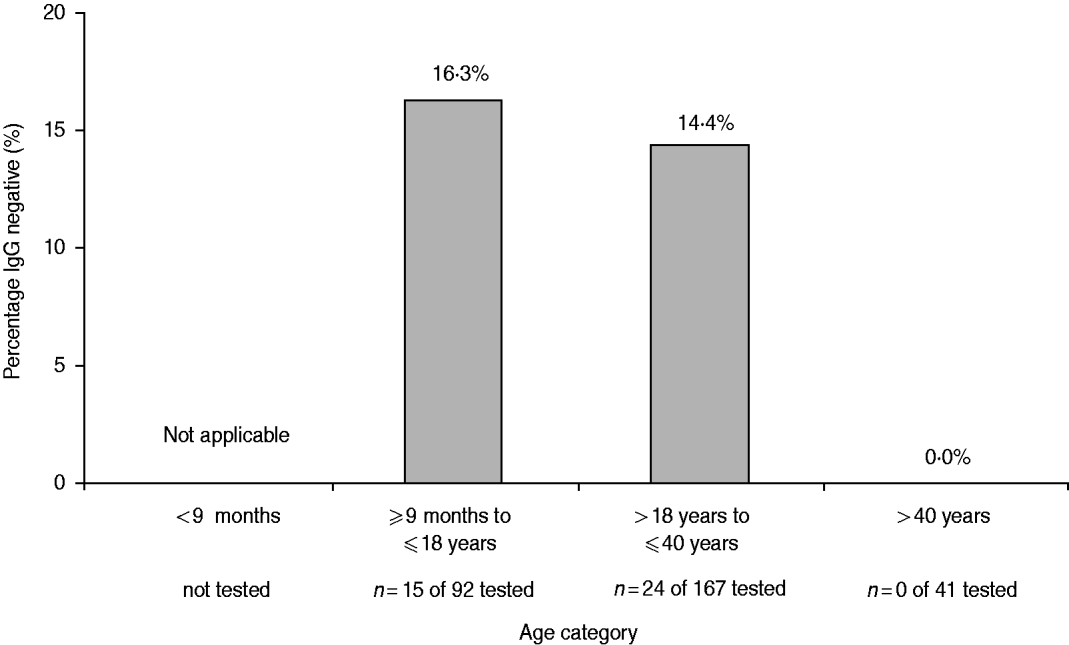
Regarding non-tested individuals, a total of 166 persons were considered for vaccination. However, 22 (13·3%) were or could not be offered a vaccination due to pregnancy (n=7), age ⩽6 months (n=4), having become a confirmed case (n=4), being an unconfirmed but suspected case (n=3), long-term absenteeism from the shelter (n=3), or refusal of vaccination (n=1). Of the remaining 144 eligible individuals, 101 (70·1%) were vaccinated during a 2-day vaccination operation, including two children aged between >6 and ⩽8 months. In the following week, another seven (4·9%) residents requested vacci-nation at the shelter's medical post.
Potentially avoided cases by immediate mass vaccination
Based on the current STIKO guidelines, residents' age distribution, and individual reasons for exclusion, 359/427 (84%) residents would have been eligible for vaccination. Under our previously described assumptions with a mean incubation period of 14 days, an immediate mass vaccination might have avoided three cases (Fig. 3). Considering a range of 7–18 days, the figure did not change substantially with 3–4 possibly avoided cases.
Potentially avoided measles cases by a hypothetical immediate mass vaccination during an outbreak in an asylum-seekers' shelter in Northern Germany, 2010. Cases are represented by squares, potentially avoided cases are marked with a black cross (X).
Outbreak intervention logistics
It often proved difficult to assign the identity card name to the corresponding name on the official list due to transpositions of first and last name, serious spelling mistakes, and middle names being added as another last name or vice versa. Furthermore, birthdates sometimes did not match between the two sources. A number of people were not listed at all, yet they possessed a shelter-issued identity card. Another group not listed were children that were additionally not registered on a parent's identity card.
In five (2%) cases we detected names on test tubes that were different from the person from whom blood was to be drawn. During the matching of the laboratory results with our residents list of serological testers, we found in 6% (17/300) new serious spelling mistakes or transpositions of first and last names that had occurred during laboratory transcription.
Necessary resident contacts added up to four encounters to communicate findings and carry out intervention procedures for the serological testing strategy (information for residents, blood collection, information about the results, and possible vaccination), compared to two for a mass vaccination (information on the vaccination procedure and risks, and the vaccination itself ).
Cost assessment of the two strategies
Medical and non-medical costs for the two strategies are listed in Table 1. The serological testing with selective vaccination amounted to ~€90 000 and was nearly double the costs of a hypothetical mass vaccination (~€47 000). The shelter transfer stop substantially contributed with ~€34 000 to the total costs of the serological testing strategy, compared to ~€4000 in the hypothetical mass vaccination. Reviewed bills and the interview with the head of the shelter administration revealed that those costs increase exponentially over time instead of linearly.
Comparison of outbreak-associated costs for the two containment strategies during a measles outbreak in an asylum-seekers' shelter in Northern Germany, 2010
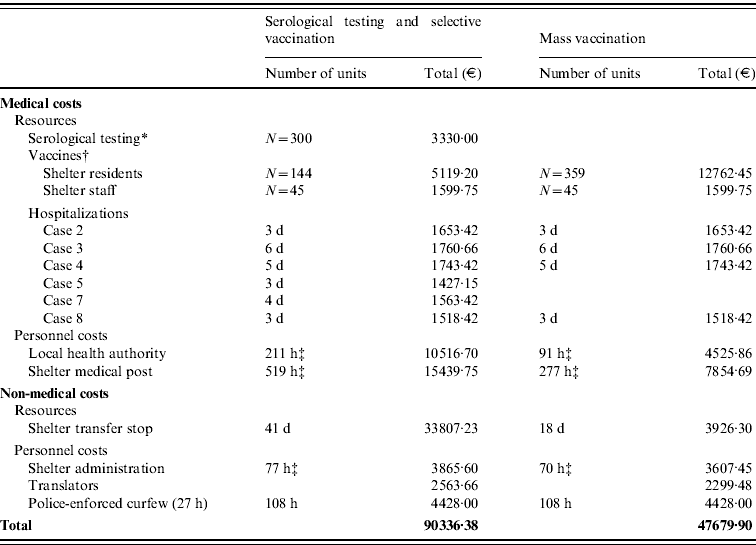
d, Days; h, hours.
* Unitary cost: €11·10.
† Unitary cost: €35·55.
‡ Different wages per hour according to position, only total number of hours given.
DISCUSSION
The main aim of our study was to compare two containment strategies in terms of potentially avoided cases, logistics, and costs. Our findings related to these three aspects clearly favour a mass vaccination strategy in such a setting.
A very important evaluation factor is the number of potentially avoided cases, as they are the main goal of each outbreak containment effort. Applying the mean incubation period of 14 days until rash onset, the immediate mass vaccination might have avoided three of the eight cases. Considering the time until immunity in vaccinated individuals develops, two recent studies have shown an effective measles post-exposure prophylaxis (PEP) of 90·5% and 100%, respectively, if conducted within 72 h [Reference Sheppeard18, Reference Barrabeig19]. In individuals who developed measles despite PEP, two other studies observed a maximum time-interval from receiving PEP to the development of measles of ~10 days [Reference Rice20, Reference McKeever21]. For a conservative estimate we assumed that case 4 would still have developed the disease. However, based on the data from the studies cited above, it is quite likely that case 4 would also have been avoided by mass vaccination or at least benefited from vaccination, as even vaccination during the incubation period might mitigate measles symptoms [Reference Sakuta, Sawada and Kuroki22]. Case 8 was pregnant and would not have been vaccinated at any point. However, a comprehensive vaccination of the shelter community (including her two children, later cases 4 and 7) might have granted her herd protection, possibly preventing her from becoming infected.
Logistics associated with the serological testing proved to be challenging in this special setting. A good laboratory infrastructure as in our study is not always available, and less timely receipt of results prolongs the time needed to complete subsequent vaccinations. Furthermore, the proportion of children in the shelter was high. In this age group, blood drawing and vaccinations on average require more time, and a second, needle-associated intervention (if seronegative) is usually more stressful for children than for adults. Only two-thirds of the residents participated in the voluntary serological testing. In addition to the seronegatives, the remaining 127 persons were therefore eligible for vaccination due to their unknown serological status. Finally, the selective vaccination strategy required four contacts between residents and the intervention team compared to two in a mass vaccination. The more contacts that are required, the higher the chance that residents do not complete all steps necessary for a successful containment intervention.
Overall costs associated with the outbreak were high, even though the outbreak consisted of only eight measles cases. Costs for the serological testing and selective vaccination strategy were nearly double those anticipated for the hypothetical mass vaccination. About one third of the costs in the serological testing strategy were attributable to the 6 weeks shelter transfer stop. As a short closure of 2–3 weeks can be compensated for with personnel resources at hand, longer closures require extra resources after re-opening: besides the timely resumption of a high volume of delayed hearings, a high number of asylum seekers has to be admitted in a short time period to be able to fulfil the preset yearly intake quota. Furthermore, personnel costs made for substantial relative cost differences in both containment strategies.
In our study we compared two interventions that would have taken place at different time points. However, local health authorities are very likely to decide whether to conduct serological testing with selective vaccination or an immediate mass vaccination referring to the same point in time. If so, there are several conceptual thoughts to consider. In principle, the duration of both interventions depends on resource- and infrastructure-related factors. The duration of blood sampling and vaccination is associated with the number of medical staff available, the number of residents in the shelter, and the proportion of children among residents. For the serological testing strategy, the expenditure of time is additionally related to the expected number of seronegatives with subsequent vaccination among shelter residents. The length of laboratory analysis is determined by the testing capacity of the laboratory and by the duration and frequency of specimen shipments to the laboratory (each day vs. once only). Thus, the time between diagnosis of the index case and vaccination of the last eligible person can be several days longer for the serological testing strategy than in our outbreak, increasing the risk of secondary measles cases. If personnel resources and infrastructure are limited, concentrating on an immediate mass vaccination will increase the chances of staying within the desired 72 h for PEP. Of course, timelines of serological testing can be enhanced by increasing the deployed personnel in the intervention. However, increasing the involved personnel would lead to a substantial increase in personnel-related costs – contradicting one of the common arguments that serological testing is more cost-effective compared to an immediate mass vaccination.
During a mass vaccination campaign, some previously vaccinated individuals without immunization documentation will consequently receive an unnecessary vaccination. Multiple vaccinations often raise concerns about tolerability and adverse effects. However, there are no references in the literature that support those concerns [4, Reference Watson23, Reference Plotkin, Orenstein and Offit24]. One study found no increased morbidity if MV-incubated persons receive a MMR vaccination [Reference Sakuta, Sawada and Kuroki22].
The relatively few cases and the prolonged outbreak influenced the local health authorities' decision for the containment strategy of serological testing and selective vaccination. Possible reasons for the small number of cases despite crowded living conditions and a measles basic reproductive number of 12–16 [Reference Anderson and May3] might be that with 85% protected individuals the effective reproductive number was considerably lower and that more heterogeneous rather than homogeneous mixing occurred. Both conditions have the potential to lead to prolonged and less explosive outbreaks.
Seroprevalence studies for vaccine-preventable diseases in non-outbreak situations in refugees or asylum seekers have been previously conducted [Reference Barnett, Christiansen and Figueira25, Reference Greenaway26]. However, characteristics and demographics of persons fleeing a specific country can change quickly over time depending on the situation in the country of origin. At the shelter level, the number of immune individuals depends greatly on the composition of nationalities in the shelter, the demographics of the citizens as well as individual immunization programmes and circulation of the wild virus in each of the countries of origin. Therefore, seroprevalence studies in these settings remain a snapshot in time with limited value for translatability and thus should not be used as a basis for selective vaccination interventions in outbreaks. Nonetheless, our study as well as the other surveys demonstrates that the proportion of individuals with measles immunity is likely below 95% in asylum shelters or refugee settings. Hence, outbreaks can easily occur if the virus is introduced.
There are several limitations to our study. MMR vaccine prices are specific to Germany and can be more expensive than in other countries (e.g. €35·50 in Germany vs. ~€13 for children and ~€23 for adults in the USA) [27, 28]. Similarly, personnel costs and costs related to the shelter transfer stop are country-dependent, composed differently or might not apply. Therefore, our study might have limited transferability across countries. In addition, our study is specific for the setting of an asylum shelter or similar refugee camps where immunization records are generally not available and logistical problems due to language barriers or cultural differences might have a higher impact. Nonetheless, our study provides important insights and challenges for the control of an institutional outbreak of measles which involves refugees and asylum seekers. It also draws attention to a probably previously under-appreciated setting where Germany – among other issues – is facing difficulties in its efforts to achieve measles elimination by 2015.
One solution to generally prevent future outbreaks in asylum shelters is to improve vaccination practices routinely offered at first intake. Whereby the statutory medical examination taking place within the first days of entry would be a reasonable and easy to execute option for routine vaccinations. In our case, a vaccination of the index person and her family at intake in the very first asylum shelter after arrival in Germany on 4 October would have most likely prevented the later outbreak. However, the wide implementation of this policy is highly dependent on available staff and resources in the local health offices and shelter medical posts. In the affected shelter, only 84% of the children were protected against measles, compared to the one-dose measles vaccination coverage at school entry in Germany in 2009 where the figure was 96·1% [29]. As Germany is responsible for the health of persons that have claimed asylum status on its territory and has committed to the WHO goal of measles elimination in Europe by 2015, improved implementation of routine vaccination at first intake could be helpful towards preventing future outbreaks in asylum shelters and the subsequent spread of measles into communities outside these settings.
ACKNOWLEDGEMENTS
The authors thank Dr Karin Paeth and Susanne Jessen (District Health Authority, Neumünster), and Dr Anette Junghans and her staff at the shelter's medical post for their indispensable support during the outbreak interventions. We also thank Ulf Döhring, Elisabeth Zimmermann, Ralf Krause, and Monika Krause of the shelter administration (Landesamt für Ausländerangelegenheiten, Neumünster) for their assistance during the outbreak management and the provision of cost data and other background information; PD Dr Annette Mankertz and Dr Sabine Santibanez (National Reference Center Measles Mumps Rubella, RKI, Berlin) for the genotyping of specimens; Dr Mohrmann and his staff (Labor Lademannbogen, Hamburg) for their rapid provision of serological test results; and all residents of the shelter for supporting this investigation with their participation. Finally, we acknowledge Sandra Dudareva (RKI) for her practical assistance during the outbreak and Dr Katharina Alpers (PAE coordinator, RKI) for her intellectual input in writing this report.
DECLARATION OF INTEREST
None.



