


Suicide has consistently been the most common cause of premature death in schizophrenia. A large 5-year World Health Organization study consisting of the follow-up of 1056 patients exhibiting psychotic symptoms found the most common cause of death in those with schizophrenia was suicide (Reference Sartorius, Jablensky and KortenSartorius et al, 1986). In their review of the subject Caldwell and Gottesman (Reference Caldwell and Gottesman1990) found that 9-13% of patients with schizophrenia eventually commit suicide. At least 20-40% make suicide attempts (Reference Meltzer and FatemiMeltzer & Fatemi, 1995) and 1-2% go on to complete in their attempt within the next 12 months (Reference Meltzer and OkayliMeltzer & Okayli 1995). Therefore, suicide in schizophrenia has long been a major area of concern and research efforts.
In Denmark, Mortensen and Juel (Reference Mortensen and Juel1993) used the national case register to retrospectively examine mortality in a sample of 9156 patients following their first admission with schizophrenia, and reported 50% of males and 35% of females went on to commit suicide during the 17-year study period, with the relative risk of suicide increasing by 56% over this time. This suggests that the current level of risk is not stable, and is certainly not improving. The devastation that suicide brings for relatives, as well as the immense personal suffering the victim endures, must surely make this one of the most pressing issues for psychiatry to address. Carers and professionals are often left with feelings of profound ineffectualness and guilt in the face of suicide, and so it is vital for clinicians to feel confident in their understanding of risk assessment and management in this particularly vulnerable group.
Results from the recent UK National Confidential Inquiry into Suicide and Homicide by People with Mental Illness (Reference Appleby, Shaw and AmosAppleby et al, 1999a ) revealed that 20% of suicide victims during the period 1996-1998 had a diagnosis of schizophrenia. Fifty per cent of all cases had had contact with psychiatric services within the previous 7 days, yet 85% were thought to be low risk. It is therefore obvious that despite our best efforts, recognition of those most at risk remains extremely difficult. What is unclear is what risk factors specific to this diagnostic group have been reliably reported in well-controlled studies, how best to incorporate these into current assessment procedures, and whether when applied to empirical clinical practice, such procedures can reduce suicide rates. This paper reviews the research findings to data, and discusses possible areas for future investigation.
Risk factors
Demographic factors
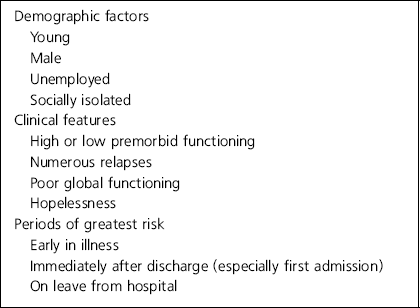
Those with schizophrenia share a number of risk factors for suicide with the general population (see Box 1). Young males are certainly over represented in most studies (Reference RoyRoy, 1982; Reference Caldwell and GottesmanCaldwell & Gottesman, 1990), although it should be noted that the increased relative risk in schizophrenia is substantially greater in females than males (Reference SeemanSeeman, 1986). Young patients with schizophrenia have even been found to be at greater risk of suicide than young people with affective disorders (Reference WaltzerWaltzer, 1984). In a recent psychological autopsy study of suicides by people under 35 years of age in the Greater Manchester area, 19% of victims had symptoms consistent with a diagnosis of schizophrenia; a much higher proportion than in similar studies of all ages (Reference Appleby, Cooper and AmosAppleby et al, 1999b ), suggesting suicides in this group are especially concentrated in the young. However, in a large population-based study Rossau and Mortensen (Reference Rossau and Mortensen1997) found the effect of age disappeared when other variables including duration of illness were taken into account. Hence it seems that while young age is a prominent risk factor in this group, it may reflect a far more complex concept encompassing stage and severity of illness.
Confirmed risk factors for suicide in schizophrenia
| Demographic factors |
| Young |
| Male |
| Unemployed |
| Socially isolated |
| Clinical features |
| High or low premorbid functioning |
| Numerous relapses |
| Poor global functioning |
| Hopelessness |
| Periods of greatest risk |
| Early in illness |
| Immediately after discharge (especially first admission) |
| On leave from hospital |
Regarding other socio-demographic factors, the socially isolated and unemployed have been found to be more at risk of suicide (Reference Drake, Gates and CottonDrake et al, 1984), although the presence of these may merely reflect disease progression. Marital status has not been found to be a consistent risk factor. Studies examining the effect of parental loss have produced mixed results, and to date have described diverse diagnostic groups (Reference Adam, Bouckoms and SteinerAdam et al, 1982) and not used blind data collection, thus making their results open to bias (Reference Peuskens, Dehert and CosynsPeuskens et al, 1997). This suggests the role of social isolation is difficult to quantify. Certainly the literature relating to ethnicity remains confusing, complicated by a lack of well-controlled studies in multiethnic populations.
Clinical factors
There appear to be two specific sub-groups at particular risk with regard to premorbid functioning. Those who experienced a high level of functioning before the onset of their illness are more likely to commit suicide, probably because of a heightened awareness of realistic losses (Reference Drake, Gates and CottonDrake et al, 1984). In addition, those who previously functioned at a lower level are also at increased risk, possibly reflecting poor coping skills and increased impulsivity (Reference Modestin, Zarro and WaldvogelModestin et al, 1992).
As would be expected, the presence of clinical depression has been found to be a significant risk factor for suicide (Reference RoyRoy, 1982), but what has been found to be more important in schizophrenia is hopelessness, as supported by a small prospective study by Cohen et al (Reference Cohen, Test and Brown1990).
Patients with a chronic schizophrenic illness characterised by numerous exacerbations and hospital admissions are at greater risk (Reference RoyRoy, 1982). In their case—control study of patients with schizophrenia, Drake et al (Reference Drake, Gates and Cotton1984) found those who committed suicide had previously reported a specific fear of ‘mental disintegration’ and further loss of functioning. This may of course be linked to the concept of hopelessness. Similarly, greater insight has been associated with higher suicide rates (Reference Amador, Harkavy-Friedman and KaspisAmador et al, 1996), although the relevance of the broad concept of insight into illness and its consequences has been hampered by the lack of adequate case-controlled studies.
The effect of positive symptomatology on suicidality is unclear, although persistent auditory hallucinations have been linked to suicidal behaviour in a number of retrospective studies (Reference Gallagher, Dinan and SheehyGallagher et al, 1997; Reference Brier and AstrachanBrier & Astrachan, 1984). However, suicidal command hallucinations have been found to be rare in both attempted and completed suicides (Reference RoyRoy, 1982). Recently, Kaplan and Harrow (Reference Kaplan and Harrow1999) conducted a prospective study of schizophrenic and schizoaffective patients, and found that while psychotic symptoms positively correlated with future suicide in both groups, this effect was cancelled out when the poor functioning of the schizophrenic group was taken into account. The authors suggested a ‘multi-factor model’ of suicide risk, whereby global functioning is actually more relevant than psychosis in schizophrenia. The relationship of negative symptoms is even more uncertain, with varying results from studies to date, further hindered by heterogeneous diagnostic samples (Reference Fenton, McGlashan and VictorFenton et al, 1997).
Studies examining the role of substance misuse in this group have also continued to produce inconsistent results. Alcohol has been suggested as a specific risk factor in older males with schizophrenia (Reference Heila, Isometsa and HenrikssonHeila et al, 1997), but evidence is lacking.
The reported effect of differing levels of neuroleptic medication is variable. In a case—control study Cheng et al (Reference Cheng, Leung and Lo1990) found that those who committed suicide were taking higher doses of medication, but suggested that this may indicate severity of disease, rather than any depressive side-effects of the drugs. The relationship between typical neuroleptics v. atypical neuroleptics and suicidal behaviour in schizophrenia is not known.
The majority of schizophrenics who commit suicide do so in the first 10 years of their illness, although their suicide rate remains elevated throughout their life time. A large proportion occur soon after discharge from hospital (Reference RoyRoy, 1982). Rossau and Mortensen (Reference Rossau and Mortensen1997) found the highest risk in their population-based study was after the first admission, during the first 5 days of in-patient care and particularly immediately after discharge. In the same study 22% of suicides occurred while the patient was on leave. Similar results have been reported in other studies, though why the incidence should be especially raised at this time is unclear. Non-compliance, adverse effects of neuroleptics and the role of post-psychotic depression have all been implicated, but often via single case reports or retrospective studies without adequate control groups.
Prevention options
Improved recognition of vulnerability
The fact that suicide is a relatively rare event has hampered not only the study of disease-specific risk factors, but also the generation of risk assessment tools. Certainly the data from Appleby et al (Reference Appleby, Shaw and Amos1999a ) suggest that the majority of suicide victims are thought of as low risk at prior psychiatric evaluation. However, some studies have emphasised the relevance of reported suicidal ideation. Heila et al (Reference Heila, Isometsa and Henriksson1998) retrospectively examined cases as part of a nationwide psychological autopsy study in Finland and found 52% of schizophrenic suicide victims had communicated suicidal intent and/or had made suicide attempts in the 3 months prior to committing suicide. This suggests that self-reported indicators of suicide intent are useful in identifying those most at risk, although as with most similar studies there remains the problem of retrospective bias because the authors utilised interviews with contacts to identify prior suicidal intent.
Lindelius and Kay (Reference Lindelius and Kay1973) were among the first to suggest that care in the community could make detection of vulnerability more difficult. This view was supported by Mortensen and Juel (Reference Mortensen and Juel1993), who compared cohorts in their Danish national case register study, covering a period from 1970 to 1987, when the number of available in-patient beds dropped by more than 50% and the suicide rate in schizophrenia rose considerably. The diagnosis of schizophrenia was not validated during the study however, which may have affected the authors' suggestion that the increase was a result of decreasing in-patient beds. There remains no objective evidence to support this hypothesis.
In a prospective study of 207 psychiatric patients Beck et al (Reference Beck, Steer and Kovacs1985) found the Beck Hopelessness Scale and the pessimism item on the Beck Depression Scale were powerful predictors of future suicide. The authors theorised that patients most at risk may have a long-standing negative set of cognitions that are reactivated at times of stress, possibly leading to suicide. But while the concept of hopelessness has been found to be important in schizophrenia, the lack of standardised depression tools for those experiencing clinical negative symptoms or drug side-effects is lacking, making recognition and comparisons between studies difficult.
Certainly close monitoring of in-patients and those recently discharged, particularly young men in the initial stages of schizophrenia, is important. The National Confidential Inquiry (Reference Appleby, Shaw and AmosAppleby et al, 1999a ) found that in almost one-quarter of in-patient suicides, ward design had hindered observations and both rate and mode of suicide were linked to in-patient environment. The inquiry has therefore recommended that all services review the physical structure of wards and avoid using facilities that have potential risks for acutely ill patients. Crammer (Reference Crammer1984) had previously discussed the need for careful consideration of the in-patient milieu, and suggested the construction of wards, their general therapeutic atmosphere and staffing changes may all handicap the observation of vulnerable patients and enable access to methods for suicide. It was recommended that these variables should be monitored by in-patient services, something that has had little attention in the intervening years.
Psycho-social interventions
There are no studies to support the effectiveness of psycho-social interventions on suicide rates. In the US Harkavy-Friedman and Nelson (Reference Harkavy-Friedman and Nelson1997) suggested a number of potential interventions in their review of the literature. These included existing services such as outreach teams and psychiatric emergency clinics, but also novel schemes such as small, short-stay units attached to casualty departments to provide crisis support. Short-term ‘foster’ programmes in the community and the use of education and support groups for both patients and their relatives (Multiple Family Therapy) have been tried in the US, especially in adolescents, but no data regarding their effect on actual suicide rates are available.
Given the role of hopelessness and negative cognitions in schizophrenia, the use of cognitive—behavioural therapy has been proposed as a way of addressing suicidal ideation (Reference Cohen, Test and BrownCohen et al, 1990). But, somewhat in contrast, it has also been suggested that doctors actually need to acknowledge patients' losses and low selfesteem, and not over emphasise high expectations. The latter approach was born out of a retrospective examination of the content of psychotherapy sessions of patients with schizophrenia who went on to commit suicide (Reference Cotton, Drake and GatesCotton et al, 1985), which proposed that too unrealistic an approach may actually be damaging to young, chronic patients.
Pharmacological interventions
In a national study Heila et al (Reference Heila, Isometsa and Henriksson1999) retrospectively examined all suicides committed over 1 year and found one-third of schizophrenic suicide victims were non-compliant with medication and over half of those in an active phase of illness were prescribed insufficient levels of neuroleptics. Seventy-eight per cent of the suicides occurred during the active phase of illness, suggesting that inadequate treatment of psychosis may be an important factor. However, there is a lack of evidence that clinical measures such as compliance therapy and assertive outreach can lead to consistent reduction in suicide rates (Reference Appleby, Shaw and AmosAppleby et al, 1999c) and therefore while compliance may be a problem it is unclear how to rectify this, especially given the great strain already placed on funding for psychiatric services.
Clozapine has been reported as significantly reducing suicidality, with one report (Reference Meltzer and OkayliMeltzer & Okayli, 1995) of an 85% decrease in suicidal ideation and attempts in a 2-year follow-up of treatment resistant patients, associated with an improvement in depression and hopelessness. However, the group studied was diagnostically heterogeneous, the treatment-resistant patients were offered additional regular group therapy and there was no adequate control group, all of which casts doubt on the results. In fact, a ‘rebound’ phenomenon of an increase in suicide rates after clozapine treatment has been described (Reference Walker, Lanza and ArellanoWalker et al, 1997) in one national sample. However, as this increase did not differ with length of time treatment-free, it may be that this was a reflection of disease progression or a result of reduced monitoring.
It is also possible that treatment-resistant schizophrenia may represent a specific sub-group, and that these results may not be generalisable to other patients with schizophrenia. Few studies have examined the effect of other atypical antipsychotics on suicidality, but it has been suggested that this area demands further attention given the reduced tendency of atypical drugs to produce the adverse effects previously linked to non-compliance and suicide (Reference Palmer, Henter and WyattPalmer et al, 1999).
Possible areas for future research
What is apparent from current research is that not only is there a relative lack of reliable studies to support hypotheses concerning risk factors, but these very factors may well change during the course of an individual's illness. This is a concept that has certainly not been adequately addressed.
In their review Palmer et al (Reference Palmer, Henter and Wyatt1999) commented on the lack of information regarding risk factors for suicide that may be specific to the earlier phases of schizophrenia, before a diagnosis is made or any hospital admission has occurred. There is also a lack of information about the relation of risk factors to age and gender. Heila et al (Reference Heila, Isometsa and Henriksson1999) have described differences in risk factors in various treatment phases. They found that nagative treatment attitudes were most common in in-patient suicides, while comorbid alcoholism and paranoia were more prevalent in recently discharged suicides. However, this study used no control group and, as with all psychological autopsy studies, information gathering was not blind and thus well illustrates the main problems with current research in this field.
The rarity of suicide has meant studies have generally included small numbers with unstandardised and heterogeneous diagnoses. The majority have been either population-based psychological autopsy studies, which are retrospective and cannot exclude bias owing to lack of blindness in data collection, or smaller groups of retrospective case studies also involving uncertainties regarding bias and levels of information. In addition, most have focused on behaviour in and around hospitalisation, possibly only detecting immediate behavioural antecedents to suicide and ignoring young people with developing symptoms. Similarly the focus has been on attempted and completed suicides, although it is possible that these represent different groups. The lack of consensus on risk factors and adequate assessment tools has made it difficult to identify vulnerable patients for prospective studies.
Clinical implications
So how can research expand our knowledge of the risk factors in this group and what can clinicians do to improve the care and management of their patients? The National Confidential Inquiry (Reference Appleby, Shaw and AmosAppleby et al, 1999a ) has recommended that all staff receive formal training in the recognition and management of suicide every 3 years. Future national standards and revalidation requirements may also reflect these recommendations. However, until it is clear we are asking the right questions with regard to risk factors, it may be difficult to be sure we are offering the best training in the detection and management of those most vulnerable.
First and foremost is the issue of research. This needs to incorporate more rigorous study design. Where possible, prospective studies should be employed with strict diagnostic criteria, suitable control groups and blind ratings. Longitudinal studies would allow a more complete analysis of contributing risk factors, including those impacting away from hospital services. Turner et al (Reference Turner, Korslund and Barnett1998) described the use of a semi-structured interview to assess vulnerability to suicide in schizophrenia, and standardised tools to assess depression, hopelessness and suicidal ideation in this group should be a focus for development. Greater evaluation of the impact of drug and psychological treatments on suicide rates is also needed.
In the meantime how can current clinical practice be optimised? All staff need dedicated training in both risk assessment and management, something that is too often left to experience to provide. This could encompass current knowledge regarding clinical features and periods associated with increased risk. Training should also emphasise the importance of addressing comorbid conditions that have been found to heighten risk, such as depression and loss of functioning. On a managerial level there needs to be a prioritisation of resources for patients at highest risk, and greater attention given to the environment in which they are treated. The simple measure of improving record keeping and care plans may help ensure the entire clinical team is aware of all the risk factors present and how they can be minimised. This also implies the need for good communication between the patient's multi-disciplinary team, general practitioner, carers and relatives; something that is often criticised in local inspections of individual suicides.
Finally, the National Confidential Inquiry (Reference Appleby, Shaw and AmosAppleby et al, 1999a ) recommends a multi-disciplinary review of all suicides. This should take the form of a non-judgemental analysis with the aim of improving future practice. It would also seem sensible to audit whether such procedures do indeed affect the practices and confidence with which professionals deal with vulnerable patients, and whether there is a subsequent impact on suicide rates. It is essential we try to implement these kinds of proposals in both future research and current practice given the fact that suicide in schizophrenia remains one of the greatest unmet challenges for psychiatry.


 Open access


eLetters
No eLetters have been published for this article.