




Introduction
The timing and mechanism(s) by which maize arrived in North America after its domestication has been a topic of investigation for over a century (Ford Reference Ford1981, Reference Ford and Ford1985; Guernsey and Kidder Reference Guernsey and Kidder1921, 41–42; Kidder Reference Kidder1924, 118–119; Mangelsdorf Reference Mangelsdorf1947; Mangelsdorf and Reeves Reference Mangelsdorf and Reeves1939; Matson Reference Matson1991). At the time of Spanish contact, Europeans arrived on a landscape rich with evidence for substantial agricultural production. Large agriculturally dependent Pueblos were seen along major riverways like the Rio Grande, and the remains of large Hohokam canals could be seen across the waterways of Phoenix (Kantner Reference Kantner2004). The major crops grown by these groups, the well-known triad of maize, beans, and squash, were known to be of Mesoamerican origin. Still, the temporal depth of agriculture in the region and its method of northward expansion remained unclear. Early examinations of the Preceramic record of southern Arizona, most notably by Ted Sayles, identified substantive evidence for occupation of the region by mobile hunter-gatherers. During his latest preceramic culture-historical stage, the San Pedro phase, Sayles noted an increase in occupational density, the appearance of storage pits and an increase in the formality of pithouse architecture. Sayles was convinced that maize cultivation was responsible, but he was unable to find direct evidence of its use (Sayles Reference Sayles1983).
Haury (Reference Haury, Braidwood and Willey1962) Highland Corridor Model provides one of the first data-driven attempts to explain the arrival of maize within the Southwest based on available data. At the time, high elevation sites like Cienega Creek near Point of Pines in Arizona, as well as Bat Cave (Dick Reference Dick1965) and Tularosa Cave (Martin et al. Reference Martin, Rinaldo and Bluhm1954) in New Mexico, produced the earliest evidence for maize cultivation in the Southwest. Haury reasoned that maize cultivation began when Archaic foragers who actively managed plants like chenopodium and amaranth encountered maize-cultivating groups. They ultimately moved the crops and knowledge to grow them northward through the highland corridor of the Sierra Madre Mountains. The Highland Corridor, he proposed, showed early maize was adapted to mesic environments above 7000 feet. He supposed that this spread of crops and knowledge had occurred around roughly 3000 BC, or 5000 cal BP. In the nearly 60 years since the appearance of Haury’s model, details regarding early agriculture in the Southwest have taken some dramatic turns. Arguments have been made for a very late entry of maize at 2500 cal BP (Berry Reference Berry1982), or very early entry closer to 5000 cal BP (Gregory Reference Gregory1999; Vint Reference Vint2017). Some implicate Mesoamerican migrants as the agricultural pioneers of the Southwestern Archaic (Berry Reference Berry1982; Berry and Berry Reference Berry, Berry and Condie1986; Carpenter et al. Reference Carpenter, Sanchez, Villalpando and Schlanger2002, Reference Carpenter, Sanchez, Sanchez and Vierra2017), while others see less evidence for wholesale migration, and argue for simple exchange of seeds and knowledge (Hard Reference Hard1986; Haury Reference Haury, Braidwood and Willey1962; Minnis Reference Minnis, Cowan and PJ1992; Roth Reference Roth2018; Huckell, Reference Huckell1988; Wills Reference Wills1988a; Reference Wills1988b). Some have advocated the arrival of maize represented a profound shift in hunter-gatherer lifeways (Huckell Reference Huckell1990) and others see it as a rather insignificant shift whose importance would only grow in the later periods of Southwestern prehistory (Haury Reference Haury, Braidwood and Willey1962; Minnis Reference Minnis, Cowan and PJ1992; Wills Reference Wills, Price and Gebauer1995). We also now know that maize appeared in lowland valleys as early as in mesic environments (Huckell Reference Huckell1988, Reference Huckell1990).
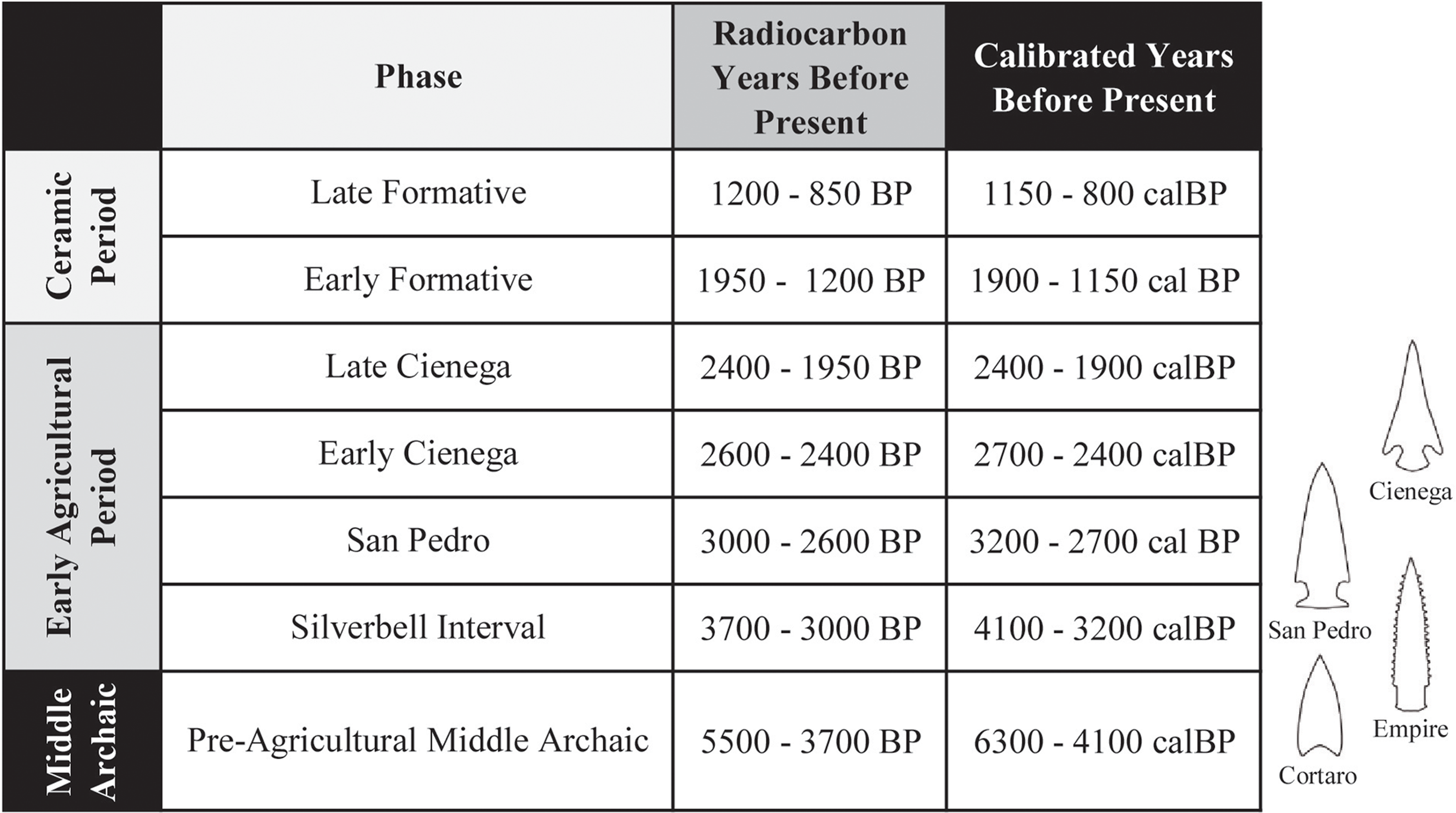
The study of early agricultural production in the Southwest was significantly altered in the late 1980’s and 1990’s as the work of a series of archaeologists uncovered evidence for relatively large pithouse villages associated with maize during the period between 3200 BP and 1800 BP (Carpenter et al. Reference Hard, MacWilliams, Roney, Adams, Merrill, Staller, Tykot and Benz2009; Gregory Reference Gregory2001; Hard Reference Hard1998; Hill, Reference Hill2001; Huckell Reference Huckell1990, Reference Huckell1995, Reference Huckell1996; Mabry Reference Mabry1998a; Reference Mabry1998b; Roth Reference Roth1989). This research strengthened our understanding of early agricultural lifeways, establishing the use of both intra- and extra-mural storage features, suggesting important trade connections with Sonoran groups, providing evidence for canal irrigation, and indicating a pattern of increased alluvial land use and sedentism. To emphasize the importance of this economic shift, Huckell (Reference Huckell1996) suggested the use of the term Late Archaic/Early Agricultural Period to refer to the period (current culture-historical nomenclature for the region may be found in Figure 1). In the basin and range region of the southern Southwest, the Early Agricultural Period was separated into two distinct culture historical intervals known as the San Pedro (3200–2700 cal BP) and Cienega (2700–1900 cal BP) phases. These findings became the foundation for a new model of maize adoption in the region. In this model, (1) maize alone was the first adopted cultigen in the southwest; (2) maize cultivators made extensive use of floodplain environments along permanent rivers; (3) the movement of maize followed a lowland route through alluvial corridors; and (4) maize use coincided with increased residential sedentism and the development of canal irrigation. Jane Hill (2001) and Peter Bellwood (Reference Bellwood2001), argued for a southern origin for Proto-Uto-Aztecan speakers and suggested that this northward expansion of agriculturalists might be related to a significant migration from Central America during the period.
Culture Historical Schema for Safford, Arizona (adapted from Vint 2017 and Neely Reference Neely, Doolittle and Neely2004).

It is now quite clear from sites such as McEuen Cave (AZ), Clearwater (AZ), Old Corn Site (NM), and Las Capas (AZ), that the introduction of maize to the region occurred prior to the San Pedro phase, sometime before 3600 BP during the temporal interval previously known as the Middle Archaic (Roth 2018a; Roth and Huckell Reference Roth and Huckell1992; Sliva Reference Sliva2015; Thiel and Mabry Reference Thiel and Mabry2006). To acknowledge the unique farmer-forager adaptation that arose during this period and our paucity of knowledge regarding it, it is now common to refer to this temporal unit as the Silverbell Interval (4100–3200 cal BP), separating it from the earlier portions of the pre-agricultural Middle Archaic (6300–4100 cal BP) (Vint Reference Vint2017). Unfortunately, our knowledge of these cultivators and their cultivation practices is limited, and specific criteria separating the behavior of cultivators representing the Silverbell Interval and later phases of the Early Agricultural Period have yet to be derived. As a result, the utility and meaning of the Silverbell Interval as a culture-historical unit remains unclear despite increasing popularity within the broader literature.
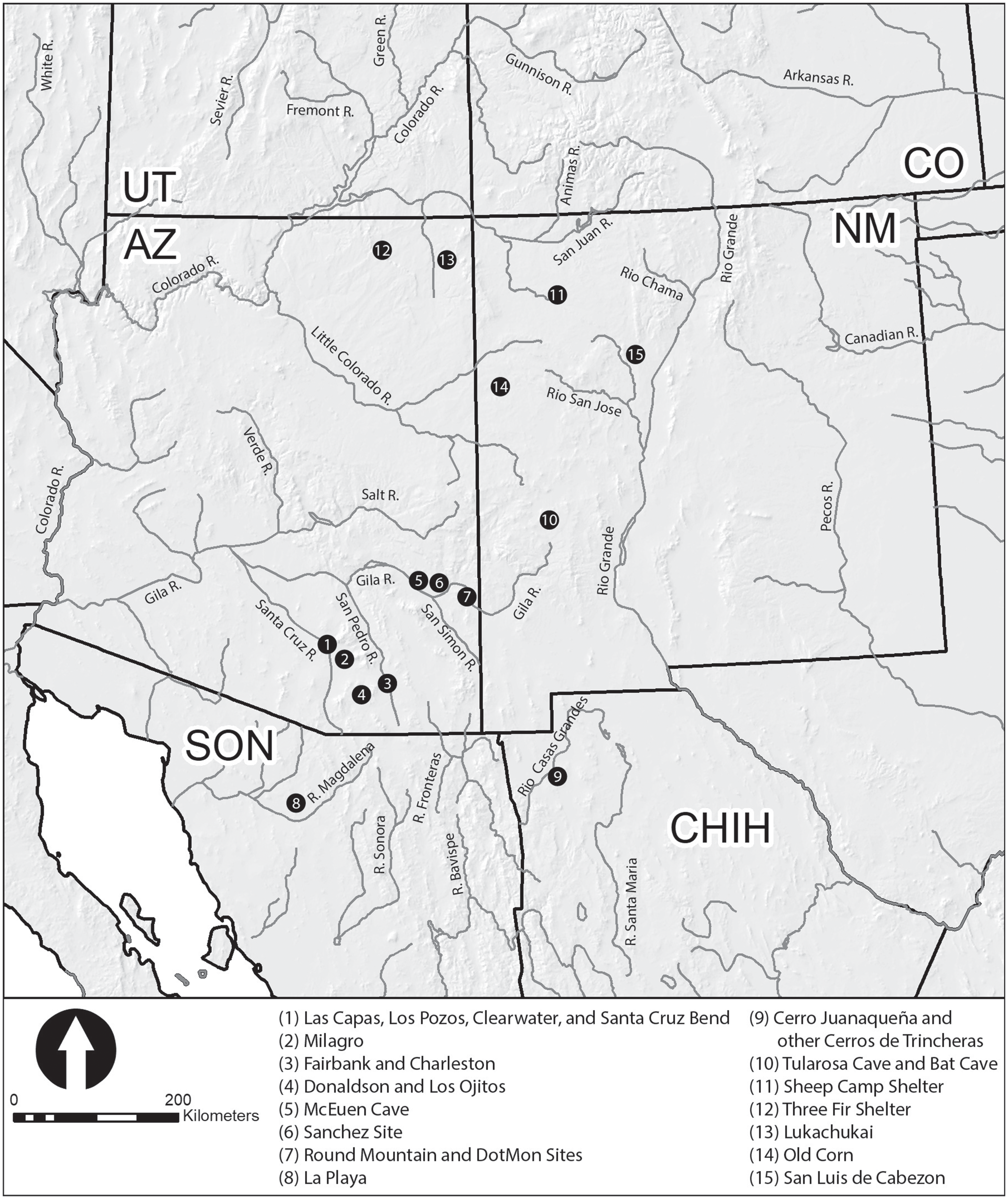
Regardless, these sites have highlighted the variety of environmental contexts within which early maize was cultivated (see Figure 2). For example, the earliest dates from the Clearwater site in Tucson suggest a temporary occupation of the Santa Cruz River floodplain by cultivators associated with Cortaro projectile points at roughly 3600 BP. By 3500 BP, groups living in small pithouse communities and practicing canal irrigation occupied the same location (Thiel and Mabry Reference Thiel and Mabry2006). Additional dates from the Santa Cruz River floodplain in excess of 3600 BP were also obtained on maize fragments from a Cortaro point-bearing stratum at the site of Las Capas (Whittlesley et al. Reference Whittlesey, Hesse and Foster2010). Meanwhile, sites like McEuen Cave, located in the Mogollon Rim country, suggest that small-scale cultivation occurred not only on the floodplain but within upland and small valley settings at higher elevations (Huckell et al. Reference Huckell, Shackley and Huckell2001).
Map showing the location of McEuen Cave along with other well-known Early Agricultural Period sites in the broader southwest.

As a result, the traditional narrative of migrant farmers moving northward through alluvial corridors has been revised. Merrill et al. (Reference Merrill, Hard, Mabry, Fritz, Adams, Roney and MacWilliams2009) provides a more modern synthesis, suggesting that the origins of the Proto-Uto-Aztecan speech community lie in the Great Basin and not Central America. As a result, there is no connection between this language group’s dispersal and maize’s movement. Instead, they advocate that maize moved northward via group-to-group diffusion. In this model, maize was passed through communities of existing broad-spectrum foragers in the southwest as the region shifted climatically out of the Middle Holocene Warm Period and into the Late Holocene Wet Period (Hall Reference Hall Stephen and Bradley2017).
Our focus in this paper is on McEuen Cave (AZ W:13:6 ASM), a large bedrock shelter located within the Upper Fishhook Canyon drainage, just north of Fort Thomas, Arizona. Despite a long history of research, our understanding of the cave’s archaeological record and implications for the Archaic history of the Southern Southwest remains incompletely understood. This paper provides the results of new radiocarbon dating efforts from the McEuen Cave vegetal assemblage. These dating efforts include maize and cucurbit remains from the Arizona State Museum and a small number of additional samples provided to Lisa Huckell for analysis by the Safford BLM in 1997. These radiocarbon ages are utilized to address three primary questions regarding the pre-contact agricultural occupation of McEuen cave, including:
-
1. Was cultivation within the Fishhooks drainage and nearby drainages continuous over the entirety of the Early Agricultural Period?
-
2. Did the intensity of occupation within the cave vary over time?
-
3. What are the earliest ages associated with maize and cucurbits within the McEuen cave assemblage, and how do these compare to other dated sites with Middle Archaic/early Silverbell Interval cultigens in the Southwest?
Natural history, geology and stratigraphy of McEuen Cave
The Fishhooks Wilderness is a roughly 42.5 km2 wilderness area in east-central Arizona, just northwest of Safford (see Figure 2). It is bordered to the north by the San Carlos Apache Reservation and to the south by the Gila River Valley and the town of Fort Thomas. Elevations range from approximately 1219 masl along the southern border of the wilderness to nearly 2012 masl near the border with San Carlos. Hydrologically, it sits at the headwaters of five ephemeral washes: Grapevine, Steer Springs, Diamond Bar, Fishhook, and Dutch Pasture. The bedrock geology is composed largely of Tertiary volcanics including rhyolites, basalt, tuffs/ignimbrites and volcanic breccias (Simons et al. (Reference Simons, Theobald, Tidball, Erdman, Harms and Griscom1987). The tuffs derived from these volcanic extrusions are easily friable materials and have created a landscape littered with caves, small caverns, and alcoves.
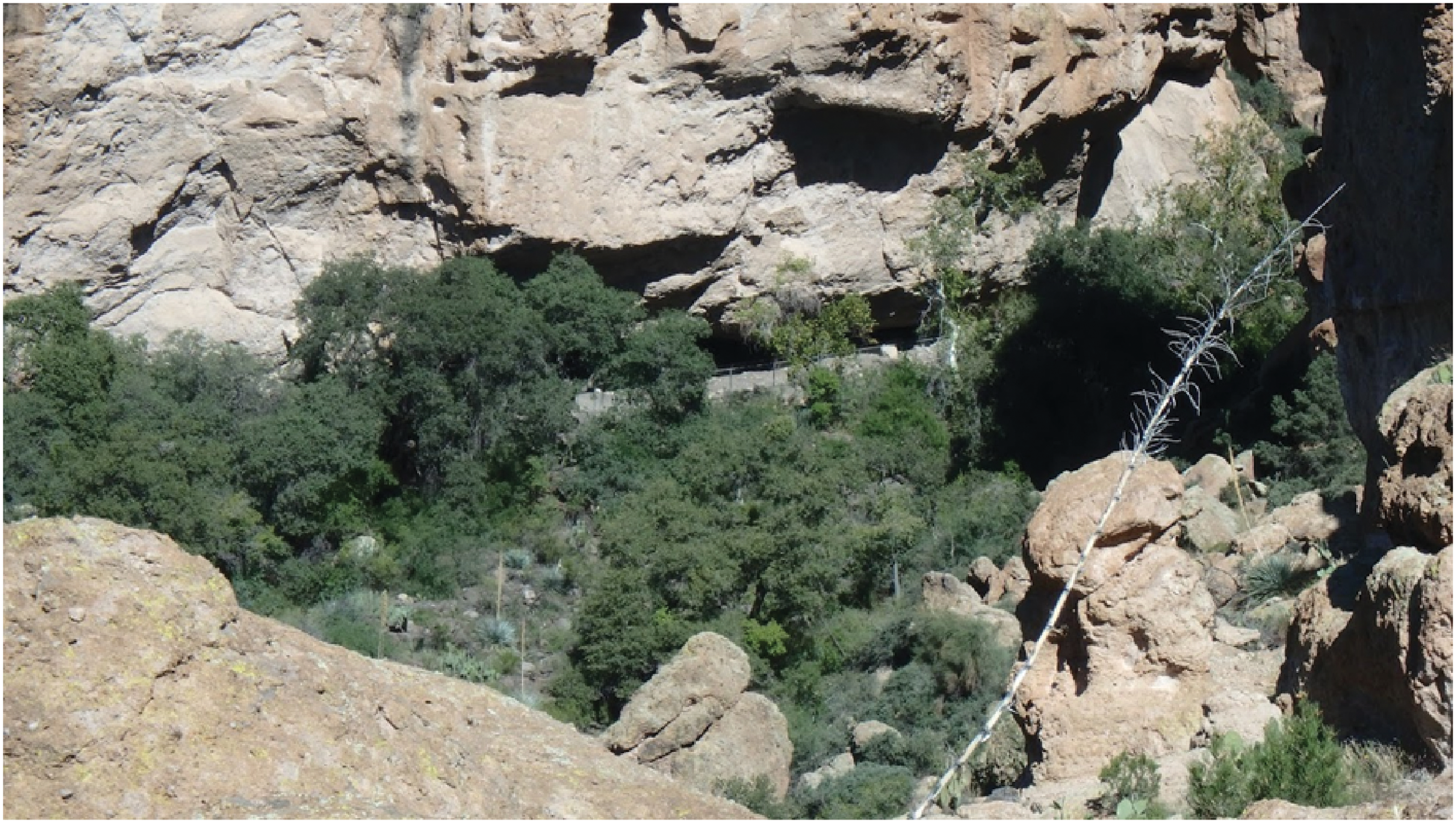
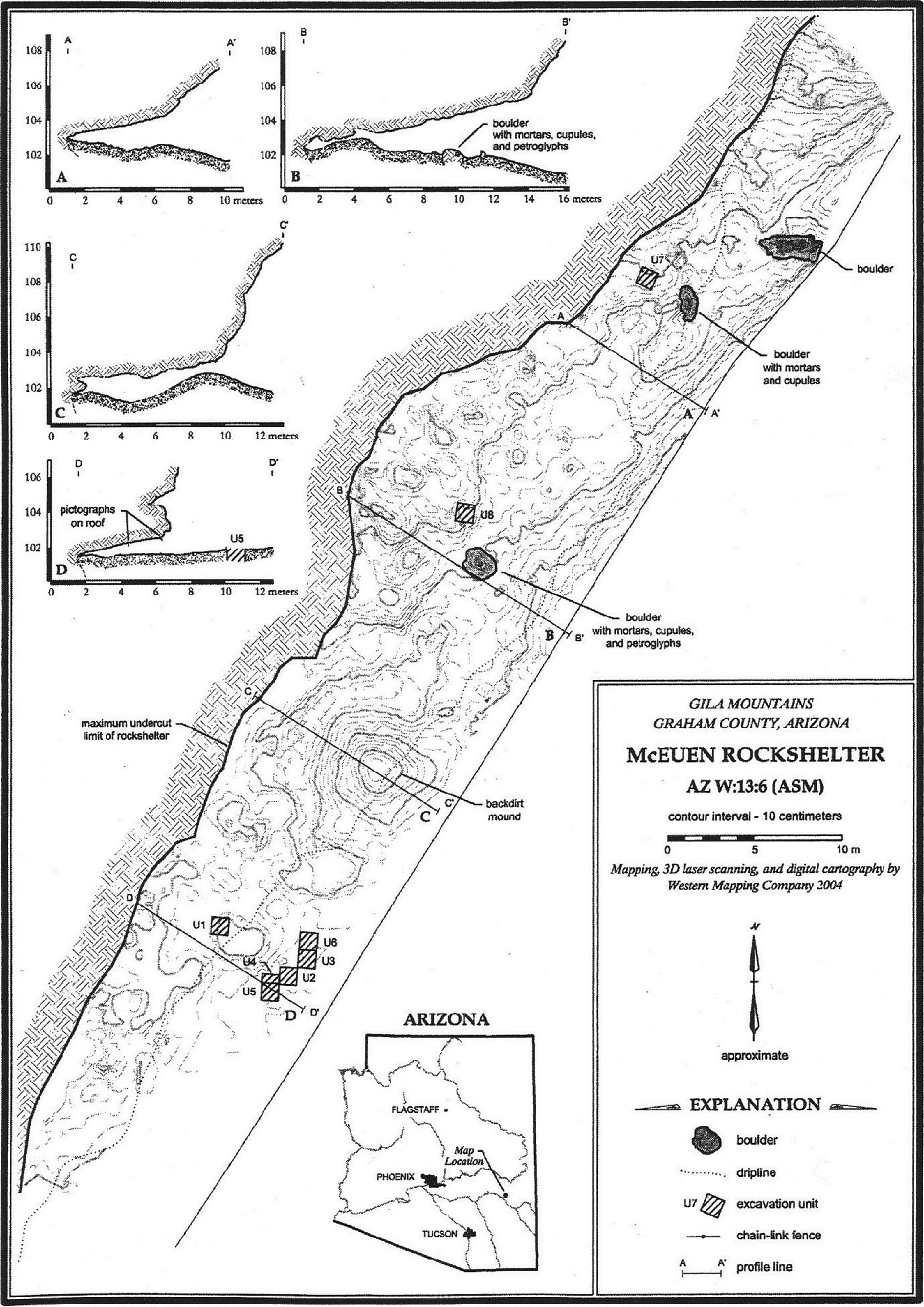
The Fishhook Canyon drainage, where McEuen is located, is composed of three smaller headwater drainages: Upper Fishhook, Middle Fishhook, and Lower Fishhook. It is a tributary of McKinney Canyon, which runs northeast–southwest and drains into the Gila River. McEuen Cave is located in Upper Fishhook, roughly 16 km as the crow flies from the Gila River Floodplain and just below the broad volcanic surface known as Ash Flat, which separates the Gila Mountains from the Natanes Mountains to the north. The canyon in the area near McEuen is characterized by high vertical walls in excess of 40 m and a width of roughly 30 m (Figure 3). The active channel currently sits roughly 20 m away from the rockshelter itself to the east. The cave is a product of this channel, created during a period in the past when the main channel impinged upon the western wall of the drainage, cutting nearly 12 m into the soft, erodible volcanics (Figure 4). Within the Fishhook drainage there are many eroded tanks that often contain water throughout the summer months, particularly during the summer monsoons. These tanks, in addition to several nearby springs would have provided fairly reliable fresh water for consumption and potentially for irrigation during years of average to above average precipitation.
McEuen Cave, view from the ridge above the cave looking down on the fenced shelter and main Fishhooks Canyon drainage.

Topographic map of the McEuen Cave shelter interior showing the location of excavation units from the 1997 and 2001 investigation by M. Steven Shackley, Bruce Huckell and Lisa Huckell.

The stratigraphy of McEuen cave is characterized by three principal depositional units. The first and deepest, Unit 1, is a product of past fluvial activity, a channel lag, characterized by cobble to boulder gravel in a sand matrix. This unit is overlain by a cultural stratum, Unit 2, a dark gray fine sandy silt over 1 meter thick in portions of the cave. This unit shows no obvious stratification. While the presence of Middle Archaic diagnostics within the lowest excavated levels at the cave does suggest some limited separation of artifactual material by depth, the excavation of cave sediments both by its prehistoric occupants and much later by illegal excavation and looting complicates one’s ability to associate specific depths below the surface with any particular period of occupation. A final deposit, Unit 3, reflects a thin (5–7 cm) layer of brown sand post-dating the prehistoric occupation of the cave.
The region is characterized by a number of different vegetation communities. Lower elevations are dominated by mesquite desert scrub which gives way to a resource-rich Madrean forest community in the upper elevations (Davidson and McKerrow, Reference Davidson and Alexa2016). The thin soils that characterize ridgelines between drainages in these high elevation areas are often home to yucca (Yucca spp.), cacti (multiple genera), amaranth (Amaranthus spp.), and purslane (Portulaca oleracea), while slopes and drainages are choked with pinyon pine (Pinus edulis), scrub and tree oak (Quercus spp.), and catclaw acacia (Acacia greggii). The wide variety of available economic plants and the wilderness area’s position between the Gila River floodplain and the Mogollon Rim make it an attractive location for mobile hunter-gatherers planning to take advantage of vertically stacked resources.
History of research and previous radiometric dating efforts at McEuen Cave
Research efforts at McEuen Cave began after the rockshelter was first identified by local Glenn McEuen and a companion in 1934. McEuen identified several burials, artifacts, and cultigens eroding out of the locality and sought assistance from archaeologist Byron Cummings, then the Director of the Arizona State Museum and head of the department of Archaeology (Bostwick Reference Bostwick2006). The partnership between McEuen and Cummings would not last long, ending after a dispute over the compensation for McEuen’s sons’ work at the site. All excavations ceased in 1935 after Cummings returned to find extensive vandalism and looting at the site, a practice that continued for nearly 40 years. The Arizona State Museum now holds a remarkable collection of perishable and nonperishable artifacts, including sandals, basketry, netting, cradle boards, atlatls, gourd containers, seed bags, plant remains, and flaked stone tools. These objects are attributable both to Cummings’ excavations at the site and to looted materials recovered either through the efforts of law enforcement or the voluntary surrender of looted objects.
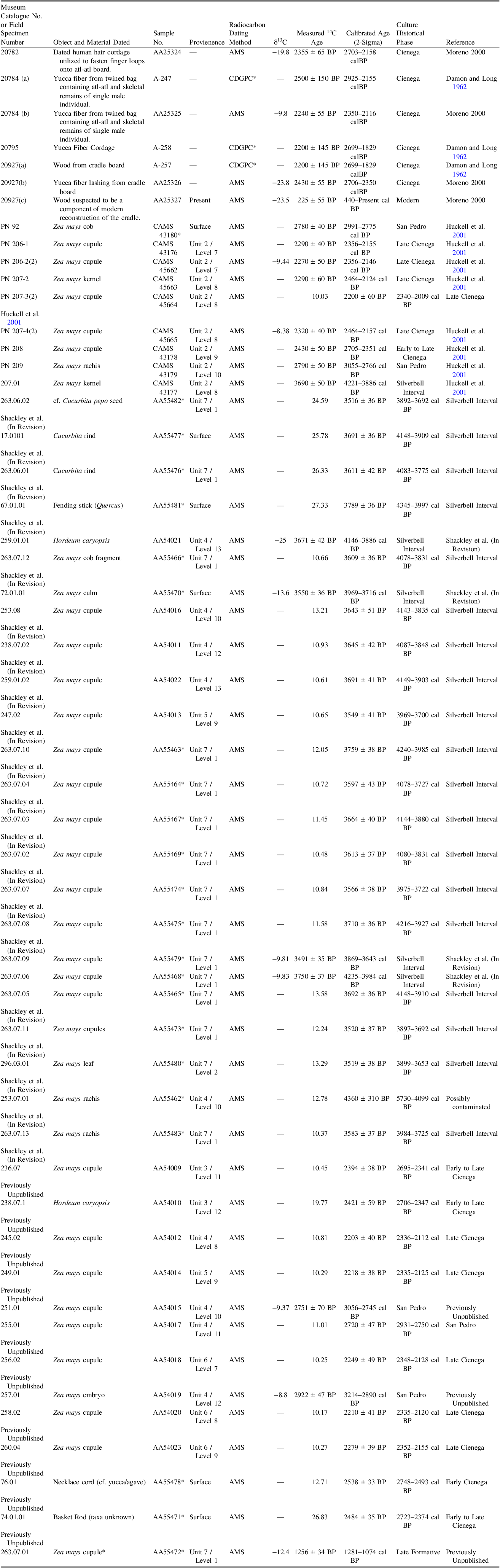
In 1961 Emil Haury and then graduate student Mary Elizabeth King submitted three objects for radiometric dating at the University of Arizona Radiocarbon Laboratory a yucca fiber bag (Cat. No. 20784), a fragment from a cradle board made of yucca/agave fiber and wood (Cat. No. 20927), and yucca cordage (Cat. No. 2079) (Damon and Long Reference Damon and Long1962). These objects date within the Cienega phase of the Early Agricultural Period. The yucca cordage (Cat. No. 2079) and cradle board fragment (Cat. No. 20927) produced identical dates of 2200 ± 145 BP (2699–1829 cal BP at 2σ: A-258 and A -257). The yucca fiber bag (Cat. No. 20784) yielded a date of 2500 ± 150 BP (2925–2155 cal BP at 2σ: A-247). The conventional dates for these objects as well as the 54 other radiocarbon determinations previously run on cultigens and artifacts from McEuen Cave are shown in Table 1.
Radiocarbon determinations from previous research and excavation at McEuen Cave. All dates were calibrated using OxCal calibration software and the IntCal20 calibration curve. Provenience information for all dates from the 1997 and 2001 investigations is provided here. The unit values correspond to the excavation units shown in Figure 4. Levels correspond to the arbitrary 10 cm intervals within which each unit was dug. As noted within the text, this excavation identified no discrete cultural stratigraphy but rather a single, thick, highly disturbed cultural fill.

*indicates that a maize or squash sample is uncarbonized, all others carbonized
Theresa Moreno sought to replicate these dates in 2001 using AMS rather than conventional counting methods by resubmitting two of these objects, the yucca fiber bag (Cat. No. 20784) and the cradle board (Cat. No. 20927), for dating at the University of Arizona. These results confirm a Cienega phase occupation of the cave, yielding dates of 2240 ± 55 BP (2350–2116 cal BP at 2σ: AA25325) and 2430 ± 55 BP (2706–2350 cal BP at 2σ: AA25326), respectively. They also suggested that the cradleboard had been previously repaired, as wood from one segment of the object returned a modern AMS date of 225 ± 40 (AA25327). Finally, Moreno dated, a complete atl-atl (Cat. No. 20782; Moreno Reference Moreno2000, Figure 1). The atlatl date was derived from human hair, which, along with yucca fiber, secured the finger loops to the board. It yielded a date of 2355 ± 65 BP (2703–2158 cal BP at 2σ: AA25324). Taken together, these objects provided a slightly more precise age range for the occupation of the cave between 2700 and 2100 cal BP.
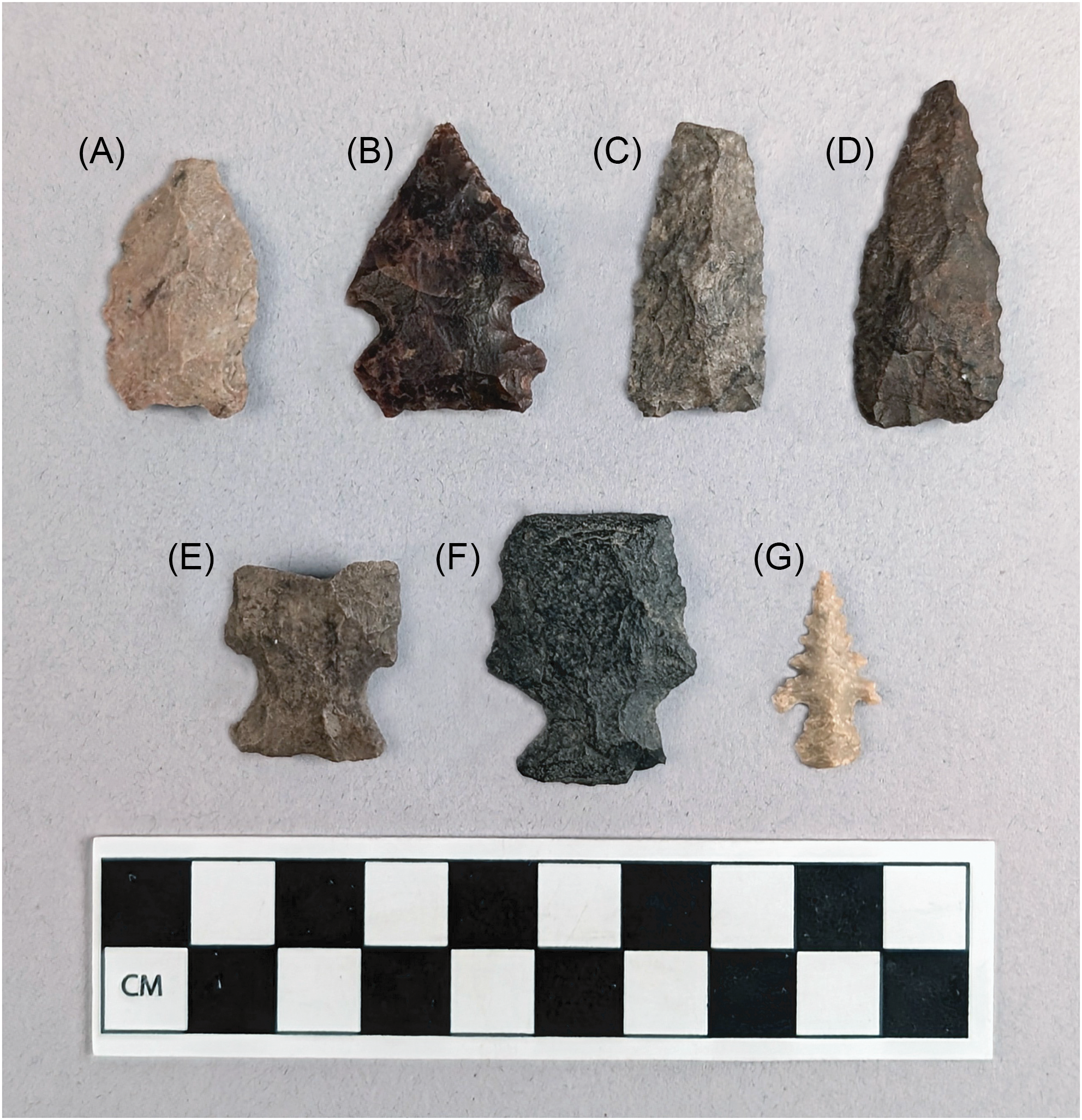
The abundance of dated Early Agricultural Period remains was one factor that drove Bruce and Lisa Huckell, along with M. Steven Shackley to conduct additional excavations and investigations at the cave in the late 1990s and early 2000s. The 1997 excavations included the excavation of two units, Unit 1 and Unit 2, on the southwestern margin of the cave (see Figure 4), both of which were rich in artifactual and particularly vegetal remains (Huckell et al. Reference Huckell, Shackley and Huckell2001). Eight maize fragments from Unit 2, and a single surface cob were all submitted for AMS dating (see Table 1). These samples produced two ages within the San Pedro phase and an additional five within the Cienega phase. A single maize kernel, yielded a radiocarbon age of 3690 ± 50 BP (4221–3886 cal BP at 2σ; CAMS 43177), right at the tail end of the Middle Archaic during the early Silverbell Interval. Middle Archaic point types including San Jose, Chiricahua, and Cortaro (Huckell et al. Reference Huckell, Shackley and Huckell2001) were found in the deepest sediments at the site (Figure 5).
Projectile points recovered from McEuen Cave including San Jose (A), Chiricahua (B), Cortaro (C, D), San Pedro (E, F) and Cienega (G) types.

This initial testing was succeeded by a subsequent program of NSF funded excavations in 2001 during which an additional six units were excavated, four directly adjacent to Unit 2 (Units 3, 4, 5, and 6) and two, Units 7 and 8, placed further NE within the shelter margin (see Figure 4). These investigations were focused not only on the San Pedro and Cienega phase occupation of the cave but also on identifying additional evidence for earlier maize cultivation based on the single early Silverbell Interval sample found in 1997. These excavations uncovered a plethora of materials for radiocarbon dating, including additional examples of maize and cucurbits. Samples from this second season of excavation efforts included an additional 25 dates representative of the late-Middle Archaic / early Silverbell Interval occupation of the cave, three dates within the San Pedro Phase (Table 1: AA54015; AA54017; AA54019), and nine dates that fall within the Cienega Phase (Table 1: AA54009; AA54010; AA54012; AA54014; AA54018; AA54020; AA54023; AA55478; AA55471) (Shackley et al. in revision). A single Late Formative date was also obtained on maize (AA55472). The remaining twelve dates were all late Middle Archaic / early Silverbell Interval.
Dated materials from Units 4 and 7 yielded almost exclusively early Silverbell Interval ages (>3500 BP) and include examples of both maize and at least one species of domesticated cucurbit (cf. Cucurbita pepo) (see Table 1). As described in Shackley et al. (in revision), the remains from Unit 7 appear to be associated with a single, small, distinct storage pit identified in profile within the cave stratigraphy. The importance of these materials is three-fold. First, the maize cobs recovered are among the oldest uncarbonized cobs thus far known in the greater Southwest and permit morphological (Huckell Reference Huckell, Staller, Tykot and Benz2006) and in-progress DNA analyses. Second, the site is the first locality to produce multiple dated samples of domesticated cucurbits that date to the late Middle Archaic / early Silverbell Interval. Finally, while subterranean storage pits are relatively well-known features during the Middle Archaic within the Great Basin (McDonald Reference McDonald1992), their use during the same period in the North American Southwest is less well documented. Additional storage pits have been found within the floodplain of the Santa Cruz at the similarly aged Clearwater site (Thiel et al. Reference Thiel and Mabry2006). Identifying such a feature at McEuen helps refine our understanding of food storage practices during the period.
These results indicate strong evidence for substantive occupation of the cave during the early Silverbell Interval and Cienega phases, with some limited evidence for occupation during the San Pedro phase. This relative paucity of San Pedro-aged paleoethnobotanical materials is anomalous, given the large number of diagnostic San Pedro points recovered (n = 13). The relative absence of remains from this period may be a product of sampling error rather than an occupational hiatus or evidence of less intensive cave use during that period.
A principal goal of our current investigation is clarifying the temporal interval over which the cave was occupied and, by proxy, the length of time over which the local area served as a center of cultivation. McEuen is far from the only rockshelter present in the wilderness, and nearly all large rockshelters in the area are rich with vegetal remains, including maize and cucurbits (Birkmann and Huckell Reference Birkmann and Huckell2021). Unfortunately, no other site aside from McEuen has been formally investigated or subject to additional dating efforts. We hope that additional sampling of morphologically early maize will help to clarify the nature and extent of San Pedro Phase occupation within the cave, which is, as of now, underrepresented in comparison to preceding and subsequent periods.
2023 Radiocarbon Dating Program
In order to generate a radiocarbon dataset for analysis, the authors sought additional paleoethnobotanical samples from two sources, the previously collected McEuen Cave materials primarily attributable to Byron Cummings housed at the Arizona State Museum as well as a small number of cultigen samples provided to Lisa W. Huckell by the Arizona BLM.
The Arizona State Museum Assemblage
The authors spent four days between March 13 and 16, 2022, at the Arizona State Museum reviewing the contents of the McEuen Cave collection and selecting additional samples for radiometric dating. While much of the original assemblage has been repatriated, hundreds of assorted basketry fragments, sandals, paleoethnobotanical samples, and artifacts remain within the curated museum assemblage.
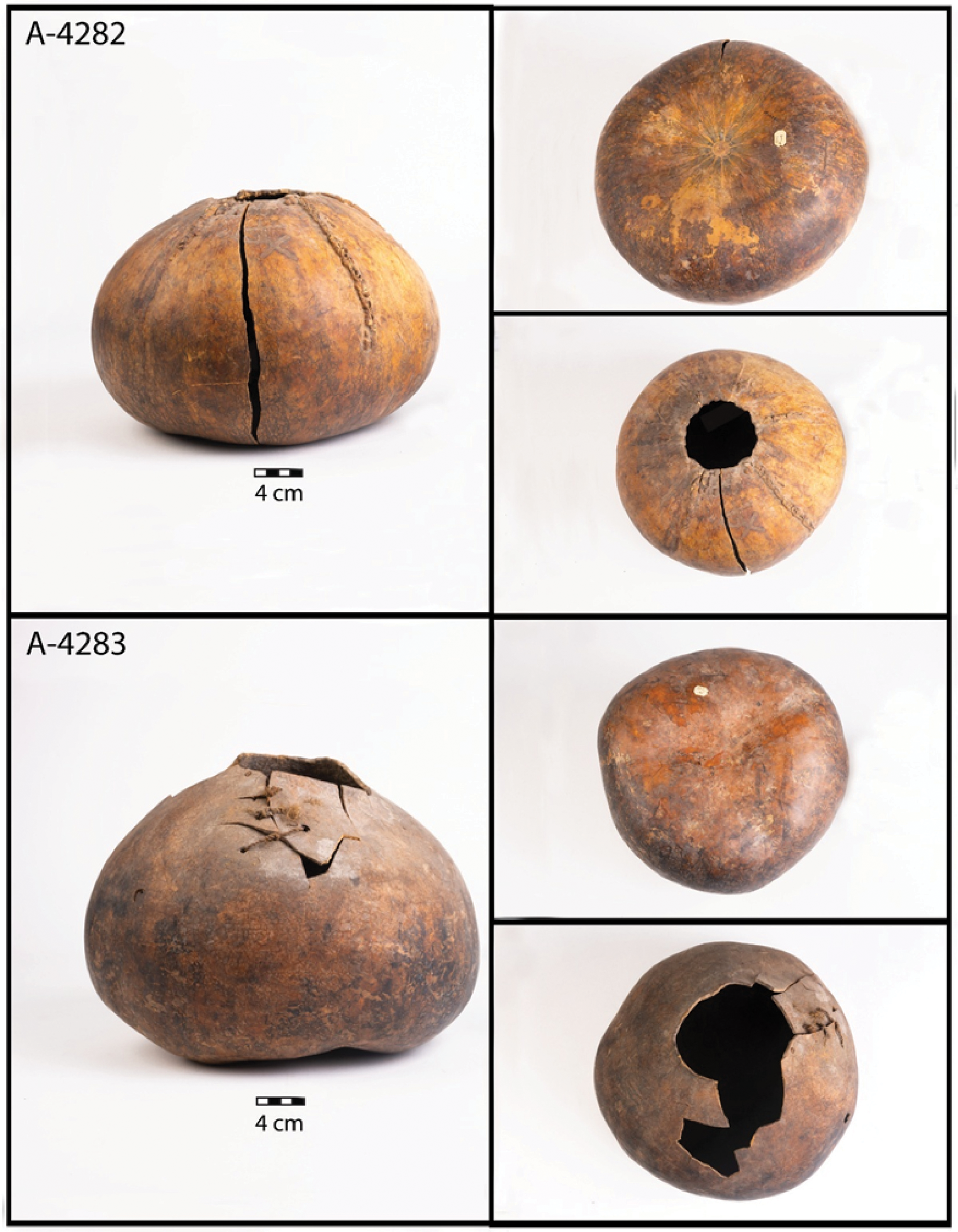
The authors selected seven additional maize samples for analysis, including six maize cobs and a single flint corn kernel. We also selected three cucurbit samples, including two complete cucurbit vessels (Figure 6) and an isolated cucurbit fragment.
Cucurbit vessels A-4282 and A-4283 from ASM collections, both dated to the Late Formative period between 1178 – 971 cal BP. Note the careful vessel repair present on A-4283, similar in form and execution to the repair seen on prehistoric ceramic vessels.

1997 and 2001 UNM Investigations
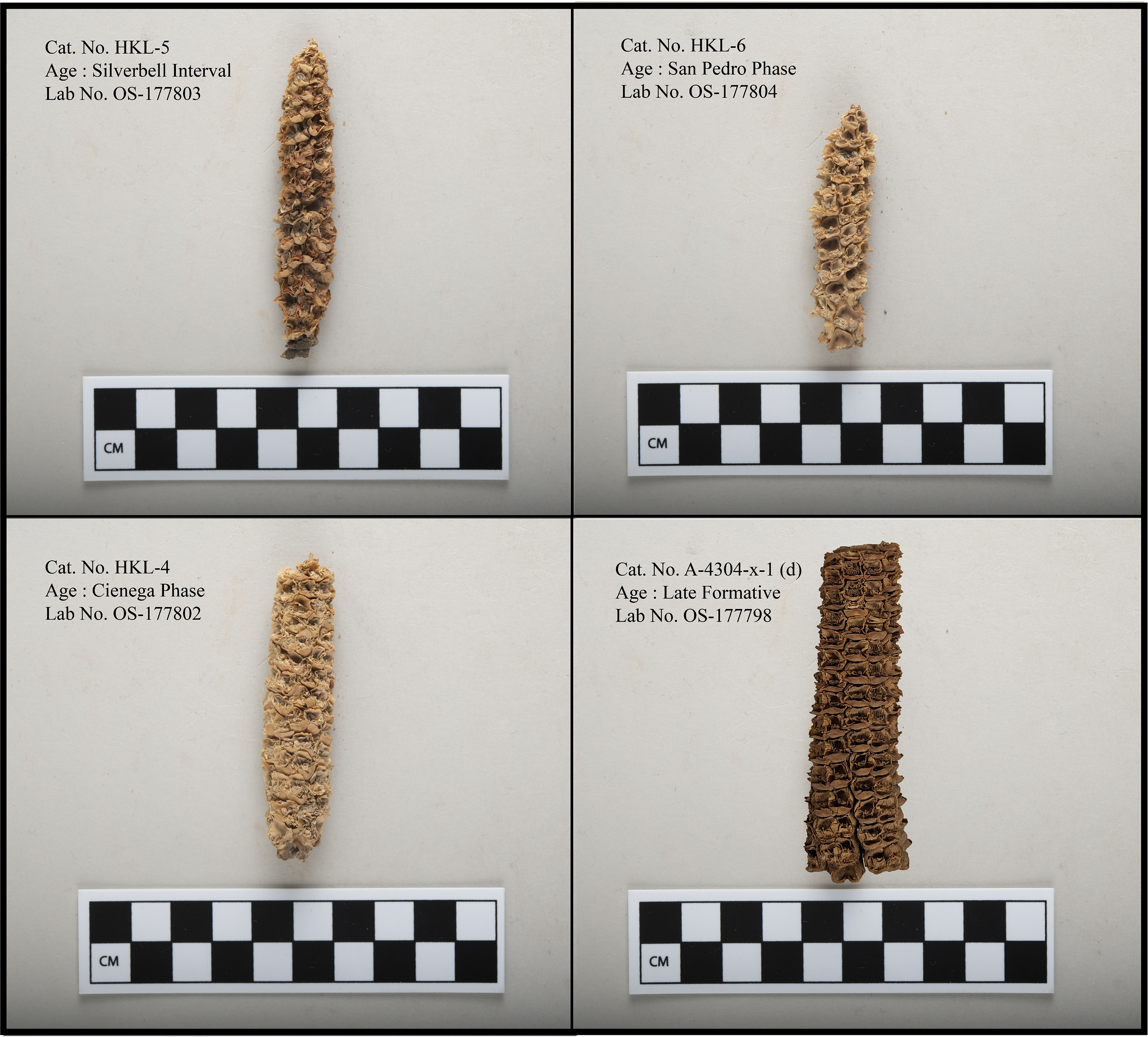
An additional 18 samples were selected from the 1997 and 2001 UNM Investigations, cultigens provided to M. Steven Shackley, Bruce B. Huckell and Lisa W. Huckell by then Safford BLM District archaeologist Gay M. Kincaide. This group of samples includes 17 maize cobs (Figure 7) and a single piece of cucurbit rind. These samples were recovered from the surface and primarily represent materials brought to the surface by a mixture of looting activities, bioturbation and erosion. As such, they are hoped to represent a random sample of material from within the cave fill.
Examples of dated maize cobs from the 2023 investigation arranged by temporal interval.

Results
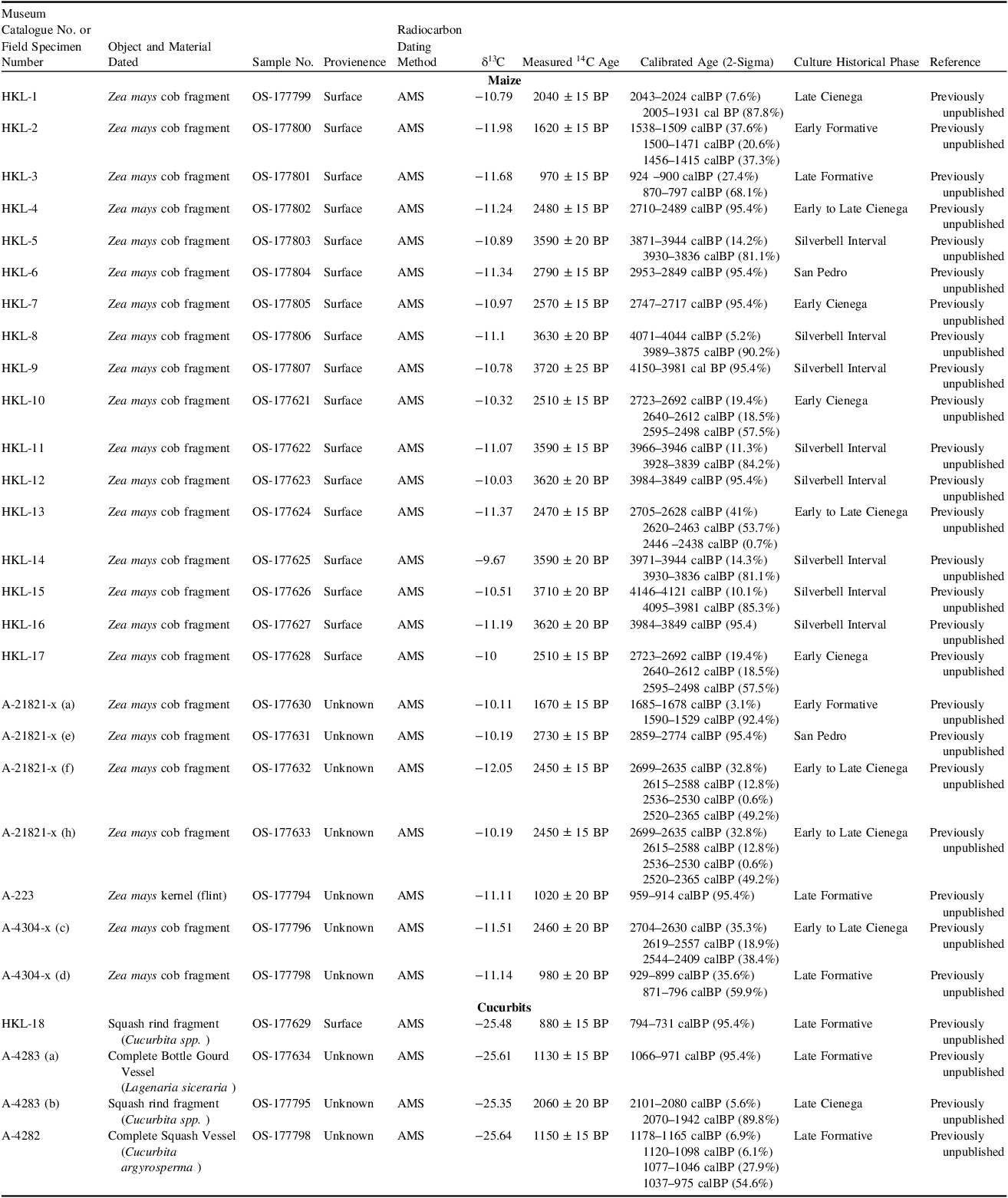
The 28 cultigen samples were submitted to National Ocean Sciences Accelerator Mass Spectrometry Laboratory at Woods Hole Oceanographic Institute in Massachusetts for AMS dating. In addition to age determinations, all samples were sufficiently large to allow for the direct measurement of δ13C. Maize uses a C4 photosynthetic pathway, resulting in mean δ13C values between –12 and –14, while cucurbits use the more common C3 pathway, resulting in mean δ13C values between –26 and –28 (Tieszen Reference Tieszen1991; Tieszen and Fagre Reference Tieszen and Fagre1993). Extreme deviations from these values may suggest outliers and potential evidence for contamination. No samples in this study deviate from these mean values sufficiently to suggest contamination or any issue with sample quality. Table 2 provides a complete list of new determinations organized by taxa.
Radiocarbon determinations from the current study arranged by taxa. All dates were calibrated using OxCal calibration software and the IntCal20 calibration curve.
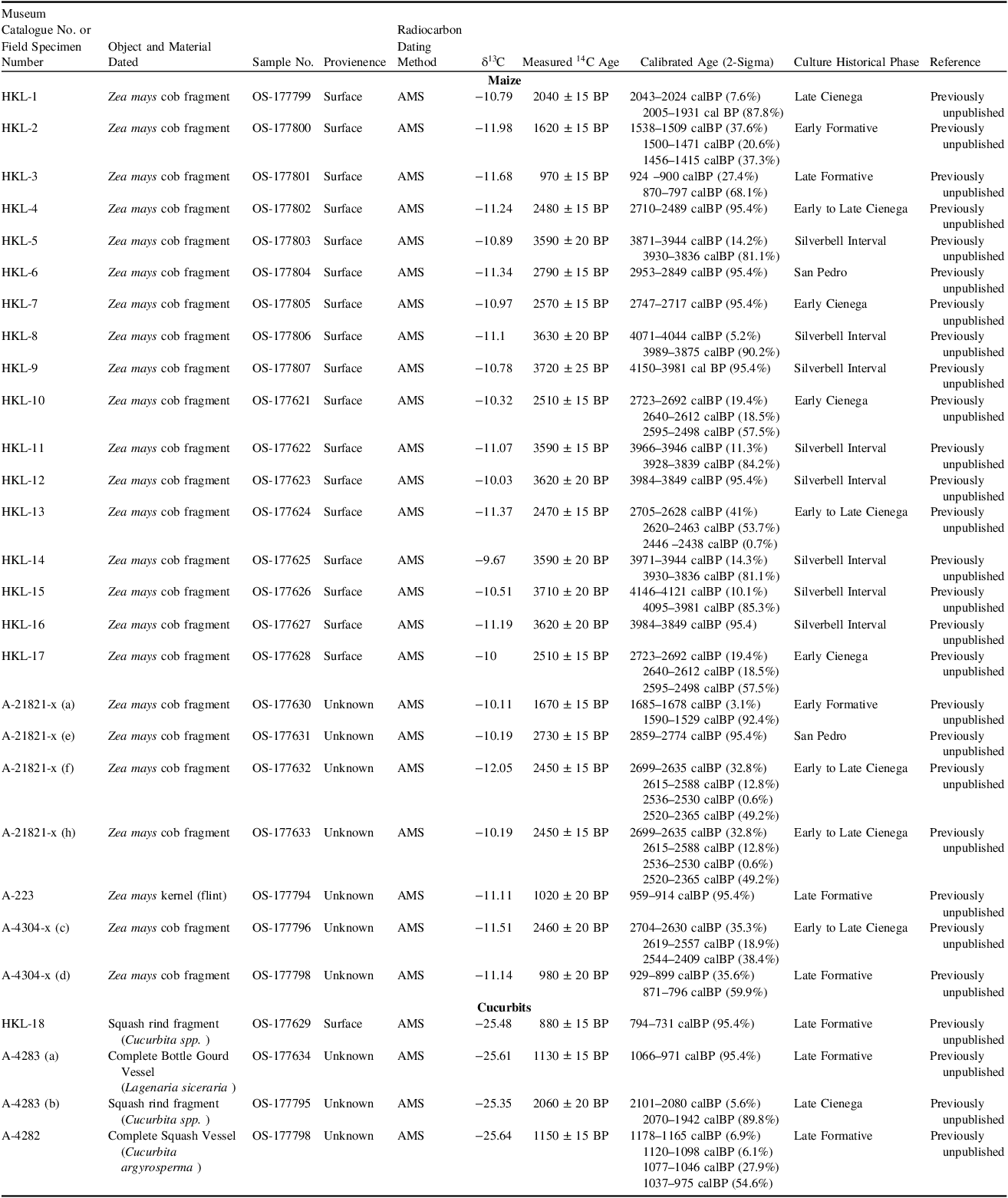
The dates shown in Table 2 range in age from the late Middle Archaic / early Silverbell Interval around 4100 cal BP to the Late Formative around 800 cal BP. Of the 28 samples submitted, 8 returned ages dating to the late Middle Archaic / early Silverbell Interval, 2 returned ages dating to the San Pedro phase of the Early Agricultural Period, 10 returned ages within the Cienega phase of the Early Agricultural Period, 2 returned ages dating to the Early Formative and finally 6 samples returned ages dating to the Late Formative period (see Figures 6 and 7 for examples of dated cultigens).
Discussion
Cultigen dates and their implications for the history and continuity of occupation within McEuen Cave
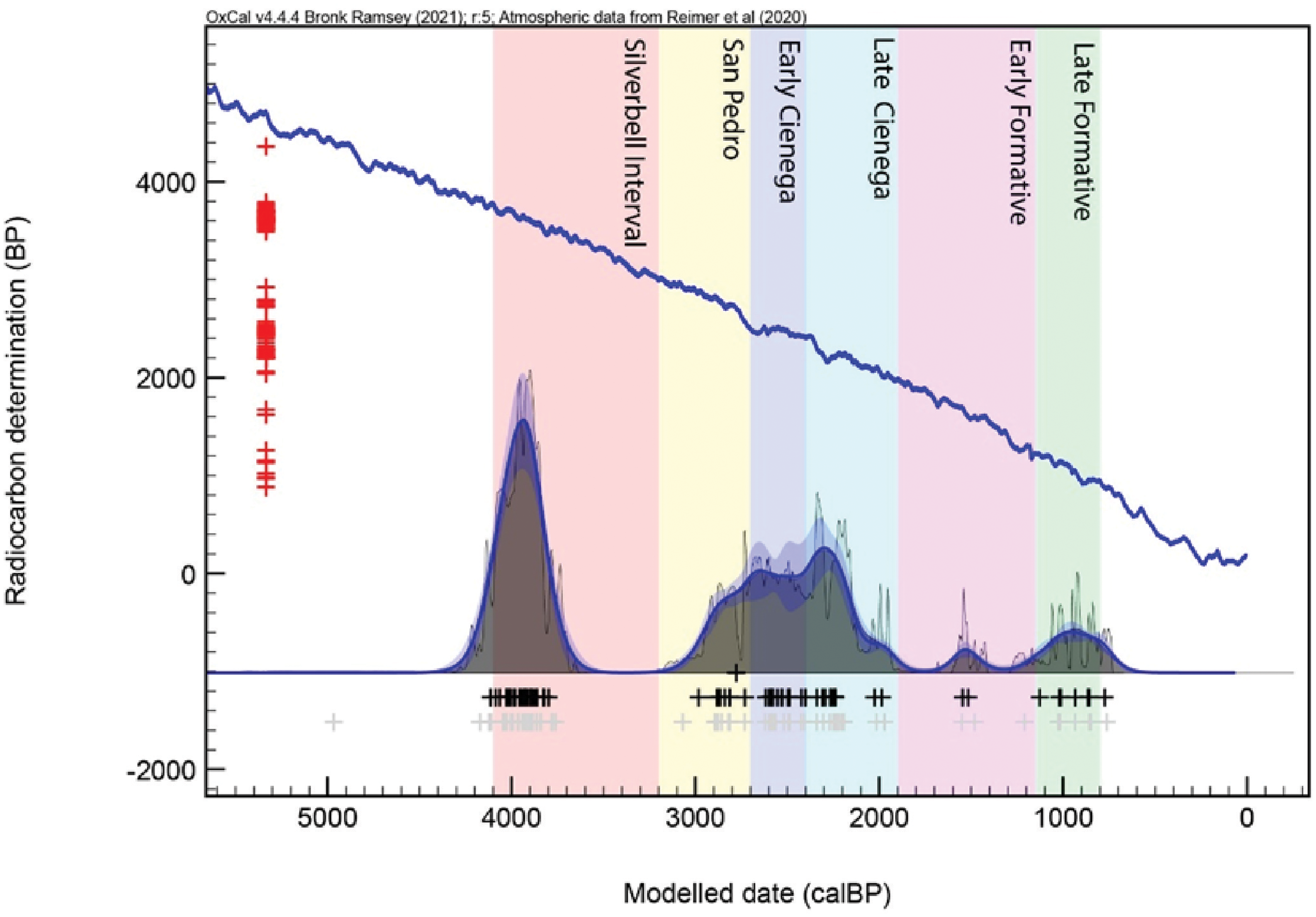
When we consider all previous dating efforts and the current study in aggregate, there are now 80 radiocarbon determinations relating to the occupation of McEuen cave, 69 of which represent dated cultigens (Zea Mays [n = 62] and Cucurbita sp. [n = 7]). As noted previously, one of these determinations, AA2537, appears to reflect a modern date and the repair of a cradleboard looted from the cave. This date is not considered in any aggregate analysis. This assemblage reflects one of the largest radiocarbon records from any archaeological site in southern Arizona.
The notion that changes in the summed distribution of radiocarbon dates may reflect changes in the intensity of site utilization, demographic change over time, the identification of colonization events and a host of other environmental or social variables has a long history in archaeology and paleoenvironmental studies (Berry Reference Berry1982; Buchanan et al. Reference Buchanan, Collard and Edinborough2008; Michczyńska and Anna Pazdur Reference Michczyńska and Pazdur2004; Ramsey Reference Ramsey2017; Rick Reference Rick1987; Steele Reference Steele2010; Williams Reference Williams2012). The topic has generated an equally large literature concerned with issues in sample size, sample collection, and data quality (Carleton and Groucutt Reference Carleton and Groucutt2021; Dye and Komori Reference Dye and Komori1992; Kerr and McCormick Reference Kerr and McCormick2014). Here we utilize the OxCal software package and the associated Kernel Density (KDE) Model to summarize the radiocarbon record at McEuen cave and provide some limited interpretations and suggestions for further research (Ramsey Reference Ramsey2017). This approach has the advantage of limiting statistical noise and artifacts of the calibration process caused by simply deriving the sum of a set of dates. The model also assumes that the events being dated are not independent. Given the emphasis on dated cultigens and the reality that all dates in this paper are on either artifacts or cultigens, such simple assumptions appear justified. The results of this modeling are shown in Figure 8 and discussed in more detail below.
OxCal Kernel density model showing the distribution of radiocarbon dates from McEuen Cave (including all values from Tables 1 and 2 with the exception of AA25327, a modern date suspected to be the product of historic repair of the object by looters).

The oldest dates on cultigens within this study from McEuen cave are late-Middle Archaic / early Silverbell Interval in age. These 8 samples range in age from 3720 BP to 3590 BP and overlap in age with the 25 Middle Archaic dates obtained by the Huckells and Shackley during the 2001 investigations. This assemblage of 33 dates produced calibrated distributions ranging from roughly 4345 cal BP to 3643 cal BP. When considered not as independent events but as an aggregate assemblage within the KDE Model, this spread of dates is slightly restricted, suggesting a potential range of occupation between 4235 cal BP to 3699 cal BP. Though included within the model, a single date of 4360 ± 310 BP (AA55462) on maize represents an obvious outlier. The large error term provided by the laboratory provides significant reason to consider this date problematic or erroneous. As a result, it is not considered further here. These samples represent one of the oldest dated maize-bearing occupations north of the US/Mexico border, along with the remains from Las Capas and Clearwater on the floodplain of the Santa Cruz (Vint Reference Vint2017) which generated 14C values on maize of similar age alongside Cortaro projectile points. Five Cortaro type projectile points were recovered from McEuen. Interestingly, one Cortaro and one Chiricahua point were recovered from the same stratigraphic level (level 8) as a Middle Archaic age maize cob during the 1997 testing, though all of these objects appear to be Middle Archaic intrusions within what is an otherwise late Early Agricultural Period occupation zone (Huckell et al. Reference Huckell, Shackley and Huckell2001; Shackley et al. in revision). At La Playa in northern Sonora, maize of the same age has been recovered, in addition to Cortaro points, but they have not been found in direct association at this site (Carpenter et al. Reference Carpenter, Sánchez, Watson and Villalpando2015).
What is unique about McEuen cave is the physiographic setting. As we noted in the introduction, McEuen represents some of the oldest maize recovered from an upland context in the southwest. This difference is critical as many recent authors have suggested that the earliest agriculture in the Southwest represents a floodplain-focused adaptation, and that maize followed a pathway north from Mexico along the major riverine corridors that run from Sonora northward into southern Arizona. The remains from McEuen Cave complicate this narrative. The presence of non-economic maize parts, including stalks and leaves, strongly suggests local cultivation in the vicinity of the cave, likely within naturally broad segments of Fishhook, Diamond Bar or Dutch Pasture wash where significant fine sediment accumulation has occurred. The narrow interfluves which separate these drainages near the cave are much to rocky to support cultivation. As the crow flies, it is a roughly 20-mile round trip from McEuen Cave to the Gila River floodplain below. This would indicate that early maize was adapted to various environments and that cultivation occurred not only in the major river valleys but in the small valleys of the rim country and other upland areas as well.
There appears to be a break in the radiocarbon chronology between 3700 cal BP and 3000 cal BP (Figure 8), a period representing the late Silverbell Interval and early San Pedro phases. The relative paucity of cultigens of this age within the broader assemblage is worth further examination, particularly given the large sample of dated materials within the current study. It is perhaps notable that while San Pedro points are the most common projectile point form recovered from the site (n = 13), no Empire points, a type associated with the late Silverbell and early San Pedro phase, have been recovered as of yet (Sliva Reference Sliva2015). Multiple hypotheses can be offered to explain this possible occupational hiatus including (but not limited to):
-
1. Sampling error: McEuen cave is a relatively long shelter extending roughly 80 m and oriented slightly NE-SW. The dripline extends 13 m in width at its maximum, and cultural deposits clearly extend outside of the dripline as well. The 1997 and 2001 testing resulted in the excavation of only 6.5 m2 of the shelter, much of it (5.5 m2) representing the southeasternmost portion of the shelter. As a result, very little of the total shelter area has been excavated, and late-Silverbell/Early San Pedro-aged cultigens may be present primarily in the northeastern portion of the shelter as opposed to the more heavily sampled southern portion.
-
2. Maize reliance: At present, the degree of reliance on maize by temporally distinct populations at McEuen Cave cannot be determined from the existing data. The position relative abundances of maize dates may be a reflection of relative reliance on cultigens during any given occupational phase is attractive but untenable. Such a view would suggest for example that maize cultivation was more intensive during the early Silverbell Interval and Cienega phase than either the San Pedro phase or the Early and Late Formative. While this may prove to be true, the many problems with sample size, particularly sample selection biases, are compelling. Evaluating this interpretation will require additional random sampling and is directly related to the third hypothesis presented below, the question of broader Early Agricultural Period P occupation within the local area.
-
3. Limited occupation: Another alternative is that McEuen was not the preferred rockshelter storage area for people during this period. This may be a product of drainage behavior, such as the encroachment of the main drainage on the cave location, elevated wet conditions or simply human preference. The Fishhooks Wilderness is the location of several additional extensive rock shelter sites, including AZ W:13:29 and AZ W:13:1, which contain morphologically early maize and are located well above Fishhooks drainage, nestled amongst the bedrock cliffs of the wilderness. Though no materials from these caves have been dated, they certainly represent large habitations that may have served as primary residences during the various portions of the period. As a result, while McEuen certainly saw use during this period, it is possible that it was not as extensively utilized as other shelters in the area. Only the systematic dating of additional cultigens from the wilderness area and specifically AZ W:13:29 and AZ W:13:1 will allow us to explore this alternative more fully.
The San Pedro phase occupation of McEuen cave is represented by two dates in the current study yielding ages of 2730 ± 15 BP (2859–2774 cal BP at 2σ: OS-177631) and 2790 ± 15 BP (2953–2849 cal BP at 2σ: OS-177804). Five additional San Pedro aged dates were recovered during the 1997 and 2001 investigations (see Table 1), and like the determinations from 2023, they are focused on the latter half of the San Pedro phase, after 3100 cal BP and concentrated between 3000 and 2750 cal BP when considered in aggregate analysis.
The Cienega phase of the EAP is much better evidenced, represented by 10 samples in the current study, ranging in age from the early Cienega Phase at 2570 BP to the late Cienega phase at 2040 BP, calibrated ages between 2750 cal BP and 1950 cal BP when the dates are considered in aggregate at 2σ. The previous 1997 and 2001 testing also yielded a large number of Cienega aged dates (n = 22) extending across both the Early and Late portions of the phase. In addition to maize, a single fragment of a cucurbit vessel was dated to the Late Cienega phase at 2060 ± 20 BP (OS-177795). While the general assemblage seems to suggest continuous occupation of the cave from the late San Pedro to Cienega phases, caution must be taken in advancing this interpretation. Uncalibrated San Pedro ages yielded values in excess of 2700 BP, and the earliest Cienega ages all provided 2550 BP or younger dates. Portions of the Early Cienega phase fall within a segment of the current radiocarbon calibration curve (Intcal20) which represents a notable plateau, known as the Hallstatt Plateau (Reimer et al. Reference Reimer, Austin, Edouard Bard, Blackwell, Christopher Bronk Ramsey and Hai Cheng2020). As a result, these dates have very wide distributions. Samples OS-117630 and OS-117631, for example, both maize cob fragments, returned uncalibrated ages of 2450 ± 15 (OS-177795). When calibrated, these values produce a bi-modal distribution with peaks between 2699–2638 cal BP (32.8 %) and 2520–2365 cal BP (49.%) at 2σ. These dates are quite difficult to interpret statistically and may represent events occurring within a 350-year spread, straddling the Early and Late Cienega phases. In addition to maize, a single basket rod (AA55471), yucca/agave fiber necklace cord (AA55478) and a little barley seed (Hordeum pusillum) (AA54010) were dated to the Cienega phase during the 1997 and 2001 investigations.
The cave’s seemingly intensive occupation during the Cienega phase is not surprising, given nearby developments in the Safford and Duncan Valleys. This period is well known as a time of demographic increase, increased agricultural reliance, and a shift towards more formal architecture and sedentism (Gregory Reference Gregory2001; Huckell Reference Huckell1995; Mabry Reference Mabry2008). This pattern is present in the Safford Valley as well. Just 30 miles to the south is the Sanchez site (AZ CC:2:452 (ASM)), a large cerro de trincheras site characterized by almost 5200 m2 of circular stone walls, stone house foundations, and a formal plaza (Hard et al. Reference Hard, Zaragosa, Roney, MacWilliams, Whisenhunt, Stokes, Dungan and Sedig2023). Radiocarbon dates from the site suggest two periods of occupation, one during the Cienega Phase and a second during the Early Formative period. Slightly further south in the Duncan Valley of the northern Gila River, excavations at additional cerros de trincheras sites such as Round Mountain (AZ CC:4:61 (ASM)), and the DotMon Site (AZ CC:4:62 (ASM)), have also produced evidence for extensive Cienega phase occupation along the Gila River valley. Though preservation of paleoethnobotanical materials at these sites is poor, maize was recovered from the Round Mountain Site (Hard and Roney Reference Hard, Roney, Brown, Barbour, Boyer and Snow2024). Taken together, the evidence from McEuen, and the Safford Valley sites suggests the extensive occupation of the Gila River by large populations of agriculturally dependent groups between 2700 and 1900 cal BP.
Previous dating efforts yielded few examples of either Early or Late Formative period maize at McEuen Cave despite the presence of ceramic period artifacts within the shelter. The Safford Valley in this region contains a rich record of Early and Late Formative period occupation (Seltzer-Rogers and Crary Reference Seltzer-Rogers and Crary2023; Clark Reference Clark2004: Doolittle and Neely Reference Doolittle and Neely2004). These sites, including the well-known Safford Valley Grids (AZ CC:1:2 (ASM)), suggest the extensive use of the Gila River floodplain and piedmont of the Gila Mountains for cultivation, including the use of canal irrigation. The increasing reliance on floodplain environments for cultivation may be one reason for the small assemblages of ceramic period maize in the initial sample. The prioritizing of small cob maize for sampling by Shackley and the Huckells during the initial analysis may also explain this relative lack of samples. In the current study, a broader group of cobs and cucurbit samples, was selected for analysis.
Two cobs dating to the Early Formative period were identified, yielding radiocarbon ages of 1670 ± 15 (1685–1529 cal BP at 2σ: OS-177630) and 1620 BP ± 15 (1538–1415 cal BP at 2σ: OS-177800). Late Formative cultigens, including three maize samples and three cucurbit samples returned ages ranging from 1150 to 880 BP, calibrated ages between 1138–731 cal BP. These samples are consistent with the material culture evidence for late ceramic period occupation at the cave generated during the 1997 and 2001 excavations by Shackley and the Huckells, which includes undecorated brownware sherds, Cascabel Red-on-Brown, Gila Red-On-White, and a single Salado Redware sherd suggesting a long period of repeat occupations between 800 AD and 1400 AD (Schleher Reference Schleher2001). A careful reading of the summed probability model shown in Figure 8 does appear to suggest brief breaks in occupation between the Late Cienega phase and the Early Formative as well as between the Early Formative and Late Formative periods. Given the small sample of dates from these later periods, we suggest interpreting these results with caution, or as hypotheses to be tested via additional sampling.
Cucurbit remains from McEuen Cave
The story of early cultigens in the Southwest has traditionally focused on three particular crops, maize, squash, and beans, sometimes referred to colloquially as the Three Sisters. While all of these domesticates were present within the indigenous Southwestern economy at the time of contact, the traditional archaeological narrative, suggests that this crop complex is a relatively late development and that each domesticate followed a separate route into North America from its place of domestication in southern Central America. In this narrative, maize arrives in the indigenous North American economy first, followed by cucurbits, and lastly, beans (Smith Reference Smith1997).
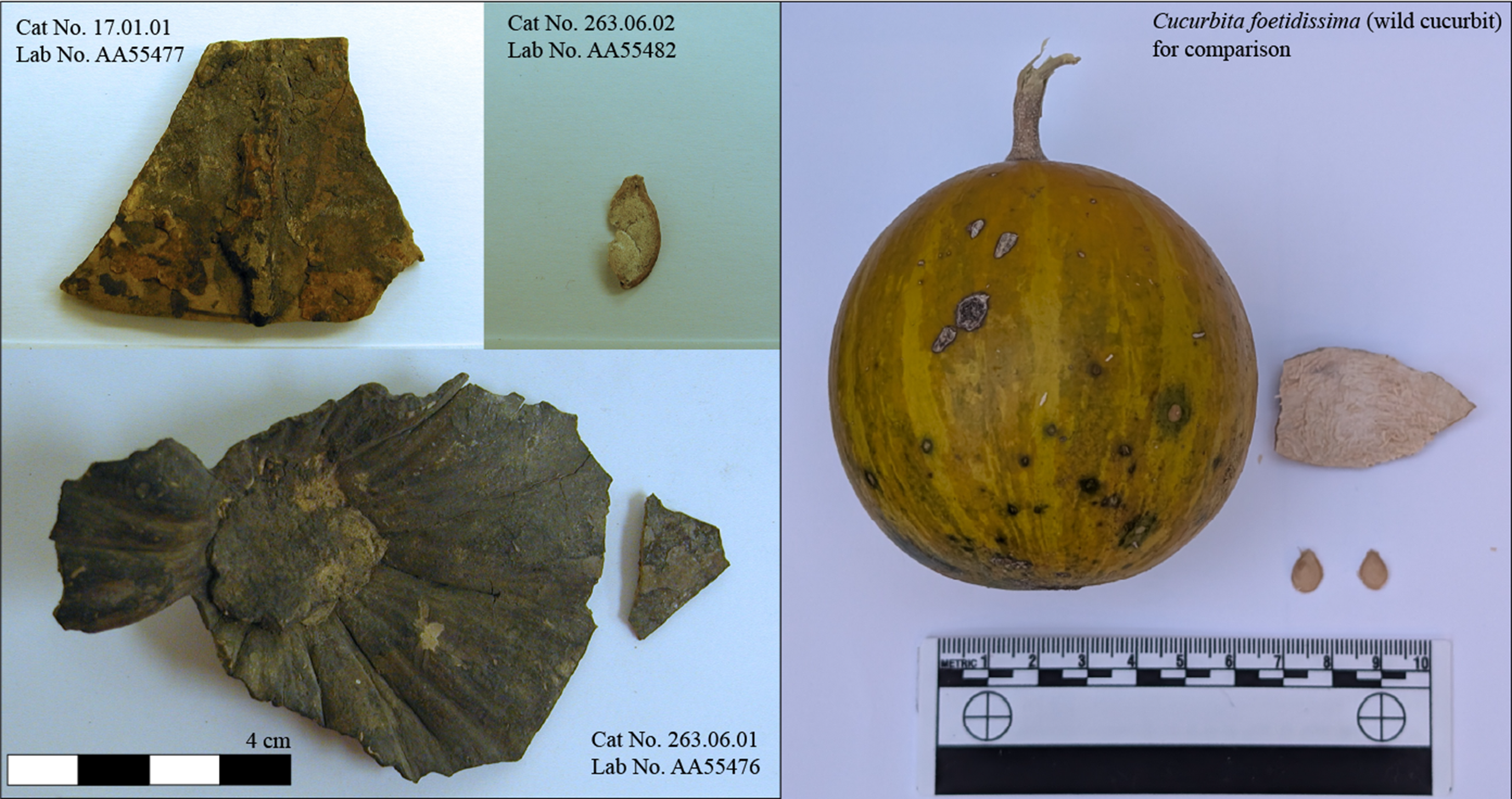
It is clear from work conducted in southern Mesoamerica that cucurbit domestication occurred during the early Holocene (before 10,000 BP) prior to the domestication of maize in the same region (Kennett et al. Reference Kennett, Harper, VanDerwarker, Thakar, Domic, Blake, Benz, George, Scheffler, Culleton and Hirth2023; Smith Reference Smith1997). In the southwest, the earliest evidence for cucurbit cultivation comes entirely from dry rockshelter sites in New Mexico, including Sheep Camp Shelter near Farmington and Bat Cave in west-central NM. Two Cucurbita pepo seeds from Sheep Camp Shelter were submitted by Simmons (Reference Simmons1984, Reference Simmons1986) for 14C dating yielding ages of 2200 ± 290 BP (A-3159) and 2900 ± 230 BP (A-3388). At Bat Cave, Wills (Reference Wills1988a; Reference Wills1988b) submitted two domesticated cucurbit seeds (not identified to species) for dating, which yielded ages of 2630 ± 90 (A-4182) and 2980 ± 120 (A-4186). The McEuen Cave assemblage has produced three radiocarbon dates on cucurbits with dates in excess of 3500 BP, suggesting that the arrival of maize and cucurbits may have occurred in tandem rather than sequentially and that issues of sampling bias and taphonomy may be to blame for the seeming lag between maize and cucurbit adoption in the southern Southwest. These dates are shown in Table 1 and photographs of the dated samples are provided in Figure 9.
Domesticated cucurbit remains from the 2001 investigations dated to >3500 BP, including two rind fragments (Cat. No.’s 263.06.01 and 17.01.01; Cucurbita spp.) and a single seed (Cat. No. 263.06.02: cf. Cucurbita pepo). A complete wild cucurbit fruit (C. foetidissima) along with a rind fragment and two seeds is provided for comparison with these samples.

As discussed previously, the dated macrobotanical remains from a small storage pit at McEuen cave provide definitive evidence of domesticated cucurbit species within the Southwest prior to 3500 BP. Samples 263.06.01 (a rind fragment) and 263.06.02 (a complete seed) were both derived from this context. A third surficial cucurbit rind fragment (17.01.01) was also dated to this time period. All the dated items are unequivocally domesticates (see Figure 9). Addressing the concern that the Middle Archaic seed date could be derived from a wild gourd, there is no possibility of confusion with wild gourd species such as C. foetidissima, the small buffalo gourd. The dated seed (263.06.02) is larger and broader and has a well-developed marginal rim as opposed to the smaller rimless gourd seed (Cutler and Whitaker Reference Cutler and Whitaker1961: their Figure 3; see also Figure 9).
The larger of the two dated rinds (263.06.01) comes from the fruit apex where the peduncle attaches. While the thinness of this relatively large piece approaches that seen in buffalo gourds, the extreme curvature of the smooth spherical fruits and their size precludes them from consideration. The large circular peduncle scar diameter, and the ridges and depressions emanating from the stem base are features found in some squashes.
The second rind fragment (17.01.01) is from the body of a large diameter squash based on the small degree of curvature present, the distinctive cross-section anatomy (Cutler and Whitaker Reference Cutler and Whitaker1961: Figure 5) and the thickness of the rind.
Cucurbit species names can be difficult to confer on archaeological specimens. Reliability is a significant problem, as misleading changes to key taxonomic features can be caused by processes such as soil abrasion, mold, insects, trampling, rodents, moisture, and so forth. A McEuen taxomic identification reassessment is currently in progress, with the detailed results to be published in Shackley et al. (in revision). Preservation bias is likely responsible for the difficulties in dating the arrival of cucurbits within the Southwest. While individual maize kernels degrade rapidly, the lignified cobs themselves are relatively durable, particularly when carbonized. As a result, they are frequently recovered within macrobotanical assemblages from a wide variety of environmental contexts. Cucurbit remains, on the other hand, are much more fragile and unlikely to last long within the open-air contexts that dominate the Archaic archaeological record.
Given the surprising previous results from the 2001 investigations at McEuen Cave, we felt it important to sample additional cucurbits from the assemblage. Four cucurbit samples were submitted, including two samples from complete cucurbit vessels (ASM No.’s A-4283 (a) and A-4282; see Figure 5), and two fragments of cucurbit rind, one from ASM (A-4283 (b)) and another from the Huckells investigations (HKL-18). The resulting radiocarbon dates are all relatively late, the oldest of which, sample A-4283 (b), dates to the Late Cienega phase (2060 ± 20 BP, 2101–1942 cal BP at2 σ: OS 177795). The remaining three dates all fall within the Late Formative period. The two intact cucurbit vessels, A-4283(a) (bottle gourd, Lagenaria siceraria) and A-4282 (Cushaw, Cucurbita argyrosperma) returned nearly identical ages of 1130 ± 15 BP (1066–971 cal BP at 2σ: OS-177634) and 1150 ± 15 BP (1178–975 cal BP at 2σ: OS-177798), perhaps artifacts related to a single episode of occupation within the cave around 1000 cal BP (Figure 5). Finally, HKL-18 returned an age of 880 ± 15 BP (794–731 cal BP at 2σ: OS-177798).
The presence of a fourth cultigen, bottle gourd (A-4283(a)), merits brief discussion. The timing of bottle gourd’s appearance in the Southwest is still uncertain. At present, McEuen Cave has failed to yield other bottle gourd samples and so cannot contribute to its early history, although additional rind fragments beyond those examined remain. The intriguing recovery of bottle gourd phytoliths from late San Pedro phase deposits at Las Capas (Yost Reference Yost, Vint and Nials2015) suggests that early gourd remains could be found at McEuen or other contemporary shelters in the area.
Conclusion
The radiocarbon dating of 28 maize and cucurbit remains from McEuen Cave, in Arizona, has yielded additional evidence for the consumption and utilization of both cultigens by indigenous Southwestern peoples as early as 4100 years ago and continuing well into the Late Formative period around the 12th century AD. The dated cultigen assemblage includes maize remains from nearly the entirety of the prehistoric cultural sequence beginning during the late Middle Archaic or Silverbell Interval, though some periods are better represented than others. Maize remains dating to the San Pedro, and the Early Formative period are sparse in comparison to those dating to the early Silverbell Interval, Cienega and Late Formative periods. Future research should focus on the dense preceramic occupation of the Fishhooks Wilderness area, where McEuen Cave is located, and the multitude of additional large shelters within this wilderness, particularly AZ W:13:29 and AZ W:13:1, both of which contain surficial assemblages replete with morphologically early maize. These data will help researchers and indigenous communities to better understand patterns of ancestral land use within the Mogollon Rim country and may help us to better understand the transition to agriculture within the American Southwest.
While not the focus of this paper, these results also provide a much-needed reminder that cultivation during the Early Agricultural Period was not exclusively focused on the major riverine corridors from which so much of our understanding of the earliest maize use north of the border has been derived. The expansion of CRM efforts within southern Arizona, particularly within the alluvium of the Santa Cruz and San Pedro Rivers has forever changed our understanding of the earliest farmers in the Southwest, displacing the “Highland Corridor Model” of Haury (Reference Haury, Braidwood and Willey1962) and suggesting to many that a focus on floodplain occupation was a pre-requisite or pre-adaptation for the arrival of maize cultivation in the southwest (Roth and Freeman Reference Roth and Freeman2008).
Unfortunately, such a view underplays the diversity of settings within which early maize has been identified and pre-supposes that the archaeological record, as it currently exists, is sufficient to settle these issues of land use and cultivation practices. We suggest that our dataset remains insufficiently resolved and often ambiguous. A single maize date of 3610 ± 170 BP (Beta-26275) was recovered from the high elevation (6500 ft asl) rockshelter known as Three Fir Shelter on Black Mesa in northern Arizona (Smiley Reference Smiley1994), but its site context remains unclear. At Bat Cave in the Mogollon Highlands of New Mexico, a single date of 3710 ± 70 BP (A-4187) on maize was run that is consistent in age with the McEuen material. However, Wills (Reference Wills1988a; Reference Wills1988b) suggests that this date is an outlier, potentially a product of contamination during curation. Regardless, Bat Cave did yield several reliable maize dates ranging from 2340 to 3120 BP. While not associated with the arrival of maize, they reinforce the use of upland environments by Early Agricultural Period farmers. Upland environments in remote wilderness areas rarely receive the attention that lowland occupations adjacent to major urban centers receive. Moreover, in the absence of rock shelter sites with obviously preserved cultigens, Silverbell Interval and Early Agricultural Period occupations may appear relatively ephemeral or be well buried within narrow upland drainage systems.
The cultigen assemblage from McEuen cave and other caves within the Fishhooks Wilderness area suggests continued occupation and agricultural practice within the uplands of the Mogollon Rim for nearly 4 millennia. This suggests that maize was not explicitly adapted to either mesic or riverine environments and that the history of cultivation in the southwest is likely more variable in location and intensity than often acknowledged. We hope that additional efforts to evaluate the Early Agricultural Period archaeology of non-riverine environments will help us develop a historically richer and more realistic view of early cultigen use in the broader Southwest United States and Northern Mexico.
Acknowledgments
This research has been funded by the American Philosophical Society’s Lewis and Clark Fund for Exploration and Field Research, as well as the National Science Foundation (2139200). The authors would like to thank former Safford BLM archaeologist Gay Kincade for his assistance with the 1997 and 2001 research efforts in the cave. We would also like to thank Suze Eckert, Jannelle Weakly, Ed Jolie, and Max Mijn at the Arizona State Museum for their assistance in sample preparation and photography. We thank two anonymous Radiocarbon reviewers for their comments on the manuscript and useful suggestions. Finally, we would like to thank Beau G. Murphy and Michael W. Graves for their thoughtful comments on previous versions of this paper.
Declaration of interest
The authors report there are no competing interests to declare.

 Open access

