


INTRODUCTION
Infection of Enterobius vermicularis (pinworm) remains prevalent in children in many parts of the world. Recent surveys have revealed high prevalences in Venezuela (63·2%) [Reference Cazorla1], Argentina (43·4%) [Reference Guignard2], Laos (35·7%) [Reference Rim3] and Turkey (23·3%) [Reference Bahceciler4]. Although enterobiasis is mainly transmitted through the fingers route, pinworm eggs may also reach the human intestinal tract through the nose. Moreover, retro-infection by larvae through the anus is not uncommon. Nocturnal pruritus ani is the characteristic manifestation of enterobiasis. This infection is most common in temperate regions. It has been estimated that up to 10% of children in these regions harbour pinworm [Reference John and Petri5].
Before initiation of a 4-year population-based parasitic control project by the Taiwan Provincial Health Department in 1972, the overall prevalence of intestinal helminth infections in schoolchildren in Taiwan was 73%. After receiving blanket treatments with a mixture of santonin and kainic acid four times a year, the prevalence of Ascaris infection significantly decreased from 55% in 1972 to 13·7% in 1976. The Parasite Control Association was established in 1975 to continue the control of intestinal helminth infections in schoolchildren. After conducting repeated stool examinations and administering treatments with pyrantel pamoate in two 5-year control projects, the overall prevalence decreased to 0·19% (Ascaris 0·19%, hookworm 0·02%, Trichuris 0·33%) by the end of 1986 [6].
After the success in dramatically reducing the prevalence of soil-transmitted helminth infections, control of pinworm infection became a main theme in the next three 5-year control projects. From 1986 to 1991, parents were asked to take two-consecutive-day adhesive cellophane perianal swabs of their children four times a year and infected children were treated with mebendazole. Moreover, health education programmes were also carried out simultaneously. The prevalence decreased from 19·9% in 1986 to 4·5% in 1991 [6]. In addition to these control measures, family members of infected children also received mebendazole treatment in the next two 5-year control projects (1991–1996 and 1996–2001). The prevalence decreased to 2·5% in 2001. Since January 2001, when the population-based pinworm control project was terminated, the control programme has been carried out by the health and education bureaus of the individual county/city governments. In order to determine the current status of pinworm infection in schoolchildren in Taiwan, we conducted a large-scale survey of pinworm infection. Moreover, we also conducted a questionnaire survey on the factors associated with the infection.
METHODS
Study population
This study was conducted from March to December 2007. In the academic year of 2006 (August 2006 to July 2007), 1 798 436 children were enrolled in 2658 primary schools of Taiwan [7]. Since primary education for children in Taiwan is mandatory, this number represented the total school-age population. The administrative divisions in Taiwan include two municipalities (Taipei and Kaohsiung cities), 18 counties and five cities. These major divisions are further divided into 369 districts. From each district, one primary school was selected to participate in the survey. In the more populated districts, one or more additional schools were also randomly selected. All children in these schools were examined for pinworm infection. The study population included 124 238 children in 385 primary schools in different parts of Taiwan.
Cellophane perianal swab and questionnaire surveys
After obtaining informed consent, two-consecutive-day adhesive cellophane perianal swab preparations, including instructions for swab taking, and a questionnaire relating to family conditions were distributed to the parents of each child by the nurses and/or public health teachers in each school. Parents were asked to take perianal swabs and complete the questionnaire. Perianal swabs were taken from each child by the parents at home immediately after getting up in the morning on the next two days. The swab specimens and completed questionnaires were returned to the schools and then transferred to our laboratory. Microscopic examination of the specimens was performed by parasitologists and experienced medical technologists.
The questionnaire was designed to obtain information on the socioeconomic status of the parents, personal hygiene of the children and sanitary conditions in their families. In addition to the demographic data of the children, the educational levels and occupations of the parents were obtained. Moreover, history of pinworm infection was also inquired. To determine the personal hygiene of the children, information on hand washing, finger sucking and fingernail-cutting habits, and the method, timing, and frequency of bathing was collected. Household sanitary conditions were assessed by asking the parents about the frequency of cleaning house and bedding, and living conditions.
Chemotherapy and follow-up
Infected children were administered a single dose of mebendazole (100 mg/tablet). Follow-up examination was conducted 2–4 weeks after chemotherapy.
Statistical analysis
After checking the validity, results of microscopic examination, basic data of each child and information from the questionnaires were entered into Microsoft Excel spreadsheets (Microsoft Corp., USA) by research assistants. SPSS 12.0 statistical software (SPSS Inc., USA) was used for data management and analyses. Rates were compared by χ2 test. Factors associated with pinworm infection were further analysed by stepwise logistic regression. Explanatory variables examined in the models included sex and grade of children; education and occupation of parents; pinworm infection history; hand washing before eating and after using toilet facilities; finger-sucking habit; keeping fingernails short; method, timing and frequency of bathing; frequency of cleaning house; style of residence; type of floor and bedding; and sharing a bedroom. P<0·05 was considered to be statistically significant.
RESULTS
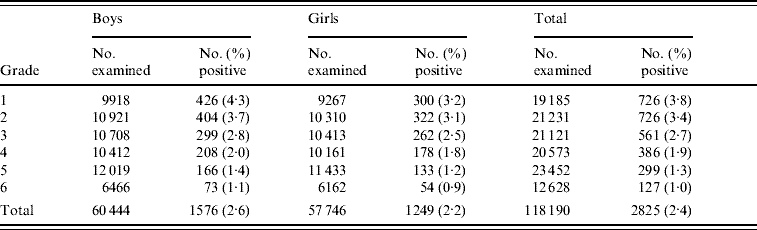
Of the 124 238 children selected, perianal swab specimens were obtained from 118 190 (95·1%) children. Of the children examined, 2825 (2·4%) were found to be infected with E. vermicularis. Table 1 shows the prevalences in the 25 counties/cities of Taiwan. The prevalence was significantly different in the counties/cities (P<0·001). Taitung County had the highest rate of 6·6% and Taipei County the lowest of 0·6%. Significant differences were also found in geographical regions (P<0·001). The rate was highest in East Taiwan (4·4%) and lowest in North Taiwan (1·8%) (P<0·001). The positive rate of boys (2·6%) was significantly higher than that of girls (2·2%) (P<0·001). The rate also significantly decreased with grade from 3·8% in grade 1 to 1·0% in grade 6 (P<0·001) (Table 2).
Prevalence of Enterobius vermicularis infection in schoolchildren in 25 counties/cities of Taiwan

Grade- and sex-specific prevalence of Enterobius vermicularis infection in schoolchildren in Taiwan by age and sex
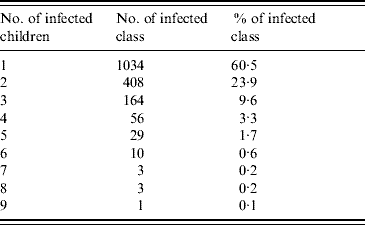
Of the 385 primary schools that participated in this survey, 35 (9·1%) were found to have positive rates ⩾10%, 56 (14·5%) had positive rates of 5·0–9·9%, and 226 (58·7%) positive rates of 0·1–4·9%. Moreover, negative findings were obtained in the remaining 68 (17·7%) schools. The number of children enrolled in these schools ranged from 8 to 2817. Although negative results were obtained in 50 (33·6%) smaller-sized schools (<100 children), 28 (18·8%) were found to have positive rates ⩾10%. This percentage was significantly higher than those in the remaining two groups [100–299 children (5·1%) and ⩾300 children (0·8%)] (P<0·001). In the schools with ⩾100 children enrolled, 184 (80·0%) had positive rates <5% (Table 3). Pinworm infection was found in 1708 of a total of 4907 classes in the 385 primary schools surveyed. Most (60·5%) of the infected classes had only one infected child (Table 4).
School size and Enterobius vermicularis infection in 385 primary schools in Taiwan
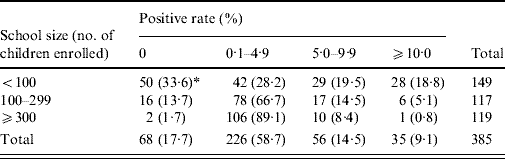
* Values given are number (%) of schools.
Frequency of the number of infected children in 1708 infected classes with Enterobius vermicularis infection from 4907 classes in 385 primary schools of Taiwan
A total of 96 419 questionnaires were returned with completed and relevant data. The response rate in the questionnaire survey was 77·6% (96 419/124 238). Statistical analyses were conducted based on this information and the results of parasitological examination. The positive rate was found to be significantly higher in boys (boys 2·8% vs. girls 2·3%), children in grades 1–3 [grades 1–3 (3·4%) vs. grades 4–6 (1·6%)], children having parents with lower educational level (secondary or below 2·7% vs. university or above 2·0%), and children of labourers or farmers (labourers or farmers 3·2% vs. others 2·2%) (P<0·001). Children with a history of pinworm infection (5·8%) were found to have a significantly higher positive rate than those without previous pinworm infection (2·2%) (P<0·001) (Table 5).
Univariate analysis of factors associated with Enterobius vermicularis infection in 96 419 children from 385 primary schools of Taiwan
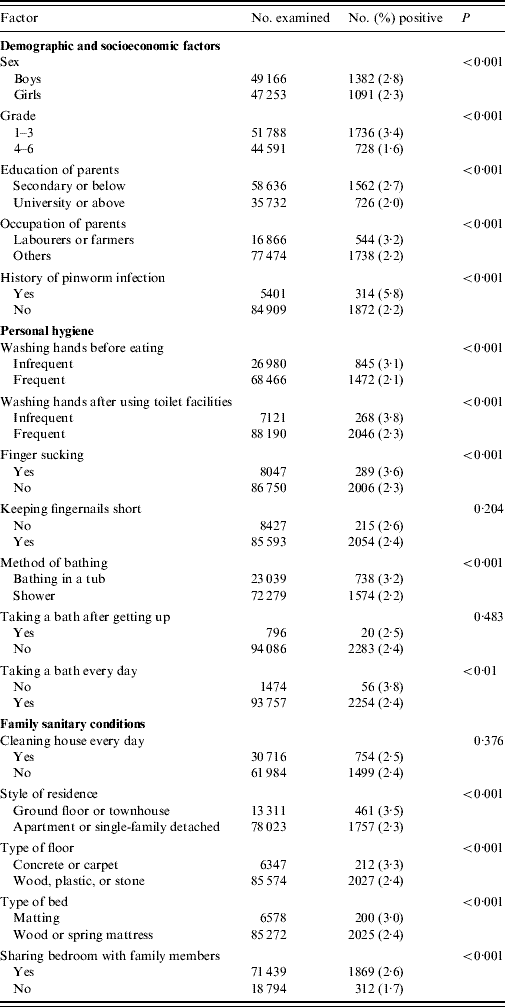
The positive rate of pinworm infection was found to be significantly higher in children infrequently washing their hands before eating (infrequent 3·1% vs. frequent 2·1%) or after using toilet facilities (infrequent 3·8% vs. frequent 2·3%) (P<0·001). Although children with the habit of finger sucking had a significantly higher positive rate (3·6% vs. 2·3%) (P<0·001), no significant difference was found in the children with long (2·6%) or short (2·4%) fingernails (P>0·05). Children bathing in a tub (3·2%) were found to have a significantly higher rate than those taking a shower (2·2%). Moreover, those not bathing every day also had a significantly higher positive rate (3·8% vs. 2·4%) (P<0·01). However, there was no significance in the positive rate between the children taking bath after getting up and those that did not (2·4%) (P>0·05) (Table 5).
Although cleaning house every day did not significantly affect the positive rate of pinworm infection (2·5% vs. 2·4%) (P>0·05), children living in townhouses or on the ground floor (3·5%) had a significantly higher rate than those in apartments or single-family detached residences (2·3%) (P<0·001). Moreover, significantly higher positive rates were found in children living in a house with a concrete floor or carpet (concrete or carpet 3·3% vs. wood, plastic, or stone 2·4%) (P<0·01), sleeping in beds with matting (matting 3·0% vs. wood or spring mattress 2·4%) (P<0·001), and sharing a bedroom with family members (2·6% vs. 1·7%) (P<0·001) (Table 5).
Multivariate analysis revealed 11 independent predictors. These factors included history of pinworm infection (OR 2·598), younger children (grades 1–3) (OR 2·113), finger sucking (OR 1·466), sharing a bedroom with family members (OR 1·347), infrequent hand washing before eating (OR 1·332), living on the ground floor or in townhouses (OR 1·308), children of labourers or farmers (OR 1·300), sleeping on matting (OR 1·281), bathing in a tub (OR 1·259), parents with secondary or below education (OR 1·204) and boys (OR 1·170). Although sex was found to be a significant predictor of this infection, this factor was found to be more significant in younger children (grades 1–3) (OR 1·192) but not in older children (grades 4–6). Moreover, keeping fingernails short (OR 1·274) was also a significant predictor in younger children, while for older children infrequent hand washing after using toilet facilities (OR 1·449) and taking a bath after getting up (OR 2·218) were significant factors (Table 6).
Multivariate analysis of factors associated with Enterobius vermicularis infection in 96 419 children from 385 primary schools of Taiwan
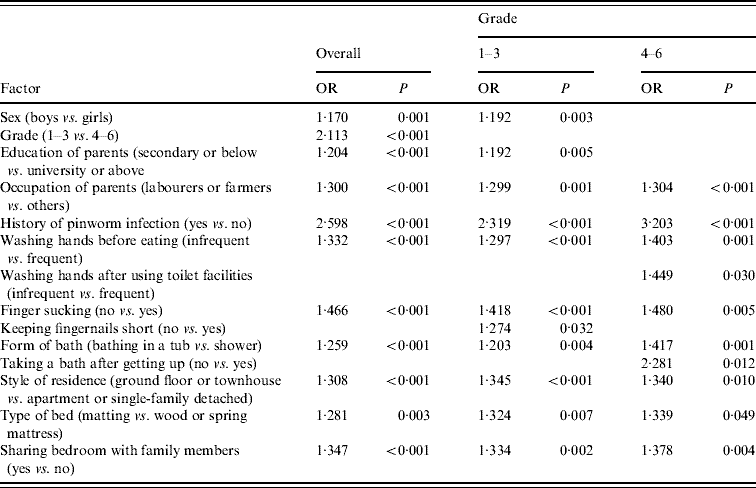
OR, Odds ratio.
Of the 2825 infected children, 2453 were treated with a single dose of menbendazole (100 mg) and 2183 were re-examined after chemotherapy. Of the children re-examined, 2093 (95·9%) became negative whereas 90 (4·1%) remained positive.
DISCUSSION
Pinworm is one of the common intestinal parasites in schoolchildren. Their eggs are not usually found in faeces. Although the cellulose tape perianal swab has been recommended as the most reliable method for detecting enterobiasis [Reference Beaver, Jung and Cupp8], prevalences determined by taking a single swab from each subject may be underestimated [Reference Fan9]. Moreover, it is difficult to obtain perianal swab specimens from older children. Therefore, since the beginning of the population-based pinworm control project, parents in Taiwan were asked to take swabs from their children using two-consecutive-day adhesive cellophane perianal swab preparations. This design not only overcomes the difficulty in taking swabs from older children but also increases the number of swabs taken. In this study, we obtained a high response rate of 95·1% in obtaining the swab specimens by the parents.
In 2003, 371 (3·1%) of 11 960 children from grades 1 and 4 of 59 primary schools in Taiwan were reported to be infected with pinworm [Reference Chen10]. This rate was higher than that obtained in the present study (2·4%). However, we have determined that the prevalence of enterobiasis decreases with grade. The higher prevalence obtained in the previous study may be due to differences in the study populations. Moreover, the prevalence of 2·4% determined in our large-scale survey is lower than that obtained under the population-based pinworm control project in 2001 (2·5%). This finding indicates that a feasible strategy for the control of pinworm infection is the initiation of a population-based control project in order to reduce prevalence to a significantly low level and then transferring the control programme to the local governments.
Although a relatively low overall prevalence of 2·4% was found in the schoolchildren, the prevalence varied significantly from 0·6% to 6·6% in different parts of Taiwan. We also found higher positive rates in smaller-sized schools. These schools are usually located in the mountainous or remote areas of Taiwan. Owing to the limitation of educational resources in these regions, children of different ages use the same classroom. This arrangement may facilitate pinworm transmission. Moreover, 9·1% of the schools had a positive rate ⩾10% and 14·5% of schools had a positive rate between 5·0% and 9·9%. Children in these schools should be repeatedly examined for enterobiasis and the whole family of the infected children should also receive drug treatment. Fortunately, over 60% of the infected classes surveyed had only one infected child. This finding indicates that transmission of enterobiasis may not frequently occur between classmates.
We determined 11 independent predictors of pinworm infection in the schoolchildren of Taiwan. Of these factors, parents' education and occupation were found to be significant. Similar findings have been reported in Taiwan as well as in other parts of the world [Reference Cazorla1–Reference Song4, Reference Pai and Chen11–Reference Muge, Baykan and Artan16]. Moreover, children with a history of pinworm infection were associated with >2·5-fold odds of having enterobiasis (OR 2·598), suggesting that the family may be a reservoir for pinworm eggs.
In pre-schoolchildren in South Taiwan, enterobiasis has been reported to have a tendency of family aggregation [Reference Pai, Yen and Chen17]. Moreover, sharing the same bed or bedroom with family members and a floor covered with carpet or concrete have been found to be important risk factors [Reference Pai and Chen11]. A case-control study on schoolchildren in Central Taiwan revealed that significant risk factors included playing on the floor, nail biting, failure to wash hands before meals and living in non-apartment dwellings [Reference Sung12]. The present study demonstrates that children that infrequently wash their hands and have the habit of sucking their fingers are at higher risk for ingesting pinworm eggs from the environment. Moreover, washing hands before eating and taking a shower instead of bathing in a tub are feasible strategies in the prevention of pinworm infection. In addition to personal hygiene, we also found living on the ground floor or in townhouses, sleeping on matting, and sharing a bedroom with family members to be significant risk factors. The floor in townhouses is usually covered with concrete. This material has been reported to have a very rough surface which allows the adhesion of pinworm eggs. Cleaning the floor with a broom may stir the eggs into the air and contaminate the environment [Reference Pai and Chen11]. This suggestion may also explain why there was no significant difference between children living in a household that was cleaned every day and those in a household that was not.
In the present study, we revealed a sex difference in prevalence by univariate and multivariate analysis. This finding is contrary to the general understanding that sex incidence is equal [Reference Fan9, Reference Cook18]. However, results of recent studies have not shown a consistent pattern in this aspect [Reference Cazorla1–Reference Bahceciler4, Reference Song14–Reference Pai, Yen and Chen17]. Moreover, we revealed sex as a significant independent predictor in younger children but not in older ones. The sex difference in the younger children may be due to the fact that girls have better personal hygienic measures against pinworms than boys. The level of personal hygiene may become similar as children get older.
It has been reported that a single dose of 10 mg mebandazole is sufficient to cure pinworm infection [Reference Fan9]. However, we administered most of the infected children with a single dose of 100 mg mebandazole and obtained a cure rate of 95·9%. Because there is a time limit in this large-scale survey, children with positive findings at re-examination were referred to the local health/educational agencies for re-treatment and follow-up examinations. Since there is a significant difference in the control schedule in the local health and education bureaus, it is possible to conduct the survey after the mass treatment. This may also lead to an underestimate of the prevalence.
Enterobius has a simple and short life-cycle. These special characteristics easily enable the spread and re-infection of enterobiasis. In Taiwan, the overall prevalence of this infection in schoolchildren was reduced from 19·9% in 1986 to 2·5% in 2001 after a 15-year population-based control. After transferring the control programme to the local governments, the overall prevalence of this infection remains at a low level of 2·4%. Mass examination, treatment, and follow-up should be continued until eradication of the infection.
ACKNOWLEDGEMENTS
This study was supported in part by the Centers for Disease Control, Executive Yuan, ROC (grant no. CB9601). The authors thank Professor Hui-Te Hu and the Parasite Control Association for providing helpful arrangements in the preparatory stage of this study. Special appreciation is also due to Professor Wen-Cheng Chung, Miss Mei-Ying Cheng, Hsiang-Wen Wang, Hui-Chen Chen Yuan-Li Chan and Mr Kuo-Hui Liu and Chin-Ting Sung for their valuable technical assistance.
DECLARATION OF INTEREST
None.



