





1 Introduction
Free Heyting algebras play a fundamental role in the study of intuitionistic propositional logic as they are, up to isomorphism, Lindenbaum–Tarski algebras, whose elements are equivalence classes of propositional formulas over a fixed set of variables modulo intuitionistic logical equivalence. The notoriously intricate structure of free Heyting algebras can be investigated using the powerful tool of Esakia duality, which establishes a dual equivalence between the category of Heyting algebras and a category of ordered topological spaces known as Esakia spaces (see, e.g., [Reference Esakia, Bezhanishvili and Holliday17]). Different methods to study the Esakia spaces dual to free Heyting algebras have been developed. Universal models, introduced independently by Shehtman [Reference Shehtman31] and Bellissima [Reference Bellissima4], constitute the upper part of the Esakia duals of finitely generated free Heyting algebras. The coloring technique due to Esakia and Grigolia [Reference Esakia and Grigolia18] is one of the main tools to construct universal models (see, e.g., [Reference Bezhanishvili8, Section 3]). A different approach, developed by Ghilardi [Reference Ghilardi20] generalizing some results of Urquhart [Reference Urquhart32], builds the Esakia duals of finitely generated free Heyting algebras as the inverse limits of systems of finite posets (see also [Reference Bezhanishvili and Gehrke9]). This is known as the step-by-step method and it has recently been generalized beyond the finitely generated setting by Almeida [Reference Almeida2].
Due to the complexity of free Heyting algebras, it is natural to restrict the attention to free algebras in smaller varieties of Heyting algebras. A particularly well-behaved variety of Heyting algebras is the variety $\mathsf {GA}$
of Gödel algebras, which are the Heyting algebras satisfying the prelinearity axiom
$\mathsf {GA}$
of Gödel algebras, which are the Heyting algebras satisfying the prelinearity axiom $(x \to y) \vee (y \to x)=1$
. The variety
$(x \to y) \vee (y \to x)=1$
. The variety $\mathsf {GA}$
provides the algebraic semantics for the intermediate propositional logic known as the Gödel–Dummett logic or linear calculus, introduced by Dummett [Reference Dummett15] and often denoted by
$\mathsf {GA}$
provides the algebraic semantics for the intermediate propositional logic known as the Gödel–Dummett logic or linear calculus, introduced by Dummett [Reference Dummett15] and often denoted by $\mathsf {LC}$
. The Gödel–Dummett logic can also be thought of as a propositional fuzzy logic (see, e.g., [Reference Baaz, Preining, Cintula, Hájek and Noguera3] and [Reference Hájek24, Section 4.2]).
$\mathsf {LC}$
. The Gödel–Dummett logic can also be thought of as a propositional fuzzy logic (see, e.g., [Reference Baaz, Preining, Cintula, Hájek and Noguera3] and [Reference Hájek24, Section 4.2]).
Free Gödel algebras were first studied by Horn [Reference Horn26], who proved that $\mathsf {GA}$
is locally finite, meaning that finitely generated free Gödel algebras are finite. Grigolia [Reference Grigolia22] described the Esakia duals of finitely generated free Gödel algebras, while Aguzzoli, Gerla, and Marra [Reference Aguzzoli, Gerla and Marra1] described the Esakia duals of Gödel algebras free over finite distributive lattices. A Gödel algebra G is said to be free over a distributive lattice L via a lattice homomorphism
$\mathsf {GA}$
is locally finite, meaning that finitely generated free Gödel algebras are finite. Grigolia [Reference Grigolia22] described the Esakia duals of finitely generated free Gödel algebras, while Aguzzoli, Gerla, and Marra [Reference Aguzzoli, Gerla and Marra1] described the Esakia duals of Gödel algebras free over finite distributive lattices. A Gödel algebra G is said to be free over a distributive lattice L via a lattice homomorphism $e \colon L \to G$
when the following holds: for every Gödel algebra H and lattice homomorphism
$e \colon L \to G$
when the following holds: for every Gödel algebra H and lattice homomorphism $f \colon L \to H$
, there is a unique Heyting algebra homomorphism
$f \colon L \to H$
, there is a unique Heyting algebra homomorphism $g \colon G \to H$
such that
$g \colon G \to H$
such that $g \circ e = f$
.
$g \circ e = f$
.

By Priestley duality, the category of distributive lattices is dually equivalent to the category of the ordered topological spaces known as Priestley spaces (see, e.g., [Reference Gehrke and van Gool19]). The main result of Section 3 generalizes the results of [Reference Aguzzoli, Gerla and Marra1] from the finite to the infinite setting, by providing a dual description of Gödel algebras free over distributive lattices, without any restriction on the cardinality of the lattice. We show that the Esakia dual of the Gödel algebra free over a distributive lattice L is isomorphic to the Esakia space whose points are all the nonempty closed chains (i.e., nonempty totally ordered closed subsets) of the Priestley space dual to L. As a consequence, we obtain that the Gödel algebra free over a set S is dual to the Esakia space of all nonempty closed chains of ${\mathsf {2}}^S$
, where
${\mathsf {2}}^S$
, where ${\mathsf {2}}$
is the
${\mathsf {2}}$
is the $2$
-element chain with the discrete topology. This result is noteworthy because it offers a tangible dual description of free Gödel algebras, contrasting with the sparsity of concrete descriptions available for the duals of free algebras in varieties of Heyting algebras, especially in the infinitely generated setting.
$2$
-element chain with the discrete topology. This result is noteworthy because it offers a tangible dual description of free Gödel algebras, contrasting with the sparsity of concrete descriptions available for the duals of free algebras in varieties of Heyting algebras, especially in the infinitely generated setting.
Coproducts of Heyting algebras, and hence products in the category of Esakia spaces, are notoriously difficult to describe. A generalization of the construction of universal models was employed by Grigolia [Reference Grigolia23] to study the upper part of the Esakia duals of binary coproducts of finite Heyting algebras. An algorithm to compute binary coproducts of finite Gödel algebras was presented by D’Antona and Marra in [Reference D’Antona and Marra13]. The step-by-step method has been employed in [Reference Almeida2, Section 4.2] to obtain a dual description of binary coproducts of Heyting algebras. In Section 4, we utilize the machinery developed in Section 3 to obtain a dual description of coproducts of any family of Gödel algebras. We prove that the Esakia dual of a coproduct is realized as a particular collection of nonempty closed chains of the Cartesian product of the Esakia duals of the factors. Notably, this result does not require any restrictions on the cardinalities of the family and of its members.
Dunn and Meyer [Reference Dunn and Meyer16] and Hecht and Katriňák [Reference Hecht and Katriňák25] showed that there are countably many proper subvarieties (i.e., equationally definable subclasses) of $\mathsf {GA}$
, and each of them is axiomatized over
$\mathsf {GA}$
, and each of them is axiomatized over $\mathsf {GA}$
by the bounded depth axiom
$\mathsf {GA}$
by the bounded depth axiom ${\mathsf {bd}}_n = 1$
for some
${\mathsf {bd}}_n = 1$
for some $n \in \mathbb {N}$
, where
$n \in \mathbb {N}$
, where ${\mathsf {bd}}_n$
is the n-ary term defined recursively as follows:
${\mathsf {bd}}_n$
is the n-ary term defined recursively as follows:
 $$ \begin{align*} {\mathsf{bd}}_0 & := 0,\\ {\mathsf{bd}}_{n} & := x_{n} \vee (x_{n} \to {\mathsf{bd}}_{n-1}). \end{align*} $$
We denote by $\mathsf {GA}_n$
the subvariety of
$\mathsf {GA}_n$
the subvariety of $\mathsf {GA}$
consisting of all the Gödel algebras validating
$\mathsf {GA}$
consisting of all the Gödel algebras validating $\mathsf{bd}_n = 1$
, and we refer to its members as
$\mathsf{bd}_n = 1$
, and we refer to its members as $\mathsf {GA}_n$
-algebras. In particular,
$\mathsf {GA}_n$
-algebras. In particular, $\mathsf {GA}_0$
contains only trivial algebras and
$\mathsf {GA}_0$
contains only trivial algebras and $\mathsf {GA}_1$
coincides with the variety of Boolean algebras. Since
$\mathsf {GA}_1$
coincides with the variety of Boolean algebras. Since $\mathsf {GA}_n \subseteq \mathsf {GA}_m$
iff
$\mathsf {GA}_n \subseteq \mathsf {GA}_m$
iff $n \le m$
, the subvarieties of
$n \le m$
, the subvarieties of $\mathsf {GA}$
form a countable chain of order type
$\mathsf {GA}$
form a countable chain of order type $\omega +1$
. This description of the subvarieties of
$\omega +1$
. This description of the subvarieties of $\mathsf {GA}$
is the algebraic counterpart of Hosoi’s characterization of the extensions of the Gödel–Dummett logic (see [Reference Hosoi27]). In Sections 3 and 4 we also adapt the dual descriptions of free Gödel algebras and coproducts of Gödel algebras mentioned above to obtain dual descriptions of free
$\mathsf {GA}$
is the algebraic counterpart of Hosoi’s characterization of the extensions of the Gödel–Dummett logic (see [Reference Hosoi27]). In Sections 3 and 4 we also adapt the dual descriptions of free Gödel algebras and coproducts of Gödel algebras mentioned above to obtain dual descriptions of free $\mathsf {GA}_n$
-algebras over distributive lattices and of coproducts in
$\mathsf {GA}_n$
-algebras over distributive lattices and of coproducts in $\mathsf {GA}_n$
. The concreteness of the dual description of coproducts allows us to obtain in Section 4 a formula to calculate the depth of a coproduct in
$\mathsf {GA}_n$
. The concreteness of the dual description of coproducts allows us to obtain in Section 4 a formula to calculate the depth of a coproduct in $\mathsf {GA}$
from the depths of its factors.
$\mathsf {GA}$
from the depths of its factors.
It is shown in [Reference Ghilardi20] that the step-by-step method allows to conclude that every Heyting algebra free over a finite distributive lattice is a bi-Heyting algebra, where a Heyting algebra is called a bi-Heyting algebra if its order dual is also a Heyting algebra. The Gödel algebras that are bi-Heyting algebras are also known as bi-Gödel algebras and have been studied in [Reference Bezhanishvili, Martins and Moraschini11]. In Section 5 we show that a Gödel algebra free over a distributive lattice L is a bi-Heyting algebra iff the order dual of L is a Heyting algebra. As a consequence, we deduce that free Gödel algebras are always bi-Heyting algebras. Surprisingly, the situation is very different for free $\mathsf {GA}_n$
-algebras. In fact, we prove that free
$\mathsf {GA}_n$
-algebras. In fact, we prove that free $\mathsf {GA}_n$
-algebras are never bi-Heyting algebras, except when they are finitely generated.
$\mathsf {GA}_n$
-algebras are never bi-Heyting algebras, except when they are finitely generated.
We end the article with Section 6 in which we compare our approach with the description of free Gödel algebras provided by the step-by-step method. We also investigate the dual description of some particular sublattices of free Gödel algebras that play an important role in the step-by-step construction.
2 Preliminaries on Priestley and Esakia dualities
In this section we recall the basics of Priestley duality for distributive lattices and of Esakia duality for Heyting algebras. We also describe how Esakia duality restricts to varieties of Gödel algebras. For more details see, e.g., [Reference Esakia, Bezhanishvili and Holliday17, Reference Gehrke and van Gool19].
If X is a poset and $A \subseteq X$
, we let
$A \subseteq X$
, we let
 $$\begin{align*}{\uparrow} A := \{x\hspace{-0.5pt} \in\hspace{-0.5pt} X \mid y \le x \text{ for some } y \in A \} \ \ \text{and} \ \ {\downarrow} A := \{x \in X \mid x \le y \text{ for some } y\hspace{-0.5pt} \in\hspace{-0.5pt} A \}. \end{align*}$$
When $A=\{x\}$
, we simply write
$A=\{x\}$
, we simply write ${\uparrow } x$
and
${\uparrow } x$
and ${\downarrow } x$
. We call A an upset when
${\downarrow } x$
. We call A an upset when $A={\uparrow } A$
and a downset when
$A={\uparrow } A$
and a downset when $A={\downarrow } A$
.
$A={\downarrow } A$
.
Definition 2.1. A Priestley space is a compact space X equipped with a partial order $\le $
satisfying the Priestley separation axiom: if
$\le $
satisfying the Priestley separation axiom: if $x,y \in X$
with
$x,y \in X$
with $x \nleq y$
, then there is a clopen upset U such that
$x \nleq y$
, then there is a clopen upset U such that $x \in U$
and
$x \in U$
and $y \notin U$
.
$y \notin U$
.
Each Priestley space is a Stone space (compact, Hausdorff, and zero-dimensional space), and the topology on finite Priestley spaces is always discrete. So, finite Priestley spaces can be identified with finite posets. We denote by $\mathsf {Pries}$
the category of Priestley spaces and continuous order-preserving maps. Throughout the article, we will assume that all distributive lattices are bounded and all lattice homomorphisms preserve the bounds. Let
$\mathsf {Pries}$
the category of Priestley spaces and continuous order-preserving maps. Throughout the article, we will assume that all distributive lattices are bounded and all lattice homomorphisms preserve the bounds. Let $\mathsf {DL}$
be the category of distributive lattices and lattice homomorphisms. If X is a Priestley space, then the set
$\mathsf {DL}$
be the category of distributive lattices and lattice homomorphisms. If X is a Priestley space, then the set $X^*$
of clopen upsets of X ordered by inclusion forms a distributive lattice. We then have a contravariant functor
$X^*$
of clopen upsets of X ordered by inclusion forms a distributive lattice. We then have a contravariant functor $(-)^* \colon \mathsf {Pries} \to \mathsf {DL}$
which sends X to
$(-)^* \colon \mathsf {Pries} \to \mathsf {DL}$
which sends X to $X^*$
and a
$X^*$
and a $\mathsf {Pries}$
-morphism
$\mathsf {Pries}$
-morphism $f \colon X \to Y$
to the
$f \colon X \to Y$
to the $\mathsf {DL}$
-morphism
$\mathsf {DL}$
-morphism $f^{-1} \colon Y^* \to X^*$
. If L is a distributive lattice, we denote by
$f^{-1} \colon Y^* \to X^*$
. If L is a distributive lattice, we denote by $L_*$
the set of all prime filters of L ordered by inclusion and equipped with the topology generated by the subbasis
$L_*$
the set of all prime filters of L ordered by inclusion and equipped with the topology generated by the subbasis $\{ \sigma _L(a), \ L_* \setminus \sigma _L(a) \mid a \in L\}$
, where
$\{ \sigma _L(a), \ L_* \setminus \sigma _L(a) \mid a \in L\}$
, where $\sigma _L(a)= \{ P \in L_* \mid a \in P\}$
. It turns out that
$\sigma _L(a)= \{ P \in L_* \mid a \in P\}$
. It turns out that $L_*$
is a Priestley space and there is a contravariant functor
$L_*$
is a Priestley space and there is a contravariant functor $(-)_* \colon \mathsf {DL} \to \mathsf {Pries}$
which maps L to
$(-)_* \colon \mathsf {DL} \to \mathsf {Pries}$
which maps L to $L_*$
and a
$L_*$
and a $\mathsf {DL}$
-morphism
$\mathsf {DL}$
-morphism $\alpha \colon L \to M$
to the
$\alpha \colon L \to M$
to the $\mathsf {Pries}$
-morphism
$\mathsf {Pries}$
-morphism $\alpha ^{-1} \colon M_* \to L_*$
. These two functors are quasi-inverses of each other and establish Priestley duality.
$\alpha ^{-1} \colon M_* \to L_*$
. These two functors are quasi-inverses of each other and establish Priestley duality.
Theorem 2.2 (Priestley duality). $\mathsf {Pries}$
is dually equivalent to
$\mathsf {Pries}$
is dually equivalent to $\mathsf {DL}$
.
$\mathsf {DL}$
.
On the one hand, the map $\sigma _L \colon L \to (L_*)^*$
is an isomorphism for every
$\sigma _L \colon L \to (L_*)^*$
is an isomorphism for every $L \in \mathsf {DL}$
, and yields a natural isomorphism
$L \in \mathsf {DL}$
, and yields a natural isomorphism $\sigma \colon \text {id}_{\mathsf {DL}} \to (-)^* \circ (-)_*$
. On the other hand, for every
$\sigma \colon \text {id}_{\mathsf {DL}} \to (-)^* \circ (-)_*$
. On the other hand, for every $X \in \mathsf {Pries}$
the map
$X \in \mathsf {Pries}$
the map $\varepsilon _X \colon X \to (X^*)_*$
sending x to
$\varepsilon _X \colon X \to (X^*)_*$
sending x to $\{U \in X^* \mid x \in U\}$
is an isomorphism of Priestley spaces and yields a natural isomorphism
$\{U \in X^* \mid x \in U\}$
is an isomorphism of Priestley spaces and yields a natural isomorphism $\varepsilon \colon \text {id}_{\mathsf {Pries}} \to (-)_* \circ (-)^*$
.
$\varepsilon \colon \text {id}_{\mathsf {Pries}} \to (-)_* \circ (-)^*$
.
Recall that a distributive lattice H is called a Heyting algebra when it is equipped with a binary operation $\to $
called implication such that
$\to $
called implication such that $a \wedge b \le c$
iff
$a \wedge b \le c$
iff $a \le b \to c$
for every
$a \le b \to c$
for every $a,b,c \in H$
. Let
$a,b,c \in H$
. Let $\mathsf {HA}$
be the category of Heyting algebras and Heyting homomorphisms; that is, lattice homomorphisms preserving implications. We now turn our attention to Esakia duality for Heyting algebras.
$\mathsf {HA}$
be the category of Heyting algebras and Heyting homomorphisms; that is, lattice homomorphisms preserving implications. We now turn our attention to Esakia duality for Heyting algebras.
Definition 2.3. A Priestley space X is called an Esakia space when ${\downarrow } V$
is clopen for every clopen subset V of X.
${\downarrow } V$
is clopen for every clopen subset V of X.
A map $f \colon X \to Y$
between posets is called a p-morphism if
$f \colon X \to Y$
between posets is called a p-morphism if $f[{\uparrow } x]={\uparrow } f(x)$
for every
$f[{\uparrow } x]={\uparrow } f(x)$
for every $x \in X$
. Equivalently, a p-morphism is an order-preserving map such that
$x \in X$
. Equivalently, a p-morphism is an order-preserving map such that $f(x) \le y$
implies the existence of
$f(x) \le y$
implies the existence of $z \ge x$
such that
$z \ge x$
such that $f(z)=y$
. Esakia spaces and continuous p-morphisms form a category that we denote by
$f(z)=y$
. Esakia spaces and continuous p-morphisms form a category that we denote by $\mathsf {Esa}$
. To help the reader, we will usually denote Priestley spaces with the letter X and Esakia spaces with Y. If Y is an Esakia space, then
$\mathsf {Esa}$
. To help the reader, we will usually denote Priestley spaces with the letter X and Esakia spaces with Y. If Y is an Esakia space, then $Y^*$
forms a Heyting algebra with implication given by
$Y^*$
forms a Heyting algebra with implication given by $U \to V = Y \setminus {\downarrow } (U \setminus V)$
for every
$U \to V = Y \setminus {\downarrow } (U \setminus V)$
for every $U,V \in Y^*$
. In fact, the functors
$U,V \in Y^*$
. In fact, the functors $(-)^*$
and
$(-)^*$
and $(-)_*$
of Priestley duality restrict to
$(-)_*$
of Priestley duality restrict to $\mathsf {HA}$
and
$\mathsf {HA}$
and $\mathsf {Esa}$
and yield Esakia duality.
$\mathsf {Esa}$
and yield Esakia duality.
Theorem 2.4 (Esakia duality). $\mathsf {Esa}$
is dually equivalent to
$\mathsf {Esa}$
is dually equivalent to $\mathsf {HA}$
.
$\mathsf {HA}$
.
As mentioned in the introduction, a Heyting algebra G is called a Gödel algebra if the identity $(a \to b) \vee (b \to a)=1$
holds for every
$(a \to b) \vee (b \to a)=1$
holds for every $a,b \in G$
, where
$a,b \in G$
, where $1$
denotes the greatest element of G. We think of the variety
$1$
denotes the greatest element of G. We think of the variety $\mathsf {GA}$
of Gödel algebras as a full subcategory of
$\mathsf {GA}$
of Gödel algebras as a full subcategory of $\mathsf {HA}$
and consider the restriction of Esakia duality to
$\mathsf {HA}$
and consider the restriction of Esakia duality to $\mathsf {GA}$
. Recall that a totally ordered subset of a poset X is called a chain of X, and X is a root system if
$\mathsf {GA}$
. Recall that a totally ordered subset of a poset X is called a chain of X, and X is a root system if ${\uparrow } x$
is a chain for every
${\uparrow } x$
is a chain for every $x \in X$
. The following is a consequence of [Reference Horn26, Theorem 2.4].
$x \in X$
. The following is a consequence of [Reference Horn26, Theorem 2.4].
Theorem 2.5. Let Y be an Esakia space. Then $Y^*$
is a Gödel algebra iff Y is a root system.
$Y^*$
is a Gödel algebra iff Y is a root system.
We call an Esakia space that is a root system an Esakia root system. Let $\mathsf {ERS}$
be the full subcategory of
$\mathsf {ERS}$
be the full subcategory of $\mathsf {Esa}$
consisting of Esakia root systems and continuous p-morphisms. It is a straightforward consequence of the previous theorem that Esakia duality restricts to a duality for Gödel algebras.
$\mathsf {Esa}$
consisting of Esakia root systems and continuous p-morphisms. It is a straightforward consequence of the previous theorem that Esakia duality restricts to a duality for Gödel algebras.
Theorem 2.6 (Esakia duality for Gödel algebras). $\mathsf {ERS}$
is dually equivalent to
$\mathsf {ERS}$
is dually equivalent to $\mathsf {GA}$
.
$\mathsf {GA}$
.
We end the section with some considerations on the restrictions of Esakia duality to subvarieties of $\mathsf {GA}$
. We first recall the notion of depth of an Esakia space, specialized to the setting of Esakia root systems.
$\mathsf {GA}$
. We first recall the notion of depth of an Esakia space, specialized to the setting of Esakia root systems.
Definition 2.7. Let Y be an Esakia root system and $y \in Y$
. If
$y \in Y$
. If ${\uparrow } y$
is finite, then we denote by
${\uparrow } y$
is finite, then we denote by $d(y)$
the cardinality of
$d(y)$
the cardinality of ${\uparrow } y$
. Otherwise, we write
${\uparrow } y$
. Otherwise, we write $d(y)=\infty $
. We call
$d(y)=\infty $
. We call $d(y)$
the depth of y. We write
$d(y)$
the depth of y. We write $d(Y)$
for the supremum of the depths of elements of Y, and call
$d(Y)$
for the supremum of the depths of elements of Y, and call $d(Y)$
the depth of Y.
$d(Y)$
the depth of Y.
For every $n \in \mathbb {N}$
, let
$n \in \mathbb {N}$
, let $\mathsf {ERS}_n$
be the full subcategory of
$\mathsf {ERS}_n$
be the full subcategory of $\mathsf {ERS}$
consisting of the Esakia root systems of depth smaller or equal to n. It follows from well-known facts (see, e.g., [Reference Bezhanishvili, Bezhanishvili, Moraschini and Stronkowski7, Section 2.2] and the references therein) that a Gödel algebra G is in
$\mathsf {ERS}$
consisting of the Esakia root systems of depth smaller or equal to n. It follows from well-known facts (see, e.g., [Reference Bezhanishvili, Bezhanishvili, Moraschini and Stronkowski7, Section 2.2] and the references therein) that a Gödel algebra G is in $\mathsf {GA}_n$
iff
$\mathsf {GA}_n$
iff $G_* \in \mathsf {ERS}_n$
. We then have the following restriction of Esakia duality.
$G_* \in \mathsf {ERS}_n$
. We then have the following restriction of Esakia duality.
Theorem 2.8 (Esakia duality for $\mathsf {GA}_n$
).
$\mathsf {GA}_n$
).
 $\mathsf {ERS}_n$
is dually equivalent to
$\mathsf {ERS}_n$
is dually equivalent to $\mathsf {GA}_n$
.
$\mathsf {GA}_n$
.
Since $\mathsf {GA}_n$
is a subvariety of
$\mathsf {GA}_n$
is a subvariety of $\mathsf {GA}$
, the inclusion functor
$\mathsf {GA}$
, the inclusion functor $\mathsf {GA}_n \hookrightarrow \mathsf {GA}$
has a left adjoint (see, e.g., [Reference Mac Lane28, Section V.6]). It then follows from Esakia duality that the inclusion
$\mathsf {GA}_n \hookrightarrow \mathsf {GA}$
has a left adjoint (see, e.g., [Reference Mac Lane28, Section V.6]). It then follows from Esakia duality that the inclusion $\mathsf {ERS}_n \hookrightarrow \mathsf {ERS}$
has a right adjoint. We provide a description of such right adjoint. If
$\mathsf {ERS}_n \hookrightarrow \mathsf {ERS}$
has a right adjoint. We provide a description of such right adjoint. If $Y \in \mathsf {ERS}$
, consider the set
$Y \in \mathsf {ERS}$
, consider the set $Y_n=\{ y \in Y \mid d(y) \le n\}$
with the subspace topology and order induced by Y. If
$Y_n=\{ y \in Y \mid d(y) \le n\}$
with the subspace topology and order induced by Y. If $f \colon Y \to Z$
is an
$f \colon Y \to Z$
is an $\mathsf {ERS}$
-morphism, let
$\mathsf {ERS}$
-morphism, let $f_n \colon Y_n \to Z_n$
be the restriction of f.
$f_n \colon Y_n \to Z_n$
be the restriction of f.
Theorem 2.9. $(-)_n \colon \mathsf {ERS} \to \mathsf {ERS}_n$
is a well-defined functor that is right adjoint to the inclusion
$(-)_n \colon \mathsf {ERS} \to \mathsf {ERS}_n$
is a well-defined functor that is right adjoint to the inclusion $\mathsf {ERS}_n \hookrightarrow \mathsf {ERS}$
.
$\mathsf {ERS}_n \hookrightarrow \mathsf {ERS}$
.
Proof. It follows from [Reference Bezhanishvili6, Lemma 7]Footnote
1
that $Y_n$
is a closed upset in Y. So, [Reference Esakia, Bezhanishvili and Holliday17, Lemma 3.4.11] yields that
$Y_n$
is a closed upset in Y. So, [Reference Esakia, Bezhanishvili and Holliday17, Lemma 3.4.11] yields that $Y_n$
is an Esakia space. It is then clear that
$Y_n$
is an Esakia space. It is then clear that $Y_n \in \mathsf {ERS}_n$
. Since
$Y_n \in \mathsf {ERS}_n$
. Since $Y_n$
is a closed upset of Y, the inclusion
$Y_n$
is a closed upset of Y, the inclusion $e \colon Y_n \hookrightarrow Y$
is an
$e \colon Y_n \hookrightarrow Y$
is an $\mathsf {ERS}$
-morphism. Let
$\mathsf {ERS}$
-morphism. Let $f \colon Z \to Y$
be an
$f \colon Z \to Y$
be an $\mathsf {ERS}$
-morphism with
$\mathsf {ERS}$
-morphism with $Z \in \mathsf {ERS}_n$
. We show that there is a unique continuous p-morphism
$Z \in \mathsf {ERS}_n$
. We show that there is a unique continuous p-morphism $g \colon Z \to Y_n$
such that
$g \colon Z \to Y_n$
such that $e \circ g = f$
. If
$e \circ g = f$
. If $z \in Z$
, then
$z \in Z$
, then $d(z) \le n$
, and so
$d(z) \le n$
, and so ${\uparrow } f(z) = f[{\uparrow } z]$
has cardinality smaller or equal to n. Thus,
${\uparrow } f(z) = f[{\uparrow } z]$
has cardinality smaller or equal to n. Thus, $f[Z] \subseteq Y_n$
. Take
$f[Z] \subseteq Y_n$
. Take $g \colon Z \to Y_n$
to be the restriction of f. Then g is the unique continuous p-morphism such that
$g \colon Z \to Y_n$
to be the restriction of f. Then g is the unique continuous p-morphism such that $e \circ g = f$
. It follows from [Reference Mac Lane28, Theorem IV.1.2] that
$e \circ g = f$
. It follows from [Reference Mac Lane28, Theorem IV.1.2] that $(-)_n$
is a well-defined functor that is right adjoint to the inclusion
$(-)_n$
is a well-defined functor that is right adjoint to the inclusion $\mathsf {ERS}_n \hookrightarrow \mathsf {ERS}$
.
$\mathsf {ERS}_n \hookrightarrow \mathsf {ERS}$
.
Since $(-)_n$
is a right adjoint, the following is immediate.
$(-)_n$
is a right adjoint, the following is immediate.
Corollary 2.10. $(-)_n \colon \mathsf {ERS} \to \mathsf {ERS}_n$
preserves all products.
$(-)_n \colon \mathsf {ERS} \to \mathsf {ERS}_n$
preserves all products.
3 Free Gödel algebras
In this section we employ Priestley and Esakia dualities to establish a dual description of the Gödel algebra free over a given distributive lattice. We begin by introducing the notion of closed chain, which will play a fundamental role in this investigation.
Definition 3.1. Let X be a Priestley space. A subset of X is called a chain if it is totally ordered with respect to the order on X. A chain is said to be closed when it is closed in the topology on X. We denote by $\mathsf {CC}(X)$
the set of all nonempty closed chains of X.
$\mathsf {CC}(X)$
the set of all nonempty closed chains of X.
Our first goal is to equip $\mathsf {CC}(X)$
with the structure of an Esakia root system and show that
$\mathsf {CC}(X)$
with the structure of an Esakia root system and show that $\mathsf {CC}(X)$
is dual to the Gödel algebra free over the distributive lattice
$\mathsf {CC}(X)$
is dual to the Gödel algebra free over the distributive lattice $X^*$
. We start by putting a topology on
$X^*$
. We start by putting a topology on $\mathsf {CC}(X)$
.
$\mathsf {CC}(X)$
.
If X is a Stone space, let $\mathsf {V}(X)$
be the set of all nonempty closed subsets of X. It is well known (see [Reference Michael29, Theorem 4.9]) that
$\mathsf {V}(X)$
be the set of all nonempty closed subsets of X. It is well known (see [Reference Michael29, Theorem 4.9]) that $\mathsf {V}(X)$
becomes a Stone space once equipped with the topology generated by the subbasis
$\mathsf {V}(X)$
becomes a Stone space once equipped with the topology generated by the subbasis $\{ \Box V, \Diamond V \mid V \text { clopen of } X\}$
, where
$\{ \Box V, \Diamond V \mid V \text { clopen of } X\}$
, where
 $$ \begin{align*} \Box V := \{ F \in \mathsf{V}(X) \mid F \subseteq V \} \qquad \text{and} \qquad \Diamond V := \{ F \in \mathsf{V}(X) \mid F \cap V \neq \varnothing \}. \end{align*} $$
Moreover, $\Box V$
and
$\Box V$
and $\Diamond V$
are clopen subsets of
$\Diamond V$
are clopen subsets of $\mathsf {V}(X)$
for any V clopen of X. The space
$\mathsf {V}(X)$
for any V clopen of X. The space $\mathsf {V}(X)$
is known as the Vietoris space of X.
$\mathsf {V}(X)$
is known as the Vietoris space of X.
Theorem 3.2. Let X be a Priestley space. Then $\mathsf {CC}(X)$
is a closed subset of
$\mathsf {CC}(X)$
is a closed subset of $\mathsf {V}(X)$
.
$\mathsf {V}(X)$
.
Proof. As the elements of $\mathsf {CC}(X)$
are closed chains, it is clear that
$\mathsf {CC}(X)$
are closed chains, it is clear that $\mathsf {CC}(X) \subseteq \mathsf {V}(X)$
. To show that
$\mathsf {CC}(X) \subseteq \mathsf {V}(X)$
. To show that $\mathsf {CC}(X)$
is closed, let
$\mathsf {CC}(X)$
is closed, let $F \in \mathsf {V}(X) \setminus \mathsf {CC}(X)$
. Our goal is to exhibit an open neighborhood of F in
$F \in \mathsf {V}(X) \setminus \mathsf {CC}(X)$
. Our goal is to exhibit an open neighborhood of F in $\mathsf {V}(X)$
that is disjoint from
$\mathsf {V}(X)$
that is disjoint from $\mathsf {CC}(X)$
. Since
$\mathsf {CC}(X)$
. Since $F \in \mathsf {V}(X) \setminus \mathsf {CC}(X)$
, it is a nonempty closed subset of X that is not totally ordered with respect to the order on X. Thus, there are
$F \in \mathsf {V}(X) \setminus \mathsf {CC}(X)$
, it is a nonempty closed subset of X that is not totally ordered with respect to the order on X. Thus, there are $x_1,x_2 \in F$
such that
$x_1,x_2 \in F$
such that $x_1 \nleq x_2$
and
$x_1 \nleq x_2$
and $x_2 \nleq x_1$
. Since X is a Priestley space, there are clopen upsets
$x_2 \nleq x_1$
. Since X is a Priestley space, there are clopen upsets $U_1,U_2$
of X such that
$U_1,U_2$
of X such that $x_1 \in U_1 \setminus U_2$
and
$x_1 \in U_1 \setminus U_2$
and $x_2 \in U_2 \setminus U_1$
. Consider
$x_2 \in U_2 \setminus U_1$
. Consider $\mathcal {V} := \Diamond (U_1 \setminus U_2) \cap \Diamond (U_2 \setminus U_1)$
, which is a clopen subset of
$\mathcal {V} := \Diamond (U_1 \setminus U_2) \cap \Diamond (U_2 \setminus U_1)$
, which is a clopen subset of $\mathsf {V}(X)$
because
$\mathsf {V}(X)$
because $U_1 \setminus U_2$
and
$U_1 \setminus U_2$
and $U_2 \setminus U_1$
are clopen in X. Moreover,
$U_2 \setminus U_1$
are clopen in X. Moreover, $F \in \mathcal {V}$
because
$F \in \mathcal {V}$
because $x_1 \in F \cap (U_1 \setminus U_2)$
and
$x_1 \in F \cap (U_1 \setminus U_2)$
and $x_2 \in F \cap (U_2 \setminus U_1)$
. It remains to show that
$x_2 \in F \cap (U_2 \setminus U_1)$
. It remains to show that $\mathcal {V}$
is disjoint from
$\mathcal {V}$
is disjoint from $\mathsf {CC}(X)$
. Assume that there is
$\mathsf {CC}(X)$
. Assume that there is $C \in \mathsf {CC}(X) \cap \mathcal {V}$
. Then
$C \in \mathsf {CC}(X) \cap \mathcal {V}$
. Then $C \in \Diamond (U_1 \setminus U_2) \cap \Diamond (U_2\setminus U_1)$
, and so there are
$C \in \Diamond (U_1 \setminus U_2) \cap \Diamond (U_2\setminus U_1)$
, and so there are $y_1,y_2 \in X$
such that
$y_1,y_2 \in X$
such that $y_1 \in C \cap (U_1 \setminus U_2)$
and
$y_1 \in C \cap (U_1 \setminus U_2)$
and $y_2 \in C \cap (U_2 \setminus U_1)$
. Since C is a chain,
$y_2 \in C \cap (U_2 \setminus U_1)$
. Since C is a chain, $y_1 \le y_2$
or
$y_1 \le y_2$
or $y_2 \le y_1$
. If
$y_2 \le y_1$
. If $y_1 \le y_2$
, it follows that
$y_1 \le y_2$
, it follows that $y_2 \in U_1$
because
$y_2 \in U_1$
because $y_1 \in U_1$
and
$y_1 \in U_1$
and $U_1$
is an upset. This contradicts that
$U_1$
is an upset. This contradicts that $y_2 \in U_2 \setminus U_1$
. If
$y_2 \in U_2 \setminus U_1$
. If $y_2 \le y_1$
, we also obtain a contradiction with a similar argument. Therefore,
$y_2 \le y_1$
, we also obtain a contradiction with a similar argument. Therefore, $\mathcal {V}$
is an open neighborhood of F in
$\mathcal {V}$
is an open neighborhood of F in $\mathsf {V}(X)$
that is disjoint from
$\mathsf {V}(X)$
that is disjoint from $\mathsf {CC}(X)$
. As F was an arbitrary element of
$\mathsf {CC}(X)$
. As F was an arbitrary element of $\mathsf {V}(X) \setminus \mathsf {CC}(X)$
, we have shown that
$\mathsf {V}(X) \setminus \mathsf {CC}(X)$
, we have shown that $\mathsf {CC}(X)$
is a closed subset of
$\mathsf {CC}(X)$
is a closed subset of $\mathsf {V}(X)$
.
$\mathsf {V}(X)$
.
From now on, we fix a Priestley space X and will always assume that $\mathsf {CC}(X)$
is equipped with the subspace topology induced by the Vietoris topology on
$\mathsf {CC}(X)$
is equipped with the subspace topology induced by the Vietoris topology on $\mathsf {V}(X)$
. The following corollary is an immediate consequence of the fact that a closed subspace of a Stone space is a Stone space (see, e.g., [Reference Givant and Halmos21, Lemma 32.2]).
$\mathsf {V}(X)$
. The following corollary is an immediate consequence of the fact that a closed subspace of a Stone space is a Stone space (see, e.g., [Reference Givant and Halmos21, Lemma 32.2]).
Corollary 3.3. $\mathsf {CC}(X)$
is a Stone space.
$\mathsf {CC}(X)$
is a Stone space.
Since $\mathsf {V}(X)$
is leaving the scene and the spotlight will be on
$\mathsf {V}(X)$
is leaving the scene and the spotlight will be on $\mathsf {CC}(X)$
, with a slight abuse of notation we set
$\mathsf {CC}(X)$
, with a slight abuse of notation we set
 $$ \begin{align*} \Box A := \{ C \in \mathsf{CC}(X) \mid C \subseteq A \} \qquad \text{and} \qquad \Diamond A := \{ C \in \mathsf{CC}(X) \mid C \cap A \neq \varnothing \} \end{align*} $$
for any subset A of X. In the following lemma we gather some useful facts about the topology on $\mathsf {CC}(X)$
that will be used throughout the article.
$\mathsf {CC}(X)$
that will be used throughout the article.
Lemma 3.4.
-
(1) If
$A,B \subseteq X$
, then
$\Box (A \cap B)=\Box A \cap \Box B$
and
$\Diamond (A \cup B)=\Diamond A \cup \Diamond B$
. -
(2) If
$A \subseteq X$
, then
$\mathsf {CC}(X) \setminus \Box A = \Diamond (X \setminus A)$
and
$\mathsf {CC}(X) \setminus \Diamond A = \Box (X \setminus A)$
. -
(3) If V is clopen in X, then
$\Box V, \Diamond V$
are clopen in
$\mathsf {CC}(X)$
. -
(4)
$\{\Box V,\, \Diamond V \mid V \text { is clopen in } X\}$
is a subbasis for the topology on
$\mathsf {CC}(X)$
. -
(5) A basis for the topology on
$\mathsf {CC}(X)$
is given by the clopen subsets of
$\mathsf {CC}(X)$
of the form
$\Box V \cap \Diamond W_1 \cap \dots \cap \Diamond W_n$
with
$V,W_1,\dots , W_n$
clopen in X and
$W_1, \dots , W_n \subseteq V$
.





Proof. (1) and (2) are straightforward consequences of the definitions of $\Box A$
and
$\Box A$
and $\Diamond A$
.
$\Diamond A$
.
(3) and (4) follow immediately from the definition of the topology on $\mathsf {CC}(X)$
.
$\mathsf {CC}(X)$
.
To verify (5), observe that it follows from (6) that every open subset of $\mathsf {CC}(X)$
is a union of subsets of the form
$\mathsf {CC}(X)$
is a union of subsets of the form $\Box V_1 \cap \dots \cap \Box V_m \cap \Diamond V_1' \cap \dots \cap \Diamond V_n'$
, where each
$\Box V_1 \cap \dots \cap \Box V_m \cap \Diamond V_1' \cap \dots \cap \Diamond V_n'$
, where each $V_i$
and
$V_i$
and $V_j'$
is a clopen subset of X. By (1), we obtain that
$V_j'$
is a clopen subset of X. By (1), we obtain that $\Box V_1 \cap \dots \cap \Box V_m = \Box V$
, where
$\Box V_1 \cap \dots \cap \Box V_m = \Box V$
, where $V := V_1 \cap \dots \cap V_m$
is clopen in X. Finally, it follows from the definitions of
$V := V_1 \cap \dots \cap V_m$
is clopen in X. Finally, it follows from the definitions of $\Box A$
and
$\Box A$
and $\Diamond B$
that
$\Diamond B$
that $\Box A \cap \Diamond B = \Box A \cap \Diamond (A \cap B)$
for every
$\Box A \cap \Diamond B = \Box A \cap \Diamond (A \cap B)$
for every $A,B \subseteq X$
, and hence
$A,B \subseteq X$
, and hence
 $$\begin{align*}\Box V \cap \Diamond V_1' \cap \dots \cap \Diamond V_n' = \Box V \cap \Diamond (V \cap V_1') \cap \dots \cap \Diamond (V \cap V_n'). \end{align*}$$
This yields the claim because each $V \cap V_j'$
is a clopen subset of X contained in V.
$V \cap V_j'$
is a clopen subset of X contained in V.
We now define a partial order on $\mathsf {CC}(X)$
that will make it into an Esakia root system.
$\mathsf {CC}(X)$
that will make it into an Esakia root system.
Definition 3.5. Let $C_1,C_2 \in \mathsf {CC}(X)$
. We write
$C_1,C_2 \in \mathsf {CC}(X)$
. We write $C_1 \unlhd C_2$
iff
$C_1 \unlhd C_2$
iff $C_2 \subseteq C_1$
and
$C_2 \subseteq C_1$
and $C_2$
is an upset in
$C_2$
is an upset in $C_1$
.
$C_1$
.
If $X \in \mathsf {Pries}$
, then
$X \in \mathsf {Pries}$
, then ${\uparrow } x$
and
${\uparrow } x$
and ${\downarrow } x$
are closed for every
${\downarrow } x$
are closed for every $x \in X$
(see, e.g., [Reference Priestley30, Proposition 2.6(ii)]). In particular, if
$x \in X$
(see, e.g., [Reference Priestley30, Proposition 2.6(ii)]). In particular, if $Y \in \mathsf {ERS}$
, then
$Y \in \mathsf {ERS}$
, then ${\uparrow } y$
is a closed chain for every
${\uparrow } y$
is a closed chain for every $y \in Y$
. The definition of
$y \in Y$
. The definition of $\unlhd $
is inspired by the fact that when Y is an Esakia root system and
$\unlhd $
is inspired by the fact that when Y is an Esakia root system and $y_1,y_2 \in Y$
, we have
$y_1,y_2 \in Y$
, we have ${\uparrow } y_1 \unlhd {\uparrow } y_2$
iff
${\uparrow } y_1 \unlhd {\uparrow } y_2$
iff $y_1 \le y_2$
.
$y_1 \le y_2$
.
It is well known that any nonempty closed subset F of a Priestley space contains elements that are minimal and elements that are maximal in F with respect to $\le $
(see, e.g., [Reference Priestley30, Proposition 2.6]Footnote
2
). As an immediate consequence of this fact, we obtain the following proposition.
$\le $
(see, e.g., [Reference Priestley30, Proposition 2.6]Footnote
2
). As an immediate consequence of this fact, we obtain the following proposition.
Proposition 3.6. Every $C \in \mathsf {CC}(X)$
has a least and a greatest element.
$C \in \mathsf {CC}(X)$
has a least and a greatest element.
Proposition 3.6 yields the following alternative description of $\unlhd $
.
$\unlhd $
.
Lemma 3.7. $C_1 \unlhd C_2$
iff there is
$C_1 \unlhd C_2$
iff there is $x \in C_1$
such that
$x \in C_1$
such that $C_2 = {\uparrow } x \cap C_1$
.
$C_2 = {\uparrow } x \cap C_1$
.
Proof. If $C_2 = {\uparrow } x \cap C_1$
, then
$C_2 = {\uparrow } x \cap C_1$
, then $C_2$
is an upset of
$C_2$
is an upset of $C_1$
, and hence
$C_1$
, and hence $C_1 \unlhd C_2$
. To show the other implication, assume
$C_1 \unlhd C_2$
. To show the other implication, assume $C_1 \unlhd C_2$
and let x be the least element of
$C_1 \unlhd C_2$
and let x be the least element of $C_2$
, which exists by Proposition 3.6. Since
$C_2$
, which exists by Proposition 3.6. Since $C_1 \unlhd C_2$
, it follows that
$C_1 \unlhd C_2$
, it follows that $C_2 \subseteq C_1$
, and hence
$C_2 \subseteq C_1$
, and hence $C_2 \subseteq {\uparrow } x \cap C_1$
. Conversely, if
$C_2 \subseteq {\uparrow } x \cap C_1$
. Conversely, if $y \in {\uparrow } x \cap C_1$
, then
$y \in {\uparrow } x \cap C_1$
, then $y \in C_2$
because
$y \in C_2$
because $C_2$
is an upset in
$C_2$
is an upset in $C_1$
and
$C_1$
and $x \in C_2$
. Thus,
$x \in C_2$
. Thus, ${\uparrow } x \cap C_1 \subseteq C_2$
.
${\uparrow } x \cap C_1 \subseteq C_2$
.
Theorem 3.8. $(\mathsf {CC}(X), \unlhd )$
is a root system.
$(\mathsf {CC}(X), \unlhd )$
is a root system.
Proof. It is an immediate consequence of its definition that $\unlhd $
is reflexive and antisymmetric. To show that
$\unlhd $
is reflexive and antisymmetric. To show that $\unlhd $
is transitive, let
$\unlhd $
is transitive, let $C_1,C_2,C_3 \in \mathsf {CC}(X)$
with
$C_1,C_2,C_3 \in \mathsf {CC}(X)$
with $C_1 \unlhd C_2$
and
$C_1 \unlhd C_2$
and $C_2 \unlhd C_3$
. Then
$C_2 \unlhd C_3$
. Then $C_3 \subseteq C_2 \subseteq C_1$
and
$C_3 \subseteq C_2 \subseteq C_1$
and $C_3$
is an upset in
$C_3$
is an upset in $C_2$
, which is an upset in
$C_2$
, which is an upset in $C_1$
. Thus,
$C_1$
. Thus, $C_3$
is an upset in
$C_3$
is an upset in $C_1$
, and hence
$C_1$
, and hence $C_1 \unlhd C_3$
. Thus,
$C_1 \unlhd C_3$
. Thus, $\unlhd $
is a partial order. Consider
$\unlhd $
is a partial order. Consider $C,C_1,C_2 \in \mathsf {CC}(X)$
with
$C,C_1,C_2 \in \mathsf {CC}(X)$
with $C \unlhd C_1,C_2$
. We need to show that
$C \unlhd C_1,C_2$
. We need to show that $C_1 \unlhd C_2$
or
$C_1 \unlhd C_2$
or $C_2 \unlhd C_1$
. By Lemma 3.7, there are
$C_2 \unlhd C_1$
. By Lemma 3.7, there are $x_1,x_2 \in C$
such that
$x_1,x_2 \in C$
such that $C_1 = {\uparrow } x_1 \cap C$
and
$C_1 = {\uparrow } x_1 \cap C$
and $C_2 = {\uparrow } x_2 \cap C$
. Since C is a chain,
$C_2 = {\uparrow } x_2 \cap C$
. Since C is a chain, $x_1 \le x_2$
or
$x_1 \le x_2$
or $x_2 \le x_1$
. Therefore,
$x_2 \le x_1$
. Therefore, $C_1 \unlhd C_2$
or
$C_1 \unlhd C_2$
or $C_2 \unlhd C_1$
. This proves that
$C_2 \unlhd C_1$
. This proves that $(\mathsf {CC}(X), \unlhd )$
is a root system.
$(\mathsf {CC}(X), \unlhd )$
is a root system.
Notation 3.9. To avoid confusion, subsets of $\mathsf {CC}(X)$
will be denoted with calligraphic capital letters and we will write
$\mathsf {CC}(X)$
will be denoted with calligraphic capital letters and we will write ${\Uparrow } \mathcal {A}$
and
${\Uparrow } \mathcal {A}$
and ${\Downarrow } \mathcal {A}$
to denote the downset and upset in
${\Downarrow } \mathcal {A}$
to denote the downset and upset in $(\mathsf {CC}(X), \unlhd )$
generated by a subset
$(\mathsf {CC}(X), \unlhd )$
generated by a subset $\mathcal {A}$
of
$\mathcal {A}$
of $\mathsf {CC}(X)$
. As usual, if
$\mathsf {CC}(X)$
. As usual, if $C \in \mathsf {CC}(X)$
, we will simply write
$C \in \mathsf {CC}(X)$
, we will simply write ${\Uparrow } C$
and
${\Uparrow } C$
and ${\Downarrow } C$
instead of
${\Downarrow } C$
instead of ${\Uparrow } \{C\}$
and
${\Uparrow } \{C\}$
and ${\Downarrow } \{C\}$
.
${\Downarrow } \{C\}$
.
From now on, we will always assume that $\mathsf {CC}(X)$
is equipped with
$\mathsf {CC}(X)$
is equipped with $\unlhd $
. To show that
$\unlhd $
. To show that $\mathsf {CC}(X)$
is an Esakia root system, we need the following technical lemma.
$\mathsf {CC}(X)$
is an Esakia root system, we need the following technical lemma.
Lemma 3.10. Let $A, B_1, \dots , B_n$
be subsets of X.
$A, B_1, \dots , B_n$
be subsets of X.
-
(1)
$\Box A$
is an upset of
$\mathsf {CC}(X)$
. -
(2)
$\Diamond A$
is a downset of
$\mathsf {CC}(X)$
. -
(3)
${\Downarrow } (\Box A \cap \Diamond B_1 \cap \dots \cap \Diamond B_n) = {\Downarrow } (\Box A \cap \Diamond B_1) \cap \dots \cap {\Downarrow } (\Box A \cap \Diamond B_n)$
.



Let also D be a downset of X and U an upset of X.
-
(4)
$\Box D$
is a downset of
$\mathsf {CC}(X)$
. -
(5)
$\Diamond U$
is an upset of
$\mathsf {CC}(X)$
. -
(6)
$U \cap D \subseteq A$
, then
$$\begin{align*}{\Downarrow} (\Box A \cap \Diamond (U \cap D)) = \Box(A \cup D) \cap \Diamond (U \cap D). \end{align*}$$
-
(7) If
$D \subseteq A$
, then
$\Box A \cap \Diamond D$
is a downset of
$\mathsf {CC}(X)$
.


Proof. (1). Let $C_1,C_2 \in \mathsf {CC}(X)$
such that
$C_1,C_2 \in \mathsf {CC}(X)$
such that $C_1 \unlhd C_2$
and
$C_1 \unlhd C_2$
and $C_1 \in \Box A$
. Then
$C_1 \in \Box A$
. Then $C_2 \subseteq C_1$
and
$C_2 \subseteq C_1$
and $C_1 \subseteq A$
. Thus,
$C_1 \subseteq A$
. Thus, $C_2 \subseteq A$
, and hence
$C_2 \subseteq A$
, and hence $C_2 \in \Box A$
. This shows that
$C_2 \in \Box A$
. This shows that $\Box A$
is an upset.
$\Box A$
is an upset.
(2). It follows from (1) that $\Box (X \setminus A)$
is an upset. By Lemma 3.4(2), we have that
$\Box (X \setminus A)$
is an upset. By Lemma 3.4(2), we have that $\Diamond A = \mathsf {CC}(X) \setminus \Box (X \setminus A)$
, and so
$\Diamond A = \mathsf {CC}(X) \setminus \Box (X \setminus A)$
, and so $\Diamond A$
is a downset because it is the complement of an upset.
$\Diamond A$
is a downset because it is the complement of an upset.
(3). The left-to-right inclusion is an immediate consequence of the fact that taking the downset of a subset preserves inclusions. To prove the other inclusion, let
 $$\begin{align*}C \in {\Downarrow} (\Box A \cap \Diamond B_1) \cap \dots \cap {\Downarrow} (\Box A \cap \Diamond B_1). \end{align*}$$
Then there are $C_1, \dots , C_n \in \mathsf {CC}(X)$
such that
$C_1, \dots , C_n \in \mathsf {CC}(X)$
such that $C \unlhd C_i$
and
$C \unlhd C_i$
and $C_i \in \Box A \cap \Diamond B_i$
for each i. By Theorem 3.8,
$C_i \in \Box A \cap \Diamond B_i$
for each i. By Theorem 3.8, $\mathsf {CC}(X)$
is a root system, and hence
$\mathsf {CC}(X)$
is a root system, and hence ${\Uparrow } C$
is totally ordered with respect to
${\Uparrow } C$
is totally ordered with respect to $\unlhd $
. Since
$\unlhd $
. Since $C_1,\dots ,C_n \in {\Uparrow } C$
, there is j such that
$C_1,\dots ,C_n \in {\Uparrow } C$
, there is j such that $C_j \unlhd C_i$
for every i. By (2),
$C_j \unlhd C_i$
for every i. By (2), $\Diamond B_i$
is a downset, and so
$\Diamond B_i$
is a downset, and so $C_j \in \Diamond B_i$
for every i because
$C_j \in \Diamond B_i$
for every i because $C_i \in \Diamond B_i$
and
$C_i \in \Diamond B_i$
and $C_j \unlhd C_i$
. Then
$C_j \unlhd C_i$
. Then $C_j \in \Box A \cap \Diamond B_1 \cap \dots \cap \Diamond B_n$
. Therefore,
$C_j \in \Box A \cap \Diamond B_1 \cap \dots \cap \Diamond B_n$
. Therefore, $C \in {\Downarrow } (\Box A \cap \Diamond B_1 \cap \dots \cap \Diamond B_n)$
since
$C \in {\Downarrow } (\Box A \cap \Diamond B_1 \cap \dots \cap \Diamond B_n)$
since $C \unlhd C_j$
.
$C \unlhd C_j$
.
(4). Let $C_1,C_2 \in \mathsf {CC}(X)$
with
$C_1,C_2 \in \mathsf {CC}(X)$
with $C_1 \unlhd C_2$
and
$C_1 \unlhd C_2$
and $C_2 \in \Box D$
. We want to show that
$C_2 \in \Box D$
. We want to show that $C_1 \in \Box D$
. Since
$C_1 \in \Box D$
. Since $C_1 \unlhd C_2$
, there is
$C_1 \unlhd C_2$
, there is $x \in C_1$
such that
$x \in C_1$
such that $C_2 = {\uparrow } x \cap C_1$
by Lemma 3.7. Let
$C_2 = {\uparrow } x \cap C_1$
by Lemma 3.7. Let $y \in C_1$
. Then
$y \in C_1$
. Then $x \le y$
or
$x \le y$
or $y \le x$
because
$y \le x$
because $x,y \in C_1$
and
$x,y \in C_1$
and $C_1$
is a chain. If
$C_1$
is a chain. If $x \le y$
, we have
$x \le y$
, we have $y \in {\uparrow } x \cap C_1 = C_2 \subseteq D$
. Otherwise,
$y \in {\uparrow } x \cap C_1 = C_2 \subseteq D$
. Otherwise, $y \le x \in C_2 \subseteq D$
, and hence
$y \le x \in C_2 \subseteq D$
, and hence $y \in D$
because D is a downset. In either case,
$y \in D$
because D is a downset. In either case, $y \in D$
. This shows that
$y \in D$
. This shows that $C_1 \subseteq D$
, and so we have proved that
$C_1 \subseteq D$
, and so we have proved that $C_1 \in \Box D$
.
$C_1 \in \Box D$
.
(5). Since U is an upset of X, we have that $X \setminus U$
is a downset, and so
$X \setminus U$
is a downset, and so $\Box (X \setminus U)$
is a downset of
$\Box (X \setminus U)$
is a downset of $\mathsf {CC}(X)$
by (4). Lemma 3.4(2) implies that
$\mathsf {CC}(X)$
by (4). Lemma 3.4(2) implies that $\Diamond U = \mathsf {CC}(X) \setminus \Box (X \setminus U)$
. Thus,
$\Diamond U = \mathsf {CC}(X) \setminus \Box (X \setminus U)$
. Thus, $\Diamond U$
is an upset because it is the complement of a downset.
$\Diamond U$
is an upset because it is the complement of a downset.
(6). To show the left-to-right inclusion, assume that $C \in {\Downarrow } (\Box A \cap \Diamond (U \cap D))$
. Then there is
$C \in {\Downarrow } (\Box A \cap \Diamond (U \cap D))$
. Then there is $K \in \mathsf {CC}(X)$
such that
$K \in \mathsf {CC}(X)$
such that $C \unlhd K$
and
$C \unlhd K$
and $K \in \Box A \cap \Diamond (U \cap D)$
. Since
$K \in \Box A \cap \Diamond (U \cap D)$
. Since $\Diamond (U \cap D)$
is a downset by (2), we have that
$\Diamond (U \cap D)$
is a downset by (2), we have that $C \in \Diamond (U \cap D)$
. It then remains to show that
$C \in \Diamond (U \cap D)$
. It then remains to show that $C \in \Box (A \cup D)$
. From
$C \in \Box (A \cup D)$
. From $K \in \Box A \cap \Diamond (U \cap D)$
it follows that
$K \in \Box A \cap \Diamond (U \cap D)$
it follows that $K \subseteq A$
and
$K \subseteq A$
and $K \cap U \cap D \neq \varnothing $
. Let
$K \cap U \cap D \neq \varnothing $
. Let $x \in K \cap U \cap D$
. Since
$x \in K \cap U \cap D$
. Since $C \unlhd K$
and
$C \unlhd K$
and $x \in K$
, we obtain
$x \in K$
, we obtain ${\uparrow } x \cap C \subseteq K$
. So,
${\uparrow } x \cap C \subseteq K$
. So, ${\uparrow } x \cap C \subseteq A$
because
${\uparrow } x \cap C \subseteq A$
because $K \subseteq A$
. We also have that
$K \subseteq A$
. We also have that ${\downarrow } x \cap C \subseteq D$
because D is a downset and
${\downarrow } x \cap C \subseteq D$
because D is a downset and $x \in D$
. That C is a chain implies
$x \in D$
. That C is a chain implies $C = ({\uparrow } x \cap C) \cup ({\downarrow } x \cap C)$
. Therefore,
$C = ({\uparrow } x \cap C) \cup ({\downarrow } x \cap C)$
. Therefore, $C = ({\uparrow } x \cap C) \cup ({\downarrow } x \cap C) \subseteq A \cup D$
, and hence
$C = ({\uparrow } x \cap C) \cup ({\downarrow } x \cap C) \subseteq A \cup D$
, and hence $C \in \Box (A \cup D)$
. This shows that
$C \in \Box (A \cup D)$
. This shows that $C \in \Box (A \cup D) \cap \Diamond (U \cap D)$
.
$C \in \Box (A \cup D) \cap \Diamond (U \cap D)$
.
We now prove the other inclusion. Suppose that $C \in \Box (A \cup D) \cap \Diamond (U \cap D)$
. Then
$C \in \Box (A \cup D) \cap \Diamond (U \cap D)$
. Then $C \subseteq A \cup D$
and
$C \subseteq A \cup D$
and $C \cap U \cap D \neq \varnothing $
. Take
$C \cap U \cap D \neq \varnothing $
. Take $x \in C \cap U \cap D$
and let
$x \in C \cap U \cap D$
and let $K = {\uparrow } x \cap C$
. Thus,
$K = {\uparrow } x \cap C$
. Thus, $K \in \mathsf {CC}(X)$
and
$K \in \mathsf {CC}(X)$
and $C \unlhd K$
. We show that
$C \unlhd K$
. We show that $K \in \Box A \cap \Diamond (U \cap D)$
. Since
$K \in \Box A \cap \Diamond (U \cap D)$
. Since $x \in K \cap U \cap D$
, we have that
$x \in K \cap U \cap D$
, we have that $K \in \Diamond (U \cap D)$
. By (1),
$K \in \Diamond (U \cap D)$
. By (1), $\Box (A\cup D)$
is an upset. Then
$\Box (A\cup D)$
is an upset. Then $C \unlhd K$
implies
$C \unlhd K$
implies $K \in \Box (A \cup D)$
, and so
$K \in \Box (A \cup D)$
, and so $K \subseteq A \cup D$
. Because
$K \subseteq A \cup D$
. Because $x \in U$
and U is an upset, we have
$x \in U$
and U is an upset, we have $K \subseteq {\uparrow } x \subseteq U$
. Then the hypothesis that
$K \subseteq {\uparrow } x \subseteq U$
. Then the hypothesis that $U \cap D \subseteq A$
yields
$U \cap D \subseteq A$
yields
 $$\begin{align*}K \subseteq (A \cup D) \cap U \subseteq A \cup (U \cap D) = A, \end{align*}$$
which implies that $K \in \Box A$
. Therefore,
$K \in \Box A$
. Therefore, $K \in \Box A \cap \Diamond (U \cap D)$
, and so
$K \in \Box A \cap \Diamond (U \cap D)$
, and so $C \in {\Downarrow } (\Box A \cap \Diamond (U \cap D))$
because
$C \in {\Downarrow } (\Box A \cap \Diamond (U \cap D))$
because $C \unlhd K$
.
$C \unlhd K$
.
(7). It immediately follows from (6) by taking $U=X$
.
$U=X$
.
We will also need the following well-known property of Priestley spaces.
Lemma 3.11. [Reference Davey and Priestley14, Lemma 11.22]
Every clopen subset of a Priestley space X is a finite union of subsets of the form $U \cap D$
, where U is a clopen upset and D is a clopen downset.
$U \cap D$
, where U is a clopen upset and D is a clopen downset.
Theorem 3.12. $\mathsf {CC}(X)$
is an Esakia root system.
$\mathsf {CC}(X)$
is an Esakia root system.
Proof. Corollary 3.3 and Theorem 3.8 yield that $\mathsf {CC}(X)$
is a Stone space and a root system. It remains to show that it is an Esakia space. We first prove that
$\mathsf {CC}(X)$
is a Stone space and a root system. It remains to show that it is an Esakia space. We first prove that $\mathsf {CC}(X)$
is a Priestley space. Let
$\mathsf {CC}(X)$
is a Priestley space. Let $C_1,C_2 \in \mathsf {CC}(X)$
with
$C_1,C_2 \in \mathsf {CC}(X)$
with $C_1 \ntrianglelefteq C_2$
. First, consider the case in which
$C_1 \ntrianglelefteq C_2$
. First, consider the case in which $C_2 \nsubseteq C_1$
. Then there is
$C_2 \nsubseteq C_1$
. Then there is $x \in C_2 \setminus C_1$
. Since X is a Stone space and
$x \in C_2 \setminus C_1$
. Since X is a Stone space and $C_1$
is closed, we can find a clopen subset V of X such that
$C_1$
is closed, we can find a clopen subset V of X such that $C_1 \subseteq V$
and
$C_1 \subseteq V$
and $x \notin V$
. Thus,
$x \notin V$
. Thus, $C_1 \in \Box V$
and
$C_1 \in \Box V$
and $C_2 \notin \Box V$
. By Lemma 3.10(1),
$C_2 \notin \Box V$
. By Lemma 3.10(1), $\Box V$
is a clopen upset of
$\Box V$
is a clopen upset of $\mathsf {CC}(X)$
containing
$\mathsf {CC}(X)$
containing $C_1$
and not
$C_1$
and not $C_2$
. Let us now assume that
$C_2$
. Let us now assume that $C_2 \subseteq C_1$
. By Proposition 3.6, there exist the greatest elements
$C_2 \subseteq C_1$
. By Proposition 3.6, there exist the greatest elements $x_1$
and
$x_1$
and $x_2$
of
$x_2$
of $C_1$
and
$C_1$
and $C_2$
, respectively. Since
$C_2$
, respectively. Since $C_2 \subseteq C_1$
, it must be that
$C_2 \subseteq C_1$
, it must be that $x_2 < x_1$
or
$x_2 < x_1$
or $x_1 = x_2$
. If
$x_1 = x_2$
. If $x_2 < x_1$
, then there is a clopen upset U of X such that
$x_2 < x_1$
, then there is a clopen upset U of X such that $x_1 \in U$
and
$x_1 \in U$
and $x_2 \notin U$
because X is a Priestley space. Then
$x_2 \notin U$
because X is a Priestley space. Then $x_1 \in C_1 \cap U$
and
$x_1 \in C_1 \cap U$
and $C_2 \cap U = \varnothing $
because
$C_2 \cap U = \varnothing $
because $x_2$
is the greatest element of
$x_2$
is the greatest element of $C_2$
and U is an upset. By Lemma 3.10(5),
$C_2$
and U is an upset. By Lemma 3.10(5), $\Diamond U$
is a clopen upset of
$\Diamond U$
is a clopen upset of $\mathsf {CC}(X)$
such that
$\mathsf {CC}(X)$
such that $C_1 \in \Diamond U$
and
$C_1 \in \Diamond U$
and $C_2 \notin \Diamond U$
. It then remains to consider the case in which
$C_2 \notin \Diamond U$
. It then remains to consider the case in which $x_1=x_2$
. Since
$x_1=x_2$
. Since $C_2 \subseteq C_1$
and
$C_2 \subseteq C_1$
and $C_1 \ntrianglelefteq C_2$
, there is
$C_1 \ntrianglelefteq C_2$
, there is $y \in C_1 \setminus C_2$
such that
$y \in C_1 \setminus C_2$
such that ${\downarrow } y \cap C_2 \neq \varnothing $
. Then
${\downarrow } y \cap C_2 \neq \varnothing $
. Then $x_2 \in {\uparrow } y \cap C_2$
because
$x_2 \in {\uparrow } y \cap C_2$
because $y \in C_1$
and
$y \in C_1$
and $x_2$
coincides with the greatest element of
$x_2$
coincides with the greatest element of $C_1$
. Thus,
$C_1$
. Thus, ${\downarrow } y \cap C_2$
and
${\downarrow } y \cap C_2$
and ${\uparrow } y \cap C_2$
are nonempty closed chains in X. Let
${\uparrow } y \cap C_2$
are nonempty closed chains in X. Let $z_1$
and
$z_1$
and $z_2$
be the greatest and least elements of
$z_2$
be the greatest and least elements of ${\downarrow } y \cap C_2$
and
${\downarrow } y \cap C_2$
and ${\uparrow } y \cap C_2$
, respectively. Since
${\uparrow } y \cap C_2$
, respectively. Since $y \notin C_2$
, we have
$y \notin C_2$
, we have $y \nleq z_1$
and
$y \nleq z_1$
and $z_2 \nleq y$
. Because X is a Priestley space, there is a clopen downset D such that
$z_2 \nleq y$
. Because X is a Priestley space, there is a clopen downset D such that $z_1 \in D$
and
$z_1 \in D$
and $y \notin D$
and there is a clopen upset U such that
$y \notin D$
and there is a clopen upset U such that $z_2 \in U$
and
$z_2 \in U$
and $y \notin U$
. Then
$y \notin U$
. Then $C_1 \notin \Box (U \cup D) \cap \Diamond D$
because
$C_1 \notin \Box (U \cup D) \cap \Diamond D$
because $y \in C_1$
and
$y \in C_1$
and $y \notin U \cup D$
. Since
$y \notin U \cup D$
. Since $C_2$
is a chain and
$C_2$
is a chain and $z_1,z_2$
are the greatest and least elements of
$z_1,z_2$
are the greatest and least elements of ${\downarrow } y \cap C_2$
and
${\downarrow } y \cap C_2$
and ${\uparrow } y \cap C_2$
, we have that
${\uparrow } y \cap C_2$
, we have that ${C_2 \subseteq ({\uparrow } y \cap C_2) \cup ({\downarrow } y \cap C_2) \subseteq {\uparrow } z_2 \cup {\downarrow } z_1}$
. So,
${C_2 \subseteq ({\uparrow } y \cap C_2) \cup ({\downarrow } y \cap C_2) \subseteq {\uparrow } z_2 \cup {\downarrow } z_1}$
. So, $C_2 \in \Box (U \cup D) \cap \Diamond D$
because
$C_2 \in \Box (U \cup D) \cap \Diamond D$
because $C_2 \subseteq {\uparrow } z_2 \cup {\downarrow } z_1 \subseteq U \cup D$
and
$C_2 \subseteq {\uparrow } z_2 \cup {\downarrow } z_1 \subseteq U \cup D$
and $z_1 \in C_2 \cap D$
. By Lemma 3.10(7),
$z_1 \in C_2 \cap D$
. By Lemma 3.10(7), $\mathcal {U} := \mathsf {CC}(X) \setminus (\Box (U \cup D) \cap \Diamond D)$
is a clopen upset of
$\mathcal {U} := \mathsf {CC}(X) \setminus (\Box (U \cup D) \cap \Diamond D)$
is a clopen upset of $\mathsf {CC}(X)$
such that
$\mathsf {CC}(X)$
such that $C_1 \in \mathcal {U}$
and
$C_1 \in \mathcal {U}$
and $C_2 \notin \mathcal {U}$
. We have proved that
$C_2 \notin \mathcal {U}$
. We have proved that $\mathsf {CC}(X)$
is a Priestley space.
$\mathsf {CC}(X)$
is a Priestley space.
To prove that $\mathsf {CC}(X)$
is an Esakia space, we need to show that the downset of any clopen subset of
$\mathsf {CC}(X)$
is an Esakia space, we need to show that the downset of any clopen subset of $\mathsf {CC}(X)$
is clopen. By Lemma 3.4(5), any clopen of
$\mathsf {CC}(X)$
is clopen. By Lemma 3.4(5), any clopen of $\mathsf {CC}(X)$
can be written as a finite union of clopens of the form
$\mathsf {CC}(X)$
can be written as a finite union of clopens of the form $\Box V \cap \Diamond W_1 \cap \cdots \cap \Diamond W_n$
with
$\Box V \cap \Diamond W_1 \cap \cdots \cap \Diamond W_n$
with $V,W_1, \dots , W_n$
clopen subsets of X. Since taking the downset commutes with unions, it is enough to show that
$V,W_1, \dots , W_n$
clopen subsets of X. Since taking the downset commutes with unions, it is enough to show that ${\Downarrow } (\Box V \cap \Diamond W_1 \cap \dots \cap \Diamond W_n)$
is clopen for every
${\Downarrow } (\Box V \cap \Diamond W_1 \cap \dots \cap \Diamond W_n)$
is clopen for every $V,W_1, \dots , W_n$
clopens of X. Lemma 3.10(3) implies that it is sufficient to show that
$V,W_1, \dots , W_n$
clopens of X. Lemma 3.10(3) implies that it is sufficient to show that ${\Downarrow } (\Box V \cap \Diamond W)$
is clopen for any
${\Downarrow } (\Box V \cap \Diamond W)$
is clopen for any $V,W$
clopens of X. By Lemma 3.11, if V and W are clopens, then the clopen
$V,W$
clopens of X. By Lemma 3.11, if V and W are clopens, then the clopen $V \cap W$
can be written as
$V \cap W$
can be written as
 $$ \begin{align} V \cap W=(U_1 \cap D_1) \cup \dots \cup (U_m \cap D_m), \end{align} $$
where $U_i$
and
$U_i$
and $D_i$
are, respectively, a clopen upset and a clopen downset of X for each i. We obtain
$D_i$
are, respectively, a clopen upset and a clopen downset of X for each i. We obtain
 $$ \begin{align*} \Box V \cap \Diamond W &= \Box V \cap \Diamond (V \cap W) = \Box V \cap \Diamond ((U_1 \cap D_1) \cup \dots \cup (U_1 \cap D_m))\\ &= \Box V \cap (\Diamond (U_1 \cap D_1) \cup \dots \cup \Diamond (U_m \cap D_m))\\ &= (\Box V \cap \Diamond (U_1 \cap D_1)) \cup \dots \cup (\Box V \cap \Diamond (U_m \cap D_m)), \end{align*} $$
where the first equality follows from the fact that $\Box A \cap \Diamond B = \Box A \cap \Diamond (A \cap B)$
for every
$\Box A \cap \Diamond B = \Box A \cap \Diamond (A \cap B)$
for every $A,B \subseteq X$
, the second from Equation (1), the third from Lemma 3.4(1), and the fourth is straightforward. Therefore,
$A,B \subseteq X$
, the second from Equation (1), the third from Lemma 3.4(1), and the fourth is straightforward. Therefore,
 $$ \begin{align*} {\Downarrow} (\Box V \cap \Diamond W) = {\Downarrow} (\Box V \cap \Diamond (U_1 \cap D_1)) \cup \dots \cup {\Downarrow} (\Box V \cap \Diamond (U_m \cap D_m)). \end{align*} $$
Since $U_i \cap D_i \subseteq V$
for every i, Lemma 3.10(6) yields that
$U_i \cap D_i \subseteq V$
for every i, Lemma 3.10(6) yields that
 $$\begin{align*}{\Downarrow} (\Box V \cap \Diamond (U_i \cap D_i))= \Box (V \cup D_i) \cap \Diamond (U_i \cap D_i), \end{align*}$$
which is a clopen subset of $\mathsf {CC}(X)$
. Thus,
$\mathsf {CC}(X)$
. Thus, ${\Downarrow } (\Box V \cap \Diamond W)$
is clopen. We have shown that the downset of any clopen of
${\Downarrow } (\Box V \cap \Diamond W)$
is clopen. We have shown that the downset of any clopen of $\mathsf {CC}(X)$
is clopen, and hence that
$\mathsf {CC}(X)$
is clopen, and hence that $\mathsf {CC}(X)$
is an Esakia space.
$\mathsf {CC}(X)$
is an Esakia space.
We have seen that $\mathsf {CC}(X)$
is an Esakia root system. Our next goal is to prove that its dual Gödel algebra
$\mathsf {CC}(X)$
is an Esakia root system. Our next goal is to prove that its dual Gödel algebra $\mathsf {CC}(X)^*$
is free over the distributive lattice
$\mathsf {CC}(X)^*$
is free over the distributive lattice $X^*$
. This we achieve by showing that
$X^*$
. This we achieve by showing that $\mathsf {CC}(X)$
satisfies the universal property dual to the universal property of free Gödel algebras. Let
$\mathsf {CC}(X)$
satisfies the universal property dual to the universal property of free Gödel algebras. Let $m \colon \mathsf {CC}(X) \to X$
be the map that sends each
$m \colon \mathsf {CC}(X) \to X$
be the map that sends each $C \in \mathsf {CC}(X)$
to its least element, which exists by Proposition 3.6.
$C \in \mathsf {CC}(X)$
to its least element, which exists by Proposition 3.6.
Lemma 3.13.
-
(1) If
$U \subseteq X$
is an upset, then
$m^{-1}[U]=\Box U$
. -
(2) If
$D \subseteq X$
is a downset, then
$m^{-1}[D]=\Diamond D$
.


Proof. (1). Let U be an upset of X and $C \in \mathsf {CC}(X)$
. Since
$C \in \mathsf {CC}(X)$
. Since $C \subseteq {\uparrow } m(C)$
, we have that
$C \subseteq {\uparrow } m(C)$
, we have that $m(C) \in U$
iff
$m(C) \in U$
iff $C \subseteq U$
. Thus,
$C \subseteq U$
. Thus, $m^{-1}[U]=\Box U$
.
$m^{-1}[U]=\Box U$
.
(2). Let D be a downset of X and $C \in \mathsf {CC}(X)$
. Since
$C \in \mathsf {CC}(X)$
. Since $m(C) \in {\downarrow } x$
for every
$m(C) \in {\downarrow } x$
for every $x \in C$
, we have that
$x \in C$
, we have that $m(C) \in D$
iff
$m(C) \in D$
iff $C \cap D \neq \varnothing $
. Thus,
$C \cap D \neq \varnothing $
. Thus, $m^{-1}[D]=\Diamond D$
.
$m^{-1}[D]=\Diamond D$
.
Lemma 3.14. The map $m \colon \mathsf {CC}(X) \to X$
is continuous and order preserving.
$m \colon \mathsf {CC}(X) \to X$
is continuous and order preserving.
Proof. We first show that m is continuous. Since X is a Stone space, it is enough to prove that $m^{-1}[V]$
is clopen for each clopen subset V of X. Since
$m^{-1}[V]$
is clopen for each clopen subset V of X. Since $m^{-1}$
commutes with unions and intersections, Lemma 3.11 implies that it is sufficient to show that
$m^{-1}$
commutes with unions and intersections, Lemma 3.11 implies that it is sufficient to show that $m^{-1}[U]$
and
$m^{-1}[U]$
and $m^{-1}[D]$
are clopen in
$m^{-1}[D]$
are clopen in $\mathsf {CC}(X)$
for each U clopen upset and D clopen downset of X. By Lemma 3.13, if U is a clopen upset and D is a clopen downset, then
$\mathsf {CC}(X)$
for each U clopen upset and D clopen downset of X. By Lemma 3.13, if U is a clopen upset and D is a clopen downset, then $m^{-1}[U] = \Box U$
and
$m^{-1}[U] = \Box U$
and $m^{-1}[D] = \Diamond D$
, which are clopen in
$m^{-1}[D] = \Diamond D$
, which are clopen in $\mathsf {CC}(X)$
. Thus, m is continuous.
$\mathsf {CC}(X)$
. Thus, m is continuous.
It remains to show that m is order preserving. Let $C_1,C_2 \in \mathsf {CC}(X)$
with
$C_1,C_2 \in \mathsf {CC}(X)$
with $C_1 \unlhd C_2$
. Then there is
$C_1 \unlhd C_2$
. Then there is $x \in C_1$
such that
$x \in C_1$
such that $C_2 = {\uparrow } x \cap C_1$
. Thus,
$C_2 = {\uparrow } x \cap C_1$
. Thus, $m(C_2) = x \in C_1$
, and hence
$m(C_2) = x \in C_1$
, and hence $m(C_1) \le m(C_2)$
. Therefore, m is order preserving.
$m(C_1) \le m(C_2)$
. Therefore, m is order preserving.
Since every continuous map between Stone spaces is a closed map and the image of a chain under an order-preserving map is a chain, the following lemma is immediate.
Lemma 3.15. If $f \colon X_1 \to X_2$
is a continuous order-preserving map between Priestley spaces and
$f \colon X_1 \to X_2$
is a continuous order-preserving map between Priestley spaces and $C \in \mathsf {CC}(X_1)$
, then
$C \in \mathsf {CC}(X_1)$
, then $f[C] \in \mathsf {CC}(X_2)$
.
$f[C] \in \mathsf {CC}(X_2)$
.
We are finally ready to prove the universal property of $\mathsf {CC}(X)$
.
$\mathsf {CC}(X)$
.
Theorem 3.16. Let Y be an Esakia root system and $f \colon Y \to X$
an order-preserving continuous map. Then there is a unique continuous p-morphism
$f \colon Y \to X$
an order-preserving continuous map. Then there is a unique continuous p-morphism $g \colon Y \to \mathsf {CC}(X)$
such that
$g \colon Y \to \mathsf {CC}(X)$
such that $m \circ g = f$
.
$m \circ g = f$
.

Proof. Define $g \colon Y \to \mathsf {CC}(X)$
by mapping
$g \colon Y \to \mathsf {CC}(X)$
by mapping $y \in Y$
to
$y \in Y$
to $f[{\uparrow } y]$
. Since Y is an Esakia root system,
$f[{\uparrow } y]$
. Since Y is an Esakia root system, ${\uparrow } y$
is a closed chain in Y for every
${\uparrow } y$
is a closed chain in Y for every $y \in Y$
. By Lemma 3.15,
$y \in Y$
. By Lemma 3.15, $f[{\uparrow } y] \in \mathsf {CC}(X)$
because f is continuous and order preserving. So, g is well defined.
$f[{\uparrow } y] \in \mathsf {CC}(X)$
because f is continuous and order preserving. So, g is well defined.
We show that g is continuous. By Lemma 3.4(5), the clopen subsets of $\mathsf {CC}(X)$
of the form
$\mathsf {CC}(X)$
of the form $\Box V$
and
$\Box V$
and $\Diamond V$
, with V clopen in X, form a subbasis for the topology on
$\Diamond V$
, with V clopen in X, form a subbasis for the topology on $\mathsf {CC}(X)$
. So, it is sufficient to show that
$\mathsf {CC}(X)$
. So, it is sufficient to show that $g^{-1}[\Box V]$
and
$g^{-1}[\Box V]$
and $g^{-1}[\Diamond V]$
are clopen for every clopen subset V of X. The definitions of g and
$g^{-1}[\Diamond V]$
are clopen for every clopen subset V of X. The definitions of g and $\Diamond V$
imply that for every
$\Diamond V$
imply that for every $y \in Y$
we have
$y \in Y$
we have
 $$ \begin{align*} y \in g^{-1}[\Diamond V] & \iff g(y) \in \Diamond V \iff f[{\uparrow} y] \in \Diamond V \iff f[{\uparrow} y] \cap V \neq \varnothing\\ & \iff {\uparrow} y \cap f^{-1}[V] \neq \varnothing \iff y \in {\downarrow} f^{-1}[V]. \end{align*} $$
Thus,
 $$ \begin{align} g^{-1}[\Diamond V] = {\downarrow} f^{-1}[V]. \end{align} $$
The continuity of f yields that $f^{-1}[V]$
is clopen, and hence
$f^{-1}[V]$
is clopen, and hence $g^{-1}[\Diamond V]={\downarrow } f^{-1}[V]$
is clopen because Y is an Esakia space. We also have
$g^{-1}[\Diamond V]={\downarrow } f^{-1}[V]$
is clopen because Y is an Esakia space. We also have
 $$ \begin{align*} g^{-1}[\Box V] &= g^{-1}[\mathsf{CC}(X) \setminus \Diamond(X \setminus V)] = Y \setminus g^{-1}[\Diamond(X \setminus V)]\\ &= Y \setminus {\downarrow} f^{-1}[X \setminus V] = Y \setminus {\downarrow} (Y \setminus f^{-1}[V]), \end{align*} $$
where the first equality follows from Lemma 3.4(2), the third from Equation (2), and the remaining are consequences of the fact that preimages commute with complements. Since V is clopen, f is continuous, and Y is an Esakia space, we obtain that $g^{-1}[\Box V]$
is clopen. This shows that g is continuous.
$g^{-1}[\Box V]$
is clopen. This shows that g is continuous.
To show that g is a p-morphism, we first need to prove that
 $$ \begin{align} f[{\uparrow} y_2] = {\uparrow} f(y_2) \cap f[{\uparrow} y_1], \text{ for every } y_1,y_2 \in Y \text{ with } y_1 \le y_2. \end{align} $$
From $y_1 \le y_2$
it follows that
$y_1 \le y_2$
it follows that ${\uparrow } y_2 \subseteq {\uparrow } y_1$
, and so
${\uparrow } y_2 \subseteq {\uparrow } y_1$
, and so $f[{\uparrow } y_2] \subseteq {\uparrow } f(y_2) \cap f[{\uparrow } y_1]$
because f is order preserving. If
$f[{\uparrow } y_2] \subseteq {\uparrow } f(y_2) \cap f[{\uparrow } y_1]$
because f is order preserving. If $x \in {\uparrow } f(y_2) \cap f[{\uparrow } y_1]$
, then
$x \in {\uparrow } f(y_2) \cap f[{\uparrow } y_1]$
, then $f(y_2) \le x$
and there is
$f(y_2) \le x$
and there is $y_3 \in {\uparrow } y_1$
such that
$y_3 \in {\uparrow } y_1$
such that $f(y_3) = x$
. Since
$f(y_3) = x$
. Since ${\uparrow } y_1$
is a chain and
${\uparrow } y_1$
is a chain and $y_2,y_3 \in {\uparrow } y_1$
, we have
$y_2,y_3 \in {\uparrow } y_1$
, we have $y_2 \le y_3$
or
$y_2 \le y_3$
or $y_3 \le y_2$
. If
$y_3 \le y_2$
. If $y_2 \le y_3$
, then
$y_2 \le y_3$
, then $y_3 \in {\uparrow } y_2$
, and so
$y_3 \in {\uparrow } y_2$
, and so $x=f(y_3) \in f[{\uparrow } y_2]$
. If
$x=f(y_3) \in f[{\uparrow } y_2]$
. If $y_3 \le y_2$
, then
$y_3 \le y_2$
, then $x=f(y_3) \le f(y_2) \le x$
, and hence
$x=f(y_3) \le f(y_2) \le x$
, and hence $x=f(y_2) \in f[{\uparrow } y_2]$
. In either case,
$x=f(y_2) \in f[{\uparrow } y_2]$
. In either case, $x \in f[{\uparrow } y_2]$
. Thus, Equation (3) holds. It immediately follows that
$x \in f[{\uparrow } y_2]$
. Thus, Equation (3) holds. It immediately follows that $y_1 \le y_2$
implies
$y_1 \le y_2$
implies $f[{\uparrow } y_1] \unlhd f[{\uparrow } y_2]$
, and hence
$f[{\uparrow } y_1] \unlhd f[{\uparrow } y_2]$
, and hence $g(y_1) \unlhd g(y_2)$
. Therefore, g is order preserving. Let
$g(y_1) \unlhd g(y_2)$
. Therefore, g is order preserving. Let $y \in Y$
and
$y \in Y$
and $C \in \mathsf {CC}(X)$
be such that
$C \in \mathsf {CC}(X)$
be such that $g(y) \unlhd C$
. Then
$g(y) \unlhd C$
. Then $C={\uparrow } x \cap g(y)$
for some
$C={\uparrow } x \cap g(y)$
for some $x \in g(y) = f[{\uparrow } y]$
. Thus,
$x \in g(y) = f[{\uparrow } y]$
. Thus, $x=f(z)$
with
$x=f(z)$
with $y \le z$
, and so
$y \le z$
, and so $C={\uparrow } f(z) \cap f[{\uparrow } y]$
. By Equation (3),
$C={\uparrow } f(z) \cap f[{\uparrow } y]$
. By Equation (3), $C= f[{\uparrow } z] = g(z)$
. This shows that g is a p-morphism.
$C= f[{\uparrow } z] = g(z)$
. This shows that g is a p-morphism.
Since f is order preserving, $m g(y)=m(f[{\uparrow } y])=f(y)$
for every
$m g(y)=m(f[{\uparrow } y])=f(y)$
for every $y \in Y$
. Thus,
$y \in Y$
. Thus, $m \circ g=f$
. It remains to show the uniqueness of g. Let
$m \circ g=f$
. It remains to show the uniqueness of g. Let $h \colon Y \to \mathsf {CC}(X)$
be a continuous p-morphism such that
$h \colon Y \to \mathsf {CC}(X)$
be a continuous p-morphism such that $m \circ h = f$
. We show that
$m \circ h = f$
. We show that $h(y)=g(y)$
for every
$h(y)=g(y)$
for every $y \in Y$
. By the definition of m, we have that
$y \in Y$
. By the definition of m, we have that $h(y)$
is a closed chain in X whose last element is
$h(y)$
is a closed chain in X whose last element is $f(y)$
. To prove
$f(y)$
. To prove $h(y) \subseteq g(y)$
, consider
$h(y) \subseteq g(y)$
, consider $x \in h(y)$
and let
$x \in h(y)$
and let $C = {\uparrow } x \cap h(y)$
. Then
$C = {\uparrow } x \cap h(y)$
. Then $C \in \mathsf {CC}(X)$
and
$C \in \mathsf {CC}(X)$
and $h(y) \unlhd C$
. Since h is a p-morphism, there is
$h(y) \unlhd C$
. Since h is a p-morphism, there is $z \in {\uparrow } y$
such that
$z \in {\uparrow } y$
such that $C=h(z)$
. Therefore,
$C=h(z)$
. Therefore, $x=m(C)=mh(z)=f(z)$
, and so
$x=m(C)=mh(z)=f(z)$
, and so $x \in f[{\uparrow } y]=g(y)$
. Thus,
$x \in f[{\uparrow } y]=g(y)$
. Thus, $h(y) \subseteq g(y)$
. To show that
$h(y) \subseteq g(y)$
. To show that $g(y) \subseteq h(y)$
, let
$g(y) \subseteq h(y)$
, let $x \in g(y)$
. By the definition of g, we have
$x \in g(y)$
. By the definition of g, we have $x \in f[{\uparrow } y]$
, and so
$x \in f[{\uparrow } y]$
, and so $x=f(z)$
with
$x=f(z)$
with $y \le z$
. Since h is order preserving,
$y \le z$
. Since h is order preserving, $h(y) \unlhd h(z)$
, which implies
$h(y) \unlhd h(z)$
, which implies $h(z) \subseteq h(y)$
. From
$h(z) \subseteq h(y)$
. From $f=m \circ h$
it follows that
$f=m \circ h$
it follows that $x=f(z)=mh(z)$
. Thus, x is the least element of
$x=f(z)=mh(z)$
. Thus, x is the least element of $h(z)$
, and hence
$h(z)$
, and hence $x \in h(z) \subseteq h(y)$
. Thus,
$x \in h(z) \subseteq h(y)$
. Thus, $g(y) \subseteq h(y)$
. We have shown that
$g(y) \subseteq h(y)$
. We have shown that $g=h$
. Therefore, g is the unique continuous p-morphism such that
$g=h$
. Therefore, g is the unique continuous p-morphism such that $m \circ g=f$
.
$m \circ g=f$
.
Example 3.17. Let $X=\mathbb {N} \cup \{ \infty \}$
be equipped with the topology generated by the subbasis
$X=\mathbb {N} \cup \{ \infty \}$
be equipped with the topology generated by the subbasis $\{ \{n\}, X \setminus \{n\} \mid n \in \mathbb {N}\}$
. Then X is the one-point compactification of
$\{ \{n\}, X \setminus \{n\} \mid n \in \mathbb {N}\}$
. Then X is the one-point compactification of $\mathbb {N}$
with the discrete topology, and X becomes a Priestley space once ordered as follows:
$\mathbb {N}$
with the discrete topology, and X becomes a Priestley space once ordered as follows: $x_1 \le x_2$
iff
$x_1 \le x_2$
iff $x_1=x_2$
or
$x_1=x_2$
or $x_1=\infty $
. Figure 1 depicts X and
$x_1=\infty $
. Figure 1 depicts X and $\mathsf {CC}(X)$
. All the points of
$\mathsf {CC}(X)$
. All the points of $\mathsf {CC}(X)$
are isolated except for
$\mathsf {CC}(X)$
are isolated except for $\{ \infty \}$
and the topology on
$\{ \infty \}$
and the topology on $\mathsf {CC}(X)$
is the one-point compactification of
$\mathsf {CC}(X)$
is the one-point compactification of $\mathsf {CC}(X) \setminus \{ \{\infty \}\}$
. Note that the map
$\mathsf {CC}(X) \setminus \{ \{\infty \}\}$
. Note that the map $m \colon \mathsf {CC}(X) \to X$
sends
$m \colon \mathsf {CC}(X) \to X$
sends $\{x\}$
to x for every
$\{x\}$
to x for every $x \in X$
and sends
$x \in X$
and sends $\{ \infty , n \}$
to
$\{ \infty , n \}$
to $\infty $
for every
$\infty $
for every $n \in \mathbb {N}$
.
$n \in \mathbb {N}$
.
The Priestley space X and the Esakia root system $\mathsf {CC}(X)$
.
$\mathsf {CC}(X)$
.

Remark 3.18. A straightforward argument using Theorem 3.16 shows that each $\mathsf {Pries}$
-morphism
$\mathsf {Pries}$
-morphism $f \colon X_1 \to X_2$
yields an
$f \colon X_1 \to X_2$
yields an $\mathsf {ERS}$
-morphism
$\mathsf {ERS}$
-morphism $\mathsf {CC}(f) \colon \mathsf {CC}(X_1) \to \mathsf {CC}(X_2)$
mapping
$\mathsf {CC}(f) \colon \mathsf {CC}(X_1) \to \mathsf {CC}(X_2)$
mapping $C \in \mathsf {CC}(X_1)$
to
$C \in \mathsf {CC}(X_1)$
to ${f[C] \in \mathsf {CC}(X_2)}$
. It is immediate to verify that
${f[C] \in \mathsf {CC}(X_2)}$
. It is immediate to verify that $\mathsf {CC} \colon \mathsf {Pries} \to \mathsf {ERS}$
is a functor, and [Reference Mac Lane28, Theorem IV.1.2] implies that
$\mathsf {CC} \colon \mathsf {Pries} \to \mathsf {ERS}$
is a functor, and [Reference Mac Lane28, Theorem IV.1.2] implies that $\mathsf {CC}$
is right adjoint to the inclusion
$\mathsf {CC}$
is right adjoint to the inclusion $\mathsf {ERS} \hookrightarrow \mathsf {Pries}$
.
$\mathsf {ERS} \hookrightarrow \mathsf {Pries}$
.
We are now ready to state the main result of the section, which provides a concrete dual description of the Gödel algebra free over a given distributive lattice. In a nutshell, the following theorem states that if L is a distributive lattice dual to a Priestley space X, then $\mathsf {CC}(X)$
is the Esakia root system dual to the Gödel algebra free over L. Recall that if L is a distributive lattice and
$\mathsf {CC}(X)$
is the Esakia root system dual to the Gödel algebra free over L. Recall that if L is a distributive lattice and $X=L_*$
its dual Priestley space, then
$X=L_*$
its dual Priestley space, then $\sigma _L \colon L \to X^*$
is the isomorphism that sends
$\sigma _L \colon L \to X^*$
is the isomorphism that sends $a \in L$
to
$a \in L$
to $\{ P \in X \mid a \in P \} \in X^*$
. In particular,
$\{ P \in X \mid a \in P \} \in X^*$
. In particular, $\sigma _L(a)$
is a clopen upset of X for every
$\sigma _L(a)$
is a clopen upset of X for every $a \in L$
.
$a \in L$
.
Theorem 3.19. Let L be a distributive lattice and $X=L_*$
its dual Priestley space. The Gödel algebra
$X=L_*$
its dual Priestley space. The Gödel algebra $\mathsf {CC}(X)^*$
is free over L via the map
$\mathsf {CC}(X)^*$
is free over L via the map $e \colon L \to \mathsf {CC}(X)^*$
given by
$e \colon L \to \mathsf {CC}(X)^*$
given by $e(a)=\Box \sigma _L(a)$
.
$e(a)=\Box \sigma _L(a)$
.
Proof. As we recalled in Section 2, $(-)^* \colon \mathsf {Pries} \to \mathsf {DL}$
is a dual equivalence that restricts to a dual equivalence between
$(-)^* \colon \mathsf {Pries} \to \mathsf {DL}$
is a dual equivalence that restricts to a dual equivalence between $\mathsf {ERS}$
and
$\mathsf {ERS}$
and $\mathsf {HA}$
. It then follows from Theorem 3.16 that for every
$\mathsf {HA}$
. It then follows from Theorem 3.16 that for every $H \in \mathsf {GA}$
and lattice homomorphism
$H \in \mathsf {GA}$
and lattice homomorphism $f \colon X^* \to H$
there is a unique Heyting homomorphism
$f \colon X^* \to H$
there is a unique Heyting homomorphism $g \colon \mathsf {CC}(X)^* \to H$
such that
$g \colon \mathsf {CC}(X)^* \to H$
such that $g \circ m^* = f$
. Therefore, the Gödel algebra
$g \circ m^* = f$
. Therefore, the Gödel algebra $\mathsf {CC}(X)^*$
is free over the distributive lattice
$\mathsf {CC}(X)^*$
is free over the distributive lattice $X^*$
via the map
$X^*$
via the map $m^* \colon X^* \to \mathsf {CC}(X)^*$
. Since
$m^* \colon X^* \to \mathsf {CC}(X)^*$
. Since $\sigma _L \colon L \to X^*$
is a lattice isomorphism, it is straightforward to verify that
$\sigma _L \colon L \to X^*$
is a lattice isomorphism, it is straightforward to verify that $\mathsf {CC}(X)^*$
is free over L via the map
$\mathsf {CC}(X)^*$
is free over L via the map $m^* \circ \sigma _L$
. It remains to observe that
$m^* \circ \sigma _L$
. It remains to observe that ${m^* \circ \sigma _L=e}$
. Since
${m^* \circ \sigma _L=e}$
. Since $\sigma _L(a)$
is a clopen upset of X and
$\sigma _L(a)$
is a clopen upset of X and $m^*$
is the inverse image under m, Lemma 3.13(1) yields that
$m^*$
is the inverse image under m, Lemma 3.13(1) yields that $m^*(\sigma _L(a))=m^{-1}[\sigma _L(a)]= \Box \sigma _L(a) = e(a)$
.
$m^*(\sigma _L(a))=m^{-1}[\sigma _L(a)]= \Box \sigma _L(a) = e(a)$
.
Theorem 3.19 directly generalizes the dual description of Gödel algebras free over finite distributive lattices due to Aguzzoli, Gerla, and Marra by removing any restriction on the cardinality of the distributive lattices. Indeed, when L is a finite distributive lattice, the statement of Theorem 3.19 essentially coincides with [Reference Aguzzoli, Gerla and Marra1, Theorem I]. In their setting, both X and $\mathsf {CC}(X)$
are finite, so the topology does not play any role in their considerations, while it is fundamental when we deal with the infinite case.
$\mathsf {CC}(X)$
are finite, so the topology does not play any role in their considerations, while it is fundamental when we deal with the infinite case.
We end the section with a dual description of free Gödel algebras. Recall that a Gödel algebra G is said to be free over a set S via a function $q \colon S \to G$
if for every Gödel algebra H and function
$q \colon S \to G$
if for every Gödel algebra H and function $f \colon G \to H$
there is a unique Heyting homomorphism
$f \colon G \to H$
there is a unique Heyting homomorphism $g \colon G \to H$
such that
$g \colon G \to H$
such that $g \circ q = f$
. A free distributive lattice over a set S is defined similarly. We will exploit the fact that the Gödel algebra free over a set S is isomorphic to the Gödel algebra free over the distributive lattice that is free over S. For this reason, we first recall the description of the Priestley spaces dual to free distributive lattices.
$g \circ q = f$
. A free distributive lattice over a set S is defined similarly. We will exploit the fact that the Gödel algebra free over a set S is isomorphic to the Gödel algebra free over the distributive lattice that is free over S. For this reason, we first recall the description of the Priestley spaces dual to free distributive lattices.
Definition 3.20. We denote by ${\mathsf {2}}$
the Priestley space consisting of the
${\mathsf {2}}$
the Priestley space consisting of the $2$
-element chain
$2$
-element chain $\{0 < 1\}$
with the discrete topology. For a set S, let
$\{0 < 1\}$
with the discrete topology. For a set S, let ${\mathsf {2}}^S$
denote the set of all S-indexed sequences
${\mathsf {2}}^S$
denote the set of all S-indexed sequences $(a_i)_{i \in S}$
of elements of
$(a_i)_{i \in S}$
of elements of ${\mathsf {2}}$
. Then
${\mathsf {2}}$
. Then ${\mathsf {2}}^S$
becomes a Priestley space once equipped with the product topology and componentwise order; i.e.,
${\mathsf {2}}^S$
becomes a Priestley space once equipped with the product topology and componentwise order; i.e., $(a_i)_{i \in S} \le (b_i)_{i \in S}$
iff
$(a_i)_{i \in S} \le (b_i)_{i \in S}$
iff $a_i \le b_i$
for every
$a_i \le b_i$
for every $i \in S$
.
$i \in S$
.
Let $q \colon S \to ({\mathsf {2}}^S)^*$
be the map sending each
$q \colon S \to ({\mathsf {2}}^S)^*$
be the map sending each $s \in S$
to the clopen upset
$s \in S$
to the clopen upset ${U_s := \{(a_i)_{i \in S} \mid a_s=1\}}$
of
${U_s := \{(a_i)_{i \in S} \mid a_s=1\}}$
of ${\mathsf {2}}^S$
. The following fact is well known (see, e.g., [Reference Gehrke and van Gool19, Proposition 4.8]).
${\mathsf {2}}^S$
. The following fact is well known (see, e.g., [Reference Gehrke and van Gool19, Proposition 4.8]).
Proposition 3.21. Let S be a set. Then the distributive lattice $({\mathsf {2}}^S)^*$
is free over S via the map
$({\mathsf {2}}^S)^*$
is free over S via the map $q \colon S \to ({\mathsf {2}}^S)^*$
.
$q \colon S \to ({\mathsf {2}}^S)^*$
.
The following theorem provides a dual description of free Gödel algebras and states that the Gödel algebra free over a set S is dual to the Esakia root system $\mathsf {CC}({\mathsf {2}}^S)$
.
$\mathsf {CC}({\mathsf {2}}^S)$
.
Theorem 3.22. Let S be a set. Then the Gödel algebra $\mathsf {CC}({\mathsf {2}}^S)^*$
is free over S via the map
$\mathsf {CC}({\mathsf {2}}^S)^*$
is free over S via the map $r \colon S \to \mathsf {CC}({\mathsf {2}}^S)^*$
given by
$r \colon S \to \mathsf {CC}({\mathsf {2}}^S)^*$
given by $r(s)=\Box U_s$
.
$r(s)=\Box U_s$
.
Proof. By Proposition 3.21, the distributive lattice $({\mathsf {2}}^S)^*$
is free over S via the map q. Let
$({\mathsf {2}}^S)^*$
is free over S via the map q. Let $X=(({\mathsf {2}}^S)^*)_*$
be the double dual of
$X=(({\mathsf {2}}^S)^*)_*$
be the double dual of ${\mathsf {2}}^S$
. Then it is straightforward to verify that the Gödel algebra
${\mathsf {2}}^S$
. Then it is straightforward to verify that the Gödel algebra $\mathsf {CC}(X)^*$
is free over S via the map
$\mathsf {CC}(X)^*$
is free over S via the map $e \circ q$
, where
$e \circ q$
, where $q \colon S \to ({\mathsf {2}}^S)^*$
and
$q \colon S \to ({\mathsf {2}}^S)^*$
and $e \colon ({\mathsf {2}}^S)^* \to \mathsf {CC}(X)^*$
are the maps appearing in Proposition 3.21 and Theorem 3.19. To show that
$e \colon ({\mathsf {2}}^S)^* \to \mathsf {CC}(X)^*$
are the maps appearing in Proposition 3.21 and Theorem 3.19. To show that $\mathsf {CC}({\mathsf {2}}^S)^*$
is free over S via r, it is then sufficient to exhibit an isomorphism of Gödel algebras
$\mathsf {CC}({\mathsf {2}}^S)^*$
is free over S via r, it is then sufficient to exhibit an isomorphism of Gödel algebras $\varphi \colon \mathsf {CC}(X)^* \to \mathsf {CC}({\mathsf {2}}^S)^*$
such that
$\varphi \colon \mathsf {CC}(X)^* \to \mathsf {CC}({\mathsf {2}}^S)^*$
such that $\varphi \circ (e \circ q) = r$
. Let
$\varphi \circ (e \circ q) = r$
. Let $\varepsilon \colon {\mathsf {2}}^S \to X$
be the isomorphism of Priestley spaces described in Section 2, where we omitted the subscript
$\varepsilon \colon {\mathsf {2}}^S \to X$
be the isomorphism of Priestley spaces described in Section 2, where we omitted the subscript $2^S$
from
$2^S$
from $\varepsilon $
for ease of readability. Define
$\varepsilon $
for ease of readability. Define $\varphi $
to be
$\varphi $
to be $\mathsf {CC}(\varepsilon )^*$
. Since
$\mathsf {CC}(\varepsilon )^*$
. Since $\varepsilon $
is an isomorphism in
$\varepsilon $
is an isomorphism in $\mathsf {Pries}$
, and
$\mathsf {Pries}$
, and $\mathsf {CC}$
and
$\mathsf {CC}$
and $(-)^*$
are functors, it follows that
$(-)^*$
are functors, it follows that $\varphi $
is an isomorphism in
$\varphi $
is an isomorphism in $\mathsf {ERS}$
. It then remains to show that
$\mathsf {ERS}$
. It then remains to show that $\varphi \circ (e \circ q) = r$
. The definitions of e and q imply that
$\varphi \circ (e \circ q) = r$
. The definitions of e and q imply that $eq(s)=\Box \sigma q(s) = \Box \sigma (U_s)$
for every
$eq(s)=\Box \sigma q(s) = \Box \sigma (U_s)$
for every $s \in S$
, where we omitted the subscript
$s \in S$
, where we omitted the subscript $({\mathsf {2}}^S)^*$
from the isomorphism
$({\mathsf {2}}^S)^*$
from the isomorphism $\sigma _{({\mathsf {2}}^S)^*} \colon ({\mathsf {2}}^S)^* \to X^*$
. If
$\sigma _{({\mathsf {2}}^S)^*} \colon ({\mathsf {2}}^S)^* \to X^*$
. If $s \in S$
, then
$s \in S$
, then
 $$ \begin{align*} \varphi (eq(s)) & = \varphi(\Box \sigma q(s)) = \mathsf{CC}(\varepsilon)^{-1}(\Box \sigma q(s)) = \{C \in \mathsf{CC}({\mathsf{2}}^S) \mid \varepsilon[C] \in \Box \sigma q(s) \}\\ & = \{C \in \mathsf{CC}({\mathsf{2}}^S) \mid \varepsilon[C] \subseteq \sigma q(s) \} = \{C \in \mathsf{CC}({\mathsf{2}}^S) \mid C \subseteq \varepsilon^{-1} [\sigma q(s)] \}\\ & = \{C \in \mathsf{CC}({\mathsf{2}}^S) \mid C \subseteq \varepsilon^* \sigma q(s)] \} = \{C \in \mathsf{CC}({\mathsf{2}}^S) \mid C \subseteq q(s) \}\\ & = \Box q(s) = r(s). \end{align*} $$
In the above display, the first three, the sixth, and the last equalities follow from the definitions of e, $\varphi $
,
$\varphi $
, $\mathsf {CC}(\varepsilon )$
,
$\mathsf {CC}(\varepsilon )$
, $\varepsilon ^*$
, and r, respectively. The fourth and the eighth equalities are a consequence of the definition of
$\varepsilon ^*$
, and r, respectively. The fourth and the eighth equalities are a consequence of the definition of $\Box A$
for a subset A of a Priestley space. The fifth equality is straightforward, and the seventh is an instance of the triangle identity
$\Box A$
for a subset A of a Priestley space. The fifth equality is straightforward, and the seventh is an instance of the triangle identity $\varepsilon ^* \circ \sigma =\text {id}_{({\mathsf {2}}^S)^*}$
, where
$\varepsilon ^* \circ \sigma =\text {id}_{({\mathsf {2}}^S)^*}$
, where $\text {id}_{({\mathsf {2}}^S)^*}$
is the identity on
$\text {id}_{({\mathsf {2}}^S)^*}$
is the identity on $({\mathsf {2}}^S)^*$
(see, e.g., [Reference Mac Lane28, Theorem IV.1.1(ii)]). Therefore,
$({\mathsf {2}}^S)^*$
(see, e.g., [Reference Mac Lane28, Theorem IV.1.1(ii)]). Therefore, $\varphi \circ (e \circ q) = r$
, and this concludes the proof.
$\varphi \circ (e \circ q) = r$
, and this concludes the proof.
Remark 3.23. Let L be a distributive lattice. In general, it is extremely difficult to provide a tangible description of the Esakia dual $H_*$
of the Heyting algebra H free over L. Our results allow to better understand a part of
$H_*$
of the Heyting algebra H free over L. Our results allow to better understand a part of $H_*$
. Indeed, since
$H_*$
. Indeed, since $\mathsf {GA}$
is a subvariety of
$\mathsf {GA}$
is a subvariety of $\mathsf {HA}$
, the Gödel algebra G free over L is isomorphic to a quotient of H. This dually corresponds to the fact that the Esakia root system
$\mathsf {HA}$
, the Gödel algebra G free over L is isomorphic to a quotient of H. This dually corresponds to the fact that the Esakia root system $G_*$
is isomorphic to the closed upset of
$G_*$
is isomorphic to the closed upset of $H_*$
given by
$H_*$
given by $\{ y \in H_* \mid {\uparrow } y \text { is a chain}\}$
. It then follows from Theorem 3.19 that such a closed upset of
$\{ y \in H_* \mid {\uparrow } y \text { is a chain}\}$
. It then follows from Theorem 3.19 that such a closed upset of $H_*$
is an Esakia root system isomorphic to
$H_*$
is an Esakia root system isomorphic to $\mathsf {CC}(L_*)$
. Moreover, if H is the Heyting algebra free over a set S, then it follows from Theorem 3.22 that
$\mathsf {CC}(L_*)$
. Moreover, if H is the Heyting algebra free over a set S, then it follows from Theorem 3.22 that $\{ y \in H_* \mid {\uparrow } y \text { is a chain}\}$
is an Esakia root system isomorphic to
$\{ y \in H_* \mid {\uparrow } y \text { is a chain}\}$
is an Esakia root system isomorphic to $\mathsf {CC}({\mathsf {2}}^S)$
.
$\mathsf {CC}({\mathsf {2}}^S)$
.
We end the section with the analogues of Theorems 3.19 and 3.22, which provide a dual description of free algebras in $\mathsf {GA}_n$
for every
$\mathsf {GA}_n$
for every $n \in \mathbb {N}$
.
$n \in \mathbb {N}$
.
Definition 3.24. For $n \in \mathbb {N}$
, we denote by
$n \in \mathbb {N}$
, we denote by $\mathsf {CC}_n(X)$
the subset of
$\mathsf {CC}_n(X)$
the subset of $\mathsf {CC}(X)$
consisting of all the points of
$\mathsf {CC}(X)$
consisting of all the points of $\mathsf {CC}(X)$
of depth less or equal to n. By Theorem 2.9,
$\mathsf {CC}(X)$
of depth less or equal to n. By Theorem 2.9, $\mathsf {CC}_n(X)$
is an Esakia root system of depth less or equal to n with the order and topology induced by
$\mathsf {CC}_n(X)$
is an Esakia root system of depth less or equal to n with the order and topology induced by $\mathsf {CC}(X)$
.
$\mathsf {CC}(X)$
.
The following proposition states that the elements of $\mathsf {CC}_n(X)$
are exactly all nonempty chains of X of size (i.e., cardinality) at most n.
$\mathsf {CC}_n(X)$
are exactly all nonempty chains of X of size (i.e., cardinality) at most n.
Proposition 3.25. Let C be a nonempty subset of X. Then $C \in \mathsf {CC}_n(X)$
iff C is a chain of size less or equal to n.
$C \in \mathsf {CC}_n(X)$
iff C is a chain of size less or equal to n.
Proof. Note that, since every finite subset of a Stone space is closed, every finite chain of X is closed in X. Lemma 3.7 yields that ${\Uparrow } C = \{{\uparrow } x \cap C \mid x \in C\}$
, which is a set in bijection with C. Thus, C has depth n iff it has size n.
${\Uparrow } C = \{{\uparrow } x \cap C \mid x \in C\}$
, which is a set in bijection with C. Thus, C has depth n iff it has size n.
The following theorems show that if L is a distributive lattice dual to $X=L_*$
and S is a set, then
$X=L_*$
and S is a set, then $\mathsf {CC}_n(X)$
and
$\mathsf {CC}_n(X)$
and $\mathsf {CC}_n(\mathsf {2}^S)$
are the
$\mathsf {CC}_n(\mathsf {2}^S)$
are the $\mathsf {GA}_n$
-algebras free over L and S. Their proof is a straightforward adaptation of the proofs of Theorems 3.19 and 3.22.
$\mathsf {GA}_n$
-algebras free over L and S. Their proof is a straightforward adaptation of the proofs of Theorems 3.19 and 3.22.
Theorem 3.26. Let L be a distributive lattice and $X=L_*$
. The
$X=L_*$
. The $\mathsf {GA}_n$
-algebra
$\mathsf {GA}_n$
-algebra $\mathsf {CC}_n(X)^*$
is free over L via the map
$\mathsf {CC}_n(X)^*$
is free over L via the map $e_n \colon L \to \mathsf {CC}_n(X)^*$
given by
$e_n \colon L \to \mathsf {CC}_n(X)^*$
given by $e_n(a)= \Box \sigma _L(a) \cap \mathsf {CC}_n(X)$
.
$e_n(a)= \Box \sigma _L(a) \cap \mathsf {CC}_n(X)$
.
Theorem 3.27. Let S be a set. Then the $\mathsf {GA}_n$
-algebra
$\mathsf {GA}_n$
-algebra $\mathsf {CC}_n({\mathsf {2}}^S)^*$
is free over S via the map
$\mathsf {CC}_n({\mathsf {2}}^S)^*$
is free over S via the map $r_n \colon S \to \mathsf {CC}_n({\mathsf {2}}^S)^*$
given by
$r_n \colon S \to \mathsf {CC}_n({\mathsf {2}}^S)^*$
given by $r_n(s)=\Box U_s \cap \mathsf {CC}_n({\mathsf {2}}^S)$
.
$r_n(s)=\Box U_s \cap \mathsf {CC}_n({\mathsf {2}}^S)$
.
4 Coproducts of Gödel algebras
In [Reference D’Antona and Marra13] the authors describe a procedure to compute the duals of binary coproducts of finite Gödel algebras. In this section we utilize the machinery developed in Section 3 to provide a dual description of arbitrary coproducts of Gödel algebras without any restriction on the number of factors nor on the cardinality of the factors. Our first goal is then to study products in the category $\mathsf {ERS}$
of Esakia root systems. Products in the category of Esakia spaces are notoriously complicated. We show that products in
$\mathsf {ERS}$
of Esakia root systems. Products in the category of Esakia spaces are notoriously complicated. We show that products in $\mathsf {ERS}$
can be easily described in terms of collections of closed chains in the Cartesian product of the factors.
$\mathsf {ERS}$
can be easily described in terms of collections of closed chains in the Cartesian product of the factors.
We first recall the description of products in the category of Priestley spaces. Let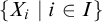 $\{X_i \mid i \in I\}$
be a family of Priestley spaces and denote by
$\{X_i \mid i \in I\}$
be a family of Priestley spaces and denote by $\prod _{i \in I} X_i$
their Cartesian product equipped with the product topology and componentwise order. To simplify the notation, we will denote the product by
$\prod _{i \in I} X_i$
their Cartesian product equipped with the product topology and componentwise order. To simplify the notation, we will denote the product by $\prod _i X_i$
when the set I of indexes is clear from the context. For each
$\prod _i X_i$
when the set I of indexes is clear from the context. For each $i \in I$
, we denote by
$i \in I$
, we denote by $\pi _i \colon \prod _i X_i \to X_i$
the projection onto
$\pi _i \colon \prod _i X_i \to X_i$
the projection onto $X_i$
. The following proposition is well known and is an immediate consequence of the fact that products in the categories of topological spaces and posets coincide with Cartesian products.
$X_i$
. The following proposition is well known and is an immediate consequence of the fact that products in the categories of topological spaces and posets coincide with Cartesian products.
Proposition 4.1. Let $\{X_i \mid i \in I\}$
be a family of Priestley spaces. Then
$\{X_i \mid i \in I\}$
be a family of Priestley spaces. Then $\prod _i X_i$
together with the maps
$\prod _i X_i$
together with the maps $\pi _i \colon \prod _i X_i \to X_i$
is the product of
$\pi _i \colon \prod _i X_i \to X_i$
is the product of $\{X_i \mid i \in I\}$
in
$\{X_i \mid i \in I\}$
in $\mathsf {Pries}$
.
$\mathsf {Pries}$
.
We now introduce the main construction of this section. Our first goal is to show that it gives the products in the category of Esakia root systems.
Definition 4.2. Let $\{Y_i \mid i \in I\}$
be a family of Esakia root systems. We define
$\{Y_i \mid i \in I\}$
be a family of Esakia root systems. We define
 $$\begin{align*}\bigotimes_{i \in I} Y_i := \{ C \in \mathsf{CC}\big(\textstyle{\prod_i} Y_i\big) \mid \pi_i[C] \text{ is an upset of } Y_i \text{ for every } i \in I\} \end{align*}$$
and equip it with the subspace topology and order induced by $\mathsf {CC}\big (\prod _i Y_i\big )$
.
$\mathsf {CC}\big (\prod _i Y_i\big )$
.
Remark 4.3. If $C \in \mathsf {CC}(\prod _i Y_i)$
, then
$C \in \mathsf {CC}(\prod _i Y_i)$
, then $\pi _i[C]$
is an upset of
$\pi _i[C]$
is an upset of $Y_i$
iff it is a principal upset. Indeed, C has a least element
$Y_i$
iff it is a principal upset. Indeed, C has a least element $m(C)$
by Proposition 3.6, and so
$m(C)$
by Proposition 3.6, and so $\pi _i(m(C))$
is the least element of
$\pi _i(m(C))$
is the least element of $\pi _i[C]$
because
$\pi _i[C]$
because $\pi _i$
is an order-preserving map. Therefore, if
$\pi _i$
is an order-preserving map. Therefore, if $\pi _i[C]$
is an upset, then
$\pi _i[C]$
is an upset, then $\pi _i[C]={\uparrow } \pi _i(m(C))$
.
$\pi _i[C]={\uparrow } \pi _i(m(C))$
.
Example 4.4. Let ${\mathsf {2}} = \{ 0 < 1\}$
be the
${\mathsf {2}} = \{ 0 < 1\}$
be the $2$
-element chain with the discrete topology. Consider
$2$
-element chain with the discrete topology. Consider $C_1,C_2 \in \mathsf {CC}({\mathsf {2}} \times {\mathsf {2}})$
defined as follows:
$C_1,C_2 \in \mathsf {CC}({\mathsf {2}} \times {\mathsf {2}})$
defined as follows:
 $$\begin{align*}C_1= \{(1,0),(1,1)\} \qquad \text{and} \qquad C_2= \{(0,0),(0,1)\}. \end{align*}$$
The white dots in Figure 2 represent $C_1$
with its projections
$C_1$
with its projections $\pi _1[C_1], \pi _2[C_1] \in \mathsf {CC}({\mathsf {2}})$
on the left and
$\pi _1[C_1], \pi _2[C_1] \in \mathsf {CC}({\mathsf {2}})$
on the left and $C_2$
with its projections
$C_2$
with its projections $\pi _1[C_2],\pi _2[C_2] \in \mathsf {CC}({\mathsf {2}})$
on the right. Since both
$\pi _1[C_2],\pi _2[C_2] \in \mathsf {CC}({\mathsf {2}})$
on the right. Since both $\pi _1[C_1]=\{1\}$
and
$\pi _1[C_1]=\{1\}$
and $\pi _2[C_1]=\{0,1\}$
are upsets of
$\pi _2[C_1]=\{0,1\}$
are upsets of ${\mathsf {2}}$
, we have that
${\mathsf {2}}$
, we have that $C_1 \in {\mathsf {2}} \otimes {\mathsf {2}}$
. However,
$C_1 \in {\mathsf {2}} \otimes {\mathsf {2}}$
. However, $C_2 \notin {\mathsf {2}} \otimes {\mathsf {2}}$
because
$C_2 \notin {\mathsf {2}} \otimes {\mathsf {2}}$
because $\pi _1[C_2]=\{0\}$
is not an upset of
$\pi _1[C_2]=\{0\}$
is not an upset of ${\mathsf {2}}$
.
${\mathsf {2}}$
.
The chains $C_1$
and
$C_1$
and $C_2$
of
$C_2$
of ${\mathsf {2}} \times {\mathsf {2}}$
and their projections.
${\mathsf {2}} \times {\mathsf {2}}$
and their projections.

We will show that $\bigotimes _i Y_i$
is the product of
$\bigotimes _i Y_i$
is the product of $\{Y_i \mid i \in I\}$
in the category
$\{Y_i \mid i \in I\}$
in the category $\mathsf {ERS}$
. We begin by proving that
$\mathsf {ERS}$
. We begin by proving that $\bigotimes _i Y_i$
is an Esakia root system, but we first need to recall the following technical fact.
$\bigotimes _i Y_i$
is an Esakia root system, but we first need to recall the following technical fact.
Lemma 4.5. [Reference Priestley30, Proposition 2.6(iv)] Let $A,B \subseteq X$
be closed subsets of a Priestley space such that
$A,B \subseteq X$
be closed subsets of a Priestley space such that ${\uparrow } A \cap {\downarrow } B = \varnothing $
. Then there is a clopen upset U and a clopen downset D such that
${\uparrow } A \cap {\downarrow } B = \varnothing $
. Then there is a clopen upset U and a clopen downset D such that $U \cap D = \varnothing $
,
$U \cap D = \varnothing $
, $A \subseteq U$
, and
$A \subseteq U$
, and $B \subseteq D$
.
$B \subseteq D$
.
Theorem 4.6. $\bigotimes _i Y_i$
is an Esakia root system.
$\bigotimes _i Y_i$
is an Esakia root system.
Proof. Since $\prod _i Y_i$
is a Priestley space, Theorem 3.12 yields that
$\prod _i Y_i$
is a Priestley space, Theorem 3.12 yields that $\mathsf {CC}(\prod _i Y_i)$
is an Esakia root system. Since closed upsets of Esakia spaces equipped with the subspace topology and the restriction of the order are Esakia spaces (see, e.g., [Reference Esakia, Bezhanishvili and Holliday17, Lemma 3.4.11]), it is sufficient to show that
$\mathsf {CC}(\prod _i Y_i)$
is an Esakia root system. Since closed upsets of Esakia spaces equipped with the subspace topology and the restriction of the order are Esakia spaces (see, e.g., [Reference Esakia, Bezhanishvili and Holliday17, Lemma 3.4.11]), it is sufficient to show that $\bigotimes _i Y_i$
is a closed upset of
$\bigotimes _i Y_i$
is a closed upset of $\mathsf {CC}(\prod _i Y_i)$
.
$\mathsf {CC}(\prod _i Y_i)$
.
To prove that $\bigotimes _i Y_i$
is an upset of
$\bigotimes _i Y_i$
is an upset of $\mathsf {CC}(\prod _i Y_i)$
, let
$\mathsf {CC}(\prod _i Y_i)$
, let $C_1 \in \bigotimes _i Y_i$
and
$C_1 \in \bigotimes _i Y_i$
and $C_2 \in \mathsf {CC}(\prod _i Y_i)$
such that
$C_2 \in \mathsf {CC}(\prod _i Y_i)$
such that $C_1 \unlhd C_2$
. We show that
$C_1 \unlhd C_2$
. We show that $C_2 \in \bigotimes _i Y_i$
, which means that
$C_2 \in \bigotimes _i Y_i$
, which means that ${\uparrow } \pi _i[C_2] = \pi _i[C_2]$
for every
${\uparrow } \pi _i[C_2] = \pi _i[C_2]$
for every $i \in I$
. Let
$i \in I$
. Let $i \in I$
and
$i \in I$
and $y \in {\uparrow } \pi _i[C_2]$
. Since
$y \in {\uparrow } \pi _i[C_2]$
. Since $C_2 \subseteq C_1$
and
$C_2 \subseteq C_1$
and $\pi _i[C_1]$
is an upset of
$\pi _i[C_1]$
is an upset of $Y_i$
, we obtain that
$Y_i$
, we obtain that $y \in {\uparrow } \pi _i[C_2] \subseteq {\uparrow } \pi _i[C_1] = \pi _i[C_1]$
. So, there is
$y \in {\uparrow } \pi _i[C_2] \subseteq {\uparrow } \pi _i[C_1] = \pi _i[C_1]$
. So, there is $x \in C_1$
such that
$x \in C_1$
such that $\pi _i(x)=y$
. Let
$\pi _i(x)=y$
. Let $m(C_2)$
be the least element of
$m(C_2)$
be the least element of $C_2$
. Since
$C_2$
. Since $x,m(C_2) \in C_1$
and
$x,m(C_2) \in C_1$
and $C_1$
is a chain, we have that
$C_1$
is a chain, we have that $x \le m(C_2)$
or
$x \le m(C_2)$
or $m(C_2) \le x$
. If
$m(C_2) \le x$
. If $x \le m(C_2)$
, then
$x \le m(C_2)$
, then $y=\pi _i(x) \le \pi _i(m(C_2))$
. We have that
$y=\pi _i(x) \le \pi _i(m(C_2))$
. We have that $\pi _i(m(C_2)) \le y$
because
$\pi _i(m(C_2)) \le y$
because $y \in {\uparrow } \pi _i[C_2]$
and
$y \in {\uparrow } \pi _i[C_2]$
and $\pi _i$
is order preserving. So,
$\pi _i$
is order preserving. So, $y=\pi _i(m(C_2)) \in \pi _i[C_2]$
. If
$y=\pi _i(m(C_2)) \in \pi _i[C_2]$
. If $m(C_2) \le x$
, then
$m(C_2) \le x$
, then $x \in C_2$
because
$x \in C_2$
because $C_1 \unlhd C_2$
. Thus,
$C_1 \unlhd C_2$
. Thus, ${y=\pi _i(x) \in \pi _i[C_2]}$
. In either case,
${y=\pi _i(x) \in \pi _i[C_2]}$
. In either case, $y \in \pi _i[C_2]$
. This shows that
$y \in \pi _i[C_2]$
. This shows that $\pi _i[C_2]$
is an upset of
$\pi _i[C_2]$
is an upset of $Y_i$
for each
$Y_i$
for each $i \in I$
, and hence
$i \in I$
, and hence $C_2 \in \mathsf {CC}(\prod _i Y_i)$
.
$C_2 \in \mathsf {CC}(\prod _i Y_i)$
.
It remains to show that $\bigotimes _i Y_i$
is a closed subset of
$\bigotimes _i Y_i$
is a closed subset of $\mathsf {CC}(\prod _i Y_i)$
. Let
$\mathsf {CC}(\prod _i Y_i)$
. Let $C \in \mathsf {CC}(\prod _i Y_i)$
be such that
$C \in \mathsf {CC}(\prod _i Y_i)$
be such that $C \notin \bigotimes _i Y_i$
. We show that C is contained in an open subset of
$C \notin \bigotimes _i Y_i$
. We show that C is contained in an open subset of $\mathsf {CC}(\prod _i Y_i)$
disjoint from
$\mathsf {CC}(\prod _i Y_i)$
disjoint from $\bigotimes _i Y_i$
. Since
$\bigotimes _i Y_i$
. Since $C \notin \bigotimes _i Y_i$
, there is
$C \notin \bigotimes _i Y_i$
, there is $i \in I$
such that
$i \in I$
such that $\pi _i[C]$
is not an upset of
$\pi _i[C]$
is not an upset of $Y_i$
. Then
$Y_i$
. Then $\pi _i[C] \ne {\uparrow } \pi _i[C]$
. Because
$\pi _i[C] \ne {\uparrow } \pi _i[C]$
. Because $\pi _i[C] \ne {\uparrow } \pi _i[C]$
, there is
$\pi _i[C] \ne {\uparrow } \pi _i[C]$
, there is $x \in {\uparrow } \pi _i[C]$
that is not in
$x \in {\uparrow } \pi _i[C]$
that is not in $\pi _i[C]$
. From
$\pi _i[C]$
. From $x \notin \pi _i[C]$
it follows that
$x \notin \pi _i[C]$
it follows that ${\uparrow } x \cap ({\downarrow } x \cap \pi _i[C]) = \varnothing $
and
${\uparrow } x \cap ({\downarrow } x \cap \pi _i[C]) = \varnothing $
and ${\downarrow } x \cap ({\uparrow } x \cap \pi _i[C])=\varnothing $
. Since
${\downarrow } x \cap ({\uparrow } x \cap \pi _i[C])=\varnothing $
. Since ${\downarrow } x \cap \pi _i[C]$
and
${\downarrow } x \cap \pi _i[C]$
and ${\uparrow } x \cap \pi _i[C]$
are closed subsets of
${\uparrow } x \cap \pi _i[C]$
are closed subsets of $Y_i$
, two applications of Lemma 4.5 yield a clopen upset U disjoint from
$Y_i$
, two applications of Lemma 4.5 yield a clopen upset U disjoint from ${\downarrow } x \cap \pi _i[C]$
such that
${\downarrow } x \cap \pi _i[C]$
such that $x \in U$
and a clopen downset D disjoint from
$x \in U$
and a clopen downset D disjoint from ${\uparrow } x \cap \pi _i[C]$
such that
${\uparrow } x \cap \pi _i[C]$
such that $x \in D$
. Then
$x \in D$
. Then
 $$ \begin{align} {\downarrow} x \cap \pi_i[C] \subseteq {\downarrow} (U \cap D), \ {\downarrow} x \cap \pi_i[C] \subseteq Y_i \setminus (U \cap D), \text{ and } {\uparrow} x \cap \pi_i[C] \subseteq U \setminus D, \end{align} $$
where the first inclusion holds because $x \in U \cap D$
, the second because
$x \in U \cap D$
, the second because ${\downarrow } x \cap \pi _i[C] \subseteq Y_i \setminus U$
, and the third follows from
${\downarrow } x \cap \pi _i[C] \subseteq Y_i \setminus U$
, and the third follows from $x \in U$
and
$x \in U$
and ${\uparrow } x \cap \pi _i[C] \subseteq Y_i \setminus D$
. Since
${\uparrow } x \cap \pi _i[C] \subseteq Y_i \setminus D$
. Since ${\uparrow } \pi _i[C] \subseteq {\uparrow } \pi _i(m(C))$
and
${\uparrow } \pi _i[C] \subseteq {\uparrow } \pi _i(m(C))$
and $Y_i$
is a root system, we have that
$Y_i$
is a root system, we have that ${\uparrow } \pi _i[C]$
is a chain. It then follows from
${\uparrow } \pi _i[C]$
is a chain. It then follows from $x \in {\uparrow } \pi _i[C]$
and
$x \in {\uparrow } \pi _i[C]$
and $\pi _i[C] \subseteq {\uparrow } \pi _i[C]$
that
$\pi _i[C] \subseteq {\uparrow } \pi _i[C]$
that $\pi _i[C]=({\downarrow } x \cap \pi _i[C]) \cup ({\uparrow } x \cap \pi _i[C])$
. The inclusions in (4) imply that
$\pi _i[C]=({\downarrow } x \cap \pi _i[C]) \cup ({\uparrow } x \cap \pi _i[C])$
. The inclusions in (4) imply that
 $$ \begin{align} \pi_i[C] = ({\downarrow} x \cap \pi_i[C]) \cup ({\uparrow} x \cap \pi_i[C]) \subseteq ({\downarrow}(U \cap D) \setminus (U \cap D)) \cup (U \setminus D). \end{align} $$
Since $x \in {\uparrow } \pi _i[C]$
, we have that
$x \in {\uparrow } \pi _i[C]$
, we have that $\pi _i(m(C)) \le x$
, and hence
$\pi _i(m(C)) \le x$
, and hence $\pi _i(m(C)) \in {\downarrow } x \cap \pi _i[C]$
. It then follows from the inclusions in (4) that
$\pi _i(m(C)) \in {\downarrow } x \cap \pi _i[C]$
. It then follows from the inclusions in (4) that $\pi _i(m(C)) \in {\downarrow }(U \cap D)$
and
$\pi _i(m(C)) \in {\downarrow }(U \cap D)$
and $\pi _i(m(C)) \notin U \cap D$
. Thus,
$\pi _i(m(C)) \notin U \cap D$
. Thus,
 $$ \begin{align} \pi_i[C] \cap ({\downarrow}(U \cap D) \setminus (U \cap D)) \neq \varnothing. \end{align} $$
 $$\begin{align*}C \in \mathcal{U} := \Box \pi_i^{-1}[({\downarrow}(U \cap D) \setminus (U \cap D)) \cup (U \setminus D)] \cap \Diamond \pi_i^{-1}[{\downarrow}(U \cap D) \setminus (U \cap D)]. \end{align*}$$
We show that $\mathcal {U}$
is a clopen of
$\mathcal {U}$
is a clopen of $\mathsf {CC}(\prod _i Y_i)$
disjoint from
$\mathsf {CC}(\prod _i Y_i)$
disjoint from $\bigotimes _i Y_i$
. Since
$\bigotimes _i Y_i$
. Since $Y_i$
is an Esakia space, U and D are clopen, and
$Y_i$
is an Esakia space, U and D are clopen, and $\pi _i$
is continuous, we have that
$\pi _i$
is continuous, we have that $\mathcal {U}$
is clopen. To prove that each
$\mathcal {U}$
is clopen. To prove that each $K \in \mathcal {U}$
is not in
$K \in \mathcal {U}$
is not in $\bigotimes _i Y_i$
, assume that
$\bigotimes _i Y_i$
, assume that $K \in \mathcal {U} \cap \bigotimes _i Y_i$
. Then
$K \in \mathcal {U} \cap \bigotimes _i Y_i$
. Then $K \in \mathcal {U} \subseteq \Diamond \pi _i^{-1}[{\downarrow }(U \cap D) \setminus (U \cap D)]$
, and hence there is
$K \in \mathcal {U} \subseteq \Diamond \pi _i^{-1}[{\downarrow }(U \cap D) \setminus (U \cap D)]$
, and hence there is $y \in K$
such that
$y \in K$
such that $\pi _i(y) \in {\downarrow } (U \cap D) \setminus (U \cap D)$
. This implies that there is
$\pi _i(y) \in {\downarrow } (U \cap D) \setminus (U \cap D)$
. This implies that there is $z \in Y_i$
such that
$z \in Y_i$
such that
 $$\begin{align*}z \in {\uparrow} \pi_i(y) \cap U \cap D \subseteq {\uparrow} \pi_i (m(K)) \cap U \cap D \subseteq \pi_i[K] \cap U \cap D, \end{align*}$$
where ${\uparrow } \pi _i (m (K)) \subseteq {\uparrow } \pi _i[K] = \pi _i[K]$
because
${\uparrow } \pi _i (m (K)) \subseteq {\uparrow } \pi _i[K] = \pi _i[K]$
because $K \in \bigotimes _i Y_i$
. However,
$K \in \bigotimes _i Y_i$
. However,
 $$\begin{align*}K \in \mathcal{U} \subseteq \Box \pi_i^{-1}[({\downarrow}(U \cap D) \setminus (U \cap D)) \cup (U \setminus D)] \subseteq \Box \pi_i^{-1}[Y_i \setminus (U \cap D)], \end{align*}$$
and so $\pi _i[K] \subseteq Y_i \setminus (U \cap D)$
. This contradicts the existence of
$\pi _i[K] \subseteq Y_i \setminus (U \cap D)$
. This contradicts the existence of $z \in \pi _i[K] \cap U \cap D$
. Therefore,
$z \in \pi _i[K] \cap U \cap D$
. Therefore, $\mathcal {U}$
is a clopen subset of
$\mathcal {U}$
is a clopen subset of $\mathsf {CC}(\prod _i Y_i)$
containing C that is disjoint from
$\mathsf {CC}(\prod _i Y_i)$
containing C that is disjoint from $\bigotimes _i Y_i$
. This shows that
$\bigotimes _i Y_i$
. This shows that $\bigotimes _i Y_i$
is closed in
$\bigotimes _i Y_i$
is closed in $\mathsf {CC}(\prod _i Y_i)$
, and concludes the proof that
$\mathsf {CC}(\prod _i Y_i)$
, and concludes the proof that $\bigotimes _i Y_i$
is an Esakia root system.
$\bigotimes _i Y_i$
is an Esakia root system.
We are now ready to show that $\bigotimes _i Y_i$
is the product in
$\bigotimes _i Y_i$
is the product in $\mathsf {ERS}$
of the family
$\mathsf {ERS}$
of the family $\{ Y_i \mid i \in I\}$
. For each
$\{ Y_i \mid i \in I\}$
. For each $i \in I$
, we let
$i \in I$
, we let $p_i \colon \bigotimes _i Y_i \to Y_i$
be the map that sends
$p_i \colon \bigotimes _i Y_i \to Y_i$
be the map that sends $C \in \bigotimes _i Y_i$
to
$C \in \bigotimes _i Y_i$
to $\pi _i(m(C)) \in Y_i$
, where
$\pi _i(m(C)) \in Y_i$
, where $m(C)$
is the least element of C.
$m(C)$
is the least element of C.
Theorem 4.7. Let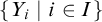 $\{Y_i \mid i \in I \}$
be a family of Esakia root systems. Then
$\{Y_i \mid i \in I \}$
be a family of Esakia root systems. Then $\bigotimes _i Y_i$
together with the maps
$\bigotimes _i Y_i$
together with the maps $p_i \colon \bigotimes _i Y_i \to Y_i$
is the product of
$p_i \colon \bigotimes _i Y_i \to Y_i$
is the product of $\{Y_i \mid i \in I \}$
in
$\{Y_i \mid i \in I \}$
in $\mathsf {ERS}$
.
$\mathsf {ERS}$
.
Proof. We first show that $p_i \colon \bigotimes _i Y_i \to Y_i$
is a continuous p-morphism for every
$p_i \colon \bigotimes _i Y_i \to Y_i$
is a continuous p-morphism for every $i \in I$
. We have that
$i \in I$
. We have that $p_i = \pi _i \circ m$
, and so it is a continuous map because every projection
$p_i = \pi _i \circ m$
, and so it is a continuous map because every projection $\pi _i$
is continuous and m is continuous by Lemma 3.14. We show that
$\pi _i$
is continuous and m is continuous by Lemma 3.14. We show that $p_i$
is a p-morphism. Both
$p_i$
is a p-morphism. Both $\pi _i$
and m are order preserving, so
$\pi _i$
and m are order preserving, so $p_i$
is also order preserving. Let
$p_i$
is also order preserving. Let $C \in \bigotimes _i Y_i$
and
$C \in \bigotimes _i Y_i$
and $y \in Y_i$
such that
$y \in Y_i$
such that $p_i(C) \le y$
. Then
$p_i(C) \le y$
. Then $\pi _i(m(C)) \le y$
, and hence
$\pi _i(m(C)) \le y$
, and hence $y \in {\uparrow } \pi _i(m(C)) \subseteq {\uparrow } \pi _i[C]$
. Since
$y \in {\uparrow } \pi _i(m(C)) \subseteq {\uparrow } \pi _i[C]$
. Since $C \in \bigotimes _i Y_i$
, we have that
$C \in \bigotimes _i Y_i$
, we have that ${\uparrow } \pi _i[C]=\pi _i[C]$
. Thus,
${\uparrow } \pi _i[C]=\pi _i[C]$
. Thus, $y \in \pi _i[C]$
. So, there is
$y \in \pi _i[C]$
. So, there is $x \in C$
such that
$x \in C$
such that $\pi _i(x)=y$
. Let
$\pi _i(x)=y$
. Let $K = C \cap {\uparrow } x$
. Then
$K = C \cap {\uparrow } x$
. Then $C \unlhd K$
, and hence
$C \unlhd K$
, and hence $K \in \bigotimes _i Y_i$
because
$K \in \bigotimes _i Y_i$
because $\bigotimes _i Y_i$
is an upset in
$\bigotimes _i Y_i$
is an upset in $\mathsf {CC}(\prod _i Y_i)$
as shown in the proof of Theorem 4.6. Therefore,
$\mathsf {CC}(\prod _i Y_i)$
as shown in the proof of Theorem 4.6. Therefore, $y=\pi _i(x)=\pi _i(m(K)) = p_i(K)$
. This shows that
$y=\pi _i(x)=\pi _i(m(K)) = p_i(K)$
. This shows that $p_i$
is a p-morphism.
$p_i$
is a p-morphism.
It remains to verify the universal property of products. Let Z be an Esakia root system and $f_i \colon Z \to Y_i$
a continuous p-morphism for each
$f_i \colon Z \to Y_i$
a continuous p-morphism for each $i \in I$
. By Proposition 4.1, there is a map
$i \in I$
. By Proposition 4.1, there is a map $q \colon Z \to \prod _i Y_i$
sending
$q \colon Z \to \prod _i Y_i$
sending $z \in Z$
to
$z \in Z$
to $(f_i(z))_{i \in I}$
that is continuous and order preserving. Thus, Theorem 3.16 yields a continuous p-morphism
$(f_i(z))_{i \in I}$
that is continuous and order preserving. Thus, Theorem 3.16 yields a continuous p-morphism $g \colon Z \to \mathsf {CC}(\prod _i Y_i)$
given by
$g \colon Z \to \mathsf {CC}(\prod _i Y_i)$
given by $g(z) = q[{\uparrow } z]= \{ (f_i(w))_{i \in I} \mid w \in {\uparrow } z \}$
for every
$g(z) = q[{\uparrow } z]= \{ (f_i(w))_{i \in I} \mid w \in {\uparrow } z \}$
for every $z \in Z$
. Since each
$z \in Z$
. Since each $f_i$
is a p-morphism, we have that
$f_i$
is a p-morphism, we have that $f_i[{\uparrow } z]$
is an upset of
$f_i[{\uparrow } z]$
is an upset of $Y_i$
for every
$Y_i$
for every $z \in Z$
. So,
$z \in Z$
. So, ${\uparrow } \pi _i[g(z)] = {\uparrow } f_i[{\uparrow } z]=f_i[{\uparrow } z] = \pi _i[g(z)]$
. Therefore,
${\uparrow } \pi _i[g(z)] = {\uparrow } f_i[{\uparrow } z]=f_i[{\uparrow } z] = \pi _i[g(z)]$
. Therefore, $g(z) \in \bigotimes _i Y_i$
, and hence g restricts to a continuous p-morphism
$g(z) \in \bigotimes _i Y_i$
, and hence g restricts to a continuous p-morphism $g \colon Z \to \bigotimes _i Y_i$
. Moreover,
$g \colon Z \to \bigotimes _i Y_i$
. Moreover, $p_i g(z)=\pi _i m g(z)=\pi _i ((f_i(z))_{i \in I})=f_i(z)$
for every
$p_i g(z)=\pi _i m g(z)=\pi _i ((f_i(z))_{i \in I})=f_i(z)$
for every $z \in Z$
. Thus,
$z \in Z$
. Thus, $p_i \circ g = f_i$
for each
$p_i \circ g = f_i$
for each $i \in I$
. We now show that g is the unique map with such properties. Suppose that
$i \in I$
. We now show that g is the unique map with such properties. Suppose that $h \colon Z \to \bigotimes _i Y_i$
is a continuous p-morphism such that
$h \colon Z \to \bigotimes _i Y_i$
is a continuous p-morphism such that $p_i \circ h = f_i$
for every
$p_i \circ h = f_i$
for every $i \in I$
. Since
$i \in I$
. Since $\bigotimes _i Y_i$
is an upset of
$\bigotimes _i Y_i$
is an upset of $\mathsf {CC}(\prod _i Y_i)$
, it follows that
$\mathsf {CC}(\prod _i Y_i)$
, it follows that $h \colon Z \to \mathsf {CC}(\prod _i Y_i)$
is a continuous p-morphism. We also have that
$h \colon Z \to \mathsf {CC}(\prod _i Y_i)$
is a continuous p-morphism. We also have that $\pi _i m(h(z)) = p_i(h(z)) = f_i(z)$
for all
$\pi _i m(h(z)) = p_i(h(z)) = f_i(z)$
for all $i \in I$
and
$i \in I$
and $z \in Z$
. Thus,
$z \in Z$
. Thus, $m(h(z))=(f_i(z))_{i \in I} = m(g(z))$
for each
$m(h(z))=(f_i(z))_{i \in I} = m(g(z))$
for each $z \in Z$
. Then
$z \in Z$
. Then $h \colon Z \to \mathsf {CC}(\prod _i Y_i)$
is a continuous p-morphism such that
$h \colon Z \to \mathsf {CC}(\prod _i Y_i)$
is a continuous p-morphism such that $m \circ h=m \circ g$
. It follows from Theorem 3.16 that
$m \circ h=m \circ g$
. It follows from Theorem 3.16 that $h=g$
.
$h=g$
.
We are now ready to describe the Esakia duals of coproducts of Gödel algebras.
Theorem 4.8. Let $\{ G_i \mid i \in I\}$
be a family of Gödel algebras and
$\{ G_i \mid i \in I\}$
be a family of Gödel algebras and $Y_i=(G_i)_*$
their Esakia duals. Then the coproduct of
$Y_i=(G_i)_*$
their Esakia duals. Then the coproduct of $\{ G_i \mid i \in I\}$
in
$\{ G_i \mid i \in I\}$
in $\mathsf {GA}$
is given by
$\mathsf {GA}$
is given by $(\bigotimes _i Y_i)^*$
together with the maps sending
$(\bigotimes _i Y_i)^*$
together with the maps sending $a \in G_i$
to
$a \in G_i$
to $\Box \pi _i^{-1}[\sigma _{G_i}(a)] \in (\bigotimes _i Y_i)^*$
for each
$\Box \pi _i^{-1}[\sigma _{G_i}(a)] \in (\bigotimes _i Y_i)^*$
for each $i \in I$
.
$i \in I$
.
Proof. Since $(-)^* \colon \mathsf {ERS} \to \mathsf {GA}$
is a dual equivalence of categories, it sends products into coproducts. Thus, Theorem 4.7 yields that
$(-)^* \colon \mathsf {ERS} \to \mathsf {GA}$
is a dual equivalence of categories, it sends products into coproducts. Thus, Theorem 4.7 yields that $(\bigotimes _i Y_i)^*$
together with the maps
$(\bigotimes _i Y_i)^*$
together with the maps $p_i^*$
for each
$p_i^*$
for each $i \in I$
is the coproduct of
$i \in I$
is the coproduct of $\{ Y_i^* \mid i \in I\}$
in
$\{ Y_i^* \mid i \in I\}$
in $\mathsf {GA}$
. Since
$\mathsf {GA}$
. Since $\sigma _{G_i} \colon G_i \to Y_i^*$
is an isomorphism of Gödel algebras for each
$\sigma _{G_i} \colon G_i \to Y_i^*$
is an isomorphism of Gödel algebras for each $i \in I$
, it is straightforward to verify that
$i \in I$
, it is straightforward to verify that $(\bigotimes _i Y_i)^*$
together with the maps
$(\bigotimes _i Y_i)^*$
together with the maps $p_i^* \circ \sigma _{G_i}$
is the coproduct of
$p_i^* \circ \sigma _{G_i}$
is the coproduct of $\{ G_i \mid i \in I\}$
in
$\{ G_i \mid i \in I\}$
in $\mathsf {GA}$
. It remains to observe that
$\mathsf {GA}$
. It remains to observe that $p_i^* \circ \sigma _{G_i}$
maps
$p_i^* \circ \sigma _{G_i}$
maps $a \in G_i$
to
$a \in G_i$
to $\Box \pi _i^{-1}[\sigma _{G_i}(a)] \in (\bigotimes _i Y_i)^*$
. Since
$\Box \pi _i^{-1}[\sigma _{G_i}(a)] \in (\bigotimes _i Y_i)^*$
. Since $p_i=\pi _i \circ m$
, we obtain that
$p_i=\pi _i \circ m$
, we obtain that $p_i^*(\sigma _{G_i}(a))=m^{-1}[\pi _i^{-1}[\sigma _{G_i}(a)]]$
. Because
$p_i^*(\sigma _{G_i}(a))=m^{-1}[\pi _i^{-1}[\sigma _{G_i}(a)]]$
. Because $\sigma _{G_i}(a)$
is a clopen upset of
$\sigma _{G_i}(a)$
is a clopen upset of $Y_i$
, Lemma 3.13(1) yields that
$Y_i$
, Lemma 3.13(1) yields that $p_i^*(\sigma _{G_i}(a))=\Box \pi _i^{-1}[\sigma _{G_i}(a)]$
.
$p_i^*(\sigma _{G_i}(a))=\Box \pi _i^{-1}[\sigma _{G_i}(a)]$
.
For a Gödel algebra G, let $d(G)$
be the least
$d(G)$
be the least $n \in \mathbb {N}$
such that
$n \in \mathbb {N}$
such that $G \in \mathsf {GA}_n$
, and if there is no such
$G \in \mathsf {GA}_n$
, and if there is no such $n \in \mathbb {N}$
, let
$n \in \mathbb {N}$
, let $d(G)=\infty $
. We call
$d(G)=\infty $
. We call $d(G)$
the depth of G. It is an immediate consequence of Esakia duality for
$d(G)$
the depth of G. It is an immediate consequence of Esakia duality for $\mathsf {GA}_n$
that
$\mathsf {GA}_n$
that $d(G)=d(G_*)$
, where
$d(G)=d(G_*)$
, where $d(G_*)$
is the depth of the Esakia root system
$d(G_*)$
is the depth of the Esakia root system $G_*$
as defined in Section 2. Thanks to the dual description of coproducts we just obtained, we have a way to compute the depth of coproducts of Gödel algebras.
$G_*$
as defined in Section 2. Thanks to the dual description of coproducts we just obtained, we have a way to compute the depth of coproducts of Gödel algebras.
Theorem 4.9. Let $\{G_i \mid i \in I\}$
be a family of nontrivial Gödel algebras. Then the coproduct of
$\{G_i \mid i \in I\}$
be a family of nontrivial Gödel algebras. Then the coproduct of $\{G_i \mid i \in I\}$
has depth
$\{G_i \mid i \in I\}$
has depth $1 + \sum _{i \in I} (d(G_i)-1)$
, where
$1 + \sum _{i \in I} (d(G_i)-1)$
, where $d(G_i) \in \mathbb {N} \cup \{ \infty \}$
is the depth of
$d(G_i) \in \mathbb {N} \cup \{ \infty \}$
is the depth of $G_i$
for each
$G_i$
for each $i \in I$
.Footnote
3
$i \in I$
.Footnote
3
Proof. Let $Y_i=(G_i)_*$
be the Esakia root system dual to
$Y_i=(G_i)_*$
be the Esakia root system dual to $G_i$
. Theorem 4.8 implies that the depth of the coproduct of
$G_i$
. Theorem 4.8 implies that the depth of the coproduct of $\{G_i \mid i \in I\}$
coincides with the depth of
$\{G_i \mid i \in I\}$
coincides with the depth of $\bigotimes _i Y_i$
. Since
$\bigotimes _i Y_i$
. Since $d(G_i)=d(Y_i)$
for every
$d(G_i)=d(Y_i)$
for every $i \in I$
, it is sufficient to show that
$i \in I$
, it is sufficient to show that $d(\bigotimes _i Y_i)=1 + \sum _{i \in I} (d(Y_i)-1)$
. We first prove the following technical fact.
$d(\bigotimes _i Y_i)=1 + \sum _{i \in I} (d(Y_i)-1)$
. We first prove the following technical fact.
Claim 4.10. Let $w_i \in \max Y_i$
for every
$w_i \in \max Y_i$
for every $i \in I$
. Let also
$i \in I$
. Let also $i_1, \dots , i_n \in I$
and
$i_1, \dots , i_n \in I$
and $z_{i_j} \in Y_{i_j}$
such that
$z_{i_j} \in Y_{i_j}$
such that $z_{i_j} \le w_{i_j}$
for each
$z_{i_j} \le w_{i_j}$
for each $j=1, \dots , n$
. Define
$j=1, \dots , n$
. Define $C_j \subseteq \prod _i Y_i$
for each
$C_j \subseteq \prod _i Y_i$
for each $j=1, \dots , n$
as follows:
$j=1, \dots , n$
as follows:
 $$ \begin{align*} (y_i)_{i \in I} \in C_j \iff \begin{cases} y_i=z_i &\text{if } i \in \{i_1, \dots, i_{j-1}\},\\ y_i \in {\uparrow} z_{i_j} &\text{if } i=i_j,\\ y_i=w_i &\text{if } i \notin \{i_1, \dots, i_j\}. \end{cases} \end{align*} $$
Then $C := C_1 \cup \dots \cup C_n$
is a point of depth
$C := C_1 \cup \dots \cup C_n$
is a point of depth $1 + \sum _{j=1}^n (d(z_{i_j})-1)$
in
$1 + \sum _{j=1}^n (d(z_{i_j})-1)$
in $\bigotimes _i Y_i$
, where
$\bigotimes _i Y_i$
, where $d(z_{i_j})$
is the depth of
$d(z_{i_j})$
is the depth of $z_{i_j}$
in
$z_{i_j}$
in $Y_{i_j}$
.
$Y_{i_j}$
.
Proof of the Claim.
For every j, we have
 $$\begin{align*}C_j=\bigcap \{ \pi_i^{-1}[z_i] \mid i \in \{i_1, \dots, i_{j-1}\}\} \cap \pi_{i_j}^{-1}[{\uparrow} z_{i_j}] \cap \bigcap \{ \pi_i^{-1}[w_i] \mid i \notin \{i_1, \dots, i_j\}\}, \end{align*}$$
and hence $C_j$
is a closed subset of
$C_j$
is a closed subset of $\prod _i Y_i$
because
$\prod _i Y_i$
because $\{ z_i\}$
,
$\{ z_i\}$
, ${\uparrow } z_{i_j}$
, and
${\uparrow } z_{i_j}$
, and $\{w_i\}$
are all closed and
$\{w_i\}$
are all closed and $\pi _i$
is continuous for every
$\pi _i$
is continuous for every $i \in I$
. Since
$i \in I$
. Since $Y_{i_j}$
is a root system,
$Y_{i_j}$
is a root system, ${\uparrow } z_{i_j}$
is a chain, and hence
${\uparrow } z_{i_j}$
is a chain, and hence $C_j \in \mathsf {CC}(\prod _i Y_i)$
. If
$C_j \in \mathsf {CC}(\prod _i Y_i)$
. If $1 \le j < n$
, then the least element of
$1 \le j < n$
, then the least element of $C_j$
is the greatest element of
$C_j$
is the greatest element of $C_{j+1}$
. Therefore,
$C_{j+1}$
. Therefore, $C = C_1 \cup \dots \cup C_n$
is a chain in
$C = C_1 \cup \dots \cup C_n$
is a chain in $\prod _i Y_i$
. Since
$\prod _i Y_i$
. Since $C_1, \dots , C_n$
are closed in
$C_1, \dots , C_n$
are closed in $\prod _i Y_i$
, we obtain that
$\prod _i Y_i$
, we obtain that $C \in \mathsf {CC}(\prod _i Y_i)$
. By the definition of
$C \in \mathsf {CC}(\prod _i Y_i)$
. By the definition of $C_1, \dots , C_n$
, it follows that
$C_1, \dots , C_n$
, it follows that $\pi _i[C]={\uparrow } z_i$
if
$\pi _i[C]={\uparrow } z_i$
if $i \in \{i_1, \dots , i_n\}$
, and
$i \in \{i_1, \dots , i_n\}$
, and $\pi _i[C]=\{w_i\}$
, otherwise. Therefore, for every
$\pi _i[C]=\{w_i\}$
, otherwise. Therefore, for every $i \in I$
the set
$i \in I$
the set $\pi _i[C]$
is an upset of
$\pi _i[C]$
is an upset of $Y_i$
, and hence
$Y_i$
, and hence $C \in \bigotimes _i Y_i$
. By Proposition 3.25, the depth of C in
$C \in \bigotimes _i Y_i$
. By Proposition 3.25, the depth of C in $\bigotimes _i Y_i$
coincides with its size. If
$\bigotimes _i Y_i$
coincides with its size. If $d(z_{i_j}) = \infty $
for some j, then C is infinite, and so has depth
$d(z_{i_j}) = \infty $
for some j, then C is infinite, and so has depth $\infty =1 + \sum _{j=1}^n (d(z_{i_j})-1)$
in
$\infty =1 + \sum _{j=1}^n (d(z_{i_j})-1)$
in $\bigotimes _i Y_i$
. Otherwise, C has size
$\bigotimes _i Y_i$
. Otherwise, C has size $1+\sum _{j=1}^n (d(z_{i_j})-1)$
. Indeed, each
$1+\sum _{j=1}^n (d(z_{i_j})-1)$
. Indeed, each $C_j$
has size
$C_j$
has size $d(z_{i_j})$
and the least element of
$d(z_{i_j})$
and the least element of $C_j$
coincides with the greatest element of
$C_j$
coincides with the greatest element of $C_{j+1}$
for every
$C_{j+1}$
for every $j=1, \dots , n-1$
. This shows that C is an element of
$j=1, \dots , n-1$
. This shows that C is an element of $\bigotimes _i Y_i$
of depth
$\bigotimes _i Y_i$
of depth $1 + \sum _{j=1}^n (d(z_{i_j})-1)$
.
$1 + \sum _{j=1}^n (d(z_{i_j})-1)$
.
We first consider the case in which there is $k \in I$
with
$k \in I$
with $d(Y_k)=\infty $
. Then there is an element of
$d(Y_k)=\infty $
. Then there is an element of $Y_k$
of infinite depth or there are elements of
$Y_k$
of infinite depth or there are elements of $Y_k$
of arbitrary large finite depth. Suppose first that there is
$Y_k$
of arbitrary large finite depth. Suppose first that there is $z_k \in Y_k$
such that
$z_k \in Y_k$
such that $d(z_k)=\infty $
. Since every
$d(z_k)=\infty $
. Since every $G_i$
is nontrivial, all the
$G_i$
is nontrivial, all the $Y_i$
are nonempty. Then
$Y_i$
are nonempty. Then $\max Y_i$
and
$\max Y_i$
and $\max ({\uparrow } z_k)$
are nonempty by [Reference Priestley30, Proposition 2.6]. So, we can pick
$\max ({\uparrow } z_k)$
are nonempty by [Reference Priestley30, Proposition 2.6]. So, we can pick $w_i \in \max Y_i$
for every
$w_i \in \max Y_i$
for every $i \in I$
so that
$i \in I$
so that $z_k \le w_k$
. By Claim 4.10, there is
$z_k \le w_k$
. By Claim 4.10, there is $C \in \bigotimes _i Y_i$
of infinite depth. Thus,
$C \in \bigotimes _i Y_i$
of infinite depth. Thus, $d(\bigotimes _i Y_i)=\infty $
. Suppose now that for each
$d(\bigotimes _i Y_i)=\infty $
. Suppose now that for each $n \in \mathbb {N}$
there is
$n \in \mathbb {N}$
there is $z_k \in Y_k$
such that
$z_k \in Y_k$
such that $d(z_k) \ge n$
. By arguing as in the previous case, we obtain that there are elements of
$d(z_k) \ge n$
. By arguing as in the previous case, we obtain that there are elements of $\bigotimes _i Y_i$
of arbitrarily large finite depth, and hence
$\bigotimes _i Y_i$
of arbitrarily large finite depth, and hence $d(\bigotimes _i Y_i)=\infty $
. So, we can assume that
$d(\bigotimes _i Y_i)=\infty $
. So, we can assume that $d(Y_i) \ne \infty $
for every
$d(Y_i) \ne \infty $
for every $i \in I$
. Suppose there are infinitely many
$i \in I$
. Suppose there are infinitely many $i \in I$
such that
$i \in I$
such that $d(Y_i)>1$
. Then for each
$d(Y_i)>1$
. Then for each $n \in \mathbb {N}$
we can find
$n \in \mathbb {N}$
we can find $i_1, \dots , i_n \in I$
and
$i_1, \dots , i_n \in I$
and $z_{i_j} \in Y_{i_j}$
such that
$z_{i_j} \in Y_{i_j}$
such that $d(z_{i_j}) \ge 2$
. Claim 4.10 allows us to construct
$d(z_{i_j}) \ge 2$
. Claim 4.10 allows us to construct $C \in \bigotimes _i Y_i$
of depth
$C \in \bigotimes _i Y_i$
of depth $1 + \sum _{j=1}^n (d(z_{i_j})-1)> n$
. It follows that
$1 + \sum _{j=1}^n (d(z_{i_j})-1)> n$
. It follows that $d(\bigotimes _i Y_i)=\infty $
. The last case to consider is when
$d(\bigotimes _i Y_i)=\infty $
. The last case to consider is when $d(Y_i) \ne \infty $
for every
$d(Y_i) \ne \infty $
for every $i \in I$
and
$i \in I$
and $\{i \in I \mid d(Y_i)> 1\}$
is finite. Let
$\{i \in I \mid d(Y_i)> 1\}$
is finite. Let $\{i \in I \mid d(Y_i)> 1\} = \{ i_1, \dots , i_n\}$
and
$\{i \in I \mid d(Y_i)> 1\} = \{ i_1, \dots , i_n\}$
and $z_{i_j} \in Y_{i_j}$
such that
$z_{i_j} \in Y_{i_j}$
such that $d(z_{i_j})=d(Y_{i_j})$
. Then Claim 4.10 implies that there is
$d(z_{i_j})=d(Y_{i_j})$
. Then Claim 4.10 implies that there is $C \in \bigotimes _i Y_i$
of depth
$C \in \bigotimes _i Y_i$
of depth $1 + \sum _{j=1}^n (d(z_{i_j})-1)$
, and hence
$1 + \sum _{j=1}^n (d(z_{i_j})-1)$
, and hence
 $$\begin{align*}d(\textstyle{\bigotimes_i} Y_i) \ge 1 + \sum_{j=1}^n (d(z_{i_j})-1) = 1 + \sum_{j=1}^n (d(Y_{i_j})-1). \end{align*}$$
We now show that $d(\bigotimes _i Y_i) \le 1 + \sum _{j=1}^n (d(Y_{i_j})-1)$
. Let
$d(\bigotimes _i Y_i) \le 1 + \sum _{j=1}^n (d(Y_{i_j})-1)$
. Let $K \in \bigotimes _i Y_i$
. We prove that the size of K is smaller or equal to
$K \in \bigotimes _i Y_i$
. We prove that the size of K is smaller or equal to $1+\sum _{j=1}^n (d(Y_{i_j})-1)$
. If
$1+\sum _{j=1}^n (d(Y_{i_j})-1)$
. If $i \notin \{i_1, \dots , i_n \}$
, then
$i \notin \{i_1, \dots , i_n \}$
, then $\pi _i[K]=\{w_i\}$
with
$\pi _i[K]=\{w_i\}$
with $w_i \in \max Y_i$
because
$w_i \in \max Y_i$
because $d(Y_i)=1$
. If
$d(Y_i)=1$
. If $j=1, \dots , n$
, let
$j=1, \dots , n$
, let $\pi _{i_j}[K]={\uparrow } z_{i_j}$
for some
$\pi _{i_j}[K]={\uparrow } z_{i_j}$
for some $z_{i_j} \in Y_{i_j}$
. Thus, every
$z_{i_j} \in Y_{i_j}$
. Thus, every $\pi _i[K]$
is finite, and it is a singleton for all but finitely many
$\pi _i[K]$
is finite, and it is a singleton for all but finitely many $i \in I$
. Then K is a finite chain because
$i \in I$
. Then K is a finite chain because $K \subseteq \prod _i \pi _i[K]$
. Let
$K \subseteq \prod _i \pi _i[K]$
. Let
 $$\begin{align*}W=\{ (j,y) \mid j \in \{1, \dots, n\} \text{ and } y \in {\uparrow} z_{i_j} \setminus \{z_{i_j}\}\}. \end{align*}$$
For every $(j,y) \in W$
we have that
$(j,y) \in W$
we have that $\pi _{i_j}^{-1}[y] \cap K$
is a finite nonempty chain because K is a finite chain and
$\pi _{i_j}^{-1}[y] \cap K$
is a finite nonempty chain because K is a finite chain and $y \in {\uparrow } z_{i_j} = \pi _{i_j}[K]$
. Recall that
$y \in {\uparrow } z_{i_j} = \pi _{i_j}[K]$
. Recall that $m(K)$
denotes the least element of K. Define
$m(K)$
denotes the least element of K. Define $f \colon W \to K \setminus m(K)$
by mapping
$f \colon W \to K \setminus m(K)$
by mapping $(j,y) \in W$
to the least element of
$(j,y) \in W$
to the least element of $\pi _{i_j}^{-1}[y] \cap K$
, which belongs to
$\pi _{i_j}^{-1}[y] \cap K$
, which belongs to $K \setminus m(K)$
because
$K \setminus m(K)$
because $\pi _{i_j}(m(K))=z_{i_j}$
and
$\pi _{i_j}(m(K))=z_{i_j}$
and $y \neq z_{i_j}$
. We show that f is onto. Let
$y \neq z_{i_j}$
. We show that f is onto. Let $\overline {y}=(y_i)_{i \in I} \in K \setminus m(K)$
. Then there exists
$\overline {y}=(y_i)_{i \in I} \in K \setminus m(K)$
. Then there exists $j \in \{1, \dots , n\}$
such that the predecessor of
$j \in \{1, \dots , n\}$
such that the predecessor of $\overline {y}$
in K differs from
$\overline {y}$
in K differs from $\overline {y}$
in the
$\overline {y}$
in the $i_j$
-th component. So,
$i_j$
-th component. So, $y_{i_j}\hspace{-1pt} \neq\hspace{-1pt} z_{i_j}$
, and hence
$y_{i_j}\hspace{-1pt} \neq\hspace{-1pt} z_{i_j}$
, and hence $(j,y_{i_j})\hspace{-1pt} \in\hspace{-1pt} W$
. From the definition of f it follows that
$(j,y_{i_j})\hspace{-1pt} \in\hspace{-1pt} W$
. From the definition of f it follows that $f(j,y_{i_j})\hspace{-1pt} =\hspace{-1pt} \overline {y}$
. Thus,
$f(j,y_{i_j})\hspace{-1pt} =\hspace{-1pt} \overline {y}$
. Thus, $f \colon W \to K \setminus m(K)$
is onto. Then the size of
$f \colon W \to K \setminus m(K)$
is onto. Then the size of $K \setminus m(K)$
is smaller or equal to the cardinality of W, which is
$K \setminus m(K)$
is smaller or equal to the cardinality of W, which is $\sum _{j=1}^n (d(z_{i_j})-1)$
. Since
$\sum _{j=1}^n (d(z_{i_j})-1)$
. Since $d(z_{i_j}) \le d(Y_{i_j})$
for every j, we obtain that the size of K is smaller or equal to
$d(z_{i_j}) \le d(Y_{i_j})$
for every j, we obtain that the size of K is smaller or equal to $1 + \sum _{j=1}^n (d(Y_{i_j})-1)$
for every
$1 + \sum _{j=1}^n (d(Y_{i_j})-1)$
for every $K \in \bigotimes _i Y_i$
. By Proposition 3.25, the size of K coincides with its depth in
$K \in \bigotimes _i Y_i$
. By Proposition 3.25, the size of K coincides with its depth in $\bigotimes _i Y_i$
, so we get
$\bigotimes _i Y_i$
, so we get $d(\bigotimes _i Y_i) \le 1 + \sum _{j=1}^n (d(Y_{i_j})-1)$
. We assumed that
$d(\bigotimes _i Y_i) \le 1 + \sum _{j=1}^n (d(Y_{i_j})-1)$
. We assumed that $d(Y_i) \ne \infty $
for every
$d(Y_i) \ne \infty $
for every $i \in I$
and that
$i \in I$
and that $\{i \in I \mid d(Y_i)> 1\}$
is finite, so
$\{i \in I \mid d(Y_i)> 1\}$
is finite, so $1 + \sum _{j=1}^n (d(Y_{i_j})-1) = 1 + \sum _{i \in I} (d(Y_i)-1)$
. It follows that
$1 + \sum _{j=1}^n (d(Y_{i_j})-1) = 1 + \sum _{i \in I} (d(Y_i)-1)$
. It follows that $d(\bigotimes _i Y_i) \le 1 + \sum _{i \in I} (d(Y_i)-1)$
. This concludes the proof that
$d(\bigotimes _i Y_i) \le 1 + \sum _{i \in I} (d(Y_i)-1)$
. This concludes the proof that $d(\bigotimes _i Y_i)=1+\sum _{i \in I} (d(Y_i)-1)$
. By what we observed at the beginning of the proof, it follows that the coproduct of
$d(\bigotimes _i Y_i)=1+\sum _{i \in I} (d(Y_i)-1)$
. By what we observed at the beginning of the proof, it follows that the coproduct of $\{G_i \mid i \in I\}$
has depth
$\{G_i \mid i \in I\}$
has depth $1 + \sum _{i \in I} (d(G_i)-1)$
.
$1 + \sum _{i \in I} (d(G_i)-1)$
.
We end this section with the dual description of coproducts in $\mathsf {GA}_n$
. If
$\mathsf {GA}_n$
. If $\{Y_i \mid i \in I\}$
is a family of Esakia root systems, we denote by
$\{Y_i \mid i \in I\}$
is a family of Esakia root systems, we denote by $(\bigotimes _i Y_i)_n$
the set of elements of
$(\bigotimes _i Y_i)_n$
the set of elements of $\bigotimes _i Y_i$
of depth less or equal to n equipped with the subspace topology and order induced by
$\bigotimes _i Y_i$
of depth less or equal to n equipped with the subspace topology and order induced by $\bigotimes _i Y_i$
. It is straightforward to see that
$\bigotimes _i Y_i$
. It is straightforward to see that
 $$\begin{align*}(\textstyle{\bigotimes_i} Y_i)_n = \{ C \in \mathsf{CC}_n\big(\textstyle{\prod_i} Y_i\big) \mid \pi_i[C] \text{ is an upset of } Y_i \text{ for every } i \in I\}. \end{align*}$$
The following theorems are immediate consequences of Corollary 2.10 and Theorems 2.8 and 4.7.
Theorem 4.11. Let $n \in \mathbb {N}$
and
$n \in \mathbb {N}$
and $\{Y_i \mid i \in I\} \subseteq \mathsf {ERS}_n$
. Then the product of
$\{Y_i \mid i \in I\} \subseteq \mathsf {ERS}_n$
. Then the product of ${\{Y_i \mid i \in I\}}$
in
${\{Y_i \mid i \in I\}}$
in $\mathsf {ERS}_n$
is given by
$\mathsf {ERS}_n$
is given by $(\bigotimes _i Y_i)_n$
together with the maps
$(\bigotimes _i Y_i)_n$
together with the maps $p_i \colon (\bigotimes _i Y_i)_n \to Y_i$
sending
$p_i \colon (\bigotimes _i Y_i)_n \to Y_i$
sending $C \in (\bigotimes _i Y_i)_n$
to
$C \in (\bigotimes _i Y_i)_n$
to $\pi _i(m(C)) \in Y_i$
.
$\pi _i(m(C)) \in Y_i$
.
Theorem 4.12. Let $\{ G_i \mid i \in I\}$
be a family of
$\{ G_i \mid i \in I\}$
be a family of $\mathsf {GA}_n$
-algebras and
$\mathsf {GA}_n$
-algebras and $Y_i=(G_i)_*$
their Esakia duals. Then the coproduct of
$Y_i=(G_i)_*$
their Esakia duals. Then the coproduct of $\{ G_i \mid i \in I\}$
in
$\{ G_i \mid i \in I\}$
in $\mathsf {GA}_n$
is given by
$\mathsf {GA}_n$
is given by $((\bigotimes _i Y_i)_n)^*$
together with the maps sending
$((\bigotimes _i Y_i)_n)^*$
together with the maps sending $a \in G_i$
to
$a \in G_i$
to $\Box \pi _i^{-1}[\sigma _{G_i}(a)] \cap (\bigotimes _i Y_i)_n \in ((\bigotimes _i Y_i)_n)^*$
for each
$\Box \pi _i^{-1}[\sigma _{G_i}(a)] \cap (\bigotimes _i Y_i)_n \in ((\bigotimes _i Y_i)_n)^*$
for each $i \in I$
.
$i \in I$
.
Since $\mathsf {GA}_n$
is a subvariety of
$\mathsf {GA}_n$
is a subvariety of $\mathsf {GA}$
, the inclusion
$\mathsf {GA}$
, the inclusion $\mathsf {GA}_n \hookrightarrow \mathsf {GA}$
is a right adjoint (see, e.g., [Reference Bergman5, Corollary 9.4.15]), and hence all limits coincide in
$\mathsf {GA}_n \hookrightarrow \mathsf {GA}$
is a right adjoint (see, e.g., [Reference Bergman5, Corollary 9.4.15]), and hence all limits coincide in $\mathsf {GA}_n$
and
$\mathsf {GA}_n$
and $\mathsf {GA}$
. This is not true for colimits. The following corollary characterizes when coproducts in
$\mathsf {GA}$
. This is not true for colimits. The following corollary characterizes when coproducts in $\mathsf {GA}_n$
and
$\mathsf {GA}_n$
and $\mathsf {GA}$
coincide.
$\mathsf {GA}$
coincide.
Corollary 4.13. Let $\{ G_i \mid i \in I\}$
be a family of nontrivial
$\{ G_i \mid i \in I\}$
be a family of nontrivial $\mathsf {GA}_n$
-algebras with
$\mathsf {GA}_n$
-algebras with $n \ge 1$
. Then the coproducts of
$n \ge 1$
. Then the coproducts of $\{ G_i \mid i \in I\}$
in
$\{ G_i \mid i \in I\}$
in $\mathsf {GA}$
and
$\mathsf {GA}$
and $\mathsf {GA}_n$
are isomorphic iff
$\mathsf {GA}_n$
are isomorphic iff $\sum _{i \in I} (d(G_i)-1) \le n-1$
.
$\sum _{i \in I} (d(G_i)-1) \le n-1$
.
Proof. Let $Y_i=(G_i)_*$
be the Esakia root system dual to
$Y_i=(G_i)_*$
be the Esakia root system dual to $G_i$
for each
$G_i$
for each $i \in I$
. By Theorem 4.8, the coproduct of
$i \in I$
. By Theorem 4.8, the coproduct of $\{ G_i \mid i \in I\}$
in
$\{ G_i \mid i \in I\}$
in $\mathsf {GA}$
is dual to
$\mathsf {GA}$
is dual to $\bigotimes _i Y_i$
, while Theorem 4.12 yields that the coproduct of
$\bigotimes _i Y_i$
, while Theorem 4.12 yields that the coproduct of $\{ G_i \mid i \in I\}$
in
$\{ G_i \mid i \in I\}$
in $\mathsf {GA}_n$
is dual to
$\mathsf {GA}_n$
is dual to $(\bigotimes _i Y_i)_n$
. Thus, the two coproducts are isomorphic iff
$(\bigotimes _i Y_i)_n$
. Thus, the two coproducts are isomorphic iff $\bigotimes _i Y_i$
and
$\bigotimes _i Y_i$
and $(\bigotimes _i Y_i)_n$
are isomorphic Esakia root systems, which happens exactly when
$(\bigotimes _i Y_i)_n$
are isomorphic Esakia root systems, which happens exactly when $d(\bigotimes _i Y_i) \le n$
. Theorem 4.9 yields that
$d(\bigotimes _i Y_i) \le n$
. Theorem 4.9 yields that $d(\bigotimes _i Y_i)=1 + \sum _{i \in I} (d(G_i)-1)$
. Therefore, the two coproducts coincide when
$d(\bigotimes _i Y_i)=1 + \sum _{i \in I} (d(G_i)-1)$
. Therefore, the two coproducts coincide when $1 + \sum _{i \in I} (d(G_i)-1) \le n$
, which is equivalent to
$1 + \sum _{i \in I} (d(G_i)-1) \le n$
, which is equivalent to $\sum _{i \in I} (d(G_i)-1) \le n-1$
.
$\sum _{i \in I} (d(G_i)-1) \le n-1$
.
5 Free Gödel algebras as bi-Heyting algebras
A distributive lattice is called a co-Heyting algebra when its order dual is a Heyting algebra, and a bi-Heyting algebra is a Heyting algebra that is also a co-Heyting algebra. It is shown in [Reference Ghilardi20] that Heyting algebras free over finite distributive lattices are always bi-Heyting algebras. This result implies the surprising fact that all free Heyting algebras with finitely many free generators are bi-Heyting algebras.
In this section we provide a necessary and sufficient condition for Gödel algebras free over distributive lattices to be bi-Heyting algebras, and obtain as a consequence that any free Gödel algebra is a bi-Heyting algebra. We end the section by showing that the situation is very different in the bounded depth setting, as every free $\mathsf {GA}_n$
-algebra with infinitely many free generators is not a bi-Heyting algebra.
$\mathsf {GA}_n$
-algebra with infinitely many free generators is not a bi-Heyting algebra.
We say that a Priestley space X is a co-Esakia space when ${\uparrow } V$
is clopen for every V clopen subset of X, and that X is a bi-Esakia space when it is at the same time an Esakia and a co-Esakia space. Observe that the Priestley space X described in Example 3.17 is a co-Esakia space that is not an Esakia space, while
${\uparrow } V$
is clopen for every V clopen subset of X, and that X is a bi-Esakia space when it is at the same time an Esakia and a co-Esakia space. Observe that the Priestley space X described in Example 3.17 is a co-Esakia space that is not an Esakia space, while $\mathsf {CC}(X)$
from the same example is a bi-Esakia space. There are analogues of Esakia duality for co-Heyting and bi-Heyting algebras. For our purposes, we only need the following well-known proposition; we sketch its proof due to the lack of a reference.
$\mathsf {CC}(X)$
from the same example is a bi-Esakia space. There are analogues of Esakia duality for co-Heyting and bi-Heyting algebras. For our purposes, we only need the following well-known proposition; we sketch its proof due to the lack of a reference.
Proposition 5.1. Let L be a distributive lattice and $X=L_*$
its dual Priestley space.
$X=L_*$
its dual Priestley space.
-
(1) L is a co-Heyting algebra iff X is a co-Esakia space.
-
(2) L is a bi-Heyting algebra iff X is a bi-Esakia space.
Proof. Let $L^\partial $
be the order dual of L, and
$L^\partial $
be the order dual of L, and $X^\partial $
the Priestley space that is order dual to X and is equipped with the same topology. It is straightforward to check that the Priestley dual of
$X^\partial $
the Priestley space that is order dual to X and is equipped with the same topology. It is straightforward to check that the Priestley dual of $L^\partial $
is
$L^\partial $
is $X^\partial $
, and that X is co-Esakia iff
$X^\partial $
, and that X is co-Esakia iff $X^\partial $
is Esakia. By Esakia duality,
$X^\partial $
is Esakia. By Esakia duality, $L^\partial $
is a Heyting algebra iff
$L^\partial $
is a Heyting algebra iff $X^\partial $
is an Esakia space, so L is a co-Heyting algebra iff X is a co-Esakia space. It also follows that L is a bi-Heyting algebra iff X is a bi-Esakia space.
$X^\partial $
is an Esakia space, so L is a co-Heyting algebra iff X is a co-Esakia space. It also follows that L is a bi-Heyting algebra iff X is a bi-Esakia space.
Our next goal is to show that X is a co-Esakia space iff $\mathsf {CC}(X)$
is a bi-Esakia space. This will provide a necessary and sufficient condition for the Gödel algebra free over a distributive lattice to be a bi-Heyting algebra. In order to accomplish this, we need to introduce an operation that will help us in computing the upsets of clopen subsets of
$\mathsf {CC}(X)$
is a bi-Esakia space. This will provide a necessary and sufficient condition for the Gödel algebra free over a distributive lattice to be a bi-Heyting algebra. In order to accomplish this, we need to introduce an operation that will help us in computing the upsets of clopen subsets of $\mathsf {CC}(X)$
.
$\mathsf {CC}(X)$
.
Definition 5.2. Let X be a poset and $\{A_1, \dots , A_n\}$
a finite collection of subsets of X. We define the subset
$\{A_1, \dots , A_n\}$
a finite collection of subsets of X. We define the subset  of X by induction on n. We set

and for $n \ge 1$
,
$n \ge 1$
,

where $\{A_1, \dots , \widehat {A_i}, \dots , A_n\}$
denotes the set obtained from
$\{A_1, \dots , \widehat {A_i}, \dots , A_n\}$
denotes the set obtained from $\{A_1, \dots , A_n\}$
by removing
$\{A_1, \dots , A_n\}$
by removing $A_i$
.
$A_i$
.
Since  , the operation
  can be thought of as an extension of the operation ${\uparrow }$
of taking the upset of a subset of X. We will use
${\uparrow }$
of taking the upset of a subset of X. We will use  to compute upsets of clopens in $\mathsf {CC}(X)$
. But first, we need to prove some properties of this operation.
$\mathsf {CC}(X)$
. But first, we need to prove some properties of this operation.
Lemma 5.3. Let X be a poset, $x \in X$
, and
$x \in X$
, and $A_1, \dots , A_n \subseteq X$
.
$A_1, \dots , A_n \subseteq X$
.
-
(1)
iff there is a chain C in X such that
$C \subseteq {\downarrow } x$
and
$C \cap A_i \neq \varnothing $
for every
$i = 1, \dots , n$
. -
(2) If X is a co-Esakia space and
$A_1, \dots , A_n$
are clopen in X, then is clopen.
 iff there is a chain C in X such that


 is clopen.
Proof. (1). We prove the claim by induction on n. The case $n=0$
is clear. We assume that the claim is true for
$n=0$
is clear. We assume that the claim is true for $n-1$
with
$n-1$
with $n \ge 1$
and show that it is true for n. We first prove the left-to-right implication. Let
$n \ge 1$
and show that it is true for n. We first prove the left-to-right implication. Let  . The definition of
  implies that there is $i \le n$
such that
$i \le n$
such that

Then there is $y \le x$
with
$y \le x$
with  . By the induction hypothesis, there exists a chain K in X such that $K \subseteq {\downarrow } y$
and
$K \subseteq {\downarrow } y$
and $K \cap A_j \neq \varnothing $
for every
$K \cap A_j \neq \varnothing $
for every $j \neq i$
. Then
$j \neq i$
. Then $C=K \cup \{y\}$
is a chain such that
$C=K \cup \{y\}$
is a chain such that $C \subseteq {\downarrow } x$
and
$C \subseteq {\downarrow } x$
and $C \cap A_i \neq \varnothing $
for every i. To prove the other implication, suppose there is a chain C in X such that
$C \cap A_i \neq \varnothing $
for every i. To prove the other implication, suppose there is a chain C in X such that $C \subseteq {\downarrow } x$
and
$C \subseteq {\downarrow } x$
and $C \cap A_i \neq \varnothing $
for every i. Choose an element
$C \cap A_i \neq \varnothing $
for every i. Choose an element $a_i \in C \cap A_i$
for every i. Since C is a chain,
$a_i \in C \cap A_i$
for every i. Since C is a chain, $K:= \{ a_1, \dots , a_n\}$
is a chain such that
$K:= \{ a_1, \dots , a_n\}$
is a chain such that $K \cap A_i \neq \varnothing $
for every i. Let
$K \cap A_i \neq \varnothing $
for every i. Let $a_j$
be the greatest element of K. Since
$a_j$
be the greatest element of K. Since $K \subseteq {\downarrow } a_j$
, the induction hypothesis yields that
$K \subseteq {\downarrow } a_j$
, the induction hypothesis yields that  . Thus,
  . It follows that

(2). We again argue by induction on n. When $n=0$
, the set
$n=0$
, the set  is clearly clopen. We assume that the claim is true for $n-1$
with
$n-1$
with $n \ge 1$
and show that it is true for n. By the induction hypothesis,
$n \ge 1$
and show that it is true for n. By the induction hypothesis,  is clopen for every i. Since each $A_i$
is clopen,
$A_i$
is clopen,  is clopen for every i. Thus,
  is clopen because it is the upset of a clopen subset and X is a co-Esakia space. So,

is clopen since it is a finite union of clopens.
Proposition 5.4. Let $V, W_1, \dots , W_n$
be subsets of a Priestley space X such that
$V, W_1, \dots , W_n$
be subsets of a Priestley space X such that $W_1, \dots , W_n \subseteq V$
. Then
$W_1, \dots , W_n \subseteq V$
. Then

where in the right-hand side I ranges over all subsets of $\{1, \dots , n\}$
and
$\{1, \dots , n\}$
and $I^c := \{1, \dots , n\} \setminus I$
.
$I^c := \{1, \dots , n\} \setminus I$
.
Proof. To show the left-to-right inclusion, assume that
 $$\begin{align*}C \in {\Uparrow } (\Box V \cap \Diamond W_1 \cap \dots \cap \Diamond W_n). \end{align*}$$
Then there is $K \in \mathsf {CC}(X)$
such that
$K \in \mathsf {CC}(X)$
such that $K \unlhd C$
,
$K \unlhd C$
, $K \in \Box V$
, and
$K \in \Box V$
, and $K \in \Diamond W_i$
for every
$K \in \Diamond W_i$
for every $i=1, \dots , n$
. Let
$i=1, \dots , n$
. Let $I \subseteq \{1, \dots , n\}$
be such that
$I \subseteq \{1, \dots , n\}$
be such that $i \in I$
iff
$i \in I$
iff $C \notin \Diamond W_i$
. Then
$C \notin \Diamond W_i$
. Then $C \in \Diamond W_j$
for every
$C \in \Diamond W_j$
for every $j \in I^c$
. Thus,
$j \in I^c$
. Thus, $C \in \bigcap \{ \Diamond W_j \mid j \in I^c\}$
. It remains to show that
$C \in \bigcap \{ \Diamond W_j \mid j \in I^c\}$
. It remains to show that  . By Lemma 3.10(1), $\Box V$
is an upset, and hence
$\Box V$
is an upset, and hence $C \in \Box V$
because
$C \in \Box V$
because $K \unlhd C$
and
$K \unlhd C$
and $K \in \Box V$
. Thus,
$K \in \Box V$
. Thus, $C \subseteq V$
. Since
$C \subseteq V$
. Since $K \in \Diamond W_i$
for each
$K \in \Diamond W_i$
for each $i= 1, \dots , n$
and
$i= 1, \dots , n$
and $C \notin \Diamond W_i$
for every
$C \notin \Diamond W_i$
for every $i \in I$
, it follows that
$i \in I$
, it follows that $(K \setminus C) \cap W_i \ne \varnothing $
for every
$(K \setminus C) \cap W_i \ne \varnothing $
for every $i \in I$
. We have that
$i \in I$
. We have that $K \unlhd C$
implies
$K \unlhd C$
implies $K \setminus C \subseteq {\downarrow } x$
for every
$K \setminus C \subseteq {\downarrow } x$
for every $x \in C$
. So, for every
$x \in C$
. So, for every $x \in C$
the set
$x \in C$
the set $K \setminus C$
is a chain in X such that
$K \setminus C$
is a chain in X such that $K \setminus C \subseteq {\downarrow } x$
and
$K \setminus C \subseteq {\downarrow } x$
and $(K \setminus C) \cap W_i \ne \varnothing $
for every
$(K \setminus C) \cap W_i \ne \varnothing $
for every $i \in I$
. Then Lemma 5.3(1) implies that
$i \in I$
. Then Lemma 5.3(1) implies that  . Therefore,
  , and hence
  . We have then found $I \subseteq \{1, \dots , n\}$
such that
$I \subseteq \{1, \dots , n\}$
such that  . It follows that C belongs to the right-hand side of the claimed equality.
To show the right-to-left inclusion, let $C \in \mathsf {CC}(X)$
be such that
$C \in \mathsf {CC}(X)$
be such that

for some $I \subseteq \{1, \dots , n\}$
. Then
$I \subseteq \{1, \dots , n\}$
. Then  and
and $C \in \Diamond W_j$
for every
$C \in \Diamond W_j$
for every $j \in I^c$
. So,
$j \in I^c$
. So,  and
and $C \cap W_j \ne \varnothing $
for every
$C \cap W_j \ne \varnothing $
for every $j \in I^c$
. Since
$j \in I^c$
. Since  , we have in particular that the least element $m(C)$
of C is in
$m(C)$
of C is in  . Thus, Lemma 5.3(1) yields a chain K of X such that $K \subseteq {\downarrow } m(C)$
and
$K \subseteq {\downarrow } m(C)$
and $K \cap W_i \ne \varnothing $
for every
$K \cap W_i \ne \varnothing $
for every $i \in I$
. By selecting one element from
$i \in I$
. By selecting one element from $K \cap W_i$
for each i, we can assume that K is finite,
$K \cap W_i$
for each i, we can assume that K is finite, $K \subseteq \bigcup \{ W_i \mid i \in I\}$
, and
$K \subseteq \bigcup \{ W_i \mid i \in I\}$
, and $K \cap W_i \ne \varnothing $
for every
$K \cap W_i \ne \varnothing $
for every $i \in I$
. Then K is a closed chain because it is a finite chain in X. Since
$i \in I$
. Then K is a closed chain because it is a finite chain in X. Since $K \subseteq {\downarrow } m(C)$
, we obtain that
$K \subseteq {\downarrow } m(C)$
, we obtain that $K \cup C \in \mathsf {CC}(X)$
and
$K \cup C \in \mathsf {CC}(X)$
and $K \cup C \unlhd C$
. By hypothesis,
$K \cup C \unlhd C$
. By hypothesis, $\bigcup \{ W_i \mid i \in I\} \subseteq V$
. Thus,
$\bigcup \{ W_i \mid i \in I\} \subseteq V$
. Thus, $K \cup C \subseteq V$
, and hence
$K \cup C \subseteq V$
, and hence $K \cup C \in \Box V$
. Since
$K \cup C \in \Box V$
. Since $K \cap W_i \ne \varnothing $
for every
$K \cap W_i \ne \varnothing $
for every $i \in I$
and
$i \in I$
and $C \cap W_j \ne \varnothing $
for every
$C \cap W_j \ne \varnothing $
for every $j \in I^c$
, we have that
$j \in I^c$
, we have that $K \cup C \in \Diamond W_i$
for every
$K \cup C \in \Diamond W_i$
for every $i=1, \dots , n$
. Consequently,
$i=1, \dots , n$
. Consequently, $K \cup C \in \Box V \cap \Diamond W_1 \cap \dots \cap \Diamond W_n$
, and we conclude that
$K \cup C \in \Box V \cap \Diamond W_1 \cap \dots \cap \Diamond W_n$
, and we conclude that
 $$\begin{align*}C \in {\Uparrow } (\Box V \cap \Diamond W_1 \cap \dots \cap \Diamond W_n).\\[-34pt]\end{align*}$$
Before we can prove the main results of this section, we need to draw a connection between the topology of a Priestley space X and the topology of a subspace of $\mathsf {CC}(X)$
. Let
$\mathsf {CC}(X)$
. Let $\max \mathsf {CC}(X)$
denote the subset of
$\max \mathsf {CC}(X)$
denote the subset of $\mathsf {CC}(X)$
consisting of the elements of
$\mathsf {CC}(X)$
consisting of the elements of $\mathsf {CC}(X)$
that are maximal with respect to the order
$\mathsf {CC}(X)$
that are maximal with respect to the order $\unlhd $
. It follows from the definition of
$\unlhd $
. It follows from the definition of $\unlhd $
that such elements are exactly the chains consisting of a single element of X. It is then clear that the map
$\unlhd $
that such elements are exactly the chains consisting of a single element of X. It is then clear that the map $\varphi \colon X \to \max \mathsf {CC}(X)$
sending x to
$\varphi \colon X \to \max \mathsf {CC}(X)$
sending x to $\{x\}$
is a bijection. We consider
$\{x\}$
is a bijection. We consider $\max \mathsf {CC}(X)$
equipped with the subspace topology induced by the topology on
$\max \mathsf {CC}(X)$
equipped with the subspace topology induced by the topology on $\mathsf {CC}(X)$
.
$\mathsf {CC}(X)$
.
Lemma 5.5. Let X be a Priestley space. Then $\varphi \colon X \to \max \mathsf {CC}(X)$
is a homeomorphism.
$\varphi \colon X \to \max \mathsf {CC}(X)$
is a homeomorphism.
Proof. Since we know that $\varphi $
is a bijection, it is sufficient to show that
$\varphi $
is a bijection, it is sufficient to show that $\varphi $
is open and continuous. Observe that if V is clopen in X, then
$\varphi $
is open and continuous. Observe that if V is clopen in X, then $\varphi [V]=\{ \{x\} \in \max \mathsf {CC}(X) \mid x \in V\}$
. Thus,
$\varphi [V]=\{ \{x\} \in \max \mathsf {CC}(X) \mid x \in V\}$
. Thus, $\varphi [V] = \max \mathsf {CC}(X) \cap \Box V = \max \mathsf {CC}(X) \cap \Diamond V$
. Since X is a Stone space, it follows that
$\varphi [V] = \max \mathsf {CC}(X) \cap \Box V = \max \mathsf {CC}(X) \cap \Diamond V$
. Since X is a Stone space, it follows that $\varphi $
is an open map. The definition of the topology on
$\varphi $
is an open map. The definition of the topology on $\mathsf {CC}(X)$
implies that the subsets of the form
$\mathsf {CC}(X)$
implies that the subsets of the form $\max \mathsf {CC}(X) \cap \Box V$
and
$\max \mathsf {CC}(X) \cap \Box V$
and $\max \mathsf {CC}(X) \cap \Diamond V$
, with V clopen in X, form a subbasis for the topology on
$\max \mathsf {CC}(X) \cap \Diamond V$
, with V clopen in X, form a subbasis for the topology on $\max \mathsf {CC}(X)$
. Then
$\max \mathsf {CC}(X)$
. Then $\varphi $
is a continuous map because
$\varphi $
is a continuous map because $\varphi ^{-1}[\max \mathsf {CC}(X) \cap \Box V] =\varphi ^{-1}[\max \mathsf {CC}(X) \cap \Diamond V]=V$
for every clopen subset V of X.
$\varphi ^{-1}[\max \mathsf {CC}(X) \cap \Box V] =\varphi ^{-1}[\max \mathsf {CC}(X) \cap \Diamond V]=V$
for every clopen subset V of X.
We are now ready to obtain the necessary and sufficient condition for $\mathsf {CC}(X)$
to be a bi-Esakia space.
$\mathsf {CC}(X)$
to be a bi-Esakia space.
Theorem 5.6. Let X be a Priestley space. Then $\mathsf {CC}(X)$
is a bi-Esakia space iff X is a co-Esakia space.
$\mathsf {CC}(X)$
is a bi-Esakia space iff X is a co-Esakia space.
Proof. We first show the left-to-right implication. Assume that $\mathsf {CC}(X)$
is a bi-Esakia space and let V be a clopen subset of X. We prove that
$\mathsf {CC}(X)$
is a bi-Esakia space and let V be a clopen subset of X. We prove that
 $$ \begin{align} \max \mathsf{CC}(X) \cap {\Uparrow} \Diamond V = \{\{x\} \in \mathsf{CC}(X) \mid x \in {\uparrow} V\}. \end{align} $$
Recall that the elements of $\max \mathsf {CC}(X)$
are exactly the chains consisting of a single element of X. If
$\max \mathsf {CC}(X)$
are exactly the chains consisting of a single element of X. If $x\hspace{-1pt} \in\hspace{-1pt} X$
, then
$x\hspace{-1pt} \in\hspace{-1pt} X$
, then $\{x\}\hspace{-1pt} \in\hspace{-1pt} {\Uparrow } \Diamond V$
iff there is
$\{x\}\hspace{-1pt} \in\hspace{-1pt} {\Uparrow } \Diamond V$
iff there is $C\hspace{-1pt} \in\hspace{-1pt} \mathsf {CC}(X)$
such that
$C\hspace{-1pt} \in\hspace{-1pt} \mathsf {CC}(X)$
such that $C\hspace{-1pt} \cap\hspace{-1pt} V\hspace{-1pt} \neq\hspace{-1pt} \varnothing $
and
$C\hspace{-1pt} \cap\hspace{-1pt} V\hspace{-1pt} \neq\hspace{-1pt} \varnothing $
and $C \unlhd \{x\}$
. Since
$C \unlhd \{x\}$
. Since $C \unlhd \{x\}$
iff x is the greatest element of C, we have that
$C \unlhd \{x\}$
iff x is the greatest element of C, we have that $\{x\} \in {\Uparrow } \Diamond V$
implies that
$\{x\} \in {\Uparrow } \Diamond V$
implies that $x \in {\uparrow } V$
. Conversely, suppose
$x \in {\uparrow } V$
. Conversely, suppose $x \in {\uparrow } V$
. Then there is
$x \in {\uparrow } V$
. Then there is $y \in V$
such that
$y \in V$
such that $y \le x$
, and hence
$y \le x$
, and hence $\{y,x\} \in \Diamond V$
and
$\{y,x\} \in \Diamond V$
and $\{y,x\} \unlhd \{x\}$
. Thus,
$\{y,x\} \unlhd \{x\}$
. Thus, $\{x\} \in {\Uparrow } \Diamond V$
. This establishes Equation (7). Since
$\{x\} \in {\Uparrow } \Diamond V$
. This establishes Equation (7). Since $\mathsf {CC}(X)$
is a bi-Esakia space and V is clopen,
$\mathsf {CC}(X)$
is a bi-Esakia space and V is clopen, ${\Uparrow } \Diamond V$
is clopen. It follows from Equation (7) that
${\Uparrow } \Diamond V$
is clopen. It follows from Equation (7) that $\{\{x\} \in \mathsf {CC}(X) \mid x \in {\uparrow } V\}$
is clopen in
$\{\{x\} \in \mathsf {CC}(X) \mid x \in {\uparrow } V\}$
is clopen in $\max \mathsf {CC}(X)$
. Then Lemma 5.5 yields that
$\max \mathsf {CC}(X)$
. Then Lemma 5.5 yields that ${\uparrow } V = \varphi ^{-1}[\{\{x\} \in \mathsf {CC}(X) \mid x \in {\uparrow } V\}]$
is clopen. Therefore,
${\uparrow } V = \varphi ^{-1}[\{\{x\} \in \mathsf {CC}(X) \mid x \in {\uparrow } V\}]$
is clopen. Therefore, ${\uparrow } V$
is clopen in X for every clopen subset V of X, and so X is a co-Esakia space.
${\uparrow } V$
is clopen in X for every clopen subset V of X, and so X is a co-Esakia space.
To prove the converse implication, assume that X is a co-Esakia space. Since $\mathsf {CC}(X)$
is an Esakia space by Theorem 3.12, it remains to show that the upset of every clopen subset of
$\mathsf {CC}(X)$
is an Esakia space by Theorem 3.12, it remains to show that the upset of every clopen subset of $\mathsf {CC}(X)$
is clopen. By Lemma 3.4(5), every clopen of
$\mathsf {CC}(X)$
is clopen. By Lemma 3.4(5), every clopen of $\mathsf {CC}(X)$
is a finite union of clopens of the form
$\mathsf {CC}(X)$
is a finite union of clopens of the form $\Box V \cap \Diamond W_1 \cap \dots \cap \Diamond W_n$
for some clopen subsets
$\Box V \cap \Diamond W_1 \cap \dots \cap \Diamond W_n$
for some clopen subsets $V, W_1, \dots , W_n$
of X such that
$V, W_1, \dots , W_n$
of X such that $W_1, \dots , W_n \subseteq V$
. It is then sufficient to show that whenever
$W_1, \dots , W_n \subseteq V$
. It is then sufficient to show that whenever $V, W_1, \dots , W_n$
are clopens of X with
$V, W_1, \dots , W_n$
are clopens of X with $W_1, \dots , W_n \subseteq V$
, we have that
$W_1, \dots , W_n \subseteq V$
, we have that ${\Uparrow }(\Box V \cap \Diamond W_1 \cap \dots \cap \Diamond W_n)$
is clopen. By Proposition 5.4, we have to show that
${\Uparrow }(\Box V \cap \Diamond W_1 \cap \dots \cap \Diamond W_n)$
is clopen. By Proposition 5.4, we have to show that

is clopen in $\mathsf {CC}(X)$
. Since
$\mathsf {CC}(X)$
. Since $W_1,\dots ,W_n$
are clopens, Lemma 5.3(2) implies that
$W_1,\dots ,W_n$
are clopens, Lemma 5.3(2) implies that  is clopen for every $I \subseteq \{1, \dots , n \}$
. So,
$I \subseteq \{1, \dots , n \}$
. So,  is clopen in $\mathsf {CC}(X)$
because V is clopen in X. Moreover,
$\mathsf {CC}(X)$
because V is clopen in X. Moreover, $\Diamond W_i$
is clopen in
$\Diamond W_i$
is clopen in $\mathsf {CC}(X)$
for every
$\mathsf {CC}(X)$
for every $i =1, \dots , n$
because each
$i =1, \dots , n$
because each $W_i$
is clopen in X. This concludes the proof because finite unions and intersections of clopens are clopen.
$W_i$
is clopen in X. This concludes the proof because finite unions and intersections of clopens are clopen.
As an immediate consequence of Theorems 3.19 and 5.6 and Proposition 5.1, we obtain a necessary and sufficient condition for a Gödel algebra free over a distributive lattice to be a bi-Heyting algebra.
Theorem 5.7. Let L be a distributive lattice and G the Gödel algebra free over L. Then G is a bi-Heyting algebra iff L is a co-Heyting algebra.
Remark 5.8.
-
(1) Co-Heyting algebras can be equivalently defined as distributive lattices equipped with a binary operation of co-implication
$\leftarrow $
satisfying the property Co-Heyting algebras form a variety in the signature
$$\begin{align*}a \leftarrow b \le c \iff a \le b \vee c. \end{align*}$$
$(\wedge , \vee , \leftarrow , 0, 1)$
and a lattice homomorphism between co-Heyting algebras is called a co-Heyting algebra homomorphism if it also preserves the co-implication. Co-Heyting algebra homomorphisms correspond to continuous map between co-Esakia spaces satisfying
$f[{\downarrow } x] = {\downarrow } f(x)$
for every x in the domain.
Let X be a Priestley space. It is straightforward to verify that the continuous map
$m \colon \mathsf {CC}(X) \to X$
, that sends each
$C \in \mathsf {CC}(X)$
its least element
$m(C)$
, satisfies
$m[{\Downarrow } C] = {\downarrow } m(C)$
. If X is a co-Esakia space, then Theorem 5.6 implies that
$\mathsf {CC}(X)$
is a bi-Esakia space, and hence a co-Esakia space. Therefore, if L is a co-Heyting algebra and G is the Gödel algebra free over the distributive lattice L via
$e \colon L \to G$
, then e is a co-Heyting algebra homomorphism. -
(2) Let X be a Priestley space and
$\unlhd '$
the order on
$\mathsf {CC}(X)$
given by
$C_1 \unlhd ' C_2$
iff
$C_1 \subseteq C_2$
and
$C_1$
is a downset in
$C_2$
. Then
$(\mathsf {CC}(X), \unlhd ')$
is the order dual of
$(\mathsf {CC}(X^\partial ), \unlhd )$
, where
$X^\partial $
is the order dual of X. Thus, Theorem 5.6 implies that
$(\mathsf {CC}(X), \unlhd ')$
is a bi-Esakia space iff X is an Esakia space. Moreover, what we observed in (1) yields that the map
$M \colon (\mathsf {CC}(X), \unlhd ') \to (X, \le )$
sending each
$C \in \mathsf {CC}(X)$
to its greatest element
$M(C) \in X$
is a continuous p-morphism. It follows that every Esakia space X is the image under a continuous p-morphism of the bi-Esakia space
$(\mathsf {CC}(X), \unlhd ')$
, which is a forest; i.e., a disjoint union of trees. This is a natural generalization of the standard unraveling construction that “unfolds” a rooted poset into a tree (see, e.g., [Reference Chagrov and Zakharyaschev12, Theorem 2.19]).


Recall that if S is a set, then ${\mathsf {2}}^S$
denotes the Priestley space equipped with the product topology and the pointwise order induced by the
${\mathsf {2}}^S$
denotes the Priestley space equipped with the product topology and the pointwise order induced by the $2$
-element chain
$2$
-element chain ${\mathsf {2}}$
with the discrete topology. Thus, the topology on
${\mathsf {2}}$
with the discrete topology. Thus, the topology on ${\mathsf {2}}^S$
is generated by the subbasis
${\mathsf {2}}^S$
is generated by the subbasis $\{ U_s, D_s \mid s \in S\}$
, where
$\{ U_s, D_s \mid s \in S\}$
, where
 $$\begin{align*}U_s := \{ (a_i)_{i \in S} \mid a_s=1\} \qquad \text{and} \qquad D_s := \{ (a_i)_{i \in S} \mid a_s=0\}. \end{align*}$$
The subsets $U_s$
and
$U_s$
and $D_s$
are clopen upsets and clopen downsets of
$D_s$
are clopen upsets and clopen downsets of ${\mathsf {2}}^S$
for every
${\mathsf {2}}^S$
for every $s \in S$
, respectively. The following fact is well known. Due to the lack of a reference, we provide its proof.
$s \in S$
, respectively. The following fact is well known. Due to the lack of a reference, we provide its proof.
Lemma 5.9. Free distributive lattices are bi-Heyting algebras.
Proof. Let S be a set. By Proposition 3.21, the free distributive lattice over S is dual to the Priestley space ${\mathsf {2}}^S$
. By duality, it is then sufficient to show that
${\mathsf {2}}^S$
. By duality, it is then sufficient to show that ${\mathsf {2}}^S$
is a bi-Esakia space. Since
${\mathsf {2}}^S$
is a bi-Esakia space. Since $\{ U_s, D_s \mid s \in S\}$
is a subbasis consisting of clopen subsets, to prove that
$\{ U_s, D_s \mid s \in S\}$
is a subbasis consisting of clopen subsets, to prove that ${\mathsf {2}}^S$
is a bi-Esakia space, it is sufficient to show that
${\mathsf {2}}^S$
is a bi-Esakia space, it is sufficient to show that
 $$ \begin{align*} {\downarrow } (U_{s_1} \cap \dots \cap U_{s_n} \cap D_{t_1} \cap \dots \cap D_{t_m})\quad \mathrm{and}\quad {\uparrow } (U_{s_1} \cap \dots \cap U_{s_n} \cap D_{t_1} \cap \dots \cap D_{t_m})\end{align*} $$
are clopen for every $s_1, \dots , s_n,t_1,\dots ,t_m \in S$
. Since
$s_1, \dots , s_n,t_1,\dots ,t_m \in S$
. Since $U_s \cap D_s= \varnothing $
for every
$U_s \cap D_s= \varnothing $
for every $s \in S$
, we can assume that
$s \in S$
, we can assume that $s_i \ne t_j$
for every
$s_i \ne t_j$
for every $i \le n$
and
$i \le n$
and $j \le m$
. It is straightforward to check that
$j \le m$
. It is straightforward to check that
 $$ \begin{align*} {\downarrow} (U_{s_1} \cap \dots \cap U_{s_n} \cap D_{t_1} \cap \dots \cap D_{t_m}) & = D_{t_1} \cap \dots \cap D_{t_m}, \text{ and}\\ {\uparrow} (U_{s_1} \cap \dots \cap U_{s_n} \cap D_{t_1} \cap \dots \cap D_{t_m}) & = U_{s_1} \cap \dots \cap U_{s_n}. \end{align*} $$
Thus, ${\uparrow } V$
and
${\uparrow } V$
and ${\downarrow } V$
are clopen for every clopen subset V of
${\downarrow } V$
are clopen for every clopen subset V of ${\mathsf {2}}^S$
. Therefore,
${\mathsf {2}}^S$
. Therefore, ${\mathsf {2}}^S$
is a bi-Esakia space.
${\mathsf {2}}^S$
is a bi-Esakia space.
Theorem 5.10. Free Gödel algebras are bi-Heyting algebras.
Proof. Let G be the Gödel algebra free over a set S. The G is also free over the distributive lattice L that is free over S. By Lemma 5.9, L is a bi-Heyting algebra, and hence a co-Heyting algebra. Therefore, Theorem 5.7 yields that G is a bi-Heyting algebra.
We end the section by showing that an analogue of the previous theorem does not hold for $\mathsf {GA}_n$
-algebras. We first need to prove the following technical fact.
$\mathsf {GA}_n$
-algebras. We first need to prove the following technical fact.
Lemma 5.11. If S is an infinite set, then every nonempty clopen subset of $\mathsf {CC}_n({\mathsf {2}}^S)$
contains a chain of
$\mathsf {CC}_n({\mathsf {2}}^S)$
contains a chain of ${\mathsf {2}}^S$
of size n.
${\mathsf {2}}^S$
of size n.
Proof. Since $\{ U_s, D_s \mid s \in S\}$
is a subbasis for
$\{ U_s, D_s \mid s \in S\}$
is a subbasis for ${\mathsf {2}}^S$
, every clopen of
${\mathsf {2}}^S$
, every clopen of ${\mathsf {2}}^S$
is a finite union of finite intersections of subsets of the form
${\mathsf {2}}^S$
is a finite union of finite intersections of subsets of the form $U_s$
and
$U_s$
and $D_s$
. Thus, for each clopen V of
$D_s$
. Thus, for each clopen V of ${\mathsf {2}}^S$
there is a finite subset
${\mathsf {2}}^S$
there is a finite subset $S_V \subseteq S$
such that
$S_V \subseteq S$
such that $V=\pi _{S_V}^{-1}[V']$
for some
$V=\pi _{S_V}^{-1}[V']$
for some $V' \subseteq {\mathsf {2}}^{S_V}$
, where
$V' \subseteq {\mathsf {2}}^{S_V}$
, where $\pi _{S_V} \colon {\mathsf {2}}^S \to {\mathsf {2}}^{S_V}$
is the projection mapping each
$\pi _{S_V} \colon {\mathsf {2}}^S \to {\mathsf {2}}^{S_V}$
is the projection mapping each $(a_i)_{i \in S}$
to its subsequence
$(a_i)_{i \in S}$
to its subsequence $(a_i)_{i \in S_V}$
. It follows that if
$(a_i)_{i \in S_V}$
. It follows that if $\overline {a}=(a_i)_{i \in S}$
and
$\overline {a}=(a_i)_{i \in S}$
and $\overline {b}=(b_i)_{i \in S}$
are elements of
$\overline {b}=(b_i)_{i \in S}$
are elements of ${\mathsf {2}}^S$
such that
${\mathsf {2}}^S$
such that $\pi _{S_V}(\overline {a})= \pi _{S_V}(\overline {b})$
, then
$\pi _{S_V}(\overline {a})= \pi _{S_V}(\overline {b})$
, then $\overline {a} \in V$
iff
$\overline {a} \in V$
iff $\overline {b} \in V$
.
$\overline {b} \in V$
.
Let $\mathcal {V}$
be a nonempty clopen of
$\mathcal {V}$
be a nonempty clopen of $\mathsf {CC}_n({\mathsf {2}}^S)$
. We show that
$\mathsf {CC}_n({\mathsf {2}}^S)$
. We show that $\mathcal {V}$
contains a chain of size n. By Lemma 3.4(5), we can assume that
$\mathcal {V}$
contains a chain of size n. By Lemma 3.4(5), we can assume that $\mathcal {V}=(\Box V \cap \Diamond W_1 \cap \dots \cap \Diamond W_m) \cap \mathsf {CC}_n({\mathsf {2}}^S)$
for some
$\mathcal {V}=(\Box V \cap \Diamond W_1 \cap \dots \cap \Diamond W_m) \cap \mathsf {CC}_n({\mathsf {2}}^S)$
for some $V,W_1,\dots ,W_m$
clopens of
$V,W_1,\dots ,W_m$
clopens of ${\mathsf {2}}^S$
. Let
${\mathsf {2}}^S$
. Let $S_{\mathcal {V}}:= S_V \cup S_{W_1} \cup \dots \cup S_{W_m} \subseteq S$
. Thus, if
$S_{\mathcal {V}}:= S_V \cup S_{W_1} \cup \dots \cup S_{W_m} \subseteq S$
. Thus, if $C_1,C_2 \in \mathsf {CC}_n({\mathsf {2}}^S)$
are such that
$C_1,C_2 \in \mathsf {CC}_n({\mathsf {2}}^S)$
are such that $\pi _{S_{\mathcal {V}}}[C_1]=\pi _{S_{\mathcal {V}}}[C_2]$
, then what we observed above yields that
$\pi _{S_{\mathcal {V}}}[C_1]=\pi _{S_{\mathcal {V}}}[C_2]$
, then what we observed above yields that $C_1 \in \mathcal {V}$
iff
$C_1 \in \mathcal {V}$
iff $C_2 \in \mathcal {V}$
. Since
$C_2 \in \mathcal {V}$
. Since $\mathcal {V}$
is nonempty, there is
$\mathcal {V}$
is nonempty, there is $C \in \mathcal {V}$
. Let
$C \in \mathcal {V}$
. Let $\overline {a}^1, \dots , \overline {a}^k$
be the elements of C with
$\overline {a}^1, \dots , \overline {a}^k$
be the elements of C with $\overline {a}^1 < \dots < \overline {a}^k$
, and let
$\overline {a}^1 < \dots < \overline {a}^k$
, and let $\overline {a}^j=(a_i^j)_{i \in S}$
for every
$\overline {a}^j=(a_i^j)_{i \in S}$
for every $j=1, \dots , k$
. If
$j=1, \dots , k$
. If $n=k$
, then C is a chain of size n in
$n=k$
, then C is a chain of size n in $\mathcal {V}$
and we are done. Assume
$\mathcal {V}$
and we are done. Assume $n \ne k$
. Then
$n \ne k$
. Then $k < n$
. We define
$k < n$
. We define $\overline {b}^1, \dots , \overline {b}^k \in {\mathsf {2}}^S$
with
$\overline {b}^1, \dots , \overline {b}^k \in {\mathsf {2}}^S$
with $\overline {b}^j=(b_i^j)_{i \in S}$
for every j by setting
$\overline {b}^j=(b_i^j)_{i \in S}$
for every j by setting $b_i^j=a_i^j$
if
$b_i^j=a_i^j$
if $i \in S_{\mathcal {V}}$
and
$i \in S_{\mathcal {V}}$
and $b_i^j=0$
otherwise. Then
$b_i^j=0$
otherwise. Then $\overline {b}^1 \leq \dots \leq \overline {b}^k$
and
$\overline {b}^1 \leq \dots \leq \overline {b}^k$
and $C'=\{\overline {b}^1 , \dots , \overline {b}^k\}$
is a chain of size smaller or equal to k. By the definition of the
$C'=\{\overline {b}^1 , \dots , \overline {b}^k\}$
is a chain of size smaller or equal to k. By the definition of the $\overline {b}^j$
’s, we obtain that
$\overline {b}^j$
’s, we obtain that $\pi _{S_{\mathcal {V}}}[C]=\pi _{S_{\mathcal {V}}}[C']$
. Let h be the size of
$\pi _{S_{\mathcal {V}}}[C]=\pi _{S_{\mathcal {V}}}[C']$
. Let h be the size of $C'$
and pick
$C'$
and pick $s_1, \dots , s_{n-h}$
distinct elements of
$s_1, \dots , s_{n-h}$
distinct elements of $S \setminus S_{\mathcal {V}}$
, which exist because S is infinite and
$S \setminus S_{\mathcal {V}}$
, which exist because S is infinite and $S_{\mathcal {V}}$
is finite. Define
$S_{\mathcal {V}}$
is finite. Define $\overline {c}^1, \dots , \overline {c}^{n-h} \in {\mathsf {2}}^S$
with
$\overline {c}^1, \dots , \overline {c}^{n-h} \in {\mathsf {2}}^S$
with $\overline {c}^j=(c_i^j)_{i \in S}$
by setting
$\overline {c}^j=(c_i^j)_{i \in S}$
by setting
 $$\begin{align*}c_i^j= \begin{cases} 1 &\text{if } i \in \{s_1, \dots, s_j\},\\ 0 &\text{if } i \in \{s_{j+1}, \dots, s_{n-h}\},\\ b_i^k &\text{otherwise.} \end{cases} \end{align*}$$
Then $\overline {b}^k < \overline {c}^1 < \dots < \overline {c}^{n-h}$
and
$\overline {b}^k < \overline {c}^1 < \dots < \overline {c}^{n-h}$
and $\pi _{S_{\mathcal {V}}}(\overline {c}^j)= \pi _{S_{\mathcal {V}}}(\overline {b}^k)$
for every j. Therefore,
$\pi _{S_{\mathcal {V}}}(\overline {c}^j)= \pi _{S_{\mathcal {V}}}(\overline {b}^k)$
for every j. Therefore, $C":= C' \cup \{ \overline {c}^1, \dots , \overline {c}^{n-h}\}$
is a chain of
$C":= C' \cup \{ \overline {c}^1, \dots , \overline {c}^{n-h}\}$
is a chain of ${\mathsf {2}}^S$
of size n that belongs to
${\mathsf {2}}^S$
of size n that belongs to $\mathcal {V}$
because
$\mathcal {V}$
because $\pi _{S_{\mathcal {V}}}[C"]=\pi _{S_{\mathcal {V}}}[C']=\pi _{S_{\mathcal {V}}}[C]$
and
$\pi _{S_{\mathcal {V}}}[C"]=\pi _{S_{\mathcal {V}}}[C']=\pi _{S_{\mathcal {V}}}[C]$
and $C \in \mathcal {V}$
.
$C \in \mathcal {V}$
.
Theorem 5.12. If $n \ge 2$
, then every
$n \ge 2$
, then every $\mathsf {GA}_n$
-algebra free over an infinite set is not a bi-Heyting algebra.
$\mathsf {GA}_n$
-algebra free over an infinite set is not a bi-Heyting algebra.
Proof. By Theorem 3.27 and Proposition 5.1, it is enough to show that $\mathsf {CC}_n({\mathsf {2}}^S)$
is not a bi-Esakia space whenever S is an infinite set. So, we need to exhibit a clopen subset
$\mathsf {CC}_n({\mathsf {2}}^S)$
is not a bi-Esakia space whenever S is an infinite set. So, we need to exhibit a clopen subset $\mathcal {V}$
of
$\mathcal {V}$
of $\mathsf {CC}_n({\mathsf {2}}^S)$
such that
$\mathsf {CC}_n({\mathsf {2}}^S)$
such that ${\Uparrow } \mathcal {V}$
is not clopen in
${\Uparrow } \mathcal {V}$
is not clopen in $\mathsf {CC}_n({\mathsf {2}}^S)$
. Note that
$\mathsf {CC}_n({\mathsf {2}}^S)$
. Note that ${\Uparrow } \mathcal {V} \subseteq \mathsf {CC}_n({\mathsf {2}}^S)$
for every
${\Uparrow } \mathcal {V} \subseteq \mathsf {CC}_n({\mathsf {2}}^S)$
for every $\mathcal {V} \subseteq \mathsf {CC}_n({\mathsf {2}}^S)$
because
$\mathcal {V} \subseteq \mathsf {CC}_n({\mathsf {2}}^S)$
because $\mathsf {CC}_n({\mathsf {2}}^S)$
is an upset of
$\mathsf {CC}_n({\mathsf {2}}^S)$
is an upset of $\mathsf {CC}({\mathsf {2}}^S)$
.
$\mathsf {CC}({\mathsf {2}}^S)$
.
Fix $s \in S$
and let
$s \in S$
and let $\mathcal {V} = (\Diamond D_s) \cap \mathsf {CC}_n({\mathsf {2}}^S)$
. Assume, with a view to contradiction, that
$\mathcal {V} = (\Diamond D_s) \cap \mathsf {CC}_n({\mathsf {2}}^S)$
. Assume, with a view to contradiction, that ${\Uparrow } \mathcal {V}$
is clopen in
${\Uparrow } \mathcal {V}$
is clopen in $\mathsf {CC}_n({\mathsf {2}}^S)$
. Define two elements
$\mathsf {CC}_n({\mathsf {2}}^S)$
. Define two elements $\overline {a} = (a_i)_{i \in S}$
and
$\overline {a} = (a_i)_{i \in S}$
and $\overline {b} = (b_i)_{i \in S}$
of
$\overline {b} = (b_i)_{i \in S}$
of ${\mathsf {2}}^S$
by setting
${\mathsf {2}}^S$
by setting $a_i=0$
for every
$a_i=0$
for every $i \in S$
and
$i \in S$
and $b_i=1$
for
$b_i=1$
for $i = s$
and
$i = s$
and $b_i=0$
, otherwise. Then
$b_i=0$
, otherwise. Then $\overline {a} \in D_s$
,
$\overline {a} \in D_s$
, $\overline {b} \notin D_s$
, and
$\overline {b} \notin D_s$
, and $\overline {a} < \overline {b}$
. Thus,
$\overline {a} < \overline {b}$
. Thus, $\{ \overline {a}, \overline {b}\} \in \mathcal {V}$
, and hence
$\{ \overline {a}, \overline {b}\} \in \mathcal {V}$
, and hence $\{\overline {b}\}$
is a closed chain in
$\{\overline {b}\}$
is a closed chain in ${\mathsf {2}}^S$
that belongs to
${\mathsf {2}}^S$
that belongs to ${\Uparrow } \mathcal {V} \setminus \mathcal {V}$
. It follows that the subset
${\Uparrow } \mathcal {V} \setminus \mathcal {V}$
. It follows that the subset ${\Uparrow } \mathcal {V} \setminus \mathcal {V}$
of
${\Uparrow } \mathcal {V} \setminus \mathcal {V}$
of $\mathsf {CC}_n({\mathsf {2}}^S)$
is nonempty and it is clopen by our assumption. By Lemma 5.11,
$\mathsf {CC}_n({\mathsf {2}}^S)$
is nonempty and it is clopen by our assumption. By Lemma 5.11, ${\Uparrow } \mathcal {V} \setminus \mathcal {V}$
must contain a chain C of size n. Because
${\Uparrow } \mathcal {V} \setminus \mathcal {V}$
must contain a chain C of size n. Because $C \in {\Uparrow } \mathcal {V}$
, there is
$C \in {\Uparrow } \mathcal {V}$
, there is $K \in \mathcal {V}$
such that
$K \in \mathcal {V}$
such that $K \unlhd C$
. Since C has size n and
$K \unlhd C$
. Since C has size n and $K \in \mathsf {CC}_n({\mathsf {2}}^S)$
, we obtain that
$K \in \mathsf {CC}_n({\mathsf {2}}^S)$
, we obtain that $C=K$
because
$C=K$
because $K \unlhd C$
. Then
$K \unlhd C$
. Then $C=K \in \mathcal {V}$
, but this contradicts that
$C=K \in \mathcal {V}$
, but this contradicts that $C \in {\Uparrow } \mathcal {V} \setminus \mathcal {V}$
. Therefore,
$C \in {\Uparrow } \mathcal {V} \setminus \mathcal {V}$
. Therefore, ${\Uparrow } \mathcal {V}$
is not clopen. This shows that
${\Uparrow } \mathcal {V}$
is not clopen. This shows that $\mathsf {CC}_n({\mathsf {2}}^S)$
is not a bi-Esakia space.
$\mathsf {CC}_n({\mathsf {2}}^S)$
is not a bi-Esakia space.
6 Comparison with the step-by-step method
In this section we compare the dual description of free Gödel algebras obtained in Section 3 with the one resulting from the step-by-step method. The step-by-step method was introduced in [Reference Ghilardi20] to study Heyting algebras free over finite distributive lattices and has been extended in [Reference Almeida2] to Heyting algebras free over distributive lattices of any cardinality. We briefly recall the description of free Gödel algebras obtained in [Reference Almeida2, Section 6.3] utilizing the step-by-step approach.
Let X be a Priestley space. Topologize the set of nonempty closed chains $\mathsf {CC}(X)$
of X with the Vietoris topology as we did in Section 3. However, instead of equipping
$\mathsf {CC}(X)$
of X with the Vietoris topology as we did in Section 3. However, instead of equipping $\mathsf {CC}(X)$
with the partial order
$\mathsf {CC}(X)$
with the partial order $\unlhd $
, equip it with the reverse inclusion order
$\unlhd $
, equip it with the reverse inclusion order $\supseteq $
. It follows from [Reference Almeida2, Section 6.3] that
$\supseteq $
. It follows from [Reference Almeida2, Section 6.3] that $(\mathsf {CC}(X), \supseteq )$
is a Priestley space. Observe that
$(\mathsf {CC}(X), \supseteq )$
is a Priestley space. Observe that $(\mathsf {CC}(X), \supseteq )$
is not a root system in general. To simplify notation, in what follows we denote the Priestley space
$(\mathsf {CC}(X), \supseteq )$
is not a root system in general. To simplify notation, in what follows we denote the Priestley space $(\mathsf {CC}(X), \supseteq )$
by Y. To describe how to obtain an Esakia root system from Y, we need to introduce the notion of m-open element of
$(\mathsf {CC}(X), \supseteq )$
by Y. To describe how to obtain an Esakia root system from Y, we need to introduce the notion of m-open element of $\mathsf {CC}(Y)$
. Note that we are now considering closed chains in Y, whose elements are themselves closed chains in X.
$\mathsf {CC}(Y)$
. Note that we are now considering closed chains in Y, whose elements are themselves closed chains in X.
Definition 6.1. Let $m \colon Y \to X$
be the map that sends a nonempty closed chain of X to its least element. We say that
$m \colon Y \to X$
be the map that sends a nonempty closed chain of X to its least element. We say that $\mathcal {C} \in \mathsf {CC}(Y)$
is m-open provided that for every
$\mathcal {C} \in \mathsf {CC}(Y)$
is m-open provided that for every $C_1 \in \mathcal {C}$
and
$C_1 \in \mathcal {C}$
and $C_2 \in Y$
with
$C_2 \in Y$
with $C_1 \supseteq C_2$
, there is
$C_1 \supseteq C_2$
, there is $C_3 \in \mathcal {C}$
such that
$C_3 \in \mathcal {C}$
such that $C_1 \supseteq C_3$
and
$C_1 \supseteq C_3$
and $m(C_2)=m(C_3)$
.
$m(C_2)=m(C_3)$
.
Let $Z = \{ \mathcal {C} \in \mathsf {CC}(Y) \mid \mathcal {C} \text { is } m\text {-open}\}$
and equip Z with the subspace topology induced by the Vietoris topology on
$Z = \{ \mathcal {C} \in \mathsf {CC}(Y) \mid \mathcal {C} \text { is } m\text {-open}\}$
and equip Z with the subspace topology induced by the Vietoris topology on $\mathsf {CC}(Y)$
. The following theorem, which is a consequence of [Reference Almeida2, Theorems 6.11 and 6.15], provides an alternative dual description of the free Gödel algebra over a distributive lattice.
$\mathsf {CC}(Y)$
. The following theorem, which is a consequence of [Reference Almeida2, Theorems 6.11 and 6.15], provides an alternative dual description of the free Gödel algebra over a distributive lattice.
Theorem 6.2. The ordered space $(Z,\supseteq )$
is an Esakia root system and
$(Z,\supseteq )$
is an Esakia root system and $(Z,\supseteq )^*$
is a Gödel algebra free over the distributive lattice
$(Z,\supseteq )^*$
is a Gödel algebra free over the distributive lattice $X^*$
.
$X^*$
.
Since both $(\mathsf {CC}(X), \unlhd )$
and
$(\mathsf {CC}(X), \unlhd )$
and $(Z, \supseteq )$
are dual to Gödel algebras free over
$(Z, \supseteq )$
are dual to Gödel algebras free over $X^*$
and free algebras are unique up to isomorphism, it follows that the two Esakia root systems must be isomorphic. We sketch a direct proof of the existence of this isomorphism.
$X^*$
and free algebras are unique up to isomorphism, it follows that the two Esakia root systems must be isomorphic. We sketch a direct proof of the existence of this isomorphism.
Theorem 6.3. The Esakia root systems $(\mathsf {CC}(X), \unlhd )$
and
$(\mathsf {CC}(X), \unlhd )$
and $(Z, \supseteq )$
are isomorphic.
$(Z, \supseteq )$
are isomorphic.
Sketch of the Proof.
Recall that the elements of Z are the m-open nonempty closed chains of $Y=(\mathsf {CC}(X), \supseteq )$
. It can be shown that if
$Y=(\mathsf {CC}(X), \supseteq )$
. It can be shown that if $C \in \mathsf {CC}(X)$
, then
$C \in \mathsf {CC}(X)$
, then ${\Uparrow } C$
is an element of Z, and that any element of Z is
${\Uparrow } C$
is an element of Z, and that any element of Z is ${\Uparrow } C$
for some
${\Uparrow } C$
for some $C \in \mathsf {CC}(X)$
. Sending each
$C \in \mathsf {CC}(X)$
. Sending each $C \in \mathsf {CC}(X)$
to
$C \in \mathsf {CC}(X)$
to ${\Uparrow } C \in Z$
defines a bijection between
${\Uparrow } C \in Z$
defines a bijection between $\mathsf {CC}(X)$
and Z. It turns out that this map is an isomorphism of Esakia root systems.
$\mathsf {CC}(X)$
and Z. It turns out that this map is an isomorphism of Esakia root systems.
Proving the missing steps in the sketch of the proof of Theorem 6.3 requires a nontrivial effort since the definition of Z is quite involved: Z is equipped with the Vietoris topology induced by the topology on $\mathsf {CC}(X)$
, which in turn is the Vietoris topology induced by X. It is for this reason that, instead of deriving Theorem 3.19 from the results of [Reference Almeida2] and Theorem 6.3, we opted to provide a more direct and independent proof in Section 3.
$\mathsf {CC}(X)$
, which in turn is the Vietoris topology induced by X. It is for this reason that, instead of deriving Theorem 3.19 from the results of [Reference Almeida2] and Theorem 6.3, we opted to provide a more direct and independent proof in Section 3.
We end this final section by turning our attention to the Priestley space $(\mathsf {CC}(X), \supseteq )$
that played a fundamental role in the step-by-step approach. When X is a finite poset, the order dual of
$(\mathsf {CC}(X), \supseteq )$
that played a fundamental role in the step-by-step approach. When X is a finite poset, the order dual of $(\mathsf {CC}(X), \supseteq )$
is the nerve of X, which has applications in polyhedral geometry (see, e.g., [Reference Bezhanishvili, Marra, McNeill and Pedrini10, p. 388] and the references therein). Figure 3 depicts the poset
$(\mathsf {CC}(X), \supseteq )$
is the nerve of X, which has applications in polyhedral geometry (see, e.g., [Reference Bezhanishvili, Marra, McNeill and Pedrini10, p. 388] and the references therein). Figure 3 depicts the poset ${\mathsf {2}} \times {\mathsf {2}}$
, where
${\mathsf {2}} \times {\mathsf {2}}$
, where ${\mathsf {2}}$
is the
${\mathsf {2}}$
is the $2$
-element chain, and the two partial orders
$2$
-element chain, and the two partial orders $\unlhd $
and
$\unlhd $
and $\supseteq $
on
$\supseteq $
on $\mathsf {CC}({\mathsf {2}} \times {\mathsf {2}})$
. The solid lines denote the partial order
$\mathsf {CC}({\mathsf {2}} \times {\mathsf {2}})$
. The solid lines denote the partial order $\unlhd $
and the dotted lines show the relations that need to be added to
$\unlhd $
and the dotted lines show the relations that need to be added to $\unlhd $
to obtain
$\unlhd $
to obtain $\supseteq $
. Note that Theorem 3.22 yields that
$\supseteq $
. Note that Theorem 3.22 yields that $(\mathsf {CC}({\mathsf {2}} \times {\mathsf {2}}), \unlhd )$
is the Esakia root system dual to the Gödel algebra free over
$(\mathsf {CC}({\mathsf {2}} \times {\mathsf {2}}), \unlhd )$
is the Esakia root system dual to the Gödel algebra free over $2$
generators.
$2$
generators.
The poset ${\mathsf {2}} \times {\mathsf {2}}$
and the set
${\mathsf {2}} \times {\mathsf {2}}$
and the set $\mathsf {CC}({\mathsf {2}} \times {\mathsf {2}})$
with the partial orders
$\mathsf {CC}({\mathsf {2}} \times {\mathsf {2}})$
with the partial orders $\unlhd $
and
$\unlhd $
and $\supseteq $
.
$\supseteq $
.

Let G be the Gödel algebra free over $L=X^*$
via
$L=X^*$
via $e \colon L \to G$
. Then
$e \colon L \to G$
. Then $G \cong (\mathsf {CC}(X), \unlhd )^*$
by Theorem 3.19. Since
$G \cong (\mathsf {CC}(X), \unlhd )^*$
by Theorem 3.19. Since $\supseteq $
extends
$\supseteq $
extends $\unlhd $
, the identity map
$\unlhd $
, the identity map $\text {id}_{\mathsf {CC}(X)} \colon (\mathsf {CC}(X), \unlhd ) \to (\mathsf {CC}(X), \supseteq )$
is a continuous order-preserving map between Priestley spaces. Then
$\text {id}_{\mathsf {CC}(X)} \colon (\mathsf {CC}(X), \unlhd ) \to (\mathsf {CC}(X), \supseteq )$
is a continuous order-preserving map between Priestley spaces. Then $(\mathsf {CC}(X), \supseteq )^*$
embeds into G because onto
$(\mathsf {CC}(X), \supseteq )^*$
embeds into G because onto $\mathsf {Pries}$
-morphisms correspond to embeddings in
$\mathsf {Pries}$
-morphisms correspond to embeddings in $\mathsf {DL}$
(see, e.g., [Reference Davey and Priestley14, Theorem 11.31]). Let
$\mathsf {DL}$
(see, e.g., [Reference Davey and Priestley14, Theorem 11.31]). Let $L' \subseteq G$
be the subalgebra of G that is the image of the embedding of
$L' \subseteq G$
be the subalgebra of G that is the image of the embedding of $(\mathsf {CC}(X), \supseteq )^*$
into G. It is a consequence of [Reference Almeida2, Section 6.3] that
$(\mathsf {CC}(X), \supseteq )^*$
into G. It is a consequence of [Reference Almeida2, Section 6.3] that $L'$
is the bounded sublattice of G generated by the subset
$L'$
is the bounded sublattice of G generated by the subset $\{e(a) \to e(b) \mid a,b \in L\}$
. Intuitively,
$\{e(a) \to e(b) \mid a,b \in L\}$
. Intuitively, $L'$
is the result of the first step in the step-by-step construction of G and is obtained by “freely adding” to L implications between its elements.Footnote
4
Since
$L'$
is the result of the first step in the step-by-step construction of G and is obtained by “freely adding” to L implications between its elements.Footnote
4
Since $\text {id}_{\mathsf {CC}(X)} \colon (\mathsf {CC}(X), \unlhd ) \to (\mathsf {CC}(X), \supseteq )$
is a bijection, it follows from Priestley duality that there is a bijection between the sets of prime filters of G and
$\text {id}_{\mathsf {CC}(X)} \colon (\mathsf {CC}(X), \unlhd ) \to (\mathsf {CC}(X), \supseteq )$
is a bijection, it follows from Priestley duality that there is a bijection between the sets of prime filters of G and $L'$
that sends a prime filter P of G to the prime filter
$L'$
that sends a prime filter P of G to the prime filter $P \cap L'$
of
$P \cap L'$
of $L'$
. Note that this correspondence preserves inclusions but does not necessarily reflect them.
$L'$
. Note that this correspondence preserves inclusions but does not necessarily reflect them.
We end the section by characterizing the clopen upsets of $(\mathsf {CC}(X), \supseteq )$
, which correspond to the elements of the sublattice
$(\mathsf {CC}(X), \supseteq )$
, which correspond to the elements of the sublattice $L'$
of
$L'$
of $G \cong (\mathsf {CC}(X), \unlhd )^*$
, as we observed in the previous paragraph. By Theorem 3.19, the elements of G of the form
$G \cong (\mathsf {CC}(X), \unlhd )^*$
, as we observed in the previous paragraph. By Theorem 3.19, the elements of G of the form $e(a)$
with
$e(a)$
with $a \in L$
correspond to the clopen upsets of
$a \in L$
correspond to the clopen upsets of $(\mathsf {CC}(X), \unlhd )$
of the form
$(\mathsf {CC}(X), \unlhd )$
of the form $\Box U$
with U a clopen upset of X. We first describe the implications between such elements in
$\Box U$
with U a clopen upset of X. We first describe the implications between such elements in $(\mathsf {CC}(X), \unlhd )^*$
.
$(\mathsf {CC}(X), \unlhd )^*$
.
Proposition 6.4. If $U_1,U_2$
are clopen upsets of X, then
$U_1,U_2$
are clopen upsets of X, then
 $$\begin{align*}\Box U_1 \to \Box U_2=\Box ((X \setminus U_1) \cup U_2). \end{align*}$$
Proof. Since $(\mathsf {CC}(X), \unlhd )$
is an Esakia space, the implication in
$(\mathsf {CC}(X), \unlhd )$
is an Esakia space, the implication in $(\mathsf {CC}(X), \unlhd )^*$
is given by
$(\mathsf {CC}(X), \unlhd )^*$
is given by
 $$\begin{align*}\Box U_1 \to \Box U_2 = \mathsf{CC}(X) \setminus {\Downarrow} (\Box U_1 \setminus \Box U_2). \end{align*}$$
We first show that ${\Downarrow } (\Box U_1 \setminus \Box U_2) = \Diamond (U_1 \setminus U_2)$
. Let
${\Downarrow } (\Box U_1 \setminus \Box U_2) = \Diamond (U_1 \setminus U_2)$
. Let $C \in \mathsf {CC}(X)$
. Then
$C \in \mathsf {CC}(X)$
. Then $C \in {\Downarrow } (\Box U_1 \setminus \Box U_2)$
iff there is
$C \in {\Downarrow } (\Box U_1 \setminus \Box U_2)$
iff there is $K \in \mathsf {CC}(X)$
such that
$K \in \mathsf {CC}(X)$
such that $C \unlhd K$
,
$C \unlhd K$
, $K \in \Box U_1$
, and
$K \in \Box U_1$
, and $K \notin \Box U_2$
. The existence of such a K is equivalent to the existence of
$K \notin \Box U_2$
. The existence of such a K is equivalent to the existence of $x \in C$
such that
$x \in C$
such that $C \cap {\uparrow } x \subseteq U_1$
and
$C \cap {\uparrow } x \subseteq U_1$
and $C \cap {\uparrow } x \nsubseteq U_2$
. Since
$C \cap {\uparrow } x \nsubseteq U_2$
. Since $U_1$
and
$U_1$
and $U_2$
are upsets, it follows that
$U_2$
are upsets, it follows that $C \in {\Downarrow } (\Box U_1 \setminus \Box U_2)$
iff there is
$C \in {\Downarrow } (\Box U_1 \setminus \Box U_2)$
iff there is $x \in C$
such that
$x \in C$
such that $x \in U_1 \setminus U_2$
. Thus,
$x \in U_1 \setminus U_2$
. Thus, ${\Downarrow } (\Box U_1 \setminus \Box U_2) = \Diamond (U_1 \setminus U_2)$
. Then Lemma 3.4(2) implies that
${\Downarrow } (\Box U_1 \setminus \Box U_2) = \Diamond (U_1 \setminus U_2)$
. Then Lemma 3.4(2) implies that
 $$\begin{align*}\Box U_1 \to \Box U_2 = \mathsf {CC}(X) \setminus \Diamond (U_1 \setminus U_2) = \Box ((X\setminus U_1) \cup U_2).\\[-34pt] \end{align*}$$
We end this last section of the article with a theorem characterizing the elements of the distributive lattice $(\mathsf {CC}(X), \supseteq )^*$
isomorphic to
$(\mathsf {CC}(X), \supseteq )^*$
isomorphic to $L'$
.
$L'$
.
Theorem 6.5. The clopen upsets of $(\mathsf {CC}(X), \supseteq )$
are the subsets of
$(\mathsf {CC}(X), \supseteq )$
are the subsets of $\mathsf {CC}(X)$
of the form
$\mathsf {CC}(X)$
of the form $\Box V_1 \cup \dots \cup \Box V_n$
with
$\Box V_1 \cup \dots \cup \Box V_n$
with $V_1, \dots , V_n$
clopen in X.
$V_1, \dots , V_n$
clopen in X.
Proof. By what we observed before Proposition 6.4, $(\mathsf {CC}(X), \supseteq )^*$
is the sublattice of
$(\mathsf {CC}(X), \supseteq )^*$
is the sublattice of $(\mathsf {CC}(X), \unlhd )^*$
generated by the elements of the form
$(\mathsf {CC}(X), \unlhd )^*$
generated by the elements of the form $\Box U_1 \to \Box U_2$
with
$\Box U_1 \to \Box U_2$
with $U_1,U_2$
clopen upsets of X. Thus, Proposition 6.4 implies that the elements of
$U_1,U_2$
clopen upsets of X. Thus, Proposition 6.4 implies that the elements of $(\mathsf {CC}(X), \supseteq )^*$
are finite unions of finite intersections of elements of the form
$(\mathsf {CC}(X), \supseteq )^*$
are finite unions of finite intersections of elements of the form $\Box ((X \setminus U_1) \cup U_2)$
, with
$\Box ((X \setminus U_1) \cup U_2)$
, with $U_1$
and
$U_1$
and $U_2$
clopen upsets of X. Since
$U_2$
clopen upsets of X. Since $\Box $
commutes with finite intersections by Lemma 3.4(1), we obtain that any clopen upset of
$\Box $
commutes with finite intersections by Lemma 3.4(1), we obtain that any clopen upset of $(\mathsf {CC}(X), \supseteq )$
is a finite union of subsets of the form
$(\mathsf {CC}(X), \supseteq )$
is a finite union of subsets of the form $\Box V$
with V clopen in X. Conversely, it is straightforward to check that
$\Box V$
with V clopen in X. Conversely, it is straightforward to check that $\Box V$
is a clopen upset of
$\Box V$
is a clopen upset of $(\mathsf {CC}(X), \supseteq )$
for every clopen subset V of X. Therefore, every finite union of subsets of the form
$(\mathsf {CC}(X), \supseteq )$
for every clopen subset V of X. Therefore, every finite union of subsets of the form $\Box V$
with V clopen is a clopen upset of
$\Box V$
with V clopen is a clopen upset of $(\mathsf {CC}(X), \supseteq )$
.
$(\mathsf {CC}(X), \supseteq )$
.
Acknowledgments
I would like to thank Guram Bezhanishvili for pointing out some relevant references. I am also grateful to Vincenzo Marra and Tommaso Moraschini for their comments and insightful conversations.


 Open access

