




This article explores the impact of war and wartime service on conservatoire training at the Royal Manchester College of Music (RMCM). Periods of war are often treated as exceptional, and rightly so, but in terms of culture and artistic activity, this is often less clear-cut. This study of Manchester conservatoire training during and immediately after the Great War is an outcome of the research project ‘Making Music in Manchester’, which was funded by the Arts and Humanities Research Council; it was a collaboration between the RNCM and community partners, Manchester Central Library and the Hallé Concerts Society.Footnote 1 I have chosen to focus on musical life and training at the RMCM to see to what extent the war made a difference to musical life at the College. The first part of this study examines the RMCM in the years leading up to the Great War, taking particular note of the celebrations in the region to mark the twenty-first anniversary of the College and examining the typical repertoire in the College’s public performances. Part two focuses on the impact of war on student numbers, the balance between male and female students, instruments played and any changes in repertoire, making comparisons with war-time musical life in Paris. It focuses on the particular conundrum of performing Wagner, where perspectives differed sharply between Paris and Manchester. The final section examines the post-war transition, notably, the impact the temporary presence of ex-service students had on the student ecology and the College’s declared mission to provide musical education in the North of England.
This study builds on and extends recent research on musical life in Britain and publications that have emerged during and since the centenary commemorations of the First World War, notably by Emma Hanna, Susan R. Grayzel, Simon McVeigh and Christina Bashford.Footnote 2 It looks in detail at the arrival of a cohort of mainly working-class men to the College and the impact their higher education had on their careers, whilst also acknowledging the predominance of women musicians at the RMCM during the First World War and the post-war transition period.Footnote 3
…
1914 was an important year at the RMCM; it was the College’s twenty-first birthday, which was described in all the publicity and reports as the RMCM’s ‘Coming of Age year’.Footnote 4 The planned celebrations reveal the College’s identity and mission to serve the north of England, particularly Lancashire and Cheshire. The celebrations took the form of a series of concerts throughout the region with the purpose of drawing attention to the quality of training at the College for the purpose of publicity, but also to facilitate fundraising for local charities. In Bolton, for example, the surplus from the concert came to a total of £100 and benefitted the local Infirmary and Women’s Hostel.Footnote 5 The tour went to various towns in the North West of England, including Blackburn, Bolton, Burnley, Bury, Crewe, Leigh, Northwich, Preston, Rochdale and Stalybridge,Footnote 6 but it was cut short by the outbreak of war in August 1914.
Since its foundation in 1893, the College has occupied a position in the forefront of musical progress in the North of England, from all parts of which its students have been drawn, and it is felt desirable that its coming of age should be the occasion for making its aims and work more widely known … The entire proceeds of the Concerts will, in every case, be devoted to the local charities of each town in which a concert is given.Footnote 7
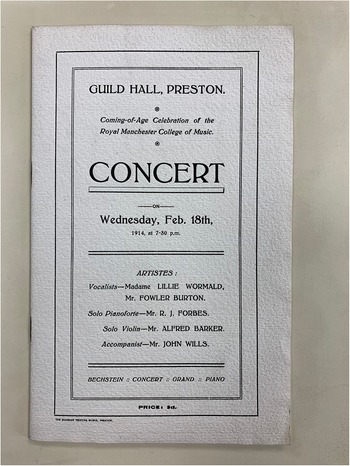
The concerts were performed by successful current and past students, including among the former, Gertrude Barker and Frank Tipping and members of staff, such as R. J. Forbes, Arthur Catterall and Baynton Power. Figure 1 shows the Preston concert with works by Karl Goldmark, Brahms, Handel, Chopin, Liszt, Tchaikovsky, Verdi, Sarasate, Franck, Debussy and Granville Bantock, as well as Scottish traditional music.
Preston Concert Programme.

Figure 1 Long description
A concert program for Guild Hall, Preston, titled 'Coming-of-Age Celebration of the Royal Manchester College of Music.' The concert is scheduled for Wednesday, February 18th, 1914, at 7:30 p.m. The artists include vocalists Madame Lillie Wormald and Mr. Fowler Burton, pianist Mr. R. J. Forbes, solo violinist Mr. Alfred Barker and accompanist Mr. John Wills. The program mentions 'Bechstein Concert Grand Piano'.
There was an important pre-war development with the introduction of a Department of Education together with a new strand in music education within the curriculum from 1910.Footnote 8 According to the Annual Reports, it was very popular with external students and was regarded as an important pedagogic addition in recognition that the majority of students would pursue a career in teaching, even if they combined it with other free-lance professional work, in, for example, theatre, cinema and seaside resort orchestras, and chamber music in independent restaurants.Footnote 9 Indeed, the education strand attracted to its classes a new cohort of musicians who were already teachers.Footnote 10 Secondly, the College’s awareness of recent European developments in the holistic training of musicians is evident from the introduction, in 1913, of Dalcroze eurythmics classes.Footnote 11 The minutes of the Meeting of Council of 26 February 1913 give approval for ‘experimental classes weekly in rhythmical gymnastics’ to take place the following term, taught by Dr T. Keighley.Footnote 12 The curtailed regional concert tour would have drawn attention to these important innovations, as well as showcasing the performance skills of its promising and successful current and former students.
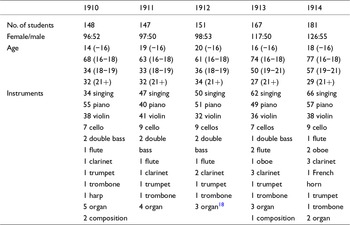
Student Numbers: 1910–1914
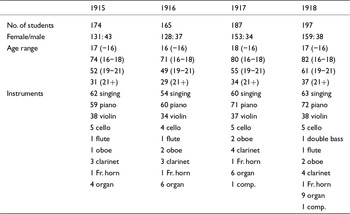
Table 1 shows that most students at the RMCM were singers, pianists and string players. There were very few wind-instrument students in this period and during the war; this is in striking contrast to today, where the RNCM has a strong reputation for solo and ensemble wind performance. There were wind and brass tutors on their books, such as Otto Schieder (bassoon), Franz Paersch (horn), J. Valk (trumpet), many of whom also played in the Hallé orchestra. In 1910 the College announced the appointment of a second tutor in clarinet, Mr Harry Mortimer, because of a desire to increase student numbers. It also set up a £500 Scholarship (sponsored by Hans Richter) in Wind Instrument playing ‘as being specially opportune and desirable for the furtherance of the work of the College in this important department’.Footnote 13 This is in contrast to French conservatoires, which had much higher numbers of wind players, who were almost entirely men. As David Mastin has shown, the absence of female wind players in France became a huge problem during the First World War when most men suspended their studies to take part in the war effort.Footnote 14 The historic lack of wind students at the College meant that they were protected from this issue. Table 1 shows that the RMCM had an existing gender balance in favour of women well before the war began. It was rather in the area of singing where the decrease in male students was more keenly felt. The 1915 annual report notes that ‘in consequence of the absence of nearly all the men singing students the opera which Miss Marie Brema hoped to produce at the close of the Session was given up’,Footnote 15 but work with the opera class continued with a range of ‘miscellaneous’ performances, including opera scenes from Saint-Saëns and Wagner, as we will see shortly. In 1917, the chorus of Gluck’s Orpheus was arranged for women’s voice by Dr Thomas Keighley.Footnote 16 The war was affecting the performances in tangible ways in at least part of the College.
Student statistics 1910–1914Footnote 17

Table 1 Long description
The table presents student statistics at the Royal Manchester College of Music from 1910 to 1914, detailing total student numbers, gender distribution, age groups, and instrument enrollment. Student numbers grew from 148 in 1910 to 181 in 1914, with female students consistently outnumbering male students. The age distribution shows a majority of students aged 16-18, with a slight increase in older students over the years. Singing and piano were the most popular instruments, with singing enrollment rising from 34 in 1910 to 66 in 1914. The data suggests a trend of increasing student enrollment and a growing interest in singing, while the age and gender distribution remained relatively stable.
Repertoire: 1910–1914
There were four kinds of public concerts at the RMCM: student Open Practice, Opera Scenes, Annual Public Examinations and professional chamber music concerts.
The Student Open Practice took place fortnightly; it was open to the public with a small charge to attend and it attracted large audiences. Opera scenes took place once or twice a year and attracted audiences and press reviews. There was a particularly notable performance of Purcell’s Dido and Aeneas just before the outbreak of war, in July 1914, which received positive reviews in the press, including The Times, but sparked a controversy with Sir Thomas Beecham. While the critic of The Times regarded it as the most ambitious operatic project to date, Beecham attacked the choice of opera as ‘archaic’ and wholly unsuitable for training students. The criticism was part of a larger debacle, in which Beecham addressed his criticism of Conservatoire training in Britain, and British singers, in particular, at an invited address to Council in December 1914, which spilled out into the pages of The Guardian with contributions by Stanley Withers (Acting Principal in the absence of Adolphe Brodsky, who was interned in Austria, as we will seeFootnote 19), Marie Brema (vocal tutor) and Edith Robinson (violin tutor).Footnote 20 The controversy led to a song contest to find a local singer capable of performing Delius’s Sea Drift. As Michael Kennedy asserts, it was won by Hamilton Harris, who helped to repair the reputational damage caused by Beecham’s claims that British conservatoires were unable to produce highly skilled singers.Footnote 21 The incident revealed tensions about the purpose and role of conservatoires, the value of early and contemporary music, ‘English’ musical inferiority, and a dose of wartime chauvinism. The performance of Purcell was exceptional; operatic scenes more usually drew on the core nineteenth-century operatic tradition that Beecham recommended. The Vocal Department also organized elocution performances, for instance, ‘Scenes from Shakespeare’ events in July 1916 and December 1917.Footnote 22
The Annual Public Examinations took place in April and July and consisted of chamber, solo, vocal, and occasional orchestral performances e.g., Beethoven symphonies and Mozart concertos. They were open to the public and received press coverage from the Manchester Guardian, and they were regarded as a showcase for the College. The RMCM’s performance diary also included professional chamber concerts featuring internationally renowned staff, such as the Adolph Brodsky Quartet, the Rawdon Briggs Quartet and the all-female Edith Robinson Quartet. While the Brodsky Quartet upheld the Austro-Germanic classical tradition with additions from composers with whom Brodsky was close, the Edith Robinson Quartet was particularly active from the First World War onwards, gradually introducing new repertoire, including contemporary French music, as Geoffrey Thomason has shown.Footnote 23
Staples of the Repertoire
The repertoire studied and performed by RMCM students during this period was largely typical of conservatoire practice in Britain and the continent. In terms of string repertoire, Bach, Beethoven, Brahms and Bruch featured prominently. Haydn, Mozart, Gluck and Handel – the latter particularly notable in the vocal repertoire alongside Schubert and Schumann Lieder – were well represented. The repertoire was firmly rooted in Austro-Germanic traditions, with some exceptions. Tchaikovsky and Franck were well established in the string and vocal repertory. Kreisler arrangements, Sarasate and Paganini enabled violinists to show their technical prowess. Other relatively recent repertoire included Grieg’s songs and piano works, with a performance of Grieg’s Piano Concerto on 6 July 1911. Liszt and Chopin constituted an important part of the piano repertoire. In addition to German Lieder, Italian operatic excerpts were common, alongside early music, particularly Purcell.
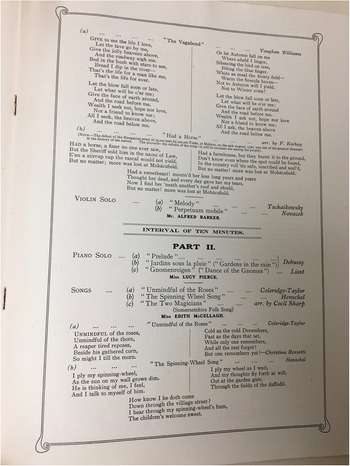
Turning to French and Belgian repertoire, by 1914, Saint-Saëns, Henri Vieuxtemps, Ambroise Thomas, Lalo (Symphonie Espagnole), Charles-August de Beriot, Charles Gounod, Charles-Marie Widor and Alexandre Guilmant (organ),Footnote 24 Reynaldo Hahn (vocal) and Gabriel Fauré songs provided a varied selection of nineteenth-century francophone musical traditions. Most recent was the addition of Debussy piano works –‘Jardins sous la pluie’ (Estampes, 1903) and ‘Reflets dans l’eau’ (Images, first series, 1905), ‘Poissons d’or’, (Images, second series, 1907) – thanks to their introduction by RMCM piano tutors, Frank Merrick (as early as 1907)Footnote 25 and Max Mayer.Footnote 26 While recent French music was making its way to Manchester, it is perhaps more surprising that contemporary British music was not more plentiful in RMCM programmes. Elgar’s vocal music and Violin Concerto were performed, but given his national prominence, he hardly dominates.Footnote 28 Granville Bantock’s vocal works appeared in several programmes,Footnote 29 Samuel Coleridge-Taylor is included in a number of programmes shortly after his death in 1912, including the Northwich ‘Coming of Age’ Celebration of 3 February 1914, and Ralph Vaughan Williams was represented by vocal works from the Songs of Travel at the same concert (see Figure 2).
Programme of the Northwich ‘Coming of Age Celebration’, 3 February 1914.
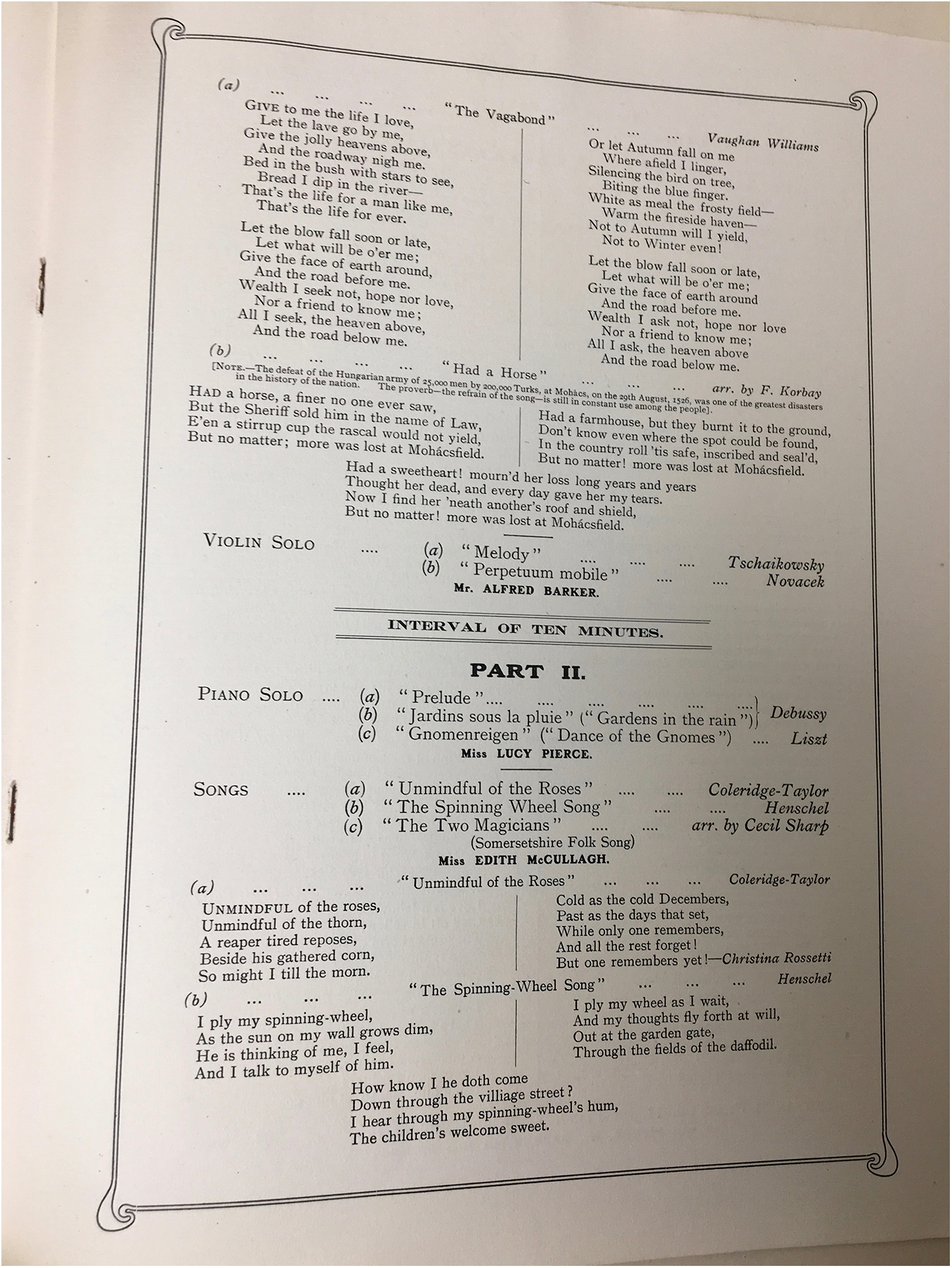
Figure 2 Long description
The image shows a printed program page laid out in a formal, serif typeface and enclosed within an ornamental rectangular border. The page is divided into structured sections that give the texts for vocal works. The first work is ‘The Vagabond’ by Vaughan Williams. The second section is an arrangement of ‘Had a Horse’ by F. Korbay. The third section lists Violin solos by Tchaikovsky and Novacek, performed by Mr Alfred Barker. Further down, an “Interval” heading separates the program into two halves, indicating a break in the sequence of performances. Below the interval, a “Piano Solo” section lists three pieces by Debussy and Liszt performed by Miss Lucy Pierce. The next section is a collection of songs by Coleridge-Taylor, Henschel and an arrangement by Cecil Sharp, performed by Miss Edith McCullagh. This is followed by the texts of the Coleridge-Taylor and Henschel songs. The typography varies slightly in size to distinguish headings, subheadings, and item details, improving readability. The page appears slightly aged, with a warm paper tone and minor shadows suggesting it was photographed under natural light. Overall, the layout reflects a traditional concert or recital program, carefully organized to guide the audience through the sequence of works.
Unlike the Royal College of Music, the Royal Academy of Music and the Paris Conservatoire, the RMCM did not specialize in composition in this period. A few student composers are listed in the concerts (and commented on in the press), including a string octet by H. Baynton-Power in March 1911 and part songs and a string quartet by Alice Dill, also in 1911; but they are few and far between. The list of Principal Study specialisms in Tables 1 and 2, shows that only a handful of students took composition as their main area of study and that this reduced to one during the war years.
Student statistics 1915–1919Footnote 27
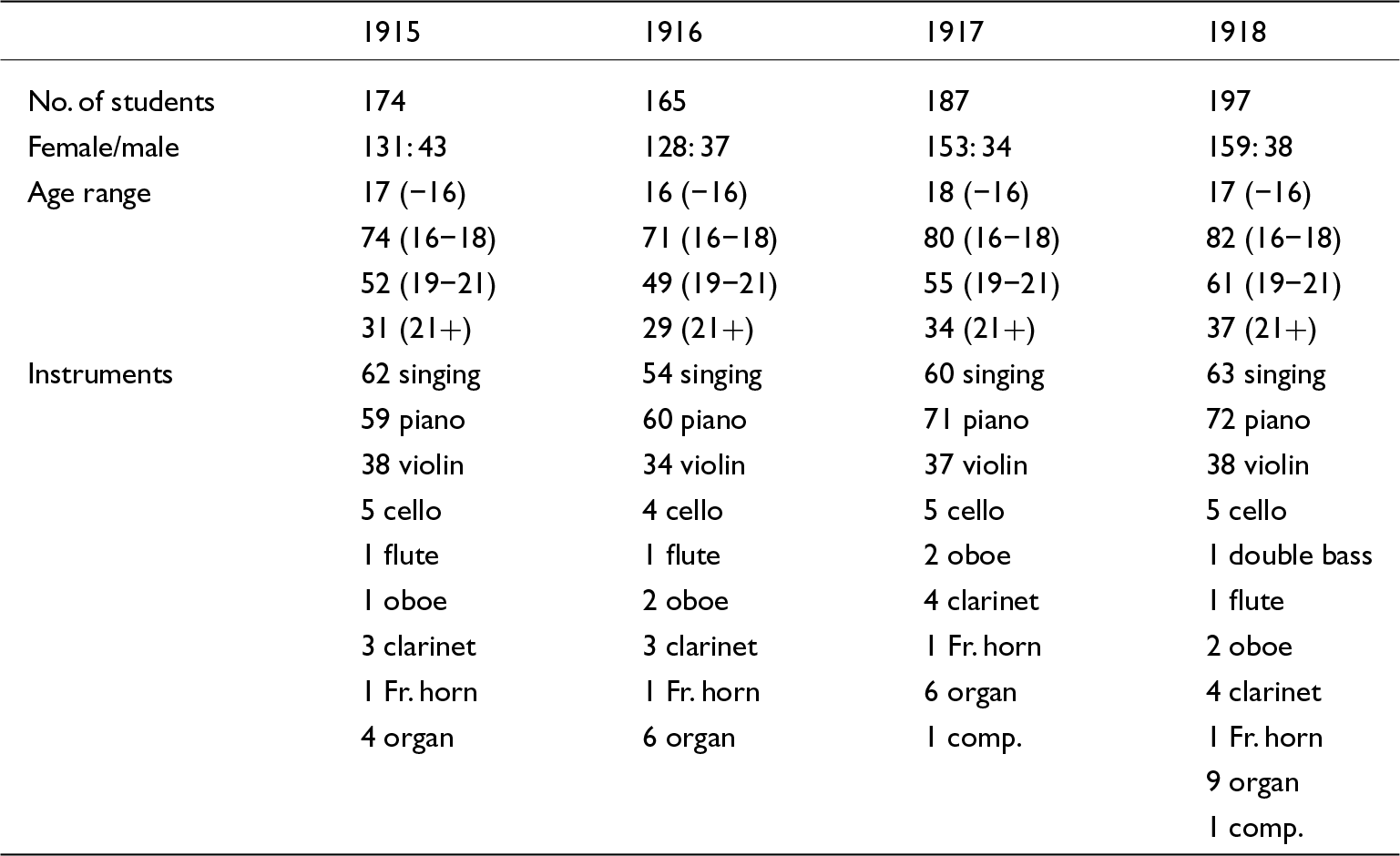
Table 2 Long description
The table presents student statistics at the Royal Manchester College of Music from 1915 to 1918, detailing total student numbers, gender distribution, age ranges, and instrument specialization. Student enrollment increased from 174 in 1915 to 197 in 1918, with females consistently outnumbering males. The age distribution shows most students were between 16 and 18 years old, with a gradual increase in older students over the years. Instrument preferences highlight a rise in piano and organ players, while singing remained popular. The data suggests a growing interest in music education during this period, particularly among young women and piano students.
First World War
Wartime Repertory
The differences in repertoire during the war years were not as striking as one might expect. The mainstay of the repertoire was still Austro-German music, reflecting the taste and contacts of the Principal, Adolph Brodsky, and other prominent teachers at the College. It also reflected the city of Manchester’s deeply rooted German community, which supported the arts and influenced cultural taste in the city.Footnote 30 In addition, Tchaikovsky, Grieg, Busoni, Ottokar Nováček and Brahms feature on the staff and student programmes; as Geoffrey Thomason has shown, Brodsky, a Russian violinist, introduced this repertoire, which was sometimes written especially for him, and he invited a number of the composers to the College, showing his ability to maintain these high-profile European contacts and enrich the musical culture in Manchester.Footnote 31
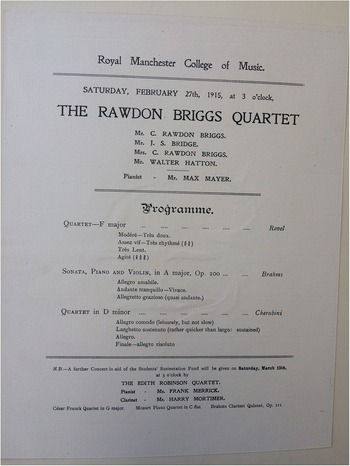
Looking at the repertoire from Britain’s close ally, France, which was performed at the College during the war, it appears at first sight to be very similar to the pre-war period, with Saint-Saëns particularly prominent; his association with Britain had grown, as a result of his numerous visits to the country since 1870. Although not strictly French, César Franck was also a favourite, although this trails off a little as the war progresses. Students were familiar with composers such as Emmanuel Chabrier, Gounod, Fauré, Henri Duparc, Ernest Chausson, Jules Massenet and Georges Bizet, to name a few. Debussy and Ravel become more prominent and are nearly always programmed by the piano tutor Robert J. Forbes, although the two composers’ songs also start to make regular appearances.Footnote 32 In addition, there was an increasing range of Debussy’s works; the Debussy’s Petite Suite was programmed on a number of occasions (including 31 March 1915) as a piano duet, as was the string quartet and the very recent Sonata for Cello and Piano on 16 December 1916 and again on 17 March 1917.Footnote 33 Perhaps less likely was the interest taken by the vocal tutor, Marie Brema, in Debussy’s early L’Enfant Prodigue (1884), extracts of which were performed by her students on several occasions. Ravel too becomes more prominent, including his Quartet (performed by the Rawdon Briggs Quartet, 27 February 1915; see Figure 3), the famous Pavane,Footnote 34 the Sonatine, Jeux d’eau and finally the more recent Valses nobles et sentimentales (5 March 1918). The interest was clearly in late nineteenth and early twentieth-century French music. Berlioz made an appearance just once (the mélodie, ‘Absence’), and even Rameau and Couperin were absent, until the final victory concert, when the female vocal students performed the Prologue from Rameau’s Castor et Pollux (not shown; see Figure 4). Manchester’s often conservative conservatoire was following the example of the Hallé under Beecham and the Tuesday mid-day concerts and reflecting the growing national interest in French music, encouraged by their wartime alliance.Footnote 35
Ravel’s Quartet at the Rawdon Briggs Quartet concert, RMCM, 27 February 1915, RMCM E/1/5.
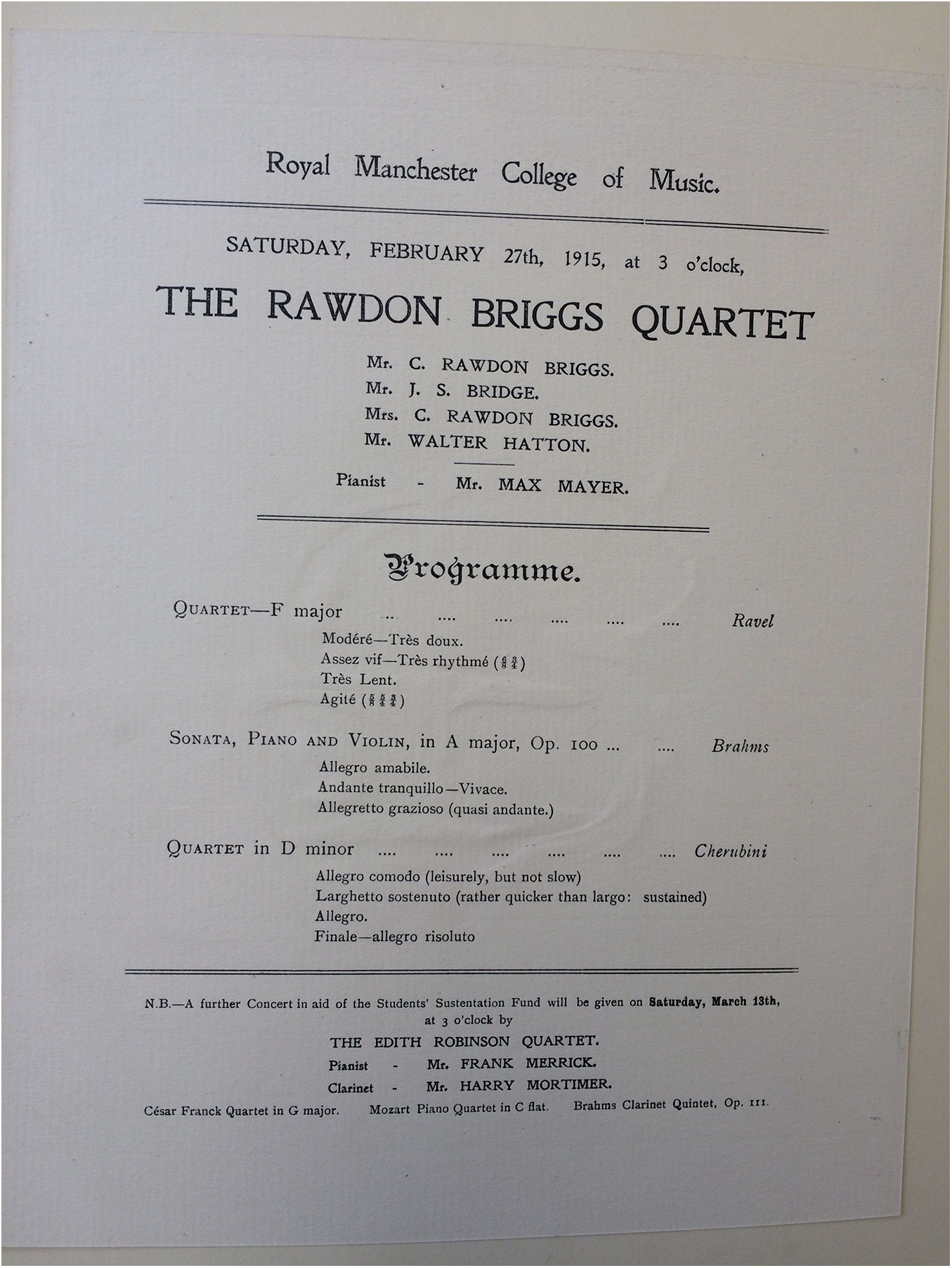
Figure 3 Long description
The performers listed are Mr. C. Rawdon Briggs, Mr. J. S. Bridge, Mrs. C. Rawdon Briggs, Mr. Walter Hatton and pianist Mr. Max Mayer. The program includes the Quartet in F major by Ravel, Sonata for Piano and Violin in A major by Brahms and Quartet in D minor by Cherubini. Additional notes mention a concert in aid of the Students’ Sustenation Fund on Saturday, March 13th featuring The Edith Robinson Quartet.
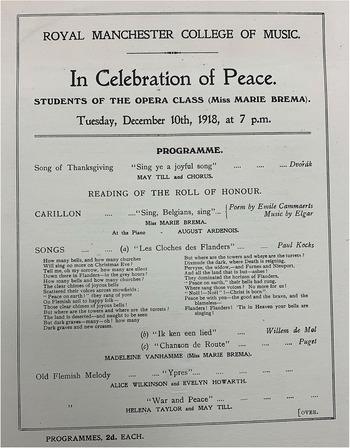
Celebration of Peace concert, RMCM, 10 December 1918, RMCM E/1/5.
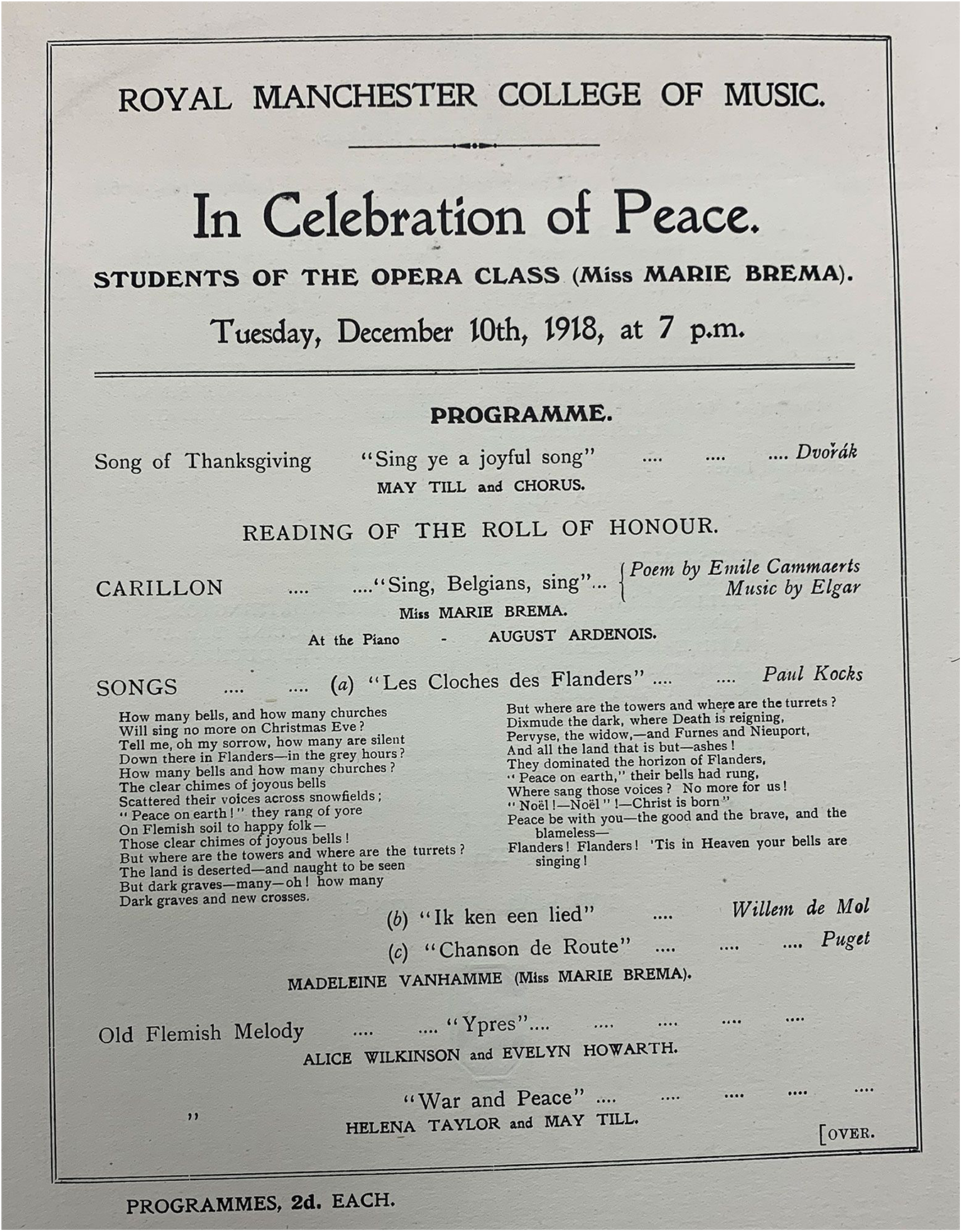
Figure 4 Long description
This concert features the student of the opera class of Miss Marie Brema. The program includes a Song of Thanksgiving, 'Sing ye a joyful song' by Dvořák, performed by May Till and chorus. The Reading of the Roll of Honour is followed by 'Carillon - Sing, Belgians, sing' by Elgar, based on Emile Cammaerts’ poem. It is performed by Marie Brema and August Ardenois. . The next section consists of a number of songs, including ‘Les Cloches de Flanders’ by Paul Kochs, ‘Ik ken een lied’ by Willein de Mol and ‘Chanson de Route’ by [Paul] Puget. These are performed by Madeleine Vannini. An Old Flemish Melody, 'Ypres', is performed by Alice Wilkinson and Evelyn Howarth. The program concludes with 'War and Peace' sung by Helena Taylor and May Till.
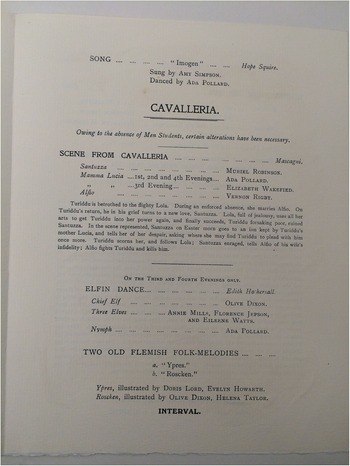
More surprising is the paucity of British music at the RMCM during the First World War. Purcell, Dowland, the adopted Handel, Thomas Weelkes and John Attey represent the small amount of early British music, while more recent composers include Charles Villiers Stanford, Arthur Somervell and Frederick Delius; indeed, Stanford is by far the most frequently performed British composer at the start of the war, his place being gradually challenged by Delius. Despite Elgar’s national wartime status, there is remarkably little of his music programmed, beyond his songs, during the war years; apart from the Sonata for Violin and Piano, his other late works would have to wait until after his death to be heard at the RMCM.Footnote 36 A very few contemporary British composers received wartime performances at the College, in addition to the few students studying composition. These include Hope Squire, who took over her husband, Frank Merrick’s students when he was imprisoned as a Conscientious Objector.Footnote 37 Her song ‘Imogen’ was given in the context of Opera Scenes between 9 and 16 March 1917, alongside extracts from Gluck’s Orpheus, Wagner’s Lohengrin and Mascagni’s Cavalleria (see Figure 5).Footnote 38 The choral conductor, organist and composer, Sydney Nicholson’s Quintet for Piano and Strings was premiered by the Brodsky Quartet on 21 November 1918. Despite these few exceptions, in many respects, the College seems more remote from the national mood than the Hallé orchestra, as Eleanor Roberts and Geoffrey Thomason show in their article in this special issue. The interim conductor, Sir Thomas Beecham, reflected his taste for the contemporary music of the Russian and French allies, introducing the city to the most recent works by Debussy, Ravel and Stravinsky, which had made such an impact in Paris and London. By comparison, the public-facing performances at the RMCM were far less adventurous than Beecham’s progressive repertoire choices.
Extract from Opera Scenes programme, 9–16 March 1917, RMCM E/1/5.

Figure 5 Long description
A program page detailing several performances. It includes a song titled 'Imogen' by Hope Squire sung by Amy Simpson and danced by Ada Pollard. A scene from 'Cavalleria' by Mascagni is listed, featuring characters Santuzza, Mamma Lucia, Alfio and Turiddu, with performers and roles specified. The text describes a scene involving Turiddu and Santuzza. 'Elfin Dance' by Edith Hothersall is also mentioned, with characters Chief Elf, Elves and Nymph, performed by Olive Dixon Annie Mills and others. Two old Flemish folk-melodies are listed, with illustrations by Doris Lord, Evelyn Horwitz, Olive Dixon and Helena Taylor. An interval is noted at the end.
Performing ‘Enemy’ Music: The Case of Wagner
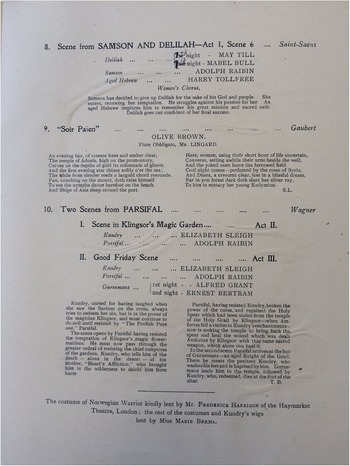
One area in which the RMCM and Hallé were united was in their partiality for Wagner. Geoffrey Thomason traces this back to the vibrant German community in Manchester and the presence of prominent German musicians in Manchester, such as Charles Hallé, Hans Richter and German-trained Adolf Brodsky.Footnote 39 While the Hallé orchestra had established Wagner evenings before and during the war, at the RMCM, there are only arias from Tannhäuser in years preceding the Great War. Wagner extracts of Tannhäuser, Meistersinger, Tristan, Lohengrin, Götterdämmerung and Parsifal were performed by the Vocal Studies students throughout the war period. The most symbolically significant event was the double bill of opera scenes from Saint-Saens’ Samson et Dalila and Wagner’s Parsifal on 14 and 15 July 1915 (see Figure 6). We know from the Annual Report that the choice was made because of the lack of male singers; they could not put on a full opera. The choice is a striking one, particularly in a French context. Saint-Saëns was vociferous in campaigning in the press in a series of articles in the Echo de Paris to ban Wagner performances during the First World War.Footnote 40 Wagner, who normally dominated French Colonne and Lamoureux concerts, was absent; in London too, Wagner was very briefly removed from the concert programmes at the start of the war.Footnote 41 The example of Wagner shows that the particular national and regional context was crucial in deciding what was appropriate musically in times of war. There were regular discussions about Wagner in the Manchester broadsheets – The Manchester Guardian and Observer – including an article on Saint-Saëns’s anti-Wagner campaign. However, the unnamed critic argued that music cannot be contained or defined by nationality and that music and the other arts have taken no part in Germany’s ‘path of aggression and arrogance’. He credits ‘the Teuton’ for having played the greatest part in the development of music ‘and the musical world at large would be foolish if it blinded itself to the fact’.Footnote 42 The following year, The Observer critic argued that ‘Wagner’s music at its best is personal, and not German’.Footnote 43
Extract of programme from Scenes from Samson et Delilah and Parsifal, 14–15 July 1915, RMCM E/1/5.

Figure 6 Long description
The first listed extract is a Scene from Saint-Saëns’ Samson and Delilah (Act 1, Scene 6). The performers are May Till, Mabel Bull, Adolph Raibin and Harry Tollfree. The next extract is ‘Soir Païen’ by Gaubert, featuring Olive Brown and D. Lingard playing the flute obligato. The next extract includes two scenes from Wagner’s Parsifal: 'Scene in Klingsor's Magic Garden' and 'Good Friday Scene', with performers Elizabeth Sleigh, Adolph Raibin, , Alfred Grant and Ernest Bertram. The texts include scene descriptions and the text for ‘Soir Païen’. The programme also includes character names for each scene.
The Executive committee of the Hallé met in September 1914 to decide whether or not to resume performances, agreeing to start the winter season for the ‘pleasure and consolation’ of their public. At this point, their intention was to be rid of Strauss and even to ‘give Wagner a little rest’.Footnote 44 However, it was not long before the much-loved Wagner evenings resumed; Langford reviews a Hallé concert of excerpts from Die Meistersinger and Parsifal in November 1914.Footnote 45 Wagner’s music was indeed above the fray of the war in this northern English city. Sir Henry Wood, on a visit to the city, gave an interview to The Manchester Guardian on the issue of ‘German Music during the war’. He made a distinction between music in the public domain, which would be ‘putting money into the pockets of the enemy’ and the classics, where ‘there is no nationality in music. From Bach to Wagner we cannot do without any one of them … to exclude a classic because it is German would be as unreasonable as to smash your piano because it is German’.Footnote 46
Performances of Wagner at the Hallé, usually under Sir Thomas Beecham’s baton, were enthusiastically reviewed in The Manchester Guardian and Observer, and seen as a solace in this time of crisis.Footnote 47 Weeks before the armistice, Wagner’s music dominated a programme that also included Debussy and Franck.Footnote 48 Indeed, it was a Wagner evening with Act II from Der fliegende Holländer and the closing scene of Siegfried that was replaced at short notice in favour of a ‘victory’ concert to mark the end of the war.Footnote 49 The RMCM’s Wagner performances also received critical attention, notably the Opera Scenes of July 1915, discussed above.Footnote 50 From a French perspective, such performances of Wagner would have been seen as unpatriotic and highly contentious. Further removed from the action of war, it posed no problem in Manchester, due, in part, to the strong links in the city to Austro-Germanic European musical and cultural traditions. However, Henry Wood’s view about maintaining the economic battle regarding Austro-German music not in the public domain – in other words, contemporary music – was completely in line with his French allies.Footnote 51
Impact of War on the College Staff and Students
The College was affected by the war in a number of ways, although on a very different scale to the Paris Conservatoire: Adolph Brodsky was interned in Austria at the start of the war (returning in April 1915) and spent time in the Castle at Raabs, which was used as an Internment camp;Footnote 52 Carl Fuchs was held in Germany as a Prisoner of War because he held British citizenship, returning in April 1919;Footnote 53 Francis Harford obtained a commission and became a Captain at the front;Footnote 54 Frank Merrick (piano tutor) was held at Wormwood Scrubs prison as a Conscientious Objector and not released until the summer of 1919.Footnote 55 Many students signed up or got commissions, including Frank Tipping, who was a student of Brodsky’s; his death in 1917 marked the early end of a very promising career as a violinist.Footnote 56 His obituary in the Manchester Guardian comments that his loss will be especially felt by music lovers (Figure 7):
He will be remembered as one of the youngest members of the Hallé and Promenade Orchestras and as the most brilliant of all Dr. Brodsky’s pupils at the Royal [Manchester] College of Music … To the last he made remarkable progress as a player, and his closing year at the College was marked by several fine solo performances and much excellent work as leader of Dr. Brodsky’s quartet class.Footnote 57
Obituary in The Manchester Guardian, 3 September 1917.

Figure 7 Long description
He was remembered as a young and talented musician, being one of the youngest members of the Hallé and Promenade Orchestras. Tipping was noted as the most brilliant pupil of Dr. Brodsky at the Royal College of Music. He left Manchester in 1915 to join the Welsh Royal Garrison Artillery and later transferred to the Royal Flying Corps, serving in France. He became a first lieutenant in June 1916 and was 21 at his death. Tipping began playing violin at age nine and joined the Crewe Philharmonic Orchestra at ten. He studied under Mr. Ballams and Mr. Simon Speelman, performing at Blackpool Pier Concerts at 13. Winning a Cheshire county scholarship, he studied at the Manchester College under Dr. Brodsky. At 15, he secured a position in the Hallé Orchestra. His final year at the College was marked by solo performances and leadership of Dr. Brodsky's quartet class.
A New ‘Inclusive’ Community of Students
There was a noticeable expansion in student numbers from the end of the war. The 1919 Annual Report notes ‘a progressive increase in the number of students … of both sexes’, which ‘placed a serious strain upon the accommodation of the College’.Footnote 58 In 1920, the student population had reached a point that the intake of new students had to be restricted with many placed on a ‘waiting list’.Footnote 59 The reason for this increase was the arrival of 88 ex-service students, who had been given Government grants to study music. While many had come through the Government Scheme for the Higher Education of Ex-Servicemen (1918–1923), a few had been funded by the Ministry of Labour and the War Pensions Committee.Footnote 60 As an independent higher education institution with close links to the University of Manchester, the RMCM was eligible for this national scheme.Footnote 61 All recipients were men, with one exception, Edith S. Fielden, who was a piano student from 1920–1923 (see Appendix 1). The assumption might be that many would have been from less privileged social backgrounds than the usual RMCM student, although not all students on grants were from more deprived backgrounds, as we will see. We might also reasonably assume that many were wind and brass players, given the importance of these instruments in army bands. Taking a sample of 45 students, I have searched in detail to find out about them, using censuses, birth, death and marriage records, and voting and national registers.Footnote 62 While it has not been possible to identify all of them, owing of the popularity of some of their names, a number of patterns emerge about the lives of the students who studied after their active service during the First World War. Out of the 45 students selected, there is evidence that 19 (42 per cent) of them had professional careers as musicians (see Appendix 1).
The first category of students was working class men whose parents were involved in the cotton industry or were labourers or servants. Records show that they were often working from a young age and there is little evidence of this group going into a career in music. Frank Rowell from Bacup falls into this category. His father, Francis Rowell, was a cotton weaver from Haslingden and his mother, Harriet Rowell, was a servant. Frank was discharged from the army on 12 December 1917 and started studying at the RMCM in June 1919, but he only remained one year. There is no subsequent trace of his career. John Cusack also attended the RMCM for one year only. In 1911, he was an apprentice upholsterer. The brief period at the College appears to have made no difference to the trajectory of his career because in 1939 he was still an upholsterer.
For some students, their time at the RMCM may have facilitated social mobility, notably from manual to clerical work. Harold Barlow studied piano on a Ministry of Labour grant from 1919. His father was a general warehouseman (1911 census) and he was one of at least 10 children. The 1939 England and Wales register notes that he became a Ministry of Labour clerk. Douglas Wray followed a similar trajectory, becoming a Ministry of Labour Civil Servant. Alexander Kennedy (1895–1981), from Liverpool, studied cello from 1919 to 1922; he had left school at 15 years old to become an office boy, the son of a bookkeeper from Scotland. By 1939, he was an investigating clerk. For some, social mobility was clear: Joseph Simmons’s father was a tinplate/sheet metal worker. After three years as an organ student on a Board of Education grant, he later became a manager in a waterproofing factory. For most of the students in this category, the experience of studying at the College may have helped them indirectly in their careers, but they stayed firmly connected to the communities from which they came.
A second group of students was also from the local region, but they remained working in music after their studies, taking their training back to their communities. For some, such as George Pate, music transformed the expected trajectory of his life. At 14 years he was an errand boy, but by 1924, two years after the end of his cello studies, he was a musician. His father had had a number of professions from weaver (1897), tripe shop worker (1911) and finally boarding-house keeper (1924), so the mobility was affecting the family unit. John Charles Wood followed his father as a clogger and boot repairer when he was 16 years old (1911).Footnote 63 However, by 1939, he is described as a ‘teacher of violin of orchestras and conductor (School)’. For others the move to a musical profession was perhaps not so stark in terms of social status. William Fogg, whose father was a land and mine surveyor became an orchestral musician. Stanley Bent, whose father was a Twist Drill Maker’s Inspector, worked as a violin teacher.Footnote 64
The most famous example is Louis Cohen (1894–1956), whose mother was a licensed furniture broker from Liverpool. He spent two years at the RMCM, but was already active as a musician. He had already studied at the old Liverpool College of Music, he played violin in the Hallé Orchestra and subsequently became a well-known conductor, establishing the Merseyside Symphony Orchestra in 1932 (later the Liverpool Philharmonic Orchestra) and performing as guest conductor with the major orchestras in the UK. He also directed the Palestine Symphony Orchestra for three seasons from 1945.Footnote 65 Despite his national and international profile, he remained rooted with his family in Liverpool, supporting his mother and siblings (1939), several of whom were not earning.Footnote 66
Louis Cohen was not the only student in the sample to have arrived at the College as a professional musician. Norman Seville is a fascinating example: son of a carpet fitter, he was already describing his occupation as a musician working at the Grand Theatre in 1911 at the age of 22. More significantly, he joined the Masons, undergoing his initiation on 19 April 1915 at the Arthur Sullivan Lodge No. 2156, in Manchester. The Freemason Membership Register makes interesting reading in that 13 of the names of new members on the same page are either described as musicians or vocalists. Sir Arthur Sullivan was a prominent musical Mason, and his name undoubtedly attracted others to join; indeed, other pages of the Register are full of Professors of music, musicians and vocalists, including another famous Manchester musician, Henry Watson (1896).Footnote 67 Martin Thacker has written about Sullivan’s connection to music-making in Manchester and about the establishment of the lodge in his name:
In 1886, thirteen members of the musical and literary professions in Manchester sought and received a Warrant of Constitution for a new masonic lodge to be called Arthur Sullivan Lodge No. 2156. In a letter of 15 March 1886 Sullivan (who himself had been a mason since 1865) granted permission to use his name, but declined to open the lodge on grounds of pressing professional and social engagements.Footnote 68
The presence of so many musical Masons at this Manchester lodge indicates that this was a vital network for professional musicians; it also suggests that not having access to this network (as a woman or a Roman Catholic, for instance), might have been a barrier to certain aspiring musicians.Footnote 69 Norman Seville’s brief time studying flute between November 1919 and Easter 1920 at the RMCM would only have increased his musical network, even if it did not change his professional trajectory; he was still registered as a musician in 1939, although he had moved to Cheadle and Gatley in Cheshire.Footnote 70 Another student, Norman Moss, came from a mining family. While his father and brothers were coal hewers, Norman must have stood out early, becoming a book binder’s apprentice (in 1901) rather than a miner, but by 1911 he was already a theatre violinist. He was 36 years old when he went to the RMCM and stayed around 18 months. While his conservatoire training came somewhat late in his career, the prestige of the institution would surely have carried extra weight.
We have encountered a range of different musical careers from theatre musicians (discussed above), cinema organists (see Charles Allen, Appendix 1), to orchestral performers, conductors and teachers. While some acquired this as a new profession, others came from musical families. Otto Paersch is an example of a student who came from a family of professional musicians and was, moreover, already recognized as an established horn player as early as the 1911 census.Footnote 71 A resident of Bishop Street Moss Side, he received a Board of Education grant, though he was the son of Franz Paersch, member of the Hallé Orchestra and horn tutor at the RMCM. Like Norman Seville, he was not enrolled for long. In this case, he may have taken the chance of a scholarship at the age of 31 to enable him to brush up on his musical skills after the interruption of war, although curiously, he would have been taught by his father. However, he may have felt this useful because he took up a position as third horn player in the Hallé in the same year, 1919.Footnote 72 Otto Paersch also played with a number of professional musical ensembles in the city, including a 27-piece BBC Manchester orchestra and the BBC Northern Studio Orchestra.Footnote 73
Harry Vincent Pashley (1896–1946) is another example of a student from a professional musical family. His father, also Harry Vincent Pashley, was a vocalist from Leeds and his mother, Anita Pashley, a singing teacher from Seville, Spain (1911). In the 1929 county directory, he is described as a professional singer, despite having studied cello at the College between 1919 and 1922. Certainly, musical families would have recognized the opportunity the grants presented. Herbert Hewlett Ainscough’s father appears as a ‘professor of music’ (1901) and a theatre musician (1911). There are few traces of the son, but there is an entry in the 1939 England and Wales register to note that he was ‘formerly a musician’ who was incapacitated as a patient in a hospital in Preston.Footnote 74
Only a minority of the scholarship students in the sample left the region. Philip Edward Richardson was the son of a professional organist and Professor of Music (1901 and 1911 censuses) from Lancashire.Footnote 75 In 1939 he was working in Orpington, Kent, as a Musical Director. In the same vein, James Topping was living in Hampstead, London, as a Professional vocalist in 1939.Footnote 76 What is striking is how unusual it was for these musicians to move far from the North West region. In 1914, the RMCM had put its efforts into recruitment from the region, putting on concerts in all of the areas in Lancashire and Cheshire from which these students originated. The example of the ex-service men on Government grants shows that this connection to place was vital, and that this war-time opportunity enabled the College to fulfil more fully its mission to train musicians in the North of England for the benefit of the region.
Despite the assertion in the Annual Report that ‘The College has never refused admission to any ex-soldier who could satisfy the conditions of entry’, there is a sense of discomfort in the report about this sudden change in the College’s student body. Assurances are made that in no case can these students study for more than three years. Indeed, the registers show that most completed their time at the RMCM in the Summer of 1923, with just a very few leaving in 1924 and 1926 (See Appendix 1). The RMCM registers also show that the final grant was awarded in March 1921. The Annual Report also notes that some had already withdrawn due to poor attendance or ‘an inability to conform to the conditions prescribed’.Footnote 77 A number of things could be at play here. The College was seen as a respectable place for aspiring and able musicians to train for a career as a performer, or more commonly, as a music teacher. The arrival of the ex-service students could have destabilized the status quo; it certainly changed the mix of social class, gender and age profile of the student body, as we have seen from the examples above. The College may also have had some financial concerns about having its income sources diversified; what is striking from the registers is that before 1919 and after 1921, responsibility for fees came directly from the nearest kin. The post-war context, therefore, enabled students who had been engaged in the war effort to study for the first time at this prestigious institution without the burden for that training falling directly on the family.
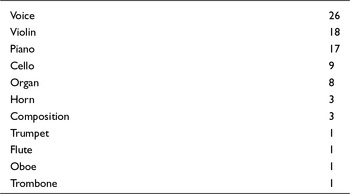
Despite this addition of former service students, the change in the musical ecology of the College took place slowly. Given the importance of brass and woodwind playing in military bands, as Emma Hanna has shown,Footnote 78 it would have been reasonable to have expected a more obvious increase in the number of brass and wind students. And yet, while seven of the 88 scholarships were given to wind and brass players, the most common instruments studied by these students were voice, violin, piano and organ, as Table 3 – listing the principal study of all of the ex-service students – shows. Many of these instruments were important in secular and religious amateur and community music making, and singing, unlike other instruments, did not necessarily require the years of specialist training. Hanna shows how popular music singing and religious music were also important to servicemen’s musical identity.Footnote 79 While some of them went on to perform in churches within their communities and in variety orchestras, for those who may have ‘discovered’ their voices during the war, the shift towards classical song and opera would have been a significant musical and cultural step. It would also be intriguing to discover how ex-service men were able to learn the violin to the standard required for a highly respected conservatoire. Beyond those who declared their profession in national documents, it is much harder to trace just how many of the former students juggled other careers with occasional free-lance work,Footnote 80 or continued to play on an amateur basis within their communities because of the paucity of suitable archival traces.
Ex-service scholarships (88 students): 1919–1921 entriesFootnote 81
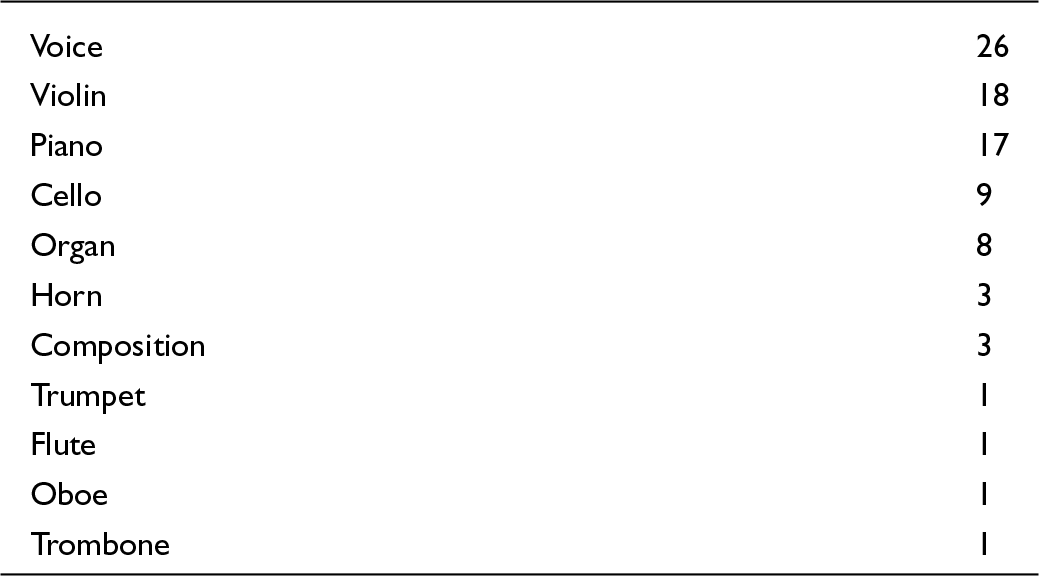
Table 3 Long description
The table details the distribution of ex-service scholarships awarded to 88 students from 1919 to 1921 across various musical specialisms. Most of the scholarship recipients studied voice (26), indicating a strong Violin and piano followed with 18 and 17 scholarships, respectively, indicating that these were also popular choices. In contrast, only 3 scholarship students studied horn and composition, while trumpet, flute, oboe, and trombone attracted only 1 scholarship student each. This distribution highlights a significant disparity in scholarship student uptake among different instruments, reflecting the popularity of certain instruments by this cohort during this period.
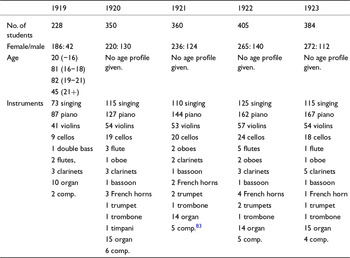
Table 4 confirms that the biggest increase in the overall student population is in precisely the instruments studied by the ex-service people: singing, violin, piano and organ. The student numbers also confirm that the College underwent a considerable expansion, from 165 in 1916 to 350 in 1919 and 405 in 1922, as Tables 2 and 4 show. The number of male students also recovered from the low ebb during the First World War (34 students: 22 percent in 1917). The peak in the male population occurred in the years 1920 through 1922, when, respectively, 59 percent, 53 percent and 53 percent of the student cohort were male. It dropped back to pre-war levels of 41 percent in 1923 when most of the ex-service students had left.
Student statistics 1920–23Footnote 82
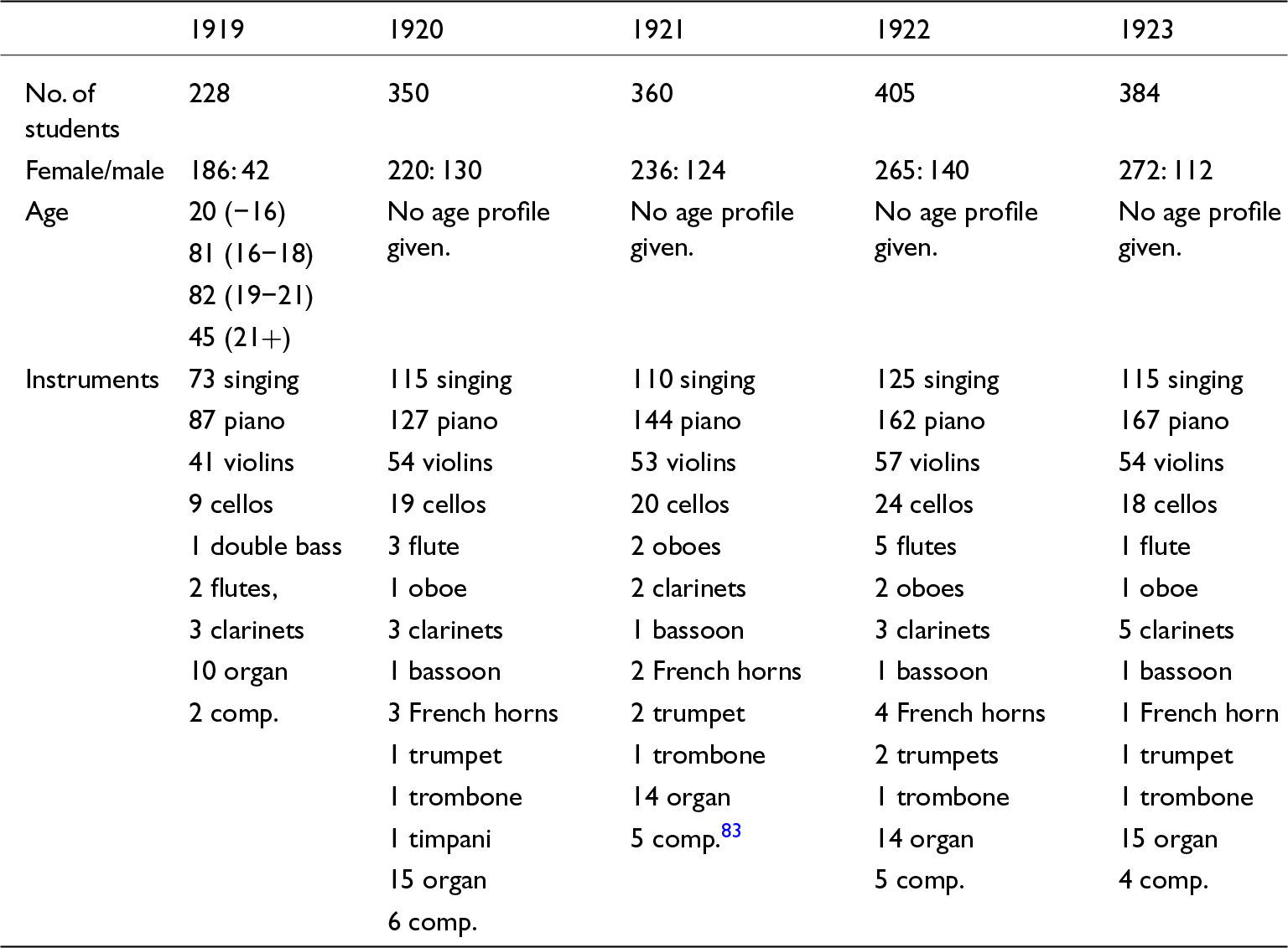
Table 4 Long description
The table presents student statistics from 1919 to 1923, detailing numbers, gender distribution, age, and instruments studied. Student enrollment increased from 228 in 1919 to 384 in 1923, with female students consistently outnumbering males. Age profiles are largely missing, except for 1919, where most students were aged 16-21. Singing and piano were the most popular instruments, with piano players increasing from 87 to 167. The data suggests a trend of growing student numbers and a preference for piano and singing, though some students may have studied multiple instruments, affecting totals.
I have looked to see how visible these students were in the College’s public performances: the Student Open Practice concerts, the end of year Examination Concerts and other concerts between 1919 and 1923, when, according to the ‘Special Report’, there was only one left.Footnote 84 They certainly blended into the normal activities of the College, but careful scrutiny reveals their presence, as early as 24 February 1920. Three months after enrolling in the College, the cellist, Henry Wilkinson performed Boëllman’s Variations Symphoniques at the Students Open Practice.Footnote 85 Otto Paersch makes an appearance once as a student, but he was performing in the Beethoven Septet in E-flat alongside RMCM tutors at one of the College’s professional chamber concerts in March 1920.Footnote 86 It confirms his unusual status as a professional horn player who was related to one of the College’s tutors. He performed it again at Houldsworth Hall, Deansgate on 20 December 1920, but after Paersch had officially left the College. Stephen Wearing’s name appears regularly. He arrived in the College in April 1920, staying until 1926, which was longer than any other grant recipient. Within seven months, he appears in Student Open Practice programmes performing Schumann (9 and 23 November 1920)Footnote 87 and thereafter, playing a range of mainly nineteenth-century solo and chamber repertoire. He maintained a strong link with his native Liverpool, becoming a successful professional pianist and performing regularly as a soloist with the Liverpool Philharmonic Orchestra, including a war-time charity concert in 1945, conducted by his former classmate at the RMCM, Louis Cohen.Footnote 88 Louis Cohen (a student of Brodsky, the Principal) is unsurprisingly quick to emerge in RMCM programmes, notably on 1 February 1921, performing both Sarasate and his classmate Frederick Morrison’s composition – another grant-holder.Footnote 89 Other names to surface from this cohort of students are H. Vincent Pashley and James Topping, both of whom would have professional musical careers.Footnote 90 The Opera class certainly benefitted from the presence of men, after their scarcity during the war. In May 1921 Frank Mullineux and John William Critchley took part in a performance of Ambroise Thomas’s Mignon and Arthur Jones sang the part of the Shepherd and Frank Mullineux, the Steersman in the final scene of Wagner’s Tristan.Footnote 91
A study of the postwar performances in the RMCM gives an insight into how visible these students were. In official records, little is said about them and there is a sense of trepidation about their impact on the College. While many of them remained largely in the background of the College’s public activities, some of them made a tangible contribution, benefitting from the high-level tuition and the encounter with repertoire including Schumann, Chopin, Smetana, Wagner and Debussy. This study has shown that the Government grants had the potential to transform the lives of the students concerned and have a tangible impact on the local community of the North West of England. Indeed, the College realized the aspirations it set out during its ‘coming of age year’ on the eve of war, helping it to strengthen its ‘position in the forefront of musical progress in the North of England’ in ways it was not anticipating.Footnote 92 Even though the scheme was time limited, it made musical training in Lancashire more inclusive in a striking way and one that is much more sympathetic to education initiatives after the Second World War to encourage social mobility, notably, the 1962 Education Act, when local authorities were obliged to provide maintenance grants for students undertaking a first degree.Footnote 93 While H.A.L. Fisher, who initiated the scheme, argued that the ex-service student scheme widened participation in higher education, with 27,772 grants being awarded between 1919 and 1923 to participating higher education institutions in England and Wales, Powell has argued that it largely benefitted private-school educated officers.Footnote 94 The sample studied in this article shows that in the case of the RMCM, although some musical and professional families with know-how benefitted from the scheme, the majority of recipients would otherwise have been unlikely to have experienced higher education in post-First World War Britain. Indeed, this spotlight on the impact of post-war educational policies on working-class veteran musicians contributes to research in war studies and cultural history, showing that musical training may well have differed from some other forms of post-war education in bringing about more social mobility and cultural enrichment of communities in the North of England.
Afterword
RMCM was protected from some of the disruption caused by the war in terms of its student body. The disruption that happened was gradually felt, as one of the Annual Reports asserts:
The Council, in presenting their Second War Report, are glad to be able to record a year of satisfactory work all things considered. This is largely due to the fact that women students have always preponderated and that the withdrawal of nearly all the men students for war work has been gradual since the summer of 1914.Footnote 95
The College did have, however, students and staff who were absent for various war-related reasons. Furthermore, the repertory did not change in any dramatic way. Thomason’s research shows that the war marked the beginning of a change of musical priorities and focus in Manchester. The city would not be quite the same despite most of the musical men returning. Unlike France, it did not experience a shortage of wind players because it had so few from the start. Vocal music was most affected, and it is fascinating that the RMCM should favour Wagner at this historical moment, when other cities, notably Paris were avoiding his music, as we have seen above. Contemporary French music was also gaining ground and, in this respect, the College and the city reflected a national musical orientation towards France.Footnote 96 The post-war period saw a change in the ecology and class profile of the College thanks to a recognition that music provided a suitable training for servicemen returning from the horrors of the Front; we have glimpsed the impact this had on individual recipients and their communities. In addition, in 1920 a rival music college opened in the city, the Matthay School of Music, later (1943) known as the Northern School of Music, which had a strong mission to train music teachers.Footnote 97 But this post-war context is a topic for a future article.
Appendix 1. Sample from RMCM register of government-funded students (1919–1921)



 Open access

